Volume 2007, Article ID 28315,12pages doi:10.1155/2007/28315
Research Article
Design and Implementation of an Enhanced 802.11 MAC
Architecture for Single-Hop Wireless Networks
Ralph Bernasconi,1Silvia Giordano,1Alessandro Puiatti,1Raffaele Bruno,2and Enrico Gregori2
1Department of Innovative Technologies, The University of Applied Sciences of Southern Switzerland (SUPSI),
Via Cantonale, Gallera 2, 6928 Manno, Switzerland
2Institute for Information Technology (IIT), National Research Council (CNR), Via G. Moruzzi 1, 56124 Pisa, Italy Received 29 June 2006; Revised 25 September 2006; Accepted 27 November 2006
Recommended by Marco Conti
Due to its extreme simplicity and flexibility, the IEEE 802.11 standard is the dominant technology to implement both infrastructure-based WLANs and single-hop ad hoc networks. In spite of its popularity, there is a vast literature demonstrat-ing the shortcomdemonstrat-ings of usdemonstrat-ing the 802.11 technology in such environments, such as dramatic degradation of network capacity as contention increases and vulnerability to external interferences. Therefore, the design of enhancements and optimizations for the original 802.11 MAC protocol has been a very active research area in the last years. However, all these modifications to the 802.11 MAC protocol were validated only through simulations and/or analytical investigations. In this paper, we present a very unique work as we have designed a flexible hardware/software platform, fully compatible with current implementations of the IEEE 802.11 technology, which we have used to concretely implement and test an enhanced 802.11 backoffalgorithm. Our experimental results clearly show that the enhanced mechanism outperforms the standard 802.11 MAC protocol in real scenarios.
Copyright © 2007 Ralph Bernasconi et al. This is an open access article distributed under the Creative Commons Attribution License, which permits unrestricted use, distribution, and reproduction in any medium, provided the original work is properly cited.
1. INTRODUCTION
In the last decade, we have witnessed an exceptional growth of the wireless local area network (WLAN) industry, with a substantial increase in the number of wireless users and ap-plications. This growth was due, in large part, to the avail-ability of inexpensive and highly interoperable networking solutions based on the IEEE 802.11 standards [1], and to the growing trend of providing built-in wireless network cards into mobile computing platforms. Due to its extreme sim-plicity and flexibility, the IEEE 802.11 standard is a good plat-form to implement both infrastructure-based WLANs and single-hop ad hoc networks. In addition, the 802.11 tech-nology has been successfully employed to deploy multihop wireless networks in which self-organized groups of devices communicate via multihop wireless paths. Recently, the Wi-Fi market is experiencing a renewed growth as new stan-dardization efforts are carried out [2,3] and new market op-portunities are explored with the deployment ofmetro-scale 802.11-based mesh networks, which are metropolitan areas with 802.11 coverage providing a cellular-like connectivity experience [4].
radio signal causes an asymmetric perception of the medium state at the receiver and transmitter. Therefore, acknowledg-ment packets (ACK) are sent, from the receiver to the sender, to confirm that packets have been correctly received. As no collision detection mechanism is present, colliding stations always complete their transmissions, severely reducing chan-nel utilization [7]. To mitigate the occurrence of collision events, the channel access scheme is regulated by the expo-nential backoff: nodes failing to obtain the channel have to backoffa random time before trying again. It is widely rec-ognized that, depending on the network configuration, the standard IEEE 802.11 protocol can operate very far from the theoretical limit of the wireless network, as well as unfairly allocate channel resources to each node. While this unfair-ness is somehow controlled in the infrastructure-based con-figurations, it can dramatically grow in distributed ones. Fur-thermore, both unfairness and low channel utilization im-pact upper layer protocols, especially transport layer if TCP is used. These phenomena have been shown through simu-lations [8–10], and appeared even worse when tested in real experiments [11,12].
In recent years a variety of extensions to the random ac-cess 802.11 MAC protocol have been investigated such as to cope with the aforementioned issues. Concerning the MAC protocol efficiency, it is now well consolidated that an ap-propriate tuning of the IEEE 802.11 backoffalgorithm can significantly increase the protocol capacity [7,13–16]. The basic idea is that the random backoffduration should be dy-namically tuned by choosing the contention window size as a function of the network congestion level. The major short-coming of this prior work is that it lacks experimental evi-dences gained from practical prototypes of the proposed en-hanced 802.11 MAC protocols. It is evident that both sim-ulations and theoretical analysis are fundamental to elabo-rate a clear understanding of the system behaviors and to rapidly evaluate the effectiveness of innovative strategies and techniques. However, practical experiences on trial platforms are also essential to demonstrate the feasibility of proposed mechanisms and to confirm the analytical/simulative predic-tions. For these reasons, recently the development of hard-ware/software platforms implementing new MAC protocols has gathered a lot of attention in the research community. In this paper, we will present the activities carried out in the framework of the MobileMAN project, which have led to the architectural design and implementation of an hanced 802.11 MAC protocol more suitable for ad hoc en-vironments.
The MobileMAN project is an initiative funded by the European FET FP5 Programme with the primary techni-cal objective of investigating the potentialities of the mo-bile ad hoc network (MANET) paradigm, both in single-hop or more complex multisingle-hop configurations. As one of the major aims of the MobileMAN project was to perform experiments in real scenarios, we decided to redesign the MAC architecture and to realize a prototype implementing the new MAC protocol specified for the MobileMAN net-work. The building block of the enhanced MAC protocol we implemented in software is the asymptotically optimal
backoff(AOB) mechanism [16], which dynamically adapts the backoffwindow size to the current network contention level and guarantees that an IEEE 802.11 WLAN asymptoti-cally achieves its optimal channel utilization. The AOB pro-tocol has been selected as the reference MAC propro-tocol for the MobileMAN network because it relies only on topology-blind estimates of the network status based on the standard physical carrier sensing activity. Hence, it appears as a suit-able and robust solution for both single-hop and multihop configurations. Several extensions for the AOB protocol have been proposed in the framework of the MobileMAN project such as to make it more efficient and fair when used in tra-ditional WLANs and ad hoc environments. In this paper, we do not go into details of the various proposed mecha-nisms, but we specifically focus on describing the architec-ture of our enhanced IEEE 802.11 wireless network card and on showing experimental results proving the effectiveness of the implemented solutions [17]. Note that our medium ac-cess platform has been designed to be a versatile architec-ture that could be used for implementing and testing: (1) backoffalgorithms more adequate to multihop operations; (2) dynamic channel switching schemes to exploit channel quality diversity; (3) efficient layer-2 packet-forwarding; and (4) cross-layering optimizations through the exploitations of topology information provided by the routing layer. In this paper, we present our activity concerning point (1) above. Specifically, we present our card architecture and we describe how the AOB protocol has been implemented in our MAC platform. Moreover, we describe the implementation of a credit-based strategywhich extends the contention control al-gorithm adopted by the AOB protocol, such as to improve its efficiency. This scheme has been proposed and evaluated via simulations in a prior work [17]. In this paper we show experimental results obtained by comparing our enhanced MAC card with traditional IEEE 802.11 wireless cards, which demonstrate the significant per-station throughput improve-ment ensured by our enhanced MAC protocol. Furthermore, the experimental outcomes open promising directions to in-vestigate additional enhancements, as discussed inSection 5. The rest of this paper is organized as follows. InSection 2
we briefly outline the strategies proposed in literature to increase the 802.11 MAC protocol efficiency. Section 3 de-scribes the algorithms that have been implemented in the network card. InSection 4we present the measurement en-vironment and we report the results of our real experiments, discussing the most relevant points.Section 5concludes this chapter with some further discussion and detailed descrip-tion of the ongoing and future work. A final appendix de-scribes the architecture of our network card platform and discusses the main hardware and firmware design choices.
2. INCREASING THE 802.11 MAC PROTOCOL EFFICIENCY
the probability of colliding and to coordinate the frame re-transmissions in case of collision are essential in determin-ing the MAC protocol efficiency. The standard 802.11 MAC protocol employs a truncated binary exponential backoff al-gorithm to schedule retransmissions after a collision. Specif-ically, each retransmission is delayed by an amount of time depending on the number of collisions that frame has been involved in. However, the retransmission timeout cannot in-crease indefinitely but when it reaches a ceiling it does not increase any further.
Several analytical studies of the 802.11 MAC protocol ef-ficiency have pointed out that the legacy backoffalgorithm can lead to very inefficient utilization of the channel re-sources. In particular, two major drawbacks can be identi-fied. First, in high contention situations the average backoff delay introduced by the 802.11 algorithm is not sufficient to mitigate the collision probability that rapidly increases. Sec-ond, the legacy 802.11 backoffalgorithm estimates the tention level in the network using only the number of con-secutive retransmissions. However, this information does not provide a precise and complete measure of the network con-tention level. Previous proposals made to improve the 802.11 MAC protocol efficiency have attempted to resolve the afomentioned issues. In particular, a considerable amount of re-search efforts has been dedicated to derive the backoffvalue that maximizes the network capacity by optimally spreading the channel accesses [7,13,18]. In addition, a variety of tech-niques have been investigated to measure the network con-tention level in a more precise manner than simply monitor-ing the number of retransmissions. It is quite intuitive that the most straightforward approach would be to estimate the number of competing terminals in the networks and to com-pute the optimal backoffwindow for this network popula-tion size [7,13]. The main limitation of this approach is that precisely computing the number of backlogged stations in a wireless network is difficult and error-prone. A more sophis-ticated measure of the contention level is obtained by mon-itoring the average duration of idle periods and collisions. In [15,18] a mathematical relationship between the optimal backoffwindow value and the ratio between idle periods and collision lengths is derived. Although this theoretical result allows gaining a more in-depth understanding of the MAC protocol dynamics and it leads to the design of a simple and effective optimization of the backoffalgorithm, it is not eas-ily extendible to ad hoc environments. A third different ap-proach is proposed in [14,16], in which the utilization rate of the slots (slot utilization SU) is used as an estimate of the current network contention level. The slot utilization can be computed as the ratio between the number of slots in the backoffinterval in which one or more stations start a trans-mission attempt, that is, busy slots, and the total number of backoffslots available for transmission in the backoff inter-val, that is, the sum of idle slots and busy slots.1
1It is useful to recall that, for efficiency reasons, the IEEE 802.11 MAC
pro-tocol employs a discrete-time backoffscale. That is to say, the backofftime is slotted, and a station is allowed to transmit only at the beginning of each slot time.
In particular, in [16] the optimal slot-utilization level that ensures to maximize the channel utilization given a certain network contention level is derived. This optimal slot uti-lization is calledasymptotic contention limit(ACL(q)), which depends mainly on the average size, sayq, of the frames that are transmitted on the common wireless channel, whereas it is negligibly affected by the number of stations in the net-work [16]. To exploit the knowledge of the ACL(q) value, the AOB mechanism introduces aprobability of transmissionPT according to the following formula:
PT=1−
whereN Ais the number of unsuccessful transmission at-tempts already performed by the station for the transmission of the current frame. When the standard 802.11 MAC proto-col assigns a transmission opportunity to a station (i.e., that station has backofftimer equal to zero and sense the chan-nel idle), the station will perform a real transmission with probabilityPT; otherwise (i.e., with probability 1−PT) the
station deems the transmission opportunity as avirtual colli-sion, and the frame transmission is rescheduled as in the case of a real collision, that is, after selecting a new backoffinterval using a doubled contention window. By using thePTdefined in formula (1), the AOB mechanism guarantees that asymp-totically the slot utilization of the channel never reaches the value ACL(q), namely, the channel utilization is maximal in networks with a large number of stations.
3. MAC PROTOCOL IMPLEMENTATION
In this section, we present the various modules that have been developed in the MobileMAN NIC card to implement the AOB protocol as defined in [16] and the credit-based en-hancements as specified in [17]. The description of the NIC hardware platform is reported in our prior paper [20] and in the appendix.
The first component that has been developed in our card is the one needed for the run-time estimation of the slot uti-lization values. However, in our implementation we do not estimate the aggregate slot utilization, as done in [16], but we split it into two contributions: the internal slot utiliza-tion (SUint) and the external slot utilization (SUext), such as
to differentiate between the contribution to the channel oc-cupation due to the node’s transmissions and to its neigh-bors’ transmissions. This differentiation is motivated by the need to keep our implementation as much flexible as possi-ble, such as to allow future modifications as the one described in [19]. Another variation with respect to the original AOB is the time interval over which we compute the slot utilization. In fact, the original AOB computes the slot utilization after each backoffinterval, while in our implementation we used a constant observation periodTof 100 ms. This choice is mo-tivated by the need to avoid frequent slot utilization compu-tations, which could interfere with the time constraints of the atomic MAC operations (e.g., RTS/CTS exchange). Each sta-tion monitors the channel status during the time windowT to compute the slot utilization values. In particular, the com-puting node can observe on the channel three types of events. (i)Busy periods, that is, time intervals during which the radio receivers perceive on the channel a signal power above thereceiving threshold. Note that a busy period can be due to channel occupations caused by collided frames, frames cor-rupted by channel noise, successful transmissions carried out by computing node’s neighbors, or external interferences. Let
nrx be the number of busy periods during the time
win-dow T. Note that two channel occupations should be con-sidered separated busy periods only when they are separated by an idle period longer than theDIFSinterval. This guar-antees that the MAC ACK frames are not counted as chan-nel occupations different from the data frames they acknowl-edge.
(ii)Frame transmissionsperformed by the node itself. Let
ntx be the number of frames transmitted by the computing
node.
(iii)Idle periods, that is, time intervals longer than aSIFS interval during which there is no channel activity. Letnidlebe
the duration of an idle period, normalized in terms of time slots. Note that an idle period is not composed only of back-offslots, but we count also the time intervals during which theDIFSandEIFStimers are active. This is in contrast with the original definition of the slot utilization as introduced in [14]. However, we preferred this novel formulation because it is more general and it provides a more robust estimation of the utilization rate of slots in multihop configurations (the reader is referred to [17] for a more in-depth discussion of these aspects).
From these measurements of thenrx,ntx, andnidle
quan-tities, the two slot utilization values are computed as follows:
SUint= n ntx
idle+ntx+nrx, (2a)
SUext=n nrx idle+ntx+nrx.
(2b)
It is easy to recognize that the original SU value as defined in [16] can be computed as the sum of SUintand SUintvalues.
Thus, our implementation and the original AOB scheme are equivalent.
Using formulas (2a) and (2b) we compute a single sample of the slot utilization. However, to avoid sharp fluctuations in the slot utilization estimates we should average these single measures. To solve this problem we apply a moving average-window filter to the slot utilization measures. Specifically, as-sume that the station is observing the channel during theith observation period. Then, it follows that
SU(inti)=α1·SU
ext) is the average
internal (external) slot utilization estimated at the end of the
ith observation period, and SU(inti)(SU(exti)) is the internal
(ex-ternal) slot utilization measured during theith observation period using formula (2a) (2b).
Exploiting the SUint and SUext estimates we can easily
compute the probabilityPT of executing a transmission at-tempt granted by the standard backoff process by imple-menting the classical formula proposed in [16]:
PT =1−
Since the ACL(q) value depends almost only on the average frame sizeq and it does not depend on the number of sta-tions in the network, as proved in [16], the ACL(q) values for different frame sizes can be stored a priori inside the radio in-terface card. Similarly to the slot utilization computation, we prefer to use an averagePTvalue, which is obtained by apply-ing a smoothapply-ing function to the outcomes of expression (4). In particular, let us assume that the jth backoffinterval is terminated (i.e., the backoffcounter is zero). Then, it follows that
PT(j)=α2·PT(j−1)+1−α2
·P(j)
T , (5)
whereα2is the smoothing factor,PT (j)
Success
Shared transmission channel Real collision (PT)
(1 PT) ComputePT Virtual collision (Backofftimer
expiration) Standard access scheduling protocol
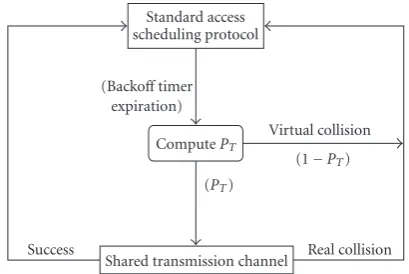
Figure1: Block diagram of the implemented AOB protocol.
PT value is updated after each backoffinterval, therefore
sig-nificantly more often than the SU, which is updated only af-ter each observation inaf-tervalT (in our implementation, we employedα1=0.9 andα2=0.95).
Figure 1depicts the flow diagram outlining the different components that have been defined to implement the AOB MAC protocol, and the relationships between the blocks.
As illustrated inFigure 1, the AOB implementation re-quires to compute the PT value according to formulas (4) and (5), and to keep updating the SUintand SUextestimates
using formulas (3a) and (3b). However, to implement the extensions to the AOB protocol designed in the Mobile-MAN project, we have to develop additional modules ca-pable of collecting credits. As described in [17], each sta-tion should earn credits when it releases a transmission op-portunity granted by the standard basic access mechanism. These credits, in turn, are spent to perform additional high-priority transmission attempts. More precisely, let us assume that the jth backoffinterval is terminated (i.e., the backoff counter is zero) and that the backofftimer was uniformly selected in the range [0,. . .,CW(k)−1], where CW(k) =
min(2k−1, 2kMAX)·CWMIN. If, according to the probability of
transmissionPT, the station releases its transmission oppor-tunity granted by the standard backoffprocedure, the new contention window used to reschedule the frame transmis-sion will beCW(k+ 1)=min(2k, 2kMAX)·CWMIN. Thus,
af-ter the virtual collision the number of creditsCRcollected by that station will be
CR=CRold+ min(2k, 2kMAX), (6)
whereCRoldis the number of credits owned by the station
before the virtual collision.
Each station should use the collected credits to per-form consecutive transmission attempts separated by SIFS intervals. The analytical and simulative studies conducted in [17, 19] have demonstrated that the use of multiple con-secutive transmissions regulated by considering the credits owned by each station is an effective technique to mitigate some of the fairness problems arising when the AOB protocol is used in multihop networks or heterogeneous WLANs. In addition, using frame bursting is also beneficial to improve
the efficiency of the 802.11 MAC protocol and to increase the throughput performances. Indeed, frame bursting is one of the new features that the IEEE standardization bodies are considering to be added in the next generation of 802.11 products (see the IEEE TGn and its draft specifications [3]). Note that implementing all the logic required to support and to manage the frame bursting operations has been one of the most difficult challenges to address during the card develop-ment.
As explained in [17], the number of credits needed to perform consecutive transmissions should depend on the av-erage backoffinterval. More precisely, each station estimates the average backoffinterval that the standard backoffscheme would use in the case that no filtering of the channel access is implemented. To accomplish this estimation, it is useful to recall that the collisions suffered from stations using the AOB protocol can be either virtual collisions, when a sta-tion voluntarily defers a transmission attempt, or real colli-sions, when a station performs the transmission attempt but it does not receive the MAC ACK frame. Let us assume that the total number of transmission opportunities assigned to a station before the successful transmission isK, and thatKrc
have been the real collisions occurred. Hence,K−Krchave
been the virtual collisions, that is, the released transmission opportunities. Denoting withCW(enhj) the average contention
window estimated after the jth successful transmission, and with CW(stdj), average contention window of the equivalent standard MAC protocol estimated after the jth successful transmission, we have that
Note that the rightmost term in formula (7a) is the sim-ple average of the contention windows used during the jth successful transmission. An exponential moving average fil-ter is then employed to smooth the fluctuations of the aver-age contention window adopted during the network opera-tions. TheCW(stdj)value will be used as threshold to decide if the station has enough credits to perform a transmission at-tempt. We denote with AOB-CR the standard AOB protocol enhanced with the capabilities of collecting credit and using these credits to regulate the duration of frame transmission bursts.Figure 2depicts the flow diagram outlining the dif-ferent components that have been defined to implement the AOB-CR MAC protocol and the relationships between the blocks.
As shown inFigure 2, when the station performs a suc-cessful transmission attempt, it should compare the available credits against theCWstdthreshold, computed according to
formula (7b). If CR > CWstd, the station should transmit
Success
Shared transmission channel Real collision UpdateCWstd
(CR > CWstd)&&(k l) Yes CR=CWstd
k++
(PT)
(1PT)
ComputePT
k=0
Virtual collision
UpdateCR No
(Backofftimer expiration)
Standard access scheduling protocol
Figure2: AOB-CR protocol with credit collection and frame bursting.
transmission bursts can induce short-term unfairness in the network. To mitigate this shortcoming we establish a max-imum burst size oflframes. In other words, no more than
lconsecutive frames can be transmitted before the standard backoffprocedure is applied again. It is out of the scope of this work to define optimal and adaptive strategies to set the threshold l. For this reason in our implementation we adopted the simplest approach, namely, we set a fixed thresh-old of five frames. It is worth pointing out that transmitting a burst of frames should not affect the computation of the slot utilization. This implies that the entire burst is counted once in the computation of thentx value. Similarly, all the other stations consider the entire burst as a single channel occupa-tion and they increment thenrxvalue only once.
4. EXPERIMENTAL RESULTS
To validate our enhanced MAC architecture we carried out comparative tests of the performance achieved by the legacy IEEE 802.11 backoffmechanism and the enhanced ones, that is, the AOB protocol and the AOB-CR protocol. In all the experiments we use our NIC implementation both for the AOB-based solutions and for the standard 802.11 protocol. We decide to implement the original IEEE 802.11 standard at 2 Mbps and not the newer versions at higher speed (for instance 802.11b and 802.11g) due to hardware limitations, and in particular the unavailability of inexpensive and ex-tendable modems implementing more sophisticated physi-cal layers. All the tests are performed in a laboratory en-vironment and we consider ad hoc networks in single-hop configurations. Nodes are communicating in ad hoc mode and the traffic is artificially generated. In our scenarios we have a maximum of four stations, due to hardware limita-tions. However, this is not a problem, because we are able to demonstrate the performance of our solution and the coher-ence with simulations conducted in previous work.
As discussed inSection 2, the average backoffvalue that maximizes the channel utilization is almost independent of the network configuration (number of competing stations), but depends only on the average packet sizes [16]. Therefore, the ACL(q) value for the frames size used in our experiments can be precomputed and loaded in the MAC firmware. The implementation in software of the algorithm used to com-pute the ACL(q) value such as to evaluate it at run time is an ongoing activity.
The network scenarios used during the experiments con-sist of 2, 3, and 4 stations. The stations are identically programmed to continuously send 500-byte-long MSDUs (MSDU denotes the frame payload). The consecutive MSDU transmissions are separated by at least one backoffinterval and we did not use the RTS/CTS handshake or the frag-mentation. The minimum contention window was 8·tslot
(160μs). This value does not comply with the original IEEE 802.11 standard (although, it fits with more recent imple-mentations), but it was hardwired in the modem firmware we used in our card prototype. However, the minimum con-tention window value affects only the absolute value of our measurements, but not the general trends.
The nodes topology is illustrated inFigure 3. All the ex-perimental results we show henceforth are obtained by com-puting the average over five replications of the same test and considering stationary conditions.
Table
60 cm
30 cm
20 cm Modem DSP
STA1
Modem DSP STA2
Shelves Modem DSP
STA3
Modem DSP STA4 20 cm
Figure3: Node topology used in the measurements.
STA1
Transmit path
STA2
MAC tester via RS-232
Figure4: Bidirectional communications with two stations.
to validate if the AOB-CR protocol is effective in improving the MAC protocol efficiency.
The results we obtained in this two-station configuration are reported inTable 1. In particular, the throughput at time
k·T (whereT is the sampling period equal to 100 ms) is computed as
TP[k·T]=DT[k·T]−RC[k·T], (8) where DT[k·T] is the total number of frames sent to a station (either acknowledged or not acknowledged frames), whileRC[k·T] is the number of real collisions (not acknowl-edged frames). The average throughput values for each sta-tion are evaluated by the DSP, internally (thanks to the imple-mented buffer) after 8 minutes of continuous transmission. After some computations, the throughput value is sent to a PC through the available RS-232 channel. For validating the stochastic correctness of our result, both the average and the standard deviation of throughput measures are reported in the following tables.
From the numerical results listed inTable 1, we can ob-serve that the throughput decrease with two competing sta-tions is less than 3% when using the AOB protocol. How-ever, the AOB-CR mechanism is capable of improving the MAC protocol efficiency, ensuring a 10% improvement in the throughput performance.
In the second set of experiments we considered a network configuration with three stations, as depicted inFigure 5.
Table1: Results for the two-station scenario.
Average Standarddeviation Throughputincrease
Standard 802.11
MAC protocol 1546.19 kbps 108 bps —
AOB protocol 1510.62 kbps 256 bps −2.3% AOB-CR protocol 1694.93 kbps 91 bps +9.6%
STA1
Transmit path
STA2 STA3
MAC tester via RS-232
Figure5: Three-station scenario.
The experimental results we obtained in the three-station configuration are reported inTable 2. We can note that with three competing stations, the throughput decrease with the AOB protocol is almost negligible. On the other hand, it is further confirmed that the AOB-CR protocol guarantees a significant improvement with respect to the standard 802.11 MAC protocol.
Finally, the last set of experiments was carried out in the four-station scenario depicted in Figure 6, and the experi-mental results we measured are listed inTable 3.
Table2: Results for the three-station scenario.
Average Standard deviation
Throughput increase
Standard 802.11
MAC protocol 1521.32 kbps 208 bps — AOB protocol 1517.36 kbps 974 bps −0.26% AOB-CR protocol 1706.34 kbps 279 bps +12.1%
STA1 Transmit
path
STA3
STA2 STA4
MAC tester via RS-232
Figure6: Four-station scenario.
Table3: Results for the four-station scenario.
Average Standard deviation
Throughput increase
Standard 802.11
MAC protocol 1434.31 kbps 290 bps —
AOB protocol 1504.0 kbps 242 bps +4.85% AOB-CR protocol 1681.03 kbps 451 bps +17.5%
show better performance than the basic AOB mechanism. In the four-station scenario the throughput increase provided by the AOB-CR protocol over the standard 802.11 MAC pro-tocol is about 17%.
The shown results clearly demonstrate that the AOB MAC protocol improves the per-station throughput as the number of stations increases, such as to approximate the maximum channel utilization. In addition, the introduction of credit-based frame-bursting capabilities permits to further increase the MAC protocol efficiency. A final remark is on the implicit capability of the AOB scheme to mitigate the neg-ative impact of external interferences. In fact, the standard 802.11 MAC control cannot distinguish between a frame loss caused by a collision event or channel noise. Therefore, chan-nel errors induce an increase in the backoffwindow as in the case of frame collisions. For this reason, when the channel is noisy, even if there are a few stations in the network, the number of retransmissions needed to successfully transmit a
frame can be high. However, it is well consolidated that the standard 802.11 MAC protocol is highly inefficient when the contention level in the network is nonnegligible. On the con-trary, the AOB protocol guarantees an optimal spreading of the channel access independently of the network contention level and of the number of retransmissions. The adaptabil-ity of the AOB scheme to the channel noise level explains the reason why we measured during the experiments rela-tive improvements of per-station throughput bigger than the ones predicted by theoretical analysis. In fact, the model de-veloped in [16] assumed ideal channel conditions and no channel errors. On the other hand, our experiments where conducted in a realistic laboratory environment where other radio sources were radiating signals in the ISM frequency band and interfering with the 802.11 frame transmissions. While the standard 802.11 MAC protocol suffered from sig-nificant throughput degradations due to this interference, our proposed credit-based extension of the AOB protocol still achieves quite good performance.
5. CONCLUSIONS
Experiments were carried out with the implementation of an enhanced IEEE 802.11 MAC card adopting the optimiza-tions designed in [16,17]. The card is still fully compatible with current implementations of the IEEE 802.11 technol-ogy because the radio part is compliant to the 802.11 stan-dard. However, the presented experimental results show that the enhanced mechanism outperforms the standard 802.11 MAC protocol in real scenarios. We have also shown that the advantages of this mechanism go further than the high con-tention scenarios (e.g., ad hoc networks), for which it was designed, because it is also effective in lessening the negative impact of the external interferences, which traditionally de-crease the performances of wireless networks in any environ-ment.
DSP Texas instruments
TMX320-C6713
FPGA Xilinx XC2V250 Orsys
micro-line C6713 compact DSP/FPGA/IEEE 1394 board
Logic levels adapter
board
Elektrobit DT20 modem
Intersil HFA3824A direct sequence spread spectrum
baseband processor Bypassed device
Texas instruments TMS 320F206
DSP
Intersil HFA3524 2.5GHz/600MHz
dual frequency synthesizer
Figure7: Overview of the enhanced 802.11 wireless network interface (PHY).
on the design of a shared memory component acting as ex-change area of networking information (parameters, status, etc.) for all the layers.
APPENDIX
HARDWARE DESIGN OF THE MOBILEMAN NIC
Generally speaking, a wireless NIC has three main functional blocs: the MAC, the baseband (BB), and the radio frequency (RF). Since the main part of the conceptual work conducted in our activities is concentrated on the MAC protocol, we de-cided to use off-the-shelf solutions for the BB and RF parts. For these reasons, we acquired a board, called DT20 modem, produced by the Elektrobit, which implements the 802.11 PHY with the Prism I chipset produced by the Intersil. Note that at the time we started the card development, this com-pany was the world leader manufacturer of the chipsets for wireless network interface cards.
Concerning the MAC protocol, given that our goal was to develop a new backoffalgorithm over the 802.11 stan-dard and not to entirely redesign the stanstan-dard channel access mechanisms, we tried to find a flexible development platform providing an implementation of the legacy 802.11 standard. Unfortunately, the platforms provided by the major produc-ers of wireless NICs were too expensive or with a very limited set of possible enhancements. Thus, we were forced to imple-ment the 802.11 MAC standard from scratch. In addition, we needed a development platform ensuring a great flexibility. For these reasons, we tried to find a development platform that could fulfill the following constraints:
(i) an easy, well known, and tested development environ-ment to speed up as much as possible the implemen-tation of the 802.11 standard,
(ii) the possibility to develop some MAC functionalities directly in hardware to fulfill the timing constraints imposed by the 802.11 standard [1],
(iii) a processor with high performances for new and future implementations.
At the end the solution that best fitted our criteria was the Orsys Micro-line C6713Compact DSP board. The hardware overview of the enhanced wireless network interface card, integrating both the DSP board and the DT20 modem, is shown inFigure 7.
The DSP board integrates a Texas instruments TMX-320C6713 DSP and an FPGA (Xilinx XC2V250) that is very important for the implementation of the protocol function-alities characterized by stringent time constraints. Due to the fact that the DSP board and the DT20 modem board have different logic levels, 3.3 V and 5 V, respectively, a logic level adapter has been developed to allow the communication be-tween the boards.
Implementation
The part of the 802.11 MAC protocol implemented in the C6713 DSP has been realized in standard C. On the other hand, the communication layer between the DSP and the modem has been developed on the FPGA device. Note that the FPGA module has a large computational power and it could be used in the future to accelerate other tasks (e.g., ad-dress filtering, cryptography, etc.). A more detailed overview of the interface at logic block level is presented inFigure 8.
The specific interfaces are as follows.
(i) HFA3824A RX/TX interface: this block operates as glue logic between the McBSP (multichannel buffered serial port) serial interface available on the DSP and the serial re-ceive and transmit ports of the HFA3824A baseband proces-sor.
RX
port portTX
Control port
Intersil HFA3824A direct sequence spread spectrum baseband processor
Intersil HFA3524 dual frequency
synthesizer HFA3824A
RX/TX interface
HFA3824A/ HFA3524 control port
interface
64-bit timer
Xilinx XC2V250 FPGA
MCBSP EMIF
Texas instruments TMX320C6713 DSP
Figure8: Logic block diagram of the MAC implementation. Note that only three functional blocks have been implemented in the FPGA.
the baseband processor and the dual frequency synthesizer can be configured.
(iii)64-BIT TIMER: this is a 64-bit timer that is used dur-ing the management procedures invoked at the end of 802.11 frame transmission and reception events.
The firmware was realized in such a way to maintain the maximum possible level of abstraction and to minimize the software redesign in case of change of the development plat-form. Thus, only few software components are specific to the C6713Compact board; among these are timing consid-erations, available DSP resources, configuration and control related to the specific implementation (i.e., we could not im-plement a general abstraction at the source code level).
The PHY firmware is subdivided into the following com-ponents.
(i)MAC firmware:is the hard real-time software, which allows packets (fragments) to be physically transmitted and received to and from the RF interface. This part implements both the 802.11 legacy standard and the new backoff algo-rithm in order to allow mixed environment experiments, where enhanced systems cooperate with standard off -the-shelf components.
(ii)Host interface firmware.This software component is less stringent in terms of real-time requirements.
(iii)Packet data structure.The data structure is the com-munication channel between MAC firmware and host inter-face firmware; it is a vital part of the MobileMAN project
since it allows the cross-layering functionalities between PHY/MAC and upper layers.
Nevertheless, the firmware comes without an operat-ing system, which was not needed for the implementation of the standard 802.11 frame exchange sequence and rela-tive tasks (fragmentation, defragmentation, fragment cache control, etc.). This is pretty a good step in direction of a better portability of the source code. On the actual sys-tem (C6713Compact board), the firmware occupies about 125 Kbytes and can reside completely in the DSP internal RAM, at run time.
The system may be used in lab environment (through the development system and the JTAG interface) during syn-thetic traffic tests, and it may also be used in a real en-vironment, by using the high speed IEEE1394 bus which allows the full speed connection with a host PC. A spe-cific PC application has been also developed to control and test the NIC when it is running as a stand-alone system (without connecting an emulator and without using the TI code composer as control environment). With this small and simple application, MAC parameters (e.g., station MAC address, signal quality thresholds, synthetic packets gener-ation control) are fully accessible and can be changed by simply connecting a PC to the system with a RS-232 ca-ble. Commands to the MAC system can be fully edited and sent with specific parameters as shown in Figures 9 and
Figure9: MAC commands via RS-232.
Figure10: MAC commands editor.
REFERENCES
[1] ANSI/IEEE Std. 802.11: Wireless LAN Medium Access Control (MAC) and Physical Layer (PHY) Specifications, August 1999. [2] ANSI/IEEE Std. 802.11e: Wireless LAN Medium Access Control (MAC) and Physical Layer PHY) Specifica-tion/Amendment 8: Medium Access Control (MAC) Quality of Service Enhancements, September 2005.
[3] Y. Xiao, “IEEE 802.11n: enhancements for higher through-put in wireless LANs,”IEEE Wireless Communications, vol. 12, no. 6, pp. 82–91, 2005.
[4] R. Karrer, A. Sabharwal, and E. Knightly, “Enabling large-scale wireless broadband: the case for TAPs,”Computer Communi-cation Review, vol. 34, no. 1, pp. 27–32, 2004.
[5] I. Chlamtac, M. Conti, and J. J.-N. Liu, “Mobile ad hoc net-working: imperatives and challenges,”Ad Hoc Networks, vol. 1, no. 1, pp. 13–64, 2003.
[6] G. Anastasi, M. Conti, and E. Gregori, “IEEE 802.11 ad hoc networks: protocols, performance and open issues,” inAd Hoc Networking, IEEE Press, John Wiley & Sons, New York, NY, USA, 2003.
[7] F. Cal´ı, M. Conti, and E. Gregori, “Dynamic tuning of the IEEE 802.11 protocol to achieve a theoretical throughput limit,”
IEEE/ACM Transactions on Networking, vol. 8, no. 6, pp. 785– 799, 2000.
[8] C. Chaudet, D. Dhoutaut, and I. Gu´erin Lassous, “Perfor-mance issues with IEEE 802.11 in ad hoc networking,”IEEE Communications Magazine, vol. 43, no. 7, pp. 110–116, 2005. [9] S. Xu and T. Saadawi, “Does the IEEE 802.11 MAC protocol
work well in multihop wireless ad hoc networks?”IEEE Com-munications Magazine, vol. 39, no. 6, pp. 130–137, 2001. [10] S. Xu and T. Saadawi, “Revealing the problems with 802.11
medium access control protocol in multi-hop wireless ad hoc networks,”Computer Networks, vol. 38, no. 4, pp. 531–548, 2002.
[11] G. Anastasi, E. Borgia, M. Conti, and E. Gregori, “Wi-fi in ad hoc mode: a measurement study,” inProceedings of the 2nd IEEE Annual Conference on Pervasive Computing and Com-munications (PerCom ’04), pp. 145–154, Orlando, Fla, USA, March 2004.
[12] C. Chaudet, D. Dhoutaut, and I. Gu´erin Lassous, “Exper-iments of some performance issues with IEEE 802.11b in ad hoc networks,” inProceedings of the 2nd Annual Confer-ence on Wireless On-Demand Network Systems and Services (WONS ’05), pp. 158–163, St. Moritz, Switzerland, January 2005.
[14] L. Bononi, M. Conti, and L. Donatiello, “Design and perfor-mance evaluation of a distributed contention control (DCC) mechanism for IEEE 802.11 wireless local area networks,”
Journal of Parallel and Distributed Computing, vol. 60, no. 4, pp. 407–430, 2000.
[15] R. Bruno, M. Conti, and E. Gregori, “Optimization of ef-ficiency and energy consumption in p-persistent CSMA-based wireless LANs,”IEEE Transactions on Mobile Computing, vol. 1, no. 1, pp. 10–31, 2002.
[16] L. Bononi, M. Conti, and E. Gregori, “Runtime optimization of IEEE 802.11 wireless LANs performance,”IEEE Transactions on Parallel and Distributed Systems, vol. 15, no. 1, pp. 66–80, 2004.
[17] R. Bruno, M. Conti, and E. Gregori, “Distributed contention control in heterogeneous 802.11b WLANs,” inProceedings of the 2nd Annual Conference on Wireless On-Demand Network Systems and Services (WONS ’05), pp. 190–199, St. Moritz, Switzerland, January 2005.
[18] R. Bruno, M. Conti, and E. Gregori, “Optimal capacity of p-persistent CSMA protocols,”IEEE Communications Letters, vol. 7, no. 3, pp. 139–141, 2003.
[19] R. Bruno, C. Chaudet, M. Conti, and E. Gregori, “A novel fair medium access control for 802.11-based multi-hop ad hoc networks,” inProceedings of the 14th IEEE Workshop on Local and Metropolitan Area Networks (LANMAN ’05), p. 6, Chania, Crete, Greece, September 2005.