From Finite-State to Inversion Transductions:
Toward Unsupervised Bilingual Grammar Induction
M arkus SAERS Kar teek ADDAN K I Dekai W U
Human Language Technology CenterHong Kong University of Science and Technology, Hong Kong [email protected], [email protected], [email protected]
ABSTRACT
We report a wide range of comparative experiments establishing for the first time contrastive foundations for a completely unsupervised approach to bilingual grammar induction that is cognitively oriented toward early category formation and phrasal chunking in the bootstrap-ping process up the expressiveness hierarchy from finite-state to linear to inversion transduc-tion grammars. We show a consistent improvement in terms of cross-entropy throughout the bootstrapping process, as well as promising decoding experiments using the learned grammars. Rather than relying on external resources such as parses, POS tags or dictionaries, our method is fully unsupervised (in the way this term is typically understood in the machine translation community). This means that the bootstrapping can only rely on information gathered during the previous step, which necessitates some strategy for expanding the expressiveness of the grammars. We present principled approaches for moving from finite-state to linear transduc-tion grammars as well as from linear to inversion transductransduc-tion grammars. It is our belief that early, integrated category formation and phrasal chunking in this unsupervised bootstrapping process is better aligned to child language acquisition. Finally, we also report exploratory de-coding results using some of the learned grammars. This is the first step towards an end-to-end grammar-based statistical machine translation system.
Figure1: Bootstrapping paths through the grammar hierarchy along with biparsing time com-plexities of grammar formalisms.
1 Introduction
We report a wide range of comparative experiments establishing for the first time contrastive foundations for a completely unsupervised approach to bilingual grammar induction that is cognitively oriented toward early category formation and phrasal chunking in the bootstrap-ping process up the expressiveness hierarchy from finite-state to linear to inversion transduc-tion grammars.
This research thread represents a long term effort to investigate how a more principled, generalization-oriented model of bilingual grammar induction could gradually replace vari-ous parts of the long chain of heuristics used in the more memorization-oriented approaches. Although we do also look at preliminary BLEU and NIST scores from MT decoding using the in-duced transduction grammars, we believe it is premature to place excessive emphasis on such scores because too many other factors (such as the language model, to name one) are entan-gled. At this early stage of establishing the foundations for understanding category formation in bottom-up bilingual grammar induction, it is more important to compare moredirectlyhow well the relationships between the two languages are learned by the very many possible vari-ous combinations of bootstrapping between transduction expressivity levels, phrasal chunking, and category formation. Therefore, we focus more on the cross entropy of the induced bilin-gual grammars—which is exactly the bilinbilin-gual form of the standard way to evaluate how well monolingual grammar induction captures monolingual data.
Note that, as observed in Wu (1997), this way of analyzing bilingual grammar induction can also be viewed as the problem ofbilingual language modeling—modeling two languages simul-taneously. We attack this problem of bilingual language modeling by extending a surprisingly effective finite-state baseline in two different ways: adding reordering capabilities and adding context information in the form of categories. The ultimate aim of this research direction is to have a grammar-based end-to-end statistical machine translation system, which would enable the usage of the same model in training and decoding instead of relying on a pipeline of differ-ent mismatched models trained independdiffer-ently. The bilingual language models we learn in this paper are grammar-based, and they thus represent a step towards this goal. Our new model is still extremely simple, even with the two proposed extensions. Reordering is added by first promoting the finite-state model to a linear model, which allows reading from the beginning or end of the two sentences independently and then by promoting the linear model to a fully nesting model. Contextual information is added in the form of a handful of categories, which are learned exclusively from the raw data.
We start by allowing any input token to translate into any output token, we also allow the input or output token to be empty. The lexical rules can contain input and output strings of length zero or one, but at least one of them must be nonempty. This initial search space is reigned in by training, which eliminates some of the (very unlikely) rules, but it is mainly expanded by allowing observed sequences to be taken up as lexicalized sequences (chunking), and by allowing category diversification (splitting). This initial stage of search space expansion is carried out in a very weak grammar formalism, which forces it to focus on learning lexical rules, since the weak structure of the grammar makes it rely heavily on surface form. Once the lexical chunks have been found and tentatively categorized, we will move the grammar into a more expressive formalism, and further train it. The idea is that we will have found enough good rules in the expansion phase that training with the more expressive formalism is mainly about establishing the structure and getting rid of useless rules. This approach also has the benefit that a lot of the “heavy lifting” can be done in the weaker grammar formalism, which is also less expensive to compute.
The PFSTG’s weakness comes from the fact that they have no structural way to reorder the input into the output. Instead they have to rely on singletons—lexical rules that delete from the input or insert into the output. These rules allow the PFSTG to disregard parts of a sentence pair, but still account for the parts that it can account for. It also means that PFSTGs need to keep a lot of singleton rules around that a more expressive grammar could do without. ITGs are capable of considerable structural reordering, they are in fact the most expressive transduction grammar that can be used to parse a parallel corpus in polynomial time. They are, in other words, the most expressive grammar that can possibly be afforded.
PLITGs are wedged between PFSTGs and ITGs in terms of expressiveness. They do allow for some structured reordering. Like PFSTGs, the parse trees are chains rather than trees, but unlike PFSTGs, the links in these chains do not have to be physically adjacent. Allowing the first input token to be lexically associated with the last output token is an example of the kind of reordering that PLITGs allow, which make them more expressive than PFSTGs. The fact that these reorderings are limited to lexical units only is what makes them less expressive than ITGs (Saers et al., 2011) .
The rest of the paper is structured so that we begin by describing the initial finite-state trans-duction grammar that we will start our bootstrapping sequence (Section 2). We then describe how the lexical chunking (Section 3) and category splitting (Section 4) is carried out before moving on to expressivity expansion: first from finite-state to linear transduction grammars (Section 5), and then from linear to inversion transduction grammar (Section 6). We then move on to an illustrative example of what the bootstrapping process actually entails (Sec-tion 7), along with some tentative decoding results, before offering some concluding remarks (Section 8).
2 Initial grammar
As a grammar-based translation model baseline, we will use the simplest possible transduction grammar: the finite-state transduction grammar. A finite-state transduction grammar is the grammar form of a finite-state transducer. The transformation into a grammar is trivial and gives us FSTGs.
2.1 Definition 1
A FSTG over languagesL0andL1is a tupleG=〈N,Σ,∆,S,R〉, whereNis a finite nonempty set of nonterminal symbols,Σis a finite nonempty set ofL0tokens,∆is a finite nonempty set ofL1tokens,S∈Nis the designated start symbol andRis a finite nonempty set of finite-state transduction rules on the forms:
A→e/f B, A→ε/ε
where A,B∈N and e/f ∈(Σ∗×∆∗)− {ε/ε}.
2.2 Definition 2
A PFSTG over languagesL0andL1is a tupleG=〈N,P,Σ,∆,S,R〉, whereNis a finite nonempty set of nonterminal symbols,Pis a finite nonempty set of preterminal symbols, disjoint from N,Σis a finite nonempty set ofL0 tokens,∆is a finite nonempty set of L1tokens,S∈N is the designated start symbol andRis a finite nonempty set of preterminalized finite-state transduction rules on the forms:
A→QB, A→ε/ε, Q→e/f
whereA,B∈N,Q∈Pande/f ∈(Σ∗×∆∗)− {ε/ε}.
As a baseline, we will choose the simplest possible PFSTG: abracketingPFSTG. The bracket-ing PFSTG has only one nonterminal symbol and one preterminal symbol. As such it relies solely on lexical information to find translation correspondences. The lexical information is surprisingly powerful when both sentences are given.
To assign scores to the sentence pairs, we need a weighting function for the rules, making it aweightedPFSTG. We will go one step further, and require the weighting function to define proper probability distributions such that:
p(ψ→ϕ)≡P r(ϕ|ψ)
which makes the grammarstochastic. These kind of conditional probabilities over rules can be tuned towards a corpus of examples (a training corpus) through expectation maximization, or EM. Expectation maximization can only be used to tune existing parameters, so to have something to tune, we initialize the grammar using the training corpus. The structural rules will have uniform probability, and the lexical rules will have a portion of the probability mass relative to their cooccurrence in the training corpus. Specifically, we will initialize a stochastic bracketing FSTG such that:
p(S→A) = 1,
p(A→QA) = 0.5,
p(A→ε/ε) = 0.5,
p Q→e/f = c e/f
∑
e′∈Σ,f′∈∆c e′/f′
wherec e/fis the cooccurrence count for the biterminale/f ∈((Σ∪ {ε})×(∆∪ {ε}))− {ε/ε}.
To calculate the expectations for the expectation maximization, we will parse the training corpus with the grammar we have, using an adaptation of the parsing algorithm described in Saers et al. (2010). The adaptation consists of allowing multiple categories (not simply bracketing grammars), and to handle preterminals. Although this algorithm was designed for the linear family of transduction grammars, the PFSTGs are merely a restricted form of PLITGs, which means that the algorithm applies to them as well.
3 Chunking helps
We can induce new lexical rules by allowing lexical entities to combine in order to form larger lexical entities. The end results are similar to phrase-based machine translation, but the method of arriving at the segments (chunks or “phrases”) is very different.
To apply chunking to our PFSTG, we use the method described in Saers and Wu (2011). The method was originally developed for PLITGs, which is a superset of PFSTGs, so it can be applied as is. The gist of the method is to allow two bitokens that are observed next to each other to combine into a new, larger bitoken. The process is thus limited to produce bitokens of twice the length of existing bitokens. There is, however, nothing stopping us from applying the method several times, getting larger and larger chunks. The maximum bitoken length of the baseline grammar is 2 (one input token and one output token), which we can double by chunking.
By applying chunking to the baseline PFSTG, and training with the chunks (modelfstg_cin Table 1), we get a cross-entropy of 73.0, which is significantly better than the 110.2 that the baseline grammar (modelfstg) scored. If we repeat the chunking (modelfstg_c_c), we go all the way down to 45.0. A third round of chunking and training (modelfstg_c_c_c) gets us a small improvement down to 43.9. This is interesting, since going from segments of length 1 to segments of length 2 helps tremendously, and proceeding to segments of length 4 goes a long way indeed. Pushing it up to segments of length 8 (which is close to the default “maximum phrase length” of Moses: 7), does surprisingly little. Either way, chunking was responsible for cutting the cross-entropy in more than half.
4 Splitting helps
We can introduce new nonterminal or preterminal symbols by splitting off some of the prob-ability mass of an existing symbol to one or more new symbols. This gives us the possibility of diversifying the categories used by the grammar, which is necessary in order to move away from bracketing grammars to more interesting types of grammars.
very simple way.
To split a nonterminalx, we give a set of target nonterminalsy0,y1, ...,ykpaired up with a kind of pseudo countsa0,a1, ...,akthat represent “how oftenxwas split intoyi”. Theas are used as parameters to a Dirichlet distribution, from which a categorical distribution is randomly drawn every timexhas to be split.
If any of theys do not exist in the grammar, they are added to it. If no pseudo count is given for a nonterminal, it is assumed to be zero. This means that the Dirichlet distribution will be well-defined over the set of nonterminal symbols in the grammar. The expected categorical distribution drawn from the Dirichlet distribution will be “relative frequency” over the pseudo counts, but since we are drawing the categorical distribution at random, there will be some perturbation to it. The magnitude of the perturbation will be inversely proportional to the total number of pseudo counts in the Dirichlet distribution. Intuitively, the more pseudo counts we have, the more certain we can be that they are correct. Conversely, with few pseudo counts, there is a lot of uncertainty, and therefore a lot of variation in the categorical distributions we draw.
Once we have a categorical distribution over the set of nonterminals, we can distribute the probability mass of a rule containingx, into the expected portion according to the categorical distribution. To keepx as a symbol, it needs to retain some of the probability mass, and the simplest way to do this is to have non-zero pseudo counts for it; this is the approach we took. To allow for different behavior depending on where in the rulexoccurs, we simply supply two Dirichlet distributions: one to be used whenxis on the left-hand side of a rule, and one to be used when it is on the right-hand side.
The pseudo code for the algorithm is give below.
4.1 General nonterminal (and preterminal) splitting algorithm
To refresh memory, a rule consists of a single nonterminal (or preterminal) symbol (i) on the left-hand side, and a sequence of nonterminal (or preterminal) and biterminal symbols on the right-hand side (φ). Furthermore, there is a permutation over the right-hand side (π). The rule form is thusi→φ;π. There is also a probability function that assigns a probability to each rule (p).
Input: a set of rulesR, a nonterminal to splitx, a probability functionpoverR, a left-hand side Dirichlet distribution over nonterminalsDl, a right-hand side Dirichlet distribution over nonterminalsDr.
Output: a new set of rules R′ and a new probability function p′ over
R′.
R′←()
for alli→φ;π∈Rdo R′′←()
ifi=xthen
Draw the parameters to a categorical distribution over nonterminalsα∼Dl
for allnonterminalydo R′′←(R′′,[y→;π,α
yp(i→φ;π)])
else
R′′←([i→;π,p(i→φ;π)])
end if
for all0≤k<φdo R′′′←()
for all[z→ψ0..k;π,p′′]∈R′′do
ifφk=xthen
Draw the parameters to a categorical distribution over nonterminalsα∼Dr
for allnonterminalsydo R′′′←(R′′′,[z→ψ
0..ky;π,αyp′′])
end for else
R′′′←(R′′′,[z→ψ
0..kφk;π,p′′])
end if R′′←(R′′,R′′′)
end for end for
for all[r,p′′]∈R′′do
R′←(R′,r)
p′(r)+ =p′′
end for end for
We consistently used pseudo counts of 1000 (both for left- and right-hand side) when split-ting nonterminals, and 0.5 (for left-hand side) and 1000 (for right-hand side) when splitsplit-ting preterminals.
So far, we only have four PFSTGs, with different segment lengths. We did not carry out all possible experiments, but the ones we did carry out all show that splitting helps (all models in Table 1 with ansfollowed by some number have had all their symbols split into the given number of symbols). Sometimes it helps as little as when moving from 73.0 for a bracketing PFSTG with segment length 2, to 72.5 for the same grammar with its pre- and nonterminal split in two (modelfstg_ctofstg_c_s2). The same modest improvement was observed when splitting the grammar with segment length 4, where we moved from 45.0 cross-entropy to 44.5 (modelfstg_c_ctofstg_c_c_s2). However, splitting again gave 42.9 (moving to fstg_c_c_s2_s2), and a third time gave 39.5 (moving tofstg_c_c_s2_s2_s2). Beyond the first split, we see a better improvement than chunking an extra time.
5 Moving to linear transductions helps
Thepreterminalized finite-state transduction grammaris very closely related to the pretermi-nalized linear inversion transduction grammar. The only difference is that the latter has more structural rules. As a reminder, the PFSTG has rules on the following forms:
A→QB, A→ε/ε, Q→e/f
Whereas the PLITG has rule on the following forms:
Where the square and angled brackets have their customary interpretation as straight and inverted permutations respectively. The difference is in the structural rules, and each of the structural rules in a PFSTG corresponds to four structural rules in a PLITG. To move from a PFSTG to a PLITG, we merely have to add these rules, and distribute the probability mass. We distribute the probability mass uniformly.
Another possibility that PLITGs have that PFSTGs do not is to canonize the singletons. In the PLITGs we have used so far, there is always some ambiguity due to the fact that singletons are empty in one of the languages, and there is no way to tell whether the empty string should attach to the front or the back of the string in that language. This ambiguity can be eliminated by insisting that it attach to the same end that the known string attaches to in its language. This enforces a canonical form for singletons, and reduces complexity.
To canonize a PLITG, start by creating two new preterminal symbols, one for input singletons and one for output singletons for every existing preterminal. Then move all the singleton realizations of that preterminal to the newly created symbols. Consider the preterminalP. We will split it intoPe/f (non-singletons),Pf (input singletons) andPe(output singletons), and divide the set of rules so that the singletons must be produced by the singleton symbols, and the non-singletons must be produced by the non-singleton symbol.
To produce the new preterminal symbols, we also need to account for the case whenPis on the right-hand side of a structural rule, and withholding some of the possible new rules will make the grammar singleton canonical. In a PLITG in normal form there may be at most one preterminal symbol on the right-hand side. Consider the four kinds of rules wherePcould occur in a PLITG:
A→[PB],A→[BP],A→ 〈PB〉,A→ 〈BP〉
To keep the PLITG canonical, we would like to have the following rules:
A→Pe/fB,A→BPe/f,A→ 〈Pe/fB〉,A→ 〈BPe/f〉,
A→[PeB],A→ 〈PeB〉,A→PfB,A→ 〈BPf〉
The probability mass is divided to reflect the probability ofPrewriting to non-singletons and the singletons respectively.
Whether we use a canonical PLITG or not, it allows us to move from any of the grammar we have trained so far to a PLITG and resume training with this more expressive grammar formalism. This gives a consistent improvement in cross-entropy (this can be seen in Table 1, where the PLITG models end in_ltg, and are meaningful to compare to the models preceding them).
6 Moving to inversion transductions helps
Model cross-entropy
fstg 110.2
fstg_ltg 108.9 fstg_ltg_itg 95.5 fstg_itg 93.2 fstg_c 73.0 fstg_c_ltg 72.5 fstg_c_ltg_itg 60.7 fstg_c_itg 60.7 fstg_c_s2 72.5 fstg_c_s2_ltg 70.5 fstg_c_s2_itg 60.8 fstg_c_c 45.0 fstg_c_c_ltg 44.5 fstg_c_c_itg 36.5 fstg_c_c_s2 44.5 fstg_c_c_s2_ltg 42.5 fstg_c_c_s2_itg 35.8 fstg_c_c_s2_s2 42.9 fstg_c_c_s2_s2_ltg 39.5 fstg_c_c_s2_s2_itg 33.3 fstg_c_c_s2_s2_s2 39.5 fstg_c_c_s2_s2_s2_ltg 39.5 fstg_c_c_s2_s2_s2_itg 32.8
fstg_c_c_s3 44.5 fstg_c_c_s3_itg 36.3 fstg_c_c_c 43.9 fstg_c_c_c_itg 35.9
Table1: The cross-entropy scores on the data for various models.
6.1 Definition 3
A syntax-directed transduction grammar (SDTG) in normal form is a tuple〈N,Σ,∆,S,R〉 whereNis a finite nonempty set of nonterminal symbols,Σis a finite nonempty set of in-put language symbols,∆is a finite nonempty set of output language symbols,S∈Nis the designated start symbol, andRis a finite nonempty set of syntax-directed transduction rules on the forms:
S→A, A→ϕ;π, A→e/f
whereA∈N,ϕ∈N N N∗,πis a permutation vector overϕ, ande/f ∈(Σ∗×∆∗)−(ε/ε).
6.2 Definition 4
except the start symbol (which may only have one). The rules are thus on the forms:
S→A, A→BC;π, A→e/f
Since there are only two possible permutation vectors (straight and inverted), the rules are typically expressed as:
S→A, A→[BC], A→ 〈BC〉, A→e/f
where the square brackets represent straight order, and the angled brackets represent inverted order.
To make a PLITG in normal form into an ITG in normal form, all that has to be done is to eliminate the rules where a nonterminal is allowed to go to nothing (empty rules). This does, however, leave us with an ITG that generates the exact same transduction that the PLITG gen-erated, which is not necessarily what we want. It is more likely that we want a grammar that is more expressive than the grammar we had. To this end, we will promote the preterminals to full nonterminals. Since the removal of the empty rules entails having the nonterminals be-have as preterminals, and promoting the preterminals to full nonterminals entails having the preterminals behave as nonterminals, there is no longer any point in making the distinction between the two classes of symbols. Indeed, an ITG only has nonterminal symbols.
The theory of promoting preterminals to nonterminals is to insert unary rules, where the preterminal rewrites into exactly one nonterminal symbol. For every preterminal that is to be promoted, one such rule is generated for each nonterminal. To control how much of its “preterminal-ness” the preterminal retain, we employ a hyperparameterα. The probability mass of the preterminal is redistributed so thatαof it is retained in its original rules, whereas 1−αis redistributed to the new unary rules. The last thing that needs to be determined is the preterminals affinity to specific nonterminals. We use the functionβ yfor this, which gives the probability of the nonterminaly given the preterminal that is being promoted. In this round of experiments,βwas uniform over all nonterminals. Naturally, we want to keep the new ITG in normal form, so we will actually not insert the unary rules, but rather anything the nonterminal can expand into. This gives us the following new probability function (p′) over the new and old rules:
p′(x→φ;π) =αp(x→φ;π) + (1−α)∑
y∈Nβ yp(y→φ;π)
Wherexis the preterminal being promoted,Nis the set of nonterminals,φis a sequence of nonterminals and biterminals, andπis a permutation overφ.
To train at the ITG stage, we use the algorithm presented in Saers et al. (2009), which we generalize to handle multiple nonterminals rather than being restricted to bracketing ITGs.
7 Qualitative analysis and translation assessments
In this section, we present a qualitative analysis of an example to illustrate the nature of alignments learned during various stages in the training. As a step forward towards our goal of purely inducing ITGs in an unsupervised manner for the purpose of translation, we report our initial findings on using these bootstrapped models in translation tasks.
7.1 Bootstrapping improves the alignments
Although the cross-entropy scores indicate an improvement in the quality of the grammars learned after LTGs and ITGs with FSTGs, we were interested in understanding the qualitative nature of generalizations the model was learning. Such an analysis would reveal how new gen-eralizations might emerge as expressivity of models increases. They would also help identify overfitting of the model and how errors propagate from one stage to another.
An important consideration in bootstrapping would be to identify whether or not alignments that could not be learned in less expressive models could be learned by more expressive models after bootstrapping. In order words, whether bootstrapping enables learning of those align-ments that would otherwise be impossible to learn with less expressive models. One should also consider the possibility that incorrect alignments in the initial stages might prevent the correct alignments from ever being learned.
With the above question in mind, we decided to investigate one of the simplest and most common manifestations of this scenario in Chinese-English parallel data. Typically, locatives in chinese appear before the verb whereas in English they appear after the verb. Hence, the alignments of bisentences which contain these locative markers require the model to permit a certain degree of reordering. We present below, a qualitative analysis of the translation rules learned for one such locative marker at various stages in our bootstrapping pipeline. We choose the Chinese locative marker里面which occurs 67 times in our data set. 里面 typically translates toinsidein English. The following are two sentences that occur in our training data.
Source:里面是什么?
Gloss:inside is what ? Translation:what is inside ?
Source:里面是什么东西?
Gloss:inside is what thing ? Translation:what does it contain ?
In the first example, the correct alignment would require an alignment permutation of [2, 1, 0, 3]which is beyond the expressive power of the FSTG models. As the translation that is present in the training data for the second example is inexact, the locative marker is forced to align to . These examples are representative of the way in which里面appears in the training corpus.
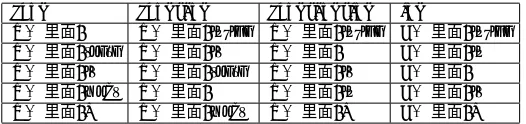
FSTG FSTG_LTG FSTG_LTG_ITG ITG
P→里面/ P→里面/inside P→里面/inside A→里面/inside P→里面/there P→里面/it P→里面/ A→里面/in P→里面/it P→里面/there P→里面/it A→里面/
P→里面/what P→里面/ P→里面/in A→里面/it
P→里面/I P→里面/what P→里面/I A→里面/I
Table2: The best translation rules for the Chinese locative marker里面at various stages in the training pipeline.
Model Cross-Entropy BLEU NIST
FSTG 110.2 7.95 0.4752
FSTG_LTG 108.9 8.34 0.7466
FSTG_LTG_ITG 95.5 8.83 0.8554
Table3: The correlation between the cross-entropy and the BLEU and NIST scores for token based models.
token are non-monotonic. From the second column of the table we can observe that the correct translation is learned to be the best translation after bootstrapping with LTGs alone. However, singleton translation and other synonyms of里面do not appear in the top five translations. Upon bootstrapping ITG with the FSTG_LTG, we identify that the translationinmakes it into the top translations. The translations learned at FSTG_LTG_ITG stage are almost comparable to directly inducing an ITG as shown in the rightmost column.
Although locatives represent an extreme case of the nature of generalizations that could be learned from bootstrapping, we find that this kind of learning applies to all alignments at the FSTG stage. The correct alignments tend to get rewarded through successive stages of bootstrapping while the noisy alignments are drowned out. The end result is comparable to that of inducing LTGs and ITGs directly without the overhead of such an induction.
7.2 Successive bootstrapping promises improvements in translation
quality
The final goal of our approach is to build a theoretically principled SMT system with well-defined representations. Although cross-entropy is a good measure of gauging how our models explain the data, it is not sufficient to guarantee an SMT system with a good performance. It is important to observe an improvement in the performance on a translation task that correlates with the improvement in cross-entropy of the model.
[image:13.420.87.350.70.132.2]We approach this promise with caution as our models in their current state, are not optimized to compete with the state of the art SMT systems. We report the results of our preliminary experiments on using our trained models for the task of SMT.
We can observe significant gains in the BLEU (Papineni et al., 2002) and NIST (Doddington, 2002) scores after training on LTGs and a further improvement after training on ITGs. Further, these scores seem to be reflecting our estimates about the goodness of our models using cross-entropy.
Due to time constraints, we could not perform extensive experiments on the quality of transla-tions produced with other models discussed in the rest of the paper. We also want to emphasize that an exhaustive evaluation of the performance of these models on translation tasks would result in a combinatoric explosion of models where chunking and splitting could be applied at various stages in the training pipeline with different chunking and splitting strategies. There-fore, in order to realize a competitive SMT system using our bootstrapping technique, we would first need to understand the qualitative and quantitative effects of using different mod-els and the respective chunking and splitting strategies. We intend to pursue this task more confidently given our encouraging results on cross-entropy and the BLEU score correlation.
8 Conclusions
We reported a wide range of comparative experiments for a completely unsupervised approach to bilingual grammar induction with early category formation and phrasal chunking in the bootstrapping process up the expressiveness hierarchy from finite-state to linear to inversion transduction grammars. We reported a consistent improvement in the cross-entropy as we move through FSTGs to LTGs and ITGs. We also saw a substantial improvement in cross-entropy scores upon chunking and inducing categories. We reported an illustrative example that indicates generalizations learned from bootstrapping are equivalent to inducing models with higher expressivity directly but at a much lower cost. Finally, we discussed some of the encouraging results of our translation assessment experiments using bootstrapped models.
Acknowledgements
This material is based upon work supported in part by the Defense Advanced Research Projects Agency (DARPA) under BOLT contract no. HR0011-12-C-0016, and GALE contract nos. HR0011-06-C-0022 and HR0011-06-C-0023; by the European Union under the FP7 grant agreement no. 287658; and by the Hong Kong Research Grants Council (RGC) research grants GRF621008, GRF612806, DAG03/04.EG09, RGC6256/00E, and RGC6083/99E. Any opinions,
findings and conclusions or recommendations expressed in this material are those of the au-thors and do not necessarily reflect the views of the RGC, EU, or DARPA.
References
Chiang, D. (2005). A hierarchical phrase-based model for statistical machine translation. In Proceedings of the 43rd Annual Meeting of the ACL, pages 263–270, Ann Arbor, Michigan. Doddington, G. (2002). Automatic Evaluation of Machine Translation Quality using N-gram Co-occurrence Statistics. InProceedings of the 2nd International Conference on Human Lan-guage Technology Research (HLT-02), pages 138–145, San Francisco, CA, USA. Morgan Kauf-mann Publishers Inc.
Fordyce, C. S. (2007). Overview of the IWSLT 2007 evaluation campaign. InProceedings of the International Workshop on Spoken Language Translation, pages 1–12.
the 21st International Conference on Computational Linguistics and 44th Annual Meeting of the Association for Computational Linguistics, pages 961–968, Sydney, Australia.
Papineni, K., Roukos, S., Ward, T., and Zhu, W.-J. (2002). BLEU: A Method for Automatic Evaluation of Machine Translation. InProceedings of the 40th Annual Meeting of the Association for Computational Linguistics (ACL-02), pages 311–318.
Saers, M., Nivre, J., and Wu, D. (2009). Learning stochastic bracketing inversion transduction grammars with a cubic time biparsing algorithm. InProceedings of the 11th International Conference on Parsing Technologies, IWPT ’09, pages 29–32, Stroudsburg, PA, USA. Association for Computational Linguistics.
Saers, M., Nivre, J., and Wu, D. (2010). Word alignment with stochastic bracketing linear inversion transduction grammar. InHuman Language Technologies: The 2010 Annual Confer-ence of the North American Chapter of the Association for Computational Linguistics, HLT ’10, pages 341–344, Stroudsburg, PA, USA. Association for Computational Linguistics.
Saers, M. and Wu, D. (2011). Principled induction of phrasal bilexica. InProceedings of the 15th Annual Conference of the European Association for Machine Translation, Leuven, Belgium, May.
Saers, M., Wu, D., and Quirk, C. (2011). On the expressivity of linear transductions. In Proceedings of the 13th Machine Translation Summit (MT Summit XIII).
Stolcke, A. (2002). SRILM-an Extensible Language Modeling Toolkit. InProceedings of the 7th International Conference on Spoken Language Processing (Interspeech-02).