University of South Carolina
Scholar Commons
Theses and Dissertations
6-30-2016
The Undiagnosed Patient and The Diagnostic
Odyssey: Current Genetic Counseling Practices
and Perspectives
Amelia Cordell Wardyn
University of South Carolina
Follow this and additional works at:https://scholarcommons.sc.edu/etd
Part of theGenetics Commons
This Open Access Thesis is brought to you by Scholar Commons. It has been accepted for inclusion in Theses and Dissertations by an authorized administrator of Scholar Commons. For more information, please [email protected].
Recommended Citation
Wardyn, A. C.(2016).The Undiagnosed Patient and The Diagnostic Odyssey: Current Genetic Counseling Practices and Perspectives.
The Undiagnosed Patient and the Diagnostic Odyssey: Current Genetic Counseling Practices and Perspectives
By
Amelia Cordell Wardyn
Bachelor of Science University of Maryland, 2012
Submitted in Partial Fulfillment of the Requirements
For the Degree of Master of Science in
Genetic Counseling
School of Medicine
University of South Carolina
2016
Accepted by:
Emily Jordon, Director of Thesis
Ken Corning, Reader
Nikkola Carmichael, Reader
Abstract
Patients seen in genetics clinics often endure a diagnostic odyssey in their search
for answers for their medical symptoms. This time is not only challenging for patients
and their families, but also for the genetic counselors who are trying to help the patients.
Previous research has shown that parents of children with undiagnosed medical disorders
have specific goals and reasons for wanting to find a diagnosis, and there are many
difficulties faced by these parents. Genetic counselors often serve as a prominent figure
during the diagnostic odyssey, but little known research has assessed the current practices
of and impact that the diagnostic odyssey has on genetic counselors. This study surveyed
pediatric genetic counselors to assess their current practices and thoughts about the
diagnostic odyssey. This was assessed utilizing a questionnaire, which included both
multiple choice and short answer questions. We identified current genetic counseling
practices including communication methods and resources provided to patients.
Counselors reported a possible need to share the responsibility of communication with
their patients and a lack of resources specific to patients on the diagnostic odyssey.
Genetic counselors also reported feeling personally impacted by patients on the
diagnostic odyssey, and described the positive and negative feelings they experience, in
addition to strategies to cope with their frustrations. In conclusion, the diagnostic odyssey
is a complex process for patients, and similarly challenging for the counselors who are
additional support, resources, and hope to families during the diagnostic odyssey,
Table of Contents
Abstract ... iii
List of Figures ... vii
Chapter 1: Background ... 1
1.1What is a Diagnosis? ... 1
1.2 The Diagnostic Odyssey and Uncertainty ... 2
1.3 Parental Value of a Diagnosis ... 3
1.4Incorporation of New Technologies and Discoveries into Practice ... 6
1.5 Genetic Counselors’ Role in the Diagnostic Odyssey ... 9
Chapter 2: The Undiagnosed Patient and the Diagnostic Odyssey: Current Genetic Counseling Practices and Perspectives ... 13
2.1 Abstract ... 13
2.2 Introduction ... 14
2.3 Materials and Methods ... 16
2.4 Results ... 18
2.5 Discussion ... 29
2.6 Conclusions ... 34
Chapter 3: Conclusions ... 37
Appendix A: Participant Invitation Email ... 42
Appendix B: Participant Introductory Letter ... 43
List of Figures
Figure 2.1 Methods for incorporating new technologies into practice for undiagnosed
patients ... 21
Figure 2.2 Most important aspects of a session for new patients ... 22
Figure 2.3 Most important aspects of a session for follow-up patients ... 22
Figure 2.4 Resources provided to undiagnosed patients’ families ... 23
Chapter 1: Background
1.1 What is a Diagnosis?
In medicine, and especially genetics, making a “diagnosis” can mean a variety of
different things. Some disorders are readily identifiable and a diagnosis can be made
shortly after symptoms present. However, certain patients with genetic disorders
experience a prolonged period of time before receiving a diagnosis because their
symptoms and features may not represent a commonly identifiable disorder or syndrome
with a known etiology.
Physicians utilize a few different types of diagnoses in order to provide one name
to encompass a patient’s symptoms. One type of diagnosis can be considered
“descriptive” or clinical. This means that one name has been given for a grouping of
features, but there may or may not be a known underlying reason for the disorder
(Makela, Birch, Friedman, & Marra, 2009). One example of a disorder with only a
descriptive diagnosis is autism. There is little known about the biological cause for
autism, but researchers have created criteria that can be used to identify a patient as
having autism (American Psychiatric Association, 2013). Descriptive diagnoses may also
include an “etiological” or “molecular” diagnosis. These types of diagnoses have not only
a name, but also a known molecular or biological cause. These disorders may have been
more extensively researched and have an established natural history with prognostic
genetic testing has been performed and a deleterious mutation has been identified, but
healthcare professionals may not know the full effects of the mutation and may not be
able to make predictions about the progression of symptoms. These disorders may only
be identified by the genetic mutation and may not be recognizable to the general public
by name because of the rarity of the finding (Makela et al., 2009). Finally, a patient
without a clinical or molecular diagnosis may receive a “working” diagnosis, or a
suggestion of a type of disorder that seems to be present but cannot be specifically
identified (Lewis, Skirton, & Jones, 2010). This can be useful when a patient’s group of
symptoms does not meet diagnostic criteria for a specific condition, or a specific
molecular cause was not found or has not yet been discovered.
1.2 The Diagnostic Odyssey and Uncertainty
Many patients seen in genetics clinics experience a diagnostic odyssey, or “the
time between when a parent or provider first becomes concerned about a child’s
development and a diagnosis is eventually reached” (Carmichael, Tsipis, Windmueller,
Mandel, & Estrella, 2015, p. 326). For some patients, this odyssey does not have a
concrete ending because neither a descriptive nor etiological diagnosis can be made. The
amount of time spent on the odyssey can vary, possibly extending over a lifetime. It has
been reported that up to 50% of all cases of intellectual disability do not have a known
etiology and therefore, families continue an extended diagnostic odyssey (Daily,
Ardinger, & Holmes, 2000). Additionally, Shashi et al. (2013) reported that “the rate of
unidentified genetic conditions is conventionally thought to be 50% overall, [but] there
The diagnostic odyssey is a time of uncertainty for patients and their families as
they try to plan for the future and manage the apparent symptoms (Rosenthal, Biesecker,
& Biesecker, 2001). The amount of uncertainty may also be influenced by the interaction
with healthcare professionals who must discuss the unknowns of the condition (Jessop &
Stein, 1985). Some parents of children without a diagnosis have described their
experience as stressful due to the added care for the children and required medical
appointments. Additionally, parents experienced other psychological problems, including
emotional distress and burden, due to the difficulties of not having a diagnosis. These
difficulties often originated from feelings of being out of control. (Lewis et al., 2010)
In addition to stress, uncertainty often takes away the sense of control for parents.
Madeo, O’Brien, Bernhardt, and Biesecker, (2012) assessed this uncertainty and lack of
control in parents with children having different medical conditions, some of whom were
undiagnosed. Individuals who perceived less control over their child’s undiagnosed
condition reported less optimism and higher uncertainty. These individuals felt they did
not have control over the disease, their future, and medical care. However, they did feel
in control of some aspects of their child’s condition, including information and decision
making, advocacy, the child’s comfort, and self-care. (Madeo et al., 2012)
1.3 Parental Value of a Diagnosis
Several themes have been identified as parental benefits of having a diagnosis.
These themes include having a label for the child’s condition, being able to predict the
course of the disorder and provide a prognosis, accepting and validating the parents’
concerns, and having access to support networks (Carmichael et al., 2015; Lewis et al.,
identified support from other parents in a similar situation as a useful source; the match
between parents is critical (Ainbinder et al., 1998). Unfortunately, it is difficult to
identify parents in similar situations when there is not one unifying term to describe the
situation.
A limited number of studies have assessed the perceptions of parents whose
children do not have a diagnosis for their collection of symptoms. Interviews with parents
of children with neuromuscular disorders found that, during the diagnostic odyssey,
parents desired a diagnosis for validation, a prognosis in order to plan for the future, and
access to specific support networks (Carmichael et al., 2015). Providing a label for the
child’s condition proved essential for obtaining services and support for the affected
children. Interviews with parents whose children have multiple congenital anomalies
revealed similar themes and motivations for obtaining a diagnosis for their child’s
medical condition (Rosenthal et al., 2001). In addition to having a “label” and prognosis
for the condition, parents expressed concern for recurrence in future children and a need
to know as much information as they could about the condition. Parents expressed
understanding that having a particular diagnosis may not have a cure and may not change
their current medical management, but recognized the importance for future medical
research (Rosenthal et al., 2001).
A study conducted in the United Kingdom in 2010 (Lewis et al.) analyzed
interviews with parents of children who had an undiagnosed condition and had been seen
in a genetics clinic. Parents most often stated that they wanted a diagnosis for “help with
care and treatment” and “to know about the future.” In addition, parents discussed
condition. Certain parents utilized “social diagnoses,” similar to the earlier discussed
descriptive diagnoses, to generally explain their child’s medical problem to society. One
parent commented that the idea of a “working” diagnosis might provide similar insight
for the patient and their family as when having a descriptive diagnosis (Lenhard,
Breitenbach, Ebert, Schindelhauer-Deutscher, & Henn, 2005). With a working diagnosis,
the patient and their family may be able to access support groups and obtain services that
might not otherwise be available without a diagnosis (Lenhard et al., 2005). Similarly,
parents whose children have undergone molecular testing hoped to find an answer in
order to help explain their child’s condition, better prepare for the future, and better
manage their child’s care (Sapp et al., 2014).
Most studies that interviewed parents of children with undiagnosed medical
conditions found that parents wanted more support options and thought there was a lack
of support when no diagnosis was found (Carmichael et al., 2015; Lewis et al., 2010;
Rosenthal et al., 2001). One support organization has been identified as focusing
specifically on undiagnosed patients, titled “Syndromes Without A Name (SWAN).” This
group was organized in 2004 in the United States to provide support and information to
families who were affected by an unknown medical syndrome (SWAN USA, 2014).
SWAN also directs families to potential clinical trials and studies that may help them find
a diagnosis for their child’s condition. Previous studies involving parents of undiagnosed
children indicated that these parents felt a lack of support and may not have been aware
of nation-wide support groups such as SWAN. There may also be local organizations that
navigating state services, but these are not specific to a particular diagnosis or lack
thereof.
1.4 Incorporation of New Technologies and Discoveries into Practice
Strides are continuing to be made in genetic research and testing to be able to
provide more information about genetic disorders and increase diagnostic yield. As new
technologies have been developed, practice guidelines have changed to reflect the most
effective use of these developments. For example, in 2010, chromosomal microarray
became a first-tier test for patients with developmental delay, intellectual disability,
autism spectrum disorders, and multiple congenital anomalies (Miller et al., 2010). Since
the development of the microarray test, Next Generation sequencing has become another
technological development that has improved the overall utility of genetic testing. Next
Generation sequencing allows for rapid sequencing of single and multiple genes at a
reduced cost compared to traditional Sanger sequencing (Mardis, 2008). The innovation
of Next Generation sequencing has allowed for continued discovery of novel genes,
providing etiologies for previously undiagnosed medical conditions. Next Generation
sequencing is currently being used in Whole Exome Sequencing (WES), sequencing
nearly all of the coding exons within the genome, and Whole Genome Sequencing
(WGS), which includes the additional non-coding regions of the genome (Yang et al.,
2014). As new tests are developed and become more accessible, there is a growing
opportunity to incorporate technological advances into clinical use to identify a genetic
etiology for a patient’s medical condition.
Genetics professionals must continue to adapt with the ever-developing landscape
approach to new genetic technology that came from the Mayo Clinic. They have created
an Individualized Medicine Clinic to incorporate genomic technological advances into
everyday clinical practice. One of the services offered by this clinic is WES for patients
during their diagnostic odyssey. This service includes determining if the patient would
benefit from WES, having an extensive genomic counseling session, and interpreting the
results from sequencing by a review board. The clinic utilizes a “Genomic Odyssey
Board” to interpret the results and make recommendations to the referring physician.
After a year of offering this service, the researchers determined that patients need an
extended conversation with a genetic counselor in order to grasp the abilities of genomic
testing. However, no diagnostic rates from this year of service were provided (Lazaridis
et al., 2014).
In recent years, more genetics clinics are ordering WES for their patients with
complex medical conditions and various laboratories that offer this testing are starting to
report their diagnostic rates and findings from WES. Yang et al. (2014) reported a
molecular diagnostic rate of 25.2% from Baylor College’s first 2,000 exomes sequenced,
similar to Ambry Genetics’ first 500 exomes sequenced, which resulted in a 30%
molecular diagnostic rate (Farwell et al., 2014). Lee et al. (2014) reported a molecular
diagnostic rate of 26% at the University of California, Los Angeles, and Sawyer et al.
(2015) reported a diagnostic rate of 23-34% using WES for the Canadian group called
Finding of Rare Disease Genes (FORGE). The previously listed studies reported higher
diagnostic rates when three family members contributed DNA for sequencing,
specifically the patient and two first-degree relatives. Many WES tests identified novel
finding new genes, many of the genes that were found to have damaging mutations were
discovered in the last few years and may not be included yet in single gene or panel tests
(Farwell et al., 2014; Lee et al., 2014; Yang et al., 2014).
While these studies have shown a benefit to utilizing WES as a diagnostic tool in
genetics clinics, they also have shown that this technology is often not the final chapter in
a patient’s diagnostic odyssey. These studies demonstrated that WES is able to find a
disease-causing mutation in around 25-30% of patients, leaving up to 75% of genetics
patients to continue on their diagnostic odyssey. While WGS is possible as well, it is not
utilized as frequently and results in a greater amount of data that requires analysis and
interpretation. One of the downsides of genomic medicine is that there are a greater
number of results of variants of uncertain significance that may or may not be causal of
the patient’s condition and this can complicate an already stressful situation (Rosell et al.,
2016).
Of the 25-30% of patients who are receiving molecular diagnoses, there may still
be little known about the prognosis of the condition. In this way, a finding from WES
may not provide the information that may benefit a patient and their family. In a study
published by Makela et al. (2009), patients expressed that a descriptive diagnosis may be
more beneficial than a genetic diagnosis. Often times, a descriptive diagnosis provides
information based on the natural history of the disorder as seen from many clinical cases
of the same diagnostic features. Although these disorders may not have a known genetic
etiology, they may have established support groups and specialists who know the
disorder well and are able to provide the prognostic information that patients seem to be
There has been limited research that explores parents’ opinions about the process
of WES. More recently, Rosell et al. (2016) reported perceptions of parents after
concluding the WES process for their undiagnosed child. Many of these parents had the
experience of identifying a definite or likely cause for their child’s medical symptoms,
while few had the experience of identifying a VUS or no diagnosis at all from WES.
Parents expressed varying views regarding their expectations and concerns about WES,
but most expressed hope in finding an answer and being able to connect with other
families with the same genetic diagnosis. Parents were also able to recall the details of the
testing itself and understood the different results, and many felt that the definite or likely
diagnoses were beneficial in terms of improving their child’s medical management,
understanding their child and the condition, and increasing their hope for the future
(Rosell et al., 2016).
1.5 Genetic Counselors’ Role in the Diagnostic Odyssey
As has been mentioned above, genetic counselors play a prominent role in
assisting families with their diagnostic odyssey. According to the National Society of
Genetic Counselors (NSGC) website:
Genetic counseling is a process of helping people understand and adapt to the
medical, psychological and familial implications of genetic contributions to
disease. This process integrates:
• Interpretation of family and medical histories to assess the chance of
disease occurrence or recurrence.
• Education about inheritance, testing, management, prevention, resources
• Counseling to promote informed choices and adaptation to the risk or
condition. (National Society of Genetic Counselors, 2015)
When a patient does not have a diagnosis, this process may be altered. For instance,
without a molecular diagnosis, the counselors may be limited in their ability to provide
information about recurrence in future pregnancies or for occurrence in other family
members. They may experience limitations in educating the patient about inheritance of
the disorder or providing disease-specific resources. Finally, the lack of information may
impact the counselors’ ability to promote adaptation to the condition because they have
limited information about the prognosis or natural history.
Although challenges exist to the genetic counseling process when a diagnosis is
unknown, genetic counselors can implement other strategies in order to achieve the goals
of a session. In Lipinski, Lipinski, Biesecker, and Biesecker, (2006), parents of children
in genetics clinics were interviewed to identify helpful qualities of a genetic counselor
and to identify suggestions to improve the genetic counseling session. Parents who felt
that the genetic counselor was helpful seemed to benefit from interventions that helped
them gain a sense of control over their situation. When there was greater uncertainty, the
parents found the genetic counselor less helpful. Parents suggested that counselors
provide more information and resources but parents also understood there may not be
much information available. Therefore, the authors concluded that addressing the lack of
information is an important strategy for genetic counselors. It could also be helpful for
the counselor to ask the parents what they need regarding the condition. The parents
when new information became available to the genetics professionals (Lipinski et al.,
2006).
Genetic counselors can also assist parents with identifying factors over which
they do have control in situations of medical uncertainty. These factors may include
providing effective coping strategies, encouraging advocacy for their child, and giving
control in making decisions regarding the child’s medical care (Madeo et al., 2012).
Some coping strategies that parents have identified as being beneficial include creating
future images, seeking social support, and identifying positive aspects, all of which
genetic counselors are able to do (Graungaard & Skov, 2007). In addition to these
specific strategies, pediatric genetic counselors often play a larger role in the diagnostic
odyssey. At the Individualized Medicine Clinic at the Mayo Clinic, genetic counselors
often became the patient’s main point of contact (Lazaridis et al., 2014). Therefore, the
relationship between the patient, their family, and pediatric genetic counselors is critical
throughout the diagnostic odyssey.
Due to this primary role that genetic counselors play in the diagnostic odyssey,
they were selected as the main subjects for this study. We aimed to establish the clinical
and personal impact of the diagnostic odyssey on pediatric genetic counselors. We
investigated the information and resources that genetic counselors offer to their patients
who are on a diagnostic odyssey. Also of interest were the counselor’s preferences for a
molecular or descriptive diagnosis and their utilization of new technologies for clinical
patients. We compared genetic counselor’s offerings to parents’ reports of needs and
We hypothesized the following: first, that genetic counselors are utilizing similar
strategies in their current practice for all patients, including those without a diagnosis;
second, that counselors would agree with themes previously reported by parents in the
literature, including the challenges of not having a diagnosis and the limited availability
of resources and support options; third, that pediatric genetic counselors would identify
strategies and resources that have seemed beneficial to parents of children on a diagnostic
odyssey; and finally, that patients on a diagnostic odyssey would have a personal impact
on genetic counselors.
A questionnaire was sent to pediatric genetic counselors through the NSGC
electronic mailing list. The questionnaire consisted of multiple choice, open-ended, and
Likert Scale questions created by the researchers and adapted from themes expressed in
the literature. The participants remained anonymous; no identifying information was
collected on the survey. There was no immediate benefit to the survey participants, but
Chapter 2: The Undiagnosed Patient and the Diagnostic Odyssey:
Current Genetic Counseling Practices and Perspectives1
2.1 Abstract
Patients seen in genetics clinics often endure a diagnostic odyssey in their search
for answers for their medical symptoms. This time is not only challenging for patients
and their families, but also for the genetic counselors who are trying to help the patients.
Previous research has shown that parents of children with undiagnosed medical disorders
have specific goals and reasons for wanting to find a diagnosis, and there are many
difficulties faced by these parents. Genetic counselors often serve as a prominent figure
during the diagnostic odyssey, but little known research has assessed the current practices
of and impact that the diagnostic odyssey has on genetic counselors. This study surveyed
pediatric genetic counselors to assess their current practices and thoughts about the
diagnostic odyssey. This was assessed utilizing a questionnaire, which included both
multiple choice and short answer questions. We identified current genetic counseling
practices including communication methods and resources provided to patients.
Counselors reported a possible need to share the responsibility of communication with
their patients and a lack of resources specific to patients on the diagnostic odyssey.
Genetic counselors also reported feeling personally impacted by patients on the
diagnostic odyssey, and described the positive and negative feelings they experience, in
addition to strategies to cope with their frustrations. In conclusion, the diagnostic odyssey
is a complex process for patients, and similarly challenging for the counselors who are
involved in the patients’ care. Genetic counselors have an opportunity to provide
additional support, resources, and hope to families during the diagnostic odyssey,
although these roles may not be strictly defined in the counselors’ responsibilities.
2.2 Introduction
Many patients seen in genetics clinics experience a diagnostic odyssey, or “the
time between when a parent or provider first becomes concerned about a child’s
development and a diagnosis is eventually reached” (Carmichael et al., 2015, p. 326). The
diagnostic odyssey is a time of uncertainty for patients and their families as they try to
plan for the future and manage the apparent symptoms (Rosenthal et al., 2001). Parents
benefit from having a diagnosis in several ways, including having a label for the child’s
condition, being able to predict the course of the disorder and provide a prognosis,
acceptance and validation of the parents’ concerns, and having access to support
networks (Carmichael et al., 2015; Lewis et al., 2010; Makela et al., 2009; Rosenthal et
al., 2001). Genetic counselors play a prominent role in assisting families with their
diagnostic odyssey by helping them feel more in control of their situation and helping
them cope with the uncertainty of not having a diagnosis (Lipinski et al., 2006; Madeo et
al., 2012).
Continuing strides in genetic research and testing increase the information
available to families. Improved testing not only increases our knowledge of genetic
disorders, but also increases diagnostic yield. Geneticists in pediatric clinics are more
patients with complex medical conditions in order to identify a genetic diagnosis. These
tests are non-specific and often unveil new or unexpected diagnoses. Studies show that
WES is able to find a disease-causing mutation in around 25-30% of patients, leaving up
to 75% of genetics patients who still must continue on their diagnostic odyssey (Farwell
et al., 2014; Lee et al., 2014; Yang et al., 2014). Of those who receive a molecular
diagnosis, many may not have extensive prognosis and natural history research available
to provide the type of information that parents are seeking (Makela et al., 2009).
Little research has been conducted to assess the feelings and experiences of
genetics patients who have not obtained a diagnosis, and no research to our knowledge
has been conducted to assess the feelings and experiences of the healthcare professionals
involved with these families. This population may make up a significant portion of the
patients seen in clinics, and there are currently no guidelines or recommendations for
counseling patients who do not receive a diagnosis. However, previous studies
(Carmichael et al., 2015; Lewis et al., 2010; Rosenthal et al., 2001) have shown that
parents of these patients do want and need similar resources and information for their
child during the diagnostic odyssey.
Genetic counselors were the focus of this study because they play a primary role
in the assessment of patients in genetics clinics and often become the point of contact for
the patient through the genomic process and diagnostic odyssey (Lazaridis et al., 2014).
We aimed to establish the clinical and personal impact of the diagnostic odyssey on
pediatric genetic counselors. We investigated the information and resources that genetic
counselors offer to their patients who are on a diagnostic odyssey. Also of interest were
of new technologies for clinical patients. We compared the genetic counselor’s offerings
to parents’ reports of needs and desired resources.
We hypothesized the following: first, that genetic counselors are utilizing similar
strategies in their current practice for all patients, including those without a diagnosis;
second, that counselors would agree with themes previously reported by parents in the
literature, including the challenges of not having a diagnosis and the limited availability
of resources and support options; third, that pediatric genetic counselors would identify
strategies and resources that have seemed beneficial to parents of children on a diagnostic
odyssey; and finally, that patients on a diagnostic odyssey would have a personal impact
on genetic counselors.
2.3 Materials and Methods
An invitation to take part in our survey was sent via email to genetic counselors
who are current members of the NSGC (see Appendix A). The selection process for
participation was based on individuals who identified themselves as pediatric genetic
counselors. The email was sent through the NSGC electronic mailing list on Wednesday
July 22, 2015 and again on Tuesday September 1, 2015.
The inclusion criteria were as follows:
• currently practicing as a genetic counselor and currently counseling at
least 30% clinical pediatric cases;
• counseling at least 10% undiagnosed patients.
The exclusion criteria were as follows:
• currently practicing genetic counselors who see less than 40% clinical
pediatric cases;
• and/or have less than 10% undiagnosed patients.
Participants were first asked to read the Participant Introductory Letter (see
Appendix B) and then could continue to take our online questionnaire (see Appendix C).
The questionnaire assessed the current practices of pediatric genetic counselors when
seeing a patient who is on a diagnostic odyssey. We provided the following definition of
a diagnosis and the diagnostic odyssey:
Providers working in pediatric genetics clinics may make diagnoses in a
number of different ways, such as based on clinical symptoms or genetic
testing. For the purposes of this survey, we are focusing on patients on a
diagnostic odyssey. These patients have a collection of symptoms that the
medical team believes to be related, but a single unifying cause or
descriptive label has not been identified. The patients may be collectively
referred to as “undiagnosed”.
The questionnaire consisted of items including demographic information, Likert
Scale questions, multiple choice questions, and open-ended questions (see Appendix C).
The participants remained completely anonymous; no identifying information was
collected on the survey. There was no immediate benefit to the survey participants, but
we hope to provide future suggestions that may be beneficial in counseling pediatric
genetics patients. There was also no risk to participants of completing the survey. This
research study was approved by the Institutional Review Board, Office of Research
We expected to determine the goals of genetic counselors when working with this
population as well as the impact that these patients have on the counselor. We also aimed
to compare themes among pediatric genetic counselors to those seen among parents of
children without a diagnosis described in the literature. To address these research goals,
we used descriptive statistical analysis using Microsoft Office Excel software. The
majority of survey items resulted in categorical information and therefore percentages
and frequencies were calculated, in addition to utilizing the Chi-Square Test for
Independence to analyze associations between categorical variables.
For the responses collected from open-ended questions, we used grounded theory
methods to analyze the qualitative data. There were no preset themes for our study’s
focus. The primary investigator identified and coded apparent themes from the
participants’ responses and reported on their frequency below.
2.4 Results
A total of 77 questionnaires were collected. Seven were removed for not meeting
the inclusion criteria of seeing at least 30% pediatric patients or at least 10% undiagnosed
patients. Seven other questionnaires were removed due to not being completed. Our
analyses included the remaining 63 questionnaires described below.
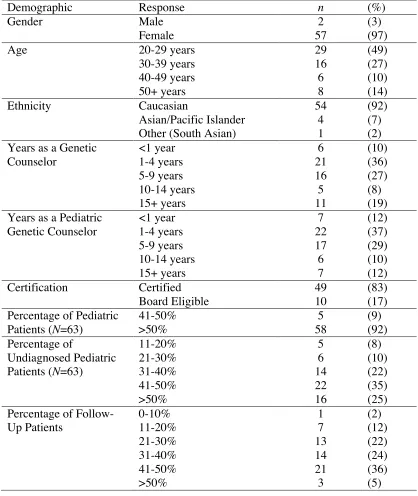
The participants’ demographics can be found in Table 2.1. The majority of
participants were female, Caucasian, and reported that at least 30% of their pediatric
patients were undiagnosed. There was a wide range of experience represented and most
Table 2.1 Participant Demographics (N = 59)
Demographic Response n (%)
Gender Male
Female
2 57
(3) (97)
Age 20-29 years
30-39 years 40-49 years 50+ years 29 16 6 8 (49) (27) (10) (14)
Ethnicity Caucasian
Asian/Pacific Islander Other (South Asian)
54 4 1 (92) (7) (2) Years as a Genetic
Counselor <1 year 1-4 years 5-9 years 10-14 years 15+ years 6 21 16 5 11 (10) (36) (27) (8) (19) Years as a Pediatric
Genetic Counselor <1 year 1-4 years 5-9 years 10-14 years 15+ years 7 22 17 6 7 (12) (37) (29) (10) (12) Certification Certified
Board Eligible
49 10
(83) (17) Percentage of Pediatric
Patients (N=63) 41-50% >50% 5 58 (9) (92) Percentage of Undiagnosed Pediatric Patients (N=63) 11-20% 21-30% 31-40% 41-50% >50% 5 6 14 22 16 (8) (10) (22) (35) (25) Percentage of
Follow-Up Patients 0-10% 11-20% 21-30% 31-40% 41-50% >50% 1 7 13 14 21 3 (2) (12) (22) (24) (36) (5)
2.4.1 Definition of the diagnostic odyssey. Participants were first asked to provide
their own definition of the diagnostic odyssey. Most participants (n = 62, 98%) provided
identified: patients included those with an unknown underlying cause for their medical
symptoms; the complex diagnostic workup including numerous tests, imaging,
procedures, and specialists; and the lack of a specific timeframe ranging from months to
years.
2.4.2 Current communication practices. Participants were asked about their
current communication practices with pediatric patients, including if they have a method
of recording undiagnosed patients for future identification and how they incorporate new
technologies into practice for undiagnosed patients. Only about a third of participants (n
= 23, 37%) reported having a method of recording undiagnosed patients for future
identification in their clinic. Of those who did not have a method of recording patients
and their diagnosis, about half (n = 18, 45%) believed that they needed a method.
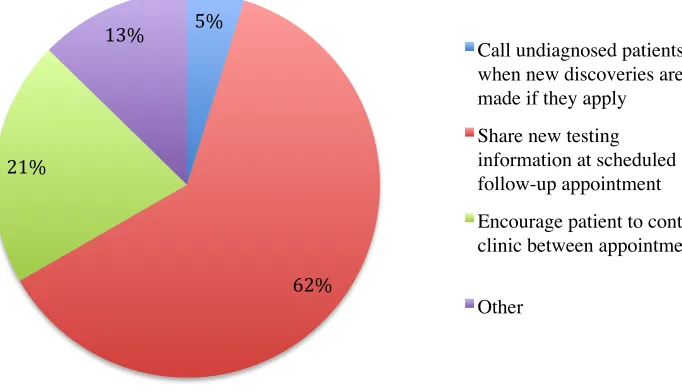
Participants were asked how they and their colleagues incorporate new
technologies into practice for undiagnosed patients. Results are shown in Figure 2.1. Of
the 25 participants who commented on the method(s) they use to record undiagnosed
patients for future identification, 12 (48%) discussed scheduling follow-up appointments
as their main method for tracking undiagnosed patients and 14 (56%) reported having a
database or spreadsheet of all pediatric patients with their diagnosis, or lack thereof,
recorded for reference. Nearly half (n = 26, 41%) of participants thought that another
method of communication for sharing new tests or novel discoveries would better benefit
Figure 2.1 Methods for incorporating new technologies into practice for undiagnosed patients.
From the 25 participants who suggested other methods of communication that
might benefit patients on their diagnostic odyssey, the predominant theme was utilizing
electronic modes such as secure email or patient portals, e-blasts and newsletters, or
social media (n = 14, 56%). A second theme was the difficulty of communication and
follow-up due to a lack of staff to manage the large quantity of patients and time required
to contact them (n = 5, 20%). Four participants believed that is not the responsibility of
the healthcare team to reach out to patients between appointments, regardless of updates
to testing or information.
2.4.3 Most important aspects of a genetic counseling session. Participants
compared the most important aspects of genetic counseling sessions for undiagnosed and
diagnosed patients. These two patient populations assessed aspects of genetic counseling
sessions for an initial appointment compared to a follow-up appointment. These
5%
62% 21%
13%
Call undiagnosed patients when new discoveries are made if they apply
Share new testing information at scheduled follow-up appointment
Encourage patient to contact clinic between appointments
Figure 2.2 Most important aspects of a session for new patients. Participants selected the three most important aspects of a session for both patient types.
Figure 2.3 Most important aspects of a session for follow-up patients. Participants selected the three most important aspects of a session for both patient types.
Chi-square analysis was used to compare the most important aspects of a genetic
counseling session for those patients with a diagnosis to those without a diagnosis. When
compared across all of the aspects as a whole, there was a statistically significant
difference between these two patient types for both new appointments as well as
follow-up appointments (p < .01).
2.4.4 Resources for patients on the diagnostic odyssey. Participants were also
asked about the different resources they provide to patients on a diagnostic odyssey.
These results are displayed in Figure 2.4. Most participants (n = 41, 65%) reported
providing resources general to the patient’s working diagnosis or main symptoms.
Figure 2.4 Resources provided to undiagnosed patients’ families. Participants selected all types of resources they provide.
Of the themes identified in the “Other” category, four participants utilize their
institutional resources, including social workers or care coordinators, and three refer
patients to appropriate research studies. Participants identified the group SWAN as being
0 10 20 30 40 50 60 70 Re sourc es G ene ra l t o t he P at ie nt 's W orki ng D ia gnos is Int erne t G roup Re sourc es Re sourc es G ene ra l t o t he P at ie nt 's G eogra phi c L oc at ion F ina nc ia l A id Re sourc es Re sourc es for P at ie nt s S pe ci fi ca ll y W it hout a D ia gnos is N one of t he A
bove Othe
r
P
er
ce
n
t of P
Genomics Institute, the National Organization for Rare Disorders (NORD), the Manton
Center for Orphan Diseases, and In Need of a Diagnosis as additional resources for this
particular patient population. The majority of participants (n = 55, 87%) felt that there is
a need for more resources that specifically pertain to undiagnosed patients.
2.4.5 Perceived purpose of a diagnosis. The genetic counselors’ perceptions of
how a diagnosis benefits parents was assessed using the benefits cited by parents in
previous literature, as well as which factors counselors find to be most helpful to parents
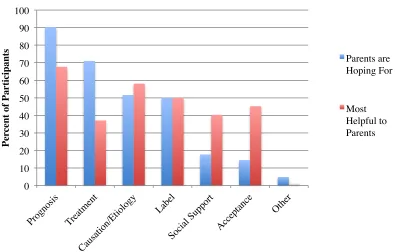
(Rosenthal et al., 2001). The results are depicted in Figure 2.5. Chi-square analysis of the
overall group of responses showed a statistically significant difference between the
factors that counselors believe parents are hoping for compared to those that the genetic
counselors believe are most helpful to the parents (p < .01).
Figure 2.5 Perceived purpose of a diagnosis. The reported numbers add up to over 100% because participants selected their top three benefits.
0 10 20 30 40 50 60 70 80 90 100
P
er
ce
n
t of P
ar
ti
ci
p
an
ts Parents are
Hoping For
Participants were asked to provide strategies they have found helpful for families
with a child on a diagnostic odyssey and their responses fell into three main categories:
emotional, informational, and support strategies.
Emotional strategies were identified by 28 of 41 participants and included
maintaining hope, exhibiting empathy, and acknowledging the family’s struggles and
frustrations. Additionally, preparing the family for the potential of the diagnostic odyssey
and managing their expectations early in the process is beneficial. Other emotional
strategies included being optimistic and normalizing the experience to help the family
know they are not alone in the diagnostic odyssey.
Informational strategies were identified by 20 of 41 participants and included
educating families about the improving knowledge base and technology to provide hope
for the future. Additionally, participants reported that it is beneficial to remind families
that a genetic diagnosis will likely not change the child’s medical management or
treatment options.
Finally, support strategies were identified by eight of 41 participants and included
directing the family to SWAN, assisting them with school accommodations and access to
therapies, and connecting them with other families in similar situations. Two counselors
reported not being sure of helpful strategies for families on the diagnostic odyssey.
Four themes were identified as limitations or barriers to assisting families on a
diagnostic odyssey. The first theme was financial barriers, which included the cost of
testing and lack of insurance coverage for genetic testing. Secondly, the informational
factor included limitations in the testing itself and our current education and knowledge
of information regarding the disease progression. The third theme was the emotional
stress of the diagnostic odyssey, including patients feeling burnt out or losing interest
from the long process and not returning for follow-up. The final theme was support,
which included patients feeling that there is a lack of support when they do not have a
diagnosis, a lack of specific resources, or social isolation.
2.4.6 Impact of the diagnostic odyssey on pediatric genetic counselors. Genetic
counselors reflected on the personal impact of interacting with patients on a diagnostic
odyssey. The results were diverse and are summarized in Table 2.2.
Table 2.2 Impact of the Diagnostic Odyssey on Genetic Counselors (N = 59)
Question Response n (%) Themes: Example
Do you feel
personally affected when the genetic testing/evaluation does not reveal a diagnosis for a patient? Yes No 35 (59) 24 (41)
Uncertainty: “I especially feel bad when families make family planning decisions based on the unknown risk of recurrence”
Personal responsibility: “You feel like you let the family down” Do you feel
personally affected when counseling a patient who has had an ongoing diagnostic odyssey? Yes No 30 (51) 29 (49)
Positive feelings: “If I didn’t feel personally affected – I wouldn’t be doing my job correctly. The key is to not let it impact your
performance or your emotional health”
Negative feelings: “Some families are desperately searching for an answer and you feel inadequate when you are unable to provide one”
When a patient has an ongoing diagnostic odyssey, does this impact your
counseling or ability to build rapport with the patient? Yes No 17 (29) 42 (71)
Builds stronger rapport: “I feel closer to these families because we work so hard on research, support, etc”
Strains in building rapport:
When asked about the utility of a positive genetic testing result for conditions
with limited natural history information, most participants felt that a positive result was at
least somewhat helpful or helpful (n =47, 80%), and 12 participants felt it was very
helpful. Although everyone felt a positive result was at least somewhat helpful,
participants reported both benefits and limitations of that result. Benefits included
providing a label for the child’s condition and closure to the family, as well as
eliminating blame the family may have been feeling and offering them relief. Other
benefits included the ability to use the result for family planning purposes, and to focus
the child’s medical management and open the door to additional resources and services.
Finally, participants found it beneficial to share the hope that more information would
become available in the future as similar results are identified in other children.
Eleven participants discussed the limitations of a positive result if there is not
well-known natural history information for the condition. These participants reported that
patients want a clear answer with specific management guidelines and prognostic
information and they may feel disappointed that an answer does not mean there is an
effective treatment to help their child.
For participants who felt personally affected by not finding a diagnosis for a
patient after genetic testing, they described situations that fell into the themes of personal
responsibility and uncertainty. Within the theme of personal responsibility, several
participants reported feeling frustration, especially when they think there should be an
underlying genetic cause for a child’s condition that was not identified by currently
available testing. One participant recalled a patient for whom she could not identify a
I have one couple who have one daughter with an epileptic
encephalopathy which we believe has a genetic basis, but we have yet to
determine the molecular mechanism. The couple are understandably
reluctant to consider another pregnancy without fully understanding the
recurrence risks, and we have regular conversations about whether there
is any additional testing available which may determine the genetic basis
of their daughters epilepsy. It is frustrating both for myself and the couple
that we are yet to provide them with the answers they seek.
Participants also reported feeling disappointed and that they “let the family down” when
they receive negative genetic test results and cannot provide additional information to the
family regarding their child’s condition. However, four participants reported remaining
hopeful that new clinical tests would be able to find the answers for their patients.
Most participants reported feeling frustrated all or some of the time when seeing
the same patient over and over without a diagnosis (n = 47, 80%). Some participants (n =
26) suggested strategies for coping with this frustration. The predominant strategies
included remaining optimistic about the future (n = 11) and lengthening the amount of
time between follow-up appointments to allow technology and knowledge to catch up
and be more likely to provide additional information (n = 4). Other strategies included
discussing their frustration with their colleagues or supervisors (n = 3) and utilizing
de-stressing techniques (n = 3). Feelings of frustration were not universal; two participants
felt that not having a diagnosis “is not a big deal” and therefore coping strategies were
When asked about ways the diagnostic odyssey may impact the counseling or
ability to build rapport with the family, counselors reported that it could both strain and
strengthen the connection. Some counselors (n = 11) reported the odyssey as having a
positive effect on rapport because they continued to follow the family over time and
worked hard to research the child’s features and make every visit worthwhile. As one
participant stated, “I actually think this is an opportunity for deeper rapport building, as
we are able to see how a family deals with uncertainty over time and provide
psychosocial support as needed.” On the other hand, counselors (n = 13) reported that
families start to feel that following up with genetics is not helpful and the family may
distrust the expertise of genetics’ professionals because they cannot provide more
information about their child’s condition. One example of this was stated as, “I feel like
families lose faith and trust in you and your team when we continue to have normal
results.”
2.5 Discussion
The diagnostic odyssey affects a significant portion of pediatric genetic
counseling patients, although there is little information on genetic counseling practices
for this patient population. Based on a survey of 63 pediatric genetic counselors, this
study identified current practices, including communication and follow-up methods with
patients, resources that are provided to patients, important aspects of the genetic
counseling session, perceived purpose of a diagnosis, and current limitations to providing
information to patients and families on the diagnostic odyssey. Additionally, responses
Our sample of pediatric genetic counselors was representative of the genetic
counselor population as a whole in regards to gender, age, and ethnicity, as described by
the National Society of Genetic Counselors (2014). The responses collected from
participants supported some features of genetic counseling sessions that we expected to
be true. This includes the fact that genetic counseling sessions differ for patients with and
without a diagnosis.
2.5.1 Definition of a diagnosis and the diagnostic odyssey. There are a variety of
definitions of a diagnosis in the current literature, including a clinical or syndromic
diagnosis, a molecular or genetic diagnosis, a working diagnosis, and others that are less
commonly used. The research focus was on the diagnostic odyssey, which emphasizes
the process of trying to identify a specific diagnosis, which may include one or more of
the above terms. However, the definitions of these terms vary and may have different
meaning to patients and professionals. Based on the literature and data recorded in this
study, it seems to be difficult to identify the true definition or categories of diagnoses. It
is also difficult to discern which definitions and aspects are most important to patients,
their families, and healthcare professionals. While it may be difficult to define a final
diagnosis, participants in this study had a shared understanding of the concept of the
diagnostic odyssey and expressed several consistent themes.
2.5.2 Communication with families on the diagnostic odyssey. Many of the
current follow-up and communication methods being utilized by our participants place
the responsibility of receiving updated information on the patients and their families.
Examples of this patient responsibility include returning for follow-up appointments or
However, some participants reported that other methods of communication may also be
beneficial, most of which place some of the responsibility back onto the genetics team,
such as sending out newsletters or messages via a secure patient portal.
Not all participants felt this issue had a clear answer. A few genetic counselors did
not believe that it was their role to contact patients between appointments, even if they
may have the time or ability to do so. However, according to Lipinski et al. (2006),
parents of patients want to be informed when new technologies are available that may be
beneficial in their search for an answer. This may lead genetic counselors to establish a
method for sharing this responsibility of communication between the healthcare team and
patients.
2.5.3 Resources for patients on the diagnostic odyssey. Some participants cited
the importance of normalizing the diagnostic odyssey and that many families do not
receive the answer for which they are looking. While normalizing is reported to be
helpful, less than half of participants reported referring patients to support groups
specifically for patients on a diagnostic odyssey or connecting these families. Genetic
counselors should be aware of support opportunities for these patients and seek to utilize
them. Genetic counselors may consider working with their own patients to create a local
network of families on a diagnostic odyssey. While the list of medical symptoms may not
be similar, the process and feelings about a diagnosis likely are similar. As Ainbinder et
al. (1998) reported, parent-to-parent support is a beneficial tool for these families, and
finding a match between parents is crucial. The connection of being on a diagnostic
odyssey may be sufficient for a successful relationship, and help show families that they
Additionally, participants reported wanting more resources for patients without a
diagnosis. In addition to referring patients to identified groups such as SWAN and
NORD, pediatric genetic counselors are well-equipped to play a role in developing
resources that may be helpful to these families. Genetic counselors may work with
affected families to create brochures, newsletters, or informational websites specific to
the diagnostic odyssey and their locale.
2.5.4 Impact of the diagnostic odyssey. Many participants discussed the personal
impact they feel from patients on the diagnostic odyssey. Importantly, genetic counselors
feel responsible for finding an answer for patients and their families, and when they are
unable to identify an answer, they feel frustration, disappointment, and a sense of
hopelessness. However, finding a diagnosis is not listed as one of the elements of the
genetic counseling process:
Genetic counseling is a process of helping people understand and adapt to the
medical, psychological and familial implications of genetic contributions to
disease. This process integrates:
• Interpretation of family and medical histories to assess the chance of
disease occurrence or recurrence.
• Education about inheritance, testing, management, prevention, resources
and research.
• Counseling to promote informed choices and adaptation to the risk or
condition. (National Society of Genetic Counselors, 2015)
Some of these elements may be more difficult to accomplish when a patient does not
occurrence or recurrence, but most are still possible with knowledge simply of that
patient’s current medical symptoms. As many counselors pointed out, managing
expectations about the risk of the diagnostic odyssey can also be beneficial to the family,
which is simply a different way of accomplishing the part of the process that is
“counseling to promote… adaptation to the risk or condition” (National Society of
Genetic Counselors, 2015).
It is important that pediatric genetic counselors recognize their feelings regarding
patients on the diagnostic odyssey and consider the variety of coping strategies discussed
above. Although the diagnostic odyssey can affect genetic counselors personally, they are
still able to accomplish their goals and provide information to families. It is also
important to acknowledge that genetics is a growing field in healthcare with new
information being discovered everyday, but to remain realistic and manage the families
and their personal expectations. In remaining self-aware of one’s own feelings, genetic
counselors can remain unbiased during sessions and eliminate countertransference while
still expressing empathy and understanding toward the patient’s experiences.
2.5.5 Study limitations. This study surveyed only a small portion of currently
practicing pediatric genetic counselors; therefore, the results may not be generalized to all
pediatric genetic counselors or pediatric genetics clinics. We did not assess the
counselors’ work setting, which may have an impact on the number of patients who are
on a diagnostic odyssey and therefore influence the participants’ experiences and
perspectives.
The majority of the questionnaire was created based on previous research
genetic counselors. Responses may have been limited or biased by these specific options
for some questions, although respondents had the option to provide additional
suggestions in the “Other” selection. We may have identified additional themes had the
study been completed via a primarily qualitative method.
2.5.6 Future research. As discussed above, additional information could be
collected from interviews with pediatric genetic counselors to determine their unbiased
views about the diagnostic odyssey. This may reveal themes that previous research with
genetics patients has not displayed up to this point. It would also be interesting to survey
or interview both genetic counselors and their patients on a diagnostic odyssey to
compare their desires and perspectives of the process. This would likely provide the
greatest insight into the diagnostic odyssey and reveal any discrepancies between
genetics professionals and their patients.
Furthermore, exploring the roles and responsibilities of genetic counselors further
may be informative to identify what patients want from genetic counselors when they are
on a diagnostic odyssey and what the counselors believe is their role in the process. This
may help clarify the discrepancy between communication with patients and available
resources and if genetic counselors should help provide additional resources or
information to patients between appointments.
2.6 Conclusions
Patients on a diagnostic odyssey make up a significant portion of patients seen in
genetics clinics. While patients on a diagnostic odyssey are common, it is challenging for
pediatric genetic counselors to incorporate new technologies, available resources, and
to do so. The aim of this study was to investigate current genetic counseling practices for
patients on a diagnostic odyssey and the impact of the diagnostic odyssey on pediatric
genetic counselors.
While about a third of pediatric genetic counselors already have a method of
tracking undiagnosed patients, others report the need for further tracking of undiagnosed
patients. Pediatric genetic counselors identified strategies to share the responsibility of
follow-up between the patient and the healthcare provider, including patients continuing
to follow-up with their clinic while also receiving newsletters or personal messages from
their providers. Genetic counselors also identified a need for more resources specifically
for patients on a diagnostic odyssey, potentially provided by the counselors themselves
via support groups within their institution or electronic groups and resources.
A wide range of themes was identified to describe the impact that the diagnostic
odyssey has on pediatric genetic counselors as well as limitations to helping the patients
and their families. Many counselors reported feeling frustrated and disappointed when
they are unable to provide the answers and information that parents desire. There are
many coping strategies to help address these feelings, and they should be utilized to avoid
countertransference. However, these feelings can be useful to acknowledge because they
may help build rapport between the genetics professionals and the family by showing
empathy and understanding for the family’s situation.
It is important for pediatric genetic counselors to recognize the difficulties
experienced by patients and families on a diagnostic odyssey and listen to what the
family needs. Genetic counselors should focus each session on the family’s goals while
counselors play a crucial role in the diagnostic odyssey and have an opportunity to make
the complex process an easier one by communicating with patients and remaining open
Chapter 3: Conclusions
Patients on a diagnostic odyssey make up a significant portion of patients seen in
genetics clinics. While patients on a diagnostic odyssey are common, it is challenging for
pediatric genetic counselors to incorporate new technologies, available resources, and
research into practice without having published recommendations or guidelines on how
to do so. The aim of this study was to investigate current genetic counseling practices for
patients on a diagnostic odyssey and the impact of the diagnostic odyssey on pediatric
genetic counselors.
While about a third of pediatric genetic counselors already have a method of
tracking undiagnosed patients, others report the need for further tracking of undiagnosed
patients. Pediatric genetic counselors identified strategies to share the responsibility of
follow-up between the patient and the healthcare provider, including patients continuing
to follow-up with their clinic while also receiving newsletters or personal messages from
their providers. Genetic counselors also identified a need for more resources specifically
for patients on a diagnostic odyssey, potentially provided by the counselors themselves
via support groups within their institution or electronic groups and resources.
A wide range of themes was identified to describe the impact that the diagnostic
odyssey has on pediatric genetic counselors as well as limitations to helping the patients
and their families. Many counselors reported feeling frustrated and disappointed when
countertransference. However, these feelings can be useful to acknowledge because they
may help build rapport between the genetics professionals and the family by showing
empathy and understanding for the family’s situation.
It is important for pediatric genetic counselors to recognize the difficulties
experienced by patients and families on a diagnostic odyssey and listen to what the
family needs. Genetic counselors should focus each session on the family’s goals while
presenting new genetic information and testing as appropriate for each patient. Genetic
counselors play a crucial role in the diagnostic odyssey and have an opportunity to make
the complex process an easier one by communicating with patients and remaining open
References
Ainbinder, J. G., Blanchard, L. W., Singer, G. H., Sullivan, M. E., Powers, L. K.,
Marquis, J. G., & Santelli, B. (1998). A qualitative study of Parent to Parent support for parents of children with special needs. Consortium to evaluate Parent to Parent. Journal of Pediatric Psychology, 23(2), 99–109.
American Psychiatric Association. (2013). Diagnostic and statistical manual of mental disorders (5th
ed.). Arlington, VA: American Psychiatric Publishing.
Carmichael, N., Tsipis, J., Windmueller, G., Mandel, L., & Estrella, E. (2015). “Is it Going to Hurt?”: The Impact of the Diagnostic Odyssey on Children and Their Families. Journal of Genetic Counseling, 24(2), 325–335.
http://doi.org/10.1007/s10897-014-9773-9
Daily, D. K., Ardinger, H. H., & Holmes, G. E. (2000). Identification and evaluation of mental retardation. American Family Physician, 61(4), 1059-1067.
Farwell, K. D., Shahmirzadi, L., El-Khechen, D., Powis, Z., Chao, E. C., Tippin Davis, B., … Tang, S. (2014). Enhanced utility of family-centered diagnostic exome sequencing with inheritance model–based analysis: results from 500 unselected families with undiagnosed genetic conditions. Genetics in Medicine, (August), 1–9. http://doi.org/10.1038/gim.2014.154
Graungaard, A. H., & Skov, L. (2007). Why do we need a diagnosis? A qualitative study of parents’ experiences, coping and needs, when the newborn child is severely disabled. Child: Care, Health and Development, 33(3), 296–307.
http://doi.org/10.1111/j.1365-2214.2006.00666.x
Jessop, D. J., & Stein, R. E. K. (1985). Uncertainty and its relation to the psychological and social correlates of chronic illness in children. Social Science & Medicine, 20(10), 993–999. http://doi.org/10.1016/0277-9536(85)90255-2
Lee, H., Deignan, J. L., Dorrani, N., Strom, S. P., Kantarci, S., Quintero-Rivera, F., … Nelson, S F. (2014). Clinical exome sequencing for genetic identification of rare Mendelian disorders. Journal of the American Medical Association, 312(18), 1880-1887.
Lenhard, W., Breitenbach, E., Ebert, H., Schindelhauer-Deutscher, H. J., & Henn, W. (2005). Psychological benefit of diagnostic certainty for mothers of children with disabilities: Lessons from Down syndrome. American Journal of Medical Genetics, 133 A(2), 170–175. http://doi.org/10.1002/ajmg.a.30571
Lewis, C., Skirton, H., & Jones, R. (2010). Living without a diagnosis: the parental experience. Genetic Testing and Molecular Biomarkers, 14(6), 807–815. http://doi.org/10.1089/gtmb.2010.0061
Lipinski, S. E., Lipinski, M. J., Biesecker, L. G., & Biesecker, B. B. (2006). Uncertainty and perceived personal control among parents of children with rare chromosome conditions: The role of genetic counseling. American Journal of Medical Genetics, Part C, 142 C, 232-240. http://doi.org/10.1002/ajmg.c.30107
Madeo, A. C., O’Brien, K. E., Bernhardt, B. A., & Biesecker, B. B. (2012). Factors associated with perceived uncertainty among parents of children with undiagnosed medical conditions. American Journal of Medical Genetics, Part A, 158 A(8), 1877– 1884. http://doi.org/10.1002/ajmg.a.35425
Makela, N. L., Birch, P. H., Friedman, J. M., & Marra, C. A. (2009). Parental perceived value of a diagnosis for Intellectual Disability (ID): A qualitative comparison of families with and without a diagnosis for their child’s ID. American Journal of Medical Genetics, Part A, 149(11), 2393–2402. http://doi.org/10.1002/ajmg.a.33050
Mardis, E. R. (2008). Next-generation DNA sequencing methods. Annual Review of Genomics and Human Genetics, 9, 387–402.
http://doi.org/10.1146/annurev.genom.9.081307.164359
Miller, D. T., Adam, M. P., Aradhya, S., Biesecker, L. G., Brothman, A. R., Carter, N. P., … Ledbetter, D. H. (2010). Consensus statement: Chromosomal microarray is a first-tier clinical diagnostic test for individuals with developmental disabilities or congenital anomalies. American Journal of Human Genetics, 86(5), 749–764. http://doi.org/10.1016/j.ajhg.2010.04.006
National Society of Genetic Counselors. (2014). 2014 Professional Status Survey: Executive Summary. Retrieved from http://nsgc.org/p/cm/ld/fid=68