© 2014, IJCSMC All Rights Reserved 337
Available Online atwww.ijcsmc.com
International Journal of Computer Science and Mobile Computing
A Monthly Journal of Computer Science and Information Technology
ISSN 2320–088X
IJCSMC, Vol. 3, Issue. 10, October 2014, pg.337 – 343
RESEARCH ARTICLE
DYNAMIC NON-COOPERATIVE
COMPUTATION FOR PRIVACY
PRESERVING DATA ANALYSIS
D. Saahas Reddy, V. Uma Rani, Dr. M. Sreenivasa Rao
School of Information Technology (Constituent College of JNTUH) Jawaharlal Nehru Technological University Hyderabad
Abstract: Data mining has been around for many years that can help organizations to discover actionable knowledge. When data is available with multiple data providers, it is useful practice to have privacy preserving collaborative data analysis in distributed environment. Many techniques came into existence in order to achieve this. Recently Kantarcioglu et al. proposed incentive compatible approach that motivates competing parties to provide genuine data instead of giving less than ideal or incompatible data. In this paper we implement a mechanism and built a prototype application that allows multiple parties to have secure communication in distributed environment. The parties are able to log into the system and provide data. It does mean that multiple parties can provide compatible data. The system verifies the data and comes to know whether it is genuine or not. When data provided is not compatible the system deducts the incentives and informs the party to provide data again. When valid data is provided, the incentives will be increased again. This technique along with secure multi-party computations makes the proposed system very useful for privacy preserving collaborative data analysis. The empirical results are encouraging.
Index Terms – Security, privacy-preserving data mining, horizontally partitioned data, vertically partitioned data
RELATED WORKS
This section reviews the literature on related works. Privacy preserving data mining is very
important as the data mining should not disclose sensitive details. The researchers in [6], [5] and
[7] focused on horizontally partitioned data. Other researches in [2] and [4] focused on vertically
partitioned data. Many privacy preserving data mining solutions [1] assumed that the participants
D. Saahas Reddy et al,International Journal of Computer Science and Mobile Computing, Vol.3 Issue.10, October- 2014, pg. 337-343
© 2014, IJCSMC All Rights Reserved 338
data is horizontally split into various sites. It does mean that the data is saved in various
locations. The collaborative data mining where multiple participants or competing parties
provide compatible data in a distributed environment it is important that all parties provide
genuine data. The vertical data is split into multiple databases and that can be used as and when
required. Non cooperative computation models and other related models were explored in [9].
More details are provided on NCC model in [8].
Another important research area explored in literature was about Secure Multi-Party
Computations (SMC) that helps multiple competing parties to contribute in providing data in
secure manner. The competing parties are supposed to give genuine data as explored in [3]. SMC
protocols take care of the secure communications among multiple parties who involve in the data
mining process. In this paper we follow an approach that provides incentives to the genuine data
givers. Among the competing parties, it is observed for any incompatible data. When
incompatible data is provided by any party, the incentives are reduced otherwise the incentives
are increased. The idea is to ensure that competing parties are encouraged to provide genuine
data.
PROTOTYPE IMPLEMENTATION
We built a prototype application that facilitates collaborative data mining. Multiple parties can
collaborate and provide data for mining in distributed environment. Privacy preserving data
mining is the important research area. In this paper we focused on building a data mining
application that allows multiple parties to give compatible inputs in order to mine the data to
produce business intelligence. Association rule mining is demonstrated with the application.
However, it can be extended to support all mining operations. The collaborative data mining
along with privacy preserving data analysis is possible with the help of the prototype application.
The application has the notion of incentives. Incentives allow the competing parties to behave
well. When they misbehave, the incentives will be decreased that will affect the credibility of
that party for participating collaborative computing. This is the motivation the competing parties
© 2014, IJCSMC All Rights Reserved 339
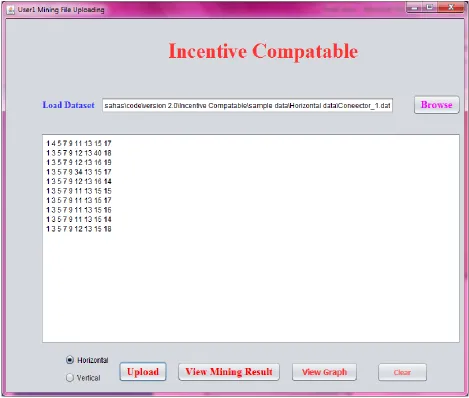
Figure 3 – User 1 loads either horizontal or vertically partitioned data
As can be seen in Figure 3, it is evident that the ends user is capable of providing inputs. This
way multiple parties can provide inputs for collaborative data mining. In this application three
users are considered for experiments. The UI for uploading data also provide functionalities for
viewing data mining results and have a graph to understand the data analysis details just by a
glance. In the same fashion, three users can provide inputs that are compatible. On clicking view
D. Saahas Reddy et al,International Journal of Computer Science and Mobile Computing, Vol.3 Issue.10, October- 2014, pg. 337-343
© 2014, IJCSMC All Rights Reserved 340
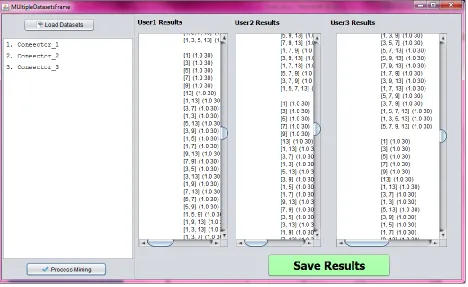
Figure 4 – The results of collaborative data mining
As can be seen in Figure 4 it is evident that the mining results are presented. However before
mining results the data given by the competing parties is revivified for compatibility. If any
inconsistency with respect to given values is suspected, that particular party is notified besides
reducing incentives. Then one more chance is given to provide correct data. When the party
gives correct data again the incentives will be restored and the process of mining gets completed.
© 2014, IJCSMC All Rights Reserved 341
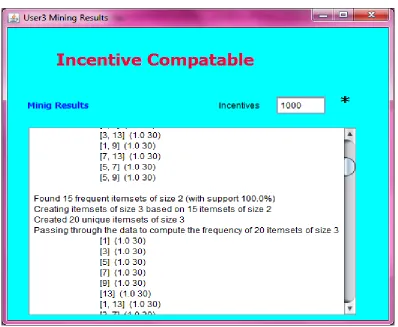
Figure 5 – Consolidated results of collaborative and privacy preserving data analysis
While performing the data mining after taking data from competing parties, the security is
applied and each party needs to provide pre-distributed key so as to validate users in a secure
distributed environment. Figure 6 presents the results of incompatible data provided by one of
the parties. Then the incentives are reduced so as to encourage the party to give correct input.
This will reduce the chances of misbehavior on parties thus achieving privacy preserving
D. Saahas Reddy et al,International Journal of Computer Science and Mobile Computing, Vol.3 Issue.10, October- 2014, pg. 337-343
© 2014, IJCSMC All Rights Reserved 342
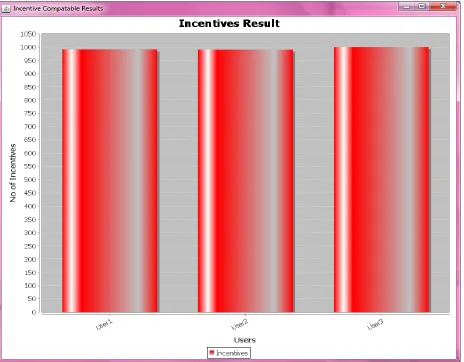
Figure 6 – Incentives of different competing parties
As can be seen in Figure 6, it is evident that the parties involved in the privacy preserving
collaborative data analysis are given incentives for every genuine act. For every misbehaving act,
incentives are reduced. This makes them get motivated to provide genuine results so as to
achieve the purpose of collaborative data analysis in distributed environment.
CONCLUSIONS AND FUTURE WORK
In this paper, we studied the problem of collaborative data analysis. When multiple competing
parties are involved in providing data for privacy preserving data analysis, the parties might
provide either genuine data or they provide incompatible data. In this paper we explored the
possibilities to encourage all competing parties to provide genuine data so as to serve the purpose
© 2014, IJCSMC All Rights Reserved 343
business models. We presented secure and incentive compatible approach that lets competing
parties to get incentives for genuine data. When incompatible data is suspected, the incentives
are reduced. This is the motivation for the competing parties to behave well and provide genuine
data. We built a prototype application that demonstrates the proof of concept. The empirical
results revealed that the proposed solution is good for collaborative and privacy preserving data
analysis in distributed environment. In future we extend this research into other aspects such as
Big Data mining with MapReduce programming using distributed programming frameworks like
Hadoop.
REFERENCES
[1] R. Agrawal and E. Terzi, “On Honesty in Sovereign Information Sharing,” Proc. Int’l Conf. Advances in Database Technology, pp. 240- 256, 2006.
[2] “Directive 95/46/EC of the European Parliament and of the Council of 24 Oct. 1995 on the Protection of Individuals with Regard to the Processing of Personal Data and on the Free Movement of Such Data,” Official J. European Communities,
vol. 281, pp. 31-50, Oct. 1995.
[3] J. Halpern and V. Teague, “Rational Secret Sharing and Multiparty Computation: Extended Abstract,” Proc. Ann. ACM Symp. Theory of Computing (STOC ’04), pp. 623-632, 2004.
[4] S. Han and W.K. Ng, “Preemptive Measures against Malicious Party in Privacy-Preserving Data Mining,” Proc. SIAM Int’l Conf. Data Mining (SDM), pp. 375-386, 2008.
[5] S.D. Gordon and J. Katz, “Rational Secret Sharing, Revisited,” Proc. Int’l Conf. Security and Cryptography for Networks, p. 229, 2006.
[6] J. Halpern and V. Teague, “Rational Secret Sharing and Multiparty Computation: Extended Abstract,” Proc. Ann. ACM Symp. Theory of Computing (STOC ’04), pp. 623-632, 2004.
[7] S. Han and W.K. Ng, “Preemptive Measures against Malicious Party in Privacy-Preserving Data Mining,” Proc. SIAM Int’l Conf. Data Mining (SDM), pp. 375-386, 2008.