MP-7.01
Changing concepts in the management of antenatal hydronephrosis investigated during the neonatal period
Barrieras D1, Keu K2, Houle AM1, Lambert R2, Turpin S2, Franc-Guimond J1 1Department of Surgery, Division of Pediatric Urology; 2Department of Nuclear
Medicine, Université de Montréal, CHU Sainte-Justine, Montréal, QC Introduction and Objective:Antenatal hydronephrosis (HN) represents a challenging dilemma in pediatric urology. Difficulties reside in identify-ing patients who require a pyeloplasty as well as those who do not, but might over time. Aside from differential function and T1/2 measurements, no other renographic criteria have stood the test of time to diagnose obstruc-tion. At our institution, renograms have been performed in an original fash-ion over the last 10 years using additfash-ional criteria including delayed cor-tical excretion (DCE) and a postfurosemide washout (PFW) at 90 minutes. Materials and Methods:Between 1998 and 2007, 236 of 613 patients with antenatal HN had a renogram done in the first month of life. Ultrasonography and VCUG were also obtained. Renograms were classified as class 1: 20-minute PFW 40% or greater; class 2: 20-minute PFW less than 40% and additional PFW at 90 minutes 50% or greater; class 3:20-minute PFW less than 40% and additional PFW at 90 minutes less than 50%; class 4: class 3 with DCE; or class 5: class 3 with differential function less than 40%. Decisions to operate were based on the findings of poor drainage (class 3), worsened drainage on repeated studies (classes 1–2 becoming > 3) and/or signs of renal suffering (classes 4–5).
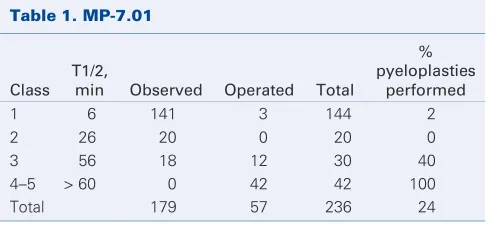
Results: Seventy-six percent have been managed conservatively with improved dilatation, hence drainage, on sequential studies (renograms and/or ultrasounds) without loss of function overtime. Three class 1 HN required pyeloplasties because of worsening drainage over time. All renal functions were preserved and drainage improved postoperatively. No class 2 required surgery while 40% of class 3 showed renographic dete-rioration within months and were operated without losing function. Pyeloplasties were performed for all classes 4 and 5 with most of them losing function after surgery despite improved HN and drainage (Table 1).
Conclusion:Renograms can be performed accurately in patients younger than 1 month old who are evaluated for antenatal HN using our reno-graphic classification to decide for whom a pyeloplasty will most likely be needed, regardless of the T1/2.
MP-7.02
Clinical value of uroflowmetry for long-term follow-up of hypospadias repair
Guerra L, Villegas L, DeCarli C, Leonard M
University of Ottawa, Children’s Hospital of Eastern Ontario, Ottawa, ON Introduction and Objective:Uroflowmetry is used as a noninvasive test
in the follow-up of patients who undergo hypospadias repair at our insti-tution. We evaluate if uroflowmetry predicts the need for reoperation due to urethral obstruction in children with previous hypospadias repair. Materials and Methods: Research ethics board–approved retrospective chart review of hypospadias repairs at our institution from 1992 to 2006. Uroflowmetry at least 6 months after the last repair was recorded. Maximum flow (QMAX), average flow (QAVE) voided volume (VCOMP) and residual
vol-umes were analyzed. They were considered normal flow rate with QMAX
between 5th and 90th percentiles or poor flow rate below 5th percentile. Postvoid residual was considered high if it was more than 10% of VCOMP.
Results:One hundred twenty-four patients had uroflowmetry follow-up. Median age at primary hypospadias repair was 17 months (1st quartile: 2.4; 3rd quartile: 39.9). Median follow-up was 7.8 years (1st quartile: 5.8; 3rd quartile: 9.18). Technique: transurethral incised plate (TIP) 33% (41/124), tubularized island flap (TIF) 28% (35/124), Mathieu 19% (23/124), meatal advancement 6.5% (8/124), onlay island flap (OIF) 6.5% (8/124), others 7% (9/124). Postoperatively 65% (81/124) had normal flow (5th–90th percentiles) and 35% (43/124) had poor flow rates (< 5th percentile). Surgery for urethral obstruction was performed in 35% (15/43) and 23% (19/81) of patients with abnormal and normal postoperative uroflowme-try, respectively (p = 0.17). PVR was high in 28.4% (23/81) and 23.2% (10/43) of patients with normal and poor flow, respectively (p = 0.54). Conclusion:Routine uroflowmetry posthypospadias repair in asympto-matic children was not useful in predicting the need for reoperation due to urethral obstruction. High postvoid residual was not associated with abnormal uroflowmetry. A more useful test for identification of patients who will need reoperation for urethral obstruction post–hypospadias repair is needed.
MP-7.03
Prognostic factors in resolution of antenatally diagnosed hydronephrosis: a multivariable analysis
Afshar K, Longpre M, Yanko D, Jafari S
Department of Urologic Sciences, University of British Columbia, Vancouver, BC
Introduction and Objective:Antenatal hydronephrosis (AH), the most common abnormality found in prenatal ultrasounds, affects between 1% and 5% of all pregnancies. The majority of these cases will resolve post-natally. The clinical challenge lies in differentiating between obstructive and nonobstructive AH. A number of factors have been explored as pre-dictors of the outcome. The individual role of each of these variables remains unclear. The purpose of this study is to determine independent predictors for resolution.
Materials and Methods: A retrospective chart review was performed on 100 children who were referred to the urology clinic at BC Children’s Hospital with the diagnosis of AH. Exclusion criteria consisted of those with hydronephrosis due to reflux, ureterocele and distal ureter or blad-der outlet obstruction. Patients with resolved AH were compared with those requiring pyeloplasty in a univariate analysis in terms of sex, lat-erality, severity of AH, anteroposterior pelvic diameter (APD), parenchy-mal thickness, differential function of the kidney in renogram and devel-opment of clinical complications. This was followed by a Cox proportional hazard model for multivariable analysis.
Results:Of the 100 patients (118 renal units) 98 were male and 20 female. Median follow-up was 25 (range 3–108) months. Pyeloplasty was done in 39 cases. In univariate analysis resolution was only significantly associ-ated with initial APD (p = 0.03). SFU grade, parenchymal thickness sex and laterality did not show a significant association with the outcome. Multivariate analysis confirmed the same results. Anteroposterior pelvic
Moderated Poster Session 7: Pediatric Urology
June 30, 2009, 1415–1545
Table 1. MP-7.01
Class T1/2,
min Observed Operated Total
% pyeloplasties
performed
1 6 141 3 144 2
2 26 20 0 20 0
3 56 18 12 30 40
4–5 > 60 0 42 42 100
diameter showed a hazard ratio of 0.91 (95% CI 0.85–0.98).
Conclusion: The initial APD is the only independent predictor for reso-lution of antenatal hydronephrosis in our series. This model will help clinicians in managing these patients and counselling their families.
MP-7.04
Impact of penile degloving on ventral curvature correction in children with proximal hypospadias
Weber B, Braga L, Pippi Salle J, Farhat W, Bagli D, Lorenzo A Pediatric Urology, Hospital for Sick Children, Toronto, ON
Introduction and Objective: Penile degloving is an important step in ortho-plasty. Although its role on correcting mild curvature in distal and mid-shaft hypospadias has been previously reported, its impact on ventral cur-vature (VC) correction in proximal defects warrants further investigation. Therefore, we sought to document the effect of degloving on curvature correction in children with proximal hypospadias.
Materials and Methods: We retrospectively reviewed the records of 137 patients who underwent proximal hypospadias repair between 1998 and 2006. Ventral curvature, defined as mild (< 20%), moderate (20%–45%), and severe (> 45%), was recorded before penile degloving and after erec-tion test. Patients were divided into 3 groups according to the curvature severity: group I — mild; group II — moderate; and group III — severe. Percent improvement in VC and need for further treatment (beyond deglov-ing) based on preoperative degree of curvature were assessed. ANOVA test was used to compare improvement among the 3 groups.
Results:Mean age at repair was 14 (6–24) months. Penile degloving alone was responsible for improvement in the degree of curvature in 7 of 9 (77%) patients with mild VC, 23 of 44 (52%) with moderate and 35 of 84 (40%) with severe VC. Additionally, degloving alone was sufficient for VC cor-rection in 7 of 9 (77%) mild cases, 14 of 44 (30%) moderate and only 2 of 84 (2%) severe cases. The difference among these 3 groups was statistically significant (p < 0.01).
Conclusion:Penile degloving alone can correct VC in many proximal hypospadias cases. The percentage of improvement is dependent on preoperative degree of curvature, with severe VC cases showing the least improvement.
MP-7.05
Retroperitoneoscopic nephrectomy in children on peritoneal dialysis: the gold standard
Szymanski K, Bitzan M, Capolicchio J Montréal Children’s Hospital, Montréal, QC
Introduction and Objective:The literature on minimally invasive nephrec-tomy in patients on peritoneal dialysis (PD) is sparse. Isolated case reports claim that the transperitoneal approach is effective. We present our expe-rience with the retroperitoneal approach (RPN) in children on PD, which to our knowledge is the second reported experience, and the only one documenting dialysis outcomes.
Materials and Methods: Fourteen kidneys were removed from 10 children (median age 11.5 yr; range 6–17 yr) during 11 consecutive RPNs from 2001 to 2008. Three other successful RPNs were excluded from further analysis because the PD catheter was not used. Indications included nephrotic-range proteinuria in 8 patients, hypertension in 6 and polyuria in 5, all in preparation for renal transplantation. A 3-port lateral RPN tech-nique was used, with significant trainee participation. Preoperative and postoperative biochemistries within 3 months of surgery were compared with the Wilcoxon signed rank test.
Results:Three bilateral synchronous, 1 bilateral staged and 6 unilateral RPNs were performed. Mean operating times were 174 (range 115–250) minutes for unilateral and 454 (range 370–575) minutes for bilateral RPNs, including 1 simultaneous PD insertion and 1 umbilical hernia repair. No open conversions or blood transfusion were needed. Peritoneal dialysis was initiated after a median of 11 (range 3–56) hours postoperatively, with a final dialysate titration at a median of 60 (range 5–312) hours. One patient had a peritoneotomy repaired intraoperatively and was hemodialyzed until transplant 1.5 months later. Five patients were rendered anuric. Of the remaining 5 patients, 2 maintained nephrotic-range proteinuria and all
3 previously polyuric patients had desired urine output reduction (p = 0.04). Serum albumin and protein concentrations improved significantly after sur-gery for all patients (p = 0.04 and p = 0.002, respectively). No postoper-ative complications were noted except for 1 case of C. difficile diarrhea. Conclusion:Retroperitoneal approach for end-stage renal disease is a safe and effective operative technique, which preserves peritoneal integrity in children requiring immediate postoperative PD. In the absence of data to the contrary, RPN should be considered the gold standard in patients on PD, as it obviates morbidity related to vascular access for hemodialysis.
MP-7.06
In vitro reconstruction of an autologous, watertight and resistant vesical equivalent
Bouhout S, Bernard G, Perron E, Méthot-Langevin D, Bolduc S Laboratoire d’Organogénèse Expérimentale LOEX, Hôpital du St-Sacrement, Department of Surgery, Université Laval, Québec, QC
Introduction and Objective:Actually, enterocystoplasty is the gold stan-dard to perform bladder reconstruction or replacement. Since this tech-nique has a high morbidity rate, research in bioengineering is underway but new alternatives are needed. At the moment, autologous vesical sub-stitutes are entirely made by tissue engineering without the use of exoge-nous matrices at LOEX. Watertight function and mechanical resistance are the major properties of the model that we are working on. The aim of this study is to determine the histological and functional characteristics of our vesical equivalents.
Materials and Methods:The 3 cellular types composing the vesical wall are extracted simultaneously from a small porcine bladder biopsy, and then purified according to a technique previously described. Fibroblasts, urothelial and endothelial cells evolve in a 3-dimensional culture to obtain a vesical equivalent easy to handle. First, the study of reconstructed tissue is based on histological examination by Masson trichrome staining. Antibodies directed against matrix proteins on the one hand, cytokeratines and uroplakine’s family on the other hand, characterize the presence of the different cells types like their high level of differentiation. Finally, mechanical resistance is estimated by uniaxial tensile tests, and the impermeability of our construct is quantified with 14C-Urea.
Results:This process allowed us to obtain a highly structured tissue. In accordance with our expectations, histological observations displayed a pseudostratification of the urothelium developing on an organized self-secreted extracellular matrix. Expression and organization of proteins spe-cific to urothelial cells, revealed by immunohistochemistry and Western blots, testified of its good differentiation. Permeability profiles were com-parable to that of a porcine native bladder. Finally, the mechanical results obtained showed an appropriate resistance for suturing and handling. Conclusion: This method to produce vesical equivalents seems very prom-ising to meet the needs in the urological field. Our construct has proven its efficiency as a barrier to urea and has a sufficient mechanical resist-ance to support suturing. Additionally, this model is completely autolo-gous, and its possible endothelialization could promote the early vascu-larization process after grafting and it would significantly reduce inflammation and possible rejection.
MP-7.07
Is it reasonable to observe patients with persistent vesicoureteral reflux after failed first endoscopic injection?
injection and analyze predictors for a second surgery.
Materials and Methods: Between July 2003 and June 2005, 170 chil-dren (250 refluxing units, RRU) endoscopically injected with DxHA were retrospectively reviewed. Of these, 23 boys and 59 girls (108 ureters, 43%) had persistent VUR 3 months after the surgery. Their subsequent treatment was reviewed and correlated with possible factors responsible for the man-agement decision at the time of documented VUR persistence. Results:Initial indication for endoscopic injection was urinary tract infec-tion (UTI) in 94% of the cases. Preoperatively, 69% of the ureters present-ed high grade VUR (3, 4, 5). Mean age at surgery was 61 (9–184) months. After failure of the first injection, 58 RRU underwent further procedures while 50 were followed conservatively. At a mean follow-up of 26 (3–52) months, of the 41 patients followed with persistent VUR, 7 (17%) had a subsequent UTIs compared with 15 (36%) of the reoperated patients and 6% of the patients with a successful first injection (p < 0.01). Indications for further surgery included attempt at correction following the first sur-gery (32 RRU), UTIs (25 RRU) and pain in 1. Forty-three ureters were rein-jected with a success rate of 51%. Of the 21 ureters who failed the sec-ond injection, 11 were observed, 2 underwent a third injection and 8 were reimplanted. Nine other ureters were directly reimplanted after the first failed injection and 2 poorly functioning kidneys were removed. Patients with recurrent UTIs and higher grade of VUR were more likely to under-go a second surgery after the initial injection regardless of findings on DMSA scan (p < 0.01).
Conclusion:Our data questions the need to automatically reintervene in all cases that fail initial endoscopic injection. After failure to endoscop-ically correct VUR treatment goals should be reassessed and further inter-ventions may be tailored based on parental preferences and risk factors for recurrent UTIs.
MP-7.08
Prospective cost-analysis of laparoscopic versus open pyeloplasty in children: single centre contemporary evaluation of 2 procedures over a 1-year period
Moore K, Farhat W, Leslie B, El-Hout Y, Bagli D, Pippi Salle J, Lorenzo A Hospital for Sick Children, University of Toronto, Toronto, ON Introduction and Objective: Laparoscopy in pediatric urological surgery continues to grown in acceptance. Even though economic implications are of increasing importance in our cost-containment environment, few stud-ies have compared the expense associated with open and laparoscopic approaches. Herein we present a prospective comparative cost-analysis between the laparoscopic and open approaches for pediatric pyeloplasty. Materials and Methods: Between April 2007 and March 2008, 54 con-secutives pyeloplasties were performed. This time frame is past our ini-tial laparoscopic experience, thus beyond the learning-curve period. The “traditional” open approach (OA) was performed for 33 patients and the remaining 21 children underwent laparoscopic pyeloplasty (LP), depending on surgeon’s preference. Costs were prospectively col-lected for each group and divided based on amounts incurred by all different departments involved (nursing, laboratory, diagnostic imaging, pharmacy, operative room).
Results: Overall, the average cost for a laparoscopic pyeloplasty was Can$6240 compared with Can$5079 for an open procedure with a medi-an hospital stay of 2 days for both groups (rmedi-ange OA: 1–18, LP: 1–7). Nursing care was more expensive for open pyeloplasty (OA: Can$1999 v. LP: Can$1716). Pharmacy, diagnostic imaging and laboratory costs were equivalent for the 2 approaches. The main difference found was in oper-ative room expenses (OA: Can$2508 v. LP: Can$3925). The higher cost could not be solely explained by the use of the disposable items, which only subtracts CDN$335 per procedure (23.6% of the cost difference between OA and LP). Time in the recovery room was the same for both groups. Length of time spent in the operating room was 1.2 hours longer for the laparoscopic cases and appears to be the main factor explaining the cost difference.
Conclusion:Our findings show that in our institution pediatric laparoscop-ic pyeloplasty is more expensive than the open technique. This cost dif-ference is mainly due to operating room time. For cost-containment
pur-poses, efforts aimed at increasing efficiency in the operating room may help equalize both approaches form an economic point of view. Superiority of laparoscopic from open pyeloplasty remains an unresolved yet criti-cal issue that would make possible required cost-effectiveness analyses.
MP-7.09
Ultrasonography estimate of testicular volume as an indication for adolescent varicocelectomy: impact of formula choice and measurement error on size discrepancy
Moore K, Leslie B, El-Hout Y, Grober E, Pippi Salle J, Bagli D, Farhat W, Lorenzo A
Hospital for Sick Children, University of Toronto, Toronto, ON Introduction and Objective:Relative testicular volume disparity meas-ured by ultrasonography is a commonly followed parameter in pediatric varicocele patients and is a formal indication for surgery. Cut off values triggering correction, differences in formulas used for calculation, impact of inter/intraobserver discrepancies and measurement error are relevant yet not well studied issues. In this study we evaluate the implications of these measurement matters on volume difference, considering changes in testicular size and true discrepancies in testicular volume.
Materials and Methods:A mathematical model was programmed in SPSS syntax and queried for measurement discrepancies and indication for sur-gery triggered by different cut-offs (10%, 15%, 20%). Ellipsoid, prolate ellipsoid and Lambert’s empirical formulas were used for volume cal-culation. Critical error, defined as the error that would lead to surgery based on a pre-established cut-off value, was calculated for different height, length and width values taking into account true testicular volume differences.
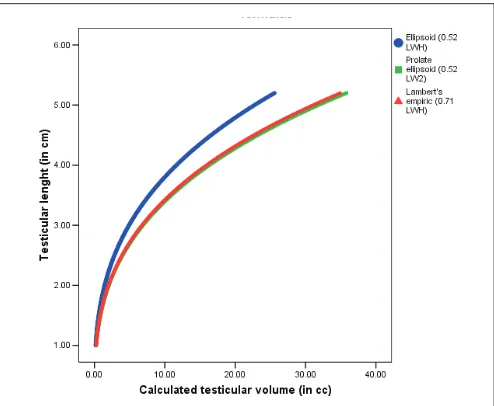
Results:The use of each formula lead to different volume estimates for equal value parameters and divergent volume differences (p < 0.01 for all comparisons) (Fig. 1). Critical error values varied significantly with
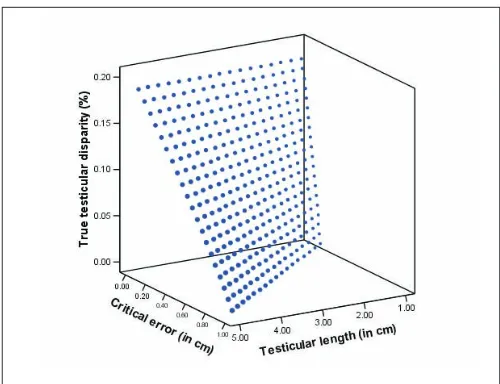
testicular size, true testicular volume difference and cut-off for surgery (p < 0.01). In an average adolescent testicle measurement error of 0.10– 0.98 cm (Fig. 2) lead to surgery based on a 20% cut-off value and 0.03– 0.48 cm on 10%, respectively. The limited reported intra/interobserver variability is within these margins of error.
measurement inconsistencies can lead to clinically important differences, issue that should be further explored considering the potentially important implications for treatment and monitoring.
MP-7.10
Conservative management of grade versus renal injury in children: Does it have a place?
Eassa W1, Abo El-Ghar M2, Jednak R1, El-Sherbiny M1
1Division of Urology, Montréal Children’s Hospital, MUHC, Montréal, QC; 2Mansoura Urology and Nephrology Center, Mansoura, Egypt
Introduction and Objective:Nonoperative treatment of blunt renal ma in children is progressively gaining acceptance, grade V renal trau-ma is associated with significant rate of complications. To assess the feasibility and outcome of initial conservative management of grade V blunt renal trauma in children.
Materials and Methods: The study included 18 children (12 boys and 6 girls; mean age 8.4, standard deviation 3.4, yr) who presented to the authors’ institutes with grade V blunt renal trauma between 1990 and 2007. An intravenous contrast-enhanced computed tomography scan demonstrated grade V renal trauma in all patients. Associated major vas-cular injuries were suspected in 4 patients. All were initially managed conservatively. Indications for intervention included hemodynamic instability, progressively increasing urinoma or persistent bleeding. Dimercaptosuccinic acid (DMSA) scans were performed at a mean time of 3.1 (range 1–17) years following the injury in 9 patients.
Results:Four patients (22%) with suspected major vascular injuries required nephrectomy 1–21 days following the trauma. Two patients required selec-tive lower pole arterial embolization (11%). Three patients (17%) had their progressive nonresolving urinoma drained percutaneously and 2 of these patients required a delayed reparative surgery for ureteropelvic junction (UPJ) avulsion. Nine patients (50%) were successfully managed conser-vatively with no intervention. Kidneys were salvaged in 78% of patients. DMSA scanning showed a split function more than 40% in 44% of evaluated kidneys. Two patients (22%) had split function below 30%. At last follow-up, none of the children were hypertensive or had any abnormality on urine analysis. The study is retrospective.
Conclusion: Conservative management of grade V renal trauma is feasible. Surgical intervention is required for those with major vascular injuries. Renal salvage approaches 75% of cases. With such good preser-vation of renal function, our series provides objective support for the conservative treatment of grade V renal injuries.
MP-7.11
Dextranomer/hyaluronic acid copolymer (Deflux) injections in a teaching centre: the real picture
Letendre J, Barrieras D, Houle AM, Franc-Guimond J
CHU Sainte-Justine, Department of Surgery, Division of Pediatric Urology, Montréal, QC
Introduction and Objective:In the medical literature, injection of bulk-ing agents has demonstrated good success rates for endoscopic treat-ment of vesicoureteral reflux (VUR) but the best results are reported by those who do many, operate themselves and often modified the technique using larger amounts of injected material. At our institution, we use a mod-ified sting procedure and allow all team members to participate. We here-by evaluate the long-term effectiveness of endoscopic treatment of VUR performed at our teaching hospital.
Materials and Methods:Between 2005 and 2008, 23 males and 56 females (median age of 5.8 yr) underwent endoscopic correction of primary VUR with Deflux. Reflux was unilateral in 30 cases and bilateral in 49, affect-ing 128 ureters. Reflux was grade I in 13 (10%) cases, grade II in 49 (38%), grade III in 53 (42%) and grade IV in 13 (10%). All patients underwent endoscopic correction as a day procedure. A modified sting procedure was used and surgery was either conducted by attendings or residents/fel-lows under attending’s supervision. In addition to routine parameters, patients have been followed with initial cystograms performed late at an average of 11 months.
Results:A total of 128 refluxing ureters were initially injected with Deflux. The reflux was corrected in 86/128 ureters (67%) after a single injection with a success rate by patient of 58%. Second injections increased those numbers to 82% and 75%, respectively. An average bolus volume of 0.75 mL was used for first and second injections. Successful results by grade (I to IV) after the first injection were 84.7%, 75.5%, 58.5% and 53.8%. We found a statistical difference between grades I–II (77.4%) versus grades III–IV (57.6%) (p = 0.0235).
Conclusion:Our results are comparable to others reported in the litera-ture showing that endoscopic treatment of VUR can be done in a teach-ing settteach-ing usteach-ing moderate volumes of bulkteach-ing agents especially for low-grade VUR.
MP-7.12
Dye-assisted lymphatic-sparing laparoscopic varicocelectomy in children: initial Canadian experience
Eassa W, Jednak R, El-Sherbiny M, Capolicchio J
Division of Urology, Montréal Children’s Hospital, McGill University Health Centre, Montréal, QC
Introduction and Objective:Varicocelectomy in children is still without a “gold standard” treatment. Though the microscopic technique appears to be effective in adults, there are growing concerns about the risk of testicular loss in children due to arterial injury. The Palomo technique offers a low recurrence rate but with risk of postoperative hydrocele, which could be obviated with lymphatic-sparing. We present our initial expe-rience with dye-assisted, lymphatic-sparing, laparoscopic varicocelecto-my (LSLV) in children.
Materials and Methods:Between 2006 and 2008, 14 consecutive left LSLVs were performed by 3 surgeons. Children were a mean age of 15 (range 12–18) years. Varicocele grade was 2 in 4 (29%) cases and grade 3 in 10 (71%) cases. Indications for intervention were testicular hypotro-phy in 8 (57%) cases, pain in 5 (36%) and family preference in 1 (7%). A scrotal, subdartos injection of 2 mL of 1% isosulfan blue or patent blue dye was followed by a 5-mm, 3-port transperitoneal exposure of the spermatic vessels. At least 1 lymphatic was spared and the rest of the spermatic vessels were mass ligated and divided. Clinical data was collected from a retrospective chart review.
Results:Lymphatics were identified in all patients after 1 injection in 12 and 2 injections in 2. A single lymphatic was spared in 10 cases, 2 in 3 cases and 3 in 1 case, though after the first 6 cases the intention changed to spare only 1 lymphatic. One patient had simultaneous hydro-celectomy. Overall time of the procedure varied from 30 to 140 (mean 89, standard deviation [SD] 33) minutes. All patients were treated as Fig. 2.Effect of testicular size and true testicular disparity on critical error that
outpatients with no perioperative complications recorded. Follow-up ranged from 1 to 13 (mean 8, SD 4.2) months. At last visit, a minimal resid-ual varicocele was noted in 2 cases and no hydroceles. To date no patient has required reintervention.
Conclusion: This early multisurgeon experience demonstrates that dye-assisted LSLV is easily accomplished. The initial outcomes appear promising, yet longer follow-up and a larger cohort are required to accurately assess the efficacy.
MP-7.13
Antegrade renal pressure perfusion: contemporary use of the Whitaker test
Ray A, Gilmour R, Pace K, Honey R
St. Michael’s Hospital, University of Toronto, Toronto, ON
Introduction and Objective:Renal pressure-perfusion (RPP) measurement is a seldom-used test that provides real-time functional assessment of urinary tract drainage with the added benefit of providing anatomical infor-mation. In adult patients, the test may be used in cases of equivocal imag-ing or persistent diagnostic uncertainty to discriminate obstructive versus nonobstructive hydronephrosis.
Materials and Methods: We reviewed all Whitaker tests conducted at our institution between January 2002 and December 2008. All tests were per-formed using standardized criteria by a single technologist through a previously placed percutaneous nephrostomy (PCN) tube. Contrast was used for radiographic imaging to provide anatomical information. A Harvard pump was used at a setting of 5 to provide a constant infusion rate of 11 mL/min. The test was terminated when a steady state was reached or when the patient complained of flank pain. Standardized cutoffs were: no obstruction, less than 15 cm H2O; indeterminate, 15–22 cm H2O; and
obstruction, greater than 22 cm H2O.
Results:Twenty patients underwent 21 renal pressure perfusion meas-urements during the study period. The test was performed for diagnostic purposes in 11 cases and to assess drainage before removal of a PCN in 10 cases. In total, 12 patients (57.1%) were found to have normal drainage, 8 patients (38.1%) to be obstructed and 1 patient (4.8%) had indeterminate Whitaker pressures with a satisfactory antegrade nephrostogram. Mean RPP was 25.7 (standard deviation [SD] 4.4) cm H2O in obstructed kidneys
and 4.2 (SD 3.8) cm H2O in nonobstructed kidneys. There was
diagnos-tic disagreement in 5 of 10 occasions where a prior lasix renogram was available for comparison; however, management was dictated by the Whitaker result in all cases. Follow-up was available for 19 patients; mean 21.0 (SD 7.0) months (range 1.5–69.7). Based on follow-up data, sensi-tivity of the RPP measurement was 100% and specificity was 85.7%. In only 1 case was subsequent management changed. In this patient, fol-lowing endopyelotomy, the RPP predicted obstruction with pain, prolonging PCN drainage by 1 week.
Conclusion:In a heterogeneous patient population, including complex cases of reconstruction and transplantation, determination of renal per-fusion pressure combined with antegrade pyelography provided valuable information that accurately guided patient management.
MP-7.14
Outcome analysis of tapered ureteral reimplantation: 14-year single-institution experience
Leslie B, Moore K, Farhat W, Bagli D, Lorenzo A, Pippi-Salle J Hospital for Sick Children, Toronto, ON
Introduction and Objective: Variable results have been reported regard-ing the outcome of tapered ureteral reimplantation (TUR), with obstruc-tion ranging from 0% to 15%, postoperative vesicoureteral reflux (VUR) from 0% to 17% and need for reoperation between 0% and 11%. Due to the discrepancies in the literature, we sought to review the results of this procedure at our institution.
Materials and Methods: Medical records of all children who underwent tapered ureteral reimplantation from 1994 to 2007 regardless of the indi-cation for surgery were reviewed. Demographic data, underlying megau-reter etiology, tapering and urenteroneocystomy technique, and postop-erative complications (obstruction, VUR and reoperations) were recorded.
Results: A total of 60 megaureteres (57 patients) underwent TUR, 2 patients were excluded owing to lack of follow-up. Average patient age at sur-gery was 5.3 years (3 mo–15 yr) and the mean follow-up was 49.7 months (4 mo–12 yr). In 50 units a primary megaureter was identified while in 8 the dilation was secondary to prune belly syndrome or posterior ure-thral valves. Excisional tapering was performed in 51 ureteres (87%), and a plication in 7 (13%). The ureteroneocystostomy was extravesical in 31 units (53%) and intravesical in 27 (47%). Obstruction was detect-ed in 6 patients (10.3%), postoperative VUR in 2 patients (3.4%); all cases underwent further surgical procedures. Initial correction of postopera-tive obstruction was attempted with endoscopic approach in 4 patients, all without success. Ultimately the 6 cases with obstruction underwent nephrectomy (1), transureteroureterostomy (1) and redo reimplantation (4). The 2 children with postoperative VUR were successfully treated with endoscopic injection with bulking agent. The rate of obstruction in the primary megaureteres was 6% (3 obstructions in 50 units) compared with 37% in the secondary cases (3 in 8 ureters) (p = 0.002). No differ-ence in the complications rate was found when analyzing for age groups, and tapering or ureteroneocystostomy technique.
Conclusion:Our data supports that ureteral tapering has a high success rate although secondary megaureteres may have an increased chance of complications. Postoperative obstruction after ureteral tapering does not appear to respond to endoscopic treatment; thus, early open surgical correction should be strongly considered.
MP-7.15
Can we avoid removing the adrenal gland at the time of radical nephrectomy in children with Wilms tumour?
Moore K1, Leslie B1, Bolduc S2, Lorenzo A1
1Hospital for Sick Children, University of Toronto, Toronto, ON; 2Centre
Hospitalier Universitaire de Québec, Université Laval, Québec, QC Introduction and Objective:The risk factors for adrenal involvement and indications for adrenalectomy with renal cell carcinoma have been well studied. However, for Wilms tumour, the indications and needs for adrenalectomy are not well defined. Thus current protocols lack specif-ic guidelines and ultimately leave the option to the surgeon. Following the rationale for preserving the adrenal gland during radical resection of other renal malignancies, we sought to determine predictors for adrenal involve-ment and the impact of adrenalectomy on retroperitoneal recurrence.
Materials and Methods:We retrospectively reviewed all the charts of the patients who underwent surgical resection for Wilms tumour between 1990 and 2008 in 2 large Canadian pediatric referral centres. Children who underwent preoperative chemotherapy or partial nephrectomy were excluded. Patients’ characteristics were reviewed, including findings on preoperative diagnostic imaging and pathology reports to determine their potential link with adrenal involvement. Recurrence was evaluated as a time-dependent variable based on follow-up duration.
Results:One hundred eighty patients were diagnosed with Wilms tumour during the study period. Of those, 91 underwent initial radical nephrectomy as primary treatment. The mean age at diagnosis was 46.7 (standard deviation [SD] 38) months and follow-up 108.3 (SD 219.9) months. The disease was stage 1 in 28 patients, 2 in 31, 3 in 24 and 4 in 8. Adrenalectomy was performed, according to surgeon’s judgement, in