New non-validated practice:
an enhanced definition of innovative practice for medicine Ignacio Mastroleo [1-3]* and Felicitas Holzer [1-4]
1 National Scientific and Technical Research Council (CONICET), 1425 Buenos Aires, Argentina 2 Program of Bioethics FLACSO collaborating centre of PAHO/WHO, 1050 Buenos Aires, Argentina 3 Department of Philosophy, University of Buenos Aires, 1420 Buenos Aires, Argentina 4 Department of Philosophy, Sorbonne University, 75005 Paris, France
* Corresponding author: [email protected]
Key words: right to try, innovation in medicine, innovative care, innovative practice, distinction between research and practice
ABSTRACT ...2
INTRODUCTION ...2
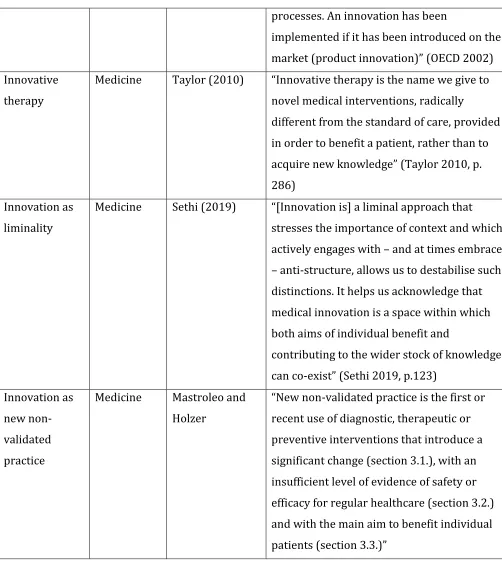
Table 1. Concise comparison of definitions of innovation in medicine and other fields ...4
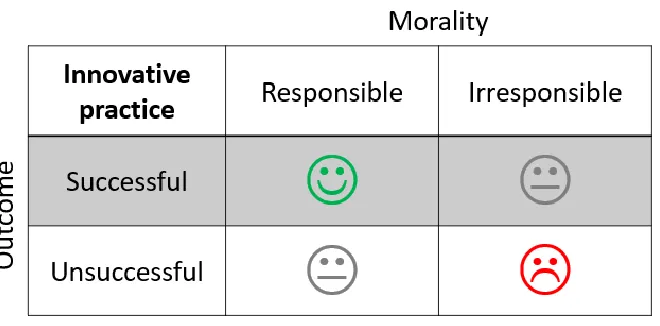
Figure 1. Neutrality of the definition of innovative practice ...6
1. THE DEFINITION OF INNOVATION IN TRADITIONAL RESEARCH ETHICS ...8
1.1. The Belmont Report’s Definitions of Validated Practice, Research, and Innovation ...8
1.2. Levine’s Definition of Non-Validated Practice ... 12
2. EXEMPLARY CASES OF INNOVATIVE PRACTICE ... 14
3. NEW NON-VALIDATED PRACTICE ... 18
3.1. First or recent significant change (“New”) ... 20
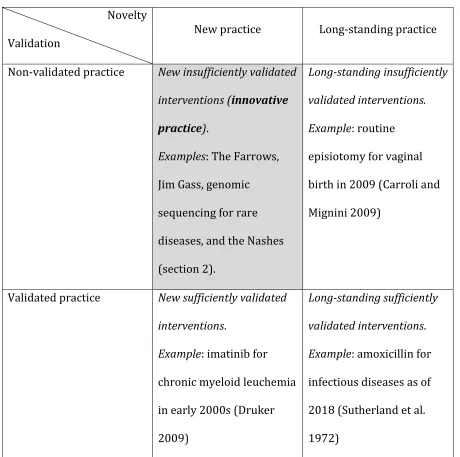
Table 2. 2D classification of medical practice characterized by validation and novelty ... 23
3.2. Insufficient evidence for regular healthcare (“Non-Validated”) ... 26
Table 3. Evidence-based upper and lower conceptual bounds of innovative practice in medicine ... 28
3.3. Intention to Benefit Individual Patients (“Practice”) ... 33
CONCLUSION ... 39
REFERENCES ... 40
INSTITUTIONAL SUPPORT ... 47
ABSTRACT
A significant part of the literature on innovative practice in medicine relates to seizing
opportunities and curbing harms for patients in desperate situations. Unfortunately, the term
innovation has multiple meanings and a rich rhetorical flourish that adds confusion and
misunderstanding to an already difficult debate. This paper aims to enhance the current definition
of innovative practice for medicine. First, we replace the term innovation with the more literal of
new non-validated practice. To identify this meaning, we analyse the traditional research ethics’
distinction between research, validated practice, and innovation in the Belmont Report. Second,
we propose the following explicit definition of new non-validated practice: the first or recent use
of diagnostic, therapeutic or preventive interventions that introduce a significant change, with an
insufficient level of evidence of safety or efficacy for regular healthcare, and with the main aim to
benefit individual patients. This definition is a promising conceptual tool to inform empirical
research, ethicists, and the harmonization of its regulation and legislation (e.g. right-to-try laws).
INTRODUCTION
The activity of innovative practice and the concept of innovation have gained importance in
medical ethics guidelines (Rietsma and Moreno 2006; Larcher et al 2018; ACOG 2015; ISSCR
2016), ethical literature (Taylor 2010; Sugarman 2012; Joffe 2014; Wilkinson & Savulescu 2017;
Schuklenk and Smalling 2017; London 2018; Holzer and Mastroleo 2019a, 2019b; Earl 2019) and
current discussions of different “right-to-try” regulations in various countries (Cockburn and Fay
2019; Mastroianni 2006; Montgomery 2019; Miola 2015, 2019; Dresser 2016; Fins 2017;
is seizing opportunity and curbing harm for patients in desperate situations and the dilemmas
around it. However, the term innovation has multiple meanings and a rhetorical flourish that
generates confusion and problems of communication to an already difficult debate (Baregheh,
Rowley and Sambrook 2009). Hence, recent literature suggests to avoid the term innovation for
study and regulation, or if it cannot be avoided, to be defined explicitly (Lilford 2018, Birchley et al
2019). Therefore, this paper aims to enhance the definition of innovative practice in two ways.
Fist, we propose to curb the problem of rhetoric and multiple meanings of innovation by replacing
it with the more literal of new non-validated practice and by distinguishing the specific meaning of
innovation in medicine. To identify this specific meaning, we analyze the traditional research
ethics distinction between research, validated practice, and innovation. Second, we propose the
following unified definition of “new non-validated practice”, that is, the first or recent use of
diagnostic, therapeutic or preventive interventions that introduce a significant change (“new”);
with an insufficient level of evidence of safety or efficacy for regular healthcare (“non-validated”);
and with the main aim to benefit individual patients (“practice”).
One easy way to show that the term innovation and its derivatives has a specific meaning in
medicine, is to compare it to other widely used definitions of innovation in other fields (see Table
1).
Term Field Author Definition
Innovation Economy Shumpeter (1947)
Innovation is “the doing of new things or the
doing of things that are already being done in
a new way” (Schumpeter 1947, p. 151)
Technological innovation
Technology OECD (2002) “Technological innovations comprise new
processes. An innovation has been
implemented if it has been introduced on the
market (product innovation)” (OECD 2002)
Innovative therapy
Medicine Taylor (2010) “Innovative therapy is the name we give to
novel medical interventions, radically
different from the standard of care, provided in order to benefit a patient, rather than to
acquire new knowledge” (Taylor 2010, p.
286) Innovation as
liminality
Medicine Sethi (2019) “[Innovation is] a liminal approach that stresses the importance of context and which actively engages with – and at times embraces
– anti-structure, allows us to destabilise such distinctions. It helps us acknowledge that medical innovation is a space within which both aims of individual benefit and
contributing to the wider stock of knowledge can co-exist” (Sethi 2019, p.123)
Innovation as new non-validated practice
Medicine Mastroleo and Holzer
“New non-validated practice is the first or recent use of diagnostic, therapeutic or preventive interventions that introduce a significant change (section 3.1.), with an insufficient level of evidence of safety or efficacy for regular healthcare (section 3.2.) and with the main aim to benefit individual
patients (section 3.3.)”
Table 1. Concise comparison of definitions of innovation in medicine and other fields
In economy, Schumpeter defines innovation broadly as “the doing of new things or the doing of
things that are already being done in a new way” (Schumpeter 1947, p. 151). A more specific
and their introduction in the market (“product innovation”) (OECD 2002). However, despite the
family resemblance, the meaning of innovation in medicine we want to capture refers to an
activity that has as its main aim the wellbeing of patients. For instance, Taylor states that
“innovative therapy is the name we give to novel medical interventions, radically different from
the standard of care, provided to benefit a patient, rather than to acquire new knowledge (Taylor
2010, p. 286). What will strike some readers is that the term innovation at stake refers to a special
form of medical practice, rather than to a research activity (National Commission 1979, Taylor
2010, Sugarman 2012). Neither the economic nor the technological definition considers the main
aim or intention of the innovative activity. Hence, they cannot capture this specific meaning of
innovation in medicine. This is important because medical practice and medical research have
different legal and ethical regulations that include different economic, administrative, and judicial
consequences (Mastroianni 2006; Taylor 2010). Taylor’s definition of innovative therapy does
capture the main aim of innovative practice and distinguish it from the main aim of research
(“acquire new knowledge”). It should be mentioned there are also tendencies to blur the
research-practice distinction regarding the term innovation as a medical activity. Lately, Sethi (2019, p.
123f) has defined as a “liminal approach” that, depending on the context, should be seen as a space
that comprises both, features of research and practice.
While Taylor’s term “innovative therapy” is too narrowly tailored to therapies (as innovative
practice applies also to diagnostic and preventive measures, not only therapies), Sethi’s account
seems to refer to more general “terrains” or new innovative medical fields. As we will argue, a
unified definition suchas new non-validated practiceavoids the ambiguous term “innovation” and
captures both the main aim and appropriate scope of innovative practice as diagnostic,
non-validated practice allows comparing activities in different fields of medicine that previously have
been considered unconnected (e.g. compassionate use of investigational drugs, humanitarian uses
of devices, novel off-label uses, etc.). In turn, since the definition of innovative practice is logically
prior to its justification and regulation, it also provides a promising conceptual tool to inform
empirical research, discuss responsible access to innovative care and evaluate the regulation of
innovative practice (e.g. right-to-try laws).
However, before proceeding, we would like to make two clarifications. First, that new
non-validated practice is a neutral definition of innovative practice. We understand that a definition is
neutral if it can capture all relevant cases of innovation, whether successful or failed (outcome
neutrality), responsible or irresponsible (moral neutrality) (see figure 1). Here, we agree with
Lipworth et al. that neutrality regarding ethical justification and regulation is an essential feature
of an adequate definition of innovative practice because we want to have room for reasonable
disagreement and avoid using the definition as a rhetorical wand that can compromise critical
evaluation (Lipworth et al. 2018, p.101).
Second, we want to clearly state that a systematic analysis of the ethical justification and
regulation of innovative practice is outside the scope of this paper. The ethical problem of
innovative practice can be broken down into three interrelated questions. First, what is innovation
in medicine? (definition). Second, is innovation ethically permissible? (justification). Third, if
permissible, what are the ethical principles and appropriate governance of innovation?
(regulation). In view of our aim, in this paper we will mainly focus on the first question. However,
we will sometimes need to present substantive positions to show how our definition works. When
we do this, we will explicitly present these positions as maintained either by the defenders or
detractors of innovation and rely on most commonly held ethical principles and frameworks of
responsible innovative practice when needed (e.g. Taylor 2010, WMA 1964 [2013], para. 37, ACOG
2015, ISSCR 2016, Larcher et al 2018).
To defend our proposal, we will proceed as follows. In section 1, we analyze the definition of
innovation in traditional research ethics. We revisit the distinction between research, validated
practice, and innovation in the Belmont Report. Finally, we reconstruct Levine’s definition of
non-validated practice.1 In section 2, we present a selection of exemplary cases to show why innovative
practice is usually considered a valuable medical activity that is different from both validated
practice and research. This preliminary conceptual analysis and the exemplary cases help us to
develop the conceptual core of our proposal. Readers familiar with this discussion may want to
skip ahead to section 3. In section 3, we introduce our definition of new non-validated practice and
critically analyze its components. To avoid confusions with related activities, we also introduce a
1 In our knowledge, this is first attempt in the literature to eliminate the term innovation from the definition of innovative
four-category classification of interventions used in medical practice that logically follows from
our proposal
1. THE DEFINITION OF INNOVATION IN TRADITIONAL RESEARCH ETHICS
1.1. The Belmont Report’s Definitions of Validated Practice, Research, and Innovation
According to Beauchamp and Saghai (2012), the National Commission for the Protection of
Human Subjects of Biomedical and Behavioral Research (hereinafter the Commission) established
two classes of activities labeled “research” and “practice” as categories for medical activities that
are logically distinguishable from each other (although they may coexist in complex activities).
The practical aim of this distinction in the Belmont Report is to establish what kinds of activities
must undergo special regulations and ethical review by institutional review boards. However, the
distinction is not drawn between research and practice as such, but between research and
validated practice2. Hence, the Commission defines validated practice as follows:
[F]or the most part, the term [validated] “practice” refers to interventions where: (P1) the
purpose of an intervention is “to provide diagnosis, preventive treatment, or therapy”; (P2)
the intervention is “designed solely to enhance the well-being of an individual patient or
client” (though benefit to other persons is sometimes the goal); (P3) the intervention has “a
reasonable expectation of success” (National Commission 1979; as quoted in Beauchamp
and Saghai, 2012, p. 52, edited).
2 . Here, we interpret standard practice in the prescriptive sense that it has a sufficient level of evidence
In our interpretation of the scope condition (P1), the term “practice” refers to preventive,
diagnostic, or therapeutic uses of medical interventions, as well as—we will include as a logical
addition—their combination. However, the necessary condition that defines practice is the design
condition (P2); that is, if a medical intervention’s main aim is to enhance the well-being of an
individual patient. Hereinafter, we will drop the “solely” in the formulation of (P2). This does not
present a particular problem for traditional research ethics, since the Belmont Report includes
both a wide and narrow formulations of the practice condition. Practice, in a narrow sense, refers
to paradigmatic cases of the doctor–patient relationship (Beauchamp and Saghai 2012, p. 54).
However, the Belmont Report also formulates design condition (P2) in a broad sense as “an
intervention designed to enhance the well-being of a particular individual or groups of
individuals” (National Commission 1979, note 1). This broad formulation logically captures the
narrow paradigmatic sense of practice, as well as non-paradigmatic cases of practice, for example, interventions designed only to enhance the well-being of others (e.g., blood donation and organ
transplant) and interventions designed to enhance the well-being of an individual and others (e.g.,
vaccination) (Levine 1979, p. 22; National Commission 1979, note 1).
The remaining question is how to interpret the validation condition (P3) of “reasonable
expectations of success”. Reasonable expectations of success vary in different contexts. Here, we
wish to distinguish between two different contexts, that is, the use of an intervention in regular
healthcare and the use of an intervention for patients with unmet health needs and no reasonable
alternatives. We will argue that, for validated practice, the validation condition (P3) should be
interpreted as referring to the use of interventions in regular healthcare contexts. If this is the
case, all exemplary cases of innovation fail, by definition, to meet the evidence threshold of
The Commission also defines research as follows:
To qualify as research two conditions are central. The first is not a necessary condition for
all forms of research, but the second is a necessary condition: (R1) there is (in pertinent
research methods) a formal protocol-controlled design to test a hypothesis; (R2) there is an
organized design ‘to develop or contribute to generalizable [scientific] knowledge’.
(National Commission 1979; as quoted in Beauchamp and Saghai 2012, p. 52).
The design condition (R2) of “generalizable [scientific] knowledge” defines research according
to the traditional view. The Commission differentiates “generalizable knowledge” gain through
research from other forms of knowledge gained through medical learning activities 3. They
recommend that if an activity has an organized design “to develop or contribute to generalizable
knowledge,” it should undergo a research review to protect human subjects, irrespective of the
fact that the intervention is also intended to provide a direct health benefit for an individual
patient (Levine 1979, p. 23). Thus, the Belmont report established a precautionary measure to
prevent researchers from taking advantage of a loophole in the oversight system by presenting
research with components of care under the label of “practice” to avoid the review process
(Beauchamp and Saghai 2012, p. 43). However, this measure does not apply to uses of
interventions with the main aim to the benefit of an individual patient with insufficient level of
evidence of safety or efficacy for regular healthcare, if they do not have evident research
components (e.g. .
3“[…] knowledge gained through research must be oriented toward the types of generalizations found in scientific theories,
scientific laws, and statements of relationships, in contrast to the learning that occurs in particular cases through astute
Finally, the Commission introduces a further distinction they call innovation and that cannot be
regarded as validated practice or research:
When a clinician departs in a significant way from standard or accepted practice, the
innovation does not, in and of itself, constitute research. The fact that a procedure is
“experimental” in the sense of new, untested, or different does not automatically place it in
the category of research. Radically new procedures of this description should, however, be
made the object of formal research at an early stage in order to determine whether they are
safe and effective. Thus, it is the responsibility of medicalpractice committees, for example,
to insist that a major innovation be incorporated into a formal research project (National
Commission 1979, emphasis added).
In the Belmont Report, innovation is defined mainly in terms of novel interventions that
significantly depart from validated practice, but retain their main aim to benefit patients. The
Commission refers less clearly to non-validation (“untested” procedures). Innovation does not
constitute research even if it entails a relevant change in the benefit-harm profile of an
intervention in comparison with standard practice. As we will discuss, this implies that the
practice-research distinction in traditional research ethics is not related to the harm-benefit
profile or soundness of evidence of a medical activity. Whether an activity is research or practice
depends on what the activity is designed to do, that is, its main aim or intention (and the
appropriate means used to pursue them). The Commission does neither consider innovation to be
a grey zone between research and practice (King 2002), nor introduce a third sui generis category
of activities for innovation (Lotz 2013). Instead, as we will argue following Levine, the Commission
As a result, commissioners and staff were concerned about underprotection of patients.
Toulmin and others even hypothesized that certain medical practices, such as innovative
therapies, were potentially more risky than well-design research (Beauchamp and Saghai 2012, p.
50; Fins 2017). Hence, the Commission went beyond defining innovation in the Belmont Report.
They supported the view that the oversight of innovation should be improved and advised
“medical practice committees” (not IRBs or research ethics committees) are responsible that
innovation should be made the object of formal research at some point. But eventually the
Commission fell short of proposing regulations for innovation. They made that decision because
the National Research Act was about research and the politics of institutional forces in medicine
would not allow any venture into the regulation of practice (Beauchamp and Saghai 2012, p.
45-50; Fins 2017).
1.2. Levine’s Definition of Non-Validated Practice
Levine (1979) offers a thorough analysis regarding the concept of innovation based on the
Commission’s different reports. According to Levine (1979), the purpose of the Commission in
introducing the term innovation has been to avoid common confusion with research because they
share the attribute of significant change from accepted or standard practice. However, Levine
suggests abandoning the term innovation for a better term and defines this subclass of practice as
follows:
Nonvalidated practices [sic.]. A class of procedures performed by physicians conforms to
the definition of “practice” to the extent that these procedures are [P2] “designed solely to
enhance the well-being of an individual patient or client.” However, [not P3] they may not
reasonable expectation of success.” The Commission uses various terms to describe these
procedures: [e.g.] “innovative therapies”[…]. In my opinion, the best designation for this
class of procedures is “nonvalidated practices” [sic.]. Novelty is not the attribute that
defines this class of practices; rather, it is the lack of suitable validation of the safety or
efficacy of the practice (Levine 1979, p. 22, edited).
First, although here the scope condition (P1) is not mentioned it is implied. In later work Levine
clarifies that “the Commission’s reasoning about how to deal with such practices applies to
diagnostic and preventive measures, not only therapies” (Levine 2008, p. 218). Hence, “innovative
therapy” (Taylor 2010) and its derivatives does not capture the full extension of the term
innovation in research ethics or is confusing. This is the case because if taken literally, it restricts
the scope to just one of the three possible uses of a medical intervention. Second, Levine
disregards novelty as a defining attribute of innovation. In section 3.1, we argue this is a mistake
and try to amend it. Third, for Levine, what makes practice non-validated is the failure to meet
“reasonable expectations of success” condition (not P3). In section 3.2, we contend that both the
Commission and Levine understand “reasonable expectations of success” as referring to the level
of evidence an intervention should meet to be used as regular healthcare. Finally, Levine considers
an intervention as practice if it meets the design condition of “enhancing the well-being of
individuals” (P2). Although Levine quotes the narrow (“solely”) formulation of design condition
(P2), we will interpret it in the wider sense, as discussed above. Levine’s conceptual analysis sheds
light on the fact that the Commission considers innovation as a form of practice, not research or
other sui generis category. In section 3.3, we will further inquire what it means for an intervention
will be useful to firstly flesh out to the concept of innovation to make it more comprehensible to
the general reader.
2. EXEMPLARY CASES OF INNOVATIVE PRACTICE
Before developing our proposal, we outline three exemplary cases of what we consider
innovation in medicine, already within the definition of traditional research ethics. Our aim here is
to give the reader an intuitive grasp of the circumstances where innovation occurs. To save space,
we have imposed two restrictions: first, we only provide exemplary cases of therapeutic and
diagnostic uses, but not preventive interventions4 ; second, we skip classic examples of innovation
in surgery in favor of cases with drugs, biologicals and devices where the discussion is less
well-developed.5
Our first exemplary case of innovation refers to the successful therapeutic use of an
intervention:
The Farrows: stem cell transplantation of umbilical cord blood. In 1988, Matthew Farrow, a
5-year-old patient with Fanconi’s anemia who had no reasonable medical alternatives for
treatment, received the first successful umbilical cord blood transplant from his baby
sister, Alison Farrow, based on sound scientific evidence, including animal studies
(Gluckman et al. 1989; BBC 2001). Since this first successful transplantation, cord blood is
now widely used as a treatment with hematopoietic stem cells for a wide range of
4 For instance, preventive uses of interventions for Ebola Virus Disease under the Monitored Emergency Use of
Unregistered Interventions (MEURI) framework could be regarded as an exemplary case of preventive new non-validated practice (WHO 2018).
5 Here we follow the authors that consider innovative practice can be applied to both technologies and surgery in medicine
malignant and non-malignant conditions (Gluckman et al. 1997; Taylor 2010; Sugarman
2012).
Intuitively, we argue that successful cases such as Matthew Farrow illustrate the potential
benefits of innovative practice, which serves as a basis for defending it for patients with unmet
health needs, serious conditions and no reasonable, validated medical alternatives in frameworks
of responsible innovation.
Nevertheless, the use of new non-validated interventions that aim to benefit individual patients
does not always attain the desirable results for patients deprived of alternative validated options.
Therefore, consider the following case of a failed therapeutic use of an intervention:
Jim Gass: stem cell therapies. The case of Jim Gass caused an outcry in international media
that illustrated a growing concern about the number of “stem cell tourists” worldwide. He
had several stem cell interventions at private clinics in Mexico, China, and Argentina,
paying tens of thousands of dollars each time for injections to recover from a stroke. The
total cost, including travel expenses, reached 300,000 US dollars. Eventually, Jim Gass
developed a tumor in his lower spinal column. The subsequent tests showed that the tumor
mass was made up of abnormal, primitive cells that were growing aggressively (Kolata
2016).
Someone may claim that the case of Jim Gass is not an exemplary case of responsible innovation
but one of potentially inappropriate or futile use of cell therapy. This is a reasonable claim, and it
will be discussed in section 3.2. However, this case is useful to remind us that our proposal is
neutral and captures all cases of innovation, whether successful or unsuccessful, responsible or
As implied in the scope condition (P1), examples of using new and unproven interventions
outside of sound research are not limited to therapeutic and preventive procedures and can also
be exemplified by diagnostic use of interventions.
Genome sequencing for rare diseases. Two siblings in the United Kingdom with an unusual
muscle wasting disease had to wait 20 years until they were diagnosed at a cost of more
than 14,000 pounds sterling. Whole exome sequencing, costing approximately 1,000
pounds at this time, revealed that a heterozygous mutation was likely disease causing
(Perdeaux 2013; Rehm et al. 2015).
Although genomic sequencing does not “intervene” in the sense it can change the patient’s
genome like gene editing, new diagnostic tools are interventions in the sense that they have the
potential to change a given patient’s life prospect. Patients who suffer from rare diseases are
usually in this situation. They often face unsuccessful and burdensome diagnostic procedures over
several decades. Despite the uncertainties of our genetic knowledge, rapidly diagnosing a rare
disease could be crucial to avoid distress, and unnecessary potentially harmful therapeutic
interventions. Moreover, in some cases molecular diagnosis of rare diseases may lead to improved
treatment or preventive decisions. In the defenders’ view of responsible innovation,
considerations of this kind make the benefit-harm profile of new non-validated diagnostic
interventions positive for the use in a limited number of patients, despite its inherent risks.
Therefore, some uses of genome sequencing technologies, including whole genome and whole
exome sequencing for patients with rare diseases, are recent exemplary cases of innovative
Finally, innovative practice can be the result of combining different interventions with different
purposes for the main aim to benefit an individual patient:
The Nashes case: IVF, cord blood transplant, and PGD. Molly Nash was born in 1994 with
type-C Fanconi’s anemia, a more aggressive type than that affecting Matthew Farrow.
Lacking a suitable match for a bone marrow transplant, the Nashes conceived a baby they
named Adam to be a suitable umbilical cord blood donor that possibly matched with Molly.
However, due to their low probability of having a baby without Fanconi’s anemia, the
parents had to use three different interventions—namely, in vitro fertilization (IVF),
pre-implantation genetic diagnosis (PGD), and umbilical cord blood transplantation—to have
an acceptable donor. The PGD was used twice, first to select an embryo without Fanconi’s
anemia and then to find a match for Molly (Faison 2005).
As Kahn and Mastroianni (2004) note, the chosen interventions in the Nashes’ case had
sufficient level of evidence of safety and efficacy to be used in regular healthcare for their intended
indications in 2000 when Adam was born, so they were separately considered validated practices.
However, the combination of these interventions –necessary to attain a more promising treatment
for Molly6– was still considered an innovation (“experimental procedure”) at that time and was
not covered by insurers (Kahn and Mastroianni 2004, p. 92).
As Taylor notes, exemplary cases of innovative practice do not follow the linear model of basic
research, to translation, to clinical research, and eventually to its application. Instead, innovative
practice comes from thinking backward from a patient’s perspective and forward from deep
6 As Faison states “A bone marrow transplant, in which diseased cells are killed off and replaced with new donor cells, is the
knowledge of how the body functions and interacts with the disease to challenge the limits of
current therapeutic, preventive, and diagnostic interventions (Taylor 2010, p. 286). For those who
believe innovative practice is ethically justified, novel and as yet untested interventions can be an
option for patients who lack reasonable medical alternatives for their health conditions despite
the uncertainty of such interventions in terms of risks and potential benefits.
Having introduced some exemplary cases of innovation, we now introduce our proposal of a
refined definition of innovation for research ethics.
3. NEW NON-VALIDATED PRACTICE
We propose to define innovative practice as new non-validated practice, that is, the first or
recent use of diagnostic, therapeutic or preventive interventions that introduce a significant
change, with an insufficient level of evidence of safety or efficacy for regular healthcare and with
the main aim to benefit individual patients. Levine’s definition of non-validated practice focuses
only on non-validation (insufficient evidence of safety or efficacy) and leaves out the characteristic
of novelty. We suggest that it is the conjunction of both novelty and non-validation that defines
innovation in traditional research ethics. However, we agree with Levine and the Commission that
innovation is a subclass of practice and not of research. Hence, we see our definition as a
continuation and refinement of what we call the traditional research ethics view.
But before proceeding, we would like to explain the rationale for grounding our proposal on
this view. Essentially, we think the traditional research ethics analysis of innovation harmonizes
with most of the current discussion on the literature of justification and regulation of innovation
and yields a greater practical impact than other alternatives such as innovation as “a grey zone”
defenders of innovation consider responsible innovation in certain circumstances not only
ethically permissible medical practice for patients, but sometimes also an obligation on the part of
doctors (London 2006)7. However, this does not mean uncritically defending the current way of
regulating innovative care. For instance, Taylor (2010) proposes to improve the current
regulatory landscape with an independent oversight mechanism, which does not mistake
innovative practice for research. Also, Sugarman argues that doctors have an obligation to
incorporate innovation into sound research in a timely manner after experience with, at most, a
few patients (Sugarman 2012, ISSCR 2016). These authors also defend the position that
innovation cannot be reduced to research, due to its complex nature (Agich 2001, Taylor 2010).
Second, authors who meaningfully disagree with innovation’s defenders also use the same
meaning of innovative practice. These detractors argue that innovative practice should be
prohibited on ethical grounds, and usually propose standard research protections as appropriate
regulation for all non-validated interventions (Agich 2001). For instance, they claim that “last
chance” unproven interventions should only be accessible through research studies designed to
evaluate the safety or efficacy of new interventions (Emanuel 2013).8 Third, the concept of
innovation is used even under learning healthcare systems, in which the sharp distinction
between research and practice of the current system is allegedly “blurred” (Kass et al. 2013). For
instance, Faden et al. (2013) explicitly use a similar definition of innovation or non-validated
7 London identifies this as a special category within a wider spectre of innovation and names it “innovation as emergent
problem-solving” (London 2006, pp. 45-46).
8“6. Research of Unproven, “Last Ditch” Treatments: In the treatment of a patient, where proven interventions do not exist
or have been ineffective, the physician, after seeking expert advice, with informed consent from the patient or a legally authorized representative, may use an unproven intervention to promote the patient’s health or well-being, but only if it is undertaken as a research study designed to evaluate its safety and efficacy. Repeated uses of an unproven intervention can only be justified as part of a research studythat fulfils all the protections in this Declaration” (Emanuel 2013, emphasis
practice, as do the Commission and Levine.9 Similar to Taylor (2010), they propose regulatory
measures, such as oversight and systematic assessment of innovative practice and other practice
that has not been rigorously evaluated. Moreover, they explicitly state that they will not simply
expand the current review system for research to solve the problem of patients’ underprotection
from insufficient validated practice (Faden et al. 2013, p. s24). This brief summary of the literature
shows that despite the differences on matters of justification and regulation, all the authors
referred to above share the Commission’s and Levine’s concept of innovation.
Hence, to introduce our proposal of new non-validated practice, we now analyze its three core
elements.
3.1. First or recent significant change (“New”)
In Levine’s analysis, the defining attribute of innovation is “[…] the lack of suitable validation of
the safety or efficacy of the practice” (Levine 1979, p. 22). However, we suggest that it is the
conjunction of both novelty and non-validation that captures the specific meaning of the term
innovation in traditional research ethics. Hence we first need to delineate the concept of novelty.
We stipulate that in the attribute we call “novelty,” the term “new” refers to the recent or first
use of an intervention that introduces a significant change in the context of medical practice. Here,
it is useful to differentiate “significant change” from “mere variation” or non-significant change
9“Health care institutions and clinicians are constantly adopting new practices, ranging from platforms to support clinical
decision-making built on electronic health systems to minimally invasive and robotic surgery. These innovations are often introduced without systematic assessment of their impact, perhaps to avoid crossing the unwelcome and curious divide between practice and research. Our framework makes this distinction irrelevant to questions of oversight and provides reasons why health care institutions and professionals are obligated to accompany the introduction of such innovations—as well as practices that have never been rigorously evaluated—with a commitment to systematically learn about their effects
(London 2006, p. 31; ACOG 2015, p. 5) to avoid including meaningless changes in practice under
the label of innovation. For example, medical powdered gloves have been extendedly used since
the 1990s due of concerns with HIV (Palosuo et al. 2011). Replacing blue with indigo gloves would
probably not be considered a significant change in most cases. However, a change from powdered
latex globes to nitrile or non-powdered latex gloves could be a significant change, and hence an
innovation, given that latex allergies are a major concern (Palosuo et al. 2011). More formally, one
criterion proposed to distinguish between innovation and mere variation is that a change is
significant if it entails a relevant modification in the benefit-harm profile of the use of an
intervention, given a specified context (London 2006, p. 31).
Furthermore, we use the term “long-standing” as the logical opposite to “new” in the sense that
it does not refer to the recent or first use of an intervention that introduces a significant change. In
our analysis, we mainly use “new” and “long-standing” as terms that refer to continuous time
properties of objects (segments of time), not discrete time properties (points of time). We define
novelty as the “first or recent uses of an intervention” because something is new even if it has been
used a few times. We cannot offer a precise limit to the use of the term “new” and say how many
uses it implies for something to become “long-standing”. However, we believe this is a positive
feature of our definition because it does not settle matters corresponding to justification and
regulation a priori. Also, in our definition of new non-validated practice, we take as the ideal
meaning of novelty uses of interventions that have not been used before anywhere at any time. In
principle, this implies that “new” or “long-standing” are not a country, hospital, or department
-specific concept. For instance, if a long-standing validated intervention is used for the first time in
Argentina (even though it has been used for 30 years in the US), it may not constitute an
implementation of a long-standing validated intervention. Time, country or other specific uses of
the concept of novelty might be useful for practical purposes, such as for regulation or evidence
extrapolation from one specific context to another. However, they do not replace the ideal
meaning of novelty.
Consequently, once we introduce novelty and non-validation as two necessary attributes of the
definition of innovation, we obtain a classification of four different categories of “practice”–still in
the traditional research ethics sense–that is, the use of an intervention with the main aim to
enhance patients’ well-being (see Table 2). Within this classification, innovation refers to “new
insufficiently validated interventions.” The rest of the exemplary cases quoted in the table
Novelty
Validation New practice Long-standing practice
Non-validated practice New insufficiently validated
interventions (innovative
practice).
Examples: The Farrows,
Jim Gass, genomic
sequencing for rare
diseases, and the Nashes
(section 2).
Long-standing insufficiently
validated interventions.
Example: routine
episiotomy for vaginal
birth in 2009 (Carroli and
Mignini 2009)
Validated practice New sufficiently validated
interventions.
Example: imatinib for
chronic myeloid leuchemia
in early 2000s (Druker
2009)
Long-standing sufficiently
validated interventions.
Example: amoxicillin for
infectious diseases as of
2018 (Sutherland et al.
1972)
Table 2. 2D classification of medical practice characterized by validation and novelty
Our first argument for an enhanced definition of innovative practice is that conflating novelty
novelty and validation is the following statement by King (2002, p. 574): “[…] how does innovation
differ from standard medical practice? By virtue of its novelty it lacks reasonable expectation of
success”. Admittedly, both concepts correlate in many interventions, just like the concepts of
“swan” and “white” do in many cases of birds, but not in all. Hence, if we conflate the novelty of an
intervention with its having insufficient evidence, we incorrectly imply that either all new
interventions used in practice are non-validated or all long-standing interventions are validated.
Second, even if novelty and non-validation are appropriately distinguished, defining innovative
practice only in terms of “non-validation” is still confusing. If Levine’s “non-validated practice”
proposal is taken as equivalent to the definition of innovation in the Commission’s sense, then
cases of long-standing non-validated interventions, such as routine episiotomy–an incision of the
perineum to facilitate the baby’s birth–would fall under the category of innovation. However, no
one would call routine episiotomy an innovation today, although it was introduced as such in the
first half of the 20th century (Carroli and Mignini 2009). Christine Grady puts forward a similar
objection to long-standing “off-label” uses of drugs (Sugarman 2017).
Third, we argue that our definition, and the classification for interventions used in practice that
it implies (Table 2), help to avoid confusion and misunderstandings. On the one hand, it is crucial
to distinguish new non-validated practice (innovative practice) from long-standing non-validated
practice. Typically, the real-world problems of innovative practice are related to whether they
should be used in or not at all (Larcher et al 2018), and if this is the case, when and how they
should be made object of sound clinical research. However, cases of long-standing non-validated
practice, like the current use of routine episiotomy or long-standing “off-label” uses, are different.
The real-world problem is rather how to gather sufficient scientific evidence to establish a
episiotomy, the relevant question is how to stop doctors from using accepted long-standing
interventions when there is sound evidence that a practice lacks net clinical benefits (Carroli and
Mignini 2009). These concerns can be extrapolated from routine episiotomy to other
long-standing non-validated interventions, such as the off-label use of drugs or devices in reproductive
and maternal health (Little and Wickremsinhe 2017). If this extrapolation is sound, it makes a
distinction between new and long-standing non-validated practices even more useful.
On the other hand, it is also useful to distinguish between new and long-standing validated
interventions to better understand the specific meaning of innovative practice for medicine. For
instance, the drug imatinib for chronic myeloid leukemia is an exemplary case of new validated
practice in the early 2000s after rational drug design and sufficient validation from expedited
multiphase randomized controlled trials (Druker 2009, Chary 2016). Unlike the exemplary cases
of innovation, imatinib did follow the linear model of basic research to clinical research and
eventually to practice (Taylor 2010, p. 286). Therefore, it makes sense to talk about new validated
interventions and distinguish them from exemplary cases of innovative practice such as the
Farrows, Jim Gass, genomic sequencing for rare diseases, and the Nashes. In turn, we also argue
that even though imatinib has been validated and has thus shown sufficient evidence for its
regular use in healthcare for chronic myeloid leukemia in the early 2000s, its harm-benefit profile
had not yet been fully established at that time. For instance, some rare adverse events are only
known after long-standing use because they occur after thousands (or tens of thousands) of uses.
Hence, long-standing validated interventions, such as amoxicillin for infectious diseases, usually
have the advantage of a better-known harm-benefit profile than new validated practice.
Finally, with our classification we do not lose, but rather integrate and clarify, the insights of
which it is important to highlight the attribute of novelty as the recent or first use of an
intervention that introduces a significant change, since this is why new non-validated practice gets
commonly confused with research. But we keep Levine’s intuition that non-validation is a central
attribute to distinguish in practice whether it is new or long-standing.
3.2. Insufficient evidence for regular healthcare (“Non-Validated”)
Although “validation” is an epistemic concept, “insufficient validation for” is an ethical concept.
Sufficient validation presupposes that an intervention has a sound level of scientific evidence of
safety or efficacy for a certain use in certain contexts. Insufficient validation lacks this level of
evidence. The proper task of ethics does not consist in establishing what this level of evidence is,
but rather in justifying what reasonable agents can or are required to do given different levels of
evidence, uses, and circumstances. Lastly, the preposition “for” is a reminder of the contextual
nature of validation, that is, an intervention can be sufficiently validated for certain uses and
contexts, but not for others.
In our present analysis, we take as a working hypothesis the defender’s position that restricts
the term innovation to interventions that are insufficiently validated for regular healthcare, but
sufficiently validated as “last chance” interventions. Therefore, it is necessary to distinguish
between regular healthcare and “last chance” contexts. Most notably, literature on regulation of
innovation (Sugarman 2012, ISSCR 2016, Earl 2019) characterizes innovation as interventions
with “reasonable chances of success.” Here, they refer to a reasonable level of scientific evidence
for the use of innovative care for individual patients with few or no acceptable medical
alternatives. Note that, as Table 3 shows, both standards of reasonable expectations of success for
innovation. Conceptually, as soon as the upper bound is surpassed, an intervention is validated
practice. In turn, when the lower bound is surpassed, an intervention is futile. To keep our
definition of innovation as neutral as possible, we will distinguish futility in a narrow sense from
potentially inappropriate practice as we explain below.
Type of practice Level of evidence Exemplary cases
Validated practice
• Sufficient level of evidence
of safety and efficacy for
regular healthcare.
• imatinib for CML from early
2000s to date (Druker 2009).
Upper bound: reasonable expectation of success for regular healthcare
Innovation (National Commission
1979),
Non-validated practice (Levine 1979), New non-validated practice
( Mastroleo and Holzer ), Innovative practice,
(Earl 2019)
• Insufficient level of evidence
of safety and efficacy for
regular healthcare.
• Sufficient level of evidence
of safety and efficacy for
“last chance” interventions.
• Successful: The Farrows, the
Nashes (section 2).
• Non-Successful: Jim Gass
(section 2), bone marrow
transplants for breast cancer
(ACOG 2015, p. 3).
Lower bound: reasonable expectation of success for “last chance” interventions
Futile practice
• Sufficient level of evidence
of no safety or efficacy for its
use.
• Antifungals for myocardial
infarction; CPR on a dead patient
Table 3. Evidence-based upper and lower conceptual bounds of innovative practice in medicine
Table 3 only provides a rudimentary outline of possible conceptual upper and lower bounds of
evidence levels for innovation in cases of “last chance” interventions. This table represents the
semantic fact that innovation is a relational or comparative concept (London 2006, p. 26), that is, a
concept that needs a fixed point or baseline to be meaningful. In this case, the baseline of the
concept “innovation” is the relevant level of evidence of safety or efficacy of certain use of an
intervention in a certain real-world context (validation). In what follows, we want to explore this
characteristic in more depth. We will discuss three substantive basic questions regarding
‘validation’. To do this, we will present the defenders’ position that at least certain cases of new
non-validated practice are ethically permissible. Nevertheless, our aim is not to give an original
justification, but to show that our definition harmonizes with this dominant view in the literature
on innovation.
Our first question is about the appropriate level of evidence for regular healthcare use of
interventions. Here, we want to explore the upper bound of innovation, that is, “reasonable
expectation of success” for regular healthcare. Interventions accepted in medical practice may fall
short of an appropriate scientific validation (Beauchamp and Saghai 2012, p. 49-50). That is,
although they are regularly used, their harm-benefit profile remains underdetermined as to
whether it provides net clinical benefit or not. However, this informed judgment can vary
depending on what we consider adequate scientific methods of validation. Beauchamp and Saghai
(2012) conclude that the commissioners of the Belmont Report never specifically addressed under
which conditions a medical intervention or a hypothesis is validated. The Commission knew that
systematically identify risks and adverse effects and assure that treatments that are to be
approved are shown to be safe and effective (Rosemann, Bortz, and Vasen 2019). However, the
scientific community usually accepts that sufficient validation of an intervention is not obtained
only through the multi-phase trials system (Diaz and Neuhauser 2005). In fact, from a point of
view of evidence-based medicine, “RCTs have never monopolized medical knowledge production”
(Bothwell et al. 2016). Hence, there seem to be good reasons not to consider randomized
controlled trials as a universal gold standard, but rather to adopt a case-by-case approach applying
different research methods and methodologies to appropriate circumstances (Cartwright 2007).
This latter position does not deny that in many cases, multi-phase randomized controlled trials
are the appropriate standard of scientific validation. However, even if reasonable agents disagree
about the appropriate level of evidence for validated practice or the methods of validation for the
context of regular healthcare, they must agree if they rationally accept our definition, that
innovative practice refers to the category of interventions that fail to reach that level (London
2006).
Our second question concerns the appropriate level of evidence for “last chance” uses of
interventions in medical practice. In the literature, the term “last chance” refers to interventions
for patients with serious conditions and unmet health needs. But “last chance” is not a synonym of
a particular regulatory pathway of accessing innovative practice. Here, we want to examine the
lower bound of evidence of innovation identified by the principle of “reasonable expectation of
success”. Translated into more contemporary research ethics language, this refers to an
appropriate evidence level regarding the harm-benefit profile of an intervention for individuals
who lack other reasonable alternatives. From the point of view of justification and regulation, this
for an individual goes along with a changed evaluation of the harm-benefit profile of an
insufficient validated intervention compared to its use in regular healthcare. For the defenders,
the fact that an individual has no alternative intervention can make a “last chance” intervention ex
ante a reasonable choice provided certain conditions are met, among them scientific validity. As in
the case of validated practice for regular healthcare, the question about the sound level of
evidence for “last chance”interventions remains open. Authors engaged in the “the right to try”
debate, argue that for terminally ill patients, it should be the successful preliminary prospect of an
intervention or, e.g., the successful approval of a phase I trial, or in some exceptional cases, just a
reasonable scientific rationale and some relevant evidence (Dresser 2016, Savulescu 2017).
According to the ISSCR guidelines, the assessment of the expected success of a stem cell
intervention should include any preclinical evidence of safety and efficacy (ISCCR, 2016:
recommendation 3.4). Furthermore, Sugarman (2016) and the ISSCR (2016) guidelines put
forward that this should be complemented by a justification of why an innovative intervention is
used instead of other existing alternatives. Behind this multiplicity of epistemic standards and
proposed regulations, most defenders of innovation seem to agree that all reasonable agents
should accept that innovative practice must be evaluated by informed judgments, based on
detailed literature knowledge and reasonable peer agreement, about the merits of the
interventions (London 2016, p. 30).
Finally, we wish to distinguish between futile and potentially inappropriate interventions.
Following Bosslet et al., an intervention is futile in a narrow sense if it cannot accomplish the
intended physiological goals, for example, administering antifungals as treatment for an acute
myocardial infarction or cardiopulmonary resuscitation (CPR) on a patient with signs of
definition of futility precludes reasonable disagreement, but doctors should still care about
patients and family perceptions if non-reasonable disagreement remains. This justifies the fact
that, in general, responsible doctors should not administer futile interventions in this narrow
sense for ethical reasons of non-maleficence, stewardship of social resources, and integrity
(Bosslet et al 2015, p. 1327). However, there may be room for ethically permissible use of futile
intervention in very limited situations, such as futile CPR for reasons of care towards the patient’s
family or other patients (Truog 2010, Choma et al. 2010). Hence, our use of futile interventions in
a narrow sense is morally neutral, which is consistent with the neutrality of the definition of
innovative practice (see Figure 1). In turn, an intervention is potentially inappropriate if it has at
least some chance of accomplishing the effect sought, but competing ethical considerations may
justify refusing to provide the intervention. For example, it is potentially inappropriate to initiate
dialysis in a patient in a persistent vegetative state (Bosslet et al. 2015, p. 1324). Competing
ethical considerations may be summarized in harm for patients or for others (Wilkinson, Petrou,
and Savulescu 2018). As Bosslet et al. (2015) clarify, whether an intervention is potentially
inappropriate is not only a technical judgment but a value judgment. Appropriate evidence and
technical facts are necessary conditions for informed and reasonable judgment, but they have to
be interpreted in relation to the patients’ best interest, the patients’ (or surrogates) values, and
society’s rules of fairness. Therefore, reasonable disagreement among the parties is possible and
should be managed by a “fair process” of conflict resolution that could either favor the doctors’ or
the patients’ (or surrogates’) perspective.
If our exemplary cases are true cases of innovation, then their harm-benefit profiles show, in
our definition, an insufficient level of evidence for their regular use in healthcare at or over a
insufficient level of evidence regarding safety and efficacy for regular use, such interventions may
or not show sufficient level of evidence to be used as a “last chance” intervention. If responsible
innovation is ethically permissible as the defenders argue, then new non-validated practice can
still be a reasonable option in a limited number of cases if they have a sound scientific rationale
and meet other appropriate conditions. The cases of Matthew Farrow or Molly Nash may meet
such rationale. Refining the concept of innovation with explicit upper and lower bounds of
evidence and introducing the category of potentially inappropriate practice allows us to deal with
hard cases such as Jim Gass. In table 3, we suggest that, from a morally neutral point of view, the
case of Jim Gass is neither a futile intervention nor validated practice. From a moral stance, Jim
Gass seems as a paradigmatic case of potentially inappropriate practice because it did not comply
with relevant ethical principles for use of innovative care (ISSCR 2016, Holzer and Mastroleo
2019a). Unfortunately, we cannot explore the details of the case at this point. However,
interpreted as an exemplary case of innovation, the case of Jim Gass shows why a good definition
of innovation should be morally neutral. We want to evaluate the ethical status of cases such as
Jim Gass, but we first need a definition that captures what it is a case of, since different activities
have different ethical principles, as we shall argue in the next section. In turn, our proposal also
harmonizes with the literature that counts first or recent uses of unsuccessful interventions such
as bed rest, bone marrow transplants for breast cancer, and diethylstilbestrol to prevent
miscarriages, as exemplary cases of failed innovation (ACOG 2015, p. 3). Here, we depart from
London (2006), who considers “improvement” a definitional attribute of “genuine” innovation.
Our neutral definition captures all responsible or irresponsible and successful or failed cases of
new non-validated interventions.
3.3. Intention to Benefit Individual Patients (“Practice”)
In the last part of our analysis, we state that if the use of new insufficiently-validated
interventions is regarded as innovative practice, then the intention or main aim of such activity
should be to benefit individual patients. This formulation is roughly equal to others in the
literature such as the promotion of “patients’ well-being” (National Commission 1979) or patients’
best interests (Savulescu 2018). In traditional research ethics this means that innovation is
practice, not research.
Here “intention” refers to a goal or aim to which an action is directed, that is, the intention with
which someone acts (Setiya 2015). Intentional action neither presupposes success in achieving its
aim, nor always is based on conscious reflective judgments at the time of acting (Scanlon 1998, p.
23). However, intention presupposes basic capacities of responsible agents, that is, agents that
have the capacity of planning for the future and the capacity of giving reasons for actions
according to adequate principles (Scanlon 1998, pp. 21-22).
The traditional research ethics’ distinction between research and practice is based on two main
aims, (P2) the promotion of “well-being of patients” and (R2) the contribution or development of
“generalizable [scientific] knowledge” (National Commission 1979; Levine 1979).10 Hence,
practice and research are defined as two different intentional activities. In turn, a different
intention entails different principles for the ethical evaluation and different harm-benefit analysis
of those activities (Weijer 2000; Bierley and Larcher 2009).11
10For our conceptual analysis, we will interpret “design” in the Belmont Report as the intention of an activity (Levine 2004).
11For completeness and economy of our conceptual analysis, it is useful to introduce self-interest as a third aim any act
from a rational responsible agent may have (Taylor 2010). This allows us to formulate undue marketing or
We should note that aiming at both patients’ well-being and generalizable scientific knowledge
is possible in certain circumstances. The priority of one of these aims does not imply the exclusion
of the other. For instance, in the case of Matthew Farrow, the same intervention promoted the
well-being of an individual patient and contributed to the generation of generalizable scientific
knowledge (Gluckman et al. 1989). However, hitting two birds with one stone is not always
feasible or desirable. The development of generalizable scientific knowledge (research) requires
systematization and planning. In turn, systematization and planning require time, special skills,
and exclusive resources on top of whatever resources would be otherwise used for patients’ care.
Consequently, doing research may also carry an inherent potential for significant delay in
promoting patients’ well-being (Taylor 2010, p. 290). This explains why some authors defend that
the duty to validate innovative practice should fall on research institutions rather than individual
clinicians (Laurion & Robertson 2019).
Even if we characterize innovation as a learning activity, it may also entail a potential loss in
patients’ clinical benefit (Faden et al. 2013, p. s21). For our purpose of defining innovative
practice, is enough to show that in some cases different uses of interventions may entail
prioritization and trade-offs between the well-being of patients and the development of scientific
knowledge. Our aim in this paper is not to assess the ethical justification of this trade-offs (if any)
or its regulation.
In turn, having the intention or main aim to benefit patients does not imply doing so in a
responsible way. Responsible innovation is using new non-validated practice following certain
principles. For instance, defenders of innovation consider that moving new non-validated practice
into sound research should be an essential ethical requirement of responsible innovation (Laurion
& Robertson 2019) . This ethical requirement can be seen as a form of bridging the gap between
practice (main aim to benefit patients) and research (main aim to contribute to generalizable
knowledge). For the defenders, innovative practice must remain the exceptional case to avoid
undermining public trust, exploiting patients’ hope and delaying sound research (ISSCR 2016).
This latter obligation is described in the literature as the “commitment to contribute to
generalizable knowledge” (Sugarman 2012; ISSCR 2016) and is also present in the Belmont
Report (National Commission 1979) and the Declaration of Helsinki (WMA 1964 [2013]:
paragraph 37). However, as the literature shows, there are obstacles to operationalize this ethical
requirement in real-world situations.For instance, lack of research infrastructures in new fields of
medicine, lack of specific oversight structures for new non-validated practice, prohibition of
national research funding in certain clinical areas (e.g. embryo research), etc. (ACOG 2015, pp. 4-5;
Rosemann, Bortz, and Vasen 2019; Taylor 2010). Also, it remains unclear who should bear the
duty of this ethical requirement (Laurion & Robertson 2019).
Also, for the defenders of innovative practice, instrumental rationality sets further limits on the
responsible use of new non-validated practice. This can be captured by the concept of opportunity
or “right circumstances” (Taylor 2010). Right circumstances comprise the right timing (not too
early… not too late) and proper measures, usually judged from the perspective of an expert
(Stephenson 2005, p. 1). On the one hand, individual patients with unmet health needs and serious
conditions have a limited period of time or “window of opportunity”, if any, during which some
intervention can be expected to promote their well-being. On the other hand, new knowledge and
validated for regular use. Opportunities for use of innovative practice lie in the fortunate
intersection or right timing of both circumstances, “or not at all” (Larcher et al. 2018). The creative
response of doctors, but also of informed patients or relatives, rests not only in realizing but also
anticipating the existence of such opportunities. However, under the typical high levels of
uncertainty, limited prospect of relief and the potential harms around these decisions, it is as
much reasonable to accept human mortality and plan for a good end (Larcher et al. 2018).
Moreover, one important aspect of the attribute “intention” is its connection to the discussion
on the justification and regulation of innovation with the adequate harm-benefit analysis. For the
defenders, interventions considered as innovations in a traditional research ethics’ sense should
be subject to a harm-benefit profile evaluation according to the standards of medical practice.
Medical practice is an activity in the best interest of the patient, and not according to the best
interest of research (Levine 1979). For instance, if the new non-validated intervention is the only
reasonable intervention for unmet health needs of serious conditions, the defenders argue that
high risks can be reasonably accepted, even outside of sound research. However, if an intervention
is potentially inappropriate, although its use could otherwise contribute to the benefits of future
patients or generalizable scientific knowledge, the defenders may argue that responsible doctors
should discourage or refuse it. If our conceptual analysis is sound, this shows that novelty or
insufficient validation of an intervention for regular healthcare use are not enough to determine
whether something is a new non-validated practice. It is the main aim of an intervention –to
benefit an individual patient or to develop scientific knowledge– which entails different
thresholds of harm-benefit analysis and ethical evaluation, as shown in traditional research ethics
and the authors that are based on its intellectual work (e.g., Weijer 2000; Brierley and Larcher
Finally, to show the importance of the attribute of intention in our definition of new
non-validated practice, we close this section with three exemplary types of new non-non-validated practice.
Current regulations allow for these medical practices because their intention is to benefit
individual patients with no other reasonable options. Hence, these activities are exempt from
clinical research regulations as such. These cases show that neither levels of risk nor of lack of
validation are necessary conditions for an intervention to be regarded as research–some arguing
it ought to be different (Emanuel 2013).
First, it is the use of an intervention under expanded access (sometimes called “compassionate
use”), that is, an exceptional use of an intervention outside of sound research aimed to promote
patients’ well-being for those who do not satisfy eligibility criteria and lack reasonable
alternatives (Levine 2008, p. 217). For example, expanded access during phase 3 clinical trial of
imatinib allowed some ineligible patients to access the drug given their urgent medical needs and
lack of alternatives. It might be the case that expanded access was riskier than well-designed
research. Still, as currently practiced, expanded access can be considered as type of new
non-validated practice, and not research (e.g. FDA 2018b).
Second, some cases of post-trial access to investigational beneficial interventions, such as
multiple antiretrovirals for HIV/AIDS in the late 1990s (Emery and Cooper 1997) or again
imatinib in the early 2000s (Kolata 2005), serve as examples of the use of new insufficiently
validated interventions for the benefit of individual patients with no reasonable alternative.
Post-trial access differs from expanded access in the sense that it is restricted only to former