ii
STATISTICAL BYTE FREQUENCY ANALYSIS FOR IDENTIFYING JPEG FILE SEGMENTS
NUR FASIHAH BINTI ABDUL KADIR
A project report submitted in partial fulfillment of the Requirements for the award of the degree of
Master of Science (Information Security)
Faculty of Computing Universiti Teknologi Malaysia
iii
iv
ACKNOWLEDGEMENT
In the name of Allah Most Merciful and Most Gracious. All praises to Allah the Almighty that enabled me to complete my work in a good way. I would like to express my sincere appreciation to my respected supervisor Prof. Madya Dr. Shukor Abd Razak for his guidance, support and careful review was valuable. I really benefited professionally and intellectually while working with him. More importantly, I have benefited tremendously from his broad range of experience, technical insights, vision, inspiration and enthusiasm for research. In fact, I appreciate his care, appreciation, directions, patience and dedication in constructively criticizing my research work and thesis as well.
On a final note, I would like to say thanks to my teachers Dr. Hassan Chizari for being very cooperative, supportive and guidance in my research work. In the last but the not the least Mr. Junaid Akhtar (UTM), for his support, encouragement and constant efforts which has been my source of patience, inspiration, motivation, courage and strength.
v
ABSTRACT
vi
ABSTRAK
vii
TABLE OF CONTENTS
CHAPTER TITLE PAGE
DECLARATION ii
DEDICATION iii
ACKNOWLEDGMENT iv
ABSTRACT v
ABSTRAK vi
TABLE OF CONTENTS vii
LIST OF TABLES xi
LIST OF FIGURES xii
1 INTRODUCTION
1.1 Overview of the Research 1
1.2 Problem Background 2
1.3 Problem Statement 4
1.4 Project Aim 5
1.5 Objectives of the Project 5
1.6 Scope of the Project 6
1.7 Significance of the Project 6
1.8 Thesis Organization 6
2 LITERATURE REVIEW
2.1 Introduction 8
viii
2.3 Segmented JPEG File 14
2.3.1 Files Storage Pattern 14
2.4 File Carving Techniques 16
2.4.1 Observation 16
2.4.2 Basic Image Enhancements 17
2.4.3 Image Format Analysis 17
2.4.4 Advance Image Analysis 22
2.5 Segmented JPEG File Identification Techniques 25 2.5.1 Carving Contiguous and Segmented Files
with Fast Object Validation 26
2.5.2 Advanced JPEG Carving 27
2.5.3 Detecting File Segmentation Point using
sequential Hypothesis Testing 28
2.5.4 Identification and Recovery of JPEG Files
with Missing Segments 29
2.6 Byte Frequency Concept and Techniques 31 2.6.1 Byte Frequency Analysis (BFA)
Algorithm 31
2.6.2 Developing the Byte Frequency
Distribution 32
2.6.3 Merging Frequency Distribution into a
Fingerprint 35
2.7 Summary 35
3 RESEARCH METHODOLOGY
3.1 Introduction 36
3.2 Problem Situation and Solution Concept 37
3.3 Research Framework 38
3.3.1 Description of Phase One 40
3.3.2 Description of Phase Two 40
3.3.3 Description of Phase Three 41
ix
4 MODEL DESIGN
4.1 Introduction 44
4.2 Collection of Dataset 44
4.3 Segmentation Program 46
4.4 Statistical Byte Frequency Program 49
4.5 Attributes Characteristic 52
4.5.1 Mean 53
4.5.2 Median 53
4.5.3 Mode 54
4.5.4 Range 54
4.5.5 Geometric Mean 54
4.5.6 Mean Absolute Deviation (MAD) 55
4.5.7 Standard Deviation 56
4.5.8 Variance 57
4.5.9 HARMEAN Function 58
4.5.10 Low Frequency / High Frequency 59
4.5.11 Index of Coincidence 59
4.5.12 Entropy 60
4.5.13 Kolmogorov 61
4.5.14 Chi Square 61
4.5.15 Hamming Weight 64
4.6 K-Mean Clustering Program 64
4.6.1 Complete Model of K-mean Clustering
Program 65
4.7 Summary 67
5 RESULT AND DISCUSSION
5.1 Introduction 68
5.2 Specification of Evaluation Environment 69 5.3 Evaluation of Statistical Byte Frequency
Analysis 69
x
5.5 Summary 77
6 CONCLUSION
6.1 Introduction 78
6.2 Study Contribution and Limitation 80
6.3 Future Works 80
REFERENCES 82
xi
LIST OF TABLES
Table No. Title Page
3.1 Problem solution and concept 37
3.2 The overall research plan 42
4.1 Segmented files analysis 45
4.2 Commercials preference for boys and girls 62
4.3 Chi-square results for the table 63
5.1 The minimum and maximum value of attribute
mean, median and mode 70
5.2 The minimum and maximum value of attribute geometric mean, harmonic mean
and low frequency 71
5.3 The minimum and maximum value of attribute high frequency, ASCII frequency
and standard deviation 72
5.4 The minimum and maximum value of attribute variance, standard deviation
frequency and index of coincidence 73
5.5 The minimum and maximum value of attribute
entropy, kolmogorov and chi-Square 75
5.6 The minimum and maximum value of attribute
xii
LIST OF FIGURES
Figure No. Title Page
1.1 Generic structure of file carving technique 3
2.1 Topic of interest 9
2.2 The graphical view of JPEG file 11
2.3 Example of corrupted JPEG file 12
2.4 Example of segmented and non-overwritten
image segments 13
2.5 Concept of file storage pattern 15
2.6 File system metadata 18
2.7 JPEG file metadata in hexadecimal format 19
2.8 Example of JPEG header format 20
2.9 The flow diagram of segmented point detection
Algorithm 21
2.10 The principle components with scattered plots
of an image 24
2.11 The dinosaur figures are customized into two
more sizes .. 25
2.12 The bisegment gap carving; the header and footer are known (s1, e2); the carver must
find sector e1 and s2 26
2.13 The bisegment gap carving; the sectors s1, m1 and f1 + f2 are known; the carver must find
sector e1, s2 and e2 27
xiii
2.15 Encoding of MCUs; (a) No chroma subsampling is performed; (b) Horizontal frequency is
halved; (c) Both vertical and horizontal
frequencies are halved 30
2.16 Byte frequency distributions for two RTF files 32
2.17 Byte frequency of two GIF files 33
2.18 Frequency distribution after passing through the
commanding action 34
2.19 Frequency distribution of a sample executed file 34
3.1 Research flow chart 39
4.1 File thumbnail of selected JPEG files 46
4.2 Segmentation program flow chart 47
4.3 Sieve information from hex editor 48
4.4 Code comments for file segmentation 49
4.5 Code comments for Statistical byte frequency 50
4.6 Generic idea of bootstrap procedures 52
4.7 Harmonic mean example 59
CHAPTER 1
INTRODUCTION
1.1 Overview of the Research
A field of computer science determine image as an exact replica of an object, which stored inside the storage device. Computer storage represent image in a digital format. Digital images play a vital role to the resolution of advertising, education and filming activities. In business world, image roles as an instant communication to present products and services prompt to the market. It shows that images are very useful in most industries. With the high density of image processing technology, make image more interactive to be modified, to comply the certain preferences. However, this kind of adjustment will disturb the originality of raw data.
2
identifying these segmented image files using several potential techniques or signatures.
In this study, further analysis will take place on JPEG file format. JPEG files image is also known as JFIF format. JPEG is a standard image encoding besides GIF, BMP, and PNG etc. It is used widely in digital storage equipment (J van den Bos & Van Der Storm, 2011). The JPEG file format always comes with maximum quality and possesses a larger file size. However, for some purposes such as email, web pages and memory cards, they require small file size. Most of the JPEG files are designed with lossy compression features by purposely eliminate certain percentage of original data to address those demands. In this case, the encoded bytes distribution which belongs to each JPEG file should be different from others due to its unique encoding pattern.
This study highlights the nature of JPEG files and proposes alternative solution to file recovery technique in order to address the files deleted and segmented issue.
1.2 Problem Background
3
Preprocessing
Reassembly Collating
C1 CZ
B1 AX
A1 BY
A1A1 AX
A1A1 BY
A1A1 CZ
C B
A
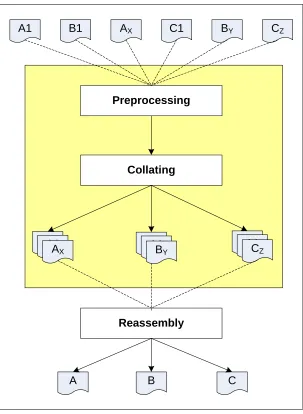
Figure 1.1: Generic structure of file carving technique
4
stored. It is also a big concern to determine whether two or more segments are within a correct group. This analysis is binding under segment joint validation, which at least requires one Restart (RST) marker.
The available tool related to non-segmented JPEG files recovery is Foremost 0.69 which operates in one pass over disk image and later Scalpel (Roussev, 2005) come to improve the memory usage and performance of Foremost which operates in two passes. Their method capable to support 10 megabytes (MB) reading process of chunk boundary on disk image. Even though Scalpel dominated the performance of Foremost 0.69 but still could not satisfied the accuracy of file carving tool as it does not carve files with missing footers.
Other alternative is done in (Ming & Shule, 2009) by using sequential prediction or sequence validation approach. This method is suitable for the segments that are stored in contiguous arrangement form. However, file segments could be out of order, not sequential or even missing (Merola, 2008). In fact, file carving works well when dealing with non-segmented JPEG files, as the content is not scattered and are still in original form. Other related approaches for segment identification and classification could be obtained in (Cohen, 2008; Garfinkel, 2007; A Pal, H. T. Sencar & N. Memon, 2008; H. T. Sencar & N. Memon, 2009).
1.3 Problem Statement
5
Even though, if they are afforded to render solution for that problem, even then, the carving procedures still depend on file system metadata which does not guarantee to be always available (damaged or corrupted). The researchers need to realize that the damaged or deleted data might be due to intentional behaviour like criminal activities.
1.4 Project Aim
This project aims to provide solution on how to determine deleted JPEG files if the files stored in the segmented form within huge size of hard disk using statistical byte frequency analysis.
1.5 Objectives of the Project
The objectives of this project are:
1. To analyze the existing segmented JPEG file recovery techniques.
6
1.6 Scope of the Project
The scopes of this project are:
1. This project primarily focuses on JPEG files format.
2. The identification or collation of segmented JPEG files across the hard disk will be the main concern of this project.
3. An extra effort will be undertaken on statistical byte frequency analysis.
1.7 Significant of the Project
This project has the potential to solve some part of file carving techniques. The statistical byte frequency analysis might be possible to address the issue of deleted files images in segmented form. This method will be an alternative solution to the limitations in the existing file carving tools. Those tools can carve data files that are contiguous and also the carvers do not perform extensive and precise validation and create many false positives. Besides that, they tend to depend on file system metadata which sometimes might not available.
1.8 Thesis Organization
7
82
REFERENCES
Bellamy, J. C. (1995). Digital network synchronization. Communications Magazine,
IEEE, 33(4), 70-83. doi: 10.1109/35.372197
Cohen, Michael I. (2008). Advanced JPEG Carving.
Damashek, Marc. (1995). Gauging Similarity with n-Grams: Language-Independent Categorization of Text. Science, 267(5199), 843-849.
Farhood Norouzizadeh Dezfoli, Ali Dehghantanha, Ramlan Mahmoud, Nor Fazlida Binti Mohd Sani, Farid Daryabar. (2013). Digital Forensic Trends and Future.
International Journal of Cyber-Security and Digital Forensics (IJCSDF), 2,
48-76.
Garfinkel, S L. (2007). Carving contiguous and segmented files with fast object validation. Digital Investigation, 4, S2-S12. doi: DOI 10.1016/j.diin.2007.06.017.
Hsiang-Cheh, Huang, Wai-Chi, Fang, & Shin-Chang, Chen. (2008, 13-15 Dec. 2008).
Copyright Protection with EXIF Metadata and Error Control Codes. Paper
presented at the Security Technology, 2008. SECTECH '08. Krawetz, Neal. (2008). digital image analysis and forensic. 1-43.
McDaniel, M., & Heydari, M. H. (2003, 6-9 Jan. 2003). Content based file type
detection algorithms. Paper presented at the System Sciences, 2003.
Proceedings of the 36th Annual Hawaii.
83
Merola, Antonio. (2008). Data Carving Concepts.
Ming, Xu, & Shule, Dong. (2009, 18-20 Jan. 2009). Reassembling the Segmented
JPEG Images Based on Sequential Pixel Prediction. Paper presented at the
Computer Network and Multimedia Technology, 2009. CNMT 2009.
Mohamad, K. M., Patel, A., & Deris, M. M. (2011, 20-23 March 2011). Carving
JPEG images and thumbnails using image pattern matching. Paper presented
at the Computers & Informatics (ISCI).
Mohamad, Kamaruddin Malik, & Deris, Mustafa Mat. (2009). Segmentation Point Detection of JPEG Images at DHT Using Validator. 173–180.
Pal, A, Sencar, H T, & Memon, N. (2008). Detecting file segmentation point using sequential hypothesis testing. Digital Investigation, 5, S2-S13.
Pal, A., & Memon, N. (2009). The evolution of file carving. Signal Processing
Magazine, IEEE, 26(2), 59-71. doi: 10.1109/MSP.2008.931081.
Pal, A., Shanmugasundaram, K., & Memon, N. (2003, 6-9 July 2003). Proceedings. 2003 International Conference on Automated reassembly of segmented
images. Paper presented at the Multimedia and Expo, 2003. ICME '03.
Qiming, Li, Sahin, Bilgehan, Chang, E C, & Thing, V L L. (2011). Content based JPEG segmentation point detection. International Conference on Multimedia
and Expo (ICME), 2011 IEEE.
Roussev, Golden G. Richard III; Vassil. (2005). Scalpel: A Frugal, High Performance File Carver. Digital Forensic Research Workshop (DFRWS), New Orleans, LA, 1-10.
Sencar, H. T., & Memon, N. (2009). Identification and recovery of JPEG files with
missing segments, Montreal, QC.
Van Den Bos, J., & Van Der Storm, T. (2012) Domain-specific optimization in digital forensics. 5th International Conference on Theory and Practice of