ABSTRACT
GREEN, REBECCA SUE. Cognitive Task Analyses for Life Science Automation Training Program Design. (Under the direction of David Kaber and Christopher Mayhorn.)
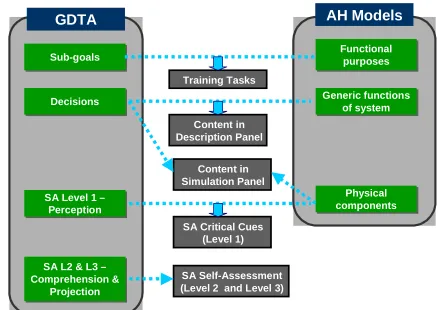
The purpose of this study was to develop a systematic approach to the translation of Cognitive Task Analyses (CTAs), including Goal Directed Task Analysis (GDTA) and Abstraction Hierarchy (AH) models, into a Situation Awareness (SA) based training program for operators of High-throughput (biological) screening (HTS) systems. Traditional on-the-job (OTJ) training of new HTS operators usually consists of several weeks of assisting a lead biochemist to become familiar with methods and automated systems. Unfortunately, this approach to training is typically unstructured and learning results may be highly variable. In order to design instruction to support learning of cognitive processes as part of HTS, the information demands engendered by the task need to be identified. This can be achieved using CTAs as the basis for training program design. Various CTA methods, including the Critical Decision Method (CDM) and Precursor-Action-Results-Interpretation, have been used to develop training. However, no standardized methods exist for relating the outcomes of the integration of multiple CTA methods to support training program design.
This study, therefore, combined information requirements from a GDTA and system resource requirements identified through AH models to establish content on HTS processes for delivery through an electronic training program. The goals and sequences of task steps within the training program were identified by the GDTA. The use of AH models of the HTS system provided a method for determining the purpose and function of the software and devices relative to different operator functional requirements. This combination of
and parameters. The training program presented learners with content for development of the three levels of operator SA (perception, comprehension, and projection) and knowledge structures pertaining to HTS system operations. Following development of the prototype electronic training program and the comparison traditional training program, an evaluation occurred through a three-part survey with comparison to the traditional lab training provided to expert operators of an HTS system. The evaluation incorporated two knowledge
assessment tests, a usability survey, and a survey of the effectiveness of the SA elements of the training program.
Cognitive Task Analyses for Life Science Automation Training Program Design
by
Rebecca S. Green
A dissertation submitted to the Graduate Faculty of North Carolina State University
in partial fulfillment of the requirements for the Degree of
Doctor of Philosophy
Psychology
Raleigh, North Carolina 2008
APPROVED BY:
_________________________ _________________________ David Kaber Christopher Mayhorn Chair Co-chair
DEDICATION
BIOGRAPHY
Rebecca Green was born in Painesville, Ohio and raised in northeastern Kentucky. She completed her high school education at Mentor High School in 1998. She started with her Bachelors degree in Biomedical Engineering at the University of Pittsburgh with a concentration in biological systems and signals. While at Pittsburgh she worked on an automated medication dispenser design project, which precipitated her interest in human factors. In 2004, she received her Masters degree in Experimental Psychology at East Carolina University where she did research in neurological and cognitive psychology. Her research included work in a neurological psychology laboratory to study treatments for brain injuries and memory and a classroom research project that led to a thesis on computer-based tutoring methods. Since 2006, she has been working towards a Doctoral degree in the
ACKNOWLEDGEMENTS
I wish to thank a number of people for their assistance and support in the course of this research. First, I would like to thank my academic advisor and committee chair Dr. Dave Kaber for his continuous support, assistance and guidance throughout my graduate studies at NCSU. I also wish to acknowledge my co-chair Dr. Chris Mayhorn for his assistance through the psychology department requirements and my committee members, Dr. Rob St. Amant and Dr. Regina Stoll, for their time and comments towards this document.
I would like to thank all of the scientists, engineers, and directors at the Center for Life Science Automation in Rostock, Germany for providing the system, space, and
TABLE OF CONTENTS
Page
LIST OF FIGURES ...viii
LIST OF TABLES ... x
LIST OF ABBREVIATIONS... xi
INTRODUCTION ... 1
Implications of Change in Life Science Processes for Training ... 4
Situation Awareness in Dynamic Systems ... 8
Overview of Task Analysis Methodologies... 11
Focus on CTA Methods for Training Design ... 13
Need for Cognitive Task Analysis for Training Design ... 18
Integrating CTA in Training Design ... 20
Current Research Applying Task-Analysis to Training Design ... 26
Utility of Contemporary CTA Methods for Training Design ... 35
Knowledge Requirements Analysis Through Goal Directed Task Analysis (GDTA) ... 36
Resource Analysis Through Abstraction Hierarchy (AH) Models ... 40
Approaches to Validation of Training Programs ... 45
PROBLEM STATEMENT ... 54
METHODS ... 57
Participants ... 57
Training System Prototyping ... 66
Interface Design ... 66
Task and Process-Oriented Approaches to Training and Task Sequencing .... 69
Detailed CTA-based Training Interface Design ... 70
Standard Interface Content ... 75
Usability Issues ... 77
Procedures ... 81
Dependent Measures ... 83
Initial and Final Knowledge Tests ... 83
Training Program Development ... 86
SA Assessment ... 87
Usability Survey ... 89
Detailed Hypotheses ... 91
Hypotheses on CTA-based Training and Task Knowledge ... 91
Hypotheses for CTA-based Training for Situation Awareness ... 92
Hypotheses on Training System Usability ... 92
Data Handling and Analysis ... 93
Analysis of CTA-based Training Effects on Task Knowledge ... 94
CTA-based Training for Situation Awareness ... 95
Training System Usability ... 96
RESULTS ... 97
CTA-based Training for Situation Awareness ... 102
Training System Usability ... 105
DISCUSSION ... 108
Training Improvements on Knowledge and Experience Effects on Training ... 108
CTA-based Training for Situation Awareness ... 113
Training System Usability ... 115
CONCLUSIONS... 116
Caveats ... 119
BIBLIOGRAPHY ... 122
APPENDICES ... 133
APPENDIX A – BACKGROUND AND EXPERIENCE QUESTIONNAIRE ... 134
APPENDIX B – EXAMPLE TASK SCREENs IN TRAINING PROGRAMs ... 141
APPENDIX C – KNOWLEDGE ASSESSMENT I and II ... 145
APPENDIX D – EXPERT REVIEW CHECKLIST ... 158
APPENDIX E – SITUATION AWARENESS GLOBAL ASSESSMENT QUESTIONS .. 160
APPENDIX F – HEURISTIC-BASED USABILITY EVALUATION ... 163
LIST OF FIGURES
Page Figure 1. Historic robotic system with single process manipulator (J-KEM Scientific, 2002).
... 2
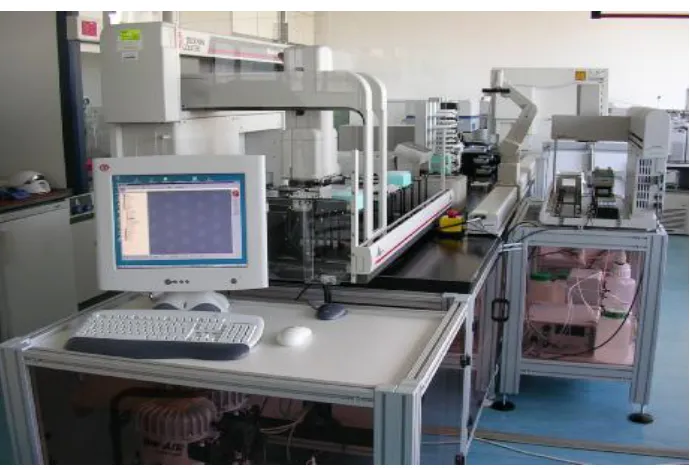
Figure 2. Example of modern HTS system. ... 2
Figure 3. High-level goals as part of a HTS GDTA (Kaber et al., 2006). ... 38
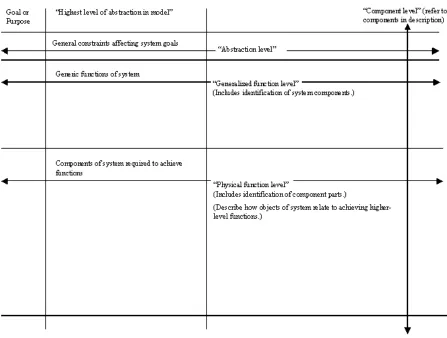
Figure 4. General form of an abstraction hierarchy model (Mazaeva & Bisantz, 2007). ... 42
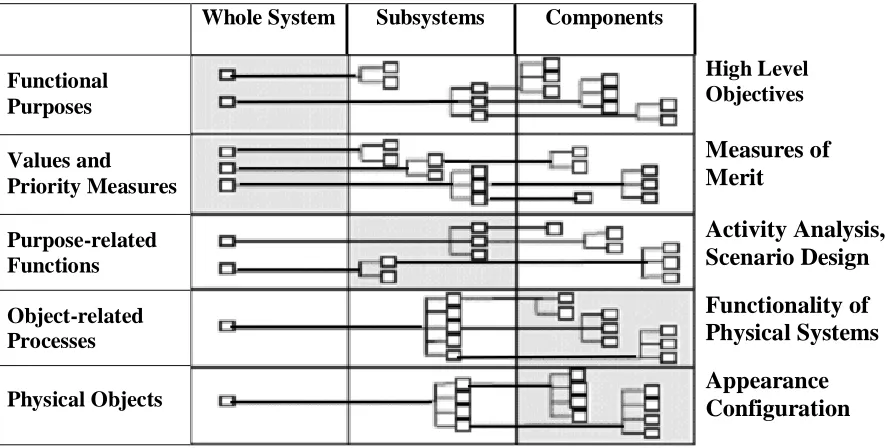
Figure 5. Links between the AH model and training program development (Lintern & Naiker, 1998). ... 44
Figure 6. GDTA Diagram... 60
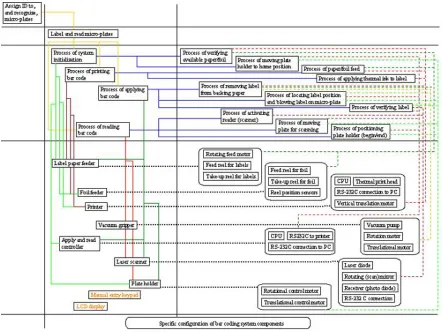
Figure 7. AH model for barcode device. ... 63
Figure 8. Comparison of GDTA and AH models for interface design. ... 65
Figure 9. Integrated CTA methodologies for training program design. ... 66
Figure 10. Process description panel. ... 72
Figure 11. Simulation panel... 73
Figure 12. Critical cues panel. ... 74
Figure 13. Embedded self-assessment panel. ... 75
Figure 14. Task Objective 7 screen for the standard training program. ... 77
Figure 15. Item creation for the second task under goal 1.1.9.1 using a generic item shell. .. 85
Figure 17. Degree of proficiency indicated by each operator for each goal covered by the traditional training program. ... 112 Figure 18. Task 2 of Step 3 content screen with integrated panels for CTA-based training. ... ... 141 Figure 19 and 20. Screens 2 and 3 in the Simulation Panel for Task 2 of Step 3 of the
CTA-based training program... 142 Figure 21 and 22. Screens 4 and 5 in the Simulation Panel for Task 2 of Step 3 of the
CTA-based training program... 143 Figure 23. Screen 6 in the Simulation Panel for Task 2 of Step 3 in the CTA-based training
LIST OF TABLES
Page
Table 1. Decomposition of HTS training tasks presented by the training system. ... 69
Table 2. Overview of experimental procedure and approximate time estimates. ... 82
Table 3. Criteria for constructing assessment items (Osterlind, 1998). ... 85
Table 4. Difficulty level of questions in the CTA-based training program (n = 38). ... 97
Table 5. Correlations and medians for number of years experience, level of education, and knowledge assessment test scores. ... 99
Table 6. Correlations of frequency and level of knowledge ratings versus knowledge question scores for each of the ten sub-goals. ... 101
Table 7. Proportion of SA questions answered correctly. ... 103
Table 8. Correlations among years of experience, levels of education, initial knowledge test scores, and SA score for each level of SA. ... 104
Table 9. Heuristic-based usability evaluation for the CTA-based training program. ... 106
Table 10. Heuristic-based usability evaluation for the traditional training program. ... 106
Table 11. Overall effectiveness ratings. ... 107
Table 12. CTA-based training program knowledge test performance based on education. . 110
LIST OF ABBREVIATIONS
ACT-R Adaptive Character of Thought - Rational
AH Abstraction Hierarchy
CB Computer Based
CCI Critical Cue Inventories
CDM Critical Decision Method
CELISCA Center for Life Sciences Automation
CGA Conceptual Graph Analysis
CoTA Cognitive Oriented Task Analysis
CTA Cognitive Task Analysis
CWA Cognitive Work Analysis
DMSO Dimethyl Sulfioxide
EPS Effective Problem Space
FMS Flexible Manufacturing Systems
GDTA Goal Directed Task Analysis
GOMS Goals-Operations-Methods-Selection Rules
HRV Heart Rate Variability
HTA Hierarchical Task Analysis
HTS High-throughput Screening
ISD Instructional Systems Development
LCD Learner-Centered Design
LVR Learner Verification and Review
OTJ On-the-Job
PARI Precursor-Action-Results-Interpretation
SA Situation Awareness
SAGAT Situation Awareness Global Assessment Technique
SC Supervisory Control
SICU Surgical Intensive Care Unit
SME Subject Matter Expert
TATS Task Analytic Training System
Tris-HCl Tris-Hydrochloride
UCD User Centered Design
INTRODUCTION
Over the past decade, high throughput screening (HTS) of biological compounds has become a central component in research and discovery programs in the pharmaceutical industry (Hamilton, 2002). Contemporary HTS processes involve chemical-based assays of organic and inorganic compounds for effects on human cellular functions, or enzyme reactions that are common in cells, as a basis for therapeutic development (Entzian, et al., 2004). Automation is used in HTS processes to increase the pace at which organisms can be tested for potential uses in biocatalysts for new drug development or industrial products. Time-consuming operations, such as pipetting (transferring) liquid extracts of test compounds into micro-culture plates, mixing compounds with reagents, etc. can now be performed by robots with the goal of increasing throughput, as well as enhancing test accuracy and promoting operator safety.
Early examples of pharmaceutical screening automation were based on microplate management systems. These systems were used in many laboratory unit operations (LUOs) integrating interchangeable robotic systems, but this approach limited throughput and the reliability of unattended operations was a problem due to less than ideal operations being assigned to robotic arms (Hamilton, 2002). A single articulating robotic arm, with
increasingly specialized workstations. The next technological development, specialized Cartesian-geometry liquid-handling robots, was the basis for the HTS systems in use today (Figure 2). Currently, through a combination of these modern robotic systems, data
processing and control software, liquid handling devices, and sensor technology, HTS allows a researcher to effectively conduct thousands of biochemical, genetic or pharmacological tests in a short period of time (Cohen & Trinka, 2002).
Figure 1. Historic robotic system with single process manipulator (J-KEM Scientific, 2002).
Specialized biological screening tests, such as Trypsin inhibition tests, have been converted from traditional “bench-top” versions, describing how to manually perform a particular screening assay, to automated processes (Entzian et al., 2004). The trypsin inhibition test is a biochemical test that has been used to assess biological activity when screening crude extracts of marine microorganisms. These crude aqueous and organic solvent extracts are stored as a library of stock solutions. For the test, the stock solutions of the extracts are prepared by stepwise dissolution in two buffer chemicals, such as dimethyl sulfioxide (DMSO) and 0.05M Tris Hydrochloride (Tris-HCl). Cloudy stock solutions are then centrifuged and the clear resultant is used. Serial dilutions of the centrifuged solutions are prepared by a liquid handling device (e.g., 1:3) to achieve different concentrations (typically four or more). The principle of the test consists of the conversion of a chemical (i.e., BAPNA) to p-nitroaniline by Trypsin activity (a “yellow by-product”). The extent of absorption of p-nitroaniline can be determined at 405 nm by an optical plate reader. Inhibitory activity of extracts is measured as a decrease of absorption of the compound.
oven in order to elicit enzymatic reactions similar to those that would occur in the human body, and analyzing the reactions using optical measurement systems (Entzian et al., 2004).
Generally, biochemical assays can be transferred to an automated robotic system with a minimum of changes (Cohen & Trinka, 2002), but many of the details need to be reviewed to assure that the results will be consistent within a run, as compared to the same assay performed manually on the bench or at individual workstations. As a result, the role of human operators in this domain has dramatically shifted from manual material handling tasks to planning, controlling, and analyzing the results of automated screening lines. This shift in the role of the human operator has led to an increase in systems monitoring workload and a higher requirement for accuracy in operations performance, due to the need for greater attention to decision-making and error handling tasks as part of the HTS process.
Implications of Change in Life Science Processes for Training
The recent expansion of the knowledge base in clinical biochemistry has led to the development of sub-specialties within the broad discipline itself, including HTS (Rock, 1994). The emergence of new technologies in the domain of pharmaceutical laboratories has challenged traditional approaches to the education and training of laboratory technicians. Mocarelli (1994) outlines four factors or problems that affect the development and demands on training and education of biotechnologists. These factors include the fact that: (1)
from solely on-the-job learning (prevalent in the infancy of laboratory technology) to semi-structured approaches in which professional education is available in academic institutions with specialized training occurring on-the-job.
The traditional on-the-job (OTJ) training, of new HTS operators usually consists of several weeks spent assisting a lead biochemist to become familiar with the methods and automation being used (Hamilton, 2002). This process is typically unstructured, which means there is no written documentation of the training procedures to follow and there are few objective means to measure task performance in order to ensure that all operators are trained to the same standard. On the other hand, the combined ‘core’ training programs in clinical biochemistry for medical and non-medical graduates have been structured for 2-year periods of training. The subsets of skills that technologists acquire through structured academic training include physiology and pathophysiology, application of biochemical tests, interpretation of results, selection of tests, control or analytical functions, laboratory management, and research and development (Mocarelli, 1994; Rock, 1994). Many of these are directly relevant to HTS processes. Academic training programs cover the theoretical background of clinical biochemistry and include those elements of medicine, physics, chemistry and mathematics that are necessary for a thorough understanding of the analytical techniques relevant to clinical biochemistry. Furthermore, a working knowledge of clinical laboratory information systems and principles of operations (systems) research has been considered relevant for rational analysis and planning.
technically demanding tests, evaluating methods and analyzing the findings in a traditional biochemical laboratory. However, in the domain of HTS of biological and chemical
compounds for new drug component development, human operators are subjected to many performance and workload requirements in interacting with automated systems
(programming and supervising), including preventing errors, that may extend beyond existing academic training. A successful HTS laboratory integrates several discovery steps including: target identification, reagent preparation, and compound management, assay development, and high throughput library screening (Cohen & Trinka, 2002). Biochemical laboratory technicians typically operate the HTS process by planning and programming robotic tasks, as well as delivering micro-plates, chemicals, plate labels, and pipetting resources (tip boxes, reservoirs, etc.) to a process line.
A typical HTS experiment poses a high cognitive workload for supervisors, who must keep track of the timing of the process steps, whether chemical reactions are occurring safely, and whether robot motions are accurate (Kaber, Segall, Green, Entzian, & Junginger, 2006). Secondly, according to Hamilton (2002) the use of automation techniques to rapidly test large numbers of compounds places an even greater demand on the technician’s ability to develop and conduct a perceptive analysis of the data being generated. Therefore, the operation of such highly complex systems requires that more attention be given to error avoidance, detection, correction, and reporting. Although operator and system errors are rather infrequent, occurring approximately once every 75 assay runs (Kaber, Segall, &
Green, in review), their cumulative effect can be substantial. Fixing an equipment or resource error, like replacing damaged pipetting tool tips on a liquid transfer robot, or working
through a series of error correction dialogs at the supervisory control interface for the HTS line, may only take a few minutes. However, other problems, such as a robot position error and collision with another line device may require a process engineer to visit the line or purchase new parts, which can take several days to correct. Depending on the time needed to correct a problem, errors can lead to delays in reactions or the need to scrap an entire
experiment because of the limited life expectancy of compounds and enzymes. This is costly to the test facility because many of the organisms being investigated are extremely rare and the extracts are expensive to develop (Entzian et al., 2004). Furthermore, this can translate into higher costs associated with operator time, wages, and system materials.
interactivity among task elements (Vidulich, 2003). Therefore, the limitations of working memory should be considered in instructional design for complex, dynamic systems. This is based on the assumption that a learner has a limited processing capacity and proper allocation of mental resources is necessary. Since learning involves the process of schema construction and skill automation, devoting mental resources to activities not directly related to schema construction and automation may inhibit one’s learning. The development of schemata, involves the linking of information gathered by the learner through task experiences to rules associated with the task. Schemata become refined and more automated as a result of practice, and these modifications can decrease cognitive load during task performance. Therefore, training practice relative to task demands can provide learners with the
opportunity to develop problem-solving schema that might reduce working memory demands during actual operations and lead to improved performance. The identification of the
information processing requirements of the learner and the demands engendered by the task and automation can be achieved using Cognitive Task Analysis (CTA) methods as the basis for training program development.
Situation Awareness in Dynamic Systems
environments such as driving (Ma & Kaber, 2005), fighter aircraft piloting (Endsley, 1993), and small unit military operations (Strater, Endsley, Pleban & Matthews, 2000). Along these same lines, human exploitation of the complexities of automation for complex HTS
operations is expected to be critically dependent on task SA and cognitive performance. There are several competing theories of SA (Smith & Hancock, 1995; Vidulich, 2003). Smith and Hancock (1995) proposed an ecological theory of SA, in which it is defined as adaptive, externally directed consciousness. They indicate SA is the process of sampling, representing, and transforming results from the environment into knowledge and behavior outputs, while the processes themselves are neither knowledge nor behavior. The main limitation of this theory is that while a relationship between the elements in the environment and the knowledge and behavior outputs exist, they do not attempt to explain any causal mechanisms that account for the relationship. Vidulich (2003) describes SA as part of a “framework” theory because it seems to be a general concept used to describe and interpret a large number of previous studies into the human cognitive capabilities in complex tasks. The main limitation of this view is that it represents SA as an on-going process, continually changing, which is necessarily altered by any attempt at measurement. However, Endsley's (1995) theory has been successful in characterizing SA in other domains, includes an operational definition, and objective measures for assessment of SA. Therefore, Endsley’s definition and model of SA is adopted in this research.
relevant information in the environment onto one’s internal mental representation of the situation and is heavily dependent on human information processing theory for explanation of the process (Endsley, 2000). In this conceptualization, SA is the integration and projection of the perceptual elements of the environment that result in decision and action selection outputs, which can be measured through subjective, performance-based, and physiological techniques.
Related to this, Endsley’s definition of SA can be broken-down into three separate levels, including perception, comprehension, and projection (Endsley, 1995a; Endsley, Bolte, and Jones, 2003). Perception of the environment concerns the status, attributes, and dynamics of relevant elements. Operator SA needs to incorporate information on the subset of elements in the environment relevant to current tasks and goals. SA requirements are those dynamic information needs associated with the major goals or sub-goals of an operator in performing tasks in a target domain (as opposed to rules, procedures, or static system knowledge) (Endsley, 1995a). The second level of SA focuses on operator understanding of the current situation based on integration of the perceived elements. This level depends on synthesis of the separate Level 1 elements and comparison of that information with the operator’s goals. The third level of SA is the ability of the operator to project future states of, and actions on, the elements in the environment. This level is based on a synthesis of the status and dynamics of the elements to form an understanding of the current situation (Levels 1 and 2) and the use of this information to predict future actions of the elements in the environment.
cognitive processing in complex task performance, such as HTS operations. SA requirements can be determined based on task analysis methodologies such as goal-directed task analysis. SA requirements focus not only what data operator’s need for performance, but also on how that information is integrated or combined to address each decision within HTS. Training programs directed at improving operator SA can then be generated by identifying the important SA requirements. Endsley’s (1995) definition and model of SA is adopted in this research as it is the only current theory of SA that has been operationalized for global assessment of complex system operator behavior through objective measures (e.g. dynamic knowledge questionnaires).
Overview of Task Analysis Methodologies
In order to address the potential for costly errors in HTS processes, the functional limitations of HTS automated devices, with respect to process goals and operations, need to be identified (e.g., historical LUOs automation). The required behaviors of biochemists in planning, executing and analyzing the results of HTS operations, as well as programming the lab automation and equipment used to facilitate these operations need to be identified to support enhanced training programs allowing humans to effectively supervise and control automation in critical situations (e.g. during troubleshooting). In this research, task analysis methods will be used for these purposes.
human and machine, task complexity, and any other unique factors involved in, or required for, the performance of a given task (Chipman, Schraggen, & Shalin). Diaper and Stanton (2004) provide a more general view of task analysis, as the description of the performance of work to achieve goals. They indicate that task analyses produce one or more models of the world; where such models describe the task and relationships between the task elements. The level of detail in a task analysis ranges from high level descriptions, such as those found in job analysis (identifying the key responsibilities, skills, knowledge and aptitudes), through detailed task inventories (identifying the sub-tasks that are critical for knowledge structure composition and system design). As one example, the task description approach to task analysis, is composed of qualitative verbal statements or descriptions of tasks, usually in essay form, which lack the precision necessary for completely describing jobs (Jonassen, Tessmer, & Hannum, 1999). In this depiction of the task, there is an emphasis on the
observable behavior when describing a task; it indicates what a person does when performing his or her job, but does not focus on cognitive requirements, such as decision making.
Therefore, traditional job or task analysis methods are not particularly well equipped to investigate cognitive processes underlying tasks.
CTA on the other hand, is an analysis of the knowledge, thought processes, and goal structures of cognitive tasks (Hollnagel, 2003). It has been used to design new system interfaces, in cognitive engineering of human-machine systems, to develop expert systems, for operator selection, and for training purposes (Wei and Salvendy, 2004). Some of the more common CTA methods currently in use for instructional design include: cognitive
Decision Method (CDM), and Precursor-Action-Results-Interpretation (PARI) (Hollnagel, 2003; Jonassen, Tessmer, & Hannum, 1999). For example, CDM can be applied to modeling dynamic tasks characterized by high time pressure and information content through the use of probes eliciting reasons for perceptual discrimination, judgment rules, and critical cues used by domain experts (Klein, Calderwood, & MacGregor, 1989). Further, in PARI, an expert is presented with a problem, he attempts to identify each action (or decision), the precursor (or perceptual cues) to that action, the result of that action, and the interpretation of the results of the action (Jonassen, Tessmer, & Hannum, 1999). The expert is then asked to elaborate on their solutions, focusing especially on reasoning that they use in making their decision about what to do. Therefore, CTA can be a useful tool for identifying operator dynamic goal sets, factual knowledge stores, mental strategies, critical decisions, and situation awareness (SA) requirements as a basis for new human-machine interface design, for critiquing existing interfaces, processes, and systems, or for training development.
Focus on CTA Methods for Training Design
Action-Results-Interpretation (PARI), Critical Decision Method (CDM), Goals-Operations-Methods-Selection Rules (GOMS), Goal Directed Task Analysis (GDTA), and Abstraction Hierarchy (AH) modeling.
The first method, PARI, pairs two experts in an interview setting, such that one creates a problem containing performance faults (found in the real world) and the other generates a series of actions that represents a solution path (Lajoie, Azeveo, & Fleiszer, 1998). The purpose is to engage experts in verbalizing their purposes, actions, reasoning, and interpretations as they solve the problem. During this process, the experts are probed for the assumptions behind their actions while they are solving the problems posed to them. Having identified the activities, results, and reasoning used by the experts, novices will be presented with the same problem to find the areas of the decision making process where their methods differ from the expert as the basis for instruction. PARI integrates system, procedural, and strategic knowledge and associates them with system actions. This methodology is most useful for analyzing complex, situated problem solving tasks, especially troubleshooting tasks. Furthermore, it assumes that the expert problem solvers possess an integrated and well-instantiated mental model of the system they are troubleshooting.
a previous task and the output can be used to construct propositional networks which
describe the knowledge required during the scenario under analysis. However, concerns have been raised with respect to the reliability of the retrospective analysis of scenarios, the fact that the data obtained is highly dependent upon the skill of the analyst and the interviewee, and the verbal reports used to reconstruct events may not accurately represent the cognitive processes of the decision being made.
The third method, GOMS (Card, Moran, & Newell, 1983), is used to define a user’s goals, decompose these goals into sub-goals, and demonstrate how the goals are achieved through methods, task operators and selection rues applied to interaction with the target system. This methodology can be used to provide a description of how a user performs a task, to predict performance times, and to predict human learning. The methods as part of GOMS analysis allow the analyst to describe a number of different potential task routes. GOMS is typically used only for modeling HCI domain tasks. Furthermore, the modeling technique does not permit environmental context to be taken into consideration in the description of methods, and it is limited to modeling error-free, expert performance. Beyond this, GOMS models do not account for either learning of the system or its recall after a period of disuse and they also do not account for possible errors.
absence of any existing automated support systems. However, the analysis is based upon operator goal states in the scenario and not on specific states of the task environment or support systems. This analysis also does not reflect the characteristics of technology an operator may be required to use.
Endsley (1993) presented an analysis of the SA requirements for fighter aircraft pilots involved in air-to-air combat missions using a series of analyses, including GDTA. GDTA was used to ensure that the list of primary goals, sub-goals, and SA requirements collected during unstructured interviews with pilots were correct and complete. One of the important characteristics of this assessment is that it focused on what the fighter aircraft pilot needed to know, not how or when they should receive information. Relevant to this, the importance of pilot goals shifts throughout the course of a mission due to external events, changing some primary goals to secondary goals. Endsley included the list of SA requirements identified through GDTA in a rating questionnaire asking pilots about the general importance of requirements to air-to-air fighter missions. The ratings revealed a clear picture of what aspects of environment perception, comprehension and projection were considered critical by fighter pilots.
characteristics of this analysis was that the results of the GDTA were used to establish general information requirements for a generic task context (SC of any FMS) as apposed to information on a specific type of system. This resulted in a broader range of detail on the information requirements compared to other analyses.
The AH method of analyzing work domains is used to extract operator information requirements for a system, constraining relationships among system functions, multivariate relationships, and means-end relationships between system components and their functions that can be used as a basis for determining optimal performance (Bisantz & Vicente, 1994). AH modeling is an effective tool for revealing how complex system processes and functions are facilitated through specific components and can provide explanations of why certain components are needed to achieve system purposes. It is particularly suited for identifying information needs of operators in critical error situations. However, being an event
independent tool, the capability of an AH to reveal difficulties in specific task performance is limited.
Mazaeva and Bisantz (2007) presented a description of the application of work domain analysis using AH models to represent an automated system; a camera. They
how they supported system functions and purposes versus information requirements needed for successful control of tasks, as found through other methodologies. Therefore, these differences are important to training operators of automated systems as the content of AH models can be used in training programs that focus on principles regarding system operation.
In conclusion, the identification of the information processing characteristics of operators and the demands engendered by tasks, as bases for training program development, may be achieved through a combination of CTA methods. Among the available CTA
methods, the combination of GDTA and AH modeling may be of greatest use in the design of effective learning systems. The GDTA can be used to identify high-level goals, and complex information content needs of operators that should be supported by a training program. AH equipment and automation models can be used in training to describe to operators how each equipment function is implemented on a screening line and the purpose of the various subsystems and components of devices relative to operator goals. AH models of automation can be used to teach operators how the functions of each device are
implemented through software and the purpose of various interface features. Use of these methods for such training purposes has not been formalized or evaluated.
Need for Cognitive Task Analysis for Training Design
analysis methods utilized in training systems design have focused on observable behaviors and ignored the impact of cognitive process and structures, such as problem solving and decision-making as mentioned above. However, with the changing organizational climate for HTS training, overt-behavior based task analyses do not adequately provide the information required to perform more cognitively complex jobs and tasks as part of biological research operations and OJT may not provide the level of training stability across operators needed to ensure process quality.
Previous research has indicated that task analysis can be used to describe any one of four types of fundamental structures for specifying the information content in traditional Instructional Systems Development (ISD) including: (1) the learning hierarchy, (2) the procedural hierarchy, (3) the learning concept taxonomy, and (4) the model of the learning requirements (Gagne, Briggs, & Wager, 1992; Reigeluth, Merrill & Bunderson, 1978). In this way, task analyses support five classes of learning outcomes as identified by Gagne, Briggs, and Wager (1992), including: intellectual skills, cognitive strategies, verbal information, attitudes and motor skills. Traditional task analysis provides information pertinent to the goals, methods, and supportive prerequisites for development of learning and procedural hierarchies, but does not provide information regarding the cognitive learning concepts or help in modeling learning requirements for complex or high workload tasks.
Another factor in training system design supporting the need for CTAs is
demand a high level of performance, and that involve high workload. For effective training there is a need to identify expert or novice knowledge structures and to determine specific gaps in cognitive skills that must be addressed for performance by taking advantage of CTA methods. The gap in cognitive skills is typically identified through an initial or entry test to assess starting knowledge (Dick, Cary, & Cary, 2005). This has been demonstrated by researchers working within the field of cognition, which view experts and novices as having developed qualitatively and quantitatively different knowledge structures and processes about tasks within their domain of experience. Therefore, training design that includes CTA methods would be effective in capturing the components of complex tasks that rely on cognitive skills, such as decision-making and problem solving across levels of expertise.
The general challenge of CTA is to capture the types of knowledge used to perform all work tasks, even the most complex. Clark and Estes (1996) indicate that CTAs are an effective alternative in training because they focus on the knowledge type and not necessarily the format of the knowledge. This may be particularly important as the format of knowledge (in terms of images, propositions, and linear orderings) in many of the traditional training approaches could influence the way knowledge is learned through training and it may be necessary to change the format depending on the type of trainee. The main point here is that CTA is needed to reveal cognitive skills and address different levels of expertise in training program design.
Integrating CTA in Training Design
Ryder and Redding (1993) provide a framework for the integration of cognitive and behavioral task analysis methods within the ISD model, including front-end analysis, but they did not provide connections between the components of the task analysis methodologies and the instruction content. They suggest that their CTA-based ISD framework supports development of training programs that build a flexible knowledge base, efficient mental models (or task understanding) and decision making skills, especially for dynamic situations. Unfortunately, they did not address how to incorporate CTA methods for evaluating
cognitive skills within the testing and evaluation phases of ISD.
Related to this, Gagne, Briggs, and Wager (1992) provide a methodology for identifying and classifying instructional content resulting from methods like CTA with respect to the target domain and supporting training objectives in the form of learning
hierarchies. The results of the CTA identify the concepts that must be learned as components of behaviors required by the target task along with the supporting or enabling objectives that lead to the target performance goal. The prerequisites identified in a learning task analysis can be classified, in general, as essential or supportive prerequisites and can serve as a guide in the design of a sequence of instruction and the planning of instruction assignments
Seamster, Redding, and Kaempf (2000) indicate that a CTA is usually performed as an extension of a “front-end” analysis on a system. This is the initial gross level analysis of the task or job to clarify difficult to observe activities at the task or subtask level. In their chapter, Seamster et al. indicate that CTA methods can be used as part of the front-end analysis for knowledge requirement identification, curriculum design, and instructional technique selection as part of an ISD framework. The front-end analysis is the starting point for categorizing skills by training type, identifying key novice-expert differences, and
identifying team skills versus individual skills. The CTA extension provides a foundation for the systematic design of training processes and devices, including a taxonomy of knowledge and skill types, which have implications for the training process, specifically, organization of training requirements. The CTA can identify the knowledge or skill content required for different stages of subtask performance development.
examples of protocol analysis. Each of these methods differ slightly in terms of the goals, assumptions, strategies and implementation of the knowledge elicitation techniques. The knowledge representation provides an efficient summary of knowledge elicitation results organized in a format that is appropriate for the training-application development phase. The specific method determines the representation chosen, optimal structure, amount of detail, and completeness of the knowledge representation. The three general methods of
representation described by Dubois are textual tabulations, graphics, and simulations or models. Therefore, the determination of the optimal structure and the content of a training program (such as the use of simulations) is a product of the knowledge elicitation techniques selected for training program development. The final step of applying the CTA results involves formally incorporating knowledge requirements and task requirements into training content and for determining strategies of training. The CTA provides content for scenarios, question content or error information, and information on how the procedures and standards may differ in different contexts, or how cues initiate and guide implementation.
at the detailed subtask level to identify the decision-making skills and strategies necessary under critical conditions or for less practiced activities.
There are a wide variety of purposes, contributions, and applications of CTAs and selection of the optimum methods depend on the purpose for doing a CTA, the constraints, and the resources available (Jonassen, Tessmer, & Hannum, 1999). CTAs are especially suited to training development because the knowledge requirements, or the facts, concepts and procedures that support task performance, and the decisions, cues, judgments, and perceptions that contribute to effective performance are directly addressed with these techniques. An explicit set of knowledge requirements can be used to diagnose performance deficiencies and prescribe useful strategies for overcoming obstacles. These knowledge requirements can also be incorporated into training performance assessment, such as in decision-making tasks, by separating decisions about goals and decisions about methods (used to achieve goals) and thereby preventing method fixation. The methodology then allows for determination of the effectiveness of operators in achieving goals and executing methods.
Redding, and Kaempf provide examples of the mapping of knowledge and skill types to frameworks for learning outcomes and training techniques. They provide a list of the types of aviation knowledge and skill types classified according to Rasmussen’s (1985) skill,
knowledge, and rule based learning as well as Gagne’s five learning outcomes (Gagne, Briggs, & Wager, 2002). This work and the other studies on incorporating CTA in training systems design provide a basis for addressing complex cognitive skill development in domains like HTS.
Clark and Estes (1996) indicate several questions that need to be addressed in the application of CTAs for training development, including: the relation of the types of knowledge identified by CTAs to the support of training performance, identification of efficient and valid CTA methods, and the measurement of the cost-effectiveness of methods. They present a number of questions relating to the varieties of declarative and procedural knowledge and how these two types of knowledge interact in the operation of complex systems and how they should be effectively presented through training system design.
Current Research Applying Task-Analysis to Training Design
on-the-job training (Walter, 2000), and the use of PARI to structure training programs (Lajoie, Azeveo, & Fleiszer, 1998; Schaafstal, Schraagen, & van Berlo, 2000).
O’Hare, Wiggins, Williams, and Wong (1998) present three case studies
demonstrating the use of CTA methods to support the development of training and the design of displays. The approach taken by the authors was a modification and extension of the CDM approach for the identification of the goals, cues, expectancies, and courses of action in three target domains. In this approach, participants recalled an incident in which their expertise made a difference to the outcome and they emphasized situational assessment components of decision-making in the knowledge elicitation process. To support the process of identifying the situational awareness and planning aspects that are important to this type of knowledge and performance, the authors revised and extended the cognitive probes from the
Recognition-Primed Decision (RPD) model (Klein, Calderwood, & MacGregor, 1989). In the first case study, the authors interviewed expert white-water rafting guides on problematic situations where their expertise was used to make critical decisions in
determining the raft’s direction and the safety of the raft’s occupants. Following the interviews, the timelines and decision points were summarized into situation assessment records, which contained a breakdown of their decision strategy in terms of the cues,
results for guide training is that training design, based on CTA methods, can be specifically tailored to enable guides to recognize pertinent cues in the environment that may be
indicative of potential danger while avoiding distraction or irrelevant information. The authors developed a prototype multi-media package to demonstrate the cue recognition of expert river guides. This tool presents brief video segments of rafts traversing a series of rapids in which the participants are required to stop the video when they are able to predict the course of the craft through the water. This was found to be an effective method for training critical decision skills identified by the CTA methodology.
In the second case study, O’Hare et al. (1998) examined the skills required for successful ‘visual flight rules’ (VFR) flying. In this domain, experienced general aviation pilots were asked to recall an in-flight situation requiring an unusual and difficult decision with regard to the weather. Critical cue inventories (CCIs) were then constructed for each of two meteorological phenomena. The results indicated a high degree of consistency between experts regarding the critical cues for action, suggesting the use of automatic processing for successful task performance. In developing training for novice VFR pilots, the authors offered that practice should be provided for learning the cues necessary to develop perceptual differentiations used by experts. The authors developed a multi-media weather-related
decision-making tutoring system based on the output from a Conceptual Graph Analysis (CGA) with the expert pilots. The tutoring tool consisted of two parts, a declarative
the description of the direction and nature of the relationship between learning concept nodes through the graph. The combination of methods provided a clear framework within which to interpret the results of the CTA.
In the final case study, the authors demonstrated the use of the CDM for determining display requirements for a computer-based system to replace a manual ambulance dispatch system. In this study, expert dispatchers were asked to relate a particularly unusual and challenging incident and then identify the sequence of events and decision points. Four main goals were identified and organized according to their information value (i.e., maintain situational awareness, match available resources to the needs of the situation, get help on the way within 3 minutes, and maintain record of events). They were then used in the
development of a training curriculum that emphasized the tasks involved in developing and maintaining SA. The redesigned ambulance dispatch displays portrayed information to support the decision strategies of operators involved in determining the current state of resources and matching them to the needs of emergency situations.
specific CTA methods to the components of their training systems. This process needs to be made explicit in future research.
two-column format to promote quick task referencing. At the conclusion of training, evaluation questionnaires were given to both trainees and trainers consisting of open-ended and attitude questions.
Interestingly, this study presented training program needs that are similar to the issues identified with traditional HTS system operations, including the need to support operators in high workload conditions and system error prevention. Furthermore, Walter (2000) presented a framework for the development of training and the presentation of materials to address such issues. However, his methodology was not as task analytic as some of the more common task analysis methods used in ISD (e.g., CDM; Jonassen, Tessmer, & Hannum, 1999). In any case, the research demonstrates how task analysis can be used to effectively structure an OJT program and it provided insight into specific elements of training that are supported by task analysis.
The next two studies demonstrate the most commonly used task-analysis methodologies in ISD. In these studies, the PARI method is used to structure a
troubleshooting system and for the development of complex technical skills. The process of troubleshooting, or symptom identification, fault determination, and compensatory actions, is often carried out under time pressure, and is a complex task with a high turnover among expert troubleshooters. Therefore, a study by Schaafstal, Schraagen, and van Berlo (2000), developed a new method for the training of troubleshooting, labeled “structured
practitioners, and literature review. CTA methods were used in both the observation and consultation stages.
The first component used in this study included a CTA, consisting of two preliminary observational studies on troubleshooting in two systems: a radar system and a general
computer system (Schaafstal, Schraagen, & van Berlo, 2000). The second component, used a think aloud process as a method for observing technician troubleshooting strategies. This process identified gaps between theoretical instruction and application of knowledge and a lack of functional thinking. The troubleshooting strategies were classified into categories, based on PARI, including observations, hypotheses, testing, and conclusions.
The resulting training program consisted of a top-down and hierarchically structured approach instead of a list-oriented approach. Evaluation of the training program consisted of three parts, a verbal protocol process while troubleshooting, a theoretical knowledge test consisting of open-ended questions, and a subjective evaluation of the training program. The results of the structured development of the training program indicated that the new approach improved performance, especially for novices. Moreover, the authors observed that
structured troubleshooting can be taught in less time than traditional troubleshooting,
ultimately leading to a reduction in training and troubleshooting costs. In this study, multiple CTA methods (observational study and think out loud) were used to support the training design approach. Therefore, there is a need to explore other combinations of existing CTA methods for supporting training program design for complex cognitive systems.
approaches often teach factual knowledge without a mechanism for contextualizing it in situations that would make abstract principles more concrete (Lajoie, Azeveo, & Fleiszer, 1998). Therefore, Velmahos, Toutouzas, Sillin, Chan, and Clark, et al. (2004) indicate that to achieve optimal effectiveness, a technical skill should be taught in a detailed, step-by-step, standardized, analytical fashion that allows in-depth comprehension of the essential elements of the technique. In the study by Lajoie, Azeveo, and Fleiszer (1998), they presented a process for converting PARI task analysis methods into a computer-based training program as a way of examining the types of decisions nurses make in a high information flow
environment, such as a surgical intensive care unit (SICU). The PARI approach was used to isolate the types of cognitive skills required to perform in the SICU and then these skills were coded into a computer based (CB) learning environment for medical personnel. In this way, the learning content was delivered in a structured manner, as advocated by Velmahos et al. (2004).
process, was developed for interpretation of the correct diagnosis. The EPS decomposed nurses' decision making into plans and actions. The EPS revealed an ill-structured nature to the nursing tasks and that there was no best way to assess a patient. However, a method could be developed to teach novices to be more systematic in their clinical problem solving skills, similar to experts.
expert evaluator showed strategy differences in clinical decision making, as well as the types of goals selected, and actions taken to complete a goal, compared to what might be expected from the learning solution trace of a novice.
All of these research examples demonstrate how task analysis, as it is applied to training program design, can be an effective means of providing timely and adaptive tutoring interventions while dealing with variability in user learning approaches, and differences in complex task domains and learning environments. In addition, the work shows the benefits of task-analysis-based training programs on the amount of time required for training, the
efficiency of technicians in performing their jobs, and the cost of training time. In
conclusion, while task analysis methods are traditionally used in the front-end analysis of ISD for the initial, gross level analysis of the task or job, little research is available that directly links the results of CTA methods to the development of training system components. Some tutoring systems have been created based on the results of task analytic approaches but no standardized methods exist for relating outcomes of specific CTA methods to elements of training programs. Some studies have integrated multiple CTA methods to support training program design but additional research is needed on contemporary CTA methods such as GDTA and AH models for training HTS processes.
Utility of Contemporary CTA Methods for Training Design
section. Secondly, a review of the system components and resources as modeled by AH is addressed. Finally, an outline of the integration of the two CTA methods, as a basis for developing training programs, is provided.
Knowledge Requirements Analysis Through Goal Directed Task Analysis (GDTA)
Several methods have been developed through cognitive engineering research to identify detailed information requirements for operators of complex systems in the performance of general functions and tasks. One such methodology, goal-directed task analysis (GDTA) is a SA requirements assessment methodology developed by Endsley (1993) and originally demonstrated in the aviation domain. The method focuses on
identifying operator perception, comprehension and projection requirements in performing complex systems control. The results of a GDTA include lists of critical operator decisions and SA requirements that can be used as a basis for defining appropriate content of complex system information displays, as well as for training program content development,
development of SA assessment measures, and operator selection (Endsley, Bolte, & Jones, 2003).
information requirements, independent of the technology that may ordinarily be used (Endsley, Bolte, & Jones, 2003).
Figure 3. High-level goals as part of a HTS GDTA (Kaber et al., 2006). In the study by Usher and Kaber (2000), a structured example was provided for applying GDTA to develop interface guidelines aimed at supporting human operator process strategy-development and decision-making. Design guidelines for supporting SA through system displays, based on a model of how system operators, gain, maintain and in some cases lose SA, provided the basis for transforming SA requirements into interface features.
successfully develop and maintain SA (Endsley & Robertson, 2000a). Unfortunately, this work has not specified how SA requirements can be directly translated into training design.
In order to translate SA requirements into training program content, underlying factors driving requirements for task performance need to be identified. These factors include automation complexity and automatic versus controlled cognitive processing. Usher and Kaber (2000) indicated there are a number of critical issues with regard to how complex automation systems, like those found in HTS, can affect SA, which need to be understood. Complex automation systems with too many features make it difficult for a person to develop an accurate mental model of how the system works. By identifying the knowledge
requirements for a training program, operators can be instructed on how to develop key components of mental models for HTS system operation, such as automated subsystems, the functions of these subsystems, and the projection of future actions on the subsystems. This in turn, would lead to a better understanding of the system features and how it works and to the development of more robust schemata.
Shebilske, Goettl and Garland (2000) indicate that automatic and controlled cognitive processing have a major impact on how changes in an operator's mental model occurs. The authors use Rasmussen's (1985) skill, rule, and knowledge framework for presenting the progression of a mental model from novice to expert performance and how the
operator, training programs can be designed to organize information around goals and make critical cues for schema activation salient
Consequently, the use of the GDTA models of HTS processes may provide a method for identifying the skills required to use automated systems in terms of SA requirements, and then link such SA skills to the appropriate training techniques. It is also important to consider mediating factors like automation design and cognitive skill level in this type of analysis. Since the GDTA model does not make reference to existing automated systems or software, another CTA method is needed to represent the purpose and function of the software and devices of the HTS system.
Resource Analysis Through Abstraction Hierarchy (AH) Models
Abstraction hierarchy (AH) modeling is a representation framework used to describe human-machine interaction through a hierarchy of the functional relationships of a complex working environment in an event-independent manner in order to inform operators of approaches to recovery from unanticipated error conditions (Bisantz & Vicente, 1994). AH modeling has historically been used in complex work domain analyses (e.g. Rasmussen, 1985). It has been found to be an effective tool for revealing how automated system
processes and operator functions are facilitated through specific system components and to provide explanations of why certain components are needed to achieve human-machine system purposes. In addition, a AH of a work domain can serve as a framework for identifying the operator control tasks required to maintain adequate system operation.
lowest level of an AH model represents the physical components of a system. In between, generalized functions of the system are presented. Linkages among the levels represent how the purpose of the system is implemented through specific devices (Bisantz & Vicente, 1994). This information is elicited through structured interviews with expert process engineers to establish device and automation purposes and functions.
can be explained “bottom-up” through the levels of an AH model, while reasons for proper system functioning can be derived “top-down” from the functional purpose (Rasmussen, 1985).
modeling like this can serve as a basis for developing automation technology and interfaces to help operators manage system states, when coupled with information on task strategies and operator decision-making.
Since a major concern of many training programs is that important cognitive skills are often neglected, Lintern and Naikar (1998) suggested the use of behavioral task analysis as a base from which to extend into the analysis of cognitive skills using, for example, the AH approach. Furthermore, as seen in the approach used by Schaafstal, Schraagen, and van Berlo (2000), great emphasis has been placed on the functional description of systems, similar to the AH modeling process, to develop structured training programs. It is believed that AH models can be utilized to develop system user manuals and training programs to educate operators on connections between automated control functions and software system functions, as well as interface features and options (Lintern & Naikar, 1998).
abstraction. Explicit identification of the Functional Purposes of a system provides high-level training objectives that emphasize adaptive and flexible action, whereas lower level
abstractions identify the systems that must be represented in training devices and the data necessary for decision making (Lintern & Naikar, 1998). The next level in AH modeling, the Priorities and Values, specifies the measures of merit directly associated with the Functional Purposes. Below this, the Purpose-Related Functions can support activity analyses and identify areas for training scenario design. The two lower levels of the AH, including the physical functions and components, identify the system functionality and the appearance or feel of relevant system interfaces that are important for operators to be familiar with. Finally, this relationship between the levels of the AH and the different components of the task performance can be used to provide a basis for training performance assessment.
Whole System Subsystems Components
Functional Purposes
High Level Objectives
Values and Priority Measures
Measures of Merit
Purpose-related Functions
Activity Analysis, Scenario Design
Object-related Processes
Functionality of Physical Systems
Physical Objects Appearance Configuration
Summary
In traditional ISD, the purpose of the task analysis is to construct a taxonomy of the tasks a trainee needs to complete, which can then be used for specifying training strategies and training parameters. It is important to note that in the GDTA, operator information requirements are established absent of consideration of the characteristics of the system interface. Therefore, operator behaviors, in terms of simple interface actions must be
determined through other methods (such as AH models) with respect to general operation of complex systems, such as HTS automation. Secondly, the studies reviewed on AH modeling provide a basis and methodological suggestions for mapping CTA results into learning outcomes and training techniques. Therefore, the combination of GDTA and AH models may serve to identify the operator information requirements and goals along with required
resources and system components that support these processes for task performance.
Approaches to Validation of Training Programs
There are a wide variety of views about how to approach the ISD process.
Unfortunately, most practitioners treat ISD as the development of instruction and focus less on the role of the instruction within the organization or a larger educational curriculum. This may be due to the fact that training program evaluation researchers often distinguish
evaluation of program utility from evaluation of program concept, design and
1995). Formative evaluation is intended to serve the goals of the instruction and therefore is typically designed to provide information as to whether and how well training goals are being met. In contrast, summative evaluation is defined as any effort to assess the effectiveness of a completed training program or curriculum in order to provide suggestions about use (Weston, et al.). Its purpose is to provide evaluative evidence about how well the instruction has
worked. Indications of how well an instructional product or system performs can be achieved through a variety of specific formative and summative methods. Using summative methods may place more of an emphasis on how a training program fits into organizational process or curriculum design. However, such methods may be less effective than formative methods for instructional unit design because of weaker associations of actual content with feedback during training.
effectiveness. Interestingly, most of the models described in the ISD literature contain components encompassed by the evaluation model presented by Weston et al. Furthermore, the components in the Weston et al. model identify conditions that describe both summative and formative evaluation, but could all be described as part of a formative evaluation
methodology. Therefore, the extent to which a specific evaluation method describes the components of the model presented by Weston et al., can be used as a basis for determining whether the method can effectively asses if a particular training program achieves a set of target goals.
The model by Weston, et al. (1995) was based on the review of 11 representative instructional design and formative evaluation texts to compare how formative evaluation was described, to reveal assumptions being made about the process, and to ensure the new model provided a framework and common language for understanding formative evaluation of training programs. The authors presented a model for what they called formative evaluation consisting of two stages: data collection and revision. Each of these stages consists of the four components identified above: participants, roles, methods, and situations. The first component, participants, focuses on the intrinsic knowledge that individuals bring to the training task. Roles, focuses on the tasks that are given to participants during formative evaluation of training and are categorized as evaluator, learner, critic, and reviser. The methods are defined as the procedures, techniques, and instruments used in formative evaluation. Finally, situations refer to the context in which the formative evaluation activity occurs. The analysis by Weston et al. affirmed that the model and its components
literature and revealed the extent to which tacit assumptions were being made about the evaluation process. Consequently, the authors suggested that methods and situations should be the components to consider first when designing a formative evaluation strategy for training systems, but that they need to be intentionally selected to coincide with goals, participants, and roles.
As part of the Weston et al. framework, two distinct processes were identified through the ISD literature to describe how the situations, methods, and instruments for training are selected including: expert review and learner verification and review (LVR). These processes can also be used to categorize the participants and roles in training. The Geis model also mentioned above addresses the uses, advantages, and disadvantages of expert reviews compared to developmental testing or LVR (Geis, 1987). Developmental testing involves naive learners reviewing learning materials at a few discrete points in the training development process. The number of participants and the quality of data may limit the situations and methods of evaluation that can be used. In the Geis model, the author also indicates a differentiation between developmental testing and LVR. The two approaches to developmental testing provided by Geis include clinical and test-focused. The clinical strategy involves intensive, one-to-one interactions between evaluator or trainee and