• No results found

A Weighting Scheme for Open Information Extraction

N/A
N/A
Protected

Academic year: 2020

Share "A Weighting Scheme for Open Information Extraction"

Copied!
6
0
0

Loading.... (view fulltext now)

Full text

(1)

A Weighting Scheme for Open Information Extraction

Yuval Merhav

Illinois Institute of Technology Chicago, IL USA

[email protected]

Abstract

We study1 the problem of extracting all pos-sible relations among named entities from un-structured text, a task known as Open Infor-mation Extraction (Open IE). A state-of-the-art Open IE system consists of natural lan-guage processing tools to identify entities and extract sentences that relate such entities, fol-lowed by using text clustering to identify the relations among co-occurring entity pairs. In particular, we study how the current weighting scheme used for Open IE affects the clustering results and propose a term weighting scheme that significantly improves on the state-of-the-art in the task of relation extraction both when used in conjunction with the standardtf·idf scheme, and also when used as a pruning fil-ter.

1 Introduction

The extraction of structured information from text is a long-standing challenge in Natural Language Pro-cessing which has been re-invigorated with the ever-increasing availability of user-generated textual con-tent online. The large-scale extraction of unknown relations has been termed as Open Information Ex-traction (Open IE) (Banko et al., 2007) (also referred to as Open Relationship Extraction, Relation Extrac-tion, or Relation Discovery). Many challenges exist in developing an Open IE solution, such as recogniz-ing and disambiguatrecogniz-ing entities in a multi-document

setting, and identifying all so-calledrelationalterms

1This thesis proposal has been accepted for publication

in (Merhav et al., 2012).

in the sentences connecting pairs of entities. Rela-tional terms are words (usually one or two) that de-scribe a relation between entities (for instance, terms like “running mate”, “opponent”, “governor of” are relational terms).

One approach for Open IE is based on cluster-ing of entity pairs to produce relations, as intro-duced by Hasegawa et al. (Hasegawa et al., 2004). Their and follow-up works (e.g., (Mesquita et al., 2010)) extract terms in a small window between two named entities to build the context vector of each entity pair, and then apply a clustering algorithm to cluster together entity pairs that share the same

relation (e.g., Google–Youtube and Google–

Motorola Mobilityin a cluster about the

“ac-quired” relation). Contexts of entity pairs are repre-sented using the vector space model. The state-of-the-art in clustering-based Open IE assigns weights

to the terms according to the standardtf·idf scheme.

Motivation. Intuitively, the justification for

us-ingidf is that a term appearing in many documents

(i.e., many contexts in our setting) would not be

a good discriminator (Robertson, 2004), and thus

should weigh proportionally less than other, more

rareterms. For the task of relation extraction

how-ever, we are interested specifically in terms that de-scribe relations. In our settings, a single document is a context vector of one entity pair, generated from all articles discussing this pair, which means that the fewer entity pairs a term appears in, the higher its

idf score would be. Consequently, it is not

necessar-ily the case that terms that are associated with high

idf weights would be good relation discriminators.

On the other hand, popular relational terms that

(2)

ply to many entity pairs would have relatively lower

idf weights.

It is natural to expect that the relations extracted by an Open IE system are strongly correlated with a given context. For instance, marriage is a relation between two persons and thus belongs to the domain

PER–PER. We exploit this observation to boost the

weight of relational terms associated with marriage (e.g., “wife”, “spouse”, etc.) in those entity pairs

where the domain is alsoPER–PER. The more

dom-inant a term in a given domain compared to other domains, the higher its boosting score would be.

Our work resembles the work on selectional pref-erences (Resnik, 1996). Selectional prefpref-erences are semantic constraints on arguments (e.g. a verb like “eat” prefers as object edible things).

2 Related Work

Different approaches for Open IE have been pro-posed in the literature, such as bootstrapping (e.g., (Zhu et al., 2009) (Bunescu and Mooney, 2007)), self or distant supervision (e.g., (Banko et al., 2007) (Mintz et al., 2009)) and rule based (e.g., (Fader et al., 2011)). In this work we focus on unsupervised approaches.

Fully unsupervised Open IE systems are mainly based on clustering of entity pair contexts to pro-duce clusters of entity pairs that share the same re-lations, as introduced by Hasegawa et al. (Hasegawa et al., 2004) (this is the system we use in this work as our baseline). Hasegawa et al. used word

uni-grams weighted bytf·idf to build the context

vec-tors and applied Hierarchical Agglomerative Clus-tering (HAC) with complete linkage deployed on a 1995 New York Times corpus. Mesquita et al. ex-tended this work by using other features such as part of speech patterns (Mesquita et al., 2010). To re-duce noise in the feature space, a common problem with text mining, known feature selection and rank-ing methods for clusterrank-ing have been applied (Chen et al., 2005; Rosenfeld and Feldman, 2007). Both works used the K-Means clustering algorithm with the stability-based criterion to automatically esti-mate the number of clusters.

This work extends all previous clustering works by utilizing domain frequency as a novel weight-ing scheme for clusterweight-ing entity pairs. The idea of

domain frequency was first proposed for predicting entities which are erroneously typed by NER sys-tems (Merhav et al., 2010).

3 Data and Evaluation

This work was implemented on top of the SONEX system (Mesquita et al., 2010), deployed on the ICWSM 2009 Spinn3r corpus (Burton et al., 2009), focusing on posts in English (25 million out of 44 million in total), collected between August 1st, 2008 and October 1st, 2008. The system uses the Illi-nois Entity Tagger (Ratinov and Roth, 2009) and

Or-thomatcher from the GATE framework2 for

within-a-document co-reference resolution.

Evaluating Open IE systems is a difficult prob-lem. Mesquita et al. evaluated SONEX by auto-matically matching a sample of the entity pairs their system identified from the Spinn3r corpus against a

publicly available curated database3. Their approach

generated two datasets: INTER and 10PERC. IN-TER contains the intersection pairs only (i.e., in-tersection pairs are those from Spinn3r and Free-base that match both entity names and types ex-actly), while 10PERC contains 10% of the total pairs SONEX identified, including the intersection pairs. We extended these two datasets by adding more en-tity pairs and relations. We call the resulting datasets INTER (395 entity pairs and 20 different relations) and NOISY (contains INTER plus approximately 30,000 entity pairs as compared to the 13,000 pairs in 10PERC ).

We evaluate our system by reporting f-measure numbers for our system running on INTER and NOISY against the ground truth, using similar set-tings used by (Hasegawa et al., 2004) and (Mesquita et al., 2010). These include word unigrams as fea-tures, HAC with average link (outperformed single

and complete link), andtf·idf and cosine similarity

as the baseline.

4 Weighting Scheme

Identifying the relationship (if any) between entities

e1, e2 is done by analyzing the sentences that

men-tione1 ande2 together. Anentity pairis defined by

two entitiese1 ande2 together with the context in

2

http://gate.ac.uk/

3

(3)

which they co-occur. For our purposes, the context can be any textual feature that allows the identifica-tion of the relaidentifica-tionship for the given pair. The con-texts of entity pairs are represented using the

vec-tor space model with the commontf·idf weighting

scheme. More precisely, for each termtin the

con-text of an entity pair,tf is the frequency of the term

in the context, while

idf = log

|

D| |d:t∈d|

,

where |D| is the total number of entity pairs, and

|d : t ∈ d|is the number of entity pairs

contain-ing termt. The standard cosine similarity is used to

compute the similarity between context vectors dur-ing clusterdur-ing.

4.1 Domain Frequency

We start with a motivating example before diving

into the details about how we computedomain

fre-quency. We initially built our system with the

tra-ditional tf ·idf and were unsatisfied with the

re-sults. Consequently, we examined the data to find a better way to score terms and filter noise. For

example, we noticed that the pairYoutube[ORG] –

Google[ORG] (associated with the “Acquired by” relation) was not clustered correctly. In Table 1 we listed all the Unigram features we extracted for the pair from the entire collection sorted by their domain

frequency score forORG–ORG (recall that these are

the intervening features between the pair for each co-occurrence in the entire dataset). For clarity the terms were not stemmed.

Clearly, most terms are irrelevant which make it difficult to cluster the pair correctly. We listed in bold all terms that we think are useful. Besides “be-longs”, all these terms have high domain frequency scores. However, most of these terms do not have

highidf scores. Term frequencies within a pair are

also not helpful in many cases since many pairs are mentioned only a few times in the text. Next, we define the domain frequency score (Merhav et al., 2010).

Definition. LetP be the set of entity pairs, letT

be the set of all entity types, and letD=T ×T be

the set of all possible relation domains. Thedomain

frequency(df) of a termt, appearing in the context

of some entity pair inP, in a given relation domain

i∈D, denoteddfi(t), is defined as

dfi(t) =

fi(t)

P

1≤j≤nfj(t)

,

wherefi(t) is the frequency with which termt

ap-pears in the context of entity pairs of domain i ∈

D, and n is the number of domains in D. When

computing thedf score for a given term, it is

pre-ferred to consider each pair only once. For example,

“Google[ORG] acquired Youtube[ORG]”would be

counted only once (for “acquired” in theORG–ORG

domain) even if this pair and context appear many times in the collection. By doing so we eliminate the problem of duplicates (common on the web).

Unlike the idf score, which is aglobalmeasure

of the discriminating power of a term, thedf score

is domain-specific. Thus, intuitively, the df score

would favour specific relational terms (e.g., “wife” which is specific to personal relations) as opposed to generic ones (e.g., “member of” which applies to several domains). To validate this hypothesis, we

computed the df scores of several relational terms

found in the clusters the system produced on the main Spinn3r corpus.

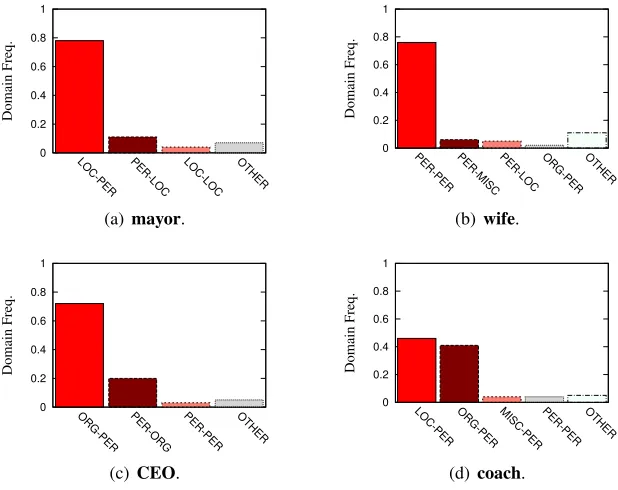
Figure 1 shows the relative df scores of 4

rela-tional terms (mayor,wife,CEO, andcoach) which

illustrate well the strengths of thedf score. We can

see that for the majority of terms (Figure 1(a)–(c)), there is a single domain for which the term has a

clearly dominant df score: LOC–PER for mayor,

PER–PERforwife, andORG–PERforCEO.

Dependency on NER Types. Looking again at

Figure 1, there is one case in which thedf score does

not seem to discriminate a reasonable domain. For

coach, the dominant domain is LOC–PER, which

can be explained by the common use of the city (or state) name as a proxy for a team as in the sentence “Syracuse football coach Greg Robinson”. Note, however, that the problem in this case is the dif-ficulty for the NER to determine that “Syracuse” refers to the university. These are some examples

of correctly identified pairs in thecoachrelation but

in which the NER types are misleading:

• LOC–PER domain: (England, Fabio Capello);

(Croatia, Slaven Bilic); (Sunderland, Roy

(4)
[image:4.612.120.492.76.451.2]

Table 1: Unigram features for the pairYoutube[ORG] – Google[ORG]withidfanddf(ORG–ORG) scores

Term idf df (ORG–ORG) Term idf df (ORG–ORG)

ubiquitious 11.6 1.00 blogs 6.4 0.14

sale 5.9 0.80 services 5.9 0.13

parent 6.8 0.78 instead 4.0 0.12

uploader 10.5 0.66 free 5.0 0.12

purchase 6.3 0.62 similar 5.7 0.12

add 6.1 0.33 recently 4.2 0.12

traffic 7.0 0.55 disappointing 8.2 0.12

downloader 10.9 0.50 dominate 6.4 0.11

dailymotion 9.5 0.50 hosted 5.6 0.10

bought 5.2 0.49 hmmm 9.3 0.10

buying 5.8 0.47 giant 5.4 <0.1

integrated 7.3 0.44 various 5.7 <0.1

partnership 6.7 0.42 revealed 5.2 <0.1

pipped 8.9 0.37 experiencing 7.7 <0.1

embedded 7.6 0.36 fifth 6.5 <0.1

add 6.1 0.33 implication 8.5 <0.1

acquired 5.6 0.33 owner 6.0 <0.1

channel 6.3 0.28 corporate 6.4 <0.1

web 5.8 0.26 comments 5.2 <0.1

video 4.9 0.24 according 4.5 <0.1

sellout 9,2 0.23 resources 6.9 <0.1

revenues 8.6 0.21 grounds 7.8 <0.1

account 6.0 0.18 poked 6.9 <0.1

evading 9.8 0.16 belongs 6.2 <0.1

eclipsed 7.8 0.16 authors 7.4 <0.1

company 4.7 0.15 hooked 7.1 <0.1

• MISC–PERdomain: (Titans, Jeff Fisher); (Jets,

Eric Mangini); (Texans, Gary Kubiak).

4.2 Using thedf Score

We use thedf score for two purposes in our work.

First, for clustering, we compute the weights of the terms inside all vectors using the producttf·idf ·df.

Second, we also use thedf score as a filtering tool,

by removing terms from vectors whenever theirdf

scores lower than a threshold. Going back to the

Youtube[ORG] – Google[ORG]example in Table 1,

we can see that minimumdf filtering helps with

re-moving many noisy terms. We also use maximum

idf filtering which helps with removing terms that

have highdf scores only because they are rare and

appear only within one domain (e.g., ubiquitious (misspelled in source) and uploader in this example). As we shall see in the experimental evaluation,

even in the presence of incorrect type assignments

made by the NER tool, the use ofdf scores improves

the accuracy significantly. It is also worth

mention-ing that computmention-ing thedf scores can be done fairly

efficiently, and as soon as all entity pairs are ex-tracted.

5 Results

We now report the results on INTER and NOISY. Our baseline run is similar to the systems pub-lished by Hasegawa et al. (Hasegawa et al., 2004) and Mesquita et al. (Mesquita et al., 2010); that

is HAC with average link using tf ·idf and cosine

(5)

0 0.2 0.4 0.6 0.8 1

LOC-PER PER-LOC LOC-LOC OTHER

Domain Freq.

(a) mayor.

0 0.2 0.4 0.6 0.8 1

PER-PER PER-MISC PER-LOC ORG-PER OTHER

Domain Freq.

(b)wife.

0 0.2 0.4 0.6 0.8 1

ORG-PER PER-ORG PER-PER OTHER

Domain Freq.

(c)CEO.

0 0.2 0.4 0.6 0.8 1

LOC-PER ORG-PER MISC-PER PER-PER OTHER

Domain Freq.

[image:5.612.148.457.60.305.2]

(d)coach.

Figure 1: Domain Frequency examples.

(df) we significantly outperformed this baseline on both datasets (INTER: F-1 score of 0.87 compared to 0.75; NOISY: F-1 score of 0.72 compared to

0.65). In addition, filtering terms by minimumdf

and maximum idf thresholds improved the results

further on INTER. These results are promising since a major challenge in text clustering is reducing the noise in the data.

We also see a substantial decrease of the results on NOISY compared to INTER. Such a decrease is, of course, expected: NOISY contains not only thousands more entity pairs than INTER, but also

hundreds (if not thousands) morerelationsas well,

making the clustering task harder in practice.

6 Conclusion and Future Research Directions

We utilized the Domain Frequency (df) score as a

term-weighting score designed for identifying

rela-tional terms for Open IE. We believe that df can

be utilized in various of applications, with the ad-vantage that in practice, for many such applica-tions, the list of terms and scores can be used off-the-shelf with no further effort. One such

applica-tion is Named Entity Recogniapplica-tion (NER) –df helps

in identifying relational patterns that are associated

0.4 0.5 0.6 0.7 0.8 0.9

0 0.01 0.02 0.03 0.04 0.05

f-measure

clustering threshold INTER: tf*idf*df & pruning

INTER: tf*idf*df INTER: tf*idf NOISY: tf*idf*df & pruning NOISY: tf*idf*df NOISY: tf*idf

Figure 2: tf ×idf Vs. tf ×idf ×df with and with-out minimumdf and maximum idf pruning on INTER and NOISY. All results consistently dropped for cluster-ing thresholds larger than 0.05.

with a certain domain (e.g.,PER–PER). If the list of

words and phrases associated with theirdf scores is

generated using an external dataset annotated with entities, it can be applied to improve results in other, more difficult domains, where the performance of the NER is poor.

It is also appealing that the df score is

[image:5.612.319.531.350.491.2]
(6)

have the same structure as English and some

adjust-ments should be made. For example, df exploits

the fact that relational verbs are usually placed be-tween two entities in a sentence, which may not be always the case in other languages (e.g., German).

Investigating howdfcan be extended and utilized in

a multi-lingual environment is an interesting future direction.

7 Acknowledgements

The author would like to thank Professor Denilson Barbosa from the University of Alberta, Professor David Grossman and Gady Agam from Illinois In-stitute of Technology, and Professor Ophir Frieder

from Georgetown University. All provided great

help in forming the ideas that led to this work.

References

Michele Banko, Michael J. Cafarella, Stephen Soderland, Matthew Broadhead, and Oren Etzioni. 2007. Open information extraction from the web. In Manuela M. Veloso, editor,IJCAI, pages 2670–2676.

Razvan C. Bunescu and Raymond J. Mooney. 2007. Learning to extract relations from the web using mini-mal supervision. InACL.

K. Burton, A. Java, and I. Soboroff. 2009. The icwsm 2009 spinn3r dataset. In Proceedings of the Annual

Conference on Weblogs and Social Media.

Jinxiu Chen, Donghong Ji, Chew Lim Tan, and Zhengyu Niu. 2005. Unsupervised feature selection for re-lation extraction. In IJCNLP-05: The 2nd Interna-tional Joint Conference on Natural Language Process-ing. Springer.

Anthony Fader, Michael Schmitz, Robert Bart, Stephen Soderland, and Oren Etzioni. 2011. Identifying re-lations for open information extraction. Manuscript submitted for publication. University of Washington. Takaaki Hasegawa, Satoshi Sekine, and Ralph Grishman.

2004. Discovering relations among named entities from large corpora. In ACL ’04: Proceedings of the 42nd Annual Meeting on Association for

Computa-tional Linguistics, page 415, Morristown, NJ, USA.

Association for Computational Linguistics.

Yuval Merhav, Filipe Mesquita, Denilson Barbosa, Wai Gen Yee, and Ophir Frieder. 2010. Incorporat-ing global information into named entity recognition systems using relational context. In Proceedings of the 33rd international ACM SIGIR conference on

Re-search and development in information retrieval,

SI-GIR ’10, pages 883–884, New York, NY, USA. ACM.

Yuval Merhav, Filipe Mesquita, Denilson Barbosa, Wai Gen Yee, and Ophir Frieder. 2012. Extract-ing information networks from the blogosphere. ACM

Transactions on the Web (TWEB). Accepted 2012.

Filipe Mesquita, Yuval Merhav, and Denilson Barbosa. 2010. Extracting information networks from the blo-gosphere: State-of-the-art and challenges. In4th Int’l AAAI Conference on Weblogs and Social Media–Data

Challenge.

Mike Mintz, Steven Bills, Rion Snow, and Daniel Juraf-sky. 2009. Distant supervision for relation extraction without labeled data. InACL-IJCNLP ’09: Proceed-ings of the Joint Conference of the 47th Annual Meet-ing of the ACL and the 4th International Joint Confer-ence on Natural Language Processing of the AFNLP:

Volume 2, pages 1003–1011, Morristown, NJ, USA.

Association for Computational Linguistics.

Lev Ratinov and Dan Roth. 2009. Design challenges and misconceptions in named entity recognition. In

CoNLL ’09: Proceedings of the Thirteenth Conference

on Computational Natural Language Learning, pages

147–155, Morristown, NJ, USA. Association for Com-putational Linguistics.

Philip Resnik. 1996. Selectional constraints: an information-theoretic model and its computational re-alization.

Stephen Robertson. 2004. Understanding inverse doc-ument frequency: On theoretical argdoc-uments for idf.

Journal of Documentation, 60:2004.

Benjamin Rosenfeld and Ronen Feldman. 2007. Cluster-ing for unsupervised relation identification. InCIKM ’07, pages 411–418, New York, NY, USA. ACM. Jun Zhu, Zaiqing Nie, Xiaojiang Liu, Bo Zhang, and

Ji-Rong Wen. 2009. Statsnowball: a statistical approach to extracting entity relationships. In Proceedings of

the 18th international conference on World wide web,

Figure

Table 1: Unigram features for the pair Youtube[ORG] – Google[ORG] with i d fand d f(ORG–ORG) scoresTerm(ORG–ORG)Term(ORG–ORG)
Figure 2: t f×i d fVs. t f×i d f×d fwith and with-out minimum d fand maximum i d fpruning on INTERand NOISY

References

Related documents