Volume 2006, Article ID 58564, Pages1–10 DOI 10.1155/ASP/2006/58564
Efficient Implementation of Complex Modulated Filter Banks
Using Cosine and Sine Modulated Filter Banks
Ari Viholainen, Juuso Alhava, and Markku Renfors
Institute of Communications Engineering, Tampere University of Technology, P.O. Box 553, 33101 Tampere, Finland
Received 12 April 2005; Revised 6 October 2005; Accepted 17 October 2005
Recommended for Publication by Ulrich Heute
The recently introduced exponentially modulated filter bank (EMFB) is a 2M-channel uniform, orthogonal, critically sampled, and frequency-selective complex modulated filter bank that satisfies the perfect reconstruction (PR) property if the prototype filter of anM-channel PR cosine modulated filter bank (CMFB) is used. The purpose of this paper is to present various implementation structures for the EMFBs in a unified framework. The key idea is to use cosine and sine modulated filter banks as building blocks and, therefore, polyphase, lattice, and extended lapped transform (ELT) type of implementation solutions are studied. The ELT-based EMFBs are observed to be very competitive with the existing modified discrete Fourier transform filter banks (MDFT-FBs) when comparing the number of multiplications/additions and the structural simplicity. In addition, EMFB provides an alternative channel stacking arrangement that could be more natural in certain subband processing applications and data transmission sys-tems.
Copyright © 2006 Ari Viholainen et al. This is an open access article distributed under the Creative Commons Attribution License, which permits unrestricted use, distribution, and reproduction in any medium, provided the original work is properly cited.
1. INTRODUCTION
In many practical applications, the signals under consider-ation are real-valued. However, in communicconsider-ations signal processing, complex-valued in-phase/quadrature (I/Q) sig-nals are commonly used. I/Q sigsig-nals are obtained in a natural way when the baseband equivalent of a (modulated) band-pass signal is used in analysis or actual signal processing tasks. Another approach is to build an artificial complex-valued signal from two independent real-valued signals by mapping them into real and imaginary parts, respectively [1].
Complex modulated filter banks are widely used as com-putationally efficient and versatile building blocks whenever subband processing or transmission of complex-valued sig-nals is needed. However, certain applications related to au-dio/video processing and adaptive filtering can also utilize complex modulated filter banks even if input signals are real-valued [2,3]. In this way, main aliasing terms are missing and both magnitude and phase information is available.
The desired filter bank properties depend highly on the application under consideration. The emphasis of this pa-per is on 2M-channel finite impulse response (FIR) com-plex modulated filter banks that are orthogonal, critically sampled, and frequency selective. Moreover, they provide the PR property if the real-valued FIR linear-phase lowpass
prototype filter of anM-channel PR CMFB is used. Due to the exponential modulation, the resulting analysis and syn-thesis filters have single-sided magnitude responses that di-vide the whole frequency range [−π,π] uniformly.
A very important class of filter banks is the discrete Fourier transform filter banks (DFT-FBs) [4]. An important reason for the wide success of DFT-FBs is their efficient im-plementation, which is based on the use of polyphase filters and fast Fourier transform (FFT) blocks. It is well known that the critically sampled 2M-channel DFT-FB, with FIR analysis and synthesis filters, satisfies the PR property if the prototype filters are simple 2M-length rectangular windows [5]. Because of this, the stopband attenuation of the resulting channel filters is only 13 dB.
More frequency-selective filter banks can be obtained by using longer and smoother prototype filters. Actually, it has been shown in [6–8] that highly frequency-selective PR CMFBs can be designed if the order of the prototype filter is
He
2M−1(z) He
1(z) He
0(z)
M M M
Re[·] Re[·] Re[·]
· · · · · · · · ·
M M M
Fe
2M−1(z) Fe
1(z) Fe
0(z)
+ +
. . . . . .
. . . . . . .
. .
. . .
. . .
. . .
. . .
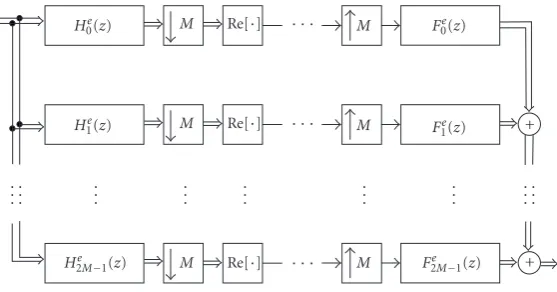
Figure1: Critically sampled EMFB structure.
signals as in the case of MDFT-FBs [11] and EMFBs [12]. In MDFT-FBs and EMFBs, the critical sampling is accom-plished differently and their channel stacking arrangements are different.
The MDFT-FB is derived from a DFT-FB with over-sampling factor of 2 by introducing several changes to the subband downsampling and upsampling stages. The EMFB concept is very closely related to the modulated complex lapped transform (MCLT) and it relies on real-valued sub-band signals. The main advantage of EMFBs is a very effi -cient implementation, which is based onM-channel CMFBs and sine modulated filter banks (SMFBs) [13, 14]. It is well known that critically sampled PR CMFBs have efficient implementations based on polyphase structures [5], lattice structures [7], and fast ELT structures [6], but efficient im-plementation structures for SMFBs have received only little attention in the literature.
This paper extends our previous work in [14] by pro-viding more detailed derivation of ELT and polyphase SMFB structures, introducing also our lattice structures for SMFBs, presenting an alternative approach to obtain an SMFB us-ing original ELT structures, and comparus-ing the arithmetic complexity of the ELT-based EMFBs with the complex-ity of MDFT-FBs. Section 2 introduces the key ideas of EMFBs. The efficient implementation structures for CMFBs are briefly reviewed and following the same kind of ideas, fast implementation structures for SMFBs are developed in
Section 3.Section 4gives the computational complexity cal-culations, in terms of the number of multiplications and ad-ditions for the ELT-based EMFBs. The MDFT-FB is reviewed inSection 5. Based on the number of arithmetic operations, the ELT-based EMFBs are shown to be less computationally complex and to have simpler implementation structures than the MDFT-FBs.
2. EMFBs
The EMFB is a further development of MCLT. The MCLT is a 2x oversampled system for the processing of real-valued signals, whereas the EMFB is a critically sampled complex modulated filter bank that suits complex-valued signals. The
MCLT uses subfilters whose order is restricted toN=2M−1, but EMFBs can utilize longer subfilters. Therefore, the EMFB can be considered to be a complex extension of the ELT. The odd-stacked synthesis filters fke(n) and analysis filtershek(n) are generated from a linear-phase lowpass FIR prototype fil-ter by using exponential modulation sequences
fe k(n)=
2
M hp(n) exp
j2π
2M
k+1 2
n+M+ 1 2
,
he k(n)=
2
M hp(n) exp
−j2π
2M
k+1 2
N−n+M+ 1 2
,
(1)
where k = 0, 1,. . ., 2M −1, n = 0, 1,. . ., 2KM −1, and
j =√−1. This means that each analysis filter is just a time-reversed and complex-conjugated version of the correspond-ing synthesis filter. Here and later on, the superscriptse,c, andsdenote exponential, cosine, and sine modulations, re-spectively.
Figure 1shows the EMFB system, where the analysis fil-ter bank decomposes a complex-valued high-rate signal into low-rate subband signals. There are 2Msubbands, twice as many as the downsampling factor, but the overall sample rate is preserved because only real parts are used in the subband processing unit. The synthesis filter bank can reconstruct the complex-valued output signal perfectly from the real-valued subband signals as verified in [13]. The resulting output sig-nal is a delayed version of the input sigsig-nal and the total sys-tem delay is equal to the filter orderN.
The key idea behind the efficient implementation of the critically sampled EMFB system is that the EMFB channel filters can be represented using cosine and sine modulated channel filters as follows:
fe k(n)=
⎧ ⎪ ⎨ ⎪ ⎩
fc
k(n) +j fks(n), k∈[0,M−1], −fc
2M−1−k(n) +j f2sM−1−k(n), k∈[M, 2M−1],
he k(n)=
⎧ ⎪ ⎨ ⎪ ⎩
hc
k(n)−jhsk(n), k∈[0,M−1], −hc
An
al
ys
is
SMFB
An
al
ys
is
CMFB
xQ
(
n
)
xI
(
n
)
. . .
. . .
. . . .
. .
. . .
. . .
+ + + +
− −
+ + + +
− −
Sy
nthesis SMFB
Sy
nthesis CMFB
xQ
(
n
)
xI
(
n
)
· · · · · · · · · · · ·
xM(m)
x2M−1(m) xM−1(m) x0(m)
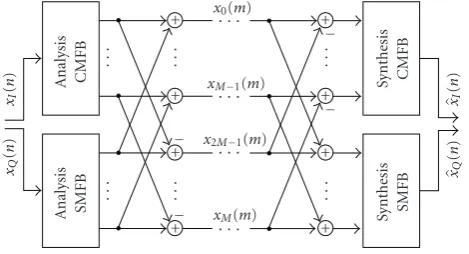
Figure2: Efficient implementation for the EMFB.
These definitions enable the efficient implementation of
Figure 2because real-valued subband signals can be simpli-fied according to
Xk(z)=ReXI(z) +jXQ(z)Hkc(z)−jHks(z)
=XI(z)Hkc(z) +XQ(z)Hks(z),
X2M−1−k(z)=ReXI(z) +jXQ(z)−Hc
k(z)−jHks(z) = −XI(z)Hkc(z) +XQ(z)Hks(z).
(3)
The filter bank structures of Figures1and2are equivalent, but obviously the latter is preferable for practical implemen-tation. This is becauseFigure 1suggests that also imaginary parts of subband signals are computed and then discarded. InFigure 2, these useless imaginary parts are not computed at all.
3. COSINE AND SINE MODULATED FILTER BANKS
In the literature, there exist two widely used modulation schemes for odd-stacked PR CMFBs [15]. The modulation sequences are slightly different due to different scaling fac-tors and phase terms. Here, the ELT definitions are used and the impulse responses of sine modulated synthesis filters are obtained when the cosine term is simply replaced by the sine:
fc k(n)=
2
M hp(n) cos
k+1 2
π
M
n+M+ 1 2
, (4)
fs k(n)=
2
M hp(n) sin
k+1 2
π
M
n+M+ 1 2
, (5)
wherek = 0, 1,. . .,M−1 andn = 0, 1,. . ., 2KM−1. The
kth analysis filters are simply the time-reversed version of the corresponding synthesis filters, that is,hck(n)= fc
k(N−n) and
hs
k(n)= fks(N−n). Moreover, the following relations between the sine modulated and cosine modulated channel filters are found:hsk(n) = (−1)k+Kfc
k(n) and fks(n) = (−1)k+Khck(n). Because only the phases of the modulating sinusoids are dif-ferent, the SMFBs are not commonly used alone, but they can
cooperate with CMFBs in various applications. In [12], it is already shown that also the SMFB satisfies the PR conditions, if the same prototype filter as in the case of PR CMFB is used. In efficient implementations, M-channel CMFBs and SMFBs can be divided into prototype filter and modula-tion parts. When comparing the modulamodula-tion sequences and the basis functions of the discrete cosine/sine transforms of type IV (DCT-IV/DST-IV) [16], it becomes clear that the re-quired modulation parts can be realized usingM×M DCT-IV and DST-DCT-IV. These transform matrices are symmetric and they satisfy the following properties: ΦTcΦc = ΦcΦTc = I and ΦTsΦs = ΦsΦTs = I, where I = diag(1, 1,. . ., 1) is the identity matrix. Moreover, there exists a simple con-nection between these block matrices Φs = I±ΦcJ, where
I± = diag(1,−1, 1,−1,. . ., 1,−1) andJ denotes the
revers-ing block matrix, which has ones on its antidiagonal and all the other elements are zero.
3.1. ELT-type of structures
The modulating cosines in (4) have the same frequencies as the basis functions of the DCT-IV. However, certain proto-type filter coefficients need sign changes because of the re-lationship between the modulation sequences and the DCT-IV [17]. Anyway, the existence of a DCT-IV-based fast algo-rithm for the ELT is expected. A key point to the fast ELT im-plementation is the fact that the PR conditions imply an or-thogonal butterfly implementation. In order to see this fact, the derivations forK =1,K =2, and the generalized case are presented in detail in [15].
The basic idea of Figure 3 is that the prototype filter, which is multiplied by the sign changing sequence, can be implemented withKcascaded orthogonal butterfliesDct(t= 0, 1,. . .,K−1) and pure delays, which are connected to the outputs 0, 1,. . .,M/2−1 of the butterfly matrices [6]. These symmetric matrices have nonzero values only on their diag-onals and antidiagdiag-onals:
Dct= ⎡
⎣−Ct StJ
JSt JCtJ
⎤
⎦, (6)
where
Ct=diagcosθ0,t, cosθ1,t,. . ., cosθM/2−1,t =diagc0,t,c1,t,. . .,cM/2−1,t,
St=diagsinθ0,t, sinθ1,t,. . ., sinθM/2−1,t =diags0,t,s1,t,. . .,sM/2−1,t.
(7)
The last element of the fast ELT structure is the DCT-IV transform. Because the DCT-IV matrix and the matricesDct
are their own inverses, the transform and the butterflies in the inverse ELT structure are identical to those in the direct ELT structure.
z−1 z−1 z−1
M M M M
. . . . . .
. . . . . .
. . . . . .
. . . . . .
. . . . . .
DcK−1 DcK−2 Dc0
DC
T
-I
V
z−2 z−2
z−2 z−2
z−1 z−1
· · · · · · · · · · · ·
Figure3: Fast implementation of the analysis CMFB (direct ELT).
in the basic implementation of the MCLT in [2]. In order to obtain a fast implementation for the analysis SMFB, one could expect that exactly the same butterfly matrices as in the CMFB structure could be directly used and only the trans-form part has to be changed. Unfortunately, this does not work directly because the impulse response of the prototype filter, which is multiplied with the sign changing sequence, is not perfectly symmetric. Therefore, when the sine modula-tion sequence is realized using DST-IV, the reversed version of the prototype filter is needed. The sine modulated analysis filters and the cosine modulated synthesis filters are linked together with a factor (−1)k+K. So, the inverse ELT structure includes this needed reversed version of the prototype filter and it also offers some hint for a modulation part as well.
At first, it is possible to consider the inverse ELT in such a manner that the whole system is flipped left to right, upside down, changing the direction of the lines, replacing upsam-plers by downsamupsam-plers, replacing summations by connection points, and vice versa. Now the butterfly stages and DCT-IV are flipped upside down. If these new butterfly matrices
Dst= ⎡
⎣Ct StJ
JSt −JCtJ
⎤
⎦ (8)
are used instead of Dct matrices in the ELT structure, the impulse response of the prototype filter obtained from this structure is a reversed version of the one which can be ob-tained from the direct ELT structure. If the DST-IV replaces the flipped DCT-IV, the resulting impulse responses of the channel filters are reversed versions of the corresponding fil-ters obtained from the original ELT structure. Moreover, ev-ery other channel filter is multiplied by −1, that is, every channel is multiplied by (−1)k depending on the channel numberk. Now everything is fine whenKis even, but when
K is odd the extra multiplication by−1 is needed for every channel filter due to the factor (−1)K. This multiplication can be included in every butterfly matrixDstand this results in the following butterfly matrices:
Dst= −Dst= ⎡
⎣−Ct −StJ −JSt JCtJ
⎤
⎦. (9)
In summary, SMFBs can be implemented usingKcascaded orthogonal butterfliesDst, delays, and DST-IV transforms.
3.2. SMFBs using the original ELT structure
The relationship between DCT-IV and DST-IV and the rela-tionship between the modified DCT and the modified DST presented in [18] give the idea of how to compute either of the two transforms using only one fast algorithm. Here, it is shown that this method also results in an alternative ap-proach for obtaining a sine modulated analysis filter bank. The mathematical proof can be found in the appendix.
Let us first define that the top path after the delay chain is numbered ask=0 and the bottom line ask=M−1. Now the scheme is as follows.
(1) Change the signs of odd elements in input data se-quence.
(2) Use the butterfly structure of fast ELT. (3) Compute the DCT-IV transform. (4) Reverse the order of the output sequence.
After a delay chain and downsamplers, the input values com-ing to odd paths are sign-changed. When feedcom-ing this mod-ified sequence through the butterflies of the ELT, the input sequence to the transform block is almost correct if com-pared with the sequence obtained from the SMFB structure. The values coming from the even-numbered paths are cor-rect, but the values from the odd-numbered paths have op-posite signs. These opop-posite signs can be compensated if the DCT-IV matrix is used instead of the DST-IV matrix. After the modulation block all the subband signals are correct, but they are just in the reverse order. Thus, using the above pro-cedure, it is possible to compute cosine/sine modulated se-quences using only one fast algorithm originally designed for just ELT computing. It should be also pointed out that the sine modulated synthesis system is obtained when the above-mentioned steps are done in reverse order.
3.3. Polyphase and lattice structures
is already verified in [14], where polyphase structures for SMFBs are derived. Here, it is exactly shown what kinds of modifications are needed when using the ELT type of cosine modulation sequence and its sine modulated counterpart.
For the cosine modulation sequence
Ψc n,k=
2
Mcos
k+1 2
π
M
n+M+ 1 2
, (10)
wheren=0, 1,. . ., 2KM−1 andk=0, 1,. . .,M−1, the peri-odicity according tonis 2M. Therefore, it is straightforward to use the direct 2Mpolyphase decomposition of the proto-type filter with this modulation sequence. By using matrix notations, the synthesis filters (fkc(n) = [P]n,k) can be ex-pressed by multiplying a diagonal prototype filter matrixH
with the modulation matrixΨc. These matrices can be fur-ther partitioned to 2M×2MHlmatrices and 2M×M Ψc l matrices as follows:
P=HΨc= ⎡ ⎢ ⎢ ⎢ ⎢ ⎣ H0 H1 . ..
HK−1
⎤ ⎥ ⎥ ⎥ ⎥ ⎦ ⎡ ⎢ ⎢ ⎢ ⎢ ⎣ Ψc 0 Ψc 1 .. . Ψc K−1 ⎤ ⎥ ⎥ ⎥ ⎥
⎦, (11)
where
Hl=diaghp(2lM),hp(2lM+ 1),. . .,
hp(2lM+ 2M−1),
Ψc ln,k=
2
Mcos
k+1 2
π
M
n+ 2lM+M+ 1 2
.
(12)
It can be noticed thatΨcl =(−1)lΨc0. Moreover, the matrix Ψc
0can be written using the DCT-IV matrix in the following
way:
Ψc
0= −JcΦc, (13)
where Jc is a 2M×M matrix that consists ofM/2×M/2 submatrices.
The matrixPcan be written as a decomposition of the prototype filter matrix,Jcmatrices, and DCT-IV matrices:
P= ⎡ ⎢ ⎢ ⎢ ⎢ ⎢ ⎢ ⎣ −H0 H1 −H2 . ..
±HK−1
⎤ ⎥ ⎥ ⎥ ⎥ ⎥ ⎥ ⎦
2KM×2KM
× ⎡ ⎢ ⎢ ⎢ ⎢ ⎢ ⎢ ⎣ Jc Jc Jc . .. Jc ⎤ ⎥ ⎥ ⎥ ⎥ ⎥ ⎥ ⎦
2KM×KM ⎡ ⎢ ⎢ ⎢ ⎢ ⎢ ⎢ ⎣ Φc Φc Φc .. . Φc ⎤ ⎥ ⎥ ⎥ ⎥ ⎥ ⎥ ⎦ KM×M
. (14) DC T -I V
z−1 z−1 z−1
M M M
−G0(−z2)
−G1(−z2)
−G2M−1(−z2)
. . . . . . . . .
(−1)K−1JT c . . . . . . 0 1
M−1
Figure4: Analysis CMFB with polyphase filters.
This system of matrices describes a synthesis filter bank and the resulting analysis CMFB is shown inFigure 4. The cor-responding SMFB can be obtained by replacing the DCT-IV with the DST-IV and using the mapping matrixJsinstead of
Jc. The required mapping matrices are defined as follows:
Jc= ⎡ ⎢ ⎢ ⎢ ⎢ ⎢ ⎣
0 −I 0 J J 0 I 0 ⎤ ⎥ ⎥ ⎥ ⎥ ⎥
⎦, Js=
⎡ ⎢ ⎢ ⎢ ⎣
0 −I 0 −J
−J 0
I 0
⎤ ⎥ ⎥ ⎥
⎦, (15)
where the matrixIis the identity matrix,Jis the reversing block matrix, and0is the zero matrix. InFigure 4, the pro-totype filter is expressed in the form of 2Mpolyphase com-ponents using type-1 polyphase filters:
Hp(z)=
2M−1
l=0
K−1
p=0
hp(l+ 2pM)z−(l+2pM)=
2M−1
l=0 z−lG
lz2M. (16)
In order to get the signs to match the matrix decomposition, the polyphase filters are written in the form of −Gi(−z2).
Moreover, the matrixJchas to be transposed and multiplied by (−1)K−1so that 2Msignals from the polyphase filters are mapped properly to the DCT-IV. This extra multiplication is not needed in the synthesis structure.
The polyphase filter structure can be further simpli-fied by forming M filter pairs as shown in Figure 5. This is because the general polyphase component pair {Gi(z2),
z−1 z−1
M M
G0(z2) GM(z2) GM−1(z2) G2M−1(z2)
z−1 z−1
JTc
0 1
M−1
DC
T
-I
V
. . .
. . . .
. . .
. .
Figure5: Simplified analysis CMFB with two-channel lattice
struc-tures.
InFigure 6, lattice coefficients have been chosen in such a manner that the CMFB is directly obtained when a proper mapping is applied. Because the lattice coefficients have been chosen in an appropriate manner, the SMFB can be obtained just multiplying certain paths by−1. The required mapping matrices are
Jc= ⎡ ⎢ ⎢ ⎢ ⎢ ⎢ ⎢ ⎣
0 I
0 J
J 0
I 0
⎤ ⎥ ⎥ ⎥ ⎥ ⎥ ⎥ ⎦
, Js= ⎡ ⎢ ⎢ ⎢ ⎢ ⎢ ⎢ ⎣
0 I
0 −J
−J 0
I 0
⎤ ⎥ ⎥ ⎥ ⎥ ⎥ ⎥ ⎦
. (17)
4. COMPUTATIONAL COMPLEXITY OF EMFBs
By using the algorithm presented in [15], the lowest com-putational complexities of DCT-IV and DST-IV areμ(M)= (M/2) log2M +M andα(M) = (3M/2) log2M, where the
μ(M) andα(M) denote the number of multiplications and additions necessary to compute anM-length sequence. The polyphase structure consists of 2Mpolyphase filters, each re-quiring K multipliers andK −1 adders, and the mapping matrix, requiringMadders. The lattice structure is realized using cascaded lattice sections, delays, and a mapping ma-trix. There areMchannel lattices each having one two-multiplier section andK−1 four-multiplier sections with two adders. In the fast ELT structure, the prototype filter is real-ized usingKcascaded butterfly stages and pure delays. Each butterfly stage consists ofM/2 butterflies that are realized by using four multipliers and two adders.
The number of multiplications can be further reduced because all the coefficients in butterfly matricesDc1toDcK−1
and lattice matrices can be scaled in such a manner that their diagonal entries are equal to 1 or−1 or their antidiagonal en-tries are equal to 1 [6,7]. In order to compensate these mod-ifications, the resulting scaling factors have to be applied to
Dc0or to the scaling multipliers in the case of the lattice
struc-ture. Furthermore, in the ELT structure, the four-multiplier butterfly matrixDc0 requires only three multiplications and
three additions because it can be realized using a special trick
z−2 z−2
−ck,K−1 −ck,K−2 −ck,0
+ +
+ +
sk,K−1 ck,K−2 ck,0
· · · · · ·
sk,K−2
sk,K−2
sk,0
sk,0
(a)
z−2 z−2
sk,K−1 −ck,K−2 −ck,0
+ +
+ +
ck,K−1 ck,K−2 ck,0
· · · · · ·
sk,K−2
sk,K−2
sk,0
sk,0
(b)
Figure6: Lattice structures for polyphase filter pairs{G2M−1−i(z2),
GM−1−i(z2)}and{Gi+M(z2),Gi(z2)}in the analysis filter bank.
Table1: Computational complexities of efficient cosine/sine
mod-ulated analysis (synthesis) filter bank structures.
Structure μ(M) α(M)
Fast ELT M
2(2K+ log2M+ 3)
M
2(2K+ 3 log2M+ 1)
Polyphase M
2(4K+ log2M+ 2)
M
2(4K+ 3 log2M−2)
Lattice M
2(4K+ log2M+ 2)
M
2(4K+ 3 log2M−2)
presented in [15]. The final computational complexities are summarized inTable 1. As can be seen, ELT structures re-quire (M/2)(2K−1) multiplications and (M/2)(2K−3) ad-ditions less than the direct 2Mpolyphase or the lattice struc-tures.
The efficient implementation structure of analysis EMFB uses CMFB and SMFB as building blocks. In order to form correct subband signals, the EMFB structure also needs sim-ple butterflies requiring just 2M adders. PR CMFBs and SMFBs can be realized by using fast ELT type of structures. By applying the computational complexity formulas of the fast ELT and noting that the input signals to the butterfly stages are real-valued, the number of real multiplications and ad-ditions perMcomplex-valued input samples for the analysis EMFB are [14]
μEMFB(M)=M2K+ log2M+ 3,
αEMFB(M)=M2K+ 3 log2M+ 3.
(18)
5. COMPARISON BETWEEN EMFBs AND MDFT-FBs
Our reference model is a 2M-channel even-stacked MDFT-FB system.1The key idea of analysis MDFT-FB is to use
two-step downsampling for each subband [21]. After a complex-valued input signal is filtered using 2M analysis filters, the complex-valued subband signals are first downsampled by a factor ofM. The resulting subband signals are further down-sampled by a factor of 2 with and without a unit delay. The critical sampling is obtained by taking the real part of one polyphase component and the imaginary part of the other polyphase component in each subband and alternating this from one subband to the next. In the synthesis filter bank, similar modifications are performed. The price to be paid for these modifications is that the total system delay increases fromNtoN+M.
In [22], the first realization of MDFT-FB consisted of two DFT polyphase filter banks, one without delay and another delayed byM samples. Instead of calculating the complex-valued subband signals by two 2M×2MIDFTs and discard-ing one of the real or imaginary parts, the required 2Mreal parts and the 2M imaginary parts can be calculated by us-ing only a sus-ingle 2M×2MIDFT. Although two IDFTs have been reduced to a single one, each polyphase filter still has to be realized twice. However, the same input signals apart from a possible delay are fed to polyphase filtersGi(z) and
G(i+M)modulo2M(z). Therefore, the same delay chain can be
used for both polyphase filters. As an example, an analysis part of 4-channel MDFT-FB is shown inFigure 7. In the case of PR MDFT-FB, polyphase filter pairs can be efficiently re-alized by using the lattice structure.
The simplified version of the analysis filter bank con-sists of 2M two-channel lattices, a 2M ×2M IDFT block, 2(2M−2) extra multiplications by 0.5, two Re-operations, two j·Im-operations, and 2M+ 2(2M−2) extra additions [22]. The input signals of the lattices are complex-valued and, after scaling, each lattice can be realized using 2K mul-tipliers and 2(K−1) adders. Except for two adders, where input signals are purely real/imaginary-valued, input signals for other blocks are still complex-valued. According to [15], a 2M-length complex-valued DFT/IDFT via the “split-radix” FFT algorithm requires 2M(log2(2M)−3)+4 real multiplica-tions and 6M(log2(2M)−1) + 4 real additions. If those trivial multiplications by 0.5 are omitted, then the total number of real multiplications and additions per 2M complex-valued input samples for the analysis MDFT-FB are
μMDFT(2M)=2M4K+ log2(2M)−3+ 4,
αMDFT(2M)=2M4K+ 3 log2(2M)−1−4.
(19)
Both the MDFT-FB and EMFB have 2M subbands, but the EMFB takes in only M complex-valued input samples
1In [1,11,21,22],Mstands for the number of complex-valued channels.
This paper uses 2Mfor the same purpose becauseMalready denotes the number of real-valued channels.
at time, whereas the MDFT-FB takes in 2Mcomplex-valued input samples. In order to be able to properly compare the MDFT-FB and EMFB systems, twoM-length complex-valued input sequences have to be processed in the case of EMFB. This results in the complexities that are shown inTable 2. The difference between computational complex-ities is in favor of the EMFB structure because it requires 2M(2K−5)+4 multiplications and 2M(2K−1)−4 additions less than the MDFT-FB structure. Table 3 summarizes the number of multiplications for certain values of K andM. For example, the optimization method in [23] can be used to generate PR prototype filters whose attenuation of the high-est stopband ripple is about 38 dB and 50 dB, if the K val-ues of 3 and 5 are used. The number of channels in many subband processing applications is typically tens, whereas for audio coding and efficient data transmission systems the number of channels can be hundreds or even thousands. So, if high number of highly frequency-selective channels is de-sired, then the EMFB structure offers significant improve-ments over the MDFT-FB structure. Another advantage of EMFBs is very clear and simple implementation structure. Moreover, the EMFB structure does not increase the total sys-tem delay.
The ELT-based EMFB cannot be used with biorthogo-nal low-delay filter banks, whereas the MDFT-FB realization with polyphase filters is directly valid for biorthogonal filter banks. It should be also pointed out that only PR CMFBs and SMFBs can be implemented using the ELT structures or lat-tice structures. Naturally, the direct 2Mpolyphase structures can be used to implement the prototype filter part for nearly PR filter banks. In [24], it is shown that the number of multi-plications can be reduced by 25% compared to the direct 2M polyphase structure, if two polyphase branches are combined to one as in the case of the ELT. This improvement comes from the same trick that can be used for computing a com-plex multiplication with three multipliers and three adders.
6. CONCLUSION
In this paper, efficient CMFB- and SMFB-based EMFB im-plementations were studied and compared with the MDFT-FB implementation. It was shown that critically sampled PR CMFB structures (ELT, polyphase, and lattice) require only small changes for SMFB implementations. Furthermore, it is possible to compute cosine and sine modulated sequences using only one fast algorithm originally designed for just ELT computing. Based on the number of arithmetic opera-tions, the proposed ELT-based EMFBs were shown to be less computationally complex and to have simpler implementa-tion structures than the MDFT-FBs. Thus, the EMFB can be considered as a computationally efficient building block for the processing of complex-valued signals in various subband processing and data transmission systems.
APPENDIX
z−1 z−1 z−1
4 4 4 4
z−1 z−1
G1(z) G3(z) G0(z) G2(z) G3(z) G1(z) G2(z) G0(z)
+ +
jIm[·] Re [·]
jIm[·] Re[·]
0.5 0.5 0.5 0.5
+ + + +
4
·
IDFT
+ +
− ∗
− ∗
∗ ∗
Figure7: Efficient implementation structure for 4-channel analysis MDFT-FB.
Table2: Computational complexity of MDFT-FBs and EMFBs.
FB type μ(2M) α(2M)
MDFT-FB 2M(4K+ log2M−2) + 4 2M(4K+ 3 log2M+ 2)−4
EMFB 2M(2K+ log2M+ 3) 2M(2K+ 3 log2M+ 3)
Table3: Example of MDFT-FB and EMFB computational
com-plexities.
M μMDFT(2M) μEMFB(2M)
K=3 K=5 K=3 K=5
16 452 708 416 544
32 964 1474 896 1152
64 2052 3076 1920 2432
128 4356 6404 4096 5120
256 9220 13316 8704 10752
512 19460 27652 18432 22528
n=0, 1,. . .,M−1, be anM-length input data sequence af-ter a delay chain and downsamplers in the analysis SMFB structure. TheM-length sequenceyj(n) for j =K−1,K− 2,. . ., 0 stands for the sequence before butterflyDsj:
yj−1(i)=z−2−ci,jyj(i)−si,jyj(M−1−i),
yj−1(M−1−i)= −si,jyj(i) +ci,jyj(M−1−i),
(A.1)
wherei=0, 1,. . .,M/2−1 andyK−1(n)=x(n).
For the analysis CMFB structure a modified input se-quence x(n) = (−1)nx(n) is used. TheM-length sequence
yj(n) for j = K−1,K −2,. . ., 0 stands for the sequence
before butterflyDcj:
yj−1(i)=z−2−ci,jyj(i) +si,jyj(M−1−i),
yj−1(M−1−i)=si,jyj(i) +ci,jyj(M−1−i),
(A.2)
wherei=0, 1,. . .,M/2−1 andyK−1(n)=x(n).
As an example, the sequencesyK−2andyK−2are yK−2(i)=z−2−ci,jx(i)−si,jx(M−1−i)
,
yK−2(M−1−i)= −si,jx(i) +ci,jx(M−1−i),
yK−2(i)=z−2−ci,jx(i) +si,jx(M−1−i)
=z−2−c
i,j(−1)ix(i) +si,j(−1)i+1x(M−1−i) =(−1)iz−2−ci,jx(i)−si,jx(M−1−i)
=(−1)iyK−2(i),
yK−2(M−1−i)=si,jx(i) +ci,jx(M−1−i)
=si,j(−1)ix(i) +ci,j(−1)i+1x(M−1−i) =(−1)i+1−si,jx(i) +ci,jx(M−1−i)
=(−1)i+1y
K−2(M−1−i).
(A.3)
values have only opposite signs, that is,
yK−2(n)=(−1)nyK−2(n). (A.4)
It is very straightforward to verify that the above is true after each butterfly stage. Therefore, it is correct to state that
y0(n)=(−1)ny0(n). (A.5)
TheM-length sequencesv(n) andu(n) coming to DST-IV and DCT-DST-IV, respectively, are defined as follows:
vM
2 +i
=z−1−c
i,0y0(i)−si,0y0(M−1−i)
vM
2 −1−i
= −si,0y0(i) +ci,0y0(M−1−i),
uM
2 +i
=z−1−c
i,0y0(i) +si,0y0(M−1−i)
=(−1)iz−1−ci,0y0(i)−si,0y0(M−1−i)
=(−1)iv
M
2 +i
,
uM
2 −1−i
=si,0y0(i) +ci,0y0(M−1−i)
=(−1)i+1−s
i,0y0(i) +ci,0y0(M−1−i)
=(−1)i+1v
M
2 −1−i
.
(A.6)
The above sequences include the last butterfly stages and the data shuffling sections before a transform block. The order of lines is shuffled in a regular way so that even lines remain as even lines and odd lines as odd lines. Therefore, the se-quencesv(n) andu(n) are still related in a very familiar way:
u(n)=(−1)nv(n). (A.7)
For sequencesv(n) andu(n), theirM-length DST-IV and DCT-IV transforms are defined as follows:
Vk=
2
M
M−1
n=0 v(n) sin
n+1 2
k+1 2
π
M
Uk=
2
M
M−1
n=0
u(n) cos
n+1 2
k+1 2
π
M
,
(A.8)
wherek=0, 1,. . .,M−1. In order to obtain the relationship between these transforms,M−1−kis substituted forkin
the above formula:
UM−1−k=
2
M
M−1
n=0
u(n) cos
n+1 2
M−1−k+1 2
π
M
=a
=
2
M
M−1
n=0
(−1)2nv(n) sin
n+1 2
k+1 2
π
M
=
2
M
M−1
n=0 v(n) sin
n+1 2
k+1 2
π
M
=Vk,
(A.9)
since
a=cos
−
n+1 2
k+1 2
π
M+
n+1 2
π
=cos
−
n+1 2
k+1 2
cos
n+1 2
π
=0
−sin
−
n+1 2
k+1 2
sin
n+1 2
π
=(−1)n
=(−1)nsin
n+1 2
k+1 2
.
(A.10)
ACKNOWLEDGMENTS
The authors would like to thank the anonymous reviewers for their constructive comments and suggestions that signif-icantly improved the manuscript. This work was supported by the Academy of Finland and the Nokia Foundation, which are gratefully acknowledged.
REFERENCES
[1] T. Karp and N. J. Fliege, “Modified DFT filter banks with per-fect reconstruction,”IEEE Transactions on Circuits and Systems II: Analog and Digital Signal Processing, vol. 46, no. 11, pp. 1404–1414, 1999.
[2] H. S. Malvar, “A modulated complex lapped transform and its applications to audio processing,” inProceedings of IEEE In-ternational Conference on Acoustics, Speech, and Signal Process-ing (ICASSP ’99), vol. 3, pp. 1421–1424, Phoenix, Ariz, USA, March 1999.
[3] W. H. Chin and B. Farhang-Boroujeny, “Subband adaptive fil-tering with real-valued subband signals for acoustic echo can-cellation,”IEE Proceedings—Vision, Image, and Signal Process-ing, vol. 148, no. 4, pp. 283–288, 2001.
[4] S. Weinstein and P. Ebert, “Data transmission by frequency-division multiplexing using the discrete Fourier transform,” IEEE Transactions on Communications, vol. 19, no. 5 part 1, pp. 628–634, 1971.
[6] H. S. Malvar, “Extended lapped transforms: properties, appli-cations, and fast algorithms,”IEEE Transactions on Signal Pro-cessing, vol. 40, no. 11, pp. 2703–2714, 1992.
[7] R. D. Koilpillai and P. P. Vaidyanathan, “Cosine-modulated FIR filter banks satisfying perfect reconstruction,”IEEE Trans-actions on Signal Processing, vol. 40, no. 4, pp. 770–783, 1992. [8] T. Saram¨aki, “Designing prototype filters for
perfect-recon-struction cosine-modulated filter banks,” in Proceedings of IEEE International Symposium on Circuits and Systems (ISCAS ’92), vol. 3, pp. 1605–1608, San Diego, Calif, USA, May 1992. [9] T. Q. Nguyen and R. D. Koilpillai, “The theory and design of
arbitrary-length cosine-modulated filter banks and wavelets, satisfying perfect reconstruction,”IEEE Transactions on Signal Processing, vol. 44, no. 3, pp. 473–483, 1996.
[10] R. Bregovi´c and T. Saram¨aki, “A systematic technique for de-signing linear-phase prototype filters for perfect-reconstruc-tion cosine-modulated and modified DFT filter banks,” in Proceedings of International Workshop on Spectral Methods and Multirate Signal Processing (SMMSP ’03), pp. 45–54, Barcelona, Spain, September 2003.
[11] T. Karp and N. J. Fliege, “MDFT filter banks with perfect re-construction,” inProceedings of IEEE International Symposium on Circuits and Systems (ISCAS ’95), vol. 1, pp. 744–747, Seat-tle, Wash, USA, April-May 1995.
[12] J. Alhava and M. Renfors, “Complex lapped transforms and modulated filter banks,” inProceedings of 2nd International Workshop on Spectral Methods and Multirate Signal Processing (SMMSP ’02), pp. 87–94, Toulouse, France, September 2002. [13] A. Viholainen, T. H. Stitz, J. Alhava, T. Ihalainen, and M.
Renfors, “Complex modulated critically sampled filter banks based on cosine and sine modulation,” inProceedings of IEEE International Symposium on Circuits and Systems (ISCAS ’02), vol. 1, pp. 833–836, Phoenix-Scottsdale, Ariz, USA, May 2002. [14] J. Alhava, A. Viholainen, and M. Renfors, “Efficient imple-mentation of complex exponentially-modulated filter banks,” inProceedings of IEEE International Symposium on Circuits and Systems (ISCAS ’03), vol. 4, pp. 157–160, Bangkok, Thailand, May 2003.
[15] H. S. Malvar,Signal Processing with Lapped Transforms, Artech House, Boston, Mass, USA, 1992.
[16] P. P. Vaidyanathan,Multirate Systems and Filter Banks, Prentice Hall, Englewood Cliffs, NJ, USA, 1993.
[17] A. Viholainen, J. Alhava, and M. Renfors, “Implementation of parallel cosine and sine modulated filter banks for equal-ized transmultiplexer systems,” inProceedings of IEEE Inter-national Conference on Acoustics, Speech, and Signal Processing (ICASSP ’01), vol. 6, pp. 3625–3628, Salt Lake City, Utah, USA, May 2001.
[18] V. Britanak and K. R. Rao, “A new fast algorithm for the uni-fied forward and inverse MDCT/MDST computation,”Signal Processing, vol. 82, no. 3, pp. 433–459, 2002.
[19] R. Gluth and U. Heute, “Analysis/synthesis filter banks based on generalized sinusoidal transforms with an application to speech coding,” inProceedings of 6th European Signal Process-ing Conference (EUSIPCO ’92), vol. 1, pp. 215–218, Brussels, Belgium, August 1992.
[20] R. Gluth, “A unified approach to transform-based FIR filter banks with special regard to perfect reconstruction systems,” inProceedings of IEEE International Conference on Acoustics, Speech, and Signal Processing (ICASSP ’93), vol. 3, pp. 157–160, Minneapolis, Minn, USA, April 1993.
[21] N. J. Fliege, “Computational efficiency of modified DFT polyphase filter banks,” in Proceedings of the 27th Asilomar Conference on Signals, Systems and Computers (ACSSC ’93),
vol. 2, pp. 1296–1300, Pacific Grove, Calif, USA, November 1993.
[22] T. Karp and N. J. Fliege, “Computationally efficient realization of MDFT filter banks,” inProceedings of 8th European Signal Processing (EUSIPCO ’96), vol. 2, pp. 1183–1186, Trieste, Italy, September 1996.
[23] T. Saram¨aki, “A generalized class of cosine-modulated filter banks,” inProceedings of 1st International Workshop on Trans-forms and Filter Banks, vol. 1, pp. 336–365, Tampere, Finland, February 1998.
[24] J. Alhava and A. Viholainen, “Coefficient quantization in nearly perfect-reconstruction cosine-modulated filter banks,” inProceedings of IEEE International Conference on Acoustics, Speech, and Signal Processing (ICASSP ’00), vol. 1, pp. 536–539, Istanbul, Turkey, June 2000.
Ari Viholainenwas born in Nokia, Finland, on May 26, 1972. He received the Master of Science (with distinction) and Doctor of Technology degrees in information technol-ogy from Tampere University of Technol-ogy (TUT), Finland, in 1998 and 2004, re-spectively. Currently, he is working as a Se-nior Reseacher with the Institute of Com-munications Engineering at TUT. His re-search interests are in digital signal
process-ing and digital communications, especially in multirate filter banks and multicarrier systems.
Juuso Alhava was born in Kuopio, Fin-land, on January 19, 1974. He received the M.S. degree (with distinction) in informa-tion technology from Tampere University of Technology, Finland, in 2000. He is cur-rently on the staffof the Institute of Com-munications Engineering at TUT finish-ing his doctoral thesis. His research inter-ests are theory of modulated filter banks, (bi)orthogonal transforms, and developing a filter bank software toolbox.
Markku Renfors was born in Suoniemi, Finland, on January 21, 1953. He received the Diploma Engineer, Licentiate of Tech-nology, and Doctor of Technology degrees from Tampere University of Technology (TUT) in 1978, 1981, and 1982, respectively. He held various research and teaching po-sitions at TUT during 1976 to 1988. In the years 1988–1991 he was working as a Design Manager in the area of video signal