1276 |
P a g e
Development of an E-Nose Using Metal Oxide Semiconductor
Sensors for the Classification of Different Types and Aging of
Milk
Anand M J
1, Dr. V Sridhar
21
Department of Electronics and Communication, PES College of Engineering, Mandya, (India)
2
Principal, PES College of Engineering,Mandya, (India)
ABSTRACT
Various methods such as gas chromatography, mass spectroscopy and microbiological tests are used for
classification of different types of milk and to detect aging of the raw milk. However, these methods pose certain
drawbacks such as complex procedure, time consuming and are expensive. In order to overcome these
problems, a new method has been proposed in this work. It consists of sensory array and pattern recognition
algorithm which has the ability to classify the different types of milk and also identify the aging of the raw milk
more effectively and efficiently.
Keywords: Classification of types of milk, Electronic nose, gas sensors, PCA,Volatile organic
compounds.
I.
INTRODUCTION
In order to identify good quality of milk, it is necessary to detect different types of milk and aging of milk.Consumption of bad quality or adulterated milk affect the growth, nutrition,and health of infants and older people. Thus it is our concern to develop a robust,reliable and low cost prototype electronic nose for detecting the quality, monitor the aging and to identify different types of milk.
Milk contains fats, lactose, various vitamins and minerals produced by the mammary gland of all adult female mammals after childbirth and serves as food for their young ones. The nutritional value of milk is high due to the balanced nutrients in it. The composition varies among animal species and breeds within the same depending on lactation period and diet. Milk secreted when mammals give birth to their young ones is called colostrums which contain more mineral salts, protein, fat content, calcium and less lactose than normal raw milk.
1277 |
P a g e
curdling or yogurt culturing. But at the same time they are also responsible for rapid spoilage of milk as they ferment lactose with the production of acids, gas and hence they degrade the milk proteins.The research work has been carried out to improve the accuracy of the detection of milk quality, aging and spoilage of milk using conventional methods such as gas chromatography, microbiological test, Mass spectroscopy, commercial electronics nose and also using some of the prototype electronic nose. These techniques suffer from disadvantages such as complex procedure, more time, expensive, mobility and inaccurate. In addition, a human nose cannot sniff high number of samples because it fatigues rapidly with increasing number of samples.
LED based induced fluorescence spectroscopy system to detect the freshness of the milkfor period of 10 hours duration[1-3].Wireless passive sensor was developed to detect milk spoilage by measuring PH of the milk with an accuracy of 0.12 PH [4,5]. Growth of the spoilage bacteria in milk were investigated using commercial E nose with an accuracy of 99.9%. This system efficiently recognizes and classifies different types of milk using PCA and support vector machine [6]. Commercial E nose use conductive polymer sensor for differentiating sterile whole, reduced fat and fat free milk with good accuracy[7].It distinguishes between unspoiled, yeasts and bacteria’s in milk using PCA and DFA[8-10].
Many researchers have used commercial E nose and also developed prototype E nose using either conductive polymer sensor or semiconductor sensor for differentiating the different types of milk and detecting aging of milk. An E nose system can also tackle many problems associated with the use of human panels such as individual variability, adaptation, fatigue, infections, mental state, subjectivity, and exposure to hazardous compounds. The additional advantage of E nose is it can create odor exposure profiles beyond the capabilities of the human panel or GC/MS measurementtechniques.
The objective of the presentresearch work is to develop prototype E nose model for differentiating the various types of milk, detecting the aging of the raw milk by sensing the four spoilage factor such as acetic acid, acetaldehyde and carbon di oxide. This paper highlights the development of E nose system used for classification of the milk.
II.
EXPERIMENTATION
1278 |
P a g e
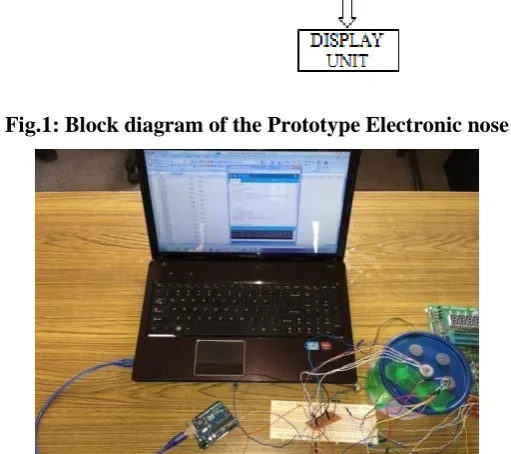
Fig.1: Block diagram of the Prototype Electronic nose
Fig. 2: Experimental setup of prototype of electronics nose
2.1.
AGING OF RAW MILK
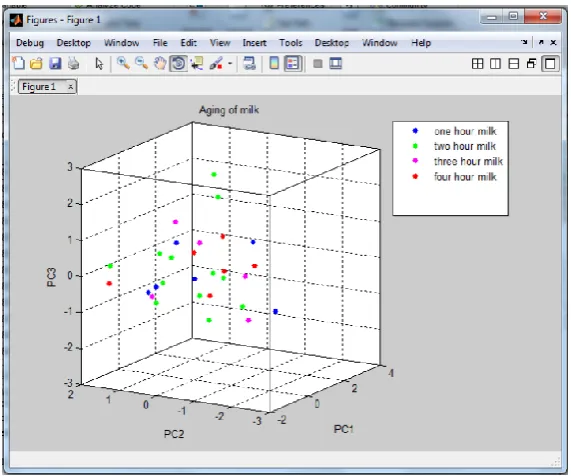
Once the sensor array is subjected to raw milk, it is kept for 5 minutes for the analytes to get adsorbed on the sensors then, corresponding output of sensor array is recorded. The same raw milk is used for testing for the next four days and readings were recorded. The recorded values are used for classification using PCA.
2.2.
DIFFERENTIATING TYPS OF MILK BASED ON VOCS
Milk samples such as raw milk, pasteurized milk, Ultra Heat Treatment (UHT) and organic milk contains Volatile Organic Components (VOCs) at different concentration. These different milk samples were subjected to sensor array which gives an output voltage that corresponds to VOC’s concentration. The sensor array was exposed to air and the corresponding baseline voltage was recorded.The sensor array was then subjected to the
raw milk sample and left for five minutes for the analytes to get adsorbed on the sensors
.
Each sensor output of1279 |
P a g e
III RESULTS AND DISCUSSION
3.1
DIFFERENTIATING TYPES OF MILK
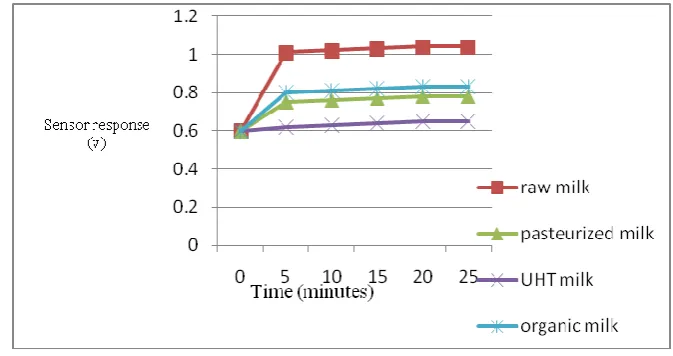
In the current investigation, VOCs of the milk were applied to the sensor array and the responses were observed. Different types of milk such as raw, pasteurized, UHT and organic milk were presented to the sensor array and the response of each sensor was recorded. The different types of milk having different microorganismare exposed to sensor array and response of each sensor was observed.The response curves of sensor TGS 2620 as shown in Fig.3 indicates that the raw milk will have more acetaldehyde concentration than other types of milk. From these we can conclude that raw milk will more number of micro organism than the other types of milk. The organic milk contains more microorganism compare to Pasteurized and UHT milk. The Pasteurized milk contains more bacteria than UHT milk. Based on the observation, we can differentiate the different types of milk based on acetaldehyde concentration in different types of milk.
Similarly,from the response curves of sensor TGS 813 is shown in Fig.4,it was observed that in this case acetic acid concentration is more in the raw milk compared to the pasteurized, organic and UHT milk. The response curves of sensor TGS 4161 is as shown in Fig.5. It was observed that,carbon dioxide concentration is more in raw milk compared to other types of milk. Hence responses of TGS 2620,TGS 813 and TGS 4161 werecompared to differentiate the types of milk.The reason for different concentration of acetaldehyde, acetic acid and carbon di oxide in the different of milk is raw milk have more number of micro organism(2,00,000) than organic milk, pasteurized and UHT milk. The pasteurized milk is heated for 142oF,many of the microorganism will die and only few will present(30,000), therefore for these reason concentration of acetaldehyde, acetic acid and carbon dioxide is very less compared to the raw milk. Similarly, for UHT milk will less concentration of VOCs compared to other types of milk.
1280 |
P a g e
Fig.4: Variation of acetic acid in different types of milk shows the distinction of raw milk, pasteurized
milk, UHT and organic milk.
Fig. 5: Variation of Carbon dioxide in different types of milk shows the distinction of raw milk,
pasteurized milk, UHT and organic milk
Fig. 6: Shows the aging of the raw milk by the variation of carbon dioxide in raw milk for
1281 |
P a g e
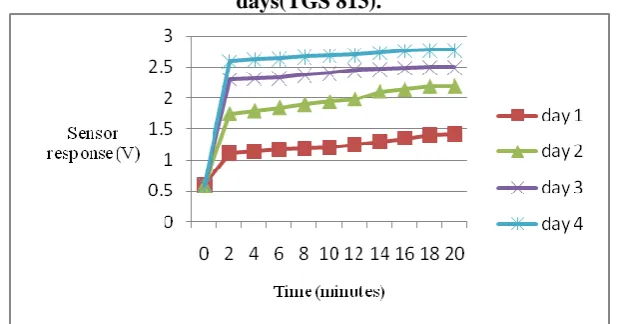
Fig. 7: Shows the aging of the raw milk by the Variation of acetic acid in raw milk for different
days(TGS 813).
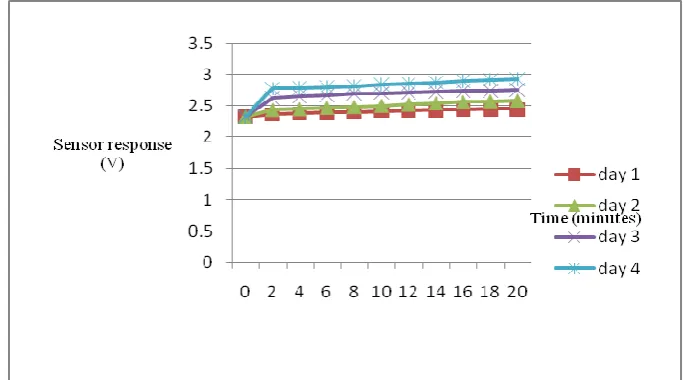
Fig. 8: Shows the aging of the raw milk by the Variation of acetaldehyde in raw milk for
different days(TGS 2620).
3.2 TO DETERMINE THE AGING OF RAW MILK
1282 |
P a g e
Fig. 9: Distinguishing types of milk using PCA
Fig.10: Aging of the raw milk using PCA plot
1283 |
P a g e
whichclearlyindicate agingmilk of with respect to number of days. From these PCA plot we could clearly ascertain the sensor response.III.
CONCLUSION
The paper describes the response of a prototype E nose for differentiating the different types of milk and aging of the raw milk. The MOS sensor array was used for measuring the odour of the milk.The proposed system has been tested by applying samples of different types of milk, which gives more accurate results. Hence the developed prototype E nose could be effectively used for differentiating different types of milk and for determining aging of the raw milk.
REFERENCES
1. Wanrong ding, FeiGao, Chunsheng Yan “LED induced fluorescence spectroscopy technique for milk freshness detection.” IEEE, 15th ICOCN-2016.
2. José Chilo, José Pelegri-Sebastia, Maria Cupane and TomásSogorb“E-nose application to food industry
production” IEEE Instrumentation and Measurement Magazine. 19(1):27- 33.
http://hdl.handle.net/10251/62848(2016).
3. A.A.Chincholkar,Y.A.Jaiswal,A.A. Pardhi“ Intelligent electronic nose based on embedded technology” IJSETR-2014,Volume 3,Issue 4.
4. S.Bhadra,D.J.Thomson,G.E.Bridges“ A wireless passive PH sensor for real time in vivo milk quality monitoring.” IEEE-2012.
5. John Erik Haugan,KnutRudi,SolveigLangsrud, Sylvia Bredholt“Application of gas sensor array technology for detection and monitoring of growth of spoilage bacteria in milk : A model study” Elsevier (Science direct),2006
6. K.Brudzewski,S.Osowski,T.Markiewicz“Classification of milk by means of an electronic nose and SVM neural network.” Elsevier 2004 (Science direct).
7. E.Korel,M.O.Balaban “ Microbial and Sensory assessment of milk with an electronic nose.” Journal of food science: food microbiology and safety, 2002.
8. NareshMagan,AlexPavlou,IoannisChrysanthakis“ Milk sense: volatile sensing system recognizes spoilage bacteria and yeasts in milk.” Elsevier, Sensor and Actuator,2001.
9. Student “RTOS based electronics nose for raw milk biology essay.” UK essay,2014.
10. Michael Lu, Yvonne Shiau, Jacklyn Wong, Raishay Lin, Hannah Kravis, Thomas Blackmon, ”Methods and practices of detecting milk quality”, Department of Chemical &Biomolecular Engineering, University of Maryland, College Park, USA. May 5th, 2013.
1284 |
P a g e
12. Aziz Amari, Nezha EL BARI, and Benachirbouchikhi“Conception and development of Portable ElectronicNose System for Classification of Raw milk using Principal component Analysis approach ”, Sensors and Transducers Journal, vol.102, issue 3, March 2009, pp. 33-44, ISSSN 1726-5479.
13. HuichunYu,Tunwang and YadanXu, “Identification of adulterated milk using electronic nose “,sensors and materials,vol.19,No.5(2007) 275-285.
14. Loralyn H. Ledenbach and Robert T. Marshall, “Microbiological Spoilage of Dairy Products” Food Microbiology and Food Safety, DOI 10.1007/978-1-4419-0826-1_2, C _ Springer Science Business Media, LLC 2009.