Exploring How Team Member Scripts and Cognitive Adjustment Strategies Impact the Norm Formation Process. (Under the direction of Dr. Julia Storberg-Walker.)
The purpose of this study was to understand how shared norms are developed in the early phase of multicultural team (MCT) formation. The development of shared norms is recognized as critical to MCTs’ contributions to organizations, and they are a result of the cognitive adjustment of the team members in recognition of their differences (Brandl & Neyer, 2009; Earley & Mosakowski, 2000; Schneider & Shiffrin, 1977). Unfortunately, despite seeding the study team with members scoring high on a validated intercultural sensitivity instrument to maximize the potential for shared norm development, the data collected and analyzed for this study suggested that the team was not able to move through the important process of shared norm formation. Instead, the team created rather typical team norms that masked deep differences and diminished the team’s ability to leverage its diversity. Consequently, the purpose of the study was amended during the data collection phase (when it became obvious that shared norms were not being developed) to focus on how team norms were being developed in the MCT during the study.
It is important to understand how MCTs develop norms because multicultural teams have been found to contribute a variety of benefits to organizations (Earley & Mosakowski, 2000; Stahl, Maznevski, Voight, & Jonsen, 2010). At the same time, research has indicated that MCTs typically struggle to establish the type of norms necessary to manage their cultural differences. (Begley & Boyd, 2003; Canney Davison & Ekelund, 2004; Earley & Gibson, 2002; Earley & Mosakowski, 2000; Govindarajan & Gupta, 2001; Maznevski & Chudoba,
the phrase team norms to represent the types of norms typically developed (as will be illustrated below) that mask or diminish cultural diversity.
Previous research has attempted to understand the challenges facing these teams as they begin to establish the types of norms that enhance performance and leverage the team’s cultural diversity (e.g., shared norms). For example, research findings suggest the struggle to establish shared norms may be the result of time and performance pressures (Kelly &
McGrath, 1985: Massey, Montoya-Weiss & Hung, 2003). Other research has found that team members from dominant cultures may impose their preferences on others (Begley & Boyd, 2003; Smolicz, 1984), or that team members possess a lack of training and skill in working across cultures (Brandl & Neyer, 2009). However, there is insufficient research on how MCTs develop norms to test these theories (Taggar & Ellis, 2007).
To address this gap, the study was designed to expand our understanding of MCTs by describing the development of norms during early team formation. In order to maximize the possibility that the team in the study could create the type of shared norms required to manage cultural differences (as identified by the meta-analysis of Stahl, Maznevski, Voight, & Jonsen, 2010) team members were selected purposively, based on previous research on norm development and divergent thinking enablers (see chapters 1 and 2 for details).
study findings suggest three categories of scripts influence team member actions during norm development. Second, the study generated an innovative norm development model that combines a temporal sequence and patterns of member actions and reactions during the norm development process.
by
Daniel Paul McGurrin
A dissertation submitted to the Graduate Faculty of North Carolina State University
in partial fulfillment of the requirements for the degree of
Doctor of Philosophy
Educational Research and Policy Analysis
Raleigh, North Carolina 2015
APPROVED BY:
_______________________________ ______________________________
Dr. Julia Storberg-Walker Dr. Diane Chapman
Committee Chair
_______________________________ ______________________________
DEDICATION
To Michelle, Cam, Mitch and Danielle:
When this journey began three years ago, we sat down as a family and made a commitment to see it through to the end. I realize now how little we understood what we were committing to and the challenges it would present us as a family. Thank you for sticking with me through every phase, even when you did not understand why the many nights and weekends away from our time together were necessary. I’m looking forward to once again being able to enjoy just being together. It is only too apparent to me that time is flying by and soon my children will be off exploring their own adventures. But before then Mom and I are going to cherish every moment we have with you.
To my children: Cameron, Mitchell and Danielle. When I think about what motivated me to pursue this degree, I know that an important piece was the desire to show you that you could accomplish anything with hard work and dedication. I also hoped it would instill in you the value of continuing to make education and personal improvement an important part of your lives. Maybe the amount of work that was required will have the opposite effect (laughing), but you should know that the individual moments I’m most proud of in my life were also those that took the greatest effort and were filled with the greatest uncertainty of success. Challenge yourselves to always be improving and testing who you can be.
To my wife Michelle. Wow. Would we do this again? I know what a strain this has been on you and us. You have been so incredibly supportive, even when I made this
how I live my life, and you make this life valuable. I would never choose anything that would threaten that, yet this clearly was a test. I hope now, reaching the other side and seeing what the future holds, we will both see this test as having made us stronger and more prepared to take on greater tests in the future. And I know there will be greater tests because you have put so much of your own self-exploration and development opportunities on hold to support me in mine. Guess what: your turn.
BIOGRAPHY
Dan McGurrin is Director of Executive Education in the Poole College of
Management at NC State University. Dan consults with corporate leaders on the strategic development of their organizations and people. Prior to joining NC State in 2011, he managed executive programs at the University of North Carolina – Chapel Hill, Boston University, Indiana University - Bloomington and the Budapest University of Economic Sciences (now Cornivus University of Budapest). The 20+ year career in executive
education has provided many rewarding experiences, and influences that led to the pursuit of a doctorate.
Dan’s executive programs range from local executive development to global delivery
of organization-wide leadership programs. Topics cover project leadership, virtual team management, managing innovation, matrix teams, and managing global enterprises. His recent work includes processes to address the demographic shift in organizations (engaging the departing workforce and recruitment and retention of new employees). Current and past clients include Alcatel-Lucent, AT&T, BayerCropscience, BCBSNC, Biogen, Chengdu Government (China), Cisco, Continental Tire (Germany), Eastman Chemical, EDS, Eisai, ExxonMobil, France Telecom (France), General Motors, HP, IBM, JSOC, Matav (Hungary), MetLife, NetApp, Patheon, Pentair, Pitney Bowes, PPD, PRA, Shenzen Government (China), Sony Ericsson, Syngenta, Trex and USPS.
Dan previously worked at GlaxoWellcome Pharmaceuticals Inc. (now
organization in Budapest, Hungary, and taught business-to-business marketing to a
Hungarian MBA class. Other international assignments included a consulting position at the Lek Ljubljana pharmaceutical company in Slovenia in 1994 and research on the economic transition in Russia during 1992.
Dan received a BA from the University of Richmond and an MBA from Indiana University in International Marketing. He sits on the review board of the Human Resource Development Review. Dan has previously held a board position with the International University Consortium for Executive Education (UNICON) and is a member of the Academy of Human Resource Development and Academy of Management. Language studies have included Bulgarian, German, Hungarian, Russian, Slovene and Spanish, though no conversational competence beyond English.
Dan’s academic career has included years of teaching in Executive Education and
degree courses on the topics of channel marketing, multicultural teams, organizational change, organizational leadership, project leadership, and specialty sessions related to generational shift in organizations and the evolution of the field of executive education. More recently, presentations and relationships made at the Academy of Human Resource Development have inspired more extensive exploration of a research path. The culmination of the doctoral process, with the completion of this study as well as a peer-reviewed
ACKNOWLEDGMENTS
The completion of this research and doctoral program has only been possible through the encouragement and support of many colleagues and friends over the years. Anyone actually reading this section please forgive the length (there have been many years and many people to thank). And I seem to be exploring things chronologically lately, so…
My interest and exploration of intercultural learning has to begin with my
inspirational grandfather, J. Harper McGurrin. After a lifetime of service to General Motors, he joined the International Executive Service Corps, to experience his next chapter in life serving the international community. The images, coins, trinkets and stories he brought back from his many travels inspired me in ways I’m still learning today. Thank you for setting the
path for me Grandpa.
My parents, Don and Randie McGurrin, instilled in me a love for learning and understanding of the joy in educating others. It may be cliché, but they really did teach me that anything is possible with hard work and dedication. Mom and Dad, you gave up so much to give us whatever we needed. I hope you know your sacrifices did not go unnoticed, and I live each day trying to be as dedicated a parent as you were to us. Mike and Shannon, well I could never slow down and fall behind your lead. Today you are always there as support, whatever the challenge. Thanks for always being there.
who saw more in me than I saw in myself, and encouraged a young freshman to dare to be more. And Dr. Joseph Troncale, who pushed me to test my boundaries even after graduation, introducing me to the overwhelming challenge of international exploration. My first
international trip, in Russia of the early 1990’s, helped me to see the world for the first time through someone else’s eyes.
At Indiana University, I was blessed to have the support and guidance of many faculty members, in particular Dr. Arvind Parkhe, Dr. Paul Marer, and CIBER Director Pat Eoyang. Only through their support, taking the not so obvious paths, was I able to pursue global adventures in languages and experiences during my time at Indiana.
Dr. Bruce Jaffee, my director during the USAID grant in Hungary, was a caring and thoughtful guide during that amazing first test of my ability to work interculturally. Without his generous support my first cultural wall may have been insurmountable. I also want to thank by Hungarian partners, Drs. Gyorgy Bogel and Jozsef Temesi, who patiently taught a naïve, young American MBA that the world is a great deal more than what can be written on a balance sheet. Also during my time in Hungary, Dr. Marjorie Lyles gave me my first taste of qualitative research. The study of Hungarian SMEs during the transition and growth of their market economy opened my eyes to the excitement and value of scholarly research.
At that time I met the most influential person in my adult development, Cam
Since then, your mentorship and friendship have been a stabilizing force throughout my challenging adventures.
Cam, thank you also for introducing me to amazing global leaders and influential experts including Bill Davidson, Bill Wiggenhorn, Milton Bennett and Francois Dupuy. Each has taken me under their wing at different points in my career development, and generously guided my understanding of global organizations, cultures and leaders. Together with Ron Thomas, Joe Braidish and Pam Fuhrmann, those formative years instilled in me so much of what made this possible. I often wish I could go back and do it all over again!
Since then there have been many amazing global adventures. Thank you to Kathie Burch, Janice Character, Joy Clark, Elizabeth Claypoole, Dr. Adam Grant, Dr. Dave
The transition to NC State provided this opportunity to pursue a doctorate at a Research I university. I must first thank those who encouraged me to pursue this program: Drs. Jake Breeden, Steve Garcia, Christie Mabry, and Tony O’Driscoll. It was your insights and inspiration that helped me reach out to Dr. Diane Chapman and learn more about this amazing program. Diane, thank you for encouraging me; I needed your help to push me off the fence and take on this new adventure of scholarly research.
To my doctoral colleagues: The time has flown by quickly! As you know, this is an
incredibly difficult journey and I could never have made it without your support. I'm
realizing though, here at the end of this phase, how much I'm going to miss the interesting
and exciting conversations that our classes were a wonderful excuse to create. Much of the
class work I recognize is the training of researchers, but the opportunity this program has
provided to witness the amazing directions each of you are exploring has been a
true privilege, and one I'm sad to lose from my days. My friend, Paul Paparella, who
To my doctoral professors: Drs. Lisa Bass, Mary Ann Danowitz, DeLeon Gray, Tim Hatcher, Kathryn Moore, Tamara Young. Thank you for the knowledge and learning you instilled over the many hours together. And Dr. Lance Fusarelli, thank you for talking me down from the ledge on several occasions (go Cubs!). I also want to acknowledge the
support of Shana Scott, who every graduate student has relied on at some point, and in whose hands so much of this experience depends. You are fantastic!
Wertz, you are incredibly special individuals with bright futures. I’m glad you spent a few of these early years with us, we’ll all say we knew you when. And to the many faculty and staff
at NC State who have supported and encouraged me during this process: Dr. Mark Beasley, Dr. Jon Bohlmann, Dr. Cecil Bozarth, Dr. Nancy Cassill, Clyde Crider, Christine Ferrell, Shelley Gorman, Dr. Rob Handfield, Dr. Dick Kouri, Dr. Steve Markham, Dr. Roger Mayer, Dr. John McCreery, (future Dr.) Tim Michaelis, Paul Mugge, Dr. Paul Mulvey, Bonnie Parr, Prof. Rich Podurgal, Prof. Beth Ritter, Yolanda Sanders, Donna Steinkogler, Sam Straight, Dr. Pascal Vidal and Dr. Mladen Vouk. Thank you for your unwavering support.
TABLE OF CONTENTS
LIST OF TABLES ...xv
LIST OF FIGURES ... xvi
CHAPTER ONE ...1
Problem Statement ...7
Purpose Statement ...8
Research Question ...8
Significance of the Study ...9
Theoretical Framework: Social Constructionism ...10
Conceptual Framework: Norm Formation Model ...12
Method Overview ...15
Definition of Terms...17
Subjectivity Statement ...19
Chapter Summary and Organization of the Study ...21
CHAPTER TWO: LITERATURE REVIEW ...23
Multicultural Teams ...25
MCT models ...27
Team tenure ...31
Team Development ...32
Tuckman ...33
Gersick ...34
TEAM model ...37
Theoretical and Conceptual Research on Norm Formation ...40
Hackman ...41
Feldman...42
Taggar and Ellis ...43
Theoretical and Conceptual Foundations for This Study ...44
Social constructionism ...45
Norm formation model ...46
Norm formation in MCTs ...50
Intercultural Sensitivity ...53
Dominant culture ...55
Study Abroad ...57
Diminishing U.S. economic dominance ...59
Implications for U.S. educational policies ...63
Competitive pap ...64
Heterogeneity vs. homogeneity ...67
Chapter Summary ...69
CHAPTER THREE: METHODOLOGY ...71
Research Design – Case Study ...71
Case Study Protocol: Introduction to the Study ...74
Theoretical framework ...75
Conceptual framework ...76
Case Study Protocol: Data Collection Procedures ...83
Participant selection and informed consent ...83
Data collection and participant protections...87
Case Study Protocol: Data Analysis Procedures ...91
Open coding ...91
A-priori coding...95
Logical processes ...96
Research credibility and trustworthiness ...99
Chapter Summary ...102
CHAPTER FOUR: FINDINGS ...104
Overview of Study Findings ...106
The Team ...110
Team biographies ...110
Intercultural sensitivity assessment insights ...116
Finding #1: Cultural, Competency and Personality Scripts ...120
Finding #2: Norm Development Model for This MCT ...128
Sub-finding 1: Temporal sequence of norm development ...128
Sub-finding 2: Iterative patterns of member actions and reactions ...178
Chapter Summary ...194
CHAPTER FIVE: CONTRIBUTIONS AND IMPLICATIONS ...195
Summary of the Findings ...196
Contribution #1: Three Categories of Influential Scripts ...196
Contribution #2: MCT Norm Development Model ...197
Implications for Researchers...203
Implications for Practitioners ...213
Implications for U.S. Educational Policymakers ...221
Limitations/Delimitations ...225
Future Research ...227
Conclusion ...228
REFERENCES ...231
APPENDICES ...251
APPENDIX A: Case Study Protocol ...252
APPENDIX B: Amended IRB Request for Exemption ...258
APPENDIX C: Participant E-mail Script ...283
APPENDIX D: Participant Informed Consent ...284
APPENDIX E: Observation Guide ...287
LIST OF TABLES
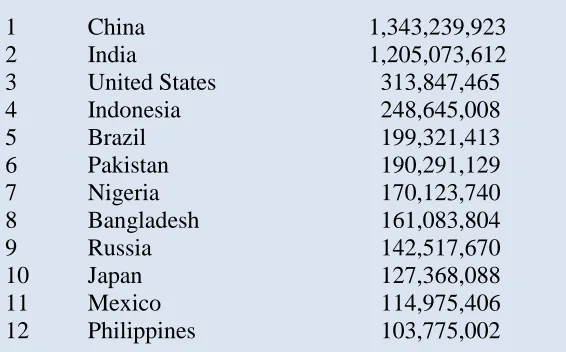
Table 1. Population of Countries Over 100 Million ...65
Table 2. IES Results of the 2015 Masters Class ...117
Table 3. Cultural Scripts of the MCT Members ...121
Table 4. Competency Scripts of the MCT Members ...124
LIST OF FIGURES
Figure 1. Conceptual framework of norm formation in an interculturally sensitive MCT ...13
Figure 2. Govindarajan and Gupta’s effective process for global business teams ...28
Figure 3. Bennett’s Developmental Model of Intercultural Sensitivity ...29
Figure 4. Stahl, Maznevski, Voight & Jonsen’s meta-analysis of MCTs ...52
Figure 5. Changes in BRIICS economic growth ...60
Figure 6. Real GDP growth in BRIICS countries ...61
Figure 7. Real GDP growth for world economies ...62
Figure 8. Share of the global economy in purchasing power parity terms ...68
Figure 9. Conceptual framework of the study for data analysis purposes...77
Figure 10. Bettenhausen & Murnighan’s Four-Box Matrix ...79
Figure 11. MCT norm development model ...108
Figure 12. Norm development temporal sequence for this MCT ...129
Figure 13. MCT member actions and reactions ...179
Figure 14. Team and norm development models ...204
CHAPTER ONE
In global business today, shared norms are a critical but poorly understood driver of team performance. Since the Hawthorne studies of the 1920’s, the impact of norms has been recognized in work groups, yet direct research on norms remains extremely limited (Sherif, 1935; Taggar & Ellis, 2007). As cultural diversity in global business teams increases, the use of multicultural teams (MCTs) to accomplish work goals is expanding. These teams face the dichotomous challenge of diversity being at the heart of a MCT’s potential value, yet the same diversity poses the greatest threat to shared norm development. Further, research confirms that developing shared norms is critical to MCTs’ success, as research has highlighted the importance of shared norm development in meeting the challenge of team diversity and supporting multicultural team effectiveness (Chatman & Flynn, 2001; Cseh, 2003; Kirkman & Shapiro, 2005; Maznevski & Chudoba, 2000).
Multicultural teams (MCTs) are frequently formed to accomplish corporate global activities (Adler, 2002: Earley & Erez, 1997), to the point that “global organizations rely on creative and innovative multicultural teams to ensure organizational survival and competitive advantage” (Cseh, 2003, p. 27). One of the reasons for the expansion of MCTs is the
perception of business leaders who believe by bringing together participants from different cultures, more valuable outcomes will be generated than is likely from a culturally
Consider as an example a personal experience I had working with a multicultural team of executives from a U.S.-based global energy company. The senior leadership team was challenged with resolving a major conflict with a foreign government partner over contract commitments. The team members from the U.S. headquarters wanted to force the government partner to be accountable to the contract provisions and legally challenge the partner to fulfill their commitments. The members from other global regions had a different perspective. These members recognized the pressures on the foreign leadership team and interpreted the situation with a stronger emphasis on the long-term relationship. Fortunately, this MCT had created shared norms that allowed multiple perspectives to be aired and debated rather than defaulting to the dominant perspective. Together, the members of this MCT devised a strategy that would both express the importance of maintaining the contract terms, as well as recognize the government partner’s challenges and concerns.
The success story above represents the value of MCTs working well together. The successful negotiation benefited from a diverse team that had learned how to respect and leverage their diverse perspectives through the development of shared norms. Shared norms are challenging to accomplish (due to team members’ highly diverse experiences) but reap long-term rewards (due to the benefits of divergent thinking).
to explain away or somehow incorporate minority perspectives, they typically must reconceptualize their own perspectives on the task” (Mannix & Neale, 2005, p. 47). This cognitive shift by individual members requires a team that values their diversity, and has developed shared norms to guide team actions (Adair, Hideg & Spence, 2013; Bettenhausen & Murnighan, 1985; Brandl & Neyer, 2009).
Unfortunately, the challenges MCTs face often hinder performance, creativity, and team member satisfaction (Earley & Mosakowski, 2000; Stahl et al., 2010). While many MCTs are able to leverage their diversity to produce creative solutions, research on MCTs is clear that the teams also bring with them additional challenges and dilemmas. This research has documented the conflicts and process losses that increase as teams become culturally and demographically diverse (Bettenhausen & Murnighan, 1985; Jehn, Northcraft, & Neale, 1999; Steiner 1972; Williams & O’Reilly, 1998). Specifically, team members from different cultures often create a team that does not share similar norms, values and beliefs
(Bettenhausen & Murnighan, 1985). As a result, MCTs face greater complexity than traditional teams in managing tasks, context, people, time, and technology (Gluesing & Gibson, 2004). Further, MCT members often encounter unique communication challenges that traditional teams have not had to contend with as MCTs must coordinate tasks and
processes across boundaries of time, space, and layers of cultural complexity (Carmel, 1999). “Cultural differences within teams have the potential to pose barriers with respect to
Zettinig, 2012, p. 193). It is clear that MCTs face unique obstacles and challenges due to the diversity of their members.
To overcome their differences and work together, MCTs can develop a variety of team cultures and norms that emerge during the initial team formation stage (Earley & Mosakowski, 2000). Earley and Mosakowski (2000) suggest that at one end of the spectrum, MCTs can create a unified team culture that privileges one perspective over others. This study calls the norms developed by a unified team culture team norms or just norms, and these types of norms mask underlying differences and diminish a team’s potential
performance. At the other end of the spectrum, Earley and Mosakowski (2000) suggest that MCTs can create a hybrid team culture. At this end of the cultural spectrum, team members generate the development of shared norms. This study describes research on the importance of shared norms in MCTs (Chatman & Flynn, 2001; Earley & Gibson, 2002; Earley & Mosakowski, 2000) and uses it to differentiate from the types of team norms often developed in project teams.
The distinction between shared norms and team norms is important. Researchers have found that a hybrid culture with shared norms improves team outcomes by creating culturally enhanced decision-making and communication (Early & Mosakowski, 2000). Earley and Mosakowski (2000) showed that heterogeneous teams can be as successful as, or more so than, homogeneous teams if given sufficient time to develop common and effective shared identity, team efficacy, expectations, and intra-team communication.
suggest that time and performance pressures often cause MCTs to defer norm development to the influence of a dominant member rather than doing the hard work of negotiating and creating a hybrid team culture with agreed upon norms and values (Kelly & McGrath, 1985, Massey, Montoya-Weiss & Hung, 2003).
In addition to time and performance pressures, MCTs face other obstacles to
developing a hybrid culture. Team members from different cultures will reflect cultural and individual preferences for working in teams, often based on their previous experiences
(Bettenhausen & Murnighan, 1985; Feldman, 1984; Schütz, 1944). Of particular importance, based on research by Earley and Mosakowski (2000) and a meta-analysis conducted by Stahl, Maznevski, Voight, and Jonsen (2010), are communication and conflict management issues that confound the team development process. These studies found that MCTs must develop shared norms to address their communication and conflict challenges or expect to continue to struggle with team effectiveness throughout their project.
Team norms and shared norms. Research on teams has found that norms are formed between the members of new teams during the early stages of team development (Bettenhausen & Murnighan, 1991; Gersick, 1988). From the time of formation, team
development, which is the result of a much deeper integration of diverse views. In shared norm development, there is a recognition by team members of their cultural differences, a necessary cognitive adjustment by the members in recognition of these differences, and the eventual development, agreement and commitment by the members to new shared norms (Brandl & Neyer, 2009; Schneider & Shiffrin, 1977). Shared norm development is the desired outcome for MCTs.
Tuckman’s (1965) seminal work on team development incorporates the process of
norm development in his description of four sequential team stages: forming, storming, norming, and performing (and adjourning was later added). When team formation is not managed effectively, overcoming norm differences often requires a significant investment of time by the team members later in the project, popularly called the ‘storming’ phase
(Tuckman, 1965). Too much time spent in the storming phase can consume a team, distracting it from organizational goals and limiting the contributions of all the team members. For a MCT, research suggests the forming stage requires the development of common agreement on team activities associated with team chartering (goal-setting, team efficacy), team composition (selection of roles and decision-making structure) and team processes (establishing ground rules for norms of behavior, building a culture of trust) (Govindarajan & Gupta, 2001; Stahl et al., 2010).
Likewise, Gersick’s (1988) research on team development found that teams’ establish
norms very quickly, at the time of formation, and additional research (Bettenhausen &
formation as norms are developed, and the challenges that will be faced to establish effective
shared norms. These studies convincingly illustrate that shared norms within MCTs are
particularly challenging because of the inherent cultural differences, and research has shown time and performance pressures on team norms has encouraged the team to default to a dominant model to meet their goals despite a direct trade-off in creating shared norms (Kelly & McGrath, 1985; Massey, Montoya-Weiss & Hung, 2003). While MCTs are expected to overcome their cultural differences, develop shared norms, and provide significant benefits to organizations, they often fall short of the unique value they promise.
Problem Statement
Therefore, the problem addressed in this study was how MCTs can develop the type of shared norms that have been demonstrated to enhance MCTs capacity to effectively manage cultural differences despite project pressures. While research demonstrates clear evidence that shared norms are valuable in MCTs, there is a gap in the literature about
Purpose Statement
The purpose of this study was to explore and describe in rich detail the development of shared norms during the early team formation of a MCT. For this study, the MCT team members were purposively selected to maximize the potential for shared norms to develop early in the team formation stage, and despite time and performance pressures. The MCT was formed with interculturally sensitive team members, identified using the Intercultural
Effectiveness Scale instrument, to attempt to overcome a barrier to MCT shared norm
formation: the pressures of time and performance goals on the team. It was hypothesized that members with high intercultural sensitivity would be more able to recognize and value the cultural differences, and adapt their norm preferences to a shared model despite the project pressures (Bennett, 1986; Earley & Erez, 1997; Earley & Mosakowski, 2004).
Unfortunately, the MCT in this study developed team norms aligned with a dominant model, rather than the type of shared norms that represent deep acknowledgement of the value of the team’s diversity. The team norm formation was recognized early in the data collection process, and the study’s purpose was slightly modified to focus on describing how the team norms developed in this MCT. The findings are expected to contribute to
improving our understanding of MCT norm development. Research Question
The initial research question of this study was: how are shared norms developed in a MCT with interculturally sensitive members during early team formation? The study
reflected in several of the study findings: the pressures to perform in a short-term project environment, despite high intercultural sensitivity, created the opportunity and positive support for hegemonic (dominant culture) team member behavior. When this rival
hypothesis became apparent, the research question was altered to state: how are team norms developed in a MCT with interculturally sensitive members during early team formation? Significance of the Study
Improving the understanding of MCT norm formation provides critical insights that should expand research in the fields of MCT development and training, the role of leaders in guiding MCTs, educational policies on intercultural sensitivity, and other dynamic fields related to MCT effectiveness. Large countries, like the United States, struggle with
consistently preparing leaders to be effective in intercultural situations (Scarr, 1993; Smolicz, 2004; Sonn, Bishop & Humphries, 2000). Whereas this may not have been as great an issue in the past (Easterly and Levine, 1997; Montalvo & Reynal-Querol, 2005), global economic changes may give rise to a greater need for intercultural sensitivity in future U.S. leaders.
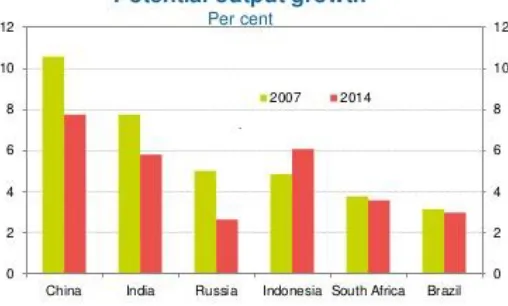
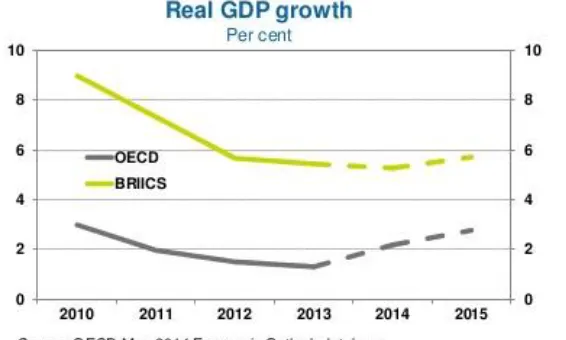
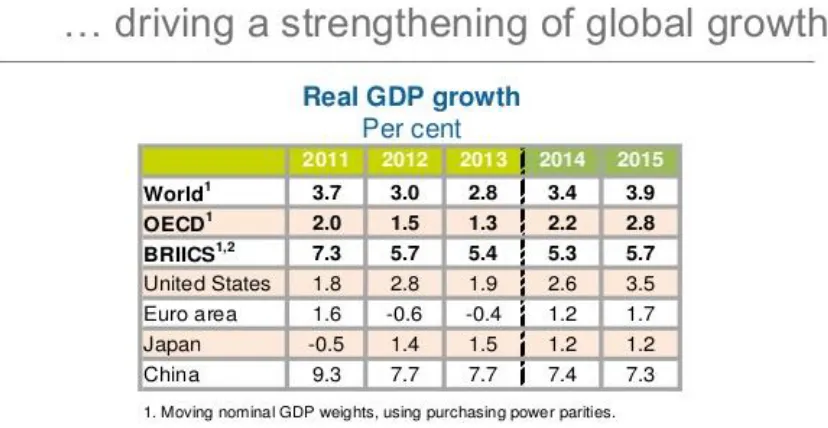
In recent years there has been a growing recognition that U.S. economic dominance is diminishing (Gurria & Tamaki, 2014). China is on a path to match U.S. GDP within the next 10-30 years, and India is not far behind (National Intelligence Council, 2012). For globally dispersed organizations, there is potentially a psychological shift coming;
organizations who may have in the past allowed an American perspective and preferences to dominate decision-making may now feel more empowered to resist.
been trying to understand the west; however westerners have only begun recently to learn about non-western societies. Hence there will be a lot of catching up to do” (Tung, 1998, p.25). Perpetuating an image of U.S. students as culturally ignorant and insensitive in communicating with citizens from other nations we run the risk of producing a new
generation of leaders ill-equipped to address the shifting global economic landscape and to work effectively in the increasingly common business structure of multicultural project teams. This study describes the value of intercultural sensitivity in MCT members, despite also recognizing this capability may not be the only factor necessary for MCT shared norm development.
Theoretical Framework: Social Constructionism
This study of MCT norm development begins with the process by which norms are formed. From an epistemological perspective, social constructionism provides a foundation for the understanding of norm formation. As described by Berger and Luckman (1966), social constructionism describes how the “shared understandings among people give rise to rules, norms, identities, concepts, and institutions” (Schneider & Sidney, 2009, p. 106). As a new team meets and members begin to express their unique perspectives, a common set of rules emerge through interactions that guide team behavior.
norms tend to form quickly and easily, as each action by the team reinforces their expectations. If, however, the team is a diverse one as in MCTs, “they will spend
considerable time ‘getting to know’ one another and establishing a shared understanding of the group's mission and the actions that are appropriate for its performance” (p. 369).
Sherif (1936) theorized that once formed, these ‘social norms’ act as cognitive scripts for the team members that extend beyond the initial team where they are established and influence member interpretation and consequent actions in later teams. Team members create meaning from their experiences, which create cognitive scripts. These scripts generate meaning from future situations in which a similar interpretation of the context is determined. Sherif also believed that social norms are experiences resulting from or modified by
collectively produced frames of reference. As a result, when new teams form, the team norms tend to reflect the past experiences of the individual members (Schneider & Shiffrin, 1977; Schütz, 1944). Since these experiences are different for each member, a discussion or negotiation must take place in order to reach an agreement on a team norm. Only when the context is recognized as different from and in conflict with the members’ past situations do the members seek to adapt their models and form new shared norms (Schneider & Shiffrin, 1977; Schütz, 1944).
construction of the rules upon which the team operates (Earley & Mosakowski, 2000). Dominant culture and ethnocentric behavior are an opposing force prevalent in many MCTs. The monoculture influence on norm creation can inhibit the reconciliation of different scripts through a coercive emphasis on a single model. The social construction process in situations of monocultural influence can leave non-dominant team members feeling left out of the norm development process, resulting in a lack of team chemistry and a negative impact on team creativity (Brandl & Neyer, 2009; Earley & Gibson, 2002).
Bettenhausen and Murnighan (1985) noted other factors that can influence norm construction. In their study, they believed that competition with other groups and required co-dependence of the team members drove the teams to norm creation much quicker. The pressures of time and performance on construction of norms, however, have been found to support dominant culture influences as teams lean on the value of established models to move quickly to meet project goals (Kelly & McGrath, 1985, Massey, Montoya-Weiss & Hung, 2003). The hyper-competitive environment facing teams in today’s market could be perceived as creating a similar dynamic. The pressures of time and performance goals on MCTs reflect a significant challenge to effective social construction of shared norms. Conceptual Framework: Norm Formation Model
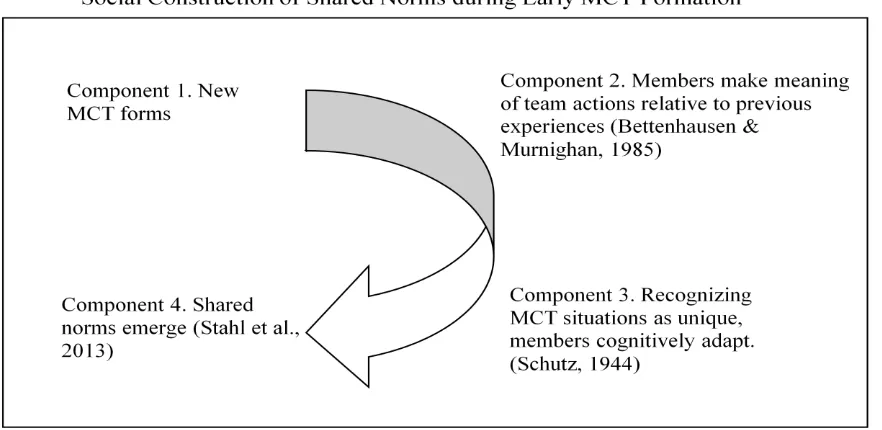
For this study, the conceptual framework combined two research-based models to understand the process of norm formation. First, to understand the role of scripts and meaning making in MCT shared norm formation, this study adopted Bettenhausen and Murnighan’s 1985 seminal four-box model of norm formation. This model enables
interactions. However, this model alone is limited in that it does not address how team members may adapt (or not adapt) to each other’s perspectives and ways of understanding to
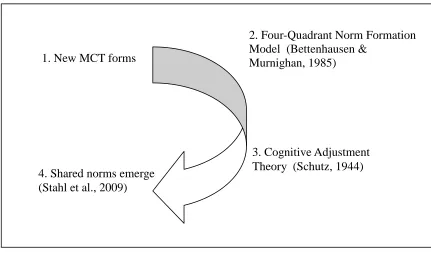
form shared norms. Consequently, a second model is needed. After an extensive review of the literature, Schütz’s (1944) Cognitive Adjustment Theory (CAT) extended the first model on interpretations of the interactions to consider adjustments team members go through as they move through time. See figure 1 below.
Figure 1. Conceptual framework of norm formation in an interculturally sensitive MCT
In one of the few empirical studies of norm formation, Bettenhausen and Murnighan (1985) generated a model of norm formation that categorizes how team members’ initial efforts to define and apply scripts from past experience to their new team situation can vary.
3. Cognitive Adjustment Theory (Schutz, 1944) 4. Shared norms emerge
(Stahl et al., 2009) 1. New MCT forms
2. Four-Quadrant Norm Formation Model (Bettenhausen &
Murnighan, 1985)
According to the authors, “Our conceptualization distinguishes between an individual's initial definition of the new situation and the script they use as a basis for that understanding.” (p. 354) When a new team meets and members begin to observe the behavior of their team mates, they attempt to make meaning of the situation based on past experiences. The four-box model provided a framework for understanding how team members can respond to new situations early in MCT formation and illuminates the role of previous experiences. More information about this model and related research is found in chapters two and three. However, as described above, the model is limited in its ability to describe the actions of MCT members as it does not address how MCT members might need to change or adapt cognitively to address team differences. As stated by Bettenhausen and Murnighan, “the identification of norms, especially implicit norms, is a difficult methodological issue” (1985, p. 368) and one likely faced in culturally diverse MCTs. To overcome this limitation of the Bettenhausen and Murnighan model, this study added elements of cognitive adjustment theory (Schütz, 1944) in order to analyze and understand how MCT members adapt to each other to form shared norms. Cognitive adjustment theory (CAT) is a highly-cited theory which is also described as a process of “letting-go and taking-on” a new set of norms (Osland, 2000, p. 235).
The final piece of the framework is the type of norms that an MCT will develop. It was important for this study to clearly identify the specific types of shared norms that
satisfaction, and social integration. These five areas of norms guided the process of observations and development of an interview guide for the study, providing a focus and structure to data collection and analysis.
Method Overview
This study of MCTs addressed the gap in the literature related to MCT norm development during early team formation. Existing research on MCTs has focused on performance outcomes and barriers to effective engagement. As such, the research is
assessing the results of MCT efforts toward shared norm development without understanding this process. The question remained: how are norms formed in a MCT during early team formation?
In order to gain the broadest perspective and understanding of norm development and MCT interaction during team formation, a case study approach was selected to provide the richest contextual description. The case study approach is “a qualitative approach in which the investigator explores a real-life, contemporary bounded system (cases) over time, through detailed, in-depth data collection involving multiple sources of information” (Creswell, 2012, p. 97). This study followed the members of a selected team through their phases of early team formation, and described their efforts to form team norms.
Participant selection. The team selected for the case study was from a master’s degree program on global management at a major university in the United States. The
For this study, four members of a class of 24 ultimately participated in the study as the project team.
As described earlier, the team members in the study team were purposively selected to maximize the potential to develop the type of shared norms that leverage diversity. The study plan included an assessment of the entire class population to identify high scoring students on the Intercultural Effectiveness Scale (IES). Based on these results, four students without previous experience working together and from four different cultures were selected. The selected students had scores in the “high” range on the assessment tool, representing team members who were likely to have the skills to work together with peers from different cultures. Details on the use of the IES instrument in the process of participant selection and its reliability/validity can be found in chapter three. When the students agreed to participate in the study, they were placed in a single project team.
Data collection. Data for this study included individual interviews and team meeting observations. Observations were conducted first. After obtaining informed consent, the interculturally sensitive team was observed over the first two weeks of their project in every team meeting. Team discussions were documented (see appendix A: Case Study Protocol) and audio taped. The observation data consisted of six team meetings. This timeframe was selected to align with research findings on team norms, which suggest that teams composed of diverse members usually recognize and respond to their different norm preferences within early team formation (Bettenhausen & Murnighan, 1985; Gersick, 1988; Keane, 2009).
guide (appendix F) was designed to provide a basic flow to the interview, while giving the researcher latitude to explore some elements in greater depth. As the study seeks deep, rich descriptions (Creswell, 2012) of team norm development, the flexible interview guide
allowed the participants some ability to guide the conversation. As described in chapter three, the interviews were initially structured with questions developed from the observations of key conversations and decision points in the team meetings. These questions elicited information about how team members interpreted situations and acted during critical points in the team formation process.
After transcribing all of the recorded meetings and interviews, two types of data analyses were conducted. First, the data was analyzed using an open coding process. This process generated in-vivo themes and patterns directly from the data itself. A complete description of the open coding process is in chapter three. Second, the conceptual framework (figure 1) guided the structured data analysis, and a list of a-priori codes was generated from the framework (see chapter three). This analysis generated themes and patterns aligned with the conceptual framework, investigating the process by which participants interpret and act to develop the team norms.
Definition of Terms
In addition to the definitions provided above, there are several additional terms that should be defined to understand the nature of the study.
2000, p. 27). This was also described as collective reframing by Kasl, Marsick, and Dechant (1997). Hybrid cultures are likely to form in teams whose members’ value multiculturalism
(Adair & Ganai, 2013).
Multicultural Teams - MCTs are teams composed of members from a variety of cultures. Earley and Mosakowski (2000) distinguish between moderately heterogeneous teams (includes homogeneous subgroups of members within the larger heterogeneous team) and highly heterogeneous teams (most, if not all, the team members differ from each other).
McDonough, Kahnb, and Barczaka (2001) distinguished MCTs from ‘co-located’ teams (members work in the same location), ‘virtual’ teams (members are culturally similar but not
in the same location), and ‘global’ teams (members are located in difference countries). (p.
111) Multicultural teams are sometimes referred to as cross-cultural teams or multinational teams.
Shared leadership – Carson (2005) defines shared leadership as “a group
phenomenon. It represents a social process involving influence exhibited by many group members in the shaping of group tasks, motivation of group members, and stimulation of change and growth.” (p. 13) Shared leadership is often one type of shared norm in MCTs.
Team effectiveness – Hackman, Wageman, Ruddy and Ray (2000) define team effectiveness on 3 dimensions: first “the productive output of the team (product, service or decision) meets or exceeds the standards of quantity, quality, and timeliness of the team’s
clients … It is the client’s standards and assessments that count”; second “the social
together interdependently in the future”; third “the team experience, on balance, contributes
positively to the learning and person well-being of individual team members” (p.111). Subjectivity Statement
My own experience with MCTs began in 1995 while working in Budapest, Hungary. As the director of a USAID program funded to aid management development in a former Soviet-bloc country, I had the opportunity to work with a recently formed
telecommunications joint venture of three companies: one German, one American and one Hungarian. The company decided to structure the joint venture into culturally distinct functions: the German leaders managed research and development and operations, the
American leaders managed financial decisions and the Hungarian leaders managed marketing and human resources. Cross-functional teams were created to drive strategic decisions. Unfortunately, the company regularly found itself paralyzed by this structure as the distinct groups approached organizational planning and decisions from conflicting cultural
perspectives.
After this initial experience, my career provided additional opportunities to work with MCTs. From 1997-2000, I managed a global development program for managers from U.S. and European companies. More recently, from 2003-2011, I managed a global development program for a Fortune 50 company. Two experiences working with this last group
significantly influenced my perceptions of MCT challenges.
himself to influence and cajole team members until they agreed with his opinions. As a result of or despite this dominant influence over the team decisions, the simulation results were outstanding… until the very end of the simulation. Observing the group I could see dissention growing, but it was not affecting the performance. Then, in one of the group’s last decisions, I asked a question (without intending to have any impact) that swung the group away from the dominant leader. The result was a significant, negative impact on their simulation performance. The team blamed the leader (the leader blamed me) for the poor result, feeling the outcome was the culmination of three hours of dominated decision-making, not simply one bad decision. Later, I considered the likelihood that the poor outcome was the result of the team’s poor efforts early on to establish more effective norms and decision-making that valued their different ideas.
The second experience was observing a small team working together to solve each member’s individual challenges. Each relied on the other to help identify a personal solution. The team was composed of one American, one Canadian, and two other participants from other cultures. The American member at one point made the comment, “I’m struggling to overcome the cultural differences within my team. The people from Thailand, Argentina and Hungary approach work so differently.” At this point he turned to his Canadian team
member and said, “I’m glad I have one Canadian on the team as we think alike.” The Canadian smiled at him, then looked at me with a questioning look that said, “Really?”.
perspective of someone who has experienced something similar and could ask intelligent, deeper questions about the nature of their experience.
Chapter Summary and Organization of the Study
This study of the actions of an interculturally sensitive multicultural project team addressed a current gap in the literature regarding MCT norm development during early team formation. Extensive research has been conducted on MCTs performance over time, but these studies focus on the outcomes of MCT norm formation rather than the process itself, and fail to consider the influences of time and performance pressures on the interactions during the formation stage. The research question for this study and focus on team member actions bounded by the early formation process provides a rich understanding of how this interculturally sensitive team addressed the challenges of MCT norm formation.
The significance of this study and further research on the benefits of intercultural sensitivity for U.S. students in the market is discussed. I describe my personal experience and bias toward this challenge, but also evidence that supports this as an important topic for research. My hope is that the study will provide a foundation for and encourage additional qualitative and quantitative studies on the topic.
CHAPTER TWO: LITERATURE REVIEW
Current research on multicultural teams (MCTs) suggests that the value of divergent thinking resulting from diverse perspectives, experiences and values will produce more creative and valuable outcomes then the results of homogeneous teams (Earley & Mosakowski, 2000). Research also recognizes that this value will result only after team members develop shared team norms, and invest time in recognizing and valuing their diversity (Earley & Mosakowski, 2000). The development of team norms happens early in team formation, however, and relatively little research has been conducted to understand how this process takes place.
This study expands the literature and our understanding of MCT team formation, and in particular norm development during the early formation stage. A literature review was conducted using web-based research in Google Scholar and through the North Carolina State University Library system access to various search engines (ERIC, JSTOR, and Web of Science) on key terms related to multicultural teams (multinational teams, culturally diverse teams, international teams, global teams), team development (team behavior, group
development, team/group formation, work team creation), norm formation (social constructionism, norm formation models, and cognitive adjustment theory), intercultural sensitivity (cultural intelligence, cultural adaptability, intercultural competence, cultural diversity, multiculturalism); dominant culture (diversity, cultural racism, pluralism,
seminal studies), more recent studies that challenged or supported with additional insights the outcomes of the landmark studies and were further supported with citations by other
researchers, new theories testing the basic assumptions of landmark studies that were significantly cited on listings, and new research exploring the actions of MCTs.
The literature review is presented so as to provide readers with an emergent
understanding of the complex environment of MCTs, as well as the research support for this study’s methodology and implications. This chapter is organized as follows: first, a
description of existing research on multicultural teams, the models describing their actions and the influence of time on their outcomes is presented. Second, research on team formation is presented to illustrate the foundational models and current thinking on how teams develop. Third, the theoretical and conceptual foundations of the study are presented and supported by the literature. Literature presented includes theories on social constructionism, norm
Multicultural Teams
This section presents a summary of research on MCTs, specific models that help describe team and individual member behavior, and why time is such a significant influence on both.
Recent research on multicultural teams has focused on the challenges faced in overcoming cultural differences, the time required to achieve effective teamwork and the benefits that result from strong MCTs (Begley & Boyd, 2003; Brandl & Neyer, 2009;
Canney Davison & Ekelund, 2004; Earley & Gibson, 2002; Earley & Mosakowski, 2000; Govindarajan & Gupta, 2001; Maznevski & Chudoba, 2000; Maznevski & DiStefano, 2000). Unfortunately, the research often attempts to consider these teams in a vacuum, unlimited by the pressures of performance goals, time deadlines, and resource constraints (Brown & Eisenhardt, 1997; Sundstrom, DeMuse, & Futrell, 1990). The research outcomes focus on the benefit of MCTs, that if given the space to overcome their differences, and only the cultural ones not other differences (e.g. gender, age, race, background, etc), these culturally diverse teams will outperform more culturally homogeneous teams (Earley & Mosakowski, 2000).
Unfortunately, the pressures on teams are often not arbitrary factors that are controllable. For example and worthy of specific attention in this study, in today’s hyper-dynamic work environment the time to produce a successful outcome is a significant force in team behavior. Organizations fear the “speed to commoditization” (von der Gracht &
growing time pressure becomes an enormous weight on MCTs to produce results in a shorter time period than research indicates is needed to overcome their cultural differences (Earley & Mosakowski, 2000). Given this constraint and pressure on team members across all cultures, there may be a super-ordinate desire on the part of team members to emphasize their team goals and put aside the need to overcome their differences for the sake of the need to achieve.
Earley and Mosakowski’s (2000) research promoting the value of divergent thinking also recognizes that time is a critical factor to realize this benefit as MCTs have been shown to require significant temporal space for team members to overcome their cultural differences. In the short-term, homogeneous teams were shown to perform more effectively.
The value of a MCT’s cultural diversity translating into divergent thinking benefits is balanced by the work required to establish convergent behaviors. Convergent behaviors are important to team performance as they “align the team around common objectives,
commitment, or conclusions. Effective convergent behavior is necessary to build effective communication, or the sharing of common meaning, and social integration, or the
development of group cohesion, commitment, and identity” (Stahl, Maznevski, Voight, & Jonsen, 2010, pp. 692). MCTs’ cultural diversity tends to decrease convergent behavior in the short term, though the goal is to improve this through understanding of cultural
Figure 2. Govindarajan and Gupta’s effective process for global business teams
Before we engage in a process design, however, the mere creation of a hybrid model assumes team members have the intercultural sensitivity to recognize and value the
intended to provide a developmental model for improving intercultural sensitivity, reflecting Margaret Mead’s quote “as the traveler who has once been from home is wiser than he who
has never left his own doorstep, so a knowledge of one other culture should sharpen our ability to scrutinize more steadily, to appreciate more lovingly, our own.” (1928, p. 1)
Figure 3. Bennett’s Developmental Model of Intercultural Sensitivity
Developing an ethnorelative perspective is not a simple training exercise
common frame of understanding from available information, even though he or she may not have an adequate understanding of local practices and norms” (Earley & Ang, 2003, p. 61).
To clarify the different terminology being used, Bennett defines “the term ‘intercultural sensitivity’ to refer to the ability to discriminate and experience relevant
cultural differences” and “the term ‘intercultural competence’ to mean the ability to think and act in interculturally appropriate ways” (Hamner, Bennett & Wiseman, 2003, p. 422). While researchers continue to seek a common grammar to discuss cultural development, terms like cultural intelligence and intercultural sensitivity can sometimes mask the chasm of
psychological development required for many today to achieve the necessary cultural relativism to be effective in an increasingly global world. “Rather than be culturally
sensitive (which implies some paternalism), we need to embrace cultural diversity (Trickett, Watts, & Birman, 1994) and approach other cultures with awe” (Sonn, Bishop & Humphries,
2000, p. 12).
Kirkman & Gibson, 2005; Maznevski & DiStefano, 2000), it is the moderating factor of team tenure that provides a particular insight for this study of norm formation during early team development.
Team tenure. Tenure, or the amount of time a team has spent together, has long been considered an important influence on the group’s behaviors. Chatman and Flynn’s (2001) research addressed the impact of time on cooperative norms, which “reflect the degree of importance people place on their personal interests and shared pursuits, shared objectives, mutual interests, and commonalties among members” (p. 956), and the recognition that there is a negative relationship with demographic heterogeneity early in group formation.
Chatman and Flynn believe that the negative influence of demographic differences on group members might weaken over time, despite the recognition that similarity-attraction theory would state this relationship between demographic characteristics and behavior should remain stable (Williams & O’Reilly, 1998). Watson, Kumar, and Michaelsen (1993) and Harrison, Price and Bell (1998) also believed that the negative effects of cultural diversity decreased over time.
Time also allows culturally diverse teams to create a common identity, which
contributes to their performance (Earley & Mosakowski, 2000). Other research has indicated the longer a team is together, the smoother and more automatic its processes become, for example in reducing conflict (Jehn & Mannix, 2001).
(1982) argues that teams seek stable and consistent practices, and in doing so they “become increasingly complacent about external events and new technological developments” (p.12). Automatic processes and complacency can hurt teams’ performance in the long run if they lead to decreased creativity (Austin, 1997). Creativity from divergent thinking is a primary benefit of MCTs.
Finally, the results of Stahl et al.’s team tenure analysis conversely suggests that “cultural diversity is associated with higher levels of conflict and less effective
communication in teams that have spent more time together compared with teams with less tenure” (p. 702). While MCTs may benefit from divergent thinking over time, resulting in positive levels of creativity and social integration, communication and conflict challenges resulting from cultural differences are likely to be an on-going challenge. To understand this better, we need to explore the process of team and norm development.
Team Development
Research presented in this section represents historical and seminal models of team development, support for and challenges to these models, and the call for further empirical research in this area.
Today, many researchers continue to recognize Tuckman’s Developmental Sequence
Miller (2003). Each of these studies supported Tuckman’s model in the general sense of the stage progression. Offerman and Spiros (2001) conducted a survey of practitioners, 150 of whom responded to a question regarding models and theories useful with groups and teams. The respondents identified 250 different models and theories, but Tuckman’s was the most popular with 16% of the respondents citing his model.
Tuckman. The Tuckman model is a four-stage developmental process, developed from the review of 55 research papers on therapy groups, training or T-groups, and natural and laboratory groups. The four stages are commonly referred to as forming, storming, norming, and performing, though these stages were actually designed to integrate two distinct models: the group-structure realm (the interpersonal communication in the group) and the task-activity realm (the process of completing the task). Each of the two original models must be considered to understand the distinct areas of interpersonal and task behavior. The group-structure stages include: 1) testing and dependence, 2) intra-group conflict, 3)
development of group cohesion, and 4) functional role relatedness. The stages of task activity include: 1) orientation to task, 2) emotional response to task demands, 3) open exchange of relevant interpretations, and 4) emergence of solutions. Tuckman’s effort to integrate these models into a single, sequential format to explain team development did not change the fundamental differences of interpersonal and task behavior, which must both be recognized when observing team interactions.
norming – group cohesion is established by creating shared mental models and norms; and 4) performing – team members begin to adapt in response to the functional role demands of the team assignment. This is the model many practitioners’ reference in team development, and succeeding research including those explored here define themselves based on either
adherence and improvement to Tuckman’s model, or in contrast.
Tuckman and Jensen (1977) reviewed 22 empirical studies of team behavior, finding commonality with Tuckman’s model in most of the studies. Several of the studies identified an additional stage present in the behavior of many teams related to the process of team separation. Tuckman and Jensen (1977) offered to expand Tuckman’s original model to include a fifth stage,’ adjourning’, recognizing research into a life-cycle model for groups that includes the “death of the group” (1977, p. 426). While Tuckman and Jensen’s research provides some support for the original model, they readily admit the model’s reliability
continues to be limited due to insufficient empirical testing of the Tuckman model.
Gersick. More recent theories have expanded on Tuckman’s model, purporting to reflect a more accurate understanding of the real experience of teams. Gersick's (1988) research presents one enhanced theory that, while recognizing Tuckman’s temporal
sequences, seeks to expand the understanding of team development in two important aspects: temporal pacing and ecological impacts on the teams. Taking a qualitative approach to observe the behavior of teams, Gersick suggests that project teams proceed in a "punctuated equilibrium" (1988, p. 9), an approach first developed by Eldredge and Gould (1977) in the field of natural history. Gersick described the model in two phases: Phase 1, groups
patterns, and approaches toward its task and outside contexts” (p. 21). Often this would take place in the first meeting, setting a determined pattern of behavior that would last until the midpoint of the calendar time available to the team. At this midpoint, the teams checked their performance with outside input and engaged in significant changes to their strategies and approaches in response to this new information. The teams also recognized the time pressures that were mounting. Phase 2 reflected a commitment to the execution of team strategies devised at the midpoint. Success during Phase 2 reflected the effectiveness of the team’s work at the midpoint to re-position themselves with the goals of the project. Finally, the teams at the end of their time focused on producing final reports and individually
reflecting on perceptions of team performance. The importance of the midpoint transition team meetings distinguishes Gersick’s research from previous team development studies, emphasizing a particular period of the team development process driving performance outcomes, and the major influences of time limits and outside contextual elements at this critical stage.
Gersick’s research has been cited by a number of leading researchers (Hackman & Wageman, 2005; McGrath, 1991; Utterback, 1994), but Sundstrom, DeMuse, and Futrell (1990) provide particular support to the fact that work teams cannot be seen in isolation from external influences, and consider the ecological influences on teams as critical to their
effectiveness. Their ecological framework considers “work team effectiveness as
boundaries create different demands for effectiveness: 1) advice and involvement groups; 2) production and service teams; 3) project and development teams; and 4) action and
negotiation teams. Each of the teams had different responses to team differentiation, external integration, work cycles and outputs, and effectiveness was both affected by and evaluated based on these boundaries. Sundstrom, DeMuse, and Futrell contribution to our
understanding of teams recognized that there was more complexity than could be described by a simple process. “Considering the variety of relationships between work teams and organizational contexts, it seems unlikely that a single sequence can describe the
development of all kinds of teams” (1990, p. 127). The complex and diverse variables that must be considered in defining team context is a significant challenge that continues to hamper team development theories.
organizations compete” (Brown & Eisenhardt, 1997, p. 1). Brown and Eisenhardt’s study (1997) of the influence of organizational change on team development has been cited over 3,000 times in Google Scholar, and represents a second area of debate as to whether team development theories reflect the behavior of real workteams in today’s dynamic business climate.
TEAM model. Prior to the publication of Brown and Eisenhardt’s challenge to Gersick’s study, an additional model for describing team development was proposed,
attempting to integrate both the popular models of Tuckman and Gersick. The TEAM model developed by Morgan, Salas, and Glickman (1993) sought to solve the complexity of teams requiring different approaches presented by Sundstrom, DeMuse, and Futrell (1990), as well as address research that challenged Tuckman’s and Gersick’s linear approach to team
development (Fischer, 1970; Hackman, 1986; McGrath, 1991; Poole, 1981). Morgan, Salas, and Glickman developed their study from data collected on the behavioral, attitude and performance of 13 naval tactical decision-making teams. The TEAM model is presented as a series of 9 stages that are “relatively informal, indistinct, and overlapping, because sharp demarcations are not often characteristic of the dynamic situations in which operational teams work and develop” (p. 280). The TEAM model considers the possibility that teams
models, without a clear sense as to how teams might alter the sequence or enter at different phases.
The first stage of the TEAM model is ‘Pre-Forming’, reflecting the external forces that caused the team to be formed. The ‘Forming’ (second) stage represents the first team meeting during which team members establish expectations for the team outcomes and recognize their dependence on each other. The next three stages are presented as including Tuckman’s Storming, Norming, and Performing as well as a single bucket referencing Gersick’s Phase 1. At this point the TEAM model provides additional detail on team behavior. Stage five (Tuckman’s Performing stage) is labeled ‘Performing–I’ and is
described as “performance leading toward occasional inefficient patterns of performance’ (p. 282). Stage six is labeled ‘reforming’, reflecting Gersick’s midpoint transition period as teams reevaluate and transition to their Phase 2 strategies. Stage seven is ‘Performing–II’ and stage eight is ‘conforming’ during which the team completes the assignments. Stage nine is the ‘de-forming’ stage when accomplishments are reviewed and the team is dissolved. The TEAM authors’ statement that “development of a team might be recycled from any of the final stages to an earlier stage if necessitated by a failure to achieve satisfactory