SURFACE, ERIC ALAN. An Integration of the Training Evaluation and Job Performance Modeling Literatures: Confirming BE KNOW DO with United States Army Special Forces Training Data. (Under the Direction of Dr. Mark Alan Wilson.)
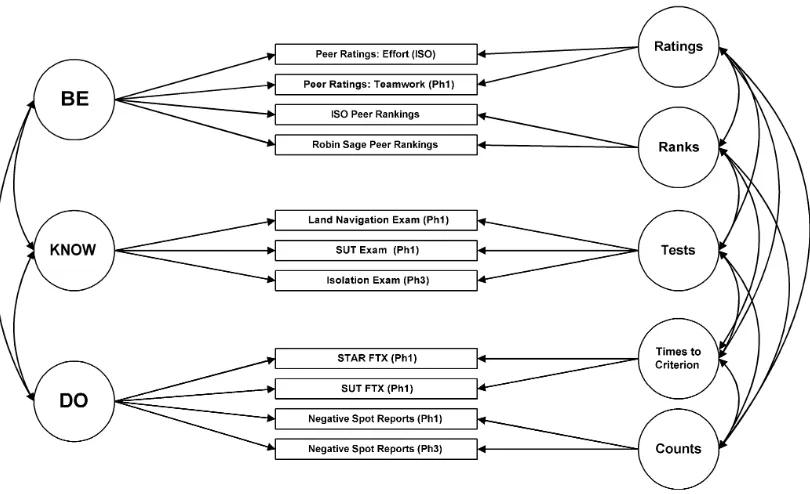
Training data from 1441 graduates of the U.S. Army Special Forces Qualifications Course (SFQC) offered an opportunity to test a multidimensional model of training performance. A three-factor model based partially on the Kraiger, Ford, & Salas (1993) framework was operationalized with level-of-performance training criteria (Sackett & Mullen, 1993) and successfully confirmed using confirmatory factor analysis (CFA). The model utilized the BE KNOW DO terminology from the U.S. Army’s leadership model to describe the cognitive, skill-based, and affective training outcome factors. Several alternative models were tested and found not to be identified, suggesting the Kraiger et al. (1993)
version provided the best description of performance. Additionally, the BE KNOW DO model was successfully confirmed for two individual phases of the SFQC training separated in time. Therefore, structural equation modeling (SEM) analyses were conducted to
Modeling Literatures: Confirming BE KNOW DO with United States Army Special Forces Training Data
By Eric A. Surface
A dissertation submitted to the Graduate Faculty of North Carolina State University in partial fulfillment of the requirements for the Degree of
Doctor of Philosophy December 6, 2002
Industrial/Organizational & Vocational Psychology
Approved By:
_____________________________ Dr. Mark A. Wilson
Chair of Advisory Committee
_____________________________ _____________________________
Dr. Don W. Drewes Dr. Bert W. Westbrook
_____________________________ _____________________________
Dr. Don L. Martin Dr. Mike G. Sanders
Dedication
I would like to dedicate this research to the members of the United States Army Special Forces, whose diligent and often silent work protects and promotes the interests of the United States and its citizens around the world, and to the men and women at the John F. Kennedy Special Warfare Center and School (JFKSWCS), who ensure that Special Forces soldiers are selected and trained to be the best. I would like to recognize the contribution and sacrifice of 1st Lt. Tallas Tomeny, a SF candidate who died in a training accident during the Robin Sage field training exercise in 2002. In the very next iteration of the course, I
participated in Robin Sage as a guerilla soldier at the base camp where Tomeny was stationed. On an outcropping of rock near Robbins, NC, a memorial is carved to him. His sacrifice for our country will not be forgotten. After reading the memorial, participating in Robin Sage, and working with members of this community over the past five years, it has become apparent to me that SF soldiers must possess the highest levels of commitment, self-sacrifice, and professionalism even to complete the training. I have tremendous respect for soldiers who have chosen to walk this path.
Biography
Eric Alan Surface was born on September 8, 1970, in Ahoskie, NC. Eric is the oldest son of Daniel and Sallie Surface, and he grew up in Murfreesboro, NC, and Floyd, VA, with a younger sister and brother, Julianne and Brian.
After graduating from Murfreesboro High School as the Salutatorian of its last class, he attended Wake Forest University in Winston-Salem, NC. At Wake Forest, Eric
participated in numerous student organizations and leadership activities, including helping to restart the Sigma Nu chapter, to start a monthly publication that covered fraternities and sororities, and to establish a leadership organization. Upon his graduation in 1992 with a BA degree in psychology and a minor in computer science, he took a position as interim director of college relations at Chowan College in his hometown. While at Chowan, he helped the college restore its public image that had been tarnished by a turbulent transition to four-year status. In 1994, Eric entered graduate school in industrial/organizational psychology at East Carolina University (ECU) in Greenville, NC. At ECU, he taught undergraduate psychology courses, worked in the graduate admissions office, and interned at Weyerhaeuser’s New Bern Pulp site. At Weyerhaeuser, Eric was given the responsibility of conducting the employee survey and its follow-up activities for the site. In 1996, he was accepted into the Ph.D. program in industrial/organizational and vocational psychology at North Carolina State University. That summer, Eric began working as an intern at Caterpillar’s Building Construction Products Division in Clayton, NC, where he worked primarily on employee surveys and organizational development (OD) activities.
research with United States Army Special Forces, a position that he has held for over five years. He successfully defended his thesis at ECU and received his MA in psychology. Additionally, in 1997, Caterpillar contacted Eric and asked him to do an employee survey project for them as a consultant. Unable to do the work alone, Eric invited his friend and fellow graduate student, Stephen Ward, to help with the project. They used the project as an opportunity to learn about consulting and business. They formed a consulting partnership, Surface, Ward, & Associates, to handle the business. Both readily admit to making mistakes and learning a tremendous amount. Over the following five years, the partnership did a number of projects on a very part-time basis (i.e., one to two small projects a year) for companies like IBM. Their business was generated totally by referrals. In January 2002, both Stephen and Eric took a hiatus from consulting in order to make progress on personal goals; Eric focused solely on finishing his dissertation research and writing several conference proposals and article submissions.
Since 1997, the fellowship with ARI has provided Eric with a number of interesting opportunities, including collecting data in Germany, participating in Robin Sage as a guerilla soldier, and observing SF training. In 1999, Eric was made an honorary member of Army Special Operations Forces for his work with the 1998 USASOC command climate survey and its follow-up activities. While working with ARI, Eric has worked on a variety of projects, including climate surveys, training and performance research, electronic data collection implementation and research, the development of a competency model and 360-degree assessment instrument for USASOC supervisors, and various survey follow-up
that working with Special Forces and ARI has been his most rewarding professional experience to date.
During the fall of 2000 and the spring 2001, Eric taught classes as an adjunct professor in the human resources management program at Peace College in Raleigh, NC. This afforded him the opportunity to teach I/O psychology and organizational development to undergraduates. He also supervised a couple of research projects. After leaving Peace, he collaborated on a conference paper with a former student who is interested in attending graduate school in I/O.
Late in his graduate career, Eric realized the value of publishing research work. Although he had always excelled at doing projects, he had never published a research article. Eric believes that the transfer of knowledge advances the science and practice of I/O and that I/O psychologists have a responsibility to publish regardless of their career path. Writing and publishing articles helps demonstrate your intellectual capital regardless of whether you engage in teaching, research, consulting, or organizational practice. In 2002, Eric was a co-author on two papers presented at conferences and the second co-author of an article accepted by Personnel Psychology. His previous publications include two book reviews published in
Acknowledgements
I would like to acknowledge the help and support of my advisor, my committee and the personnel at the John F. Kennedy Special Warfare Center and School (JFKSWCS). Additionally, I would like to acknowledge the contributions of personnel from the United States Army Special Operations Command (USASOC), the USASOC Psychological Applications Directorate (PAD), the Army Research Institute for the Behavioral and Social Sciences (ARI), the Consortium of Colleges and Universities of the Greater Metropolitan DC Area, and the Psychology Department at North Carolina State University. A special note of recognition should be given to all those who helped in the Herculean data collection process. I owe a special debt of gratitude to all the individuals who helped me complete this process.
for being an example of a genuine southern gentleman, and for overlooking my long breaks during the three-hour vocational psychology seminar class.
Second, I would like to thank the numerous military and civilian personnel from JFKSWCS, the Special Forces Medical Training Battalion (SOMTB), USASOC, and USASOC PAD who helped to make this research possible and a success. Specifically from JFKSWCS, I would like to thank MAJ General Boykin, COL Joe Kilgore, COL Charles King, CSM Ronnie McCan, LTC Nagata, LTC Robert Marrs, MAJ Clifton Poole, MAJ Everheart, MAJ Joyce, MAJ William Banker, CPT Mark Homan, Mrs. Flowers, and Harriet Craven. I would like to extend a special thanks to CPT Showalter, MSG Garner, “MAJ Vincent” and “Cowboy” for my Robin Sage experience. Specifically from SOMTB, I would like to thank Sandra Strickland, Jim Rorke, and Roy Hutchinson. Specifically from
USASOC, I would like to thank LT General Doug Brown, LT General Tangeny, MAJ
General Toney, COL Stan Florer, Luke Taylor, Gary Barrett, MAJ Gary Kolb, and Sue Rose. Specifically from USASOC PAD, I would like to thank SFC Michael Perkins, LTC Morgan Banks, MAJ Gary Hazlett, COL Larry Lewis, COL Gary Greenfield, LTC Fred “Doc” Brown, Joyce Melvin, Kristin Richmond, Gigi Gill, and Renee.
Darnell Johnson for their assistance in the completion of this process. Additionally, I would to thank Drs. Bob Pond, Jim Kalat, and Bill Cunningham, who taught me classes at NCSU.
Fourth, I want to acknowledge all those who helped with the data collection process. I would like to thank Jat Thompson for his help with form development, data checking, and data scanning as well as his friendship and our many philosophical conversations while in transit to Fort Bragg. Additionally, I would like to thank Greg Lemmond, Kemp Ellington, LT Kevin Hosier, Sidonia Shumann, Ursula Mannix, Diane Perkins, SFC Michael Perkins, Dr. Michelle Wisecarver, CPT Rick Banks, Justin Whitener, and Dr. John Viehe for their assistance in the data collection and checking process. Dr. John Viehe gets a special nod for handling the nightmare known as payroll.
Fifth, I would like to acknowledge the contributions of various friends and other individuals. I would like to thank Dr. Heather Lee for covering my classes while I was working on my initial proposal when I was teaching as an adjunct at Peace. I would like to thank the following people for their support and friendship during this two-year-plus process: Stephen Ward, Dr. Lori Foster Thompson, Dr. Erich Dierdorff, Dr. Barbara Grimes,
Finally, I would like to recognize the contribution of numerous musical artists whose music I played constantly as I created and refined this document. I thank the following artists for making great music for working: the barenaked ladies, The Calling, Sister Hazel, the Dave Mathews Band, Five For Fighting, U2, Norah Jones, the Gin Blossoms, Enya, Stevie Nicks, Fleetwood Mac, the Talking Heads, Queen, the Violent Femmes, the Counting Crows, Tom Petty and the Heartbreakers, emilia dahlin, Lifehouse, Jack Johnson, James Taylor, Mozart, and John Mayer. I must acknowledge that Fleetwood Mac’s The Dance and the barenaked ladies’s stunt received the most play with Sister Hazel’s …somewhere more familiar and the greatest hits albums of James Taylor and Tom Petty and the Heartbreakers following closely.
Table of Contents
Table of Tables xi
Table of Figures xiii
List of Appendices xv
Chapter One: Introduction 1
Framing the Research 1
Research Goals 6
General Research Questions 7
Chapter One Summary 7
Chapter Two: Research Literature Reviewed 9
What is Performance? 9
Selecting “Good” Criteria 12
Job Performance Research 18
Training Evaluation Research 38
Integrating Training Evaluation and Job Performance Research 57 Integration Inspired Research Questions 73
Chapter Two Summary 81 Chapter Three: Methods 83
An Overview of the U.S. Army Special Forces Research Context 83
Participants 92
Data Collection Procedure 92
Variables Selected to Operationalize Study Constructs 96
Research Models with Manifest Indicators by Question 101
Analytic Procedure 104
Chapter Four: Results 119
Question One: What is the Dimensionality of Training Performance? 119
Question Two: Does latent structure of training performance 128
change over time? Question Three: Does One General Factor or Several Specific Factors 137
Describe BE? Question Four: What is the impact of overfitting on cross-validation? 140
Chapter Five: Discussion 142
Discussion of the Findings by Question 142
Implications and Future Directions 151
Limitations 159
Insights into the Nature of Performance 160
References 163
Table of Tables
Table 1. A Comparison of Models of Job Performance 177 Table 2. A Comparison of Two Predominate Training Evaluation Models 178 Table 3. An Integration of Training Evaluation and Job Performance
Research Using the Kirkpatrick Framework
179
Table 4. Possible Manifest Indicators from Phase One and Phase Three of the Special Forces Qualification Course Training
180
Table 5. Most Likely Special Forces Qualifications Course Phase One and Three Measures by Construct
181
Table 6. Manifest Indicators Utilized in Models by Research Question and Construct
182
Table 7. Descriptive Statistics for Manifest Indicators Used in the Research Models
183
Table 8. Recoded and/or Transformed Variables Used in the Study 184 Table 9. Demographic Composition of Samples for Questions One and Four 185 Table 10. Demographic Composition of Samples for Question Two 186 Table 11. Demographic Composition of Samples for Question Three 187
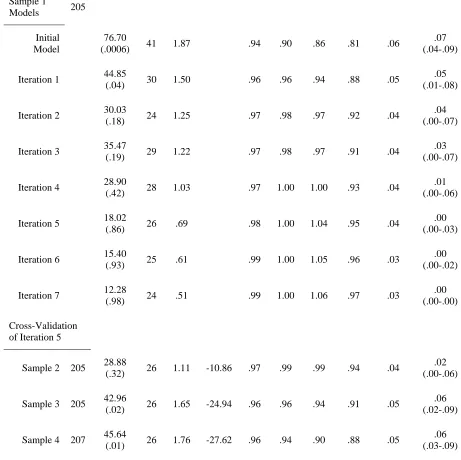
Table 12. Fit Indices for Research Question One 188
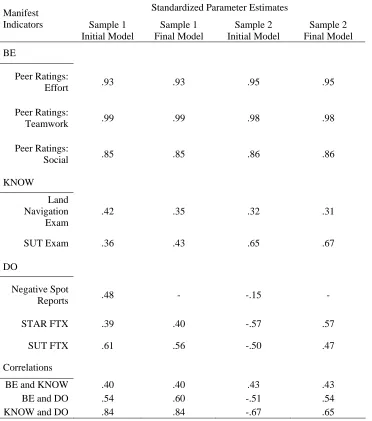
Table 13. Standardized Parameter Estimates for the BE KNOW DO Model 190 Table 14. Standardized Parameter Estimates for BE KNOW DO Model with
Methods
191
Table 15. Standardized Parameter Estimates for Campbell Version of BE KNOW DO
192
Table 16. Standardized Parameter Estimates for BE KNOW DO with Unitary Content Factor
Table of Tables (continued)
Table 17. Fit Indices for Research Question Two 194
Table 18. Standardized Parameter Estimates for the Phase One BE KNOW DO Model
196
Table 19. Standardized Parameter Estimates for the Phase Three BE KNOW DO Model
197
Table 20. Fit Indices for Research Question Three 198
Table 21. Standardized Parameter Estimates for BE Models 199
Table of Figures
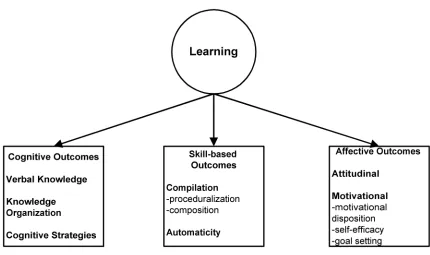
Figure 1. Kraiger, Ford, & Salas (1993) conceptualized three categories of learning criteria for training.
204
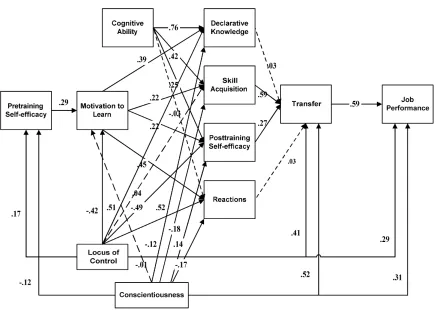
Figure 2. Colquitt, LaPine, and Noe (2000) partially mediated meta-analytic path model.
205
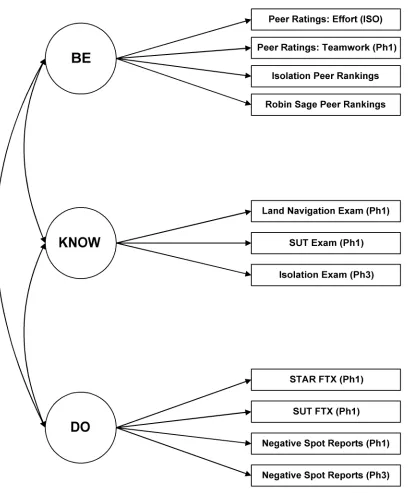
Figure 3. The BE KNOW DO model of training performance operationalized with manifest indicators.
206
Figure 4. The BE KNOW DO model of training performance with correlated method factors operationalized with manifest indicators.
207
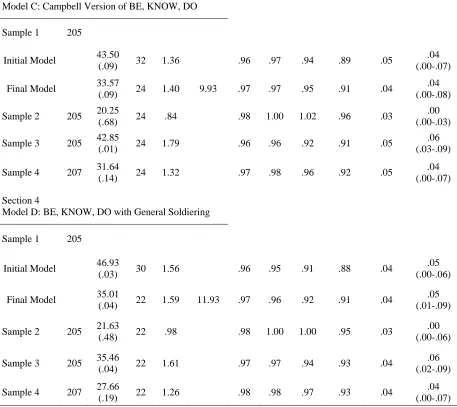
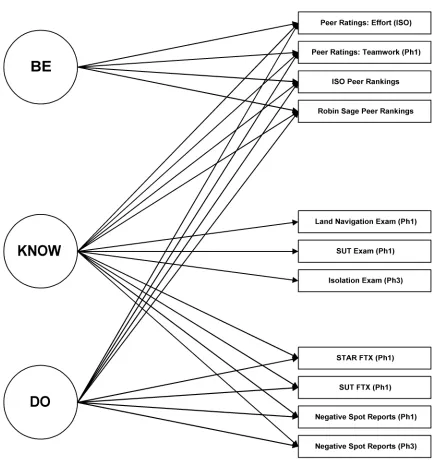
Figure 5. Campbell version of the BE KNOW DO model of training performance operationalized with manifest indicators.
208
Figure 6. BE KNOW DO model of training performance with a general soldiering factor operationalized with manifest indicators.
209
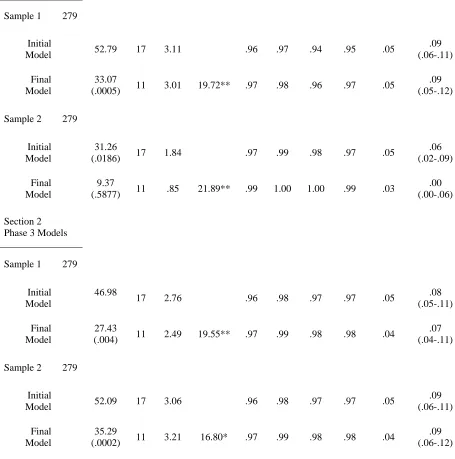
Figure 7. Phase One SFQC training performance model presented with manifest indicators.
210
Figure 8. Phase Three SFQC training performance model presented with manifest indicators.
211
Figure 9. Posited relationship between Phase One and Phase Three training performance presented with manifest indicators.
212
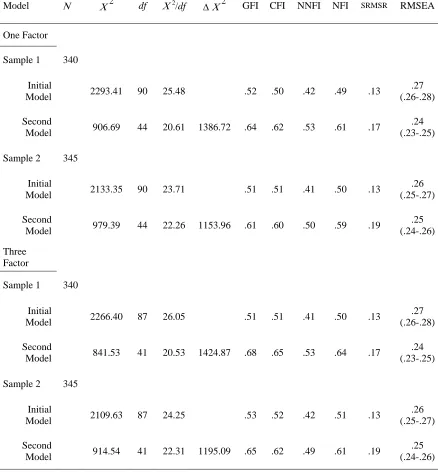
Figure 10. One-factor conceptualization of the BE construct presented with manifest indicators.
213
Figure 11. Three-factor conceptualization of the BE construct presented with manifest indicators.
214
Figure 12. Final BE KNOW DO model presented with manifest indicators. 215
Figure 13. BE KNOW DO model with uncorrelated method factors presented with the initial set of manifest indicators.
216
Figure 14. BE KNOW DO model with uncorrelated method factors presented with the final set of manifest indicators.
217
Figure 15. Campbell version of the BE KNOW DO model presented with the final set of manifest indicators.
Table of Figures (continued)
Figure 16. BE KNOW DO model with a general soldiering content factor presented with the final set of manifest indicators.
219
Figure 17. Final Phase One training performance model presented with manifest indicators.
220
Figure 18. Final Phase Three training performance model presented with manifest indicators.
221
Figure 19. Initial model positing the relationship between Phase One and Phase Three training performance presented with standardized parameter estimates from sample one.
222
Figure 20. Initial model testing the posited relationship between Phase One and Phase Three training performance presented with standardized parameter estimates from sample two.
223
Figure 21. Intermediate model of the relationship between Phase One and Phase Three training performance presented with standardized parameter estimates from sample one.
224
Figure 22. Intermediate model of the relationship between Phase One and Phase Three training performance presented with standardized parameter estimates from sample two.
225
Figure 23. Final model of the relationship between Phase One and Phase Three training performance presented with standardized parameter estimates from sample one.
226
Figure 24. Final model of the relationship between Phase One and Phase Three training performance presented with standardized parameter estimates from sample two.
227
Figure 25. A second version of the one-factor conceptualization of the BE construct presented with manifest indicators.
228
Figure 26. A second version of the three-factor conceptualization of the BE construct presented with manifest indicators.
List of Appendices
Appendix A. Special Forces Qualifications Course Data Collection Form 230 Appendix B. Correlation Matrices for the Research Questions 235 Table B1. Descriptive Statistics and Zero-Order Correlations
for Question One Dataset
236
Table B2. Descriptive Statistics and Zero-Order Correlations for Question One, Sample 1
237
Table B3. Descriptive Statistics and Zero-Order Correlations for Question One, Sample Two
238
Table B4. Descriptive Statistics and Zero-Order Correlations for Question One, Sample Three
239
Table B5. Descriptive Statistics and Zero-Order Correlations for Question One, Sample Four
240
Table B6. Descriptive Statistics and Zero-Order Correlations for Question Two Dataset
241
Table B7. Descriptive Statistics and Zero-Order Correlations for Question Two, Sample One
242
Table B8. Descriptive Statistics and Zero-Order Correlations for Question Two, Sample Two
243
Table B9. Descriptive Statistics and Zero-Order Correlations for Question Three Dataset
244
Table B10. Descriptive Statistics and Zero-Order Correlations for Question Three, Sample One
245
Table B11. Descriptive Statistics and Zero-Order Correlations for Question Three, Sample Two
246
Appendix C. Question One Post Hoc Analyses 247
Table C1. Descriptive Statistics and Zero-Order Correlations for Question One, Sample A
List of Appendices (continued)
Table C2. Descriptive Statistics and Zero-Order Correlations for Question One, Sample B
255
Table C3. Descriptive Statistics and Zero-Order Correlations for Question One, 1998 Sample
256
Table C4. Descriptive Statistics and Zero-Order Correlations for Question One, 1999 Sample
257
Table C5. Descriptive Statistics and Zero-Order Correlations for Question One, 18A Sample
258
Table C6. Descriptive Statistics and Zero-Order Correlations for Question One, 18B Sample
259
Table C7. Descriptive Statistics and Zero-Order Correlations for Question One, 18C Sample
260
Table C8. Descriptive Statistics and Zero-Order Correlations for Question One, 18D Sample
261
Table C9. Descriptive Statistics and Zero-Order Correlations for Question One, 18E Sample
262
Table C10. Descriptive Statistics and Zero-Order Correlations for Question One, NCO Sample
263
Table C11. Fit Indices for Question One Post Hoc Models 264
Appendix D. Question Two Post Hoc Analyses 266
Table D1. Fit Indices for Question Two Post Hoc Models 270 Table D2. Standardized Parameter Estimates for Question
Two Post Hoc One-Construct Models
272
Table D3. Standardized Parameter Estimates for Question Two Post Hoc Two-Construct Models
273
Appendix E. Question Three Post Hoc 274
Table E1. Fit Indices for Post Hoc Two-Factor Models Exploring the Dimensionality of BE
CHAPTER ONE: INTRODUCTION
This chapter introduces and frames the current research project. First, this research study is framed in terms of its general importance and of the two streams of research— training evaluation and job performance modeling—to be thoroughly reviewed in chapter two. The general research goals and questions are presented. The introduction provides a guide to the nature and structure of the argument being constructed in this dissertation.
Framing the Research
Increased globalization, advances in technology, changes in the nature of work, a shrinking pool of highly-skilled workers, and increasing competition have made
understanding of job performance, selection and training systems may not achieve their desired results. In certain situations, where failure to perform can have life-and-death and/or national security consequences, having selection and training systems based on an accurate and relevant model of job performance becomes an imperative. Occupations like police officers, firefighters, emergency medical technicians, soldiers, intelligence analysts, and hazardous materials handlers would be examples highlighted by the tragedy of September 11, 2001.
Examining previous training evaluation and job performance research can facilitate the objective of aligning selection, training, and performance management processes with an accurate model of job performance. By integrating the two streams of research, our
understanding of both training and job performance can be improved, potentially leading to improvements in practice and to a macro-level performance model.
Unlike job performance research, where there is a research literature devoted to modeling the criterion space, a literature devoted solely to modeling training performance for the sake of understanding training performance does not exist. In the research literature, the “training performance” terminology typically refers to measuring simulation or work sample performance during or at the end of training (e.g., Kozlowski, Gully, Brown, Salas, Smith & Nason, 2001). There is no separate training performance modeling literature per se—training research seems to have been more process and outcome oriented. The training criteria space has been specified and examined as a necessary part of training evaluation and training effectiveness research. According to Kraiger, Ford, and Salas (1993), evaluation is conducted to determine “whether training objectives were achieved and whether
Training effectiveness seeks to discover “why training did or did not achieve its intended outcomes” (p. 311). Training effectiveness is a broader concept and encompasses training evaluation and its criteria. Sackett and Mullen (1993) suggest that evaluation is about answering two different categories of questions—one refers to how much change has
occurred as a result of the training, and the other relates to the attainment of a specified level of achievement or performance by each trainee. For the purposes of this research, the training evaluation research literature, with its focus on criteria, provides a more appropriate underpinning.
For years, the Kirkpatrick model provided the predominant model of training criteria in the training evaluation literature (Alliger & Janak, 1989; Kraiger et al., 1993; Salas & Cannon-Bowers, 2001). Kirkpatrick's (1959a, 1959b, 1960a, 1960b, 1967, 1979, 1996) four levels of criteria—reactions, learning, behavior, and results—have been used to guide training evaluation and the measurement of training performance for over 40 years. Current thinking in the training evaluation literature expands Kirkpatrick’s framework (Kraiger et al., 1993; Alliger, Tannenbaum, Bennett, Traver, & Shotland, 1997). The measurement of
multidimensional model of training performance, unlike the modeling conducted with the job performance criterion space. This state of affairs is changing as more researchers adopt the Kraiger et al. (1993) model in their training research. Two recent studies (Colquitt, LaPine, & Noe, 2000; Kozlowski et al., 2001) utilized path analytic techniques to explore the Kraiger et al. (1993) model. Tracey, Hinkin, Tannenbaum, and Mathieu (2001) actually used CFA to test a model that included a partial operationalization of the Kraiger et al. (1993) learning criteria.
similarities, this study of training performance draws heavily on the job performance modeling literature.
This research provides an opportunity to integrate training evaluation and job
performance research to improve the understanding of both training and job performance and to explore several relevant questions. Given the similarity of the learning criteria categories (Kraiger et al., 1993), the performance determinants in some models (e.g., Campbell et al., 1993), and the performance factors in other models (e.g., Wilson & Grant, 1997), are training performance and job performance separate construct models, are they different cases of a general performance model, or is training performance a component of the job performance model? Can training criteria can be considered the direct determinants of job performance as well as training performance from the level-of-performance training evaluation perspective expressed by Sackett and Mullen (1993)?
In development or promotion decisions, Kraiger (1999) points out that job performance is often used as a surrogate for whether the individual has the relevant
the relationship between human attributes and job performance? Although many of these questions, like the mediation question, cannot be addressed by this study or definitively by any one study, this research expands what is known and offers the best potential answers to some of these questions based on the findings. For the questions that are beyond the scope of this study, hopefully, this research will serve as a foundation for future exploration.
It should be noted that the U.S. Army might have specified the underlying model of performance with its BE KNOW DO model of leadership (U.S. Army, 1999). Additionally, the BE terminology may more accurately reflect the nature of the third factor than other alternatives (e.g., motivation)—there is a specific way of being to demonstrate you are a successful performer in a specific organization or context (i.e., perceived fit between the individual and the performance context). Therefore, the performance model proposed in this study—a three-factor model described in detail later—recognizes this fact and uses the Army terminology to label the three latent constructs.
Research Goals
research directions for the field and for SF training; and (f) to suggest possible answers to some of the questions related to the nature of performance posed in the previous section.
General Research Questions
There are four research questions addressed by this study.1 What is the dimensionality of training performance? Does the latent structure of training performance change over time (i.e., across the phases of training)? Does one general factor or several specific factors describe BE? (i.e., Does one general factor or several specific factors describe the latent structure of the affective or citizenship-like training performance?) What is the impact of overfitting on cross-validation? (i.e., What is the impact of overfitting a CFA model to fit the data of one sample on the cross-validation of the modified model on another sample?) The first two questions focus on modeling the latent structure of training performance, employing CFA and SEM to test the viability of the three-factor model. For the second question, the latent structure of performance for each phase must be confirmed prior to modeling the relationship across the phases. Although important, the last two questions focus on issues related to modeling performance in general. Chapter 2 provides a rationale and detailed description for each question, chapter 3 presents the research models to be tested and the methodology to test them, and chapter 4 presents the results of testing these models. Chapter 5 discusses the results and their implications.
Chapter One Summary
of performance—whether it is training or job performance—and of the issues related to performance measurement and modeling. This knowledge is critical to the development and implementation of effective selection, training, and performance management processes to achieve organizational strategy and goals. The training evaluation and job performance modeling literatures provide the underpinning for this study. Both lines of research have evolved to hold a multidimensional view of performance. However, job performance research has been more adapt to apply CFA and SEM techniques to investigate the structure of performance. This may be an artifact of the difference in how training evaluation research and job performance research have been approached—training performance is typically addressed in the context of training evaluation and training effectiveness research, and job performance is addressed as an independent research topic. Additionally, this chapter has posed some general questions about the nature of performance. Although answers to most of these questions are beyond the scope of this study, the results of this study will provide a foundation for future research to address these questions more definitively. Chapter 1 concluded by introducing the basic research goals and questions addressed by this
CHAPTER TWO: RESEARCH LITERATURE REVIEWED
This chapter reviews the relevant psychological research and issues related to training evaluation and job performance modeling. First, a basic review of performance and criterion measurement issues is presented. Then, the relevant job performance and training evaluation research is examined. Next, an argument for integrating the two research areas is presented, and the four research questions are introduced. Confirmatory factor analysis (CFA) and structural equation modeling (SEM) issues related to the impact of overfitting a model on one sample to the cross-validation of the model on another sample are discussed in relation to the fourth research question. The chapter is divided into seven sections: (a) what is
performance? (b) selecting “good” criteria; (c) job performance research; (d) training evaluation research; (e) integrating training evaluation and job performance research; (f) integration inspired research questions; and (g) chapter 2 summary. The research questions are presented in the sixth section of chapter 2.
What Is Performance?
This section explores the basic definition of performance and reviews a set of criteria for determining whether a construct is performance. The section concludes with a brief discussion of whether training criteria meet the definition of performance. The purpose of this section is to define the basic construct and to create a shared understanding and common point of reference that will facilitate the integration of the job performance and training evaluation literatures and the comparison of various research studies.
the last decade (Borman et al., 1997; Avery & Murphy, 1998). To a layperson, performance is what you do on the job. For an I/O psychologist, this is necessary but not sufficient for the definition. Unfortunately, many researchers have failed to define performance more
specifically than a layperson—instead accepting the client’s definition of performance (i.e., performance is what our trait-based performance appraisal form measures)—and ignoring the potential construct and measurement problems (Gatewood & Field, 1998). The definition of performance is important because it not only guides the measurement of performance but also has tremendous impact on human resources (HR) processes, like selection and training (Campbell, 1999). As Schmitt and Chan (1998) indicate, job performance is “a variable of considerable societal concern and central to selection research” (p.70). A generally accepted definition of performance is needed.
Many “specific” definitions of performance have been used over the years—including “what is measured by the performance appraisal”—but only one framework will be discussed here. Over the past decade, Campbell and his associates have educated the world about the nature of job performance (Campbell, 1990; Campbell et al., 1993; McCloy et al., 1994; Campbell, Gasser & Oswald, 1996; Campbell, 1999) and given us a general definition of performance and a specific theory. Although there are several frameworks of performance content, most agree with Campbell’s basic definition of performance (Borman et al., 1997; Motowidlo et al., 1997; Schmitt & Chan, 1998), so these points of agreement will be utilized here. The specifics of the Campbell model (i.e., the elements and their relationships) will be described later in this chapter.
of proficiency (or contribution to goals) that is represented by a particular action or set of actions” (p. 402). Campbell’s model makes specific assertions about performance that will be described later in this chapter.
First, the performance of interest to I/O psychologists takes place in the context of a work organization—specifically, in the context of a person’s job or role in that organization (Campbell, 1990). Second, the performance must be relevant to the goals of the job, work unit or organization (Campbell et al., 1993). Third, performance is the behavior or action, not the outcome or consequence. Fourth, the performance must be under the control of the individual—free of contamination from other factors like resource availability or technology. Fifth, performance is not effectiveness, productivity, or utility—judgments about the results of individual or group work behavior are not performance. Sixth, performance should be representative of what is actually done on the job. Finally, performance is multidimensional. Other theories mirror these ideas.
For example, the theory of individual differences in task and contextual performance (Motowidlo et al., 1997) posits four basic assumptions, which are similar to those of
Campbell: (a) performance is behavioral; (b) performance is episodic—performance is made up of many discrete events; (c) performance episodes are evaluated; and (d) performance is multidimensional. Then, performance can be defined “as the aggregated value to the organization of the discrete behavioral episodes that an individual performs during a particular period” (p. 59, Motowidlo & Schmit, 1999).
definition will guide the development of criterion measures. In this discussion, performance has been defined and illustrated in terms of job performance. Do training criteria represent performance? Do these basic definitions and assumptions about job performance hold for training performance? The basic and safe answer is that it depends on the training context and the criteria. For example, take a basic tenet of Campbell’s definition—performance is a behavior that is relevant to the organization’s mission and that can be measured at the individual level. Obviously, some training criteria meet this standard and others do not. Likewise, some purported measures of job performance do not meet the standards of the definition or the assumptions about performance. If a training criterion measure meets the basic requirements outlined above, then it is performance. An argument can be made that criterion measurements meeting the definitional requirements in any context are performance and that the equivalence of the latent structure of performance across situations should be the focus. Should the macro-level view of performance be conceptualized as the same general constructs across training and job performance contexts? This is one of the most important theoretical questions for the future of performance research. Regardless of whether it is a job or training performance measure, a criterion variable must have certain characteristics.
Selecting “Good” Criteria
performance measures and to introduce a set of criteria by which the training performance measures in this study can be evaluated.
When measuring performance—whether training or job—we are concerned with the development and measurement of criteria that represent the “true” level of proficiency or success in the relevant performance content domains and contexts. As Grant (1996) points out, “effective Human Resource decisions and practices depend on ‘good’ criteria” (p. 2). Although psychologists have known about the importance of having good performance criteria for decades, the quality of the criterion has been ignored in some cases when the researcher accepts the existing organizational criteria and, therefore, the client’s definition of performance (Schmitt & Chan, 1998). The historic lack of concentration on criterion
development in psychology is referred to as the “criterion problem” (Austin & Villanova, 1992). Although criteria was not developed for this study, existing criterion measures had to be selected from a large archival data set, and characteristics of good criteria aided in the selection.
Researchers have been discussing criterion issues for years. For example, Nagle (1953) discussed three issues in criterion development—relevancy, reliability, and combining criteria—and provided a four-step procedure for developing criteria. The first and most important step in criterion development is defining performance. The criterion is defined—or accepted—by the researcher. “The criterion measure defines what is meant by job
performance…high scores on this measure, therefore, define what is meant by ‘successful’ job performance” (p. 659, Gatewood & Field, 1998). Basically, the criterion is the
performance in a specific situation. If the criterion is poorly chosen and does not represent the performance domain, the selection system or training that is validated against the
criterion may be inappropriate or may be unnecessarily eliminated or changed. The criterion measure is of great importance because a poor criterion measure can cause estimates of validity to be inaccurately low (Schmitt & Chan, 1998)—there are several issues that must be considered in developing or selecting criteria. Again, although these issues and
characteristics of good criteria are discussed in terms of job performance, they can be applied to training criteria as well.
Gatewood and Field (1998) discuss eight characteristics of appropriate selection criteria—selection research and validation studies are basically job performance research (Schmitt & Chan, 1998)—individualization, controllability, relevance, measurability, reliability, variance, practicality, and lack of contamination. These can apply to training criteria as well.
workers is apparently irrelevant” (p. 680, Gatewood & Field, 1998). In training, if everyone passes a job knowledge test with a score of 100%, then there is no variance and the job knowledge test is not useful as a measure of training performance to discriminate between trainees in terms of proficiency level or to predict future performance. However, in certain situations, such measures might be reasonable for basic employability certification or legal defensibility. Practicality refers to the cost effectiveness of collecting the metric.
Contamination refers to the measurement of something other than the “true” score.
Contamination pertains to other sources of variation present in the criteria that result in the “measure not appropriately representing” the construct (Goldstein, 1993). Criterion
contamination can lead to incorrect conclusions about selection systems and training program success. Goldstein identified several sources of contamination, including opportunity bias— which is an increasingly important issue as work becomes more dependent on technology and people in organizations have differential access to technological resources (Schmitt & Chan, 1998). The criterion must be under the control of the individual—the differences in performance must be attributable to differences in individuals not other factors. As Campbell (1999) says, “measurement contamination puts the psychologist out of business, or at least at considerable risk” (p. 403).
According to Gottfredson (1991), any performance measurement system should be evaluated using the following factors: (a) validity, (b) reliability, (c) susceptibility to
compromise, (d) financial cost, and (e) acceptability to interested parties. Some other criteria for performance measurement that have been identified include: exhaustiveness, uniqueness, comprehensibility, flexibility, maintainability, and acceptability (Tesoro & Tootson, 2000). Exhaustiveness and uniqueness are related to definition of performance—the performance measures should cover the content domain with as little overlap between measures as possible. The other characteristics relate to the practical use of the findings by the client or other stakeholders. Acceptability to the client is of paramount importance because if the client does not agree that the criterion represents useful performance in their organization, the battle is lost before it is begun.
Many methods have been used to measure performance, including ratings, rankings, nominations, work samples, simulations, job knowledge tests, outcome measures (e.g., sales numbers), withdrawal behavior (e.g., absenteeism), training proficiency, and
counterproductive behaviors (e.g., employee theft) (Gatewood & Field, 1998; Schmitt & Chan, 1998). The important issue to remember is that the performance measure is representative of performance only to the extent that it meets the requirements of good criteria outlined in this section. These characteristics can be applied to training criteria as easily as they are to job performance criteria.
When working with archival data, the researcher does not have the opportunity to address these issues at the time of criterion development or measurement, but research
is often necessary to accept and utilize measures with less than perfect psychometric characteristics. Unfortunately, this is a major limitation of conducting research in the naturalistic organizational setting.
Job Performance Research
Since most of what is known about the nature of performance comes from modeling job performance, this section provides a review of job performance models, relevant
empirical evaluation of the models, and other performance modeling issues. The two
Overview of Job Performance Models
Current thinking in psychology views performance as behavior, not the outcomes of that behavior (Schmitt & Chan, 1998). However, both are important. As Surface (2000) points out, few psychologists are going to say outcomes should not be measured—they are of practical importance to the organization—but performance outcomes offer a limited view of performance and have limited usefulness from the perspective of understanding and
developing employee performance. For performance research, behavioral measures are preferred if available (Campbell, 1999).
Current theory (e.g., Motowidlo et al., 1997; Schmitt & Chan, 1998; Campbell, 1999; Viswesvaran & Ones, 2000) and empirical research (e.g., Motowidlo & Van Scotter, 1994; Wilson & Grant, 1997) support the notion that performance is a multidimensional
phenomenon, not a unitary construct as the “classic” model assumed (Campbell et al., 1993). Since the Campbell model was initially introduced, many attempts (e.g., Motowidlo et al., 1997) have been made to define the latent structure of job performance and its determinants. Campbell (1999) believes most of these theories are compatible and hierarchical—for
versus applicable across all jobs) and developmental context (i.e., created as a stand alone dimension versus set of dimensions). Borman and associates (1997) encourage continuing research efforts aimed at developing a comprehensive taxonomy of performance.
Predominant Job Performance Models
According to Borman and his colleagues (1997) in their review of selection research, the predominant models of job performance are the Campbell model (e.g., Campbell, 1999) and the individual differences model of task and contextual performance (e.g., Motowidlo et al., 1997). Each model specifies a number of performance content factors, performance determinants, and relationships between the model components. The basics of both models, including some empirical research, are discussed before surveying other models of
performance.
The Campbell Model
For those unfamiliar with the Campbell model (Campbell, 1990; Campbell,
McHenry, & Wise, 1990; Campbell et al., 1993; McCloy et al., 1994; Campbell et al., 1996; Campbell, 1999; Campbell & Knapp, 2001), a brief overview will be provided. The model was developed and tested as part of the U.S. Army’s “Project A”, a large-scale selection and classification research project sponsored by the U.S. Army Research Institute for the
The Campbell model’s performance components (i.e., factors or dimensions) are the latent constructs of performance that capture “the distinguishable categories of things people are expected to do in a job” (p. 42, Campbell et al., 1993). Campbell posits eight
performance components, with three factors—core technical proficiency, demonstrating effort, and maintaining personal discipline—being relevant for every job. Core technical proficiency includes both job- and non-job-specific technical proficiency. The eight performance dimensions are: (a) job-specific task proficiency; (b) non-job-specific task proficiency; (c) written and oral communication task proficiency; (d) demonstrating effort; (e) maintaining personal discipline; (f) facilitating peer and team performance; (g)
supervision and leadership; and (h) management and administration. The eight factors are meant to describe the latent structure of all jobs in the Dictionary of Occupational Titles (DOT). However, all eight may not apply to every job, and the factors may not be in the same form across all jobs. A definition and discussion of each performance component can be found in Campbell et al. (1993) or Campbell (1999).
Performance factors are “viewed as a function of three, and only
performance”; PKS refers to “the capability attained when DK has been successfully combined with knowing how and being able to perform a task”; and M refers to “the
combined effects of three choice behaviors: (a) the choice to expend effort, (b) the choice of what level of effort to expend, and (c) the choice to persist in the expending of the chosen level of effort” (p. 494, McCloy et al., 1994).
These direct determinants are functions of indirect determinants. DK is a function of ability, personality, interests, education, training, experiences, and aptitude-treatment
interactions (Cronbach's ATI framework, as cited in Campbell, 1999). PKS adds practice to the list of indirect determinants. For M, Campbell suggests to review the “independent variables stipulated by research and theory in motivation” (p. 409, exhibit 12.1, Campbell, 1999). Campbell’s model states that job performance—or any behavior—cannot occur without motivation, making it a necessary condition. Some minimal levels of PKS and DK are necessary but not sufficient for performance. Motowidlo and colleagues (1997) sum it up well, “individual differences in personality, ability, and interest are presumed to combine and interact with education, training, and experience to shape DK, and PKS” (p. 73).
measure can be “determinant deficient” when individual differences in one of the direct determinants is held constant and/or not allowed to influence the individual’s performance (Campbell, 1999); (e) structural constraints that impact performance and do not impact the direct determinants are considered a characteristic of the job and criterion contamination (McCloy et al., 1994); (f) any variation not attributed to the direct determinants is
contamination or measurement error (McCloy et al., 1994); (g) measures of the determinants should be isomorphic in performance content—otherwise, “a given criterion (e.g., job knowledge test) could contain variance that was unique to that measure and would erroneously be considered irrelevant” (p. 465, McCloy et al., 1994); and (h) direct
determinants are not performance because “the skill and knowledge must used to accomplish the goal-relevant tasks” (p. 495) that are performance, and people are not typically rewarded for their knowledge and skill (McCloy et al., 1994). Although these assertions about the nature of performance have a basis in theory or previous research, some have not been tested, and others are points of contention. Much research is needed into the nuances of the
Campbell model.
For the most part, all of the empirical work testing and supporting the Campbell model has been related to Project A. However, although she failed to support the Campbell model, Grant (1996) tested the performance content factors from the Campbell model using CFA on data from incumbent state troopers and found that the model did not achieve
from Project A. This is the only published empirical test of the Campbell et al. (1993) direct determinants found by this researcher. McCloy and associates (1994) had two goals—to confirm the model of determinants and explore the relationship between several predictors and the determinants. The authors, using a SEM technique, found confirmation for the three determinant model using Project A performance data. Additionally, regression analysis was used to estimate the relationship between several predictor constructs—cognitive, computer, temperament, and interest—and the determinants. A detailed description of the study by McCloy and his associates follows.
McCloy and his colleagues (1994) utilized existing Project A data to operationalize the performance determinants. The manifest measures used consisted of job knowledge tests, work sample tests (i.e., hands-on tests of maximal performance), supervisor ratings, and personnel file data (i.e., awards and letters and Articles 15 and flag actions). The authors posit that job knowledge tests are a function of DK, work sample tests are a function of DK and PKS, and ratings and personnel data are functions of DK, PKS, and M. They argue that tests and work samples, as measures of maximum performance, prevent individual
differences in motivation from operating and that personnel file data and ratings are measures of typical job performance. However, this point can be argued. The model further stipulates that “performance measures are a function of different determinants and these are
independent of content” (p. 495, McCloy et al., 1994).
properties of the observed measures, there by disrupting the structure of the variance
decomposition required for a confirmation analysis of the model” (p. 495). According to the authors, “the model provides an empirical description of the degree to which various criterion measures are contaminated or deficient, given the isomorphic content” (p.502). In their discussion, McCloy and associates (1994) discuss the need for measures to be isomorphic in content and how the lack of isomorphism of the motivation measures in their study “most probably acts to reduce the amount of shared variance for the indicators of M” (p. 502).
The study used an unusual methodology to test the model of determinants. Determinants were defined as factors but no factor loadings were estimated, nor were the correlations between latent factors. They used a “design matrix” of 1s and 0s that specify whether a variable does or does not load on a factor, respectively. “The relevant variance in performance criteria is thus described by the estimated factor variances; and the irrelevant variance in each estimate is relegated to that measure’s uniqueness term” (p. 499). The authors reported the factor variance estimates for eight military occupational specialties in the study (e.g., infantryman: DK = 0.481, PKS = 0.728, M = 1.804). Their model defines the latent determinants as independent, so no factor covariance was modeled.
Why did McCloy and associates (1994) not use a “standard” confirmatory factor analysis (CFA) that estimated loadings and covariances for the model? If you do the math for a CFA model based on their structure (i.e., the counting rule for identification; Hatcher, 1994), the model is identified enough to estimate all of the parameters. They estimated three factor variances, eight errors, and seven “nuisance” parameters, but no loadings or
correlations between the factors. So, why not do a more standard CFA? Is the model not identified for another reason? If the model was not identified, does that invalidate the
needed into the nuances of the Campbell model and its hypothesized relationships between constructs.
The Task and Contextual Performance Model
The other predominant model of job performance is the two-factor model of task and contextual performance (Borman & Motowidlo, 1993; Motowidlo et al., 1997). Task
performance (Borman & Motowidlo, 1993) refers to activities related to production— transforming raw materials into the products and services of the organization—and to servicing and maintaining the technical core. “Thus, task performance bears a direct relation to the organization’s technical core either by executing its technical processes or by
Motowidlo and colleagues (1997) theorize direct determinants of performance— knowledge, skill and work habits—that are specific to each performance domain (i.e., task or contextual performance). According to the theory, there are six direct determinants of
determinants. Two exceptions are posited—the cognitive ability-contextual knowledge link and the personality-task habits link.
Although no research has operationalized the complete model (i.e., the entire model including performance determinants), much research has supported the existence of task and contextual performance constructs (e.g., Motowidlo & Van Scotter, 1994; Loviscky,
Rosenberg, Mathieu & Mohammed, 1998; Conway, 1999). Motowidlo and Van Scotter (1994) and Van Scotter and Motowidlo (1996) found support for this two-factor
conceptualization of performance. Using a sample of 715 Air Force mechanics, Motowidlo and Van Scotter (1994) found that task performance explained from 17% to 44% of the unique variance in overall performance beyond contextual performance and that contextual performance explained from 12% to 34% of the unique variance in overall performance beyond task performance. In addition, the study found that experience explains more variance in task performance and personality explains more variance in contextual performance. The authors conclude that performance—as judged and measured by supervisor ratings—is not unidimensional and that the dimensions of task and contextual performance are worth distinguishing. Again using Air Force mechanics, Van Scotter and Motowidlo (1996) provided further empirical support for the task and contextual
are basically task and contextual performance factors. He used a 3 x 2 within subjects design to demonstrate that the ratings of supervisors evaluating the job performance of secretaries were highly influenced by both in-role and extra-role behaviors. He also examined the rater accuracy and bias and found that all ratings of ratees with high levels of extra-role
performance showed significantly more halo. Caligiuri and Day (2000) conducted a study utilizing a three-factor model for global assignees—technical, contextual and expatriate-specific performance dimensions—derived from the task-contextual framework to investigate the relationship between self-monitoring and performance. They suggest that certain job assignments, like global assignments, require a context-specific performance dimension. Using exploratory factor analysis (EFA), the authors found three factors consistent with their a priori performance dimensions. The results of their analyses of variance suggest that the self-monitoring construct has differential impacts across performance constructs and rater nationalities.
The empirical studies described above are only a sample of those conducted since the Borman and Motowidlo (1993) article. The task and contextual performance model
continues to be more investigated than the Campbell model, probably because two factors are easier to operationalize than eight. However, more research is needed. The six performance determinants proposed by Motowidlo et al. (1997) have yet to be operationalized completely and empirically confirmed. The exact structure and nature of performance still remains unclear.
Other Performance Models
officers (i.e., incumbents) and their importance ratings of job tasks, Grant (1996) tested several models of performance, including a two-factor model of performance (in-role versus extra-role), a version of the Campbell et al. (1993) model, and a hybrid model combining the Campbell model with the two-factor model as second-order factors. After all the a priori CFA models failed to confirm, Grant found that a post-hoc three-factor model was the best fit for the data and cross-validated the model successfully on another sample. Grant labeled the three factors: (a) know in-role, (b) do in-role, and (c) extra-role. Grant found robust
correlations between all of her latent factors (e.g., r = .74 for the know in-role and extra-role relationship). Her research raises questions about the Campbell et al. (1993) model and about two-factor models. However, her model is very similar to Campbell’s three direct determinants of performance (i.e., DK, PKS, & M), raising the question of whether she modeled performance, the direct determinants of performance, the cognitive structure of how incumbents view the job, or all of the above.
Wilson and Grant (1997) proposed a priori a three-factor model of performance— knowing the job, doing the job, and citizenship—as part of a selection validation study with the NCHP. The authors utilized CFA to test their model. The factors were operationalized with test scores from training for knowing the job, activity data (e.g., number of tickets) for doing the job, and ratings for citizenship. The study confirmed the a priori model.
about performance, the Wilson and Grant model can be questioned for its use of training data to operationalize a job performance content factor.
Several other job performance theories are presented briefly as points of comparison. Hunt (1996) developed a nine-factor performance model for service jobs using a data set of over 18,000 performance ratings. The nine factors included schedule flexibility, attendance, and thoroughness as well as several counterproductive behaviors like theft. Viswesvaran (1993 as cited in Viswesvaran and Ones, 2000) proposed that there is an overall performance factor and a number of sub-factors, including task-specific factors. He reviewed 486
performance measures and derived 10 rational categories of performance. Then, he acquired data from over 300 studies that reported correlations across the 10 dimensions. The results of his analyses suggest a general performance factor—one factor accounted for approximately 50% of the variance shared across the 10 dimensions. Although this model has received little attention, research along these lines supports the notion that performance may be best
understood in terms of content and level of abstraction (specificity versus generality). Maybe, performance can be modeled as both specific and general factors.
Other research has identified determinants of performance. Hunter (1983) conducted a meta-analysis and found that ability impacted performance (supervisory ratings) only through job knowledge and skill (work sample performance)—the ability-performance relationship was fully mediated by the determinants. In other words, there was no direct path from ability to performance. As Motowidlo and associates (1997) point out, since the
(1997) model. Although a consensus exists on certain points, like the existence of multiple performance factors, the exact structure and nature of job performance is still unclear, and more research is needed to address the issue definitively.
Interpreting the Performance Constructs
One of the goals of this proposal is to integrate job performance research and training evaluation research into one stream of performance research. One obvious integration point is to apply methods used in job performance research, like confirmatory factor analysis (CFA) or structural equation modeling (SEM) techniques, to the study of training
performance. These techniques require researchers to specify many aspects of the structural and measurement models in advance. When applying these techniques, researchers should understand the implications of their choices to model fit and model interpretation. The job performance research by McCloy and associates (1994), Grant (1996), and Wilson and Grant (1997) provides an opportunity to review how choices in measures, measurement methods, and model structure impact the interpretation of the latent constructs.
As a point of initial comparison, McCloy and colleagues (1994) are modeling the direct determinants of performance, and Grant (1996) and Wilson and Grant (1997) are modeling job performance constructs. Given the measures, methodologies, and confirmed factor structures of all three studies, an argument could be made for the factors as
DK and PKS, and others of DK, PKS and M. All measures were assumed to be partially a function of DK. If modeled using a standard CFA measurement model—where the factor loadings and covariances were estimated—the common variance for DK would include the variation from the isomorphic content as well as the DK. Remember, any measure can be expressed as a combination of the common factor variances (i.e., shared variance with other measures of the construct) of the factors upon which the measure loads and its uniqueness term (Long, 1983). Therefore, the DK construct would be defined by the shared content variation as well as the shared DK variation, while the PKS and M would not because all the measures do not load on each of those factors. It is DK and content. If the view is that DK is content independent—which McCloy and associates (1994) indicate—then this would
confound the interpretation of DK and the other determinants. Specifying that all measures are a function of DK and having isomorphic content across measures would obscure the relationship between the determinants as well. Since their method did not estimate loadings or latent factor correlations, it is not possible to know for certain. However, since they acknowledged that one of their personal history measures was not isomorphic in content, the interpretation of the factors would be inherently difficult if estimated—most likely, all content variation in the measures not shared by the personal history measures or accounted for by other latent factors would be relegated to the error term (i.e., the term containing the measure’s unique variance), possibly leading to highly correlated residuals.
Grant (1996) utilized incumbent ratings for all of her measures, and her measures loaded on only one factor each (i.e., independent clusters model; McDonald & Ho, 2002) and were not isomorphic in content. She found high correlations between her latent job
PKS, and M. These high correlations should be of no surprise. Since all of her measures used the same measurement method in the same context, all the latent factors should be correlated because the common variation for each factor includes a component of the same method and context variance.
Wilson and Grant (1997) used different measurement methods for each factor, the task content was not isomorphic, and each measure loaded on only one factor. Wilson and Grant found a correlation between knowing the job and doing the job (r = .36) that is
reasonable given the literature concerning the relationship between knowledge and skill (e.g., Hunter, 1983) and virtually no correlation between citizenship and the knowing the job and doing the job factors. Wilson and Grant’s methodology more accurately assessed the
relationships between the constructs because their correlations are based on having construct-relevant variation in common, not having method, task content, or context variation in common. In other words, the method variance in each of the latentfactors was unique and did not overlap (i.e., correlate) with the method variance from the other latent factors. This is a justification for interpreting the meaning of the model’s latent structure based on the
operationalization of the manifest indicators that are utilized at the measurement level. The manifest measures used to operationalize the measurement model may necessitate changes in the structural model. When applying CFA and SEM techniques to training or any other type of performance, researchers should be aware that the operationalization of the measurement model in combination with the latent configuration could have a great impact on the
Job Performance Research Summary
Research over the past decade has begun to map the job performance criterion space. After being considered a unitary construct for years, job performance has emerged as a multidimensional phenomenon. Although there are a number of job performance theories, Campbell’s eight-factor model and Borman and Motowidlo’s model of task and contextual performance are considered the predominate models in the field. A comparison of job performance models can be found in Table 1.
Campbell (1999) believes that many of the other models fit hierarchically within or above his framework. Borman and Motowidlo’s two-factor model could be conceived as a higher-order model to Campbell’s eight-factor model. However, Grant (1996) presents empirical evidence to the contrary. Both models specify performance content factors and direct and indirect determinants of performance. In both models, direct determinants are thought to mediate the relationship between indirect determinants (e.g., human attributes) and job performance content factors fully. The models disagree as to the number and nature of the direct determinants with Campbell’s model specifying three—DK, PKS, & M—and the task-contextual model specifying six—task knowledge, task skill, task habits, contextual knowledge, contextual skill, and contextual habits. There has only been one published confirmation of the Campbell model’s direct determinants. Neither model has been