ABSTRACT
ESPOSITO, ALENA GAYLE. Emerging Bilingualism: Linkages with Cognitive Function. (Under the direction of Lynne Baker-Ward, Ph.D.).
The following investigations and integrative review addressed several unresolved issues regarding performance differences between monolingual and bilingual speakers in areas of cognitive functioning, specifically interference suppression, autobiographical recall, and language-dependent recall. The specific aims of the work were to understand the effect of quantity of bilingual exposure and second language competence; to generalize previous findings of a performance advantage in executive function to a sample of low-income, minority students; to ascertain the conditions under which performance differences between bilingual and monolingual speakers are found; and to investigate the influence of the
language of encoding and subsequent retrieval on access to memories. The three manuscripts comprising this dissertation each contributed to at least one of these aims. The knowledge accrued through this research has implications for understanding the broad impact second language acquisition has on cognitive functioning.
The results address current discrepancies in the literature regarding bilingual
cognitive functioning. Task conditions, language of administration, and participant language history all contributed to differences in performance between monolingual and bilingual speakers. The findings also indicate that quantity of exposure predicts executive control while competency is linked with performance on linguistic measures. The results also provide evidence that children from low socio-economic backgrounds, like those from economically advantaged backgrounds, benefit from second-language experience. The discrepant findings in previous studies regarding language dependent recall appear to be resolved by the inclusion of language competence as a moderator.
Emerging Bilingualism: Linkages with Cognitive Function
by
Alena Gayle Esposito
A dissertation submitted to the Graduate Faculty of North Carolina State University
in partial fulfillment of the requirements for the degree of
Doctor of Philosophy
Psychology
Raleigh, North Carolina 2014
APPROVED BY:
_______________________________ ______________________________
Lynne Baker-Ward, Ph.D. Thomas Hess, Ph.D.
Committee Chair
________________________________ ________________________________
ii DEDICATION
For Luke- you took on more than your share of the household responsibilities with
iii BIOGRAPHY
My passion for the study of cognitive development began when, at the age of ten, I read about Jean Piaget and spent the remainder of the summer walking my Greenville, NC, neighborhood with a clipboard as I tracked the developmental milestones of the
neighborhood children. I remain fascinated by the developmental mechanisms that support school achievement in particular, because success in the classroom contributes to a
developmental cascade that influences competent functioning across the lifespan in multiple contexts, including both physical and mental health. Although I have long been committed to improving education, it took a decade for me to understand that I would best serve this goal as a developmental researcher. I initially believed that the greatest contribution I could make to early childhood education was through classroom material design. I entered the NCSU College of Design and studied Industrial Design with an emphasis on child environments (BID, May 2002). Although my design education provided me with the creative problem solving skills that now augment my abilities as a researcher, I came to the conclusion that objects were of limited importance compared to the role of the teacher. I next obtained a professional degree in education (MAT, East Carolina University, June 2003) and subsequently taught kindergarten in a low-performing school district characterized by profound poverty, where I believed I could be of the most service.
While teaching in a dual-language education class, my interests in cognitive mechanisms supporting education were sparked again by the better-than-expected
iv a number, were reading and writing in two-languages by second grade. In contrast, many of their age-mates in traditional monolingual education were still struggling with English literacy. It seemed counter-intuitive that minority native English speakers growing up in poverty were outperforming their peers by receiving half of their instruction in a foreign language. I began to investigate how dual-language instruction contributes to cognitive development. So began my pursuit into the possible cognitive benefits of second-language acquisition as a graduate student at North Carolina State University under the guidance of Dr. Lynne Baker-Ward.
v representation of multiple languages (Esposito & Baker-Ward; invited resubmission), a recurring theme in my research that leads into my planned post-doctoral work.
vi ACKNOWLEDGMENTS
I would like to express my deepest gratitude to my advisor, Dr. Lynne Baker-Ward, for her inspiration, support, and mentoring beginning when I was an undergraduate student and continuing through the completion of this degree. Thank you for laying the foundation that I can now walk on. I would like to thank my committee members, Dr. Thomas Hess, Dr. Jason C. Allaire, and Dr. Agnes Bolonyai, for their advice and support of this dissertation work. Also of great aid in the completion of this work was the technical support of Nathan Stevens and Mark Williams. I would like to thank the Lifespan Developmental Psychology faculty, students, Patsy Collins, and my fellow M&ND lab members for the
thought-provoking suggestions. Data collection would not have been possible without the aid of many undergraduate research assistants. I appreciate their interest and hours, especially the contribution of Ruth Sirkin, who has been on this journey with me since the beginning.
I was supported this year by a Pre-doctoral Training Fellowship at the Center for Developmental Science at the University of North Carolina at Chapel Hill provided by the National Institute of Child Health and Human Development (T32-HD07376). I am grateful for this training and the support and guidance of Dr. Jennifer Coffman, the Associate Director for Training and Research.
vii I have also had numerous supports outside the academic world that have made this body of work possible. Thank you to my village that provided child care and logistical support so I could attend class as well as continually reminding me that I could accomplish what I set out to do. Thank you to William Garner and my wonderful siblings-in-law who opened their homes to Ellie and I during the first two years of this degree. Thank you to Monique Williams for challenging me to go for it. Thank you to Addelyn and Ellie for being willing test subjects and giving me the absolute best incentive to get this degree done
quickly. Thank you to Uncle Frank for telling me I had more to offer the world.
viii TABLE OF CONTENTS
LIST OF TABLES ... ix
LIST OF FIGURES ...x
CHAPTER 1: Introduction ...1
Specific Aims ...3
Addressing Specific Aims ...8
Summary ...12
CHAPTER 2: Dual-language Education for Low-Income Children; Preliminary Evidence of Benefits for Executive Function ...13
Introduction ...13
Method ...17
Results ...20
Discussion ...23
References Cited ...26
CHAPTER 3: Interference Suppression vs. Response Inhibition; an Explanation for the Absence of a Bilingual Advantage in Preschoolers’ Stroop Task Performance ...29
Introduction ...30
Method ...32
Results ...34
Discussion ...36
References Cited ...37
CHAPTER 4: Things That Go Bump in our Lives: Immigration, Language Fluency, and Access to Autobiographical Memories ...39
Reminiscence Bump and Immigration...41
Fluency and Autobiographical Recall ...44
This Study ...47
Method ...48
Results ...53
Discussion ...59
References Cited ...67
CHAPTER 5: Integrated Discussion ...80
Addressing Specific Aims ...81
Broader Implications ...89
Future Directions and Conclusions ...96
ix LIST OF TABLES
CHAPTER 2
Table 1: Characteristics of the Children in Each Program by Grade Level ...17 Table 2: Performance Means on the Sun/Moon and Trail Making Tasks of
Children in Each Education Program by Grade Level ...21
CHAPTER 4
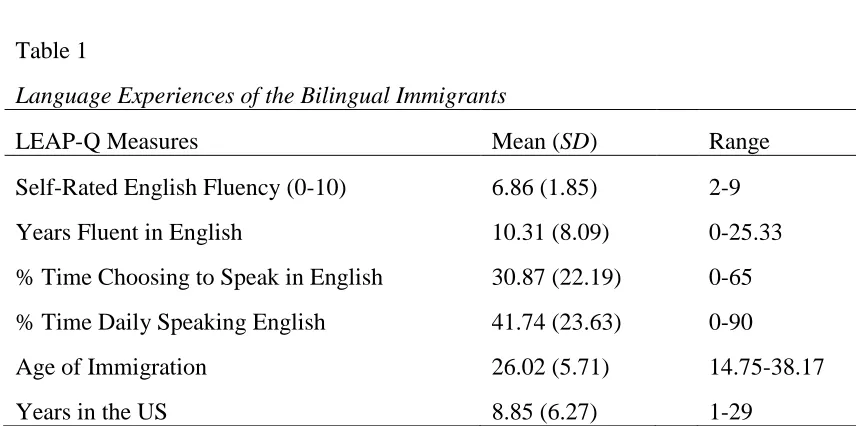
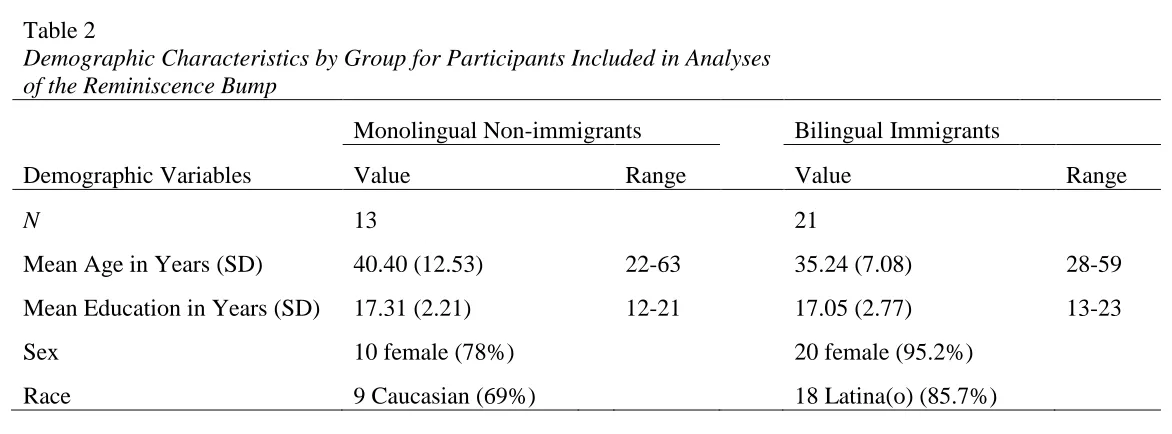
Table 1: Language Experiences of the Bilingual Immigrants ...72 Table 2: Demographic Characteristics by Group for Participants Included in Analyses of the Reminiscence Bump ...73
x LIST OF FIGURES
CHAPTER 2
Figure 1: Mean time to completion of Trail C ...22
Figure 2: Mean interference score of Trail B to Trail C ...23
CHAPTER 3
Figure 1: Stimuli for the Bivalent Shape Task ...33 Figure 2: Errors by monolingual and bilingual preschoolers on the congruent and incongruent trials in the performance of the Day/Night and Bivalent Shape Stroop ..35
CHAPTER 4
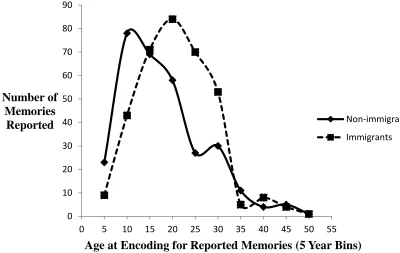
Figure 1: Number of reported memories per age bin by immigration group. ...76
Figure 2: Number of reported memories per age bin surrounding the age of
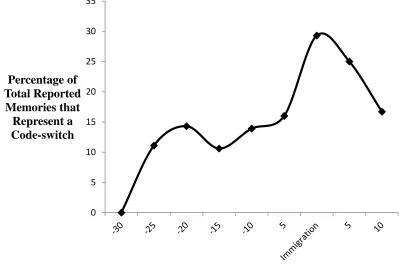
immigration for the Cross-Language Immigrant group. ...77 Figure 3: Percentage of reported memories surrounding immigration that represented a code-switch. ...78
1 CHAPTER 1: Introduction
It is estimated that over half of the people in the world use more than one language in daily life and that this figure is even higher in some areas, including India and Africa (García & Náñez, 2011; Grosjean, 2010). Despite the prevalence of bilingualism, the majority of psychological research is conducted with monolingual samples with little examination of whether the results generalize to the multilingual majority. Although bilingualism was once thought to cause schizophrenia and mental retardation, important discoveries made over the last fifty years show that second-language acquisition, in contrast to the early assumptions, has positive effects on development and only limited drawbacks (Adescope et al., 2010; Grosjean, 2010; Peal & Lambert, 1962).
The differences between monolingual and multilingual development are found in both linguistic and non-linguistic domains of performance. A linguistic disadvantage is often found when comparing the vocabulary of bilingual versus monolingual children in an individual language rather than considering total vocabulary across known languages (e. g., Bialystok & Craik, 2010; Bialystok & Feng, 2011). In addition, rapid access to vocabulary may be more difficult for bilingual individuals (Gollan & Kroll, 2001; Gollan & Silverberg, 2001). These linguistic disadvantages are thought to be the result of managing multiple languages (Hilchey & Klein, 2011). However, managing multiple languages also tenders benefits. In addition to the extensive social and practical advantages conveyed with
multilingual fluency, managing multiple languages is also thought to convey cognitive gains. These include linguistic benefits robustly found in metalinguistic and metacognitive
2 advantage” refers to superior performance in non-linguistic tasks of executive processes for bilingual in comparison to monolingual speakers. Although some investigators report this effect as robust (see Adesope et al., 2010, and Hilchey & Klein, 2011, for reviews with children and adults respectively), others question its existence and disregard the findings as an artifact of socio-economic status differences between groups (Morton & Harper, 2007; Paap & Greenberg, 2013).
My long-term goals are to understand the tasks and contexts in which bilingual and multilingual individuals, in comparison to monolingual speakers, function differently; to identify the mechanisms underlying group differences in performance; and to utilize the advantages of multilingual performance to promote school success. Academic success can create a developmental cascade that supports higher socio-economic status and hence both mental and physical health in adulthood (Adleret al., 1994; Anderson & Armstead, 1995; Halleröd & Gustafsson, 2011; Yu & Williams, 1999). This altered trajectory is especially
relevant for children with multiple risk factors such as low socio-economic status and
minority racial status or language background, who are at a disproportionate disadvantage for school failure (Flores, Bauchner, Feinstein, & Nguyen, 1999; García & Náñez, 2011). The research included in this dissertation represents a necessary first step toward this goal by aiding in the identification of differences in monolingual and bilingual individuals’ cognitive development and ascertaining the specific circumstances under which differences do and do not emerge.
3 combined body of work. The contribution of each of the three included manuscripts to the specific aims will then be outlined. The introduction concludes with a brief summary of how the specific aims are addressed in the included body of research. Chapters 2-4 are the full reprints of the manuscripts presented in the introduction. Chapter 5 is an integrated
discussion that begins with an assessment of how well the specific aims were addressed. It then moves to the broader implications that can be drawn from the included body of research, including how the work contributes to our understanding of development. The discussion concludes with suggestions for future directions stemming from the broad results and implications of the included work.
Specific Aims
Aim 1. The majority of the studies regarding comparisons between bilingual and monolingual performance were conducted with individuals who acquired their second language through natural immersion processes, such as exposure to multiple languages from birth or immigration to a country in which the second language becomes the primary mode of communication (e.g., Kovács & Mehler, 2009; Bialystok, Craik, & Luk, 2008; but see
Bialystok & Barac, 2012, for an exception). In addition, the research has focused on balanced and highly fluent bilinguals, those who have a similar level of competence in both known languages with a high degree of second language knowledge (e.g., Adesope et al., 2010). The portion of the population that falls into this category, however, is very small (Grosjean, 2010).
The nature of bilingualism is multifaceted and dynamic, with fluency in each
4 that attempt to categorize bilingual speakers (e. g., balanced, consecutive, crib), few bilingual speakers fit cleanly into any one category. For example, in situations in which the individual no longer needs the first language to communicate, the acquisition of the second language may be subtractive, or at the expense of the first language (Grosjean, 2010). However, the addition of a native speaker into the home may require a revitalized and subsequent fluency in the native language, such as in the case of a native speaking elderly parent moving into the home for assistance. Other bilingual speakers have a high degree of fluency in one domain only, for example, fluency in the context of the work place but not in informal social situations. There is a paucity of literature that includes the effects of varying levels of fluency and bilingual exposure on cognition.
5 these variables have been tightly controlled in the literature rather than systematically
examined (e.g., Schrauf & Rubin, 1998; Marian & Neisser, 2000).
The limitations just elucidated from previous literature point out the need for research that examines the effect of quantity and quality of second language experience on cognition. This leads directly to the first specific aim: Determine how quantity of second-language exposure and second-language fluency affect aspects of cognitive functioning.
Aim 2. In addition to the high level of second-language fluency included in previous investigations, there is an issue of homogenous sociocultural backgrounds. In the majority of investigations, the bilingual samples have not only been highly fluent, but also middle to upper middle class, with children growing up with parents who have obtained college and often advanced degrees. The majority of the research pertaining to the performance advantage of bilingual in comparison to monolingual speakers in executive function has come out of one laboratory, that of Dr. Ellen Bialystok at York University (Adesope et al., 2010). The monolingual and bilingual groups in her investigations in Canada have been comparably advantaged and at low risk for school failure. At the onset of this research, it was not known whether children with risk factors respond to second-language exposure in the same way as their more advantaged peers do.
This question, of course, is integral to my interest in the possibility that dual-language education can serve as an intervention strategy by enhancing executive function among children at cumulative risk for academic difficulty. Effects observed among advantaged children may not generalize to students who experience inadequate supports for
6 fewer resources, such as food and an appropriate sleep environment (e.g., Bradley &
Corwyn, 2002; El-Sheikh et al., 2012). The lack of resources may restrict their ability to capitalize on the benefits of second language exposure. A hungry, tired child is less likely to learn. Thus, the second aim of the investigation: Determine whether low-income minority children exposed to a second-language through dual-language education show benefits in executive function.
Aim 3. Another possible reason to question the generalizability of previous findings is that the bilingual advantage for executive processes is sometimes elusive. A body of research establishes a bilingual advantage across different combinations of languages (e.g., Barac & Bialystok, 2012; Bialystok & Visawanathan, 2009), cultures (e.g., Bialystok & Visawanathan, 2009; Costa, Hernández, Costa-Faidella, & Sebastián-Gallés, 2009), and age groups (e.g., Bialystok, Craik, Klein, & Visanwanathan, 2004; Bialystok, Craik, & Ryan, 2006). Nonetheless, null results are also reported and the existence of the bilingual
advantage is a subject of on-going debate (e.g., Crane et al., 2010; Morton & Harper, 2007; Paap & Greenberg, 2013). Although second language fluency could certainly influence results, it cannot always explain the null findings. The most likely explanations for the inconsistent results are the specifics of the tasks employed.
7 are not pure; consequently, it is difficult to determine exactly what such tasks are measuring. If the bilingual advantage is specific to one area of executive function or, as some purport, one subcomponent of a component of executive functioning, the specific details of the task and how it is administered become pertinent to whether the advantage materializes. It is imperative, then, to discern what task components differentiate monolingual and bilingual performance under what circumstances rather than dismissing the phenomenon completely when null results are reported. Determining the tasks that expose the advantage would also aid in evaluating whether second-language instruction would benefit areas that support academic performance and can thus be used as an intervention for children at risk for academic failure. Therefore, the third aim of this inquiry is: Investigate the specific task conditions required to elucidate a difference in performance between monolingual and bilingual speakers.
Aim 4. Although my long-term goal is to implement dual-language education as an educational intervention, there may be disadvantages to such an educational model because access to stored information may depend on the language of both encoding and retrieval. For instance, if science is taught through Spanish but assessed through English, are dual-language students at a disadvantage? Supporting this possibility are previous studies that found
8 represented cognitively. A theory that has gained much support is that of the single
conceptual store for fluent bilingual speakers in which content can be accessed equally easily through either language (de Groot, 1992; Kroll, van Hell, Tokowicz, & Green, 2010).
Understanding the circumstances under which encoding and retrieval are affected by language is important beyond autobiographical memory and is especially applicable in the dual-language classroom where content is presented and tested through different languages. Children in such programs typically begin with little to no second language fluency, but acquire competence in the second language over the course of five to six years of
participation. If fluency is required for a single conceptual store to develop, children who have not yet reached that fluency threshold, expected to vary by the individual, may not be able to integrate knowledge learned across language environments or access knowledge taught in one language when being tested in the alternate language. It is important, then, to understand the relationship between encoding, retrieval, and fluency in both languages. Consequently, the final aim of this examination is: Determine if language of encoding and subsequent retrieval affect access to memory for individuals with emerging second-language competence.
Addressing the Aims
The proffered aims are addressed through three manuscripts. The manuscripts, for which I am senior author, are all based on studies conducted over the past three years with an underlying common thread of bilingualism and cognition. The following section will
introduce each manuscript and explicate its relationship to the specific aims.
9 Children: Preliminary Evidence of Benefits for Executive Function. Bilingual Research Journal, 36 (3), 295-310. doi:10.1080/15235882.2013.837848.
Esposito and Baker-Ward (2013) contributed to the achievement of Specific Aims 1, 2, and 3. The investigation addressed several questions pertaining to the conditions in which a bilingual advantage emerges for inhibitory function, an aspect of executive function. Specifically, the study examined whether a bilingual advantage would emerge for low socio-economic status children exposed to a second language through a dual-language program in which half of the subject-based instruction was provided in a second language (Aim 2). The cross-sectional design allowed for an initial examination of the number of years of
instruction that are needed for such an advantage to emerge (Aim 1). In addition, the use of two different inhibitory function tasks allowed for the exploration of the possibility that the bilingual advantage is found in tasks of interference suppression rather than response inhibition, both elements of inhibitory control (Aim 3).
10 measure found a bilingual advantage while the other did not. This discrepancy led directly to a follow-up investigation examining specific elements of the tasks.
2. Esposito, A. G., Baker-Ward, L., and Mueller, S. (2013). Interference Suppression vs. Response Inhibition: Preschoolers Demonstrate a Bilingual Advantage with a New Stroop Task. Cognitive Development 28, 354-363. doi: 10.1016/j.cogdev.2013.09.002.
Esposito, Baker-Ward, and Mueller (2013) contributed to Specific Aim 2. The study examined the discrepant findings in the literature regarding a bilingual advantage for Stroop task performance. Although a Stroop task advantage has been found in the performance of the Classic Stroop task and a Stroop variation among bilingual adults (Bialystok, Craik, & Luk, 2008; Hernández, Costa, Fuentes, Vivas, & Sebastián-Gallés, 2010), an advantage has not been found for versions adapted for use with children (Martin-Rhee & Bialystok, 2008; Siegal, Iozzi, & Surian, 2009). I examined which task elements were common to the studies that found an advantage and attempted to find an existing task for young bilingual speakers containing the identified elements (Aim 2). When no such task was available, I designed a task to meet the criteria. A manuscript [Mueller & Esposito] focusing specifically on the software design and use of the task is under invited resubmission at the Journal of Open Research Software, but is not included in the papers that form the basis of this dissertation.
11 3. Esposito, A. G., Baker-Ward, L. (under revision). Things that go Bump in our Lives:
Immigration, Language Fluency, and Access to Autobiographical Memories. Esposito and Baker-Ward (under revision), addressing Specific Aims 1, 3, and 4, examines the influence of second language acquisition on another area of cognition, autobiographical memory. This study examined two aspects of autobiographical memory: the effect of cross-language immigration on the distribution across the lifetime of recalled memories and language-dependent recall (Aim 4). Specifically, we examined the
“reminiscence bump,” defined as the over-representation of events that occurred during late childhood through early adulthood in adults’ reports of autobiographical memories (Rubin, 2000). The current study investigated the validity of the existing theories by examining whether cross-language immigration would affect the placement of this bump. The study also addressed a discrepancy in the existence of language-dependent recall. We investigated whether task procedure (Aim 3) and/or second language fluency (Aim 1) explained the discrepancies in performance from previous literature.
12 addition, language-dependent recall interacted with second language fluency and hence offered an explanation for the conflicting reports of previous studies. Participants with high second language fluency appear to access a single conceptual store and thus are not affected by the language spoken to generate memories. Individuals with low second language fluency, however, did show language-dependent recall. The results point to the importance of second language acquisition and fluency in how languages are coordinated within the cognitive system and in subsequent access to memory through languages other than that of encoding.
Summary
13 CHAPTER 2: Dual-Language Education for Low-Income Children: Preliminary
29 CHAPTER 3: Interference Suppression vs. Response Inhibition: An explanation for the
39 CHAPTER 4: Things that go Bump in our Lives: Immigration, Language Fluency, and
Access to Autobiographical Memories
This investigation examined two controversies in the autobiographical literature: how cross-language immigration affects the distribution of autobiographical memories across the lifespan and under what circumstances language-dependent recall is observed. Both
Spanish/English bilingual immigrants and English monolingual non-immigrants participated in a cue word study, with the bilingual sample taking part in a within-subject language manipulation. The expected bump in the number of memories in early life was observed for non-immigrants but not immigrants, who reported more memories for events surrounding immigration. The findings support an organized retrieval explanation for the reminiscence bump and offer an explanation for previous discrepancies. Bilinguals with high second language fluency appear to access a single conceptual store through either language while individuals with lower second language fluency were more likely to show
40 Things that go Bump in our Lives: Immigration, Language Fluency, and Access to
Autobiographical Memories
In research on autobiographical remembering, the likelihood that a participant will report any specific memory in response to a cue word depends in part on the point in the lifespan at which the remembered event occurred (Rubin, Wetzler, & Nebes, 1986). The typically observed distribution of autobiographical memories includes more memories from adolescence and early adulthood than would occur if the individual sampled from different age levels equally often (Rubin, 2000). Although the ages for which the bump is observed differ for remembered events with different characteristics (Koppel, 2013) and for memory distributions elicited with alternative techniques (Rubin, Berntsen, & Hutson, 2009; Rubin & Schulkind, 1997), the effect is generally considered to be robust. The over-representation of early life events is not only found repeatedly (Rubin, 2000) but also cross-culturally
(Conway, Wang, Hanyu, & Hague, 2005), and the phenomenon extends beyond the recall of the personal past, characterizing the identification of favorite music recordings and
judgments of sports players (Janssen, Chessa, & Murre, 2007; Janssen, Rubin, & Conway, 2012).
As discussed below, the mechanisms that underlie this reminiscence bump are not completely understood. Some proposed explanations emphasize developmental phenomena that result in the enhanced coding of events that occur at this point in the lifespan; others reflect the operation of a retrieval structure derived from the expected timing of life
41 memories and the possible origins of this distribution. At present, however, the few extant investigations report conflicting results. We examined the reminiscence bump among immigrants and non-immigrants in an attempt to reconcile these findings and to better understand the reasons for the effect. The involvement of cross-language immigrants in this investigation also allowed us to examine the relation between language and memory access. Building on previous research, we were especially interested in the role of second language fluency in language-dependent recall.
Reminiscence Bump and Immigration
Despite the universality of the reminiscence bump, there is no consensus regarding the responsible underlying mechanisms. One set of explanations emphasizes the possibility of the enhanced encoding of early life events. The events of adolescence and early adulthood may be more richly encoded than those that occur during other periods of life because they are pivotal to the formation of identity, and thus particularly distinctive (Conway, 2005). Events that transpire during the period characterized by the reminiscence bump could also be better encoded simply because they occur during a time of optimal cognitive functioning (Janssen & Murre, 2008).
42 perspective emphasizing retrieval is transition theory, which posits that autobiographical memory is organized by temporal landmarks that cause enduring changes to daily life (Brown, Hansen, Lee, Vanderveen, & Conrad, 2012). Many, but not all, of these transitions are included in the cultural life script (Brown et al., 2012). Processes that operate at
encoding would increase the availability in memory of some experiences from the early portion of the life span. Alternatively, retrieval processes would result in the greater accessibility of some events in memory. As discussed by Koppel (2013), this distinction is important, because of its implications for understanding whether accessibility or availability conveys an advantage to some material in long-term memory.
Research with cross-language immigrants provides a unique opportunity to examine the mechanisms that underlie the reminiscence bump. Cross-language immigration is a novel event that represents a major life transition, involving changes in culture and social
relationships as well as language. Further, because it is not an expected life event in most cultures it is not a component of the life script. If the bump is determined largely by the greater availability of early life events in memory, cross-language immigration after the peak period for cognitive performance and identity formation in late adolescence should not affect the location of the bump. Hence, the distribution of autobiographical memories across age should not differ between monolingual individuals who remain in their country of origin and cross-language immigrants. In contrast, if the bump reflects the operation of an
43 during the period surrounding immigration, regardless of whether the traditional bump is observed.
To date, only a limited number of investigations have capitalized on cross-language immigration in exploring explanations for the distribution of autobiographical memories, and the extant literature is characterized by conflicting results. In two separate studies, Scrauf and Rubin (1998, 2001) examined the impact of immigration on the distribution of memories in a sample of older adults who had immigrated to the U. S. from Spanish-speaking countries approximately 30 years earlier. All participants reported high functional fluency in English. Using the cue word method, Schrauf and Rubin (1998) presented 50 words from each
language to the 12 participants and found that the bump corresponded to the early (age 20-24), middle (26-30), or late (34-35) age of immigration (AoI) of the participants. They then followed up using the life story method with a sample of 10 of these individuals, again categorized as having immigrated during one of three age spans (Schrauf & Rubin, 2001). Replicating their previous results, the bump was again predicted by the timing of
immigration rather than age.
Marian and Neisser (2000) also used the cue word method in two studies, presenting 8 English and 8 Russian words to a combined sample of 44 college students who had
immigrated from Russia to the US during adolescence. In contrast to Scrauf & Rubin (1998, 2001), they found a dip in the number of memories reported for the time period surrounding immigration rather than a bump. The authors discuss the possibility that the events
44 associated with the cultural relocation. If so, further research should replicate the absence rather than presence of an immigration bump. But Marian and Neisser (2000) also point out that the pattern of results could be an artifact of their method, which restrained participants’ response to the language in which the cue word was presented.
It could also be the case that the fluency levels across the Schrauf and Rubin (1998, 2001) and Marian and Neisser (2000) investigations contributed to the results. A criterion for participation in the former investigation was residence in the US for at least 30 years, and the participants rated their competence in spoken English as very high (92.9 on a 100 point scale). Although the immigrants in the Marian and Neisser (2000) research were described as fluent in English, they had only been in the US for 6 years on average, and fluency was assumed because the participants were attending a university in which English was spoken. It may well be that the levels of fluency and personal comfort with spoken English contrasted among the participants in the different investigations. In addition, the college students varied from the participants in the Schrauf and Rubin (1998, 2001) studies in other potentially important regards, including their present ages and AoI. To determine the influence of these factors, we examined the distribution of autobiographical memories in an investigation involving a diverse sample of cross-language participants in which we used the cue word method with unrestrained language use.
Fluency and Language-dependent Recall
45 perspectives on the representation of languages is the postulation of a single conceptual store for individuals who are highly fluent in both languages (de Groot, 1992; Kroll, van Hell, Tokowicz, & Green, 2010). If sufficient fluency is not established, the second language may not initially be linked to the conceptual store and may require translation through the first language (Kroll, van Hell, Tokowicz, & Green, 2010). The mother-tongue hypothesis (Schrauf, 2000), consistent with the encoding specificity principle (Tulving & Thomson, 1973), asserts that memories are more easily recalled through the language of their encoding. This hypothesis thus conflicts with the idea of a single conceptual store, at least for highly fluent individuals.
There is mixed support for the mother-tongue hypothesis in existing literature. In a series of cue word studies, Schrauf and Rubin (1998, 2000) found evidence for this
46 In contrast, Marian and Neisser (2000), in the studies discussed above involving US college students originally from Russia, found that the language of the cue significantly affected what was remembered. Russian cues were more likely to elicit Russian memories from before the AoI, whereas English cues elicited English memories from after
immigration. In another study involving Japanese/English bilingual college students who immigrated in adolescence, the language of the cue also significantly predicted the
participant’s age at the time of the remembered event (Matsumoto & Stanny, 2006). In addition, the more skilled English speakers were more likely to think in English when given English cues than those less skilled. The results thus suggest an effect of language fluency on the pattern of language-dependent access to memory. Individuals with very low fluency may be translating cue words into their native language, and thus may not show language-dependent recall because the memories they report are in effect always cued in the first language. In contrast, speakers whose second language fluency allows them to think in the second language, but who lack the high fluency necessary for a single conceptual store, will likely exhibit language-dependent recall. Among highly fluent individuals, access to memory is possible through either language, and accordingly recall is not language-dependent.
47 access. Their sample, as previously described, contained only highly fluent bilinguals who would be expected to have developed a single conceptual store, allowing access to memories through either language. The present investigation evaluated whether the inconsistencies in the importance of the external language between studies can be explained by differences in characteristics of the participants. Although a moderating effect of fluency was predicted, we also examined the possible influences of participant age, AoI, daily exposure, years of
bilingual fluency, and length of time in the US. This Study
48 We expect that code-switches will be more prevalent for cross-over memories due to the difficulties of simultaneous translation (Christoffels, de Groot, & Kroll, 2006). The restriction of language may limit the report of these memories and offer a possible explanation for the discrepant findings regarding the distribution of memories from the period of time surrounding immigration (cf. Scrauf & Rubin, 1998, 2001; Marian & Neisser (2000).
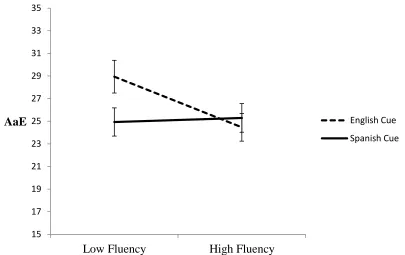
With regard to language-dependent recall, we predicted an interaction between the language of the cue and second-language fluency in a sample of adults with functional fluency. Specifically, we expected that the language of the cue word would only be related to the AaE among participants with relatively low second language fluency. The use of multi-level modeling (Raudenbush & Bryk, 2002) made it possible to test the cross-multi-level
interaction between memory-level and person-level variables. METHOD
Participants
49 including parent conferences and staff development. Group assignments, which were
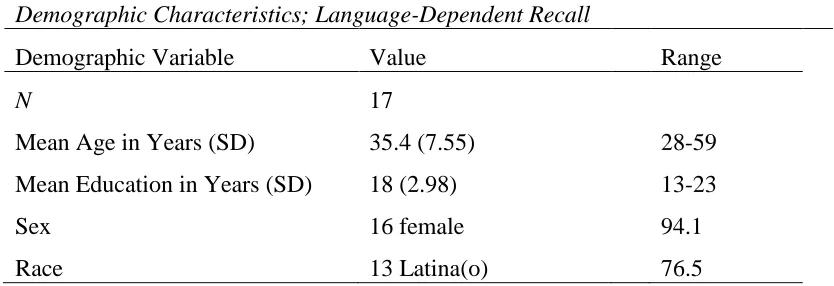
initially made on the basis of self-reports, were confirmed at the conclusion of the interview by participants’ responses to the Language Experience and Proficiency Questionnaire (LEAP-Q; Marian, Blumefeld, & Kaushanskaya, 2007). As verified by this measure, the MNI group members had no more second language exposure than a high-school education requires, whereas the BI participants had functional use of both languages. A total of 11 participants were eliminated because their language histories as elicited by the LEAP-Q did not meet the criteria for inclusion (e. g., absence of immigration; bilingual fluency at the time of immigration), resulting in a sample of 36, 23 of whom were BI. The language history characteristics of the BI group are described in Table 1; Tables 2 and 3 provide information about the backgrounds of the participants in each group. As described below, not all 36 participants contributed data to all analyses. The interpretation of the Reminiscence Bump included MNI and BI participants, but only those who had not immigrated within the most recent two years (n = 34; see Table 2). The examination of language-dependent recall
included only BI who completed the within-subject language manipulation (n = 17; see Table 3).
Materials
Autobiographical Memory Measure. A cue word recall task was chosen because it allowed for a within-subjects manipulation of two different languages for bilingual
50 selected for the present study on the basis of the research team’s subjective assessments of high frequency, equivalency of frequency, concreteness, imageability, and connotation across language contexts. Each word was then evaluated for frequency, concreteness, and
imageability using the MRC Psycholinguistic Database (Wilson, 1988). Two lists of 15 words each were then created and the comparability of the three variables was established, again using the MRC Psychololinguistic Database (Wilson, 1988). Ratings were then obtained from an independent sample of 10 Spanish/English bilingual volunteers and 30 English monolingual volunteers which confirmed that the frequency, concreteness, and imageability were equivalent across lists and languages. The order of the words remained the same for each participant; however, language was counterbalanced for those participating in the within-subject language manipulation. The dependent variable resulting from the cue word task was the estimated age at which each remembered event reported in response to each cue word took place, labeled the Age at Encoding (AaE).
51 behavioral linguistic measures. The questionnaire contains questions regarding personal history (including immigration history), past and present language exposure, and language competence across all languages spoken.
The fluency measure utilized in this study was the percentage of the time that the individual would choose to speak in English to a person who knew Spanish and English equally well, presented as “When conversing with another individual who knows both Spanish and English equally well, what percentage of the time would you choose to speak in English?”. This measure was chosen because it incorporated both frequency and fluency and avoided self-evaluation of formal language abilities that might erroneously lead to low fluency self-reports for individuals whose language was socially acquired (Grosjean, 2010). Other fluency measures, listed in Table 1, were used as exclusion criteria as described above, and for follow-up analyses to assess the specificity of our findings.
Code-switching Measure. Code-switching is the use of an alternate language than that of the speaker (i.e. responding to a Spanish question in English) or the use of more than one language within one phrase (i.e. “alguien llego a preguntarme ‘What’s up?’”). The language or languages used by the participant for each memory title were recorded. Titles that
contained more than one language or that were provided in a language other than that of the interviewer were coded as code-switches.
Procedure
52 from all groups. The interviewer first obtained written consent in the language of preference from the participants. The interviewer then told the participants that they were going to be given 30 word cues across two blocks of trials and asked to associate each word cue with a specific memory from anytime throughout their life. They were asked to report a “title” for the memory for the interviewer to write down (e. g., “My sister’s wedding”) so they would be able to identify which memory they were recalling if they came back to it later. All BI participants were given the option of taking part in the within-subjects language
manipulation; however, 6 opted out and completed the study in Spanish only. The remaining 17 BI group members completed one list in each language in counterbalanced order.
In responding to the cue word, participants were encouraged to report the first
memory that came to mind without evaluating their responses. To encourage such unfiltered memory reporting, the interviewer activated a timer as soon as she said the cue word and stopped it when the participant completed the “title” of the memory. Interviewers recorded the time, the title of the memory, and the language(s) the participant spoke in.
53 by presenting such questions as “Were there family members present?”, “Was it near a
holiday?” and “Do you remember the location?”.
In addition, all BI were asked to identify the language of thought. Participants were told “the language in which you first thought about the event may not have been the same as the language you used to tell me about the event. We are going to go through the memories you reported and I would like you to tell me which language the memory first came to you in.” These instructions made sense to all bilingual participants and they were able to respond that the memory came to them in Spanish, English, neither (such as a visual memory), or both. After completing the interview, all participants answered demographic questions and BI participants completed the LEAP-Q.
RESULTS The Bump
Prior to analysis of the Reminiscence Bump, data from individuals who had
54 dependent measure, AaE, Fs (1, 30) < 3.63, p > .07. Data were collapsed across these
variables for further analysis with the exception of participant age, which was included as a covariate due to the difference, though not significant, between groups and the variance within the total sample. Because race was strongly associated with language group, it could not be used as a covariate. All analyses of the reminiscence bump were two-tailed and run using SPSS software.
Following the example of Janssen, Rubin, and St. Jacques (2011), the number of memories reported per five year bin was tallied to create the lifespan distribution. First, because we expected the bump to appear for MNI between the ages of 5 and 20, we
combined the number of memories reported during that period into one bin and compared it to number reported for the 15 years immediately following, controlling for participant age. A paired sample t-test comparing the bins representing AaEs 5-20 versus 20-35 revealed that MNI reported significantly more memories dating from ages of 5-20 than from ages 20-35, t (11) = 3.24, p = .008, Cohen’s d = 1.95. To test whether cross-language immigration affected the bump, we ran a 2 (MNI vs. BI) between-subject by 2 (ages 5-20 vs. 20-35) within-subject analysis of variance with participant age as a covariate and Bonferroni
55 the immigration group did not show a significant difference in the number of memories reported during these time periods, F (1,31) = 1.33, p =.26 (see Figure 1).
These analyses confirmed the expected bump for MNI and indicated that immigration affected the bump; however, they could not confirm a bump for the period of immigration. To do so, following Schrauf and Rubin (2001), we tested for a bump at the period of
immigration with each participant’s memories centered around their AoI (see Figure 2). The 10-year period surrounding immigration was compared to the 10-year age bins before and after immigration in a Repeated Measures analysis of variance. Mauchly’s test indicated that the assumption of sphericity had not been violated χ2
(5) = .3.84, p = .58. There was a significant main effect of age bin on the number of memories reported, F (3, 24) = 6.62, p <.002, η2
= .45. Pairwise comparisons revealed that the periods of 20 years prior to immigration, 10 years prior to immigration, and 10 years after immigration all contained significantly fewer memories than the 10-year period surrounding immigration.
To test whether the number of code-switches that occurred during the 10 years surrounding immigration was significantly different from the number observed in reporting memories from other time periods, we compared the 10- year period surrounding the year of immigration to all the other time bins combined in a paired sample t-test. Only those BI participants (n = 14) who contributed data to all 4 time bins (20 years prior, 10 years prior, immigration, and ten years after) could be included in this analysis. The results revealed that there were significantly more code-switches during the 10-year period surrounding
56 Language-dependent Recall
Language-dependent recall was examined as the relationship between AaE and
internal language and AaE and cue word language. This portion of the data included only the BI participants who agreed to participate in the within-subject language manipulation,
meaning they received one list of cue words in English and one list in Spanish (n = 17). T-tests were conducted in SPSS to replicate previous work (e. g., Schrauf & Rubin, 1998). Multi-Level Modeling was conducted using SAS.
Participants reported that memories “first came” to them in Spanish, English, both, or no language. Across participants, 66% of the memories were thought in Spanish, 23% in English, 9% were non-linguistic, and 2% were thought in both languages. The hypotheses only addressed memories that were represented linguistically and in one language. Although descriptive in nature due to the small number of memories reported, the distribution of non-linguistic and both memories shows a peak at immigration, and thus follows the same pattern as single language linguistic memories.
57 memories thought in English (M = 32.22, SD = 1.24). These findings replicate the results of Schrauf and Rubin (1998, 2000).
MLM. In order to account for the within-person variance resulting from the nesting of memories, we employed Multi-Level Modeling (MLM) to determine whether either the language of the cue word or the internal language were related to the AaE. An additional benefit of using MLM is the vertical data structure that allows for the analysis of all
contributed data rather than only complete cases. Following guidelines for the use of MLM (e.g., Nezlek, 2001; Raudenbush & Bryk, 2002), an initial analysis was conducted to
determine if there was sufficient variability at both Level 1 (memory level) and Level 2 (person level) to warrant a multi-level analysis. The results of this null model indicated that 18% of the variance was between people (τ00 = 17.72, z = 2.35, p = .009) and 82% was within-person (σ2 = 82.88, z = 15.20, p < .001). Hence, there was sufficient variability to warrant further analysis.
In addition to testing for main effects of memory level predictors, the use of MLM enabled the testing of cross-level interactions. To determine if the relationship between AaE and language of the cue word or internal language depended on the participant’s English fluency or AoI, we included language of the cue and internal language at the level of the memory and fluency and AoI at the level of the person in one model and tested for cross-level interactions. Both fluency and AoI were grand mean centered to prevent issues of multicollinearity. The equations were:
58 β1i = ɣ10 + ɣ11(AoI) + ɣ12(Fluency) + ɣ13(AoI*Fluency) + u1i
β2i = ɣ20 + ɣ21(AoI) + ɣ22(Fluency) + ɣ23(AoI*Fluency) + u2i
Main effects of language of the cue word and internal language replicated the results of the t-tests. MLM yielded a nonsignificant result for language of the cue as a predictor of AaE, γ10 = -1.11, t = -1.14, p = .25. Internal language was a significant predictor of AaE, indicating that Spanish thought memories were earlier than English thought memories, γ20 = -5.89, t = -4.18, p < .001. In addition, we found a main effect of AoI, γ01 = .85, t = 4.48, p < .001, so that those who immigrated earlier tended to report earlier memories than those who immigrated later. Although there was not a main effect of Fluency, γ02 = 0, t = -.05, p = .96, there was a significant cross-level interaction with language of the cue word, γ12 = .12, t = 2.39, p = .02, such that participants with low fluency tended to report earlier memories for Spanish cue words than for English whereas there was no effect of language of cue for those with higher fluency (see Figure 4). There were no other significant interactions. This model explained 73% of the between-person variance and 10% of the within-person variance. Follow-up Analyses
59 hypothesis concerned second language fluency and AoI rather than participant age,
prioritizing those variables. In order to be confident in concluding that the effects reported were due to AoI and not participant age, the model was run again with participant age
included instead of AoI. In this model, there was no significant main effect of participant age, γ01 = -.39, t = -.76, p = .46, or any significant interactions with participant age.
In order to further explore the contributions of individual differences and the
specificity of our chosen variables, the model was also run with number of years of residence in the US instead of AoI. There were no significant main effects or interactions with years of residence in t US. To examine the specificity of the fluency measure, the model was run three additional times with the following alternative measures of fluency, also derived from the LEAP-Q, substituting for the original variable: years fluent in English, percentage daily English exposure, and self-rated speaking English fluency. Although internal language and AoI remained significant predictors, none of these models resulted in any additional main effects or interactions.
DISCUSSION
60 the number of immigrants’ memories from ages 20-35, during which most moved to the US, and 5-20, before many had immigrated, does not contradict the finding of an immigration bump. Some of the participants immigrated before or near age 20 and hence their
immigration bump substantially overlapped with the traditional bump. In addition, not all participants were old enough to contribute memories to the full 15-year age bin.
The results not only provide support for Schrauf and Rubin’s (1998, 2001) results but suggest an explanation for the absence of the immigration bump in Marian and Neisser’s (2000) investigation. The paucity of memories from the period surrounding immigration that Marian and Neisser (2000) reported was likely an artifact of their method. In their study, participants were required to respond in only the language in which they were addressed by the interviewer. For many individuals, the period surrounding immigration would be
characterized by a language transition, with some events encoded in English and some events encoded in Spanish. In contrast, events that took place both before and after immigration could be expected to be more likely to be encoded in the dominant language of the cultural environment. If memory reports are restricted to the language of the interviewer, participants may activate a filter at recall that would limit the accessibility of memories from life periods in which memories were not consistently encoded in the language of the interviewer. All memories would be available and translation is certainly, as we saw, very possible.
61 was salient during recall. We observed an immigration bump when language was not
restricted and therefore no filter was applied to the participants’ recall. Also supporting a period of language transition, there were a greater number of code-switches when
participants reported memories surrounding immigration than from all other time periods combined. The restricting of code-switches in the Marian and Neisser (2000) study may have inadvertently restricted the reporting of memories from this time period, acting as a filter directing the recall of memories from a life period in which the language was consistently used.
The present findings provide evidence that the immigration bump results from the operation of recall rather than encoding processes. Marian and Neisser (2000) speculated that the relative lack of memories they observed surrounding participants’ immigration reflected limited encoding of the novel events surrounding the transition. The present documentation of more extensive recall during the period of immigration, of course, contradicts this
interpretation. Moreover, our findings argue against preferential encoding as the mechanism responsible for a reminiscence bump for memories dating from early life. If that were the case, the traditionally-observed bump should have also been present for the immigrants in our sample, given that all the immigrants in this study immigrated after the peak of the traditional bump found for individuals who remained in their country of origin (age 10). It appears, however, that immigration was such a salient transition that it caused a
62 Supporting this explanation, participant age at immigration and length of time in the US did not predict the distribution of memories.
This interpretation is consistent with the role assigned to the cultural life-script in memory search. Berntsen & Rubin (2004) argue that the life-script provide a context within which to search for memories based on a general timeline of expected life events, resulting in the typical reminiscence bump in the opening decades of life among non-immigrants.
Immigration is not part of the cultural life script, but creates a salient division between two contexts and thus marks the life as before and after, trumping the cultural life-script and dominating the organization of the individual life story. In this regard, immigration is one of several highly salient life events that can dominate the life story, such as the experience of military occupation (e.g., Conway & Haque, 1999).
Other theoretical perspectives on the reminiscence bump, emphasizing encoding rather than recall processes, may also be consistent with the increase in the number of memories dating from the period of immigration. Identity theory (Conway, 2005) would predict the bump be unchanged by immigration because the formation of identity resulting in preferential encoding is a life task performed in adolescence through early adulthood. It may be the case, however, that the transition between cultures and the resulting acculturation process might provoke a re-examination of the conceptualization of the self, resulting in preferential encoding of events surrounding this transition. Memories for these redefining events may then override the identity forming events of adolescence.
63 that priming a specific age period resulted in more memories reported from that period in a subsequent free recall. Our results, however, are not consistent with this possibility. If linguistic priming had occurred, a bimodal distribution would most likely have been
observed, with Spanish-cued memories peaking earlier and English cued memories peaking later. This was not the case. Further, the results of the language-dependent recall analysis do not support that the immigration bump reflects priming through the language in which the cue was presented.
The main effect of internal language on AaE replicated Schrauf and Rubin’s (1998, 2001) findings, and the additional discovery of an interaction with fluency may explain why other studies (Marian & Neisser, 2000; Matsumoto & Stanny, 2006) reported discrepant results. Language may only be connected to recall for those bilinguals whose second language fluency is not yet functionally activating a single conceptual store. Providing support for this possibility, Morrison and Conway (2010) found that adults recalling early memories associated with cue words showed a systematic lag between the age that the word was acquired and the age of the earliest memory associated with that word. They interpreted this lag as the amount of time it takes for conceptual knowledge to form. A similar
interpretation may apply to the finding that second-language fluency moderates the relation between the language in which the cue word is presented and the AaE of the reported
64 This finding is somewhat at odds with that of Matsumoto and Stanny (2006).
Although they speculated that fluency affected language-dependent recall, they proposed a positive correlation between fluency and reliance on language-dependent recall. The results of the present investigation, in conjunction with Matsumoto and Stanny (2006), support a curvilinear relationship between fluency and language-dependent recall. Those whose fluency requires internal translation to access memories would not likely show language-dependent recall because they are, in essence, receiving all of their cues in the first language. Individuals who are capable of accessing memories without translating will show language-dependent recall only until their fluency reaches the point of a single conceptual store. This pattern would explain why Matsumoto and Stanny (2006) found an increased dependency on language-dependent recall for participants who were more likely to think in English; their sample may have represented the lower to mid-point of the curve. The participants in the current investigation, although varying in fluency levels, were all functionally fluent
professionals and may have represented the mid- to latter-end of the curve. The participants in the Schrauf and Rubin studies, all highly fluent after three decades in the US, likely represented the far end of the curve.
65 scope of this study, the results support that both fluency and frequency be included. This interpretation is supported by recent research showing bilingualism is made up of at least two factors, fluency and frequency (Luk & Bialystok, 2013). Future research may also reveal a factor relating to level of comfort with the language.
This investigation, like most research involving significant life transitions, involved a number of limitations. The follow-up analyses, however, eliminated two possible confounds, age at immigration and length of time in the US. The study was limited by a predominantly female sample, as might be expected when recruiting through United States elementary schools. In addition, the necessary range in English fluency reduced the sample size for some analyses because not all participants were comfortable completing the within-subject language manipulation. This reduction limited the number of variables that could be included at the participant level of the analyses, although the elimination of participant age does not appear to have affected the results. An older sample with immigrants who had only immigrated past the age of the traditional bump might have been advantageous in examining the bump, but the study was designed to have a wide age range to help understand discrepant results between previous studies with college age and older adults with earlier and later AoIs. The results replicated those with older adults (Schrauf & Rubin, 1998, 2001), despite a
67 REFERENCES
Berntsen, D., & Rubin, D. C. (2004). Cultural life scripts structure recall from autobiographical memory. Memory & Cognition, 32(3), 427-442. Doi:10.3758/BF03195836
Brown, N. R., Hansen, T. G. B., Lee, P. J., Vanderveen, S. A., & Conrad, F. G. (2012). Historically defined autobiographical periods: Their origins and implications. Understanding autobiographical memories: Theories and approaches, 160-180. Christoffels, I. K., de Groot, A., & Kroll, J. F. (2006). Memory and language skills in
simultaneous interpreters: The role of expertise and language proficiency. Journal of Memory and Language, 54(3), 324-345. http://dx.doi.org/10.1016/j.jml.2005.12.004
Conway, M. A. (2005). Memory and the self. Journal of memory and language, 53(4), 594-628. http://dx.doi.org/10.1016/j.jml.2005.08.005
Conway, M. A., & Haque, S. (1999). Overshadowing the reminiscence bump: Memories of a struggle for independence. Journal of Adult Development, 6(1), 35-44. doi:
10.1023/A:1021672208155
Conway, M. A., Wang, Q., Hanyu, K., & Haque, S. (2005). A Cross-Cultural Investigation of Autobiographical Memory On the Universality and Cultural Variation of the
Reminiscence Bump. Journal of Cross-Cultural Psychology, 36(6), 739-749. doi: 10.1177/0022022105280512
68 Janssen, S. M., Chessa, A. G., & Murre, J. M. (2007). Temporal distribution of favourite
books, movies, and records: Differential encoding and re-sampling. Memory, 15(7), 755-767. DOI: 10.1080/09658210701539646
Janssen, S. M., & Murre, J. M. (2008). Reminiscence bump in autobiographical memory: Unexplained by novelty, emotionality, valence, or importance of personal events. The Quarterly Journal of Experimental Psychology, 61(12), 1847-1860. DOI:
10.1080/17470210701774242
Janssen, S. M., Rubin, D. C., & Conway, M. A. (2012). The reminiscence bump in the temporal distribution of the best football players of all time: Pelé, Cruijff or Maradona?. The Quarterly Journal of Experimental Psychology, 65(1), 165-178. DOI: 10.1080/17470218.2011.606372
Janssen, S. M., Rubin, D. C., & Jacques, P. L. S. (2011). The temporal distribution of
autobiographical memory: changes in reliving and vividness over the life span do not explain the reminiscence bump. Memory & cognition, 39(1), 1-11. Doi:
10.3758/s13421-010-0003-x
Koppel, J. (2013). The Reminiscence Bump for Public Events: A Review of Its Prevalence and Taxonomy of Alternative Age Distributions. Applied Cognitive Psychology, 27(1), 12-32. DOI: 10.1002/acp.2865
69 Kroll, J. F., Van Hell, J. G., Tokowicz, N., & Green, D. W. (2010). The Revised Hierarchical
Model: A critical review and assessment. Bilingualism: Language and Cognition, 13(03), 373-381.
Larsen, S. F., Schrauf, R. W., Fromholt, P., & Rubin, D. C. (2002). Inner speech and bilingual autobiographical memory: A Polish-Danish cross-cultural study. Memory, 10(1), 45-54. DOI: 10.1080/09658210143000218
Luk, G., & Bialystok, E. (2013). Bilingualism is not a categorical variable: Interaction between language proficiency and usage. Journal of Cognitive Psychology, (ahead-of-print), 1-17. DOI: 10.1080/20445911.2013.795574
Mace, J. H., & Clevinger, A. M. (2013). Priming voluntary autobiographical memories: Implications for the organisation of autobiographical memory and voluntary recall processes. Memory, 21(4), 524-536. DOI: 10.1080/09658211.2012.744422
Marian, V., Blumenfeld, H. K., & Kaushanskaya, M. (2007). The Language Experience and Proficiency Questionnaire (LEAP-Q): Assessing language profiles in bilinguals and multilinguals. Journal of Speech, Language and Hearing Research, 50(4), 940. Marian, V., & Neisser, U. (2000). Language-dependent recall of autobiographical memories.
Journal of Experimental Psychology: General, 129(3), 361. doi: 10.1037/0096-3445.129.3.361