REDUCING PACKET LOSS IN FAST HANDOVER FOR MOBILE IPv6 (FMIPv6) BY USING ADAPTIVE PACKET BUFFERING TUNING ALGORITHM
ANESA MAOLOD OMAL AL-NAJEH
A dissertation submitted in partial fulfillment of the requirements for the award of the degree of
Master of Science (Computer Science)
Faculty of Computer Science and Information Systems Universiti Teknologi Malaysia
iii
I dedicate this thesis to the following special people:
My Beloved Husband;
To my heartthrob and exquisite hubby Al-Mukhtar; your love and inspiration mould me
My Beloved Daughter;
To my pretty one Simar; our bundle of joy.
My Beloved Parents;
To my parents: my beloved mother Amina, to my late father Maolod, and to my beloved grandmother Reem; who have molded me into who I am; without their patience, understanding, support, and most of all love, the completion of this work would not have
been possible and for their invaluable sacrifice.
Sisters;
Amel, Warda (Rose), Amany (Manny), Dekra, Entesar, Salwa, and Reem
Brothers;
Osama (his wife Hanan), Aimen (his wife Hala), Mohammed, and Ahmed
And to all my aunts and uncles and the rest of my relatives.
May the Mercy and Blessings of Allah shower upon all of you Amiin.
iv
ACKNOWLEDGMENT
“ALL THANKS DUE TO ALLAH THE LORD OF THE WORLDS”
First and foremost, I am grateful to ALLAH on his blessing in completing this thesis.
Second, I wish to express my sincere appreciation to my research supervisor Assoc. Prof. Dr. Kamalrulnizam Abu Bakar for encouragement, precious, and critics. Without his continued support and interest, this thesis would not have been the same as presented here. And for this vision, guidance and support throughout the duration that I undertook to complete this thesis successfully. Again my appreciation goes to Mr. Ali Safa Sadiq (Phd) and Muhammed Arif Amin (Phd) for their relentless efforts and contributions during my research work.
Third, my appreciation goes to my husband Al-Mukhtar Ali who stood by my side all that long. I found an ear to listen and a shoulder to lean on. Words cannot express how much I am thankful for him. Next my sincere appreciation goes to my daughter, Simar, whom I feel that she was deprived of kindness and care throughout the writing of thesis.
v
ABSTRACT
vi
ABSTRAK
vii
TABLE OF CONTENTS
CHAPTER TITLE PAGE
DECLARATION ii
DEDICATION iii
ACKNOWLEDGEMENT iv
ABSTRACT v
ABSTRAK vi
TABLE OF CONTENTS vii
LIST OF TABLES x
LIST OF FIGURES xi
LIST OF ABBREVIATIONS xiii
1 INTRODUCTION 1
1.1 Overview 1
1.2 Motivations 3
1.3 Problem Background 4
1.4 Problem Statement 8
1.5 Research Questions 9
1.6 Research Aim 9
1.7 Research Objectives 9
1.8 Scope of the Study 10
1.9 Research Contribution 10
1.10 Significance of the Study 11
viii
2 LITERATURE REVIEW 13
2.1 Introduction 13
2.2 Mobility 15
2.2.1 Micro Mobility (Same Domain) 15
2.2.2 Macro Mobility (Intra-Domain Mobility) 15 2.2.3 Global Mobility (Inter-Domain Mobility) 16
2.3 Handover Procedure 16
2.4 Internet Protocol (IP) or IPv4 17
2.5 Mobile IP (MIP) 18
2.6 Mobile IPv4 (MIPv4) 18
2.7 Internet Protocol version 6 (IPv6) 19
2.8 Mobile IPv6 20
2.9 Mobile IPv6 Enhancements 23
2.9.1 Hierarchical Mobile IPv6 (HMIPv6) for Intra-Domain and
Inter-Domain 24
2.9.2Fast Handover for Mobile IPv6 (FMIPv6) 26
2.9.2.1 Predictive Fast Handover 28
2.9.2.2 Reactive Fast Handover 29
2.10 The Problems in FMIPv6 29
2.11 Proposed Methods for Reducing Packet Loss in FMIPv6 31
2.12 Quality of Service (QoS) 38
2.12.1 Throughput 38
2.12.2 Packet Loss 39
2.12.3 Delay 39
2.13 Buffering 40
2.14 Adaptive Packet Buffering Tuning Technique Based on Priority and Traffic Throughput 41
2.15 Summary 41
3 RESEARCH METHODOLOGY 43
3.1 Introduction 43
3.2 Framework of the Research 44
3.3 Stages of the Work 44
ix
3.3.3 The Third Stage Prototype Development 45 3.3.4 The Fourth Stage Performance Evaluation of the Proposed
Method 46
3.3.4.1 Research Simulation 47 3.3.4.2 Performance Metrics 49 3.3.5 The Fifth Stage Results Discussion and Analysis 51 3.3.6 The Sixth Stage Thesis Writing 51 3.4 Summary 52 4 PROTOTYPE SIMULATION DESIGN 53
4.1 Introduction 53 4.2 Research Design and Development 4.2.1 Proposed APT Algorithm 53 55 4.2.2 Packet Loss Occurrence Possibility 62 4.3 Summary 64 5 EXPERIMEN AND RESULTS 65 5.1 Introduction 65 5.2 Experiments Results and Discussion 65 5.2.1 Traffic Packet Loss 66 5.2.1.1 Traffic Packet Loss with 10 MNs 66 5.2.1.2 Traffic Packet Loss with 50 MNs 68 5.2.1.3 Traffic Packet Loss with 100 MNs 69 5.2.2 Average Throughput in AP 70 5.2.3 Delay Time in Real-Time Traffic 72 5.2.4 The Average Traffic Received 74 5.3 Summary 75
6 CONCLUSION AND FUTURE WORK 76
6.1 Introduction 76
6.2 Research summary 76
6.3 Future work 78
6.4 Conclusion 78
x
LIST OF TABLES
TABLE NO. TITLE PAGE
2.1 Comparison between Proposed Buffer Algorithms 37
3.1 Simulation Parameters and Values 49
xi
LIST OF FIGURES
FIGURE NO. TITLE PAGE
1.1 Buffering on PAR and NAR in FMIPv6 scenario 6
2.1 A flowchart of the literature review 14
2.2 Handover Procedure 17
2.3 The IPv6 Header. 20
2.4 Overview of Mobile IPv6 23
2.5 Overview of HMIPv6 24
2.6 Inter-Domain Mobility in HMIPv6 26
2.7 Intra-Domain Mobility in HMIPv6 26
2.8 Predictive handover 28
2.9 Reactive handover 29
3.1 Framework of the research 44
3.2 The network model used for simulation 48
4.1 The Structure of an AP with APT approach packet buffering 56 4.2 A flowchart of the proposed algorithm (APT) in this research 58 4.3 A new and novel flowchart of packet buffering algorithm (APT) 59 5.1 Traffic Packet Loss with 10 MNs during the simulation time for
700sec in ALTAlgorithm and APT algorithm 67 5.2 Traffic Packet Loss with 50 MNs during the simulation time for
700sec in ALTAlgorithm and APT algorithm 69 5.3 Traffic Packet Loss with 100 MNs during the simulation time for
700sec in ALTAlgorithm and APT algorithm 70 5.4 Average Throughput in AP during the simulation time for 700sec
xii
5.5 Delay Time in Real-Time Traffic during the simulation time for 700sec in ALTAlgorithm and APT algorithm 73 5.6 The Average Traffic Receivedduring the simulation time for
xiii
LIST OF ABBREVIATIONS
3G 3rd Generation Mobile Telecommunications
AF Assured Forwarding
ALT Adaptive Buffer Limit Tuning Algorithm
AP Access Point
APT Adaptive Packet Buffering Tuning Algorithm Based on Priority and Traffic Throughput
AR Access Router
B Buffer
BA Binding Acknowledgment
bps bits per second
BR Binding Request
BU Binding Update
CBR Constant Bit Rate
cCoA current Care-of Address
CN Correspondent Node
CoA Care-of Address
CDMA Code Division Multiple Access
CISCO Computer Information System Company
DAD Duplicate Address Detection
DF Default Forwarding
DiffServ Differentiated Services
EF Expedited Forwarding
FA Foreign Agent
F-Back Fast handover Acknowledgment FBU Fast Finding Update
xiv
FMIPv6 Fast Handovers Mobile IPv6
GSM Global System for Mobile Communications
HA Home Agent
HMIPv6 Hierarchical Mobile IPv6
HoA Home of Address
IEEE Institute for Electrical and Electronic Engineers IETF Internet Engineering Task Force
IP Internet Protocol
IPv4 Internet Protocol version 4 IPv6 Internet Protocol version 6
L2 Layer 2 (Link Layer)
L3 Layer 3 (Network Layer) LBU Local Binding Update LCoA Local Care-of-Address LT-Buffer Link-Triggered Buffer
m meter
MAP Mobility Anchor Point Mbps Mega bits per second MIP Mobile Internet Protocol
MIPv4 Mobile Internet Protocol version 4 MIPv6 Mobile Internet Protocol version 6
MN Mobile Node
ms millisecond
nAP new Access Point
NAP New Access Point
NAR New Access Route
newAR new Access Router nCoA new Care-of-Address NS-2 Network Simulator oldAR old Access Router oCoA old Care-of-Address
xv
P Packet
PAP Previous Access Point PAR Previous Access Router
PHB Per-Hope-Behavior
q queue
QoS Quality of Service
RCoA Regional Care-of-Address RSVP Resource Reservation Protocol
s second
Sec Second
S-Mobile IP Standard Mobile IP
t Time
TB Tunnel Buffering
TCP Transmission Control Protocol UMTS
VBR Variable Bit Rate
Universal Mobile Telecommunications System
VoIP Voice over Internet Protocol WFQ Weighted Fair Queueing WiFi Wireless Fidelity
CHAPTER 1
INTRODUCTION
1.1 Overview
Today, the world has become more and more mobile and the nodes are wirelessly connected with each other. This emerging technology allow us to operate freely without any wire attached and can be done across between nodes and access points in the same communication range. Wireless technology such as Wi-Fi, WiMAX, 3G and many more are being used for fast communication such as email or video conferencing, while technology such as GSM, UMTS and CDMA are used to perform real-time communication services, for example, voice calls or video calls. However, both of the technologies have limitations in terms of bandwidth capacity and range of coverage.
2
Mobile computing provides mobile users flexible means of communication anytime anywhere. However, it includes the requirement that ongoing session should not break when the user is moving from one point of attachment to other. Internet Protocol (IP) was originally designed for the fixed networks. IP addresses were associated with fixed network computers and were required to be unchanged for the current session, but if the user moves to a different network, the computer is rebooted to gain network connectivity by obtaining a new IP address. Therefore, it is to satisfy the requirements of the mobile users.
The Internet Engineering Task Force (IETF) was formed to create a protocol for providing and managing the connectivity of hosts, while they are moving between networks. This protocol is called Mobile IP. The first version of Mobile IP protocols was Mobile IPv4 (Perkins, 2007). The main aim of the mobile IPv4 is to provide the connection for Mobile Node (MN) when it exists in a foreign domain, using two addresses, Home Address (HoA) and Care-of Address (CoA). The MIPv4 also was designed to handle mobility to IPv4 users which were mainly fixed nodes users, but due to the address space restriction in IPv4 the IETF was designed to work on a new upgraded mobile protocol version of IP called IPv6 (Wang, Hsu, and Lai, 2004).
Mobile IPv6 allows nodes to remain reachable while moving towards the network. The Mobile IPv6 (MIPv6) has some features that make it more efficient than Mobile IPv4 from many aspects. It sustains real time traffic connecting the Mobile Node (MN) and Correspondent Node (CN) (Zaki, 2008). MIPv6 offers transparent host mobility included in IPv6 address (Zhao and Nie, 2009, Wu and Nie, 2009). The protocol guarantees the free movement of the Mobile Nodes among networks without changing its IPv6 address.
3
delay, packet loss, and signalization overload (Zaki, 2008). Hierarchical Mobile IPv6 (HMIPv6) and Fast Handover for MIPv6 (FMIPv6), both are MIPv6’s enhancements. The primary cause of packet loss resulting in performance degradation of standard Mobile IPv6 (MIPv6) is the handover latency (Alnas, et al, 2010). Therefore, when there is a handover for Mobile Node (MN), it would cause packet loss. It will be a big problem through sessions of real-time between the Mobile Node (MN) and the Correspondent Node (CN). The focus of this research will be to reduce packet loss in Fast Handover for Mobile IPv6.
1.2 Motivations
During the last two decades, there has been remarkable development in the wireless communications. For example, the GSM (Global System for Mobile Communications), which was developed during the 1990’s, is now the most successful digital mobile telecommunications system (Shah and Chatterjee, 2004).
The main aim is to allow mobile nodes to keep communication with other hosts while roaming between different networks. Roaming occurs when a node moves from one access network to another; it constitutes physically moving from one network to another. Standard protocols like IPv4 and IPv6 will result in disconnection of ongoing communication. Mobile IP allows host to perceive minimum disruption during movement and then continue communication.
4
temporary IP address assigned by the visiting network until nodes stays in the foreign network. A special mechanism of mapping between these two IP addresses is used to send packets to the host’s CoA to allow communication between previous peers and new peers. To communicate between two networks, devices such as routers are used and must be configured with special parameters to handle mobility functions. The router used at home network is called as “Home Agent” (HA) and the router at foreign network is called as “Foreign Agent” (FA). Either any node fixed or mobile communicating with this node is called as “Correspondent Node” (CN). Whenever the MN moves from its current domain to a new domain, it performs a procedure called handover. This procedure produces latency that affects the overall performance and causing packet loss and signaling overhead.
1.3. Problem Background
Many researchers worked on similar ideas before, some of them designed real solutions while others only attempted some, and many ways were used to solve the problem. This research will mention some of them briefly.
5
The author in (Koodli, 2002, and Koodli, 2009) assumed that a New Access Router (NAR) may receive packets forwarded by the Previous Access Router (PAR) of an MN even before the MN attaches itself to the NAR. However, unless the NAR buffers the packets, loss of packets may occur. The same condition applies when a Fast Binding Update (FBU) is sent after the MN is attached to the NAR, where unless they are buffered, the packets sent to the PAR will be lost. Hence, an option is provided in the Handover Initiate message to indicate a request for packets to be buffered in the NAR. Should the PAR requests for the feature, buffering support needs to be provided by the PAR itself. However, there is a problem in the generation of a triangle routing between the previous and the new access routers as well as the Correspondent Nodes (CN).
6
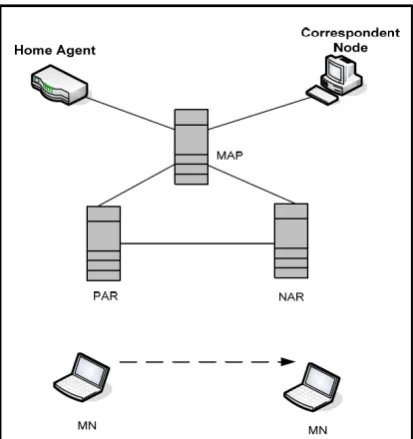
Figure 1.1 Buffering on PAR and NAR in FMIPv6 scenario (Zaki, 2008)
7
The buffer size can be adjusted with respect to the sending rate, i.e. size increase as sending rate increases. The new link connection on the available network interface is always established the moment MN senses a new available network. It is quite clear that FMIPv6 approach functions more efficiently with respect to the handover latency and packet loss. Both handover latency and packet loss prevention are reduced under this approach utilization. The algorithm can also be tested for different mobility models in IPv6 network with neighbor data accessed. In addition, the performance can be evaluated when running fast handover for MIPv6 on Wimax networks.
Recently, to alleviate the problem of packet loss, packet buffering has been implemented in the access point since it manages fewer mobile nodes than access router (Lee, et al., 2008, Lee, et al., 2009, and Hur, et al., 2007). Note that the buffer space is limited in a router or access point. Therefore, the arriving packets will be lost after the buffer is full. This means that packets may be dropped regardless of the service characteristics during packet buffering for handover. For real time service such as IP telephony, for example, packet loss is often unacceptable. To satisfy the requirements of respective service, thus, the packets have to be buffered differently according to the service characteristics during handover.
8
Packet losses are closely related to the handover latency and buffer size used for packet buffering. In the case of increased handover latency or decreased buffer size, packet losses will be increased.
1.4 Problem Statement
This research mainly focused on packet loss issues during handover process in mobile wireless networks. In general, Loss of packets in mobile networks as well as wireless networks may be caused by network congestion, handover or bit errors in any wireless channel which are error-prone. However, the major reason of packet loss is handover where a broken link to the original access point while the packets are still routed to the access point as the packets might be dropped by that access point (Zaki, 2008).
While a Mobile Node (MN) is moving from one subnet to a new subnet, packets sent by a Correspondent Node (CN) cannot be received until the MN obtains its new address. This problem causes a huge setback in real time traffic
9
1.5 Research Questions
According to the explained issues in the previous sections, research questions that will be addressed in this research are as follows:
1. How to adjust the adaptive packet buffering tuning algorithm that deal with reducing packet loss in FMIPv6?
2. How to develop the adaptive packet buffering tuning algorithm based on priority and traffic throughput to reduce packet loss during handover process in FMIPv6?
3. How to evaluate the performance and efficiency of the proposed solution adaptive packet buffering tuning algorithm in order to reduce packet loss in the Fast Mobile IPv6 by way of comparison?
1.6 Research Aim
This research aim is to reduce packet loss in FMIPv6 by utilizing adaptive packet buffering tuning algorithm based on priority and traffic throughput when the Mobile Node (MN) move from one network to the another new network.
1.7 Research Objectives
The precise goals of this research are as follows:
10
2. To develop the adaptive packet buffering tuning algorithm based on priority and traffic throughput to reduce packet loss during handover process in FMIPv6.
3. To evaluate the efficiency of the proposed algorithm adaptive packet buffering tuning algorithm in order to reduce packet loss in FMIPv6 by way of comparison.
1.8 Scope of the Study
This research focuses on reducing packet loss in Fast Mobile IPv6. In order to achieve the research objectives, the scope of this research covers following points.
1. This study will focus on implementation of the proposed algorithm in the FMIPv6 environment.
2. This study will focus on reducing packet loss in FMIPv6 by using adaptive packet buffering tuning algorithm based on priority and traffic throughput.
3. This research will use network simulation OMNET++ in order to evaluate the proposed algorithm adaptive packet buffering tuning algorithm.
1.9 Research Contribution
The following are the planned key contributions of this research:
11
2. Modifying the proposed algorithm in order to reduce the packet loss in the Fast Mobile IPv6 by buffering the packets better than dropping them.
3. Evaluating the performance and efficiency of the proposed solution adaptive packet buffering tuning algorithm in order to reduce packet loss in FMIPv6. By using the metrics such as packet loss, delay, throughput, and traffic received.
1.10 Significance of the Study
In this, research a mobility model was based on a Fast Handover for Mobile IPv6. Furthermore, proposing the algorithm called adaptive packet buffering tuning algorithm based on priority and traffic throughput, communication in FMIPv6 will be made to provide reliability in FMIPv6 through reducing the number of packet loss in the communication between a Mobile Node (MN) and the Correspondent Node (CN).
1.11 Research Organization
This research consists of five chapters starting by chapter 1 and ending by chapter 6 as follows:
• Chapter 1: It presents the introduction to the study, problem background, motivation, aim, objective, scope, contribution, and significance of the study.
12
also be defined and discussed. In the end a discussion of proposed solution is presented.
• Chapter 3: It provides research methodology flow used in this research. This has been done by provide the general framework of the research represented via stages.
• Chapter 4: It presents discussion in details about the design of APT proposed algorithm used in this study that explains in-depths on how the packet loss in FMIPv6 will be reduced and implemented; and the simulation setup. Moreover, a brief overview about the OMNET++ simulation and its mean features. It discusses on the methodology and research design this chapter also provides details on the simulation process. Also, it discussed the performance metrics.
• Chapter 5: It presents the experimental results and implements have been presented and discussed in order to evaluate the proposed APT algorithm in this research. Also, compared the APT algorithm with ALT algorithm by using performance metrics.
80
REFERENCES
Alnas, M., Awan, I., and Holton, R.D.W.;. (2010). Performance Evaluation of Fast
Handover in Mobile IPv6 Based on Link-Layer Information. The Journal of
Systems and Software. , 1-7.
Bentham, J. (2002). TCP/IP LEAN Web Servers for Embedded Systems 2nd edition.
CMP Books.
Byungjoo Park, Y.-H. H. (Sep 2006). EAP: New Fast Handover Scheme based
on Enhanced Access. IJCSNS International Journal of Computer Science and
Network Security , VOL.6 No.9B, , 70.
Chen-Hua Shih and Yaw-Chung Chen. (August 2010). A FMIPv6 Based Handover
Scheme for Real-Time Applications in Mobile WiMAX. Journal of Networks,
VOL. 5, NO. 8.
Ganz, A. G. (2004). Multimedia Wireless Networks technologies, standards, and
QoS”1st edition. Prentice Hall.
Gross, D., et al.,. (2008). Fundamentals of Queueing Theory, Fourth Edition. Wiley.
Hersent, O. G. (2000). IP Telephony Packer-based multimedia communications
systems”, 1st edition. Addison-Wesley.
Hossain, A. and Kanchanasut, K. (October 2005). A Handover Management Scheme
for Mobile IPv6 Networks. In Proceedings the 14th IEEE Computer
Communications and Networks International Conference , 34-38.
Hur, K., et al.,. ( March 2007). Priority forwarding for improving the TCP
performance in mobile IP based networks with packet buffering. Computer
Communications, vol. 30, no. 6 , 1337-1349.
Johnson, D. and Perkins, C. (July 2000). Mobility Support in IPv6. Internet Draft,
81
Johnson, D., Perikins, C., and Arkko, J.,. (2003). Mobility Support in IPv6. Internet
draft, ietf .
Johnson, D., Perkins, C., and Arkko, J. (June 2004). Mobility Support in IPv6. IETF
RFC 3775.
Karagiannis, G. (1999). Mobile IP State of the Art Report. Ericsson .
Koodli, R. (2002). Fast Handovers for Mobile IPv6. Internet Draft .
Koodli, R. (July 2005). Fast Handoffs for Mobile IPv6. RFC 4068. IETF Network
Working Group.
Koodli, R. (2007). Fast Handovers for Moblie IPv6. Internetdraft .
Koodli, R. (July 2009). Mobile IPv6 Fast Handovers. IETF RFC 5568 .
Kyunghye Lee and Youngsong Mun. (2007). An Efficient Macro Mobility Scheme
Supporting Reactive Fast Handover Mode in HMIPv6. Springer-Verlag Berlin
Heidelberg, O. Gervasi and M. Gavrilova (Eds.): ICCSA 2007, LNCS 4706,
Part II , 237–246.
Lee, S., et al.,. ( May 2009). A Handoff Packet Marker for DiffServ in Mobile IP
based Networks with Packet Buffering. IEEE Trans. Consumer Electronics,
vol. 55, no. 2 , 438-446.
Lee, S., et al.,. (Aug. 2009). A Packet Forwarding Controller for Mobile IP-based
Networks with Packet Buffering. IEEE Trans. Consumer Electronics, vol. 55,
no. 3 , 1344-1350.
Li, T and Leith, D. J. (2008). Adaptive Buffer Sizing for TCP Flows In 802.11e
WLANs. IEEE Communications Letters, to appear, Irish Research Council for
Science, Engineering and Technology and Science Foundation Ireland Grant
03/IN3/I396.
Lu, H., Tie, X., and Hong, P. (July 2007). A Novel Buffer Mechanism for Fast
Handovers in Mobile IPv6. in Proc. 2007 IEEE Int. Conf. Wireless and Optical
Communications Networks.
Lundberg, J. (May 2003). An Analysis of The Fast Handovers for Mobile IPv6
Protocol. IEEE CCECE 2003. Canadian Conference on, Volume 2 , 4-7.
Malki, K., and Soliman, H. (July 2005). Simultaneous Binding for Mobile IPv6 Fast
82
McNair, J., Akyildiz, I. F., and Bender, M. D. (2001). Handoffs for Real-Time
Traffic in Mobile IP Version 6 Networks. IEEE , 3464-3467.
OMNET++. (2011, June ). Omnet++ simulator. Retrieved from OMNET++
Discrete Event Simulation System. [Online]: http://www.omnetpp.org/.
Perkins, C. (1998). Mobile Networking through Mobile IP. IEEE Internet
Computing, Vol: 2, Issue: 1 , 58-69.
Perkins, C. and Johnson, D. (September 2001). Route Optimization in Mobile IP.
Mobile IP Working Group .
Perkins, C. (March 2007). IP mobility support for IPv4. Internet Draft .
Perkins, C. (October1996a). IP mobility support for IPv4. IETF RFC 2002, Internet
Draft.
Pierre, C. M. (March 2008). An Analytical Framework for Performance
Evaluation of IPv6-Based Mobility Management Protocols,” IEEE
Transactions on Wireless Communications, VOL.7, NO.3.
Pierre, C. M. (March 2008). An Anlaytical Framework for Performance
Evaluation of IPv6-Based Mobility Management Protocols. I EEE Trans.
Wireless Communications, vol. 7, (pp. 972-983).
Prasad, Anand, R., and Neeli R. Prasad. (2005). 802.11 WLANs and IP Networking
Security, QoS, and Mobility. United States of America: Library of Congress
Cataloging-in-Publication Data.
R. Li, J. L. (January 2008). An Enhanced Fast Handover with Low Latency for
Mobile IPv6. IEEE Trans. Wireless Communications, Vol 7, No. 1, 334-342.
Ramani, I., Savage, S. (March 2005). SyncScan: practical fast handoff for 802. 11
infrastructure networks. In: Proceedings of the IEEE Infocom Conference,
Miami, FL.
Schmidt, T.C.,Wahlisch, M., Cycon, H.L., and Palkow, M. (2003). Mobility Support
in Real-time Video Communication. The society for Modeling and Simulation
International, California , 72-77.
Shah, R. and Chatterjee, M. (2004). A hierarchical architecture to Integrate GSM and
Mobile IPv6. . In Proceedings IEEE Wireless Communications and
Networking Conference, IEEE, Vol: 1 , 138-143.
83
Shin, M., Arbaugh, W. (April 2003). An empirical analysis of the IEEE 802.11 MAC
layer handoff process. . ACM Computer Communications Review 33 .
Siksik, M., Alnuweiri, H. and Zahir, S. (2005). Performance Evaluation of
Micro-Mobility Management Using Mobile IPV6. . In Proceedings International
Conference on Wireless Networks, Communications and Mobile Computing,
IEEE, Vol: 1 , 316-322.
Soliman, H., Castelluccia, C., El-Malki, K. and Bellier, L. (June 2003). Hierarchical
Mobile IPv6 mobility management (HMIPv6). IETF Mobile IP Working
Group.
Tsirtsis, G., Yegin, A., Perkins, C., Dommety, G. , EL-Malki, K., and Khalil, M.
(September 2002). Fast Handovers for Mobile IPv6. Internet Draft, work in
progress, http://tools.ietf.org/html/draft-daley-magma-mobile-00.
Wang. Y. H, Hsu. C. P, and Lai. J. Y, (2004). A Mobile IPv6 Based Seamless
Handoff Strategy for Heterogeneous Wireless Networks. Fourth International
Conference on Computer and Information Technology (CIT'04) , 600-605.
Wu, X., and Nie, G. (2009). Performance Analysis and Evaluation of Handover in
Mobile IPv6. International Symposium on Intelligent Ubiquitous Computing
and Education.
Y Mun, S. R. (2009). Performance Analysis for FMIPv6 considering Probability of
Predictive Mode Failure. International Conference on Computational
Science and Its Applications.
Yao, W-M., and Chen, Y-C. (2004). An Enhanced Buffer Mnagement Scheme for
Fast Handover Protocol. Distributed Computing Systems Workshop.
Zaki, S. M. (2008). Reducing Real-Time Traffic Packet Loss in Mobile IPv6 Using
two Tier Buffer. Faculty of Computer Science and Information Systems,
University Technology Malaysia, Master of Science (Computer Science).
Zhao, Y., and Nie, G. (2009). A Scheme for Reducing Handover and Packet Loss in
Heterogeneous Mobile IPv6 Networks. International Conference on Future
Computer and Education .
Zhao, Y., and Nie, G. (2009). Analysis and Evaluation of an Enhanced Handover
Scheme in Hierarchical Mobile IPv6 Networks. International Conference on
84
Zhong, F., Yeo, C. K., and Lee, B. S. (2010). Enabling inter-PMIPv6-domain
Handover with Traffic Distributors. Journal of Network and Computer