LEVEL OF UNDERSTANDING THE CONTRACT REQUIREMENTS OF PWD 203A (Rev.2007) STANDARD FORM OF CONTRACT AMONG THE
CONSTRUCTION PROFESSIONAL
NORAZREEN BINTI ABU BAKAR
A project report submitted in partial fulfillment of the requirements for the award of the degree of Master of Science (Construction Contract Management)
Faculty of Built Environment Universiti Teknologi Malaysia
v
ABSTRACT
ABSTRAK
vii
TABLE OF CONTENTS
CHAPTER TITTLE PAGE
DECLARATION ii
DEDICATION iii
ACKNOWLEDGEMENTS iv
ABSTRACT v
ABSTRAK vi
TABLE OF CONTENTS vii
LIST OF CASES xiv
LIST OF TABLES xv
LIST OF FIGURES xvi
APPENDIX 1 INTRODUCTION 1.1Statement of Problem 1
1.2Research Objective 5
1.3Scope of Objective 7
1.4Significant of Reseach 7
1.5 Research Method 8
1.6 Research Methodology Flow 11
1.7 Organization of Research 12
2 STANDARD FORM OF CONTRACT
2.1 Introduction 13
2.2 Relationship Among The Parties in Construction 14
2.3 The Contract 15
2.3.1 The Need for Writing Contract 17 2.3.2 Characteristics of Good Construction
Contract 18
2.3.2.1 Risk Allocation 18 2.3.2.1 Understand by Parties 18 2.3.2.1 Modern,Simple,Clear and
Consistent 19
2.3.2.1 The Project Management
Approach 19
2.3.3 Interpretation of Construction Contract 20 2.4 Common Types of Standard Form Building
Contracts in Malaysia 22
2.5 Standard Form of General 25
2.5.1 Definition of standard form 25 2.5.2 Background of Standard Form
Contract in Malaysia 26 2.5.3 Purpose of Standard Form of Contract 26 2.6 Types of Standard Form of Contract 27 2.7 Merit and demerits Standard Form of 29 Contract
2.8 Conclusion 34
3 UNDERSTANDING STANDARD FORMS OF
CONTRACT
3.1 Introduction 35
3.2 Background of Construction Industry 36
3.3 Role and Relationship 36
3.4 Construction Disputes 38
ix
3.6 Contract Requirement 40 3.7 Understanding of Contract Requirement 41 3.8 Understanding the Standard Form 42
3.9 Legalese 43
3.10 The Interpretation of Contract 44 3.10.1 The Problems with Formal written 44 Agreement
3.10.2 Problems of Interpretation 45 3.11 The Need for Clarity of Contract 46
3.12 Plain English Usage 48
3.13 Summary of Difficulties in Understanding Standard Form of Contract 50 3.14 Measures to Improve Understanding 51 3.15 Methods for Improving the Understanding
of Construction Contract 51
3.16 Conclusion 54
4 RESEARCH ANALYSIS AND DISCUSSION
4.1 Introduction 55
4.2 Comments from Structured Interview 56 4.2.1 Analysis for how Respondent found the
JKR 203 A Standard Forms of
Contract 56
4.2.2 Analysis for Major Problems influenced the difficult to understand the Standard
Form of Contract 58
4.2.3 Analysis for the Respondent’s opinion 60 4.2.4 Analysis for the opinion of respondents
about the language of contract being “Simple Plain English” 71 4.2.5 Analysis for how often the respondents
4.3 Summary of Finding 74
4.4 Conclusion 78
5 CONCLUSION AND RECOMMENDATION
5.1 Introduction 79
5.2 Research’s Overview 80
5.3 Research Constrain 81
5.4 Recommendation 81
5.5 Further Research 82
5.6 Conclusion 83
REFERENCES 84
xi
LIST OF CASES
Lord Hoffman, Investor Compensation Scheme Ltd. v. West Bromwich
Building Society [1998]1 WLR 896,M 912 (HL)……….30
Majlis Perbandaran Seremban vs Maraputra Sdn Bhd
[2004] 5 MLJ 469.……….3
Peak Construction (Liverpool) Ltd v. McKinney Foundations Ltd
[1970] 1 BLR 111………...46
Schroeder Music Publishing Co. Ltd v. Macaulay
[1974] 3 All ER 616 at 624, [1974] 1 WLR 1308 at 1316……….27
Scott v. Wawanesa Mutual Insurance Co
[1989] 1 S.C.R. 1445……….47
Sri Kajang Rock Products Sdn Bhd v Mayban Finance Bhd
LIST OF TABLES
TABLE NO TITLE PAGE
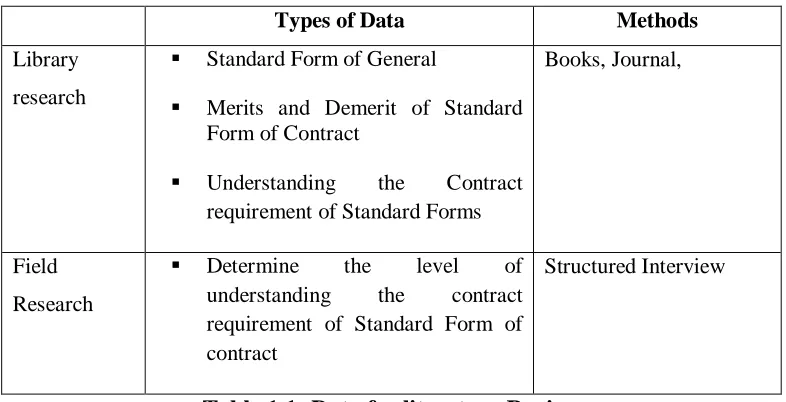
1.1 Data for literature Review 9
3.1 Structure of Responsibilities in Construction Projects 37 3.2 Legalese Problems in Regarding to PWD 203 A
Standard Form 44
3.3 Summary of Problems of Clarity 50
3.15 Methods for Improving the Understanding of
Construction Contract 51
4.1 Major Problems influenced the difficult to
understand the Standard Form of Contract 58
xiii
LIST OF FIGURES
FIGURES NO TITLE PAGE
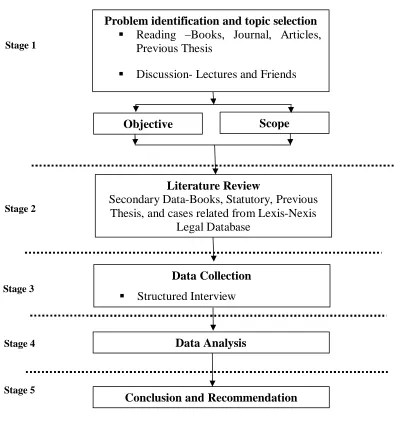
1.1 Flow chart of research methodology 11
2.1 Decision Diagram for Disputes Involving
Interpretation 22
4.1 How Respondent found the JKR 203A Standard
Form of Contract 57
4.2 Does the contractor or subcontractor lose the entitlement to extension of time if he fails to submit appropriate notices and detail as required by the contract 62 4.3 When contractor fails to serve a proper claims notice
to the causes of delay can S.O legitimately reject
the claims 65
4.4 The number of respondent’s opinion if there was
discrepancy between the drawing and specification 67 4.5 Analysis for the opinion of respondents about the
language of contract being “Simple Plain English” 71 4.6 How often the respondents refer to standard
LIST OF APPENDIX
APPENDIX NO TITLE PAGE
CHAPTER 1
1 INTRODUCTION
Construction projects are undertaken by many parties, all with their own goals and motivations which may not always be aligned. The alignment is normally pursued through a contract between parties to agreed goals. A contract is a voluntary agreement between two or more parties, and the purpose of a contract is to set out the rights, responsibilities, and liabilities of the parties. The contract allocates risk among the parties. Contracts may be formal and written, with fairly explicit described behaviors and understanding. Different groups of contracting parties, and also people within the same group, interpret contract clauses in different ways.
Construction contracts are usually made in writing, using one of the standard forms available.1 The use of standard form provides many advantages, and although standard forms are not mandatory in practice their used should be encouraged in all possible circumstances. Clearly, the construction process as a whole has to become more efficient, and it is important that the standard form of contract be used intelligently to support this.2
1
Ashworth, A. Contractual Procedures in the Construction Industry. London and New York: Longman, (1986), p. 8.
2
Standard Form of contract is in a printed form and published by an authoritative body of the industry, which body is recognized by both parties. Historically, the initial set of Standard Forms was drafted by the various government agencies for works in the public sector. In Malaysia, the earlier version of PWD form was modeled on the RIBA Form of Contract 1931, later revision 1983 and the latest 2007. Due to progress of development projects, many other professional bodies published their own version of standard forms to suit the current development and modernisation and variation of procurement methods i.e. IEM was first published in 1989 and PAM in 1969 (Lian, Im and Kheng, 2000).
According to Nayagam and Pathmavathy (2005), “Standard Form construction contracts provide a basic legal framework identifying the rights, obligations and duties of the parties, establish of the powers and duties of the contract administrator”
The adversarial nature (Cheung et al., 2006; Cheung and Yiu, 2007) and inherent risks (El-Sayegh, 2008) of the construction industry contributes to the germination of construction disputes. Construction disputes are caused by many sources (Cheng et al., 2009). One of the main sources is poor understanding of contract documents. Interpretation error and misunderstanding of construction contracts can be traced to the illegibility of contract clauses (Broomeand Hayes, 1997; Cutts, 2004; Styllis, 2005) and legalese (Cutts, 2004; Candlin et al., 2002), which results in disagreements between the contracting parties on their rights and responsibilities.
3
In traditional contracts, contractual and flexibilities that are required in ever
changing construction scenarios are not supported in order to face uncertainty and
complexity. It is very often long and complex documents. Consequently, disagreement
or disputes could arise regarding contractual obligations or expectation. When one party
feels that the contractual obligation or expectation has not been met, the disputes may
occur (Semple et al, 1994). Thus construction contract plays a crucial role in disputes
resolution.
For instance, the survey done by Sambasivan and Yau (2006) found that the factor of mistakes and discrepancies in contract document is one of the causes of delay to project in Malaysia Construction industry.
An example of the issue of understanding occurred in the case of Majlis Perbandaran Seremban vs Maraputra Sdn Bhd3. The case was a dispute on the arbitrator’s rights and powers to order. In their arguments, the applicant contended that the arbitrator had erroneously interpreted clause 54 of the conditions of contract by concluding that only the contractor may refer disputes to arbitration and not the employer. The judge held that the wording of clause 54 was clear and unambiguous. Besides, the arbitrator’s reasoning on his decision on the issues was sound, cogent and clear. The learned judge concluded that a wrong interpretation by the applicant eventually led to the dispute with the respondent. Therefore, the significance of this case is that the correct interpretation or understanding of contract clauses by the contracting parties is vital to avoid disputes since contract clauses are already clear and unambiguous.
3
In Malaysian environment, contract clarity is an undisputable necessity, whereby the quality of being expressed clearly is a must for contractual agreements. There are many reasons for this 4
English is not the first language for Malaysians whose mother tongues are Malay, Chinese and Tamil. So, simplified language structure is important for better understanding of contracts (Styllis, 2005)
The style of writing including the use of passive voice, repetition, too long sentences (more than 50 words), incorrect or too much use of ‘shall’, and many cross-references can be a barrier to achieving clarity in contract form (Styllis, 2005).
Besides, the legalese problem also takes place in the contract’s issues, which may mislead the true meaning of the particular clause and cause the people not understand at all. Not all people can understand the meaning of the contract forms. Legalese often dumbfounding to the meaning or need of the contract condition (Martin, 1993). According to Broome and Hayes, 1997, plain English is more effective in delivering the message for constructing compare to those legal language or phases.
In addition, the use of formal and technical language in legal documents upsets interpretation (Feinman, 2003). Legal drafters have done most damage by cloaking the mysteries of contracts with unusual language and technical legal terms (Cutts, 2004). The imperfections of legalese are chiefly due to the unnecessary length and complexity. Sometimes, there maybe more serious errors that go uncorrected (Hill, 2001) because the interpretation of the contract clause was not actually written or meant in the contract (Thomas et al., 1994). Legalese would cause the contracting parties to fail to appreciate the genuine contractual rights and obligations in a project
4
5
(Semple et al., 1994). In the end, it disturbs the working atmosphere of the project (Wang and Yang, 2005).
Consequently, legalese is a serious problem and could lead to incorrect interpretation. Semple et al (1994) maintained thto at in order avoid construction disputes the understanding of the contractual terms and the meanings of the contract anticipation.
Construction contracts are written agreements signed by the contracting parties to define their relationships and obligations (Zaghloul and Hartman, 2003). The conditions of the contract are crucial to ensure that the parties abide by rules and regulations (Semple et al., 1994). The poor understanding of the construction contract may lead to construction disputes, as highlighted by a number of previous researches (Thomas et al., 1994; Semple et al., 1994; Broome and Hayes, 1997; Mohamad and Zulkifli, 2006). It is simply because the parties could not meet their contractual expectations (Harmon, 2003).
1.1 Statement of Problem
Standard Forms of contract have been use in the Malaysian construction industry as a means to expedite contractual and legal duties for the clients who wish to avoid expensive and complex legal endeavor to arrive at an agreement with their contractor. Various forms have been drafted by various professional bodies and organization, both locally and internationally, to meet the demands of local construction market for standard form.5
Standard Form of contracts are generally written or commissioned by government agencies for use on the contract that they are sponsor, or by professional institute which takes it upon itself to represent its private sector clients by producing for adoption by its member practitioners.6 The standard form is drafted by the legal people and will be implementing by the technical background people that has a little knowledge about the legal aspect. The problems are do the technical background such as an architect, Quantity Surveyor, Engineer and etc understand the contract form requirement? Besides that, this research is to know the level of understanding standard form of contract among the construction parties. In fact, the understanding problems are caused by the legalese (Martin, 1993) and clarify of contract clause (Broome and Hayes, 1997), which has brought a lot of disagreement and disputes regarding the contractual obligations the construction practitioners. However, through better interpretation and understanding of the contract requirements, the disputes arose may be eliminated.
5
Kwang, Q.W.Adequency of Quality Provisional in Standard Forms of Local and Internatioanl Construction Vontract. UNIMAS E-Journal of Civil Engineering, Vol.1 issue 1/August 2009
6
7
1.2 Research Objectives
The objective of the research is to determine the level of understanding the contract requirements of PWD 203A (Rev. 2007) Standard Form of contract among the construction professional.
1.3 Scope of Research
The scope of this research will cover the following areas:-
a) Only construction cases will be discussed in the research. b) This research study on the current contract practice in Malaysia
c) Structured interview involve the profession of Engineer, Contractor and Quantity Surveyor with experienced within five (5) to ten (10) years in ` construction industry to know their level of understanding of PWD 203A (Rev. 2007)
1.4 Significance of Research
This research is very important to know the level of understanding of Standard form of contract among the construction parties. This information is important to know
either all the construction parties fully understand the contract form or not.
Furthermore, this research can give the information to client about the
importance to understanding of standard form of contract in construction industry. It is to
1.5 Research Method
A systematic process of conducting this research had been organised in order to achieve the objective of the study. There are a few stages in completing the research that will be followed, which involve identifying the issue, literature review, data collection, data analysis, conclusion and suggestion.
1.5.1 Stage 1- Identifying the issue
The issue of the study arises from the intensive reading of articles, journals and newspaper cutting from the UTM library. Discussion with lecturers and friends also had been done to get an idea of the research topic. From the issue, the objectives of the study have been identified. This study is carried out to
determine the level of understanding the contract requirement of Standard Form of contract among the construction professional.
1.5.2 Stage 2- Literature review
9
Types of Data Methods
Library
research
Standard Form of General
Merits and Demerit of Standard Form of Contract
Understanding the Contract requirement of Standard Forms
Books, Journal,
Field
Research
Determine the level of understanding the contract requirement of Standard Form of contract
Structured Interview
Table 1.1: Data for literature Review
1.5.3 Stage 3- Data collection
After identifying all the background of study and relevant issues through literature review, the data will collect through the structured interview. All respondents are well respected in various fields of specialization. The following is just a brief account of the professionals of their various background and professional affliction and they have an experience for this field within 5 to 10 years. There were ten (10) persons of professional appointed as expert will help in the structures interview.
1.5.4 Stage 4- Data analysis
1.5.5 Stage 5- Conclusion and recommendations
11
1.6 Research Methodology Flow
The research methodology of this study is shown in Figure 1.1
Figure 1.1: Flow chart of research methodology Problem identification and topic selection
Reading –Books, Journal, Articles, Previous Thesis
Discussion- Lectures and Friends
Objective Stage 1
Literature Review
Secondary Data-Books, Statutory, Previous Thesis, and cases related from Lexis-Nexis
Legal Database Stage 2
Data Collection Structured Interview
Data Analysis
Stage 5
Scope
Stage 3
1.7 Organization of Research
The dissertation consists of five chapters. The brief descriptions of each chapter are as follows:
Chapter 1: Introduction
This chapter presents the overall content of the whole project writing. It introduces the subject matter, the problems that are purported to solve. The objective is specified with an appropriate research method to achieve them.
Chapter 2: The Standard Form of Contract
This chapter with the overview the standard Form of contract. It is include the merit and demerit of standard form of contract.
Chapter 3: The understanding in construction contract.
This chapter will focus on the understanding the contract requirement and the terms in construction contract.
Chapter 4: Results and Analysis
This chapter analyzes the results from structure interview among the construction parties about their understanding of standard form of contract.
Chapter 5: Conclusions and Recommendation
13
1.8 Conclusion
Contract is an ongoing process. It is a delusion that a perfect standard form of contract can ever be achieved. In this chapter, background of the study was discussed in detailed. The natures of using the standard form of contract in construction industry
were illustrated. Aim and objective were defined in this chapter.
REFERENCES
Abdul Aziz Hussin. (2004). Aspek Undang-Undang Dalam Pengurusan Projek
Pembinaan. Pulau Pinang: Universiti Sains Malaysia.
Abrahamson, M. W. et al. (1998). FIDIC Conditions of Contract for Work or Civil
Engineering Construction, Fourth Edition. Proceedings of the Institution of Civil
Engineers 84, part 1.
Andrew, Phang Boon Leong. (1998). Cheshire, Fifoot and Furmston’s Law of Contract,
Second Singapore and Malaysia Edition. Butterworth Asia.
Ashworth, A. (1986). Contractual Procedures in the Construction Industry. London and
New York: Longman,
Bevin Netto. (1982). Dispute Arising Out of the Main Contract and Subcontract.
Seminar on Avoiding Disputes in Construction Contracts. Institute of
International Research.
Brand, D. “Bespoke” or “Off the Peg”. Journal of Construction Engineering and
Management @ ASCE
Braun, HB. Policing Standard Form Contracts in Germany and South Africa: A
85
Cesil, Ray. (1992). Risk Management for Architects. RIBA Indemnity Research,
London.
Chow, Kok Fong. (1991). Construction Industry Trends in The Asia- Pacific and Their
Implications for Standard Forms of Contracts. 1st International Conference on
Asia-Pacific Construction Law. Kuala Lumpur:PWTC.
Contract Act 1950 section 2(h)
Dato’ Seri Visu Sinnadurai. (2003). Law of Contract. 3rd Edition. Lexis Nexis,
Butterworth.
Dennis F Turner. (1977). Building Contract -A Practical Guide. 3rd Edition.
Dennis F Turner. (1984). Standard Contract for Building.
Holdsworth, WS. (1956). History of English Law. 7th Edition. London: Methuen.
Kwang, Q.W. (2009). Adequency of Quality Provisional in Standard Forms of Local and
Internatioanl Construction Vontract. UNIMAS E-Journal of Civil Engineering,
Vol.1 issue 1.
Llyod L. Rich. Get in Writing: Why You Need a Valid Publishing Contract.
www.publaw.com/sponsor
Managing Building Contracts-Some (2004). “Back to Basics” Tips. Construction
Bulletin, www.rolits.com.
McGuinness. (2004). The Law and Management of Building Subcontracts. United
Melissa, Chan Yuet Li. (2006). New Engineering cOntract (NEC) 1993 as Radical
Changes to the Malaysian Standard Forms of Contract. Universiti Teknologi
Malaysia.
NEC3 Engineering and Construction Subcontract. (2005). (3rd Edition).
Nigel M Robinson. (1996). Construction Law in Singapore and Malaysia. Butterworths
Asia.
Pike, Andrew, (1993). Practical Building Forms and Agreements. E & FN Spon,
London.
Priestley, Clive. (1994). British Construction: In Pursuit of Excellence, a report to Sir
Christopher Foster, chairman of the Construction Industry Sector Group.
(Business Round Table, London).
Prof. Michael P. Furmston. (1991). Problem of International Construction Contracting.
1st International Conference on Asia-Pacific Construction Law, Putra World
Trade Centre Kuala Lumpur.
Robinson, Nigel M. (1998). Construction Law in Singaporeand Malaysia. Butterworth:
Singapore, Malaysia, Hong Kong.
Rosli Mohamad Zin. (2010). A case study into the language structure of construction
standard form in Malaysia .Department of Structure and Materials, Faculty of
Civil Engineering, Universiti Teknologi Malaysia, Skudai 81310, Johor,
Malaysia. International Journal of Project Management 28.
Rosli Abdul Rashid. (1988). The Liability of Construction Project Manager and the
87
Sai, On Cheung, Kenneth, T.W., and Pui Shan Chim. (2006). How Rational
Construction Contracts?. Journal of Professional Issues in Engineering
Education and Practice.
Sr. Noushad Ali Naseem Ameer Ali. Accessibility of Legal Documents in the
Construction Industry-A Plea for Sanity.
Sr. Noushad Ali Naseem Ameer Ali. (2006). Seminar on Model Terms of Construction
Contract for Sub-contract Work 2006. Puteri Pacific Hotel, Johor Bahru.
Sundra Rajoo. (1999). The Malaysian Standard Form of Building Contract (The PAM98
Form). 2nd Edition. Malaysian Law Journal Sdn. Bhd.
Sundra Rajoo. The Pam 2006 Standard Form Of Building Contract — A Change In Risk
Allocation.
Syed Ahmad Alsagoff. (2003). Principle of the Law of Contract in Malaysia. Malaysian
Law Journal Sdn. Bhd.
Teresa Cheng, Evia Wong and Gry Soo. (2004). Construction Law and Practice in Hong
Kong. Sweet & Maxwell Asia.
Thomas, R. (1993). Construction Contract Claims. London: MacMillan.
Thomas, H.R, Interpretation of Construction Contracts. Journal of Construction
Engineering and Management.
Vohrah, B and Wu, Min Aun. (2000). The Commercial Law of Malaysia. Pearson
Malaysia Sdn. Bhd, Selangor.
Treitel, G.H. (1995). The Law of Contract. London: Sweet & Maxwell.
Thompson, I., Cox, A. and Anderson, I. (1998). Contracting Strategies in the Project