Recommender Systems for Identifying
Elicitation Process (GOREP) in Software
Development Life Cycle Model
Sucharita Bansal1, Dr. Dinesh Kumar2
M.Tech Student, Dept. of CSE, Shri Ram College of Engineering and Management, Affiliated to Maharshi Dayanand
University, Palwal, India1
Head of Department, Dept. of CSE, Shri Ram College of Engineering and Management, Affiliated to Maharshi
Dayanand University, Palwal, India2
ABSTRACT: A Recommendation Engine is also called a Recommender Systems (RSs). Recommendation engines are common among e-commerce, social media and content-based websites. The goal of a Recommender System is to generate meaningful recommendations to a collection of users for items or products that might interest them. Suggestions for books on Amazon, or movies on Netflix, are real world examples of the operation of industry-strength recommender systems. When the company was essentially an online book store, it began using software to suggest books the user might be interested in, based on data gathered about their previous activity, as well as the activity of other users who made similar choices. This review is intended as an integral part of my research. Recommendation System use a variety of technologies and techniques that enable them to filter large amounts of data and provide a smaller, focused body of suggestions for the user.
KEYWORDS: Recommender Systems, Existing Goal Oriented Requirements Elicitation Process, Identify Stakeholders, Recommendation Fields and Integrating Mind Map
I. INTRODUCTION
A Recommender System is a system performing information filtering to bring information items such as movies, music, books, news, images, web pages, tools to a user. This information is filtered so that it is likely to interest the user. In a software context, it is a special-purpose program that performs a task through a variable algorithm, often as a feature of some larger program. A search engine is one type of recommendation engine, responding to search queries with pages of results that are (at least theoretically) the search engine's best suggestions for websites that satisfy the user's query, based on the search term plus other data, such as location and trending topics.[1]
In this paper, we give an brief introduction about what is the recommendation system, and review three recommendation approaches?
A. What is a Recommender System?
The aim of a recommender system is often to "help consumers learn about new products and desirable ones among myriad of choices. The ‘Recommender System' as a generic descriptor that represent various recommendation/ prediction techniques including collaborative, social and content based filtering, Bayesian networks and association rules.[2]
The myriad approaches to Recommender Systems can be broadly categorized as:
Collaborative Filtering (CF): In CF systems a user is recommended items based on the past ratings of all users collectively. For e.g. if two people have similar ‘taste’ they can recommend items to each other.
Content-based recommending (CB): These approaches recommend items that are similar in content to items the user has liked in the past, or matched to attributes of the user. For e.g. what sort of books do I like?
II. RELATED WORK
Usually, the users rely on search engine to get the information. While, recommendation systems are a useful alternative to search algorithms, since they help users discover items they might not have found by themselves. The most traditional recommendation is from editorial. Another recommendation is performed by simple aggregate. Now there are some recommendations systems can tailor to individual users.[1] [3]
Editorial
Simple aggregates-Top 10, Most Popular, Recent Uploads Tailored to individual users
Amazon, Netflix, …
Books, CDs, other products at amazon.com Movies by Netflix, MovieLens
Let C be the set of all users and let S be the set of all possible items that can be recommended, such as books, movies, or restaurants. The space S of possible items can be very large, ranging in hundreds of thousands or even millions of items in some applications, such as recommendation books or CDs. Similarly, the user space can also be very large – millions in some case.[4]
Let u be a utility function that measures the usefulness of item s to user c, i.e. u: C £ S ! R
u: CXS R,
Where R is a totally ordered set {e.g., 0-5 stars, real number in [0,1] (nonnegative integers or real numbers within a certain range)}.
Here is an example of a user-item rating matrix for a movie recommendation application. Some of the ratings are empty, which means that the users have not rated the corresponding movies.[3] In its most common formulation, the recommendation problem is reduced to the problem of estimating ratings for the items that have not been seen by a user.
Items/Users King Kong LOTR Matrix Nacho Libre
Alice 1 0.2
Bob 0.5 0.3
Carol 0.2 1
David 0.4
In recommender systems, utility is typically represented by ratings and is initially defined only on the items previously rated by the users. As demonstrated above in the utility Matrix, some of the ratings are empty, which means that the users have not rated the corresponding movies. [4] [5]
Therefore, the recommendation engine should be able to estimate (predict) the ratings of the nonrated movie/user combinations and issue appropriate recommendations based on these predictions.
Examples of explicit data collection include the following:
Asking a user to rate an item on a sliding scale.
Examples of implicit data collection include the following:
Observing the items that a user views in an online store. Analyzing item/user viewing times.
Keeping a record of the items that a user purchases online.
Obtaining a list of items that a user has listened to or watched on his/her computer.
III.EXISTING GOAL ORIENTED REQUIREMENTS ELICITATION PROCESS
A goal is a prescriptive statement of intent about some system (existing or tobe) whose satisfaction in general requires the cooperation of some of the agents forming that system (= software and environment). In goal oriented requirements elicitation process, high level objective of an organization are decomposed and refined using AND/OR graph to get the requirements of software. [6]
Goal selection in goal oriented requirements elicitation process (GOREP) like KAOS, i*, AGORA etc. This is a multi-criteria decision making problem, we identify that existing GOREP. It do not support to choose and adopt a goal out of the alternatives of the decomposed goals when multi-criteria decision making approaches are used and stakeholders preferences are in the form of linguistic variables. Therefore, this paper presents a fuzzy based approach to address the above issue by using α-level weighted F-preference relation in group decision making process.[6][7] Finally, the utilization of the proposed approach is demonstrated with the help of an example.[8]
B. What is Requirement Engineering?
Requirements Engineering (RE) is a process, which is used to identify the requirements of software systems according to the need of stakeholders like customers and users. [9] RE processes are classified into five sub processes
like requirements elicitation, requirements modeling, requirements analysis, requirements verification and validation, and requirements management. Requirements elicitation is the first sub process of RE, which is used to identify the requirements of the stakeholder’s. This process involves gathering, uncovering and understanding the needs of the stakeholders. [2] [10] Many researchers have identified the problems in RE area like: communication gap among stakeholders; inadequacy of management; lack of knowledge and skilled people in RE; and process with wrong techniques and methods. The proposed method is presented as follows:-
Requirements Elicitation
Requirements elicitation is the first sub process of RE, which is used to identify the requirements of the stakeholder’s. In this process, need of the stakeholders are identified with the help of various techniques like analysis of existing documents, survey, interview, use case diagram, and goal oriented methods. [6] [11]
In requirements elicitation process, requirements are identified from the stakeholders as the primary resources, and also on the basis of the careful analysis of the organization, the application domain and business where the system will be deployed. Requirements elicitation process includes interviews, questionnaires, user observation, workshops, brainstorming, use cases, goal concepts, etc.
In goal oriented requirements elicitation process, high level objective of an organization are decomposed and refined using AND/OR graph to get the requirements of software. In this paper, we have identified different methods for goal oriented requirements elicitation process like KAOS, NFR-framework, i*, etc. These methods are developed for some specific purpose. For example, NFR-framework is designed only to elicit and model the non-functional requirements.[6] [2]
Identify Stakeholders
Stakeholder’s identification is an important activity of requirements elicitation process. Therefore, the first step of our method is to identify the primary and secondary stakeholders. Primary stakeholders include those who are central to any project initiative, i.e., beneficiaries, financial, politicians, sponsors, and decision maker. Secondary stakeholders include developers, experts, operators etc. [12]
Identify High Level Objective of the Primary Stakeholder Analysis
(i) interview
(ii) asking ‘why’, ‘how’, and ‘how–else’ questions
(iii) analysis of the existing documents etc. The ‘why’ questions are used to identify the objective of the stakeholders; how questions are used to identify lower level goals; and the how-else questions are used to find the alternatives to satisfy the higher level goals.
AND/OR graph
In goal oriented requirements elicitation process, AND/ OR graph is constructed by decomposing the high level objective of stakeholders into sub goals or requirements. [14] This graph is used to identify the functional and non functional requirements. In AND composition, if all of the goals or requirements are achieved, their parent goals can be achieved or satisfied. On the other hand side, in OR decomposition, the achievement of at least one sub goals or requirements leads to the achievement of its parent goal.
Fuzzy logic
The concept of fuzzy logic was given by Lotfi A. Zadeh in the year of 1965. In order to calculate vague and imprecise queries fuzzy logic is used. [15] It is a multi-valued logic that uses different values between interval [0, 1]. According to Zadeh fuzzy set is defined as: “In universe of discourse Ux, a fuzzy subset A of Ux is characterized by a membership function f A(x) where f (A): Ux [0, 1]”. Fuzzy membership function associates with each member of X of Ux of a number of f(x) in the interval [0, 1], represents degree of membership function of X in A. Linguistic variables are words whose values are imprecise e.g., very low, low, average, high, very high etc. To represent linguistic variables we use fuzzy numbers. They give graphical representation of vague queries (imprecise queries). There are several types of fuzzy numbers e.g., trapezoidal fuzzy number, bell shaped fuzzy number, Gaussian fuzzy number, triangular fuzzy number.[16]
Mind Map (MM)
The objective of this section is to present an insight into Mind Map (MM); and it also discuss how MM is used to elicit the software requirements. [17] MM is a thinking tool which reflects how information’s are stored in the brain as well as how information’s are retrieved from the brain of stakeholders. It is an effective method of expressing individual ideas and its associations in an organized way.
MM can be used in almost every situation of life where we normally write linear notes or writing down a list of words. MM has been used widely by many individuals and organizations mainly in decision-making, analysis, generating, visualizing, problem-solving, planning, note-taking, and brainstorming and presentation. [18]
IV. SIMULATION RESULT:INTEGRATING MIND MAP WITH GOREP
Many researchers have identified the problems in RE area like: communication gap among stakeholders; inadequacy of management; lack of knowledge and skilled people in RE; and process with wrong techniques and methods. Several researchers have pointed out that, MM is capable to contribute in improving RE process especially in the requirement elicitation phase. [17] [19]
MM is a technique which uses graphical illustration in expressing thoughts and ideas based on the concept of radiant thinking; a natural function of human mind. It allows students to imagine and explore associations between concepts. It is represented with shapes, pictures, symbols or even making the words or letters into pictures.
Step 1: Let us assume that four stakeholders.[21]
Step 2: Different Stakeholders are participating in requirements elicitation process. [21] [22] The responsibilities of these four stakeholders are given as below:-
SH1 Responsible for elicitation of FRs of Student’s module (fr1) SH2 Responsible for elicitation of FRs of Teacher’s module (fr2) SH3 Responsible for elicitation of FRs of Administrator module (fr3) SH4 Responsible for elicitation of NFRs of IES (fr4)
Step 3: Let us assume that during group requirements elicitation process requirements analyst collect the requirements from different stakeholders and construct the AND/OR graph by decomposing the objective of stakeholders into three FRs i.e., student module, administrative module, and teachers module; and there is one non- functional requirement, i.e. that the system should have one or more of the following characteristics: safety, security, performance etc. These modules are represented by FR1, FR2, and FR3 respectively; and trustworthiness is represented by NFR. There is an AND decomposition among FR1, FR2, FR3 and NFR refined into ten FRs, i.e., fr1, fr2,…, fr10. Trustworthiness (NFR) is further decomposed into three sub-requirements, i.e., nfr1: Security; nfr2: Reliability; and nfr3: Performance. There is also an AND decomposition among these requirements. Reliability, i.e., nfr2 is further decomposed into three sub-requirements, i.e., nfr2-1: recoverability; nfr2-2: Adaptability; and nfr2-3: maturity. [22] [23] There is an OR decomposition among these requirements. OR decomposition means that the selection of any requirements leads to the achievement of the parent requirements. There is a pair wise comparison among nfr2-1, nfr2-2, and nfr2-3.
Step 4: In this step, we attach the MM with those nodes of an AND/OR graph that we want to further decompose and refine. In our case, we attach MM with fr1 i.e. print out of bank receipt of student’s fee attached Mind Map contains student’s details, fee details, and these details are further decompose and refine into sub goals. [22] [23]
For example student details contain student name, course name, fathers name and faculty/department name. Attachment of MM with AND/OR graph would be useful to further decompose and refine the each and every node of AND/OR graph in a systematic manner. [24]
Step 5: The meaning of FRs and NFRs is given below: (i) fr1: printout of bank receipt of students fee;
(a) Student details: student name, course, fathers name, faculty/department
(b) Fee slips details: bank scroll number, pay-in-slip, slip date, slip printed by, name of the bank, account id. (c)Fee details: Examination fee, admission fee, library/lab fee, games fee, curricular activities, last date of submission, total amount, and run date.
(ii) fr2: entry of internal and external marks; (iii) fr3: view semester result;
(iv) fr4: generate examination sitting arrangement; (v) fr5: online conduct of examination;
(vi) fr6: fill examination form; and after successful submission of the form system will generate the following information: (a) roll number, (b) name of the students, (c) examination name, (d) subject code, (e) subject name(s), (f) number of backlogs, if any (g) examination fee(s);
(vii) fr7: upload any exam related activities; (viii) fr8: generate examination hall ticket;
(ix) fr9: approve examination form;
(x) fr10: on line payment of examination fee. [23]
In general, a generalized fuzzy number A is described as any fuzzy subset of the real line R, whose membership function uA satisfies the following conditions.
(1). ( ) = 0, − ∞ < ≤ ;
(2). ( )isstrictlyincreasingon[c, a];
(3). ( ) = , ≤ ≤ , ℎ 0 < ≤1;
(4). ( )isstrictlyincreasingon[b, d];
(5). ( ) = 0, ≤ ≤ ∞ ;
(6). isacontinuousmappingfromRtotheclosedinterval[0, 1];
Here a, b, c, and d are real numbers. We denote generalized fuzzy number A in Fig. 4.3 as (a, b, c, d; ) LR. When
= 1 . We simplify notation as A= (a, b, c, d) LR . [26]
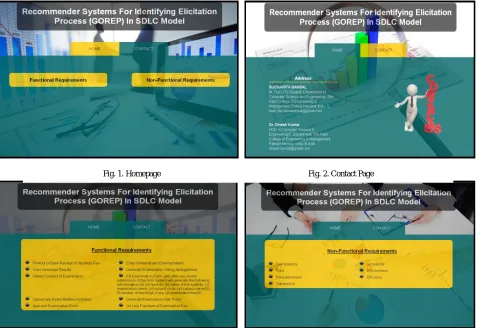
Fig. 1. Homepage Fig. 2. Contact Page Fig. 1. Homepage Fig. 2. Contact Page
Fig. 3. Functional Requirement Fig. 4. Non-Functional Requirement
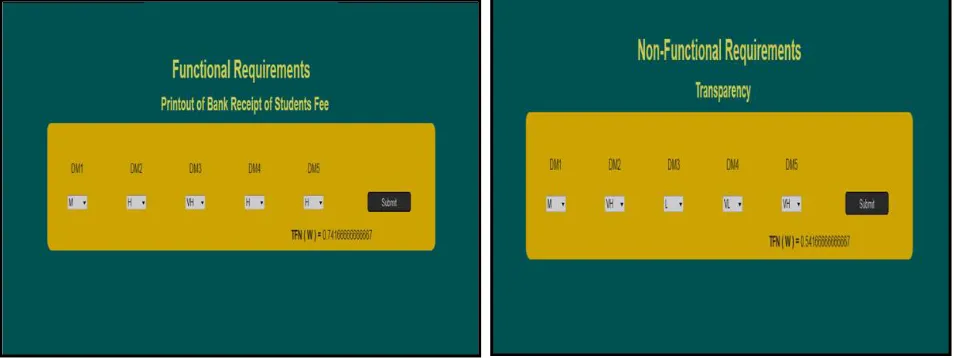
Fig. 5. Printout of Bank Receipt of Student Fee Fig. 6. Transparency
V. CONCLUSION AND FUTURE WORK
In this proposed method, we have proposed a method based on Recommender Systems for Identifying Elicitation Process (GOREP) In Software Development Life Cycle Model. [2] The proposed method includes the following steps: identify stakeholders, list of FRs and NFRs, eliciting of DM’s using L-1 R-1 inverse function for finding the Institute Examination System’s requirements and prioritize these requirements according to the stakeholders. [15] In our case study, we identify that fr1 and fr3 has the highest priority and fr2 and fr5 has the lowest priority and satisfaction has the highest priority and effectiveness has the lowest priority. Future work includes the following: [27]
1. To apply proposed method in different modules of IES.
2. To present the comparative study between various goals oriented requirements elicitation process.
3. To extend the proposed method by using Multi-Criteria Decision Making methods like TOPSIS, AHP etc; and to design a hybrid RSs by using an efficient method for mining frequency item sets.
REFERENCES
1. K. Pohl, Requirements Engineering: Fundamentals, Principles, and Techniques. Springer Publishing Company, Incorporated, (2010). 2. M. Robillard, R. Walker, and T. Zimmermann, “Recommendation Systems for Software Engineering,” IEEE Softw., vol. 27, no. 4,
(2010), pp. 80–86.
3. Shahnawaz A and Sadiq M, "Goal Oriented Mind Map Generation Method for Requirements Elicitation Process", IEEE International Conference on "Futuristic Trends in Computational analysis and Knowledge management," (A-BLAZE), organized by Amity University, Greater Noida, India 2015.
4. A. van Lamsweerde. “Goal-Oriented Requirements Engineering: A Roundtrip from Research to Practice. Proc.” International Conference on Requirements Engineering (RE’04), Kyoto, Japan, September 2004.
5. I.J. Jureta, S. Faulkner, and P. Schobbens. Justifying goal models. In Requirements Engineering, 14th IEEE International Conference, pages 119–128, 2006.
6. Ellis, C.A. and Wainer, J. (1994), “Goal-Based Models of Collaboration, Collaborative Computing”, Vol. 1, 1994, pp. 61-86.
7. Sadiq M, G Shabina ,Shahid M, "An Approach for Eliciting Software Requirements and its Prioritization using Analytic Hierarchy Process", IEEE International Conference on Advances in Recent Technologies in Communication and Computing, pp. 790-795 Kerala, India, October 2009.
BIOGRAPHY