Design and Implementation of Age Rank
Detection Using Neural Network Approach
Tejashri D.wankhade1, Vijay L. Agrawal2
Student, HVPM’S College of Engineering and Technology, Amravati, India
Associate Professor, Dept. of Electronic and Telecommunication), HVPM’S College of Engineering and Technology,
Amravati, India
ABSTRACT: AGE rank Detection is proposed, which uses the WHT transform over the entire face image as feature detector and a constructive one hidden layer feed forward neural network as a Age rank Detection classifierproposed technique is applied to a database consisting of images of 125 having 14 type of male and female age images.Images of 95 are used for network training, and the remaining images of 30 are used for cross validation. It is demonstrated that the best recognition rates are 100% for the training as well as cross validation. Furthermore, The Average Classification Accuracy of MLP Neural Network comprising of one hidden layers with 18 PE’s organized in a typical topology is found to be superior (100 %) for Training . Finally, optimal algorithm has been developed on the basis of the best classifier performance. The algorithm will provide an effective alternative to traditional method of facial captured image analysis for deciding the Human Age.
KEYWORDS: Neural solution, MatLab, Excel, facial captured image both male and female.
I. INTRODUCTION
Age detection is a technology that uses set of mathematical rules to describe landmarks to identify human age. It typically determines the precise face area. Our aim is to determine the age of human beings of seven different age groups through age detection in Feature extract using image . Age detection approach is a very important area in the field of Computer Vision. Ages define the boundaries between regions in an image, which helps with segmentation and object recognition. They can show where shadows fall in an image or any other distinct change in the intensity of an image .The quality of age detection is highly dependent on lighting conditions, the presence of object s of similar intensities, density of ages in the scene, and noise.
Face recognition is one of the biometric methods to identify individuals by features of the face. The biometric has a significant advantage over traditional authentication techniques as the biometric characteristics of the individual are unique for every person. A problem of personal verification and identification is an actively growing area of research. Face, voice, fingerprint, iris, ear, retina are the most commonly used authentication methods. Research in those areas has been conducted for more than 30 years. Traditionally, face recognition uses for identification of documents such as land registration, passports, driver’s licenses, and recognition of a human in a security area. Face images are being increasingly used as additional means of authentication in applications of high security zone. But with age progression the facial features changes and the database needs to be updated regularly which is a tedious task. So we need to address the issue of facial aging and come up with a mechanism that identifies a person in spite of aging.
Adult aging
Figure 1.1. Face aging sketches from 30 to 80 years with 10 years per sketch
During adult aging, from adulthood to old age, the most perceptible change becomes skin aging (texture change). The shape change still continues, but less dramatically, mostly due to typical patterns in skin and tissue. Fig.1.2 shows six face aging sketches from 30 to 80 years, with 10 years per sketch. Biologically the face matures and ages with loss of collagen beneath skin as well as gravity effects, the skin becomes thinner, darker, less elastic, and more leathery. A dynamic wrinkles and blemishes due to biologic aging gradually appear. Dynamic wrinkles and folds due to muscle motion become more distinct. In the areas of deeper attachment, such as cheeks, eyelids, chin, and nose, elasticity of muscles and soft tissues gets weak and fat continues depositing. In other areas, fat may atrophy or be absorbed. These changes lead to the downward descent or sagging ofthe skin, such as double chin, dropping cheek, and lower eyelid bags. Although the craniofacial growth is not dramatic during this aging period, the facial geometry change is still evident from 30 to 80 years, especially in the female faces. Faces change from a U-shaped to a trapezoid or rectangle. The bony framework underneath the skin may also deteriorate to accelerate the development of skin aging, such as wrinkles, creases, and droops. In addition, face aging during this age period may cause the loss of flexible control of facial muscles so that the facial movements and behaviors may also change unintentionally.
Age recognition techniques are very challenging task for researchers. Changes of face position and direction relative to the camera, may lead to major changes of the acquired image, and may easily lead to losing main features of facial expressions. In such case, important parts of the face, such as eyes, mouth and nose may become partially or completely occluded, which significantly affects Age recognition. More sophisticated features and pre-processing techniques, which are invariant to pose, translation and rotation could be developed to overcome these limitations. In other cases, face can be partially occluded by objects in the scene or due to bad light conditions causing high variations of illumination over the entire image.
Neural networks (NN) have found a great success in the area of pattern recognition. By repeatedly showing a neural network, inputs classified into groups, the network can be trained to learn and understand the criteria used to classify, and it can do so in a generalized manner allowing successful classification of new inputs not used during training. With the explosion of research in Age recognition in recent year, the application of pattern recognition technology to age detection has become increasingly interesting.
Though much progress has been made, recognizing different ages with high accuracy remains difficult due to the complexity and variability of ages. Age recognition involves three steps face detection, feature extraction and classification of age.
II. PROPOSED ALGORITHM
A. Research methodology :
Figure2.1 Methodology of work
It is proposed to study age rank Recognition Using Neural Network Approaches.. Data acquisition for the proposed classifier designed for the Recognition of Human Age shall be in the form of facial images. Image data will be Collected from the different- different Faces .The most important un correlated features as well as coefficient from the images will be extracted .In order to extract features, statistical techniques, image processing techniques, transformed domain will be used.
1) Neural Networks
Following Neural Networks are tested:
Multilayer perceptron (MLP)
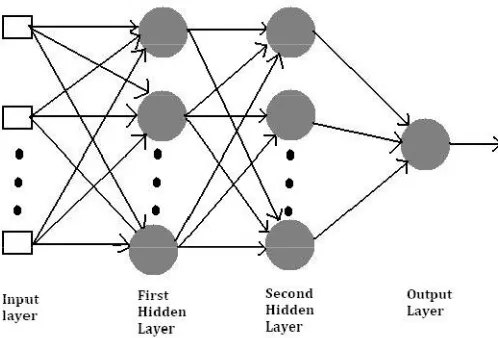
Figure 2.2: The Structure Of Neural Network Model MLP.
The MLP and many other neural networks learn using an algorithm called propagation. With back-propagation, the input data is repeatedly presented to the neural network. With each presentation the output of the neural network is compared to the desired output and an error is computed. This error is then fed back (back-propagated) to the neural network and used to adjust the weights such that the error decreases with each iteration and the neural model gets closer and closer to producing the desired output. This process is known as "training".
Learning Rules used:
Momentum
Momentum simply adds a fraction m of the previous weight update to the current one. The momentum parameter is used to prevent the system from converging to a local minimum or saddle point. A high momentum parameter can also help to increase the speed of convergence of the system. However, setting the momentum parameter too high can create a risk of overshooting the minimum, which can cause the system to become unstable. A momentum coefficient that is too low cannot reliably avoid local minima, and can also slow down the training of the system.
Conjugate Gradient
CG is the most popular iterative method for solving large systems of linear equations. CG is effective for systems of the form A=xb-A (1) where x _is an unknown vector, b is a known vector, and A _is a known, square, symmetric, positive-definite (or positive-indefinite) matrix. (Don’t worry if you’ve forgotten what “positive-definite” means; we shall review it.) These systems arise in many important settings, such as finite difference and finite element methods for solving partial differential equations, structural analysis, circuit analysis, and math homework.
Developed by Widrow and Hoff, the delta rule, also called the Least Mean Square (LMS) method, is one of the most commonly used learning rules. For a given input vector, the output vector is compared to the correct answer. If the difference is zero, no learning takes place; otherwise, the weights are adjusted to reduce this difference. The change in weight from ui to uj is given by: dwij = r* ai * ej, where r is the learning rate, ai represents the activation of ui and ej is the difference between the expected output and the actual output of uj. If the set of input patterns form a linearly independent set then arbitrary associations can be learned using the delta rule.
vertex of this paraboloid represents the point where the error is minimized. The weight vector corresponding to this point is then the ideal weight vector.
Quick propagation
Quick propagation (Quickprop) [1] is one of the most effective and widely used adaptive learning rules. There is only one global parameter making a significant contribution to the result, the e-parameter. Quick-propagation uses a set of heuristics to optimise Back-propagation, the condition where e is used is when the sign for the current slope and previous slope for the weight is the same.
Delta by Delta
Developed by Widrow and Hoff, the delta rule, also called the Least Mean Square (LMS) method, is one of the most commonly used learning rules. For a given input vector, the output vector is compared to the correct answer. If the difference is zero, no learning takes place; otherwise, the weights are adjusted to reduce this difference. The change in weight from ui to uj is given by: dwij = r* ai * ej, where r is the learning rate, ai represents the activation of ui and ej is the difference between the expected output and the actual output of uj. If the set of input patterns form a linearly independent set then arbitrary associations can be learned using the delta rule.
It has been shown that for networks with linear activation functions and with no hidden units (hidden units are found in networks with more than two layers), the error squared vs. the weight graph is a paraboloid in n-space. Since the proportionality constant is negative, the graph of such a function is concave upward and has a minimum value. The vertex of this paraboloid represents the point where the error is minimized. The weight vector corresponding to this point is then the ideal weight vector. [10]
III. SIMULATION RESULTS
1) Computer Simulation
The MLP neural network has been simulated for 125 different ages facial images of male female out of which 95 were used for training purpose and 30 were used for cross validation.
The simulation of best classifier along with the confusion matrix is shown below :
2) Results
Table I. Confusion matrix on CV data set
TABLE II. Confusion matrix on Training data set
TABLE III. Accuracy of the network on CV data set
TABLE IV. Accuracy of the network on training data set
Here Table III and Table IV Contain the C.V and Training result. Table III show the result or identify the all 14 type of Ages 100% only 35 year male is 66.66% and also Table IV show the result or identify all 14 type of Ages 100% .
IV.CONCLUSION AND FUTURE WORK
VI. ACKNOWLEDGMENT
We are very grateful to our HVPM College of Engineering and Technology to support and other faculty and associates of ENTC department who are directly & indirectly helped me for these paper.
REFERENCES
[1] Zhifeng Li, , Dihong Gong, Xuelong Li, and Dacheng Tao, " Aging Face Recognition: A Hierarchical Learning Model Based on Local Patterns Selection', IEEE TRANSACTIONS ON IMAGE PROCESSING, VOL. 25, NO. 5, MAY 2016.
[2] Kuan-Hsien Liu, Shuicheng Yan, and C.-C. Jay Kuo," Age Estimation via Grouping and Decision Fusion', IEEE TRANSACTIONS ON INFORMATION FORENSICS AND SECURITY, VOL. 10, NO. 11, NOVEMBER 2015.
[3] Min HU, Yaona Zheng, Fuji Ren, He Jiang," Age Estimation And Gender Classification Of Facial Images Based On Local Directional Pattern',
978-1-4799-4719-5114/$31.00 ©2014 IEEE.
[4] Hu Han, Charles Otto, and Anil K. Jain,"Age Estimation From Face Images: Human
Vs. Machine Performance', June 4 - 7, 2013, Madrid, Spain A journal version of this work appeared at IEEE Trans [5] Sarah N. Kohail,"Using Artificial Neural Network for Human Age Estimation Based
on Facial mages', 978-1-4673-1101-4/12/$31.00 ©2012 IEEE.
[6] Weihong Wang, Jian Zhang, Chunhua Shen,"Improved Human Detection And Classification In Thermal Images', 978-1-4244-7993-1/10/$26.00 ©2010 IEEE.
[7] Weifeng Li and Andrzej Drygajlo,"Identification of Aging Faces using A-stack Classification Model', 978-1-4244-4131-0/09/$25.00 ©2009 IEEE.
[8] Guodong Guo, Yun Fu,Charles R. Dyer, and Thomas S. Huang," Image-Based Human Age Estimation by Manifold Learning and Locally Adjusted Robust Regression',
Authorized licensed use limited to: IEEE Xplore Ieee Transactions On Image Processing, Vol. 17, No. 7, July 2008.
[9] Xin Geng, Zhi-Hua Zhou and Kate Smith-Miles,"Automatic Age Estimation Based on Facial Aging Patterns', IEEE TRANSACTIONS ON PATTERN ANALYSIS AND MACHINE INTELLIGENCE, VOL. 29, NO. 12, DECEMBER 2007.
[10] Karl Ricanek Jr, Tamirat Tesafaye,"MORPH: A Longitudinal Image Database of