Systematic Knowledge Acquisition for Question Analysis
Dat Quoc Nguyen
†,]and
Dai Quoc Nguyen
†,]and
Son Bao Pham
†,‡†
Faculty of Information Technology
University of Engineering and Technology
Vietnam National University, Hanoi
{datnq, dainq, sonpb}@vnu.edu.vn
‡
Information Technology Institute
Vietnam National University, Hanoi
Abstract
For the task of turning a natural language ques-tion into an explicit intermediate representa-tion of the complexity in quesrepresenta-tion answering systems, all published works so far use rule-based approach to the best of our knowledge. We believe it is because of the complexity of the representation and the variety of question types and also there are no publicly available corpus of a decent size. In these rule-based ap-proaches, the process of creating rules is not discussed. It is clear that manually creating the rules in an ad-hoc manner is very expen-sive and error-prone. In this paper, we focus on the process of creating those rules manu-ally, in a way that consistency between rules is maintained and the effort to create a new rule is independent of the size of the current rule set. Experimental results are promising where our system achieves better performance and re-quires much less time and cognitive load com-pared to previous work.
1
Introduction
The goal of question answering systems is to give an-swers to the user’s questions instead of ranked lists of related documents as used by most current search en-gines (Hirschman and Gaizauskas, 2001). Natural lan-guage question analysis component is the first nent in any question answering systems. This compo-nent creates an intermediate representation of the input question, which is expressed in natural language, to be utilized in the rest of the system.
In this paper, we introduce a language independent approach to systematically build a knowledge base for analyzing natural language questions. Natural language questions will be transformed into intermediate repre-sentation elements which include construction type of question, class of question, keywords in question and semantic constraints between them.
Some question answering systems such as Aqualog (Lopez et al., 2007) and Vietnamese question answer-ing system (VnQAS) (Nguyen et al., 2009) manually
]Both authors contributed equally to this work.
defined a list of sequence pattern structures to analyze questions. As rules are created in an ad-hoc manner, these systems share a common difficulty in managing interaction between rules and keeping consistency. In our approach, we present an approach utilizing Ripple Down Rules (Compton and Jansen, 1990) (Richards, 2009) knowledge acquisition methodology to acquire rules in a systematic manner which avoids unintended interaction between rules.
In section 2, we provide some related works and de-scribe our overall system architecture in section 3. We present our knowledge acquisition approach for ques-tion analysis in secques-tion 4. We describe our experiments in section 5. Discussion and conclusion will be pre-sented in section 6.
2
Related works
2.1 Question analysis in question answering systems
Early NLIDB systems used pattern-matching technique to process user’s question and generate corresponding answer (Androutsopoulos, 1995). A common technique for parsing input questions in NLIDB approaches is syntax analysis where a natural language question is directly mapped to a database query (such as SQL) through grammar rules. Nguyen and Le (Nguyen and Le, 2008) introduced a NLIDB question answering system in Vietnamese employing semantic grammars. Their system includes two main modules: QTRAN and TGEN. QTRAN (Query Translator) maps a natural lan-guage question to an SQL query while TGEN (Text Generator) generates answers based on the query result tables. QTRAN uses limited context-free grammars to analyze user’s question into syntax tree via CYK algo-rithm.
Recently, some question answering systems that used semantic annotations generated high results in natural language question analysis. A well known annotation based framework is GATE (Cunningham et al., 2002) which have been used in many question answering sys-tems especially for the natural language question analy-sis module such as Aqualog (Lopez et al., 2007), Ques-tIO (Damljanovic et al., 2008), VnQAS (Nguyen et al., 2009).
Aqualog and VnQAS are ontology-based question answering systems for English and Vietnamese
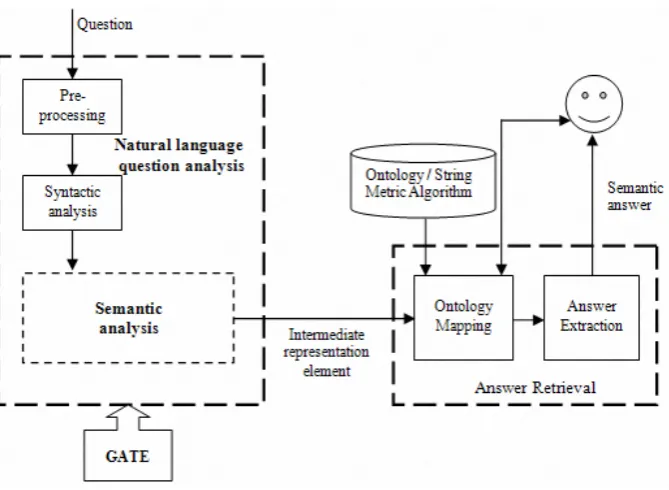
Figure 1: Architecture of our question answering system.
In addition, we marked phrases that refer to comparing-phrases (such as “lớn hơngreater than”
“nhỏ hơn hoặc bằngless than or equal to” . . . ) or special-words (for example: abbreviation of some words on special-domain) by singleTokenVn annota-tions.
3.2 Syntactic analysis
This module is responsible for identifying noun phrases and the relations between noun phrases. The differ-ent modules communicate through the annotations, for example, this module uses the TokenVn annotations, which is the result of the preprocessing module.
Concepts and entities are normally expressed in noun phrases. Therefore, it is important that we can reliably detect noun phrases in order to generate the query-tuple. We useJAPEgrammars to specify patterns over annotations. When a noun phrase is matched, an an-notation NounPhraseis created to mark up the noun phrase. In addition, itstypefeature is used to identify the concept and entity that is contained in the noun phrase using the following heuristic:
If the noun phrase contains a single noun (not in-cluding numeral nouns) and does not contain a proper noun, it contains aconcept. If the noun phrase contains a proper noun or contains at least three single nouns, it contains an entity. Otherwise, concepts and entities are determined using a manual dictionary. In this step, a manual dictionary is built for describing concepts and their corresponding synonyms in the Ontology.
In addition, question-phrases are detected by using noun phrases and question-words identified by the
pre-processing module. QUTermor QU-E-L-MC
annota-tions are generated to cover question-phrases with
cor-responding category feature which gives information about question categories.
The next step is to identifyrelations between noun phrases or noun phrases and question-phrases. When a phrase is matched by one of the relation patterns, an annotationRelationis created to markup the relation.
For example, with the following question:
“liệt kê tất cả các sinh viên có quê quán ở Hà Nội?” “list all students whose hometown is Hanoi?”
The phrase“có quê quán ởhave hometown of”is the relation phrase linking the question-phrase“liệt kê tất cả các sinh viênlist all students”and the noun-phrase
“Hà NộiHanoi”.
3.3 Semantic analysis module
The semantic analysis module identifies the query-tuples to generate the intermediate representation of the input question using the annotations generated by the previous modules. We will present a systematic knowl-edge acquisition approach by building a SCRDR KB of rules in the next section.
4
Ripple Down Rules for Question
Analysis
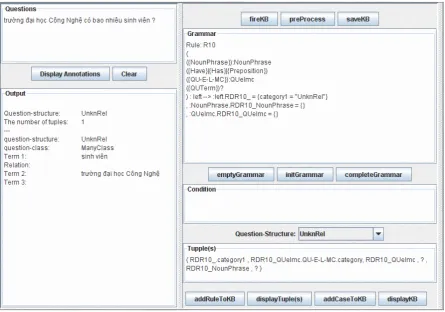
Figure 2: Question Analysis module to create the intermediate representation of question“trường đại học Công Nghệ có bao nhiêu sinh viên?”(“how many students are there in the College of Technology?”).
Supposed we start with an empty knowledge base, the fired rule is default rule that gives empty conclu-sion. This can be corrected by adding the following rule to the knowledge base:
Rule: R10
(
({NounPhrase}):NounPhrase ({Have}|{Has}|{Preposition}) ({QU-E-L-MC}):QUelmc ({QUTerm})?
) : left99K:left.RDR10_ = {category1 = "UnknRel"} , :NounPhrase.RDR10_NounPhrase = {}
, :QUelmc.RDR10_QUelmc = {}
Conclusion: question-structure of UnknRel and
tuple ( RDR10_.category1 ,
RDR10_QUelmc.QU-E-L-MC.category, RDR10_QUelmc , ? , RDR10_NounPhrase , ? ).
If the condition of ruleR10matches the whole in-put question, a new annotation RDR10_ will be created covering the whole input question and new annotations RDR10_NounPhrase and RDR10_QUelmc will be cre-ated to cover sub-phrases of the input question.
If rule R10is fired, the matched input question is deemed to have a query-tuple with question-structure taking the value ofcategory1feature of RDR10_ an-notation, question-class taking the value of category
feature of QU-E-L-MC annotation co-covering the
same span as RDR10_QUelmc annotation,T erm1 is
the string covered by RDR10_QUelmc,T erm2is the
string covered by RDR10_NounPhrase while T erm3
andRelationare unknown.
When we encounter the question:
“trường đại học Công Nghệ có bao nhiêu sinh viên là Nguyễn Quốc Đạt?”(“How many students named Nguyen Quoc Dat are there in the College of Technol-ogy?”)
[RDR10_trường đại học Công Nghệ có bao nhiêu
sinh viên RDR10_] [Are làAre Are] [NounPhrase
Nguyễn Quốc ĐạtN guyen Quoc DatNounPhrase]
RuleR10is the fired rule but gives the wrong con-clusion of question-structure of UnknReland tuple ( UnknRel , ManyClass , sinh viênstudent, ? , trường đại
học Công Nghệthe College of T echnology, ? ). The fol-lowing exception rule was added to knowledge base to correct that:
Rule: R38
(
{RDR10_} ({Are}|{Is}) ({NounPhrase}):NounPhrase
):left 99K :left.RDR38_ = {category1 =
“Three-Term”}
, :NounPhrase.RDR38_NounPhrase = {}
Conclusion: question-structure of ThreeTerm and
tuple ( RDR38_.category1 ,
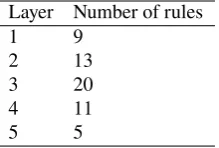
proach, we built a knowledge base of 59 rules including the default one. It took 7 hours to build the knowledge base, which includes 3 hours of actual time to create all rules. The table 4 shows the numbers of rules in English knowledge base layers.
Layer Number of rules
1 9
2 13
3 20
4 11
5 5
Table 4: Number of exception rules in layers in our En-glish SCRDR KB.
As the intermediate representation of our system is different to Aqualog and there is no common test set available, it is impossible to directly compare our ap-proach with Aqualog on the English domain. However, this experiment is indicative of the ability in using our system to quickly build a new knowledge base for a new domain and a new language.
6
Conclusion
We believe our approach is important especially for under-resourced languages where annotated data is not available. Our approach could be combined nicely with the process of annotating corpus where on top of as-signing a label or a representation to a question, the experts just have to add one more rule to justify their decision using our system. Incrementally, an annotated corpus and a rule-based system can be obtained simul-taneously.
The structured data used in the evaluation falls into the category of querying database or ontology but the problem of question analysis we tackle go beyond that, as it is a process that happens before the querying pro-cess. It can be applied to question answering in open domain against text corpora as long as the technique requires an analysis to turn the input question to an ex-plicit representation of some sort.
In this paper, we introduced a language independent approach for systematically acquiring rules for convert-ing a natural language question into an intermediate representation in a question answering system. Experi-mental results of our system on a wide range of ques-tions are promising with accuracy of 86.3% for the Vietnamese corpus. Notably, the time it takes to get the system up to this performance is much less compared to previous works.
In the future, we will extend our system to employ anear matchmechanism to improve the generalization capability of existing rules in the knowledge base and to assist the rule creation process.
Acknowledgements
This work is partially supported by the Research Grant from Vietnam National University, Hanoi No. QG.10.23.
The authors would like to acknowledge Vietnam Na-tional Foundation for Science and Technology Devel-opment (NAFOSTED) for their financial support to present the work at the conference.
References
L. Androutsopoulos. 1995. Natural language inter-faces to databases - an introduction.Nat. Lang. Eng., 1:29–81.
P. Compton and R. Jansen. 1990. A philosophical basis for knowledge acquisition. Knowl. Acquis., 2(3):241–257.
Hammish Cunningham, Diana Maynard, Kalina
Bontcheva, and Valentin Tablan. 2002. GATE: A Framework and Graphical Development Environ-ment for Robust NLP Tools and Applications. In
Proc. of ACL, pages 168–175.
Danica Damljanovic, Valentin Tablan, and Kalina Bontcheva. 2008. A text-based query interface to owl ontologies. InProc. of LREC, pages 205–212.
L. Hirschman and R. Gaizauskas. 2001. Natural lan-guage question answering: the view from here. Nat. Lang. Eng., 7(4):275–300.
Vanessa Lopez, Victoria Uren, Enrico Motta, and Michele Pasin. 2007. Aqualog: An ontology-driven question answering system for organizational seman-tic intranets.Web Semant., 5(2):72–105.
Anh Kim Nguyen and Huong Thanh Le. 2008. Nat-ural language interface construction using semantic grammars. InProc. of PRICAI, pages 728–739.
Dai Quoc Nguyen, Dat Quoc Nguyen, and Son Bao Pham. 2009. A vietnamese question answering sys-tem. InProc. of KSE, pages 26–32.
Dat Quoc Nguyen, Dai Quoc Nguyen, Son Bao Pham, and Dang Duc Pham. 2011. Ripple down rules for part-of-speech tagging. InProc. of CICLing, pages 190–201.
Son Bao Pham and Achim Hoffmann. 2006. Efficient knowledge acquisition for extracting temporal rela-tions. InProc. ECAI, pages 521–525.
Dang Duc Pham, Giang Binh Tran, and Son Bao Pham. 2009. A hybrid approach to vietnamese word seg-mentation using part of speech tags. InProc. of KSE, pages 154–161.