Available Online at www.ijcsmc.com
International Journal of Computer Science and Mobile Computing
A Monthly Journal of Computer Science and Information Technology
ISSN 2320–088X
IMPACT FACTOR: 6.017
IJCSMC, Vol. 6, Issue. 1, January 2017, pg.68 – 76
High Map Shape Estimation from Gray
Real Images based on Integrability
Condition and Fourier Descriptor
Abdullah S. Alotaibi, Gamal F. Elhady
Faculty of Science and Humanities Shaqra University, KSA [email protected], [email protected]
Abstract- Shape is one of the most important features in Content Based Image Retrieval. Recovery of High Map Shape (HMS) is important for applications like robot navigation and human computer interaction. Shape-from-Shading, photometric stereo and shape from contour are three fundamental problems in Computer Vision aimed at reconstructing surface depth given either a single image taken under a known light source or multiple images taken under different illuminations, respectively. Recently there are a several development techniques for reconstruction surface from shading medical images information. This paper presents a new approach for estimating the shape of high map object from its two dimension 2-D shade image in terms of a approximating the height map by a second order of homogenous polynomial. The proposed approach satisfies the integrability condition and does not need any boundary condition assumptions; in this paper, we build a Mabel retrieval framework to evaluation the proposed approach. The experiments on real images show the approaches ability to reconstruction the surface from similarity.
Keywords- Shading Image, Integrability Condition,Fourier Descriptor
I. INTRODUCTION
normalized gray level image function as a probability density of a 2D random variable. The first seven invariant moments, derived from the second and third order normalized central moments. Because moments combine information across an entire object rather than providing information just at a single boundary point, they capture some of the global properties missing from many pure contour-based representations: overall orientation, elongation, etc. The first few terms of the invariant moments, like the first few terms of a Fourier series, capture the more general shape properties while the later terms capture finer detail. However, unlike Fourier series, it is difficult to obtain higher order invariant moments and relate them to shape. Comparing with region based shape representation; contour based shape representation is more popular. Contour based shape representation only exploits shape boundary information; these representation methods can be classified into global shape descriptors [34], shape signatures [14] and spectral descriptors [8]. Although simple to compute and also robust in representation, global descriptors such as area, circularity, eccentricity, axis orientation used in QBIC can only discriminate shapes with large dissimilarities, therefore, it is usually suitable for filtering purpose. Most shape signatures such as complex coordinates, curvature and angular representations are essentially local representations of shape features, they are sensitive to noise and not robust. In addition, shape representation using shape signatures require intensive computation during similarity calculation, due to the hard normalization of rotation invariance. As the result, these representations need further processing using spectral transform such as Fourier transform and wavelet transform. The present work fits into this scheme; we outline a new modeling of the HMS problem and validate it through a practical application. Our final purpose is to design a system that “unwarps” the image, taken by a digital camera and we attempt to change this situation completely and hope to revive the interest of the community for this old problem and its applications.
In this paper, we proposed method using Integrability Condition (IC) to retrieve the high mapping shape from different gray real images. The rest of the paper is organized as following. In Section 2, we give the bidirectional reflectance function. Section 3 describes the problem formulation and in Section 4, we discuss Our Homogenous polynomial algorithm using Integrability Condition. Section 5 gives our experimental results and Section 6 concludes the paper summarizes and the future work.
II. BIDIRECTIONAL REFLECTANCE FUNCTION
The goal in this paper to derive a high map shape description from one or more two deamination real images. The recovered shape can be expressed in several ways: high map depth
Z
(
x
,
y
)
, surface normal(
n
x,
n
y,
n
z)
,surface gradient
(
p
,
q
)
, and surface slant,, and tilt,
. The depth can be considered either as the relative distance from camera to surface points, or the relative surface height above the x-y plane. The surface normal is the orientation of a vector perpendicular to the tangent plane on the object surface. The surface gradient,) , ( ) , (
y z x z q p
The relationship between the brightness I(x,y) and the reflectance map R(Zx,Zy,B,h,ρ) can be expressed in the following form [6,7]:
I
(
x
,
y
)
R
(
P
(
x
,
y
),
Q
(
x
,
y
),
B
,
h
,
)
(1) Where zx=p(x,y) zy=q(x,y),are the surface orientation with respect to x and y axis, B is the illumination direction vector, h is the vector form the surface to the camera, and ρ is the albedo or intrinsic reflectivity of the materials composing the surface, the normal to the surface is denoted as N=(-P,-Q,1) and the unit normal to the surfaceN
defined as [30]:
1
)
1
,
,
(
2
2
Q
P
Q
P
N
(2)The unit vector in light source direction
L
can be written as [30]:2 2 2
z y
x
b
b
b
B
L
(3)Where
B
(
b
x,
b
y,
b
z)
, denotes the illumination direction vector.In the case of the so called lambertian or diffused light source, the reflection property E(x, y) is proportional to the
COS
(
)
where
is the angle between the surface normalN
and the direction of the light sourceL
. The imaging geometry is illustrated in fig.1.The relation between the illumination angle
, surface normal and illumination vectors is:
COS
(
)
L
.
N
(4) and the reflectance map of eq (1) can be rewritten as :
I
(
x
,
y
)
COS
(
)
(5) By substitute from eqs (2)-(4) in eq (5), we obtain the reflectance map [16,17] as:1
)
,
(
2 2 2 2
2
Q
P
b
b
b
b
Qb
Pb
y
x
I
z y x
z y x
(6)Eq (6) is a first order nonlinear partial differential equation in x and y. It has been observed [7] that shape from
shading can be expressed as a problem of solving a first-order nonlinear partial differential equation in x and y. In deriving iterative solutions to eq (6) by the calculus of variations, it appears to be much more straightforward to solve for surface orientation than to solve directly for Z, the question of consistency between P(x,y) and Q(x,y) arises [31] and leads us to search for an integrable solution. The integrability condition is defined as :
x
y
x
Q
y
y
x
P
(
,
)
(
,
)
(7) A nonintegerable solution will give rise to an infinite number for solutions for the problem of shape from shading.
An iterative solution for eq.(6), seek P(x,y) and Q(x,y) values that minimize the mean square error (MSE),
2
))
,
(
)
,
(
(
I
x
y
R
x
y
, between the original gray scale image I(x,y) and the computed gray scale image resulted from substituting P(x, y) and Q(x,y) in the reflectance map R(P(x, y), Q(x, y),). The requirement of smooth P(x, y)and Q(x,y) can be achieved in terms of the second partial derivatives
P
2,
Q
2,
P
2,
Q
2 [30].Brooks, Horn and Ikeuchi developed an iterative algorithm that minimizes the cost function [6, 12]. Although the algorithm converges to a solution for the surface orientation P(x,y) and Q(x,y), the solution does not satisfy integrability condition ([31], [32]).
Robert T. Frankot and Ramma Chellappa, [19], overcome the integrability problem by using Fourier transform as a transition stage to satisfy the integrability condition by projecting the nonintegerable solution into its nearest integrable solution in the Fourier domain. Although they achieved their aim of integrable solution, the algorithm reflects high computational complexity since they need to use Fourier transform at every iteration to satisfy the integrability in Fourier domain then come back to time domain using inverse Fourier transform.
III.PROBLEM FORMULATION
Lambert’s equation provides insufficient information to uniquely determine the surface normal direction. However, the equation does have a simple geometric interpretation which can be used to constrain the direction of the surface normal. The equation specifies that the surface normal must fall on the surface of a right-cone whose axis is aligned in the light-source direction
L
and whose apex angle is cos-1 (I (i; j)). This property has recently been exploited by Worthington and Hancock [33] to develop a two-step iterative process for shape mapping estimation. The process commences from a configuration in which the surface normal are placed on the position on the irradiance cone where their projections onto the image plane are aligned in the direction of the local (Canny) image gradient. The problem of finding integrable solution in the HMS problem can be simplified if the unknown surface height is represented in a form that satisfies the integrability condition. The unknown surface height Z(x,y)can be expanded on a complete set of basis function
ij(
x
,
y
)
multiplied by a set of expansion coefficientsij
a
such that:
n i ij ij n iy
x
a
y
x
Z
0 0)
,
(
)
,
(
(8) The surface orientation P(x, y) and Q(x, y) can be written as:
n i ij ij n ix
y
x
a
y
x
P
0 0)
,
(
)
,
(
(9)
n i ij ij n iy
y
x
a
y
x
Q
0 0)
,
(
)
,
(
(10)The proposed method depends on estimating the values of
a
ijthat minimize the cost function (U) based on MSE criterion such that:-U(x,y) (((E(x,y) R(aij)) (Px 2Py Qy))dxdy
2 2 2
2
(11) Where the first term represented the square of the difference between the image brightness and the resultant brightness using the reflectance map R(p(x, y),q(x, y)), the second term represents the smoothness, where Px(x, y),Qx(x, y), Py(x, y), and Qy(x ,y) represents the derivatives of the surface and
is constant. The estimation process isbased on MSE minimization procedure.
IV.HOMOGENOUS POLYNOMIAL AND FOURIER DESCRIPTORS ALGORITHM
A homogeneous polynomial is a polynomial whose nonzero terms all have the same degree. Also a polynomial is homogeneous if and only if it defines a homogeneous function. We define function
ij(
x
,
y
)
that satisfy thehomogenous polynomial with order n and take the form as the following:
n i n i Y X j i ij j ie
Y
X
y
x
0 0 ) ( 2)
(
)
,
(
(12)Then the surface of height map Z(x, y) can be written as:-
n i Y X j i n i ij j ie
Y
X
a
y
x
Z
0 ) ( 2 0)
(
)
,
And the surface orientation P(x, y) and Q(x, y) can be denoted as:
n i Y X i j i n i ij j ie
Y
iX
a
y
x
P
0 ) ( 2 1 0)
(
)
,
(
1 (14)
n i Y X j j i n i ij j ie
Y
jX
a
y
x
Q
0 ) ( 2 1 0)
(
)
,
(
1 (15)Where the surface second derivatives
P
x,
Q
x,
P
y,
Q
y, satisfy the integrability conditionW
y
x
Q
y
x
P
y(
,
)
x(
,
)
such that:
n i Y X ij j i n i ij j ie
Y
ijX
a
y
x
W
0 ) ( 2 1 1 0)
(
)
,
(
1 1 (16) The coefficienta
ijare estimated using the following recursive relation [19]:IJ
A k
ij
ij
a
E
x
y
R
x
y
R
a
(
(
,
)
(
,
))
(17)Where
is constant, (k) denotes the iteration number, andij ij A
a
a
R
R
IJ
(
)
The coefficient
a
ijcan be smoothed using the following relation [19, 14]:
[
]
20
1
]
[
5
1
1 , 1 1 , 1 1 , 1 1 , 1 , 1 , 1 1 , 1 ,
ij ij i j i j i j i j i j i jij
a
a
a
a
a
a
a
a
a
(18) Horn ([7], [10]) used the idea of gradient space and characteristic strip developed by Marckworth [4] to solve the problem of HMS. The characteristic strip method has several disadvantages [11]. The proposed approach procedure satisfies the integerability condition and provides shape estimation with low computational complexity; the algorithm can be summarized as following code:Algorithm: HMS Code.
1: Input shading image with light source direction , ρ =0.05, and =2000. 2: Start with initial random values for
3: Estimate a new value of using Eq (17) 4: Smooth the previous values using Eq (18) 5: Compute the cost function Eq (11).
6: Repeat the previous step (3) until the cost function step (5) stop decreasing or become sufficiently small. 7: Compute the surface height from Eq (13).
8: End
The parameters
(
b
x,
b
y,
b
z)
and ρ were estimated by Zheng and Chellappa method [29]. The parameter lamda is always positive, and was determined experimentally.V. RESULTS AND DISCUSSIONS
VI.SUMMARY AND FUTURE WORK
In this paper, we present Homogenous Polynomial Algorithm to estimation High Map Shape from single 2D gray scale image illuminated by a single source of illumination. High map estimation studied in the present paper is directed in the case of gray scale stationary images, which can be extended to estimate the High Map Shape from color images. The lambertian constraint on the High map estimation problem can be extended to estimate to High map estimation of stationary object of nonlambertain object. Also the constrain of single source of illumination can be extended to study High map estimation problem in the case of uniform source of illumination.
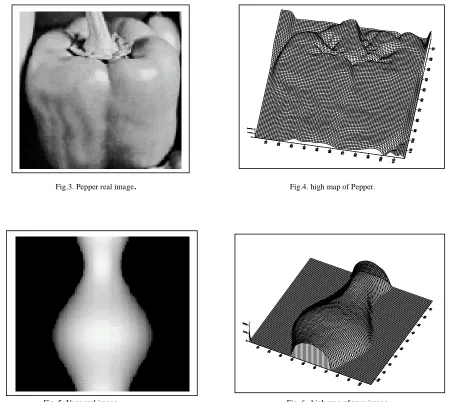
Fig .5. Vase real image Fig.3. Pepper real image
.
REFERENCES
[1] A. Robles-Kelly and E. R. Hancock. Model acquisition using Shape from Shading. In F. J. Perales and E. R. Hancock, editors, Intl. Workshop on Articulated Motion and Deformable Objects, pages 43–55, Palma de Mallorca, Nov. 2002.
[2] A. Tankus, N. Sochen, and Y. Yeshurun. A New Perspective [on] Shape-from-Shading. In Proceedings of the 9
th
IEEE International Conference on Computer Vision, Volume (11), pages 862–869, Nice, France, Oct.2003.[3] A. Tankus, N. Sochen, and Y. Yeshurun. Perspective Shape from Shading by Fast Marching. In Proceedings of
the IEEEComputer Society Conference on Computer Vision and PatternRecognition, Washington, DC, Jun.–
Jul. 2004.
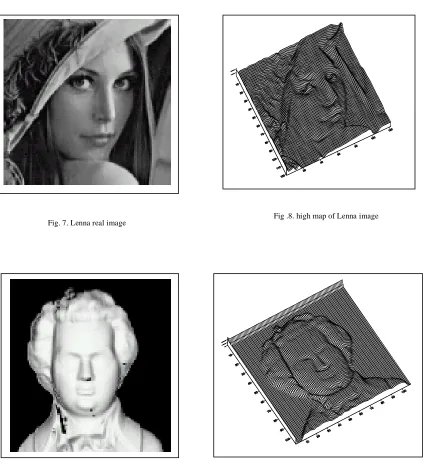
Fig .8. high map of Lenna image Fig. 7. Lenna real image
Fig. 9. Mannpe image
[4] A. Ogale and Y. Aloimonos, “Stereo correspondence with slanted surfaces: critical implications of horizontal slant,” Proc. IEEE Conf. Computer Vision and Pattern Recognition, vol. 1, pp. 568–573, June 2004.
[5] Bao, S.Y, Savarese, S," Semantic structure from motion" Computer Vision and Pattern Recognition (CVPR),
IEEE Conference, pp, 2025 – 2032, 2013.
[6] Bo Wua , Wai Chung Liua , Arne Grumpeb , Christian Wöhlerb "SHAPE AND ALBEDO FROM SHADING (SAfS) FOR PIXEL-LEVEL DEM GENERATION FROM MONOCULAR IMAGES CONSTRAINED BY LOWRESOLUTION DEM"The International Archives of the Photogrammetry, Remote Sensing and Spatial
Information Sciences, Volume XLI-B4, 2016 XXIII ISPRS Congress, 12–19 July 2016, Prague, Czech Republic
[7] B. K. P. Horn, "Shape from shading: a method for obtaining the shape of smooth opaque object from one view",
Ph. D. dissertation (Massaschusetts Institute of Technology), Cambridge, Mass. 1970.
[8] Barron, J. T. and Malik, J., 2011. High-frequency shape and albedo from shading using natural image statistics.
2011 IEEE Conference on Computer Vision and Pattern Recognition, Providence, RI, USA, pp. 2521-2528.
[9] Chung-Lin Huang and Dai-Hwa Huang. A Content-based image retrieval system. Image and Vision Computing, 16:149-163, 1998.
[10]C. H. Lee and A. Rosenfeld. “Improved method of estimating shape from shading using light source coordinate system” in B. K. P. Horn and M.J. Brooks, Eds.,“Shape from shading” Cambridge, MA: MIT Press, pp 323-569, 1989.
[11]E. Prados, F. Camilli, and O. Faugeras. A viscosity method for Shape from Shading without boudary data.
Technical report, INRIA, To appear in 2004.
[12]E. Prados and O. Faugeras. A mathematical and algorithmic study of the lambertian SFS problem for orthographic and pinhole cameras. Technical Report RR-5005, INRIA, November 2008.
[13]E. Prados and O. Faugeras. Perspective Shape from Shading and Viscosity Solutions. In International
Conference on Computer Vision, 2003, pages 826–831.
[14]E. R. Davies. Machine Vision: Theory, Algorithms, Practicalities. Academic Press, 1997
[15]Gabriel Taubin and David B. Cooper. Recognition and Positioning of Rigid Objects Using Algebraic Moment Invariants. SPIE Conf. On Geometric Methods in Computer Vision, vol. 1570, pp.175-186, 1991.
[16]Grumpe, A., Belkhir, F., Wöhler, C., 2014. Construction of lunar DEMs based on reflectance modelling.
Advances in Space Research, 53, pp. 1735-1767.
[17]Hapke, B., 2012. Theory of Reflectance and Emittance Spectroscopy. 2nd edition. Cambridge University Press,
Cambridge, UK.
[18]Jump up "A Photometric Stereo Approach to Face Recognition". University of the West of England. Retrieved 2011-03-27.
[19]Jump up, Chaman Singh Verma and Mon-Ju Wu. "Photometric Stereo". University of Wisconsin-Madison.
Retrieved 2015-03-24.
[20]Jump up , Miao Liao, Xinyu Huang and Ruigang Yang, 2011. Interreflection Removal for Photometric Stereo by Using Spectrum-dependent Albedo. In 2011 IEEE Conference on Computer Vision and Pattern Recognition, pages 689-696. IEEE.
[21]Jump up, Tongbo Chen, Hendrik Lensch, Christian Fuchs and H.P. Seidel, 2007. Polarization and Phase-shifting for 3D Scanning of Translucent Objects. In IEEE Conference on Computer Vision and Pattern
Recognition, 2007, pages 1-8. IEEE.
[22]J. Valmadre and S. Lucey. Deterministic 3d human pose estimation using rigid structure. In European
Conference on Computer Vision (ECCV), 2010.
[23]K. Ikeuchi and B. P. Horn, ''Numerical shape and occluding boundaries'' Artificial Intelligence., C A, Aug. 1985 pp 932-936.
[24]Lyes Abada, Saliha Aouat " A Machine learning approach for Shape From Shading"2nd International
Conference on Signal, Image, Vision and their Applications (SIVA'13), November 18-20, 2013 - Guelma,
Algeria
[25]M. Bichsel and A. P. Pentland. A simple algorithm for Shape from Shading. In Computer Vision and Pattern
Recognition, pages 459– 465, 1992.
[26]Ms. Shipra Khurana , Ms. Komal “Content based Medical Image Retrieval using Shape Descriptors"
International Journal of Latest Research in Science and Technology ,Vol.1,Issue 2 :Page No.115-119
,July-August(2012).
[27]Omar E. Vega Hong andYang ''Shading Logic: A Herurisistic Approach to Recover Shape from shading'' IEEE
Transaction on Pattern Analysis and Machine Intelligence, Vol. 15, No. 6 June 1999.
[29]Q. Zheng and R. Chellappa. Estimation of illuminant direction, albedo, and shape from shading. Trans. on
PatternAnalysis and Machine Intelligence, 13 (7):680–702, 1991.
[30]R. Datta, D. Joshi, J. Li, and J.Z. Wang, "Image Retrieval: Ideas, Influences, and Trends of the New Age," ACM Computing Surveys, Vol. 40, No. 2, April, 2016.
[31]R. T. Frankot and R. Chellppa. ''A Method of inforcing Integerability in shape from shading'' IEEE Trans. on
pattern analysis and Machine. Intelligence. Vol. 10, No 4, July 1989.
[32]R. T. Frankot and Chellappa, ''An improved algorithm for the shape from shading problem'', in Proc. Indian
Inst. Sci. Conf Syst Signal Procecss Bangalore, India, Dec. 11-13, 1986.
[33]R. Zhang, P.-S. Tsai, J.-E. Cryer, and M. Shah. Shape from Shading: A survey. IEEE Transactions on Pattern
Analysis and Machine Intelligence, 21(8):690–706, August 2015.
[34]W. Niblack et al. The QBIC Project: Querying Images By Content Using Color, Texture and Shape. SPIE Conf.
On Storage and Retrieval for Image and Video Databases, vol 1908, San Jose, CA, pp.173-187, 1993.