Review Article
Artificial intelligence and machine learning: changing paradigm in
diagnostics and imaging
Rahul Badwaik*
INTRODUCTION
The term Artificial Intelligence (AI) was initially coined by Prof. John McCarthy during a conference on the subject held at Dartmouth in 1956.1 Prof. McCarthy
defined AI as the science and engineering of making intelligent machines, especially intelligent computer programs. The word ‘artificial’ could be attributed to the task of using computers to understand human intelligence. However, ‘intelligence’ is the computational part of the ability either to complete a given task or to achieve a goal. In simpler words, AI is the ability of either a machine or a computer program to think and learn by impersonating human cognitive functions. Thus, the goal of AI can be to develop machines that are able to carry out tasks that would otherwise require human intelligence. On the contrary, Machine Learning (ML) can be defined as the scientific discipline that focuses on how computers learn from the provided data and become more accurate in predicting outcomes without being explicitly programmed.2 Further, ML not only heavily
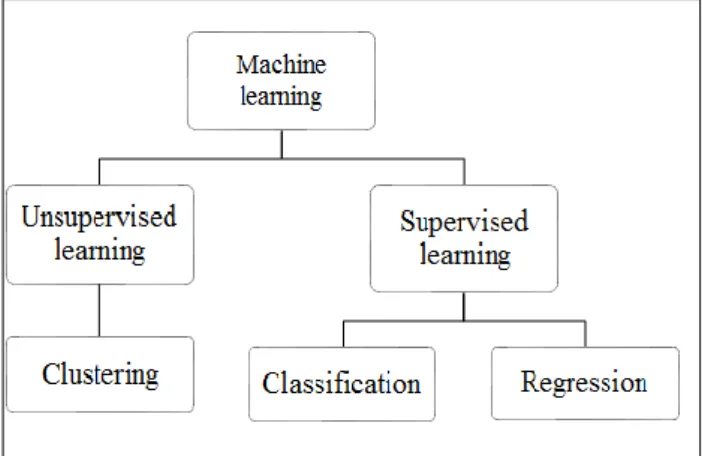
emphasizes on efficient computing algorithms, but also uses statistics to learn relationships from data. Machine learning problems can be broadly classified into two sub-categories: a) supervised learning and b) unsupervised learning (Figure 1).3
Figure 1: Machine learning techniques.
Vice President, Medical, Raptakos Brett and Co. Ltd Mumbai, Maharashtra, India
Received: 20 September 2019 Revised: 08 November 2019 Accepted: 15 November 2019
*Correspondence: Dr. Rahul Badwaik,
E-mail: [email protected]
Copyright: © the author(s), publisher and licensee Medip Academy. This is an open-access article distributed under the terms of the Creative Commons Attribution Non-Commercial License, which permits unrestricted non-commercial use, distribution, and reproduction in any medium, provided the original work is properly cited.
ABSTRACT
Healthcare industry is currently undergoing a digital transformation, and Artificial Intelligence (AI) is the latest buzzword in the healthcare domain. The accuracy and efficiency of AI-based decisions are already been heard across countries. Moreover, the increasing availability of electronic clinical data can be combined with big data analytics to harness the power of AI applications in healthcare. Like other countries, the Indian healthcare industry has also witnessed the growth of AI-based applications. A review of the literature for data on AI and machine learning was conducted. In this article, we discuss AI, the need for AI in healthcare, and its current status. An overview of AI in the Indian healthcare setting has also been discussed.
Keywords: Artificial intelligence, Deep learning, Healthcare, Imaging, Machine learning
A supervised learning problem typically starts with predicting a known target. Predictive models are created with output data based on a given input set of records (training set). The computer algorithm accepts a set of labeled stimuli (training set) and returns a classifier that can rest of the stimuli, similar to those in the training set. Alternatively, there are no outcomes to predict in unsupervised learning problems. Instead, the task is to find naturally occurring patterns or grouped structures in the given data and label them appropriately using clustering. Supervised learning problems can be further classified into regression and classification problems, depending on whether the outcome or dependent variable is continuous or discrete. Overall, the algorithm eventually learns how to best reproduce an existing dataset in order to be used for categorization for prediction in the future.4
REVIEW OF LITERATURE
Review of literature was performed using PubMed, Cochrane and Google scholar databases. The keywords artificial intelligence, AI tools, machine learning, health records, chatbots, cancer, and oncology were used to review the literature. All the available literature was collected and reviewed to select the relevant articles for the present review.
DISCUSSION
Need of intelligent data analysis in medical research
The healthcare industry is currently undergoing a major transformation to adopt and implement newer, more effective and innovative ways to accelerate healthcare delivery. The paradigm of healthcare delivery is slowly shifting from treatment to value-based treatment.
Accurate diagnosis and timely treatment initiation play a key role in value-based treatment. Additionally, a widening gap between the demand and supply of qualified physicians have put more pressure on the healthcare delivery system. A study published by Goodman and Fisher has linked physician crisis with the wrong diagnosis and wrong prescription.5 Diagnostic
errors not only prevent or delay appropriate treatment, but they might also force patients to undertake unnecessary or harmful treatment or may lead to financial or psychological consequences.
Increasing availability of Electronic Health Records (EHR)
In general, it takes a lot of time and money to recruit and manage physicians in many specialties. However, with the advent of Electronic Medical Records (EMR), it is now possible to easily capture, manage, and share patient-specific hospital data with different stakeholders (e.g., insurance agencies, other hospitals). Such data can be subjected to exploratory data analysis techniques of
ML and high-dimensional visualization techniques to extract clinically useful information. Additionally, over a period of time, increasing the availability of categorized diagnostic results (positive or negative results) in digital format can be further utilized to train ML algorithms.
The AI algorithms need to be trained to identify important characteristics (e.g., screening, diagnostics, and treatment assignment) of digital clinical data (EMR), so that they can learn to identify similar groups of subjects and can correlate these characteristics with outcomes of interest.6 In general, these clinical data could be captured
in the form of medical notes, electronic recordings from devices, clinical laboratory examinations, and diagnostic images.7
In the diagnostic domain, most of the AI tools are created to analyze data that are generated from medical imaging and electro diagnosis. Medical diagnostics fall under a category of medical tests that are designed to detect infections, medical conditions, and diseases. These medical diagnostics come under In Vitro medical Diagnostics (IVD). As per a report, the IVD market is expected to increase to $76 billion by 2023 and increase its influence over healthcare spending globally.8
Moreover, the aging population, prevalence of chronic diseases, and the emergence of personalized medicine are factors contributing to the IVD market size growth.
Looking at the vast potential, recently researchers have been urging clinicians to adopt AI technologies when analyzing diagnostic imaging. Diagnostic images contain lot more information than written laboratory reports, e.g., when exploring the uses of abnormal genetic expression in long non-coding RNAs to diagnose gastric cancer or to develop an electrodiagnosis support system for localizing neural injury.9-11 Conversely, text-based reports like
physical examination notes and laboratory results contain large amount of unstructured narrative texts. These reports could not be analyzed as such by AI tools directly. In such cases, the data needs to be first converted to machine-understandable EMRs.
Paradigm shift from conventional methods to AI: current applications of AI in medical diagnostics
Many of the modern machine learning diagnostic applications can be broadly categorized under three categories: a) chatbots b) oncology and c) pathology (Figure 2).12
Chatbots
pharmacy for over-the-counter medication for basic
symptoms. For serious symptoms, a chatbot can help the user book an appointment with a specialist or may suggest the user to dial emergency hotline in the local area. For example, Berlin based Ada Health offers a chatbot that provides recommendations based on patient symptoms and health information, using AI and ML platform operating in the backend.13
Figure 2: Applications of ai in medical diagnostics.
Oncology
Deep learning algorithms can be trained to diagnose different types of cancer. A recent study demonstrated the reliability of IBM Watson's AI system for oncology for assisting the diagnosis of cancer through a double-blinded validation study using 638 breast cancer cases.14
Similarly, researchers have used AI to analyze clinical images to identify skin cancer and its subtypes.15 The
algorithm not only matched the performance of certified dermatologists, but it was also able to accurately diagnose skin lesions of the most common and deadliest skin cancers.
Pathology
AI is also making its way into pathology that largely remained unchanged over a century and mostly relied on manual observation of images under a microscope. A research team from Harvard Medical School and Beth Israel Deaconess Medical Center recently developed AI methods aimed at training computers to interpret pathology images with the long-term goal of building AI-powered systems to make pathologic diagnoses more accurate.16
The researchers labeled hundreds of images with regions showing cancerous and noncancerous cells. The labeled regions were used to train the AI algorithm. It was found that the algorithm demonstrated similar diagnostic success rate when compared to human pathologists. However, almost 100% accuracy was achieved when algorithm and human results were combined.
The Indian perspective of AI in healthcare
With the ever-increasing penetration of mobile-enabled smart phones, the role of AI in healthcare cannot be ignored. Affordable and efficient healthcare delivery is part of important social missions, especially in a developing country like India. Not only there is a shortage of trained physicians, but also a large number of patients need to be treated by nurses or paramedical health workers. Majority of the problems of patients from a particular area are same, repetitive in nature, and are treatable with few safe, essential drugs. In 1998, an Early Detection and Prevention System (EDPS) was developed in India for those rural clinics that did not have a physician. The EDPS provided guidance and recommendations to available nurses or paramedical staff for recurrent cases. A study conducted by Kempegowda Institute of Medical Science in Bangalore, India showed that the overall rate of consistency between the EDPS and physicians was 94% for 933 patients.17 This study can be
considered as one of the early works done in primary health setting that used basic AI techniques. In addition to the application of AI technology in primary health settings, many AI-driven platforms have been recently found to be working to increase the efficacy and speed of clinical diagnostics in India. In recent times, a large number of AI- and ML-based start-ups have emerged and flourished in India. These start-ups majorly focus on various routine tasks that need automation.
The founders of Artelus focused on detecting diabetic retinopathy cases using deep learning algorithms. Patient’s retina image is captured and analyzed. Diabetic retinopathy can be detected within three minutes and a detailed report can be generated quickly. The company is also working to develop early detection tools for tuberculosis, breast cancer and lung cancer with the help of its AI screening platform.18 Another recent start-up
named Chiron X (previously Advenio Technosys) detects diseases from a large database of medical images.19 Its
auto diagnostic software uses complex image processing AI algorithms, classical machine learning techniques, and deep learning algorithms. Currently, Chiron X is working for retinal abnormality detections and acute respiratory infections. Another Bangalore based start-up Niramai (Non-Invasive Risk Assessment with Machine Intelligence) created a ML software that helps detect breast cancer at a much early stage, thereby helping the patients with early cancer diagnosis.20 It uses a
high-resolution thermal sensing device and a cloud hosted analytics solution for analyzing the thermal images. Apart from a sturdy device for hospitals, the company also offers a low-cost handheld device with real time cloud-based diagnostics for independent medical practitioners.
On a different line, a relatively old start-up Onco-Stem diagnostic developed tests that help identify patterns of cancer recurrence.21 They investigate molecular signature
learning approach. They had already created tests for breast cancer and are currently working to develop tests for oral, lung, and colorectal cancer.
Another recent start-up Qure.ai uses large datasets of medical information to develop its deep learning algorithms.22 They have three products to offer: qXR,
qER, and qQuant. The qXR module is trained with a million of curated X-ray scans and can detect abnormal chest X-rays and localize 15 common abnormalities. The qER module is for diagnostic assistance in head CT scans and not only detects critical abnormalities like bleeds, fractures, and midline shift, but also localizes them and quantifies their severity. The third module offered by Qure.ai is qQuant, which is used for quantification and progression monitoring products for CT scan and MRI scan and have fully automated detection, quantification, and 3D visualization capabilities.
Another notable start-up is SigTuple, which is building an AI platform to help identify and characterize visual data more efficiently.23 The company specialized in the
analysis of peripheral blood smears, urine microscopy, semen screening, fundus screening, Optical Coherence Tomography (OCT) scans, and chest X-rays. Their solution automates routine tasks like blood differential counts and provides screening solutions for malaria and anemia. The blood smear slides are captured on a phone that is fitted on a microscope. Using deep learning and image processing tools it is then analyzed. Based on this image analysis, it generates blood reports and suggests abnormalities in the blood. This report can be shared through the internet and reviewed by pathologists anywhere in the world.
CONCLUSION
Author reviewed an overview of using AI and ML in healthcare, presented various perspectives in healthcare data that AI has analyzed, and surveyed some major diseases where AI has been deployed in action. We then reviewed some exciting work that has been undertaken in India via various start-up companies.
Although AI technologies are attracting substantial attention in medical research, the real-life implementations are still going to face obstacles. There are two possible hurdles that the AI platform developers might face. The first hurdle comes from the regulators. In most of the places across the world, current regulations lack the standards to assess the safety and efficacy of AI system. To address this, the US FDA had recently made the first attempt to provide guidance for accessing AI based solutions.24 In a recent news, FDA had started
providing approval to AI based tools.25 The first tool to
get FDA marketing clearance was Osteo Detect, a tool designed to detect wrist fractures in adult patients. The FDA granted marketing authorization of the Osteo Detect device to Imagen.26 This seems to be good news for AI
developers, but only time will tell how regulatory
agencies across the globe are drafting regulations for their country. The second problem could be continuous training of the algorithm with quality data. Since AI based tools need to be continuously trained with quality data from larger clinical studies, continuation of the quality data supply becomes a crucial issue for further improvement of the algorithm.
As of now, there are multiple small players in the market bringing their unique algorithms, and all are mostly working alone. Moreover, unless there is any incentive or gain to the organization for sharing the data in a common format, it would be difficult to share huge amount of curated data from one platform to another. Another small concern is how the decisions of AI tools are looked upon in the market by other stakeholders (e.g., insurance companies accepting AI-generated reports towards reimbursement). The primary focus is to develop AI tools that can be used in high-risk conditions like cancer and heart diseases and contribute toward faster diagnosis and better outcome prediction.
Funding: No funding sources Conflict of interest: None declared Ethical approval: Not required
REFERENCES
1. Artificial Intelligence. Professor John McCarthy Father of AI. Available at:
http://jmc.stanford.edu/artificial-intelligence/index.html. Accessed 22 September 2019.
2. O'Mahony C, Jichi F, Pavlou M, Monserrat L, Anastasakis A, Rapezzi C, et al. A novel clinical risk prediction model for sudden cardiac death in hypertrophic cardiomyopathy (HCM risk-SCD). Euro Heart J. 2013 Oct 14;35(30):2010-20.
3. Majaj NJ, Pelli DG. Deep learning -Using machine learning to study biological vision. J Vision. 2018 Dec 3;18(13):2.
4. de Saint Laurent C. In defence of machine learning: Debunking the myths of artificial intelligence. Euro J Psychol. 2018 Nov;14(4):734-47.
5. Goodman DC, Fisher ES. Physician workforce crisis? Wrong diagnosis, wrong prescription. New Eng J Med. 2008 Apr 17;358(16):1658-61.
6. US Food and Drug Administration. Guidance for industry: electronic source data in clinical investigations. Silver Spring: FDA; 2013:15. 7. Jiang F, Jiang Y, Zhi H, Dong Y, Li H, Ma S, et al.
Artificial intelligence in healthcare: past, present and future. Stroke Vascular Neurol. 2017 Dec 1;2(4):230-43.
8. Research and Markets. In-Vitro Diagnostics (IVD) Market Report: Market Expected to Increase to $76 Billion by 2023, Increasing its Influence over Healthcare Spending Globally. 2017. Available at:
Diagnostics-IVD-Market-Report-Market-Expected- to-Increase-to-76-Billion-by-2023-Increasing-its-Influence-over-Healthcare-Spending-Globally.html. Accessed 22 September 2019.
9. Gillies RJ, Kinahan PE, Hricak H. Radiomics: images are more than pictures, they are data. Radiol. 2015 Nov 18;278(2):563-77.
10. Li CY, Liang GY, Yao WZ, Sui J, Shen X, Zhang YQ, et al. Integrated analysis of long non-coding RNA competing interactions reveals the potential role in progression of human gastric cancer. Int J Oncol. 2016; 48(5):1965-76.
11. Shin H, Kim KH, Song C, Lee I, Lee K, Kang J, et al. Electrodiagnosis support system for localizing neural injury in an upper limb. J Am Med Infect Assoc. 2010 May 1;17(3):345-7.
12. Sennaar K. Machine Learning for Medical Diagnostics – 4 Current Applications. Available at: https://emerj.com/ai-sector-overviews/machine- learning-medical-diagnostics-4-current-applications/. Accessed 22 February 2019.
13. Ada health GmbH 2018. Available at: https://ada.com. Accessed 15 September 2019. 14. Somashekhar SP, Kumarc R, Rauthan A, Arun KR,
Patil P, Ramya YE. Double blinded validation study to assess performance of IBM artificial intelligence platform, Watson for oncology in comparison with Manipal multidisciplinary tumour board-First study of 638 breast cancer cases. Cancer Res. 2017;77(4 Suppl):abstract S6-07.
15. Esteva A, Kuprel B, Novoa RA, Ko J, Swetter SM, Blau HM, et al. Dermatologist-level classification of skin cancer with deep neural networks. Nature. 2017 Feb;542(7639):115.
16. Dong F, Irshad H, Oh EY, Lerwill MF, Brachtel EF, Jones NC, et al. Computational pathology to discriminate benign from malignant intraductal proliferations of the breast. PloS One. 2014 Dec 9;9(12):e114885.
17. Sudarshan MK, Mahendra BJ, Ramesh Masthi NR. Early Detection and Prevention System EDPS2000-Validity Study of Diagnostic Capabilities, Department of Community Medicine, Kempegowda Institute of Medical Sciences (KIMS), Bangalore; December 2002.
18. Artelus. Artificial Learning System. Available at: http://artelus.com. Accessed 15 September 2019. 19. CHIRONX. Available at: https://chironx.ai.
Accessed 15 September 2019.
20. Niramai. Available at: https://www.niramai.com. Accessed 15 September 2019.
21. OnceStem Diagnostics. Available at: https://oncostem.com. Accessed 15 September 2019.
22. qure.ai. Available at: http://www.qure.ai. Accessed 15 September 2019.
23. SigTuple. Available at: https://sigtuple.com. Accessed 15 September 2019.
24. Graham J. Artificial Intelligence, Machine Learning, and the FDA. 2016 Available at: https://www.forbes.com/sites/theapothecary/2016/0 8/19/artificial-intelligence-machine-learning-and-the-fda/#4aca26121aa1. Accessed 15 September 2019.
25. FDA permits marketing of artificial intelligence algorithm for aiding providers in detecting wrist fractures. May 24, 2018. Available at: https://www.fda.gov/newsevents/newsroom/pressan nouncements/ucm608833.htm. Accessed 15 September 2019.
26. IMAGEN. Available at: https://imagen.ai. Accessed 15 September 2019.