R
ECENT
U
RBANISATION AND THE
C
HALLENGES
IN
C
APITALISING UPON THE
B
UILT
H
ERITAGE IN
THE
N
ORTHERN
A
REA OF
B
UCHAREST
Florentina-Cristina MERCIU
Second Scientific Researcher, PhD, University of Bucharest, Faculty of Geography, Interdisciplinary Center of Advanced Research on Territorial Dynamics, e-mail: [email protected]
George-Laurenţiu MERCIU
Researcher PhD, University of Bucahrest, Faculty of Geography, Department of Geomorphology, Pedology, Geomatics e-mail: [email protected]
George SECĂREANU
Researcher Assistent, PhD, University of Bucharest, Faculty of Geography, Interdisciplinary Center of Advanced Research on Territorial Dynamics, e-mail:[email protected]
Andreea-Loreta CERCLEUX
Associate Professor, PhD, University of Bucharest, Faculty of Geography, Interdisciplinary Center of Advanced Research on Territorial Dynamics, e-mail: [email protected]
Abstract. The northern area of Bucharest has experienced a more recent urban development by including in the administrative limits, in successive stages, throughout the twentieth century, some suburban communes transformed into neighborhoods of the capital city as a result of the increasingly accelerated trend of the socio-economic development of Bucharest. This evolution was also favored by the construction of infrastructure elements (Băneasa Airport, Băneasa Railway Station), but also of cultural heritage elements (villas of Romanian cultural personalities), buildings that have a certain historical architectural and cultural value. The aim of this study is to analyze the cultural heritage of the northern area of Bucharest, based on a multicriteria evaluation (functional-chronological criterion correlated with the territorial one), of the historical monuments, in order to outline a series of measures of optimum capitalisation from the cultural and tourist perspective. Because the Northen area of Bucharest is individualized by cultural obiectives that represent symbolic elements of the capital city due to the functions they perform (representative museums, presidential station), the authors proposed several cultural routes in order to
bring to light these valuable cultural objectives and to better capitalize them.
Key words: urban heritage, cultural identity, functional-chronological criterion, cultural conversion
1. Introduction
The urban heritage is distinctive due to the long evolution of the urban centres, which led to the creation of a landscape steeped in history, marked by valuable monuments from an architectural, historical and cultural point of view, to which a multitude of identities is linked on different scales (local, regional, national) (Ilovan et al., 2018; Ochkovskay and Gerasimenko, 2018; Vesalon and Creţan, 2019; Kádár and Benedek, 2019; Coman, 2009). The spatial projection of cultural identity delimits territorial entities, focused on tangible and non-tangible heritage. In the above-mentioned analysis, the processes of reaffirming the local identity and its conservation are encouraged, with the role of increasing the resistance to change of the local communities, but also with the aim to fight against exclusion and uniformity, aspects generated by globalization (Roca and Oliveira-Roca, 2007).
The issue of cultural heritage, and especially its urban side, requires an interdisciplinary and multifaceted approach due to the fact that urban space is constantly changing. This situation negatively influences the urban heritage, threatened to be destroyed due to the accelerated urban development, which requires active conservation measures (Veldpaus et al., 2013; Yilmaz et al., 2014; Stan, 2017; Hamma et al., 2018; Merciu et
al., 2018a; Moscovici et al., 2019; Fantazi et
al., 2019). The aspects of cultural heritage are often viewed as an obstacle to urban development (Fairclough et al., 2008;
Pendlebury, 2013), as a result of strict conservation policies as well as their evolution. Therefore, if in the first part of the twentieth century the preservation and individual restoration of monuments or of the urban assemblies (object-based approach) (Veldpaus et al., 2013, p. 4) are discussed, starting with the second part of the twentieth century the heritage management culture has been designed on an urban scale (Fairclough et al., 2008; Allen, 2012; Guzman et al., 2018).
The complexity of the study on the built cultural heritage is conferred by the diversity of the analyzed aspects: typology, manner of conservation and restoration (Allen, 2012; Prelipcean, 2018; Carbonara, 2018; Abate, 2019; Jimenez and Gutierrez-Carrillo, 2019; Marvasi et
al., 2019; Randazzo et al., 2020), the risks that may affect historical monuments: the anthropic risks (Fairclough et al., 2008; Spiridon et al., 2017; Nicu, 2017; Lyu et al., 2019; Bulai et al., 2019; Grecu et al., 2019), or the natural ones (Orchiston, 2012; Nicu, 2017; Guzman et al., 2018; Qualiarini et al., 2019; Spiridon et al., 2017; Merciu et al., 2018a; Sesana et al., 2020); their multiple valences (historical, commemorative, aesthetic, cultural, spiritual, educational, symbolic, economic) that most often intersect (Stephenson, 2008; Ferretti et al., 2014; Drăghici et al., 2015; Matečić, 2016; Polat and Demirel, 2016; Vukonić, 2018); energy efficiency of heritage buildings (Lidelöw et al., 2019; Galiano-Garrigós et
al., 2019); the use of modern non-invasive technologies for the monitoring,
conservation and promotion of cultural heritage (Esmaielzadeh et al., 2018; Tache
et al., 2018; Crova and Miraglia, 2018; Abate, 2019; Boutsi et al., 2019; Fioretti et
al., 2019; Moscovici et al., 2019; López et
al., 2020; Benslimane et al., 2020; Themistocleous, 2020; Germinario et al., 2020); the reuse of heritage buildings (Merciu et al., 2014; Nesticò et al., 2015; Boștenaru Dan et al., 2017; Chen et al., 2018; Guerrero et al., 2018; Guimarães, 2018; Vardopoulos, 2019; Fantazi et al., 2019; Rodrigues and Franco, 2019; Musolino, 2020; Merciu et al., 2020; Ribera
et al., 2020).
The interpretation of the heritage from the perspective of national policies highlights the management of cultural heritage in distinct ways, matter that is correlated with historical elements, religious traditions, social and economic relations (Papazoglou, 2019: 2626).
The policy at the level of the European Union complements the national policies in the field of culture, offering the legal framework, the orientations, the culture being thought of as part of any sector of the processes of policy making (integration). Thus, culture is considered a binder that contributes to increasing the sense of belonging of the European citizens to a common cultural area, at European level.
Moreover, at the level of EU, strategic objectives were established to “contribute to the flowering of the cultures of the Member States, while respecting their national and regional diversity” (Treaty on the Functioning of the European Union, 2008, article 167).
The fall of the Communist regime in the countries of Central and Eastern Europe favored the opening of these countries to
the tourism market, showing a particular interest in the flows of tourists from the countries of Western Europe due to the presence of valuable heritage items that must be preserved and promoted (Hammersley and Westlake, 1994). At the same time, the same authors consider that the heritage elements of the countries in Central and Eastern Europe are under threat of "insensitive exploitation" under the pressure of dynamic commercial development and the lack of intervention of the authorities.
An analysis of the capital cities of Southeast Europe indicates that they are among the urban centres as a result of the political context prior to the 1990s. They have included a limited number of extraordinary cultural landmarks (in Prague, Budapest, etc.) during the transition from the communist regime to the capitalist economy (Jordan, 2014: 483 quoted by Merciu et al., 2018b: 177).
Some Southeast European cities have registered a significant development of cultural tourism since 2004 due to improved accessibility and increased tourism promotion (Jordan, 2014: 483 quoted by Merciu et al., 2018b: 177).
The purpose of this study is to analyze the cultural heritage of the northern area of Bucharest, based on the multicriteria evaluation (functional-chronological criterion correlated with the territorial one), of the historical monuments to outline a series of measures to optimize their capitalization.
The northern area of Bucharest municipality is individualized by cultural objectives that represent symbolic elements of the capital city due to the multiple valences that they associate (historical, architectural, cultural), but
also as a result of the functions they perform (presidential station, representative museums).
2. Case study
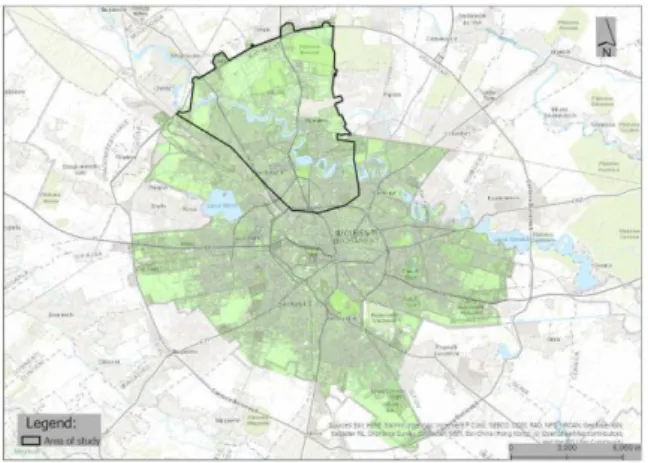
The northern area of Bucharest (Fig. 1) began to crystallize as an urban landscape at the beginning of the 20th century, when the capital city showed a clear tendency towards territorial expansion, embodying the rural areas of its peri-urban area.
Fig. 1. Location of the study area.
At the same time, the northern area of the capital city, although it has registered a more recent urban development due to the favorable physical-geographical characteristics, has represented an attractive area for the population of the capital city from the initial rural phase due to the presence of green spaces. At the same time, due to the characteristics of the built space characterized by a lower density of buildings, this area was selected for the creation of infrastructure elements that served the capital city since the beginning of the 20th century (royal station, international airport), when this area was still not included in the administrative limits of Bucharest.
Over time, the recreational character also favored the construction of Romanian-style neoclassical villas on the border
between the peri-urban area and the northern part of Bucharest, representing yet another binder between the two areas that would foreshadow their merging.
The evolution of the northern peripheral area of the capital city has been individualized since the end of the 19th century as a distinct area when compared to the other peripheral areas (southern, western, eastern), accumulating different urban structures (infrastructure elements, buildings, sports facilities) which have generated an urban landscape with modern buildings, with architectural valences, which have also experienced cultural reuse (transformation of villas into museums). Thus, over time, when the studied territory was integrated within the administrative limits of the capital city, the cultural value was added to the recreational character by creating cultural institutions of national importance, which contributed to the individualization of the tourist function of this territory.
3. Methodology
The complexity of the cultural heritage requires the use of a multicriteria assessment.
In the first stage of elaboration of the study, the historical monuments were identified using the List of Historical Monuments updated in 2015 as a source of information. The built heritage was analyzed using the functional-chronological criterion correlated with the territorial criterion, with the purpose of realizing a grouping of historical monuments by areas and routes.
Based on the multicriteria analysis, the values of the built heritage elements can
be identified, and the evaluation of this fact is very useful in the elaboration of measures of their higher valorisation (e.g. in the form of cultural circuits). Based on the multicriteria evaluation, a zoning of the analyzed territory was performed according to the functional-chronological criterion (by class of monuments, using the chronological factor: e.g. prehistoric sites, sites from the medieval period, architectural assemblies and architectural monuments from the pre-modern and modern periods. The territorial criterion was used to outline areas and routes containing similar heritage values.
The evaluation stage of the historical monuments was followed by a field campaign to identify the position of the monuments in the territory, the capture of the architectural elements, and the degree of their conservation. The elements resulting from the evaluation of the historical monuments and the information collected following the field campaign were represented cartographically, using the Geographic Information System.
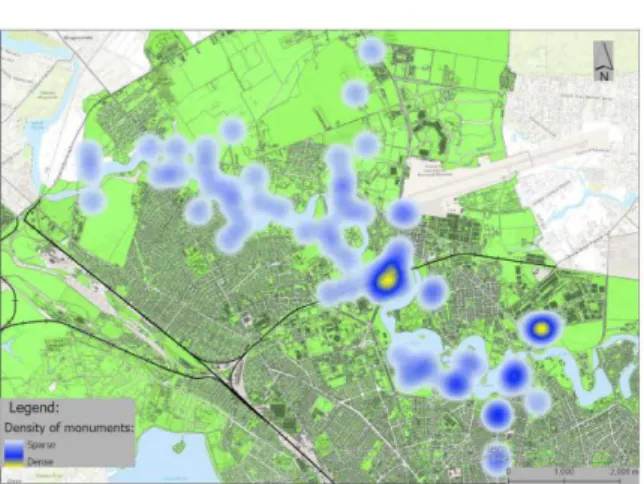
Maps regarding the typology of the historical monuments, the period of construction, the typology of the monuments according to importance (national/local) were then elaborated. At the same time, a map of the density of historical monuments was elaborated, using a Heat Map created through the dynamic method and Kernel Density Estimation. Heat map allows a representation of geospatial data using different colors with different concentrations of points in order to reflect an overall shape and concentration trends (Scăunaș et al., 2019).
In the second stage, the authors carried out a documentation activity regarding the history of the heritage monuments of the studied area, aiming at identifying important information such as: data on monument construction, previous function, data on monument architecture (form, building materials, architectural style etc.). At the same time, the authors sought to characterize the environment of insertion of heritage elements and the connections with the main historical-geographical landmarks.
In order to develop measures of valorization of the heritage elements of the studied area, several cultural circuits (of religious, architectural interest, etc.) have been proposed.
From a methodological point of view, for the "construction" of the cultural circuits, a series of criteria were taken into account, which are used in establishing the European cultural circuits (Cultural routes management: from theory to practice, 2015):
· the presence of a common theme that connects several objectives (a cultural itinerary is made up of different points linked by a common heritage or that have been traveled throughout history);
· the itinerary is a product, respectively a tourist route, a physical route for the general public, especially tourists, aiming at connecting the local itineraries organized around the discovery of the local heritage; the cultural itineraries support the development of authentic tourism-experiences, generating positive economic effects also in lesser-known areas;
· selecting the defining element that allows the identification of the route between other itineraries;
· facilitates the accumulation of knowledge, mutual and intercultural understanding.
4. Results and discussions
The northern area of Bucharest has a more recent urban development when compared to the central area of the capital city dating from the medieval period. This area was formed by including some suburban communes within the administrative limits of Bucharest, in relatively close stages, starting with the 20th century (Floreasca, Herăstrău, Băneasa), an area considered as a peripheral residential space completed by old rural communities at the end of the 19th century (Suditu, 2016).
The more recent evolution of the northern part of Bucharest is correlated with the trends of expansion of the city from the end of the 19th century and the beginning of the 20th century as a result of the large influx of population headed to the country's capital. This trend is also correlated with the accelerated economic dynamics of the city (Suditu, 2016; Merciu et al., 2018; Ilea et al., 2019), that was already connected to the infrastructure and services provided by the peri-urban area of the city.
The peri-urban northern area of the capital city presented a series of favorable physical-geographical conditions (land suitability for agriculture, less dense built spaces). Due to the proximity to the capital city, there were mutual relations between the communes of the peri-urban area and the city. Thus, the first link between the polarizing city and the neighbouring communes was established on the basis of the supply of fresh fruits and vegetables to the population of the capital city. For example, during the
interwar period, the inhabitants of Băneasa commune were mainly dealing with the preparation of milk and cheese, which they brought to the city (Mihăilescu, 2003).
Also, due to the presence of a large area of forest (624 ha in Băneasa), the northern peri-urban area of Bucharest has also accumulated the tourist function, offering possibilities for recreation of the urban population. Gradually, small industrial units (e.g. brick factory) will be developed as a result of the increase in housing demand for civil servants.
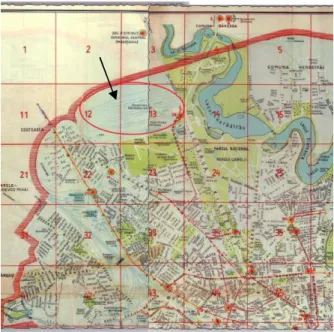
The peripheral area of Bucharest, called "New Town" by Vintilă Mihăilescu (2003), was developed beyond the belt with the city barriers, so that until the mid-19th century it was not yet assimilated within the administrative limits of the city. This area was administratively delimited by a geometric polygon. Thus, the peripheral area had a mixed aspect at the beginning of the 20th century as a result of the presence of factories, warehouses, green spaces, associated with the areas of cheap housing or villas belonging to the rich. One can see, in the northern part of the city, during the inter-war period, how plans for systematizing the city were elaborated: in 1933 the works of drainage of the marshy area located along the Colentina Valley by creating the Băneasa, Herăstrău, Floreasca lakes, which later formed an important area of attractiveness (and a vector for city development (Stan, 2016), arranging the Herăstrău Park by transforming a space that was previously covered by reeds. During the same period, more luxurious villa neighborhoods (Mihăilescu, 2003: 150) and research institutions were built. Therefore, in the northern part of the capital city two racecourses were set up:
Băneasa-Gallop and Trapp-Băneasa (according to the map from 1938) (Fig. 2).
Fig. 2. Map of the northern area of Bucharest (1938) Source: public archives.
The construction of racecourses in the northern extremity of the city, at the border with Băneasa commune, explains the fact that the names of the racecourses also include the toponym of Băneasa.
In the early 1900s, an aerodrome was built on the territory of Băneasa commune for short-distance flights. In 1912, Prince George Valentin Bibescu, the president of the Romanian Air League, set up a pilot school for military pilots in Băneasa. In addition, the construction of Băneasa airport in 1920, the first international airport of Romania, by transforming the previously built aerodrome, within the administrative boundaries of the homonymous suburban commune, had a special role in boosting Romania's economic exchanges with other countries, contributing to the development of the capital city (Scăunaș
et al., 2019).
At the same time, the northern part of Bucharest was also selected for the construction of villas by the wealthy population, among which were prominent personalities of the Bucharest society at that time.
By the law of 1939 for the organization of the municipality of Bucharest the suburban commune Herăstrău is included (Suditu, 2016: 119).
In 1948, through the Decision of the Central Committee of the Romanian Labor Party, the commune of Băneasa will also be included (Suditu, 2016: 166). During the communist period, the systematization plan generated the transformation of former suburban communes into neighborhoods. In Floreasca, at the beginning of the 1960s, 108 appartment buildings were put into service. The neighborhood is made up of streets with squared texture and names of composers (Bach, Glinka, Mozart, Bizet) and was provided with a commercial complex, a cinema, etc. (Suditu, 2016). In Băneasa commune, the significant changes took place later (in the 80's) when compared to the other communes transformed into neighbourhoods in the northern part of the city (e.g. Herăstrău, Floreasca).
The northern area of Bucharest is individualized by cultural objectives that have a certain historical value, most of them dating from the stage when this area was a rural one.
The protected built heritage of the studied area comprises the 4 categories of historical monuments (41 archaeological sites, 26 architectural heritage elements and 3 parcelings, 5 public monuments
and 3 commemorative monuments) (Fig. 3).
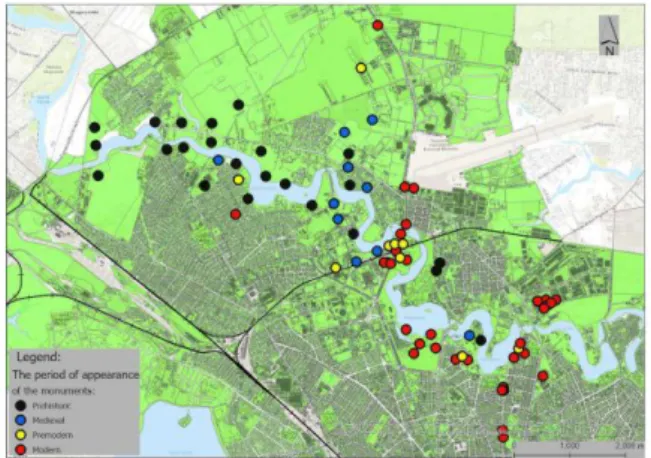
We note the preponderance of archaeological sites, a fact justified by the long evolution of the analyzed territory. They are concentrated near the course of the Colentina Valley (Fig. 3).
Fig. 3. Typology of historical monuments Source: data processed by authors according to the List of
Historical Monuments (2015).
Almost half of the archaeological sites (21) are grouped in the Băneasa district, of which 7 are of national importance, dating from the prehistoric period (Fig. 4): Bronze Age: Tei Culture, Glina II Culture, and Neolithic Age.
The Tei culture emerged and developed from the Middle Bronze until the Late Bronze Age, being one of the most well-defined cultural manifestations in Muntenia (Wallachia) during this period. The archaeological discoveries reveal a concentration of the early settlements of Tei culture in the central area of Muntenia - on the territory of Bucharest, the southern area of Ilfov county and Giurgiu County, up to the Danube. This area is called by Cristian Schuster as the basic territory of Tei culture (Gavrilă, 2015: 58). In the study area there were identified settlements belonging to Tei Culture: La Stejar - settlement in Băneasa
neighbourhood, former brickyard Bazilescu, Bucureștii Noi - settlement with two levels of housing (Gavrilă, 2015).
Also, 6 archaeological sites are located in the Dămăroaia neighborhood and have traces of medieval settlements, 4 sites in the Străulești neighborhood, 3 in Chitila, 3 in the Floreasca neighborhood (homonymous park) and 2 in the Herăstrău Park area.
The analysis of the protected built heritage using the functional-chronological criterion, emphasized that on the analyzed territory the archaeological sites belong to the prehistoric (26 sites) (Paleolithic, Bronze Age, Iron, Neolithic) and medieval periods (14 sites) (Fig. 4).
Fig. 4. Classification of historical monuments according to chronological criterion Source: data
processed by authors according to the List of Historical Monuments (2015).
Two archaeological sites date from the pre-modern period: the vestiges of the Văcăreștilor court (18th-19th centuries), located to the north of triage of Băneasa railway station and the Bibescu Palace cellar, built in the first part of the 19th century (Băneasa neighborhood, on the south bank of the Lake Băneasa, between Bucharest-Ploiești Road to the east and Mateloţilor Avenue to the northwest).
Of the archaeological sites located in the northern area of Bucharest, the most important in terms of tourism are the two sites dating from the pre-modern period, which are related to the more recent history marked by the evolution of this area as a rural area until the stage where it was included in the administrative limits of the capital city.
The history of the area is related to the names of rules, boyards, cultural personalities and, not least, the members of Royal House.
At the end of the eighteenth century, a large part of the Băneasa commune, formerly known as Cârstienești Estate, was bought by the chancellor and great ruler Ştefan Văcărescu (Scăunaș et al., 2019). The family of poets Văcărescu built a mansion and the church of St. Nicholas "Băneasa" (Sandachi and Hadîr, 2005). After 1845, Băneasa Estate becomes the royal property of Gheorghe Bibescu (ruler of the Wallachia between years 1842-1848, a direct descendant of Prince Constantin Brâncoveanu), who married Maria Văcărescu. On this occasion, Bibescu-Vodă repairs the manor and the church, but also begins the construction of a new palace, according to the plans of the architect Johann Schlatter, emphasizing the beautiful park around the church. Valentin Bibescu, grandson of the ruler Gheorghe Bibescu, is the founder of the Romanian Automobile Club in 1904. He founded the Romanian Aviatic Club in 1909 and the National Air League in 1912 (a pilot school for military pilots) in Băneasa commune. He is the founder of Băneasa Airport, which was built on the estate of his aunt, Maria Bibescu, Countess of Montesquieu-Fézensac (current location: Băneasa neighbourhood) (Sandachi and Hadîr, 2005).
The Royal Family of Romania owned a land on the territory of the former Băneasa commune, on which a royal farm was built. The Administration of the Private Goods of the Royal House has appointed the architect Ion Boceanu to realize the ensemble of the royal farm. The building is U-shaped, being a composition of simple volumes, presenting a pronounced functional character. The structure of the building is made of concrete, the masonry is made of brick, and the red covering fits both as material and as slope. The well-known Romanian construction engineer Emil Prager was responsible for undertaking the works, and the landscape architect Vinari for landscaping. On the main facade was used, for purely decorative purpose, the 'fachwerk' woodwork system, having the role to unify and to give coherence to the whole ensemble. The Royal farm Băneasa also has annexes: the administrator's house (the building with a tower), with a basement, ground floor, floor, loft and attic. Separated from this building, the bedrooms of the 20 employees were on the ground floor and upstairs, as the farm had greenhouses, vegetable gardens and fruit trees. The royal stables include the animal boxes (horses, mares and cows) on the ground floor, and their food was stored on the first floor.
After 2000, a project of transforming the building into a cultural center was conceived, for which rehabilitation works were needed due to the fact that the farm had become unproductive and was abandoned, presenting an advanced degree of degradation. The rehabilitation project also created an environmental, luminous, acoustic comfort and improved the energy efficiency.
From November 2004, on the first floor was opened the Metropolitan Cultural Center for Youth, under the authority of the Directorate of Communication and European Integration, the Service for the Promotion of Cultural and Sports Activities for Youth, within the City Hall of Sector 1. This center supports cultural, scientific, educational, civic, information and documentation activities, by organizing various events and programs addressing youth.
The architectural heritage elements represent the second most important category of monuments in the northern area of Bucharest.
According to the criterion of the value group, almost half of the architectural monuments are included in the value group of national importance: Dr. Minovici's villa, which houses the Museum of Folk Art, the Museum of Medieval Art, the Jianu-Bordei parceling, the Saint Sofia Church, the Saint Nicholas Church, the cellars of the Văcărescu house, Ford Branch Ensemble, etc. (Fig. 5).
Fig. 5. Classification of historical monuments by value group Source: data processed by authors
according to the List of Historical Monuments (2015).
Most of the historical architectural monuments are in the central part of the
studied area, superimposed on the Băneasa neighborhood.
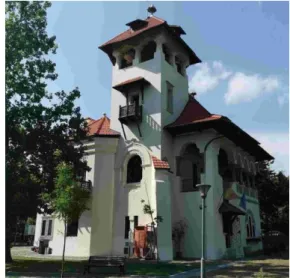
The Băneasa neighborhood includes within its limits half of the number of architectural monuments in the studied area, noting a typological diversity: monuments of civil architecture from the interwar period: Dr. Minovici Villa, also called "Villa with tinker bells", today the Museum of Folk Art 'Dr. Nicolae Minovici' (Fig. 6), the Diplomats' Club, the cellars of Văcărescu house, the Saint Nicolae Church, Băneasa; museums: The Museum of Medieval Art (Fig. 7), elements of industrial infrastructure (the passenger terminal of Băneasa International Airport, Băneasa Bridge).
Fig. 6. The Museum of Folk Art (Merciu C., July, 2019).
The Museum of Folk Art was arranged in the resting villa of Dr. Nicolae Minovici, an important exponent of Romanian medicine from the beginning of the 20th century. The building, considered one of the architectural monuments, remarkable for the Neo-Romanian style in Bucharest, was built in 1905 (Berindei and Bonifaciu, 1980). The heritage building was built according to the plan of the architect Cristofi Cerchez, combining the Neo-Romanian style with the European styles from the beginning of the 20th century (Fig. 6).
From the traditional architecture, we can see a tower in the foreground, on the southern side, which is borrowed from the Oltenia style tower (cula), an which is fortified with a buttress. This element gives originality to the building among the constructions of the Neo-Romanian style. Upstairs, there is an extended terrace, composed of two discrepant elements: an Italian loggia and a peasant porch. These are delimited on the inside, the facade retaining the unitary aspect, but the decorative elements presenting the identity of the style from which they come. The presence of twisted columns and incised pillars, stone panels fretted with acanthus leaves and borders crested with apotropaic motifs are noted. Dr. Nicolae Minovici initiated the demarche to collect objects of national art over four decades, transforming the villa, since 1906, into an exhibition space for the collection of Romanian ethnographic art. The collection contains objects from traditional ceramics and textiles (shirts, Romanian blouses, different styles of traditional skirts, towels, rugs) to contemporary painting.
The museum also has representative collections of icons, different wooden objects specific to the peasant household. Ethno-folklore patrimony presents a high touristic value and attractiveness (Antonescu and Iordache, 2019), which justifies the importance of this museum. The Museum of Old Westerner Art was inaugurated in 1946, after the spouses Ligia and Dumitru Minovici donated the house and the art collection to the Romanian Academy (Fig. 7). The house in which the museum was arranged was built in the Tudor style, between 1940 and 1941, according to the plan drawn up by the architect Enzo Canella and the
engineer D. Minovici. Within the museum, the collection of art objects includes: stained glass windows from the 16th to the 17th centuries, engravings, rare books, tapestries, carpets, furniture.
Fig. 7. The Museum of Medieval Art "Eng. Dumitru Minovici" (Merciu C., January 2020).
In Băneasa neighborhood, the Băneasa Railway Station is individualized by architectural value, formerly called Mogoșoaia, built in 1936. The location of the railway station was established at the northern extremity of the capital city, in the locality of Băneasa, which was then outside the administrative limits of the city.
The station served the Bucharest-Brașov route, extremely important for the southern part of Romania. Built in the modernist-style, by the plans of the famous architect Duiliu Marcu, in collaboration with Nicolae Nedelescu, the railway station has a main pavilion, which constitutes the actual passenger station, a movement central cabin, a guard body, as well as a large train platform, partly covered, of 70 m long (Fig. 8).
The main pavilion, with an area of 280 sqm, has rooms reserved for official persons, as well as a spacious reception hall (Bellu, 1999: 127). The construction is
executed with reinforced concrete skeleton, and the facades are plated with Romanian travertine. The covers are in terraces, with the rainwater flow inland. The interior floors are made of pink marble tiles by Rușchiţa and black marble by Belgium (Bellu, 1999: 127).
Fig. 8. Băneasa railway station (Merciu C., July 2019).
The access to the station area is made from the north, below a lower railway passage (1935) - acting as an architectural "treatment", the element of travertine, like a slab, prolongs in evocative manner the building of the Royal Railway Station and the official platform. It functioned as a royal railway station only until 1947. After 1950, the railway station was used by the communist authorities as a protocol station, for the "presidential trains" of the heads of state of Romania and for the reception of foreign officials (Bellu, 1999: 127). Starting from 2012, the Băneasa Royal Railway Station is used periodically by the Royal Family of Romania as a starting and arrival point for symbol-trips. Also, the station has become as well a place where different cultural events (concerts, festivals, etc.) are organized.
Another tourist area is noted in the southern part of the analyzed area, superimposed on the Floreasca neighborhood, which also includes two architectural assemblies: Negroponte and Jianu-Bordei parcelings.
In the Floreasca neighborhood we can see both civil architectural monuments (Dimitrie Gusti's house, the founder of the Village Museum in Bucharest), as well as religious landmarks the Saint Sofia Church, Floreasca, or the industrial historical monument (Ford Branch Ensemble).
The Saint Sofia church was built in the Brancovan architectural style, at the initiative of the Florescu boyar family, around 1738 (Bonifaciu and Berindei, 1980).
Fig. 9. Saint Sofia Church (Floreasca neighborhood) (Merciu C., January 2020).
The not too deep arches of the church, which decorate the walls, resemble with the motifs applied on the Stavreopoleos church, built in 1724, with those of the Church of the Saints of Bucharest, and with those of the Săftica church of Ilfov, which were built at about the same time. At the beginning of the 19th century, the church had a very advanced state of degradation.
The Negropontes family financed the restoration work, on which occasion the church was reconsecrated, being dedicated to St. Sofia, after the name of his wife, Sofia Negropontes. Architect Paul Smărăndescu restored the church strictly respecting the plaster work, the profiles and old forms that have been preserved, the framing, the sheathing, the carved stone frame, the windows
and the church tower being also restored. In the early 1980s, the architectural ensemble was restored by plastering the church and the surrounding wall, the painting was restored, and new stained glass windows were installed in the tower. The Ford Branch Ensemble, dating from the interwar period, is a landmark in the Floreasca neighborhood, being classified as a historical monument of national importance. Currently, the industrial heritage building preserves the administrative pavilion (body 1 - Fig. 10a) and the east and west facades of the inter-war hall (body 2 - Fig. 10b).
Fig. 10. Ford Branch Assembly: a) administrative building b) industrial hall (Merciu C., January
2020).
The large area of land occupied by the industrial site in a neighborhood located near the central area of the city, but also its state of non-functionality, have determined in time a pressure on the development of services and of the residential component. The industrial assembly is included in a large real estate project that aims to reuse industrial buildings, following the restoration and change of side facades, as a commercial space, and next to it will be built an office building and three blocks with exclusivist apartments.
The parcelings of Negroponte and Jianu-Bordei are allotments within the Floreasca neighborhood, made between 1935 and 1939, previously the land being
occupied by the Floreasca hippodrome, later the trot racing being moved to the Băneasa hippodrome. The allotments mainly group villas type buildings from the interwar period, some of them having a special architectural value (the Jianu-Bordei parceling being classified in value group A).
Based on the territorial criterion, the analysis of the spatial distribution of the historical monuments highlights that in other areas the density of the architectural monuments is very low, the National Museum of Romanian Aviation Ensemble being noticed in the Pipera neighborhood. Although the museum was created in 1990, until 2006 when its current location was established, it knew several locations (on Otopeni airport in 5 tents, in front of Baneasa airport). Currently, the exhibition space of the National Museum of Romanian Aviation comprises two hangar-type buildings and an outdoor exhibition.
Hangar 1 (The Traian Vuia Hall) contains exhibits that show the history of aeronautics from the beginning until 1959, in which there are also exhibited models of the planes made by the three pioneers of the Romanian aviation: Traian Vuia, Aurel Vlaicu and Henri Coandă.
In Hangar 2, the basic exhibition is dedicated to the '60s-'70s years, with exhibits including: MIGs (models 17, 19, 21, L-29), flight simulators, radiolocation technique and anti-aircraft artillery specific to the era.
In the open-air exhibition park, classic-engine airplanes, but also reactive, helicopters, radiolocation technique, anti-aircraft cannons and ground-to-air missiles are on display.
The number of monuments of public interest and commemoratives is lower, but a series of architectural monuments or created by famous sculptors are noted. In the studied area there are 5 monuments of public interest, two of which are registered in the value group of national importance: Mioriţa Fountain and the Sleeping Nymph statue within the Herăstrău Park.
Mioriţa Fountain is located in front of the Museum of Folk Art. The construction was executed by the architect Octav Doicescu and the mosaics with which the monument is decorated are made by Miliţa Petrașcu (Georgescu et al., 1966). Beside her, the artist Niculescu Mogoș
Gheorghe also worked at the fountain mosaic. The mosaics are an illustration of the ballad “Mioriţa”, the name of the ballad being borrowed also for the name of the monument (Georgescu et al., 1966). The fountain was inaugurated on the occasion of the exhibition “Month of Bucharest” in 1936, which, in that year, took place between the Arc de Triomphe and the railroad passage near the Mina Minovici villa. The three commemorative monuments within the limits of the study area are related to important historical events at national level: the monument of the fallen heroes in WW I in the Baneasa commune (located in front of the Băneasa Airport Passenger Terminal), the memorial plaque honoring the heroes killed in the December Revolution of 1989, the memorial plaque marking the battles site of August 1944.
Based on the territorial criterion, a map of the density of the historical monuments from the study area was drawn up. Using a Heat Map, the areas with higher density of historical monuments were highlighted, respectively in the central
and southern areas of the studied area (Fig. 11).
Another area, with an average density of heritage elements, is highlighted along the anthropic lakes Băneasa, Herăstrău and Floreasca, which concentrate the most archaeological monuments.
The Heat Map analysis highlights also some areas with a lower density of historical monuments (Pipera neighborhood, Bucureștii Noi neighborhood). Even in these areas there are representative historical monuments for the study area: the National Museum of Romanian Aviation (Pipera area) or Bazilescu Parceling (Bucureștii Noi) (Fig. 11).
Fig. 11.Density of historical monuments in the northern area of Bucharest.
In the northern extremity of the studied area there is Băneasa Forest, which explains the lack of historical monuments (except for a commemorative monument). At the same time, this area has registered, in the last years, under the influence of the accelerated dynamics of the tertiary sector, also an extension of the residential area (e.g. in the northeastern extremity of the residential complex "Greenfield", in Băneasa Forest: the luxury residential complex "Stejarii") (Scăunașet al., 2019).
Taking into account the diversity of the cultural heritage elements and their cultural importance, three cultural circuits are proposed for a better cultural and tourist capitalization, being connected also with other similar objectives located in other areas of the city. The creation of the cultural routes in areas with significant cultural heritage have the role to geographically connect tourist attractions, as well of improving the colaboration and clustering between tourism stakeholders (Ispas et al., 2015). The three thematic cultural routes consist of different points (geographical points) that belong to certain categories of cultural heritage. The routes were established based on the selection of the typologies of historical monuments that are among the oldest cultural objectives in the studied area, which are of interest for the local population and different types of tourists. The architectural heritage elements and the industrial historical buildings could attract more young tourists, while religious monuments may be attracting more adults and seniors.
The cultural circuits induce visitors to discover the significative cultural heritage elements and to visit them. Also, the cultural circuits proposed increase the study area’s attractiveness.
Thre main obiectives were set for the creation of cultural circuits: awareness of the local population of the existence of a significant cultural heritage and identification with it; conservation and promotion of local cultural heritage; grating a special place to the cultural tourism between the economic activities of the study area and alowing the higher capitalization of the elements of cultural heritage.
The first cultural route is proposed in order to include the two religious landmarks located within the northern area of Bucharest municipality in the tourist circuit, in relation to other religious objectives built in the same architectural style. The role of this circuit is to highlight religious landmarks with architectural, historical, aesthetic and symbolic valences, elements that give them representativeness at the capital city level (Fig. 12).
The two religious objectives are among the oldest historical monuments in the study area (18th century).
Fig. 12.The propos ed cultural circuits in the northern area of Bucharest.
Their construction is related to the names of some personalities of the Romanian culture who also played an important role in the local politics of that period.
Their limited number does not allow their individual valorization. The importance of choosing this route is related to the historical value of the churches that have a close connection with the historical evolution of the studied area. It is considered important to connect them with other religious landmarks in Bucharest with similar architectural values (neo-Romanian style) and built in the same period.
The religious cultural circuit includes within its boundaries, along with the churches of St. Nicholas and St. Sofia, also other buildings located in the central part of the capital city: Colţea church (1702), Sfântu Gheorghe Nou church (1698-1707), Stavreopoleos (1724), Doamnei church (1678-1658), Church of the Saints (1680) (Fig. 12). The religious circuit highlights the oldest churches in the capital city that are exponents of the Neo-classical Romanian style that survived the demolition of the historical monuments of the communist periods.
The proposal of the cultural circuit of architectural interest has the role to highlight the interwar buildings within the Jianu-Bordei and Negroponte parcelings, representative for both the study area and the capital city, both from an architectural point of view and from a historical point of view.
This cultural route was dened as a path of historical signicance of the capital city, because it represents a decoupage in the urban fabric of Bucharest from the beginning of the 20th century; it resulted from the transformation of a rural landscape into an urban area with high architectural values. The two parcelings have a traditional urban fabric (some buildings are in the neo-Romanian style), with unique elements of high architectural value.
The third route proposed has a common thematic denominator represented by the elements of industrial heritage buildings that occupy a special place within the cultural heritage of the northern area of Bucharest. Within the studied area there are a number of industrial objectives with
a certain historical, architectural, cultural and social value.
In addition to the industrial buildings classified as historical monuments (Băneasa railway station, Ford Branch Ensemble), other industrial buildings with a certain historical and architectural value are proposed to be included in the cultural circuit: Borsec administrative buildings, Zarea sparkling wine factory, both located in Bucureștii Noi neighborhood, the former glucose factory transformed into a hotel (Pipera neighborhood).
The proposal of creating this cultural circuit also results from the need to draw attention to lesser-known industrial heritage buildings, but which are important from a historical point of view and, not least, technological valences: the Zarea sparkling wine factory is still functional and guided tours meant to explain to visitors how the sparkling wine is obtained can be organized.
The role of the cultural circuits is to capitalize on local cultural heritage, to develop sustainable tourism, on one hand, but also to facilitate the accumulation of knowledge, mutal understanding and closeness within and between generations.
The history of the cultural heritage buildings in the northern area of Bucharest is closely related to the territorial and economical evolution of the capital city. Including these obiectives in touristic circuits offers the possibility to tell their story, which also contributes, to the deciphering of the history and culture of the area with a history about 300 years old, of which 70 years marked the accession to the
capital city and integration of the area in the economic and socio-cultural life of Bucharest municipality.
This territory with a rural background has generated its reorganization as a support space for the population of the capital city, both as a supplier of agricultural products and recreational services.
This territory was also a support space for the construction of infrastructure elements that served the capital city (Băneasa International Airport, Băneasa Railway Station). The proximity to the capital city also influenced the manner of building the infrastructure elements (the airport, the railway station) inscribed in remarkable architectural patterns, being the works of renowned architects. To these are added civil buildings that, over time, have undergone important transformations in the way of use, some of them becoming cultural institutions (museums).
Moreover, the inclusion of the former suburban communes within the administrative limits of the capital city involved the elaboration of land systematization plans, which resulted in individualized parceling through civil constructions falling within the neo-Romanian architectural style, which justified their classification as protected urban ensembles.
It is noted that, although the northern area of Bucharest has registered a recent evolution, it presents a significant number of historical monuments, falling within different time periods, among which those with tourist value date from the pre-modern and modern periods.
Also, among the architectural monuments with tourist valences, it is noted that almost half of the total number of buildings are registered in the value group A (of national importance). The high number of buildings registered in the upper value group draws attention to the need for their higher capitalization, due to the fact that they are representative for Bucharest municipality, as they are cultural and architectural landmarks at national level as well.
For example, the National Museum of Romanian Aviation is the only institution with an aeronautical profile in the country and it has a heritage that includes movable cultural assets that constitute unique collections at national level (aircrafts, aircraft engines, patents, uniforms, flight suits).
Another example is the Folk Art Museum, whose cultural significance also results from being the first museum in the field in Bucharest.
Some buildings are individualized by multiple valences: architectural, historical and even social valences. Băneasa railway station, a building with a modernist architecture, also has historical significance, being the station that served the royal family during the interwar period. Currently, the station has the role of serving the Presidents of Romania, being used also by the members of the royal family.
4. Conclusions
Based on the territorial and functional-chronological criteria, the historical monuments in the northern area of Bucharest were identified and analyzed, in close connection with its spatial-temporal evolution.
The analysis of the historical monuments in the study area highlights a greater concentration near the anthropic lakes arranged along the course of Colentina; two more areas are added according to the values of the high density of historical monuments in Băneasa and Floreasca neighborhoods.
The predominant location of the cultural heritage elements in the Băneasa and Floreasca neighborhoods is reflected by the territorial and historical evolution in the previous stages, marked by the vicinity of these areas to the capital city.
The spatial-temporal evolution was intertwined with the economic one, which determined, beside the presence of luxury residential areas, also of the buildings with economic function.
There is also to be noticed the presence of architecturally remarkable heritage buildings, individualized in the northern landscape of Bucharest, without being included in protected urban ensembles, respectively villas built during the interwar period that have been culturally reused since the beginning of the 20th century, being arranged as museums, which gives them increased tourist attractiveness.
The spatial-temporal evolution of the studied area experienced a greater dynamic at the end of the 19th century, marked by the expansion of the capital city that assimilated the suburban communes located on its northern limit. Over time, the two areas merged and resulted in an urban landscape marked by greater economic prosperity when compared to other areas at the capital city level. This situation has favored the
creation of a space marked by residential areas with profound architectural valences. Some buildings, considered architectural jewels, have acquired an obvious cultural and, implicitly, a tourist function.
The elaboration of this study has highlighted the typological diversity of the historical monuments in the studied area, as well as the need for their optimum use by proposing their inclusion in cultural circuits focused on the dominant types of elements of cultural heritage. Cultural circuits are addressed to several categories of tourists. The cultural routes have the role to ensure the discovery of lesser-known cultural attractions.
At the same time, this study allowed a rigorous assessment of the cultural heritage elements of the studied area, which individualizes it between the other areas within Bucharest with profound historical and cultural values, contributing to the cultural and tourist image of the capital city.
Acknowledgment
This work was supported by a grant of the Romanian Ministry of Research and Innovation CCCDI - UEFISCDI, project number 52PCCDI/2018 (PATCULT#RO) PN-III-P1-1.2-PCCDI-2017-0686: “Complex
multidisciplinary platform for integrative and systematic research of identities and tangible and non-tangible cultural heritage in Romania".
REFERENCES
Abate D. (2019), Built-heritage multi-temporal monitoring through photogrammetry and 2D/3D change detection algorithms, Studies in Conservation 64(7):423-434.
Allen A. D. (2012), Economics of historic preservation: dollars and sense, Transylvanian Review of Administrative Science: 11-18.
Antonescu D., Iordache R. -M. (2019), Impact of regional operational programme on cultural heritage. The Romanian case, Journal of Urban and Landscape Planning 4:73-84. Bellu R. (1999), Small monograph of the railways in
Romania [in Romanian], Editura Publiferon, Bucharest, Romania.
Benslimane N., Biara R. W., Benslimane A. (2020), Influence of the prospective technology in the facade's desfiguration of the historical houses. Case of the old Ksar of Bechar, International Journal of Consevation Science 11(1):61-74.
Berindei D., Bonifaciu S. (1980), Bucharest – touristic guide [in Romanian], Editura Sport Turism, Bucharest, Romania. Boutsi A. M., Ioanidis C., Soile S. (2019), An
integrated approach to 3D web visualization of cultural heritage heterogeneous datasets, Remote Sensing 11(21):1-26.
Boștenaru Dan M., Dill A., Mihăilă M. (2017), Integration of reused and retrofitted buildings in architectureal-cultural surroundings in South-West Germany, Journal of Urban and Landscape Planning 3:1-11.
Bulai A. T., Rosu L., Banica A. (2019), Patterns of urban fire occurrence in Iași city (Romania), Present Environment and Sustainable Development 13(2):87-102.
Carbonara G. (2018), Earthquakes, reconstruction and monumental heritage, Conservation Science in Cultural Heritage 18:41-64. Chen C. S., Chiu Y. H., Tsai L. C. (2018),
Evaluating the adaptive reuse of historic buildings through multicriteria decision-making, Habitat International 81:12-23. Coman H. M. (2019), Communist-era developments
in Romanian town centres – issues of identity and cultural relevance, Acta Technica Napocencis: Civil Engineering & Architecture 62(1):54-59.
Council of Europe (2015), Cultural routes management: from theory to practice, Europe Council F-67075 Strasbourg Cedex, France. Council of Europe (2008), Treaty on the Functioning
of the European Union, Official Journal of the European Union C115:47-199.
Crova C., Miraglia F. (2018), Use and efficacy of thermography for stratigraphic analysis of historical buildings, Conservation Science in Cultural Heritage 18:135-146.
Drăghici C., Papuc R. M., IordacheȘ., Dobrea C. R., Pintilii R. D., Teodorescu C., Peptenatu D., Diaconu D., Simion A. (2015), The role of European Capital of Culture status in structuring economic profile of Sibiu, Romania, In: BektașÇ. (Ed.), Proceedings of
the 4th World Conference on Business, Economics and Management, 30 April – 2 May 2015, Efes, Izmir, Turkey, Procedia Economics and Finance,vol. 26, pp. 785-791. Esmaielzadeh S., Ahmadi H., Hosseini S. A. (2018), Damage detection of concrete gravity dams using Hilbert-Huang metod, Journal of Applied Engineering Sciences 8 (21):7-16.
Fairclough G., Harrison R., Jameson J. H. J. (Eds.), (2008), The heritage reader, Routledge, London, New York, United Kingdom, United States of America.
Fantazi I., Hecham B. Z., Petrișor A. -I. (2019), The impact of the absence of communication on the succes of rehabilitation projects of the built heritage: the case of the old city of Constantine, Present Environment and Sustainable Development 13(1):225-240. Ferretti V., Boterro M., Mondini G. (2014), Decision
making and cultural heritage: an application of the multi-attribute value theory for the reuse of historical buildings, Journal of Cultural Heritage 15(6):644-655.
Fioretti G., Acciani A., Buongiorno R., Catella M.A., Acquafredda P. (2019), Photogrammetric survey and 3D model as exprimental tool for mapping of polychrome marble in artworks: the case of two Baroque altars in Bari (Italy), Journal of Architectural Conservation 25(1-2):90-103. Galiano-Garrigós A., Gonzáles-Avilés Á., Rizo-Maestre C., Andújar-Montoya D. (2019), Energy efficiency and economic viability as a decision factors in the rehabilitation of historic buildings, Sustainability 11(18):1-27. Gavrilă E. (2015), The repertoire of the settlements of
Tei culture in București and Ilfov country [in Romanian], Revista de Cercetări Arheologiceși Numismatice 1:42-66. Georgescu F., Cernovodeanu P., Cebuc A. (1966),
Monuments in Bucharest guide [in Romanian], Editura Meridiane, Bucharest, Romania.
Germinario C., Gorrasi M., Izzo F., Langella A., Limongiello M., Mercurio M., Musmeci D., Santoriello A., Grifa C. (2020), Damage diagnosis of Ponte Rotto, a Roman bridge along the ancient Appia, International Journal of Consevation Science 11:277-290.
Grecu A., Gruia A.K., Marin M., Banuta M., Olteanu C., Constantin I., Gadoiu M., Teodorescu C., Dobrea R.C., Drăghici C.C. (2019), Specificity of sustainable structural dynamics of local economy in Romanian tourist resorts, Sustainability 11:1-21.
Guerrero A. E. A., Gil O. S., Irujo D.L. (2018), Rehabilitation and reuse of the urban heritage. The historical centers of new Spanish political capitals declared as World Heritage, Cuadernos de Turismo 42:15-45.
Guimarães P. (2018), The evolution of old shopping centres in the town centre of Braga, Portugal, Journal of Urban and Regional Analysis 10(2): 127-141.
Guzman P., Pedeira Roders A. R., Colenbrander B. (2018), Impacts of common urban development factors on cultural conservation in World Heritage cities: an indicators-based analysis, Sustainability 10:1-18.
Hamma W., Merciu F.C., Petrișor A.-I., Cercleux A.-L. (2018), La conservation de la biodiversité peut-elle être une source d'inspiration pour patrimoine architectural?, Lucrările Seminarului Geografic Dimitrie Cantemir 46(1):105-119.
Hammersley R., Westlake T. (1994), Urban conservation policy in the Czech Republic, Planning Practice and Research 9(2):139-146.
Ilea R.-G., Manea C.-A., Antonescu M.A. (2019), The main characteristics of the urban climate in relation to the built space evolution in Bucharest, Romania, Present Environment and Sustainable Development 13(1):69-79. Ilovan O. -R., Adorean E. -C., Gligor V., Maroși Z.,
Voicu C.-G., Dulamă M.E., Nicula A.-S. (2018), Inhabitans' perceptions of the central squares and quality of life in Cluj-Napoca, Romania, Territorial Identity and Development 3(2):104-133.
Ispas A., Constantin C. P., Candrea A. N. (2015), An examination of visitors' interest in tourist cards and cultural routes in the case of a Romanian destination, Transilvanian Review of Administrative Sciences, 46E:107-125.
Jimenez M. M. V., Gutierrez-Carrillo M. L. (2019), The Alhambra master plan (2007-2020) as a strategic model of preventive conservation of cultural heritage, Vitruvio International Journal of Architectural Technology and Sustainability 4(2):59-74.
Kádár M., Benedek I. (2019), Preliminary analysis for place branding and promotion of the Western Region of Sălaj County, Romania, Territorial Identity and Development 4(1):50-72.
Lidelöw S., Örn T., Luciani A., Rizzo A. (2019), Energy-efficiency measures for heritage buildings: a literature review, Sustainable Cities and Society 45:231-242.
López L., Torres J. C., Arroyo G., Cano P., Martín D. (2020), An efficient GPU approach for designing 3D cultural heritage information system, Journal of Cultural Heritage 41:142-151.
Lyu L., Sun F., Huang R. (2019), Innovation-based urbanization: evidence from 270 cities at the prefecture level or above in China, Journal of Geographical Sciences 29:1283-1299. Marvasi M., Cavalieri D., Mastromei G., Casaccia
A., Perito B. (2019), Omics technologies for an in-depth investigation of biodeterioration of cultural heritage, International Biodeterioration & Biodegradation 144:1-7.
Matečić I. (2016), Specific characteristics of the tangible cultural heritage valutation process in tourism, Acta Turistica 28(1):73-100. Merciu C., Merciu G. -L., Cercleux L., Drăghici C.
(2014), Conversion of industrial heritage as vector for cultural regeneration, in: Ilhan A. C., Miralay F. (Eds.), Proceedings of the 2nd World Conference on Design, Art, and Education, 09-10 May 2013, Bucharest, Romania, Procedia Social and Behavioral Sciencesvol. 122, pp. 162-166.
Merciu C., Ianoș I., Merciu G., Jones R., Pomeroy G. (2018a), Mapping accessibility for earthquake hazard response in the historic urban centre of Bucharest, Natural Hazards and Earth System Sciences 18(7):2011-2026.
Merciu C., Merciu G.-L., Cercleux A.L. (2018b),
The role of the museums for the development of cultural tourism in Bucharest municipality, in: Orăștean R., Ogrean C., Mărginean S. V. (Eds.), Springer Proceedings in Business and Economics, Innovative Business Development – a global Perspective, Proccedings of 25th International Economic Conference of Sibiu (IECS 2018), 11-12 May 2018, Sibiu, Romania, pp. 173-186.
Merciu F. -C., Cercleux A. -L., Merciu G. -L.., Secăreanu G. (2020), Evaluation of the economic values of heritage buildings in the historical center of Bucharest Municipality, In: Orăștean R., Ogrean C., Mărginean S. V. (Eds.), Springer Proceedings in Business and Economics: Organisations and Performance in a Complex World volume, Proccedings of 25th International Economic Conference of Sibiu (IECS 2019), 24-25 May 2019, Sibiu, Romania, in press.
Mihăilescu V. (2003), Evolution of a city-Bucharest [in Romanian], Editura Paideia, Bucharest, Romania.
Moscovici A. -M., Vilceanu C. B., Grecea C., Herban S. (2019), Spatial data geoportal for local administration-solution for smart cities, Journal of Environmental Protection and Ecology 20(3):1374-1383.
Musolino D. (2018), The mental maps of Italian entrepreneurships: a quali-quantitative approach, Journal of Cultural Geography 35(2):251-273.
Nesticò A., Macchiaroli M., Pipolo O. (2015), Costs and benefits in the recovery of historic buildings: the application of an economic model, Sustainability 7(11):14661–14676. Nicu I. C. (2017), Tracking natural and anthropic
risks from historical maps as a tool for cultural heritage assessment: a case study, Environmental Earth Sciences 76(9):330. Orchiston C. (2012), Tourism business preparedness,
resilience and disaster planning in a region of high seismic risk: the case of the Southern Alps, New Zeeland, Current Issues in Tourism 16(5):477-494.
Ochkovskay M., Gerasimenko V. (2018), Buildings from the Socialist past as part of a city's brand identity: the case of Warsaw, Bulletin of Geography. Socio-Economic Series 39:113-127.
Papazoglou G. (2019), Society and culture: cultural policies driven by local authorities as a factor in local development – the example of the Municipality of Xanthi-Greece, Sustainability 2:2625–2639.
Polat Z., Demirel O. (2016), Evaluation of alternative tourism in the light of natural, cultural and visual resources in Turkey landscape,Journal of Environmental Protection and Ecology 17(3):1220-1228.
Prelipcean A. A. (2018), Sustainable regeneration of urban built heritage in post-socialist cultural context, Acta Technica Napocencis: Civil Engineering & Architecture 61(3):173-185. Pendlebury J. (2013), Conservation values, the
authorised heritage discourse and the conseration-planning assemblage, International Journal of Heritage Studies 19(7):709-727.
Randazzo L., Ricca M., Pellegrino D., La Russa D., Marrone A., Macchia A., Rivaroli L., Enei F., La Russa M.F. (2020), Anti-fouling additives for the consolidation of archaeological mortars in underwater environment: efficacy tests performed on the Apsidal Fishpond of Castrum Novum (Rome, Italy), International Journal of Consevation Science 11:243-250.
Ribera F., Nesticò A., Cucco P., Maselli G. (2020), A multicriteria approach to identify the
highest and best use for historical buildings, Journal of Cultural Heritage 41:166-177. Roca Z., de Nazare Oliveira-Roca M. (2007),
Affirmation of territorial identity: A development policy issue, Land Use Policy 24:434-442.
Rodriguez M., Franco M. (2019), Composite index to measure the performance of today's creative cities: a holistic perspective, Journal of Urban and Regional Analysis 11(2):113-157.
Sandachi G. P., Hadîrcă D. (2005), Prince George Valentin Bibescu: the biography of a traveler [in Romanian], Editura Vivaldi, Bucharest, România.
Scăunaș S., Păunescu C., Merciu G. -L. (2019), Spatial temporal analysis of land cover and use changes using GIS tools. Case study Băneasa neighborhood, Bucharest, Journal of Applied Engineering Sciences 9(22):187-194.
Sesana E., Gagnon A. S., Bonazza A., Hughes J. J. (2020), An integrated approach for assessing the vulnerability of World Heritage Sites to climate change impacts, Journal of Cultural Heritage 41:211-224.
Spiridon P., Sandu I., Stratulat L. (2017), The conscious deterioration and degradation of the cultural heritage, International Journal of Conservation Science 8(1): 81-88.
Stan A. (2016), Reconfiguring the macro urban landscape of Bucharest based on its narative traits, Journal of Urban and Landscape Planning 1:22-34.
Stan A. M. (2017), Knowledge dissemination about cultural heritage in post-1989 Romania. Several examples, Territorial Identity and Development 2(2):49-57.
Stephenson J. (2008), The cultural values model: an integrated approach to values in landscapes, Landscape and Urban Planning 84(2):127-139.
Suditu B. (2016), Bucharest in dwellings and inhabitans from the beginning until yesterday (1459-1989) [in Romanian], Editura Compania, Bucharest, Romania.
Vukonić B. (2018) Economic theory and tourism economics, Acta Turistica 30:17-63.
Tache A. T., Sandu I. C. A., Popescu O. -C., Petrișor A. -I. (2019), UAV solutions for the protection and management of cultural heritage. Case study: Halmyris archaeological site, International Journal of Consevation Science 9(4):795-804.
Themistocleous K. (2020), The use of UAVs for cultural heritage and archaeology, in: Hadjimitsis D., Themistocleous K., Cuca
B., Agapiou A., Lysandrou V., Lasaponara R., Masini N., Schreier G. (Eds.), Remote sensing for archaeology and cultural landscapes: best practices and perspectives across Europe and the Middle East, Book Series Springer Remote Sensing Photogrammetry, Cham, Switzerland, pp. 241-269.
Vardopoulos I. (2019), Critical sustainable development factors in the adaptive reuse of urban industrial buildings. A fuzzy DEMATEL approach, Sustainable Cities and Society 50:1-12.
Veldpaus L., Pereira Roders A. R., Colenbrander J. F. (2013), Urban heritage: putting the past into the future, The Historic Environment 4(1):3-18.
Vesalon L., Creţan R. (2019), "Little Vienna" or "European avant-garde city?" Branding narratives in a Romanian city, Journal of Urban and Regional Analysis 11(1):19-34.
Qualiarini E., Lucesoli M., Bernardini G. (2019), Rapid tools for assessing buildings heritage's seismic vulnerability: a preliminary reliability analysis, Journal of Cultural Heritage 39:130-139.
Yilmaz B., Saricam S., Aslan F., Atik A. (2014), Landscape characteristics of Battalg azi archaeological and historical settlement in Malatya, Turkey, its protection problems and solutions, Journal of Environmental Protection and Ecology 15(3):1181-1190.
Received: 24 March 2020 • Revised: 14 April 2020 • Accepted: 27 April 2020
Article d istributed under a Creative Co mmons Attribution-NonCo mmercial-NoDerivatives 4.0 International License (CC BY-NC-ND)