Three new species of
Licania
(Chrysobalanaceae) from Peru
Ghillean T. Prance1
1 Royal Botanic Gardens, Kew, Richmond, Surrey, TW9 3AB, UK
Corresponding author: Ghillean T. Prance ([email protected])
Academic editor:Geoffrey Levin | Received 17 May 2014 | Accepted 12 September 2014 | Published 16 September 2014
Citation: Prance GT (2014) Three new species of Licania (Chrysobalanaceae) from Peru. PhytoKeys 42: 1–10. doi: 10.3897/phytokeys.42.7924
Abstract
Recent collections received for identification contain three conspicuous new species for the mid altitude forests of Amazonian Peru. Licania palcazuensis, L. apiknae and L. monteagudensis are described as new and their relationship to other species is discussed. A key is provided for all the species of Licania subgenus
Licania section Licania known to occur in Peru.
Keywords
Chrysobalanaceae, Licania, Amazonian Peru
Introduction
Since a world monograph of the Chrysobalanaceae (Prance and Sothers 2003a,b) new species are still being discovered (Prance 2013) and recently studied collections reveal three more in the genus Licania, all from Amazonian Peru, a region that is still yielding many novelties. The sterile inventory material that I have seen from this region indi-cates that there are many more yet to be described. The new species described here fall into two of the subgenera, subgenus Licania and subgenus Moquilea.
Ghillean T. Prance / PhytoKeys 42: 1–10 (2014) 2
Species descriptions
Licania palcazuensis Prance, sp. nov.
urn:lsid:ipni.org:names:77142292-1
Figs 1, 2
Ab omnibus speciebus Licaniae inflorescentibus multi-ramificantibus, pseudopedicellis 1–3 floribus instructis, pilis bracteolium glandulosis differt.
Description.Tree to 25 m tall, young branches sparsely tomentellous, conspicuously lenticellate with age. Leaves with small triangular to linear stipules to 1.0 mm long, early caducous; petioles 4–7 mm long, terete, rugose, sparsely tomentellous; lami-na oblong to oblong-lanceolate, subcoriaceous, 4–8.5 × 1.5–3 cm, cuneate at base, acuminate at apex, the acumen 4–8 mm long, glabrous above, densely rufous lanate-tomentose beneath, with scattered palisade glands mainly near to midrib; midrib plane above, prominent beneath; veins 10–12 pairs, plane above, prominulous be-neath. Inflorescence terminal and axillary much-branched panicles with many short branches bearing 1–3 flowers, the rachis and branches rufous-brown tomentose. Bracts and bracteoles membraneous, triangular-acute, c 1 mm long, borne at base and on pseudopedicels, the ciliate margins with glandular hairs; pedicels 0–5 mm long, flowers articulate just below receptacle base where upper bracteoles are borne 2–7 mm below articulations. Receptacle campanulate, rufous-tomentose on exte-rior. Flowers seen only in young fruiting condition; calyx lobes 5, markedly trian-gular, tomentose on exterior, interior glabrous towards base, tomentellous towards apex. Petals triangular, margins ciliate. Stamens 12–14, inserted around complete circle, slightly exceeding calyx lobes in length. Style basal; ovary of young developing fruit densely rufous-tomentose becoming less so with age, unilocular with 2 ovules. Mature fruit not seen.
Peru. Pasco: Oxapampa, Palcazu District, Parque Nacional Yanachaga-Chemillén, Cerro Panjil-Ozuz, Permanent plot tree 24, 10°10'S, 75°10'W, 850 m, 12 May 2005, A Monteagudo, A Peña, R. Francis et al. 8250 (holotype, K; isotypes, AMAZ, HUT, MO, MOL, USM).
Additional material seen. Same locality, Tree 347, 10 June 2005, 15 May 2005, A. Monteagudo, A Peña, R. Francis et al. 8585 (AMAZ, HUT, K, MO, MOL, USM), Tree 171, 15 May 2005, A. Monteagudo, A Peña, R. Francis et al. 8418 (K, MO USM).
Ghillean T. Prance / PhytoKeys 42: 1–10 (2014) 4
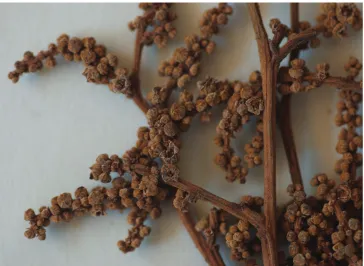
Figure 2. Close up of distinctive inflorescence of Licania palcazuensis.
Licania apiknae Prance, sp. nov.
urn:lsid:ipni.org:names:77142293-1
Figs 3, 4
Ab L. laxiflora petiolis 10–13 mm longis (haud 4–8mm), apicibus foliorum acutis haud acuminatis, floribus parvioribus differt.
surfac-Figure 3. Photo of the holotype of Licania apiknae (Diaz et al. 7016).
es. Petals absent. Stamens 5–6, inserted to one side of ring. Style basal, pubescent for 2/3 of length, included; ovary pilose-tomentose, inserted at base of receptacle. Fruit not seen.
Peru. Amazonas: Bagua Prov., Imaza Dist., Comunidad Aguaruna de Putuim, Monte Alto de Putuim, 5°00'54"S, 78°22'44"W, 500 m, 25 Aug 1994, C.Diaz, S.J.Kayip, & P. Atamain 7016 (holotype K; isotype MO).
Ghillean T. Prance / PhytoKeys 42: 1–10 (2014) 6
Figure 4. Close up of inflorescence of Licania apiknae.
R. Vásquez et al. 19477 (K, MO); Comunidad Aguaruna de Putuim, Monte Alto de Pu-tuim, 22 Aug 1994, C. Diaz et al. 7041 (K, MO).
Closest to Licania laxiflora Fritsch a species of the Guianas and Central Amazonia, but differs in the blunt leaf apex, the longer petioles (10–13 mm versus 4–8mm), the smaller flowers and bracteoles and the more compact inflorescence. This species has been confused with Licania harlingii Prance, but differs from that species in the longer petioles (5–6mm in L. harlingii), the blunter leaf apex, the deeply reticulate leaf venation beneath. It belongs to subgenus Licania section Licania on account of the included stamens and the absence of petals. The name for this species is derived from “Apikna”, the Aguaruna name for it.
Licania monteagudensis Prance, sp. nov.
urn:lsid:ipni.org:names:77142294-1
Figs 5, 6
Ab L. harlingii foliis coriaceis, minoribus 3–7 × 1.5–3.5 (haud 7–12 × 3–7 cm), venis 6–7 (haud 8–11), petiolis 2–3 mm longis (haud 5–6 mm) differt.
Ghillean T. Prance / PhytoKeys 42: 1–10 (2014) 8
base of petiole; petioles 2–3 mm long, terete, tomentellous when young; lamina ellip-tic, coriaceous, 3–7 × 1.5–3.5 cm, cuneate at base, acuminate at apex, the acumen 3–6 mm long, glabrous above, densely brown-tomentellous beneath; midrib plane above, prominent beneath; veins 6–7 pairs, plane above, prominulous beneath. Inflorescence of terminal and subterminal panicles of racemes, the rachis and branches yellow-brown tomentose. Bracts and bracteoles lanceolate to triangular, 1–2 mm long, tomentose, caducous. Flowers almost sessile on primary inflorescence branches. Receptacle turbi-nate, tomentose on exterior, densely tomentose--pilose within, constricted at base to a minute pedicel 0.5 mm long; calyx lobes 5, acute, triangular, tomentose on exterior, sparsely tomentose within. Petals absent. Stamens 5–6, inserted opposite four calyx lobes. Style basal, pubescent for ¾ of length; ovary rufous tomentose. Fruit pyriform, 2–2.5 × 1 cm, exterior densely rufous-brown tomentose.
Peru. Pasco: Distr. Palcazu, Parque Nacional Yanachaga-Chemillén, Estación Bio-logica Paujil, 10°43'S, 74°54'W, 800 m, 12 May 2003, A. Monteagudo, G. Ortiz & R. Francis 5164 (holotype, K; isotype, MO)
Additional material seen. Ecuador. Morona-Santiago: Limon Indanza, Cor-dillera del Condór, Comunidad Shuar Warints, 03°09'16"S, 78°14'50"W, 1020 m, 5 Oct 2002, G. Toasa 8917 (AAU, K, MO, NY, QCNE, US). Peru. Pasco: Distr. Pal-cazu, Parque Nacional Yanachaga-Chemillén, Cerro Paujil-Ozuz, 10°10'S, 75°10"W. 850 m, 15 May, 2005, A. Monteagudo et al. 8418 (K, MO, USM). Amazonas: Bagua Prov., Distr. Imaza, Comunidad Aguaruna Putuim, Anexo de Yamayakat, SW of Pu-tuim, 700–750 m, 20 Jan 1996, C. Díaz et al. 7723A (K, MO); Cerros de Putuim,
5°03'20"S, 78°20'23"W, 350 m, 12 Jun 1996, R. Vásquez et al. 21114 (K, MO);Tyu Mujaji, Comunidad Wawas, 5°15'56"S, 78°22'07"W, 600 m, 25 Oct 1997, R. Vásquez et al. 24699 (K, MO); Quebrada El Amendro, 5°14'40"S, 78°21'24"W, 430 m, 9 Mar 1998 (K, MO).
This species falls into subgenus Licania section Licania and it is close to Licania harlingii Prance but differs in the smaller more coriaceous leaves (3–7 × 1.5–3.5 vs 7–12 × 3–7cm), fewer veins (6–7 vs 8–11) and the shorter leaf acumen. The habitat is noted as primary forest. This is named for Abel Monteagudo, the collector of the types of two of the species described here.
Since two of these new species and the recently described Licania condoriensis Prance (2013) from the borders of Peru and Ecuador all belong to subgenus Licania section Licania I have provided a key based mainly on vegetative characters to all species of the section known to occur in Peru. All other species of Licania from Peru fall into other sub-genera and sections of Licania of Prance and Sothers (2003a). They differ from L. apiknae, L. condoriensis and L. monteagudensis in one or more of the following characters:
Stamens 10–50, exserted (Subgenus Moquilea) Petals present
Leaf undersurface with a furfuraceous pulverulent pubescence (Section Pulverulenta) Inflorescence a panicle of cymules (Section Cymosa)
Leaf undersurface glabrous or with a hirsute pubescence (Sections Hymenopus and Hirsuta)
Key to Peruvian species of Licania subgenus Licania section Licania
1 Stipules adnate to base of petiole, usually persistent ... 2 Leaf base usually subcordate, midrib impressed above ... 3 Leaf undersurface with hair-filled stomatal crypts; stamens 5 ...
...L. bracteata Prance
3' Leaf undersurface deeply reticulate, but without stomatal crypts; stamens 8–11 ...L. mollis Benth
2' Leaf base rounded to cuneate, never subcordate; midrib plan or impressed 4 Leaf lower surface with stomatal crypts ...L. parviflora Benth
4' Leaf lower surface deeply reticulate or plane under pubescence ... 5 Leaf apex round or mucronate; midrib deeply impressed; primary veins
10–12 pairs ...L. paraensis Prance
5' Leaf apex acute or acuminate, midrib plane or slightly impressed; primary veins 5–9 pairs ... 6 Leaf undersurface smooth under dense lanate-farinaceous pubescence ... 7 Flowers 1.5–2 mm, flowers and inflorescence with sparse grey-puberulous
pubescence not completely covering surface ...L. kunthianaHook. f.
Ghillean T. Prance / PhytoKeys 42: 1–10 (2014) 10
8 Leaves 4–15 × 2.5–8 cm; stamens 3 ...L. micrantha Miq
8' Leaves 3–7 × 1.5–3.5 cm; stamens 5–6 ...L. monteagudensis Prance
6' Leaf undersurface reticulate under pubescence which is hard to remove; flowers and inflorescence with densely tomentellous pubescence... 9 Petioles glabrous; leaf undersurface only slightly reticulate ....L. cidiiPrance
9' Petioles tomentellous even when old; leaf undersurface deeply reticulate ... ...L. blackii Prance
1' Stipules axillary and often caducous ... 10 Leaf base distinctly cordate, lamina triangular-ovate; midrib and petioles
villous-pubescent ...L. trigonioides J. F. Macbr. 10' Leaf base rounded to cuneate; lamina usually elliptic; midrib and petioles
glabrous or short-puberulous ... 11 Leaf undersurface with stomatal crypts ... 12 Stamens 3; primary leaf veins 7–9 pairs ...L. triandra Mart. ex Hook. f.
12' Stamens 5–8; primary leaf veins 13–15 ...L. condoriensisPrance
11' Leaf undersurface without stomatal crypts (deeply reticulate in L. apiknae) .... 13 Petioles 10–13 mm long; leaf undersurface deeply reticulate; midrib impressed
above ...L. apiknae Prance
13' Petioles 5–6 mm long; leaf undersurface more or less plane under pubescence; midrib plane or slightly impressed ...L. harlingii Prance
References
Prance GT (2013) A new species of Licania (Chrysobalanaceae) from Cordillera del Cóndor, Ecuador. Phytokeys 26: 71–74. doi: 10.3897/phytokeys.26.4590
Prance GT, Sothers CA (2003a) Chrysobalanaceae 1: Chrysobalanus to Parinari. Species Plantarum, Flora of the World 9: 1–201.