Abstract – Liquefied Petroleum Gas (LPG) is a
fundamental source of fuel in urban areas as a result of its comparatively higher calorific value and reduced impact on the environment. Due to the flammable nature of the gas, care must be taken in order to guarantee its safe use. In this work, a microcontroller-based gas leakage detection system is developed. The system detects leaked gas using MQ-6 gas sensor whose calibrated outputs are used to trigger an alarm and display gas levels on a liquid crystal display (LCD) for ambient gas concentrations above 100 PPM. Additionally, the system is configured to send an “EMERGENCY ALERT” message to a user’s mobile device in emergency situations.
Keywords - Gas leakage detection; Liquefied Petroleum Gas; Atmega328P-PU Microcontroller; MQ-6 gas sensor.
I. INTRODUCTION
Liquefied Petroleum Gas (LPG) has a very high caloric value and is widely applied for both industrial and domestic use. Due to its non-negative impact on the environment, it is used in homes as a cooking gas and automobile engine fuel (auto gas) [1] and has even been suggested as an alternative to R-12 in domestic refrigerators [2] among others. A study in India suggests that about 7.2 million tons of fuel wood has been saved between 2001 and 2011 due to the increased LPG access [3]. However, the increased utilization of LPG has its drawbacks. The occurrence of fire accidents as a result of LPG leakage has been on the increase [4]. In Nigeria alone, there are over 2,346 reported cases of fire accidents between 2010 and 2014 [5]. Till date, the reported cases of fire outbreak have been on the increase with its associated losses and impact on the economy [6]. A reason for the rise in the reported cases over the years could be due to the absence of an effective alert system.
A number of sensor-based fire alert systems have been developed. Most of these systems are able to monitor and detect gas leakage but have limited alert systems [7, 8]. Thus, these systems are unsuitable for use as early warning systems in facilities either in close proximity to the user or remotely located. In [9, 10, 11], an automatic LPG refill booking and detection system is designed to detect and display the gas leakage level on a liquid crystal display (LCD). While the system has limited gas leakage alert
systems, it is able to send a booking message to the LP gas distributor whenever the gas cylinder weight goes below 2kg.
An important parameter affecting the effectiveness of a gas detector system is the location relative to the leak source/s. A coverage-based risk assessment procedure for gas detector placement [12, 13] was used to optimise the location of the gas detector system. Also, [14] suggests a risk-based point-type gas detector placement methodology suitable for either single or mixed gas leakages with an explicit guidance in optimizing gas sensor placement.
Even though significant progress has been made in the development of gas leakage detection systems, key issues still need to be addressed. In this work, a fast gas leakage detector with a buzzer and a text alert system is developed to accurately detect leakage from a single leak source. It uses MQ6 gas sensor placed close to the gas cylinder in order to trigger the alert system when the measured gas concentration goes higher than 100 PPM.
II. METHODOLOGY
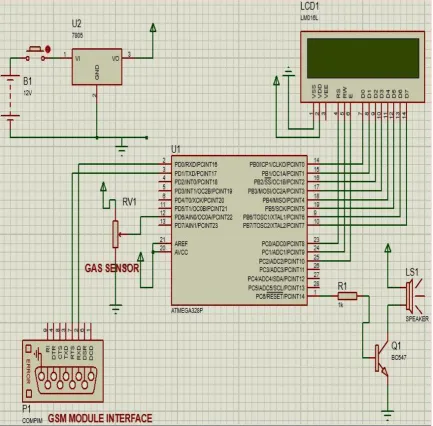
Figure 1. The wiring diagram of the system showing how the sub-components are interfaced with the microcontroller
III. THEORY AND CALCULATION
The MQ-6 gas sensor in Fig. 3 is used in this work. This sensor is capable of detecting LPG, iso-butane and propane at varying sensitivity levels respectively. Its detection is measured in PPM (parts per million) which is a measure of the concentration of the gas in the vicinity. A microcontroller, Atmega328P-PU, is used to perform processing and control operations. It has an analogue to digital converter (ADC) which is used to convert the analogue output voltage from the MQ-6 to a digital signal for further processing. If the Atmega328P-PU determines that the concentration of the gas in the room is too high i.e. above 100ppm, it activates the GSM module. The Atmega328P-PU communicates with the GSM module using the “AT” cellular commands. A 7805 regulator is used in the system power supply unit. The 7805 regulator ensures an output of +5V and it is connected to the microcontroller.
Figure 2. Block diagram of the gas leakage detection system showing the interconnections between the sensor, the
calibrate the sensor by determining the sensor resistance (RO) in 1000PPM of LPG gas at 20oC and a relative humidity of 85%, we have performed the calibration by determining the sensor resistance in clean air. According to the datasheet, RS/RO in clean air is 10, where RO is the sensor resistance in 1000PPM of LPG gas and RS is the measured sensor resistance in clean air. The measured resistance is used to extract an approximate value of RO at similar values of temperature and relative humidity. The output voltage can thus be calculated from:
(1) Where: RS = Sensor resistance
VC = Supply voltage to the load RL = Load resistance
RL = Output voltage
Figure 3. LPG Gas Sensor Module [18]
B. GSM Module
GSM module as shown in Fig. 4 is used to send SMS alert message in order for emergency measures to be taken by the home owner. The home owner’s phone number is programmed into the microcontroller. The module functions with a voltage ranging from 3V-3.9V. The GSM Module is interfaced with the microcontroller through the AT cellular command and an external subscriber identity module (SIM) card [19].
C. System Flow Chart
This program was written in C++ language following an optimized algorithm for gas processing. This algorithm is represented in the system flowchart in Fig 5.
Figure 5. System flow chart of the Gas Detection System
IV. SYSTEM IMPLEMENTATION,RESULTS AND DISCUSSION
0 5 10 15 20 25
2 3 4 5
Tim e it ta ke s to d et ect ga s le ak age s (g as concent ra ti on > 10 0 pp m )
Distance from LPG cylinder (m)
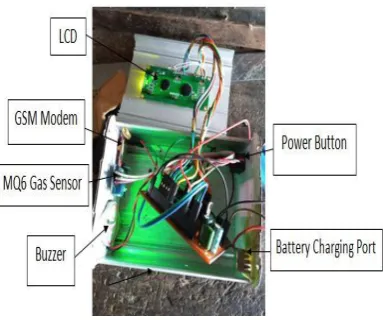
Figure 6. System assembly showing the key sub-components
When in operation, the system displays on the LCD the measured gas concentration. A small amount of gas is expected in a kitchen where LPG is used for cooking. This amount should ideally be less than 100 PPM. When the concentration of gas exceeds 100 PPM, the microcontroller communicates with the GSM module using “AT” cellular command. The microcontroller instructs the GSM module to send SMS to a pre-programmed phone number.
The tests were conducted in the kitchen on different days and time of day. Some of the results are shown in Table 1. Although, the detected gas concentration is known to vary with respect to changes in humidity [21], our results do not show this dependence since variations in humidity in the test environment are not significant.
The tests have shown that the detected gas concentration varies as a function of the distance from LPG containers/cylinders according to the relation:
(2)
Where DLC is the separating distance from the cylinder and T100 is the time for gas concentration to rise above 100PPM.
For instance, the farther away the gas leakage detection system is from the LPG gas cylinder, the lower possibility of detecting gas leakages and vice versa (see Fig. 7). It was observed that SMS messages are received at a short time interval of 5 seconds immediately after the MQ6 gas sensor detects leaked gas beyond the set gas concentration threshold.
Figure 7. Gas concentration variation as a function of the distance from LPG containers.
TABLE I. RESULTS SHOWING THE ACCURACY OF THE DEVELOPED GAS LEAKAGE DETECTOR IN DIFFERENT TEST CONDITIONS
Gas Concentration Threshold (PPM) Measured Gas Concentrati on (V) Detected Gas Leakage ?
Date Time
100 77 No 05/10/
2019
10.09a.m
100 86 No 05/10/
2019
11.57a.m
100 107 Yes 05/10/
2019
5.16p.m
100 128 Yes 08/10/
2019
1.29p.m
100 64 No 08/10/
2019
4.38p.m
CONCLUSION
This paper has highlighted the enormous benefits of LPG as an energy source. It has also pointed out the human safety and economic risk in its use in the absence of safe monitoring systems. As a result, it has shown a methodology for the development of a Gas Leakage Detection System. This system uses such major components as the MQ-6 gas sensor, Atmega328P-PU microcontroller and the GSM module in the design. It is capable of detecting leaked gas and notifying the user through an alarm and a mobile text message. A main feature of the system is the reduction in the time interval of about 5 seconds to detect leaked gas and send SMS alert messages. Due to its detection accuracy and ease of installation, it is expected that a wide deployment of this system in homes will result in a significant reduction in fire outbreaks and consequently, huge savings to the
[4] Beheshti MH, et al. “Modelling the Consequences of Explosion, Fire and Gas Leakage in Domestic Cylinders Containing LPG” Ann Med Health Sci Res. 2018; 8: 83-88
[5] Nigeria Data Portal, “National Fire Statistics of Nigeria” Nigeria.opendataforafrica.org/NBSFS2016/nationa-fire-statistics-of-nigeria-2015
[6] Pokale SS, Impact of Gas leakages on Environment, Int. Res. J. of Science & Engineering, Vol. 3 (4):184-188, August 2015.
[7] Falohun A.S., Oke A.O., Abolaji B.M. “Dangerous Gas Detection using an Integrated Circuit and MQ-9” in International Journal of Computer Applications (0975 –8887) Volume 135 – No.7, February 2016
[8] Petros Spachos , Liang Song and Dimitrios Hatzinakos. "Gas Leak Detection and Localization System Through Wireless Sensor Networks" The 11th Annual IEEE Consumer Communications and Networking Conference - Demos. IEEE, 2014.
[9] S. Shyamaladevi, V. G. Rajaramya, P. Rajasekar, and P. S. Ashok, “ARM7 Based Automated High Performance System For Lpg Refill Booking &Amp; Leakage Detection,” Int. J. Engg. Res. Sci. Tech, vol. 3, no. 2, 2014
[10] M. Kasar, D. Rupali, G. Snehal, and G. Sneha, “Automatic LPG Gas Booking and Detection System.,” Int. J. Adv. Res. Electr. Electron. Instrum. Eng., vol. 5, no. 3, pp. 1250– 1253, 2016.
[11] B. D. Jolhe, P. A. Potdukhe, and N. S. Gawai, “Automatic LPG Booking, Leakage Detection And Real Time Gas Measurement Monitoring System,” Int. J. Eng. Res. Technol., vol. 2, no. 4, 2013.
[12] ISA, ISA-TR 84.00.07–2010: Technical Report Guidance on the Evaluation of Fire, Combustible Gas and Toxic Gas System Effectiveness, 2010.
[13] K. Cen et al, “developed a risk-based methodology for the optimal placement of hazardous gas detectors” Chinese Journal of Chemical Engineering, pp. 1078–1086, July 2018
[14] D.L. Ma, J.Q. Deng, Z.X. Zhang, Comparison and improvements of optimization methods for gas emission source identification, Atmos. Environ. 81 (2013) 188–198.
[15] P.Meenakshi Vidya, “A Survey Paper on Gas Leak Detection Using IOT” Journal of Applied Science and Computations Vol. 6, no.1, Page No: 99 Jan. 2019.
[16] Ashish Shrivastava, “Gsm Based Gas Leakage Detection System” International Journal of Technical Research and Applications Vol. 1, no. 2, pp. 42-45, June 2013.
[17] Hanwei Sensors “MQ6 Sensor Technical Datasheet” https://www.sparkfun.com/datasheets/Sensors/Biometric/MQ-6.pdf
[17] Apeh ST, “Design And Development Of Kitchen Gas Leakage Detection And Automatic Gas Shut Off System” Journal of
Leakage Detector, Level Indicator and Automatic Shutdown System”
Covenant Journal of Engineering Technology (CJET) Vol.3 No.2, Dec. 2019
[21] Mohammadreza Hajmirzaheydarali “A Smart Gas Sensor Insensitive to Humidity and Temperature Variations” IOP
Conference Series Materials Science and Engineering· February
![Figure 4. A GSM Module showing the SIM800L cellular chip and the pins for communication with a microcontroller [20]](https://thumb-us.123doks.com/thumbv2/123dok_us/7805041.2084907/3.595.329.502.273.593/figure-gsm-module-showing-sim-cellular-communication-microcontroller.webp)