International Journal of Research in Engineering & Applied Sciences
Email:- [email protected], http://www.euroasiapub.org
16
Optimization of the composition of KCl and KCl+NaCl as a clay/shale stabilizing
component in the NDDF for Upper Assam Basin
Prasenjit Talukdar1,
Assistant Professor,
Department of Petroleum Engineering, DUIET, Dibrugarh University, Dibrugarh-786004, Assam, India
Subrata Borgohain Gogoi2
Professor,
Department of Petroleum Technology,
Dibrugarh University, Dibrugarh-786004, Assam, India
ABSTRACT
The drilling fluids are generally maintained at a pressure higher than the formation pressure to stop the invasion of formation fluid into the wellbore. This overbalance pressure is considered as the major cause for inducing formation damage by the invasion of fluids and solids into the formation. According to some researchers, although the depth of invasion and degree of damage is controllable to a certain level by designing the mud on the basis of concentration and particle size of the bridging material and of the pore sizes of the reservoir rock, the invasion of solid and filtrate and corresponding formation damage are inherent to all drilling fluids.
Orthodoxdrilling fluids that are used to drill through water sensitive shale formations may cause a high degree of wellbore instability. The alternate option of Oil Based Mud (OBM) due to their superior shale stabilization properties is also economically and environmentally unfeasible. Due to the challenges with OBM, conventional Water Base Mud (WBM) that have the capability to efficientlydecreasethe shale instability complications have once again comesto substitute the OBM. Water Base Mud (WBM) incorporating KCl is used in the payzones where inhibition is required to limit chemical alteration of shales.
In this work, a clay mineral study was conducted in the rock samples with the help of X-Ray Diffraction (XRD) and Scanning Electron Microscope (SEM) photomicrographs and the major clay minerals found to present in the Upper Assam Basin are Smectite, Chlorite, Illite, and Kaolinite; of which Smectite is swelling clay and Illite, Kaolinite and Chlorite are non-swelling clay. Illite and Kaolinite are known as emigrational fines problem clay; and of the clay minerals, Smectite is the least stable and the most susceptible to hydration and diagenetic alteration. So, to counter the damage, an ideal mud for this region must have saline inhibitive filtrate which should not swell the clay envelop around the pay zone particles and should not react with the formation fluid to form insoluble precipitate. In this work, the incorporation of KCl is made in Water based mud system to make it perfect for stabilizing the shale particularly of the Smectite group taking the Bentonite as swelling agent and an effort has been made to optimize the composition of KCl in the Non Damaging Drilling Fluid for Upper Assam Basin to stabilize the clay/shale of the payzone.
Keywords: Mud Filtrate; Formation Damage; Clay Inhibition; Optimisationof KCl and KCl+NaCl; NDDF; Upper
International Journal of Research in Engineering & Applied Sciences
Email:- [email protected], http://www.euroasiapub.org
17
Introduction:
Drilling fluid is one of the most critical components required for drilling a well which is circulated or pumped from the surface, down through the drill string, bit, and back to the surface via the annulus to perform various functions required in a drilling operation.It used at pressures higher than the formation pressure to avoid the entry of the formation fluids into the wellbore. Due to this overbalance pressure, the mud invades the formation and can cause formation damage. Invading particles which were initially suspended in the drilling fluids can plug the pores; and mud filtrate can interact with the formation minerals to cause mobilization and subsequent re-deposition of in-situ fines, to swell the pay zone clays or the clay envelops around the sand particles of the pay zone, to alter reservoir rock wettability, to form scales and emulsions, etc. leading to the reduction of permeability.
According to N. G. et al. (2006),to counter the formation damage, an optimally designed drilling fluid should not usedispersant and non-degradable fine solids like- Clay, Barite, etc. in the mud; should reduce fluid loss; should minimize drilled fine solids in the mud; should produce inhibitive saline filtrate which would not swell the clay envelops in the formation particles and should not react with the formation fluid to generate insoluble precipitate; should contain specialized sized materials to bridge all exposed pore openings; should deposit a thin and tough non - damaging filter cake that can be easily and effectively removed by acid jobs; must hold all the relevant drilling fluid characteristics; should lower overall well costs and most importantly must optimize the production without neglecting HSE regulations.
According to A. Abrams (1977), although some fluids and solids invasion and consequent formation damage are natural to all drilling fluids, it is possible to minimize the formation damage by adding bridging material chosen by matching its size to the formation-rock pore sizes to the muds. The studies exposed that the invasion of solids and filtrate and corresponding formation damage occur with all muds; the depth of invasion and degree of damage is manageable to a certain level by designing the mud properly; the effective bridging is a function of the concentration and particle size of the bridging material and of the pore sizes of the reservoir rock; the damage is generally occur in higher permeability rocks since most muds contain sufficient quantities of particles, including cuttings, in the required size range to bridge lower permeability rocks and where the invasion occurs, back flushing does not remove the damage.
Accordingly, the Non Damaging Drilling Fluid (NDDF) is a clay and barite free polymer mud system mostly used in pay zone section to avoid formation damage and to keep pay zone or reservoir intact. It incorporates long-chain, high molecular weight polymers in the systems either to encapsulate drill solids to prevent dispersion or to coat the shales for inhibition as well as to increase viscosity and reduce fluid loss. An extensive range of particle sizes is also used which, on de-hydration, fit together into a strongly compacted very low permeable mud cake on the surface of the rocks to quickly seals off the permeable paths of the pay-zone.
Shales make up more than 75% of formation drilled and cause in excess of 90% of wellbore-instability problems and the majority of drilling problems are attributed to water sensitivity of shale.(Steiger R.P. and
Leung P.K., 1992)The problem of wellbore instability in shales is one of the largest sources of lost time and
International Journal of Research in Engineering & Applied Sciences Email:- [email protected], http://www.euroasiapub.org
18
Due to some advantages they have, the OBM can be applied in the oilfieldsespecially to drill the shale/clay rich geological formations. They cause fewer problems during the drilling of shale formations and allow drilling of salt zones with minimal dissolving of salt. They also provide better performance in very hot or very cold environments. But, the highcost and potential pollution problems they have makethem bad choice in the Petroleum Industry. They are more or less toxic and it is also difficult and expensive to dispose them in an environmentally friendly manner.(Adesina F. et al., 2012)Due to the increasing environmental legislation and environmental awareness, the oil industries are now interested to environmental friendly bio-degradable drilling fluids. Hence, the use of WBM in place of OBM has been increasingly being applied in the oilfields due mainly to the economic and environmental feasibility.
Smectite is a 2:1 type of layered clay which has two numbers of silica tetrahedral outside layers and one alumina octahedral central layer. The layers are held together in a very complex lattice of aluminum, silicon, oxygen, and hydrogen atoms. Since it has been exposed to seawater and other sources of cations, some of the silicon and aluminum cations in the structure have been replaced. Iron and magnesium typically replace aluminum and aluminum typically replaces silicon. This replacement causes an imbalance in charges in the structure. This causes the Bentonite sheet to be negatively charged. Cations (positive charged particles) are attracted to this negatively charged surface and they loosely hold the clay platelets together. If this group of clay platelets is dropped in water, the outer exposed surfaces of the platelets and attached ions immediately become hydrated. As time goes on, water molecules begin to seep in between the platelets. Some of the molecules of water adhere to the clay platelets and some of them go to the individual cations on the platelet surface. In freshwater, Bentonite will swell 8 to 10 times of its original dry volume. (Drilling Fluids Reference Manual, Baker Hughes, 2006)
Although the Kaolinite is non-swelling clay, it tends to detach from the rock surface and migrate when the colloidal conditions are conducive for release. The migrating particles can get trapped in pore throats, thus causing a reduction in permeability. High pH (e.g. 10.5) causes the Kaolinites to develop sufficiently high potentials to cause them to detach from the surface, migrate and be captured in the pore constrictions. (K. K.
Mohan et al., 1993)Thus, by controlling the value for pH, the damaging effect of Kaolinite can be decreased or
eliminated. Low pH also results in corrosion and low crude oil recovery related problems. Therefore we must have to choose an optimum value for the pH.
Again, the benefits of concentrated formatesalts in stabilizing the wellbore are well described by Van Oort, E.
(1997) and ChenevertM.E. &Pernot V (1998).The working principles of formate salt (e. g. NaHCO2, KHCO2,
CsHCO2, etc.) and chloride salts (e.g. NaCl, KCl, etc.) are exactly same. They have some unique inherent
properties such as salt (filtrate) viscosity, Osmotic effect, presence of inhibiting cations (e.g. K+, Na+, etc.), and
presence of the formate/Chloride anion etc. that can assist in stabilizing the shales and therefore limit the shale drilling problems, such as borehole instability, cuttings dispersion, bit balling, etc.
International Journal of Research in Engineering & Applied Sciences Email:- [email protected], http://www.euroasiapub.org
19
osmotic flow of water. (Van Oort E. et al., 1994)Moreover, the concentrated potassium salt and their blends have very low water activities (about 0.3). The water activity of concentrated sodium salt (about 0.5)is not as low as potassium salt. Sodium salts are therefore not as efficient in generating such an osmotic back-flow as concentrated potassium salt and their blends.
Cutting dispersion problem can be reduced by inhibition and encapsulation. The traditional inhibitor for swelling of reactive shales is the potassium ion (K+) and certain high molecular-weight polymers normally
achieve encapsulation.
In drawing water inwards, cuttings may ‘vacuum’ themselves onto the bit causing the bit to ball. By increasing the water content, the cuttings might be made to disperse and give rise to an unwanted build-up of fine solids in the mud. The solution is specific design of the drilling fluid so that the cuttings are dehydrated. This can be accomplished by using a mud system that builds membranes and osmotically dehydrates the shale.
The mud incorporating Potassiumaccomplishes best on shales having Smectite or interlayered clays in the total clay fraction by limiting the chemical alteration of shales. The Potassium chloride (KCl) is an extremely efficient shale stabilizer when drilling hydro sensitive clays and shales.Its performance is based on cationic exchange of potassium for sodium or calcium ions on Smectites and interlayered clays. The potassium ion enters between the individual clay platelets in the shale so that they are held together, thus eliminating entry of water from the drilling fluid. The potassium ion compared to calcium ion or other inhibitive ions, fits more closely into the clay lattice structure and thereby greatly reducesthe hydration of clays.
Potassium Chloride (KCl) is a soluble salt that have found extensive use in Petroleum Industryas inhibitive components of WBM designed for the controllingof wellbore in chemically active fine grained argillaceous rocks such as shales. Such electrolytes usually in combination with anionic polymers are known to reduce the level of borehole erosion and sloughing connected with the swelling and dispersion of Smectites.(O'Brien D.E.
&Chenevert M.E., 1973; Clark R.K. et al., 1976; Steiger R.P., 1984) The stabilization of shales by such
additives is attributed to the inhibition of swelling following some degree of exchange of the natural exchange Cations (Na, Ca, Mg) by Potassium (K). Several studies in the petroleum engineering indicate that for different shale types, concentrations of KCl ranging from 3-20 weight % appear to be necessary to minimize swelling and erosion.(O'Brien D.E. &Chenevert M.E., 1973; Steiger R.P., 1984; Gray G.R., 1980; Roehl E.A. & Hackett J.L.,
1982; Bol G.M., 1986; Wingrave J.A. et al., 1987)Generally, the older formations which contain nonswelling
clays require KCl levels in the 3 to 5 weight % range; whereas, younger shales containing hydratable clays, require KCl levels up to 15 weight %.(UcheOsokogwu et al., 2014)
Thus, KCl has historically been used in drilling fluids for stabilization of shale present within sandstones by minimizing shale swelling and dispersion.
But, based on literature review, the potassium chloride is not a viable alternative while drilling sandstones containing kaolinite. The addition of an amine compound to drilling fluids improved the return permeability values as compared with those obtained by using the traditional KCl salt. (Mario R. et al., 2005)
In the Upper Assam basin, following horizons have been identified (top to bottom): a) Tipam Sand, b) Barail Sand, c) Kopili, d) Sylhet, e) Basal Sandstone, and f) Basement as the producing formation. In most of the fields, the main producing horizons are Tipam and Barail main sand. In addition, few wells are producing from the Barail coal-shale unit. The geological age of the Barail main sand and Barail coal-shale is Oligocene and that of Tipam is Miocene.
International Journal of Research in Engineering & Applied Sciences Email:- [email protected], http://www.euroasiapub.org
20
study also conducted in the rock samples of some oilfields of Upper Assam Basin with the help of X-Ray Diffraction (XRD) and Scanning Electron Microscope (SEM) photomicrographs.
In this paper, therefore, it has been studied the role of KCl for inhibition of Smectite clay (Bentonite) in a Bentonite added Water Base Mud system based on the swelling characteristics of the clay in presence of the KCl by studying basically the rheological properties (Apparent Viscosity, Plastic Viscosity, Yield Point and Gel strength) which are responsible for the swelling characteristics of the clay. A comparative study on the degree of inhibition by KCl and lower costly NaCl was also done. Moreover, it has been trying to optimize the composition of KCl as a clay/shale stabilizing component in the Non Damaging Drilling Fluid for Upper Assam Basin based on the required mud parameters for the study area.
Materials and Methods:
Table-01 : Reservoir properties of ten (10) major oilfields of Upper Assam Basin
Oilfield Sand Average Porosity
(%)
Perm. (md)
Temp. (oC)
XYZ-A
Gurujan Clay
22 --- ---
TS 15-22 10-50 70-80 BCS 15-20 --- 90-92 BMS 10-20 5-45 98-105 KSU 10-15 5-45 100-108
XYZ-B
TS 20-21 --- --- BCS 20.1-25 --- --- BMS 15-23.8 --- ---
XYZ-C TS 14.8-32 23-900 74-92.8
XYZ-D
Tipam 18-25 30-900 66-74 Barail 18-23 33-416 70-93 LK+TH 12-15 --- 98-112
XYZ-E
Tipam 16-25 --- 60-70 Barail 20-24 300-600 68-75 LK+TH 16-20 --- 103-116
XYZ-F Barail 18-21 7-207 80-99
XYZ-G LK+TH 18-26
250-2400
103-105
XYZ-H Tipam 14-25 40-480 65-84
Barail 19-21 10-380 85-88
XYZ-I Barail 10-18 12-156 70-90
XYZ- J Eocene
(LK+TH and Langpar)
16-22 500-700 98-106
International Journal of Research in Engineering & Applied Sciences Email:- [email protected], http://www.euroasiapub.org
21
Materials:
For experimental evaluation of the degree of inhibition of different concentrations of KCl and KCl + NaCl on Smectite clay, the following materials have used:
1. Fresh Water: 1500 ml
2. Bentonite powder (Smectite): 10% 3. Commercial KCl: Varies
4. Commercial NaCl: Varies
The general components used for formulation of NDDF are: 1. Base fluid - fresh water
2. Viscosifier- XCP
3. Fluid loss control agent - Starch e.g. PGS (Pre Gelatinized Starch), PAC (LVG) & PAC (RG) 4. Formation clay/shale inhibitor-Potassium Chloride
5. Weighing and bridging materials: Medium Coarse CaCo3 and Micronized CaCo3
6. Other additives- Caustic Soda, Bactericide (Formaldehyde)
To study the effect of KCl, the NDDF is prepared by properly mixing of Fresh Water: 1.5 Litre, XC-Polymer: 0.3%, PGS: 3%, PAC (LVG): 0.5%, PAC (RG): 0.4%, Biocide: 0.1%, NaOH: 0.025%, MCC:4.5 %, MCCC: 3% and varies the composition of KCl in gm /100ml basis. (Talukdar P. and Gogoi. S.B., 2015a,b; Rao A. andPandey A. K., 2010; Chattopadhyay S. K. et al., 2010)
As discussed earlier, the drilling fluids are designed based upon the formation characteristics. So, to study the detail characteristics of the study area, some data of reservoir rock properties as well as some mud policy & well cards for NDDF of drilled wells, mud chemicals, etc. are collected from different operating companies working in this basin.
Methods:
Firstly, the XRD and the SEM photomicrograph study of the of Core samples of the pay-zones of some major
oilfields of Upper Assam Basin (UAB) have conducted to investigate the clay-mineral contents of the fields to analyse the candidature of the fields for the implementation of NDDF .
Secondly, a study on the reservoir Porosity, Permeability and Temperature of the major oilfields of Upper
Assam Basin was done based on the collected data from OIL and ONGCLto analyse the candidature of the fields for the implementation of NDDF.
Thirdly, according to proper measuring manual instructions different WBM samples [1500 ml Fresh Water +
150 mg(10%) Bentonite + KCl] were formulated by varying the composition of KCl keeping the other components as constant using the following equipments:
a) Mettler Electronic Precision balance to measure the mass of different chemicals for proper composition. b) 1000 ml measurable stainless steel cup for measuring the water volume.
c) Hamilton Beach Mixer for proper stirring/mixing water and the mud component for generation of proper mud properties.
d) 15 ml pipette to measure small liquid volume.
International Journal of Research in Engineering & Applied Sciences Email:- [email protected], http://www.euroasiapub.org
22
To investigate the effect of varying composition on the various mud properties, the following equipments have used:
a) OFITE 4 scale plastic model Mud Balance to measure the density of formulated mud.
This instrument consists of a constant volume cup with a lever arm and rider calibrated to read directly the density of the fluid in kg/m3, ppg, pcf, and pressure gradient in psi/1000 ft. [Drilling Engineering
Laboratory Manual (PETE 203), 2003]
b) OFITE plastic Marsh Funnel Viscometer to measure the Funnel Viscosity of formulated mud.
In this equipment, the viscosity is reported in seconds allowed to flow out of the funnel. API specifications call for 1500 ml and one quart (946) ml out. For API water at 70oF + 0.5oF = 26 + 0.5 sec. It measures the
apparent viscosity.[Drilling Engineering Laboratory Manual (PETE 203), 2003]
c) OFITE model 800 Viscometer to measure/determine Apparent Viscosity, Plastic Viscosity, Yield Point, Gel0,
Gel10, of formulated mud.
For determining the Apparent Viscosity, Plastic Viscosity and Yield Point, the following formulas have been used:
Apparent Viscosity = (θ600/2) CP Plastic Viscosity = (θ600- θ300) CP
Yield Point = (θ300- PV) lb/100ft2. [Drilling Engineering Laboratory Manual (PETE 203), 2003]
d) ELICO CM 180 Conductivity Meter/Bridge to measure Salinity of water used for formulating mud and the formulated mud.
Fourthly,using proper measuring manual instructions different WBM samples [1500 ml Fresh Water + 150 mg
(10%) Bentonite + (KCl + NaCl)] were formulated by varying the composition of KCl+NaCl keeping the other components as constant using the above mentioned equipments. Then, the effect of varying composition of KCl+NaCl on mud properties were investigated using the above mentioned equipments and formulas to select optimum percentage of KCl+NaCl which will give best inhibition properties to NDDF.
Fifthly, the Mean and Median of the different NDDF parameters of successfully drilled wells in the producing
formations of UAB were calculated from the well-cards of the completed wells collected from different operating companies of this basin to design the optimum mud parameters for the successful wells in this basin.
Finally,oneNDDF samplewas formulated by taking the best composition of the inhibiting agent of NDDF ( KCl or
NaCl)and taking the composition of other components as Fresh Water: 1.5 Litre, XC-Polymer: 0.3%, PGS: 3%, PAC (LVG): 0.5%, PAC (RG): 0.4%, Biocide: 0.1%, NaOH: 0.025%, MCC:4.5 %, MCCC: 3% which are giving optimum mud parameters for successful drilling operations without damaging the reservoir much in the oilfields of Upper Assam Basin. (Talukdar P. and Gogoi. S.B., 2015a,b)Then, investigated the mud parameters of NDDF and analysed whether these mud parameters are coming within the designed range of the mud parameters for the Upper Assam Basin or not. Since, the results werefavourable;we can able to recommend this composition of inhibiting agent as the optimum composition for Upper Assam Basin (UAB).
Results and Discussion:
[
International Journal of Research in Engineering & Applied Sciences Email:- [email protected], http://www.euroasiapub.org
23
photomicrograph (Fig. 03-06) are shown in this paper due to the limitation of space here.The major minerals found to present in the UABfrom the XRD and SEM photomicrograph analysis are Smectite, Chlorite, Illite, Kaolinite, Quartz, and Feldspar. The study reveals that the entire field contains both the swelling (Smectite) and non-swelling (Illite, Kaolinite) clay. Illite and Kaolinite are known as emigrational fines problem clay; and of the clay minerals, smectite is the least stable and the most susceptible to hydration and diagenetic alteration. Smectites can swell with changing ionic conditions and eventually disperse and migrate with the flowing fluid. Swelling reduces the effective area for flow and causes reduction in permeability. Kaolinite is non-swelling clay, but tends to detach from the rock surface and migrate when the colloidal conditions are conducive for release. The migrating particles can get trapped in pore throats, thus causing a reduction in permeability. Thus, the clay contents of UAB are very much prone for the formation damage.
Fig. 01: XRD photograph of Core Sample (Depth: 2330 m) of Naharkotia oilfield showing Smectite/Chlorite, Illite, Kaolinite, Quartz, Orthoclase and Topaz.
Then, a study on the reservoir Porosity, Permeability and Temperature of the major oilfields of Upper Assam Basin was done based on the collected data from OIL and ONGCL (Table-01).The Median Porosity and Permeability of the producing formations of the oilfields of Upper Assam Basin are also very good, which are about 20% and 225 md respectively and are in turn very much susceptible for filtrate and solid invasion. The Median reservoir temperature of the major oilfields of UAB is 86.5 oC which is in the favourable range for the
International Journal of Research in Engineering & Applied Sciences Email:- [email protected], http://www.euroasiapub.org
24
Fig. 02: XRD of Core Sample (Depth: 2984m) of Geleki oilfield showing Smectite, Kaolinite, Quartz, andFeldspar
International Journal of Research in Engineering & Applied Sciences Email:- [email protected], http://www.euroasiapub.org
25
Fig. 04: SEM photomicrograph shows Illite and Smectite coated on detrital grains in the samples ofGeleki Oilfield
International Journal of Research in Engineering & Applied Sciences Email:- [email protected], http://www.euroasiapub.org
26
Fig. 06: SEM photomicrograph shows Smectitecoated on detrital grains in the samples of Moran OilfieldThen, according to proper measuring manual instructions, ten (10) numbers of WBM samples [1500 ml Fresh Water + 150 mg (10%) Bentonite + KCl] were formulated by varying the composition of KCl as 0%, 1%, 2%, 3%, 4%, 5%, 6%, 7%, 8%, and 9% ; keeping the other components as constant using the above mentioned equipments.
International Journal of Research in Engineering & Applied Sciences Email:- [email protected], http://www.euroasiapub.org
27
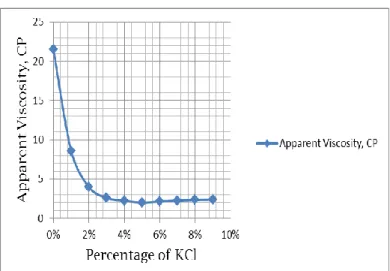
Table-02: Properties of ten (10) samples atdifferent composition of KCl
Fresh Water: 1.5 liter, Clay(Bentonite): 10% and Temperature: 80 oF
KC
l %
Properties of the samples at different composition of KCl
F u n n el V is co si ty , Se co n d A p p are n t Vi sc o si ty , CP Pl as ti c V is co si ty , CP Y ie ld P o in t, lb / 1 0 0 ft 2 Ge l0 , l b / 1 0 0 ft 2 Ge l10 , l b / 1 0 0 ft 2 Sa li n it y, p p m T D S Sp ec ifi c G ra vi ty
0% 5
7 21.5 18 7 1 5
1
7 2055 1.009
1% 3
8 8.6 5.4 6.4 1 0
1
2 9294 1.2
2% 3
2 4 2.2 3.6 6 7 16856 1.39
3% 3
0 2.6 1.3 2.6 3 4 23748 1.52
4% 2
8 2.25 1.1 2.3 2 2 31900 1.65
5 %
2
7 2 0.9 2.2 1 1 38420 1.8
6% 27 2.15 1.1 2.1 1 1 45508 1.9
7% 2
7 2.25 1.2 2.1 1 1 50638 1.98
8% 28 2.35 1.3 2.1 1 1 55640 2.09
9% 2
International Journal of Research in Engineering & Applied Sciences Email:- [email protected], http://www.euroasiapub.org
28
Fig. 07: Funnel Viscosity vs. Composition of KClInternational Journal of Research in Engineering & Applied Sciences Email:- [email protected], http://www.euroasiapub.org
29
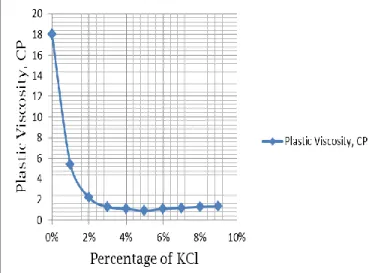
Fig. 09: Plastic Viscosity vs. Composition of KClInternational Journal of Research in Engineering & Applied Sciences Email:- [email protected], http://www.euroasiapub.org
30
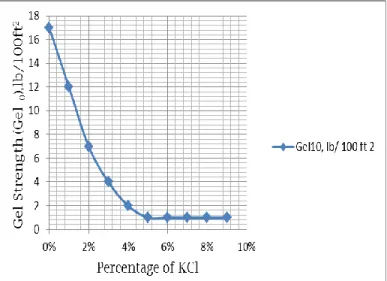
Fig. 11: Gel Strength (Gel0) vs. Composition of KCl
International Journal of Research in Engineering & Applied Sciences Email:- [email protected], http://www.euroasiapub.org
31
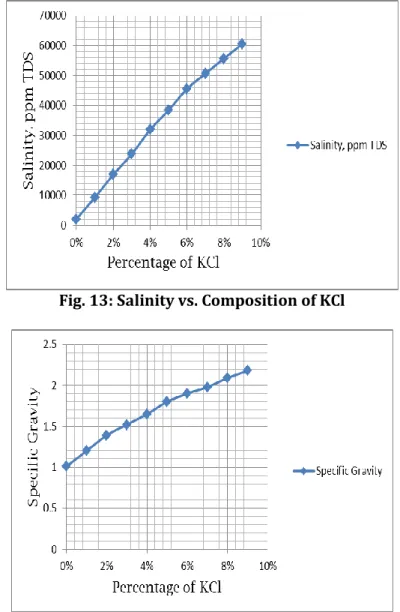
Fig. 13: Salinity vs. Composition of KClFig. 14: Specific Gravity vs. Composition of KCl
From the Table-02 and Fig. 07-12, it is very clear that with increasing the composition of KCl from 0% to 5%, all the rheological properties of the mud system inversely decreases. From 0% upto almost 3%, the decrease in rate is very high; but from 3% upto 5%, the decrease rate is slow. After about 5% of KCl, the system starts to give opposite results. At 5% of KCl, all the rheological properties are minimum i. e. this composition of KCl will not allow to build-up the rheological properties in the system beyond their minimum values. The 5% KCl will inhibit the Smectite (Bentonite) completely i.e. it will not allow the clay to swell and since the swelling of the clays is basically responsible for building up the rheology in the system, the rheological properties e.g. Apparent Viscosity, Plastic Viscosity, Yield Point and Gel strength will be in their minimum values at 5% of KCL in a system. Thus, we can select the 5% of KCl as the optimum composition which will give best inhibition properties to NDDF.
International Journal of Research in Engineering & Applied Sciences Email:- [email protected], http://www.euroasiapub.org
32
unhydrated, their effect on viscosity is small. However, time, temperature, and agitation tend to disperse and allow hydration of the individual clay platelets, which results in increased viscosities.
Since the 5% KCl stops the swelling of the Bentonite, the fine clay solid particles in the system increases and in turn the plastic viscosity also slightly increases with the increasing of KCl above 5%. Moreover, the viscosity of the liquid phase is also increased by addition of any soluble material e.g. addition of KCl in water.
When a fluid comprises large molecules or colloidal particles, these molecules or particles tend to collision into one another increasing the resistance to flow. Clay platelets are both electrically charged and long compared to their thickness. This makes them quite good for increasing the Yield Point caused by flocculation of clay solids or high concentrations of colloidal solids. Their ability to link together (flocculate) can be neutralized by the addition of certain chemicals; contaminants such as salt (e.g. KCl); and high temperature. Thus, addition of KCl in Bentonite mud will decrease the Yield Point. When this is accomplished, the yield point will be reduced to that caused by the mechanical interactions of the solids. Further chemical addition will not continue to reduce the Yield Point past this point. Complete deflocculation is best identified by the occurrence of near zero gel strength. Removal of colloidal solids is another way to reduce the Yield Point. This reduces both the tendency to link and the mechanical interference of the particles. (Max R. Annis et al., 1974)Thus, further KCl addition will not continue to reduce the Yield Point past about 5%.In the same way, in water-base muds, the flocculation also increases Gel Strength and deflocculation decreases the Gel Strength.
The Fig. 13 & 14 shows that the Salinity and the Specific Gravity of the mud system are directly proportional to
the composition of KCl; they directly increase with the increase in KCl concentration in the mud.
Then, again some different WBM samples [1500 ml Fresh Water + 150 mg(10%) Bentonite + (KCl + NaCl)] were formulated by varying the composition of KCl+NaCl keeping the other components as constant using the above mentioned equipments to compare the degree of inhibition by KCl with the lower costly NaCl. It has been tested whether the Sodium ion (Na+) also works as like the Potassium ion (K+) as the inhibitor of shale.The primary
aims of this study were the economic benefit and product availability. The effect of varying composition of KCl+NaCl on mud properties were investigated using the above mentioned equipments and formulas and then, tabulated the results (Table-03).
International Journal of Research in Engineering & Applied Sciences Email:- [email protected], http://www.euroasiapub.org
33
Table-03: A comparison of the properties of the WBMsamples at different composition of KCl+NaCl
Fresh Water: 1.5 liter, Clay(Bentonite): 10% and Temperature: 80 oF
KC
l %
N
aCl
%
Properties of the samples at different composition of KCl+NaCl
F u n n el V is co si ty , Se co n d A p p are n t Vi sc o si ty , CP PV, CP Y P, lb / 1 0 0 ft 2 Ge l0 , l b / 1 0 0 ft 2 Ge l10 , l b / 1 0 0 ft 2 Sa li n it y, p p m T D S Sp ec ifi c G ra vi ty
5% 0% 27 2 0.9 2.2 1 1 38420 1.8
4.5% 0.5% 28 3 1.5 1.9 2 2 38923 1.81 4% 1% 28 2.8 1.9 2.2 2 2 39168 1.83 3.5% 1.5% 28 2.8 2 1.6 2 2 39360 1.9 3% 2% 28 2.8 1.8 2 2 2 39616 1.81 2.5% 2.5% 27 2.8 1.9 1.8 3 3 39872 1.88
2% 3% 27 2.15 1.2 1.9 1 1 40128 1.86
1.5% 3.5% 27 2.6 1.9 1.4 2 2 40896 1.85 1% 4% 28 2.35 1.5 1.7 2 2 41152 1.89 0.5% 4.5% 28 2.35 1.7 1.3 2 2 41024 1.87
0% 5% 28 1.95 1.2 1.5 1 1 41408 1.9
Table-04 : NDDF parameters of Sixteen successfully drilled wells in producing formations of Upper Assam Basin
Well Name
Well’s Brief Description
NDDF Parameters Specific Gravity Funnel Viscosit y, Seconds Fluid Loss, ml Plastic Viscosit y, CP Yield Point, lb/100f t2 Gel Stren gth (
Gel0),
lb/10 0ft2 Gel Streng th (
Gel10),
lb/100
ft2
XYZ-1 Development well, Inclined (L)
profile, 2617 m TVD
1.07-1.08 55-59 5-8 11-16 30-36 8-10 16-18
XYZ-2 Development well, Inclined (L)
profile, 2880 m TVD
1.06-1.07 42-55 7-8.5 11-14 16-24 6-8 11-16
XYZ-3 Development well, Inclined (L)
profile, 2900 m TVD
1.08-1.11 53-60 5.5-6.2
International Journal of Research in Engineering & Applied Sciences Email:- [email protected], http://www.euroasiapub.org
34
The effectiveness of the K+ ion in minimizing swelling pressures in Smectite is believed to be due to the small
amount of hydration of these ions in water, resulting in low ion repulsion. Other ions such as Mg2+ and Ca2+ are
XYZ-4 Development well, Inclined (L)
profile, 2900 m TVD
1.08-1.12 47-57 4.2-7 10-17 35-38 8-12 15-18
XYZ-5 Development well, Inclined (L)
profile, 3051 m MD
1.08-1.12 43-50 3.4-7.6
9-18 22-37 8-12 10-17
XYZ-6 Development well, Inclined (L)
profile, 3010 m TVD
1.08-1.12 45-50 4.5-6.5
12-20 23-36 7-12 14-22
XYZ-7 Development well, Inclined (S)
profile, 3150 m TVD
1.09-1.11 45-49 5.5-6.0
11-18 20-28 7-11 14-16
XYZ-8 Development well, Horizontal
profile, 3258 m TVD
1.04-1.06 54-60 8-10 7-14 26-40 10-15 27-48
XYZ-9 Development well, Inclined (L)
profile, 3569 m TVD
1.12-1.18 42-47 5.7-6.5
10-17 19-25 5-7 11-17
XYZ-10 Development well, Inclined (L)
profile, 3600 m TVD
1.08-1.09 53-58 6-8 10-12 32-42 10-13 17-20
XYZ-11 Development well, Inclined (L)
profile, 3850 m TVD
1.14-1.20 50-55 4.6-5.8
14-19 24-43 9-12 15-19
XYZ-12 Development well, Horizontal
profile, 3085 m TVD
1.05-1.07 45-50 4-6 13-16 23-28 7-9 13-15
XYZ-13 Development well, S-profile,
3500m TVD
1.06-1.15 45-52 5.5-9 10-16 18-37 8-9 12-18
XYZ-14 Development well, Horizontal
profile, 2477 m TVD
1.10-1.14 48-52 5-7 11-18 24-28 9-12 24-30
XYZ-15 Development well, Inclined (L)
profile, 4250 m TVD
1.08-1.18 44-65 4.6-8.6
12-18 14-39 8-18 15-51
XYZ-16 Development well, Horizontal
profile, 3073.5 m TVD
1.04-1.06 51-57 8-8.5 13-15 29-36 10-12 16-18
Mean 1.09 51.16 6.43 13.91 29.13 9.53 18.63
Median 1.10 51 6.05 13.75 29.5 9.75 16.75
Designed Value 1.09 ±
0.05
51.1 ± 5 6.3 ±
2
13.8 ± 5 29.3 ±
10
9.6 ± 4
International Journal of Research in Engineering & Applied Sciences Email:- [email protected], http://www.euroasiapub.org
35
not as effective as the K+ ion in reducing the swelling pressure in Smectite. The sodium ion (Na+) does not have
the same effect on swelling pressure, and when drilling through reactive shales it is therefore advised to use potassium formate than pure sodium formate. (UcheOsokogwu et al., 2014)
Then, the Mean and Median of the different NDDF parameters of successfully drilled wells using NDDF in the pay-zone sections of the producing formations of UAB were calculated ( Table-04) from the well-cards of the completed wells collected from different operating companies of this basin to design the optimum mud parameters for successful wells in this basin.
Finally, one NDDF sample was formulated by taking the composition of KCl as 5% as the inhibiting agent of NDDF and taking the composition of other components as Fresh Water: 1.5 Litre, XC-Polymer: 0.3%, PGS: 3%, PAC (LVG): 0.5%, PAC (RG): 0.4%, Biocide: 0.1%, NaOH: 0.025%, MCC: 4.5%, MCCC: 3%.
For the required Viscosity and other rheological properties, we have used 0.3% XC-Polymer in gm / 100ml basis which shows effective role for controlling these properties in NDDF. (Talukdar P. and Gogoi. S.B., 2015b)
Basically for the Fluid Loss control and mildly for Mud Cake Thickness control agent, we have used 3% PGS (Pre-Gelatinized Starch in gm. / 100ml basis which shows great role for controlling these properties in NDDF
(Talukdar P. and Gogoi. S.B., 2015a)and the low viscous grade and regular grade of Poly-Anionic Cellulose
(PAC) which are more resistant to temperature and bio-degradation than PGS.
KCl is used as a clay/shale inhibitor to prevent formation damage, which increases the salinity of the mud also. We have selected the 5% of KCl for this NDDF sample since it is giving the best inhibition properties to NDDF. NaOH is used to maintain desired pH of 9-9.5 for maximum hydration.Bactericide (Formaldehyde) is using to decrease the bio-degradation rate of the polymers used in the NDDF.
Here, we are using the CaCo3 basically as the bridging and weighting agent. As per the laboratory studies done
previously, it shows effective role as bridging agent and we can recommend the starting composition of CaCo3
as 7.5%, out of which 4.5% MCC and 3% MCCC and may increase slightly with the requirements during the drilling with proper investigation of the mud parameters.
Then, all the mud parameters of NDDF sample were investigated using the above mentioned equipments and formulas. The build-up mud properties are:
Funnel Viscosity: 53 Seconds Apparent Viscosity: 39 CP Plastic Viscosity: 19 CP Yield Point: 35lb/100ft2
Gel Strength (Gel0): 12.5 lb/100ft2
Gel Strength (Gel10): 18.5 lb/100ft2
Specific Gravity: 1.05
Fluid Loss, ml: 7.2 ml
Mud Cake Thickness, mm: 0.29 mm
International Journal of Research in Engineering & Applied Sciences Email:- [email protected], http://www.euroasiapub.org
36
CONCLUSION:
From the above discussion, the following conclusions are drawn:
The major minerals found to present in the UAB are Smectite, Chlorite, Illite, Kaolinite, Quartz, and Feldspar. The study reveals that the entire field contains both the swelling (Smectite) and non-swelling (Illite, Kaolinite) clay. Illite and Kaolinite are known as emigrational fines problem clay; and of the clay minerals, smectite is the least stable and the most susceptible to hydration and diagenetic alteration. Thus, the clay contents of UAB are very much prone for the formation damage.
The Median Porosity and Permeability of the producing formations of the oilfields of Upper Assam Basin are also very good, which are about 20% and 225 md respectively and in turn are very much susceptible for filtrate loss as well as solid invasion. The Median reservoir temperature of the major oilfields of UAB is 86.5
oC which is within the favourable range for the stability of various polymers used in NDDF. Therefore, the
UAB is a very good candidate for the implementation of NDDF.
By controlling the value for pH, the damaging effect of the Kaolinite which is one of the clays present in the study area can be decreased or eliminated. We must have to choose an optimum value for the pH to eliminate the low pH induced corrosion problem and high pH induced Kaolinite emigrational problems.
At 5% of KCl, the values of all the rheological properties are minimum i. e. this composition of KCl will not allow to build-up the rheology in the system beyond their minimum values. So, the 5% KCl will inhibit the Smectite (Bentonite) completely. It will not allow the clay to swell and effect adversely. Thus, we can select the 5% of KCl as the optimum composition which will give best inhibition properties to NDDF.
All the reservoirs in the world are heterogeneous. The properties and characteristics are different in different location in the reservoir. Therefore, the composition of any component or the value of any properties of NDDF to serve any function will not be fixed. In this study, from the laboratory experiments we have seen that all the build-up mud properties with 5% composition of KCl are within the designed range for the producing formations of Upper Assam Basin. So, we can able to recommend 5 % of KCl composition as the optimum composition for clay/shale inhibition in the NDDF for Upper Assam Basin.
The best inhibition is only possible with the composition of KCl of 5% and NaCl of 0%. Due to some industrial problems, if we have to think for the second option, then we can choose the composition of KCl of 0% and NaCl of 5% which is giving almost same inhibition as our first option in the laboratory. If, we have to choose the mixture of the KCl and NaCl, then we can select2% KCl and 3% NaCl, which compositions giving the best inhibition i. e. minimum rheology as the mixture of these two inhibitors.
Intensive care of the mud and the circulation system is needed during drilling the pay zone section. All the solid control equipments e.g. Shale shaker, De-Sander, De-Silter, Mud Cleaner, etc. should be working properly during the drilling to control the solid particles in mud. Continuous investigation of the properties and functions of the mud, whether they are fulfilling the requirements or not, is necessary and if required we may have to change the composition of the mud during drilling.
International Journal of Research in Engineering & Applied Sciences Email:- [email protected], http://www.euroasiapub.org
37
Acknowledgement
The authors gratefully acknowledge the ED-Asset Manager, Assam Asset, ONGCL, India for conveying the permission to pursue the research work in the existing facilities of ONGC and collecting information for research purpose. The authors are thankful to the authorities of OIL, India for providing the laboratory facilities for XRD and SEM analysis of rock samples in R & D department, OIL and the permission for collecting information/data from G & R department, OIL for research purpose.
References
1. Talukdar P. and Gogoi. S.B. (2015a), A study on the role of Pre-Gelatinized Starch (PGS) in the Non Damaging
Drilling Fluid (NDDF) for the Tipam Sand of Geleki oilfield of Upper Assam Basin. International Journal of
Applied Sciences and Biotechnology, Vol. 3(2), pp. 291-300, June, 2015
2. Talukdar P. and Gogoi S. B. (2015b), Effective role of XC-Polymer in the Non Damaging Drilling Fluid (NDDF)
for Tipam Sand of Geleki Oilfield of Upper Assam Basin. International Journal of Research in Engineering and
Applied Sciences; VOLUME 5, ISSUE 5, pp. 16-33, May-2015
3. UcheOsokogwu, Joseph AtubokikiAjienka and Andrew NsikaOkon (2014), Evaluating the Effects of Additives
on Drilling Fluid Characteristics. International Journal of Engineering Sciences & Research Technology; 3(6):
June, 2014
4. Adesina F, Anthony A, Gbadegesin A, Eseoghene O, Oyakhire A (2012). Environmental Impact Evaluation of a
Safe Drilling Mud. Middle East Health, Safety, Security, and Environment Conference and Exhibition. 2-4
April 2012. Abu Dhabi, UAE
5. Rao A. andPandey A. K. (2010), New initiative in drilling depleted low pressure horizon using Foam aided
Polymer-Polyol NDDF. Petrotech-2010, 31 October-3 November 2010, New Delhi, India
6. Chattopadhyay S. K., Kapoor P. R., Dwivedi R. K., Pal A. K. and Dakwala M. D. (2010),Use of a Quaternary Monoamine in PHPA-Polymer System provide benefits of environment-friendly High-performance Water based
drilling fluid. Petrotech-2010, 31 October-3 November 2010, New Delhi, India
7. Drilling Fluids Reference Manual, (2006), Baker Hughes Revised 2006
8. Drilling Engineering Laboratory Manual (PETE 203), 2003, Department of Petroleum Engineering, King Fahd University of Petroleum & Minerals
9. N. G. Mandal, B. S. Anil, V. K. Jain, R. K. Gupta (2006), Non-Damaging Drilling Fluid Enhances Borehole Quality
and Productivity in Conventional Wells of Mehsana Asset, North Cambay Basin. SPE-102128, SPE/IADC Indian
Drilling Technology Conference and Exhibition, 16-18 October 2006, Mumbai, India
10. Mario R., Michael J., Rene H. and Carlos T. (2005),Amine Compound Replaces Potassium Chloride to Stabilize
Kaolinite in the Magallanes Strait. AADE-05-NTCE-04, presentation at the AADE 2005 National Technical
International Journal of Research in Engineering & Applied Sciences Email:- [email protected], http://www.euroasiapub.org
38
11. Chenevert M.E. and Pernot V (1998), Control of Shale Swelling Pressures Using Inhibitive Water Based Muds. SPE 49263 presented at the 1998 SPE Annual Technical Conference and Exhibition, New Orleans, September 27-30
12. Van Oort, E. (1997),Physico-Chemical Stabilization of Shales. SPE37263, 1997.
13. K. K. Mohan, R. N. Vaidyab, M. G. Reed and H. S. Fogler (1993), Water sensitivity of sandstones containing swelling and non-swelling clays. Colloids and Surfaces A: Physicochemical and Engineering Aspects, 73 (1993) 231-254, Elsevier Science Publishers B.V., Amsterdam
14. Max R. Annis, Martin V. Smith (1974), Drilling Fluids Technology. Revised Edition: August, 1996, EXXON COMPANY, U.S.A.
15. Van Oort, E., Hale, A.H., Moody, F.K., Roy, S. (1994), Transport in Shales and the Design of Improved
Water-based Shale Drilling Fluids. SPE 28309, 1994
16. Steiger, R.P. and Leung, P.K. (1992), Quantitative Determination of the Mechanical Properties of Shales. SPE Drilling Engineering (Sept 1992) 181
17. Wingrave J.A., Kubena E. JR., Dootv C.F., Whitfill D.L. & Cords D.P. (1987), New chemical package produces an
improved shale inhibitive water based drilling fluid system. 45th Annual Fall Meet. Society of Petroleum
Engineers, Dallas, Texas, Paper No. SPE 16687
18. Bol G.M. (1986), The effect of various polymers and salts on borehole and cutting stability in water-base shale
drilling fluids. IADC/SPE 14802
19. Steiger R.P. (1984), Fundamentals and use of potassium/polymer drilling fluids to minimize drilling and
completion problems associated with hydrateable clays. Journal of Petroleum Technology; August 1982,
1661-1670
20. Roehl E.A. & Hackett J.L. (1982), A laboratory technique for screening shale inhibitors. 57th Annual Fall Meet.
Society of Petroleum Engineers, New Orleans, Louisiana, Paper No. SPE 11117
21. Gray G.R., Darley H.C.H. & Rogers W.F. (1980) Composition and Properties of Oil Well Drilling Fluids, 4th
edition, Gulf Publication, Houston
22. A. Abrams (1977), Mud Design To Minimize Rock Impairment Due To Particle Invasion, Journal of Petroleum Technology , p 586-592, SPE-5713-PA, May-1977
23. Clark R.K., Scheuerman R.F., Rath H. & Van Laar H.G. (1976), Polyacrylamide/potassium chloride mud for
drilling water sensitive shales. Journal of Petroleum Technology; June 1976, 719-727
24. O'Brien D.E. &Chenevert M.E. (1973),Stabilizing sensitive shales with inhibited, potassium-based drilling


![Fig. 06: SEM photomicrograph shows Smectitecoated on detrital grains in the samples of Moran Oilfield Then, according to proper measuring manual instructions, ten (10) numbers of WBM samples [1500 ml Fresh Water + 150 mg (10%) Bentonite + KCl] were formul](https://thumb-us.123doks.com/thumbv2/123dok_us/8058431.2133945/11.918.254.668.108.396/photomicrograph-smectitecoated-detrital-oilfield-according-measuring-instructions-bentonite.webp)