Executive Summary
This research is on understanding the effect of marketing communication on the organizational performance. The main purpose of the research is to examine the best approach of marketing communication out of, above the line marketing (ATL), below the line marketing (BTL), through the line marketing (TTL) and integrated marketing communication (IMC). It also touch surface on how business to business marketing and business to consumer marketing would vary.
This research is categorized under qualitative research. Research is a case study. The research is conducted through correlation investigation and non-contrived study setting. The unit of analysis would be “individual” Sample size is about 20 organizations local and international. The primary data source is gathered through books and journal articles.
Overall findings identifies that defining one marketing communication method for a company in not practical, therefore areas such as organization size, organization type, product type and global location should be taken into consideration when deciding on the marketing approach for a company.
Content Page
Page
Chapter 01
Introduction
03
Chapter 02
Literature Review
04
2.1 Framework of Communication
04
2.2 BTL Marketing Communication
04
2.3 ATL and BTL Marketing Communication
07
2.4 Media Fragmentation and its effects
09
2.5 TTL marketing communication
10
2.6 Integrated Marketing Communication
16
2.7 Marketing Communications In B2B Companies 18
2.8 Differences In Marketing Communication
18
B2B to B2C
Chapter 03
CHAPTER 01
INTRODUCTION
Marketing is the process of identifying, anticipating and then meeting the needs and requirements of consumers in order to make a profit. Selling involves persuading customers so that your products or services provide the benefits that they are looking for.
The marketing department of a firm that produces razors like BIC or Gillette carries out research to find out the sorts of shaving developments that their customers are looking for. They ask customers to tell them what improvements they would like to see to existing products and what new products they would like developing. They test market a range of possible products on customers. As a result of the marketing process they are able to come up with the most suitable products.
Having invested so much in customer focused marketing they must then sell the benefits of the new product developments to customers. This involves advertising and promotion to communicate product benefits. It involves providing the appropriate support literature and direct selling to retail outlets that will stock the new razors. The sales force is effectively selling the benefits of the new products. These benefits were developed as a result of market and product research.
Marketing is all about finding out what the customer wants. Selling is all about showing the customer that you can please them by providing them with the products that they want.
CHAPTER 02
LITERATURE REVIEW
2.1 Framework of Communication
According to Smith & Taylor (2004) Marketing Communications is used as a tool to transfer information from the company to the customer. It is not mean to be a one-way information transfer method. The fact that a person was able to receive a message does not conclude the fact that the proper message was passed to the relevant party. Effective communication is when the recipient properly understands the message that was supposed to be delivered. Likewise in the same way if a miscommunication happens it also can give the wrong impression effectively with same impact as giving the right one.
According to Chris Fill (2005) the message organizations deliver to the customers and other interested audiences are based on two different levels, which are addressed to diverse perceptions on the receiver side. The message usually contains a mixture of intellectual and emotional value, and is supposed to affect the customer on several levels of cognition (Benedikt, 2010)
2.2 BTL Marketing Communication
2.2.1 Direct Marketing
Unlike in personal selling through direct marketing though the product information is able to get to the customer directly, there is no interaction from there onwards. But is able to pin point and send information to the relevant segmented customer groups whether it may be corporate working crowed or the young students, since all those information are readily available with the advances of information technology therefor information can be filtered according to the customer segment.
According to Nana, Gloria and Kwamena, 2011 Direct marketing is a less costly way of getting though to a wider range of people.
2.2.2 Personal Selling
01. A study describe that personal selling is one of the key and mostly used marketing communication tools which is used by seller to inform the target audience by demonstration of the product, persuade and establish a long lasting relationship for enhancing the organizational sales. This process requires face to face contact, followed by interaction for the usage of the product, between the customer and seller. Personal selling may be made on any of the following mode; retail selling, professional selling, business to business selling and direct selling (Ismail, 2012).
Unlike TTL and ATL communication in marketing BTL marketing provides a personal contact with the customer where the company is able to make an impression custom made for the consumer/Customer.
Personal selling becomes an important element in today’s competitive environment. It makes the customer brand loyal and enable to make more sales and ultimately leads the firm for success.
02. Personal selling which involves personal contact is gradually becoming the backbone of service marketing organizations such as GT (Vodafone). If promotion is communicating with potential customers, then, personal selling is perhaps the best way to do it. Kotler (2006) defines personal selling as face-to-face interaction with one or more prospective purchasers for the purpose of making presentations, answering questions, and procuring orders. Jobber (2007) also describes personal selling as the marketing task that involves face-to-face contact with a customer. Unlike the other tools of the communication mix, personal selling permits a direct interaction between buyer and seller. This two-way communication means that the seller can identify the specific needs and problems of the buyer and tailor the sales presentation in the light of this knowledge (Nana, Gloria and Kwamena, 2011).
According to the research Nana, Gloria and Kwamena, 2011, states that personal selling as one of the best ways of communication. It has provided the seller a chance to recognize customer problems and cater accordingly.
As stated on the research done by Ismail, 2012, it is now clear that personal selling adds quality to the service provided to the customer. Bringing the customer closer to the product and helping to build a stronger bond with the product or the brand.
Personal selling adds value to a product more than what a person would see on the store, personal selling involves a person to interact while viewing the product. As humans, having the contact of another human being provides security and assurance, hence places more trust on the purchase.
as a marketing platform to meet their objectives was not known. The results of this study was useful to potential exhibitors who might wish to use the trade shows for promotion of their products and services, participants to the show who were in a position to determine whether shows were appropriate to ensure that the exhibitions fitted into their overall strategy and exhibition organizers who used the results to formulate strategies that added value to participating organizations and ensured its continued existence. In the literature review summary, trade shows at their most effective could be important marketing tools for business (Sasaka, 2012).
According to Ilona, 2012, effectiveness of trade shows are shown as an organizational marketing tool. Ilona states that it is important to promote more trade shows and getting traders to participate.
Trade shows provides the organization to expose the product to a wider range of potential customers, sometimes customers that are not easily reachable. Thereby it provides opportunities to a firm if they have the right product to the right price. Further it provides exposure and opportunities to organizations regardless of their size and reputation, the reason is the customer gets to feel the product before buying as well as get to talk to a sales agent and question on the unclear areas of the product. Which leaves a very clear understanding with the customer and the seller.
In Sri Lanka garment companies participate in trade shows to get visibility to a wider range of customers as well as to get information on the pricing and the new products or technology that is in the market worldwide and recognize their competitors, which enables the organization to stay a head of the deal without falling back.
2.3 ATL and BTL Marketing Communication
"All the successful models we grew up with don't work. It used to be brands had all the power, and then they got sidelined by promotions.... Now it's become a consumer republic again. The consumer is boss – there's no more mass market – and is driving the flow of information. (Kevin Roberts, CEO, Saatchi & Saatchi Worldwide)
"I believe today's marketing model is broken. We’re applying antiquated thinking and work systems to a new world of possibilities. (Jim Stengel, CMO, Procter & Gamble)
heightened consumer demand, the words of Roberts and Stengel ring true: traditional, brand-oriented advertising is no longer the primary driver of customer behavior. Whether it’s reflected in dwindling print newspaper circulation or the stagnant market for network television commercials, significant evidence suggests that the marketing landscape has fundamentally shifted – from an “above-the-line” focus on reaching a broad population with emotionally-oriented appeals, to a “below- the-line” approach that stresses targeted, customer-centric communications, measurable results and concrete return-on-investment (Winterberry Group, and V12 group, 2006).
Above the line (ATL) communication methods concentrate more on traditional mass market message delivering, where it would try to enforce one message to all type of audiences. Below the line (BTL) methods are more concentrated on comparison act more like traditional personal selling agents. BTL targets on establishing more closer relationships with a targeted group of marketers or consumers. And makes it easier for comparison and measurability.
Figure 01 chart shows the expenses allocated on ATL and BTL marketing in USA. Which also gives an idea of the future of ATL and BTL marketing communication. According to the research done by Winterberry Group, and V12 group, shows that sophisticated marketers are now moving away from ATL marketing and moving to direct and measurable BTL marketing. The figure 01 chart stands as a good example for the above statement.
Historical & Forecasted U.S. Marketing Spending, 2001–2007
2.4 Media Fragmentation and its effects
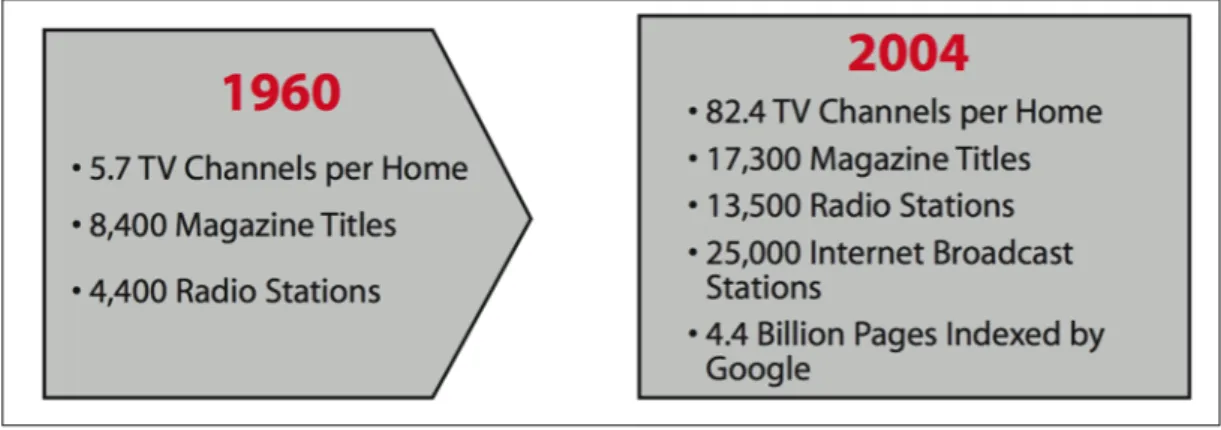
FIGURE 02: Available Mass Media Channels, 1960 Versus 2004
Direct Marketing Association, Jupiter Research, Universal McCann, Winterberry Group analysis, p 12
Enhanced information availability empowers both marketers and consumers with insight that allows for precise customer targeting and intelligent purchase decisions. “In the past, it was OK for the age-old quote about half our advertising dollars being wasted. That’s not good enough any more. The stakes are too high.” Jim Spanfeller, CEO, Forbes.com (Winterberry Group, and V12 group, 2006).
Figure 02: shows the mass media channels increased through the ages.
2.5 TTL marketing communication
01. Over the past five years, advertising budgets allocated to Internet media have grown spectacularly. In 2010, the internet will represent 16%of total advertising expenditure worldwide and this figure could reach 21% in the next four years. This growth is significantly fuelled by search and “performance” tools (affiliate marketing, email, comparison websites, etc.), although display advertising continues to represent a large portion of online budgets (49%in 2010 and 45% in 2014).
Two trends are driving this boom:
• An increase in Web usage which strengthens the internet’s role in providing recommendations and preparing consumers to make purchases and recommendations
• Developments in targeted advertising formats and techniques which help shape more communicative and relevant online campaigns
Although the Internet is by nature a quantifiable medium, online strategies are not yet adequately based on a suitable performance measure. Advertisers realize that measuring performance is an important issue, but for the most part they face difficulties in implementing appropriate methods and indicators. This is first of all put down to a lack of resources, but other reasons often alluded to are organization, tools and the need to strengthen expertise (Neuilly, 2012).
all options is being able to access additional product information available by clicking on an advertisement, that cores 75%. Which in return online advertising becomes one element closer to personal selling, where all information are accessible through a person.
According to the study done by Neuilly in the increasingly developing competitiveness of the online advertising world, it has become more than ever a challenging environment where resources, formats and uses are continuously being developed. When an increasing amount of money is invested on online advertising it has become difficult to track and measure performance or pinpoint feedback. Advertisers have become more careful in their investments in advertising even though they are aware, it is the right thing to do. Figure 04 provides information on the expenditure of online advertising relative to marketing onjectives.
FIGURE 05: Advertising media having the greatest impact on the impulse to purchase (% of respondents) – France, 2009, Neuilly. 2012, p 9
Figure 05 graph shows the effectiveness of each of communication mediums. According to the graph by Neuilly internet and TV advertising has the greatest impact on the impulse of purchase, which will in return can be regarded as advantages of advertising on these medias can increase potentiality to purchase goods therefore it increases sales.
Neuilly states that though there are many measuring tools, the challenge is when selecting the right indicators, managing and effectiveness of online advertising. Further according to Neuilly there are four areas of rising challenges.
- Strategy: reconcile viewpoints on the role that the internet should play in the media strategy;
- Organisation: spread Web culture within the company to reach a common understanding of the measurement tools by all parties involved;
- HR: build the necessary skill set by training existing employees or recruiting;
•How to fine-tune the measurement of streaming and video audiences, particularly to determine on what day and at what time the content was viewed?
•How to measure the impact of multiple-exposure?
•What are the standards to be defined to measure the actual advertising visibility? •How to reconcile user-centric and site-centric audience measurements?
02. Since Internet usage has been increasing so much in the last 15 years, and particularly in the last 10 years, many companies have found new possibilities to promote their products. These new approaches are mainly used as a communication tool and are called social media. The purpose of this thesis has been to study how social media influence the marketing communication of companies. The methodology behind this research, in order to ensure a suitable and viable data collection, was personal interviews with two manufacturing companies, one social network platform and one marketing agency. The method was a qualitative research approach combining different case studies in the research strategy. The diverse interview partners were each given a specific interview guide synchronized to their field of business and afterwards these four cases were analyzed using the data collected from the personal interviews and the mentioned interview guides. The overall result of this thesis was that the communication via social media is still in the early stages of its development. Basically companies approve social media as an effective tool to exceed and support marketing communication. Furthermore social media monitoring is an important component, but is still in the early stages. Generally companies approve social media as an effective tool to exceed and support marketing communication. Social media still has huge growth potentials regarding the differentiation and specification of different platforms, because not all of them are suitable for every company (Stefan & Benedikt, 2010).
Social media with the current advancing web technology has enabled users to create their own contents (User Generated Content). A social media can be categorized as an interactive media, where the contents can be somewhat influenced by other parties, such as rating. Therefore social media provides unlimited two-way communication channel for users.
Key Social Platforms
FIGURE 6: Key social media platforms, Social Media Marketing: An Hour a Day
,
Dave, 2008, p 8
2.5.1 Wikis
Wikis can be defined as social database or a public document where people can log in at any point and change the contents. It also can be get classified as a knowledge sharing base. Wikipedia online enpsyclopedia is a good example for a wiki. It prowides users information and definitions of any kind of subject matter in any language. Which to a certain extent it’s reliability of the information can be questionable.
2.5.2 Social bookmarking
2.5.3 Social networking
Social networking provides users to create their own profile and it let them connect with other users. The most popular interacting social network is facebook, this provides users to easily connect with their friends or other people with same interests and constantly keep in touch with them through Internet. These social networks are called platforms (figure 06). Facebook is a more generalized social network where as there are other social networks that specifically target groups such as student, professionals, athletes or artists.
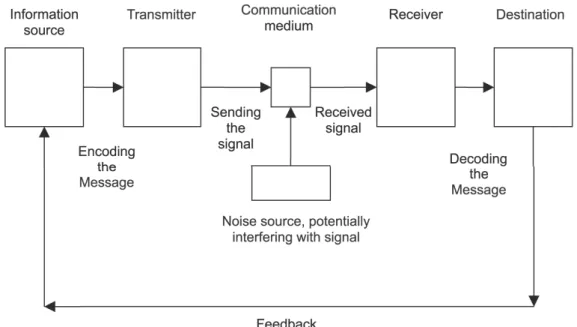
2.5.3.1 The communication model
This communication model explains how a communications process takes place.
FIGURE 7: Communication Model, Shannon, 1948, p. 2 and Wickham, 1999, p. 231
According to Stefan & Benedikt the diversified online advertising has become more challenging than ever before. The growth of internet users in social networks and other sites have opened up a new era of advertising.
2.6 Integrated Marketing Communication
01. Organizations today through a variety of tools. To coordinate that all messages coming from the organization is internally consistent, communications need to be integrated. Communication should be a two-way traffic but sometimes noises such as culture and media may interfere with the communications process and create barriers to effective communication. In order to state what vehicles and media to use for reaching the target audience a media plan can be decided to choose a course of action. A crucial part of communication is also to evaluate the activities by doing both pre-test and post-tests in order to define the successes and failures of communications.
The purpose of this thesis is to define successful marketing communication by focusing mostly on B-2-B communication. The theoretical framework provides guidelines and understandings of how marketing communications can be successfully implemented within an organization.
The campaign ”Energy, Environment and Economy” by Wärtsilä Finland has been investigated in the empirical research. A qualitative study was made internally among local marketers in all Wärtsilä sales regions concerning communication and activity related questions about the campaign. The findings showed that communication is well functioning among the regions although some disruption exists. Connections with the theoretical framework are made, and recommendations for an action plan as well as suggestions for further research are included. (Susanna, 2009)
According to Susanna there is no specific appropriate medium when it comes to communications. Marketing communication solely depends on and should take special attention on theoretical framework, specially when considering multicultural organizations.
communicate the intended message internally and externally well, in order to give out the proper awareness of branding, corporate image and identity when it comes to strategic marketing.
In Susanna’s case study it was proven that with properly planned campaign material and professional communication the campaign has the full potential to reach its objectives and reach it’s targeted audience effectively.
02. Proving the value of the integrated marketing communication (IMC) process in its relation to brand outcomes, such as brand awareness, brand loyalty, and sales, are critical issues. The research presented in this paper employs a modified version of the Duncan-Moriarty IMC mini audit (Duncan and Moriarty 1997) to examine the relationship between the IMC process and brand outcomes. Data were collected from managers in both consumer goods and consumer services organizations. Results demonstrate a positive relationship between the implementation of the IMC process and brand outcomes, and provide encouragement for further research to validate the findings. It was also found that IMC is used more in companies with a market orientation, and in those that encounter a high level of competition. (Mike, 2005)
According to Mike’s study he seeks to identify specific characteristics of the organization and the market environment needs to have a relationship to IMC process. And it was discovered that IMC has a significant and a positive relationship with the brand outcomes and the market orientation, competitive turbulence and the size and the type of the organization.
2.7 Marketing Communications In B2B Companies
Communication as such is intertwined with many functions within an organization and in most cases is a part of them. Marketing is no exception. That is why measuring efforts of marketing communications creates confusion: shall it be measured separately defining marketing impact and communications influence on business and then putting everything together? Or rather develop a tool which would be able to evaluate their synergy effects? As Vos & Schoemaker point out, it is difficult to prove the relationship between communication efforts and their results – they can be indirect or come as part of other function [2004:13] (Ilona, 2012)
According to Ilona’s research aligning marketing communications with business goals should come in hand to filter the information and look for the most relevant metrics. Throughout the whole measuring process it is essential to keep track and be consistent. 30% of all are ad hoc since marketing is a dynamic area, it therefore cannot be planned ahead.
Further Ilona states that marketing budget plays a main role in the campaigns held in organizations the bigger the budget the bigger the campaigning should be likewise the bigger the budget gets the more that it should have a measuring tool on the feedbacks.
2.8 Differences In Marketing Communication B2B to B2C
Marketing on Business to Business (B2B) and Business to consumer (B2C) differs due to various reasons, whether it’s a product selling organization or a service providing firm. The purchase motivation is different from a B2B organization from a B2C, the information the customer enquires in order to make a purchase is much different from a B2C organization. It is essential to understand that most of B2B organizations does the purchase to another business and where as B2C sells to another person. Therefore B2C organizations deal with mostly emotions where as B2B a business relies on logic.
depends on logic. The most of the focus will be on the product then the relationship with the organization, customer service, cost and resources are considered.
When marketing is done by a B2C organization the focus will be more on the benefits of the product. The decision can be more often depending on emotions. The consumer may not like long descriptions of the product; they would need to find a product that serves their purpose of purchase. Therefore a consumer is not interested in testing the chemical components in a product or any of the scientific information. Only information a consumer demands is to serve a purpose, as an example Beauty, fairness, clear images, prestige etc.
As an example if there is a moisturizing lotion that relieves burnt skin.
If a B2B client inquires about the product he would be more interested in the features the chemical components and the moisturizer producing organization as a whole. If it were a B2C client he would be more interested on relief of the burnt skin, more than considering other factors.
Further in to the discussion I would like to share my experience on the differences of a B2B organization from a B2C organization.
The organizations that chose to discuss about is MAS Holdings. MAS is a leading garment manufacturing organization in Sri Lanka. Also it has strategic business units placed globally. Its key manufacturing products are lingerie, sportswear and swimwear.
- Organizations such as MAS invests majority of its time and money on customer awareness and customer satisfaction internationally and locally. Constantly meeting the customer or keeping them updated through websites or via email about new innovations and breakthroughs that can come as a competitive product in the market. Further, getting customers involved in the innovation process is also another step which MAS has taken to keep MAS in customer’s radar at all times. Which can be considered as a good BTL marketing communication approach.
marketing.
- Media communication language accounts on ethical manufacturing, in green approach (MAS sustainability) and employee empowering (women go beyond). MAS invest in recycling waste and make customers aware of their attempt to stand out in its duties to global responsibilities. MAS launches projects and competitions internally to promote sustainability. And keep it’s its key customers as a part of the internal sustainability activities.
Through the project women go beyond, MAS empowers women with great difficulties to come up in the corporate ladder. Also as a second step, on each finished garment, extra tag will mention that an empowered woman sewed this garment. These approaches are used to keep the customers view on the organization positive. Therefor the customer is aware that the goods that they purchased are of ethical sources (non-illegal sources).
- MAS does employer branding to give out and enhance its image on the community. Also it invests in employing the best of professionals to achieve heights of excellence in business.
B2C organizations in comparison to B2B organizations does not engage in employer branding as compared to B2B organizations. B2C organizations focuses on the consumer, how all activities can affect their sales through making the consumer buy more products, also to improve the customer perspective on the product and the organization.
- Another marketing approach would be trade fairs, trade fairs expose the organization to a large number of buyers. And trade fairs promote the innovativeness and competitiveness in an organization, allowing the organization to be in par with other organizations.
CHAPTER 03
CONCLUSION AND RECOMMENDATIONS
The aim of the research has been to understand the effects of marketing communication on the organization and to find out successful modes of communication on an organization.
As it has been recognized through the study, that marketing communication is a broad topic, which is incorporated by a number of aspects. Even though through the study the aim was to understand and recognize the most suitable marketing communication approach it is crucial to mention that there is no formula for successful communication. Different aspects of the theoretical contents influence the decision of making the right marketing communication approach. Though areas such as ATL, TTL, BTL and IMC are studies each of the sections has its pros and cons depending on the organizations type and size.
According to the study TTL marketing plays a vital role in todays advertising world. The ratios and graphs have proven that Internet captures a majority of the population. But saying that that does not conclude the fact that TTL becomes the best mode of marketing communication. It provides a clue as to how marketing communication can be utilized wisely. The decision depends on as mentioned before, on the type of organization and it’ global location and the type of customer the product is to be sold to, as how Business to business marketing would differ from business to consumer marketing.
As according to the study when all these factors are taken together alone one can decide on the best marketing communication approach for an organization.
List of references
Ismail and Shah. 2012, Effect of Marketing Communication on Sales Performance of Multinational Companies: A Case Study of Proctor and Gamble Company, MALAYSIA. 2012
Nana, Gloria and Kwamena. 2011, The Effect of Marketing Communications on the Sales Performance of Ghana Telecom (Vodafone, Ghana), Cape Coast. 2011
Sasaka. 2012, The Effectiveness of Trade Shows and Exhibitions as Organizational Marketing Tool, Kenya. 2012
Benedikt. 2010, Social Media and the Impact on Marketing Communication, Luleå University of Technology. 2010
2006, Tracking the Trends: A Comparison of Above-the-Line & Below-the-Line Expenditure Trends, A Sponsored Report from Winterberry Group and V12 Group. January 2006
Stefan & Benedikt. 2010, ‘Social Media and the impact on Marketing Communication’ University of Applied Sciences, Augsburg. 2010
Neuilly. 2012, Measuring the effectiveness of online advertising, Study conducted by PwC for IAB France and the SRI. 2012
Susanna. 2009, ‘Defining successful marketing communications: a follow- up of a global campaign. Case company: Wärtsilä Finland’ Finland. 2009
Mike. 2005, Performance Auditing Of Integrated Marketing Communication (IMC) Actions And Outcomes, 2005
Ilona. 2012, Measurement of Marketing Communications Performance: Implications and Theory Building for B2B Organizations, AARHUS UNIVERSITY. 2012
Image References
Figure 01: Winterberry Group analysis, Sources for All Spending Charts: Direct Marketing Association, 2013, p 15
Figure 02: Available Mass Media Channels, 1960 Versus 2004
Direct Marketing Association, Jupiter Research, Universal McCann, Winterberry Group analysis, p 12
Figure 05: Advertising media having the greatest impact on the impulse to purchase (% of respondents) – France, 2009, Neuilly. 2012, p 9
Figure 06: Key social media platforms, Social Media Marketing: An Hour a Day
,
Dave, 2008, p 8Figure 07: Communication Model, Shannon, 1948, p. 2 and Wickham, 1999, p. 231
Bibilography
George, Kwasi, Robert and Samuel. 2012, ‘The effect of sponsorship on marketing communication performance: A case study of Airtel Ghana’ African Journal of Marketing Management Vol. 4, Ghana. 2012
Roger. 2011, ‘Critical Success FactorsLessons Learned from Successful BPM Organizations’. 2011
Adekoya, 2011. The Impact Of Advertising On Sales Volume Of A Product, Nigeria. 2011
Saylor, 2013. ‘Advertising, Integrated Marketing Communications, and the Changing Media Landscape’. 2011