Tipping the Scales: Improving Utilization of Mental Health Care in Military Veterans
Robert Graziano, Eric Elbogen University of North Carolina at Chapel Hill
Spring 2015
A thesis presented to the faculty of The University of North Carolina at Chapel Hill in partial fulfillment of the requirements for the Bachelor of Science degree with Honors in Psychology.
Advisor________________________ Dr. Eric Elbogen
Co-Advisor________________________ Dr. Jon Abramowitz
Acknowledgements
While there are more people deserving of acknowledgements than I can fit on a few pages, I’ll do my best to do so here. It is only fitting that I first acknowledge my advisor Dr. Eric Elbogen, whose mentorship throughout this entire process has been invaluable. I am so grateful that Eric had enough faith in me to take me on as his research assistant and develop me when I was new to manuscript writing. Eric has advised me through the process of writing and study design, giving me coaching that will be instrumental in my career moving forward. I’ve learned so much from working with Eric on “Tipping the Scales,” and every paper I write from this day forward will have some of Eric’s influence on it. While him giving me the opportunity to publish on multiple high quality manuscripts has been huge in me being able to pursue my doctorate, I’ll always be more grateful to Eric for the individual lessons that simply cannot be captured on a CV or learned in a book.
I’d like to also express my extreme gratitude to my other mentor throughout my time here at UNC, Dr. Jon Abramowitz. Jon is responsible for introducing me to the field of Clinical Psychology, fueling a passion inside of me that would not have been possible without his inspiration. Jon has opened me to the importance of empirically tested treatment and taught me what patient-therapist relationship should look like. I hope to one day model my own interaction with patients off of the unconditional support that Jon shows not just to his patients, but to myself as well. As I pursue my doctorate, I am forever indebted to him for his support.
and I one day hope to possess half of the wisdom they so humbly embody. I am blessed to be surrounded by so many people whose steadfast love and support has been with me everyday.
Additionally, I want to thank everyone else who has supported me in my time at UNC. Dr. Bardone-Cone, who not just served as a member of my committee, but also got me initially interested in psychology with her class on Abnormal psychology, and has since connected me with Jon and written countless letters of recommendation for me. My friends, who have tirelessly supported me through both the good and the bad, have been vital in their support.
Lastly, and most importantly, I’d like to thank the veterans who made this study possible, as well as all of the other countless veterans worldwide. Their experience, courage, and
Abstract
Tipping the Scales: Improving Utilization of Mental Health Care in Military Veterans
Prevalence of Mental Health Problems in Military Veterans
As part of their career, veterans of the United States military are often times exposed to potentially traumatizing events in combat. It is not surprising, then, that they are vulnerable to suffering from PTSD, depression, substance abuse, and their respective symptomology. This vulnerability to mental illness has been well documented, as research shows deployments and combat to be predictive of high rates of mental illness (Kok, Herrell, Thomas, & Hoge, 2012; Seal, Bertenthal, Miner, Sen, & Marmar, 2007; Hoge et al., 2004; Kang & Hyams, 2005; Lapierre, Schwegler, & Labauve, 2007; Milliken, Auchterlonie, & Hoge 2007).
Hoge and colleagues at Walter Reed Army Institute of Research studied a sample of three thousand members in four U.S. combat infantry units and reported that 17.1% of those deployed to Iraq and 11.2% of those deployed to Afghanistan met criteria for PTSD, while 14% met criteria for MDD (Hoge et al., 2004). The same research group, studying the issue of TBI, found that among US Army and Marine military personnel, 4.9% endorsed an injury with loss of consciousness and 10.3% an injury with altered mental status (Hoge et al., 2008). The RAND study, which involved a telephone survey of nearly two thousand Iraq and Afghanistan US veterans from 24 geographic areas, found 20% screened positive for PTSD or depression and 19% reported probable TBI during deployment (Tanielian & Jaycox, 2008).
diagnoses (Seal, Bertenthal, Miner, Sen, & Marmar, 2007). In a follow up study, another study authored by a similar research group found 36.9% of veterans from 2002-2008 in a VA sample were given a mental health diagnosis, with 21.8% showing PTSD and 17.4% MDD (Seal, Metzler, Gima, Bertenthal, Maguen, Marmar, 2009).
Veterans’ Rates of Accessing and Utilizing Mental Healthcare
Considering the frequency of the appearance of mental illness diagnoses in veterans, one would think that veterans would be utilizing treatment options fully. This, however, does not seem to be true, as studies have shown veterans to be under accessing mental healthcare (Kim, Thomas, Wilk, Castro, & Hoge, 2010; Sareen et al., 2007; Hoge et al., 2004; Sudom, Zamorski, & Garber, 2012; Milliken et al., 2007). Kim et al. (2010), for example, found that while 44% of active duty soldiers reported at least one mental health problem 12 months after deployment, only 13% reported receiving treatment in the last month.
Additionally, even when veterans do access mental healthcare, they seem to not utilize in it for long enough periods. Hoge et al. (2014) found that among those who screened positive for PTSD and had pursued treatment, only 52% went enough times to be classified as receiving minimally adequate care. In a VA sample, Seal et al. (2010) found that only 9.5% of veterans with a recent diagnosis of PTSD utilized treatment fully (9 or more sessions in a 15 week period) within the first year of diagnosis. Also, Lu, Duckart, O’Malley, and Dobscha (2011) found that only 33% of an 852 veterans sample received minimally adequate treatment (nine visits within a year of screening positive for PTSD). It should be noted that being a women or enlisted
It is critical to note that this is similar to the civilian population. One study found that among individuals from the general population in 2001-2003 who showed a mental disorder, only 33% accessed treatment (Kessler et al., 2005). Another study found an almost identical rate of accessing care in victims who suffered anxiety from Hurricane Katrina (Wang et al., 2007). Similar to veterans, mental healthcare in the general population is also not utilized fully, as one study showed 40% of people with a serious mental health illness were not receiving treatment. In the same study, 20% of patients who did access treatment stopped receiving it prematurely, with over 70% of those people refusing care after the first or second session (SAMHSA, 2012).
Efficacy of Treatment for Veterans
Despite low access and utilization, treatment for mental health disorders has in fact been shown to be effective for veterans. In a survey of 1,659 active duty service members, Wong et al. (2013) found that, of the veterans who had used mental healthcare, 73% reported that treatment helped “a lot or some” while nobody rated it as “not at all” helpful. Additionally, since the VA system began to emphasize empirically tested treatment techniques, the literature as a whole has decidedly supported the effectiveness of treatment. For example, Eftekhari et al. (2013) studied the effect of prolonged exposure therapy on veterans, finding that of the 87.6% of 1931 veterans who pretreatment screened positive for PTSD, only 46.2% continued to show a PTSD diagnosis following treatment. Similarly, many other studies have found positive outcomes for the use of empirically supported treatment with veterans (Tuerk et al., 2011; Goodson, Lefkowitz,
Definitions of Barriers to Care for Current Study
If treatment is effective and a large proportion of veterans need it, then why don’t they get it? There have been many empirical studies attempting to answer this question. In particular, research has sought to identify robust ‘barriers to cares’ in military and veteran populations. Before reviewing this research, one should note that there are different types of barriers.
Corrigan, Druss, and Perlick (2014) describes two broad sets of barriers that may undermine care seeking and service participation:
“(a) Person-level barriers are attitudes and behaviors that affect health decisions, including stigma leading to avoiding treatment or dropping out prematurely, poor mental health literacy, beliefs of treatment ineffectiveness, lack of a support network that promotes care seeking, and perceived cultural irrelevance of many treatments;
(b) Provider and system-level barriers include lack of insurance, financial constraints, staff cultural incompetence, and workforce limitations.” (p.37-38)”
As such, the former set of barriers refer to what this study will term ‘internal barriers to care’, meaning perceptions an individual has that encourage or discourage him/her from obtaining mental health care. The latter set of barriers refer to what this study will term ‘external barriers to care’, which refer to obstacles in the environment (e.g., lack of transportation, cost of care, inability to get time off work) that encourage or discourage an individual from obtaining mental health care.
accessing care simply being determined by who uses the health care system, and more importantly, who does not. On the other hand, the authors also reflect on the importance of continuing the use of care after accessing it, often referred to as utilization in studies. It is
important to make the distinction because as Donabedian (1972) states “one must distinguish two components in use of service: ‘initiation’ and ‘continuation.’ This is because different factors influence each, though any one factor could influence both.” (p. 111). Correspondingly, this study categorizes extant research on veterans’ barriers to care into ‘barriers to accessing care’ and ‘barriers to utilizing care,’ noting within each whether these barriers are external or internal.
Barriers to Veterans Accessing Mental Healthcare
Table 1 lists the studies used in reviewing the literature. There are many studies that have looked at barriers to veterans accessing care. In terms of internal barriers to care, negative
2013). Another study by Elbogen et al. (2013) found that veterans did not access care because they believed that they could handle problems on their own.
The other potential internal barrier to accessing care that has been well studied is
perceived stigma. It is important to note that, despite the attention stigma receives with respect to healthcare barriers, empirical studies of veterans have yielded mixed results. Some studies have shown stigma to be a possibly major barrier to mental heath care in veterans (Kim et al., 2010; Zinzow et al., 2013). Along similar lines, veterans have also reported career concerns (Zinzow et al., 2013) and lesser perceived unit support (Pietrzak et al., 2010) to be perceived barriers to care. Other studies have found stigma to be a barrier as well, but more so in the veterans who should be seeking treatment (Hoge et al., 2004). On the other hand, some other studies have shown stigma to be only a small to moderate perceived barrier (Stecker et al., 2013; Oiumette et al., 2011). To complicate matters even further, a study done by Sudom et al. (2012) found stigma to have no relationship with the intent to access treatment. To what effect stigma has on affecting veterans’ desire to access care, then, is somewhat uncertain.
While internal barriers seem to play a larger role, there are still several external barriers that are often times identified. Factors related to location are one of the more studied ones, as living in an isolated location (Sudom et al., 2012), geographical distance (McCarthy et al., 2007), and transportation (Washington, Bean-Mayberry, Riopelle, & Yano, 2011) have all been shown to be perceived barriers. Additionally, barriers related to a lack of awareness of resources have also been a reason for not accessing care, such as not being service connected (McCarthy et al., 2007) and not knowing where to go (Hamilton, Poza, Hines & Washington, 2012).
(Lehavot, Der-Martirosian, Simpson, Sadler, Washington, 2013), especially in younger veterans (Washington et al., 2011) also may be a barrier to care, though this is probably more likely true in a non active duty sample. Finally, conflicts with work were regarded as a barrier in one study (Washington et al., 2011).
It should be noted that these are not unique to veterans, as these results are similar to the general population. Among the people who did identify a need for treatment, the desire to handle problems on their own has been shown to be a reason for not accessing or utilizing care in the general population (Mojtabai et al., 2011; Kessler et al., 2001). In another study that interviewed patients who had already dropped out of mental healthcare, perceiving treatment to be ineffective or embarrassing was significant in predicting dropouts (Edlund et al., 2002). Additionally, stigma has been found to have a small to medium sized negative effect on determining whether to seek treatment (Clement et al., 2014). Corrigan et al. (2014) also support stigma as a major barrier to mental health treatment, having an effect on both the individual and system as a whole.
Barriers to Veterans Utilizing Mental Healthcare
There are far fewer studies detailing barriers to veterans utilizing in treatment than accessing care (please compare left and right columns of Table 1). Most identified barriers to treatment utilization are internal. General issues with the procedure of treatment seem to be a common cause of dropout, as trust issues with the mental health professional (Hoerster et al., 2012; Hoge et al., 2014) and concerns about confidentiality (Hoge et al., 2014) have been
leave treatment (Hoerster et al., 2012; Hoge et al., 2014). Finally, concerns over the effectiveness of treatment and believing that they could handle their problems on their own were also shown to be barriers to engagement in care (Hoge et al., 2014).
The amount of external barriers found to veterans utilizing care is small. Hoge et al. (2014) found two such barriers: work interference and not having enough time with a mental health professional. When considering that veterans will have already accessed care, this lack of external barriers makes sense as factors like distance have already been overcome.
Once again, these barriers are not unique to veterans. One study of non-veterans found that a belief that their problems could be handled independently to be the greatest reason for dropping out of treatment (Kessler et al., 2001; Mojtabai et al., 2011). Another study found that embarrassment attached to seeing a mental health provider as well as treatment ineffectiveness to be the most commonly cited causes of dropout for civilians (Edlund et al., 2002).
Limitations in Current Research
soldiers. Fourth, little work has focused on what factors are associated with barriers themselves; specifically, other variables, such as mental health conditions or demographics, may mediate or moderate perceived barriers. Fifth, the role of social support has received little attention in this literature, and this variable may both alleviate symptoms for veterans as well as affect their perceived need for care.
Conceptual Model for Study
Moreover, though studies have showed correlations for the prevalence of barriers to veterans accessing mental healthcare, no study to our knowledge has provided any kind of
conceptual framework which would help clearly define the importance of an individual barrier or facilitator, and better explain veterans’ treatment decision-making process. This study will use the framework of The Health Belief Model (HBM), a model created in the 1950’s that details the factors that go into whether a patient decides to engage in a health promoting behavior
(Rosenstock, Stretcher, & Becker, 1988). Seen in Figure 1, the HBM takes into many factors in determining the probability of utilizing in healthy behaviors. First, a patient’s perceived
susceptibility and perceived seriousness are taken into account to determine a patient’s perceived threat. Additionally, cues to action, defined as ways to activate readiness and includes things like reminders from others, are factored in when determining perceived threat. Next, perceived benefits minus perceived barriers are measured. Furthermore, modifying variables, such as demographics and personality, are taken into account when determining both perceived
HBM has been researched and tested extensively across many decades, and though some limitations have been noted (Carpenter, 2010), studies have supported it (Janz & Becker, 1984; Rosenstock et al., 1988; Carpenter, 2010). Taken together, both the empirical research listed in Table 1 regarding barriers to care in veterans and the conceptual model of HBM illustrated in Figure 1 point to the need to focus on a specific barrier to care: veterans’ perceived need for care and belief they do not need help. As such, the current study aims to better understand what factors relate to perceived need for care in veterans and to investigate more systematically than in previous research how this particular variable may affect veterans’ later utilization of mental health care. Similarly, given that the HBM includes cues to action, which may come from family members or friends of the patient, this study will also examine how (or whether) social support plays a role in veterans’ use of mental health care.
Aims and Hypotheses of Current Study
This current study will contribute to the literature by using a conceptual model and addressing many of the methodological limitations in research previously mentioned. This study will investigate what correlates may exist that might explain the perceived barriers veterans face. Specifically, a path analysis model will be created to clearly show how certain variables correlate with significant barriers. Importantly, this path analysis will use longitudinal data, displaying the correlations over an extended period of time. This will be crucial in better understanding exactly how perceived barriers emerge.
significant later on in treatment as well. This study has the advantage of using longitudinal data to better clarify perceived barriers effects on treatment efficacy. The study thus makes the following main three hypotheses:
1. Based on past research and the HBM, we hypothesize that veterans with greater PTSD symptoms (i.e., in greater need of treatment) will be significantly more likely to utilize treatment in the next year.
2. Conversely, based on the HBM and existing research, we hypothesize that lack of perceived need for treatment (i.e., think they need to solve problems on their own) will predict reduced treatment utilization in the next year.
3. Based on HBM, we hypothesize that veterans who perceive greater social support will endorse fewer barriers to utilizing care and demonstrate higher levels of treatment utilization.
By testing these hypotheses, this study will contribute to the current literature by being the first to our knowledge to provide longitudinal data on barriers to veterans’ mental healthcare.
Additionally, this data will overcome two other limitations by selecting for veterans with mental health disorders and being representative of the veteran population.
Methods
Study design and participants
National Post-Deployment Adjustment Study (Elbogen et al., 2013). The sample randomly selects 3000 veterans from a database of over one million US military service members who: 1) served after September 11, 2001 in Operation Iraqi Freedom (OIF) or Operation Enduring Freedom (OEF) and 2) either had left from active duty service or were in the Reserves/National Guard. The sample was stratified by gender, and female veterans were oversampled for the purposes of adequate representation. Specifically, 1000 female veterans were randomly selected from all female OEF/OIF veterans and 2000 male veterans were selected from all male OEF/OIF veterans.
After Institutional Review Board approval was obtained, veterans were surveyed using Dillman survey methodology (Dillman, Smyth, & Christian, 2009), utilizing multiple and varied contacts to maximize response rate. This study implemented two waves of data collection one-year apart with parallel procedures, with participants being reimbursed after completing each wave. At Wave 1, participants were initially sent an introductory letter about the upcoming survey. Four days later, they were sent an invitation by mail, which used commemorative postage stamps as an incentive and instructions on how to complete a 35-minute confidential web-based survey. Sixteen days after the invitations were mailed, potential participants were sent postcards thanking them for completing the survey or reminding them to do so. Two weeks after the postcard mailing, those who had neglected to take the survey received a paper version with a postage-paid return envelope. Two months after the print survey had been mailed, a final letter was sent encouraging participation and stating that the survey would close the following week.
completed divided by the number of surveys received by participants (i.e., not returned by mail) (Dillman et al., 2009). These achieved rates are comparable to, or greater than, that achieved in other national surveys of veterans in the US (Vogt et al., 2011; Tanielian & Jaycox, 2008; Beckham et al., 2008). Details can be found elsewhere (Elbogen et al., 2013) regarding generalizability of the sample of 1388 veterans whom completed Wave 1 of the NPDAS,
detailing the proportion of veterans using services at VA and non-VA facilities and showing little difference on age, gender, and geographic region between responders vs. non-responders.
Additionally, there was little difference on available demographic, military, and clinical variables between those who took the survey after the first invitation vs. after subsequent reminders and between paper vs. web survey completers.
At Wave 2, participants were queried exactly one year after completing the Wave 1 survey over the period from July 2010 to April 2011. At conclusion, N=1090 veterans completed Wave 2 yielding a 79% retention rate, with the median time lapse between completion of wave 1 and wave 2 being 12.8 months. Of the entire sample, 75% had completed both waves between 12-14 months apart, while 90% of the sample completed waves 1 and 2 between 11-15 months apart. Very few were outside this range: less than 1% took the two surveys 10-11 months apart, 8% between 15-19 months apart, and less than 1% between 19-20 months apart.
would emphasize that no other national studies of the OEF/OIF cohort have attained equivalent rates of retention.
The military branch breakdown of the final sample (55.21% Army, 19.92% Air Force, 14.88% Navy, 9.64% Marines, and 0.35% Coast Guard) approximated the actual composition of the US Armed Forces and approximated the composition of the armed forces (48% Army, 22% Air Force, 17% Navy, 11% Marines, and 2% Coast Guard) at the time of the survey. The sample consisted of 27% participants of color and 48% National Guard/Reserves participants, similar to 30% ethnically diverse and 37% National Guard/Reserves in the military at the time (Defense Equal Opportunity Management Institute, 2010). The majority of respondents (82%) had been deployed to Iraq or Afghanistan with a range in time from last deployment of between 1 to 8 years with a median time of 4 years. The remainder of the sample consisted of OIF/OEF veterans that were not stationed in either of the two combat theatres. Geographically, the final sample accurately corresponded to known military demographics with the 50 US states, Washington DC, and 4 territories represented in close approximation to reported military statistics (Defense Equal Opportunity Management Institute, 2010). To our knowledge, the National Post-Deployment Adjustment Study enrolled one of the most representative samples of US Iraq and Afghanistan Veterans to date.
Measures
At Wave 1, data attained included age, gender, race/ethnicity, marital status,
Combat exposure was measured by a subscale within the Deployment Risk and
Resilience Inventory (DRRI) (King, King, & Vogt, 2003). The Quality of Life Index was used to measure social support (“the emotional support you get from family/friends”) as measured using the Psychometric Assessmen of the Quality of Life Index (1=moderately or very satisfied; 0=other) (Ferrans & Powers, 1992).
Probable PTSD was measured with the Davidson Trauma Scale (DTS) (Davidson et al., 1997) which uses rating past-week frequency and severity of DSM-IV PTSD symptoms of re-experiencing, avoidance/numbing, and hyperarousal related to a specific trauma. This study utilized a DTS cut-off score of 48, which has demonstrated .82 sensitivity, .94 specificity, and .87 diagnostic efficiency with a Structured Clinical Interview of Diagnosis (SCID) diagnosis of PTSD in Iraq and Afghanistan War Veterans (McDonald, Beckham, Morey, & Calhoun, 2009). Probable major depression was assessed with the Patient Health Questionnaire (PHQ9), a cut-off score over 10 indicating sensitivity and specificity of 88% (Kroenke, Spitzer, & Williams, 2001). An Alcohol Use Disorder Identification Test (AUDIT) cut-off of 8 was used to identify probable alcohol misuse (Bradley & Bush, 1998).
For perceived need for care, participants were asked: “Veterans may face obstacles getting or using mental health services for a number of reasons. Please rate how much you agree or disagree with each statement as it applies to you” and then prompted to rate perceptions based on empirical research in military personnel (Hoge et al., 2004) such as “It’s up to me to work out my own problems” on a 4 point Likert Scale (1=Strongly Disagree, 2=Somewhat Disagree, 3= Somewhat Agree; 4=Strongly Agree).
Statistical analyses
Analyses were weighted by gender to adjust for oversampling. Women represented 33% of the NPDAS sample in contrast to 15.6% (approximately one-seventh) of the military based on September 2009 Defense Manpower Data Center figures (Defense Equal Opportunity
Management Institute, 2010). Data were weighted to reflect the latter proportion, adjusting the sampled N=1090 to a weight-adjusted n=866. Chi-square analyses were used to analyze categorical data for differences in diagnosis, treatment use, and perceptions about treatment (which for bivariate analyses purposes were dichotomized at 0=disagree; 1=agree).
To examine associations between treatment utilization, psychiatric symptoms, and perceived problems with mental health treatment, this study used multiple logistic regressions in which variables were included if they were statistically significant (p<.05). For multivariable analyses, symptoms were continuous (DTS, PHQ9, AUDIT) and perceptions about treatment were also continuous (per Likert scale described above) in order to retain variability. The magnitude of effect such as OR=1.01 would be interpreted to mean that the relative odds of a veteran having accessed treatment in the past year is 1% higher based on a one-point increase on the mentioned measure.
a mediator variable M that affects variable Y (Hayes & Scharkow, 2013). In addition, this procedure provides bootstrapping on the sample, a resampling method that relies on random sampling with replacement to increase validity.
Results
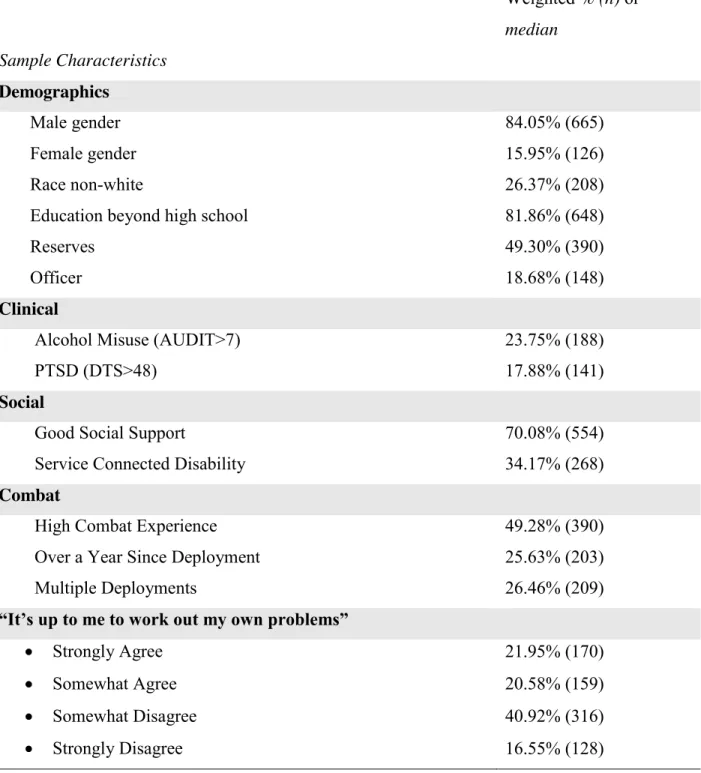
Table 2 shows the descriptive data of the sample used in this study. Of the total sample, 84.05% (665) were male with 26.37% (208) identifying themselves as ethnically diverse and 81.86% (648) receiving an education past high school. About half of the sample reported high combat experience, with 34.17% reporting a service connected disability and 70.08% (554) showing good social support. About a quarter of the sample said it had been a year since
deployment, with 26.46% (209) indicated they had completed multiple deployments when in the military. About half of the sample was reservists, while 18.68% (148) were officers. Clinically, 23.75% (188) met criteria for alcohol misuse and 17.88% (141) met the standards for PTSD. Finally, when veterans were asked whether they think its up to them to handle their problems on their own, 21.95% strongly agreed (170), 20.58% (159) somewhat agreed, 40.92% (316)
somewhat disagreed, and 16.55% (128) strongly disagreed. Of those that accessed care (n=253), the mean number of visits was 9 with a standard deviation of 9. The complete data for veterans utilizing mental healthcare can be seen in Figure 2.
Correlational data between the internal barrier “it’s up to me to work out my own
though being an officer was not particularly impactful as the correlation coefficient was low. Finally, good social support was the only factor to have a significantly negative correlation, meaning that, as individuals had better social support, they were more likely to indicate that it wasn’t necessary for them to deal with their problems on their own.
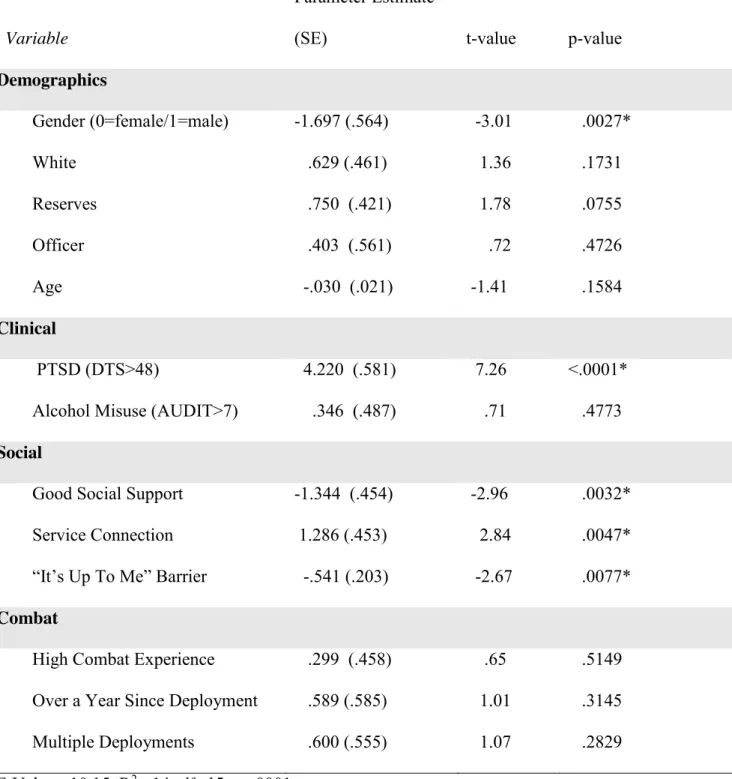
Correspondingly, shown in Table 4, multivariate analysis of veterans believing they need to handle their problems on their own with various factors was conducted. PTSD symptoms was a strong indicator of this barrier, as was alcohol misuse. In terms of strength of coefficients, these two factors were both particularly strong indicators of the barrier being studied. Additionally, being white and being an officer were also positively associated with veterans handling problems on their own. Likewise, undergoing high combat experience was an indicator of this barrier, though it had the lowest strength of the significant barriers. Finally, having a service connection and good social support were negative indicators of veterans’ belief in handling their problems singlehandedly, indicating that those without a service connection or good social support were more likely to report this belief.
Table 5 reports correlational data between the same factors and veterans’ number of visits to a mental health professional. PTSD symptoms and alcohol misuse were both significantly positively correlated with visits, indicating that worse clinical PTSD or alcohol misuse
symptoms were associated with more visits. PTSD symptoms was the most strongly correlated factor with visits. Additionally, over a year since deployments and multiple deployments were both positively correlated with number of visits, though neither value was particularly strong. High combat experience and service connection, however, proved to have a stronger, positive correlation, meaning that having high combat experience and a service connection was
and age were negatively associated with visits, implying that visits decrease with an increase in age and in the male gender. Finally, good social support was negatively correlated with visits, suggesting that with good social support comes less mental health visits.
Similarly, Table 6 shows a multivariate analysis of a number of factors and their ability to predict the number of visits to a mental health professional. PTSD symptoms was the strongest predictor of visits to mental health professionals. Service connection was also significantly positively associated with visits to mental health professionals. Contrastingly, good social support was negatively significant to visits. Relevant to this study, the “it’s up to me to work out my own problems” barrier was a negative predictor of visits to a mental health professional.
PTSD and social support were inversely corrected (β= -1.873, t=9.461, p<.0001), with the latter predicting fewer visits (β=-.372, t=4.081, p<.0001). In this way, it appears veterans with greater social support may have less of a need for treatment. Conversely, veterans with more social support were less likely to endorse “it’s up to me to work out my own problems” (β=-.0491, t=3.677, p=.0002), which, as already mentioned, was found itself to relate to less treatment (β=-.623, t=2.848, p=.0045). In other words, better social support directly lessened number of visits, but indirectly increased visits by increasing perceived need.
Discussion
In sum, this study found data to support some of our hypotheses. First, as predicted by HBM (Rosenstock, Stretcher, & Becker 1988) and previous literature (Hoge et al., 2014), this study found veterans who had greater need for treatment (e.g., PTSD symptoms) were more likely to utilize treatment. Second, this study identified that a lack of perceived need for
treatment, shown to be a key barrier to accessing care in veterans (Elbogen et al., 2013), actually related to lower treatment use in the future. To our knowledge, this is the first study to find this effect. Third, this study found a complex relationship between social support and treatment use in veterans. Specifically, social support had a direct negative association with future treatment use but also had a positive indirect association with treatment use via reducing veterans’ beliefs they could handle problems on their own.
Clinical Implications of the Dual Role of PTSD
directly more visits. This is to be expected as the symptoms of PTSD are debilitating and impair daily social and occupational functioning. On the other hand, greater PTSD symptoms were associated with lower perceived need (i.e., greater likelihood a veteran thought they could handle their problems on their own) and therefore indirectly reduced visits. This would suggest that PTSD might have a dual path on treatment use by affecting a veterans’ outward symptomology and belief system differently.
While this study does not explore the exact casual nature of this pathway, one can certainly make conjectures as to the why PTSD has such different effects. PTSD is a complex disorder, affecting individuals differently. One of the symptoms of PTSD is emotional
numbness, which can make individuals feel isolated from society. It’s possible that veterans who feel this symptom more significantly may react to this isolation from support by endorsing the “it’s up to me” barrier. In other words, if a veteran feels more secluded from the rest of society, they may take more upon themselves to handle their own problems. Additionally, many studies (Hoerster et al., 2012; Hoge et al., 2014; Hoge et al., 2004; Kim et al., 2010; Stecker et al., 2007) have found a correlation between PTSD and stigma, and stigma’s negative effect on treatment use. It’s possible that stigma and perceived need may interact, in that negative stigma convinces veterans that they do not have anywhere to go with their issues. Finally, the culture of the military can be thought of as fostering toughness and not seeming weak; as a result, veterans may be less willing to acknowledge need for help. The results of this study point to these conjectures and at least show the effects of PTSD on treatment use to be more complicated than what clinicians may currently be aware of.
health disorders to return to care. The current findings attest to the need for clinicians to address patients’ belief systems, preferably in the very first meeting. This could potentially help ensure that veterans do not drop out of treatment because they do not believe they need help. Focusing on this barrier, in addition to other internal barriers such as stigma, could significantly assist veterans in overcoming whatever obstacles may prevent them from treatment and increase treatment use rates.
Clinical Implications of Social Support
Greater social support was associated with less need for services and therefore had a direct, negative effect on number of visits. However, greater social support also led to a lower endorsement of the “it’s up to me” barrier, and therefore indirectly increased visits. Similar to the pathway with PTSD, this suggests that social support also has multiple effects on the number of visits a veteran has to a mental health professional.
would be in line with the Health Belief Model, which has a “cues to action” factor that includes items like social support.
In terms of implications, this means that efforts should be made to incorporate social support into mental health care of veterans. Once in the door, the findings do suggest that clinicians should be more aware of the role social support can play in getting veterans to
treatment, and be more candid in talking about its importance. Similar to with PTSD, this should also be a subject that is broached upon in the first session. In this way, a clinician will be able to better assist with equipping their veteran patient to harness their social support, thus leading them back to treatment.
Policy Implications for Tipping the Scales
The results of this study may suggest that research with veteran mental health use should possibly shift to other focuses, with emphasis on issues in addition to stigma. Put differently, it is important that policymakers do not solely pay attention to whether a veteran feels embarrassed by mental illness, but also aim to encompass more of the cognitive schema within veterans’ decision making to use mental healthcare, especially in accordance with HBM. The current data points to two such schemas to focus on in veterans’ perceived need and the impact of social support.
relating social support to perceived need, another focus, especially within the active duty population, should be on encouraging veterans to adopt an attitude that helps convince other veterans to use clinical care. In sum, the findings imply that military policy makers would do well to not only address stigma as they currently do, but also add campaigns to specifically focus on veterans’ belief systems and engaging veteran’s support network in a way that facilitates veterans seeking the help they may need.
Limitations of Study
While this study has multiple significant findings and implications, it is not without limitations. First, the effect sizes for the mediation analysis were not always large, and never large enough to come close to fully mediating the direct effect between PTSD and number of visits. For this reason, one should not look at these results and believe that the indirect effects found lessen the importance of the direct effect between PTSD and number of visits. Rather, they are meant to supplement that already well-established direct effect.
Next, other variables related to number of visits were not extensively studied in this paper. Gender and service connection were significant on the multivariate analysis in Table 6, while age and the combat factors were also significantly correlated in Table 5. None of these variables were thoroughly examined in the way that social support and the “it’s up to me” barrier were. Additionally, the multivariate analysis in Table 4 shows other factors related to the “it’s up to me” barrier, such as being an officer, and these were not explored as well.
that those who use treatment less simply have greater social support. This study cannot confirm the casual nature of relationships, only that they do exist.
Future Directions and Conclusion
One of the major findings in this study was the dual, contrasting effect of PTSD on number of mental health visits. While this study found these results and proposed some possible causes for this duality, there are other additional questions that need to be answered. For
example, whether veterans simultaneously endorse both of PTSD’s effects on treatment use, or just one effect at a time, is not known. On a similar note, future research could also explore whether PTSD affects other belief systems (e.g., therapeutic alliance, locus of control), not just how it relates to treatment use.
As previously mentioned, other variables not extensively investigated were found to be related to number of visits. Future research should possible examine these in more detail, in an attempt to better understand all of the factors that relate to treatment use and perceived need. The same applies to the variables that were not heavily analyzed and related to the “it’s up to me” barrier, such as being an officer.
veteran is mandated to go a certain amount of times by higher authorities. The point being that it is entirely possible that a veteran can utilize mental healthcare without ever buying into the treatment and becoming fully engaged, and the barriers therefore may differ in type and effect. Future research could differentiate between accessing, utilizing, and engaging in care to better understand how specific barriers interact.
References
Aday, L.A., Anderson, R. (1974). A framework for the study of access to medical care. Health Services Research, 9(3) 208-220.
Alvarez, J., McLean, C., Harris, A.S., Rosen, C.S., Ruzek, J.I., & Kimerling, R. (2011). The comparative effectiveness of cognitive processing therapy for male veterans treated in a VHA posttraumatic stress disorder residential rehabilitation program. Journal of
Consulting and Clinical Psychology, 79(5), 590-599. doi:10.1037/a0024466
Beckham, J.C., Becker, M.E, Hamlett-Berry, K.W., Drury, P., Kang, H.K., Wiley, M.T., McFall, M.E. (2008). Preliminary findings from a clinical demonstration project for veterans returning from Iraq or Afghanistan. Military Medicine,173(5),448–451.
Bradley K.A, Bush K.R. (1998) Screening for problem drinking: comparison of CAGE and AUDIT. Journal of General Internal Medicine, 13, 379–388.
Brown, M.C., Creel, A.H., Engel, C.C., Herrell, R.K., & Hoge, C.W. (2011). Factors associated with interest in receiving help for mental health problems in combat veterans returning from deployment to Iraq. Journal Of Nervous And Mental Disease, 199(10), 797-801. doi:10.1097/NMD.0b013e31822fc9bf
Carpenter, C. J. (2010). A meta-analysis of the effectiveness of health belief model variables in predicting behavior. Health Communication, 25(8), 661-669.
doi:10.1080/10410236.2010.521906
Corrigan, P.W., Druss, B.G., & Perlick, D.A. (2014). The impact of mental illness stigma on seeking and participating in mental health care. Psychological Science In The Public Interest, 15(2), 37-70. doi:10.1177/1529100614531398
Davidson, J.T., Book S.W., Colket J.T., Tupler L.A., Roth S., David D., … Feldman, M.E. (1997). Assessment of a new self-rating scale for post-traumatic stress disorder. Psychological Medicine, 27(1), 153–160.
Defense Equal Opportunity Management Institute. (2010). FY2009 Annual Demographic Profile of Military Members in the Department of Defense and US Coast Guard (Statistical Series Pamphlet 08-10). Satellite Beach, Fla.
Dillman D.A., Smyth J.D., Christian L.M. (2009). Internet, mail, and mixed-mode surveys: The tailored design method, 3rd ed. New York: Wiley.
Donabedian, A. (1972). Models for organizing the delivery of personal health service and criteria for evaluating them. Milbank Memorial Fund Quarterly, 50(4), 103-154.
Drapalski, A.L., Milford, J., Goldberg, R.W., Brown, C.H., Dixon, L.B. (2008) Perceived barriers to medical care and mental health care among veterans with serious mental illness. Psychiatric Services, 59(8), 921-924. doi: 10.1176/appi.ps.59.8.921
Edlund, M.J., Wang, P.S., Berglund, P.A., Katz, S.J., Lin, E., & Kessler, R.C. (2002). Dropping out of mental health treatment: Patterns and predictors among epidemiological survey respondents in the United States and Ontario. The American Journal Of
Psychiatry, 159(5), 845-851. doi:10.1176/appi.ajp.159.5.845
Elbogen, E.B., Wagner, H.R., Johnson, S.C., Kinneer, P., Kang, H., Vasterling, J.J.,… Beckham, J.C. (2013) Are Iraq and Afghanistan veterans using mental health services? New data from a national random-sample survey. Psychiatric Services, 64(2), 134-141. doi: 10.1176/appi.ps.004792011
Ferrans, C.E., Powers, M.J. (1992). Psychometric assessment of the Quality of Life Index. Research in Nursing & Health, 15(1), 29-38.
Goodson, J.T., Lefkowitz, C.M., Helstrom, A.W., & Gawrysiak, M.J. (2013). Outcomes of prolonged exposure therapy for veterans with posttraumatic stress disorder. Journal Of Traumatic Stress,26(4), 419-425. doi:10.1002/jts.21830
Hamilton, A.B., Poza, I., Hines, V., & Washington, D.L. (2012). Barriers to psychosocial services among homeless women veterans. Journal Of Social Work Practice In The Addictions, 12(1), 52-68. doi:10.1080/1533256X.2012.647584
Hayes, A.F. (2012). SAS PROCESS macro (Software). Available from: http://www.processmacro.org/
Hayes, A.F., Scharkow, M. (2013). The relative trustworthiness of inferential tests of the indirect effect in statistical mediation analysis: Does method really matter?. Psychological Science, 24 (10), 1918-1927. doi:10.1177/0956797613480187
Hoerster, K.D., Malte, C.A., Imel, Z.E., Ahmad, Z., Hunt, S.C., & Jakupcak, M. (2012).
Association of perceived barriers with prospective use of VA mental health care among Iraq and Afghanistan veterans. Psychiatric Services, 63(4), 380-382.
Hoge, C.W., Castro, C.A., Messer, S.C., McGurk, D., Cotting, D.I., & Koffman, R.L. (2004). Combat duty in Iraq and Afghanistan, mental health problems, and barriers to care. The New England Journal of Medicine, 351(1): 13-22.
Hoge, C.W., McGurk, D., Thomas, J., Cox, A.L., Engel, C.C., & Castro, C.A. (2008). Mild traumatic brain injury in U.S. soldiers returning from Iraq. The New England Journal Of Medicine, 358(5), 453-463. doi:10.1056/NEJMoa072972
Hoge, C.W., Grossman, S.H., Auchterlonie, J.L., Riviere, L.A., Milliken, C.S., & Wilk, J.E. (2014). PTSD treatment for soldiers after combat deployment: Low utilization of mental health care and reasons for dropout. Psychiatric Service in Advance, 65(8), 997-1004. doi: 10.1176/appi.ps.201300307
Janz, N.K., & Becker, M.H. (1984). The Health Belief Model: A decade later. Health Education Quarterly, 11(1), 1-47. doi:10.1177/109019818401100101
Kang, H.K., & Hyams, K.C. (2005). Mental health care needs among recent war veterans. New England Journal of Medicine, 352(13), 1289. doi: 10.1056/NEJMp058024
Kessler, R.C., Berglund, P.A., Bruce, M.L., Koch, J.R., Laska, E.M., Leaf, P.J., … Wang, P.S. (2001). The prevalence and correlates of untreated serious mental illness. Health Service Research 36, 987-1007.
Kessler, R.C., Demler, O., Frank, R.G., Olfson, M., Pincus, H.A., Walters, E.E,… Zaslavsky, A.M. (2005). US prevalence and treatment of mental disorders: 1990–2003. New England Journal of Medicine, 352(24), 2515-2523. doi: 10.1056/NEJMsa043266 Kim, P.Y., Thomas, J.L., Wilk, J.E., Castro, C.A., & Hoge, C.W. (2010). Stigma, barriers to
Kim, P.Y., Britt, T.W., Klocko, R.P., Riviere, L.A., & Adler, A.B. (2011). Stigma, negative attitudes about treatment, and utilization of mental health care among soldiers. Military Psychology, 23(1), 65-81. doi:10.1080/08995605.2011.534415
King, D.W, King, L.A., Vogt, D.S. (2003). Manual for the Deployment Risk and Resilience
Inventory (DRRI): A Collection of Measures for Studying Deployment Related Experiences of Military Veterans. Boston, MA.
Kok, B.C., Herrell, R.K., Thomas, J.L., & Hoge, C.W. (2012). Posttraumatic stress disorder associated with combat service in Iraq or Afghanistan: Reconciling prevalence
differences between studies. Journal of Nervous and Mental Disease, 200(5), 444-450. doi:10.1097/NMD.0b013e3182532312
Kroenke K, Spitzer R.L, Williams J.W. (2001). The PHQ-9: validity of a brief depression severity measure. Journal of General Internal Medicine, 16, 606–613
Lapierre, C.B., Schwegler, A.F., & LaBauve, B.J. (2007). Posttraumatic stress and depression symptoms in soldiers returning from combat operations in Iraq and
Afghanistan. Journal Of Traumatic Stress, 20(6), 933-943. doi:10.1002/jts.20278 Lehavot, K., Der-Martirosian, C., Simpson, T. L., Sadler, A. G., & Washington, D. L. (2013).
Barriers to care for women veterans with posttraumatic stress disorder and depressive symptoms. Psychological Services, 10(2), 203-212. doi:10.1037/a0031596
Lu, M.W., Duckart, J.P., O'Malley, J.P., & Dobscha, S.K. (2011). Correlates of utilization of PTSD specialty treatment among recently diagnosed veterans at the VA. Psychiatric Services, 62(8), 943-949. doi:10.1176/appi.ps.62.8.943
retention among patients with serious mental illness: Evaluating accessibility and availability barriers. Health Services Research, 42(3, part 1), 1042-1060.
doi:10.1111/j.1475-6773.2006.00642.x
McDonald S.D, Beckham J.C, Morey R.A, & Calhoun, P.S. (2009). The validity and diagnostic efficiency of the Davidson Trauma Scale in military veterans who have served since September 11, 2001. Journal of Anxiety Disorders, 23:247–255.
McKibben, J.A., Fullerton, C.S., Gray, C.L., Kessler, R.C., Stein, M.B., & Ursano, R.J. (2013). Mental health service utilization in the U.S. Army. Psychiatric Services, 64(4), 347-353. doi:10.1176/appi.ps.000602012
Mott, J. M., Sutherland, R., Williams, W., Lanier, S., Ready, D. J., & Teng, E. J. (2013). Patient perspectives on the effectiveness and tolerability of group-based exposure therapy for posttraumatic stress disorder: Preliminary self-report findings from 20 veterans. Psychological Trauma: Theory, Research, Practice, And Policy,5(5), 453-461. doi:10.1037/a0029386
Milliken, C.S., Auchterlonie, J.L., & Hoge, C.W. (2007). Longitudinal assessment of mental health problems among active and reserve component soldiers returning from the Iraq War. Journal of the American Medical Association, 298(18): 2141-2148. doi:
10.1001/jama.298.18.2141
Mojtabai, R.R., Olfson, M.M., Sampson, N.A., Jin, R.R., Druss, B.B., Wang, P.S., & ... Kessler, R.C. (2011). Barriers to mental health treatment: Results from the National
Ouimette, P., Vogt, D., Wade, M., Tirone, V., Greenbaum, M. A., Kimerling, R., & ... Rosen, C. S. (2011). Perceived barriers to care among veterans health administration patients with posttraumatic stress disorder. Psychological Services, 8(3), 212-223.
doi:10.1037/a0024360
Owens, G.P., Herrera, C.J., & Whitesell, A.A. (2009). A preliminary investigation of mental health needs and barriers to mental health care for female veterans of Iraq and Afghanistan. Traumatology, 15(2), 31-37. doi:10.1177/1534765609336361 Pietrzak, R.H., Goldstein, M.B., Malley, J.C., Rivers, A.J., Johnson, D.C., Southwick, S.M.
(2010) Risk and protective factors associated with suicidal ideation in veterans of Operations Enduring Freedom and Iraqi Freedom. Journal of Affective Disorders, 123 (1-3): 102-107. doi: 10.1016/j.jad.2009.08.001
Rosenstock, I.M., Strecher, V.J., & Becker, M.H. (1988). Social learning theory and the Health Belief Model. Health Education Quarterly, 15(2), 175-183.
doi:10.1177/109019818801500203
Sareen, J., Cox, B.J., Afifi, T.O., Stein, M.B., Belik, S.L., Meadows, G., Asmundson, G.J. (2007). Combat and Peacekeeping Operations in relation to prevalence of mental disorders and perceived need for mental health care: findings from a large
representative sample of military personnel. Archives of General Psychiatry, 64(7), 843-852.
Seal, K.H., Metzler, T.J., Gima, K.S., Bertenthal, D., Maguen, S., & Marmar, C.R. (2009). Trends and risk factors for mental health diagnoses among Iraq and Afghanistan veterans using Department of Veterans Affairs health care. 2002–2008. American Journal Of Public Health, 99(9), 1651-1658. doi:10.2105/AJPH.2008.150284
Seal, K.H., Maguen, S., Cohen, B., Gima, K.S., Metzler, T.J., Ren, L., … Marmar, C.R. (2010). VA mental health services utilization in Iraq and Afghanistan veterans in the first year of receiving new mental health diagnoses. Journal of Traumatic Stress, 23(1), 5-16. doi: 10.1002/jts.20493
Stecker, T., Fortney, J.C., Hamilton, F., Ajzen, I. (2007). An assessment of beliefs about mental health care among veterans who served in Iraq. Psychiatry Services, 58(10). 1358-1361. Stecker, T., Shiner, B., Watts, B.V., Jones, M., & Conner, K.R. (2013). Treatment-seeking
barriers for veterans of the Iraq and Afghanistan conflicts who screen positive for PTSD. Psychiatric Services, 64(3), 280-283. doi:10.1176/appi.ps.001372012 Substance Abuse and Mental Health Services Administration. (2012). Results from the 2011
National Survey on Drug Use and Health: Mental health findings (NSDUH Series H-45, HHS Publication No. [SMA] 12-4725). Rockville, MD: Author.
Sudom, K., Zamorski, M., & Garber, B. (2012). Stigma and barriers to mental health care in deployed Canadian forces personnel. Military Psychology, 24(4), 414-431.
doi:10.1080/08995605.2012.697368
Tuerk, P.W., Yoder, M., Grubaugh, A., Myrick, H., Hamner, M., & Acierno, R. (2011). Prolonged exposure therapy for combat-related posttraumatic stress disorder: An
examination of treatment effectiveness for veterans of the wars in Afghanistan and Iraq. Journal Of Anxiety Disorders, 25(3), 397-403. doi:10.1016/j.janxdis.2010.11.002 Vogt, D., Vaughn, R., Glickman, M., Schultz, M., Drainoni, M., Elwy, R., & Eisen, S. (2011).
Gender differences in combat-related stress exposure and postdeployment mental health in a nationally representative sample of servicemembers deployed to Iraq and
Afghanistan. Journal of Abnormal Psychology, 120(4), 797-806.
Wang, P.S., Gruber, M.J., Powers, R.E., Schoenbaum, M., Speier, A.H., Wells, K.B., & Kessler, R.C. (2007). Mental health service use among Hurricane Katrina survivors in the eight months after the disaster. Psychiatric Services, 58(11), 1403-1411.
doi:10.1176/appi.ps.58.11.1403
Washington, D.L., Bean-Mayberry, B., Riopelle, D., & Yano, E.M. (2011). Access to care for women veterans: Delayed healthcare and unmet need. Journal Of General Internal Medicine, 26(Suppl 2), 655-661. doi:10.1007/s11606-011-1772-z
Wong, E.C., Schell, T.L., Jaycox, L.H., Marshall, G.N., Tanielian, T., & Miles, J.V. (2013). Mental health treatment experiences of U.S. service members previously deployed to Iraq and Afghanistan. Psychiatric Services, 64(3), 277-279.
doi:10.1176/appi.ps.201200240
Table 1
Articles that reference barriers to veterans accessing and utilizing in mental health care
Articles Examining Accessing Treatment
Barriers Found Articles
Examining Utilizing Treatment
Barriers Found
Brown et al., 2011 Negative perception towards mental health
Hoerster et al., 2012
Stigma and trust issues with mental health.
Drapalski et al., 2008
Personal issues, which included things like personal crisis, not being able to explain self, and forgetting when
appointment was.
Hoge et al., 2014 Feeling that they could handle problems on their own, work interference, not enough time with the health professional, stigma,
treatment ineffectiveness, worries about
confidentiality, not being comfortable with the therapist.
Elbogen et al., 2013 Belief in being able to handle problems by themselves and not believing in medication Hamilton et al., 2012 Lack of knowledge on
where to receive treatment, limited access to care, and lack of coordination across service in homeless women Hoge et al., 2004 Perceived stigma, more
prominent among those who needed treatment Kim et al., 2010 Stigma in active duty
soldiers
Kim et al., 2011 Negative attitude toward treatment
Lehavot et al., 2013 Affordability/not having health coverage in women veterans
McCarthy et al., 2007
Not having a service connection and
geographical distance. Ouimette et al., 2011 Stigma to a moderate
Owens et al., 2009 Long waiting periods and bad prior experiences in female veterans
Pietrzak et al., 2009 Negative beliefs about mental health care, decreased perception of unit support correlated with an increase in stigma perception and barriers to care as a whole
Stecker et al., 2007 Stigma, pride, not being able to ask for help, and not being able to admit to a problem
Stecker et al., 2013 Four types of barriers were found, from most common to least common they were: concerns about treatment, emotional readiness for treatment, stigma, and logistical issues Sudom, et al., 2012 Isolated location and a
higher willingness to seek treatment was associated with perceives structural barriers
Washington et al., 2011
Unaffordable healthcare, work conflicts, and transportation difficulties Zinzow et al., 2013 Stigma, treatment
Table 2
Sample Description
Weighted % (n) or median
Sample Characteristics Demographics
Male gender 84.05% (665)
Female gender 15.95% (126)
Race non-white 26.37% (208)
Education beyond high school 81.86% (648)
Reserves 49.30% (390)
Officer 18.68% (148)
Clinical
Alcohol Misuse (AUDIT>7) 23.75% (188)
PTSD (DTS>48) 17.88% (141)
Social
Good Social Support 70.08% (554)
Service Connected Disability 34.17% (268)
Combat
High Combat Experience 49.28% (390)
Over a Year Since Deployment 25.63% (203)
Multiple Deployments 26.46% (209)
“It’s up to me to work out my own problems”
Strongly Agree 21.95% (170)
Somewhat Agree 20.58% (159)
Somewhat Disagree 40.92% (316)
Table 3
Bivariate Correlations with “It’s up to me to work out my own problems”
* denotes significance at .05 level
Correlation
Coefficient p-values
Factors
Demographics
Gender (0=female/1=male) .038 .2280
White .060 .0628
Reserves -.028 .3840
Officer .066 .0410*
Age -.050 .1182
Clinical
PTSD (DTS>48) .169 <.0001*
Alcohol Misuse (AUDIT>7) .134 <.0001*
Social
Good Social Support -.120 .0001*
Service Connection -.045 .1586
Combat
High Combat Experience .120 .0002*
Over a Year Since Deployment .027 .3921
Table 4
Multivariate Analysis of “It’s up to me to work out my own problems” by Factors
F-value=5.53, df=14, p<.0001, R2=.07
* denotes significance at .05 level Variable
Parameter Estimate
(SE) t-value p-value
Demographics
Gender (0=female/1=male) .054 (.090) .06 .5506
White .147 (.074) 1.98 .0476*
Reserves -.046 (.068) -.68 .4960
Officer .261 (.090) 2.90 .0038*
Age -.001 (.003) -.17 .8679
Clinical
PTSD (DTS>48) .360 (.093) 3.87 .0001*
Alcohol Misuse (AUDIT>7) .221 (.078) 2.83 .0047*
Social
Good Social Support -.197 (.073) -2.70 .0071*
Service Connection -.196 (.073) -2.69 .0074*
Combat
High Combat Experience .146 (.074) 1.97 .0488*
Over a Year Since Deployment -.078 (.094) -.83 .4083
Table 5
Bivariate Correlations with Number of Visits by Factors
* denotes significance at .05 level
Correlation Coefficient p-values
Factors
Demographics
Gender (0=female/1=male) -.094 .0031*
White .001 .9749
Reserves -.014 .6669
Officer -.062 .0504
Age -.080 .0118*
Clinical
PTSD (DTS>48) .309 <.0001*
Alcohol Misuse (AUDIT>7) .088 .0057*
Social
Good Social Support -.165 <.0001*
Service Connection .160 <.0001*
Combat
High Combat Experience .124 <.0001*
Over a Year Since Deployment .099 .0018*
Table 6 Multivariate Analysis of Number of Visits by Factors
F-Value =10.15, R2=.14, df=15, p<.0001
* denotes significant by .05 p-value Variable
Parameter Estimate
(SE) t-value p-value
Demographics
Gender (0=female/1=male) -1.697 (.564) -3.01 .0027*
White .629 (.461) 1.36 .1731
Reserves .750 (.421) 1.78 .0755
Officer .403 (.561) .72 .4726
Age -.030 (.021) -1.41 .1584
Clinical
PTSD (DTS>48) 4.220 (.581) 7.26 <.0001*
Alcohol Misuse (AUDIT>7) .346 (.487) .71 .4773
Social
Good Social Support -1.344 (.454) -2.96 .0032*
Service Connection 1.286 (.453) 2.84 .0047*
“It’s Up To Me” Barrier -.541 (.203) -2.67 .0077*
Combat
High Combat Experience .299 (.458) .65 .5149 Over a Year Since Deployment .589 (.585) 1.01 .3145
Figure 1
The Health Belief Model (Rosenstock et al., 1988)
Variable Definition
Modifying Variables Includes things like demographics (age, sex, ethnicity), personality, and knowledge
Perceived Susceptibility One’s belief of their vulnerability to the health problem that the positive health behavior is countering
Perceived Seriousness One’s belief of how serious the health problem is that the positive health behavior is countering
Perceived Benefits One’s belief of how helpful the positive health behavior will be to countering the health problem
Perceived Barriers One’s belief about the barriers (internal and external) of pursuing the positive health behavior
Cues to Action Includes things like peer influence, mass media campaigns, physician’s recommendations
Self- Efficacy The belief one has in their ability to achieve their goals independently
Figure 2
Pie Chart of number of visits over a one-year span
N Mean Std Dev Minimum Maximum
253 9.0522501 9.1883683 1.0000000 60.0000000 76.07% (n=602)
8.48% (n=68) 6.97% (n=55)
8% (n=68)
Number of Visits (Percentage, Frequency)
Figure 3
Mediation Analysis of PTSD on Number of Visits
Indirect Effects of Mediation
Paths on Number of Visits Standard Error
PTSD Social Support Number of Visits
.696 .210
PTSD Social Support “It’s Up to Me” Barrier
Number of Visits
-.057 .028
PTSD “It’s Up To me”
Barrier Number of Visits -.220 .096
PTSD
“It’s Up to Me”
Barrier
Number of Visits Social
Support
β =-1.873, t=-9.461, p<.0001
β =-.0491, t=-3.677, p=.0002
β =-.623, t=--2.848, p=.0045