The North Carolina Automated External Defibrillator Location Project: Recommendations for Use of Automated External Defibrillators in the
Resuscitation of Victims of Out-of-Hospital Sudden Cardiac Death
By
Brent Myers, MD
A Master's Paper submitted to the faculty of The University of North Carolina at Chapel Hill
In partial fulfillment of the requirements for The degree of Master of Public Health in
The Public Health Leadership Program.
Chapel Hill
Purpose: The study was undertaken to determine the current level of Automated External Defibrillator (AED) preparedness in North Carolina and to evaluate potential alternatives for future actions in the area of AED deployment and Public Access Defibrillation (PAD).
Methods: A literature review was conducted to evaluate the efficacy and cost-effectiveness of treatment options for out-of-hospital sudden cardiac death (SCD). Primary data were obtained via phone and electronic mail surveys of state and county EMS officials, commercial AED vendors, and American Heart
Association Training Centers.
Results: Review of the literature indicates successful defibrillatory treatment of SCD must be accomplished within 10 minutes of collapse. With few exceptions, most communities cannot achieve such a prompt response with traditional EMS service. Communities with AED-equipped first responders accomplish such a prompt response with greater frequency than those without such responders. PAD allows for prompt defibrillation and a markedly increased probability of survival for SCD victims in public places; only 3% of all SCDs occur in such public places.
In North Carolina, in addition to 282 EMS agencies and Fire Departments, 600 locations were found to have at least 1 AED, many of which have the
EMS vehicles, and 45% of counties are unable to provide instructions for use of an AED over the phone.
INTRODUCTION
Treatment for out-of-hospital sudden cardiac death (SCD) is an active area of pre hospital research. There are multiple factors that contribute to the
popularity of this topic, including the large number of subjects affected each year as well as the immediate gratification that can be associated with a "save". Paul Pepe, one of the major academicians in this area, is known to clearly summarize this sentiment during lectures with the Biblical reference "And the Dead Shall Rise" (personal communication).
On the forefront of research in this area is the concept of Public Access Defibrillation (PAD). Automated External Defibrillators (AEDs) are devices capable of recognizing life-threatening cardiac rhythms that are most commonly responsible for SCD, namely ventricular fibrillation/pulse less ventricular
tachycardia (VF NT). Additionally, the device is capable of recommending electrical countershocks to treat VFNT, all without the assistance of trained medical personnel.
The purpose of the North Carolina AED Location Project is to provide descriptive statistics regarding the state of PAD in North Carolina. By way of background, the burden of disease for out-of-hospital SCD as well as the
BACKGROUND
Burden of Suffering
Sudden cardiac death (SCD) is a leading cause of morbidity and mortality in the United States, resulting in approximately 300,000 deaths each year (1 ). The lack of a uniform reporting system prevents precise estimates of incidence although what estimates are available have remained constant over the past several years. In the mid-1980s, a complete 5-year review of data from the National Center for Health Statistics from forty states revealed a total of223,864 SCDs (2). The population in these forty states represented 71% of the entire US population; assuming this population is a representative sample, the annual incidence of SCD for the entire US population would be 315,000. A 1998 review estimated the annual incidence of SCD to be 0.1% to 0.2% of the US adult
population. Given a current adult population of 202,252,210, these more recent estimates are similar to those reported 15 year ago, ranging from 208,000 to 416,000 annual cases, or an annual incidence rate of 1 SCD per every 486 to 972 adults (3). In all cases, a majority of SCDs occurred outside the hospital, with as many of 50% of patients having no symptoms of cardiac disease prior to their SCD (1,2). By way of comparison, only cardiac death (all cause other than SCD) and all cause cancer deaths claim more lives per year in the United States (4).
Research Challenges
Given this enormous burden of suffering, it is not surprising that research evaluating treatment for SCD was a dominating force in early Emergency
was of poor design. Additionally, there was lack of consensus regarding not only case definition but also what constituted a successfully treated patient. In 1980, a review of all published articles relating to out-of-hospital SCD for the previous ten years revealed 21 total studies. In these studies, 4 separate case definitions were used, and only one study was a prospective randomized controlled trial (5). Indeed, the difficulties in determining what constitutes a "save" (e.g., any return of spontaneous circulation versus survival to hospital discharge) led some to call for measurement of discrete, easily definable endpoints. For example, it has been advocated that AEDs be judged solely upon their ability to recognize and advise a countershock for patients with VF NT rather than upon their ability to result in an increased proportion of"saves" (6). In other words, the efficacy of AEDs is easier to measure than the effectiveness, yet it is questions of effectiveness that are most in need of evaluation.
Given these early difficulties with basic concepts of case definitions and which outcomes to measure, an international panel was convened in the early
The difficulties with comparison are quite pronounced when one attempts to compare the Seattle/King County system with other systems. As is analyzed in
detail below, some studies from this area demonstrate a cardiac arrest survival rate as high as thirty percent with most other systems in the United States achieving a survival rate ofless than ten percent. It appears these differences relate primarily to reporting style and definitions, particularly as it relates to the population at risk and the possibilities of selection bias. For example, in some Seattle studies only patients with witnessed arrest, bystander CPR, and/or initial rhythm of ventricular fibrillation are included. In others, only patients with autopsy-proven primary cardiac etiology of the SCD are included. When compared with patients without these characteristics, these patients have a far greater chance of survival. Thus, the entire population at risk for cardiac arrest is not considered, as it is in many other studies. Such a selection bias would
overestimate the proportion of survivors for all victims of cardiac arrest. Most other studies include the entire population at risk and, where the above criteria are considered, they are considered in a stratified analysis. Additionally, the
inclusion and exclusion criteria for patients in the Seattle studies are often difficult to determine, again introducing the possibility of selection bias. Given these limitations, the evidence from the Seattle/King County system must be interpreted with caution. The attention to the Seattle data is of paramount
It is hoped that future research will more consistently follow the Ustein style, for items such as the population at risk as well as uniform definitions of
survival must be clearly provided. Unfortunately, unless otherwise noted, the
studies in this review do not conform to the U stein style. Where available, the
definitions used in each study are presented.
Development of the Model for SCD Treatment
Historical Perspectives
The American experience with defibrillation for victims suffering SCD
began in Baltimore in the 1950s. Executives from Edison Electric Company were
concerned about the number oflinemen experiencing SCD after unintentional
electric shock. The Edison Electric Company offered funding to Dr.
Kouwenhoven and his colleagues at Johns Hopkins University to develop a
method of treatment. As most victims of electrocution were experiencing VF NT,
electrical defibrillation was the treatment method upon which research efforts
focused. Open chest defibrillation was successful in animal models, yet rather
impractical for humans in the out-of-hospital setting. Soon an external
defibrillator was developed that was also efficacious in the treatment ofVFNT;
the first in-hospital VFNT arrest was successfully treated at Johns Hopkins with
external defibrillation in 1957 (8).
Interestingly, the weight of the defibrillating paddles also led to findings
concerning external chest compressions. The weight of the paddles that delivered
the countershock was so great that transient increases in femoral pulse were noted
cardiac compressions. Indeed, in what may be the earliest out-of-hospital save of
a cardiac arrest victim in the US, on January 6, 1960, two paramedics that were
assisting in Kouwenhoven's lab responded to an ambulance call. After finding a
breathless and pulseless victim, chest compressions were initiated and the victim
was rapidly transported to hospital where he was successfully defibrillated. The
patient was subsequently discharged with no apparent sequalae (8).
By the end of the decade, the external defibrillator became mobile enough
to allow defibrillation in the out-of-hospital setting. From Belfast to New York,
"Mobile Coronary Care Units" were developed, dispatching
defibrillator-equipped physicians to the side of patients in the community, often with anecdotal
success (9, 1 0).
Over the next several years, it became apparent that rapid defibrillation
was an important treatment modality for victims of SCD. Questions were raised
concerning the ability of non-physician or paramedical providers to deliver
defibrillation in the out-of-hospital setting. Although somewhat limited by a
study design that incorporates historical controls, results from the Seattle/King
County system reveal initial data concerning paramedics. In that system, a trial
compared the proportion of survivors from out-of-hospital SCD treated by
paramedics capable of advanced cardiac care (defibrillation, intubation, and
medication administration) versus those treated by basic EMTs. An overall
increase in the proportion of patients surviving out-of-hospital SCD increased in
the group of patients treated by paramedics. The proportion of out-of-hospital
with an increase in survival to discharge from 7% to 17% (p < 0.01) (11). As is discussed above, this study represents one in which there is potential for selection bias, for 20% of subjects suffering out-of-hospital SCD were excluded after autopsy revealed a non-cardiac etiology for sudden death (II). Certainly,
successful defibrillation is more likely to occur if a victim's sudden death is from a cardiac origin. Clinically, then, this exclusion criterion is appropriate.
Practically, however, it is often not possible to determine the cause of sudden death in the field with the certainty one obtains at autopsy. Most studies from other systems use clinical criteria to exclude non-cardiac patients, thus providing the ability to reproduce results in the field. It is clear from this study that
paramedic-level intervention improved the odds of survival to admission and to discharge; the absolute benefit, however, must be viewed with caution, especially as one attempts to compare the overall percentage of survivors to other studies with less opportunity for selection bias.
Finally, in this study, it is not clear whether "paramedic level service" implied one or two responding paramedics. This is an important distinction, for communities wishing to use this data to make changes in their own system need to know the level of response needed to achieve similar results.
In both of these studies, it is not possible to determine the relative benefit of defibrillation versus other advanced interventions such as airway management or medication administration. There were no strata of patients that received defibrillation alone. In an effort to investigate the incremental benefit of
defibrillation alone, EMTs in the Seattle/King County system were trained only in the recognition of ventricular fibrillation and use of a defibrillator- no other advanced skills were employed. Using historical controls, the addition of defibrillation alone increased survival to hospital discharge from 4% to 18% (p<O.Ol) (13). Additionally, a retrospective analysis of a defibrillation-first versus an intubation/drug-first strategy clearly favored the former, with long-term survival rates of 12.3% vs 3.6% (p=0.03) (14).
Importance of defibrillation
compared to communities with only EMT-Bs demonstrated a 19% survival rate
for patients found in VFNT in the EMT-D group versus 3% in the EMT-B group
(16). Both of these studies are limited by a lack of true randomization as well as
the possibilities of selection bias; yet even given these limitations, the evidence
still appears to support EMT-D level care over EMT-B level care.
One of the difficulties with the EMT-D strategy involved the need for
additional education and skills maintenance. While paramedics undergo
extensive education regarding cardiac rhythm assessment and treatment, the basic
EMT curriculum includes no such education. In order to function as an EMT-D,
each EMT-B had to undergo extensive rhythm recognition training as well as
aunual refresher courses in order to accurately interpret rhythms and provide
countershock when appropriate. In the mid-1980s the advent of the Automated
External Defibrillator (AED) provided a potential alternative treatment modality
that did not require such extensive education. These devices required no rhythm
interpretation on the part of the operator; the entire process was automated. Not
surprisingly, the Seattle/King County system led the way in the evaluation of this
new device.
Benefits of AEDs
In one of the first randomized clinical trials to evaluate out-of-hospital
interventions in the treatment of cardiac arrest, EMT-Ds using standard
defibrillators were compared with EMT-Ds using AEDs. There were no
significant differences between the two groups with respect to survival rates to
defibrillation attempt (17). The researchers conclude that AEDs are an acceptable alternative to standard defibrillators when used by EMT-Ds, and may have some advantage with regard to training and ease of operation (17).
Subsequent to this equivalence study, many communities in the United States as well as worldwide began investigations regarding the use of AEDs by trained EMS providers. Unfortunately, many of these studies were limited by lack of appropriate controls. A non-randomized trial from the Seattle/King
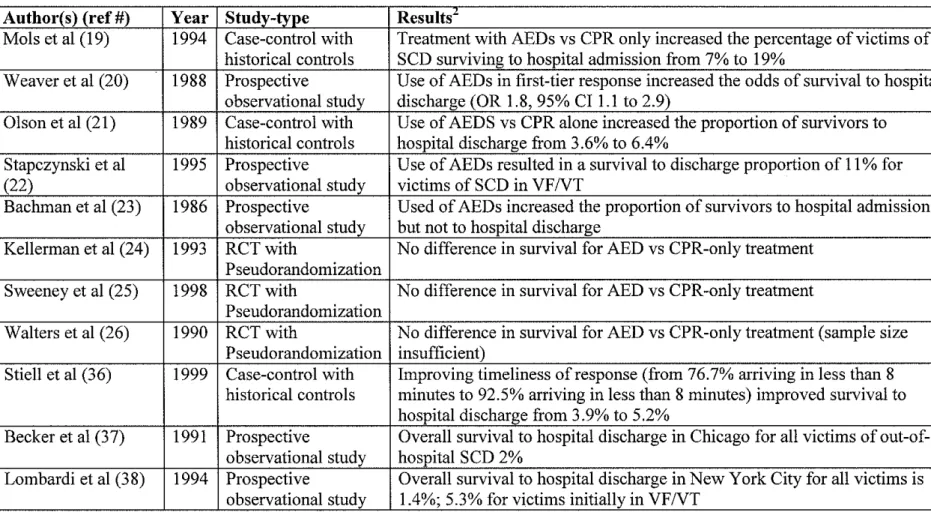
County system demonstrated an overall survival rate for victims in VFNT of27% with the use of AEDs by EMT-Ds; historical control data, however, demonstrated a 25% survival rate when only EMT-B level service was provided, so the benefit appeared to be modest (18). A Belgian study presents quite possibly the most convincing evidence regarding AED effectiveness, with an improvement in survival from 7% to 19% after the introduction of AED level response. These conclusions, however, must be observed with caution as 3 years expired between the data obtained for historical controls and that obtained for the experimental group; there is no attempt to statistically control for possible confounding variables (19).
In a convincing publication regarding the use of AEDs by first responding personnel, the Seattle/King County system evaluated 1287 consecutive reports of cardiac arrest. While not randomized, this retrospective study did incorporate contemporaneous controls, thus eliminating many potential confounders.
on-scene more than 3 minutes prior to paramedics were included in the study (the authors note than any smaller difference in response times is unlikely to provide an opportunity to use the AED prior to paramedic arrival). Firefighters in 22 of 40 firehouses underwent AED training. Based on multivariate analysis, the use of the AED by firefighters demonstrated an odds ratio of 1.8 (95% CI 1.1-2.9) for survival to hospital discharge as compared to patients treated by a firefighter without an AED (20).
Two rural AED studies are also worthy of mention. The first, a study from rural Wisconsin, demonstrated an overall improvement in survival for victims of out-of-hospital SCD from 3.6% to 6.4% with the addition of AEDs in first responding units. Again, historical controls were utilized. Also of note are the markedly lower survival rates for both groups. Citing previous studies, the authors emphasize the importance of timeliness of response to cardiac arrest; their study indicates time to arrival on scene as an important indicator of the
probability of survival (21 ). Unfortunately, in their study, all response times were prolonged, with a mean time of7.1 +/- 5.8 minutes. The mean time for the small portion of survivors, however, was 3.7 +/- 2.0 minutes (21).
While limited by study design, review of the studies reveals a trend in which several factors are important in the treatment of out-of-hospital cardiac arrest. The timeliness of response appears quite important, with very rapid response necessary for the greatest chance of survival. Additionally, first
responding personnel should be capable of providing defibrillation, although the incremental benefit of such response may be modest if response times are prolonged. Finally, additional resources provided by paramedics are beneficial. The data from these studies are too limited to determine the incremental benefit of paramedic level interventions versus the benefits from defibrillation alone.
Lack of AED benefit
Not all studies, however, demonstrated a positive benefit after the addition of AEDs to treatment protocols. Perhaps the most striking of these is a study involving the addition of AEDs in rural Minnesota. With sound statistical analysis to control for variables, this prospective non-randomized trial evaluated the outcome for patients treated by EMT-Ds with AEDs versus EMT-Bs. The former group had a 5% survival rate while the latter group had a 2.5% survival rate; the difference was not statistically significant (p=.l54) (23). Statistical analysis reveals the mean response time (6.5 minutes) to be longer than for the Seattle/King County (4 minutes) or previous rural studies (5.5 minutes) (23). The authors call the results "sobering" and emphasize that the addition of AEDs alone is insufficient to result in a significant increase in survival to hospital discharge.
demonstrates the limitations of AEDs. In this trial, 20 of 40 fire companies were provided with an AED and told to use it immediately upon arrival to any cardiac arrest. The other 20 companies provided CPR only while awaiting EMS arrival. The roles of the fire companies were rotated on a periodic basis. The mean response difference from fire to EMS/paramedic arrival was only 2.5 minutes (recall the Seattle/K.ing County study excluded firehouses with a response difference ofless than 3 minutes). Additionally, the mean response interval for firefighters was only 3.5 minutes and 6.0 minutes for paramedics. In this case, there was no difference between the AED and the CPR group with regard to successful initial resuscitation (32% versus 34% ), survival to hospital admission (31% versus 29%), or survival to hospital discharge (14% versus 10%) (24). The authors conclude that in an efficient urban EMS response system, the addition of AEDs to initial responders may have little benefit (24 ).
Taking only those patients in VFNT does not result in any substantial improvement, with survival to discharge rates of 6.5 to 7.6% (25).
Two factors are important in analyzing this difference. First, the response time for Charlotte/Mecklenburg firefighters averaged 4.3 to 4.4 minutes, almost 60 seconds greater than for Memphis Fire Department. Also, the mean time for paramedic arrival was 9.9 to 11.1 minutes, markedly longer than the 6.0 minutes in the Memphis study1. Finally, the call processing time for the
Charlotte/Mecklenburg 9-1-1 centers was unacceptably long, with calls requiring an average of 2.5 minutes to undergo processing and some calls not being
dispatched for over 4 minutes (25). As the study authors note, the addition of AEDs alone in a system with prolonged response times and inefficient dispatch is unlikely to result in benefit (25).
Finally, a study of the London ambulance service supports the conclusions from the Memphis and the Charlotte/Mecklenburg studies. The addition of AEDs to the 8 ambulance stations in South London resulted in a modest increase in the proportion of survivors from 2% to 4%, using contemporaneous non-randomized controls. The numbers were small, however, and study only enrolled l/6 the number of patients that would be required to determine a statistically significant difference between the control and the experimental groups. While exact response time data are not included, it is clear that more than 8 minutes elapsed from call to first unit on the scene in more than 60% of cases, likely a major contributing factor to the overall poor resuscitation rate (26).
1
These individual studies demonstrated wide variation in the treatment success of out-of-hospital SCD; the key findings of each study are summarized in Table A. While factors such as time to treatment as well as accuracy of dispatch appear to be important factors in a successful treatment strategy, the
quantification of the importance of these various factors is difficult to surmise from these individual studies. Several predictive models as well as meta-analyses have been completed in an attempt to provide a clear understanding of the factors associated with successful resuscitation of out-of-hospital SCD.
Data Synthesis
In an attempt to further describe the relative importance of the various factors relating to treatment of out-of-hospital SCD, predictive models were developed. The first of these, the "ACLS score" was developed based on simple descriptive statistics and probabilities. The data used for this model were
obtained from a prospective observational study known as Project Restart that was conducted from 1976 to 1979 in the Seattle/King County system. In this model, factors that increased the probability of survival included experiencing a witnessed SCD, receiving bystander CPR, experiencing an initial rhythm of VFNT, and having a response time for paramedics (capable of defibrillation) of less than 4 minutes (27).
proportion of patients for whom data were available. Factors such as age, medical history, and medication history as well as the emergency response information were included in the model. The only statistically significant factors related to survival were the period from collapse until initiation of CPR and the period from initiation of CPR until defibrillation (28).
More recently, a regression model containing data obtained in a controlled, prospective manner also demonstrated the importance of early defibrillation. Importantly, all SCDs evaluated in this study occurred in-hospital rather than out-of-hospital. While the underlying cause of SCD is presumably similar regardless of where an arrest occurs, certainly hospitalized patients may have a different overall state of health as compared with victims of SCD from the community. With this caveat in mind, the data from this study support the
benefits of early advanced treatment for SCD. In this model, prompt
defibrillation as well as type of initial rhythm, performance of intubation, and patient age were important predictors of survival from SCD (29).
essentially compared that system to other systems in the country. Given these limitations, it is noteworthy that systems with only EMT-basic level response achieved a 11% discharge to home rate for out-of-hospital SCD victims while those with a two-tiered EMT-D/Pararnedic response achieved a 30% discharge to home rate. The authors speculate that earlier CPR and earlier defibrillation associated with the two-tiered response were major factors associated with the increased survival. The study design prohibited formal evaluation of this hypothesis (30).
By 1991, based on these and similar studies, the American Heart
Association adopted the Chain of Survival concept, emphasizing the importance of prompt activation of Emergency Medical Services, Early CPR, Early
Defibrillation, and Early Advanced Cardiac Care (31 ). Over the past decade, this model has become popular not only in the medical arena but also in the
commercial arena as is evidenced by its use in public advocacy campaigns.
Meta-analyses
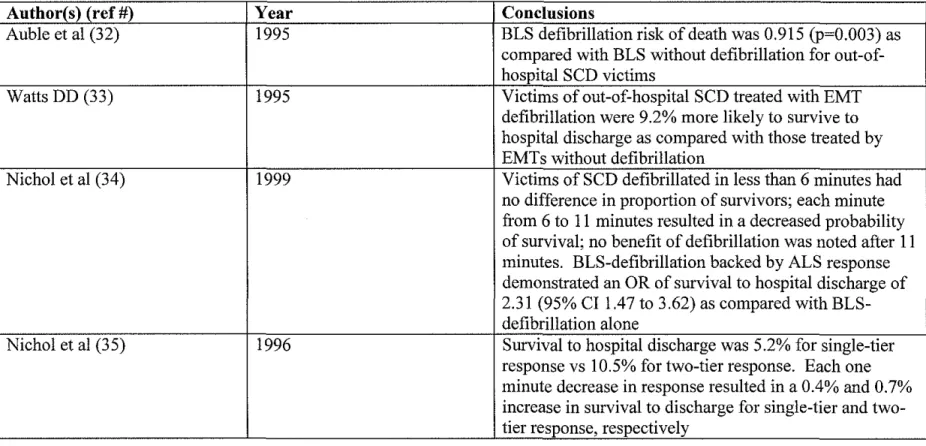
greater benefit, with an absolute 16% (95% CI 8-24%) reduction in risk versus a
6.3% (95% CI 4-16%) reduction for those in a single tier system (32).
A subsequent meta-analysis with slightly different inclusion criteria
reviewed ten studies, six that were evaluated in the previous analysis as well as
four unique to this study. As with the previous report, this study was well
designed with reasonable inclusion and exclusion criteria. All included studies
demonstrated some benefit regarding the use of AEDs by EMT-Ds. Although the
confidence intervals are broader, a similar pooled affect is noted, with a 9.2 %
(95% CI 2.7- 15%) absolute improvement in the probability of survival if victims
of out-of-hospital SCD were treated by EMT-Ds versus EMT-Bs (33). There was
no stratified analysis based on single- versus double-tiered response.
Two other meta-analyses focused more particularly on the timeliness of
response rather than on the response configuration. The first of these studies
incorporated broad inclusion criteria and reviewed 37 articles. In this analysis, it
was noted that no significant changes in the probability of survival to hospital
discharge were noted so long as the defibrillation-capable responder reached the
victim in the first six minutes, no matter what the response configuration. There
was a 0.72 (95% CI 0.61 to 0.84) decrease in the odds of survival for each minute
that passed without defibrillation from 7 to 11 minutes; no interventions were
found to be helpful after 11 minutes. Finally, as has been noted in the other
analyses, for all patients the odds of survival to discharge was highest in a tiered
response system. The odds ratio for survival in a two-tier EMT-D/Paramedic
This meta-analysis indicates a tiered-response is best if the paramedics are not capable of reaching a victim in six minutes or less, with EMT-D level response in the first tier.
Another analysis reviewed 36 articles, many of which were identical to the articles included in meta-analysis just reviewed. In this case, the overall survival in a one-tiered system was 5.2% versus 10.5% in a two-tiered system. For each one-minute decrease in response interval, there was an associated increase in survival of0.4% for one-tiered systems and 0.7% for two-tiered systems. As the authors state, the studies available for the analysis were of only average quality, with no randomized controlled trials meeting inclusion criteria. The authors caution that the modest improvement in survival as it relates to response times in this study needs further evaluation before change in response policy is adopted (35).
The authors of the latter two meta-analysis mentioned above are also members of the OPALS (Ontario Prehospital Advanced Life Support) study group. This group is conducting a large, randomized EMS trial now ongoing in Canada. The first phase of this trial investigated the potential survival benefit associated with improving response times in a large EMS system. Using historical controls, the authors tested that hypothesis that increasing the
absolute increase in the proportion of survivors of out -of-hospital SCD from 3. 9 to 5.2% (p=0.03) (36).
The overall survival rate in this study is clearly much lower than that reported from the Seattle/King County system. While there are multiple possibilities for this difference, one is particularly noteworthy. As is discussed above, retrospective exclusion criteria were often applied in the Seattle studies. In the OPALS study, all victims of sudden death were included except those with clinically obvious cardiac cause of death or those with obvious signs of non-recent death for whom resuscitation was not attempted. Thus, the OPALS study includes the entirety of patients likely to be encountered by EMS personnel, while the Seattle study retrospectively excludes many patients upon whom resuscitation would be attempted in the field.
These meta-analyses provide the first rigorous evidence in the
development of a model for the treatment of cardiac arrest; the key results are sunnnarized in Table B. All studies consistently indicate the two-tiered response system is superior to a single-tiered response. The rapidity with which
not sufficient to determine the relative importance of a timely response by the advanced life support second tier. Nevertheless, the preponderance of the
evidence suggests that with optimal response, a survival rate of five to ten percent can be anticipated for victims of out-of-hospital SCD.
Public Access Defibrillation
Failures of the Model
As noted above, a model for the treatment of out-of-hospital SCD began with the AHA Chain of Survival concept and was strengthened initially by observational studies and then by more rigorous meta-analyses. In many locations in the US, both rural and urban, the implementation of this model has proved quite difficult.
Similar difficulties were noted in New York City. In the 1994 Pre-Hospital Arrest Survival Evaluation (PHASE) study, 2329 out-of-hospital SCDs were evaluated in a prospective manner. The overall survival rate was 1.4%. Again, a prolonged time to first defibrillatory shock was noted, with a mean of 12.4 minutes (interquartile range II. 7 to 16.4 minutes). Again, lengthy response times as well as other "factors that may predispose residents of large cities to higher cardiac arrest mortality" were cited as possible explanations for the low observed survival rate (38).
Policy Statements
Recognizing the difficulties inherent in allowing a 9-1-1 dispatched medical responder to reach a victim in a timely manner, attention has become
i
focused on the possibility of public access defibrillation (PAD) by minimally trained or untrained bystanders. It is hypothesized that such bystanders will be able to provide defibrillation in a timely manner, certainly in less than the 12 to 16 minutes experienced in two of America's largest cities. In 1994, the American Heart Association's Public Access Defibrillation Conference recommended an expanded role for bystander use of AEDs as well as emphasized the need for well-designed studies to substantiate the benefits of such treatment (39). The PAD trial that is now underway in many communities in the United States is the first
types of providers that might use an AED is included in this consensus statement (40):
Level I- traditional first responders such as fire and police
Level II- non-traditional first responders such as security guards and flight attendants
Level III- citizens trained in the use of AEDs through a nationally recognized course
Level IV - untrained bystanders that have access to an AED
In perhaps the most exhaustive work on the subject of AED use, Marenco and colleagues reviewed 1 01 publications. Clearly, the move to PAD from Level II to Level IV responders was the area of greatest interest and most in need of additional research ( 41 ).
Initial successes
The only evidence currently available regarding PAD involves Level II personnel ( 40). This evidence, however, is quite remarkable in that
extraordinarily high survival rates have been reported. The use of AEDs by flight attendants and casino security guards is reviewed.
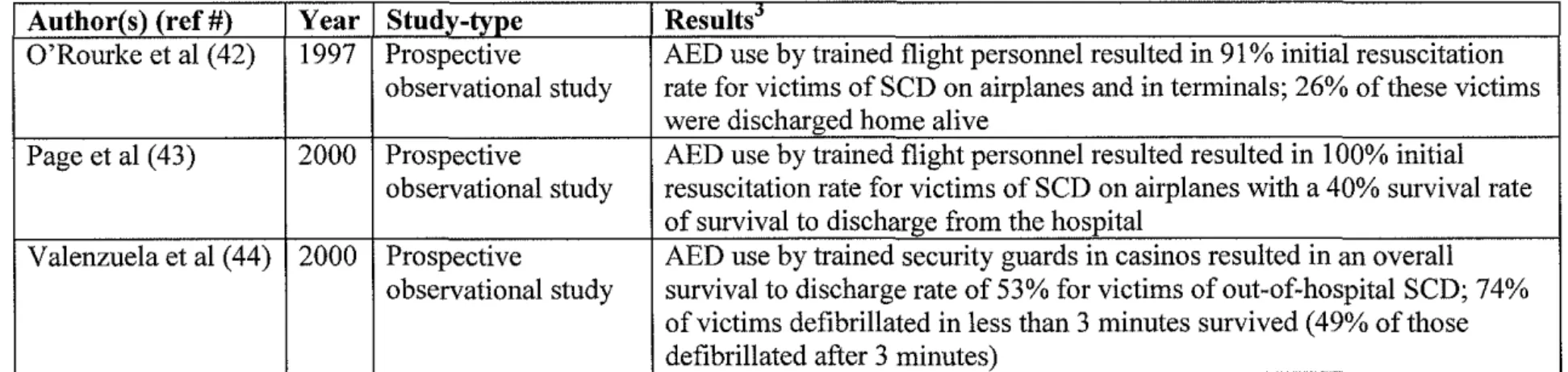
responders to achieve success on the order of the best Level I responders was nonetheless suggested by these results ( 42).
In a small study of 14 patients that suffered VF NT arrest while in the aircraft or in the terminal, excellent results from the use of the AED by Level II airline responders were also noted. All patients undergoing treatment were successfully converted to a stable rhythm with a pulse on the first countershock. Of these, 40% survived to hospital discharge (43).
Security guards in casinos have achieved possibly the highest survival rate for victims of out-of-hospital SCD ever reported. These Level II responders used the extensive surveillance system already in place in casinos to not. only rapidly notice a potential victim of cardiac arrest but also to assist in recording response and defibrillation times. One hundred five victims were found initially to be in VFNT; of these, 53% survived to hospital discharge. Moreover, stratified analysis revealed that of victims receiving a countershock in less than 3 minutes, 74% survived to hospital discharge, as opposed a 49% survival for victims receiving their first countershock after 3 minutes ( 44 ). The ability of minimally trained Level II responders to deliver effective treatment was established, and the importance of timely response reaffirmed.
Future Directions
which an operator should be trained in order to operate a AED safely and
effectively. Where available, most of the evidence concerning any of these issues is preliminary at best. Given the emphasis placed upon rapid defibrillation by a preponderance of the evidence, it seems that Level III and Level IV PAD is the next logical step to take in order to provide this life-saving treatment to the
greatest number of individuals. As is noted in the Chicago and New York, as well as by simple observation of American geography and traffic patterns, it is not possible to maximally benefit victims of out-of-hospital SCD from Level I and Level II AED response alone.
Placement
indicated the difficulties with effective placement of AEDs in the community setting ( 4 7).
As has been their pattern in all cardiac arrest research, the Seattle/King County group again provides a unique perspective on the issue of PAD and AED placement. In a review of cardiac arrest locations over a four-year period, locations of arrest were characterized by type rather than by unique address. In other words, if an arrest occurred in a health club, this was counted as one health club arrest rather than an isolated arrest at a particular address. By this method, higher risk location types were established. In the next phase of the project, the total number oflocations within each category was totaled. By this manner, the total number of AEDs needed to provide service for the ten highest risk location types was calculated. In these top ten areas of cardiac arrest, there were a total of
134 cardiac arrests over a four-year period, all of which could have been reached with 276 AEDs (48).
It is useful to view these potential placement sites from an epidemiological perspective. As is mentioned in the review of the meta-analyses above, a ten percent theoretical survival with standard EMS response is possible; the most recent data, however, indicates the national average of survival for out-of-hospital SCD is seven percent ( 49). Given the overall lack of data regarding the
AEDs in the sixteen locations with more than one cardiac arrest on an annual basis would have reached eleven percent of all cardiac arrests, totaling 3 8 victims. Twenty-eight of these victims were in nursing homes; if these patients are
excluded, only 10 victims (or 3.2% of all cardiac arrest victims) would have been reached by AEDs placed in the five locations with more than one cardiac arrest. Given the assumptions above, only 6 patients need to be treated to save additional one life, meaning placement in Kansas City would save one to two additional lives per year. If one assumes two AEDs would be needed for each location, a total of 20 AEDs would be needed to save one additional life per year. As most AEDs have a five-year life span, these twenty AEDs would be expected to save 8 lives over their lifetime.
In Pittsburgh, only 17% of all cardiac arrests would have been reached by AEDs placed in the fifteen locations having more than two cardiac arrests over a three-year period. If nursing homes and dialysis centers are excluded (for they presumably are eligible for Level I response to SCD), only Three Rivers Stadium had more than more than one out-of-hospital cardiac arrest. Only 3 cardiac arrests (0.3% of the total for Pittsburgh) occurred here over the 3-year period. Using the same assumptions from above, one must treat 6 victims to provide one additional life saved, making this option not epidemiologically sound, as one would treat only 5 victims over the 5-year life-span of the AED.
of all cardiac arrests, or 134 victims. It is anticipated twenty additional lives would be saved by the placement of these 276 AEDs.
Cost-effectiveness
There is little data available regarding the costs of AED programs that provide Level III or Level IV care for victims of out-of-hospital SCD. Two studies, however, provide cost-effectiveness data in relation to defibrillation and other ACLS care for Level I or Level II response. These studies, as well as the only cost-effectiveness study that deals directly with AED placement, are reviewed.
A 1986 review evaluated the cost per life saved for response by EMT-Bs, EMT-Ds, and paramedics. Costs for training were tabulated based on data from all 50 states as well as the District of Columbia. Review of the literature
estimated the proportion of victims with VFNT arrests saved to be 6%, 25%, and 28% for each type of responding personnel, respectively. Even given that these calculations may be over-estimates (given the review of the literature above), it remains noteworthy that the cost-per-life saved for an EMT is $7687 while for an EMT-D it is $2126 and for an EMT-P it is $2289. Given the incremental cost for training an EMT to the EMT-D level is only $27.00, there is no economic
disincentive to train, even if the improved survival rate falls short of the estimated 25% (50). Training EMT-Bs to provide defibrillation, then, makes not only for good medicine but also for good economic policy.
various types of EMS systems in the resuscitation of out-of-hospital SCD.
Additionally, the cost for each component of the EMS response as well as QAL Y s
(Quality Adjusted Life Year) saved based on the different response characteristics
and response times were calculated. For each 48 seconds of improved response
time, the costs were as follows: $368,000 per additional QAL Y for a single-tier
response but only $40,000 per additional QAL Y for a two-tier response using
firefighters trained to the EMT-D level. The costs per additional QAL Y for other
tiered options feel in between these extremes (51). As with training of basic
EMTs to the EMT-D level, development of a two-tiered response system makes
good medical as well as economic sense.
Finally, a late 1990s study evaluated the potential cost-effectiveness of
true Level III and Level IV PAD. It is interesting that in this study the
incremental effects of PAD were estimated to be quite low, with a 7. 9% survival
for victims served by standard Level I and Level II response versus 8.7% for
those served by Level III and Level IV response. Given the recent successes
noted with airlines and casinos, this low incremental benefit may under-represent
the potential benefit of Level III and Level IV PAD. In this cost-effectiveness
model, however, such under-representation is desirable, for it allows one to
examine the worst-case scenario. Even with this low incremental benefit, the
median incremental cost per additional QAL Y was $44,000 for the Level III and
Level IV PAD, consistent with the generally referenced $50,000 value per QAL Y
and similar to costs for improving response times in two-tiered EMS systems
Rather than evaluating QAL Y s, one can simply examine the potential cost per life saved based on the three cities' placement studies above. The following assumptions are made. First, the initial cost of the AED is $3,000, with a 3% discount rate for each year of service, giving an initial capital cost of $3,450. Batteries would have to be replaced once over the lifetime of the device, at a cost of approximately $200, for a total 5-year cost of $3,650. Most devices are now equipped with a self-test mechanism that will alert owners of impending
difficulties with batteries, etc., keeping maintenance costs to a minimum (53). Using this model, the Kansas City scenario would cost $14,600 per life saved while the Seattle solution would cost $50,370 per life saved. The quality oflife after the save is obviously an important factor that is not considered in this calculation, although it is noteworthy that both of these studies only counted a "save" as a discharge alive from the hospital.
Safety and Education
In addition to medical effectiveness and cost considerations, the ability of Level III or Level IV responders to safely and effectively operate an AED must be considered. An important component of safety involves the sensitivity and
specificity of the AED rhythm analysis. In this case, the specificity is of
paramount importance for poor specificity may result in inappropriate delivery of a countershock. Ideally, the device would also be highly sensitive, advising a shock in all patients that could benefit from such treatment. In an effort to first do no harm, however, the AED algorithms place emphasis on specificity over
consistently noting the specificity to be 99 to I 00% with sensitivities ranging from 71-83% (54,55,56).
A case report of inappropriate countershock provided by an AED deserves analysis. In 1992, there was a report of a 79 year-old gentlemen inappropriately shocked by an AED. The gentleman had a palpable pulse and was being
monitored by an AED while in transport to hospital in an EMS vehicle. A shock was inappropriately advised, possibly due to electrical interference from the vehicle. A second inappropriate shock was advised, with resultant ventricular fibrillation. Fortunately, an appropriate shock was advised for this rhythm and the gentleman's heart was converted back to a sinus rhythm. In the final analysis, two factors were determined crucial in this misadventure. First, motion artifacts as well as the patient's underlying tall T-waves likely led the AED to incorrectly interpret the rhythm as ventricular tachycardia (57). Level III and Level IV first responders will likely not be evaluating patients in moving vehicles (as indeed this particular ambulance crew should not have been), so the probability of this type of difficulty is remote. Additionally, this patient had spontaneous
respirations at the time of the inappropriate defibrillation. While it remains possible that an AED would be applied to such an individual by a Level III or Level IV responder, it is hoped this would be a rare occurrence.
written and practical examinations one week and 18 months after two types of
training. An abbreviated four-hour course was compared with the standard
ten-hour curriculum. In this case, EMT-Ds from the four-ten-hour course performed with
equal proficiency at both testing sessions when compared with those from the
standard 10-hour course (58). Such an abbreviated course appeals to potential
Level III responders; the AHA currently offers a 4-hour course to teach CPR and
AED use to lay responders (59).
The ability of laypersons to retain skills from such a course was
evaluated in observational study of family members of cardiac arrest survivors.
Co-habitants of individuals with a history of cardiac arrest were offered training
in CPR and AED use. Thirty-two of 34 homes had an individual with the mental
and physical capabilities to undergo training. All 32 were successfully trained in
an average of 4.1 hours. Although this was individualized training, the 4-hour
training time is consistent with the time allotted for abbreviated EMT-D group
training mentioned above. There was a marked skill decrement over time,
implying refresher courses may be necessary (60).
While these studies focus on the ability to train lay responders, the
effectiveness of true Level IV response is just beginning to undergo evaluation. A
recent study of naive six-grade children offers hope that the untrained bystander
may successfully provide defibrillation with an AED. In a mock-cardiac arrest
scenario using a mannequin, sixth-graders were told only how to remove the
adhesive backing from the AED pads. No other AED instruction was given
23 second longer (95% CI -1 to 47 seconds) for the sixth graders to provide the first countershock than it took trained paramedics. In all situations, the electrodes were placed appropriately and the children were safely clear of the patient prior to delivering the shock, even in the absence of prior instruction (61). The National Academy of Emergency Medical Dispatch now advocates telephone instructions be provided for AED use, even for the non-trained provider. In fact, once the report of cardiac arrest has been confirmed, the next prompt instructs Emergency Medical Dispatchers to ask about the availability of an AED and provide
instructions in its proper use (62). Summary of Evidence
Out-of-hospital SCD affects approximately 300,000 citizens of the United States each year, making this one of the top 3 causes of death (1,2,3). Although initially only physicians were capable of providing treatment, it is now clear that a two-tiered EMS response offers the most medically and economically sound treatment method of out-of-hospital SCD in many communities
(9,12,18,30,50,51). In some communities with prolonged response intervals, however, it is equally clear that no response configuration will result in the timely arrival of a defibrillator to a victim's side (25,26,37 ,38).
Given the overwhelming importance of time in response to SCD,
only 6 cardiac arrest victims requiring treatment with an AED in order to save one additional life (42,43,44). The costs of such care are potentially acceptable, with estimates near the $50,000 per-life saved range. The precise methods by which these high-risk locations are evaluated remains an area in need of more research (45,46,47,48).
Based on current data, however, it appears that even with aggressive placement of AEDs in high-risk locations, only 3% (or 9000 of the 300,000 cases in the US each year) of out-of-hospital victims of SCD could be reached with such a strategy. Of those treated, it is anticipated 1 in 6 will survive due to treatment by the AED, resulting in 1500 lives saved per year, or 0.5% of all cardiac arrests in the United States. Even if the remarkable results found by the Level II response is casinos could be duplicated in all "high risk" public areas, 1 in 2 would survive due treatment by the AED, saving 4500 lives per year, or 1.5% of all victims of out-of-hospital SCD. Certainly when the outcome is death, even such small improvements are clinically significant. Indeed, using the accepted $50,000 per QAL Y, the "justified" costs per year for PAD would be on the order of $75,000,000 (1500 * $50,000) to $225,000,000 ( 4500
*
50,000). Yet, givenavailable data, claims that PAD is the panacea for SCD must be viewed with skepticism, for only a very small proportion of cardiac arrest victims will be reached by such a strategy.
The North Carolina AED Location Project
victims would be saved even by the most optimal placement. Nevertheless, there is evidence that for the small proportion of victims treated with publicly placed AEDs, survival rates can be quite high. Indeed, the American Heart Association and other medical groups are advocating purchase and placement of AEDs in many community areas (63, 64). While the evidence is still inconclusive
regarding placement for AEDs for use by Level III and Level IV responders, there is considerable evidence supporting the use of AEDs by Level I and Level II response personnel, especially in systems which have optimized other components of their response plan (13,15,16,17,18,25,26).
In North Carolina, the extent to which AEDs are incorporated into any level of response has not been compiled into a database. For example, each county may know which Level I and Level II responders are capable of providing defibrillation, yet from a statewide perspective, these data are not available. Moreover, although state statute requires AEDs placed in the community to be registered with the Office of Emergency Medical Services, lack of penalty for failure to register as well as reluctance on the part of private industry to reveal sales information has rendered this database incomplete (53,66).
The purpose of the North Carolina AED Location Project is to establish a database regarding AED use within the state. Specifically, those areas in the state without Level I and Level II defibrillation-ready response are identified.
the closest AED is used for out-of-hospital victims of SCD. This database will also be used as a statewide AED registry, with the hopes of providing quality data to guide future placement of AEDs in the community. Finally, this data will also be used to assist with funding applications for future AED research as well as for purchase of additional AEDs. In summary, it is hoped that Level I and Level II AED response will be accomplished statewide and that Level III and Level IV responses will be designed to ensure a maximum benefit for each AED placed.
Methods
if they were knowledgeable about AED placement and use in their EMS system. If the individual that answered the phone had such knowledge, the interview proceeded; otherwise, the research team member asked to be transferred to an individual with such knowledge. Data gathered from the EMS agencies included defibrillation capabilities of Level I and Level II responders, level of
sophistication oflocal Computer Assisted Dispatch (CAD), and known locations of AEDs in the local community that might be used by Level III and Level IV responders.
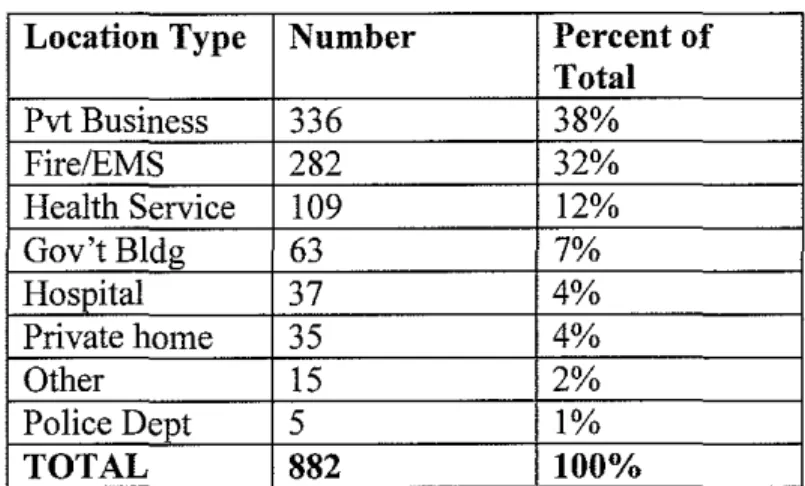
Data were subsequently analyzed in a standard format by one of three members of the research team from September 2001 through June 2002. The North Carolina Office of EMS registry list, sales list data from vendors, and information from AHA training centers was sorted and the location type was characterized as Fire/EMS, Hospital, other Health Care Service (e.g., doctor's office), Govermnent Building (including schools), Private Business, or Private Residence. The sorting was based on address and other contact information provided from these sources. Data from the county EMS agencies were obtained via phone interview through a standard questionnaire (Appendix A). The primary investigator (JBM) was available at all times via email for clarification of any points regarding data gathering during the phone interview process. All data were entered into a Microsoft Excel spreadsheet and duplicate entries were deleted.
standard defibrillator were determined to be non-compliant. Counties with Computer Assisted Dispatch, with the capability of providing standardized pre-arrival instructions over the phone via Emergency Medical Dispatch (EMD) protocols, and with more than one individual available in the dispatch center 24 hours a day (to allow one dispatcher to provide EMD instruction while the other dispatched the responding agencies) were determined to be Level III/Level IV prepared. Counties without any one of these three components were determined to be Level III/Level IV unprepared. Any county that had locations of AEDs already included in the Computer Assisted Dispatch were determined to be Level III/IV complaint; all others were considered to be Level III/IV non-compliant. The study was conducted under an approved exemption for human studies from the IRB of the University of North Carolina Hospitals.
Descriptive statistical analysis was performed using the STAT A software package (STAT A Corporation, College Station, Texas, Version 7.0). Mapping of AED locations was performed with MapPoint 2002 (Microsoft Corp, Seattle, Washington, 2002).
Results
All three AED vendors within North Carolina submitted their sales lists for review. Eleven of fifty-three individuals listed on the AHA training center list responded to the electronic email message. A repeat message yielded no
Eight hundred eighty-two unique locations with evidence of at least one AED from at least one of the four data sources were found. A summary of the location types is provided in Table C; these data are graphically represented in Appendix B. The preparedness level of counties is summarized in Table D. Given the large number of counties that are unprepared, Table E provides a breakdown of difficulties encountered by counties. A county-by-county list is included in Appendix C.
Several key components of this initial data deserve comment. First, there were no counties that achieved Level III/Level IV compliance. In other words, the location of AEDs in the community is not known to 9-l-l dispatchers in any county. Secondly, 33% (39/99) of counties do not have an AED on every first tier-response vehicle. Additionally, 45% ( 45/99) of counties are unable to offer instructions over the phone regarding the use of an AED.
Discussion
Several items from this initial phase of data gathering are worthy of
comment. First, it was a surprise to the investigators that so many counties do not
have defibrillation capabilities on all first-tier response units. Tbis is especially
troubling, given that first-tier rapid defibrillation is a treatment for SCD strongly
supported by the literature. Given that the training can be obtained in 4 to 10
hours and that the current price of an AED is less than $3,000, this is certainly an
area that deserves prompt attention. Perhaps there are political factors that relate
to training or funding restrictions, or perhaps there is a simple lack of accurate
information. This is a hlgh priority area for future research and intervention.
Secondly, there is a general lack of coordination in the Level III and Level
IV response with AEDs. Not only was the NC Office of EMS database
incomplete, a relatively small proportion of county EMS agencies were aware of
AED locations within their own county. Given the stress that must be endured by
an untrained bystander witnessing a cardiac arrest, we cannot expect these
individuals to recall the location of an AED and use it on a consistent basis. For
Level III and Level IV response to have a major impact, AED use must be
incorporated into all phases of the emergency response. This is particularly true
in the area of Emergency Medical Dispatch (EMD). Given the large proportion of
counties that are Level III/Level IV unprepared, another area of priority must be
the accurate representation of AED locations in the Computer Assisted Dispatch.
Finally, the degree to which AEDs have been located in private businesses
placed on the direction of businesses or sales representatives from the AED manufacturers. There is no evidence that EMS Medical Directors or other public health officials have been involved in these decisions to any extent. Given the lack of data to guide placement decisions, this likely has not resulted in any significant misplacement that could have been avoided by medical direction. As the evidence becomes stronger, however, medical direction will be a necessary component of an AED placement program. A third priority area relating to AED use involves active participation by local EMS Medical Directors.
The results of this study offer the first statewide database for the location of AEDs in North Carolina. There are weaknesses, however, that must be considered. First, only a small proportion of AHA training centers responded to the survey. In private conversation, several instructors stated they simply had not taught any Level III responders and did not respond for that reason. This is obviously anecdotal and does not substitute for a higher response. Second, it has taken over 10 months to gather all of the data, so some of the sales data may be outdated. Third, due to the methods by which the data were compiled, it is not possible to determine the source of duplicate entries (e.g., one site is listed twice because it was both on a sales list and from a EMS agency list versus the vendor simply listed the device twice twice). Fourth, the accuracy of the data has yet to be verified (see below).
Future directions
via telephone to confirm the location of the AED as well as gather other pertinent information necessary to incorporate the AED into Computer Assisted Dispatch. The questionnaire for this process has already been pilot tested for ten locations; the questionnaire is include in Appendix D.
Subsequently, two avenues of action will be pursued. First, a mechanism for evaluating the AEDs placed in the community will be employed. It is hoped victims of out-of-hospital SCD treated by Level III and Level IV responders can be compared with contemporaneous controls from a geographically similar location. It will be necessary to match cases and controls in such a nested fashion, as the time required to collect a sufficient sample size will likely be on the order of several years, thus eliminating the possibility of using historical controls. Indeed, even if AEDs demonstrated a 20% improvement in survival over another treatment strategy, 72 out-of-hospital SCDs would be needed in each group to demonstrate a statistically significant result (alpha 0.05, power 0.80); a more modest improvement of 5% with AED use increases this sample size to 726 in each group. Given the lack of information to predict this relative improvement with any precision, it is assumed a large sample size will be required.
Bush. Over twenty million dollars for the purchase and placement of AEDs is provided by this federal legislation (68). It is hoped the data obtain from this study will be useful in determining optimum use of resources provided by this Act.
Conclusion
The North Carolina AED Location Project represents an important first step in accumulating evidence that may guide placement of AEDs in the community. Immediate benefits from use of this data include improved direct patient care via the incorporation of AEDs in an overall Emergency Response Plan directed by Computer Assisted Dispatch. Additionally, communities may use this information to improve their first-tier response capabilities where appropriate. Future projects will assist with verification oflocation information as well as with gathering data to guide future AED placement decisions.
Acknowledgements
Dr. David French and Mr. Baxter Web superbly assisted with data collection, data analysis, and phone interviews.
The American Heart Association contributed funds to cover the costs of long distance as well as provided computer software to assist with mapping locations ofAEDs.
I
1. Zipes DP and Wellens HJJ. Sudden Cardiac Death. Circulation 1998;98:2334-2351.
2. Gillum RF. Sudden Coronary Death in the United States 1980-85. Circulation 1989;79:756-65.
3. http://factfinder.census.gov/bf/_lang=en _ vt _name= DEC_ 2000 _ SF1_ U _ G CTP5 _ US9 _geo _id=01 OOOUS.html.
4. Pickle LW eta!. Atlas of United States Mortality, p13. US Department of Health and Human Services. 1996, Hyattsville MD.
5. Eisenberg MD, Bergner L, Hearne T. Out-of-Hospital Cardiac Arrest: A Review of Major Studies and a Proposed Uniform Reporting System. Am J Public Health 1980;70:236-240.
6. Cummins RO eta!. What is a 'save'?: Outcome measmes in clinical Evaluations of automatic external defibrillators. Am Heart J 1985;110:1133-1138.
7. Cummins RO eta!. Recommended Guidelines for Uniform Reporting of Data From Out -of-Hospital Cardiac Arrest: The Utstein Style. Circulation 1991;84:960-75.
8. Kouwenhoven WB. The Development of the Defibrillator. Ann Int Med 1969;71 :449-458.
9. Grace WJ and Chadbourn JA. The Mobile Coronary Care Unit. Dis Chest 1969;55:452-55.
10. Pantridge JF and Geddes JS. A Mobile Intensive Care Unit in the
Management of Myocardial Infarction. Lancet Aug 1967,271-73. 11. Eisenberg MS, Bergner L, Hallstrom A Out -of Hospital Cardiac Arrest:
Improved Survival with Paramedic Services. Lancet April 1980, 812-815.
12. Eisenberg MS eta!. Management of Out-of-Hospital Cardiac Arrest: Failme of Basic Emergency Medical Technician Services. JAMA 1908;243:1049-51.
14. Martin TG eta!. Initial Treatment of Ventricular Fibrillation:
Defibrillation or Drug Therapy. Am J Em erg Med 1986;6: 113-19 [abstract].
15. Eisenberg MS eta!. Treatment of Ventricular Fibrillation. JAMA 1984;251 :1723-26.
16. Stults KR et a!. Prehospital Defibrillation Performed by Emergency Medical Technicians in Rural Communities. NEJM
1984;310:219-23.
17. Cummins RO eta!. Automatic External Defibrillators Used by
Emergency Medical Technicians. JAMA 1987;257:1605-1610. 18. Weaver WD et al. Cardiac Arrest Treated with a New Automatic External
Defibrillator by Out-of-Hospital First Responders. Am J Cardiol 1986;57:1017-21.
19. Mols Pet a!. Early defibrillation by EMTs: the Brussels experience. Resuscitation 1994;27:129-36.
20. Weaver WD eta!. Use of the Automatic External Defibrillator in the Management of Out-of-Hospital Cardiac Arrest. NEJM
1988;319:661-6.
21. Olson DW et al. EMT-Defibrillation: The Wisconson Experience. Ann Em erg Med 1989; 18:806-11.
22. Stapczynski JS eta!. Automs.ted External Defibr;Jlators Used by
Emergency Medical Technicians: Report of the 1992 Experience in Kentucky. Kentucky Med Assoc J. 1995;93: 137-141.
23. Bachman JW, McDonald GS, and O'Brien PC. A Study of Out-of-Hospital Cardiac Arrests in Northeastern Minnesota. JAMA 1986;256:477-83.
24. Kellerman AL et al. Impact of First-Responder Defibrillation in an Urban Emergency Medical Services System. JAMA 1993;270:1708-13. 25. Sweeney TA eta!. EMT Defibrillation Does Not Increase Survival From
Sudden Cardiac Death in a Two-Tiered Urban-Suburban EMS System. Ann Emerg Med 1998;31:234-40.
26. Walters G, D' Auria D, Glucksman EE. Controlled Trial of Automated External Defibrillators in the London Ambulance Service. J Royal Soc Med 1990;83:563-65.
27. Eisenberg MS, Hallstrom A, Bergner L. The ACLS Score: Predicting Survival From Out-of-Hospital Cardiac Arrest. JAMA
1981;246:50-52.
28. Weaver WD et al. Factors Influencing Survival After Out-of-Hospital Cardiac Arrest. JAm Coli Cardioll986;7:752-7.
29. Marwick TH et a!. Prediction of survival from resuscitation: a prognostic index derived from multivariate logistic model analysis.
30. Eisenberg MS et al. Cardiac Arrest and Resuscitation: A Tale of29 Cities. Ann Emerg Med 1990; 19:179-86.
31. Cummins RO et al. Improving Survival From Sudden Cardiac Arrest: The 'Chain of Survival' Concept. Circulation 1991;83:1832-47. 32. Auble TE, Menegazzi JJ, Paris PM. Effect of Out-of-Hospital
Defibrillation by Basic Life Support Providers on Cardiac Arrest Mortality: A Metaanalysis. Ann Emerg Med 1995;25:642-48. 33. Watts DD. Defibrillation by Basic Emergency Medical Technicians:
Effect on Survival. Ann Emerg Med 1995;26:635-39.
34. Nichol Get a!. A Cumulative Meta-Analysis of the Effectiveness of Defibrillator Capable Emergency Medical Services for Victims or Out-of-Hospital Cardiac Arrest. Ann Emerg Med 1999;34:517-25.
35. Nichol GN eta!. Effectiveness of emergency medical services for victims Of Out-of-Hospital Cardiac Arrest: A metaanalysis. Ann Emerg Med 1997;27:700-710.
36. Stiell IG eta!. Improved Out-of-Hospital Cardiac Arrest Survival Through Inexpensive Optimization of an Existing Defibrillation Program OPALS Study Phase II. JAMA 1999;281:1175-81. 3 7. Becker LB et a!. Out of CPR in a Large Metropolitan Area- Where are
38. Lombardi G, Gallagher EJ, Gennis P. Out of Out-of-Hospital Cardiac Arrest in New York City: The PHASE Study. JAMA
1994;271 :678-83.
39. Weisfeldt ML eta!. Amercian Heart Association Report on the Public Access Defibrillation Conference December 8-10, 1994. Circulation 1995;92:2740-47.
40. Ornato JP and Hankins DG. Public-Access Defibrillation. Prehospital Emerg Care 1999;3:297-302.
41. Marenco JP et a!. Improving Survival from Sudden Cardiac Arrest The Role of the Automated External Defibrillator. JAMA
2001;285:1193-2000.
42. O'Rourke MF, Donaldson EMB, Geddes JS. An Airline Cardiac Arrest Program. Circulation 1997;96:2849-2853.
43. Page RL eta!. Use of Automated External Defibrillators by a U.S. Airline. NEJM 2000;343:1210-16.
44. Valenzuela TD et a!. Outcomes of Rapid Defibrillation by Security Officers After Cardiac Arrest in Casinos. NEJM 2000;343:1206-1209.
45. Gratton M, Lindholm DJ, Campbell JP. Public-Access Defibrillation: Where Do We Place the AEDs? Prehospital Emergency Care 1999;3:303-05.
46. Frank RL et a!. The Locations ofNomesidental Out-of-Hospital Cardiac Arrests in the City of Pittsburgh Over a Three-year Period: Implications for Automated External Defibrillator Placement. Prehospital Emergency Care 2001;5:247-51.
47. De Maio VJ eta!. Public Locations of Cardiac Arrest Abstract Presentation at Seventh Annual UNC Emergency Medicine Research Forum, April2002.
48. Becker L eta!. Public Locations of Cardiac Arrest: Implications for Public Access Defibrillation. Circulation 1998;97:2106-09. 49. Mosesso VN eta!. Law Enforcement Agency Defibrillation (LEA-D):
50. Ornata JP eta!. Cost-Effectiveness of Defibrillation by Emergency MedicalTechnicians. Am J Emerg Med 1988;6:108-112. 51. Nichol Get a!. Cost-Effectiveness of Potential Improvements to
Emergency Medical Services for Victims of Out-of-Hospital Cardiac Arrest. Ann Emerg Med 1996;27:711-20.
52. Nichol G eta!. Potential Cost-effectiveness of Public Access
Defibrillation in the United States. Circulation 1998;97:1315-20. 53. Personal communication with AED vendors from major corporations. 54. Carlson MD et al. Sensitivity of an Automatic External Defibrillator for
Ventricular Tachyarrhythmias in Patients Undergoing Electrophysiologic Studies. Am J Cardioll988;61:787-90. 55. Cummins RO eta!. Sensitivity, Accuracy, and Safety of an Automatic
External Defebrillator. Lancet Aug 1984, 318-20.
56. Stults KR, Brown DD, Kerber RE. Efficacy of an automated external defibrillator in the management of out-of-hospital cardiac arrest: validation of the diagnostic algorithm and initial clinical
experience in a rural environment. Circulation 1986;73( 4):701-09. 57. Ornata JP eta!. Inappropriate Electrical Countershocks by an Automated
External Defibrillator. Ann Emerg Med 1992;21: 1278-81. 58. Bradley Ketal. A Comparison of an Innovative Four-Hour EMT-D
Course with a 'Standard' Ten-Hour Course. Ann Emerg Med 1988;17:613-19.
59. American Heart Association at
www.216.185.112.5/presenter.jhtrnl?indentifier 30000386. 60. Moore JE eta!. Lay Person Use of Automatic External Defibrillation.
Ann Emerg Med 1987:669-1707.
61. Gundry JW eta!. Comparison of Naive Sixth-Grade Children with Trained Professionals in the Use of an Automated External Defibrillator. Circulation 1999; 100:1703-07.
62. Medical Priority Dispatch System, version 11. Priority Dispatch Corporation. Salt Lake City, Utah. Procotol Z AED Support. 63. www.early-defib.org.
64. American Heart Association at
http:/1216.185.112.41/cpr _ aed/cpr _ aed _ menu.htm#anchorl65877. 65. North Carolina G.S. 90.21.15, Section G.
66. Personal communication, Elva Bernhardt, North Carolina Office of Emergency Medical Services.
67. http://www.doa.state.nc.us/pandc/465b.htm.