THE IMPACT OF NEW TECHNOLOGIES ON HEALTH KNOWLEDGE AND BEHAVOR: EVIDENCE FROM KENYA, UGANDA, AND THE UNITED STATES
Samuel Halvor Masters
A dissertation submitted to the faculty at the University of North Carolina at Chapel Hill in partial fulfillment of the requirements for the degree of Doctor of Philosophy in the Department
of Health Policy and Management in the Gillings School of Global Public Health.
Chapel Hill 2017
Approved by: Harsha Thirumurthy
Sally Stearns Deborah Tate Justin Trogdon
© 2017
ABSTRACT
Samuel Halvor Masters: The impact of new technologies on health knowledge, behavior and outcomes: Evidence from Kenya, Uganda and the United States
(Under the direction of Harsha Thirumurthy)
New technologies have the potential to dramatically change health behavior in both high- and low-income countries. Increasingly, researchers and practitioners have begun to design interventions that leverage the benefits of these new technologies to improve health. These programs attempt to help individuals overcome a number of different barriers to desirable health behaviors. I explore three technologies and their impact on health behavior: oral HIV self-tests, web-based weight loss programs, and mobile phones. Oral HIV self-tests are HIV tests that can be conducted by the tester themselves, confidentially, and only requires swabbing the mouth for oral fluid. The web-based weight loss program is an interactive web portal that provides users with weight loss tips and allows users to input metrics to benchmark progress. Mobile phones are now ubiquitous, but little is understood about how their rapid expansion over the past 20 years has impacted health. I examine the effect of each of these technologies on specific health
ACKNOWLEDGEMENTS
I am grateful for the patients who participated in the self-testing study and the health facility and research staff that made the study possible. I am thankful for my committee, John E. Paul, Sally Stearns, Deborah Tate, Justin Trogdon, and especially my Chair, Harsha
Thirumurthy, for all their patience with me as I worked through various versions of these papers. I wish to acknowledge my former mentors, Lou Garrison, Srikanth Kadiyala, Emmanuela
PREFACE
TABLE OF CONTENTS
LIST OF TABLES ... x
LIST OF FIGURES ... xii
LIST OF ABBREVIATIONS ... xiii
CHAPTER 1: INTRODUCTION ... 1
1.1 Specific Aims: ... 1
1.2 Significance... 3
1.3 Innovation ... 7
1.4 Theory ... 8
1.5 Guide to the Dissertation ... 10
REFERENCES ... 12
CHAPTER 2: PROMOTING PARTNER TESTING AND COUPLES TESTING THROUGH SECONDARY DISTRIBUTION OF HIV SELF-TESTS: A RANDOMIZED CLINICAL TRIAL ... 16
2.1 Overview ... 16
2.2 Introduction ... 17
2.3 Methods... 19
2.3.1 Ethics Statement... 19
2.3.2 Study Setting ... 19
2.3.3 Study Design and Participants ... 20
2.3.5 Intervention ... 20
2.3.6 Follow-Up Assessments... 21
2.3.7 Statistical Analyses ... 22
2.4 Results ... 24
2.4.1 Participant Recruitment and Flow ... 24
2.4.2 Participant Characteristics ... 24
2.4.3 Male Partner Testing ... 25
2.4.4 Secondary Outcomes ... 25
2.4.5 Heterogeneity of Intervention Effectiveness ... 26
2.5 Discussion ... 27
REFERENCES ... 38
CHAPTER 3: THE IMPACT OF FINANCIAL INCENTIVES ON UTILIZATION OF A WEB-BASED WEIGHT LOSS INTERVENTION AMONG NORTH CAROLINA COMMUNITY COLLEGE EMPLOYEES ... 41
3.1 Overview ... 41
3.2 Introduction ... 42
3.3 Methods... 44
3.3.1 Study setting and design ... 44
3.3.2 Measures and descriptive analyses ... 46
3.3.3 Impact of financial incentive on utilization ... 46
3.3.4 Impact of utilization on weight loss ... 47
3.3.5 Instrumental variables ... 48
3.3.6 Assumptions of the IV ... 49
3.3.8 Propensity scores ... 52
3.3.9 Missing weight loss data ... 54
3.4 Results ... 55
3.4.1 Impact of incentive on utilization of website ... 56
3.4.2 Impact of website utilization on weight loss ... 56
3.5 Discussion ... 57
3.6 Conclusions ... 61
REFERENCES ... 69
CHAPTER 4: HAS MOBILE PHONE OWNERSHIP IMPROVED HEALTH KNOWLEDGE AND BEHAVIOR? EVIDENCE FROM A LONGITUDINAL STUDY IN UGANDA ... 73
4.1 Overview ... 73
4.2 Introduction ... 74
4.3 Background ... 78
4.4 Methods... 79
4.4.1 Study setting and data ... 79
4.4.2 Primary empirical analysis ... 80
4.4.3 Secondary empirical analyses ... 81
4.5 Results ... 85
4.5.1 Results from descriptive analysis... 85
4.5.2 Results from primary analysis ... 86
4.5.3 Results from secondary analyses ... 86
4.6 Discussion ... 89
LIST OF TABLES
TABLE 1: Barriers to healthy behavior and the technologies examined in
this research that address them ... 11
TABLE 2: Baseline characteristics of study participants ... 34
TABLE 3: Self-reported sexual behavior and HIV testing history... 35
TABLE 4: Effects of HIV self-testing intervention within 3 mo. ... 36
TABLE 5: Comparison of intervention effectiveness in participant subgroups ... 37
TABLE 6: Study participant characteristics of those in ENV group and WEB or WPI group, grouped by whether or not they utilized the study website during the study period ... 64
TABLE 7: Impact of incentive on utilization of study website ... 66
TABLE 8: Impact of website utilization on weight loss for website utilizers at 12 months ... 67
TABLE 9: Impact of web application on weight loss by study follow-up period ... 68
TABLE 10: Descriptive statistics of study sample during each wave ... 95
TABLE 11: Participant characteristics by mobile phone ownership for full sample ... 96
TABLE 12: Impact of mobile phones on knowledge and use of modern family planning methods... 97
TABLE 13: Impact of mobile phones on knowledge of modern family planning methods in specific subgroups ... 98
TABLE 14: Amount spent on mobile telephone airtime as explanatory variable of interest... 99
TABLE 15: Impact of the number of mobile phones a household owns on FP methods known and FP usage ... 100
TABLE 17: Impact of mobile phone ownership on select maternal and
child health outcomes using random effects linear regression ... 102 TABLE 18: List of assets in Uganda National Panel Survey ... 103 TABLE 19: Testing for preexisting trends: Examining if FP outcomes are
predictable from future phone ownership ... 104 TABLE 20: Testing for compositional effects: Primary model
LIST OF FIGURES
LIST OF ABBREVIATIONS ANC Antenatal Care
ART Antiretroviral therapy
BMI Body mass index
CACE Complier average causal effect
CCA Complete case analysis
CI Confidence interval
ENV Study group in WAY weight loss trial that received environmental change, including healthy food options in school cafeterias
FP Family planning
HIV Human immunodeficiency virus
HIVST HIV self-testing
IPV Intimate partner violence
IQR Interquartile range
IV Instrumental variables
MAR Missing at random
mHealth Mobile health
MI Multiple imputation
NACE Non-complier average causal effect
PMTCT Prevention of mother-to-child transmission of HIV
PPC Postpartum care
PS Propensity scores
RR Risk ratio
SD Standard deviation
SSA Sub-Saharan Africa
SUTVA Stable unit treatment value assumption
UNPS Uganda National Panel Survey
WAY Worksites Activities for You weight loss trial
WEB Study group in WAY weight loss trial that received access a website for weight loss
CHAPTER 1: INTRODUCTION 1.1 Specific Aims:
Policymakers, industry, and researchers’ desire to improve health behavior leads to significant innovation in health technology. Technological innovation for health behavior is driven by identifying barriers that prevent optimal individual level behavior and intervening on them. Examples of these technologies are numerous, from pedometers in mobile phones which help people keep track of weight loss goals, to diagnostic tools such as personal blood pressure cuffs which make potentially costly clinic visits for routine monitoring unnecessary. In addition to health-focused approaches, technologies designed for a different primary purpose other than health can have a direct impact on health knowledge and behavior. For example, the primary purpose of mobile phones was not health improvement; however, many innovative interventions utilize phones for population health gain [1, 2].
The overall objective of this dissertation was to determine if specific technological advances, such as mobile phones and new diagnostics, are capable of transforming health behaviors. Identifying these impacts required empirical methods to address the endogenous adoption of new technologies, with people “selecting” into technology use and ownership. Unobserved factors can lead to adoption and may be correlated positively or negatively with certain health behaviors, thus leading to spurious conclusions about the true impact of
I explored three different ways in which technology may influence health behavior by overcoming barriers faced by the consumer. First, new easy-to-use diagnostics have potentially reduced the costs associated with practicing healthy behavior. For example, HIV self-tests were designed to provide confidential, immediate results to users, overcoming barriers related to clinic visits and stigma[3, 4]. Second, some technologies attempt to overcome psychological biases by employing behavioral economic principles to improve behavior[5-7]. For example, web-based interventions can nudge individuals towards healthier habits by sending salient, tailored
messages[8]. These technologies can be paired with traditional economic incentives to maximize their potential for health gain. Finally, new technologies can change health behavior indirectly, such as increasing communication between peers using mobile phones, which could lead to greater awareness of health behaviors.
I tested the above hypothesized relationships using three different technologies. Using data from multiple countries I aimed to:
Aim 1: Determine whether distribution of HIV self-tests to women receiving antenatal or
postnatal care leads to higher rates of HIV testing among their primary partners than distribution of referral cards for clinic testing.
Aim 2.1: Understand utilization of a web-based weight loss intervention (WWI). Aim
Aim 3: Determine if owning a mobile phone leads women to know and use family
planning (FP) methods, use health facilities for delivery, and give birth with medical personnel present.
For Aims 1 and 3 I examined whether the impacts of technology were heterogeneous based on characteristics of users such as rurality, education, and age. This heterogeneity analysis enabled a greater understanding of which subpopulations benefit most from technology available today, and which subpopulations may need more targeted technological interventions in the future. Understanding how technology can remove barriers and influence behavior helps identify the most effective technological means to change health outcomes. This research is particularly important today as increasingly more resources are invested in technology to improve population health.
1.2 Significance
numerous; the barriers depend on which behavior someone is trying to change, and also individual idiosyncrasies.
For my dissertation I aimed to determine if three different new technologies improved health behavior. Each of the technologies I analyzed attempts to reduce barriers in one of two ways, either by removing barriers that are inherent to an existing health product, or reducing barriers that are intrinsic to the individual. The example of HIV testing (Aim 1) can be used to illustrate these issues. One of the main contributors to the high burden of HIV is the low rates of HIV testing, especially in low-resource settings. Periodic HIV testing, especially among those at high risk of acquiring the disease, is essential for reducing HIV burden and improving population health [11]. Currently, HIV testing is done in clinics by medical staff across sub-Saharan Africa. For someone to get tested they have to invest considerable time, including time related to travel, waiting for testing, and waiting for their result [12]. Testing is also associated with stigma, which induces a psychological cost [13, 14]. HIV self-testing is a new technology that aims to reduce stigma, as it can be conducted alone, confidentially. Self-tests have lower opportunity cost— there is no need to travel to the clinic or wait for testing, and whereas traditional blood testing takes hours for a result, HIV self-testing only takes 30 minutes. Interventions that have similar approaches to removing barriers—such as mobile testing clinics that reduce travel time [12] and rapid result tests that reduce wait time—are effective at increasing HIV testing [15].
biases that prevent people from reaching their weight loss goals. These biases include present-biased preferences, self-control, and salience [5, 16, 17]. Today, technology is increasingly focused on helping people overcome their psychological biases to reach their goals. For example, weight loss programs can send tailored reminders for exercise and dieting, making goals and the steps required to reach them more salient [18, 19]. Some include timed messages that attempt to boost self-control, such as sending a motivational message when a person regularly exercises [20].
In an attempt to maximize the effectiveness of behavioral economic interventions for overcoming psychological biases, researchers are now pairing interventions with more traditional economic interventions for behavior change, such as incentives [21-23]. Incentive structures can take many forms. For example, incentives can be placed on outputs, such as weight loss [24, 25] or on an input, e.g. a behavior, such as modifying diet and exercise [26, 27]. In addition, other incentives leverage behavioral responses to maximize their effectiveness, such as loss aversion and overweighing of small probabilities, e.g. lotteries [28, 29]. Studies on incentives related to weight loss have found mixed results [21], however their effectiveness in tandem with a new technology—such as a web-based weight loss intervention—remains unknown.
using mobile phones to send treatment reminders for medication adherence [30]. New innovative companies are using mobile phones as a platform to distribute health messages [31]. The
programs vary in sophistication—from direct messages informing people about national health days to complex interactive messages built to educate people on health issues over time.
Mobile phones may also impact health in indirect ways. More generally, mobile phones change the way people communicate and obtain information. Two studies showed that introducing cellular network coverage into areas that previously did not have network coverage changed how businesses obtained information on prices, which led to welfare improvements for both
businesses and consumers [32, 33]. Household consumers are likely to have similar gains for health. For example, women would be able to call health workers who live far away to get information about FP methods and their availability, or community health workers would be able to send informative text messages to women regarding when family health days are held, during which women could obtain FP. Mobile phones may also affect educational and income
opportunities which could subsequently impact health. My reduced form modeling approach allowed me to estimate the total effect of mobile phones on women’s health behaviors. In other words, I was able to estimate the impact mobile phones have due to specific mHealth programs and due to other means, such as through changes in poverty level or education.
behavior. Understanding the impact of these technologies on health behavior can help priority setting, targeting, and investment moving forward.
1.3 Innovation
These studies are among the first to rigorously evaluate how different technological innovations have impacted health behaviors. Regarding each aim separately: The HIV self-testing study is the first to compare distribution of HIV self-testing kits for partner testing to standard clinic referrals for partner testing. Secondary distribution of HIV self-tests is highly innovative since it utilizes women visiting the clinic to distribute tests to their partners, something that has not been examined before. Second, although a large literature surrounds technology and weight loss, fewer studies have looked at how utilization of these technologies influences behavior. To my knowledge, no studies have examined the impact of financial incentives on utilization of web-based technology for weight loss. Finally, no identified studies have looked at the total effects of mobile phone ownership on knowledge and use of FP. As the world becomes increasingly more dependent on technology, it is important to understand how these innovations can be leveraged to improve the health of populations, especially disadvantaged populations.
The unique datasets and methods I used allowed me to determine causal effects. Randomized controlled trial data for Aim 1 will allow me to determine the causal impact of HIV self-tests provision on men’s HIV testing. The Worksite Activities for You (WAY) to Health study (Aim 2) was also a randomized controlled trial, and its random assignment allowed me to use
UNPS has a rich set of covariates that allowed me to control for various time-varying factors that may confound the relationships of interest. In addition, the panel dataset allowed me to use fixed effects models which control for time-invariant differences between people. These robust data are a major methodological advantage over cross-sectional data which typically cannot be used to determine causal effects.
1.4 Theory
Intended health behavior often differs from realized health behavior. Depending on the person, the reason for this disconnect can vary. Using HIV testing as an example, a person may desire to test for HIV, but various factors prevent them from doing so. The reason could be cost of testing, opportunity cost of time, or stigma associated with testing.
In the standard economics framework of rational choice, all decisions are reduced to utility tradeoffs, and we assume that a person is rational and that their failure to test is because the utility associated with testing does not outweigh the utility associated with not testing. The rational framework can be adapted to incorporate other personal preferences, such as time preferences, e.g. preferring consumption today vs. in the future.
However, research in behavioral economics has shown that people are not rational and that they do not act upon simple utility calculations for each behavior. Individual psychological biases cause people to err. These biases include present-biased preferences, that is, placing too much emphasis on present costs as opposed to future benefits. Present-bias causes people to overweight today at the expense of tomorrow and helps explain why people overeat or smoke today at the expense of a potentially shorter life in the future [17]. People also have
However, research suggests that this is not the case; instead, the messenger, the person or device or method that delivers information to a person regarding a specific health behavior, can have a large effect [5]. In addition, goal setting and reminders can have a powerful impact on behavior [34]. Messages about the importance of weight loss can increase the salience of goals for weight loss.
Many health behaviors require commitment over time rather than a single decision, such as weight loss. For example, a person may desire to lose weight, but never do so because they systematically lack commitment over time to achieve their goal. Psychological biases can also help explain this disconnect. We are psychologically inclined to go with the status quo,
especially in regards to behavior [35, 36]. People become accustomed to certain behaviors, such as eating large portions and being physically inactive to the point that it becomes difficult to deviate from this default behavior.
health day event. Table 1 provides a list of barriers to health behavior that may be affected by the technologies studied in this dissertation.
1.5 Guide to the Dissertation
TABLE 1: Barriers to healthy behavior and the technologies examined in this research that address them
Barrier Technologies that address the barrier
Access HIV self-tests; Mobile phones
Commitment HIV self-tests; Website for weight loss Convenience HIV self-tests; Mobile phones
Goal setting Website for weight loss
Knowledge HIV self-tests; Website for weight loss; Mobile phones Messenger HIV self-tests; Mobile phones
REFERENCES
1. Chib A, Velthoven MHv, Car J. mHealth Adoption in Low-Resource Environments: A Review of the Use of Mobile Healthcare in Developing Countries. Journal of Health Communication. 2015;20(1):4-34. doi: 10.1080/10810730.2013.864735.
2. Hall CS, Fottrell E, Wilkinson S, Byass P. Assessing the impact of mHealth interventions in low- and middle-income countries – what has been shown to work? Glob Health Action. 2014;7. doi: 10.3402/gha.v7.25606.
3. Napierala Mavedzenge S, Baggaley R, Corbett EL. A Review of Self-Testing for HIV: Research and Policy Priorities in a New Era of HIV Prevention. Clinical Infectious Diseases. 2013;57(1):126-38. doi: 10.1093/cid/cit156.
4. Spielberg F, Levine RO, Weaver M. Self-testing for HIV: a new option for HIV prevention? The Lancet Infectious Diseases. 4(10):640-6. doi: 10.1016/S1473-3099(04)01150-8. 5. Dolan P, Hallsworth M, Halpern D, King D, Metcalfe R, Vlaev I. Influencing behaviour: The
mindspace way. Journal of Economic Psychology. 2012;33(1):264-77. doi: 10.1016/j.joep.2011.10.009.
6. Loewenstein G, Brennan T, Volpp KG. Asymmetric paternalism to improve health behaviors. JAMA. 2007;298(20):2415-7.
7. Loewenstein G, Asch DA, Volpp KG. Behavioral Economics Holds Potential To Deliver Better Results For Patients, Insurers, And Employers. Health Affairs. 2013;32(7):1244-50. doi: 10.1377/hlthaff.2012.1163.
8. Riley WT, Rivera DE, Atienza AA, Nilsen W, Allison SM, Mermelstein R. Health behavior models in the age of mobile interventions: are our theories up to the task? Translational behavioral medicine. 2011;1(1):53-71. doi: 10.1007/s13142-011-0021-7. PubMed PMID: PMC3142960.
9. Cutler D, Miller G. The role of public health improvements in health advances: the twentieth-century United States. Demography. 2005;42(1):1-22.
10. Cutler D, Deaton A, Lleras-Muney A. The Determinants of Mortality. Journal of Economic Perspectives. 2006;20(3):97-120. doi: doi: 10.1257/jep.20.3.97.
11. Mugglin C, Estill J, Wandeler G, Bender N, Egger M, Gsponer T, et al. Loss to programme between HIV diagnosis and initiation of antiretroviral therapy in sub-Saharan Africa: systematic review and meta-analysis. Tropical Medicine & International Health. 2012;17(12):1509-20. doi: 10.1111/j.1365-3156.2012.03089.x.
Journal of Acquired Immune Deficiency Syndromes. 2006;41(2):218-24. doi:
10.1097/01.qai.0000179455.01068.ab. PubMed PMID: 00126334-200602010-00014. 13. Turan JM, Bukusi EA, Onono M, Holzemer WL, Miller S, Cohen CR. HIV/AIDS Stigma
and Refusal of HIV Testing Among Pregnant Women in Rural Kenya: Results from the MAMAS Study. AIDS and Behavior. 2010;15(6):1111-20. doi: 10.1007/s10461-010-9798-5.
14. Kalichman SC, Simbayi LC. HIV testing attitudes, AIDS stigma, and voluntary HIV counselling and testing in a black township in Cape Town, South Africa. Sexually Transmitted Infections. 2003;79(6):442-7. doi: 10.1136/sti.79.6.442.
15. Kassler WJ, Alwano-Edyegu MG, Marum E, Biryahwaho B, Kataaha P, Dillon B. Rapid HIV testing with same-day results: a field trial in Uganda. International Journal of STD & AIDS. 1998;9(3):134-8. doi: 10.1258/0956462981921882.
16. Hoch SJ, Loewenstein GF. Time-Inconsistent Preferences and Consumer Self-Control. Journal of Consumer Research. 1991;17(4):492-507.
17. O'Donoghue T, Rabin M. Doing It Now or Later. American Economic Review. 1999;89(1):103-24.
18. Liu F, Kong X, Cao J, Chen S, Li C, Huang J, et al. Mobile Phone Intervention and Weight Loss Among Overweight and Obese Adults: A Meta-Analysis of Randomized Controlled Trials. American journal of epidemiology. 2015;181(5):337-48. doi: 10.1093/aje/kwu260. 19. Servick K. Mind the phone. Science. 2015;350(6266):1306-9. doi:
10.1126/science.350.6266.1306.
20. Patrick K, Griswold WG, Raab F, Intille SS. Health and the Mobile Phone. American Journal of Preventive Medicine. 2008;35(2):177-81. doi:
http://dx.doi.org/10.1016/j.amepre.2008.05.001.
21. Paloyo AR, Reichert AR, Reinermann H, Tauchmann H. The Causal Link between Financial Incentives and Weight Loss: An Evidence-Based Survey of the Literature. Journal of Economic Surveys. 2014;28(3):401-20. doi: 10.1111/joes.12010.
22. Cawley J, Price JA. A case study of a workplace wellness program that offers financial incentives for weight loss. J Health Econ. 2013;32(5):794-803. doi:
10.1016/j.jhealeco.2013.04.005. PubMed PMID: 23787373.
23. Marteau TM, Ashcroft RE, Oliver A. Using financial incentives to achieve healthy behaviour. BMJ. 2009;338. doi: 10.1136/bmj.b1415.
occupational and environmental medicine / American College of Occupational and Environmental Medicine. 2007;49(9):981-9. Epub 2007/09/13. doi:
10.1097/JOM.0b013e31813c6dcb. PubMed PMID: 17848854.
25. Paul-Ebhohimhen V, Avenell A. Systematic review of the use of financial incentives in treatments for obesity and overweight. Obesity Reviews. 2008;9(4):355-67. doi: 10.1111/j.1467-789X.2007.00409.x.
26. Mitchell MS, Goodman JM, Alter DA, John LK, Oh PI, Pakosh MT, et al. Financial Incentives for Exercise Adherence in Adults: Systematic Review and Meta-Analysis. American Journal of Preventive Medicine. 2013;45(5):658-67. doi:
http://dx.doi.org/10.1016/j.amepre.2013.06.017.
27. Wall J, Mhurchu CN, Blakely T, Rodgers A, Wilton J. Effectiveness of Monetary Incentives in Modifying Dietary Behavior: a Review of Randomized, Controlled Trials. Nutrition Reviews. 2006;64(12):518-31. doi: 10.1111/j.1753-4887.2006.tb00185.x.
28. Kahneman D, Tversky A. Prospect theory: an analysis of decision under risk. Econometrica. 1979;47(2):263-91.
29. Volpp KG, John LK, Troxel AB, Norton L, Fassbender J, Loewenstein G. Financial incentive–based approaches for weight loss: A randomized trial. JAMA.
2008;300(22):2631-7. doi: 10.1001/jama.2008.804.
30. Mbuagbaw L, Kop MLvd, Lester RT, Thirumurthy H, Pop-Eleches C, Ye C, et al. Mobile phone text messages for improving adherence to antiretroviral therapy (ART): an individual patient data meta-analysis of randomised trials. BMJ Open.
2013;3(12):e003950. doi: 10.1136/bmjopen-2013-003950.
31. Chib A, Wilkin H, Ling LX, Hoefman B, Biejma HV. You Have an Important Message! Evaluating the Effectiveness of a Text Message HIV/AIDS Campaign in Northwest Uganda. Journal of Health Communication. 2012;17(sup1):146-57. doi:
10.1080/10810730.2011.649104.
32. Jensen R. The Digital Provide: Information (Technology), Market Performance, and Welfare in the South Indian Fisheries Sector. The Quarterly Journal of Economics.
2007;122(3):879-924. doi: 10.1162/qjec.122.3.879.
33. Aker JC. Information from Markets Near and Far: Mobile Phones and Agricultural Markets in Niger. American Economic Journal: Applied Economics. 2010;2(3):46-59. doi: 10.1257/app.2.3.46.
35. Madrian BC, Shea DF. The power of suggestion: inertia in 401(k) participation and savings behavior. Quarterly Journal of Economics. 2001;116(4):1149-87.
CHAPTER 2: PROMOTING PARTNER TESTING AND COUPLES TESTING THROUGH SECONDARY DISTRIBUTION OF HIV SELF-TESTS: A RANDOMIZED
CLINICAL TRIAL 2.1 Overview
Background: Achieving higher rates of partner HIV testing and couples testing among pregnant and postpartum women in sub-Saharan Africa is essential for the success of
combination HIV prevention, including the prevention of mother-to-child transmission. We aimed to determine whether providing multiple HIV1 self-tests to pregnant and postpartum women for secondary distribution is more effective at promoting partner testing and couples testing than conventional strategies based on invitations to clinic-based testing.
Methods and Findings: We conducted a randomized trial in Kisumu, Kenya, between June 11, 2015, and January 15, 2016. Six hundred antenatal and postpartum women aged 18–39 y were randomized to an HIV self-testing (HIVST) group or a comparison group. Participants in the HIVST group were given two oral-fluid-based HIV test kits, instructed on how to use them, and encouraged to distribute a test kit to their male partner or use both kits for testing as a couple. Participants in the comparison group were given an invitation card for clinic-based HIV
1 This work was previously published in PLOS Medicine. Full citation:
testing and encouraged to distribute the card to their male partner, a routine practice in many health clinics. The primary outcome was partner testing within 3 mo of enrollment. Among 570 participants analyzed, partner HIV testing was more likely in the HIVST group (90.8%, 258/284) than the comparison group (51.7%, 148/286; difference = 39.1%, 95% CI 32.4% to 45.8%, p < 0.001). Couples testing was also more likely in the HIVST group than the comparison group (75.4% versus 33.2%, difference = 42.1%, 95% CI 34.7% to 49.6%, p < 0.001). No participants reported intimate partner violence due to HIV testing. This study was limited by self-reported outcomes, a common limitation in many studies involving HIVST due to the private manner in which self-tests are meant to be used.
Conclusions: Provision of multiple HIV self-tests to women seeking antenatal and postpartum care was successful in promoting partner testing and couples testing. This approach warrants further consideration as countries develop HIVST policies and seek new ways to increase awareness of HIV status among men and to promote couples testing.
2.2 Introduction
Low uptake of HIV testing services in sub-Saharan Africa (SSA) is among the key barriers to meeting the 90-90-90 targets established by UNAIDS and to improving the
effectiveness of HIV treatment as prevention. HIV testing among men in particular remains low in many countries, as does knowledge of HIV status among HIV-infected persons [1]. Door-to-door testing and mobile testing strategies have moved testing services out of health facilities and into communities, overcoming barriers related to clinic-based testing and, subsequently,
novel interventions that can promote testing among men and other hard-to-reach populations [2,3].
In addition to increasing HIV testing uptake among men, achieving higher rates of couples testing can also contribute to HIV prevention efforts. Low uptake of couples testing is particularly concerning in light of data indicating that four out of every ten new HIV infections occur within stable heterosexual partnerships and that the majority of persons in sero-discordant relationships are unaware of their HIV status [4]. The benefits of couples testing may include safer sexual behavior in couples [5], higher uptake of interventions such as antiretroviral therapy (ART) for HIV-positive partners [6], and pre-exposure prophylaxis (PrEP) among HIV-negative partners in sero-discordant relationships, as well as increased uptake of and adherence to
prevention of mother-to-child transmission (PMTCT) interventions [7–9]. Given the need to achieve better PMTCT outcomes and prevent new infections in couples, a number of countries have sought to promote partner testing and couples testing among pregnant and postpartum women [10]. However, efforts to encourage pregnant and postpartum women to refer their male partners for HIV testing have had limited success [11,12]. The barriers to testing among male partners have included stigma, fear of prognosis, lack of awareness of HIV risk, inconvenience, fear of disclosure, transportation costs, opportunity costs such as time off from work, and behavioral factors such as a tendency to delay behaviors with immediate costs and delayed benefits [13,14].
Simple oral-fluid-based tests have achieved high sensitivity and specificity, with some studies also having shown that the tests can be used accurately by individuals [18]. A number of countries in SSA have developed policies for implementation and support of HIVST [19,20], with Kenya being the first country in SSA to include HIVST in its national testing guidelines [21]. Recent research in Kenya has also demonstrated the acceptability and feasibility of a novel “secondary distribution” strategy that seeks to promote HIV testing among men and in couples through provision of multiple self-tests to women seeking health services [22].
We conducted a randomized trial in Kenya among women receiving antenatal care (ANC) or postpartum care (PPC) services to test whether the provision of multiple self-tests to women for distribution to their partners can increase uptake of male partner testing and couples testing.
2.3 Methods
2.3.1 Ethics Statement
The study received approval from the Scientific and Ethics Review Unit at the Kenya Medical Research Institute and the Office of Human Research Ethics at the University of North Carolina at Chapel Hill.
2.3.2 Study Setting
2.3.3 Study Design and Participants
Trained research assistants screened and enrolled women seeking ANC or PPC at the three facilities, in a private location away from regular clinic activities. Women were given the opportunity to enroll in the study if they met the following eligibility criteria: were 18–39 y of age, reported that their primary partner was not known to be HIV-positive or had not tested in the past 6 mo, resided in or around Kisumu County, and had no intention of leaving the area within 3 mo. In addition, at the ANC clinic eligibility was limited to women with gestation age ≤ 20 wk, and at the PPC clinic eligibility was limited to women who had given birth in the past 6 wk to 12 mo. Following the provision of written informed consent, participants were administered a baseline questionnaire that measured demographic characteristics, sexual behavior, HIV testing history, and partner characteristics. All study staff received ethical training on research with human participants.
2.3.4 Randomization Procedures
Participants were randomized in a 1:1 ratio using balanced block randomization (block size 20) to an HIVST group or a comparison group. Sealed randomization envelopes were offered to participants sequentially, and these revealed the study group assignment to the participant and study staff simultaneously.
2.3.5 Intervention
were encouraged to distribute a test kit to their male partner or to use both test kits to undertake couples testing if they felt comfortable doing so; they were also counseled on how to talk to their partners about HIV testing, the possibility of adverse reactions associated with suggesting HIV testing to their partner, learning their partner’s HIV status, and disclosing their own HIV status. Following Kenya’s 2015 HIV testing services guidelines [19], participants were informed about the need to seek clinic-based confirmatory testing if a positive (reactive) self-test result was obtained, and an invitation card for confirmatory testing at a clinic in the study area was included with each test.
Participants in the comparison group were counseled on the importance of partner testing and provided with an invitation card to give to their partner for HIV testing at a study clinic. The use of invitation cards to promote male partner testing is currently standard practice in many facilities. The cards mentioned the importance of testing, listed the health facility where the participant was enrolled, and encouraged the male partner to get tested at the study facility.
Both groups received information on where to seek advice and assistance for clinical, counseling, and legal support in case of intimate partner violence (IPV). They also were given a study phone number to call in case they had questions or needed advice about clinic-based testing or self-testing, or IPV or other adverse events.
2.3.6 Follow-Up Assessments
Follow-up data collection occurred over a 3-mo period. Participants were contacted each month to determine if they had distributed a self-test kit to their sexual partner (HIVST group) or if their partner had sought HIV testing at a clinic (comparison group). Research assistants
distributed a test to their partner or who reported that their partner sought clinic-based testing, while participants who had not done so or were not reached at 1 and 2 mo were interviewed at 3 mo. If participants were unable to meet with research assistants, a follow-up phone interview was conducted. Participants in both groups were asked whether their partner had been tested for HIV since study enrollment.
2.3.7 Statistical Analyses
The unit of analysis was the study participant. All outcomes were self-reported by study participants. The primary, prespecified outcome was whether the primary partner of the
participant had an HIV test within 3 mo of enrollment, which was determined from the follow-up survey question: “Has your partner had an HIV test since you were enrolled in the study?” The primary analysis compared this outcome in the HIVST and comparison groups using an
unadjusted modified Poisson regression with robust standard errors [24]. Our original analysis plan proposed estimation of a logistic regression model, but ultimately we selected a modified Poisson model because risk ratios can be easier to interpret than odds ratios. We chose to present both the absolute risk differences between the two study groups and the risk ratios from modified Poisson regressions. Participants who were not successfully followed up were not included in the analyses as it was not possible to determine the primary and secondary outcomes for them.
having occurred if the participant reported that she and her partner had talked about HIV testing since enrollment in the study. Couples testing was defined as having occurred when a participant reported that she had tested together with her partner at the same time. Awareness of partner’s HIV test result was defined as the participant having learned her partner’s HIV status.
Additionally, we examined whether partners of participants in the HIVST group who tested positive sought confirmatory testing and whether partners in both groups who received a positive result were reported to be in care at the time of follow-up. We also assessed IPV at baseline and follow-up using questions adapted from the Kenya Demographic and Health Survey [25] that asked whether participants experienced physical, emotional, verbal, or sexual violence from their partner. Participants were coded as having experienced IPV if they responded affirmatively to any of the IPV questions. Survey questions used to measure study outcomes are reported in S1 Table.
In order to determine whether there were differences in intervention effectiveness in certain populations, we estimated modified Poisson regression models among participants who were enrolled at each of the three health facilities, among those whose primary partner had tested for HIV in the 12 mo prior to enrollment or not, and among those who had experienced IPV in the 12 mo prior to enrollment or not. All statistical tests were two-sided, and significance level was set at p < 0.05. No adjustment was made for multiple testing since the secondary analyses were considered exploratory. Statistical analyses were performed using Stata 14.1.
The planned sample size for the study was 600, with 300 participants in each study group. Power calculations assuming a two-sided unadjusted independent proportions test
comparison group, there would be 80% power to detect a difference in partner testing as small as 10%.
2.4 Results
2.4.1 Participant Recruitment and Flow
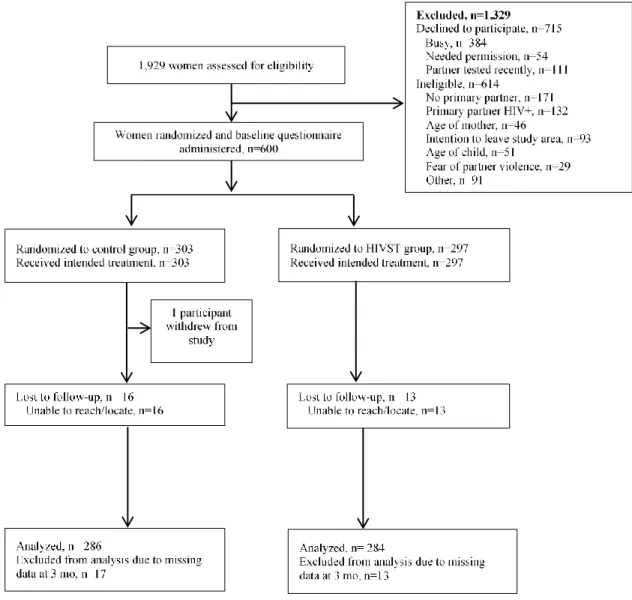
Between June 11, 2015, and October 16, 2015, a total of 1,929 women were screened for participation. Among those, 614 (32%) were determined to be ineligible, 715 declined to
participate (37%), and 600 (31%) were enrolled and randomized (Fig. 1). Reasons for
ineligibility included no primary partner (28%), partner HIV-positive (22%), intention of leaving study area during follow-up period (15%), age of participant (8%), age of child (8%), and fear of IPV due to discussing HIV testing with partner (5%). Common reasons for refusal included women reporting they were “in a hurry” or “too busy” (384/715, 53.7%), needing permission from partner to enroll in a study (54/715, 7.6%), and reporting their partner had tested recently and therefore did not have interest in participating in the study (111/715, 15.5%). Follow-up interviews were conducted until January 15, 2016. One person from the comparison group withdrew from the study during the follow-up period. Of the 600 participants who were enrolled, follow-up was completed for 570 (95%), 286 (94.4%) in the comparison group and 284 (95.6%) in the HIVST group.
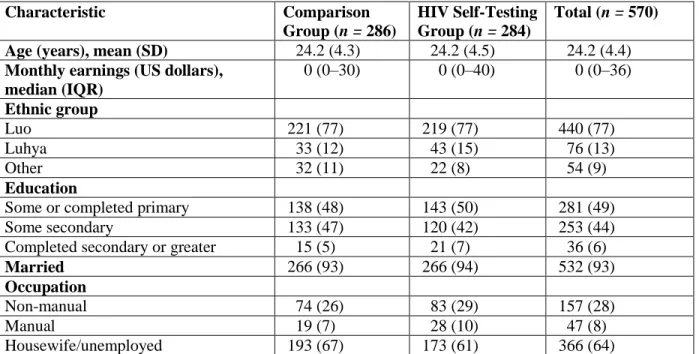
2.4.2 Participant Characteristics
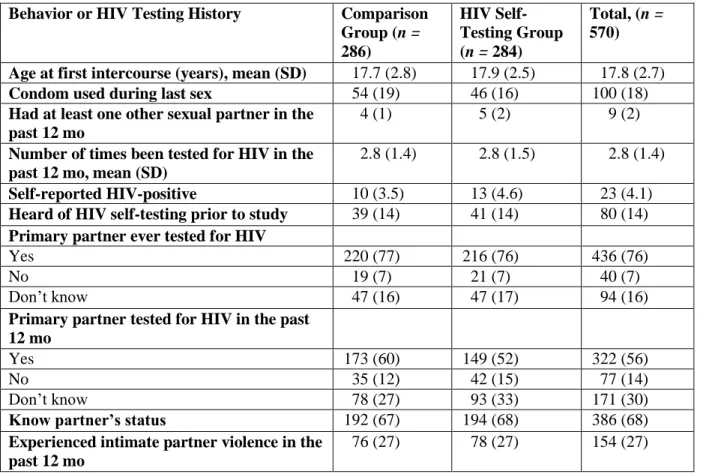
HIV testing history were similar in both groups (Table 2). Nearly 4% of all participants self-reported being HIV-positive. The majority of participants self-reported that their partner had tested for HIV in the past 12 mo (56%), and only a small percentage of participants (14%) had heard of HIVST prior to the study. Nearly 30% of participants reported experiencing IPV in the past 12 mo.
2.4.3 Male Partner Testing
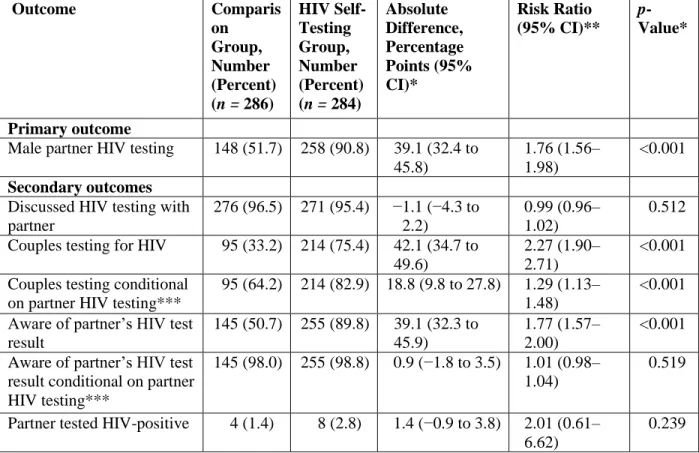
Male partner testing within 3 mo of enrollment was higher in the HIVST group (258/284, 90.8%) than the comparison group (148/286, 51.7%), as shown in Table 3. The difference of 39.1% between the two groups was statistically significant (95% CI 32.4% to 45.8%, p < 0.001). Among participants in the HIVST group whose partners used a self-test, 76% and 17% reported that their partner found it “very easy” or “somewhat easy,” respectively, to use the self-test, while 6% reported that their partner found it “somewhat difficult” or “very difficult.” In the comparison group, 45% (67/148) of partners who tested were reported to have done so outside of the three study facilities.
2.4.4 Secondary Outcomes
At follow-up, participants in the HIVST group were more likely to know their partner’s HIV status than those in the comparison group (difference = 39.1%, 95% CI 32.4% to 45.8%, p < 0.001). However, among participants whose partner tested for HIV during the follow-up period, participants’ awareness of their partner’s HIV status did not differ significantly between the two groups (difference = 0.9%, 95% CI −1.8% to 3.5%, p < 0.519), suggesting that the increase in awareness of partner HIV status in the HIVST group was driven by the greater likelihood of partner testing having occurred rather than a greater likelihood of becoming aware if a partner did get tested. Among participants whose partner tested for HIV, almost all were aware of their partner’s HIV test result (98.0% in comparison group, 98.8% in HIVST group). A small number of participants in both groups reported that their partner tested HIV-positive (1.4% in comparison group, 2.8% in HIVST group). Among the eight partners who tested positive in the HIVST group, two went for confirmatory testing, were confirmed positive, and were linked to care. Among the four partners who tested positive in the comparison group, three were reported to have sought HIV care at the time of the 3-mo interview. No participants in either group reported IPV due to HIV testing.
2.4.5 Heterogeneity of Intervention Effectiveness
Participants in the HIVST group reported higher partner testing rates than participants in the comparison group in all subgroups examined (Table 4). While partner testing was
difference in intervention effectiveness between participants who had experienced IPV at baseline and those who had not (p = 0.111).
2.5 Discussion
Provision of multiple self-tests to women led to secondary distribution of the self-tests to their male partners and ultimately achieved higher HIV testing among their male partners and higher couples testing than a more conventional approach of giving women invitation cards for their male partners to test at health facilities. In the group that received multiple self-tests, partner testing was reported by 91% of participants who were followed up, and 75% of participants followed up tested together with their partner. To our knowledge, this is the first randomized trial to test whether provision of multiple self-tests to women promotes partner and couples testing. In subgroup analyses, the intervention was more effective than the partner invitation approach even among women who reported a history of IPV at baseline and among women whose partners had not gone for HIV testing in the past 12 mo.
Male partner testing was nearly universal among women who received multiple self-tests. This striking result is consistent with findings from a pilot study we previously conducted in the study region, in which male partner testing was reported to have occurred for 91% of women seeking ANC and 86% of women receiving PPC [22]. The study results are also consistent with the high acceptability of HIVST that has been documented throughout SSA and elsewhere [15– 17].
occurred among 36% of pregnant women who received clinic invitation cards for their partner [26]. Further, a study conducted among HIV-positive pregnant women in Malawi reported that couples testing occurred among 52% of women who received invitation cards for their partner [27]. The similarity in male partner and couples testing levels in the comparison group of our study with those reported in these other studies of the partner invitation approach provide further support for the validity of the self-reported measures obtained in our study. In addition, it is notable that the couples testing rate in the HIVST group of our study was similar to or exceeded the rates achieved by the interventions tested in the two other studies: home visits and invitations followed by home tracing. While formal cost-effectiveness analyses are necessary, it is plausible that interventions relying on secondary distribution of self-tests would ultimately require fewer resources in total and therefore would have greater sustainability.
While prior HIV testing in this urban and peri-urban study setting was fairly high, we found no difference in the effectiveness of the HIVST intervention based on whether partners had tested for HIV in the past 12 mo. This result is encouraging since it suggests that the strategy of giving multiple self-tests to women can effectively increase access to HIV testing in hard-to-reach populations such as men who do not test regularly, and perhaps more generally in settings where testing rates are not as high as they were in our study setting. In addition, the large differences in partner testing between the HIVST and comparison groups was observed in all population subgroups, which suggests broader applicability of this intervention among various subgroups of pregnant and postpartum women.
their partner’s HIV status. The intervention’s feasibility is enhanced by the fact that pregnant and postpartum women represent an easier-to-reach segment of the population by virtue of their higher utilization of health services. Couples testing, which is recommended by the World Health Organization and the Kenyan Ministry of Health, is another important benefit of the intervention. Individuals who test as a couple and mutually disclose their HIV status are more likely than those testing alone to adopt a range of HIV prevention and care behaviors [5]. Despite these benefits, only 37.2% of people who have tested for HIV in Kenya reported ever testing together with a sexual partner [28]. Notably, the uptake of couples testing observed among women given multiple self-tests in this study (75%) was higher than the uptake reported in the recent pilot study we conducted in the study area, in which women receiving ANC and PPC tested as couples 47% and 58% of the time, respectively [22].
studies that examine downstream outcomes such as the proportion of partners linking to HIV prevention and treatment. Second, our study did not include women who knew their partner was HIV-positive because we believed that a partner testing intervention would have little additional benefit to them. This feature of the study design, coupled with high rates of HIV testing in the urban and peri-urban study setting [29], likely led to relatively few HIV-positive partners being identified in this study. This limited our ability to make statistical inferences with respect to confirmatory testing and linkage to care. More research is needed to rigorously assess levels of confirmatory testing and linkage to care following HIVST, as well as to understand the decision-making process of whether or not to seek these services.
Finally, the third limitation stems from the fact that roughly one-third of women seeking ANC or PPC declined to participate in the study, and some were ineligible because they reported a fear that violence would result from offering a self-test to their partner. Among women
declining participation, the most commonly reported reason was a lack of adequate time to enroll in the study, but other reasons such as a lack of interest in partner testing likely played a role. While these two reasons for declining to participate in the study do not impact the internal validity of the study results, they do limit the generalizability of the findings to all pregnant and postpartum women. Refusal also reinforces the feasibility and safety of offering multiple self-tests because women demonstrated considerable agency and ability to decide themselves whether to accept self-tests and offer them to their partner. Prior work has documented the high
acceptability of this intervention among women receiving multiple self-tests [22], and ongoing qualitative research with women receiving multiple self-tests shows that women have a strong sense of agency when deciding whether to offer self-tests to others and appreciate the
and lessons for wider implementation. Given the novelty of HIVST and this particular strategy for promoting partner testing (i.e., secondary distribution of self-tests by women receiving ANC and PPC), it is also likely that the broader acceptability of secondary distribution strategies will grow as HIVST becomes more common. Additional research is necessary to assess the
effectiveness of the intervention in other populations and settings outside western Kenya. However, to the extent that men experience similar barriers to clinic-based HIV testing elsewhere, the results from this study could be applicable to other settings and populations.
One concern about providing multiple self-tests to women for distribution to partners has been the possibility of IPV. Despite women reporting high rates of IPV in the past 12 mo at baseline (27%), it is noteworthy that the intervention was highly effective even among women who reported a history of IPV at baseline, and there were no cases of IPV due to HIV testing reported in either study group during the follow-up period. Few male partners had a reactive self-test result in the study, which may have contributed to the lack of reported IPV due to self-testing. However, prior research we have conducted with women receiving multiple self-tests—including female sex workers who identified a greater proportion of HIV-positive partners than ANC or PPC women in our study—also suggests IPV is rare [22]. The fact that there were no cases of IPV also suggests that women have the agency and discretion to decide whether to accept self-tests and whether to offer self-self-tests to their partner.
TABLE 2: Baseline characteristics of study participants
Characteristic Comparison
Group (n = 286)
HIV Self-Testing Group (n = 284)
Total (n = 570)
Age (years), mean (SD) 24.2 (4.3) 24.2 (4.5) 24.2 (4.4)
Monthly earnings (US dollars), median (IQR)
0 (0–30) 0 (0–40) 0 (0–36)
Ethnic group
Luo 221 (77) 219 (77) 440 (77)
Luhya 33 (12) 43 (15) 76 (13)
Other 32 (11) 22 (8) 54 (9)
Education
Some or completed primary 138 (48) 143 (50) 281 (49)
Some secondary 133 (47) 120 (42) 253 (44)
Completed secondary or greater 15 (5) 21 (7) 36 (6)
Married 266 (93) 266 (94) 532 (93)
Occupation
Non-manual 74 (26) 83 (29) 157 (28)
Manual 19 (7) 28 (10) 47 (8)
Housewife/unemployed 193 (67) 173 (61) 366 (64)
For all variables frequencies are presented, with percentages in parentheses, except where otherwise noted.
TABLE 3: Self-reported sexual behavior and HIV testing history Behavior or HIV Testing History Comparison
Group (n = 286)
HIV Self-Testing Group (n = 284)
Total, (n = 570)
Age at first intercourse (years), mean (SD) 17.7 (2.8) 17.9 (2.5) 17.8 (2.7)
Condom used during last sex 54 (19) 46 (16) 100 (18)
Had at least one other sexual partner in the past 12 mo
4 (1) 5 (2) 9 (2)
Number of times been tested for HIV in the past 12 mo, mean (SD)
2.8 (1.4) 2.8 (1.5) 2.8 (1.4)
Self-reported HIV-positive 10 (3.5) 13 (4.6) 23 (4.1)
Heard of HIV self-testing prior to study 39 (14) 41 (14) 80 (14)
Primary partner ever tested for HIV
Yes 220 (77) 216 (76) 436 (76)
No 19 (7) 21 (7) 40 (7)
Don’t know 47 (16) 47 (17) 94 (16)
Primary partner tested for HIV in the past 12 mo
Yes 173 (60) 149 (52) 322 (56)
No 35 (12) 42 (15) 77 (14)
Don’t know 78 (27) 93 (33) 171 (30)
Know partner’s status 192 (67) 194 (68) 386 (68)
Experienced intimate partner violence in the past 12 mo
76 (27) 78 (27) 154 (27)
For all variables frequencies are presented, with percentages in parentheses, except where otherwise noted.
TABLE 4: Effects of HIV self-testing intervention within 3 mo.
Outcome Comparis
on Group, Number (Percent) (n = 286)
HIV Self-Testing Group, Number (Percent) (n = 284)
Absolute Difference, Percentage Points (95% CI)* Risk Ratio (95% CI)** p-Value* Primary outcome
Male partner HIV testing 148 (51.7) 258 (90.8) 39.1 (32.4 to
45.8)
1.76 (1.56– 1.98)
<0.001
Secondary outcomes
Discussed HIV testing with partner
276 (96.5) 271 (95.4) −1.1 (−4.3 to
2.2)
0.99 (0.96– 1.02)
0.512
Couples testing for HIV 95 (33.2) 214 (75.4) 42.1 (34.7 to
49.6)
2.27 (1.90– 2.71)
<0.001
Couples testing conditional on partner HIV testing***
95 (64.2) 214 (82.9) 18.8 (9.8 to 27.8) 1.29 (1.13–
1.48)
<0.001
Aware of partner’s HIV test result
145 (50.7) 255 (89.8) 39.1 (32.3 to
45.9)
1.77 (1.57– 2.00)
<0.001
Aware of partner’s HIV test result conditional on partner HIV testing***
145 (98.0) 255 (98.8) 0.9 (−1.8 to 3.5) 1.01 (0.98–
1.04)
0.519
Partner tested HIV-positive 4 (1.4) 8 (2.8) 1.4 (−0.9 to 3.8) 2.01 (0.61–
6.62)
0.239
*Estimates and confidence intervals are marginal effects from unadjusted modified Poisson regression.
**Estimates and confidence intervals are risk ratios from unadjusted modified Poisson regression.
TABLE 5: Comparison of intervention effectiveness in participant subgroups Subgroup HIV Testing Uptake,
Number/Total Number (Percent)
Effect of Self-Testing P-Value for Interact ion** Comparison Group HIV Self-Testing Group Absolute Difference, Percentage Points (95% CI)* P-Value for Subgrou p* Study site
Urban health clinic 80/120 (66.7) 117/129 (90.7) 24.0 (14.2 to
33.9)
<0.001 —
Hospital 47/122 (38.5) 97/105 (92.4) 53.9 (43.8 to
63.9)
<0.001 <0.001
Peri-urban health clinic 21/44 (47.7) 44/50 (88.0) 40.3 (22.9 to
57.7)
<0.001 0.093
Partner tested for HIV in 12 mo prior to enrollment
Tested ≥1 time 102/173
(59.0)
142/149 (95.3) 36.3 (28.3 to
44.4)
<0.001 —
Did not test 16/35 (45.7) 37/42 (88.1) 42.4 (23.1 to
61.7)
<0.001 0.389
Do not know if tested 30/73 (38.5) 79/93 (84.9) 46.5 (33.5 to
59.5)
<0.001 0.057
Participants reported intimate partner violence in past 12 mo at baseline
No 114/210
(54.3)
185/206 (89.8) 35.5 (27.6 to
43.4)
<0.001 —
Yes 34/76 (44.7) 73/78 (93.6) 48.9 (36.4 to
61.3)
<0.001 0.111
*Estimates and confidence intervals are marginal effects from a modified Poisson regression of outcome on study group for the subgroup described.
REFERENCES
1. UNAIDS. 90-90-90: an ambitious treatment target to help end the AIDS epidemic. Geneva: UNAIDS; 2014.
2. Suthar AB, Ford N, Bachanas PJ, Wong VJ, Rajan JS, Saltzman AK, et al. Towards universal voluntary HIV testing and counselling: a systematic review and meta-analysis of
community-based approaches. PLoS Med. 2013;10(8):e1001496. Epub 2013/08/24. doi: 10.1371/journal.pmed.1001496. PubMed PMID: 23966838; PubMed Central PMCID: PMC3742447.
3. Sharma M, Ying R, Tarr G, Barnabas R. Systematic review and meta-analysis of community and facility-based HIV testing to address linkage to care gaps in sub-Saharan Africa. Nature. 2015;528(7580):S77-85. doi: 10.1038/nature16044. PubMed PMID: 26633769. 4. Gelmon L, Kenya P, Oguya F, Cheluget B, Haile G. Kenya HIV prevention response and
modes of transmission analysis. Nairobi: Kenya National AIDS Control Council; 2009. 5. Allen S, Meinzen-Derr J, Kautzman M, Zulu I, Trask S, Fideli U, et al. Sexual behavior of
HIV discordant couples after HIV counseling and testing. AIDS. 2003;17(5):733-40. PubMed PMID: 00002030-200303280-00012.
6. Cohen MS, Chen YQ, McCauley M, Gamble T, Hosseinipour MC, Kumarasamy N, et al. Prevention of HIV-1 infection with early antiretroviral therapy. N Engl J Med. 2011;365(6):493-505. doi: 10.1056/NEJMoa1105243.
7. Aluisio A, Richardson BA, Bosire R, John-Stewart G, Mbori-Ngacha D, Farquhar C. Male antenatal attendance and HIV testing are associated with decreased infant hiv infection and increased HIV free survival. J Acquir Immune Defic Syndr. 2011;56(1):76-82. doi: 10.1097/QAI.0b013e3181fdb4c4. PubMed PMID: PMC3005193.
8. Drake AL, Wagner A, Richardson B, John-Stewart G. Incident HIV during pregnancy and postpartum and risk of mother-to-child HIV transmission: a systematic review and meta-analysis. PLoS Med. 2014;11(2):e1001608. doi: 10.1371/journal.pmed.1001608.
9. Medley A, Baggaley R, Bachanas P, Cohen M, Shaffer N, Lo Y-R. Maximizing the impact of HIV prevention efforts: interventions for couples. AIDS Care. 2013;25(12):1569-80. doi: 10.1080/09540121.2013.793269. PubMed PMID: PMC4664148.
10. World Health Organization. Guidance on couples HIV testing and counselling including antiretroviral therapy for treatment and prevention in serodiscordant couples:
recommendations for a public health approach. Geneva: World Health Organization; 2012.
Acquir Immune Defic Syndr. 2004;37(5):1620-6. Epub 2004/12/04. PubMed PMID: 15577420; PubMed Central PMCID: PMCPmc3384734.
12. Msuya SE, Mbizvo EM, Hussain A, Uriyo J, Sam NE, Stray-Pedersen B. Low male partner participation in antenatal HIV counselling and testing in northern Tanzania: implications for preventive programs. AIDS Care. 2008;20(6):700-9. Epub 2008/06/26. doi:
10.1080/09540120701687059. PubMed PMID: 18576172.
13. Obermeyer CM, Osborn M. The utilization of testing and counseling for HIV: a review of the social and behavioral evidence. Am J Public Health. 2007;97(10):1762-74. Epub
2007/09/01. doi: 10.2105/ajph.2006.096263. PubMed PMID: 17761565; PubMed Central PMCID: PMCPMC1994175.
14. Hutchinson AB, Corbie-Smith G, Thomas SB, Mohanan S, del Rio C. Understanding the patient’s perspective on rapid and routine HIV testing in an inner-city urgent care center. AIDS Educ Prev. 2004;16(2):101-14. Epub 2004/05/12. PubMed PMID: 15134119. 15. Choko AT, Desmond N, Webb EL, Chavula K, Napierala-Mavedzenge S, Gaydos CA, et al.
The uptake and accuracy of oral kits for HIV self-testing in high hiv prevalence setting: a cross-sectional feasibility study in Blantyre, Malawi. PLoS Med. 2011;8(10):e1001102. doi: 10.1371/journal.pmed.1001102.
16. Figueroa C, Johnson C, Verster A, Baggaley R. Attitudes and acceptability on HIV self-testing among key populations: a literature review. AIDS Behav. 2015;19(11):1949-65. doi: 10.1007/s10461-015-1097-8. PubMed PMID: 26054390; PubMed Central PMCID: PMC4598350.
17. Napierala Mavedzenge S, Baggaley R, Corbett EL. A review of self-testing for HIV: research and policy priorities in a new era of HIV prevention. Clin Infect Dis. 2013;57(1):126-38. doi: 10.1093/cid/cit156.
18. Choko AT, MacPherson P, Webb EL, Willey BA, Feasy H, Sambakunsi R, et al. Uptake, accuracy, safety, and linkage into care over two years of promoting annual self-testing for HIV in Blantyre, Malawi: a community-based prospective study. PLoS Med.
2015;12(9):e1001873. Epub 2015/09/09. doi: 10.1371/journal.pmed.1001873. PubMed PMID: 26348035; PubMed Central PMCID: PMCPmc4562710.
19. National AIDS and STI Control Programme. Guidelines for HIV testing services in Kenya. Nairobi: National AIDS and STI Control Programme; 2015.
20. World Health Organization. Consolidated guidelines on HIV testing services. Geneva: World Health Organization; 2015.
22. Thirumurthy H, Masters S, Napierala Mavedzenge S, Maman S, Omanga E, Agot A.
Promoting male partner HIV testing and safer sexual decision making through secondary distribution of self-tests by HIV-negative female sex workers and women receiving antenatal and post-partum care in Kenya: a cohort study. Lancet HIV. 2016;3(6):e266-74. 23. National AIDS and STI Control Programme. Kenya HIV county profiles. Nairobi: Ministry
of Health; 2014.
24. Zou G. A modified poisson regression approach to prospective studies with binary data. Am J Epidemiol. 2004;159(7):702-6. Epub 2004/03/23. PubMed PMID: 15033648.
25. Kenya National Bureau of Statistics, ICF Macro. Kenya Demographic and Health Survey 2008-09. Calverton (Maryland): ICF Macro; 2010.
26. Osoti AO, John-Stewart G, Kiarie J, Richardson B, Kinuthia J, Krakowiak D, et al. Home visits during pregnancy enhance male partner HIV counselling and testing in Kenya: a randomized clinical trial. AIDS. 2014;28(1):95-103. Epub 2013/08/15. doi:
10.1097/qad.0000000000000023. PubMed PMID: 23942059; PubMed Central PMCID: PMCPmc4337402.
27. Rosenberg NE, Mtande TK, Saidi F, Stanley C, Jere E, Paile L, et al. Recruiting male partners for couple HIV testing and counselling in Malawi’s option B+ programme: an unblinded randomised controlled trial. Lancet HIV. 2015;2(11):e483-91. doi:
http://dx.doi.org/10.1016/S2352-3018(15)00182-4.
28. Ng’ang’a A, Waruiru W, Ngare C, Ssempijja V, Gachuki T, Njoroge I, et al. The status of HIV testing and counseling in Kenya: results from a nationally representative population-based survey. J Acquir Immune Defic Syndr. 2014;66(Suppl 1):S27-36. Epub
2014/04/16. doi: 10.1097/QAI.0000000000000102. PubMed PMID: 24732818.
29. Kimanga DO, Ogola S, Umuro M, Ng’ang’a A, Kimondo L, Murithi P, et al. Prevalence and incidence of HIV infection, trends, and risk factors among persons aged 15-64 years in Kenya: results from a nationally representative study. J Acquir Immune Defic Syndr. 2014;66(Suppl 1):S13-26. doi: 10.1097/QAI.0000000000000124. PubMed PMID: 24445338; PubMed Central PMCID: PMCPMC4794992.
30. Carballo-Dieguez A, Frasca T, Balan I, Ibitoye M, Dolezal C. Use of a rapid HIV home test prevents HIV exposure in a high risk sample of men who have sex with men. AIDS Behav. 2012;16(7):1753-60. Epub 2012/08/16. doi: 10.1007/s10461-012-0274-2. PubMed PMID: 22893194; PubMed Central PMCID: PMC3458207.
CHAPTER 3: THE IMPACT OF FINANCIAL INCENTIVES ON UTILIZATION OF A WEB-BASED WEIGHT LOSS INTERVENTION AMONG NORTH CAROLINA
COMMUNITY COLLEGE EMPLOYEES 3.1 Overview
Background: Overweight and obesity are pressing public health issues in the United States that are often addressed in worksite-based wellness programs. Various interventions for weight loss, including web-based behavioral programs and incentives, have been tested, but it is not well understood how multiple interventions interact.
Objective: To assess whether financial incentives for weight loss (1) increased use of a web-based application designed to assist people with their weight loss goals, and (2) if utilization of the web-based application led to weight loss.
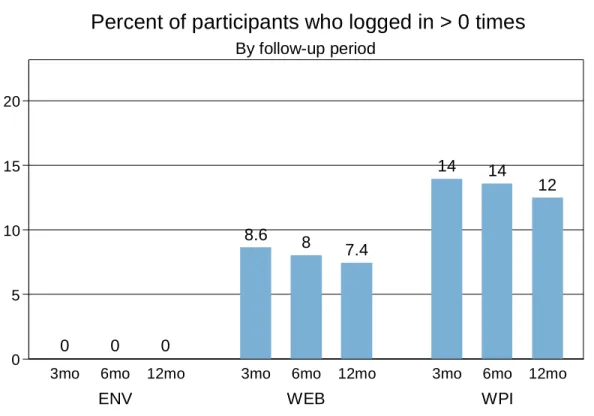
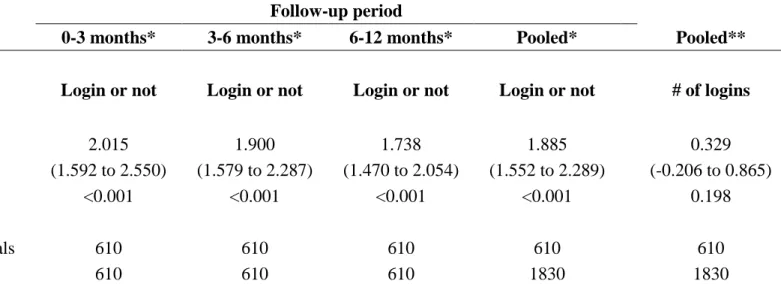
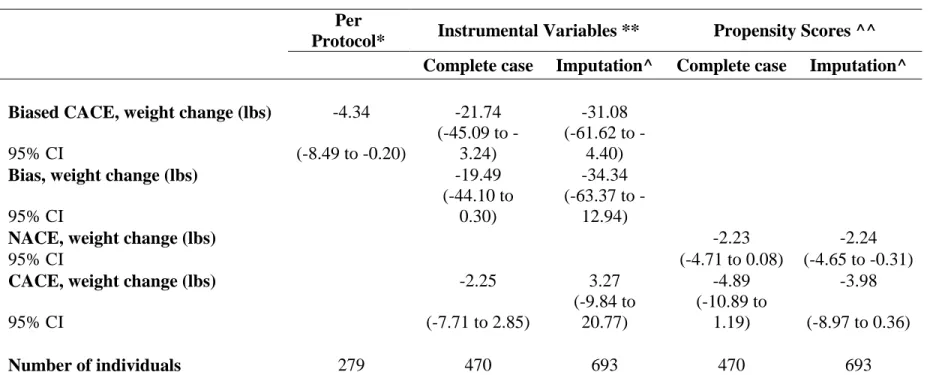
Results: Among 610 participants analyzed in the WEB and WPI groups, utilization of the website was more common among WPI participants (13.9%, 38/273) than WEB participants (8.6%, 29/337) at all follow-up points (Pooled Risk Ratio=1.885, 95% CI 1.552-2.289, P=<0.001). Among 693 participants analyzed in the WEB and ENV groups, propensity score analyses of the CACE found that logging into the website led to weight loss, but the amount of weight loss declined over time (3-month CACE=-6.76lbs, 95% CI -10.27 to -3.30 vs. 12-month CACE=-4.16lbs, 95% CI -9.30 to 1.04).
Conclusions: Positive financial incentives for weight loss increased use of a web-based weight loss application. Utilization of the web-based application led to weight loss among members of the WEB group early in the study period (0-6 months) but not later (6-12 months). Future research needs to focus on the sustainability of weight loss effects. Without an
intervention that promotes weight loss and helps people keep weight off, the impact of population based web interventions is likely to be minimal.
3.2 Introduction
One potential way to increase weight loss among employees is to provide them incentives for meeting weight loss goals. Incentives can take different forms, both positive (e.g. financial reward for weight loss) or negative (e.g. loss of deposit if no weight loss), and can be placed on different aspects of weight loss, such as inputs (e.g. exercise) or outputs (e.g. weight loss). Evidence of the impact of positive incentives on weight loss outside of worksites is mixed [7-9]. One pilot randomized controlled trial implemented positive incentives in the worksite and found no statistically significant weight loss difference at 6 months between those randomized to receive financial incentives early in the study, late in the study, or throughout the study [10]. The mixed results associated with positive incentives led to new research on combining incentives with other weight loss strategies, such as web-based weight loss aids, in the hope that these combination strategies lead to sustained weight loss.
The evidence on the effectiveness of web interventions on weight loss is generally positive, with one review concluding that more research is needed and others suggesting that type of web intervention may be important [11-13]. The lack of clear evidence is in part due to the vast array of possible interventions that can be administered with web technology [14]. Further, although numerous studies have assessed the intent-to-treat effect of web interventions on weight loss, fewer have looked at why the web interventions are effective, specifically, how individuals’ behavior is altered by actively utilizing web-based applications [15-17].
to account for self-selection and estimate the causal impact of website utilization on weight loss among those who use the website.
We conducted a secondary analysis of data from a cluster randomized trial that combined a web-based weight loss intervention with positive incentives for weight loss to better understand how incentives and web-based weight loss interventions interact when paired together. Two questions were addressed: 1) how web utilization differed as a result of a financial incentive and 2) if web utilization had an impact on weight loss for those who utilized the website.
3.3 Methods
3.3.1 Study setting and design
The Worksite Activities for You (WAY) to Health cluster randomized controlled trial took place in North Carolina between 2005 and 2008 (ClinicalTrials.gov identifier:
NCT01282775). The study goal was to increase weight loss among overweight and obese
employees and the main study details are described in depth elsewhere (Crane, Tate, Finkelstein, & Linnan, 2012; Linnan et al., 2012). Prevalence of overweight in the community college
environmental change plus a web-based weight loss program (WEB), and 3) environmental change plus a web-based weight loss program plus incentives for weight loss (WPI). All enrolled employees within a given campus received the same intervention. The intervention period lasted 12 months. Participants were reweighed at 3, 6, and 12 months and received $5, $10, and $20 contingent upon being reweighed at those times, respectively.