SEWAGE IMPACTS ON WATER QUALITY AND ANTIBIOTIC
RESISTANCE IN BEACH WATERS IN THE GALÁPAGOS ISLANDS,
ECUADOR
Katie Overbey
Honors Essay
Bachelors of Science in Environmental Science University of North Carolina
May 27, 2014
Approved:
ii
© 2014
Katie Overbey
iii
ABSTRACT
Katie Overbey: Sewage Impacts on Water Quality and Antibiotic Resistance in Beach Waters in the Galápagos Islands, Ecuador
(Under the direction of Jill Stewart)
Tourism and residential population growth are increasing on the Galápagos Islands, yet
the effects on environmental quality are not well understood. This study provides a baseline
characterization of water quality on one of the inhabited islands of the Galápagos (San
Cristóbal), and evaluates the potential relationship between human activity and bacterial
antibiotic resistance in recreational waters on this island. Five sample beaches and the mouths of
two sewage effluent pipes were selected to represent recreational water with and without the
presence of sewage effluent. Enterococci concentrations were quantified using the IDEXX
Enterolert kit. Escherichia coli was isolated from samples and tested for susceptibility to five antibiotics using Kirby- Bauer disk diffusion. These measurements were compared between
beaches with sewage effluent and beaches without sewage effluent. Significantly higher
enterococci concentrations were found near sites subjected to sewage discharge (p < 0.01). Sites
of direct sewage discharge and land drainage from the highlands had significantly higher levels
of antibiotic resistant bacteria though it is unclear whether sewage impacts the level of resistance
at nearby beaches (p < 0.05). The high levels of enterococci and antibiotic resistance observed in
this study indicate that the release of raw sewage into recreational waters could be putting the
environment as well as public health at risk. This study provides insight into how humans impact
their environment in an area where economic and developmental demands compete with
iv
ACKNOWLEDGEMENTS
I would like to first acknowledge Jill Stewart for all of her help and guidance throughout
this project and for being a spectacular advisor. I want to acknowledge Sarah Hatcher for her
invaluable assistance in planning and executing this research and in writing it up. I would also
like to acknowledge Steve Walsh for serving as the second reader and providing edits. I am also
grateful to the staff at the UNC Center for Galápagos Studies and the Galápagos Science Center
for providing logistical support for this project. Additionally, I would like to acknowledge
Sharon Jiang, Danelle Dupong, and Billy Gerhard for assistance in the laboratory and Shannon
Steel for help with geospatial work.
This work was funded in part by a Vimy Global Team Award from the UNC Center for
Global Initiatives and a Summer Undergraduate Research Fellowship from the UNC Office of
v
TABLE OF CONTENTS
LIST OF TABLES ... vi
LIST OF FIGURES ... vii
BODY ...1
APPENDIX A: ENTEROCOCCUS CONCENTRATIONS (MPN/100ML) MEASURED ON
SAN CRISTÓBAL ISLAND, GALÁPAGOS ARCHIPELAGO, ECUADOR, SUMMER 2013
...25
APPENDIX B: ANTIBIOTIC RESISTANCE OF E. COLI MEASURED ON SAN
CRISTÓBAL ISLANDS, GALÁPAGOS, ARCHIPELAGO, ECUADOR, SUMMER 2013 ...28
vi
LIST OF TABLES
Table
1. Number of samples and isolates tested from each sample beach.
2. Summary statistics for each of the sample sites.
3. P-values from G- test comparing proportion of isolates that were resistant to one or more antibiotics. Percent resistant shown.
vii
LIST OF FIGURES
Figure 1 – Sample sites selected and the types of human use at each site.
Figure 2 – Enterococci concentrations for each sample beach and site, for each sample date.
Figure 3 – Summarized enterococci counts for each sample beach, shown on log scale.
Figure 4 – P-valuesfrom rank-transformed ANOVA for enterococci levels for each beach. P-values adjusted using Bonferroni method.
Figure 5 – Percentage of E. coli isolates resistant to one or more antibiotics and percent multidrug resistant, at each site
1
Introduction
As global human population grows, anthropogenic activities continue to contribute to the
degradation of oceans and coastal waters (Halpern et al., 2008; Pew Oceans Comission, 2003).
According to Halpern et al. (2008) there is no area of ocean that is unaffected by human
presence. Human populations can affect marine systems in a variety of ways, including point and
non-point source pollution, invasive species introduction, aquaculture, coastal development,
overfishing, and habitat alteration (Pew Oceans Comission, 2003). In coastal environments, one
especially problematic consequence of human population growth is the uncontrolled release of
human waste, that can severely degrade the quality of recreational waters (Dwight et al., 2004;
Howarth et al., 2002; Jackson et al., 2001). Islam and Tanaka (2004) found that the release of
sewage is the number one contributor of waste into the oceans and is a major source of nutrient
input, environmental damage and eutrophication (Nixon, 1995). Sewage release can also increase
mortality of marine organisms (Hernández et al., 1998) and infect them with human pathogens
(Bossart et al., 1990). The quality of recreational waters is not only critical to environmental
health, but is also closely tied to human health (Fleming et al., 2006).
The presence of human sewage in recreational waters can cause a range of negative
health outcomes, most notably gastrointestinal illness and skin infections (Colford et al., 2007;
Wade et al., 2003). It is known that the incidence of illness in relation to swimming in water
contaminated with sewage is important and can have a considerable impact on human health
(Fleisher et al., 1998). Lipp et al. (2001) observed high levels of infectious enteric pathogens,
including Cryptosporidium and Giardia, in waters contaminated with sewage. Previous studies have indicated that levels of fecal indicator bacteria in recreational waters are related to
2
illness (Prüss, 1998; WHO, 2003). Wade et al. (2003) found that enterococci specifically were
related to an increase in gastrointestinal illness in marine waters. Although some studies (Stewart
et al., 2008) suggest that enterococci concentrations may not always give an accurate reflection
of disease outcomes, the US EPA recommends using enterococci as an indicator of fecal
contamination in marine waters (USEPA, 2012).
An additional danger of sewage discharge is the potential for the release of bacteria
resistant to antibiotics into the environment (Bell, 1978; Cooke, 1976; Martins da Costa et al.,
2006; Parveen et al., 1997; Reinthaler et al., 2003; Schwartz et al., 2003). In developing
countries, it has been found that residents often carry resistant organisms in their gut, due to the
misuse of antibiotics, access to ineffective antibiotics, and unhygienic conditions allowing
resistant organisms to spread (Okeke at al., 1999). The presence of antibiotic resistant bacteria in
the human gut makes municipal waste water treatment plants important sources of antibiotic
resistant bacteria in the environment, and levels of resistant bacteria released into the
environment greatly depend on proper operation of treatment systems (Kim & Aga, 2007). These
resistant bacteria can enter into sewage and then the environment through improper disposal and
treatment (Baquero et al., 2008). Antibiotic resistant bacteria found in sewage have the ability to
transfer resistance genes to native microbes in the ocean, including pathogens (Baquero et al.,
2008). The increase in antibiotic resistant pathogens has also been identified as a major public
health threat (Neu, 1992; Wise et al., 1998). Studies have also found that there are multiple
negative health outcomes related to antibiotic resistant bacteria, including more virulent
pathogens, delays in the administration of appropriate antimicrobial therapy, and inadequate or
even toxic therapies for treatment of resistant pathogens (Cosgrove & Carmeli, 2003). Antibiotic
3
though there is still no international standard of classification. One common classification is
multi-drug resistance, that can be defined as an organism that shows resistance to three or more
classes of antibiotics (Magiorakos et al., 2011). Multi-drug resistant bacteria poses an added
health threat by further reducing the ability to treat infections effectively (Roberts et al., 2009). It
has been found that multi-drug resistant pathogens can increase patient mortality, hospital length
of stay and hospital costs, thus having an impact on the economy as well as human health
(Cosgrove & Carmeli, 2003; Giske et al., 2008).
On the Galápagos Islands, a recent increase in land-based tourism and a growing local
population are increasing the amount of raw sewage being discharged into local waters.
Currently, sewage treatment systems on the islands are either not present, or not functioning.
This poses a potential public health risk and threatens the habitats which comprise a unique
ecosystem and sustain the growing economy (Epler, 2007; Walsh et al., 2010; Watkins & Cruz,
2007). The Galápagos Islands have a residential population of about 30,000 and almost 200,000
tourists visit the islands each year (Epler, 2007; Galapagos National Park Service, 2013). The
number of tourists visiting the islands is increasing, which drives population growth as more
people from the mainland move to the Galápagos in hopes of working in the tourism sector
(Walsh et al., 2010). Many of the tourists are attracted to the islands because of their “pristine”
image and the wide array of local flora and fauna (deGroot, 1983; Walsh et al., 2010). As
previously stated, the release of sewage can cause environmental degradation, which could
threaten the local economy by deterring tourists. Additionally, the release of sewage could not
only threaten the health of locals and tourists, but could further harm the economy by making the
4
There is currently very little monitoring of Galápagos water quality which makes it
difficult to understand the impacts of sewage on the environment and public health (Walsh et al.,
2010). Additionally, the presence of antibiotic resistant bacteria in the recreational waters of the
Galápagos has never been examined, despite the potential public health implications. Previous
studies have stated that monitoring the release of antibiotic resistant bacteria is key in addressing
health risks (Cosgrove & Carmeli, 2003). Understanding the contribution that sewage release has
on water quality in the Galápagos has implications for human health, environmental health, and
the economy. The relatively small geographic size of the Galápagos allows for a targeted study
designed to begin exploring these impacts.
The objective of this study is to determine if the presence of human wastewater is related
to degradation of recreational water quality and a higher level of bacterial antibiotic resistance.
This was accomplished using enterococci to measure water quality and determining the variation
in antibiotic resistance levels at beach sites on the Galápagos Island of San Cristóbal. Sites were
specifically chosen to allow for the comparison of sewage impacted sites versus non-sewage
impacted sites. These results will provide a baseline for water quality in an area where human
growth, health, and environmental concerns are competing and contribute to a better
understanding of how human waste is contributing to the release of antibiotic resistance into the
5
Methods
A field campaign was undertaken in the summer of 2013 to examine the impacts of
human wastewater on beach water quality. Enterococci levels and antibiotic resistance among E. coli at beaches with and without the presence of sewage effluent were measured and compared.
Site selection
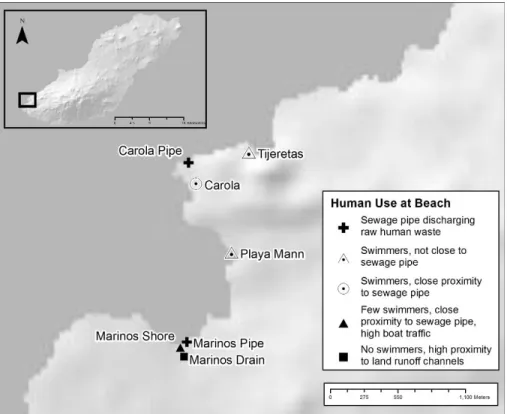
Five sample beaches were selected to represent various levels of human usage, including
swimmer presence (Playa Mann, Carola, Tijeretas), boat traffic (M. Shore), close proximity to
sewage outflow (M. Shore), and land runoff channels that drain from the highlands of the island
(M. Drain); samples were also collected at two pipe sites located within 3 m of the mouth of
sewage outflow pipes (Figure 1). On sample beaches with a wide sand extent where swimmers
could possibly enter the water, water was sampled from two separate sites. These sites were
selected to be on opposite sides of the area of the sand extent to account for potential variation
6
Figure 1. Selected sample sites selected and the types of human use at each site.
Sample Collection
Samples were collected between June 19, 2013 and July 29, 2013 on the Island of San
Cristóbal, Galápagos Islands (Table 1); all samples were collected between 8:30am and 12:00pm
local time. One hundred mL of water were collected at each sampling location in a sterile bottle
at approximately 0.61 m depth. The samples were kept in a cooler for the duration of sampling
and then put in a refrigerator for no more than 6 hours before processing. An additional sample
was collected from a site called Punta Pitt, which is on the northeastern most side of the island
that has very little human activity (data not shown). Due to the extremely low sample size for
7
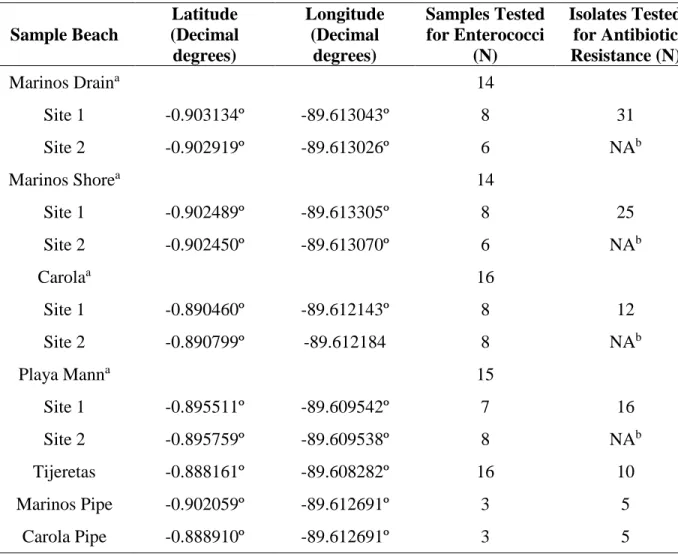
Table 1. Number of samples and isolates tested from each sample beach.
Sample Beach Latitude (Decimal degrees) Longitude (Decimal degrees) Samples Tested for Enterococci (N) Isolates Tested for Antibiotic Resistance (N)
Marinos Draina 14
Site 1 -0.903134º -89.613043º 8 31
Site 2 -0.902919º -89.613026º 6 NAb
Marinos Shorea 14
Site 1 -0.902489º -89.613305º 8 25
Site 2 -0.902450º -89.613070º 6 NAb
Carolaa 16
Site 1 -0.890460º -89.612143º 8 12
Site 2 -0.890799º -89.612184 8 NAb
Playa Manna 15
Site 1 -0.895511º -89.609542º 7 16
Site 2 -0.895759º -89.609538º 8 NAb
Tijeretas -0.888161º -89.608282º 16 10
Marinos Pipe -0.902059º -89.612691º 3 5
Carola Pipe -0.888910º -89.612691º 3 5
a Samples were collected from two sites at different locations on the beach. For the purposes of statistical analyses these sites were combined as one sample beach.
b Not applicable because E. coli was only isolated from samples taken at Site 1 for antibiotic resistance testing.
Analysis of Enterococci
Baseline water quality was measured using enterococci as an indicator. Before
performing analyses, the water samples were diluted by mixing 10 mL of sample with 90 mL of
commercially filtered bottled water. The IDEXX Enterolert® kit (IDEXX Laboratories, Inc.,
Westbrook, ME) was used to determine levels of enterococci in the samples. The water samples
were mixed with the test reagent, and then poured into a Quanti-Tray®/ 2000. These samples
8
2000 that fluoresced after incubation was counted and used to calculate the most probable
number (MPN) of enterococciper 100 mL of sample. This test has a minimum limit of detection
of 10 MPN/ 100 mL and a maximum limit of detection of 24, 196 MPB/ 100 mL.
Antibiotic Resistance Testing
Escherichia coli was isolated from beach samples using US EPA Method 10029 (EPA, 2012). Membrane filtration was employed to filter water samples and then m-ColiBlue 24®
broth (MD Millipore Corporation, Billerica, MA) was used to isolate E. coli. Kirby-Bauer disk diffusion was used to test the resistance of isolates to ampicillin (10 µg), ciprofloxacin (5 µg),
gentamicin (10 µg), tetracycline (30 µg), and trimethoprim/sulfamethoxazole (23.75 µg/ 1.25 µg)
(Bauer at al., 1966). These isolates represent five different classes of antibiotics: beta lactams
(penicillin), fluoroquinolones (ciprofloxacin), aminoglycosides (gentamicin), polyketides
(tetracycline) and sulfonamides (trimethoprim/ sulfamethoxazole). As part of the disk diffusion
method, antibiotic sensitivity discs (BD BBL™, Franklin Lakes, NJ) were placed on Mueller-
Hinton agar and plates were incubated at 35 ºC for 18 hours.
Statistical Procedures
To test for differences in enterococci levels between sample beaches, a
Kolmogorov-Smirnov test was performed to determine normality. Due to the right skew of the data and
deviation from normality (p < 0.0001), non-parametric tests were used to analyze the data. A
rank- transformed analysis of variance (ANOVA) was performed and p-values were adjusted
using Bonferroni corrections. To test for differences in antibiotic resistance between the seven
9
susceptible to three or more antibiotics (multi-drug resistant) and those that were resistant to one,
two or no antibiotics was performed. This test was also used to compare the proportion of
isolates resistant to one or more antibiotics at each site. For the purposes of calculations, isolates
that were classified with intermediate resistance were considered susceptible. Due to the small
sample size at certain sites it was not uncommon that at least one of the expected values, as
calculated by the G-test of independence, was below five. In these circumstances Yate’s
correction was used for a more conservative representation of the data. To test for differences
between the individual sample sites pairwise post-hoc tests for independence were conducted
(Klein et al., 2011; MacDonald & Gardner, 2000). Statistical tests were conducted in JMP Pro
ver. 11 (SAS Institute Inc., Cary, NC).
Results
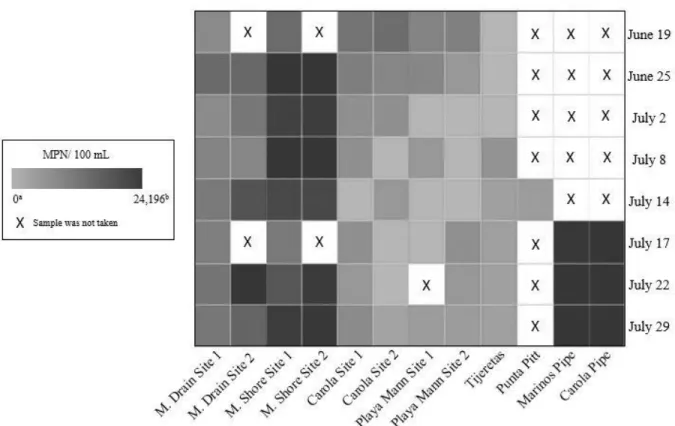
During each sample date, enterococci levels were measured at each sample beach and site
visited on that day. The sites that had the highest enterococci concentrations were the two
sewage outflow pipes (Marinos Pipe and Carola Pipe), M. Shore (close proximity to an outflow
pipe), and M. Drain (mouth of a drainage channel from the highlands of the island). In contrast,
the sites with the lowest recorded enterococci counts were Tijeretas, Playa Mann, and Carola
10
Figure 2. Enterococci concentrations for each sample beach and site, for each sample date. a Below detection limit (<10), a value of 0 was used for calculation purposes.
b Test detection maximum (>24,196), 24,196 was used for calculation purposes.
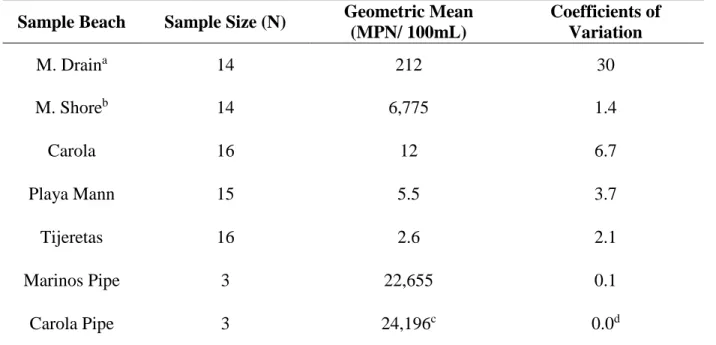
Summary statistics for enterococci levels at each sample site are presented in Table 2.
Besides the sites of sewage outflow (Marinos Pipe and Carola Pipe), M. Drain and M. Shore
showed the highest counts of enterococci (Table 2). The average enterococci value for the two
sewage outflow pipes (Marinos Pipe and Carola Pipe) were extremely high, and the three
samples collected at Carola Pipe all reached the detection limit of the methods employed, and
two of the three samples at Marinos Pipe reached this limit. M. Drain showed the highest
variation of all sample beaches, the coefficient of variation for this site was almost an order of
magnitude greater than all of the other sample beaches (Table 2). The three sites that are not
directly receiving sewage effluent (Carola, Playa Mann and Tijeretas) all had enterococci values
11
Table 2. Summary statistics for each of the sample sites.
Sample Beach Sample Size (N) Geometric Mean (MPN/ 100mL)
Coefficients of Variation
M. Draina 14 212 30
M. Shoreb 14 6,775 1.4
Carola 16 12 6.7
Playa Mann 15 5.5 3.7
Tijeretas 16 2.6 2.1
Marinos Pipe 3 22,655 0.1
Carola Pipe 3 24,196c 0.0d
a This sample beach is close to land runoff channels, which drain from the highlands of the island. b This samples beach is close to the sewage effluent pipe, Marinos Pipe.
c For the purpose of calculations, the value 24,196 was used for concentrations above the detection limit (>24196 MPN/100 mL) and the value 1 was used for concentrations below the detection limit (<10 MPN/100 ml). d All samples at this site reached the detection limit.
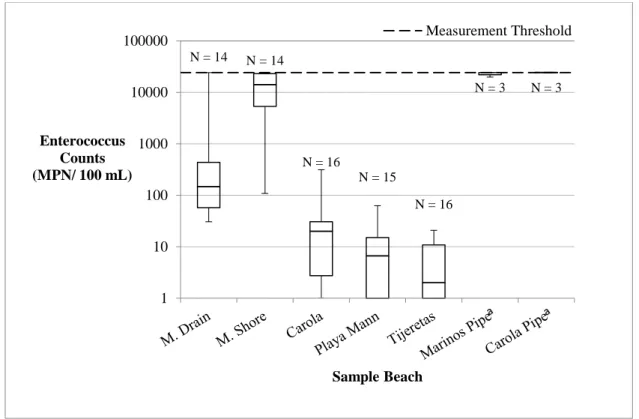
The Enterococci counts at each beach were summarized for comparison. Both sewage
pipes showed extremely high levels of Enterococci, maxing out the test for all but one sample,
therefore making it difficult to determine the variation amongst pipe samples (Figure 3). M.
Drain and M. Shore have high variation but the Enterococci counts are still relatively high. The
other three sites, Tijeretas, Carola and Playa Mann have much lower Enterococci values in
12
Figure 3. Summarized enterococci counts for each sample beach, shown on log scale. aThe test used had a maximum limit of detection of >24,196 MPN/ 100 mL, which was replaced with 24,196 for the purposes of making calculations, because of this the pipe site data does not accurately reflect the variation most likely present in the samples. Additionally, the minimum limit of detection for the test was <10 MPN/ 100 mL and this value was replaced with one for purposes of calculations.
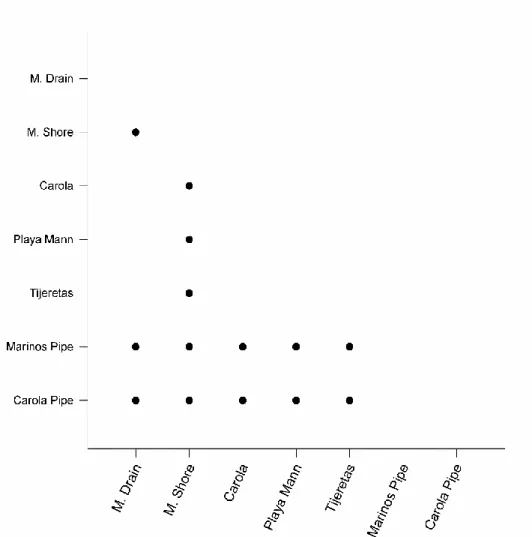
Based on ANOVA tests, sample beaches without direct sewage outflow (Carola, Playa
Mann,Tijereats) were significantly different (p < 0.05) than the sample beach near direct sewage
pipe outflow (M. Drain), and the sample beach with highland drainage (M. Shore) (Figure 4).
Additionally, M. Drain and M. Shore were significantly different from each other (p < 0.01). M.
Shore was not significantly different than the water at the mouth of the sewage outflow on that
beach (Marinos Pipe) (p > 0.05).
N = 14 N = 14
N = 16
N = 15
N = 16
N = 3 N = 3
0 0.2 0.4 0.6 0.8 1
1 10 100 1000 10000 100000
Enterococcus Counts (MPN/ 100 mL)
Sample Beach
13
Figure 4. P-valuesa from rank-transformed ANOVA for enterococci levels for each beach. P-values adjusted using Bonferroni method.
a Dots indicate significance of 0.0001
The percentage of E. coli isolates at each sample beach that were resistant to at least one of the five tested antibiotics is presented in Figure 5. M. Shore, which is the beach closest to
sewage outflow, showed the highest percentage of resistant isolates (88%), excluding the two
sites of sewage outflow, Marinos Pipe and Carola Pipe, where all tested isolates showed
resistance to at least one antibiotic. Two of the beaches considered clean showed low levels of
resistance, Tijertas (30%) and Playa Mann (13%). On Carola, the third beach considered clean
14
The percentage of E. coli isolates at each sample beach that were multidrug resistant is also presented in Figure 5. M. Drain, which is the beach closest to a land drainage canal, showed
the highest percentage of multidrug resistant isolates (58%), except for Marinos Pipe (60%) and
Carola Pipe (100%), the sites of sewage effluent outflow. The three beaches distant from direct
sewage outflow or highland runoff all had zero multidrug resistant isolates. Marinos Pipe was the
only site where the proportion of isolates resistant to one or more antibiotics and the proportion
of multidrug resistant isolates were equal.
Figure 5. Percentage of E. coli isolates resistant to one or more antibiotics and percent multidrug resistant, at each site
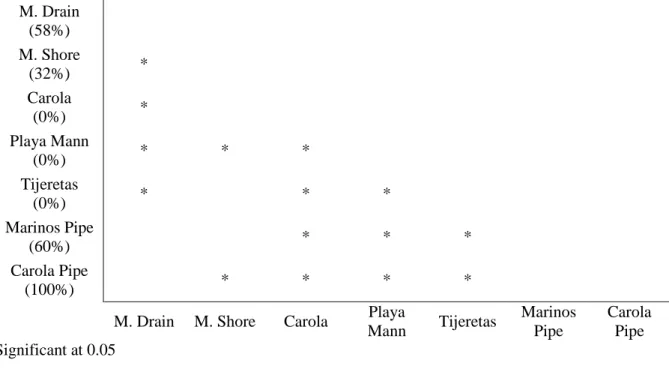
The proportions of isolates resistant to one or more antibiotics at each site were compared
using a G-test of independence (Table 3). Two of the clean beaches, Tijeretas and Playa Mann
had significantly lower proportions of isolates resistant to one or more antibiotics than both
sewage pipes and the sewage exposed beach (M. Shore). Additionally, Playa Mann had
significantly lower proportions of resistance than the land drainage site (M. Drain). It was found
0 10 20 30 40 50 60 70 80 90 100 M. Drain N = 31
M. Shore N = 25
Carola N = 12
Playa Mann N = 16
Tijeretas N = 10
Marinos Pipe N = 5
Carola Pipe N = 5
Per ce nt of I sol at es Sample Beach
15
that Carola had significantly higher proportions of resistance than Playa Mann, but not Tijeretas.
Carola showed no significant difference from the two sewage outfall pipes, the sewage exposed
beach (M. Shore) or the land drainage beach (M. Drain). The two sewage pipes were not
significantly different from each or the M. Shore and M. Drain sites. The M. Shore site, which is
the sewage exposed beach had a higher proportion of isolates resistant to one or more antibiotics,
compared to M. Drain.
Table 3. P-values from G- test comparing proportion of isolates that were resistant to one or more antibiotics. Percent resistant shown.
M. Drain (65%)
M. Shore
(88%) * Carola
(58%) Playa Mann
(13%) * * *
Tijeretas
(30%) *
Marinos Pipe
(100%) * *
Carola Pipe
(100%) * *
M. Drain M. Shore Carola Playa
Mann Tijeretas
Marinos Pipe
Carola Pipe * Significant at 0.05
The proportions of isolates resistant to three or more antibiotics (multi-drug resistant) at
each site were compared using a G-test of independence (Table 4). All three beaches without
direct sewage exposure or a drainage canal (Carola, Playa Mann, and Tijeretas) had significantly
16
Additionally, M. Shore had significantly fewer multi-drug resistant isolates than Carola Pipe. It
was found that M. Drain, the site with a drainage canal, had a significantly higher proportion of
multi-drug resistant bacteria than M. Shore, the site with sewage exposure. M. Shore had
significantly higher proportions of multi-drug resistant isolates than Playa Mann but not Tijeretas
or Carola. A significant difference was found between the proportions of multi-drug resistant
isolates on Playa Mann, Tijeretas, and Carola.
Table 4. P-values from G- test comparing proportion of isolates that were multi-drug resistant to those that were not. Percent multidrug resistant shown.
M. Drain (58%) M. Shore
(32%) * Carola
(0%) * Playa Mann
(0%) * * *
Tijeretas
(0%) * * *
Marinos Pipe
(60%) * * *
Carola Pipe
(100%) * * * *
M. Drain M. Shore Carola Playa
Mann Tijeretas
Marinos Pipe
Carola Pipe * Significant at 0.05
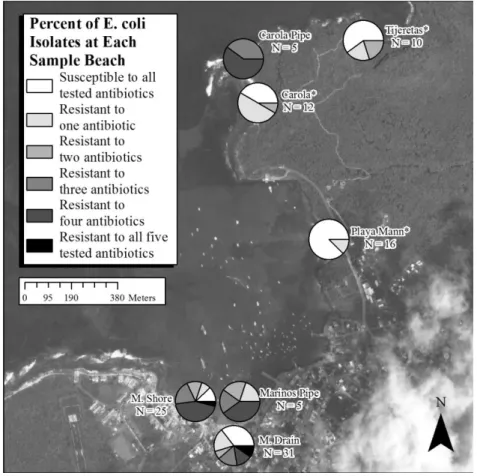
The number of antibiotics to that each E. coli isolate was resistant was calculated and aggregated for each sample beach. Besides the sewage outflow at Carola, M. Shore had the
highest percentage (68%) of isolates resistant to three, four or five antibiotics (Figure 6). The
pipe at Carola had 100% of isolates resistant to three or four tested antibiotics and 60% of
17
isolates resistant to three, four or five antibiotics. The other three sample beaches, Carola, Playa
Mann, and Tijeretas had no isolates resistant to more than two tested antibiotics and showed very
high percentages of bacteria that were susceptible to all tested antibiotics, the highest being Playa
Mann where 88% of isolates were fully susceptible.
*Sites without sewage effluent or land runoff
Figure 6. Amount of antibiotic resistance at each sample beach.
Discussion
Results of this study demonstrate that baseline water quality, based on enterococci
18
beaches, enterococci concentrations were significantly higher than beaches without sewage
effluent. Levels of antibiotic resistance were higher in areas of direct sewage outflow and land
drainage, but it remains unclear as to whether sewage is contributing to the presence of antibiotic
resistance on beaches. The results were not statistically significant, but this result was likely
influenced by the small number of resistant isolates that could be included in the statistical tests.
Baseline Recreational Water Quality Analysis
It is likely that human sewage is increasing the concentrations of enterococci on some
beaches. The study was designed specifically to compare areas with and without sewage outflow
and the significant difference between beaches near sewage outflow and beaches not near
sewage outflow supports this interpretation. The beach with direct sewage effluent (M. Shore)
had significantly higher enterococci concentrations than the beach near a land drainage channel
(M. Drain). This indicates that sewage is having a larger impact on the quality of recreational
waters, compared to land runoff. Additionally, the measured concentrations for M. Drain showed
higher variation than all other sites. This is likely due to inconsistent precipitation in the
highlands affecting drainage to the sample beach. The enterococci concentrations at sewage
outflow points reached the upper test detection limit; this finding is consistent with previous
literature finding high levels of enterococci in raw sewage (Litsky et al., 1953; Slanetz &
Bartley, 1957). The World Health Organization (WHO) reports that levels of enterococci in raw
sewage can range from 4.7 x 10³ to 4 x 10⁵ organisms per 100mL (World Health Organization,
19
and it can be inferred that these beaches on San Cristóbal are contaminated with human sewage
from the outflow pipes.
The levels of enterococci found on the beaches of San Cristóbal sometimes exceeded
international and US regulations for water quality. Current Ecuadorian regulations only provide
quality standards for fecal and total coliforms, so enterococci levels were only compared to
WHO standards and US EPA standards (Ministerio del Ambiente, 2003). The geometric mean of
samples from a 30-day period cannot exceed 35 colony forming units (CFU’s)/ 100 mL of
enterococci under current EPA recommendations (US EPA, 2012). The WHO recommends that
the 95th percentile value of enterococci measurements be below 40 enterococci CFU’s/ 100 mL
of sample to best protect human health (WHO, 2003). When comparing to the EPA standards, an
exact comparison is difficult because of discrepancies between MPN and CFU values. Cho et al.
(2010) found that MPN values measured for enterococci were lower than the measured CFU
values; but variations did not exceed one order of magnitude. The geometric mean of enterococci
for beaches with sewage effluent still exceeded EPA guidelines by over one order of magnitude,
indicating that these beaches are likely above a level considered safe for recreation.
Analysis of Antibiotic Resistance
This study was designed to target areas that were impacted by sewage outflow and those
that were not, to test whether there is evidence of anthropogenically introduced resistant bacteria.
The proportion of isolates resistant to at least one antibiotic was first compared between beaches.
It was found that the sites of direct sewage outflow had 100% of tested isolates resistant to at
least one antibiotic, these findings are consistent with previous findings that antibiotic resistant
20
Reinthaler et al. (2003) found sewage that contained E. coli resistant to 16 of 24 tested antibiotics and concluded that sewage effluent was contributing to the dissemination of antibiotic resistant
bacteria into the environment. The beach exposed to sewage effluent, as well as the beach with
land drainage did not show a significant difference in the number of resistant isolates when
compared to sites of direct sewage outflow. This indicates that sewage could be releasing
resistance into the environment and that land drainage may also have an impact. Additionally,
one of the beaches considered clean, Carola, was found to have significantly higher levels of
resistance than the other two clean beaches. This beach is the closest of the clean beaches to a
sewage outfall pipe so it is possible that sewage from Carola Pipe is impacting Carola even
though the pipe was placed outside of the cove.
The proportion of isolates resistant to at least three antibiotics was also compared
between beaches. This threshold was chosen because it represents bacteria that are multi-drug
resistant (Magiorakos et al., 2011). Since all antibiotics tested represent different classes, isolates
resistant to more than three can be considered multi-drug resistant. The site with land drainage
(M. Drain) has similarly high levels of multi-drug resistance when compared to raw sewage. This
reinforces the conclusion that sewage may be an important factor in the release of antibiotic
resistant bacteria, but it is not the only significant source in the marine environment on the
island; drainage from the highlands may also play a role. Compared to the beach exposed to land
drainage (M. Drain), multi-drug resistance was much lower on the sewage exposed beach, which
is different than the pattern found for the isolates resistant to at least one antibiotic. This
indicates that though sewage may be releasing resistance, sewage input may not affect
multi-drug resistance at nearby beaches. It is clear that pipes are releasing multi-multi-drug resistant bacteria
21
Mann, a beach without sewage, indicate that there is a possibility that multi-drug resistant
bacteria from sewage could be present on beaches. A small sample size at Tijeretas and Carola,
the other non- sewage impacted beaches, makes this difficult to determine. These two sites had
the same proportion of multi-drug resistant isolates as Playa Mann (an unimpacted beach), but
were not only significantly lower than M. Shore, but significantly different from each other. It is
likely that small sample size is affecting these results, making it difficult to understand the
relationship between sewage and multidrug resistance on beaches.
This study found that sewage contributes to resistance loads in beach waters, though it is
unclear whether the same level of resistance persists at downstream beaches. The level of
antibiotic resistance observed in this study at sewage outflow points (100%) and sewage
impacted beaches (88%) are similar to other studies. Sokari et al. (1988) found that about 80%
of E. coli isolates from municipal waste, river, and estuarine waters were resistant to at least one antibiotic. These studies suggest that 70-80% of bacteria in raw waste and surface waters are
resistant to at least one antibiotic. Other studies have also found levels of resistance in raw
sewage to be around 70% (Cooke, 1976; Martins da Costa et al., 2006), though some studies
have found resistance levels as low as 17% (Bell, 1978). Some studies suggest other possible
explanations for the presence of antibiotic resistance on the sampled beaches; including
inducement of resistance by heavy metals (Stepanauskas et al., 2005, 2006). The low sample size
for many sites where antibiotic resistance testing was performed puts constraints on the
conclusions that can be made about the relationship between sewage and antibiotic resistance.
Additional sampling would provide a more complete understanding of this relationship.
Additionally, the disk diffusion method only tests phenotypically for antibiotic resistance, though
22
allow for a more thorough analysis of the antibiotic resistance, including the mechanism of
resistance and potential sources of resistance.
The presence of fecal indicator bacteria in the beaches of San Cristóbal indicates a
potential health risk to locals as well as tourists passing through the island, and the presence of
antibiotic resistant bacteria on beaches could pose an additional risk. Studies have indicated that
levels of fecal indicator bacteria are related to gastrointestinal illness and have found a dose-
response relationship between indicators and levels of illness (Prüss, 1998; WHO, 2003).
Additionally, the contamination of recreational waters by domestic sewage, and the subsequent
negative health effects have been documented by multiple studies (Cabelli et al., 1979; Fleisher
et al., 1998; Lipp et al., 2001). Wise et al. (1998) stated that antibiotic resistance poses a major
public health threat. Even though the bacteria tested were non-pathogenic, previous studies have
indicated that it is possible for resistance genes to be transferred to other, pathogenic bacteria
(Neu, 1992). Though the possibility of other explanations cannot be definitely ruled out, the
theory that this antibiotic resistance could be originating from wastewater is consistent with
previous literature.
In addition to potential public health concerns, the findings of this study indicate that
humans may also be damaging the environment of the Galápagos. The input of sewage into the
marine environment can have undesirable consequences on ecosystem structure and function and
can lead to eutrophication (Smith at al., 1999). Previous studies have found that human
wastewater is a significant contributor to the eutrophication of marine waters (Lee & Olsen,
1985; Nixon et al., 1986). A decrease in species diversity has also been found on coastal
communities impacted by human sewage discharge (Fairweather, 1990). The economy of the
23
negative economic impacts by deterring tourists attracted to the islands “pristine” image
(deGroot, 1983; Walsh et al., 2010).
In the past decade, the Galápagos Islands have experienced drastic changes resulting
from economic growth driven by tourism (Watkins & Cruz, 2007). Walsh et al. (2010) indicates
that this growth is threatening not only the natural environment, but potentially health on the
islands as well. The findings of this study agree with this conclusion. These findings indicate that
the release of raw sewage into recreational waters could be putting human populations and the
environment at risk. Though the magnitude is still uncertain, this work indicates that human
wastewater is impacting the microbial concentrations and levels of bacterial antibiotic resistance
found in the recreational waters of San Cristóbal Island.
Conclusion
It was found that on the island of San Cristóbal, levels of antibiotic resistance in E. coli
and concentrations of enterococci are higher both in sewage outflows and beaches impacted by
these outflows. Human sewage is likely contaminating beaches and could potentially be a source
of antibiotic resistant bacteria in recreational waters. However, further monitoring of the water
quality on the Galápagos Islands is necessary to determine the extent to which wastewater poses
a threat to public and environmental health by contributing to antibiotic resistance in the
environment. The growing population and large number of tourists that pass through the
Galápagos Islands each year are at risk of exposure to disease agents from human sewage that
contains antibiotic resistant bacteria. Additionally, humans are changing the environment of the
24
damage the income from tourists that is critical to the Island’s economy. This study confirms
previous findings that releasing sewage into the ocean can compromise the quality of nearby
beach water and is the first to examine the release antibiotic resistance in sewage on the
Galápagos Islands. This research highlights the need to balance environmental and public health
concerns with environmental growth, especially in areas seeing a rapid increase in human
25
APPENDIX A: ENTEROCOCCUS CONCENTRATIONS (MPN/100ML) MEASURED ON SAN CRISTÓBAL ISLAND, GALÁPAGOS ARCHIPELAGO, ECUADOR SUMMER
2013
Date Site MPN/100ML
19-Jun Playa Los Marinos, Drainage 1 31
25-Jun Playa Los Marinos, Drainage 1 379
2-Jul Playa Los Marinos, Drainage 1 31
8-Jul Playa Los Marinos, Drainage 1 52
14-Jul Playa Los Marinos, Drainage 1 119
17-Jul Playa Los Marinos, Drainage 1 74
22-Jul Playa Los Marinos, Drainage 1 173
29-Jul* Playa Los Marinos, Drainage 1 146
25-Jun Playa Los Marinos, Drainage 2 457
2-Jul Playa Los Marinos, Drainage 2 148
8-Jul Playa Los Marinos, Drainage 2 41
14-Jul Playa Los Marinos, Drainage 2 2359
22-Jul Playa Los Marinos, Drainage 2 > 24196
29-Jul* Playa Los Marinos, Drainage 2 571
19-Jun Playa Los Marinos, Shore 1 355
25-Jun Playa Los Marinos, Shore 1 >24196
2-Jul Playa Los Marinos, Shore 1 9804
8-Jul Playa Los Marinos, Shore 1 >24196
14-Jul Playa Los Marinos, Shore 1 5172
17-Jul Playa Los Marinos, Shore 1 109
22-Jul Playa Los Marinos, Shore 1 1785
29-Jul* Playa Los Marinos, Shore 1 14191
25-Jun Playa Los Marinos, Shore 2 >24196
2-Jul Playa Los Marinos, Shore 2 14136
8-Jul Playa Los Marinos, Shore 2 24196
14-Jul Playa Los Marinos, Shore 2 5794
22-Jul Playa Los Marinos, Shore 2 15531
29-Jul* Playa Los Marinos, Shore 2 19863
19-Jun Tijeretas <10
19-Jun Tijeretas <10
26
Date Site MPN/100ML
25-Jun Tijeretas <10
2-Jul Tijeretas <10
2-Jul Tijeretas <10
8-Jul Tijeretas 20
8-Jul Tijeretas 10
14-Jul Tijeretas 10
14-Jul Tijeretas <10
17-Jul Tijeretas 10
17-Jul Tijeretas <10
22-Jul Tijeretas 10
22-Jul Tijeretas <10
29-Jul* Tijeretas 7
29-Jul* Tijeretas 4
19-Jun Carola 1 175
25-Jun Carola 1 84
2-Jul Carola 1 20
8-Jul Carola 1 20
14-Jul Carola 1 <10
17-Jul Carola 1 20
22-Jul Carola 1 10
29-Jul* Carola 1 27
19-Jun Carola 2 313
25-Jun Carola 2 41
2-Jul Carola 2 20
8-Jul Carola 2 <10
14-Jul Carola 2 10
17-Jul Carola 2 <10
22-Jul Carola 2 <10
29-Jul* Carola 2 4
19-Jun Playa Mann 1 52
25-Jun Playa Mann 1 41
2-Jul Playa Mann 1 <10
8-Jul Playa Mann 1 10
14-Jul Playa Mann 1 <10
17-Jul Playa Mann 1 <10
27
Date Site MPN/100ML
19-Jun Playa Mann 2 63
25-Jun Playa Mann 2 10
2-Jul Playa Mann 2 <10
8-Jul Playa Mann 2 <10
14-Jul Playa Mann 2 <10
17-Jul Playa Mann 2 20
22-Jul Playa Mann 2 10
29-Jul* Playa Mann 2 7
14-Jul Punta Pitt <10
14-Jul Punta Pitt 20
14-Jul Punta Pitt <10
17-Jul Playa Los Marinos Pipe 19863
22-Jul Playa Los Marinos Pipe >24196
29-Jul* Playa Los Marinos Pipe >24196
17-Jul Carola Pipe >24196
22-Jul Carola Pipe >24196
29-Jul* Carola Pipe >24196
28
APPENDIX B: ANTIBIOTIC RESISTANCE OF E. COLI MEASURED ON SAN CRISTÓBAL ISLANDS, GALÁPAGOS ARCHIPELAGO, ECUADOR, SUMMER 2013
Isolate
Number Date Ciprofloxacin Ampicillin Gentamycin Tetracycline
Trimethprim/ Sulfamethoxazole
101 25-Jun-13 S S S S S
103 25-Jun-13 S S S R S
104 25-Jun-13 R S S S S
105a 25-Jun-13 S S S S S
105b 25-Jun-13 S R S S S
106 25-Jun-13 S S S I S
107b 25-Jun-13 S S S S S
108a 25-Jun-13 S S S S S
108b 25-Jun-13 S S S S S
109a 25-Jun-13 S * S S S
109b 25-Jun-13 S I S S S
110 25-Jun-13 S R S R S
111 25-Jun-13 S S S R R
120 8-Jul-13 S R R R R
121 8-Jul-13 S R R R R
122a 8-Jul-13 S S S R S
124 8-Jul-13 S S S S S
125 8-Jul-13 S R S R R
126 8-Jul-13 S S S S S
127 8-Jul-13 S S S S S
128 8-Jul-13 S R S R R
129a 8-Jul-13 S R S S *
129b 8-Jul-13 S R S R R
130 14-Jul-13 R R R R R
131 14-Jul-13 I R R R R
132 14-Jul-13 R R S R I
135 14-Jul-13 R R R R R
136 14-Jul-13 S R R R R
137 14-Jul-13 S S S R S
138 14-Jul-13 R R R R R
29
Isolate
Number Date Ciprofloxacin Ampicillin Gentamycin Tetracycline
Trimethprim/ Sulfamethoxazole
201 25-Jun-13 I R R S S
202 25-Jun-13 I R R R R
203 25-Jun-13 I R R R R
204 25-Jun-13 S S S S S
205 25-Jun-13 S R R R R
206 25-Jun-13 I R R R R
207 25-Jun-13 I R R R R
208 25-Jun-13 S R S R R
209 25-Jun-13 I R R S S
210 25-Jun-13 S R R R R
211 25-Jun-13 S R S R R
220 8-Jul-13 I R R S R
221 8-Jul-13 S R R R R
222 8-Jul-13 S R R R R
223 8-Jul-13 S S S S S
224 8-Jul-13 I R R R R
225 8-Jul-13 S R S R R
226 8-Jul-13 I R S S R
227a 8-Jul-13 R R R R R
228b 8-Jul-13 R R S R R
229 8-Jul-13 R R S R R
235 14-Jul-13 S R S R R
236 14-Jul-13 S R S S S
237a 14-Jul-13 S S S S S
239 14-Jul-13 S S S R I
301 25-Jun-13 S R S S R
302a 25-Jun-13 S S S S I
302b1 25-Jun-13 S R S I S
302b2 25-Jun-13 S S S S S
303b 25-Jun-13 S S R S S
305 25-Jun-13 S S S S S
320a2 8-Jul-13 S S S S S
320b 8-Jul-13 S S S S S
320c 8-Jul-13 S S S S S
30
Isolate
Number Date Ciprofloxacin Ampicillin Gentamycin Tetracycline
Trimethprim/ Sulfamethoxazole
401a 25-Jun-13 S S S S S
402a 25-Jun-13 S S S S S
402b 25-Jun-13 S S S S S
404a 25-Jun-13 S S S S S
404b 25-Jun-13 S R S S S
405a 25-Jun-13 S R S S S
420 8-Jul-13 S S S S S
422a1 8-Jul-13 S R S R S
422a2 8-Jul-13 S S S S R
422b 8-Jul-13 S S S S R
425a 8-Jul-13 S I S S R
425b 8-Jul-13 S I S S R
502 25-Jun-13 S S S S S
503 25-Jun-13 S S S S S
504 25-Jun-13 S S S S S
506 25-Jun-13 S S S S S
507 25-Jun-13 S S S I S
508 25-Jun-13 S S S S S
510 25-Jun-13 S S S S S
520 8-Jul-13 S S S S S
521a1 8-Jul-13 S R S S S
521a2 8-Jul-13 S S S S S
521b 8-Jul-13 S R S I S
522 8-Jul-13 S S S S S
523 8-Jul-13 S S S S S
524 8-Jul-13 S S S S S
525 8-Jul-13 S S S S S
532b 14-Jul-13 S S S S S
611 14-Jul-13 S R S R S
612 14-Jul-13 S R S S S
631 14-Jul-13 S R S R S
741 22-Jul-13 R R R S R
742 22-Jul-13 S R R R R
743a 22-Jul-13 I I S R R
31
Isolate
Number Date Ciprofloxacin Ampicillin Gentamycin Tetracycline
Trimethprim/ Sulfamethoxazole
744 22-Jul-13 I R R S R
840 22-Jul-13 S R R R R
841 22-Jul-13 S R R R R
842 22-Jul-13 S R R R R
843 22-Jul-13 S R R S R
844 22-Jul-13 S R R S R
*Disk fell off plate
32
REFERENCES
Baquero, F., Martínez, J.-L., & Cantón, R. (2008). Antibiotics and antibiotic resistance in water environments. Current Opinion in Biotechnology, 19(3), 260–5.
doi:10.1016/j.copbio.2008.05.006
Bauer, A. W., Kirby, W. M., Sherris, J. C., & Turck, M. (1966). Antibiotic susceptibility testing by a standardized single disk method. American Journal of Clinical Pathology, 45(4), 493– 6. Retrieved from http://www.ncbi.nlm.nih.gov/pubmed/5325707
Bell, R. B. (1978). Antibiotic resistance patterns of fecal coliforms isolated from domestic sewage before and after treatment in an aerobic lagoon. Canadian Journal of Microbiology,
24(7), 886–8. Retrieved from http://www.ncbi.nlm.nih.gov/pubmed/354758
Bossart, G.D., Brawner, T.A., Cabal, C., Kuhns, M., Eimstad, E.A., Caron, J., Trimm, M., Bradley, P. (1990). Hepatitis B-like infection in a Pacific whitesided dolphin
(Lagenorhynchus obliquidens). Journal of the American Veterinary Medical Association 196, 127–130.
Cabelli, V. J., Dufour, A. P., Levin, M. A., McCabe, L. J., & Haberman, P. W. (1979).
Relationship of microbial indicators to health effects at marine bathing beaches. American Journal of Public Health, 69(7), 690–6. Retrieved from
http://www.pubmedcentral.nih.gov/articlerender.fcgi?artid=1619103&tool=pmcentrez&ren dertype=abstract
Cho, K. H., Han, D., Park, Y., Lee, S. W., Cha, S. M., Kang, J.-H., & Kim, J. H. (2010). Evaluation of the relationship between two different methods for enumeration fecal indicator bacteria: Colony-forming unit and most probable number. Journal of Environmental Sciences, 22(6), 846–850. Retrieved from
http://www.sciencedirect.com/science/article/pii/S100107420960187X
Colford, J. M., Wade, T. J., Schiff, K. C., Wright, C. C., Griffith, J. F., Sandhu, S. K., … Weisberg, S. B. (2007). Water quality indicators and the risk of illness at beaches with nonpoint sources of fecal contamination. Epidemiology (Cambridge, Mass.), 18(1), 27–35. doi:10.1097/01.ede.0000249425.32990.b9
Cooke, M. D. (1976). Coliform and Fecal Coliform Bacteria Isolated from Sewage , Seawater , and Marine Shellfish Antibiotic Resistance Among Coliform and Fecal Coliform Bacteria Isolated from Sewage , Seawater , and Marine Shellfish. doi:10.1128/AAC.9.6.879.Updated
Cosgrove, S. E., & Carmeli, Y. (2003). The impact of antimicrobial resistance on health and economic outcomes. Clinical Infectious Diseases : An Official Publication of the Infectious
33
deGroot, R. (1983). Tourism and conservation in the Galapagos Islands. Biological Conservation, 26(4), 291–300. Retrieved from
http://www.sciencedirect.com/science/article/pii/0006320783900939
Dwight, R. H., Baker, D. B., Semenza, J. C., & Olson, B. H. (2004). Health effects associated with recreational coastal water use: urban versus rural California. American Journal of Public Health, 94(4), 565–7. Retrieved from
http://www.pubmedcentral.nih.gov/articlerender.fcgi?artid=1448299&tool=pmcentrez&ren dertype=abstract
Epler, B. (2007). Tourism , the Economy, Population Growth , and Conservation in Galapagos. Puerto Ayora, Santa Cruz Island, Galapagos Islands, Ecuador.
Fairweather, P. (1990). Sewage and the biota on seashores: assessment of impact in relation to natural variability. Environmental Monitoring and Assessment, 14, 197–210.
Fleisher, J. M., Kay, D., Wyer, M. D., & Godfree, a F. (1998). Estimates of the severity of illnesses associated with bathing in marine recreational waters contaminated with domestic sewage. International Journal of Epidemiology, 27(4), 722–6. Retrieved from
http://www.ncbi.nlm.nih.gov/pubmed/9758131
Fleming, L. E., Broad, K., Clement, a, Dewailly, E., Elmir, S., Knap, a, … Walsh, P. (2006). Oceans and human health: Emerging public health risks in the marine environment. Marine Pollution Bulletin, 53(10-12), 545–60. doi:10.1016/j.marpolbul.2006.08.012
Galapagos National Park Service. (2010). Informe de Ingreso de Turistas 2010. Galapagos National Park, Puerto Ayora, Santa Cruz.
Giske, C. G., Monnet, D. L., Cars, O., & Carmeli, Y. (2008). Clinical and economic impact of common multidrug-resistant gram-negative bacilli. Antimicrobial Agents and
Chemotherapy, 52(3), 813–21. doi:10.1128/AAC.01169-07
Halpern, B. S., Walbridge, S., Selkoe, K. A., Kappel, C. V., Micheli, F., D’Agrosa, C., … Watson, R. (2008). A Global Map of Human Impact on Marine Ecosystems. Science, 319, 948.
Hernández, M., Robinson, I., Aguilar, A., González, L. M., López-Jurado, L. F., Reyero, M. I., … Costas, E. (1998). Did algal toxins cause monk seal mortality. Nature, 393, 28–29.
Howarth, R., Sharpley, A., & Walker, D. (2002). Sources of nutrient pollution to coastal waters in the United States: Implications for achieving coastal water quality goals. Estuaries,
25(4). Retrieved from http://link.springer.com/article/10.1007/BF02804898
Jackson, J. B., Kirby, M. X., Berger, W. H., Bjorndal, K. a, Botsford, L. W., Bourque, B. J., … Warner, R. R. (2001). Historical overfishing and the recent collapse of coastal ecosystems.
34
Kim, S., & Aga, D. S. (2007). Potential ecological and human health impacts of antibiotics and antibiotic-resistant bacteria from wastewater treatment plants. Journal of Toxicology and Environmental Health. Part B, Critical Reviews, 10(8), 559–73.
doi:10.1080/15287390600975137
Klein, E. A., Jr, I. M. T., Tangen, C. M., Crowley, J. J., Lucia, M. S., Goodman, P. J., … Baker, L. H. (2011). Vitamin E and the Risk of Prostate Cancer the Selenium and Vitamin E Cancer Prevention Trial (SELECT). Journal of American Medical Association, 306(14), 1549–1556.
Lee, V., & Olsen, S. (1985). Eutrophication and Management Initiatives for the Control of Nutrient Inputs to Rhode Island Coastal Lagoons. Estuaries, 8(2), 191–202.
Lipp, E. K., Farrah, S. a, & Rose, J. B. (2001). Assessment and impact of microbial fecal pollution and human enteric pathogens in a coastal community. Marine Pollution Bulletin,
42(4), 286–93. Retrieved from http://www.ncbi.nlm.nih.gov/pubmed/11381749 Litsky, W., Rosenbaum, M. J., & France, R. L. (1953). A comparison of the most probable
numbers of coliform bacteria and enterococci in raw sewage. Applied Microbiology, 1(5), 247–50. Retrieved from
http://www.pubmedcentral.nih.gov/articlerender.fcgi?artid=1056916&tool=pmcentrez&ren dertype=abstract
MacDonald, P. L., & Gardner, R. C. (2000). Type I Error Rate Comparisons of Post Hoc
Procedures for I j Chi-Square Tables. Educational and Psychological Measurement, 60(5), 735–754. doi:10.1177/00131640021970871
Magiorakos, A., Srinivasan, A., Carey, R. B., Carmeli, Y., Falagas, M. E., Giske, C. G., … Monnet, D. L. (2011). Multidrug-resistant, extensively drug-resistant and pandrug-resistant bacteria: an international expert proposal for interim standard definitions for acquired resistance. Clinical Microbiology and Infection, 18, 268–281.
Martins da Costa, P., Vaz-Pires, P., & Bernardo, F. (2006). Antimicrobial resistance in Enterococcus spp. isolated in inflow, effluent and sludge from municipal sewage water treatment plants. Water Research, 40(8), 1735–40. doi:10.1016/j.watres.2006.02.025 Ministerio del Ambiente. (2003). Texto Unificado de Legislación Ambiental Secundaria
(TULSMA) (pp. 1–39). Ecuador.
Neu, H. (1992). The crisis in antibiotic resistance. Science, 257(5073), 1064–1073. Retrieved from http://www.sciencemag.org/content/257/5073/1064.short
Nixon, S. (1995). Coastal marine eutrophication: a definition, social causes, and future concerns.
Ophelia. Retrieved from
35
Nixon, S. W., Oviatt, C. A., Frithsen, J., & Sullivan, B. (1986). Nutrients and the productivity of estuarine and coastal marine ecosystems. Journal of the Limnological Society of Southern Africa, 12(1-2), 43–71.
Okeke, I. N., Lamikanra, a, & Edelman, R. (1999). Socioeconomic and behavioral factors leading to acquired bacterial resistance to antibiotics in developing countries. Emerging Infectious Diseases, 5(1), 18–27. doi:10.3201/eid0501.990103
Parveen, S., Murphree, R., Edmiston, L., Kaspar, C., Portier, K., & Tamplin, M. (1997). Association of multiple-antibiotic-resistance profiles with point and nonpoint sources of Escherichia coli in Apalachicola Bay. Applied and …, 63(7), 2607–2612. Retrieved from http://aem.asm.org/content/63/7/2607.short
Pew Oceans Comission (POC). (2003). America’s Living Oceans. Arlington, VA. Prüss, A. (1998). Review of epidemiological studies on health effects from exposure to
recreational water. International Journal of Epidemiology, 27(1), 1–9. Retrieved from http://www.ncbi.nlm.nih.gov/pubmed/9563686
Reinthaler, F. F., Posch, J., Feierl, G., Wüst, G., Haas, D., Ruckenbauer, G., … Marth, E. (2003). Antibiotic resistance of E. coli in sewage and sludge. Water Research, 37(8), 1685–90. doi:10.1016/S0043-1354(02)00569-9
Roberts, R. R., Hota, B., Ahmad, I., Scott, R. D., Foster, S. D., Abbasi, F., … Weinstein, R. a. (2009). Hospital and societal costs of antimicrobial-resistant infections in a Chicago teaching hospital: implications for antibiotic stewardship. Clinical Infectious Diseases : An Official Publication of the Infectious Diseases Society of America, 49(8), 1175–84.
doi:10.1086/605630
Schwartz, T., Kohnen, W., Jansen, B., & Obst, U. (2003). Detection of antibiotic-resistant bacteria and their resistance genes in wastewater, surface water, and drinking water biofilms. FEMS Microbiology Ecology, 43(3), 325–35.
doi:10.1111/j.1574-6941.2003.tb01073.x
Shahidul Islam, M., & Tanaka, M. (2004). Impacts of pollution on coastal and marine
ecosystems including coastal and marine fisheries and approach for management: a review and synthesis. Marine Pollution Bulletin, 48(7-8), 624–49.
doi:10.1016/j.marpolbul.2003.12.004
Slanetz, L. W., & Bartley, C. H. (1957). Numbers of Enterococci in Water, Sewage, and Feces Determined by the Membrane Filter Technique with an Improved Medium. Journal of Bacteriology, 741(5), 591–595.
36
Sokari, T. G., Ibiebele, D. D., & Ottih, R. M. (1988). Antibiotic resistance among coliforms and Pseudomonas spp. from bodies of water around Port Harcourt, Nigeria. The Journal of Applied Bacteriology, 64(4), 355–9. Retrieved from
http://www.ncbi.nlm.nih.gov/pubmed/3049502
Stelzer, W., & Ziegert, E. (1988). Occurrence of antibiotic-resistant coliforms in waste water of a sewage treatment plant. (Das Vorkommen von antibiotikaresistenten Koliformen im
Abwasser einer Klaranlage). Zentralbl Mikrobiol, 143.
Stepanauskas, R., Glenn, T. C., Jagoe, C. H., Tuckfield, R. C., Lindell, A. H., King, C. J., & McArthur, J. V. (2006). Coselection for microbial resistance to metals and antibiotics in freshwater microcosms. Environmental Microbiology, 8(9), 1510–4. doi:10.1111/j.1462-2920.2006.01091.x
Stepanauskas, R., Glenn, T. C., Jagoe, C. H., Tuckfield, R. C., Lindell, A. H., & McArthur, J. V. (2005). Elevated microbial tolerance to metals and antibiotics in metal-contaminated industrial environments. Environmental Science & Technology, 39(10), 3671–8. Retrieved from http://www.ncbi.nlm.nih.gov/pubmed/15952371
Stewart, J. R., Gast, R. J., Fujioka, R. S., Solo-Gabriele, H. M., Meschke, J. S., Amaral-Zettler, L. a, … Holland, a F. (2008). The coastal environment and human health: microbial indicators, pathogens, sentinels and reservoirs. Environmental Health : A Global Access
Science Source, 7 Suppl 2, S3. doi:10.1186/1476-069X-7-S2-S3
US Environmental Protection Agency. (2012). Recreational Water Quality Criteria.
US EPA. (2002). Method 10029: Coliforms- Total and E. coli. Water Quality Standards, Total Coliforms and E. Coli Membrane Filtration Method.
Wade, T. J., Pai, N., Eisenberg, J. N. S., & Colford, J. M. (2003). Do U.S. Environmental Protection Agency Water Quality Guidelines for Recreational Waters Prevent
Gastrointestinal Illness? A Systematic Review and Meta-analysis. Environmental Health Perspectives, 111(8), 1102–1109. doi:10.1289/ehp.6241
Walsh, S. J., Mccleary, A. L., Heumann, B. W., Brewington, L., Raczkowski, J., Mena, C. F., & Raczkowski, E. J. (2010). Community Expansion and Infrastructure Development:
Implications for Human Health and Environmental Quality in the Galápagos Islands of Ecuador. Journal of Latin American Geography, 9(3), 137–159. doi:10.1353/lag.2010.0024 Watkins, G., & Cruz, F. (2007). Galapagos at Risk A Socioeconomic Analysis Galapagos at
Risk. Puerto Ayora, Province of Galapagos, Ecuador.
Wise, R., Hart, T., Cars, O., Streulens, M., Helmuth, R., Huovinen, P., & Sprenger, M. (1998). Antimicrobial resistance is a major threat to public health. BMJ (Clinical Research Ed.),
37
http://www.pubmedcentral.nih.gov/articlerender.fcgi?artid=1113826&tool=pmcentrez&ren dertype=abstract
World Health Organization. (2003). Guidelines for safe recreational water environments. Volume 1, Coastal and fresh waters. (Vol. 1).