A MIXED METHODS STUDY OF SOCIAL NETWORK CHARACTARISTICS AND HEALTH FACILITY DELIVERY AMONG WOMEN IN RURAL GHANA
Leslie E. Cofie
A dissertation submitted to the faculty at the University of North Carolina at Chapel Hill in partial fulfillment of the requirements for the degree of Doctor of Philosophy in the
Department of Health Behavior in the Gillings School of Global Public Health.
Chapel Hill 2016
Approved by: Clare Barrington Kavita Singh
ABSTRACT
Leslie E. Cofie: A Mixed Methods Study of Social Network Characteristics and Health Facility Delivery Among Women in Rural Ghana
(Under the direction of Clare Barrington)
Background: Most maternal deaths are preventable with health facility birth, but half of women in sub-Saharan Africa do not deliver in health facilities. Although
theoretical and empirical evidence suggest that social networks influence facility delivery, examination of this relationship in Africa is very limited. The aims of this mixed-methods study were to: (1) examine the association between social network structural and functional characteristics and facility delivery in rural Ghana; (2) test whether these network characteristics had an interactive effect on facility delivery; and (3) explore how women’s network composition and social support influence facility delivery.
Methods: Both quantitative and qualitative data came from the Maternal and Newborn Health Referral (MNHR) project in Ghana. I used multivariate logistic regression to analyze endline quantitative data from mothers (n=783) enrolled in the MNHR study. Qualitative data included in-depth interviews with mothers (n=40) and husbands (n=20), and 4 focus group interviews with mothers-in-law. I analyzed the data using narrative methods and thematic coding procedures.
odds of facility delivery. In terms of social norms, knowing more women who had received pregnancy-related care in a facility (OR: 2.20, CI: 1.21-4.00) was significantly associated with higher odds of facility delivery. The number of network members that respondents lived near moderated the positive relationship between informational support and facility delivery. Informational support modified the positive relationship between number of women the respondents know that have utilized a facility for pregnancy-related care and facility delivery. The qualitative findings revealed that the social networks of women who delivered in a facility endorsed facility delivery and mobilized resources to support women’s facility delivery. Among women who had homebirths, social networks endorsed homebirth and/or delayed in making arrangements to facilitate facility delivery.
ACKNOWLDGEMENTS
My sincerest appreciation to my parents, older sister and younger sister whose love and support gave me the courage to pursue my doctorate degree. I am forever
TABLE OF CONTENTS
LIST OF TABLES ... ix
LIST OF FIGURES ... x
CHAPTER 1: INTRODUCTION ... 1
Definition of terms ... 5
Organization of the study ... 6
CHAPTER 2: BACKGROUND REVIEW OF LITERATURE ... 8
Global Maternal Mortality Trends, Cause, and Solutions ... 8
Determinants of Health Facility Delivery Globally ... 10
Maternal Mortality and Skilled Birth Attendance in Ghana ... 13
Determinants of Health Facility Delivery in Ghana ... 14
CHAPTER 3: THEORETICAL ORIENTATION... 21
Social Capital ... 21
Social Network Concepts ... 22
Social Network Characteristics and Maternal Health ... 25
Study Aims, Hypotheses and Conceptual Model ... 31
Aims and Hypotheses ... 32
CHAPTER 4: METHODS ... 35
Description of the Study Areas: Northern and Central Regions of Ghana ... 36
Parent Study Description ... 38
Quantitative Study Description ... 41
Qualitative Study Description ... 49
CHAPTER 5: STRUCTURAL AND FUNCTIONAL NETWORK CHARACTERISTICS AND FACILITY DELIVERY AMONG WOMEN IN RURAL GHANA ... 55
Introduction ... 55
Networks Roles in Facility Delivery ... 56
Methods... 60
Study Setting... 60
Conceptual Framework ... 60
Study Design and Sample... 62
Variables ... 63
Analysis ... 65
Results ... 66
Discussion ... 70
Conclusion ... 73
CHAPTER 6: A QUALITATIVE STUDY OF WOMEN’S NETWORK COMPOSITION, SOCIAL SUPPORT AND FACILITY DELIVERY IN RURAL GHANA... 80
Introduction ... 80
Social Networks in Maternal Health Care... 81
Methods... 83
Design and Sample ... 83
Data Collection ... 84
Results ... 86
Study Population Characteristics ... 87
Network Composition during Women’s Pregnancy-Related Experiences ... 88
Network Support and Influence of Women’s Pregnancy and Birth Delivery Experience ... 89
Discussion ... 96
Conclusion ... 100
CHAPTER 7: DISCUSSION ... 103
Study Strengths ... 107
Study Weaknesses ... 109
Future Directions ... 110
APPENDIX A: PARTICIPANT CONSENT FORM ... 116
APPENDIX: B HOUSEHOLD SURVEY... 118
APPENDIX C: MEASURES OF SOCIAL NETWORK CHARACTERISTICS ... 123
APPENDIX D: INTERVIEW GUIDES ... 126
LIST OF TABLES
Table 4.1: Outcome measure ... 43
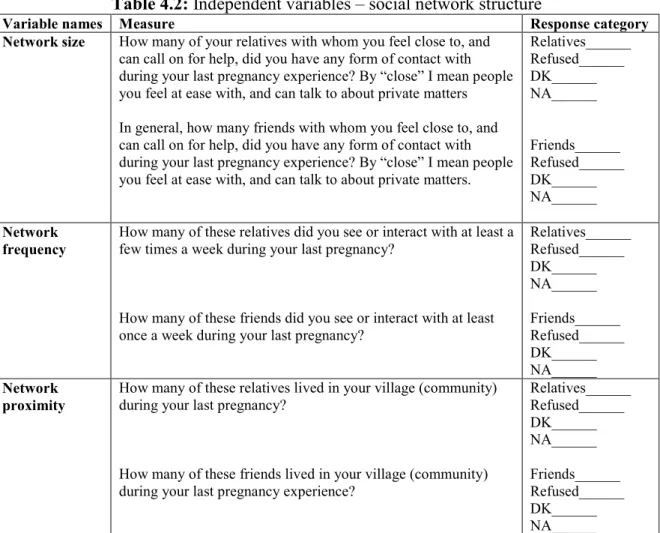
Table 4.2: Independent variables – social network structure ... 44
Table 4.3: Independent variables – social support ... 45
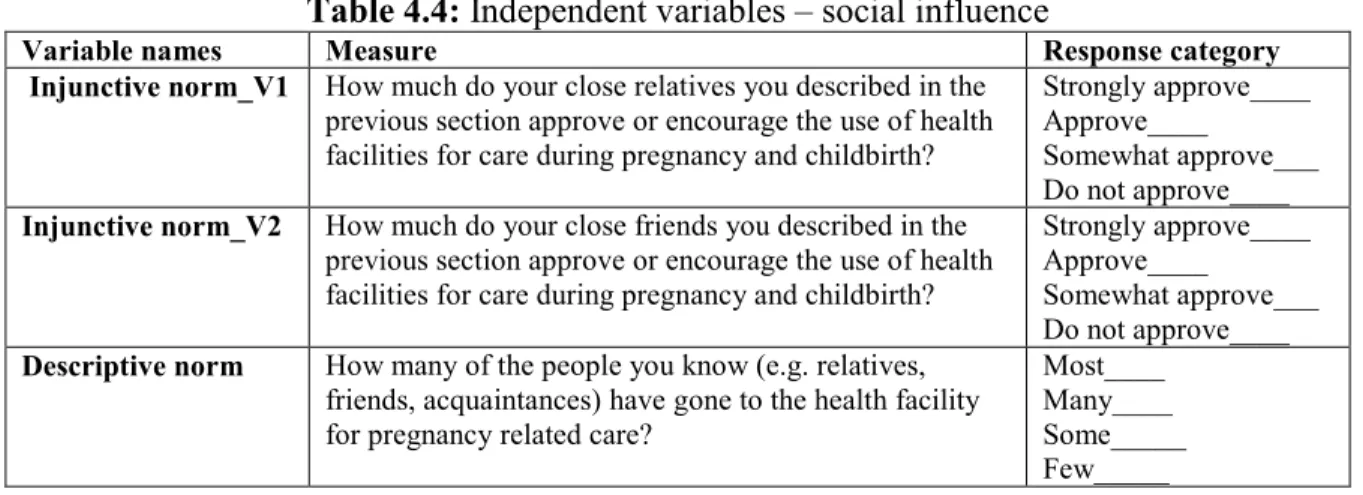
Table 4.4: Independent variables – social influence ... 46
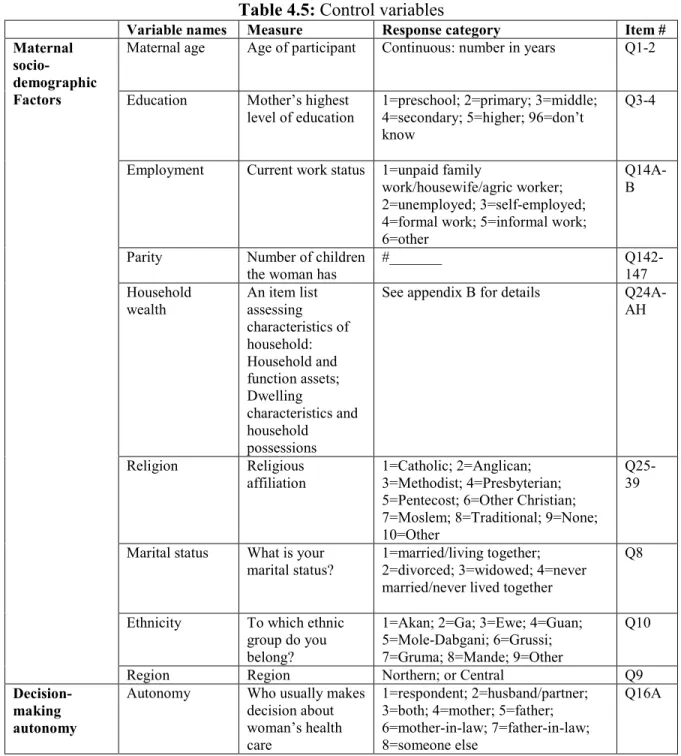
Table 4.5: Control variables ... 47
Table 4.6: Qualitative data sample... 51
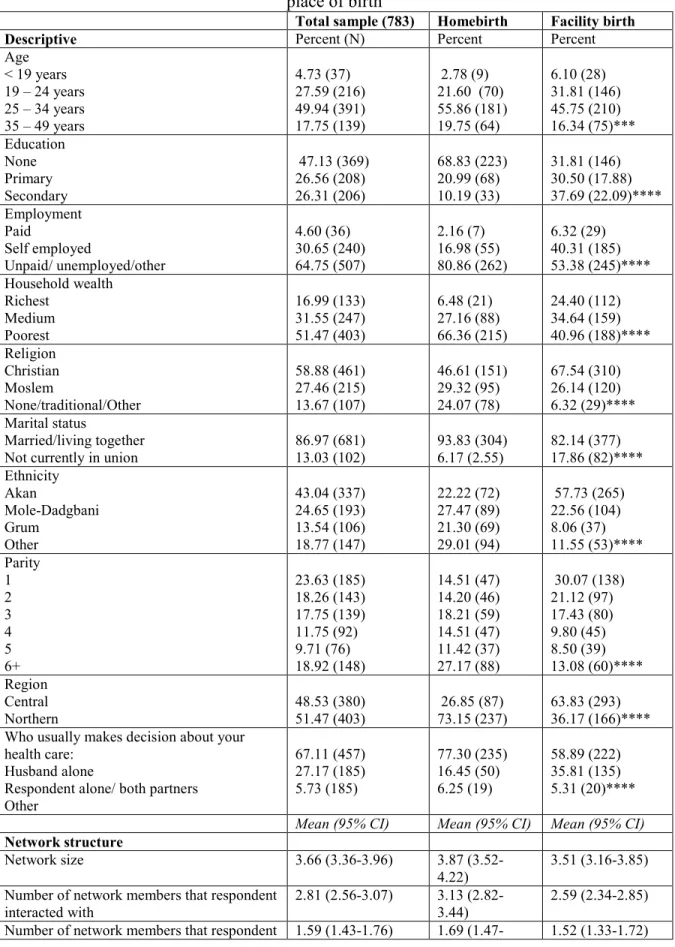
Table 5.1: Descriptive and network characteristics of women with most recent childbirth, and by place of birth ... 75
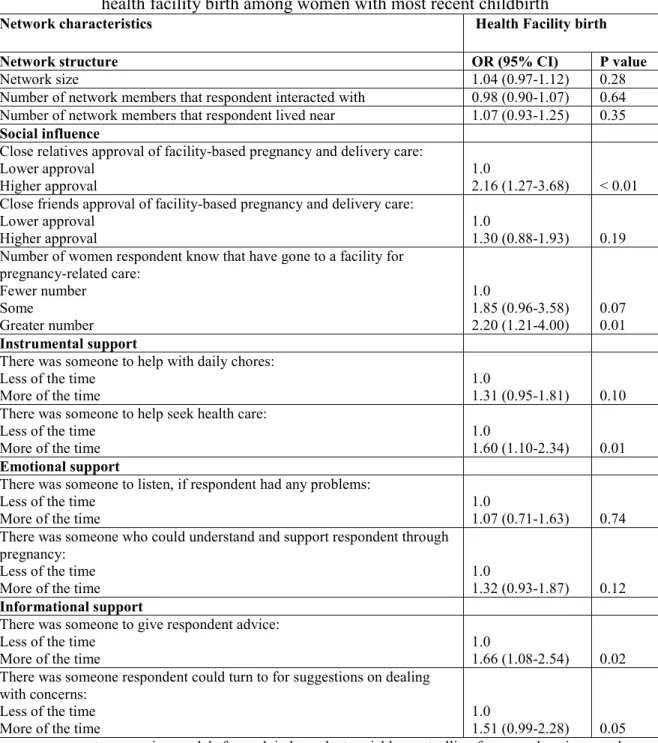
Table 5.2: Logistic regression odds ratios of association between network characteristics and health facility birth among women with most recent childbirth ... 77
Table 5.3: Logistic regression odds ratios of the association of interactions between network characteristics with health facility birth among women with most recent childbirth ... 78
Table 6.1: Sample size of participants ... 101
Table 6.2: Demographic characteristics of women and husbands ... 101
LIST OF FIGURES
Figure 1: Conceptual model of the relationship between network characteristics and facility birth. ... 31 Figure 2: Study design and sample description. ... 50 Figure 3: Health facility birth by network structure and informational support ... 79 Figure 4: Health facility birth by informational support and
CHAPTER 1: INTRODUCTION
In 2015, sub-Saharan African countries accounted for 66% of the world’s maternal mortality, which represented 201,000 deaths (WHO et al., 2015). Most maternal deaths could be prevented with health facility births assisted by skilled birth attendants (UNFPA, 2009).
However, in sub-Saharan Africa, half of pregnant women do not deliver in health facilities (UNICEF, 2014). In Ghana, 73% of pregnant women overall deliver in health facilities, but the coverage is only 59% for women in rural areas (GSS, GHS, & ICF Macro, 2015). There is ample evidence from the maternal health field identifying determinants of the uptake of facility delivery including: physical and economic access; maternal socio-demographics (e.g. age, parity,
education, wealth); and perceived needs/benefits of using the services (Gabrysch & Campbell, 2009; Moyer & Mustafa, 2013). Conversely, social determinants, such as social networks, have received little attention.
Social networks are a form of social capital that can facilitate the provision of social and material resources to promote health (Bourdieu, 1986; Kawachi, 2008). A social network is a web of social relationships among a group of individuals, which has both structural and functional characteristics (Mitchell, 1969; Fischer, 1982; Lauman, 1973). Network structural characteristics include network size and network members’ connectedness (density),
facility delivery can provide insights into ways to increase use of facility birth (Gabrysch & Campbell, 2009; Say & Raine 2007). Yet, research on the relationships between social network structural and functional characteristics and facility delivery is sparse.
Edmonds and colleagues (2012) recently found no association between network structural characteristics (homogeneity, density and strength) and facility birth. These authors also
examined the interaction between structural characteristics and network function (descriptive norms regarding place of delivery) and found no significant effect of this interaction effect on facility birth. Edmonds and colleagues acknowledged that additional work is needed to examine other network structures, as previous studies found an association between network structure (larger network size, higher frequency of contact, closer proximity of network members to one another, and higher strength of network ties) and health services utilization including maternal care (Devillanova, 2008; Deri, 2005; Berkavonic & Telesky, 1982).
Previous research has suggested that women’s experience of various forms of social support (emotional, instrumental and informational) during pregnancy and delivery influence their place of delivery (Story et al., 2012; Ono et al., 2013). Recently, Ono and colleagues (2013) conducted the only quantitative study in sub-Saharan Africa on the association between social support and use of facility delivery, in Kenya. They found that married women whose husbands helped them with farming, and/or whose neighbors helped them with fetching water, were less likely to deliver at a health facility than those who did not receive these two forms of support. They suggested that a likely explanation was that married women lived in close-knit
health facility. Additional research can provide further insights into ways in which network members’ provision of different types of social support may influence women’s use of facility delivery.
Along with social support, normative influence is another social network functional characteristic that is positively associated with health facility delivery. Evidence from Mali and Tanzania suggest that women whose husbands and mothers-in-law had favorable views of health facility birth were more likely to delivery in a health facility, than those whose husbands and mothers-in-law’s views were unfavorable (Danforth et al., 2009; White et al., 2013). Further work can build on these findings, which were based on community level norms, by examining the normative influence of network members in women’s pregnancy and delivery experiences. Presently, no study has examined the relationship between network structure and health facility delivery in sub-Saharan Africa. Only one study has quantitatively examined, and found, an association between social support on facility delivery (Ono et al., 2013). Also, research of the relationship between social norms and facility delivery has mainly focused on community level norms (White et al., 2013; Speizer et al., 2014). Taken together these findings point to the need to further examine which specific network characteristics are associated with women’s use of facility delivery. While interactions between the network characteristics may have an effect on facility delivery, more research is needed to examine the nature of the relationships (Edmonds et al., 2012; Story et al., 2012; Ono et al., 2013).
My dissertation study responds to these gaps in maternal health research by using a mixed-methods convergent design to address the overarching question: What is the influence of social network characteristics on pregnant women’s use of facility birth in rural Ghana?
characteristics and use of health facility birth, accounting for well-known determinants of the outcome. Additionally, I conducted an in-depth qualitative assessment of how social network characteristics influenced women’s pregnancy, labor and delivery experiences.
My specific aims were to:
Aim 1.1: Determine whether social network structure (size, frequency and proximity), social support (informational, instrumental and emotional) and social norms (injunctive and descriptive norms) are associated with health facility birth among women in rural Ghana.
Aim 1.2: Determine whether network structure (size, frequency and proximity) and network functions (social support and social norms) interact to influence health facility birth.
Aim 2: Qualitatively explore how social network characteristics are related to health facility birth. My goal was to understand how network members influence women’s pregnancy, labor and delivery experiences. I aimed to characterize the social network dynamics of women in rural Ghana and to examine how network composition, social support, and norms are related to women’s use of health facility births.
Data for my dissertation was collected as part of an endline assessment of a quality improvement intervention in rural Ghana to improve maternal and newborn health. Aim 1 was addressed using household survey data collected from 783 women with births within 3 years prior to the survey data collection. To address Aim 2, I used qualitative data collected through individual interviews with 40 mothers and 20 husbands; and 4 focus group discussions with mothers-in-law.
My dissertation research advances understanding of social network factors that influence health facility delivery. Findings from this study can be used to inform maternal health
Definition of terms
I define terms frequently used in this study in order to enable understanding and quick reference to the meaning of these key terms.
Health facility birth – Use a skilled birth attendant for delivery at a facility. In low- and middle-income countries, skilled birth attendance mostly occurs at health facilities, where skilled health professionals are likely to have access to essential equipment and supplies (Gabrysch & Campbell, 2009; UNICEF, 2014).
Skilled birth attendance – the process whereby a skilled birth attendant (e.g. midwife, midwife, doctor or nurse) provides adequate care for pregnant women during labor, birth and immediately postpartum in an enabling environment (Adegoke & van den Broek, 2009; Sullivan & Hirst, 2011).
Social network – a web of social relationships among a group of individuals, which has both structural and functional characteristics (Mitchell, 1969; Fischer, 1982; Lauman, 1995).
Network structural characteristics – properties of the relationship among members within a network (Hall & Wellman, 1985; House et al., 1988; Seeman & Berkman, 1988; Israel, 1982). These includes:
Composition – refers to the types of individuals in the network (e.g. relatives, neighbors and friends).
Size – number of members in an individual’s network.
Frequency – how often an individual comes in contact/ interact with network members.
Functional network characteristics – various roles performed by network members such as provision of social support and social influence (House, 1981).
Social support – different kinds of support provided to an individual by his/her network members (House, 1981; Thoits, 1995; Kahn & Antonucci, 1986; Sarason et al., 1990). These include:
Emotional support – love, care, or understanding provided by network members. Instrumental support – tangible aid or assistance provided by network members. Informational support – advice or relevant information offered by network members.
Social influence – refers to shared norms and behaviors that impact one’s attitudes and behaviors (Marsden & Friedkin, 1994; Erickson, 1988; Cialdini & Trost, 1998; Lapinski & Rimal, 2005). These include:
Descriptive norms – perceptions of behaviors that are most common among network members. Individuals within a network tend to adopt perceived behaviors of network members.
Injunctive norms – perceptions of behaviors that are acceptable by network members, and individuals are influenced to adhere to those behaviors in order to avoid social sanctioning.
Organization of the study
networks, which can improve understanding of how to further increase uptakes in women’s use of facility-based deliver care.
In Chapter 3, I present the theoretical rationale for examining women’s social networks, and review prior literature on the relationship between social network structure, functions, and maternal health care including birth delivery care.
In Chapter 4, I introduce the convergent mixed methods approach I used to collect and analyze my quantitative and qualitative data.
Chapter 5 details my quantitative study on the relationship between network structure, functions (social support and social norms), and facility delivery. I used logistic regression analysis to examine these relationships. Also, I examined whether the interaction between the network characteristics were associated with health facility birth, following Frazier et al.’s (2004) steps for testing moderations.
In Chapter 6, I present results of my qualitative study of how women’s network
composition, social support, and norms are related to their use of health facility delivery. I used analytic summaries and a thematic coding process to analyze the data. This chapter helps shed light on the relationship between network characteristics and facility birth that were explored in Chapter 5.
CHAPTER 2: BACKGROUND REVIEW OF LITERATURE
Global Maternal Mortality Trends, Cause, and Solutions
Globally, approximately 303,000 women died from pregnancy and childbirth in 2015 (WHO et al., 2015). Maternal mortality is defined as “death of a woman while pregnant or within 42 days of termination of pregnancy, irrespective of the duration and site of the pregnancy, from any cause related to or aggravated by the pregnancy or its management” (WHO, 2004a, p. 98).
The maternal mortality ratio (MMR), defined as the number of maternal deaths per 100,000 live births within a given time period, dropped from 385 to 216 maternal deaths per 100,000 live births between 1990 and 2015 (Mattson, 2010; Lozano et al., 2011; WHO et al., 2015). Despite this substantial reduction, concerns remain about the slow progress toward eliminating maternal deaths, especially in low- and middle-income countries (LMICs).1 Yearly, LMICs account for 99% of the maternal deaths worldwide and LMICs in certain regions
experience higher proportions of maternal deaths than others (Kassebaum et al., 2014). In 2015, for example, 66% of global maternal deaths were in the sub-Saharan African region, and also this region had the highest regional MMR – 546 maternal deaths per 100,000 live births (WHO et al., 2015).
Causes of Maternal Deaths: The WHO (2004a) definition of maternal mortality
establishes a distinction between direct and indirect causes of maternal deaths. Direct causes of maternal mortality include hemorrhage, hypertensive disorder, sepsis, complications from
1 LMICs and high-income countries are differentiated by their gross national income (GNI) per
delivery, and abortions. These account for almost 73% of all maternal deaths globally (Say et al., 2014). Indirect causes of maternal deaths include malaria, anemia, HIV and heart disease, which account for 27% of all maternal deaths worldwide. According to recent estimates, indirect causes (28.6%), hemorrhage (24.5%), hypertension (16%), and sepsis (10.3%) were the leading causes of maternal mortality in sub-Saharan Africa (Say et al, 2014).
Skilled Birth Attendance and Maternal Mortality Reduction: Maternal deaths can be prevented through the use of skilled birth attendance, the process whereby a skilled birth attendant provides adequate care to pregnant women during labor, birth and immediately postpartum in an enabling environment or health facility (Family Care International, 2000; Adegoke & van den Broek, 2009; Sullivan & Hirst, 2011). A skilled birth attendant is an accredited health professional – e.g. a midwife, doctor or nurse – trained to proficiency in the skills needed to provide care for uncomplicated pregnancy and delivery, and to manage and refer complications in women and newborns (Van Lerberghe & De Brouwere, 2001; WHO, 2004b). Skilled birth attendance is the single most important means of reducing maternal deaths
worldwide (UNFPA, 2009; de Bernis, Sherratt, AbouZahr, & Van Lerberghe, 2003; Harvey et al., 2007). An estimated 15% of all women will experience birth related complications that are potentially life threatening, and yet these complications are generally unpredictable (UNFPA, 2009). The complications, along with other causes of maternal deaths, can be prevented or addressed, if women have access to skilled attendance during labor and delivery (Van den Broek & Falconer, 2011; UNFPA, 2009).
In LMICs, skilled birth attendance mostly occurs at health facilities, where skilled health professionals are likely to have access to essential equipment and supplies (Gabrysch &
and Latin America occur in health facilities, less than half of all deliveries in sub-Saharan Africa take place in health facilities (UNICEF, 2014). My dissertation focuses on health facility births because having skilled birth attendants in health facilities with referral capacities is the most efficient and cost-effective way to reduce pregnancy related complications in LMICs (Campbell & Graham, 2006; Prata et al., 2011). Moreover, my research is part of a larger national project to promote health facility delivery among pregnant women in Ghana. Henceforth, I differentiate between skilled birth attendance, per my initial definition, and health facility birth, which is described as the use a skilled birth attendant for delivery at a facility.
Determinants of Health Facility Delivery Globally
Numerous studies across LMICs have examined determinants of health facility delivery. Perhaps most notable is Thaddeus and Maine’s (1994) review of determinants associated with health facility use for delivery care in the early part of the 1990s, which resulted in the
conceptualization of the three-delay model. The authors’ conceptual model served as a
framework for identifying determinants related to delays in 1) deciding to seek care, 2) getting to a health facility and 3) receiving appropriate care. Thaddeus and Maine’s model focused on women seeking obstetric care after experiencing birth related complications. More recent reviews have expanded such focus to include uncomplicated pregnancies (Say & Raine, 2007; Gabrysch & Campbell, 2009; Moyer & Mustafa, 2013). For example, Gabrysch and Campbell (2009) included research on preventive care seeking for uncomplicated births, in their review of determinants of the use health facility for delivery.
sociocultural; and perceived needs and benefits. Physical accessibility determinants included shorter distance to health a facility, higher availability of transportation and residing in urban (as opposed to rural) areas. Economic accessibility determinants were lower costs of health services, and higher status of husband’s occupation. Gabrysch and Campbell broadly conceptualized sociocultural determinants as influences on making to seek care, and included decision-making of both mothers and their family. Hence, they included women’s autonomy (higher control over resources and decision-making power) and higher levels of maternal and husband education as sociocultural determinants, although these may be considered as maternal or socio-demographic determinants. Perceived needs/benefits determinants included regular attendance of antenatal care (ANC), previous delivery in health facility, perception of high quality of care, and lower birth order and experience of complications. Subsequent reviews focusing on the south Asia and sub-Saharan African regions also demonstrated that these determinants were associated with health facility births (Moyer & Mustafa, 2103; Tey & Lai, 2013; Brighton, D’Arcy, Kirtley, & Kennedy, 2013).
Sub-Saharan Africa: In the sub-Saharan African region, a large body of work previously examined determinants of health facility births (Tey & Lai, 2013; Stephenson, Baschieri,
Clements, Hennink, & Madise, 2006; Moyer & Mustafa, 2013; Brighton et al., 2013). Most recently, a systematic review of determinants associated with facility delivery in the region showed that maternal characteristics, ANC attendance, social, facility and macro-level determinants were positively associated with facility delivery (Moyer & Mustafa 2013).
regular ANC attendance, earlier time of first ANC visit, high quality of ANC, and being advised to delivery in health facility during ANC visit. Social determinants were the least examined. They included higher perceptions of positive community attitudes towards facility birth, higher percentage of women in a village who attended ANC, higher community endorsement of skilled health professionals, and higher community perceptions about having access to the nearest facility. Facility determinants included shorter distance to health facility, lower cost associated with facility birth, higher perception about quality of delivery care, and higher perception of positive staff attitudes and behaviors. Macro level determinants included higher total health expenditure per capita, higher proportion of female literacy nationally, and greater percentage of government spending on health care.
The majority of studies on determinants of facility delivery in LMICs including African countries have focused on maternal and socio-demographic characteristics (Say & Raine, 2007; Gabrysch & Campbell, 2009; Moyer, Dako-Gyeke, & Adanu, 2013; Moyer & Mustafa, 2013). Moyer & Mustafa (2013) noted that a critical gap in the literature is studies that move beyond such characteristics to examine social determinants influencing delivery location. They, along with other researchers, argued that previous studies on the determinants of facility delivery were limited, since researchers did not examine additional determinants such as social networks, which are likely to advance understanding of health facility delivery (Gabrysch & Campbell, 2009; Say & Raine 2007). To address this critical gap in the literature, my dissertation research focused on women’s social network characteristics in relation to their use of health services for delivery.
country. I then review the literature on determinants associated with use of health facility delivery in Ghana.
Maternal Mortality and Skilled Birth Attendance in Ghana
Ghana is a LMIC with a population of 24.7 million people and a Gross National Income per capita of $1,760 (GSS et al., 2015; World Bank, 2014). Like many LMICs Ghana has a high number of maternal deaths, ranking 32st among all countries worldwide (CIA, 2015). In 2015 the
estimated number of maternal deaths in Ghana was 2,800 representing the second highest cause of female mortalities in the country (GSS et al., 20015; WHO et al., 2015). Ghana’s MMR dropped from 634 to 319 maternal deaths per 100,000 live births, between 1990 and 2015 (Who et al., 2015). This improvement was due to improved access and utilization of maternal health services such as health facility delivery across the country (Crissman et al., 2011).
In Ghana direct causes of maternal mortality including hemorrhage, hypertension, sepsis, obstructed labor, miscarriage and abortion make up 70% of all maternal deaths in the country (GSS et al., 2015). Other leading causes of maternal deaths are indirect causes including malaria, HIV, anemia, hepatitis, and respiratory infections; and miscellaneous causes, such as obstetric deaths of unspecified cause, rapture of the uterus, embolism, obstetric surgery complications and complication related to anesthesia (GSS et al., 2015; Asamoah, Moussa, Stafstrom & Musinguzi, 2011).
delivery in rural areas has always been much lower than in urban areas, despite increases in recent decades. In 2014 health facility birth in rural and urban areas were 59% and 90%,
respectively (GSS et al., 2015). The lowest coverage of health facility delivery was in regions of Ghana with largely rural populations, for example the Northern (35%) and Upper West (63%) regions. Despite progress towards reducing maternal deaths in Ghana by increasing uptake in health facility deliveries, there is a need for improvement, especially in rural settings (Dzakpasu et al., 2012).
The increase in the use of health facility birth in Ghana has been due to the availability of free birth delivery for pregnant women across the country since 2005, and most recently the enactment of the National Health Insurance Scheme, which provides free health insurance for all pregnant women (Ministry of Health, 2008; National Health Insurance Authority, 2008; Witter, Arhinful, Kusi, & Zakaria-Akoto, 2007). Starting in 2000, the implementation of the
Community-Based Health Planning and Services (CHPS) Program led to the training of community health officers as midwives, to assist pregnant women at delivery in rural health facilities known as CHPS compounds (Nyonator, Awoonor-Williams, Phillips, Jones, & Miller, 2005). Despite scale-up of this initiative to rural areas across the country, inequities in access and use of skilled birth attendants at delivery remain.
Determinants of Health Facility Delivery in Ghana
Research on determinants influencing health facility delivery in Ghana has been based on quantitative cross-sectional data from household surveillance data like the GDHS and regional surveillance data (Addai, 2000; Akazili et al., 20011; Adanu, 2010; Gyimah, Takyi, & Addai, 2006; Mills et al., 2008). Qualitative studies have also examined the perspectives and
family heads), health providers (e.g. midwives, TBAs and nurses) and community leaders (Crissman et al., 2011, 2013; Mills & Bertrand, 2005; D’Ambruoso, Abbey, & Hussein, 2005; Jansen, 2006; Bazzano, Kirkwood, Tawiah-Agyemang, Owusu-Agyei & Adungo, 2008). In this section I draw from both quantitative and qualitative studies to describe determinants associated with facility birth in Ghana. I also adopt relevant categories of determinants from previous reviews to help frame the following comprehensive assessment of literature from Ghana (Say & Raine, 2007; Moyer and Mustafa, 2013). These are maternal socio-demographic, economic, physical accessibility, facility, and sociocultural determinants.
Maternal Socio-Demographic Determinants: Research on determinants associated with use of health facility birth in Ghana has largely examined the role of maternal determinants. Higher maternal age is generally associated with use of facility delivery, with one exception (Doku, Neupane & Doku, 2012; Mills et al., 2008; Addai, 2000; The Prevention Maternal
Mortality network, 1992). Adanu’s (2010) examination of the 2003 GDHS revealed that age was not significantly associated with use of obstetric health services. Parity was influential such that women with a higher number of children were less likely to use health facility delivery, even after controlling for other socio-demographic determinants like age, maternal and
partner/husband education, and wealth (Mills et al., 2008; Doku et al., 2012).
health facility birth (Addai, 2000). Qualitative evidence also suggests that women who were economically dependent on their husbands were less likely to deliver in a health facility (The Prevention Maternal Mortality network, 1992; Bazzano et al., 2008).
Religion has also been associated with health facility delivery and compared with women who practiced Ghana’s traditional religions, Christian and Moslem women were more likely to use health facility delivery (Doku et al., 2012; Sakeah et al., 2014a; Addai, 2000). In a study of the effect of religion on maternal health services use including health facility delivery, being Christian was found to be a significant determinant, even after controlling for education, household wealth, and residence (Gyimah et al., 2006). Residence was another important determinant of facility delivery in Ghana, as urban residence was generally associated with higher levels of health facility delivery than rural residence (Doku et al., 2012; Addai, 200; Johnson et al., 2009; Penfold, Harrison, Bell & Fitzmaurice, 2007).
their first trimester to use homebirth. A suggested explanation was that women presenting in the third trimester likely experienced complications.
Economic Determinants: Studies from other LMICs have long established cost as a major barrier to the use of skilled delivery service. In Ghana financial costs in terms of health facility fees, drugs and medical supplies, and transportation have been identified as a big hindrance to deliveries in health facilities (Bazzano et al., 2008; The Prevention Maternal Mortality network, 1992; Mills & Bertrand, 2005; D'Ambruoso et al., 2005; Akazili et al., 2011). Those living in rural areas of the country consider these costs burdensome and inconvenient, unlike homebirths that enable them to deliver in the comfort of their own home with fewer expenses (Bazzano et al., 2008; Akazili et al., 2011). Concerns about cost burden is supported by recent evidence, which showed that despite birth delivery fee waivers and free health services offered to pregnant women in Ghana, costs related to getting to the health facilities, having to buy medical supplies, and loss of work hours (e.g. farm work) remains a main deterrent from using health facility delivery (Mills et al., 2008; Crissman et al., 2013).
conditions, and limited transportation – e.g. lack of public transportation or inappropriate forms transportation like motorcycles or bicycles – make it less likely for pregnant women to deliver at a health facility compared with those who have access to better roads and transportation (Sakeah et al., 2014b; Mills & Bertrand, 2005; The Prevention Maternal Mortality network, 1992).
Facility Determinants: Health provider attitude towards pregnant women and their families was commonly identified by different studies in Ghana as a determinant of utilization of health facility birth. Ghanaian midwives, nurses, and doctors were at times hostile and mistreated patients by physically and verbally abusing them, and as a result pregnant women were less likely to use health facility delivery (Akazili et al., 2011; Mills & Bertrand, 2005). In some cases community members mentioned that health providers demanded the purchase of expensive supplies and medicines, which made pregnant women less likely to use facility delivery (Bazzano et al., 2008). Other determinants identified as deterrents of using skilled birth attendants for delivery in Ghana included health facilities having poor infrastructure and logistics, and also inadequate medicines (Sakeah et al., 2014b). Pregnant women were also unlikely to use health facility delivery if they had concerns about confidentiality, privacy, or previous negative experiences – e.g. still births (D'Ambruoso et al., 2005; Galaa & Daare, 2008). Conversely, women with a strong desire for successful labor and delivery experience were more likely to use health facility delivery.
women who delivered at home were accorded high social status (The Prevention Maternal Mortality network, 1992; Bazzano et al., 2008; Dako-Gyeke, Aikins, Aryeetey, McCough, & Adongo, 2013). In some cases health facility delivery had a high social cost, as women lost privacy, secrecy and control of their delivery process and were considered vulnerable to evil spirits (Mills & Bertrand, 2005). Additionally, in most instances health decisions regarding pregnant women’s care were made by influential family members like husbands, mothers-in-law, other heads of a household, and sometimes TBAs that are well respected in the community; and these individuals generally adhered to the traditional norm of homebirths (Bazzano et al., 2008; Jansen, 2006; Mills & Bertrand, 2005).
There is some evidence of shifting perceptions toward use of health facility delivery in rural areas (Mills & Bertrand, 2005; Crissman et al., 2011, 2013). Crissman and colleagues (2013) recently explored the views of pregnant women seeking ANC at health facilities in rural Ghana. They found that women perceived a changing community norm, from support of the traditional model of homebirths towards health facility delivery. Their findings corroborated previous qualitative studies that also identified an increase in community support for health facility delivery (Jansen, 2006; Mills & Bertrand, 2005). Crissman and colleagues further argued that their findings support quantitative evidence from the 2008 GDHS, which for the first time showed a higher rate of health facility births than homebirths in rural Ghana.
Exploring Social Networks as Determinants of Health Facility Delivery: Sociocultural determinants discussed in the literature, such as community perceptions and social norms regarding birth delivery practices, were mainly identified through qualitative studies and
other sociocultural determinants that may influence facility delivery. Specifically, I examine how the social networks of rural Ghanaian women influence their pregnancy experiences,
particularly, their use of facility delivery.
In the next section, I present a more extensive literature review on social networks and maternal health in order to provide support for the need to understand the influence of women’s social networks on their use of facility delivery. The influential role of women’s social ties in decision making about their pregnancy related care is well established in research (Brighton et al., 2013; Jansen, 2006; Crissman et al., 2013). Women’s use of health facility delivery is partly dependent of the kinds of support they receive from members of their social networks such as husbands, mothers-in-law, and other elderly women in their family (Edmonds et al., 2012; Ono et al., 2013). Yet, research on the association between social network characteristics like social support and use of facility birth in LMICs is very limited. To date, no research has examined the relationship between social network characteristics and use of facility delivery in Ghana.
CHAPTER 3: THEORETICAL ORIENTATION
In this section I describe social networks as relevant for examining ways in which social relations influence health. First, I briefly explain how social networks can serve as a form of social capital, which can influence health. Second, I focus on the structural and functional characteristics of social networks and their associations with health behaviors and outcomes. In particular, I review the small maternal health literature linking network characteristics with maternal healthcare utilization, especially, health facility birth. Third, I develop a conceptual model to address my research questions.
Social Capital
Sociological definitions of social capital refer to the idea that an individual’s social relationships bestow value in the form of resources or actions taken to benefit that individual (Bourdieu, 1986; Coleman, 1990; Putnam, 1993). People’s participation in their network of social relations and their perceptions about the importance of these relations can provide them access to valuable resources, which can influence their health behaviors and outcomes (Kawachi, 2000). I describe social networks as a form of social capital that can impact health. The
importance of social networks has been highlighted by other social scientists that posited that the nature of social ties among network members plays an influential role in the health and
Social Network Concepts
A social network is a web of social relationships among a group of individuals, which has both structural and functional characteristics (Mitchell, 1969; Fischer, 1982; Lauman, 1973). In his definition of social network Mitchel (1969) explained that the characteristics of this web of social relationships may be used to interpret the social behaviors of individuals within a network group. To that end an interest of public health research is to determine how the structural and functional characteristics of social network promote and influence health behaviors and ultimately health outcomes (Luke & Harris, 2007).
Research on the influence of social networks on health has its origins in the theory of social integration. The earliest work on this perspective can be traced back to Durkheim’s (1897) study of social patterning of suicide, which significantly contributed to understanding of how social integration impacts mortality. In Durkheim’s view, level of social integration (e.g. family, religious, and employment affiliations) determined the strength of people’s social ties. Having many ties was valuable for generating more social resources and mitigating social constraints. Durkheim’s study (1897) supported his perspective by empirically demonstrating a higher prevalence of suicide among people with fewer social ties compared to those with more ties.
demographic similarities among members (homogeneity), how close members live to a focal individual (geographic dispersion), how often an individual comes in contact with network members (frequency), the extent to which resource exchange occurs among members
(reciprocity), and extent to which social ties provide emotional closeness (tie strength) (Israel, 1982; Mitchel & Trickett, 1980; Seeman & Berkman, 1988).
In the 1970s American sociologists examined the composition and structure of networks and the resources available through these networks (Lauman, 1973; Wellman & Leighton, 1979; Granovetter, 1973; Fischer et al., 1977). Several of the researchers in this period developed an egocentric approach to social network analysis, whereby network structure and functions are examined from a focal individual’s (ego) perspective (Fischer et al., 1977; Granovetter, 1973; Wellman & Leighton, 1979; Lauman, 1973).
Social influence refers to shared norms and behaviors that impact one’s attitudes and behaviors (Marsden & Friedkin, 1994; Erickson, 1988). Individuals within a network tend to adopt the behaviors and perceptions of network members (Leenders, 1997). Norms are
conceptualized as descriptive and injunctive (Cialdini & Trost, 1998; Lapinski & Rimal, 2005). Descriptive norms refer to perceptions of behaviors that are most common among network members. Individuals within a network tend to adopt the perceived behaviors of network
members, which conveys the notion of what is normal, and thus motivate the individuals act the same (Lapinski & Rimal, 2005). Injunctive norms are perceptions of behaviors that are
acceptable by network members, and individuals are influenced to adhere to those behaviors in order to avoid social sanctioning (Lapinski & Rimal, 2005).
Social ties among network members are considered the structural basis on which social support and social influence impact health behavior (Berkman & Glass, 2000; Hall & Wellman, 1985). Not only do each of these network characteristics have a direct effect on health, but they can also operate by interacting or forming pathways that influence proximate health including negative health or health promoting behaviors (e.g. smoking, alcohol abuse, sexual risk
behaviors, exercises, and primary care use) and physiological stress response (Hall & Wellman, 1985). In addition to examining the influence of network structure on facility delivery, the interest of my study is to also focus on social support and social norms in order to gain a comprehensive understanding of how the different network characteristics operate to influence health care utilization for birth delivery.
In the following sections I review maternal health studies linking social network
Social Network Characteristics and Maternal Health
Within the field of maternal health, research on network characteristics has mostly
focused on family planning, including fertility decision and contraceptive use, and child survival. Network structural characteristics such as size, density and composition have previously been associated with fertility decision, contraceptive use, parity, and child survival (Bove, Vala-Haynes & Valeggia, 2012; Madhavan, Adam & Simon, 2003; Adam, Madhavan & Simon, 2002; Simon, Adams & Madhavan, 2002). For example, Kohler et al. (2001) found that women in rural Kenya with a higher density of social network members (close kin members, neighbors and friends) that used contraception were more likely to use contraception than women with a lower density of social network members (Kohler, Behrman, Watkin & 2001).
Kohler and colleagues (2001) also examined the underlying mechanism of the
women’s support network. However, they did not directly measure the interaction between network structure (density) and social influence, and thus could not identify the underlying means by which these characteristics operate to influence contraceptive use.
Social support in particular has been shown to be very influential in maternal health. Previous work in South Africa indicated that companionship during labor improved labor
progression, perceptions of labor, breastfeeding and postpartum depression (Hofmeyr, Nikodem, Wolman, Chalmers & Kramer, 1991; Wolman, Chalmers, Hoffmeyr & Nikodem, 1993;
Nikodem, Nolte, Wolman, Glumezoglu & Hofmeyr, 1998). A proposed explanation of the effect of social support on these outcomes is based on the buffering hypothesis, which suggests that availability of a companion during labor who can offer emotional, informational, appraisal and instrumental support serves as a buffer to minimize the impact of labor- related stress (Cohen & Wills, 1985; Wheaton, 1985; Hodnett, Gates, Hofmeyr & Sakala, 2007). This perspective implies that network members play supportive functions that can in turn moderate stress related
experiences of a woman’s pregnancy. These studies did not, however, quantitatively examine how support moderates pregnancy related stress.
and in-laws have been found to provide instrumental support including help with house chores and food preparations (Maimbolwa, Sikazwe, Yamba, Diwan & Ransjö-Arvidson, 2001; Carter, 2002; Carter & Speizer, 2005; Kwambai et al., 2013; Raman et al., 2014). These studies were centered around assessment of women’s perspectives on the types of support available to them during pregnancy, and were mostly based on qualitative methods. More research is needed to quantitatively examine which aspects of support provided by women’s social networks are influential in their use of facility delivery.
Social Networks and Health Facility Delivery: Research on the influence of network structure and functions on use of health facility birth in LMICs is limited. Notably, Edmonds et al. (2012) examined what variance in women’s use of health facility delivery in rural
Bangladeshi was attributable to the structure (density, homogeneity and strength of ties) and function (advice to deliver in a facility or at home) of the women’s network, over and above the variance explained by their personal characteristics. They examined perceived prevalence of descriptive norms regarding place of delivery, as women’s perceptions of collective advice about using facility births. Edmond and colleagues only found a significant association between
descriptive norms regarding place of delivery and health facility birth. The odds of facility delivery was higher for women who were advised to deliver in a health facility compared with those advised to deliver at home (OR=5.97% 95% CI=3.27-10.92). There was no association between the structural network characteristics and health facility birth, neither was there an interactive effect of network structure and content on health facility birth.
services utilization found an association between higher network size, higher frequency of contact, closer proximity of network members to one another, and higher strength of ties, and health services use (Devillanova, 2008; Deri, 2005; Berkavonic & Telesky, 1982). These studies also suggested that the relationship between network structure and care utilization was due to individuals being embedded within a network in which they are influenced by perceived norms of health utilization among members of the network.
Sparse evidence exists in the maternal health literature on the impact of social support as a social network functional characteristic on health services utilization, particularly health facility birth. Recently, a study in Kenya examined determinants of the effect of social support on women’s use of facility delivery (Ono et al., 2013). The authors found that unmarried women who received tangible support such as help with housework from their mothers and/or help fetching water from siblings were more likely to deliver in health facilities than those without support. Married women whose husbands helped them with farming, and/or neighbors helped them with fetching water, were less likely to delivery at a health facility than those who did not receive such support. Ono and colleagues (2013) suggested that a possible explanation for the observed relationship between social support and facility birth was that the married women lived in close-knit communities with their husbands’ family household, and thus were influenced by the family’s normative belief in homebirths (injunctive norms). Conversely, the unmarried women were not subject normative influence from a husband’s family to deliver at home, and so were less likely to experience homebirth.
medical interventions and provided them with different types of support experienced health facility birth, whereas those whose husbands were unsupportive did not deliver in health facilities. Due to a dearth in research in this area, quantitative studies are needed to explore the types of social support that may be important determinants of health facility births (Ono et al., 2013; Alexander et al., 2014).
Some research previously examined the relationship between social norms, as functional network characteristics, and health facility birth (Stephenson et al., 2006; Kruk, et al., 2010; Danforth et al., 2009; White et al., 2013; Speizer et al., 2014). For example, Stephenson and colleagues (2006) assessed community-level influences on facility delivery in six countries in sub-Saharan Africa, and found community norms about health facility births to be a potential mechanism that influence women’s decision to use facility delivery. Most recently, a study conducted among rural Ghanaian women found that community-level perceptions (including higher proportion of women, men, and mothers-in-law who had favorable views on facility delivery) were associated with greater odds of facility delivery. Research in Mali and Tanzania has also indicated that women whose husbands and mothers-in-law had favorable views on health facility birth (injunctive norms) were more likely to delivery in a health facility, than those whose husbands and mothers-in-law’s views were unfavorable (Danforth et al., 2009; White et al., 2013).
that supportive husbands also believed in medical intervention, and thus their wives were more likely to use health facility than the wives of unsupportive husbands. Speizer and colleagues (2014) findings showed a significant association between norms about facility births and women’s use of facility deliver, as well as a significant interaction between these norms and women’s decision-making autonomy. However, their work did not examine norms specifically within social networks.
Taken together the above studies suggest that social network characteristics are important social factors that can provide further insights into determinants of health facility birth. While structural and functional network characteristics have been linked with health facility birth, this work is sparse. To date, no study has examined the relationship between network structure and health facility delivery in sub-Saharan Africa and only one study, in rural Kenya, has
quantitatively examined the influence of social support on use of health facility birth (Ono et al., 2013). Examining the association of specific network characteristics, including structure and functions (social support and social influence), with facility birth can contribute to knowledge on ways to improve facility delivery access and use. Moreover, there is a need for research to elucidate the how social networks influence the use of facility delivery by examining the interaction effects of network structure and functions on facility delivery use. This can provide knowledge on how to integrate resources available through social networks into strategies to increase uptake in facility delivery.
to influence facility birth. Additionally, I qualitatively explored how women’s social network characteristics influence their pregnancy, labor and delivery experiences.
Study Aims, Hypotheses and Conceptual Model
The purpose of my dissertation research was to examine the relationship between social network structure, functions (social support and social norms), and health facility births among women living in rural Ghana. I used quantitative and qualitative methods to address this purpose through two main aims. This mixed-methods approach enabled me to quantitatively determine relationships between social network characteristics and health facility birth, while
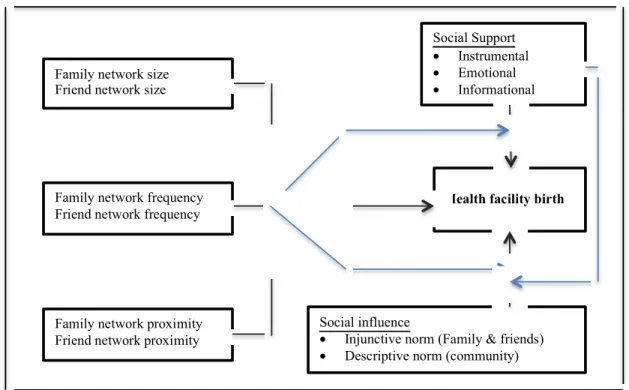
simultaneously exploring in-depth how network characteristics are related to facility birth (Creswell & Clark, 2011; Johnson & Onwuegbuzie, 2004). The conceptual model of my hypothesized relationships between network characteristics and facility birth is depicted in Figure 1.
Figure 1: Conceptual model of the relationship between network characteristics and facility birth.
Family network size Friend network size
Family network frequency Friend network frequency
Family network proximity Friend network proximity
Social Support
• Instrumental
• Emotional
• Informational
Health facility birth
Social influence
• Injunctive norm (Family & friends)
Aims and Hypotheses
Aim 1.1: Determine whether social network structure (size, frequency and proximity), social support (informational, instrumental and emotional) and social norms (injunctive and descriptive norms) are associated with health facility birth among women in rural Ghana.
Hypotheses 1.1:
a) Social network structure (size, frequency and proximity) will be associated with use of health facility birth such that:
I. Lager network size will be positively associated with use of health facility birth. II. Higher frequency of contact with network members will be positively associated
with use of health facility birth.
III. Larger numbers of network members living in close proximity to women will be positively associated with use of health facility birth.
b) Social support will be associated with use of health facility birth such that higher perceptions of informational, instrumental, and emotional support will be positively associated with use of health facility birth.
c) Social norms will be associated with use of health facility birth such that higher perceived prevalence of descriptive and injunctive norms will be positively associated with use of health facility birth.
Aim 1.2: Determine whether network structure (size, frequency and proximity) and network functions (social support and social norms) interact to influence health facility birth.
Hypotheses 1.2:
I. The positive association between higher perception of social support and facility birth will vary by network size, such that the relationship will be stronger for women with larger network size.
II. The positive association between higher perception of social support and facility birth will vary by frequency of contact with network members, such that the relationship will be stronger for women with higher frequency of contact with network members.
III. The positive association between higher perception of social support and facility birth will vary by network proximity, such that the relationship will be stronger for women with a larger number of network members that live in close proximity to them.
b) The relationship between social norms and heath facility birth will vary by network structure:
I. The positive association between higher perceived prevalence of social norms and health facility birth will vary by network size, such that the relationship will be stronger for women with larger network size.
II. The positive association between higher perceived prevalence of social norms and health facility birth will vary by frequency of contact with network members, such that the relationship will be stronger for women with higher frequency of contact with network members.
be stronger for women with a larger number of network members that live in close proximity to them.
c) The relationship between social norms and heath facility birth will vary by social support: I. The positive association between higher perceived prevalence of social norms and
health facility birth will vary by informational support, such that the relationship will be stronger for women with higher perception of informational support. II. The positive association between higher perceived prevalence of social norms and
health facility birth will vary by instrumental support, such that the relationship will be stronger for women with higher perception of instrumental support.
III. The positive association between higher perceived prevalence of social norms and health facility birth will vary by emotional support, such that the relationship will be stronger for women with higher perception of emotional support.
Aim 2:
CHAPTER 4: METHODS
I used a mixed-methods convergent design whereby both quantitative and qualitative data were collected within the same time period but independently of each other, and analyzed
separately (Creswell & Clark, 20011; Teddlie & Tashakkori, 2009). Using the mixed-methods design I was able to quantitatively examine the relationship between structural and functional network characteristics with health facility birth. I was then able to interpret my quantitative findings by qualitatively exploring in-depth how these network characteristics operated to influence women’s pregnancy experiences and place of birth.
For both the qualitative and quantitative components, I used an egocentric network approach whereby the characteristics of rural Ghanaian women’s social networks were examined through responses from women themselves, rather than interviewing all members of their
Data for my dissertation study was collected as part of a larger evaluation study of a Maternal and Newborn Health referral (MNHR) project. I included items that assessed women’s perspectives about their social network characteristics, in a household survey conducted with a random sample of women in two study regions. This allowed me to assess whether social
networks are related to facility delivery. Also, I conducted qualitative data collection to examine women’s most recent pregnancy and birth experiences. I included interview questions that enabled me to conduct a qualitative egocentric network analysis of women’s social networks.
Description of the Study Areas: Northern and Central Regions of Ghana
My dissertation was based in two of Ghana’s ten regions: the Central and Northern regions. These regions represent geographically, socio-demographically and culturally distinct areas of Ghana. Ghana’s 2010 population and housing census estimated the total populations in these regions at 2,201,863 and 2,479,461 respectively (GSS, 2013). Geographically, the Northern region is the largest of the ten regions, and the Central region is slightly smaller (GSS, 2013). The vegetation in the Northern region is mostly grassland, and has one rainy season annually (GSS, 2013a). Farming is the predominant occupation in the Northern region. The Central region, which is considered very rich in natural resources, has semi-deciduous forest vegetation and is bordered by the coast (GSS, 2013b). This region experiences two rainy seasons annually. In the Central region fishing and farming are the predominant occupation in coastal
communities, whereas farming is the main occupation in forested communities. The proportion of the rural population in the Northern region is 70%, and the proportion in the Central region is 53% (GSS, 2013).
other services, and health outcomes (GSS et al., 2009). Both regions have a similarly low employment rate of 9% (GSS, 2013). The literacy rate in the Northern region (28%) is much lower than the rate in the Central region (74%). In both regions more women than men are uneducated (GSS, 2013a; GSS, 2013b). Agricultural households make up 89% of the rural population in the Northern Region, and 73% in the Central region (GSS, 2013). Males are heads of 85% of households in the Northern region and 60% of households in the Central region (GSS, 2013). The average household size is 8 in the Northern region, and 4 in the Central region. However, in both regions households tend to be clustered in close-knit communities in rural areas, with extended family members living nearby. Islam is the predominant religion in the Northern region (60%) whereas Christianity is predominant in the Central region (83%) (GSS, 2013).
Women who live in very remote villages have to walk miles to get to a main road to find transportation.
Polygamy is practiced in the Northern region. Traditionally, Northern region women move from their own community to live in their husband’s after marriage. Therefore, women often have very little interaction with their blood relatives after marriage. Also, it is customary for husbands and mothers-in-laws to make decisions about women’s pregnancy related health needs and to subsequently provide them with resources for pregnancy and delivery care in the Northern region. Conversely, Central region women often do not move away from their
community after marriage, and maintain close interactions with their blood-relatives. Husbands, mothers and mothers-in-law in this region make decision about women’s pregnancy related care, often with the women’s input.
According to the 2014 GDHS the Northern region had the highest total fertility rate (6.6), and the rate in the Central region (4.7) was fifth highest in the country (GSS et al., 2015). The Central region had a MMR of 520 maternal deaths per 100,000 live births and the Northern region had a MMR of 531, both much higher than the national MMR of 485 that year. As mentioned earlier, the proportion of health facility delivery in the Northern region (35%) is lowest among all regions in Ghana, whereas the proportion in the Central region (70%) is lower than the national proportion (73%) (GSS et al., 2015). These data highlight a need to further improve the use of health facility delivery among pregnant women in both regions.
Parent Study Description
Health Systems. The project is known locally as Project Fives Alive. The project was led by the Institute of Health Improvement, in conjunction with the National Catholic Health Service (NCHS), the Ghana Health Service (GHS), a research team from the Institute of Statistical, Social and Economic Research (ISSER) at the University of Legon in Ghana, and an evaluation team from the University of North Carolina (UNC) at Chapel Hill. The objective of Project Fives Alive! (PFA) was to accelerate the achievement of Millennium Development Goals (MDG) four, a 67% reduction in under-five child mortality, and MDG five, a 75% reduction in maternal mortality, by 2015. This was being accomplished through an intervention using quality
improvement (QI) methods in health facilities across Ghana to increase coverage of skilled birth delivery and early postnatal care services (Twum-Danso et al., 2012).
Early intervention evaluation showed promising results in reductions of deaths among children under five, but also showed a need to address unreliable referral systems in rural areas that limited access to care at critical times for pregnant women and newborns. Based on
observations and anecdotal evidence from frontline health providers the project team learned that in addition to structural barriers, cost and transportation challenges, problems with the referral system were also impacted by sociocultural beliefs in primarily rural areas that led to late care seeking and acceptance of referrals. To address these challenges, a supplementary grant known as the MNHR project was developed to extend QI efforts beyond health facilities to mainly focus on rural communities.
and sick newborns in need of access to comprehensive medical care at a level higher than their current point of facility care access. The MNHR study began with a mixed-methods baseline assessment between May and June 2012 to obtain information about the knowledge, attitudes and practices regarding maternal and newborn health, as well as barriers to service use. The baseline assessment allowed the project to develop an appropriate intervention, and was also used as part of the evaluation of the project’s effectiveness overtime. Following the baseline assessment, community-facility Improvement Collaborative Networks ([ICNs] consisting of health providers and key community members) were established in the intervention sites and facility-only ICNs (consisting of health providers) in the comparison sites. These ICNs developed and tested innovative change ideas to improve the MNHR processes at all levels of the health system including community, health post, health center and hospital. This intervention design was used in order to enable evaluation of the effectiveness of community-facility ICN in comparison to the facility-only ICN model used in PFA. A midline quantitative assessment of the MNHR intervention was conducted between October and November 2013 and endline quantitative and qualitative assessments were conducted between January and March 2015.
Dissertation Study
My dissertation research was based on data collected as part of the endline quantitative and qualitative assessments of the MNHR study. To address my specific research questions I included items on social network characteristics in the household survey for the quantitative assessment (Aim 1), and interview questions in the interview guides for the qualitative
Quantitative Study Description
Household Survey: Similar to the baseline and midline assessment, a household survey was designed for the endline assessment, to understand women’s experiences in receiving and accepting referral for maternal and newborn care, and challenges that they experienced in using health services. Survey items included questions on knowledge, practices and attitudes about maternal and newborn referral. Specific indicators of focus were knowledge of health risks of home delivery, attitudes toward facility delivery, and barriers to facility-level delivery.
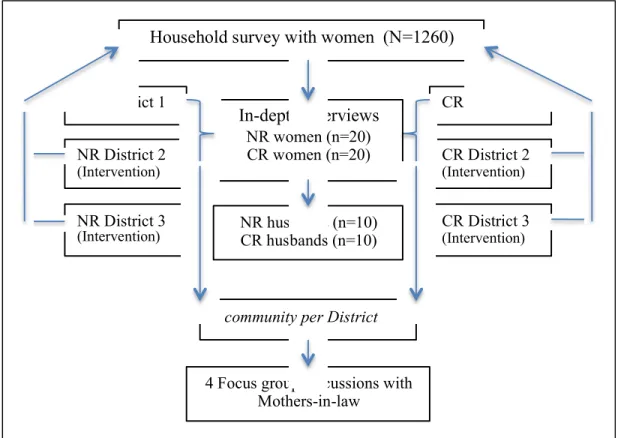
Study Design and Sample Description: The sampling design for the endline assessment was the same as the baseline and midline assessments. Three districts in the Northern region and three districts in the Central region representing the North and South of Ghana respectively were selected. Two of the districts in the Northern region (Nanumba North and Nanumba South) and two of the districts in the Central region (Asikuma Odobea Brakwa and Assin North) were designated as the intervention districts. The third district in the Northern (Gushegu) and Central (Gomoa West) regions were each designated as the comparison districts.
The survey employed a 30 by N cluster sample design, whereby 30 communities were randomly selected in the three designated districts in the Northern region of Ghana (15
practices of women of all ages regardless of whether or not they had a delivery was considered valuable in informing changes in knowledge, attitudes, and barriers associated with maternal and newborn health services. Also, similar to the baseline and midline assessments, the target sample for the endline household survey was 630 each for the intervention and control communities. A total of 1,260 women were interviewed for the survey. Notably, cross-sectional samples
collected for each phase of the project assessment (baseline, midline and endline) were independent of each other.
Quantitative Data Collection Procedures: The UNC-Chapel Hill research evaluation team and the ISSER research team in Ghana designed the survey. Research assistants recruited women participants at the women’s homes and provided them with informed consent before administering the survey. The research assistants conducted face-to-face interviews in the native languages of the women (Twi and Fanti in the Central region, and Dagbani and Lekpepkel in the Northern region).
Selection Criterion: For the purpose of my dissertation data analysis the selection criterion for my sample was women with delivery in the past three years, which enabled me to capture as many women as possible in my sample, while being mindful of concerns about recall bias.
group 1 proportion (ICF Macro, 2010; GSS, 2011). My sample size (N=783) ensures 80% statistical power using a two-sided statistical test with a p-value = 0.05.
Measures: The endline household survey contained my outcome and control measures, later described in this section. I developed additional questions of social network structure and functions based on existing measures. I subsequently describe the variables I included in my analysis of the relationship between social network characteristics and health facility birth (See Appendices B and C).
Outcome Measure: To address aim 1 of my study, I used the measure of health facility birth, specifically whether or not a woman delivered in a health facility during her most recent pregnancy (Table 4.1). The response categories for this variable were dichotomized into home or health facility.
Table 4.1: Outcome measure
Variable names Measure Response category Item #
Health facility birth
Where was their most recent birth delivery
Recoded as:
1 – health facility (hospital, health center, CHPS, or other facility)
0 – home (home or home of TBA, other)
Q67B