1
2017 ACC/AHA/HFSA/ISHLT/ACP Advanced Training
Statement on Advanced Heart Failure and Transplant
Cardiology (Revision of the ACCF/AHA/ACP/HFSA/ISHLT
2010 Clinical Competence Statement on Management of
Patients With Advanced Heart Failure and Cardiac Transplant)
A Report of the ACC Competency Management Committee
WRITING COMMITTEE MEMBERS
Mariell Jessup, MD, FACC, FAHA, Chair;
Mark H. Drazner, MD, MSc, FACC, FAHA, FHFSA, Vice Chair;
Wendy Book, MD, FACC; Joseph C. Cleveland, Jr, MD, FACC*; Ira Dauber, MD, FACC, FAHA, FACP†;
Susan Farkas, MD, FACC; Mahazarin Ginwalla, MD, MS, FACC*; Jason N. Katz, MD, MHS*;
Peggy Kirkwood, RN, MSN, ACNPC, CHFN, AACC; Michelle M. Kittleson, MD, PhD, FACC;
Joseph E. Marine, MD, FACC; Paul Mather, MD, FACC, FACP, FAHA, FHFSA‡;
Alanna A. Morris, MD, MSc§; Donna M. Polk, MD, MPH, FACC, FAHA;
Antoine Sakr, MD, FACC; Kelly H. Schlendorf, MD, MHS†; Esther E. Vorovich, MD, MSCE, FACC
ACC COMPETENCY MANAGEMENT COMMITTEE
Eric S. Williams, MD, MACC, Chair; Jonathan L. Halperin, MD, FACC, Co-Chair;
Jesse E. Adams III, MD, FACC; James A. Arrighi, MD, FACC; Eric H. Awtry, MD, FACC;
Eric R. Bates, MD, FACC; John E. Brush, Jr, MD, FACC; Lori Daniels, MD, MAS, FACC;
Susan Fernandes, LPD, PA-C; Rosario Freeman, MD, MS, FACC; Sadiya S. Khan, MD;
Joseph E. Marine, MD, FACC; John A. McPherson, MD, FACC; Lisa A. Mendes, MD, FACC;
Thomas Ryan, MD, FACC; Chittur A. Sivaram, MBBS, FACC; Robert L. Spicer, MD, FACC;
Andrew Wang, MD, FACC, FAHA; Howard H. Weitz, MD, MACP, FACC
Circ Heart Fail is available at http://circheartfailure.ahajournals.org DOI: 10.1161/HHF.0000000000000021
*Official International Society for Heart & Lung Transplantation Representative. †Official Heart Failure Society of America Representative. ‡Official American College of Physicians Representative. §Official American Heart Association Representative.
This document was approved by the American College of Cardiology Lifelong Learning Oversight Committee, the American Heart Association Science Advisory and Coordinating Committee, the Heart Failure Society of America Board of Trustees, the International Society for Heart & Lung Transplantation Board of Trustees, and the American College of Physicians Board of Regents in February 2017, and by the American Heart Association Executive Committee in March 2017. For the purpose of transparency, disclosure information for the ACC Lifelong Learning Oversight Committee, the approval body of the convening organization of this document, is available online.
The Comprehensive RWI Data Supplement table for authors is available at http://circheartfailure.ahajournals.org/lookup/suppl/doi:10.1161/ HHF.0000000000000021/-/DC1.
The Comprehensive RWI Data Supplement table for reviewers is available at http://circheartfailure.ahajournals.org/lookup/suppl/doi:10.1161/ HHF.0000000000000021/-/DC2.
The American Heart Association requests that this document be cited as follows: Jessup M, Drazner MH, Book W, Cleveland JC Jr, Dauber I, Farkas S, Ginwalla M, Katz JN, Kirkwood P, Kittleson MM, Marine JE, Mather P, Morris AA, Polk DM, Sakr A, Schlendorf KH, Vorovich EE. 2017 ACC/AHA/ HFSA/ISHLT/ACP advanced training statement on advanced heart failure and transplant cardiology (revision of the ACCF/AHA/ACP/HFSA/ISHLT 2010 clinical competence statement on management of patients with advanced heart failure and cardiac transplant): a report of the ACC Competency Management Committee. Circ Heart Fail. 2017;10:e000021. doi: 10.1161/HHF.0000000000000021.
This article has been copublished in the Journal of the American College of Cardiology and the Journal of Cardiac Failure.
Copies: This document is available on the World Wide Web sites of the American College of Cardiology (www.acc.org), American Heart Association (professional.heart.org), Heart Failure Society of America (www.hfsa.org), International Society for Heart & Lung Transplantation (www.ishlt.org), and American College of Physicians (www.acponline.org). A copy of the document is available at http://professional.heart.org/statements by using either “Search for Guidelines & Statements” or the “Browse by Topic” area. To purchase additional reprints, call 843-216-2533 or e-mail kelle.ramsay@ wolterskluwer.com.
Expert peer review of AHA Scientific Statements is conducted by the AHA Office of Science Operations. For more on AHA statements and guidelines development, visit http://professional.heart.org/statements. Select the “Guidelines & Statements” drop-down menu, then click “Publication Development.”
Permissions: Multiple copies, modification, alteration, enhancement, and/or distribution of this document are not permitted without the express permission of the American Heart Association. Instructions for obtaining permission are located at http://www.heart.org/HEARTORG/General/Copyright-Permission-Guidelines_UCM_300404_Article.jsp. A link to the “Copyright Permissions Request Form” appears on the right side of the page.
(Circ Heart Fail. 2017;10:e000021. doi: 10.1161/HHF.0000000000000021.)
© 2017 by the American College of Cardiology Foundation, American Heart Association, Inc., Heart Failure Society of America, and International Society for Heart & Lung Transplantation.
Table of Contents
Preamble . . . 2
1. Introduction . . . 3
1.1. Document Development Process . . . 3
1.1.1. Writing Committee Organization . . . 3
1.1.2. Document Development and Approval . . . 3
1.2. Background and Scope . . . 3
1.2.1. Evolution of AHFTC . . . 4
1.2.2. Levels of Training. . . 4
1.2.3. Methods for Determining Procedural Numbers . . . 4
2. General Standards . . . 5
2.1. Faculty . . . 5
2.2. Facilities . . . 5
2.3. Equipment. . . 5
2.4. Ancillary Support . . . 5
3. Training Components. . . 5
3.1. Didactic Program . . . 5
3.2. Clinical Experience. . . 11
3.3. Hands-On Procedural Experience. . . 12
3.4. Diagnosis and Management of Emergencies and Complications . . . 12
3.5. Diagnosis and Management of Less Common Clinical Conditions and Syndromes . . . 12
3.6. Research and Scholarly Activity. . . 12
4. Training Requirements. . . 13
4.1. Development and Evaluation of Core Competencies . . . 13
4.2. Number of Procedures . . . 13
4.3. Heart Failure . . . 14
4.3.1. Inpatient . . . 14
4.3.1.1. Initial Assessment. . . 14
4.3.1.2. Hemodynamic Interpretation . . . 14
4.3.1.3. Cardiogenic Shock . . . 14
4.3.1.4. Decompensated Heart Failure . . . 14
4.3.2. Outpatient . . . 15
4.4. Pulmonary Hypertension . . . 15
4.4.1. Inpatient . . . 15
4.4.2. Outpatient . . . 15
4.5. Mechanical Circulatory Support. . . 15
4.5.1. Inpatient . . . 15
4.5.2. Outpatient . . . 16
4.6. Cardiac Transplantation . . . 16
4.6.1. Inpatient . . . 16
4.6.1.1. Pretransplant Management. . . 16
4.6.1.2. Acute Postoperative Management . . . 16
4.6.1.3. Postoperative Complications . . . 16
4.6.1.4. Inpatient Heart Transplant Management Following the Index Admission . . . 16
4.6.2. Outpatient . . . 16
4.6.2.1. Immunosuppression . . . 16
4.6.2.2. Chronic Complications. . . 16
4.7. Shared Decision Making and Palliative Care . . . 17
5. Evaluation of Proficiency. . . 17
References . . . 17
Appendix 1. Author Relationships With Industry and Other Entities (Relevant) . . . 18
Appendix 2. Peer Reviewer Information . . . 19
Appendix 3. Abbreviation List. . . 21
Preamble
Since the 1995 publication of its Core Cardiovascular Training Statement (COCATS),1 the American College of Cardiology (ACC) has played a central role in defining the knowledge, experiences, skills, and behaviors expected of all clinical car-diologists upon completion of training. Subsequent updates have incorporated major advances and revisions—both in content and structure—including, most recently, a further move toward competency (outcomes)-based training, and the use of the 6-domain competency structure promulgated by the Accreditation Council for Graduate Medical Education (ACGME) and the American Board of Medical Specialties and endorsed by the American Board of Internal Medicine (ABIM). A similar structure has been used by the ACC to describe the aligned general cardiology lifelong learning competencies that all practicing cardiologists are expected to maintain. Many hospital systems also now use the 6-domain structure as part of medical staff privileging and peer-review professional competence assessments.
Whereas COCATS has focused on general clinical cardiol-ogy, ACC Advanced Training Statements define selected com-petencies that go beyond those expected of all cardiologists and require training beyond a standard 3-year cardiovascular disease fellowship. This includes sub-subspecialties for which there is an ABIM added-qualification designation, such as advanced heart failure and transplant cardiology (AHFTC). The Advanced Training Statements also describe key expe-riences and outcomes necessary to maintain or expand com-petencies during practice, although over time, these will be supplemented by additional lifelong learning statements that address the commitment to sustaining and enriching compe-tency over the span of a career.
The ACC Competency Management Committee oversees the development and periodic revision of the cardiovascu-lar training and competency statements. A key feature of competency-based training and performance is an outcomes-based evaluation system. Although specific areas of training may require a minimum number of procedures or duration of training time to ensure adequate exposure to the range of clinical disorders and to effectively evaluate the trainee, it is the objective assessment of proficiency and outcomes that demonstrates the trainee’s achievement of competency. Evaluation tools may include in-training examinations, direct observation, procedure logbooks, simulation, con-ference presentations, and multisource (360°) evaluations, among others. For practicing physicians, these tools may also include professional society registry or hospital quality data, peer-review processes, and patient satisfaction surveys. A second feature of a competency-based training program is the recognition that learners develop some competency com-ponents at different rates. For multiyear training programs, assessment of selected representative curricular milestones during training can identify learners or areas that require additional focused attention.
The recommendations in the ACC cardiovascular training statements are based on available evidence and, where evi-dence is lacking, reflect expert opinion. The writing commit-tees are broad-based, and typically include content experts, general cardiology and sub-subspecialty training directors,
practicing cardiologists, and early-career representatives. All documents go through a rigorous process of peer-review and public comment. Recommendations are intended to guide the assessment of competence of cardiovascular care provid-ers who are beginning independent practice as well as those undergoing periodic review to help ensure that competence is maintained.
This Advanced Training Statement addresses the added competencies required of sub-subspecialists in AHFTC for diagnosis and management at a high level of skill of patients with advanced heart failure who may also undergo placement of mechanical circulatory support devices or cardiac trans-plantation. It is intended to complement the basic training in heart failure required of all trainees during the standard 3-year cardiovascular fellowship. The training requirements and des-ignated clinical competencies in this report focus on the core competencies reasonably expected of all AHFTC specialists. It also identifies some aspects of AHFTC that go beyond the core expectations and that may be achieved by some AHFTC specialists based on career focus, either during or following formal AHFTC fellowship training.
The work of the writing committee was supported exclu-sively by the ACC without commercial support. Writing committee members volunteered their time to this effort. Conference calls of the writing committee were confidential and attended only by committee members. To avoid actual, potential, or perceived conflict of interest arising as a result of relationships with industry (RWI) or other entities, each member of the writing committee and peer reviewer of the document is required to disclose all current healthcare-related relationships, including those existing 12 months before initia-tion of the writing effort. The ACC Competency Management Committee reviewed these disclosures to identify products (marketed or under development) pertinent to the document topic. Based on this information, the writing committee was selected to ensure that the Chair and a majority of members have no relevant RWI. Authors with relevant RWI were not permitted to draft initial text or vote on recommendations or curricular requirements to which their RWI might apply. RWI was reviewed at the start of all meetings and confer-ence calls and updated as changes occurred. Relevant RWI for authors is disclosed in Appendix 1. To ensure transpar-ency, comprehensive RWI for authors, including RWI not pertinent to this document, is available as Data Supplement 1. Peer reviewers, along with their employment information and affiliation in the review process, are shown in Appendix 2. There are no RWI restrictions for participation in peer review, promoting the opportunity for comment on the document from a variety of constituencies/viewpoints to inform final document content. However, all reviewers must disclose all healthcare-related RWI and other entities to participate in the review process, and their disclosure information is available as Data Supplement 2. Disclosure information for the ACC Competency Management Committee is also available online, as is the ACC disclosure policy for document development.
Eric S. Williams, MD, MACC Chair, ACC Competency Management Committee Jonathan L. Halperin, MD, FACC Co-Chair, ACC Competency Management Committee
1. Introduction
1.1. Document Development Process
1.1.1. Writing Committee Organization
The writing committee consisted of a broad range of mem-bers representing the ACC, the American Heart Association (AHA), the Heart Failure Society of America, the International Society for Heart & Lung Transplantation, and the American College of Physicians, identified because they perform >=1 of the following roles: cardiovascular training program direc-tors; AHFTC training program direcdirec-tors; early-career experts through mid- and later-career experts; general cardiologists; AHFTC specialists representing both the academic and com-munity-based practice settings as well as small, medium, and large institutions; specialists in all aspects of AHFTC, including mechanical circulatory support (MCS), cardiac resynchronization therapy, and pulmonary arterial hyperten-sion; specialists in cardiothoracic surgery, critical care cardi-ology, electrophysicardi-ology, and adult congenital heart disease; physicians experienced in training and working with the ACGME/Residency Review Committee as well as the ABIM Cardiovascular Board and Competency Committee; physi-cians experienced in defining and applying training standards according to the 6 general competency domains promul-gated by the ACGME and the American Board of Medical Specialties and endorsed by the ABIM; and advanced practice nurses. This writing committee met the College’s disclosure requirements for RWI as described in the Preamble.
1.1.2. Document Development and Approval
The writing committee convened by conference call and e-mail to finalize the document outline, develop the initial draft, revise the draft based on committee feedback, and ulti-mately approve the document for external peer review.
The document was reviewed by 11 official representa-tives from the ACC, AHA, Heart Failure Society of America, International Society for Heart & Lung Transplantation, and American College of Physicians, as well as by 35 additional content reviewers, including AHFTC training program direc-tors (Appendix 2). The document was simultaneously posted for public comment from November 1, 2016, to November 18, 2016, resulting in comments from 6 additional reviewers. A total of 445 comments were submitted on the document. All comments were reviewed and addressed by the writing committee. A member of the ACC Competency Management Committee served as lead reviewer to ensure a fair and bal-anced peer review resolution process. Both the writing com-mittee and the ACC Competency Management Comcom-mittee approved the final document to be sent for organizational approval. The ACC, AHA, Heart Failure Society of America, International Society for Heart & Lung Transplantation, and American College of Physicians approved the document for publication. This document is considered current until the ACC Competency Management Committee revises or with-draws it from publication.
1.2. Background and Scope
The original 1995 American College of Cardiology recom-mendations for training in adult cardiology evolved from
COCATS.1 After several iterations, COCATS 4 focuses on trainee outcomes that require delineation of specific compo-nents of competency within the subspecialty, definition of the tools necessary to assess training, and establishment of mile-stones documenting the trainee’s progression toward indepen-dent competency.2 Ultimately, the goal is for the trainee to develop the professional skillset to be able to evaluate, diag-nose, and treat patients with acute and chronic cardiovascular disturbances.
Each COCATS 4 document includes individual task force reports that address subspecialty areas in cardiology, each of which is an important component in training a fellow in car-diovascular disease. Task Force 12 of that document addresses training in heart failure and updated previous standards for general cardiovascular training for fellows enrolled in cardio-vascular fellowship programs.3 It addresses faculty, facilities, equipment, and ancillary support. It also addresses training components, including didactic, clinical, and hands-on expe-rience, and the number of procedures and duration of training. Importantly, the COCATS 4 Task Force 12 report did not pro-vide specific guidelines for AHFTC training.
This document focuses on training requirements for cardi-ologists seeking additional training in AHFTC, a subspecialty of adult cardiology. For training standards related to pediat-ric heart failure, readers should refer to the SPCTPD/ACC/ AAP/AHA Training Guidelines for Pediatric Cardiology Fellowship Programs Task Force 7: Pediatric Cardiology Fellowship Training in Pulmonary Hypertension, Advanced Heart Failure, and Transplantation.4
1.2.1. Evolution of AHFTC
In 2008, the American Board of Medical Specialties approved a proposal by the ABIM to recognize the secondary subspe-cialty of AHFTC. The ACGME approved the training program requirements for AHFTC, effective in 2013. These actions acknowledged the special competencies, knowledge, and skills required to care for patients with advanced heart fail-ure, including the possible use of ventricular assist devices or cardiac transplantation. Over subsequent years, an increasing number of cardiologists have chosen to focus their research and/or clinical practice in this area.
The ABIM requires 3 years of cardiology fellowship training before fellows may sit for the certification exami-nation in cardiovascular medicine. Cardiologists seeking additional certification in AHFTC must complete a 4th year of training that provides focused experience with a variety of heart failure patients and procedures, as outlined in the following text.
1.2.2. Levels of Training
COCATS 4 updated standards for training fellows in cardio-vascular medicine and established consistent training criteria across all aspects of general cardiology, including heart fail-ure.3 For the cardiovascular fellowship, the following 3 levels of training are delineated for training in heart failure.
•
Level I training, the basic training required of train-ees to become competent consultant cardiologists, is required of all fellows in cardiology, and can be accom-plished as part of a standard 3-year training program in general cardiology.•
Level II training, also described in COCATS 4, refers to additional training that enables some cardiologists to perform or interpret specific procedures or render more specialized care for patients with certain conditions. Level II training in selected areas may be achieved by some trainees during the standard 3-year cardiovascu-lar fellowship, depending on their career goals and use of elective rotations. In the case of heart failure, Level II training is intended for individuals seeking expertise in caring for heart failure patients, particularly those with more advanced and challenging syndromes. Level II emphasizes more detailed hemodynamic assessment of these patients and focuses on transitions of care for patients with heart failure as well as the systems of care necessary to avoid hospital admission or readmission. Level II training also prepares individuals to perform initial screening of patients cared for at nontransplant/ nondurable MCS facilities for advanced therapies, in collaboration with Level III–trained experts at advanced therapy sites.•
Level III training, the primary focus of this document, requires training and experience beyond the cardio-vascular fellowship for the acquisition of specialized knowledge and competency to render advanced care for patients with specific conditions. Level III train-ing is required of individuals seektrain-ing subspecialty board certification in AHFTC. Trainees in AHFTC are expected to have completed 3 years of a cardiovas-cular fellowship and achieved Level I competency as described in the ACC’s Core Cardiovascular Training Statement2 and the COCATS 4 Task Force 12 report3 before beginning the AHFTC fellowship. Level II training may be completed prior to or in conjunction with Level III training.1.2.3. Methods for Determining Procedural Numbers The recommended number of procedures performed and interpreted by trainees under faculty supervision has been developed based on the experience and opinions of the mem-bers of the writing group; previously published competency statements and COCATS documents; and policies of the ACGME, ABIM, and United Network for Organ Sharing. In addition, the writing committee surveyed AHFTC train-ing program directors for additional insight into procedural volumes. Of 69 directors of ABIM–recognized training pro-grams, 21 responded. The procedural volumes and number of technical experiences suggested in this document were considered the minimum necessary to expose trainees to a sufficient range and complexity of clinical material and allow supervising faculty to evaluate the competency of each trainee. These procedural numbers (see Section 4.2) are intended as general guidance, based on the needs and progress of typical AHFTC trainees in typical programs. Those considering these thresholds should bear in mind the fundamental nature of educational milestones—that profi-ciency and outcomes, rather than length of exposure or the exact number of procedures performed, are the dominant requirements. Flexibility is inherent to this concept, and the ACGME mandates that all programs establish milestones for the acquisition of various competencies by trainees during the course of fellowship training.
2. General Standards
2.1. Faculty
Engaged faculty committed to teaching are critical to the suc-cess of an AHFTC training program. Faculty must include specialists with broad knowledge of and experience in advanced heart failure, including advanced therapies and end-of-life care; management of patients with temporary and dura-ble MCS devices and their complications; and care of heart transplant recipients, including management of acute and long-term complications. The most recent ACGME Program Requirements for Graduate Medical Education in AHFTC require a single designated program director and at least 1 additional key clinical faculty member for every 1.5 fellows.5 Each of the key clinical faculty members should be currently certified in AHFTC by the ABIM and be able to dedicate, on average, 10 hours per week throughout the year to the edu-cational program. In addition to developing, implementing, supervising, mentoring, and evaluating the fellows’ clinical and research education, at least 50% of key clinical faculty members must also demonstrate productivity in scholarship, specifically, peer-reviewed funding and/or publication of original research, reviews, editorials, case reports, or textbook chapters.
2.2. Facilities
Required facilities include designated areas for outpatient and inpatient care of patients with heart failure. Inpatient facili-ties must provide a safe and effective environment for optimal management of patients with heart failure of varying severity, ranging from mild decompensation to refractory cardiogenic shock. A safe and sterile catheterization laboratory is neces-sary to provide instruction in right heart catheterization and endomyocardial biopsy. Trainees should have access to operat-ing rooms and staff to enable observation of ventricular assist device implants, heart procurements, and transplant surgeries. Trainees should have access to outpatient facilities supported by dedicated nursing staff providing exposure to coordinated longitudinal management of patients with chronic heart fail-ure as well as training in the consultative aspects of outpa-tient heart failure cardiology. There should be an established system to promote effective transitions of care that ensures open communication between caregivers in the outpatient and inpatient settings. Access to an HLA laboratory should be provided. Appropriate space for didactic conferences should be available. Quality and safety initiatives should be in place to assess quality of care and clinical outcomes longitudinally across inpatient and outpatient arenas throughout the health-care system.
2.3. Equipment
Cardiopulmonary exercise stress testing equipment is neces-sary for education in the performance and interpretation of this crucial modality in patients with heart failure. Additional technology that aids in the diagnosis, risk stratification, and management of patients with heart failure, such as echocar-diography, transesophageal echocarechocar-diography, computed tomography, magnetic resonance imaging, positron emission tomography, invasive angiography, and electrophysiology
facilities, should be available. Equipment for interrogation of implantable electronic devices, including cardiac resyn-chronization therapy and implantable cardioverter-defibrilla-tors should be available for both inpatients and outpatients. Trainees should have access to catheterization laboratories equipped with both thermodilution and Fick-based modali-ties for measuring cardiac output. Equipment for management and interrogation of durable MCS devices (eg, Heartmate, HeartWare, or Total Artificial Heart) should be available so trainees gain proficiency in their use. When institutionally available, temporary, nondurable MCS devices including but not limited to intra-aortic balloon pump, TandemHeart, Impella devices, and/or extracorporeal membrane oxygen-ation should be accessible to trainees. It is not expected that each institution will have all of these devices, but every center should have some. At all facilities, resuscitation equipment must be readily accessible.
2.4. Ancillary Support
Level III trainees should communicate with ancillary person-nel to ensure comprehensive, evidence-based care. Critical to success is collaborative interaction with various physi-cians from within cardiology, including interventionalists, advanced imaging specialists, electrophysiologists, congenital heart disease specialists, and other fields of general medical and surgical practice, to address and treat the multiple comor-bidities often seen in heart failure patients. Key specialties include but are not limited to cardiac and transplant surgeons, palliative care practitioners, infectious disease specialists, gastroenterologists, hepatologists, nephrologists, pulmonolo-gists, pulmonary hypertension (PH) specialists, and experts in sleep medicine. In addition, communication with primary care physicians, geriatricians, obstetricians, endocrinologists, and oncologists is important for specific patient populations. Also essential is interaction with vital healthcare professionals including nurse practitioners and physician assistants, nurses, pharmacists, dieticians, physical and occupational therapists, and social workers.
3. Training Components
3.1. Didactic Program
Didactic instruction may take place in a variety of formats, including lectures, journal clubs, grand rounds, clinical case presentations, research conferences, simulator-based train-ing, and patient safety or quality improvement conferences. Discussions should focus on heart failure, PH, MCS, heart transplantation, and the medical knowledge items outlined in Table 1. Case conferences, in particular, will allow AHFTC trainees opportunities to reflect on and learn from complex cases, generate ideas for stabilizing or improving patients’ health status and systems of care, and develop skills as team leaders and educators. Journal clubs bring advances in the field to trainees and provide opportunities to critically review published literature, including assessments of validity and generalizability. Neither the most recent ACGME Program Requirements for Graduate Medical Education in AHFTC5 nor the COCATS 4 Heart Failure report3 specifies the fre-quency of didactic instruction, but weekly didactic sessions
Table 1. Competency Components and Curricular Milestones for Level III Training in Advanced Heart Failure and Transplant Cardiology
Milestones (Months)
Medical Knowledge All12 Add
Heart Failure
1. Know the principles of excitation-contraction coupling and the contractile apparatus of the cardiomyocyte. x 2. Know the pathophysiology of heart failure, including such concepts as ventricular remodeling, neurohormonal activation,
fetal gene expression, wall stress, signaling pathways (calcium, beta-adrenergic signaling, and nitric oxide), myocardial energetics, electrical and mechanical dyssynchrony, and the role of the extracellular matrix.
x
3. Know common genetic underpinnings of both dilated and hypertrophic cardiomyopathy, their clinical phenotypes, and the role of genetic testing for patients and their families.
x
4. Know important hemodynamic principles related to heart failure, including normal cardiac physiology, contractility, preload, afterload, and interpretation of pressure-volume loops and ventricular performance (Frank-Starling) curves.
x
5. Know the epidemiology and risk determinants of left ventricular dysfunction, ventricular hypertrophy, and heart failure (both with reduced and preserved ejection fraction), including incidence and prevalence overall and in special populations.
x
6. Know classification methods of heart failure including American College of Cardiology/American Heart Association stages, New York Heart Association classes, and INTERMACS (Interagency Registry for Mechanically Assisted Circulatory Support) profiles.
x
7. Know the risk factors, methods, and risk scores commonly used to stratify patients with heart failure, including their limitations, and how these methods are used to evaluate the need for advanced therapies.
x
8. Know the epidemiology and pathophysiology of acute systolic or diastolic heart failure, including new-onset and acute-on-chronic heart failure.
x
9. Know typical and atypical clinical presentations of patients with advanced heart failure (eg, cachexia, worsening renal function, cognitive impairment, medication intolerance, ventricular tachycardia) and their management.
x
10. Know the risks of arterial and venous thromboembolic complications in patients with heart failure. x 11. Know the pathophysiology, clinical presentation, and differential diagnosis of heart failure with preserved ejection fraction
and its management.
x
12. Know the pathophysiology, clinical presentation, and methods of risk stratification of patients with hypertrophic cardiomyopathy and its management.
x
13. Know the distinguishing features of and appropriate diagnostic studies for specific etiologies of heart failure, including coronary artery disease, valvular heart disease, hypertension, myocarditis, infiltrative processes, toxins (eg, illicit drugs), chemotherapy, pregnancy, congenital heart disease, radiation, pericardial processes, endocrinopathies, high-output states, stress cardiomyopathy, and inherited syndromes.
x
14. Know the indications for percutaneous and surgical intervention for valvular heart disease in patients with heart failure. x 15. Know the evidence base, including randomized clinical trial data, supporting contemporary guideline-directed heart failure
therapy.
x
16. Know the pharmacology of common inotropes and vasopressors used in the management of low-output heart failure and shock.
x
17. Know key principles regarding transitions of care between the outpatient and inpatient setting, and vice versa, including indications for hospitalization and readiness for discharge for patients with heart failure.
x
18. Know the role of assays for natriuretic peptide and other biomarkers in the management of patients with heart failure. x 19. Know the utility of noninvasive imaging (eg, echocardiography, nuclear cardiology, cardiac magnetic resonance imaging,
and positron emission tomography) in assessment of patients with cardiomyopathy (including those related to valvular heart disease) and heart failure.
x
20. Know the strengths and limitations of common quality-of-life tools (eg, Minnesota Living with Heart Failure and Kansas City Cardiomyopathy Questionnaire) used in patients with heart failure.
x
21. Know which lifestyle choices and comorbidities (eg, obstructive sleep apnea, depression, anemia, diabetes, hypertension, renal failure) contribute to the development of or clinical instability of patients with heart failure, as well as potential management options for such comorbid conditions.
x
22. Know the roles of submaximal (including 6-minute walk) and maximal exercise testing, and cardiopulmonary stress testing in patients with heart failure.
x
23. Know the roles of implantable cardiac electronic device therapy in patients with heart failure, including cardioverter-defibrillators, pacemakers, and resynchronization devices.
x
24. Know the roles of coronary imaging, ischemia testing, viability testing, and revascularization in patients with heart failure. x 25. Know the role of invasive hemodynamic assessment in patients with decompensated heart failure. x 26. Know the epidemiology and pathophysiology of the cardiorenal syndrome and its management. x 27. Know the pathophysiology of cardiac dysfunction associated with cirrhosis and the hemodynamic consequences of portal
hypertension.
x
28. Know the role of implantable technology to allow monitoring of patients with heart failure, including from afar (ie, remote monitoring).
x
29. Know the definition of frailty, tools available for assessment of frailty, and how frailty influences diagnosis, prognosis, and candidacy for advanced therapies in patients with heart failure.
x
30. Know the roles of palliative and hospice care in patients with heart failure and the steps needed to implement them. x 31. Know the role of endomyocardial biopsy in the evaluation of myocarditis and infiltrative cardiomyopathies. x 32. Know the various chemotherapy agents associated with heart failure and the management of cardiac complications of
chemotherapy.
x
33. Know the potential contribution of arrhythmias to development of heart failure and/or decompensation and appropriate pharmacological and ablation options for therapy.
x
34. Know the roles of exercise training and cardiac rehabilitation in patients with heart failure with or without pulmonary hypertension, cardiac transplantation, or mechanical circulatory support.
x
Pulmonary Hypertension
35. Know the World Heart Organization classification and etiologies of pulmonary hypertension. x 36. Know the epidemiology, risk factors, prognostic factors, and natural history of pulmonary hypertension. x 37. Know the functional classes and appropriate treatment of patients with each type of pulmonary hypertension. x 38. Know the role of invasive hemodynamic assessment, including when to perform vasoreactivity testing to assess and
manage patients with pulmonary hypertension, including pre- and post-capillary components.
x
39. Know the classes of medications available to treat pulmonary hypertension and their use alone and in combination, including management of side effects.
x
40. Know the roles of exercise and cardiopulmonary testing to assess and manage patients with pulmonary hypertension. x 41. Know the indications for referral to a specialized pulmonary hypertension center. x 42. Know the roles of balloon atrial septostomy, thromboendarterectomy, and lung transplantation in patients with pulmonary
arterial hypertension.
x
Mechanical Circulatory Support
43. Know indications for and contraindications to both temporary and durable mechanical circulatory support for bridging and destination therapy.
x
44. Know the expected survival following use of durable mechanical circulatory support. x 45. Know clinical determinants favoring mechanical circulatory support versus transplantation as durable strategies. x 46. Know optimal anticoagulation strategies for patients with ventricular assist devices. x 47. Know the management principles for patients with cardiogenic shock, including selection of temporary mechanical
circulatory support.
x
48. Know the management principles and potential complications of extracorporeal membrane oxygenation. x 49. Know the anatomic, surgical, and comorbid conditions that may impact mechanical circulatory support strategies in adult
patients with congenital heart disease.
x
50. Know intraoperative and early postoperative complications of durable mechanical circulatory support. x 51. Know the risk factors for and presentations and management of common complications of durable ventricular assist
devices, including right heart failure, stroke, driveline infections, device thrombosis, hemolysis, gastrointestinal bleeding, and aortic insufficiency.
x
52. Know the risk scores that predict right heart failure in patients with left ventricular assist devices. x
(Continued )
Table 1. Continued
Milestones (Months)
Medical Knowledge (continued) All12 Add
Heart Failure (continued)
Cardiac Transplantation
53. Know the indications for and contraindications to heart transplantation. x
54. Know when patients listed for heart transplant need mechanical circulatory support, and the potential benefits and complications of this type of therapy.
x
55. Know current United Network for Organ Sharing allocation listing policies for heart transplantation. x 56. Know the expected short- and long-term survival rates following heart transplantation. x 57. Know the role of multiorgan (eg, heart-lung, heart-kidney, heart-liver) transplantation. x 58. Know the principles of immunology that pertain to heart transplantation, including sensitization and histocompatibility. x 59. Know and understand the efficacy, risks, and limitations of currently available methods for desensitization of patients
awaiting heart transplantation.
x
60. Know the preoperative considerations applicable to potential heart transplant recipients. x 61. Know the anatomic, surgical, and comorbid conditions that may impact transplant surgery planning and outcomes in adult
patients with congenital heart disease, necessitating evaluation at a transplant center with expertise in these conditions.
x
62. Know the intraoperative and early postoperative complications of heart transplantation and their management. x 63. Know the process by which the heart procurement team interacts with teams procuring other organs from donors. x
64. Know the factors used to assess the suitability of a potential donor heart. x
65. Know the mechanisms of action, side effects, and potential drug–drug interactions of immunosuppressant drugs. x 66. Know how cardiac denervation impacts cardiac physiology, including response to exercise and pharmacological agents,
and clinical manifestations of myocardial ischemia.
x
67. Know the risk factors for, clinical presentations of, and treatment for hyperacute, acute cellular, and antibody- mediated rejection.
x
68. Know the risk factors, clinical presentation, International Society for Heart & Lung Transplantation grading system, and strengths and limitations of diagnostic tools for cardiac allograft vasculopathy.
x
69. Know when to consider cardiac retransplantation. x
70. Know common post-transplant complications and how to monitor them in the outpatient setting, including hypertension, diabetes, malignancy, renal dysfunction, infection, obesity, and endocrinological and neurological sequelae.
x
71. Know the strengths and limitations of strategies used to detect and monitor transplant rejection. x 72. Know the grades of acute cellular and antibody-mediated transplant rejection, based on interpretation of an endomyocardial
biopsy.
x
73. Know the clinical presentation of common opportunistic infections in cardiac transplant recipients, as well as the potential for donor transmission of infectious organisms.
x
Evaluation Tools: chart-stimulated recall, direct observation, and in-training examination.
Patient Care and Procedural Skills All12 Add
Heart Failure
1. Skill to oversee genetic testing of patients with cardiomyopathy, including selection of patients and collaboration with genetic counselors.
x
2. Skills to optimize therapeutic regimens based on guideline-directed pharmacological and device-based therapies in stable patients with heart failure with reduced ejection fraction.
x
3. Skill to estimate the jugular venous pressure by clinical examination. x
4. Skills to optimize a diuretic regimen in both the inpatient and outpatient settings. x 5. Skill to decide whether and when to hospitalize patients with heart failure. x 6. Skill to optimize pharmacological therapies in patients with decompensated heart failure, including adjustments after
stabilization and prior to discharge.
x
7. Skills to assess left ventricular systolic and diastolic properties noninvasively in patients with heart failure. x 8. Skill to select individualized diagnostic testing for patients with a new diagnosis of heart failure. x
Table 1. Continued
Milestones (Months)
Medical Knowledge (continued) All12 Add
9. Skill to minimize the risk of hospital readmission following discharge for decompensated heart failure. x
10. Skills to recognize and stabilize patients with cardiogenic shock. x
11. Skills to recognize and stabilize noncardiogenic shock in patients with cardiomyopathy or a history of heart failure. x 12. Skills to perform and interpret findings from right heart catheterization in patients with heart failure. x 13. Skills to assess risk of patients with heart failure undergoing cardiac or noncardiac surgery, and to manage their
hemodynamic status perioperatively.
x
14. Skills to perform and interpret cardiopulmonary stress testing. x
15. Skills to initiate palliative and supportive care and to address symptoms and goals of care for patients with advanced heart failure across the care continuum.
x
16. Skills to manage supraventricular and ventricular arrhythmias in patients with stable or decompensated heart failure. x 17. Skill to collaborate with cardiac electrophysiologists to stabilize patients with ventricular tachycardia storm complicating
cardiomyopathy, heart failure, or mechanical circulatory support.
x
18. Skill to collaborate with cardiac surgeons, interventional cardiologists, or members of a structural heart care team to determine whether percutaneous or surgical valve intervention is necessary for patients with heart failure.
x
19. Skills to work effectively with experts in adult congenital heart disease to assess and manage patients with these conditions, including determining when to employ mechanical support or cardiac transplantation.
x
20. Skill to determine the indications for coronary revascularization in patients with ischemic cardiomyopathy. x 21. Skills to interrogate implantable cardioverter-defibrillators, cardiac resynchronization pacemakers, and cardiac
resynchronization-defibrillator devices in patients with cardiomyopathy and/or heart failure to determine the burden of arrhythmias, diagnostic information, and basic device functionality.
x
22. Skill to determine when patients are inotrope-dependent and to manage them in the outpatient setting. x 23. Skill to work effectively with obstetricians in the care of pregnant patients with a cardiomyopathy and/or heart failure. x 24. Skill to provide self-help tools to patients with heart failure to minimize the risk of decompensation. x 25. Skills to educate heart failure patients about warning signs that signify or predict clinical instability, and to help them
develop action plans in the event warning signs appear.
x
Pulmonary Hypertension
26. Skill to evaluate patients with pulmonary hypertension to determine etiology. x
27. Skill to recommend the initial pharmacological regimen for patients with pulmonary arterial hypertension. x 28. Skills to assess functional capacity and risk stratify patients with pulmonary arterial hypertension. x 29. Skills to perform serial noninvasive assessments of right ventricular function and pulmonary arterial pressure and integrate
these data in the management of patients with pulmonary hypertension.
x
30. Skills to detect clinical deterioration in patients with pulmonary hypertension and adjust treatment accordingly, including determining when hospitalization is necessary.
x
31. Skill to stabilize patients with acute right ventricular failure in the setting of pulmonary hypertension. x Mechanical Circulatory Support
32. Skill to identify appropriate options for temporary hemodynamic support for patients in cardiogenic shock. x 33. Skill to identify appropriate candidates for durable ventricular assist devices. x 34. Skills to interrogate, interpret, and manipulate pump parameters in patients with temporary and durable hemodynamic
assist devices.
x
35. Skill to recognize the indications for total artificial heart or right ventricular assist device rather than left ventricular assist device alone.
x
36. Skill to optimally set the speed of durable ventricular assist devices. x
37. Skills to select and interpret noninvasive and invasive data to evaluate patients with temporary and durable ventricular assist devices (eg, ramp study, aortic valve opening, or right ventricular assessment).
x
(Continued )
Table 1. Continued
Milestones (Months)
Patient Care and Procedural Skills (continued) All12 Add
Heart Failure (continued)
38. Skills to identify and manage right heart failure in patients with left ventricular assist devices. x 39. Skill to manage long-term durable mechanical circulatory support in the outpatient setting. x 40. Skills to recognize and manage complications of durable mechanical circulatory support, including stroke, device
thrombosis, right heart failure, hypertension, or arrhythmias.
x
41. Skills to recognize left ventricular recovery and assess patients with left ventricular assist devices for potential explantation. x 42. Skill to determine whether and when to hospitalize patients with durable ventricular assist devices. x
43. Skill to select management options (including hospitalization and diagnostic investigation) for patients with durable ventricular assist devices and gastrointestinal bleeding.
x
44. Skills to collaborate with anesthesiologists and procedural specialists to optimize management during invasive procedures or noncardiac surgery in patients with continuous flow, durable ventricular assist devices.
x
Cardiac Transplantation
45. Skill to determine whether and when patients warrant cardiac transplantation. x
46. Skill to recognize comorbidities that preclude cardiac transplantation. x
47. Skill to recognize irreversible pulmonary hypertension that precludes isolated heart transplantation. x 48. Skill to assess the suitability of a given heart for transplantation in a potential recipient. x 49. Skills to adjust immunosuppressant therapy to minimize the risk of rejection, while balancing competing risks of infection,
malignancy, renal failure, and other toxicities.
x
50. Skill to collaborate with colleagues in the histocompatibility laboratory to assess a heart transplant recipient’s reactive antibody panel, preformed and post-transplant antihuman leukocyte antigen antibodies, and immunological compatibility with a donor heart.
x
51. Skill to manage heart transplant recipients in the immediate post-transplant period, including those with complications, in conjunction with a multidisciplinary team.
x
52. Skill to determine whether and when illness in heart transplant recipients requires hospitalization. x 53. Skills to interpret with a pathologist the findings of endomyocardial biopsies to determine the need for treatment of acute
cellular or antibody-mediated rejection, and oversee treatment.
x
54. Skills to collaborate with other members of a multidisciplinary team in managing common comorbidities and complications following heart transplantation, including hypertension, dyslipidemia, renal insufficiency, infection, and cancer.
x
55. Skills to collaborate with invasive and interventional cardiologists in the prevention, recognition, and treatment of transplant vasculopathy.
x
56. Skills to interpret noninvasive tests, including echocardiograms, gene expression profiling (eg, Allomap testing), and other biomarkers to evaluate for rejection in heart transplant recipients.
x
57. Skill to perform endomyocardial biopsy to assess for transplant rejection. x
58. Skill to prescribe therapies to prevent opportunistic infections, including Cytomegalovirus, Nocardia, and Pneumocystis Jiroveci pneumonia in heart transplant recipients.
x
59. Skill to oversee the use of immunizations in patients before and after cardiac transplantation. x Evaluation Tools: chart-stimulated review, direct observation, and multisource evaluation.
Systems-Based Practice All12 Add
1. Utilize appropriate care settings and teams for patients with various profiles and stages of heart failure before or after mechanical circulatory support or transplantation.
x
2. Incorporate risk/benefit analysis and cost considerations in diagnostic and treatment decisions, including the adoption of new technologies.
x
3. Utilize an interdisciplinary, coordinated team approach for patient management, including care transitions, palliative care, and employment-related issues.
x
4. Effectively utilize an interdisciplinary transitional-care approach to monitor the progress of ambulatory patients with heart failure to maintain stability and avoid preventable hospitalization.
x
5. Collaboratively work with all members of the advanced heart failure and transplant cardiology team, including cardiac surgeons, palliative care specialists, other medical consultants, nurses, nurse practitioners, physician assistants, social workers, dietitians, physical and occupational therapists, and pharmacists.
x
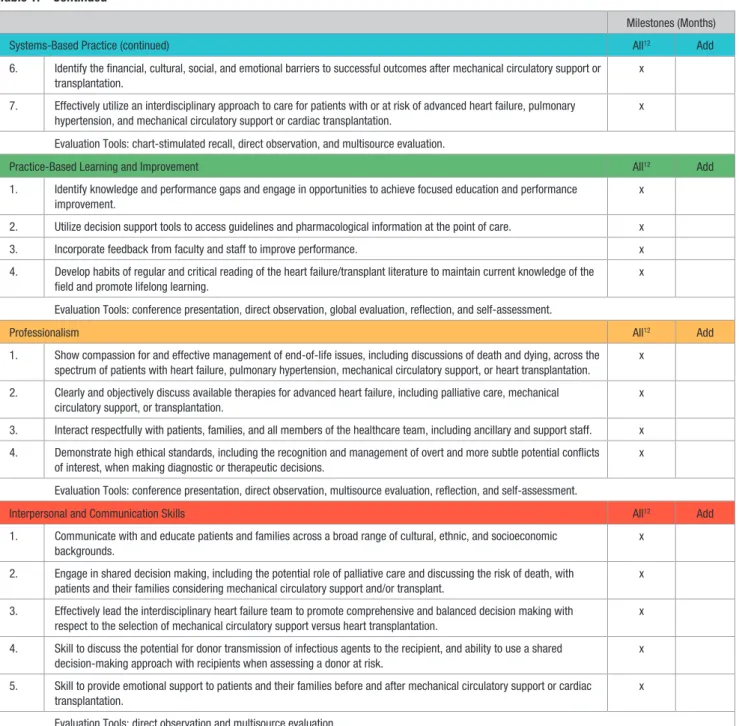
Table 1. Continued
Milestones (Months)
Patient Care and Procedural Skills (continued) All12 Add
Mechanical Circulatory Support (continued)
are a reasonable goal. Moreover, training programs should emphasize to AHFTC trainees the importance of lifelong learning that does not end upon completion of fellowship. For example, trainees should develop the ability to incorporate new therapies and technologies into practice.
3.2. Clinical Experience
Level III training in advanced heart failure requires rigorous clinical experiences in both the outpatient and inpatient set-tings, including the intensive care unit. In each clinical setting, trainees should participate in supervised patient care and act as a first-line consultant for a portion of the training period with appropriate and timely backup from attending AHFTC
physicians. In this capacity, Level III trainees are expected to gather accurate, essential information from all sources, includ-ing medical interviews and record review, physical examina-tion, cardiac device interrogaexamina-tion, and diagnostic procedures, including echocardiograms and hemodynamic evaluations. In addition, trainees should issue informed recommenda-tions about preventive, diagnostic, therapeutic, and palliative options and interventions based on clinical judgment, scien-tific evidence, and patient preferences, ultimately developing, negotiating, and implementing patient management plans. Further, they should develop the skills necessary to compe-tently perform the diagnostic and therapeutic procedures con-sidered essential to the management of patients with advanced 6. Identify the financial, cultural, social, and emotional barriers to successful outcomes after mechanical circulatory support or
transplantation.
x
7. Effectively utilize an interdisciplinary approach to care for patients with or at risk of advanced heart failure, pulmonary hypertension, and mechanical circulatory support or cardiac transplantation.
x
Evaluation Tools: chart-stimulated recall, direct observation, and multisource evaluation.
Practice-Based Learning and Improvement All12 Add
1. Identify knowledge and performance gaps and engage in opportunities to achieve focused education and performance improvement.
x
2. Utilize decision support tools to access guidelines and pharmacological information at the point of care. x
3. Incorporate feedback from faculty and staff to improve performance. x
4. Develop habits of regular and critical reading of the heart failure/transplant literature to maintain current knowledge of the field and promote lifelong learning.
x
Evaluation Tools: conference presentation, direct observation, global evaluation, reflection, and self-assessment.
Professionalism All12 Add
1. Show compassion for and effective management of end-of-life issues, including discussions of death and dying, across the spectrum of patients with heart failure, pulmonary hypertension, mechanical circulatory support, or heart transplantation.
x
2. Clearly and objectively discuss available therapies for advanced heart failure, including palliative care, mechanical circulatory support, or transplantation.
x
3. Interact respectfully with patients, families, and all members of the healthcare team, including ancillary and support staff. x 4. Demonstrate high ethical standards, including the recognition and management of overt and more subtle potential conflicts
of interest, when making diagnostic or therapeutic decisions.
x
Evaluation Tools: conference presentation, direct observation, multisource evaluation, reflection, and self-assessment.
Interpersonal and Communication Skills All12 Add
1. Communicate with and educate patients and families across a broad range of cultural, ethnic, and socioeconomic backgrounds.
x
2. Engage in shared decision making, including the potential role of palliative care and discussing the risk of death, with patients and their families considering mechanical circulatory support and/or transplant.
x
3. Effectively lead the interdisciplinary heart failure team to promote comprehensive and balanced decision making with respect to the selection of mechanical circulatory support versus heart transplantation.
x
4. Skill to discuss the potential for donor transmission of infectious agents to the recipient, and ability to use a shared decision-making approach with recipients when assessing a donor at risk.
x
5. Skill to provide emotional support to patients and their families before and after mechanical circulatory support or cardiac transplantation.
x
Evaluation Tools: direct observation and multisource evaluation.
Add = Additional competencies that extend beyond the core expectations and that may be achieved by some advanced heart failure and transplant cardiology (AHFTC) specialists based on career focus, either during or following formal AHFTC fellowship training (see text for details).
Table 1. Continued
Milestones (Months)
Systems-Based Practice (continued) All12 Add
heart failure, including those undergoing MCS or cardiac transplantation. Training programs must provide access to a patient population of sufficient size and diversity to nurture these competencies. Multidisciplinary meetings, including participation in the transplant selection committee, are impor-tant parts of the trainee’s clinical experience.
3.3. Hands-On Procedural Experience
Hands-on experience is required for successful training, and trainees should be exposed to the full spectrum of AHFTC procedures. Level III training in AHFTC requires competence in right heart catheterization and endomyocardial biopsy, acquired through experiences in the catheterization labora-tory. Troubleshooting of right heart catheters in the intensive care unit provides additional expertise in the use of invasive hemodynamic monitoring, including recognition of artifact. Review of endomyocardial biopsy specimens with patholo-gists facilitates skill in the assessment of rejection. AHFTC trainees must become familiar with the programming and interpretation of data stored in implantable cardioverter-defibrillators and cardiac resynchronization therapy devices, which can be acquired by device interrogation. Experience in the indications and management of MCS devices providing temporary hemodynamic support of critically ill patients with heart failure is essential, recognizing that criteria for selection of specific devices may vary. AHFTC training includes expo-sure to implantation, interrogation, and adjustment of durable ventricular assist devices under echocardiographic guidance. Supervision of cardiopulmonary stress tests promotes exper-tise in this modality. Training should also include end-of-life discussions, shared decision making, and communication with patients about advance care planning. Depending upon institutional capabilities and trainee interest, additional pro-cedural experiences may include implantation and/or moni-toring of pulmonary artery sensors, invasive assessment of patients with adult congenital heart disease, performance and interpretation of the results of pulmonary vasodilator chal-lenges, assessment of exercise hemodynamics, or implanta-tion of temporary MCS devices. The numbers of procedures that should be completed during the 12 months of AHFTC are summarized in Section 4.2, and the approach to evaluation of competency is in Section 5.
The field of advanced heart failure is rapidly evolving with the introduction of new technologies. Although specific train-ing requirements cannot be provided for all of these, Level III AHFTC trainees who intend to perform these procedures are expected to undergo the same training as required for faculty members performing them.
3.4. Diagnosis and Management of Emergencies and Complications
All trainees should be certified in advanced cardiovascular life support and well versed in the recognition and manage-ment of complications and emergencies encountered in the advanced heart failure population. Examples include cardio-genic shock, such as INTERMACS (Interagency Registry for Mechanically Assisted Circulatory Support) 1 patients; life-threatening arrhythmias, such as ventricular tachycardia
storm and complete heart block; severe cardiac complications in pregnant patients; respiratory failure in patients with heart failure and concomitant pulmonary illness; severe rejection with allograft failure; or life-threatening infection in immuno-suppressed transplant recipients. Complications of endomyo-cardial biopsy and pulmonary artery catheterization should be recognized and managed, with emphasis upon knowing when to seek assistance from an interventional cardiologist or car-diothoracic surgeon in such circumstances as cardiac perfora-tion or pericardial tamponade. Trainees should be taught to recognize and initiate management for complications of MCS devices, including thrombosis, stroke, infection, bleeding, and pump malfunction. They should be familiar with advanced life support in patients receiving mechanical support.6 All such complications should be documented and reported in accor-dance with institutional requirements and reviewed at patient safety or quality improvement conferences.
3.5. Diagnosis and Management of Less Common Clinical Conditions and Syndromes
Level III trainees should become familiar with less common conditions associated with heart failure symptoms. These include myocardial noncompaction, hypertrophic cardiomy-opathy, cardiac amyloidosis, muscular dystrophy, arrhyth-mogenic right ventricular cardiomyopathy, glycogen storage disease, congenital heart defects, sarcoidosis, hemochroma-tosis, and pulmonary artery hypertension, as well as other infectious, nutritional, and autoimmune conditions. Several uncommon inflammatory conditions have the potential to cause cardiomyopathy and heart failure, including fulminant giant cell myocarditis and acute hypersensitivity myocarditis. Metabolic or endocrine disorders such as pheochromocytoma and acromegaly can lead to cardiomyopathy and heart fail-ure. Other less common conditions presenting as heart failure include cardiac neoplasms, constrictive pericarditis, or acute right ventricular failure (RVF). The Level III trainee should be aware of these less-common conditions and understand their pathophysiology and management. The Level III trainee may not be expert in managing these conditions, but should be able to stabilize patients with them and seek guidance from the lit-erature and from experts.
3.6. Research and Scholarly Activity
All trainees are expected to carry out research and/or engage in scholarly activities during Level III training in AHFTC. Scholarly activity related to heart failure, PH, MCS, or trans-plant cardiology may include original clinical, basic science, translational, or interdisciplinary research; quality improve-ment activities; presentation at institutional, local, and national meetings; and publication of original papers, reviews, chapters, or case reports. Trainees should be encouraged to develop and maintain habits of self-learning and continuous professional improvement by reading heart failure and heart transplantation journals and attending journal clubs, confer-ences, and appropriate scholarly meetings. A trainee’s prog-ress in research should be monitored by mentors through general oversight, direct observation, and critical review of presentations and manuscripts.
4. Training Requirements
4.1. Development and Evaluation of Core Competencies
Training requirements in AHFTC address the 6 general com-petencies promulgated by the ACGME and endorsed by the ABIM: medical knowledge, patient care and procedural skills, practice-based learning and improvement, systems-based practice, interpersonal and communication skills, and pro-fessionalism. The ACC has used this structure to define and depict the components of the clinical competencies for car-diology. The curricular milestones for each competency and domain also provide a developmental roadmap for fellows as they progress through various levels of training and serve as an underpinning for the milestones reported to ACGME. The ACC has adopted this format for its competency and training statements, career milestones, lifelong learning, and educa-tional programs.
Table 1 depicts the 6 competency domains and their asso-ciated curricular milestones for training in AHFTC, as well as examples of evaluation tools suitable for assessing com-petence in each domain. The focus of this document is on delineation of the core competencies expected of all trainees in AHFTC upon successful completion of a standard 1-year ACGME–accredited AHFTC fellowship. These competencies are marked under the column “All.” Certain areas of advanced knowledge or procedural skills are not typically encountered enough during a standard 12-month period of training to develop and demonstrate competence, and therefore, require additional dedicated exposure. These selected Level III com-petency components are designated in the “Add” column of the table, usually require additional training, and represent a skill level beyond that necessary for AHFTC certification. One year of formal training beyond the standard 3-year general cardiovascular fellowship, for example, is unlikely to confer expert competency in the management of the most complex patients undergoing heart transplantation or ventricular assist device implantation or those requiring other more specialized knowledge or procedural skills. These additional competen-cies may be obtained during or after the standard AHFTC fellowship, depending on the trainee’s career focus and the opportunities available at the training program. The milestone interval indicates the stage by which the typical trainee will have achieved a particular competency. Although the com-petency components included in the “All” column should be achieved by all trainees and are appropriate areas for assess-ment, not every component needs to be individually assessed in every trainee. Rather, as with all educational activities, assessment is a sampling process that should be tailored to the needs of the individual trainee and program.
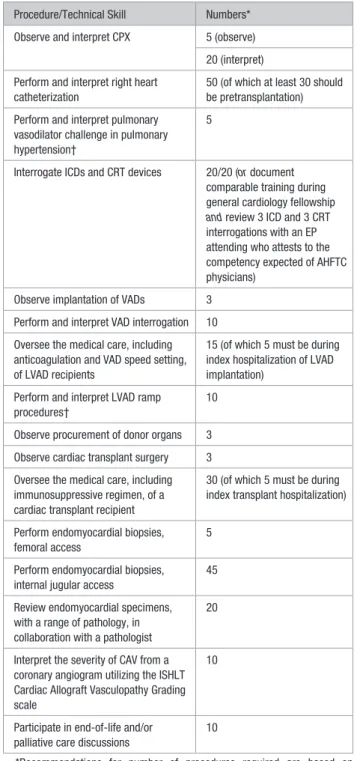
4.2. Number of Procedures
An essential component of training an AHFTC practitioner is robust understanding of the indications for, contraindications to, and complications of procedures commonly performed in patients with advanced heart failure, including ventricu-lar assist devices and cardiac transplantation (Table 2). Each trainee should maintain a record that documents the indica-tions, outcomes, and diagnoses associated with procedures
Table 2. Recommendations for Minimum Procedural Volume or Technical Experience to Achieve and Demonstrate Competence in AHFTC
Procedure/Technical Skill Numbers* Observe and interpret CPX 5 (observe)
20 (interpret) Perform and interpret right heart
catheterization
50 (of which at least 30 should be pretransplantation) Perform and interpret pulmonary
vasodilator challenge in pulmonary hypertension†
5
Interrogate ICDs and CRT devices 20/20 (or document comparable training during general cardiology fellowship
and review 3 ICD and 3 CRT interrogations with an EP attending who attests to the competency expected of AHFTC physicians)
Observe implantation of VADs 3 Perform and interpret VAD interrogation 10 Oversee the medical care, including anticoagulation and VAD speed setting, of LVAD recipients
15 (of which 5 must be during index hospitalization of LVAD implantation)
Perform and interpret LVAD ramp procedures†
10
Observe procurement of donor organs 3 Observe cardiac transplant surgery 3 Oversee the medical care, including immunosuppressive regimen, of a cardiac transplant recipient
30 (of which 5 must be during index transplant hospitalization)
Perform endomyocardial biopsies, femoral access
5
Perform endomyocardial biopsies, internal jugular access
45
Review endomyocardial specimens, with a range of pathology, in collaboration with a pathologist
20
Interpret the severity of CAV from a coronary angiogram utilizing the ISHLT Cardiac Allograft Vasculopathy Grading scale
10
Participate in end-of-life and/or palliative care discussions
10
*Recommendations for number of procedures required are based on consensus recommendations and indicate numbers that should be performed and/or interpreted successfully to achieve competence. These numbers are intended as general guidance, based on the educational needs and progress of typical AHFTC trainees. Competency to perform each procedure must be based on evaluation by the supervising physician and may exceed or be below the threshold number shown in Table 2.
†Acquired during additional months beyond a dedicated 12-month advanced heart failure/transplant fellowship.
AHFTC = advanced heart failure and transplant cardiology; CAV = cardiac allograft vasculopathy; CPX = cardiopulmonary exercise testing; CRT = cardiac resynchronization therapy; EP = electrophysiology; ICD = implantable cardioverter-defibrillator; ISHLT = International Society for Heart & Lung Transplantation; LVAD = left ventricular assist device; and VAD = ventricular assist device.