MENTAL HEALTH AND SEXUAL RISK BEHAVIORS AMONG SOCIAL NETWORKS OF YOUNG TANZANIAN MEN
Lauren M. Hill
A dissertation submitted to the faculty at the University of North Carolina at Chapel Hill in partial fulfillment of the requirements for the degree of Doctor of Philosophy in the Department of Health
Behavior in the Gillings School of Global Public Health.
Chapel Hill 2017
Approved by: Suzanne Maman Vivian Go
ABSTRACT
Lauren M. Hill: Mental Health and Sexual Risk Behaviors Among Social Networks of Young Tanzanian Men
(Under the direction of Suzanne Maman)
Background: Young men are important targets in HIV prevention in Tanzania and throughout sub-Saharan Africa. Anxiety and depression are common among youth and may be important predictors of HIV risk behaviors. Evidence of these relationships in high-risk populations is needed, as is
understanding of how normative and supportive elements of the social environment might be leveraged to buffer the risk posed by poor mental health.
Methods: I conducted two studies using baseline and one-year follow-up data from 1113 sexually active male participants in an ongoing HIV and intimate partner violence prevention trial taking place among 59 social groups known as “camps” in Dar es Salaam, Tanzania. In the first study, I assessed the relationship between mental health (anxiety, depression) and sexual risk behaviors (condom use, concurrency) using multilevel modeling. In the second study, I built upon these models to test the moderating role of sexual behavior norms, camp network social cohesion, and men’s network centrality in the relationship between mental health and sexual risk behaviors. I further assessed peer behavioral influence in men’s camp friendship networks using quadratic assignment procedures.
Changes in condom use norms (perceived descriptive norms and encouragement) moderated the relationship between changes in anxiety symptoms and condom use such that the negative relationship was amplified with worsening norms for condom use, and attenuated by improving norms for condom use. Network centrality and cohesion were not significantly related to sexual risk, nor did they interact with anxiety or depression in relation to sexual risk.
Conclusions: The results of this dissertation indicate the importance of screening and providing
ACKNOWLEDGEMENTS
This dissertation is an accomplishment not of one but of many. It represents the culmination of years of training, mentorship, and support which have made me the scientist that I am today. I would like to thank my advisor, mentor, and dissertation chair, Dr. Suzanne Maman for her constant support and selfless encouragement of my research interests. You have been with me through my many twists and turns as a graduate student, always there as a sage advisor and a cheerleader as well. Few graduate students are as lucky as I have been to have mentorship like yours, and I will carry your support and the confidence it has fostered in me for the rest of my career.
I would also like to thank my wonderful committee for their guidance and support. Dr. Nisha Gottfredson, my guide to multilevel methods, you were always there for impromptu discussions which have fed my intellectual curiosity in statistics and have quelled any fears of asking “stupid” questions. Dr. James Moody, my social network analysis guru, how much I have learned from you about an area of social science research which was entirely new to me. Your enthusiasm for social network research has made me excited to continue to learn and develop methodologically as I progress through my career. Dr. Brian Pence, an expert in mental health and HIV, I want to thank you for always helping me to think through the logic of my dissertation analyses, and for always keeping me connected to the forefront of the literature on these topics. Last, but not least, I would like to thank Dr. Vivian Go, for always being a problem-solver, a listening ear, and a mentor to me.
conversations which we have had on the topic make me enthusiastic about the possibility of addressing mental health in settings like Tanzania. Likewise, I would like to thank Mrema Noel Kilonzo, as a
colleague also interested in mental health in this context; it has been a pleasure collaborating with you. I would like to thank the larger research team in the US and in Tanzania, who contributed to the larger parent trial and supported my research: Nina Yamanis, Peter Balvanz, Marta Mulawa, Donaldson Conserve, Deus Kajuna, and Gema Lambert.
I would not have had the tools to conceive of and complete this dissertation without the tremendous training I received in the Health Behavior doctoral program. For her tireless enthusiasm for ever improving the quality of our training and mentorship, I would like to thank Dr. Susan Ennett. I could not have asked for a better training experience which met all of my goals to develop as an applied and interdisciplinary health researcher. To my cohort, thank you so much for traveling with me through this experience of a lifetime. The social, academic, and professional experience of the doctoral program would have not been the same without you. I have been so fortunate to learn and work with a group of such supportive and brilliant peers. I truly hope we will be colleagues for a lifetime.
I owe a debt to my parents for helping me to get where I am today. The financial and personal sacrifices which you made for my education I hope will ultimately be richly repaid in the form of research which serves the well-being of humanity in some important though perhaps not large way. I would like to thank my father, Dr. Christopher Hill, for encouraging dogged intellectual curiosity and a thirst for logical thinking. Because of your influence, I will never cease to question the status quo and search for solutions to humanities’ problems. To my mother, Sharon Hill, I want to thank you for the value for education and strategic thinking which you instilled in me. I know it hasn’t been easy to see your daughter make difficult choices, and I thank you for embracing the professional choices that I have made.
several sources. The parent study was supported by the National Institute of Mental Health (NIMH) through grant R01MH098690. I received financial support for my pre-doctoral training
TABLE OF CONTENTS
LIST OF TABLES ...xiii
LIST OF FIGURES ... xiv
LIST OF ABBREVIATIONS ... xv
CHAPTER 1: INTRODUCTION ... 1
1.1 Problem statement ... 1
1.2 Study purpose ... 2
1.3 Research approach... 2
Specific Aims ... 3
Study context ... 5
Overview of the parent trial ... 6
Overview of analyses ... 7
1.4 Significance of the dissertation study ... 8
1.5 Organization of the dissertation ... 8
CHAPTER 2: RATIONALE AND EMPIRICAL AND THEORETICAL SUPPORT FOR AIMS ... 10
2.1 Aim 1 rationale ... 10
2.2 Aim 2 rationale ... 18
Empirical evidence ... 18
2.3 Aim 3 rationale ... 23
Defining constructs ... 23
Theoretical rationale ... 24
Empirical evidence ... 27
CHAPTER 3: STUDY DESIGN AND METHODS ... 28
3.1 Research strategy overview ... 28
3.2 Parent trial context and procedures ... 28
Parent trial aims ... 28
Recruitment and sampling ... 29
Data collection ... 31
Sample description ... 32
Ethical review ... 33
3.3 Measures ... 33
Dependent variables ... 33
Individual-level independent variables ... 34
Individual-level covariates ... 35
Camp-level covariates ... 36
Camp network moderators ... 36
3.4 Analytic strategy ... 38
Aim 1 analysis ... 39
Aim 2 analysis ... 42
Aim 3 analysis ... 44
CHAPTER 4: PAPER 1 ... 48
4.1 Background ... 48
4.2 Methods ... 49
Study context ... 49
Sampling and data collection ... 50
Measures ... 50
Analysis ... 52
Ethical Review ... 53
4.3 Results ... 53
Participant characteristics ... 53
Change in symptoms of anxiety and depression and sexual behaviors ... 54
Anxiety models ... 56
Depression models ... 57
Independent effects of anxiety and depression ... 57
4.4 Discussion ... 58
Limitations ... 60
Future directions ... 61
Conclusion ... 61
CHAPTER 5: PAPER 2 ... 63
5.1 BACKGROUND ... 63
5.2 METHODS ... 66
Study context ... 66
Measures ... 68
Analysis ... 70
Ethical Review ... 73
5.3 RESULTS... 73
Participant characteristics ... 73
Cross-sectional description and change in key variables ... 74
Association between observed and perceived predictors ... 76
Peer similarity in behaviors, anxiety, and depression ... 77
Condom use models ... 78
Concurrency models ... 81
5.4 DISCUSSION ... 82
Limitations ... 86
Implications for future research and intervention ... 87
Conclusion ... 88
CHAPTER 6: AIM 3 RESULTS ... 89
6.1 BACKGROUND ... 89
6.2 METHODS ... 91
Study context ... 91
Sampling and data collection ... 92
Measures ... 93
Analysis ... 96
6.3 RESULTS... 97
CHAPTER 7: DISCUSSION AND CONCLUSION ... 100
7.1 Summary of Findings ... 100
7.2 Study Strengths ... 102
7.3 Study Limitations ... 105
7.4 Implications for Future Research ... 108
7.5 Intervention Implications ... 113
APPENDIX A: HSCL-25 ITEMS ... 117
APPENDIX B: SEXUAL BEHAVIOR ITEMS ... 118
APPENDIX C: SOCIAL NORM ITEMS ... 120
APPENDIX D: PERCEIVED SOCIAL COHESION ITEMS ... 121
LIST OF TABLES
Table 1. Systematic review articles ... 15
Table 2. Systematic review results ... 16
Table 3. Baseline participant characteristics ... 33
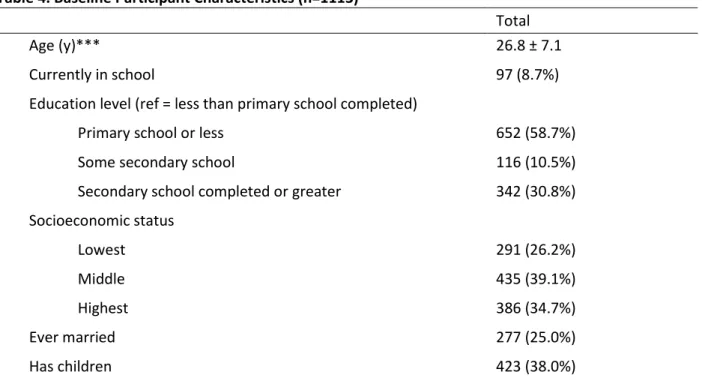
Table 4. Aim 1 baseline participant characteristics ... 54
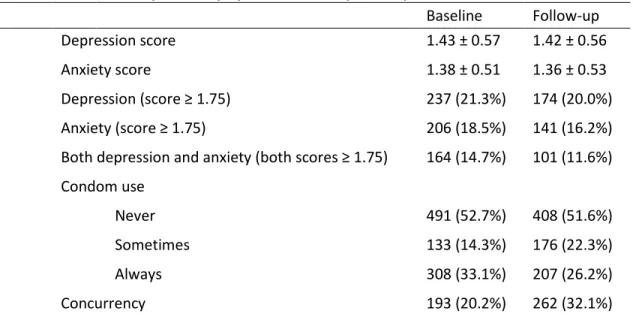
Table 5. Cross-sectional description of symptoms of anxiety and depression and sexual risk ... 56
Table 6. Condom use change ... 56
Table 7. Concurrency change ... 56
Table 8. Aim 1 model results... 58
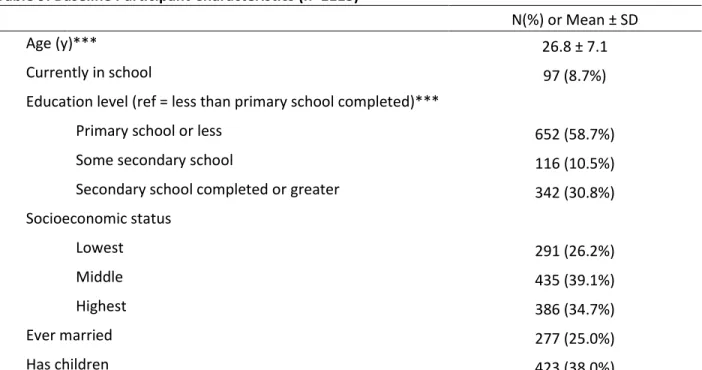
Table 9. Aim 2 baseline participant characteristics ... 74
Table 10. Aim 2 cross-sectional description of key variables ... 76
Table 11. Baseline correlations between observed and perceived norms ... 77
Table 12. Condom use peer norm interaction model results ... 79
Table 13. Concurrency peer norm interaction model results ... 82
Table 14. Aim 3 baseline description of hypothesized moderators ... 97
Table 15. Condom use – cohesion and centrality interaction model results ... 98
LIST OF FIGURES
Figure 1. Conceptual model of hypotheses ... 3
Figure 2. Berkman’s model ... 20
Figure 3. Transactional model of stress and coping ... 26
Figure 4. Box plot distributions of QAP correlations by camp ... 77
LIST OF ABBREVIATIONS
AIDS Acquired immune deficiency syndrome aOR Adjusted odds ratio
CAPI Computer assisted personal interviewing CI Confidence interval
EMA Ecological momentary assessment GIS Geographic information system GPS Global positioning system HIV Human immunodeficiency virus HSCL-25 Hopkins Symptom Checklist-25 ICC Intra-class correlation
IRB Institutional Review Board
N/No. Number
OR Odds ratio
PI Principal Investigator
PLACE Priorities for Local AIDS Control Efforts PLHIV People living with HIV
QAP Quadratic assignment procedure
SD Standard deviation
SES Socioeconomic status
STI Sexually transmitted infection UNC University of North Carolina
US United States
CHAPTER 1: INTRODUCTION
1.1 Problem statement
Youth in Tanzania are disproportionately affected by HIV [1], and men are important targets in preventing HIV among Tanzanian youth [1]. Seven percent of the population of Tanzania’s commercial capital, Dar es Salaam, is living with HIV [2], and youth are particularly vulnerable to infection with 40 percent of new infections in Tanzania occurring among 16-24 year olds [1]. An estimated 17 percent of females and 8 percent of males ages 15-19 in Tanzania are living with HIV [3]. Men are important targets in HIV prevention as they report higher rates than women of sexual risk behaviors including sexual partner concurrency and inconsistent condom use [1]. Half of sexually active male youth (ages 15-24) surveyed in Tanzania in 2010 did not use a condom at last intercourse [4]. Further, nearly one third of young men in Tanzania reported concurrent sexual relationships in 2010 [4], making condom use and concurrency important target risk behaviors in this population.
Anxiety and depression have been identified as important predictors of sexual risk [5-10], but we have little understanding of these relationships beyond cross-sectional associations, particularly in the
sub-Saharan context. Cross-sectional associations have repeatedly been found between both anxiety and depression, and sexual risk behaviors (condom use and concurrency) [5-10], but we need more longitudinal evidence of these relationships to clarify the temporality and causality of these
of the relationship between mental health and sexual risk in the sub-Saharan context. The dissertation research serves to fill this gap in the literature.
We know little about the role that social networks play in shaping the relationship between mental
health and sexual risk. Previous social network studies indicate that peers’ mental health status affects an individual’s own mental health [16, 17], and the same holds true for sexual risk behaviors [18]. However, we have little understanding of the potential influence of peers in patterns of mental health and sexual risk within the same network. Understanding peer influence on the relationship between mental health and sexual risk in young men’s social networks will allow us to discern if there is
something social or learned about sexual risk as a response to poor mental health. Lastly, we know little about how we may be able to intervene within networks to reduce sexual risk. The dissertation research aimed to address this gap in our knowledge by examining potential social network characteristics that buffer in the relationship between mental health and sexual risk behaviors.
1.2 Study purpose
The proposed research furthers our understanding of social and psychological determinants of HIV risk in a population of high risk young men by addressing three major gaps in the literature: a lack of evidence of the temporality of the relationship between mental health and sexual risk in this context, a particular lack of evidence of the connection between anxiety and sexual risk, and a lack of
understanding of social network influences on the relationship between mental health and sexual risk.
1.3 Research approach
concurrency). This study was completed using data from 1113 sexually active male participants taken from the baseline and one year follow-up assessments from the parent trial: A Multilevel Intervention to Reduce HIV Risk Among Networks of Men in Tanzania (PI: Suzanne Maman; 1R01MH098690-01). The dissertation Aims were completed using multilevel modeling and social network analysis.
Specific Aims
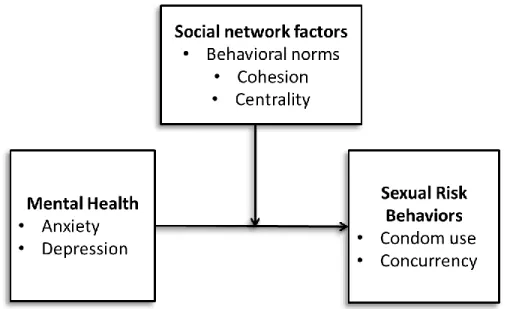
Figure 1. Conceptual model of hypotheses
The three Specific Aims of the dissertation research and their corresponding hypotheses were as follows:
Aim 1: Evaluate the longitudinal relationship between mental health (anxiety, depression) and sexual risk behaviors (condom use, concurrency) among young men.
partner concurrency at time 2, controlling for time 1 behaviors, than young men experiencing decreased symptoms of anxiety and depression.
Aim 2: Assess the level of social influence on young men’s sexual risk behaviors, and the moderating role of social norms in the relationship between mental health and sexual risk behaviors within camp
networks.
Hypothesis 2a: Young men’s sexual risk behaviors will be more correlated with those of friends than with those of other members of their camp network.
Hypothesis 2b: The relationship between mental health and sexual risk will be moderated by peer sexual risk behavior norms such that the relationship will be stronger for young men exposed to riskier peer norms than for men exposed to less risky peer norms.
Aim 3: Test social network characteristics (centrality, social cohesion) as moderators of the relationship between mental health and sexual risk behaviors.
Hypothesis 3a:Young men’s centrality within their camp social network will moderate the relationship between mental health and sexual risk behaviors such that the relationship will be weaker for men with higher centrality than for those with lower centrality.
Study context
The parent trial was conducted in Dar es Salaam, Tanzania. Tanzania is an east African country with a population of 45 million (2015 census) [19]. It is a low-income country with an estimated annual $2,700 gross domestic product per capita (2014 estimate) and a growing economy (2014 growth rate estimated at 7%) [20]. Tanzania’s population has a median age of 18 with a life expectancy of 61 years at birth [21]. Dar es Salaam is the nation’s largest city and commercial capital, with a population 4.4 million
comprising approximately 10% of the nation’s population [19]. Located on the country’s eastern coast on the Indian Ocean, it lost its position as the nation’s capital to the more centrally located Dodoma in 1974 but remains the focus of much of the permanent central government bureaucracy. An estimated 70% of the city's population lives in informal settlements [22].
country’s urban areas also have a higher than average prevalence of HIV (7 % versus the national average of 5 %) [1]. The HIV prevalence in Dar es Salaam is estimated at 7% [1].
In 2010, 34% of health facilities in Tanzania offered HIV testing and counseling services and 13% offered antiretroviral therapy [1]. In 2013, 62% of women and 47% of men had ever been tested for HIV and received the results of their test [1]. Testing in ante- and perinatal care settings matches the rate among the general population of women (62%) [1]. Though nationally the majority of clients receiving testing services are women, in Dar es Salaam 76% of new clients are men [1]. Only 57 % of the country’s estimated 1,400,000 PLHIV are enrolled in HIV care [1].
Mental health in Tanzania. Very little is known about the mental health of Tanzania’s population. There are no estimates of the prevalence of common mental disorders including anxiety and depression to my knowledge. In one study of primary care attendees, the prevalence of depression and “mixed anxiety-depressive disorder” were 15% and 7%, respectively [25]. In another study of HIV-positive patients in rural Tanzania, 16% of patients presented symptoms of depression or mixed anxiety and depression, and 5% suffered from other anxiety disorders [26]. Further, there are very few treatment services available for people suffering from anxiety, depression, and other common mental disorders in Tanzania; per 100,000 population there are only 2 psychiatric nurses, 0.04 psychiatrists, and 0.005 practicing clinical psychologists [27].
Overview of the parent trial
sexually transmitted infections and report perpetrating less physical and sexual violence against female sexual partners as compared to men belonging to camps randomized to a control condition.
Dr. Maman and the research team of the parent study identified social networks of young men occupying designated venues known as “camps” in Dar es Salaam where men socialize and engage in small scale enterprise [28]. Participants in the parent study were male members of 59 of these camps.
Camps are stable social units; those included in the trial had been in existence for an average of eight years. Men typically belong to only one camp and pay membership fees to belong to that camp [28]. Camps are made up of entrepreneurial youth who frequent the venue for its supportive social
environment [28]. Most men in the camps are not formally employed and spend several hours each day at their camp [28].
These camps provided unique access to social networks of high risk young men who are otherwise difficult to reach, as they are largely neither in school nor formally employed [28]. Complete longitudinal, sociocentric network data from 59 camps of 1249 young men were available from the parent trial, providing a unique opportunity to examine social network influences on young men’s sexual risk. Men in these camps show increasing sexual risk behaviors over the teen years [29], and report high levels of anxiety and depression (19% and 21%, respectively based on common clinical cutoffs) [30].
Overview of analyses
sexual risk (hypothesis 2b). Finally, for Aim 3, I again expanded the models from Aim 1 to test the interactions between mental health variables and each hypothesized moderator of network cohesion and centrality. For all significant interactions found, I probed and interpreted the nature of the interaction.
1.4 Significance of the dissertation study
The dissertation research provides novel evidence of the potential causal relationship between mental health and sexual risk in a population of young men living in Dar es Salaam, and the extent to which this relationship is socially influenced. The sociocentric network data from 59 camps available from the parent trial presented the rare opportunity to explore the influence of social network peers on the relationship between mental health and sexual risk. The results of this research provide implications for the combination of sexual risk reduction and mental health promotion interventions in this population, as indicated in other settings [31]. The findings further provide evidence essential to the future
development of interventions to reduce HIV risk among marginalized populations of young men, by providing understanding of potential ways to leverage the influence of social networks to address mental health as a risk factor for HIV transmission.
1.5 Organization of the dissertation
CHAPTER 2: RATIONALE AND EMPIRICAL AND THEORETICAL SUPPORT FOR AIMS
2.1 Aim 1 rationale
Aim 1
Evaluate the longitudinal relationship between mental health (anxiety,
depression) and sexual risk behaviors (condom use, concurrency) among young men.
Youth in Tanzania are at high risk for HIV infection [1], and young men are important targets in preventing HIV transmission as gender norms position them to control the terms and conditions of sexual relationships [32], and encourage them to engage in high risk sexual behaviors such as inconsistent condom use and sexual partner concurrency [1, 33-36]. To date, few studies have attempted to understand the unique predictors of risky sexual behaviors among young men in low resource settings such as Tanzania [37, 38]. A better understanding of predictors of sexual risk in young men in this context is needed to inform effective HIV prevention strategies.
es Salaam report condom use at last sex, but this proportion declines from 92% among 15-year-olds to 70% among 19-year-olds [29], indicating a decreasing motivation for condom use over adolescence. Among the same population, the proportion reporting concurrent sexual partnerships increases with age, with 5% reporting concurrency at age 15, to 44% reporting concurrency by age 19 [29]. The low levels of condom use and high rates of concurrency found among men in Dar es Salaam are consistent with national studies in Tanzania; half of sexually active youth ages 15-24 surveyed in Tanzania in 2010 did not use a condom at last intercourse [4]. Further, nearly one third of young men in Tanzania reported concurrent partners in 2010 [4], making sexual concurrency an important target risk behavior in this population.
Anxiety and depression as predictors of sexual risk have been studied in high-income settings, primarily in adult populations. Mental health may influence sexual risk through multiple mechanisms including substance use [10], maladaptive coping mechanisms to deal with stress [47], and impaired decision making [48]. Primarily cross-sectional associations have been found between both anxiety and depression, and sexual risk behaviors (condom use and concurrency) [5-10], with a few previous studies having observed a predictive association between mental health and sexual risk in longitudinal studies [8, 9, 11, 12, 49].
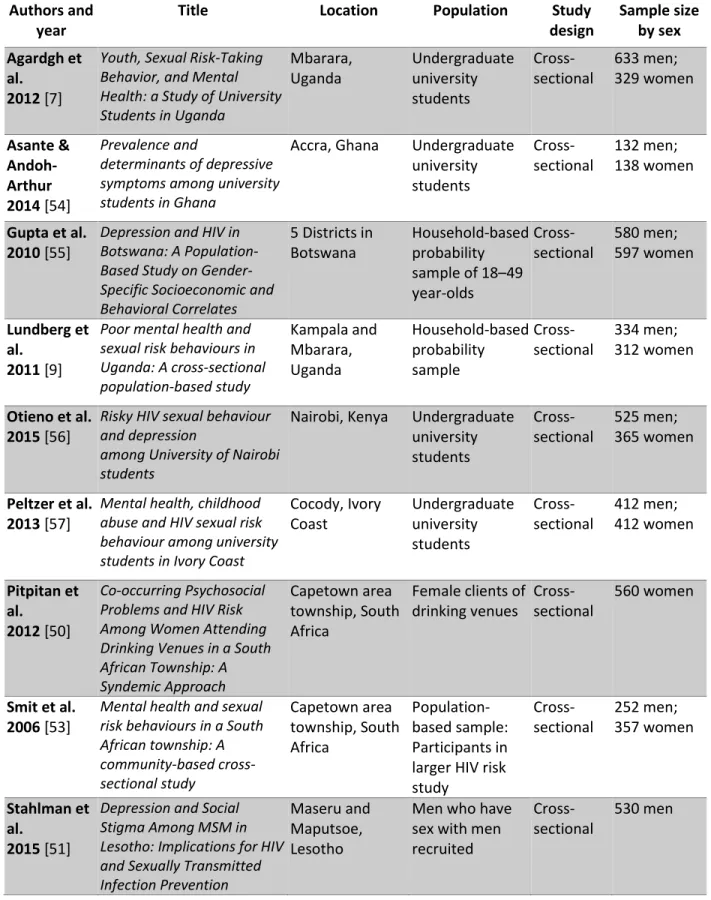
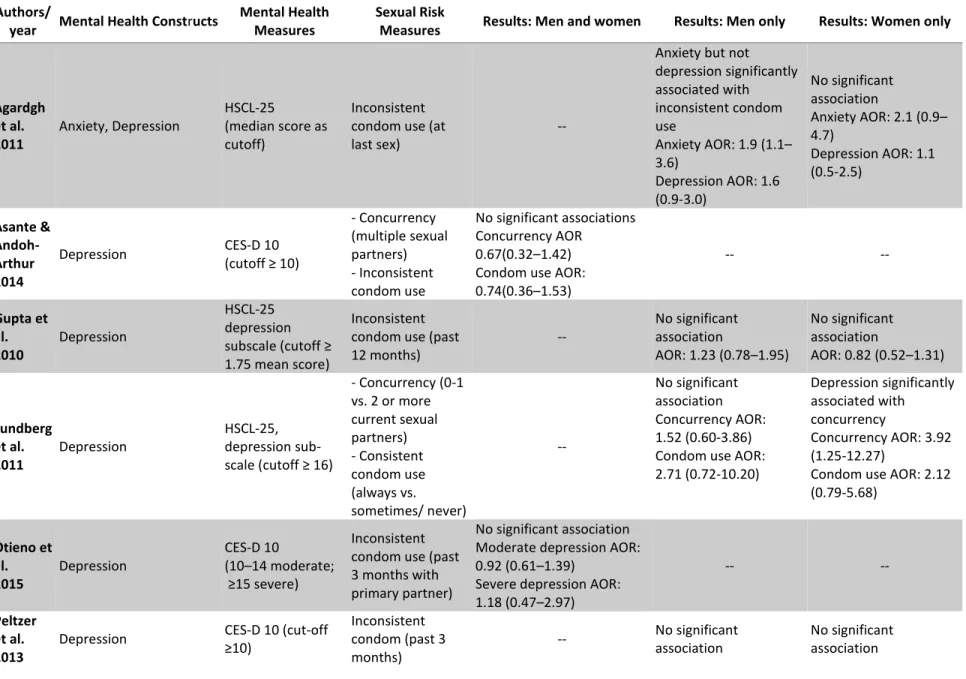
articles. A description of each article is presented in Table 1 and the results of these studies are presented in Table 2. Systematic review results
The majority of the studies included in the review either sampled exclusively undergraduate college students or were conducted among household-based samples of a given geographic area; there were few studies of high risk populations, with one study among female clients of drinking venues [50], and one study among men who have sex with men [51]. The latter study was the only one to focus exclusively on men. Moreover, all studies were cross-sectional, precluding the ability to draw temporal conclusions about any relationships seen. Given that young men in this context are at heightened risk of HIV infection [1], and the majority of cases of anxiety and depression begin by age 24 [52], it is
particularly important to understand if there is indeed evidence in this population of increased HIV risk behaviors in relation to levels of anxiety and depression.
Only one study included anxiety as a predictor of sexual risk. Further, there were far fewer studies of concurrency than condom use; several studies which were excluded looked at number of sexual partners within a given time period, but very few looked at concurrency specifically. In general, there was poor evidence of the relationship between depression and condom use or concurrency. The one study that tested the relationship between anxiety and condom use found a significant association among male undergraduates [7]. Two population-based studies found a significant association between depression and sexual risk behavior, one association with condom use [53], and one association with concurrency [9].
Further, some studies had relatively small sample sizes and thus may have not been powered to detect significant relationships between mental health predictors and sexual risk behaviors. Lastly, most studies of condom use utilized a dichotomous measure of consistent condom use, i.e. participants were
classified as either always using condoms or not. This treatment of condom use fails to capture important differences in condom use, specifically whether or not a person uses condoms ever. The dissertation study contributes to this literature by capturing qualitatively important levels of condom use while minimizing over-sensitivity to biases in participant recall through the use of a three-level variable.
This review made it clear that more studies from sub-Saharan Africa evaluating the link between mental health and sexual risk behaviors were needed, with a particular need for greater evidence of the potential link between anxiety and sexual risk, and of the risk of sexual partner concurrency in relation to mental health. The dissertation research addresses these gaps in the literature. It further provides novel evidence in this setting of these relationships in a population primarily composed of men who have sex with women. Despite poor evidence among review articles supporting the relationships between depression, anxiety, and sexual risk behaviors among populations in sub-Saharan Africa to date, support for these relationships from high income settings indicated that the relationship in this setting may have been under-explored and merited further investigation. Specifically, I hypothesized:
The results of this aim provide much needed longitudinal evidence of the nature of the relationship between mental health and sexual risk in the sub-Saharan context. This contribution to the
understanding of a potential causal relationship between mental health and sexual risk behaviors has implications for the importance of integrating mental health promotion and HIV prevention
Table 1. Systematic review articles Authors and
year
Title Location Population Study
design
Sample size by sex Agardgh et
al. 2012 [7]
Youth, Sexual Risk-Taking Behavior, and Mental Health: a Study of University Students in Uganda
Mbarara, Uganda Undergraduate university students Cross-sectional 633 men; 329 women Asante & Andoh-Arthur 2014 [54]
Prevalence and
determinants of depressive symptoms among university students in Ghana
Accra, Ghana Undergraduate university students Cross-sectional 132 men; 138 women
Gupta et al. 2010 [55]
Depression and HIV in Botswana: A Population-Based Study on Gender-Specific Socioeconomic and Behavioral Correlates
5 Districts in Botswana
Household-based probability sample of 18–49 year-olds Cross-sectional 580 men; 597 women Lundberg et al.
2011 [9]
Poor mental health and sexual risk behaviours in Uganda: A cross-sectional population-based study Kampala and Mbarara, Uganda Household-based probability sample Cross-sectional 334 men; 312 women
Otieno et al. 2015 [56]
Risky HIV sexualbehaviour and depression
among University of Nairobi students
Nairobi, Kenya Undergraduate university students Cross-sectional 525 men; 365 women
Peltzer et al. 2013 [57]
Mental health, childhood abuse and HIV sexual risk behaviour among university students in Ivory Coast
Cocody, Ivory Coast Undergraduate university students Cross-sectional 412 men; 412 women Pitpitan et al.
2012 [50]
Co-occurring Psychosocial Problems and HIV Risk Among Women Attending Drinking Venues in a South African Township: A Syndemic Approach
Capetown area township, South Africa
Female clients of drinking venues
Cross-sectional
560 women
Smit et al. 2006 [53]
Mental health and sexual risk behaviours in a South African township: A community-based cross-sectional study Capetown area township, South Africa Population-based sample: Participants in larger HIV risk study Cross-sectional 252 men; 357 women Stahlman et al.
2015 [51]
Depression and Social Stigma Among MSM in Lesotho: Implications for HIV and Sexually Transmitted Infection Prevention
Maseru and Maputsoe, Lesotho
Men who have sex with men recruited
Cross-sectional
16
Table 2. Systematic review results Authors/
year Mental Health Constructs
Mental Health Measures
Sexual Risk
Measures Results: Men and women Results: Men only Results: Women only
Agardgh et al. 2011
Anxiety, Depression
HSCL-25
(median score as cutoff)
Inconsistent condom use (at last sex)
--
Anxiety but not depression significantly associated with inconsistent condom use
Anxiety AOR: 1.9 (1.1– 3.6)
Depression AOR: 1.6 (0.9-3.0)
No significant association
Anxiety AOR: 2.1 (0.9– 4.7)
Depression AOR: 1.1 (0.5-2.5)
Asante & Andoh-Arthur 2014
Depression CES-D 10
(cutoff ≥ 10)
- Concurrency (multiple sexual partners) - Inconsistent condom use
No significant associations Concurrency AOR
0.67(0.32–1.42)
Condomuse AOR:
0.74(0.36–1.53) -- -- Gupta et al. 2010 Depression HSCL-25 depression subscale (cutoff ≥ 1.75 mean score)
Inconsistent condom use (past 12 months)
--
No significant association
AOR: 1.23 (0.78–1.95)
No significant association
AOR: 0.82 (0.52–1.31)
Lundberg et al. 2011 Depression HSCL-25, depression sub-scale (cutoff ≥ 16)
- Concurrency (0-1 vs. 2 or more current sexual partners) - Consistent condom use (always vs. sometimes/ never) -- No significant association Concurrency AOR: 1.52 (0.60-3.86) Condom use AOR: 2.71 (0.72-10.20)
Depression significantly associated with concurrency
Concurrency AOR: 3.92 (1.25-12.27)
Condom use AOR: 2.12 (0.79-5.68) Otieno et al. 2015 Depression CES-D 10 (10–14 moderate; ≥15 severe) Inconsistent condom use (past 3 months with primary partner)
No significant association Moderate depression AOR: 0.92 (0.61–1.39)
Severe depression AOR: 1.18 (0.47–2.97)
-- --
Peltzer et al. 2013
Depression CES-D 10 (cut-off
≥10)
Inconsistent condom (past 3 months)
-- No significant
association
17
Authors/
year Mental Health Constructs
Mental Health Measures
Sexual Risk
Measures Results: Men and women Results: Men only Results: Women only
Condom use OR = 0.69 (0.35–1.36)
Condom use OR: 1.04 (0.54–2.01)
Pitpitan et al. 2012
Depression CES-D
(cutoff ≥ 16)
% unprotected sex acts (past 4 months)
-- --
No significant association
AOR = 1.30 (0.67, 2.50)
Smit et al. 2006
Depression CES-D
(cutoff ≥ 20)
No condom use (past 6 months)
Depression associated with higher levels of condom use AOR: 5.32 (2.74-10.29); p<.001 -- -- Stahlman et al. 2015 Depression Patient Health Questionnaire (cutoff ≥ 10)
Unprotected sex
(past 30 days) --
No significant association
AOR = 0.72 (0.38-1.39)
2.2 Aim 2 rationale
Aim 2
Assess the level of social influence on young men’s sexual risk behaviors, and the moderating role of social norms in the relationship between mental health and sexual risk behaviors within camp networks.
Empirical evidence
Previous studies have shown that peers’ mental health status affects an individual’s own mental health [16, 17] and sexual risk behaviors [18], but we have little understanding of the potential influence of peers in patterns of mental health and sexual risk within the same network. Understanding such an influence on the relationship between mental health and sexual risk in young men’s social networks would allow us to discern if there is something social or learned about sexual risk as a response to poor mental health. Experts have called for combined sexual risk reduction and mental health promotion interventions [31], and the results of the dissertation research provide essential evidence to determine the appropriateness of such interventions in this setting.
Theoretical rationale
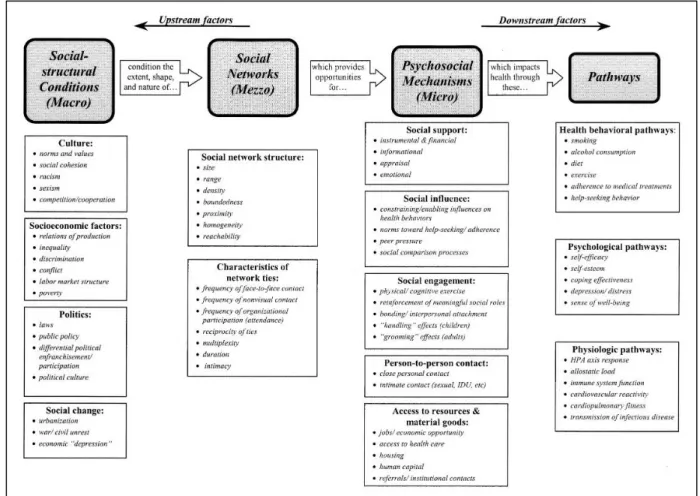
Berkman’s model. Development of hypotheses pertaining to social network influence on the
Figure 2. Berkman et al., 2000
Social influence
in turn influence other friends, thereby mobilizing a process of behavioral contagion throughout a whole network [67].
In this Aim, I focused on direct interactions as the basis of peer influence. I hypothesized that network members who have strong relationships (i.e. friendships) interact frequently and by
consequence develop similar behaviors. Young men’s interactions with friends in their network will create opportunities to directly observe and model how their friends think, feel, and behave. Following Marsden and Friedkin’s hypothesis that the more proximal two individuals are in a network, the more influence these actors will have on one another [34], I hypothesized:
Hypothesis 2a: Young men’s sexual risk behaviors will be more correlated with those of friends than with those of other members of their camp network.
2.3 Aim 3 rationale
Aim 3
Test social network characteristics (centrality, social cohesion) as moderators of the relationship between mental health and sexual risk behaviors.
Defining constructs
Centrality is a measure of an individual’s position within a given social network; measures of centrality capture the closeness of an individual to their peers in a network [69, 70]. There are many
operationalizations of centrality; the one used in this study is in-degree centrality, or the number of friendship nominations that an individual receives from other members of his network [69]. Borgatti describes degree centrality as relating to an individual’s ability to contribute to the spread of
information in a network [69]. He also describes degree centrality as reflecting the volume of ties an individual has rather than the relative distance (in terms of ties), or closeness, to other members in the network [69]. For the purposes of this Aim I selected in-degree centrality as measure to capture the extent to which men are to be supported and influenced by their closest peers. This type of centrality can be thought of as a measure of popularity, as the more peers who nominate that individual as a friend, the more prominent or popular they can be thought of as being in their network [71].
and White [75]. Moody and White’s measure of structural cohesion captures a dimension of relational cohesion in a network defined as the “extent that the social relations of [a network’s] members hold it together” [75]. Operationally, this concept translates to the extent to which the connectedness of a network depends on a few or many actors in that network, or the number of independent paths between any two given individuals in a network[75]. In other words, a network is more cohesive if the relational togetherness of the group does not depend on only a few people, and this dependence is decreased by greater connections between individuals in the network. Taking the example of a group of friends, if one person is the primary “hub” (strongly tied to all/most others) and everyone else in the group is primarily friends with the hub and only friends by association with everyone else, that group is not very cohesive given that their cohesion as a group is dependent upon a single person. On the other hand, if there a many independent strong friendships within a friend group, if one person leaves the group is not likely to fall apart, for there are many ties that bind the group together. To understand the influence of both structural and perceived cohesion, I assessed the moderating role of both men’s reports of cohesion in their network, and structural cohesion measured as discussed by Moody and White using sociocentric data from each camp network.
Theoretical rationale
others in the network [77]. As with cohesion, I hypothesized that the higher an individual’s centrality within the network, the more opportunities they have for social support. Both cohesion (at the group level) and centrality (at the individual level) shape opportunities to interact with peers, who can provide social support in the face of emotional distress.
The ability of social support to reduce the likelihood of risk behaviors is supported by Cohen’s stress buffering theory, which indicates that social support can operate to intervene between the experience of stress (in this case, the experience of anxiety and/or depression) and maladaptive coping behaviors (such as sexual risk behaviors) by reducing the effect of the stressor or by affecting the psychological processes which occur in response to the stressor [78]. Lazarus and Folkman’s
Transactional Model of Stress and Coping provides further support for social support’s role in promoting positive rather than negative coping outcomes [79], again indicating network social support as a
Figure 3. Transactional model of stress and coping
Rather than testing the role of social support as buffer of the relationship between mental health and sexual risk directly, I aimed instead to test the buffering effect of network position (centrality) and connectivity (cohesion) on this relationship as measures of the structural opportunity for social support. While there is much interest and previous research on the health promoting effects of social support, a functional aspect of social relationships, little attention has been paid to the health impact of the
Hypothesis 3a:Young men’s centrality within their camp social network will moderate the relationship between mental health and sexual risk behaviors such that the relationship will be weaker for men with higher centrality than for those with lower centrality.
Hypothesis 3b:Network social cohesion will moderate the relationship between mental health and sexual risk behaviors such that the relationship will be weaker for young men in camps with higher levels of social cohesion than for those in camps with lower levels of social cohesion.
Empirical evidence
Prior to the dissertation research, there were no studies to my knowledge evaluating these
CHAPTER 3: STUDY DESIGN AND METHODS
3.1 Research strategy overview
The dissertation research was completed using two waves of data from the chair’s NIMH R01, A Multilevel Intervention to Reduce HIV Risk Among Networks of Men in Tanzania (PI: Suzanne Maman; 1R01MH098690-01). All data were taken from the behavioral and social network questionnaires from this trial. The analyses for all three aims were conducted in SAS v 9.4 using multilevel modeling and quadratic assignment procedures. Social network measures used in Aim 3 were calculated using UCINET 6.
3.2 Parent trial context and procedures
Parent trial aims
Recruitment and sampling
The parent study team identified camps for inclusion using an adaptation of PLACE (Priorities for Local AIDS Control Efforts) methodology, a rapid assessment designed to locate venues where people meet new sexual partners through community informant and camp verification interviews. Approximately two community informants per 1,000 people in each of the four participating study wards were recruited for interviews, or 489 individuals completing a total of 619 verification interviews. A list of potential camps in the four study wards, and directions to these camps were documented through these interviews. A total of 303 camps were verified and all camps were mapped with GIS software. To be eligible for inclusion in the trial, camps had to have between 20 and 80 members, have been in existence for at least one year prior to the baseline assessment, and report no violent incidents with weapons in the past 6 months. A total of 303 camps were verified, of which 205 were eligible. Of the 303 verified camps, 98 camps did not meet the parent study’s inclusion criteria (6 camps had previously been included in a pilot study and were ineligible for this reason, 51 camps had fewer than 20 members, 16 camps had more than 80 members, 4 camps had not been existence for at least 1 year, 23 camps reported that a weapon had been used in a fight in the last year, and 9 camps were removed because the research assistants felt unsafe during the preliminary data collection).
GIS was used to map the coordinates of each camp and to group geographically contiguous camps into 93 clusters prior to random selection of 60 study camps. In the event that multiple camps from the same cluster were selected for inclusion in the trial, these camps were assigned to the same condition to minimize contamination. All camps identified through community informant interviews were visited for camp verification interviews to confirm camp existence and current operation, record GPS coordinates, and record characteristics of the camp through interviews with camp leaders. Camps included in the sampling frame were those confirmed to exist and be in operation, for which GPS
completed. Of the 205 eligible camps identified, 60 camps were randomly selected for inclusion in the study. One camp was later excluded from the trial during midpoint data collection when its members reported to the study team that they were not a legitimate camp. Data from the remaining 59 camps were used in this dissertation.
All members of camps selected into the trial were preliminarily eligible for inclusion in the study. Following random selection, camp leaders were given a camp roster template to complete. The camp leaders were responsible for recording the name of every camp member as well as their birthdate, gender, phone numbers, length of time as camp member, whether or not the member intended to stay in the city for the next 30 months, and whether or not members were willing to give contact information for two friends or family members. To be eligible for the parent study at baseline, participants had to: 1) be a registered camp member for at least three months; 2) plan on residing in Dar es Salaam for the next 30 months; 3) be 15 years or older; 4) visit the camp at least once per week; and 5) be willing to provide contact information for themselves and two family members or friends. Those members listed on the roster as being younger than 15 or having not been a member for at least three months were deemed ineligible. All other members were deemed preliminarily eligible and were contacted for an interview to further assess their eligibility. Participants who were unwilling to provide locator information or were unable to participate due to psychological disturbance, cognitive impairment, or threatening behavior were excluded from the quantitative assessment. All eligible members were offered participation in the trial and asked to complete the baseline survey.
study’s eligibility criteria, and an additional 49 (2.5%) refused to participate. Soon after baseline data collection, camp members from one camp (n=9) requested to be removed from the study because they were not a real camp and came together only for the purpose of being in the trial. This camp was removed from the study, resulting in a final sample of 1,491 individuals within 59 camps. The final response rate among potentially eligible participants (n=1,948) was 76.5% after the removal of this camp. The camps enrolled in the parent trial had an average of 33 members, ranging in size from 20 members to 77 members (SD = 12). The mean number of baseline survey participants per camp was 25 (range 7-66), for an average camp-level response rate of 78% (range 36-100%).
Written informed consent was required for participation in the community informant and camp verification interviews. Potential interviewees were read a script outlining the purpose of the interviews and given the opportunity to ask questions or clarifications. Participants consented to the interview by signing and writing the date on the form. Potential participants were excluded from participation if they were unable to provide informed consent. At the baseline behavioral assessment participants were asked to provide written consent to participate in the trial. Participants were informed that they would be re-contacted to participate in follow-up behavioral assessments. Upon providing written consent to participate in the study, the participant provided contact information. In all study data, reports, and study data collection, process, and administrative forms participants were identified by a coded number only to maintain confidentiality. All study data were stored separately from study records that contained participant names or other personal identifiers.
Data collection
in Swahili using computer assisted personal interviewing (CAPI) from October 2013 through March 2014. The follow-up survey was administered using the same methods from March 2015 through September 2015. The behavioral assessment included questions about the following topics: demographics, hope, future orientation, camp social cohesion, camp collective efficacy, anxiety symptoms, depression symptoms, gender equity, conflict tactics, HIV stigma, alcohol and drug use, sexual relationships and risk behaviors, attitudes towards HIV risk behaviors, sexual networks, social networks, work, and
expenditures. Participants also completed a social network questionnaire in which they were offered a list of all of the members of their camp and asked to: a) state whether they knew each person; and b) characterize their relationship with each known person as an acquaintance, a friend, or someone they didn’t get along with. The programming of the baseline assessment on tablet devices streamlined all skip patterns, and interviewers were intensively trained using both paper and electronic versions of the assessment tools to ensure their understanding of the logic built into the questionnaire. The interviews lasted approximately 60-90 minutes.
All data collected were subject to strict quality assurance measures at several levels. At the field level, team leaders in each field office had the ability to review data on the tablets for completeness before transmitting the data for processing by the central data manager, based in Delhi, India.
Additional quality control measures were in place as the data was processed. I conducted my statistical analyses using a dataset with no individually identifying information.
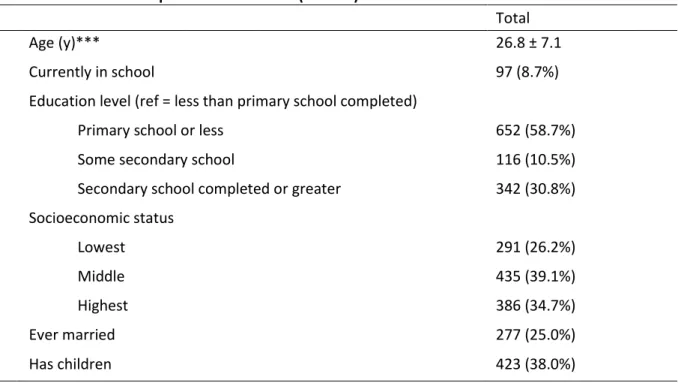
Sample description
a third had graduated from secondary school (31%), and the remaining 11% had some secondary school but had not graduated. A quarter of the men had ever been married (25%) and 38% had children.
Table 3. Baseline Participant Characteristics (n=1113)a
Total
Age (y)*** 26.8 ± 7.1
Currently in school 97 (8.7%)
Education level (ref = less than primary school completed)
Primary school or less 652 (58.7%)
Some secondary school 116 (10.5%)
Secondary school completed or greater 342 (30.8%) Socioeconomic status
Lowest 291 (26.2%)
Middle 435 (39.1%)
Highest 386 (34.7%)
Ever married 277 (25.0%)
Has children 423 (38.0%)
aData are expressed as No.(%) or Mean ± SD
Ethical review
The parent study was approved by the ethical review committees at the University of North Carolina at Chapel Hill and Muhimbili University of Health and Allied Sciences in Dar es Salaam, Tanzania. Individual written informed consent was obtained from all study participants. Secondary data analysis of the parent trial data for the dissertation research was approved by the UNC IRB.
3.3 Measures
Dependent variables
the relationship, and how many of these times they used a condom. I calculated men’s proportion of condom use by dividing the number of times condoms were used by the total number of sex acts. Using these proportions, I coded observations into one of three categories: “never use” (0% use), “some use” (greater than 0%, less than 100%), or “always use” (100%). Because of the possibility of some degree of recall bias over the course of the three most recent relationships, use of a continuous variable of condom use is not indicated as each unit increase would not necessarily indicate an important difference in condom use. Dichotomizing condom use, however, is not recommended by Noar et al. [83], thus use of a three-level categorical condom use variable preserves information in differences in use while reducing the influence of recall bias.
Sexual concurrency was evaluated by self-report of any overlapping sexual partnerships for an individual’s past 3 partners. Participants were asked to enumerate their three most recent sexual relationships and to report if they had sex with anyone else during any of these partnerships.
Participants reporting any instance of simultaneous sexual relationships either currently or in the past 12 months were coded as reporting concurrency. This measure was developed following best practices recently recommended by USAID [84].
Individual-level independent variables
Symptomsof anxiety and depression were measured using the Hopkins Symptom Checklist-25 (HSCL-25) [85], specifically a version of the scale previously translated into Kiswahili and tested in Tanzania [86]. This measure inventories symptoms of anxiety and depression in 25 items (10 related to anxiety, 15 to depression) rated on a 4-point Likert-type scale. The scale has been previously validated in Tanzania [86, 87]. Anxiety scores were calculated by taking the mean of the 10 anxiety-related items in the HSCL-25. In the sample the anxiety subscale showed good internal consistency at baseline
depression-related items in the HSCL-25. At baseline the depression subscale also showed good internal consistency (a = 0.91). Where depression and anxiety are described dichotomously, the recommended cutoff of 1.75 was used for clinical caseness [88]. This cutoff has been used in other studies using the HSCL-25 in sub-Saharan Africa [55, 89]. There is some indication that 1.67 may be a better cutoff for men [90], but I elected to use the more conservative cutoff of 1.75.
Individual-level covariates
Age Participants reported both their age in years and their date of birth. Participant age at baseline was calculated based on reported date of birth. This measure was used as the default value of the age variable with the exception of cases where the birthdate was not reported, in which case the reported age in years was used.
Education Participants reported the highest level of education they had completed by baseline based on 8 possible categories (no education, Standard 4 or less, Standard 5-7, Form 1, Form 2, Form 3, Form 4, Greater than Form 4). For analysis, education responses were collapsed into three categories: Primary school or less (responses: no education, Standard 4 or less, Standard 5-7); Some secondary school (responses: Form 1, Form 2, Form 3); or Secondary school completed or greater (responses: Form 4, Greater than Form 4).
as “lowest SES,” the highest 33% were classified as “highest SES,” and the remainder were classified as “middle SES”).
Marital status was evaluated through a single yes/no item in which men were asked if they had ever been married.
Camp-level covariates
Treatment condition. Each camp was randomized to either treatment or control condition in the parent trial. The treatment condition, which consisted of access to microfinance loans and peer health
leadership training, was designed to affect condom use and sexual partner concurrency, thus it was included as important covariate to account for design effect.
Camp network moderators
Peer behavioral norm scores were calculated for each participant based on their friends’ reported behaviors as well as their own reported perceptions of their friends’ behaviors and views of condom use and concurrency. Four types of behavioral norms were measured for both condom use and concurrency: friend-reported behaviors (observed descriptive norms), perceived descriptive norms, perceived
injunctive norms, and friend encouragement of the behavior. Men were asked to name their three closest friends in their camp by selecting names from a list of all camp members. The name of each friend was associated with a unique identifier which was used to link this nomination record to the friend’s reported behavior according to their own completed questionnaire. Taking the reported
should be using condoms all the time?” Finally, to assess friends’ encouragement of behaviors men were asked “Has Friend X encouraged you to use condoms all the time?” Men were asked analogous questions for partner concurrency and provided yes/no answers. I created a measure of the proportion of friends for which the respondent answered “yes” for each item.
Structural social cohesion measures for each camp were calculated as described by Moody and White [75]. Each camp network received a social cohesion score. Structural social cohesion measures for each camp specifically captured the construct of structural cohesion, or the minimum number of nodes who, if removed, would disconnect the network, using methods describes by Moody and White [75]. Each network received a structural social cohesion score calculated as the average pairwise connectivity, or the mean of the total number of possible independent paths between all pairs of any two given individuals in the network [75]. I calculated these scores in UCINET 6 [93]. First, I created matrices of pairwise connectivity scores for each dyad by camp. I then converted these matrices to pairwise lists of connectivity values for each camp and used mean of these values as the structural cohesion value for each camp to test hypothesis 3b.
Perceived social cohesion was measured using an adapted scale for social cohesion developed by Sampson, Raudenbush, and Earls [94]. Participants responded to statements related to cohesion of camp members on a 4-point Likert-type scale ranging from 1 = strongly disagree to 4 = strongly agree. Statements included “people in my camp are willing to help each other,” and “the members of my camp share the same values.”
Centrality can be thought of as the structural importance of a given individual within a network and can reflect the individual’sability to influence and be influenced by others in the network. Using a roster list including all members of each camp, men were asked to nominate their friends belonging to their camp by selecting their names from this list. Centrality measures, specifically in-degree centrality, were
a friend [95]. In-degree centrality was calculated within each network for each actor using UCINET 6 [93]. Standardized centrality scores were calculated as follows: Centrality = InTieij/(nj-1), where InTieij is
the number of ties received by individual i within camp j, and nj is the total number of actors in camp j.
3.4 Analytic strategy
Analysis for the completion of the proposed aims included multilevel modeling and social network analysis. In all aims individual- and camp-level sources of variation in sexual risk behaviors were
accounted for using multilevel models, given the nested data structure and the fact that I hypothesized both individual and camp-level determinants of sexual risk.
Descriptive analysis. I began analysis by describing the means and proportions of the individual-level and camp-level independent variables, dependent variables, and covariates in the sample. I created histograms of the continuous predictors of anxiety and depression, and described the means of these continuous predictors and proportions of the categorical outcomes by camp to further assess the level of variance in these key variables [96].
Aim 1 analysis
Aim 1, Hypothesis 1
Young men experiencing increased symptoms of anxiety and depression from time 1 to time 2 will report less frequent condom use and be more likely to report engaging in sexual partner concurrency at time 2, controlling for time 1
behaviors, than young men experiencing decreased symptoms of anxiety and depression.
To test this hypothesis, I fit multilevel models and regressed time two sexual risk behaviors on time one sexual risk behaviors, change score measures of mental health (time 2 – time 1), and baseline values of the covariates listed above. Multilevel modeling was used in all aims to adjust for the nested data structure by camp. I compared the variance from this model to that of the null model to assess the proportion of the variance in sexual risk behaviors explained by level-one predictors. The formulas for the respective null models for condom use and concurrency are as follows:
Level 1: 𝐶𝑢𝑚𝑢𝐿𝑜𝑔𝐶𝑜𝑛𝑑𝑈𝑠𝑒𝑖𝑗= 𝛽0𝑗+𝑟𝑖𝑗 𝑟𝑖𝑗~𝑁 (0, 𝜎2)
Level 2:𝛽0𝑗= 𝛾00+𝑢0𝑗 𝑢0𝑗 ~𝑁 (0,𝜏00)
Level 1: 𝐿𝑜𝑔𝐶𝑛𝑐𝑟𝑖𝑗 = 𝛽0𝑗+𝑟𝑖𝑗 𝑟𝑖𝑗~𝑁 (0, 𝜎2)
Level 2:𝛽0𝑗= 𝛾00+𝑢0𝑗 𝑢0𝑗 ~𝑁 (0,𝜏00)
The intraclass correlation (ICC) was calculated as the within group variance (𝜎2), over the total variance
(𝜎2 + 𝜏
002). The computed ICCs specified the proportion of the total variance in each sexual risk
Grand mean centering. Following imputation, I grand mean centered all continuous variables to be included in Aim 1 analyses, including anxiety and depression. Because baseline ICCs for these variables were low (0.046 and 0.047 for depression and anxiety, respectively), and as level 1 variation was of primary interest for this aim, continuous variables were centered using the grand mean rather than the camp mean.
Assessing collinearity. Because of the frequent comorbidity between anxiety and depression, I was concerned about a possible level of collinearity between measurements of their symptoms (the correlation between symptoms of anxiety and depression was 0.76 at baseline and 0.74 at the follow-up) which would limit the ability to interpret the independent effects of anxiety and depression when estimated simultaneously. For this reason, I tested three models for each sexual behavior dependent variable (for a total of six models): 1) change in anxiety symptoms only; 2) change in depression symptoms only; and 3) change in both anxiety and depression symptoms. I compared the parameter estimates and confidence intervals of models 1 and 2 to those in model 3 to assess the effects of the two correlated primary predictors.
Aim 1: Linear model equations
Condom use Concurrency
An
xiety
𝑪𝒖𝒎𝒖𝑳𝒐𝒈𝑪𝒐𝒏𝒅𝑼𝒔𝒆𝒊𝒋,𝒕 = 𝛾00+
𝛾10(𝐴𝑛𝑥𝑖𝑗,𝑡 − 𝐴𝑛𝑥𝑖𝑗,𝑡−1) +
𝛾20𝐴𝑔𝑒𝑖𝑗,𝑡−1+ 𝛾30𝐸𝑑𝑢𝑖𝑗,𝑡−1+
𝛾40𝑆𝐸𝑆𝑖𝑗,𝑡−1+ 𝛾50𝑀𝑎𝑟𝑖𝑡𝑎𝑙𝑆𝑡𝑎𝑡𝑢𝑠𝑖𝑗,𝑡−1+
𝛾60𝐶𝑜𝑛𝑑𝑈𝑠𝑒𝑖𝑗,𝑡−1+ 𝛾01𝑇𝑥𝑗+𝑢0𝑗+ 𝑟𝑖𝑗
𝑳𝒐𝒈𝑪𝒏𝒄𝒓𝒊𝒋,𝒕 = 𝛾00+
𝛾10(𝐴𝑛𝑥𝑖𝑗,𝑡 − 𝐴𝑛𝑥𝑖𝑗,𝑡−1) + 𝛾20𝐴𝑔𝑒𝑖𝑗,𝑡−1+
𝛾30𝐸𝑑𝑢𝑖𝑗,𝑡−1+ 𝛾40𝑆𝐸𝑆𝑖𝑗,𝑡−1+
𝛾50𝑀𝑎𝑟𝑖𝑡𝑎𝑙𝑆𝑡𝑎𝑡𝑢𝑠𝑖𝑗,𝑡−1+ 𝛾60𝐶𝑛𝑐𝑟𝑖𝑗,𝑡−1+
𝛾01𝑇𝑥𝑗+𝑢0𝑗+ 𝑟𝑖𝑗
D
epre
ss
io
n 𝑪𝒖𝒎𝒖𝑳𝒐𝒈𝑪𝒐𝒏𝒅𝑼𝒔𝒆𝒊𝒋,𝒕 = 𝛾00+
𝛾10(𝐷𝑝𝑟𝑖𝑗,𝑡 − 𝐷𝑝𝑟𝑖𝑗,𝑡−1) + 𝛾20𝐴𝑔𝑒𝑖𝑗,𝑡−1+
𝛾30𝐸𝑑𝑢𝑖𝑗,𝑡−1+ 𝛾40𝑆𝐸𝑆𝑖𝑗,𝑡−1+
𝛾50𝑀𝑎𝑟𝑖𝑡𝑎𝑙𝑆𝑡𝑎𝑡𝑢𝑠𝑖𝑗,𝑡−1+
𝛾60𝐶𝑜𝑛𝑑𝑈𝑠𝑒𝑖𝑗,𝑡−1+ 𝛾01𝑇𝑥𝑗+𝑢0𝑗+ 𝑟𝑖𝑗
𝑳𝒐𝒈𝑪𝒏𝒄𝒓𝒊𝒋,𝒕 = 𝛾00+
𝛾10(𝐷𝑝𝑟𝑖𝑗,𝑡 − 𝐷𝑝𝑟𝑖𝑗,𝑡−1) + 𝛾20𝐴𝑔𝑒𝑖𝑗,𝑡−1+
𝛾30𝐸𝑑𝑢𝑖𝑗,𝑡−1+ 𝛾40𝑆𝐸𝑆𝑖𝑗,𝑡−1+
𝛾50𝑀𝑎𝑟𝑖𝑡𝑎𝑙𝑆𝑡𝑎𝑡𝑢𝑠𝑖𝑗,𝑡−1+ 𝛾60𝐶𝑛𝑐𝑟𝑖𝑗,𝑡−1+
𝛾01𝑇𝑥𝑗+𝑢0𝑗+ 𝑟𝑖𝑗
Non-linear models. As indicated by previous studies of the relationship between depression and sexual risk [13-15], I tested non-linear specifications of mental health predictors for all hypothesized
relationships to compare to the linear models described above. As prior evidence indicated a concave curvilinear relationship, I tested a quadratic specification of the mental health predictors. As these quadratic terms were not statistically significant, they were excluded from the final models.
relationship between changes in internalizing symptoms and in sexual risk in this study, event-level data are needed to establish the precise temporal relationship [83]. Within the limitations of the data
available, the hypotheses as tested allowed me to establish whether changes in anxiety and depression were associated with sexual behaviors in this population.
Aim 2 analysis
Aim 2, Hypothesis 2a
Young men’s sexual risk behaviors will be more correlated with those of friends than with those of other members of their camp network.
Aim 2, Hypothesis 2b
The relationship between mental health and sexual risk will be moderated by peer sexual risk behavior norms such that the relationship will be stronger for young men exposed to riskier peer norms than for men exposed to less risky peer norms.
In preliminary analyses for Aim 2 I described the structural measures of camp networks and further described the size, average in/out degree, and average degree by relationship type (acquaintance, friend, someone I don’t get along with) of young men’s friendship networks (ego-networks) at baseline.
Univariate network correlations
Next I tested network correlations for each dependent variable of interest (condom use and
rows and columns of model matrices each time. This process produces an empirical distribution of the model coefficients against which to compare model estimates for hypothesis testing. Given a
significance level of 0.05, an observed parameter is determined to be statistically significant if it is greater than 95 percent of the values in the empirical distribution based on 2000 iterations [77]. QAP is an extremely robust procedure because its assumptions are only those of the data generation process; all biases in the data are also seen in the permuted population [77].
Interactions between mental health and peer norms
To test the hypothesis that the relationship between mental health and sexual risk is moderated by the influence of peer sexual risk behavior norms, I built upon the main effect models used to assess
hypothesis 1, and continued to utilize multilevel modeling to adjust estimates for the nested data structure by camp. For each model from Aim 1, I assessed the interaction between mental health and peer norm scores. Where these interaction terms were significant, I probed each significant interaction found by modeling the focal effect at the mean, one standard deviation above the mean, and one standard deviation below the mean of the moderator variable scores [99].