EXPERIENCING ADDICTION AND DEPENDENCY AMONG YOUTH IN JAMMU, INDIA
Sugandh Gupta
A thesis submitted to the faculty at the University of North Carolina at Chapel Hill in partial fulfillment of the requirements for the degree of Master of Art in the Department of
Anthropology in the Graduate School.
Chapel Hill 2018
ABSTRACT
Sugandh Gupta: Experiencing Addiction and Dependency among Youth in Jammu, India (Under the direction of Jocelyn Lim Chua)
TABLE OF CONTENTS
INTRODUCTION ... 1
ADDICTION IN JAMMU ... 4
ADDICTION ... 9
ANTHROPOLOGY OF ADDICTION ... 12
DEPENDENCY ... 17
CONCLUSION: RETHINKING “DEPENDENCY” ... 27
LIST OF FIGURES
INTRODUCTION
Every morning, approximately 600 men, aged between 14 to 45 years, gather at the large, barren courtyard of the Mira Lok Psychiatric Hospital1, an affiliate of Government Medical College and Hospital in Jammu, India. Some of these men have had to travel long distances of up to 2 hours. They come alone, in groups or with a family member. Each morning they wait for Dr. Lekha Arora. She is the in-charge for the de-addiction center. She signs each prescription and authorizes each patient’s daily dose of Opioid Substitution Therapy (OST). Because these men inject illicit drugs and are susceptible to HIV infection, they qualify for OST, according to the mandate of the National Aids Control Organization (NACO) of India. As I walk through the courtyard one summer morning at around 8 am, I see a mix of anxious faces and cheerful bantering. The security guards and patient care staff recognize several of them and engage in playful, informal conversations. Indeed, some of these men have been coming daily for as long as three years, when the de-addiction center first opened its doors. As I enter the hospital to meet the Head of the Department of Psychiatry, I feel my consciousness momentarily suspended amidst the cacophony of voices – of patients, their caregivers, the hospital staff and the doctors. A crowd begins to gather in a small corridor. The men have their arms outstretched, holding tiny pieces of paper: prescriptions for OST. In this corridor are two windows. Through one window the prescription is signed, and through the other window, the OST is administered. I see young,
eager and nervous men determinedly shouting and stretching outwards, demanding, or perhaps, pleading, for the doctor’s attention.
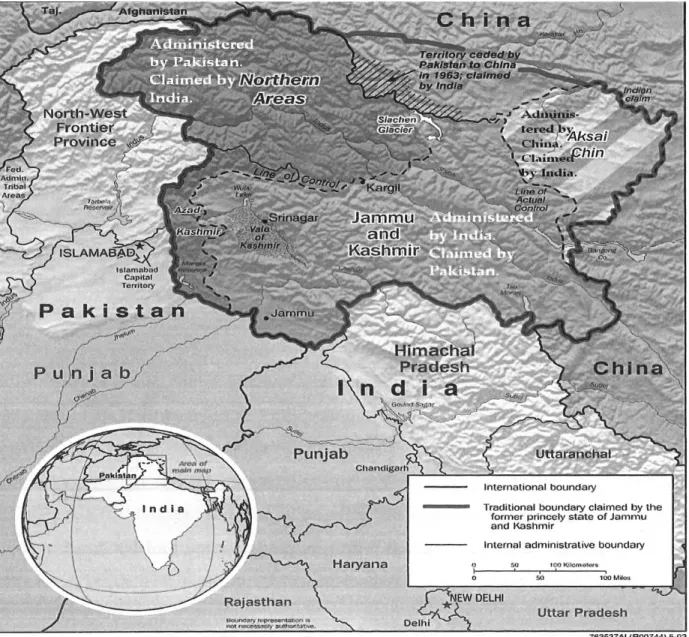
Figure 1: Map of Jammu and Kashmir2
My observations that morning at Mira Lok illustrate how drug de-addiction and recovery are mediated by interactions not only with family members, but also with state-employed doctors
and medical staff who simultaneously invoke multiple relationalities: as experts, legal
authorities, state representatives, and parental-like figures. They highlight the forms and relations of dependency3 (nirbharta) that frame the larger social and political worlds in which addiction is treated and experienced in Jammu. Drawing on preliminary fieldwork conducted over 8 weeks during the summer of 2017 in Jammu City (Figure 1), in this thesis I explore how social life and the everyday in Jammu are orchestrated through intimate and often hierarchical social
dependencies, in ways that are magnified and mobilized by addiction.
Recognizing addiction as an integral human experience and a legitimate object of anthropological inquiry, I expand the anthropological scholarship on addiction and personhood by examining addiction experiences through the cultural lens of “dependency” (nirbharta) as embodied and practiced in the South Asian context of India. Using the recent rise in substance abuse in Jammu City, India as a case study, I examine how political violence and changing socio-cultural realities in the region, set within the context of ongoing neoliberal state reforms in India, are shaping experiences of substance addiction. While clinical studies of addiction focus on people’s chemical and pathological reliance on substances and things, by contrast I situate addiction in Jammu City within a broader medical, cultural, social, and political terrain of
“dependency.” I do so in order to illuminate multi-level entanglements of borders and territories, social relationships, kinship obligations, neoliberal family forms, discourses of medical and legal
3Dependency - I use the term dependency here for ease of language and to facilitate understanding by the reader, with an awareness of its limitations. Dependency as a term is fraught with multiple meanings. In the North
experts, popular media culture, religion and language. As seen in the opening vignette, these entanglements of dependency shape the daily lives of young people identified as addicts.
Addiction in Jammu
Addiction is emerging as an important social, clinical, and political concern in Jammu City. A sociological study conducted by Manzer et al. in 2013 reported that an increasing
number of young people aged 14-30 years are consuming drugs, and heroin use in particular has generated moral panic in Jammu city. During my fieldwork, Dr. Vijay Gupta and Dr. Shyam Lal, psychiatrists at the Mira Lok Psychiatric Hospital, expressed concern for an alarming new trend in drug addiction. They shared that cases of petrol addiction, sedatives, analgesics such as typewriter whitener, boot polish, synthetic drugs, intravenous injections like dextropropoxphene, codeine-based cough syrups and poppy husk are becoming increasingly common. Intelligence Officers from the Narcotics Control Bureau suggested to me that Jammu and Kashmir has
become a transit route for drugs. According to the statistics published by the De-addiction Centre in Jammu, both young men and women are getting addicted to narcotics. In 2010,196 cases of substance abuse were reported. The number reduced to 184 in 2011 but increased to 194 cases in 2012. During my fieldwork, other local mental health professionals asserted that addiction is an inevitable outcome of the region’s social, cultural, geographical, historical and economic experience.
since 1947 (Sokefeld 2013). In 1947, Jammu and Kashmir had a Muslim majority population but was governed by a Hindu monarch. The region’s boundaries were contiguous to both India and Pakistan and therefore had the option to join either of the two nation-states. Pakistan claimed J&K on the basis of its Muslim majority population and its “physical contiguity” (Wirsing 1998:7-62). However, the Hindu ruler Maharaja Hari Singh remained indecisive, inclined more towards the idea of independence rather than joining any of the two domains (Punjabi 1995:39; Guha 2007:62). Accession of the state to India, however, took place under extraordinary circumstances. An invasion by the Pathan tribesmen (from the North-West of Pakistan) compelled the monarch to accede to India and seek military help (Bose 2003:33-37).
The Maharaja’s terms of accession with India initially secured a special status for the state, as laid down in Article 370 of the Indian constitution. However, the battle to gain political control over Kashmir led to wars between India and Pakistan in 1947, 1965, and 1999. The 1990s were a decade of extreme violence: from 1989 to 2002 Kashmiri insurgent groups waged an armed battle for self-determination against the Indian state, efforts that have been met with brutal military and legal repression. Many Kashmiris see themselves as living in a period of occupation and colonization by the Indian state. Since 1989, a “state of emergency” continues to be in place. The conflict has disrupted normal life to the extreme and after more than thirty years, normalcy has not returned. Thus, daily life is not only frequently interrupted by actual instances of violence but also by demonstrations, strikes and curfews.
second fiddle in political importance to Kashmir, the political identity of Jammu region remains disputed. Mohita Bhatia (2011:13) writes:
…despite an extensive scholarly engagement with Jammu and Kashmir, the
representation of the state still remains partial and limited…first the entire state is simply equated to one of its constituents, the ‘Kashmir’ region, and the conflict is also viewed as mainly limited to this part of the state. The way in which the conflict extends to other parts of the state, and affects their society and politics is completely overlooked…Also, other parts of the state such as Jammu have not been researched independently, but rather have been described mainly in reference to Kashmir.
On a regional scale, Jammu sits uncomfortably with Kashmir and is inadvertently dependent on the latter for (in)visibility. Due to the politically dominant position of Kashmir in the power structure of the state, many in Jammu feel marginalized by the Kashmiri leadership. Rather than Hindu versus Muslim, it is the Jammu versus Kashmir rhetoric that evoked the most intense response among the people I interviewed. For instance, during the late 1980s, a Kashmiri insurgency expressing the long-accumulated discontent of Kashmiri Muslims against India, gradually spread to various parts of Jammu creating an environment in which chauvinistic ‘‘pro-Jammu’’ and ‘‘anti-Kashmir’’ sentiments were easily evoked. Even as militancy has subsided, the conflict continues to impact the everyday lives of people in Jammu in various ways. This includes the constant political friction between Kashmir and Jammu on various matters related to nationalism and political autonomy, pervasive feelings of political marginalization vis-à-vis Kashmir, and perpetual India-Pakistan tensions along the border areas of Jammu (Bhatia
Living amidst these regional and national fragilities, young people in Jammu are trying to come to grips with issues including lack of employment opportunities, bleak prospects for the future, boredom, family tensions, relationship tensions, and peer pressure, of which an alarming offshoot may be increasing drug dependency (Kahlon 2014). Three years ago, Mira Lok
Psychiatric Hospital received state funding after cases of opioid abuse were found to be rampant and increasing. Bordering the already afflicted and opioid-overdosed region of Punjab on one side and Pakistan on the other, Jammu has become a site of trade, transaction and consumption of illicit substances. According to a 2016 study exploring trends in drug abuse in South Asia and around the globe published by the Institute of Regional Studies in Islamabad, Pakistan, India has become a transit hub as well as the destination for heroin and hashish production. The study reports that heroin reaches India via the India-Pakistan border and is mainly traded via Gujarat, Rajasthan, Punjab, and Jammu and Kashmir. This shift is largely attributable to an intensification of the war on terrorism and war over the status of Kashmir, due to which the borders have
become porous to the flow of human bodies and illicit substances. Additionally, widespread unemployment, especially among youth, may be contributing to narcotics consumption (Bourgois 2002; Garcia 2010; Manzer et al. 2017; Orlova 2009; Varma 2016). J&K is the 6th most unemployed state in India (BSE and CMIE 2017), with the highest number of unemployed youth living in Jammu district (Early Times, March 4, 2018). Despite this public knowledge, scant sustained attention has been paid to the reverberations of political violence and unrest as they impact the daily life and mental health of people in Jammu region. Studying addiction experiences is one way to engage these questions.
understandings of addiction are largely informed by knowledge produced in European and North American academies about Euroamerican experiences of addiction. Furthermore, the global templates for classification, diagnosis and treatment of addiction also emerge from Euroamerican sites of knowledge production. This trend is made apparent in a 2015 review article, “Addiction in the Making,” published in the Annual Review of Anthropology. Only three secondary sources cited in the article are based on research in locations outside the global north, suggesting the hegemony of addiction studies by scholars trained, teaching and researching in the global north. As the authors willfully acknowledge, “another characteristic of the literature on addiction science, medicine, and intervention is its overwhelming focus on North America, the United Kingdom, and other English-speaking countries” (Garriott and Raikhel 2015).
Echoing the words of Adams et al. (2015), I therefore argue for a decolonial4
anthropology of addiction that speaks not only to the lives and concerns of those who reside in Western, educated, industrialized, rich, and democratic (WEIRD) societies, but also to the lives of the global majority of the world—especially those who live in marginalized communities of the global south (Bhatia 2017:4). Shifting our gaze to the global south compels us to study how American cultural flows of media, commodities, and consumerist practices are being refashioned or reimagined in non-Western cultures, especially formerly colonized countries. It also raises questions about how specific Euro-American psychological and anthropological discourses of self and identity are now part and parcel of globalizing economies such as that of India. This includes the ways Euro-American psychological sciences and American cultural forms continue to play a crucial role in how Indian youth are reimagining their “Indianness” (Bhatia 2017:6).
It is toward these efforts to de-center the anthropology of addiction that I explore “dependency” more explicitly as a central cultural and moral idiom through which we can understand South Asian addiction experiences in contemporary Jammu. By rethinking “dependency” in the context of everyday relationships and at the conjuncture of regional and national histories, this project opens doors to revisit and rethink classic understandings of “Indian personhood” and the “Indian Self” as put forth in the South Asia literature (Akhtar 2005;
Aurobindo 1997, 2005; Bhatia 2017; Erikson 1969; Gergen 2009; Kakar 1981, 1989, 2003, 2007; Kitayama & Markus 1994; Misra & Mohanty 2002; Nandy 1998, 2006, 2013;
Obeyesekere 1990; Pandey 2011; Roland 1988; Trawick 1992). My intent is that this discussion will enable us to see how addiction experience in Jammu is culturally and relationally
constructed rather than merely an experience of individual moral failure and biological
dependence, and how it is located within a wider web of affective, intimate relations of reliance, and care in the contexts of the clinic, family, community, and region (Garcia 2010).
Addiction
The contemporary meaning of addiction began to take shape in the United States and the United Kingdom, during the early industrial period when heavy drinking was problematized as alcoholism. Here, the individual’s desire to consume alcohol was framed as a chronic,
progressive compulsion that led eventually and inevitably to a loss of control (Garriott & Raikhel 2013). In the nineteenth century, addiction to alcohol and other substances was identified as a ‘disease of the will.” These practices were increasingly problematized for their perceived incompatibility with the behavioral strictures then valorized, particularly those of self-reliance, independence, and productivity (Ferentzy 2001; Levine 1978; Room 2003). This moral, punitive discourse pathologized addiction by locating it in the notion of individual’s choice and free will. This discourse robbed the person of a social self. By understanding a person’s addiction as a failure of personal will, the behavior was perceived as independent of the institutional structures, social organization and hierarchies of intimacies that a person inhabits. The often-denied social recognition and support from family, medical, legal and state regimes constituted the punitive element of this moral discourse.
behavior such as gambling, sex, and overeating. The neurobiological model aided these notions of addiction by suggesting that certain behaviors not involving psychoactive substances
nonetheless correlate with the activation and dysfunction of the same brain circuits (Block 2008; Garriott and Raikhel 2015; O’Brien et al. 2006; Petry 2006; Volkow and O’Brien 2007). Today, the meaning of addiction continues to be revised and contested in light of new scientific
knowledge, medical treatments, and subjective experience (Garriott and Raikhel 2013).
It is important to note that both the moral and the neurobiological discourses of addiction emerged within the European and North American addiction paradigms. Even the treatment programs, namely, the globally pervasive and theologically-based Twelve-Step recovery model of Alcoholic Anonymous, Detoxification and Opioid Substitution Therapy emerged in these cultural contexts. The two-discourses on addiction and the treatment approaches inform the globally-employed diagnostic and classificatory manuals of psychiatric illness: the International Classification of Disease (ICD) administered by the World Health Organization (WHO) and the Diagnostic and Statistical Manual (DSM) administered by the American Psychological
Association (APA). This information is pertinent to understanding how the literature on
addiction science, medicine, and intervention is overwhelmingly focused on North America, the United Kingdom, and other English-speaking countries (Garriott and Raikhel 2015). Moreover, diagnostic categories also standardize the terms used for research in, for example, efficacy of various treatments for substance abuse and dependence (Glasser 2012).
and other interventions to Japan (Borovoy 2005; Christensen 2014), Mexico (Brandes 2002), China (Hyde 2011), and Native American communities (Prussing 2011; Spicer 2001). Yet, much work remains to be done to understand how “embedded rationalities and embodied experiences of the West [are] shaping and limiting our anthropological understanding of addiction” (Knight 2015b:178). This thesis joins the efforts of other scholars to bring South Asia into focus in the anthropology of addiction. By engaging the narratives of youth from India, the nation with the world’s largest youth population (United Nations Population Fund, 2014), my intent is to push the stories and narratives of the margin into visibility and re-draw the elusive hierarchy of the anthropological literature on addiction.
To this end, in the next section I present a brief overview of the anthropological literature on addiction. By highlighting the forms and relations of dependency that shape addiction
experience in Jammu, I will also pose new questions to problematize and expand the literature on the anthropology of addiction.
Anthropology of Addiction
Anthropologists have demonstrated that, as a complex ontological category, addiction is a site of entanglement: biological, social, and neoliberal processes of the globalizing world
coincide to redefine bodies, borders, relationalities, and personhood. Addiction is more than a clinical diagnosis, and a failure of the will. It is multi-modal. Anthropologists have demonstrated how addiction is experienced as a way of living (Bourgois 1996; Schüll 2012); a cultural
Medical anthropologists have highlighted the relationships between addiction and forms of structural violence and inequality. Philippe Bourgois’s In Search of Respect – Selling Crack in El Barrio (1996) explores substance abuse and addiction among minority ethnic groups as being symptomatic of deeper disparities embedded in the United States’ cultural, political and
economic systems. Befriending users, peddlers and local residents inhabiting the inhospitable streets of East Harlem, New York, Bourgois demonstrates that addiction is not an individual or community’s failure in their effort to strive for the virtues of the American Dream but is rather a harsh consequence of pursuing that dream. At the same time, addicts are perceived as partial state subjects, and a threat to social and public institutions.
In studying addiction, anthropologists have also highlighted themes of care, relationality, and dependency, focusing on addiction in contexts of economic and social precarity – an
unfortunate outcome of neoliberal forms of living. Anna Lowenhaupt Tsing (2015: 20) observes: Precarity is the condition of our time. Precarity is the condition of being vulnerable to others. Unable to rely on a stable structure of community, we are thrown into shifting assemblages, which remake us as well as our others. We can’t rely on the status quo; everything is in flux, including our ability to survive. A precarious world is a world without teleology…but thinking through precarity makes it evident that indeterminacy also makes life possible.
Relationality and dependency are further exemplified in Natasha Dow Schüll’s ethnography of gambling addiction in Las Vegas. Schüll (2012) suggests that addiction is a relationship that emerges from repeated interactions between a subject and object. The lives of gambling addicts in Las Vegas illustrates a broader need to escape the existential insecurities and uncertainties fueled by the neoliberal directives of the world. Most of these addicts live alone, without the support of extended social networks and kinship relationships. By losing themselves in “the solitary, absorptive gambling activity that can suspend time, space, monetary value, social roles and sometimes even one’s very sense of existence (Schüll 2012:12)”, the addicts engage in an act of disconnecting from Self and disconnecting the Self from the world. By relying on technology, their addiction relationship opens possibilities for newer forms of personhood. Addiction, then, is a culturally mediated, technological affliction continuously reproduced with the help of state agents and private players for political-economic benefits.
in the Española Valley of New Mexico, Garcia introduces heroin addiction as a phenomenon and an analytic. Caught amidst the entanglement of culture, politics and history, Española Valley is a site experiencing a collective mourning of dispossession, loss of land, intergenerational struggle for survival, and an overarching feeling of being abandoned by the state. As Garcia interacts with addicts who are often sentenced to the punitive action of detoxification, she pays close attention to the personal and collective histories: of addicts; institutional bodies such as the deaddiction center and the legal apparatus; and the Hispanic community at large. Spaces and relationships of care such as home-family and treatment centers become the sites of re-inscribing addiction due to economic precariousness and institutional neglect. Addiction then becomes a dangerously ordinary site with its paraphernalia of people, peddlers and partnerships of private-public therapeutic regimes scattered around the streets.
Finally, anthropologists have also explored how therapies and treatments for addiction emerge out of particular historical, social, and political conditions. Nancy D. Campbell (2013) conducts what she terms “an ethnography of pharmacological optimism,” by which she examines public contributions of neuroscientists as they influence policy changes and shift in public
developed as a distinct subspecialty during the 1970s. Narcologists, as specialists in addiction medicine are known in Russia, represent this therapy to patients as khimzashchita, which translates literally as ‘‘chemical protection’’—a potent pharmacological treatment that renders their bodies unable to process alcohol (Raikhel 2013). Specialists in North America and Western Europe criticize Russian narcology and condemn it as paternalistic, and manipulative as it
disregards patient autonomy but Raikhel informs us that patients and caregivers in Russia uphold its therapeutic value. Such dynamics unfold in the context of the Russian political and social order under Putin, in which responsibility, initiative, and personal sovereignty are affirmed as necessary traits within certain spheres, even as relationships of beneficence and obligations are valorized in others (Bernstein 2013; Rivkin-Fish 2005; Matza 2009, 2012).
Medical anthropologist Saiba Varma has written about de-addiction in Kashmir. Through an ethnography of police-run de-addiction center (DDC) in Kashmir, Varma (2016) shows us the state’s employment of medical-penitentiary technique to treat addiction. Offering subsidized treatment to men, the doctors at DDC employed the technique of recovery narrative in which the addicts “chronologically describe their history of substance abuse, affirm a
While Varma’s work in Kashmir has been important to efforts to de-center the
Euroamerican focus in the anthropology of addiction literature, little is known about addiction experience in neighboring Jammu and how it is shaped by Jammu’s distinct placement in regional and national political histories. Studying addiction in Jammu also requires an understanding of the role of the state, historical trauma and ongoing political volatility in
maintaining addiction. In the next section, I draw on ethnographic examples to explore relations of dependency in addiction experiences in Jammu city, and to forward the utility of
“dependency” as analytic in the anthropology of addiction in South Asia.
Dependency
I reach Mira Lok Psychiatric Hospital at 09.45 am on a Thursday morning. I have an appointment with the Head of the Department of Psychiatry, Dr. Vijay Gupta. He was on “vacation” for the past two weeks. A holiday out of force rather than choice, as he jokingly mentioned to me. I had heard the word “vacation” on the first day of my arrival at Jammu, in the exceedingly hot summer month of June. Immediately on arriving in Jammu, I learned about the annual summer vacation at state-sponsored institutions. The summer vacation policy applied to universities, hospitals, schools and state-administered public offices. Every year, the government would release two sets of summer vacation dates. Each state employee had to apply for one-month vacation. The leave was mandatory and could not be canceled or cashed.
Gupta said, "Dr. Lekha, meet Sugandh. She is interested in the issues that the youth in Jammu is grappling with." He continued, "Sugandh, Dr. Lekha here is the in-charge of the De-Addiction Centre. She daily interacts with 600 young men. Single-handedly she set up the de-addiction clinic. You must speak to her. She will tell you all there is to know."
Dr. Lekha Arora is in her mid-30s. Living in an upper-class locality of Jammu, she is married with two daughters. Trained as a pathologist, she took up the role of running the De-Addiction Centre about three years ago when the state sanctioned and released funds for its establishment. Although I could not garner what prompted her to take up this role, Dr. Gupta, the Head of the Department of Psychiatry, satisfactorily recounted her perseverance at successfully setting up a team and running the center smoothly. A few minutes after my conversation with Dr. Gupta, I was invited by Dr. Arora for a conversation in a separate room.
As we walked out of Dr. Gupta’s chamber5, passing through several rooms, we entered a busy corridor. I saw men flocking the windows and walking hurriedly one way or the other. There was chaos as if people didn't know what to do or whom to ask. Like me, there were other onlookers too. These were family members of patients institutionalized or those visiting the psychiatrist for consultation.
All at once, I was flung into multiple conversations. Dr. Arora, approached by a staff member, was attending an administrative matter. Other onlookers were talking loudly amongst themselves, openly discussing the psychiatric diagnosis of their kin, describing symptoms and daily challenges while the patient stood next to them. Occasionally they exchanged sheepish
glances and commented how loud the screams of one particular woman were. The woman was in a psychiatric cell. About 20 meters away, at the far end of the corridor, one could see a woman dressed in salwar-kameez6, without a dupatta7, her hair open, unkempt, loudly screaming and
hurling abuses in Hindi as she banged her bangles and head along the metal bars that separated her and us. No doors, no soundproof mirror, but metal bars. Her pain was transparent to us and the misery of onlookers who winced at her screams was visible to her. A security guard dressed in khaki8 stood outside the metal bars. He occasionally slammed his rod and screamed at her to stop. But the woman was unstoppable. The metal bars and the guard reminded me of a prison cell.
Dr. Arora called my name, and distractedly I began following her. We started to walk through the busy corridor towards an empty room. As Dr. Arora and I walked, several men and women acknowledged her presence by a brief greeting of Namaste, bowed their heads or nodded in recognition. Dr. Arora responded to some and continued walking. The room was empty. Not quiet, but empty. Outside conversations were filling the insides of the room already. Bare walls had been painted a shade of clear sky's blue color. One table, a doctor's chair, and three more chairs were all the furniture in the room. Dr. Arora occupied her chair. And across the table, I seated myself on a corner seat, next to a glassless window. I felt uneasy. I was curious to ask
6Salwar-Kameez - a long tunic (kameez) worn over pajama-like trousers (salwar). Traditionally, the salwar trousers are tailored to be long and loose-fitting with narrow hems above the ankles that are stitched to look like cuffs. The traditional kameez top is a loose-fitting, knee-length tunic with long sleeves. The tunic is worn by pulling it over the head through a round neckline that has a front slit.
7Dupatta - The salwar kameez is usually paired with a long, sheer fabric scarf or shawl known as a dupatta, which is either draped across the neck or over the head. The dupatta is traditionally seen as a symbol of modesty as its main purpose is as a veil.
who these men were? Why was there so much noise, such chaos outside the room? Why were the men carrying bits of paper and hastily moving between windows? Some men looked haggard, while some didn't. The air smelled different. There was a foul odor, but of what? Sweat? Medicines? Exhausted bodies and their sighs?
Dr. Arora finished her chores and turned her attention to me. I re-introduced myself. On enquiring, I learned that we were sitting in the de-addiction ward. She is the only doctor-in-charge of the clinic and daily signs approximately 600 prescriptions for opioid substitution therapy (OST). The men outside were carrying prescriptions for the OST. They come here every day. The women accompanying them are wives, mothers, sisters, and sometimes daughters. Before I could begin asking her more questions, there was a knock at her door and a couple walked-in along with their young son. Dr. Arora greeted Manoj, the man, and his wife, Rita. Manoj has been coming to the center daily for two years to receive his dose of OST. Manoj walks into the room and stands along the door frame while Rita sits on an empty chair next to me, with their son in her lap.
to write him an advanced prescription granting him six days of dosage that he could carry with him. Since his village is far, he confesses that he will be unable to travel daily for OST and without consuming his daily dose, he experiences withdrawal symptoms.
Dr. Arora immediately refuses him, appearing to be shocked by his appeal. She says in a matter-of-fact tone that the rules of the OST are apparent. The institutional body has mandated that no more than three days of dosage will be provided at one time and that, too, under “special circumstances.” She admits that if the village had a running OST program, she would write him a letter of admission but since that isn’t the case, she is bound to the rules. In her words, her hands were tied. If she were to break the rule, she would risk losing her job. Moreover, she states that bending the rules for one person would invite similar requests from several other patients, and she did not intend to start a trend. Her belief in her training and the governing laws of OST were steadfast. Nobody speaks for several seconds, until Dr. Arora begins reminding Manoj and his wife how difficult his early days of recovery had been. Speaking in a caring tone, she states that her concern towards them is that of an experienced, caring elder and not just a doctor. She reminds them how upset Rita used to be when Manoj was an “ineffective” husband.
center, the doctor, and the wonder drug of OST. At the same time, she is trying to persuade the doctor to agree to their request for the 6-day dose prescription. The doctor hears her and
expresses appreciation for Manoj's commitment towards recovery, but then affectionately reprimands him for his childish and impossible request. Eventually, Manoj tries one more time. In a pleading tone, he reminds Dr. Arora that his request is genuine, and that this is the first time in two-years that he has ever asked for an extra dose. Citing Indian marriage customs, he
explains that as the brother of the bride-to-be, he has essential family roles to fulfill. His presence at his sister's wedding is crucial. Without OST, his functionality would be diminished.
Dr. Arora refuses.
Manoj’s story is not an anomaly but rather the story of several young men who visit Mira Lok daily for OST. In some ways, the interaction between Dr. Arora and Manoj was over even before it began. The doctor’s decision was pre-fixed and declared at the beginning of the interaction. Manoj’s plea and his wife’s persuasion were met with refusal. But this encounter is critical to understand how addiction is cradled in a world of intimate and hierarchical social dependencies that characterize everyday life in Jammu and South Asia at large. Addiction then becomes one node in a more substantial network of dependencies between people, things, and institutions. These dependencies frame the broader social and political worlds in which addiction is treated and experienced. These network of dependencies in turn inform notions of self and personhood in Jammu.
(Addlakha 2005, 2008; Das 2001, 2015; Kakar 2007; Nandy 2013; Nunley 1996; Pinto 2014; Roland 1998; Singh 2017; Varma 2016a, 2016b). Discussing family members’ diagnoses and symptoms with strangers met on hospital wards or in outpatient units are familiar sights in Indian psychiatric institutions. This is not viewed as a breach of confidentiality. The critical role of a patient’s family in seeking treatment is also evidenced in Michael Nunley’s (1996) ethnography of state-sponsored psychiatric hospital at Uttar Pradesh, India. It is the family members who first bring the patient to the psychiatrist, they engage in consultation on behalf of the patient and also take part in deciding both, the appropriate treatment and the continuation of treatment. If family members do not perceive a marked improvement in the patient then they may stop the treatment.
Building support, gaining a collective understanding of illness, befriending other caregivers, reciprocating treatment advisories, and sharing reviews about the doctor, a
pharmacist, and even the hospital, all form a part of the informal agreement of everyday care. Often, not sharing information is perceived contrary to social relationships: the party from whom information is withheld may experience a sense of decline in social capital. Care is believed to be collective. Partly motivated by a lack of adequate information about psychiatric services and by notions of socially-dispersed personhood, these practices are a common sight. As rising addiction impacts public and intimate spaces of relationalities, care as a collective effort therefore lays the groundwork for how social and intimate dependencies are invoked in relation to managing addiction when one is living along the margin as shadowed and invisible.
the other hand, a doctor’s hours of private practice increases. All the psychiatrists in Jammu practice privately at their homes or in rented spaces. The consultation fee at private practice is marginally higher than the charge at the hospital, and during the summer patients are compelled to visit the doctor privately. Additionally, a doctor may live off the city limits, making it difficult for the patient to travel via public transport. In such instances, the patients either delay their visit, rely on an extended family member to drive them or shell several rupees of money to rent a vehicle for few hours. Since Mira Lok is a state-run institution, it serves people from all classes especially low socioeconomic rung that seeks subsidized treatment. These advantages are compromised when the patient has to visit the doctor at a private practice.
of neighboring Kashmir, and on the developmental and humanitarian largesse of the Indian state and its recognition of Jammu as the “peaceful” and victimized sibling.
We also observe how the patient has to navigate precarious realms of a biopolitical state to be recognized as a legitimate subject. The relation between “law” as an expression of
sovereign power and “discipline” as an expression of biopower have both played a crucial role in the emergence of the biopolitical state (Das 2015). Manoj is also a subject of this biopolitical state. By the intervention of the judicial logic (as suggested by Dr. Arora saying “my hands are tied”), Manoj is reminded of the state’s perception of him as being reckless and unruly subject. A precursor of being deviant is already attached to his personhood thereby reifying the possibility of a relapse. But Manoj contests this label. He is aware that his request qualifies as a ‘special circumstance’ as per the guidelines published by National AIDS Control Organization, Ministry of Health and Family Welfare, India. The clause states: “take home doses for OST medicines can be given for 1-2 days but inquiry should be made and the client’s claim should be verified from his/ her family members. In addition, the past record (adherence to medicines, any documented history of diversion/ attempted diversion/ non- compliance with the rules and regulations, etc.) should be checked.” To prove his qualification for the ‘special circumstance,’ he comes along with his wife and child. Manoj’s wife defends and supports her husband’s request by appealing to the doctor’s authority. She articulates a narrative of care and positive affect. The wife’s approval of the effectiveness of his various kinship roles such as father, husband, and son in the presence of the doctor reveal to us an ensemble of relationships in which Indian personhood is imagined, espoused and practiced.
how psychiatric care unfolds through complex interactions between patients, family members, and clinicians in India (Addlakha 2005, 2008; Das 2001, 2015; Kakar 2007; Nandy 2013; Nunley 1996; Pinto 2014; Roland 1998; Singh 2017; Varma 2016a, 2016b). In clinical contexts where family members participate actively in clinical care, addiction experiences unfold at the intersection of clinical authority, personhood, and kinship relations. Social life and the everyday in Jammu are orchestrated through intimate and often hierarchical social dependencies, in ways that are magnified and mobilized by addiction. For instance, an addict’s recovery may require the support of extended family and community in ways shaped by moral and gendered
economies of kinship and care.
Consider how gender mediated relationships of dependency in this encounter. At Mira Lok, I only saw two-female doctors. One was Dr. Arora9 and the other was Dr. Rigzin Kilam, the only psychologist practicing in the entire Jammu region. Dr. Arora single-handedly manages the de-addiction center and interacts with 600 men on day-to-day basis. Manoj’s literal dependency on Dr. Arora to write his prescription, as well as to his wife to provide convincing testimony to his character, is therefore a potent moment in the clinic, one shaped by gender as much as by class. Despite being the breadwinner in the family, his addiction caused a change in the status of his personhood. At least for the moment of this clinical encounter, Manoj is subordinated to the authority of women.
Another form of dependency evident in this encounter is how doctors simultaneously invoke multiple relationalities as medical experts, legal authorities, and parental-like figures. We
see this in the ways that Dr. Arora simultaneously positions herself as legal authority, physician, sisterly figure, and parent, all in a single clinical interaction. Mental health professionals in India command a very high social capital such that they can valorize and pathologize dimensions of social life (Chua 2014). Dr. Arora asserted her medical expertise to Manoj and his wife by highlighting the benefits of OST in enabling him to manage his behavior and re-access his social self. Inevitably, she passed a moral assessment of his past, present, and future self. Manoj’s aspiration for renewed subjectivity is contextualized “as threatening, rendering desire a problem for selfhood” (Pinto 2014). As a parental-like figure, she tried to reason with his “childish” request by disciplining him and dismissing his appeal at the outset. Instead of extending care and understanding by being an authority figure, she abandons Manoj.
Conclusion: Rethinking “Dependency”
Many scholars contrast the Indian self to the Western self by suggesting that the Indian self is relational and un-individuated. Sometimes referred as the ‘familial self’ (Roland 1988) or ‘we-self’ (Collins and Desai 1986), the Indian self’s psychological functioning and growth is profoundly entwined with the domestic, social and cultural milieu. In much of this literature, the Indian self is theorized as lacking a differentiation between self and non-self (Kakar 1997) valuing reciprocity, emotionally intimate relationships, and embodying interdependence with permeable ‘ego’ boundaries (Roland 1988). A Self dependent on others such as family and other groups predominantly characterizes Indian self. By exploring dependency in the context of addiction as a constant, affective, cultural, and moral practice embedded in the everyday sphere of: home, community, region and nation, I expand the work of scholars seeking to bridge psychoanalytic and psychological insights with social science work, including the work of post-colonial scholars (Das 2015; Gooptu 2013; Lukose 2009; Sen 2005). Thus, to speak of
dependency in Jammu accomplishes two interventions: it expands our lens onto addiction experiences, while enabling us to revisit and potentially retheorize approaches to the Indian self.
accelerated in neoliberal times has led to the pathologization of social problems and moral experience (Canguilhem 1991; Horwitz and Wakefield 2007; Foucault 2003), which has led to the pharmaceuticalization of populations (Dumit 2012); and the normalization of experiences of the body and the self. Through studying addiction experiences, I will document detailed local phenomenological descriptions, rich in local idioms that open up forms of selfhood and personhood describing local worlds, and core moral and cultural practices.
In this thesis, I have argued that the literature within anthropology concerning addiction has largely been dominated by scholarship produced in North America and Europe about Euroamerican experiences of addiction (Bourgois 2010; Campbell 2013; Carr 2011; Garcia, 2010; Garriott and Raikhel 2013, 2015; Glasser 2012; Han 2011, Lovell 2013; Schüll 2013). These mainstream-Western frameworks have been circulated widely. Occupying a normative position, they inform the global understanding of the concept of addiction and its therapeutic trajectories. One can observe a scholarly lacuna regarding addiction studies of the South Asia. Proposing a vision of ‘decolonial anthropology’ and to bring South Asia more squarely into the focus of addiction studies I have suggested an ethnographic study of drug-dependent youth, residing in Jammu City. By exploring the cultural and moral idiom of dependency (nirbharta), I show how addiction experience is reconstituted in the everyday: through kinship relations, regional and national histories, and medical and juridical regimes of state-sponsored institutions.
experienced in Jammu, too. Significant scholarly and media attention is devoted to Kashmir but scarce attention is paid to Jammu. A feeling of being marginalized and shadowed by the
discourse on Kashmir was often expressed by my participants. Through a study of addiction experiences of Jammu youth, my research intends to open the area to scholarly investigation, expand the scholarship on the anthropology of addiction to South Asia, and illustrate the
WORKS CITED
Addlakha, Renu. 2005. "Affliction and Testimony." Indian Journal of Gender Studies 12, no. 1: 63-82. doi:10.1177/097152150401200103.
Addlakha, Renu. 2008. Deconstructing Mental Illness: An Ethnography of Psychiatry, Women and the Family. New Delhi, India: Zubaan Books.
Addlakha, Renu. 2010. “‘Indigenisation’ not ‘Indianisation’ of Psychiatry: An Anthropological Perspective.” Sociological Bulletin, 1: 46-68.
Adams, G., Dobles, I., Gómez, L. H., Kurtis, T., & Molina, L. E. (2015). Decolonizing psychological science. Journal of Political and Social Psychology, 3, 213–238.
Akhtar, Salman (ed.). 2005. Freud along the Ganges: Psychoanalytic Reflections on the People and Culture of India. New York, NY, US: Other Press
Akyeampong, Emmanuel. “A Historical Overview of Psychiatry in Africa.” In The Culture of Mental Illness and Psychiatry Practice in Africa, edited by Emmanuel Akyeampong, Allan G. Hill and Arthur M. Kleinman, 24-50. Indiana University Press, 2015. Ambekar A, Kumar R, Rao R, Agrawal A, Kumar M, Mishra AK. 2015. Punjab Opioid
Dependence Survey. Available from: http://www.pbhealth.gov.in/scan0003%20(2).pdf Ang, M.W. 2000. “Costumes of Singapore.” In K.M. Chavalit and M. Phromsuthirak (eds.),
Costumes in ASEAN. Bangkok: The National ASEAN Committee on Culture and Information of Thailand
Aurobindo Sri. 2005. The Renaissance in India. (Collected Works of Sri Aurobindo, Vol. 21). Pondicherry: Sri Aurobindo Ashram Publication Department.
Aurobindo Sri. 1997. The human cycle (Collected Works of Sri Aurobindo, Vol. 25). Pondicherry: Sri Aurobindo Ashram Publication Department
Bernstein, Anya. 2013. Demons: Our Changing Attitudes to Alcohol, Tobacco and Drugs.
Oxford: Oxford University Press
Bhatia, Mohita. 2009. “Women's Mobilisation in the Jammu Agitation: Religion, Caste, Community and Gender.” Economic and Political Weekly, 44, no.26/27: 447-453. Bhatia, Mohita. 2011. Dominant Discourse and Marginalised Realities: Hindus in Jammu. PhD
diss., University of Cambridge.
Bhatia, Sunil. 2017. "Decolonizing Moves Beyond Eurocentric Culture, Narrative, and Identity." In Decolonizing Psychology: Globalization, Social Justice, and Indian Youth Identities, 1-23. Oxford University Press.
Bhachu, P. 2005. “Salwar – Kameez.” In V. Steele (ed.), Encyclopedia of clothing and fashion.
Detroit: Thomson Gale.
Borovoy Amy. 2005. The Too-Good Wife: Alcohol, Codependency, and the Politics of Nurturance in Postwar Japan. Berkeley: University California Press.
Bose, Sumantra. 2003. Kashmir: Roots to Conflict, Paths to Peace. London: Harvard University Press.
Bourgois, Philippe. 2010. In Search of Respect: Selling Crack in El Barrio. Cambridge: Cambridge University Press.
Brandes, Stanley H. 2002. Staying Sober in Mexico City. Austin: University of Texas Press. BSE and CMIE. 2017. Unemployment in India- A Statistical Profile. pp.83-88.
Burke, Kenneth. 1969. A Grammar of Motives. Berkeley: University of California Press. Campbell, Nancy D. "‘‘WHY CAN’T THEY STOP?’’ A Highly Public Misunderstanding of
Science." In Addiction Trajectories, edited by Eugene Raikhel and William Garriott, 214-238. Durham, NC: Duke University Press, 2013.
Canguilhem, G. 1991. The Normal and the Pathological. Translated by C.R. Fawcett and R.S. Cohen. New York: Zone.
Carr, Summerson E. 2011. Scripting Addiction: The Politics of Therapeutic Talk and American Sobriety. Princeton, NJ: Princeton University Press.
Chua, Jocelyn Lim. 2014. In Pursuit of the Good Life: Aspiration and suicide in globalizing South India. Berkeley: University of California Press.
Collins, A. and Desai, P. 1986. Selfhood and context. In The Cultural Transitions, Human
Experience and Social Transformations in the Third World and Japan edited by M. White and S. Pollak. London: Routledge & Kegan Paul.
Das, Veena and Addlakha, Renu. 2001. “Disability and Domestic Citizenship: Voice, Gender and the Making of the Subject.” Public Culture 13, no.3: 511-531.
Das, Veena. 2015. Affliction: Health, Disease, Poverty. New York: Fordham University Press Dumit, J. 2012. Drugs for Life: How Pharmaceutical Companies Define our Health. Durham,
Erikson, E. H. 1969. Gandhi’s Truth: The Origins of Militant Non-Violence. New York: W. W. Norton.
Ferentzy, Peter. 2001. ‘‘From Sin to Disease: Differences and Similarities between Past and Current Conceptions of Chronic Drunkenness.’’ Contemporary Drug Problems 28: 363– 74.
Foucault, Michael. 2003. Abnormal. Translated by Grama Burchell. New York: Picador
Garcia, Angela. “The Elegiac Addict.” In Addiction Trajectories, edited by Eugene Raikhel and William Garriott, 36-60. Durham, NC: Duke University Press, 2013.
Garcia, Angela. 2010. The Pastoral Clinic: Addiction and Dispossession along the Rio Grande.
Berkeley: University of California Press.
Garriott, William and Raikhel, Eugene. 2015. “Addiction in the Making.” The Annual Review of Anthropology 44:477–91. doi: 10.1146/annurev-anthro-102214-014242
Gergen, Kenneth. 2009. Relational Being. New York: Oxford University Press Glasser, Irene. 2012. Anthropology of Addictions and Recovery. Waveland Press. Global Wealth Databook 2017. Credit Suisse Research Institute.
Gooptu, Nandini (ed.). 2013. Enterprise Culture in Neoliberal India: Studies in Youth, Class, Work and Media. London: Routledge
Guha, Ranjit. 2007. India After Gandhi: The History of World’s Largest Democracy. London, Macmillan.
Han, Clara. 2011. "SYMPTOMS OF ANOTHER LIFE: Time, Possibility, and Domestic Relations in Chiles Credit Economy." Cultural Anthropology 26, no. 1: 7-32. doi:10.1111/j.1548-1360.2010.01078.x.
Horwitz, A.V. and J.C. Wakefiled. 2007. Loss of Sadness: How Psychiatry Transformed Normal Sorrow into Depressive Disorder. Oxford: Oxford University Press.
Hyde, Sandra. 2011. ‘‘Migrations in Humanistic Therapy: Turning Drug Users into Patients and Patients into Healthy Citizens in Southwest China.’’ Body and Society 17 (2–3): 183–204. Jain, S., & Jadhav, S.2009. “Pills that swallow policy: Clinical ethnography of a community
Kahlon, Simrit, Dr. "The Menace of Drug Addiction in Jammu and Kashmir." Defence Info, March 5, 2014. Accessed February 10, 2018. http://www.defenceinfo.com/menace-drug-addiction-jammu-kashmir.
Kakar, Sudhir. 1981. The Inner world: A Psychoanalytic Study of Childhood and Society in India.
Delhi: Oxford University Press.
Kakar, Sudhir. 1989. Intimate Relationships: Exploring Indian Sexuality. New Delhi: Viking. Kakkar, Sudhir. 2003. Psychoanalysis and eastern spiritual healing traditions. Journal of
Analytical Psychology, 48, 659-678.
Kakar, Sudhir. 2007. The Indians, Portrait of a People. New Delhi: Viking Penguin. Katju, Manjari. 2005. “The Bajrang Dal and Durga Vahini” in Jaffrelot (ed.).
Kitayama, S. & Markus, H.R. (1994). Emotion and culture empirical studies of mutual influence.
Washington, DC: American Psychological Association.
Kleinman, Arthur. 1988. Rethinking Psychiatry: From Cultural Category to Personal Experience.
New York: Free Press.
Levine, Harry G. 1978. ‘‘The Discovery of Addiction. Changing Conceptions of Habitual Drunkenness in America.’’ Journal of Studies on Alcohol 39: 143–74.
Lovell, Anne M. 2006. Addiction Markets: The Case of High Dose Buprenorphine in France. In
Global Pharmaceuticals: Ethics, Markets, Practices. Adrianna Petryna, Andrew Lakoff and Arthur Kleinman, eds. 136-170. Princeton, NJ: Princeton University Press.
Lovell, Anne M. “Elusive Travelers- Russian Narcology, Transnational Toxicomanias, and the Great French Ecological Experiment.” In Addiction Trajectories, edited by Eugene Raikhel and William Garriott, 126-159. Durham, NC: Duke University Press, 2013. LS&CO. UNZIPPED TEAM. “15 Facts About the Khaki Pant.” Levi Strauss, 21 Apr. 2014,
levistrauss.com/unzipped-blog/2014/04/15-facts-about-the-khaki-pant/.
Lukose, Ritty. 2009. Liberalization's Children: Gender, Youth and Consumer Citizenship in Globalizing India. Duke University Press.
Manzer, Shakeeb; Dubey, Shailja and Bhat, Hilal A. 2017. “Drug Addiction in Jammu District- A Sociological Study.” AGU International Journal of Research in Social Sciences &
Humanities no. 5: 600-603.
Matza, Tomas. 2012. “‘Good Individualism’? Psychology, Ethics and Neoliberalism in Postsocialist Russia.” American Ethnologist 39: 804-818.
Misra, G., & Mohanty, A.K. 2002. Perspectives on indigenous psychology. New Delhi Concept. Mohanty, C. T. (1991). Under Western eyes: Feminist scholarship and colonial discourses. In C.
T. Mohanty, A. Russo, & L. Torres (Eds.), Third World women and the politics of feminism (pp. 51–80). Bloomington, IN: Indiana University Press.
Mohanty, C. T. (2003). Feminism without Borders. Durham, NC: Duke University Press.
Nandy, Ashis. 1998. Exiled at Home: comprising, At the edge of Psychology, The intimate enemy, Creating a nationality. Delhi; New York; Oxford University Press
Nandy, Ashis. 2006. Talking India / Ashis Nandy in conversation with Ramin Jahanbegloo. Delhi; New York; Oxford University Press
Nandy, Ashis. 2013. Regimes of Narcissism, Regimes of Despair. Oxford University Press. Nunley, Michael. 1996. “Why psychiatrists in India prescribe so many drugs.” Culture, Medicine,
and Psychiatry, 20: 165–197.
Obeyesekere, Gananath. 1990. The Work of Culture: Symbolic Transformation in Psychoanalysis and Anthropology. Chicago: University of Chicago Press.
O’Brien, Charles P., Nora Volkow, and T-K Li. 2006. ‘‘What’s in a Word? Addiction versus Dependence in dsm-v.’’ American Journal of Psychiatry 163 (5): 764.
Orlova, Alexandra. 2009. ‘‘The Russian ‘War on Drugs’: A Kinder, Gentler Approach?’’
Problems of Post-Communism 58 (1): 23–34.
Pandey, A. 2011. Psychotherapy and Indian Thought. In Cornelissen, M., Misra, G. & Varma S. (Eds.). Foundations of Indian Psychology: A Handbook. New Delhi: Pearson
Petry, Nancy M. 2006. ‘‘Should the Scope of Addictive Behaviors Be Broadened to Include Pathological Gambling?’’ Addiction 101: 152.
Pinto, Sarah. 2014. "Drugs and the Single Woman: Pharmacy, Fashion, Desire, and Destitution in India." Culture, Medicine, and Psychiatry 38, no. 2: 237-54. doi:10.1007/s11013-014-9367-x.
Punjabi, R. 1995. “Kashmir Imbroglio: The Socio-Political Roots.” Contemporary South Asia
4(1): 39-53.
Raikhel, Eugene A. 2006. Governing Habits: Treating Alcoholism in the Post-Soviet Clinic. Ithaca: Cornell University Press
Raikhel, Eugene. 2010. ‘‘Post-Soviet Placebos: Epistemology and Authority in Russian Treatments for Alcoholism.’’ Culture, Medicine, and Psychiatry 34 (1): 132–68.
Raikhel, Eugene. “PLACEBOS OR PROSTHESES FOR THE WILL? Trajectories of Alcoholism Treatment in Russia.” In Addiction Trajectories, edited by Eugene Raikhel and William Garriott, 188-212. Durham, NC: Duke University Press, 2013.
Raikhel, Eugene, and William Garriott. "Introduction: Tracing New Paths in the Anthropology of Addiction." In Addiction Trajectories, edited by Eugene Raikhel and William Garriott, 1-35. Durham, NC: Duke University Press, 2013.
Rao, Ravindra. "The Journey of Opioid Substitution Therapy in India: Achievements and Challenges." Indian Journal of Psychiatry 59, no. 1 (2017): 39-45.
doi:10.4103/psychiatry.indianjpsychiatry_37_17.
Rivkin-Fish, Michele. 2005. Women’s Health in Post-Soviet Russia: The Politics of Intervention. Bloomington: Indiana University Press.
Roland, Alan. 1988. In Search of Self in India and Japan. Princeton, NJ: Princeton University Press.
Room, Robin. 2003. ‘‘The Cultural Framing of Addiction.’’ Janus Head 6 (2): 221–34.
Sardar, S. 2016. Drug Abuse: Global vs South Asian Trends with Special Reference to India and Pakistan. Islamabad: Institute of Regional Studies.
Schüll, Natasha D. ““BALANCING ACTS” Gambling-Machine Addiction and the Double Bind of Therapeutics.” In Addiction Trajectories, edited by Eugene Raikhel and William Garriott, 61-87. Durham, NC: Duke University Press, 2013.
Schüll, Natasha Dow. 2014. Addiction by Design Machine Gambling in Las Vegas. Princeton, NJ: Princeton University Press.
Sen, Amartya. 2005. The Argumentative Indian: Writings on Indian History, Culture and Identity.
New York, NY, US: Farrar, Straus and Giroux.
Singh, Shalini. 2017. "Illness Narratives of Substance Users from Urban India: The Untold Stories of Their ‘afflictions’." Medicine Anthropology Theory | An Open-access Journal in the Anthropology of Health, Illness, and Medicine 4, no. 3: 173.
Sokefeld, Martin. “Jammu and Kashmir: Dispute and Diversity.” Modern Anthropology of India: Ethnography, themes and theory. New York: Routledge, 2013. 89-105.
Spicer, Paul. 1997. ‘‘Toward a (Dys)Functional Anthropology of Drinking: Ambivalence and the American Indian Experience with Alcohol.’’ Medical Anthropology Quarterly 11 (3): 306–23.
Tsing, Anna L. 2015. The Mushroom at the End of the World. Princeton University Press. United Nations Population Fund. (2014). Annual report—2014. New York, NY: United Nations. Varma, Saiba. 2016a. "Disappearing the Asylum: Modernizing Psychiatry and Generating
Manpower in India." Transcultural Psychiatry 53, no. 6: 783-803. doi:10.1177/1363461516663437.
Varma, Saiba. 2016b. "Love in the Time of Occupation: Reveries, Longing, and Intoxication in Kashmir." American Ethnologist 43, no. 1: 50-62. doi:10.1111/amet.12262.
Volkow, Nora D., and Charles P. O’Brien. 2007. ‘‘Issues for dsm-v: Should Obesity Be Included as a Brain Disorder?’’ American Journal of Psychiatry 164 (5): 708.
Wirsing, R.G. 1998. India, Pakistan and the Kashmir Dispute: On Regional Conflict and its Resolution. New York, St. Martin Press