AFFECT-MODULATED POSTAURICULAR REFLEXES OF CHILDREN WITH AUTISM SPECTRUM DISORDER
Megan L. Kovac
A dissertation submitted to the faculty of the University of North Carolina at Chapel Hill in partial fulfillment of the requirements for the degree of Doctor of Philosophy in the School of Education (School Psychology).
Chapel Hill 2014
ABSTRACT
MEGAN L. KOVAC: Affect-modulated Postauricular Reflexes of Children with ASD (Under the direction of Rune J. Simeonsson and Gabriel S. Dichter)
Autism Spectrum Disorder (ASD) is a neurodevelopmental disorder characterized by impaired functioning in two domains: (1) social communication and interaction, and (2) restricted interests, repetitive behaviors, and sensory sensitivities. The present study examined affect-related postauricular responses to social and nonsocial pictures in children with ASD using a protocol that integrated psychophysiology, caregiver ratings of symptom severity, and Ecological Momentary Assessments (EMA). Results were suggestive of greater postauricular responses among children with ASD while viewing nonsocial images related to circumscribed interests but not other nonsocial images or social images, indicative of greater positive affective responses to images related to circumscribed interests compared to their typically developing peers. Correlations between psychophysiological responses and symptom severity in both core autism domains (i.e., social deficits and restricted interests) were examined, as were correlations with self-reported affect obtained via EMA. The results of this study suggest that
ACKNOWLEDGEMENTS
I would like to thank my adviser, Dr. Gabriel Dichter. His expertise, guidance, and support have been invaluable throughout this process. He has been a dedicated research mentor, and I am grateful for his investment in helping me develop as a researcher in this field.
I would like to thank my Chair and program adviser, Dr. Rune Simeonsson, for his continued support and constructive feedback throughout this project. I am also grateful to the members of my Committee, Dr. Sandra Evarrs, Dr. Laura Klinger, and Dr. Samuel Odom, for their thoughtful feedback on this project. Special thanks to Dr. Barbara Wasik, for offering her time and feedback during my defense.
I would also like to thank Dr. James Bodfish for his valuable mentorship throughout my training, and Donna Yerby, for always advocating on my behalf.
To my parents, who will never know how inspiring they are, thank you for being who you are, and for helping make me the woman I am today.
Finally, none of this would be possible without the constant love and support of my wife, Crista Farrell. I am grateful for her intellectual input, editorial skills, and her
TABLE OF CONTENTS
LIST OF TABLES ... viii
LIST OF FIGURES ... ix
CHAPTER 1: INTRODUCTION ... 1
Autism Spectrum Disorder ... 1
Study Goal ... 2
Background ... 4
ASD and Affect ... 4
Affect and Psychophysiology ... 5
The Postauricular Reflex ... 6
The Postauricular Reflex and ASD ... 8
Ecological Momentary Assessment (EMA) ... 9
Significance of Present Study ... 10
CHAPTER 2: METHODS ... 12
Sample ... 12
Psychophysiology Participants ... 13
EMA Participants ... 14
Measures and Materials ... 17
Psychophysiology ... 17
Behavioral Measures for Inclusion Criteria and Symptom Severity ... 18
EMA Measures ... 19
Procedures ... 21
Psychophysiology and Behavioral Assessments... 21
Ecological Momentary Assessment of Affect ... 23
Data Analysis ... 24
Data Acquisition and Preparation ... 24
Research Question 1 ... 25
Research Question 2 ... 27
Research Question 3 ... 28
CHAPTER 3: RESULTS ... 29
Research Question 1: PAR Response Magnitudes ... 31
Postauricular Response Magnitudes ... 31
Valence and Arousal ... 34
Research Question 2: PAR Responses and Symptom Severity ... 36
Research Question 3: Ecological Momentary Assessment ... 39
Response Rates and Frequency of Social and Nonsocial Behavior ... 39
PAR and Self-Reported Positive Affect... 40
CHAPTER 4: DISCUSSION ... 46
Findings ... 46
Limitations ... 51
Future Directions ... 51
LIST OF TABLES
1. Sample Characteristics for Participants with Usable
Psychophysiology Data ... 16 2. Sample Characteristics for Participants with EMA Data ... 16 3. Sample Characteristics for Participants with Usable
LIST OF FIGURES
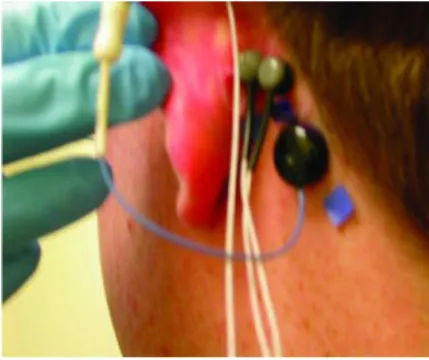
Figure 1: Sensor placement for postauricular reflex recording ... 7
Figure 2: Attrition of Psychophysiology Participants ... 14
Figure 2: Examples of High ASD Interest, Non-social Neutral ASD, and Social Images ... 18
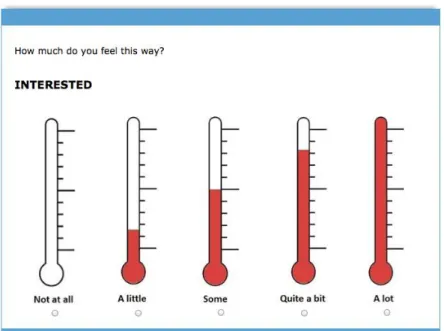
Figure 3: Sample Item From the Modified Version of the PANAS-C ... 20
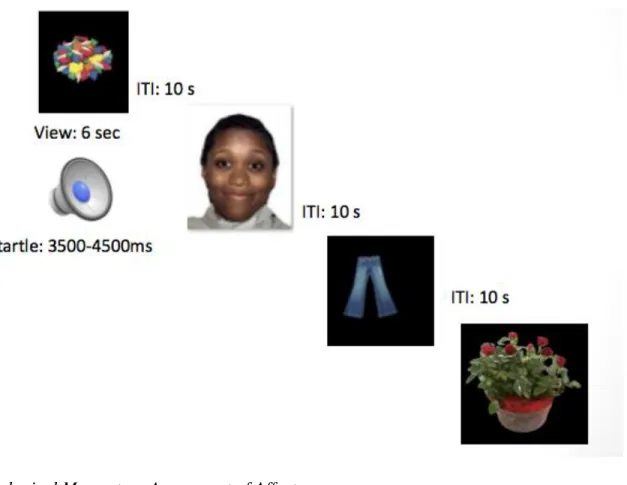
Figure 5: Illustration of Psychophysiology Viewing Task Procedure ... 23
Figure 4: Predicted trend in PAR response to stimuli for children with ASD ... 27
Figure 5: Mean PAR Responses to High Autism Interest, Nonsocial Neutral Autism Interest, and Social Images ... 33
Figure 6: Valence Ratings ... 35
Figure 7: Arousal Ratings ... 36
Figure 8: PAR Response to High Autism Interest Images and Repetitive Behavior Scale, Revised Restricted Interest Subscale Scores for the ASD Group ... 37
Figure 9: PAR Response to Social Images Correlated with Social Responsiveness Scale T-Scores for the ASD Group ... 38
Figure 10: Percent Time Spent in Social and Nonsocial Activities By Group ... 40
Figure 11: PAR to High Autism Interest Images and Positive Affect in Circumscribed Interest/Primary Interest Activities ... 42
LIST OF ABBREVIATIONS
PAR Postauricular reflex ASD Autism spectrum disorder TD Typically developing CI Circumscribed interests PI Primary Interests HAI High Autism Interest NNI Nonsocial Neutral Interest ERP Event-related potential CDC Center for Disease Control EEG Electroencephalography
CHAPTER 1: INTRODUCTION
Autism Spectrum Disorder
Autism Spectrum Disorder (ASD) is a neurodevelopmental disorder characterized by impaired functioning in two domains: (1) social communication and interaction, and (2) restricted interests, repetitive behaviors, and sensory sensitivities. (American Psychiatric Association, 2013). Although ASD was once considered extremely rare, prevalence rates have spiked in the last two decades, increasing 78% from 2002 to 2008, prompting public awareness campaigns and invigorating research efforts to identify causes and potential treatments. Recent epidemiological studies indicate that ASD now affects approximately 1 in 68 children in the United States (Baio, 2014). ASD is more common among males (i.e., 1 in 42 males compared to 1 in 189 females) (Baio, 2014). It is associated with a number of genetic disorders (e.g., Fragile X syndrome, Prader-Willi syndrome) but a specific genetic cause has not yet been identified. Indeed, relatively little is known about what causes ASD, but recent research has identified the following as risk factors: genetic factors (King et al., 2013), advanced parental age (Hultman, Sandin, Levine, Lichtenstein, & Reichenberg, 2011; Lampi et al., 2013), family history (Lauritsen, Pedersen, & Mortensen, 2005), and the presence of other medical conditions (e.g., Fragile X syndrome).
The second domain of impairment encompasses a broad range of repetitive behaviors, including circumscribed interests. Circumscribed interests (CIs) are intense and
(American Psychiatric Association, 2000). CIs are considered relatively common in ASD; one study found that approximately 88% of individuals with ASD experience CIs (Klin, Danovitch, Merz, & Volkmar, 2007).
Study Goal
The goal of the present study was to use psychophysiology to examine affective responses to social and nonsocial stimuli in children with ASD. The study focused exclusively on positive affect, an area that has received little attention in ASD research to date, in order to better understand how affective functioning may contribute to approach motivation for social and nonsocial behavior in ASD. Specifically, this study examined affect-modulation of the postauricular reflex (PAR) in children with and without ASD while they viewed three categories of images: social images, non-social images that tend to be of high interest to children with ASD (“High Autism Interest” or HAI), and non-social images that do not tend to be of high interest to children with ASD (“Nonsocial Neutral Interest” or NNI). The HAI images represented the most commonly reported categories of circumscribed interests for individuals with ASD (Sasson, Dichter, & Bodfish, 2012; Sasson, Elison,
Turner-Brown, Dichter, & Bodfish, 2011). Postauriclar reflex responses were then correlated with caregiver reports of restricted interests and social impairments to determine the extent to which PAR response magnitudes corresponded to symptomatic impairments. Finally, the PAR response magnitudes were correlated with EMA data to determine whether PAR
Background
ASD and Affect
In 1943, Leo Kanner published the first clinical report of children with ASD, Autistic Disturbances of Affective Contact. He described 11 children who exhibited a rare “inability
to relate themselves in the ordinary way to people and situations from the beginning of life” (Kanner, 1943). For most people, affect may vary somewhat based on different factors (e.g., environmental context) (Kuppens, Oravecz, & Tuerlinckx, 2010). For example, an
individual may exhibit positive affect (e.g., happy, interested) if he or she is around friends or engaged in a pleasing activity. That same individual may exhibit negative affect (e.g., tense, worried) in more threatening circumstances. Although affect varies among individuals and across situations, that variability generally stays within a normal range and follows a predictable pattern. When affect is excessively labile, the likelihood of psychological
maladjustment increases (Kuppens, Van Mechelen, Nezlek, Dossche, & Timmermans, 2007). A multitude of complex cognitive, physiological, and psychological processes
contribute to the emotional experiences of human beings. Affect can be thought of as the basic biological system underlying those processes and it can be reduced to positive (i.e., appetitive) and negative (i.e., defensive) responses. Psychophysiology researcher Peter Lang has articulated a cohesive hypothesis about the relation between affective state and
motivational priming, which provides a helpful perspective for examining affective responses in ASD. The motivational priming hypothesis posits that an individual’s response to
autonomic physiological reflexes and influences appetitive responses (i.e., approach) or defensive responses (i.e., avoidance).
Typical patterns of affective response can be well understood in an evolutionary context (i.e., threatening stimuli elicit negative affective responses which compel people to flee, while desirable stimuli elicit positive affect and compel people to approach); however, affective functioning plays an important role in more immediate, real-world contexts. Psychophysiological research suggests that this basic system underlies most affective experiences, so it makes sense to examine affect-modulated psychophysiology in a population with deficits in affective functioning (Lang & Bradley, 2010).
ASD has been conceptualized as a disorder of affect because children with ASD often exhibit an unusually restricted range or an atypical pattern of affective responses. Typically developing children often exhibit positive affective responses toward their peers. Children with ASD, though, tend to exhibit odd or unusual affective responses during social
interactions. For example, a child with ASD may exhibit minimal affective response when he or she enters the preschool classroom or playgroup, but he or she may become exuberantly excited (e.g., laughing, smiling, waiving hands) when presented with a preferred object or routine.
Affect and Psychophysiology
Affect can be measured by observing explicit physical or verbal cues (e.g., posture, facial expressions, words). More subtle indicators of affect can be measured using
sensors, or electrodes, on precise points typically along the scalp and facial muscles (Cacioppo, Tassinary, & Berntson, 2007) to record task-related physiologic activity. Psychophysiology is an excellent tool for measuring physiological responses that cannot be seen with the naked eye. Furthermore, psychophysiology typically has excellent temporal resolution, which makes it ideal for addressing the temporal chronometry of affective responses.
There are certain reflexes that are modulated by affective state. That is, the
magnitude of those reflexes covaries (i.e., attenuates or potentiates) with the affective state of the individual. Measuring the magnitude of those responses provides a highly reliable index of affective state. In the laboratory setting, affective state is elicited by showing individuals pictures of things that are positive (e.g., appetizing food), neutral (e.g., a pair of socks), or negative (e.g., mutilation). A startle probe, which is a quick and unexpected acoustic (e.g., burst of white noise) or tactile (e.g., puff of air) stimulus, evokes the reflex of interest and the magnitude of the reflexive response provides an index of affective state. For example, the startle eyeblink reflex is larger when individuals are in a negative state (e.g., viewing
negative stimuli) and smaller when they are in a positive state (e.g., viewing positive stimuli) (Lang, Bradley, & Cuthbert, 1990). This method of studying affect-modulated
psychophysiological reflexes is a valuable tool when investigating affective disorders.
The Postauricular Reflex
The focus of the present study was the postauricular reflex (PAR), a
order mammals, the postauricular muscle helps draw the ears up and back to orient to sound. It also helps mammals pull their ears closer to the head to facilitate nursing (Johnson, Valle-Inclán, Geary, & Hackley, 2012). The location of the postauricular muscle makes even the largest responses difficult to observe with the naked eye. Consequently, psychophysiology is an excellent technique for observing and recording the PAR. Figure 1 illustrates how the PAR is measured using psychophysiological techniques.
Figure 1: Sensor placement for postauricular reflex recording
Image from www.youngscientistjournal.org
There is a wealth of evidence showing that the magnitude of the PAR varies with the affective state of an individual. That is, when individuals are in a positive, or “approach” oriented, affective state, they exhibit a larger PAR (Benning, 2011). This makes the PAR an excellent index of positive affect. The PAR is suitable for measuring negative affect as well as positive affect in that negative stimuli have been shown to elicit smaller PARs (Benning, 2011), but it has been consistently identified as a uniquely reliable index of positive affect. The first study to demonstrate a correlation between the PAR and affective response was published in 2004 (Benning et al., 2004). In that study, undergraduate college students viewed pleasant, neutral, and negative images while participating in psychophysiology
magnitudes, indicating that PAR was greater when subjects were viewing positive pictures (e.g., women smiling) and smaller when viewing negative images (e.g., snakes, mutilation). A subsequent study yielded similar findings; PAR magnitudes were greater when subjects were viewing pleasant images than when they were viewing neutral or negative (e.g., people frowning) images. This pattern has been replicated in non-patient samples numerous times (Benning, 2011; Gable & Harmon-Jones, 2009; Hess, Sabourin, & Kleck, 2007; Sandt, Sloan, & Johnson, 2009).
The Postauricular Reflex and ASD
Examining the PAR in children with ASD is novel and promising for a number of reasons. Affect-modulated psychophysiology has been rigorously examined in non-patient populations, but it has been largely overlooked in ASD research. Initial psychophysiological investigations have identified anomalous affective response patterns in adults with ASD (Bölte, Feineis-Matthews, & Poustka, 2008; Dichter, Benning, Holtzclaw, & Bodfish, 2010; Wilbarger, McIntosh, & Winkielman, 2009). The present study furthered this line of
research by focusing on an appetitive or “approach” oriented reflex and image categories that were particularly relevant to core symptoms of ASD (i.e., social and nonsocial images) (Lang & Bradley, 2010).
Ecological Momentary Assessment (EMA)
The link between the PAR and positive affect has been well established in the psychophysiology literature; however, few studies have examined the relation between affect-modulated psychophysiology, as measured in the laboratory, and affective functioning in the real-world context. To examine whether findings about the relation between PAR and positive affect in ASD were consistent across settings, an Ecological Momentary Assessment was used in the present study to assess self-reported affect outside of the laboratory setting.
Significance of Present Study
Atypical affective functioning is a salient feature of ASD, yet the physiological underpinnings of affect in ASD are not well understood. Through the use of
psychophysiological methods in the laboratory and behavioral assessments across contexts, the present study sought to address this gap. Few studies have examined affect-modulated psychophysiology in children, and there have been no studies focused on the postauricular reflex in children with ASD. Other psychophysiological research in ASD has focused on event-related potentials (ERPs). These studies advance understanding of aberrant neural circuitry in children with ASD, but ERPs have been primarily discussed as correlates of cognitive processes (e.g., social cognition), social impairments (e.g., averted gazes), and aversion to change (Gomot et al., 2011; Kohls et al., 2011). These studies have focused on the mechanisms that underlie social cognition, while almost no research has focused on the mechanisms that underlie affective responses.
Finally, the addition of an EMA protocol furthered the potential impact of the present study. Only two studies have implemented an EMA protocol with children who have ASD, and only one study has attempted to correlate data obtained through EMA with physiological data (i.e., imaging or EEG) recorded in the laboratory (Forbes et al., 2012; Khor, Gray, Reid, & Melvin, 2014). The incorporation of EMA in the present study affirmed the feasibility of using this method with adolescents who have ASD and established a foundation for
CHAPTER 2: METHODS
Sample
All procedures were approved by the UNC Institutional Review Board to ensure compliance with ethical guidelines in human subjects research. A total of 81 children (41 with ASD, 40 typically developing), ages 9-18 years, were recruited for a parent study at UNC-Chapel Hill. Children with ASD were recruited using the UNC Autism Research Registry, and typically developing children were recruited using the UNC listserve.
Inclusion criteria for the ASD group were:
Previous diagnosis of ASD confirmed by a score above threshold for ASD on the
Autism Diagnostic Observation Schedule (ADOS-G) (Lord, Rutter, DiLavore, & Risi, 2002), administered as part of the study procedure
Average cognitive functioning, using a threshold of SS=70 on the Kaufman Brief Intelligence Test, Second Edition (KBIT-2), administered as part of the study procedure (Bain & Jaspers, 2010)
Inclusion criteria for the typically developing (TD) group were:
No past or present diagnosis of developmental delay, psychopathology, or
neurological disorders
Psychophysiology Participants
Of the 81 children enrolled in the study, 67 (35 with ASD, 32 typically developing) completed the psychophysiology protocol for the present study; however, usable
psychophysiology data was obtained only for thirty participants. Seven participants chose not to complete the psychophysiology protocol because of discomfort with the procedure or the tasks (e.g., application of sensors, images, startle probe), and one participant obtained a score below the threshold for inclusion on the cognitive assessment. Data were lost for six participants due to technical problems with the recording equipment.
Figure 2: Attrition of Psychophysiology Participants
The final sample of psychophysiology participants contained 30 children (16 ASD, 14 TD) and is described in Table 1. The ASD and TD groups did not differ with regard to age (F(1,28)=.003, p=.96), gender (2 = .238, p=.626), or IQ (F(1,28)=2.87, p=.102). Sixty-three percent of the sample was Caucasian, 27% was African American, 3% were Asian, and 7% endorsed Other Race on the demographic questionnaire.
EMA Participants
Participants could choose to participate in the EMA protocol regardless of whether or not they successfully completed the psychophysiology portion of the study, so although there
81 Participants Recruited
• 7 participants declined to participate afer arriving at the clinic
• 1 participant scored below threshold on the KBIT • 6 particants' date were lost due to equipment failure
67 Completed Psychophysiology
Protocol
• 27 participants were startle non-responders
40 Exhibited Sufficient Startle Responses
• 7 participants were excluded due to excessive movement • 2 participants were excluded due to medical issues • 1 participant was excluded due to emotional distress
during recoridng
was some overlap between participants with usable psychophysiology data and usable EMA data, there were also participants who had only completed one portion of the study. A total of 42 participants (out of the 81 initially recruited for the parent study) agreed to participate in the EMA protocol. Three of those individuals withdrew before completing any surveys, citing conflicts with their schedule in two cases and unspecified reasons in the third case. The final EMA sample was comprised of 19 children with ASD and 20 typically developing children. Participants in the EMA sample were older than participants in the
psychophysiology sample (t=2.83, p=.006), but they did not differ with regard to IQ (t=.35, p=.73) or gender ((2 = 2.02, p=.16). Characteristics of the participants who were included in the EMA analyses are provided in Table 2. As with the psychophysiology sample, participants in the EMA sample were primarily Caucasian (77%). Fifteen percent of the sample self-identified as African American, 3% identified as Asian, and 5% identified as Other.
Participants with Both Psychophysiology and EMA Data
Table 1: Sample Characteristics for Participants with Usable Psychophysiology Data
N Mean Age % Male Mean IQ RBSR- RI Scale SRS-T Score
ASD 16 12.38 (SD=3.28) 88% 104.31
(SD=17.32)
3.38 (SD=2.09) 75.31(SD=8.32)
TD 14 12.43 (SD=2.17) 93% 114.71
(SD=16.16) 0 (0)
57.93 (SD=3.67)
Table 2: Sample Characteristics for Participants with EMA Data
N Mean Age %Male Mean IQ RBSR- RI Scale SRS-T Score
ASD 19 14.11 (SD=3.33) 74% 102.2
(SD=16.9)
2.61 (SD=2.06) 76.3 (SD=7.48)
TD 20 14.5 (SD=1.96) 80% 113.1
(SD=10.6)
.1 (SD=.3) 57.7 (SD=3.66)
Table 3: Sample Characteristics for Participants with Usable Psychophysiology and EMA Data
N Mean Age %Male Mean IQ RBSR- RI Scale SRS-T Score
ASD 6 13.17 (SD=3.65) 83% 117.17
(SD=12.58)
4 (SD=2.45) 78.5
(SD=4.04)
TD 6 12.83 (SD=2.40) 100% 110.83
(SD=7.08)
0 (SD=0) 57.67 (SD=2.50)
Measures and Materials
Psychophysiology
Figure 3: Examples of High ASD Interest, Non-social Neutral ASD, and Social Images High Autism Interest
(HAI)
Nonsocial Neutral Interest (NNI)
Social
Behavioral Measures for Inclusion Criteria and Symptom Severity
Clinical assessments with well-validated psychometric properties were used to confirm diagnostic status (i.e., group membership) and capture symptom severity. The ADOS-G, which is recognized as a gold-standard assessment for ASD spectrum disorders, was administered to all participants in the clinical group (i.e., participants with ASD) (Lord et al., 2002). The Kaufman Brief Intelligence Test, Second Edition (KBIT-2), a brief psychometrically-sound cognitive screener with good psychometric properties, was administered to all participants to confirm intact cognitive functioning (i.e., Composite Intelligence Quotient greater than 70) (Bain & Jaspers, 2010).
interactions (Constantino et al., 2003), and the Interest Scale (IS) to provide information about their child’s interests (Turner-Brown, Lam, Holtzclaw, Dichter, & Bodfish, 2011).
EMA Measures
To gather data about participants’ affect in naturalistic settings, an Ecological Momentary Assessment protocol using the Positive and Negative Affect Scale for Children (PANAS-C) (Laurent et al., 1999) was implemented. The PANAS-C measures the two core dimensions of affective functioning, positive and negative affect. It requires respondents to rate how much they feel like each of 30 different emotion words (e.g., interested, sad,
frightened) using a likert-style scale. Scored responses yield overall Positive Affect (PA) and Negative Affect (NA) scores. Given the present study’s focus on positive affect, only the PA scores were used in analysis. The PANAS-C has been validated with adolescent populations and has been successfully used in previous studies incorporating EMA protocols with
children who have ASD (Forbes et al., 2012).
information about where participants were when they were contacted, what they were doing, and whom they were with.
Figure 4: Sample Item from the Modified Version of the PANAS-C
Two measures were used to categorize the activities that participants were engaged in during the EMA as Circumscribed Interest/Primary Interest or not. The Autism Diagnostic Interview- Revised contains one item that focuses on circumscribed interests, so that measure was referenced when reviewing the EMA data and categorizing activity types as CIs or not. The Interest Scale (IS) requires caregivers to identify their child’s Primary Interest (PI). This measure was used to identify typically developing participants’ Primary Interests (PI) for categorization purposes. Categorizing PIs for the typically developing group provided a point of comparison between the ASD and TD groups when examining self-reported positive affect in highly preferred (i.e., CI or PI) activities.
were categorized as Social if the participants reported being with friends, family, or two parents. Activities were categorized as Nonsocial if participants reported being alone or with one parent. The presence of more than one parent was required to qualify as a Social activity because the age range of the participants made it likely that they would be accompanied by one parent for supervision or transportation purposes, rather than social interaction.
Procedures
Psychophysiology and Behavioral Assessments
The psychophysiology recording session and the behavioral assessments took place at the Carolina Institute for Developmental Disabilities (CIDD). In order to reduce anxiety
associated with psychophysiology procedures, a video illustrating the process was shared with participants prior to their arrival at the CIDD (http://youtu.be/4a3qmDNaeuA). On the day of the visit to the CIDD, participants were greeted, given a tour of the facility, and shown a schedule of activities for the day. Visual schedules were used for some participants to alleviate anxiety and facilitate understanding.
Postauricular reflex magnitudes were collected as part of a psychophysiology session conducted as part of a parent study that included measurement of other facial
room, and stimuli were presented to subjects on a 24-inch computer monitor. The recording room was equipped with a camera and speaker so that the participant could be observed and communicate with the experimenter throughout the recording session.
The recording session for measuring PAR responses to the HAI, NNI, and Social images took approximately 12 minutes. Each participant viewed 10 images from each of three image categories, resulting in a total of 30 images viewed by each participant. The order of the images was counterbalanced across participants to control for order effects. There were 34 HAI, 40 NNI, and 19 Social images in the total image pool. An acoustic startle probe (i.e., a burst of white noise with instantaneous onset) was presented to elicit the PAR while participants viewed static images from each category. After viewing all images, participants completed valence and arousal ratings for each image. Subjective valence ratings reflected how positive or negative participants found each image and subjective arousal ratings reflected how exciting or calm they felt after viewing each image.
Figure 5: Illustration of Psychophysiology Viewing Task Procedure
Ecological Momentary Assessment of Affect
The EMA protocol consisted of six automated prompts to complete the Mood Check over the course of four days: one Friday afternoon, two on Saturday, two on Sunday, and one on Monday afternoon. In most cases, the EMA protocol was explained during the visit to the CIDD. Participants and their caregivers provided contact information (i.e., email addresses and phone numbers) and the windows of acceptable contact times (e.g., Friday between 3:00 and 6:00 p.m.) were confirmed. Contact windows did not interfere with school or academic tasks. Participants were told that the goal was to “catch” them doing things that they
participants with ASD) during the set contact times to increase the likelihood of obtaining affect ratings from participants while they engaged in circumscribed interests.
The prompts were delivered via email and text message to ensure that they reached participants in a variety of settings. Each prompt contained the Mood Check number (1-6), the participant ID, and a link to the online survey. Participants were shown screenshots of what the email/text message prompts would look like, as well as screenshots of the Mood Check. The Mood Check was reviewed with the participants and caregivers to ensure complete understanding of the vocabulary and instructions.
Three participants (two with ASD and one without ASD) were unable to receive the administration overview during their visit to the CIDD but indicated a strong desire to participate. For those subjects, the administration procedure was explained via telephone. Additionally, for two participants who did not have text messaging enabled on their cell phones prompts were delivered via telephone calls to their cell phones and the surveys were completed online.
After the six mood checks were administered, the data were reviewed. In two cases, follow up was required to clarify what the participants were doing during when they were texted because their initial responses were too ambiguous to categorize.
Data Analysis
Data Acquisition and Preparation
Neuroscan SCAN v.4.3.1 software, with condition markers (i.e., stimulus presentation, startle probes) digitally denoted in the files. The condition markers were used to identify specific windows of time for extracting PAR response magnitudes based on trigger onset and
stimulus type (i.e., image category). Data were then processed in MATLAB, to extract PAR responses within the specified windows and calculate within-subject baseline and peak magnitude responses. PAR responses were assessed by averaging aggregate waveforms across all pictures within a single category (i.e., HAI, NNI, Social). Baseline averages were determined based on the 50ms prior to stimulus onset and peak averages were determined by the maximum activity during the 8-30 ms post image onset. The PAR magnitude was then calculated using the difference between baseline and peak response magnitudes. Data were visually inspected for artifact or systematic error. Automated correction (ARTCOR) was employed to correct for data artifacts (e.g., sneezes, stretches, yawns). Corrected data files were further processed in SAS to generate mean PAR response magnitudes in microvolts for each image category for each subject. The resulting data were then analyzed using SAS. The level of significance for all analyses was set at p < .05.
Research Question 1: Do children with ASD exhibit different affective responses measured
by the PAR to social, “High Autism Interest,” and “Nonsocial Neutral Interest” stimuli,
compared to children without ASD?
size due to attrition, effect sizes were calculated using Cohen’s d to further explore the magnitude of differences between PAR responses of children with ASD and typically developing children. It was predicted that, within the ASD group, PAR magnitudes while viewing HAI images would be greater than PAR magnitudes while viewing NNI images, which in turn would be greater than PAR magnitudes while viewing social images. For the TD group, it was predicted that PAR magnitudes while viewing social images would be greater than PAR magnitudes while viewing NNI images, which in turn would be greater than PAR magnitudes while viewing HAI images. This predicted trend is illustrated in Figure 6, and it would suggest that children with ASD exhibit significantly greater positive affect when viewing HAI images relative to the other two image categories. Finally, post-hoc
Figure 6: Predicted trend in PAR response to High Autism Interest, Nonsocial Neutral Autism Interest, and Social Images
Valence and arousal ratings data were analyzed using similar Group (ASD, TD) x Category (HAI, NNI, Social) repeated measures ANOVAs. Follow-up t-tests were conducted to examine group differences in subjective ratings for each image category.
Research Question 2: Is there a significant association between affective responses measured
by the PAR and clinical severity of core ASD symptoms?
The second research question was examined using Pearson correlation tests. The PAR response magnitudes exhibited by children with ASD were correlated with scores from the Social Responsiveness Scale (SRS) and the Restricted Interest subscale of the Repetitive Behavior Scale (RBS-R RI). It was predicted that children with ASD who exhibited
relatively greater PAR potentiation to HAI images would have higher scores on the RBS-R (RI), indicating increased severity with regard to restricted interests. It was further predicted that children with ASD who exhibited smaller PAR responses to images of faces would have
0 2 4 6 8 10 12 14
HAI NNI Faces
P A R Re sp on se M agn it u d e (m ic ro vo lt s) Image Type
Predicted PAR Responses to High Autism
Interest, Nonsocial Neutral Autism Interest,
and Social Images
higher scores on the SRS, indicating increased levels of social impairment. Data from the typically developing group were correlated with symptom severity measures as well, in case there were any signals that sub-clinical symptom severity may be correlated with relative elevations in PAR responses to HAI images or relative decreases in PAR response to Social images. It was expected that no correlation would be observed in the Typically Developing group.
Research Question 3: Is there a significant association between affective responses to the
different categories of stimuli and subjective reports of affect in a real-world context?
CHAPTER 3: RESULTS
To thoroughly examine affect-modulated PAR responses to HAI, NNI, and Social images, mean PAR response magnitudes were used in analysis. To examine relations between affective responses and caregiver reports of restricted interests and social
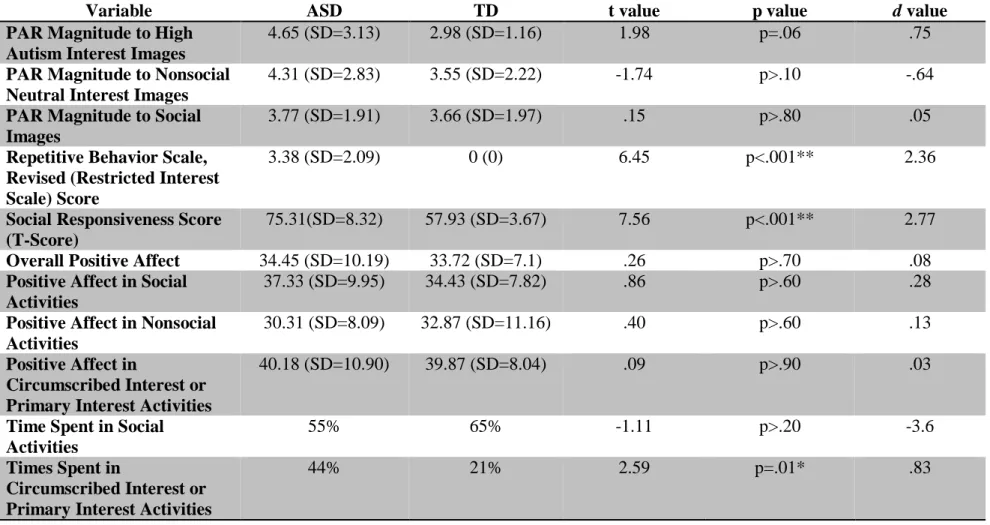
Table 4: Summary of Variables Used in Analyses
Variable ASD TD t value p value d value
PAR Magnitude to High Autism Interest Images
4.65 (SD=3.13) 2.98 (SD=1.16) 1.98 p=.06 .75
PAR Magnitude to Nonsocial Neutral Interest Images
4.31 (SD=2.83) 3.55 (SD=2.22) -1.74 p>.10 -.64
PAR Magnitude to Social Images
3.77 (SD=1.91) 3.66 (SD=1.97) .15 p>.80 .05
Repetitive Behavior Scale, Revised (Restricted Interest Scale) Score
3.38 (SD=2.09) 0 (0) 6.45 p<.001** 2.36
Social Responsiveness Score (T-Score)
75.31(SD=8.32) 57.93 (SD=3.67) 7.56 p<.001** 2.77
Overall Positive Affect 34.45 (SD=10.19) 33.72 (SD=7.1) .26 p>.70 .08
Positive Affect in Social Activities
37.33 (SD=9.95) 34.43 (SD=7.82) .86 p>.60 .28
Positive Affect in Nonsocial Activities
30.31 (SD=8.09) 32.87 (SD=11.16) .40 p>.60 .13
Positive Affect in
Circumscribed Interest or Primary Interest Activities
40.18 (SD=10.90) 39.87 (SD=8.04) .09 p>.90 .03
Time Spent in Social Activities
55% 65% -1.11 p>.20 -3.6
Times Spent in
Circumscribed Interest or Primary Interest Activities
44% 21% 2.59 p=.01* .83
Research Question 1: PAR Response Magnitudes While Viewing HAI, NNI, and Social Images
Postauricular Response Magnitudes
The first research question regarding PAR response magnitudes to HAI, NNI, and Social images was examined using a repeated measures ANOVA and follow-up t- tests. It was predicted that children with ASD would exhibit different PAR responses to the HAI, NNI, and Social images, relative to typically developing peers. The rationale for this
prediction rested, in part, on the appetitive quality of the HAI images for children with ASD. Since PAR is an index of positive affect, it was predicted that the HAI images would be most appealing to the ASD group, followed by the NNI images and then the Social images. That pattern would be reflected in a linear trend of PAR response magnitudes to the three image categories. The HAI images were not expected to be particularly appealing to the TD group, especially compared to Social images. Consequently, a different pattern of PAR responses was predicted in the TD group such that the PAR responses would be greatest while viewing Social images, followed by the NNI images, and then last, by the HAI images.
responses to HAI, NNI, and Social images was different between groups. The
psychophysiological data is suggestive of a trend in the ASD group of greater PAR responses to HAI images, followed by smaller PAR responses to NNI images, and yet smaller
responses to Social images; however, that observation is speculative given the non-significant statistical results.
In follow-up testing, the Satterthwaite t-test was used to compare groups on PAR responses to HAI images because the assumption of equality of variance was not met. The difference between ASD response magnitudes and TD response magnitudes to HAI images approached significance (t=1.98, p=.06), suggesting relatively greater approach orientation towards the HAI images in the ASD group. Although the difference was not significant, the trend was consistent with the hypothesis that the HAI images would be particularly appealing to the participants with ASD. Due to the small sample size, effect sizes were calculated to further explore the magnitude of differences in PAR responses between groups. The estimate of effect size (d= .75) was large, further supporting the trend toward greater appetitive
images, but not to social images, relative to their typically developing peers. Considering how positive affect influences approach motivation, it may be that the different appetitive responses to nonsocial images plays an important role in the development of key behaviors in ASD (i.e., circumscribed interests and social impairment).
Potential effects of gender and age were explored by conducting two follow-up ANOVAs, controlling for age in the first analysis and controlling for gender in the second. Including age and gender as covariates did not significantly change the results of any PAR analyses (F(2, 27)=1.77, p>.15, F(2,27)=1.75, p>.15, respectively).
Figure 7: Mean PAR Responses to High Autism Interest, Nonsocial Neutral Autism Interest, and Social Images
0 1 2 3 4 5 6
HAI NNI Social
PA R R esp o n se M ag n itud e (i n mi cr o vo lts) Image Category
PAR Response Magnitudes to High Autism Interest, Nonsocial Neutral Interest, and Social Images
Valence and Arousal
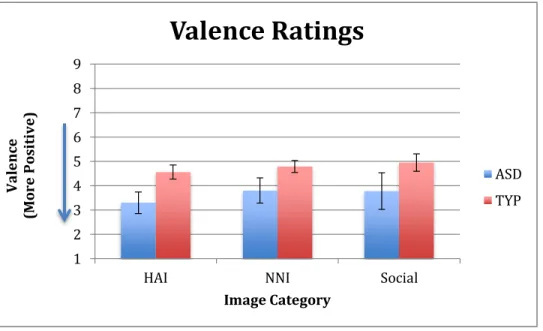
Mean valence and arousal ratings provided by participants in both groups are presented in Figure 8. Ratings data from six participants indicated inadequate
comprehension of the task (e.g., same rating endorsed every time) so they were excluded from the analysis. The results of a 2x3 repeated measures ANOVA indicated no main effect of Category (F(2,21)=2.44, p>.10) and no interaction effect (F(2,21)=.40, p>.70). The main effect of Group on Valence ratings approached significance (F(1,22)=4.22, p=.05),
Figure 8: Valence Ratings
Analysis of the arousal ratings revealed a main effect of category (F(2,21)=9.65, p<.01), suggesting that the three image categories differed in how arousing they were to both groups of participants. There were no interaction (F(2,21)=.15), p>.85) or group effects F(1,22)=1.35, p>.25). Follow-up testing indicated no group differences in arousal ratings for the HAI (t=-1.38, p>.18), NNI (t=-1.21, p>.20) images or the Social images (t=-.85, p>.40). Mean arousal ratings are illustrated in Figure 9.
1 2 3 4 5 6 7 8 9
HAI NNI Social
V
al
en
ce
(M
ore
P
osi
ti
ve
)
Image Category
Valence Ratings
Figure 9: Arousal Ratings
Research Question 2: PAR Responses and Symptom Severity
The second research question asked whether PAR responses to different images related to symptom severity for children with ASD. It was predicted that greater PAR responses to HAI images would be positively correlated with caregiver reports of restricted interests, and that smaller PAR responses to Social images would be correlated with greater social deficits. To explore these hypotheses PAR responses to HAI images were correlated with scores from the Restricted Interest subscale of the Repetitive Behavior Scale, Revised and T-scores from the Social Responsiveness Scale (see Figure 10). Contrary to the hypothesis, there was no association between PAR responses to HAI images and symptom severity as reported on the RBS-R Restricted Interest Scale (r= -.07, p>.70). This suggests that positive affective responses to HAI images were not related to the intensity or
impairment experienced as a result of CIs. Within the TD group, there were no elevations on 0 1 2 3 4 5 6 7 8
HAI NNI Social
the RBS-R Restricted Interest Scale so a correlation between PAR responses to HAI images and RBS-R scores was not examined.
Figure 10: PAR Response to High Autism Interest Images and Repetitive Behavior Scale, Revised Restricted Interest Subscale Scores for the ASD Group
With regard to PAR responses to social images and levels of social impairment as reported on the Social Responsiveness Scale, there were no associations observed in either the ASD (r= -.11 p>.50) or the TD group (r= -.19, p>.30). These results were inconsistent with hypotheses and indicated that there was no relation between positive affective responses to social images and levels of social impairment in children with ASD or typically
developing children. Overall, results addressing the second research question indicated that there were no associations between PAR responses and severity of symptoms related to restricted interests or social functioning. The correlation between PAR responses to Social images and SRS-T-Scores for the ASD group are shown in Figure 11.
0 2 4 6 8 10
0 5 10 15
RB
S-R
CI
S
ca
le
PAR to HAI
PAR to High Autism Interst &
RBS-R Restricted Intersest Scale
Figure 11: PAR Response to Social Images Correlated with Social Responsiveness Scale T-Scores for the ASD Group
0 20 40 60 80 100
0 2 4 6 8 10
SRS
T
-S
co
re
PAR to Faces
PAR to Social Images & Social
Responsiveness Scale T-Score
Research Question 3: Ecological Momentary Assessment
Response Rates and Frequency of Social and Nonsocial Behavior
The third research question focused on whether PAR responses to HAI or Social images correlated with self-reported affect obtained using an Ecological Momentary
Assessment protocol. There were 39 participants in the EMA sample. Each participant was asked to complete six mood check surveys, resulting in a total of 234 surveys sent.
Participants completed 210 of those surveys, yielding a 90% response rate (94% among controls, 85% among participants with ASD). One survey was deemed unusable because it had been filled out by a caregiver and was excluded from further analysis. The response rates indicated a high level of compliance among all participants and exceeded average rates of response in other EMA studies (Hufford & Shields, 2002). The number of surveys completed did not differ between the groups. There was no correlation between age and the number of surveys completed (r=-.23, p>.16) or IQ and the number of surveys completed (r=.27, p>.05).
Figure 12: Percent Time Spent in Circumscribed Interest/Primary Interest, Nonsocial, and Social Activities By Group
PAR and Self-Reported Positive Affect
The mean positive affect score was calculated for each subject across all mood checks completed. The mean positive affect for the subjects with ASD was 34.45 (standard
deviation=10.19) and the mean positive affect score for the typically developing subjects was 33.5 (standard deviation= 7.11). There was no difference in overall positive affect between the two groups (t=.26, p=.80). Mean Positive Affect scores for each group are shown in Table 5.
0 10 20 30 40 50 60 70 80
CI/PI NONSOCIAL SOCIAL
P
erc
en
t Ti
m
e
Activity Type
Time Spent in Circumscribed
Interest/Primary Interest, Social, and
Nonsocial Activities
ASD TYP *
Table 5: Mean Positive Affect
ASD TD t value p value
Overall PA 34.45 (SD=10.19) 33.72 (SD=7.1)
.26 ns (p>.70)
PA in Social Activities 37.33 (SD=9.95) 34.43 (SD=7.82)
.86 ns (p>.30)
PA in Nonsocial Activities 30.31 (SD=8.09) 32.87 (SD=11.16)
.40 ns (p>.60)
PA in CI/PI Activities 40.18 (SD=10.90) 39.87 (SD=8.04)
.09 ns (p>.90)
Figure 13: PAR to High Autism Interest Images and Positive Affect in Circumscribed Interest/Primary Interest Activities
With regard to PAR response magnitudes to social images and positive affect while engaged in social activities both groups displayed a subtle pattern of negative association between PAR responses to social images and positive affect while in social situations (i.e., greater PAR responses to social images appeared to be associated with lower levels of positive affect while engaged in social situations). These results are displayed in Figure 14. This was a surprising trend, given the prediction that greater PAR responses would be associated with positive affect during engagement in social activities. In general, the social images did not appear to evoke particularly strong PAR responses from participants in either group, so it is possible that the lack of appetitive salience of these images contributed to this finding. An alternative explanation could be that the positive affective responses evoked while viewing images of faces has relatively little to do with the more complex experience of engaging with other socially in real world settings.
0 10 20 30 40 50 60
0 2 4 6 8 10
M ea n P A D u ri n g C I/ P I A ct iv it es
PAR Responses to HAI Images
PAR Responses to HAI Images &
PA in Circumscribed Interest or
Primary Interest Activities
Figure 14: Relation Between PAR to Social Images and Positive Affect in Social Situations
PAR and Frequency of Behavior
Potential relations between PAR response magnitudes and the amount of time
participants spent in different activities were also examined (see Figure 15). Consistent with the study goals of better understanding how positive affect related to restricted interests and social behavior in ASD, these analyses focused on relations between PAR responses and time spent in CI/PI activities and PAR responses and time spent in Social activities. In the ASD group, the relation between PAR responses to HAI images and time spent in CI activities appeared to trend in a positive direction, suggesting that participants with ASD who exhibiter greater positive affect while viewing HAI images spent more time engaged in CI activities. The results were similar in the TD group; there appeared to be a positive relation between PAR responses to social images and time spent in PI activities.
0 10 20 30 40 50 60
0 2 4 6 8
P osi ti ve A ff ec t D u ri n g S oc ia l A ct iv it ie s
PAR to Social Images
PAR to Social Images & Positive
Affect in Social Situations
Figure 15: Relation Between PAR to High Autism Interest Images and Time Spent in Circumscribed Interest/Primary Interest Activities
There was a strong positive association between PAR responses to Social images and amount of time spent in social situations for the TD group, which suggests that children who found the social images more pleasing spent more time in social situations in natural settings (see Figure 16). The association between PAR responses to Social images and amount of time spent in social activities was more subtle in the ASD group, though the data trended in a similar direction. Overall, the pattern of association between PAR responses to HAI images and Social images and the frequency of different types of behavior (i.e., CI/PI and Social behavior, respectively) suggested that in both groups participants who exhibited greater PAR responses to HAI images spent more time engaging in CI/PI activities and participants who exhibited greater PAR responses to Social images spent more time engaging in social activities. 0 20 40 60 80 100
0 2 4 6 8 10
Ti m e Sp en t i n C I/ P I
PAR to HAI
PAR to HAI & Time Spent in
Circumscribed Interest or
Primary Interest Activities
Figure 16: Relation Between PAR to Social Images and Time Spent in Social Activities
20 40 60 80 100
0 2 4 6 8 10
Ti
m
e
Sp
en
t i
n
S
oc
ia
l A
ct
iv
it
ie
s
PAR to Social Images
PAR to Faces & Times Spent in
Social
CHAPTER 4: DISCUSSION
Findings
The present study examined a psychophysiological index of affective response in children with ASD to improve understanding of positive affect and the role it plays in the key domains of impairment in ASD. According to the motivational priming hypothesis, positive affective responses are pre-conscious, physiological responses that prepare individuals to approach or avoid certain situations. By applying the theoretical framework of the
motivational priming hypothesis), the present study sought to examine whether children with ASD would exhibit greater approach motivation to images related to circumscribed interests, relative to their typically developing peers. The study further examined whether greater approach motivation to those images would be associated with positive affect and behavior in a real-world context.
affective responses to HAI images may contribute to the intense and pervasive Circumscribed Interests that characterize many individuals with ASD.
The Group x Image Category linear trend approached significance, suggesting different patterns of PAR responses among the three image categories between the ASD and the TD group. This is consistent with previous research which has demonstrated atypical modulation of affect-modulated startle responses in individuals with ASD (Dichter et al., 2010; Wilbarger et al., 2009). In light of these findings, further exploration of the potential link between positive affective responses and approach motivation to engage in CIs is warranted.
The only other study that examined PAR responses in individuals with ASD reported notably low levels of PAR modulation to three image categories (Dichter et al., 2010). The image categories in that study were positive, neutral, and negative, and the patterns of modulation exhibited by the ASD group in that study made it difficult to determine whether the atypical pattern of responses exhibited by individuals with ASD reflected a deficit in basic affective reactivity or modulation patterns that differed based on the emotional content of the stimuli. The modulation patterns and valence ratings reported in the present study suggest that this question may best be pursued by continued examination of affective responses to images that are particularly appealing to individuals with ASD.
implications for the multitude of computer-based interventions being developed to promote academic and social skills among children with ASD.
In seeking to understand why the psychophysiological results did not yield the predicted effects for the NNI and Social conditions, a few points should be considered. The final sample size was reduced due to difficulties with data acquisition, participant compliance with the protocol, and excessive artifact in a substantial portion of the psychophysiology data. Participants in the present study completed a full psychophysiology protocol as part of a larger study, which required the individual application of multiple EEG electrodes and an EEG cap. Although the process is harmless it could be unpleasant to children with sensory sensitivities or low tolerance for unfamiliar experiences. These methodological factors likely contributed to the low percentage of usable psychophysiology data. Since some of the analyses were near significance, it is likely that a larger sample size may have yielded stronger effects. An additional consideration is that the valence and arousal ratings for the Social images were relatively moderate across both groups. That is, neither group identified the Social images as especially appealing or arousing, so they may not have captured the positive or appetitive qualities of social interactions. Previous research has demonstrated the importance of using images that are sufficiently arousing, especially when examining
The second research question pursued in the present study was whether PAR
responses correlated with caregiver reports of symptom severity. Contrary to the hypotheses, there was no correlation between PAR response magnitudes to HAI images and restricted interests as reported on the RBSR-Restricted Interest scale in the ASD group. The lack of correlation may suggest that the subscale was too specific to capture the broad range of behaviors that could be associated with potentiated affective responses to HAI images. Similarly, the relation between PAR responses to Social images and levels of social
impairment were not significant in either group. Since PAR is a particularly reliable index of positive affective state, it is possible that examining its relation with symptoms characterized by deficit or aversion (e.g., social deficits or active avoidance of social situations) is not ideal.
protocol may inform how future studies leverage limited resources to incorporate EMA into their study design.
The results from the EMA portion of the present study provide a unique picture of how children with ASD spend their free time and how their “real-world” behavior correlates with a physiological index of positive affect. The finding that children with ASD were more likely to be engaged in CI activities than their typically developing peers were to be engaged in PI activities is consistent with the defining features of CIs (i.e., intense and pervasive). It was interesting, though, that there was no group difference with regard to the frequency of nonsocial behavior. Taken together, these two findings demonstrate the importance of pressing beyond the dichotomy of social versus nonsocial behavior when examining what children with ASD are motivated to spend their time doing.
The planned analyses for examining associations between PAR response magnitudes to HAI images and self-reported positive affect were complicated by drastic reductions in sample size; however, findings suggest it may be more important to examine the frequency of certain behaviors, as opposed to self-reported affect. In the TD group, for example, there seemed to be a strong association between PAR responses to Social images and the amount of time spent in social activities. In the ASD group, there appeared to be a positive
association between PAR responses to HAI images and amount of time spent engaging in CIs.
It may be that the key to understanding how positive affect relates to motivation and behavior in ASD is examining what children with ASD do (i.e., activity types and
current activity, reflect on their internal state, and rate their affective state. Each of those steps may be more complicated or more frustrating for children with ASD and, consequently, the information obtained may be a less reliable measure of affective state.
Limitations
Several limitations must be noted with regard to the present study. First, the sample size for the psychophysiological analyses was relatively small, and the sample size for the correlational analyses of psychophysiological data and EMA data was extremely small. Consequently, results were considered preliminary with regard to affect-modulation of the postauricular reflex and exploratory with regard to the Ecological Momentary Assessment. Additionally, children with cognitive impairment were excluded from the present study so the results are limited to a subset of children with ASD (i.e., higher functioning children). With regard to the EMA procedure, participants were contacted six times over the course of four days. This was a relatively small number of contacts for an EMA study, though there is no evidence to suggest that increasing the number of prompts would have yielded more compelling results. Finally, the automated prompt system facilitated efficient data collection; however, it made it more difficult to ensure that participants completed the surveys right away or to confirm the method by which they filled out the survey (e.g., mobile device or computer).
Future Directions
unique to ASD. Future studies may improve the percentage of analyzable data by modifying protocols to provide greater accommodations to participants with ASD (e.g., shortened protocols). The finding that participants with ASD exhibited greater PAR responses to High ASD Interest images, relative to their TD peers, is an important contribution to the literature on positive affect in ASD. Future research may expand on this finding by refining the Social image category to increase the appetitive salience of the social images (e.g., adding pictures of social scenes, rather than just faces) to examine whether greater differences may be observed between groups, across image categories. Similarly, the appetitive salience of the HAI category may be increased by “personalizing” the images to an individual’s CI or PI.
Future research should explore new ways to examine positive affect in ASD, with the specific goal of expanding current conceptualizations about what motivates the behavior of children with ASD. Focusing on positive affect is an important component to understanding the physiological underpinnings of key behaviors in ASD and for developing effective interventions and supportive environments.
may prove an effective way to collect data from individuals across a broad range of real-world settings (e.g., home, school, recreation) and improve understanding and treatment of challenging behaviors. The technology may also prove useful in gathering data from individuals across a broad range of functioning, whether via non-verbal subjective report, caregiver report, or physiological assessments.
Conclusion
The present study was the first to examine affect-modulation of the postauricular reflex in children with ASD in response to High Autism Interest, Neutral Nonsocial Interest, and Social images. One of the unique contributions of the present study was its emphasis on positive affect and how positive affect relates to the motivation to approach nonsocial, circumscribed interest activities in children with ASD. The trends observed in PAR
responses to HAI, NNI, and Social images, considered alongside the substantial effect sizes for PAR responses to HAI and NNI images, provide initial evidence that the core symptoms of ASD may be influenced by greater approach motivation for images associated with circumscribed interests, rather than aversion to social images. These findings suggest that using visual stimuli that are specifically tailored to core deficits in ASD may be a promising approach to studying positive affect, especially as it relates to motivation for children with ASD to engage in certain behaviors. Additionally, the present study successfully
REFERENCES
aan, h. R., Hogenelst, K., & Schoevers, R. A. (2012). Mood disorders in everyday life: A systematic review of experience sampling and ecological momentary assessment studies.
Clinical Psychology Review, 32(6), 510-523. doi:10.1016/j.cpr.2012.05.007 American Psychiatric Association. (2000). Diagnostic and statistical manual of mental
disorders (4th ed.). Washington, DC: APA.
American Psychiatric Association. (2013). Diagnostic and statistical manual of mental disorders. Arlington, VA: American Psychiatric Publishing.
Bain, S. K., & Jaspers, K. E. (2010). Review of 'kaufman brief intelligence test, second edition'. Journal of Psychoeducational Assessment, 28(2), 167-174.
doi:10.1177/0734282909348217
Baio, J. (2014). Prevalence of autism spectrum disorder among children aged 8 years- autism and developmental disabilities monitoring network, 11 sites, united states,
2010.63(SS02), 1-20.
Benning, S. D. (2011). Postauricular and superior auricular reflex modulation during emotional pictures and sounds. Psychophysiology, 48(3), 410-414. doi:10.1111/j.1469-8986.2010.01071.x; 10.1111/j.1469-8986.2010.01071.x
Benning, S. D., Patrick, C. J., & Lang, A. R. (2004). Emotional modulation of the post-auricular reflex. Psychophysiology, 41(3), 426-432. doi:10.1111/j.1469-8986.00160.x Bodfish, J. W., Symons, F. W., & Lewis, M. H. (1999). The Repetitive Behavior Scale.
Western Carolina Center Research Reports.
Bölte, S., Feineis-Matthews, S., & Poustka, F. (2008). Brief report: Emotional processing in high-functioning autism--physiological reactivity and affective report. Journal of Autism and Developmental Disorders, 38(4), 776-781. doi:10.1007/s10803-007-0443-8
Cacioppo, J. T., Tassinary, L. G., & Berntson, G. G. (2007). In Cacioppo J. T., Tassinary L. G. and Berntson G. G. (Eds.), Handbook of psychophysiology (3rd ed.). New York, NY US: Cambridge University Press. doi:10.1017/CBO9780511546396
Cohen, J. (1988). Statistical power analysis for the behavioral sciences. Hillsdale, NJ: Erlbaum.
Constantino, J. N., Davis, S. A., Todd, R. D., Schindler, M. K., Gross, M. M., Brophy, S. L., . . . Reich, W. (2003). Validation of a brief quantitative measure of autistic traits:
Comparison of the social responsiveness scale with the autism diagnostic interview-revised. Journal of Autism and Developmental Disorders, 33(4), 427-433.
Dichter, G. S., Benning, S. D., Holtzclaw, T. N., & Bodfish, J. W. (2010). Affective modulation of the startle eyeblink and postauricular reflexes in autism spectrum disorder. Journal of Autism and Developmental Disorders, 40(7), 858-869. doi:10.1007/s10803-009-0925-y
Forbes, E. E., Stepp, S. D., Dahl, R. E., Ryan, N. D., Whalen, D., Axelson, D. A., . . . Silk, J. S. (2012). Real-world affect and social context as predictors of treatment response in child and adolescent depression and anxiety: An ecological momentary assessment study. Journal of Child and Adolescent Psychopharmacology, 22(1), 37-47. doi:10.1089/cap.2011.0085
Gable, P. A., & Harmon-Jones, E. (2009). Postauricular reflex responses to pictures varying in valence and arousal. Psychophysiology, 46(3), 487-490.
doi:10.1111/j.1469-8986.2009.00794.x
Gomot, M., Blanc, R., Clery, H., Roux, S., Barthelemy, C., & Bruneau, N. (2011). Candidate electrophysiological endophenotypes of hyper-reactivity to change in autism. Journal of Autism and Developmental Disorders, 41(6), 705-714. doi:10.1007/s10803-010-1091-y Granholm, E., Ben-Zeev, D., Fulford, D., & Swendsen, J. (2013). Ecological momentary
assessment of social functioning in schizophrenia: Impact of performance appraisals and affect on social interactions. Schizophrenia Research, doi:10.1016/j.schres.2013.01.005 Hess, U., Sabourin, G., & Kleck, R. E. (2007). Postauricular and eyeblink startle responses to
facial expressions. Psychophysiology, 44(3), 431-435. doi:10.1111/j.1469-8986.2007.00516.x
Hufford, M. R., & Shields, A. L. (2002). Electronic diaries: Applications and what works in the field. Applied Clinical Trial, 11, 46-9.
Hultman, C. M., Sandin, S., Levine, S. Z., Lichtenstein, P., & Reichenberg, A. (2011).
Advancing paternal age and risk of autism: New evidence from a population-based study and a meta-analysis of epidemiological studies. Molecular Psychiatry, 16(12), 1203-1212. doi:10.1038/mp.2010.121
Johnson, G. M., Valle‐ Inclán, F., Geary, D. C., & Hackley, S. A. (2012). The nursing hypothesis: An evolutionary account of emotional modulation of the postauricular reflex.
Psychophysiology, 49(2), 178-185. doi:10.1111/j.1469-8986.2011.01297.x
Kanner, L. (1943). Autistic disturbances of affective contact. Nervous Child, 2, 217-250. Retrieved from
https://auth.lib.unc.edu/ezproxy_auth.php?url=http://search.ebscohost.com/login.aspx?di rect=true&db=psyh&AN=1943-03624-001&site=ehost-live&scope=site