DABIGATRAN AND WARFARIN FOR STROKE PREVENTION IN ATRIAL FIBRILLATION: USE, SWITCHING, AND CLINICAL EFFECTS FOLLOWING NEW
MARKET ENTRY IN REAL-WORLD PATIENTS
Julie C. Lauffenburger
A dissertation submitted to the faculty at the University of North Carolina at Chapel Hill in partial fulfillment of the requirements for the degree of Doctor of Philosophy in the Division of
Pharmaceutical Outcomes and Policy in the UNC Eshelman School of Pharmacy.
Chapel Hill 2014
ii © 2014
iii
ABSTRACT
JULIE C. LAUFFENBURGER: Dabigatran and warfarin for stroke prevention in atrial fibrillation: Use, switching, and clinical effects following new market entry in real-world patients
(Under the direction of Gang Fang)
Patients with atrial fibrillation frequently benefit from anticoagulation to prevent stroke and systemic embolism. For decades, warfarin was the primary oral anticoagulant option despite its narrow therapeutic index requiring monitoring and drug-drug interactions. Dabigatran’s recent availability provides practical advantages including no monitoring and fewer interactions; however, it lacks a convenient reversal agent for bleeding events. Currently, it is unclear what factors have driven anticoagulant utilization since dabigatran’s introduction, and little real-world evidence on the agents’ comparative effectiveness and safety is available. The objectives were to describe dabigatran and warfarin’s utilization and switching patterns and assess their
comparative effectiveness and safety.
A cohort of non-valvular atrial fibrillation patients initiating anticoagulation from a large US database of commercial and Medicare supplement claims from 2009-2012 was
iv
Of the 64,935 patients included in the cohort, 32.5% used dabigatran. Dabigatran users were less likely to have high ischemic stroke or bleeding risk or other clinical comorbidities. Switching anticoagulation was also less frequent among patients with higher ischemic stroke or bleeding risk. Dabigatran was associated with a lower risk of ischemic stroke or venous
thromboembolism, and no relation was seen between anticoagulant and harmful outcomes including bleeding events or acute myocardial infarction. However, dabigatran was also associated with a higher risk of gastrointestinal bleeding. Compared with non-switchers, no relation was seen between switching anticoagulants and an increased risk of stroke, systemic embolism, bleeding events, or myocardial infarction.
v
ACKNOWLEDGEMENTS
This research would not have been possible without first and foremost, the support of my dissertation committee. First, I would like to express my deepest thanks to my dissertation
advisor, Gang, for having high expectations for me and for being supportive and understanding. I would also like to sincerely thank Joel, my dissertation chair, for his constant support and help throughout the program. I am also incredibly grateful to the other members of my dissertation committee, Alan, Denise and Anil for their valuable mentoring, guidance, and expertise. In addition, I would like to express gratitude for other formal (or more informal) faculty mentors throughout the program, including but not limited to Mary, Stacie, and Barbara. Additionally, I wish to thank my fellow DPOP graduate students not only for their helpful advice, enthusiasm and help with SAS, but also for making the office much more fun. I also want to express a heartfelt appreciation to other classmates, colleagues, and faculty/staff at UNC for being a great support network. Lastly, I would like to express my deepest appreciation and love for my family and for their support throughout the program and beyond.
vi
TABLE OF CONTENTS
LIST OF ABBREVIATIONS ... xii
CHAPTER 1: INTRODUCTION ... 1
1.1. OVERVIEW... 1
1.2. SIGNIFICANCE AND INNOVATION ... 3
1.3. SPECIFIC AIMS AND HYPOTHESES ... 5
1.4. SUMMARY ... 7
CHAPTER 2: LITERATURE REVIEW ... 8
2.1. ATRIAL FIBRILLATION ... 8
2.2. MANAGEMENT OF ATRIAL FIBRILLATION ... 16
2.3. CLINICAL CONTROVERSIES ... 40
2.4. ISSUES IN ANTICOAGULATION IN REAL-WORLD PRACTICE ... 45
CHAPTER 3: RESEARCH METHODS ... 53
3.1. OVERVIEW OF RESEARCH DESIGN AND AIMS ... 53
3.2. RESEARCH FRAMEWORK ... 54
3.3. DATA SOURCE ... 57
3.4. COHORT SELECTION ... 58
vii
3.6. ANALYSES ... 81
3.7. SENSITIVITY AND EXPLORATORY ANALYSES ... 90
3.8. LIMITATIONS ... 93
3.9. SUMMARY ... 93
CHAPTER 4: RESULTS ... 94
4.1. AIM 1A: RISK SCORES AND ANTICOAGULANT USE ... 94
4.2. AIM 1B: RISK SCORES AND ANTICOAGULANT SWITCHING... 112
4.3. AIM 2: COMPARATIVE EFFECTIVENESS OF ANTICOAGULANTS ... 128
4.4. AIM 3: CLINICAL EFFECTS ASSOCIATED WITH SWITCHING ... 146
CHAPTER 5: DISCUSSION ... 154
5.1. SUMMARY OF FINDINGS ... 154
5.2. IMPLICATIONS OF FINDINGS ... 159
5.3. STRENGTHS AND WEAKNESSES ... 165
5.4. RECOMMENDATIONS FOR FUTURE RESEARCH ... 167
5.5. CONCLUSION ... 171
APPENDIX TABLES AND FIGURES ... 172
viii
LIST OF FIGURES
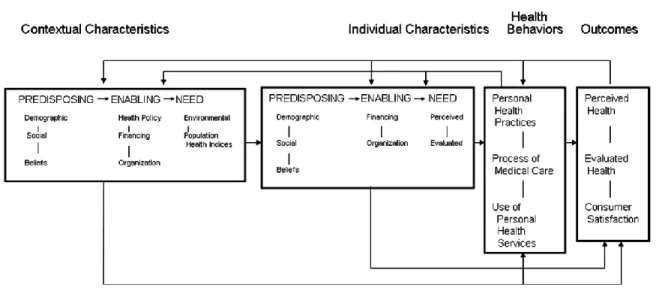
Figure 1. Andersen's Behavioral Model of Health Services Use166 ... 46
Figure 2. Conceptual Framework ... 55
Figure 3. Analytic Diagram ... 57
Figure 4. Study Schematic: New User Cohort ... 65
Figure 5. New User Cohort Flow Diagram ... 95
Figure 6. Trends in initiation of warfarin and dabigatran, 2010-2012 ... 105
Figure 7. Switcher Flow Diagram ... 113
Appendix Figure 1. Estimated propensity score kernel densities among new users of anticoagulation………...……….182
Appendix Figure 2. Kaplan-Meier curves of anticoagulant initiators……….186
ix
LIST OF TABLES
Table 1. Stroke risk scores used in atrial fibrillation ... 24 Table 2. Bleeding risk scores used in atrial fibrillation ... 26 Table 3. American College of Chest Physicians 2012 Antithrombotic
Guidelines Update ... 36 Table 4. 2012 European Society of Cardiology (ESC) Focused Update ... 37 Table 5. American Heart Association/American Stroke Association 2012
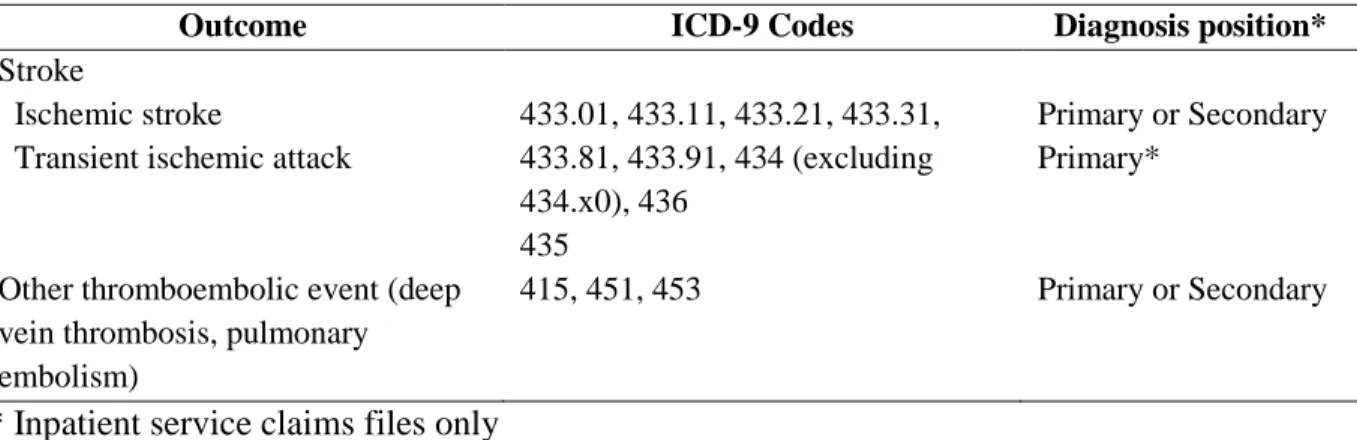
Guidelines Update ... 39 Table 6. Sample size calculations ... 69 Table 7. International Classification of Disease, 9th Edition (ICD-9)
codes for clinical effectiveness outcome definitions in inpatient and
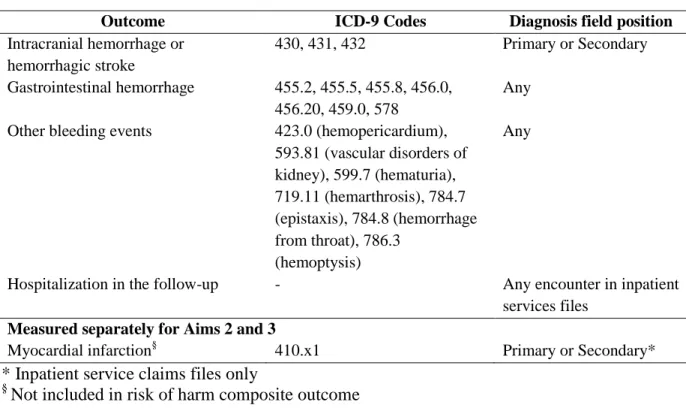
outpatient services claims files ... 72 Table 8. International Classification of Disease, 9th Edition (ICD-9)
codes for risk of harm outcome definitions in outpatient or inpatient
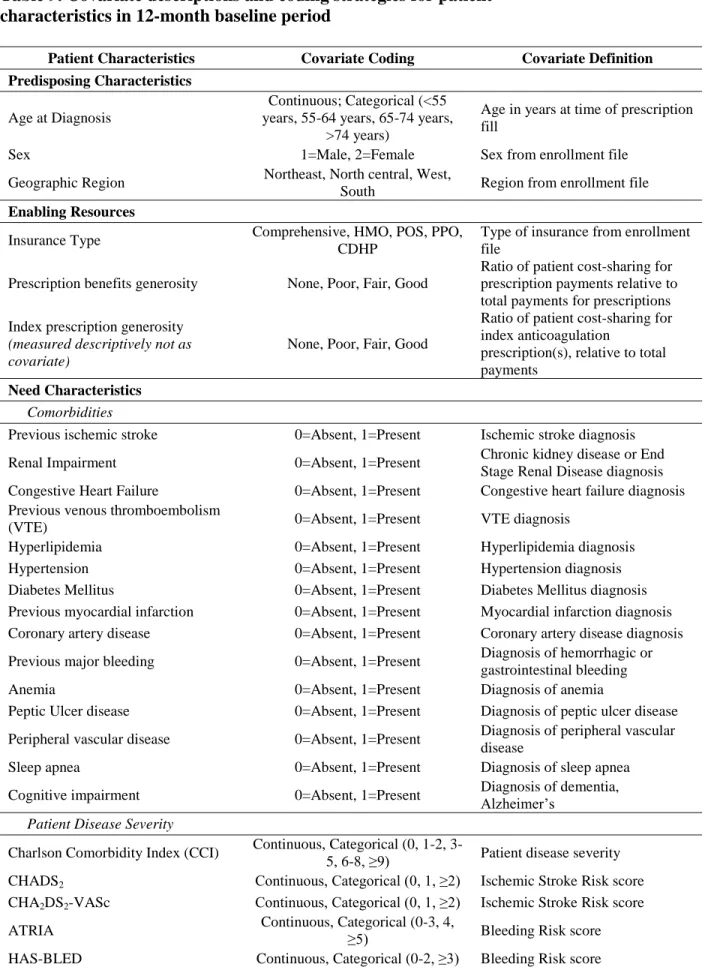
service claims files ... 73 Table 9. Covariate descriptions and coding strategies for patient
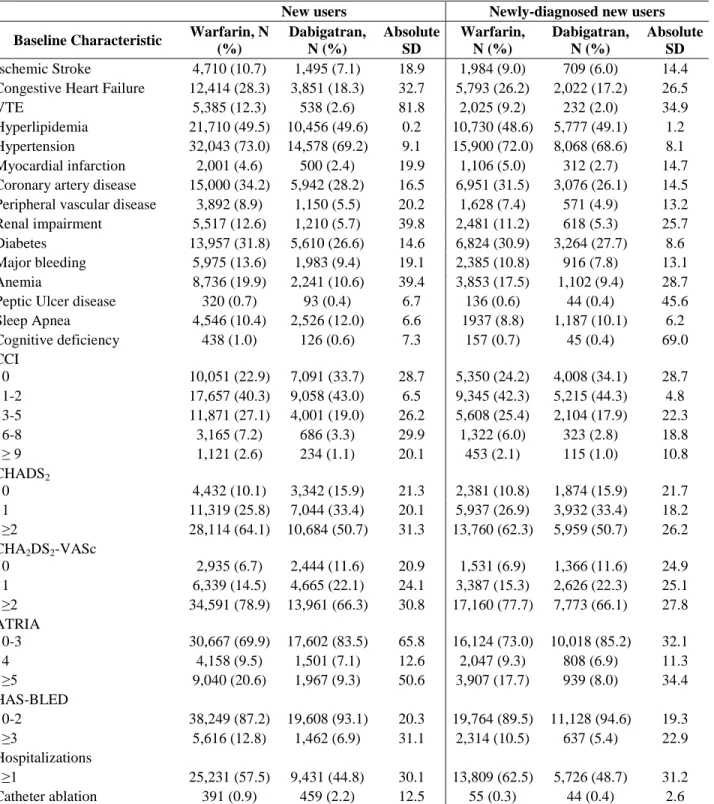
characteristics in the 12-month baseline period ... 77 Table 10. Demographic characteristics of new users and newly-diagnosed
new users of warfarin and dabigatran ... 97 Table 11. Clinical characteristics of new users and newly-diagnosed
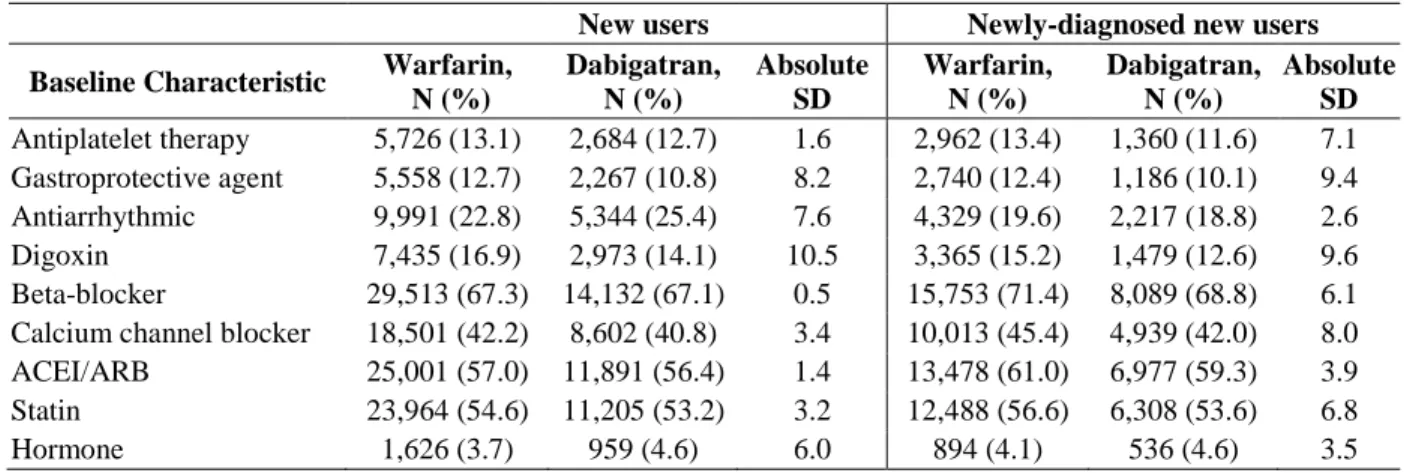
new users of warfarin and dabigatran ... 99 Table 12. Medication use characteristics of new users and newly-diagnosed
new users of warfarin and dabigatran ... 101 Table 13. Means of baseline characteristics of new users and
newly-diagnosed new users of warfarin and dabigatran ... 102 Table 14. Characteristics of the initial warfarin and dabigatran prescriptions ... 103 Table 15. Bivariate association between warfarin and dabigatran use and
baseline sociodemographic and clinical characteristics in the 12-month
x
Table 16. Multivariable association between ischemic stroke and
bleeding risk prediction scores and warfarin and dabigatran selection ... 110 Table 17. Characteristics of switchers and non-switchers of new usersof
warfarin and dabigatran within 12 months following treatment ... 115 Table 18. Characteristics of switchers and non-switchers of prevalent
users of warfarin within 12 months following treatment ... 118 Table 19. Bivariate association between anticoagulant switching and
baseline sociodemographic and clinical characteristics in the 12-month
baseline period ... 121 Table 20. Multivariable association between ischemic stroke and bleeding
risk prediction scores and anticoagulant switching ... 125 Table 21. Outcome rates per 1,000 person-years by anticoagulant initiated ... 130 Table 22. Multivariable Cox models comparing dabigatran and warfarin
use and outcomes in atrial fibrillation ... 134 Table 23. Multivariable Cox models comparing the use of dabigatran
with warfarin and outcomes in newly-diagnosed AF patients ... 137 Table 24. Sensitivity analyses comparing the use of dabigatran with
warfarin and outcomes in AF patients initiating anticoagulation ... 140 Table 25. Baseline characteristics of warfarin and dabigatran
switchers and non-switchers………148 Table 26. Outcome rates per 1,000 person-years by warfarin and
dabigatran switching groups……….………...151 Table 27. Multivariable Cox models of the association between
anticoagulant switching and clinical effectiveness and harm outcomes………..………152 Appendix Table 1. Sensitivity analyses: Bivariate associations of continuous
covariates with dabigatran and warfarin selection………..…172 Appendix Table 2. Multivariable associations between dabigatran compared
with warfarin and other baseline covariates in the 12-month baseline period………....173 Appendix Table 3. Ischemic stroke and bleeding risk score model predictor
options and associations with dabigatran use compared with warfarin use………174 Appendix Table 4. Sensitivity analyses: Multivariable associations between
dabigatran compared with warfarin and ischemic stroke and bleeding risk
xi
Appendix Table 5. Patient prescription cost-sharing of index anticoagulation
and switching characteristics………...………176 Appendix Table 6. Multivariable associations between anticoagulant switching
and the other baseline covariates in the 12-month follow-up period………...………177 Appendix Table 7. Ischemic stroke and bleeding risk score model predictor
options and associations with anticoagulant switching……….……..178 Appendix Table 8. Sensitivity analyses: Multivariable associations between
anticoagulant switching and ischemic stroke and bleeding risk scores……….….179 Appendix Table 9. Propensity score assessments: Testing variables' crude
associations with risk of effectiveness and harm outcomes in new users………..180 Appendix Table 10. Balance of covariates after applying the stabilized IPTW
propensity scores among new users of dabigatran and warfarin………..…………..184 Appendix Table 11. Estimated treatment effects comparing new users of
dabigatran to warfarin on risk of outcomes: Inpatient outcomes only………...………..190 Appendix Table 12. Full multivariable survival analysis model results
comparing dabigatran with warfarin use among new users of anticoagulation………...191 Appendix Table 13. Stratification by insurance status: Clinical effectiveness
and safety of dabigatran compared with warfarin………..……….193 Appendix Table 14. Dabigatran strength subgroups: Association between
anticoagulation and outcomes compared with warfarin……….194 Appendix Table 15. Estimated treatment effects among strata of new user
AF patients with certain characteristics……….…….195 Appendix Table 16. Full multivariable survival analysis model results
comparing warfarin patients switching to dabigatran versus warfarin
non-switchers………...…196 Appendix Table 17. Full multivariable survival analysis model results
comparing dabigatran patients switching to warfarin versus dabigatran
non-switchers………..…198 Appendix Table 18. Stratification by insurance status: Clinical
xii
LIST OF ABBREVIATIONS
ACEI/ARB, Angiotensin converting enzyme inhibitor/angiotensin receptor blocker AF, Atrial fibrillation
AMI, Acute myocardial infarction
ATRIA, Anticoagulation and Risk Factors in Atrial Fibrillation CCAE, Commercial claims and encounters
CCI, Charlson Comorbidity Index CDHP, Consumer driven health plan DVT, Deep Vein Thrombosis
FDA, Food and Drug Administration HMO, Health Maintenance Organization INR, International Normalized Ratio NOAC, Novel oral anticoagulant PPO, Preferred Provider Organization POS, Point of Service
PE, Pulmonary Embolism
1
CHAPTER 1: INTRODUCTION
1.1. OVERVIEW
Atrial fibrillation (AF), a heartbeat irregularity, is typically managed by oral
anticoagulants to prevent clot formation in the upper atria chambers of the heart when blood is pumped inefficiently.1 To prevent ischemic stroke and thromboembolism in atrial fibrillation, current clinical guidelines support the use of warfarin, a Vitamin K antagonist which has been available since the 1950s; however, recently newly-approved oral anticoagulants (known as “novel oral anticoagulants” or “target-specific oral anticoagulants”) have been recommended as alternatives and as even first-line options.2-5 Use of warfarin in atrial fibrillation has been shown to prevent up to 68% of ischemic stroke and lead to a significant reduction in mortality risk.6,7 Despite its effectiveness, warfarin has a narrow therapeutic index, leading to some safety issues and potential drug-drug interactions, requiring frequent monitoring.8-10 Initiation of warfarin and subsequent medication adherence, the extent to which patients take their medications as
prescribed, to warfarin has also been shown to be low, possibly because of the high perceived risk of bleeding.11,12 Maintaining patients on chronic warfarin therapy has its challenges, and alternatives to warfarin have been sought for easier monitoring and management.
2
studied.14-16 Moreover, dabigatran requires less frequent monitoring, may have fewer drug-drug interactions, and may be easier for patients to manage.17,18 However, dabigatran has also been thought lead to higher risk of dyspepsia, bleeding, and myocardial infarction than warfarin.19 Uncertainty also remains about its relative safety, because, unlike warfarin, dabigatran lacks a direct reversal agent in the event of bleeding complications.20 Regardless, the utilization and clinical effectiveness of dabigatran in the management of atrial fibrillation compared with warfarin is unclear in real-world clinical practice, despite current clinical guidelines offering dabigatran as a possible anticoagulant alternative to warfarin.
First and foremost, to examine the comparative effectiveness of anticoagulants necessitates the understanding of factors associated with the choice of a particular treatment, especially new pharmaceuticals. If certain characteristics are significantly associated with use of one therapy versus another, the apparent comparative effectiveness could be affected,
particularly if these characteristics cannot be fully measured. Secondly, optimal treatment selection may differ in specific patient populations; understanding the risk of clinical outcomes among subgroups can help patients and providers in decision making when managing AF. The factors associated with the uptake of novel pharmaceuticals have been studied in other
contexts.21-23 Certain providers have been shown to be more likely to prescribe therapies with a new mechanism of action or those used for chronic illnesses; both of these situations apply to dabigatran.24
Switching to a new medication may also carry an increased risk of therapeutic failure and toxicity25, especially for a therapy with a narrow therapeutic window, such as warfarin. Early case reports of patients switching from dabigatran to warfarin suggest an overall increased risk of bleeding on dabigatran.26,27 Yet, the clinical effects of switching between warfarin and an
3
recommended that patients stabilized on warfarin generally should remain on warfarin.5 Expert opinion suggests that if switching is necessary, additional monitoring is warranted.28 By
comparison, even switching between warfarin product formulations (e.g., brand to generic) has been studied and is thought to be potentially problematic.28-32 Studies have suggested that switching between warfarin formulations may be possible without avoiding any major adverse consequences while others have found a slight increased risk of bleeding.31-33 Given this underlying controversy, it is possible that switching between entirely different anticoagulants may lead to an increased risk of adverse events, especially in the absence of validated dosing conversion standards between anticoagulants. Regardless, there is still minimal evidence regarding the factors and consequences associated with switching between warfarin and a different anticoagulant (or vice versa), particularly among patients in the US.34,35
1.2. SIGNIFICANCE AND INNOVATION
More than 460,000 individuals in the United States are newly-diagnosed with AF
annually. Meanwhile, AF is only increasing in prevalence and incidence as the population ages.36 An estimated $26 billion dollars is spent by the US health care system annually on the
management of AF.37 As the use and effects of dabigatran in the management of atrial fibrillation are unknown outside of small clinical trials with limited patient diversity, further examination of possible clinical and safety effects is needed. Optimizing anticoagulation in atrial fibrillation is a critical public health need.
4
dabigatran versus warfarin for anticoagulation management are still unclear, particularly in the US, some limited evidence is suggesting some channeling away from dabigatran for patients with higher comorbidity burden.40,41
Furthermore, the effectiveness and safety of dabigatran compared with warfarin in AF has not been studied extensively outside of randomized-clinical trials (RCTs) or meta-analyses of these RCTs. Concerns have been raised about an increased excess risk of bleeding and
myocardial infarction in patients with AF treated with dabigatran, but once adjusted for renal impairment, dabigatran may not carry the same risk.42,43 Moreover, the Food and Drug
Administration (FDA) approved dabigatran at doses of 150mg or 75mg (renally-adjusted) twice daily for AF; however, dabigatran has not been studied at the 75mg dose – either in RCTs or observational studies.43 Given the potential for many patients being placed on this dose, using secondary data from real-world settings can provide additional evidence for this previously unstudied strength.
Moreover, the introduction of these new anticoagulants may carry increased risks of bleeding or ischemic stroke and have implications for patients and providers in the management of transitioning patients from warfarin to dabigatran. In practice, many patients may not be treatment-naïve to anticoagulants, and the actual effectiveness and safety of transitioning AF patients between drug products should be examined. The clinical effects of switching between warfarin to an entire different drug product in AF patients in the period following the medication transition is still largely unclear, and switching from dabigatran to warfarin is even less studied.
third-5
party payers of the real-world utilization, comparative effectiveness and safety of dabigatran compared to warfarin, to help improve clinical practice. Because of the increasing prevalence of AF and the rapid introduction of new anticoagulants, understanding their comparative
effectiveness and safety is of imperative importance.
1.3. SPECIFIC AIMS AND HYPOTHESES
Specific Aim #1: Assess and investigate patient factors associated with new use of either warfarin or dabigatran and switching between anticoagulants in patients with atrial fibrillation. Hypothesis 1: Clinical prediction risk scores (e.g., ischemic stroke and bleeding risk) will not differ between new users of warfarin compared with dabigatran.
Hypothesis 2: Clinical prediction risk scores (e.g., ischemic stroke and bleeding risk) will not differ between new users who switch anticoagulants within 12 months compared with those who do not switch.
6
Specific Aim #2: Investigate the comparative clinical outcomes (risk of harm and clinical effectiveness) following new use of either warfarin or dabigatran, adjusting for baseline patient factors.
3.6.3.1 Hypothesis
Hypothesis 3: There are no significant differences in the risk of clinical effectiveness outcomes or harm outcomes or acute myocardial infarction in new users of warfarin compared with users of dabigatran.
Proposed contribution to the literature: The comparative effectiveness and safety of dabigatran versus warfarin have not yet been examined outside of RCTs for newly-initiating patients. By examining clinical effectiveness outcomes (such as ischemic stroke or venous thromboembolism), safety outcomes (such as bleeding events) and acute myocardial infarction, this research is expected to provide insights on real-world outcomes to inform clinical practice.
Specific Aim #3: Explore the comparative clinical outcomes (risk of harm and clinical
effectiveness) of switching from warfarin to dabigatran or dabigatran to warfarin compared with non-switchers, adjusting for patient clinical and demographic factors.
Hypothesis 4: Switching from warfarin to dabigatran will not be associated with increased risk of harm or clinical effectiveness outcomes compared with those who remain on warfarin.
Hypothesis 5: Switching from dabigatran to warfarin will not be associated with an increased risk of harm or clinical effectiveness outcomes compared with those who remain on dabigatran.
7
the role of dabigatran post-approval. Said another way, the comparative effectiveness and safety of switching anticoagulants may differ than initiating therapy for the first time.
1.4. SUMMARY
Retrospective, observational examination of the use and outcomes of dabigatran
8
CHAPTER 2: LITERATURE REVIEW
The following chapter outlines the background of atrial fibrillation (AF) as follows: how AF is diagnosed, risk factors for developing AF and outcomes of atrial fibrillation to explain which types of AF will be examined in this research. The pharmacologic and non-pharmacologic management of AF is also discussed through published randomized-controlled trials (RCTs), observational studies of anticoagulation use to prevent ischemic stroke, and recent guideline recommendations. These findings will be used to outline which dependent variables, covariates and potential confounders will need to be measured as part of this research in Chapter 3. Any published literature about the uptake of dabigatran is also discussed, along with controversies which currently exist in using dabigatran for AF to highlight the types of studies which have already been conducted and underscore what knowledge gaps currently exist which this research will help address.
2.1. ATRIAL FIBRILLATION
2.1.1. Definition and diagnosis
Atrial fibrillation, the most common arrhythmia seen clinically, is characterized by irregular electrical impulses which generate irregular heartbeats.44 AF may be discovered by measuring a pulse on clinical exam, but clinicians generally confirm AF using an
9
AF diagnosis.3,46 Pathogenically, AF is initiated by a “trigger”, an abnormal automaticity arising from non-cardiac sites, including most commonly pulmonary veins, but also other venous sites or autonomic ganglia.47 While the exact mechanism causing potential “triggers” is unknown, these automaticities may eventually lead to atrial remodeling, causing a permanent change in atrial function or structure.48 Correspondingly, AF may be considered reversible or irreversible, depending on the atrial “substrate” etiology, other electrophysiological factors, and other clinical conditions. The goal of many treatments for AF is to prevent triggers and control this atrial modeling – to ultimately reduce the likelihood of adverse outcomes.46
Major clinical guidelines have generally recognized four different classifications of AF: first detected AF, paroxysmal AF, persistent AF and permanent AF.3,46,49First detected AF is often characterized by only one diagnosed episode. If the first detected AF terminates
spontaneously but a second episode occurs, then the patient is considered to have paroxysmal AF, whereby most cases are still short and self-limiting. However, if the paroxysmal AF episode is sustained longer than 7 days, then the patient is classified as having persistent AF, which generally requires cardioversion to terminate. If a patient has undergone cardioversion unsuccessfully or is not a candidate for one, then the patient is considered to have permanent AF.49
In addition to the above definitions, AF has also been classified by clinical guidelines as
lone atrial fibrillation, indicating the absence of other clinical findings or other cardiovascular disease, non-valvular AF, whereby AF occurs in the absence of other mitral valve disease or prosthetic heart valves, and secondary AF, in which AF occurs secondarily from another primary condition including acute myocardial infarction, previous surgery, pulmonary embolism,
10
factors prior to AF diagnosis when examining treatment outcomes or study those patients with primary AF or those patients with non-reversible causes of AF.45,46 For instance, long-term treatment goals of AF may differ when patients develop AF post-operatively versus those without any acute perturbations or illness. When a patient has 2 or more episodes, regardless of classification, the patient is considered to have recurrent AF.46
While these categories are not considered to be mutually exclusive, the duration of AF seems to be particularly important in determining the management for AF. Pharmacologic or non-pharmacologic management is not considered to clinically change the classification of a patient’s AF, though in some cases the AF episodes may terminate permanently.44,49
Clinicians can often diagnose AF within a single inpatient or outpatient encounter, where thyroid, renal, and hepatic functions are also measured as part of the evaluation.46,50 As will be discussed in later sections, anticoagulation is typically reserved for cases of persistent, permanent, or recurrent AF, while dabigatran specifically is indicated by the FDA for non-valvular AF only.3,4 Thus, the proposed research will focus on patients with irreversible persistent or permanent non-valvular AF classifications.
By comparison, atrial flutter, may occur via similar mechanisms, but is pathogenically and prognostically different even though the atrial fibrillation and atrial flutter may convert back and forth to each other.3,4,46 Atrial flutter is usually distinguishable from atrial fibrillation based ECG patterns and is often not treated indefinitely with anticoagulation. For this reason, atrial flutter will not be examined in the context of the proposed research.
2.1.2. Epidemiology, costs, and quality of life
11
older. Thought to impact 3 million Americans, more than 460,000 individuals are
newly-diagnosed with AF annually.36 This number is only expected to grow as the population ages. The lifetime risk is 1 in 4 for persons over the age of 40 years in the United States, and the median age of AF patients is thought to be about 75 years.
Managing atrial fibrillation can also be expensive and burdensome to individuals. The US health care system spends an estimated $26 billion dollars annually on care related to AF.37 One study found that approximately 350,000 hospitalizations, 5 million office visits, and 276,000 emergency room visits are annually attributable to AF and its complications.51 Having atrial fibrillation and developing one of its complications can also lead to a decreased quality of life. Measured in quality-adjusted life-years [QALYs], AF can decrease quality of life by up to 20%.52 Moreover, ischemic stroke, a complication of AF and a main reason for the use of anticoagulation in AF, results in estimated QALYs of 0.87, 0.68, and 0.52 for major ischemic stroke, moderate ischemic stroke, and minor ischemic stroke, respectively, compared with a QALY of 1.0 for those in perfect health.53
2.1.3.Risk factors
12
has been associated with odds ratios of 1.8 in men and 3.4 in women, while previous myocardial infarction has also been shown to increase the risk of developing AF by 40%.50 Concomitant hypertension increases the AF risk by approximately 50% compared with those without
hypertension.50 Because of its sheer prevalence, hypertension is thought to contribute to a greater AF burden than any other risk factor.56
However, some patients with AF have no underlying cardiovascular disease – in fact, as many as 12% of all diagnosed AF patients have no identifiable history of cardiovascular disease. 45,57
Published literature has identified diabetes mellitus, hyperthyroidism, chronic lung disease, chronic kidney disease, alcohol withdrawal, pharmacologic agents (e.g., stimulants, digoxin toxicity, and illicit drugs), smoking, excessive physical exertion, and recent surgery as
commonly-cited non-cardiovascular causes contributing to AF.54,55,58 Though not considered to be independent causal factors, male sex, elevated inflammatory markers, advanced age, sleep apnea, and obesity have also been thought to increase the likelihood of developing AF.57 The odds ratio of developing AF has been shown to be 2.1 for men and 2.2 for women for each additional decade of life.50 Having diabetes mellitus doubly increases one’s risk, with differences in risks between sexes. Men have a 1.5 times the likelihood of developing AF compared with women.50,56 In addition, obesity and smoking are associated with a 50%and 40% greater risk of AF, respectively.59
13
2.1.4.Outcomes
Having atrial fibrillation is primarily associated with an increased risk of systemic embolism leading to ischemic stroke. While less common due to the physiologic nature of developing acute myocardial infarction (AMI), atrial fibrillation may be associated with an increased risk of AMI. Congestive heart failure (CHF) is also thought to be exacerbated by AF, due to the increased potential for clot formation in general.60,61 While AF is most often
associated with the aforementioned cardiovascular causes, AF may also lead to a significantly increased risk of hyperthyroidism54 and dementia62. Studies have also shown associations with increased risk of mortality through multiple intermediate outcomes, including ischemic stroke, congestive heart failure, and myocardial infarction.47,63 In particular, the mortality rate of AF patients has been estimated to be twice that of patients with normal sinus rhythm.60 These outcomes will be discussed further in subsequent sections.
2.1.4.1. Systemic Embolism/Ischemic Stroke
One of the most serious adverse complications of AF is systemic thromboembolism leading to ischemic stroke, which is a distinct consequence from either deep vein thrombosis (DVT) or pulmonary embolism (PE). While treatments for AF are similar for these other embolic conditions, AF itself mechanistically does not lead to an increased risk of either DVT or PE, because these clots form in different locations than the atria.64 This will be discussed more in the management section below.
14
occurs in patients with AF.65 Compared with those with normal sinus rhythm, patients with AF have at least twice the increased risk of developing systemic embolism than those without AF – independent of other cardiac risk factors for AF.6
In patients with non-valvular atrial fibrillation, common risk factors for developing ischemic stroke also include: congestive heart failure or ejection fraction ≤35%, hypertension, advanced age, diabetes, stroke, transient ischemic attack (TIA), or systemic emboli.36,44 In patients with AF, prior stroke or TIA has been shown to be the strongest independent factor in developing ischemic stroke (Relative Risk [RR]: 3.0) in patients with non-valvular AF.46
Diabetes mellitus significantly increases the risk of ischemic stroke and systemic embolism (RR: 1.7). By comparison, hypertension (RR: 1.6), heart failure (RR: 1.4), and advanced age (RR: 1.4) can also significantly increase the risk of systemic embolism.46 An AF event lasting greater than 5.5 hours on any given day in the last 30 days has also been associated with a 2-fold increase in the risk of thromboembolism.66 While the risk of embolic stroke in AF can also be enhanced by other AF risk factors, the risk is higher in patients with AF relative to other causes. Worse, ischemic stroke may spontaneously devolve into conditions leading even to death.6 The risk of ischemic stroke also increases with age, as demonstrated by the Framingham Heart Study. In this study, the annual risk of stroke attributable to AF increased from 1.5% in those 50-59 years to 23.5% in those aged 80-89 years.47,60 Age has also been shown to be a modifier of the
relationship between hypertension and female gender with ischemic stroke, again increasing the risk of ischemic stroke in these individuals.47
2.1.4.2. Congestive heart failure
Another serious complication of AF is the development of or worsening of CHF.
15
a result, AF can lead to tachycardia-induced heart failure (HF). The co-occurrence of AF and HF has been shown to be increasing in incidence and consequence in the population, especially among older adults.67 In fact, as many as 39.7% of hospitalized CHF patients had a history of AF.61 The proportion of heart failure with concomitant AF has been shown to increase over time from 1995 to 2004. The prognosis in AF and CHF together is also thought to be grim.67 The conditions’ co-occurrence also been shown to reduce survival and decrease health-related quality-of-life.67-69 Patients with HF and AF together are at an increased risk of in-hospital and post-discharge mortality.61 Consequently, guidelines suggest taking co-occurrence of CHF into consideration when treating AF patients, but anticoagulation management is unlikely to have any major beneficial effect on this condition.67
2.1.4.3. Acute myocardial infarction
While less-commonly considered a direct outcome of AF, patients with newly-diagnosed atrial fibrillation are thought to be especially prone to AMI, possibly through excess cardiac demand.70 New-onset atrial fibrillation may increase oxygen demand over the short term, potentially explaining the increased propensity to develop AMI.70 The resulting irregular heart rhythms may also further hamper coronary circulation and left ventricular function or lead to severe ventricular tachyarrthymias.71,72 Concomitant AF diagnoses have been difficult to quantify, but studies have reported that 2.3-21.0% of patients experiencing AMI also had a concomitant AF diagnosis. 72 One study found that AF was newly-diagnosed within 2 weeks prior to 7.1% of index AMI hospitalizations, which was higher than expected. 70
16
admission, and have left ventricular dysfunction compared with those without AF.69,72 Guidelines recommend accounting for risk of AMI during treatment for the prevention of ischemic stroke in atrial fibrillation.46,73 On the other hand, despite the possible cardiac worsening from AF, anticoagulation treatment for stroke prevention may have beneficial a secondary effects in providing overall emboli prevention advantageous to reducing AMI risk.74 Thus, risk of AMI should be considered when considering management options for AF.
2.2. MANAGEMENT OF ATRIAL FIBRILLATION
2.2.1.Overview
Management of AF patients usually involves a 3-pronged approach: 1) prevention of thromboembolism; 2) rate control; and 3) consideration of rhythm control.44,46 The strategy for managing AF primarily includes therapies to prevent thromboembolism and other related complications, such as ischemic stroke or death, as rate and rhythm control alone will not decrease these risks. 44The rate control strategies often include management of the ventricular rate without regard to efforts to maintain regular sinus rhythm. The goal of rhythm control therapies is to restore or maintain sinus rhythm itself based on severity of symptoms.45
Regardless of strategy, pharmacologic therapies usually do not fully correct the underlying rhythm disorder, but are intended to reduce the likelihood of adverse outcomes.46 Beyond these strategies, in managing AF, electrical cardioversion is often considered to attempt to restore sinus rhythm by “reseting” the heart to a normal rhythm.44,75 Patient selection for cardioversion depends on several factors including: type, severity and duration of AF,
concomitant cardiovascular and non-cardiovascular conditions, patient age, treatment goals, and available treatment options.44 Ultimately, catheter ablations may be considered when
17
These other therapies and strategies used for AF are discussed because they will help guide covariate selection for Chapter 3. These covariates will be used to control potential
confounders during the study of anticoagulation effectiveness and safety. Because rate control is generally regarded first as a management option for AF, it is discussed first in this overview, followed by a discussion of rate versus rhythm control and anticoagulation management. All of these approaches in AF will be discussed more thoroughly in subsequent sections.
2.2.2.Rate control strategies
Initial treatment of atrial fibrillation is usually directed at controlling ventricular heart rate. Evidence-based rate control strategies include the use of either digoxin, a beta-blocker, or a calcium channel blocker (particularly a non-dihydropyridine such as diltiazem and verapamil).44 These therapies are recommended for patients with persistent or permanent AF.44 Digoxin can be effective but is now considered a second-line agent, especially in patients with concomitant heart failure, left ventricular dysfunction or sedentary individuals.44,77 Factors favoring rate control strategy alone over rhythm control include patients with less symptomatic AF or concomitant hypertension, while the presence of concomitant systolic dysfunction (heart failure) and potential for adverse effects would hinder a preference for rate control.55, 44 Rate control strategies are usually continued indefinitely or until cardioversion is successful.
2.2.3.Rate vs. rhythm control
18
mortality.75 The AFFIRM (Atrial Fibrillation Follow-up Investigation of Rhythm Management) study also found no differences in the rate of ischemic stroke between patients assigned rate versus rhythm control. However, overall mortality (26.7% vs. 25.9%, p=0.08) and frequency of hospitalizations were higher among those assigned rhythm control.78 When stratifying on age, older adults were found to have a significantly higher mortality burden in those using rhythm control strategies compared with rate control strategies.78 However, a recent population-based study found that rhythm control was associated with a lower rate of ischemic stroke compared with rate control (Hazard Ratio [HR]: 0.80, 95% CI: 0.74-0.87).77 Considering patient quality of life, patients have reported no differences in quality of life in rate versus rhythm control
strategies.75,79
2.2.4.Rhythm control strategies
Once the ventricular rate is controlled, restoration of an appropriate sinus rhythm is the next AF management goal.44 In patients with newly-diagnosed atrial fibrillation, restoration of sinus rhythm can be considered immediately in patients experiencing symptoms of AF, such as shortness of breath or fatigue. However, rhythm control strategies have not demonstrated long-term benefits on reducing mortality or ischemic stroke risk. Furthermore, anticoagulation for ischemic stroke prevention and rate control therapies are still generally required.
2.2.4.1 Electrical Cardioversion
19
recommended for at least 4 weeks after cardioversion, depending on whether the causation of AF is considered to be reversible or irreversible. Guidelines also recommend vigilance for
thromboemboli immediately following cardioversion. In addition to an increased risk of embolism from the AF, cardioversion itself can also increase embolism risk, but occurrence is almost always within the first 3-10 days following the procedure.44
2.2.4.2 Role of Anti-arrhythmic therapies
Pharmacologic rhythmic control therapies can be considered as chemical cardioversion, especially in younger adults, those with paroxysmal lone AF, newly-detected AF and those currently not preferred for electrical cardioversion.55 However, medication strategies are thought to be less effective than electrical cardioversion. Ibutilide is the most commonly used
antiarrythmic drug to emergently restore heart rhythm. Once adequate heart rhythm has been restored, pharmacologic therapies may also be used to maintain normal rhythm.46 These therapies include flecanide, amiodarone, dronedarone, sotalol, propafenone and dofetilide, and the choice of therapy typically depends on presence of concomitant heart conditions such as CHF and coronary disease. Pharmacologic cardioversion is usually continued indefinitely until
clinical need for discontinuation due to adverse effects or clinical need subsides. As a second-line option in the event of antiarrhythmic drug failure, catheter ablation is often considered.
2.2.4.3 Ablation measures
20
one meta-analysis finding a 23% recurrence after RFCA versus a 77% recurrence with therapies.80 Another meta-analysis found that RCFA significantly inhibited recurrence of AF (RR: 0.27; 95% CI: 0.18, 0.41) but with limited effect on reducing mortality (RR: 0.50, 95% CI: 0.04-5.65), complications (e.g., ischemic stroke) (RR: 1.01, 95% CI: 0.18-5.68), or death from thromboembolic events (RR: 3.04, 95% CI: 0.13-73.43).76
Ablation of the AV node or accessory pathway to control heart rate appears to be
warranted when pharmacological therapy is insufficient or associated with undue adverse effects. However, caution has been suggested in patients of advanced age (≥ 80 years).81
While discussed more broadly in subsequent sections, anticoagulation may be used to manage patients either post-electrical conversion or post-ablation until successful restoration of sinus rhythm is
demonstrated.48 Two recent studies examined the comparative incidence of bleeding complications in the first week following RFCA in patients using dabigatran and warfarin, finding no differences in bleeding risk, ischemic strokes, TIAs or emboli.82,83 Future research is warranted in this area.
2.2.5.Overview: Antithrombotic therapies
21 2.2.5.1. Antiplatelet therapy
Antiplatelet therapies examined for the prevention of ischemic stroke in atrial fibrillation have primarily consisted of two medications: aspirin and clopidogrel. Evidence from a widely-disseminated meta-analysis suggested that aspirin reduces the risk of ischemic stroke by 22% (95% CI: 2%-38%).84 The absolute risk reductions were 1.5% per year for primary prevention and 2.5% per year for secondary prevention of ischemic stroke.84 Another meta-analysis found a 34% reduced likelihood of ischemic stroke in patients with atrial fibrillation using aspirin
compared with no therapy (RR: 0.66, 95% CI: 0.44-0.88).85 Dual antiplatelet therapy with clopidogrel has seen mixed results.4,86-88 The ACTIVE W Trial (The Atrial Fibrillation
Clopidogrel Trial With Irbesartan for Prevention of Vascular Events) found that anticoagulant therapy was statistically superior to dual antiplatelet therapy with aspirin and clopidogrel in preventing ischemic stroke in patients with AF (RR: 0.56, 95% CI: 0.39-0.82).87 Among patients deemed inappropriate for anticoagulation, another study found a decreased ischemic stroke risk (RR: 0.72, 95% CI: 0.61-0.85) but increased bleeding risk (RR: 1.50, 95% CI: 1.18-1.89) among dual platelet therapy users compared with aspirin alone. These findings suggest that risk for ischemic stroke should determine use of antiplatelet therapy, if any, but be balanced with bleeding risk.4
For patients at low risk of ischemic stroke, clinical guidelines recommend aspirin only or combination therapy with aspirin and clopidogrel rather than anticoagulation to balance risks of bleeding from anticoagulation.4 More discussion in the choice of antiplatelet versus
22 2.2.5.2. Anticoagulation
Prior to late 2010, the only FDA-approved anticoagulant for the prevention of ischemic stroke in atrial fibrillation consisted of an oral vitamin K factor inhibitor (warfarin), which has served as the cornerstone therapy for years.
More recently, oral direct thrombin inhibitors and oral Factor Xa inhibitors have been studied and considered as possible alternatives.45,89,90 The first seemingly viable alternative to warfarin was considered in the early 2000’s but was subsequently revoked: ximelagatran, the first oral direct thrombin inhibitor, was studied into Phase III trials but was removed from consideration for FDA approval in 2006.91,92 These Phase III RCTs suggested that ximelagatran was similarly efficacious to alternatives in preventing deep vein thrombosis93,94 and non-inferior to warfarin for ischemic stroke prevention.91,94 Ultimately, ximelagatran was withdrawn from the FDA approval process in 2006 following reports of hepatotoxicity and elevated liver enzymes in approximately 5-6% of patients.95 The next viable oral direct thrombin inhibitor alternative to warfarin was FDA-approved in October 2010; dabigatran (PradaxaTM) will be discussed more thoroughly in subsequent sections.
Oral Factor Xa inhibitors have also been developed to prevent ischemic stroke in atrial fibrillation patients. Current FDA-approved therapies include rivaroxaban (approved Nov 2011) and apixaban (approved Dec 2012).15,19 Edoxaban, a third Factor Xa inhibitor, is currently undergoing FDA-approval, and betrixaban is currently undergoing Phase III clinical trials.96,97 RCTs and meta-analyses of RCTs have largely shown similar or better efficacy of these agents in preventing ischemic stroke in patients with AF compared with warfarin, but the extent of
23
warfarin.18,89,90,98-100 It is anticipated that the literature will continue to robustly evolve in this area. The evidence related to these therapies has currently been generally restricted to the randomized-controlled trial setting or meta-analyses of these RCTs; broad observational studies in real-world patients of these Factor Xa inhibitors have not yet been published
More discussion on warfarin and dabigatran will be provided in Section 2.2.6 “Specific Anticoagulants and Atrial Fibrillation”. These therapies were the main focus of the dissertation as more longitudinal data were available on them.
2.2.5.3 Bleeding risk from use of antithrombotic therapies
When prescribing antithrombotic therapies for patients with AF, practitioners must weigh the risk of ischemic stroke with the risk of bleeding resulting from the therapies. Hemorrhagic and gastrointestinal bleeding are notable adverse effects from using antithrombotic
pharmacotherapy for prevention of ischemic stroke.84,103 Without using anticoagulants, the baseline risk of hemorrhagic stroke or bleeding in patients with atrial fibrillation has not been shown to be independently elevated compared with those without atrial fibrillation.4 The risk of hemorrhagic stroke or bleeding while using warfarin and dabigatran will be further discussed in the following section examining pharmacotherapy in atrial fibrillation.
2.2.5.4 Tools to determine antithrombotic therapy 2.2.5.4.1 Stroke clinical prediction risk scores
24
Table 1. Stroke risk scores used in atrial fibrillation
Risk Score Use Characteristics Points Comment
CHADS2 Stroke C: Congestive Heart Failure
H: Hypertension above 140/90mmHg A: Age ≥ 75 years
D: Diabetes Mellitus S: Prior Stroke/TIA
1 1 1 1 2
Maximum 6 points
CHA2DS2 -VASc
Stroke C: Congestive Heart Failure
H: Hypertension above 140/90mmHg A: Age ≥ 75 years
D: Diabetes Mellitus S: Prior Stroke/TIA V: Vascular disease A: Age 65-74 years Sc: Sex category (Gender)
1 1 2 1 2 1 1 1
Maximum 9 points
Of these, clinicians have most frequently used the CHADS2 risk score to help select anticoagulation or antiplatelet therapy.105,106 While the CHADS2 score has been around for much longer, the CHA2DS2-VASc risk score is becoming more commonly used due to better
stratification of low-risk patients and better predictive ability for thromboembolism.105,107 European guidelines have recommended its use for the last few years, and the most recent US clinical guidelines from the American Heart Association/American College of Cardiology/Heart Rhythm Society (AHA/ACC/HRS) recommend the use of the CHA2DS2-VASc to estimate ischemic stroke risk.5
25 2.2.5.4.2 Bleeding clinical prediction risk scores
26
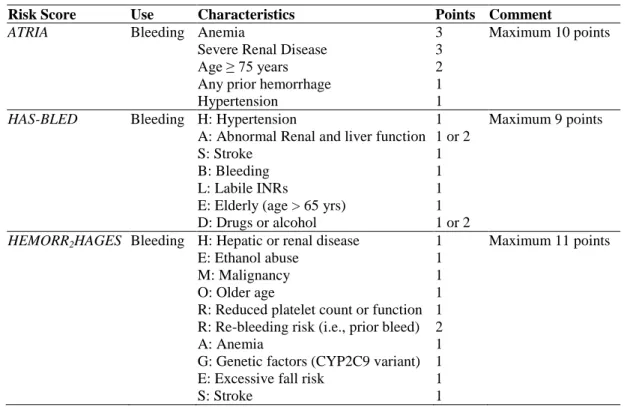
Table 2. Bleeding risk scores used in atrial fibrillation
Risk Score Use Characteristics Points Comment
ATRIA Bleeding Anemia
Severe Renal Disease Age ≥ 75 years Any prior hemorrhage Hypertension 3 3 2 1 1
Maximum 10 points
HAS-BLED Bleeding H: Hypertension
A: Abnormal Renal and liver function S: Stroke
B: Bleeding L: Labile INRs
E: Elderly (age > 65 yrs) D: Drugs or alcohol
1 1 or 2 1 1 1 1 1 or 2
Maximum 9 points
HEMORR2HAGES Bleeding H: Hepatic or renal disease E: Ethanol abuse
M: Malignancy O: Older age
R: Reduced platelet count or function R: Re-bleeding risk (i.e., prior bleed) A: Anemia
G: Genetic factors (CYP2C9 variant) E: Excessive fall risk
S: Stroke 1 1 1 1 1 2 1 1 1 1
Maximum 11 points
Of the validated bleeding risk scores, the HAS-BLED score has been the most
recommended in clinical guidelines; however, using the ATRIA score for observational studies in medical claims has been thought to be the most accurate, because some of the criteria in the HAS-BLED score cannot be directly or accurately measured in claims, such as labile INRs or drug/alcohol use.107,113 Of note, these clinical prediction scores have been validated in a strictly warfarin-taking population.
27
2.2.6.Specific Anticoagulants and Atrial Fibrillation
2.2.6.1. Warfarin: Uses, Efficacy, and Adverse Effects 2.2.6.1.1. Uses
Warfarin, an oral Vitamin K antagonist, is FDA-approved for prevention of ischemic stroke and venous thromboembolism.73 Until very recently, ACC clinical guidelines favored the use of chronic warfarin for patients without mechanical heart valves (non-valvular AF) at moderate to high risk of stroke; however, more recent AHA/ACC/HRS clinical guidelines released in March 2014 have offered no major preference between warfarin and the other novel oral anticoagulants.1,4,70,73
To manage warfarin dosing, patients are monitored regularly in provider visits or self-monitoring using international normalized ratio (INR) tests, because warfarin has a narrow therapeutic index.45,46 In non-valvular AF, patients receive titrated warfarin doses to a target INR of 2.0 to 3.0, monitored and adjusted through these INR tests.45 When first beginning warfarin, patients generally start on doses of 5.0mg and increase or decrease doses as needed. INRs are generally monitored at least weekly during the initiation of therapy and are recommended to be conducted monthly once anticoagulation is stabilized.45,46 The use of laboratory tests has historically been a drawback to using warfarin due to the added inconvenience to patients and costs to the health system, but is recommended for chronic therapy.114
2.2.6.1.2. Efficacy and Effectiveness
Meta-28
analyses have suggested that the annual incidence of stroke or systemic embolism in AF patients using warfarin is approximately 1.66% (95% CI: 1.41-1.91).9 However, the risk of ischemic stroke on warfarin can also vary based on underlying risk factors. Ischemic stroke risk has been shown to increase when taken in elderly patients, female patients, patients with a history of stroke, and newly-initiated users (e.g., patients never having taken vitamin K antagonists
before).9 Renal impairment (OR: 1.54, 95% CI: 1.30-1.81), previous aspirin use (OR: 1.19, 95% CI: 1.04-1.37), and higher CHADS2 score (1.64, 95% CI: 1.18-2.27) are also associated with a higher risk of stroke on warfarin, even in more recent RCTs.117
Because warfarin has been available for decades, older RCTs were conducted when the quality of care for AF patients was worse. 9,32,117 In addition, the time in therapeutic range (TTR) has been shown to not only vary widely across clinical practice settings but also is strongly related to warfarin’s effectiveness.118,119
More recently, home monitoring for INRs has become available, further mudding the picture.120 Thus, the debate regarding the effectiveness of warfarin continues and still remains relevant today.
2.2.6.1.3. Adverse Effects
29
concerned that the bleeding risk may even have been underestimated.121 Warfarin has also been linked to osteoporosis, purple toe syndrome, and warfarin necrosis.73 Warfarin also has other drug-drug and drug-lab interactions, which lead to many additional adjusted dosing
requirements.
2.2.6.2. Dabigatran: Uses, Efficacy, and Adverse Effects 2.2.6.2.1. Uses
Dabigatran, a direct thrombin inhibitor, has been FDA-approved since October 2010 for prevention of stroke and embolism in non-valvular atrial fibrillation and for venous
thromboembolism prophylaxis.122 Dabigatran has not been approved for any mechanical valve ischemic stroke prophylaxis. Importantly, patients with mechanical heart valves or significant mitral stenosis were excluded from RCTs used for FDA-approval, and a more recent study indicated dabigatran’s increased risk of bleeding compared with warfarin patients with valvular AF.123 In the US, the FDA approved two doses of dabigatran for the prevention of stroke in atrial fibrillation: 75mg twice daily and 150mg twice daily, while the 110mg dose was studied in RCTs.19 The 75mg twice daily dose is specifically indicated for patients with renal impairment (CrCl <30mL/min). Notably, no RCTs have been done to study the 75mg dose.
2.2.6.2.2. Efficacy and Effectiveness
30
1.5% per year in the group receiving dabigatran 110mg (RR: 0.91, 95% CI: 0.74-1.11, p<0.001 for non-inferiority) and 1.1% per year in the group receiving 150mg dabigatran (RR: 0.66, 95% CI: 0.53-0.82, p<0.001 for superiority).13
Some sub-analyses of the overall RE-LY trial have also been published. One sub-analysis has found that the risk of ischemic stroke or systemic embolism was significantly higher in patients from Asian countries than from non-Asian countries, though geographic treatment variation is thought to have influenced these differences.124 Another RE-LY sub-analysis of patients receiving concomitant anti-platelet therapy found that dabigatran was still non-inferior to warfarin in reducing ischemic stroke or systemic embolism, regardless of receipt of anti-platelet therapy.88 Another third RE-LY sub-analysis following 5,851 patients who had not discontinued dabigatran (with no warfarin comparator) found approximately 1.5% and 1.6%/year rates of ischemic stroke or systemic embolism.125 These findings were largely similar to the original RCT findings. Whether patients were adequately anticoagulated with warfarin (measured by time in the therapeutic range) in the RE-LY trial was also found to slightly influence the apparent efficacy of dabigatran.14 Additional post-hoc analyses have been
conducted on patients using anticoagulation for secondary prevention versus primary prevention and found similar findings. Overall, these sub-analyses have been useful at elucidating potential areas for further study, but are no substitution for large real-world studies. In addition, a number of meta-analyses summarizing the clinical trials have been published – many of them combining the novel oral anticoagulants together. These meta-analyses have largely found superiority of the novel oral anticoagulants but also caution about possible increased risk of myocardial infarction or gastrointestinal bleeding risk with dabigatran.18,126,127
31
first, a cross-sectional study, followed 103 patients treated with dabigatran for at least 3 months at a single-center anticoagulation clinic without a comparator group. In this study, only 1 ischemic stroke was reported; the authors found no statistically significant difference between treatment-naïve patients and patients previously treated with warfarin. Of the 99 patients they had prescription fill records for, 12% of patients had inadequate adherence over the study period (defined as <80% adherence). The second study, a registry-based study of patients in Denmark, followed 4,978 dabigatran-treated patients against 8,936 propensity-score matched warfarin patients using time-to-event analysis.129 This study found that while risk of stroke and systemic embolism was not statistically different between the two groups, mortality and risk of AMI was significantly lower in dabigatran patients. However, this study examined dabigatran at a dose of 110mg and 150mg, because the 75mg dose is not used in Europe. This study also exclusively followed new users of anticoagulants. The third study examined the medication adherence and the association between non-adherence to dabigatran and clinical outcomes in a cohort of 5,376 Veterans Affairs patients.130 They found high medication adherence among this VA population (Mean proportion of days covered [PDC] 94%). Patients with low medication adherence (<80% PDC) were associated with an increased risk for all-cause mortality and stroke (HR: 1.13, 95% CI: 1.07-1.19) per 10% decrease in PDC, but adherence was not associated with increased risk of non-fatal bleeding or myocardial infarction.
In summary, dabigatran has shown relative improved efficacy over warfarin in randomized-controlled clinical trials, though the generalizability of the findings has been
questioned, because of the narrow inclusion criteria used in the trials. Specifically, the population included in RE-LY tended to be younger and with fewer comorbidities than has been seen in previous observational studies examining warfarin use.119,131 In addition, the RE-LY trial
32
to analyze in real-world settings. Lastly, patients who were non-adherent were excluded from RE-LY analyses. Using our knowledge about low medication adherence in actual clinical practice suggests that further observational research is continued to be needed.
2.2.6.2.3. Adverse Effects
While dabigatran has fewer monitoring requirements and easier dosing arrangements, its use has also been suggested to lead to higher risk of dyspepsia, potentially higher risk of
bleeding, and myocardial infarction than warfarin.19 Uncertainty also remains about its relative safety, because, unlike warfarin, dabigatran lacks a direct reversal agent in the event of bleeding complications, even though some are under development.20
Major randomized-controlled trials have shown that dabigatran is associated with decreased intracerebral hemorrhage (ICH) compared with warfarin whether or not patients have prior stroke/TIA and are using anticoagulation for secondary prevention.13,132,133 The RE-LY trial found that major bleeding was 3.36% per year in the warfarin group compared with 2.71% per year in those receiving dabigatran 110mg (p=0.003) and 3.11% per year those receiving dabigatran 150mg (p=0.31).13 In addition, the reported rate of hemorrhagic stroke was 0.38%, 0.12%, and 0.10% per year in the warfarin, dabigatran 110mg (p<0.001), and dabigatran 150mg (p<0.001) groups, respectively.13 Mortality did not differ significantly between the groups.13
33
dabigatran than warfarin since dabigatran market entry138; however, a Mini-Sentinel analysis found in an unadjusted cohort of patients that the risk of bleeding was not significantly greater than warfarin.26 Consensus opinion suggests that bleeding complications may be much more difficult to manage, and that those that occur may also be much more severe.139 Another study examined 2,391 atrial fibrillation patients admitted with intracranial bleeding and their
comparative risk of mortality among patients treated with dabigatran compared with warfarin using the TruvenHealth MarketScan® database.140 They found similar in-hospital mortality and no differences in propensity-score adjusted risk ratios. Overall, much less is known about the comparative efficacy of dabigatran compared with warfarin in real-world use, and even more questions regarding dabigatran’s comparative safety remain unanswered.20
Dabigatran used for the prevention of stroke in atrial fibrillation has also been thought to lead to increased risk of myocardial infarction, but data examining this outcome have been primarily aggregation of the large randomized, controlled trials.99,141,142 In addition, the RE-LY trial also found significantly increased risk of dyspepsia-like symptoms compared with
warfarin.13 Sub-analyses have found that gastroesophageal reflux disease (GERD)-related non-bleeding adverse events occurred in 16.9% of those receiving dabigatran and 9.4% of those receiving warfarin (RR: 1.81 [95% CI: 1.66-1.97], p<0.001).143 In this sub-analysis,
discontinuation occurred in 4% of patients receiving warfarin due to non-bleeding adverse events.143
2.2.7. Guidelines for Anticoagulation in AF
34
aspirin or warfarin have been shown to reduce stroke risk in patients with atrial fibrillation, warfarin is considered to be significantly more effective than aspirin, but carries increased risk of hemorrhage and other side effects.3,45
For either the CHADS2 or the CHA2DS2-VASc, a risk score of 0 indicates a low risk of ischemic stroke, whereby no anticoagulation or aspirin use is suggested. A CHADS2 risk score of 1 suggests a moderate risk of ischemic stroke, whereby either aspirin or anticoagulation are indicated based on patient preference.104,105 A CHADS2 risk score of 2 or greater suggests a moderate or high risk of stroke, whereby anticoagulation is warranted. Anticoagulation with a vitamin K antagonist is recommended for patients with at least 1 moderate risk factor, including age > 75 years, hypertension, heart failure, impaired left ventricular systolic function, and diabetes mellitus (e.g., CHADS2 Score – see previous discussion on this topic).104 Recently, the guidelines have incorporated equivalencies of the new oral anticoagulant (e.g., dabigatran) or well-controlled warfarin at INR 2.0-3.0 for risk scores of 1 or greater.3,19,45
As is discussed in the following sub-sections, the clinical guidelines by the various associations appear to have reached some degree of consensus. Generally, dabigatran is
recommended as an alternative to warfarin for clinically-indicated patients, but these guidelines caution against its use in patients with renal impairment and advanced age. As this is a rapidly-growing area, other guidelines are possible, but the major relevant ones have been summarized below.
2.2.7.1. American College of Chest Physicians (ACCP) 2012 Guidelines Update
35
These guidelines use the GRADE approach which classifies recommendations as strong (Grade 1) or weak (Grade 2) based on expert consensus about the overall risks and benefits of
therapy.144,145 The quality of the evidence is also synthesized into high (Grade A), moderate (Grade B), or low (Grade C) according to the overall validity and risk of bias inherent in the available studies.144
36
Table 3. American College of Chest Physicians 2012 Antithrombotic Guidelines Update
Recommendation Grade
For patients with AF at low risk of stroke (CHADS2: 0), no antithrombotic therapy recommended
- If therapy chosen, aspirin 75mg or 325mg once daily recommended
2B 2B For patients with AF at intermediate risk of stroke (CHADS2: 1), oral anticoagulation
recommended rather than no therapy
- Oral anticoagulation preferred over aspirin or aspirin + clopidogrel
- If precautions against oral anticoagulation, then aspirin + clopidogrel
1B
2B 2B For patients with AF at high risk of stroke (CHADS2: 2), oral anticoagulation recommended rather than no therapy, or
- Aspirin (75mg or 325mg), or
- Aspirin + clopidogrel
- If precautions against oral anticoagulation, then aspirin + clopidogrel
1A
1B 1B 1B For patients with AF with oral anticoagulation recommended, dabigatran 150mg twice daily
recommended rather than adjusted-dose warfarin
2B
For patients with AF and stable coronary artery disease with oral anticoagulation recommended, adjusted dose warfarin alone rather than adjusted-dose warfarin + aspirin
2C
2.2.7.2. 2012 Focused Update: Recommendations for Prevention of Thromboembolism in Non-valvular AF3
37
Table 4. 2012 European Society of Cardiology (ESC) Focused Update
Recommendation Class Level of Evidence
Antithrombotic therapy to prevent thromboembolism is recommended for all patients with AF, except in those patients (both male and female) who are at low risk (aged < 65 years and lone AF) or with contraindications
I A
In patients with a CHA2DS2-VASc score ≥2, OAC therapy with:
- Adjusted-dose VKA (INR 2-3); or
- A direct thrombin inhibitor (dabigatran); or
- An oral factor Xa inhibitor (e.g., rivaroxaban, apixaban) … is recommended, unless contraindicated
I A
In patients with a CHA2DS2-VASc score = 1, OAC therapy with:
- Adjusted-dose VKA (INR 2-3); or
- A direct thrombin inhibitor (dabigatran); or
- An oral factor Xa inhibitor (e.g., rivaroxaban, apixaban)
… should be considered, based upon an assessment of the risk of bleeding complications and patient preferences
IIa A
When patients refuse the use of any OAC, antiplatelet therapy should be considered, using combination therapy with aspirin 75-100mg plus clopidogrel 75mg daily (where there is a low risk of bleeding), or, less effectively, aspirin 75-325mg daily
IIa B
Abbreviations: AF, Atrial Fibrillation; OAC, Oral anticoagulant; VKA, Vitamin K Antagonist; INR, International Normalized Ratio
2.2.7.3. American Heart Association (AHA)/American Stroke Association (ASA) Science Advisory Committee 2012 recommendations
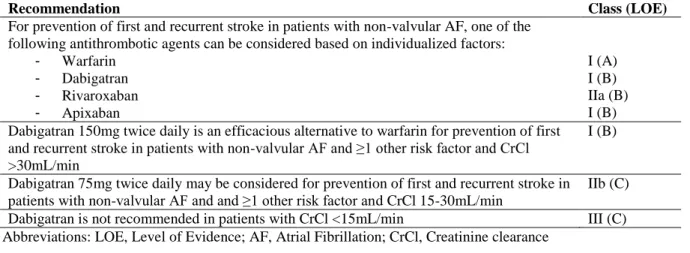
The AHA/ASA Science Advisory committee published recommendations even more recently than the ACCP guidelines in December 2012 using expert consensus. These guidelines suggested that selection of OACs should be individualized and based on risk factors, cost, tolerability, patient preference, drug interaction potential and INR time in the therapeutic range.2 Notably, this committee also recommended that dabigatran 150mg twice daily is an efficacious alternative to warfarin (Class I; Level of Evidence (LOE) B). Dabigatran 75mg twice daily may be considered for patients with CrCl 15-30 ml/min but with a caution that safety and efficacy have not been established in renal-insufficient patients (Class IIb; LOE C). The committee did not, however, recommend dabigatran in patients with CrCl < 15ml/min (Class III; LOE C).
38
39
Table 5. American Heart Association/American Stroke Association 2012 Guidelines Update
Recommendation Class (LOE)
For prevention of first and recurrent stroke in patients with non-valvular AF, one of the following antithrombotic agents can be considered based on individualized factors:
- Warfarin
- Dabigatran
- Rivaroxaban
- Apixaban
I (A) I (B) IIa (B) I (B) Dabigatran 150mg twice daily is an efficacious alternative to warfarin for prevention of first
and recurrent stroke in patients with non-valvular AF and ≥1 other risk factor and CrCl >30mL/min
I (B)
Dabigatran 75mg twice daily may be considered for prevention of first and recurrent stroke in patients with non-valvular AF and and ≥1 other risk factor and CrCl 15-30mL/min
IIb (C)
Dabigatran is not recommended in patients with CrCl <15mL/min III (C)
Abbreviations: LOE, Level of Evidence; AF, Atrial Fibrillation; CrCl, Creatinine clearance
2.2.7.4. American Heart Association (AHA)/American College of Cardiology (ACC)/Heart Rhythm Society 2014 Guidelines
The AHA/ASA/HRS Science Advisory committee released recommendations in late March 2014 regarding the management of atrial fibrillation.5 Similar to guidelines released in 2012, antithrombotic therapy is still recommended to be individualized based on shared decision-making and recommended for patients with high ischemic stroke risk. In this 2014 version, patients with non-valvular AF are recommended to use warfarin, dabigatran, rivaroxaban or apixaban, with no noted preference among the agents. However, again, patients with end-stage chronic kidney disease or on hemodialysis are not recommended to use one of the novel oral anticoagulants. The largest difference between these guidelines and previous guidelines are that the oral anticoagulants are considered as equal options in newly-initiating patients.
2.2.8. Other adjunctive therapies used in atrial fibrillation
40
potential role in decreasing both the incidence of AF and the rate of relapse following
cardioversion in patients with AF. These drugs are hypothesized to work by reducing P-wave duration, but their overall primary use in AF is still being evaluated.146 A recent meta-analysis found that ACEIs and ARBs significantly lowered the risk of incident AF compared with no use (OR: 0.65, 95% CI: 0.55-0.76).146 Compared with non-users, users of ACEIs and ARBs were also found to have a significantly reduced recurrence of sinus rhythm disturbances (OR: 0.45, 95% CI: 0.31-0.65).146 However, the included RCTs heavily relied on post-hoc analyses for their conclusions. Statins have also been thought to play a role in maintaining sinus rhythm in patients with persistent lone AF, but their role as a primary agent in AF is still being evaluated and only hypothesized in commentaries.55 The literature examining the role of adjunctive therapies beyond the 3-pronged approach currently recommended is still evolving, and no strong recommendation for their uses in AF has been given.55
2.3. CLINICAL CONTROVERSIES
As previously discussed, dabigatran has shown similar efficacy in stroke prevention over warfarin in treatment naïve patients with AF in randomized-controlled clinical trials.14-16 While dabigatran requires less frequent monitoring and may lead to decreased intracerebral