FACTORS IMPACTING PARTICIPATION IN THE SENSORY ENVIRONMENT FOR CHILDREN WITH AUTISM SPECTRUM DISORDER
Kathryn L. Williams
A dissertation submitted to the faculty at the University of North Carolina at Chapel Hill in partial fulfillment of the requirements for the degree of Doctor of Philosophy in the Division of
Occupational Science and Occupational Therapy in the Department of Allied Health Sciences.
Chapel Hill 2020
ABSTRACT
Kathryn L. Williams: Factors Impacting Participation in the Sensory Environment by Children with Autism Spectrum Disorder
(Under the direction of Grace Baranek)
Children with autism spectrum disorder (ASD) may have difficulty feeling at ease in and engaging with their sensory environment. The combined expression of three closely related features (i.e. constructs of interest, or COIs): 1) sensory hyperresponsiveness, 2) restricted interests and repetitive behaviors, and 3) anxiety, may be a sign that participation is particularly challenging for these individuals. Factors such as the ability to control and predict stimuli, and generate a sense of familiarity in one’s surroundings have been previously identified as important facilitators to engagement. The overall purpose of my dissertation was to more thoroughly
investigate relational factors between children with ASD and the sensory environment that impact participation. In accordance with an embodied perspective (Hass, 2008), the three COIs were considered across the dissertation to provide insight into the effects of these factors on participation outcomes.
In the first study, an integrated systematic review was conducted to identify current explanations for associations among the three COIs. The second study used a quantitative approach to assess 1) evidence for control-based subcategories of hyperresponsiveness in the tactile domain, 2) differential associations between each subcategory with RRBs and anxiety, and 3) whether the presence of RRBs modulates the association between each control-based
experiences of a 5-year-old boy with ASD in three different locations with varying levels of familiarity: at home, at a familiar neighborhood playground, and at an unfamiliar playground.
ACKNOWLEDGEMENTS
“Nothing of significance was ever achieved by an individual acting alone.” John C. Maxwell I had no idea how much professional and personal growth I would experience when I began my graduate studies in the Division of Occupational Science and Occupational Therapy at the University of North Carolina at Chapel Hill. The division and the people in it exemplify the finest examples of compassion-driven inquiry and service to others that I will carry with me always. To all of you, thank you from the bottom of my heart.
I owe the most gratitude to my advisor, Dr. Grace T. Baranek. Your ability to transform potential into practice has allowed me to accomplish far more as a graduate student than I ever imagined possible. I am thankful for the skills you have taught me, but more importantly for your example of integrity in all of your work. Thank you for sticking with me through all of the ups and downs of my time as a student.
To my committee chair, Dr. Nancy Bagatell, I am forever grateful for how you have broadened my perspective in understanding and working with individuals with ASD, “from condition to community,” and the ripple effects that this will continue to have in any research inquiry or clinical practice I conduct in the future.
I wish to also thank the three other outstanding members of my dissertation committee. Dr. Antoine Bailliard, thank you for introducing me to a theoretical framework that finally felt right, and allowing me to explore those ideas in true Deweyan inquiry fashion. Dr. Kim
situation. Dr. John Sideris, thank you for fielding the infinite questions, emails, and phone calls about statistics (always making me laugh along the way) and encouraging me with your
comments. I would not be the same student and person that I am without all of your examples and support.
To the remaining faculty members that I was blessed to learn from: Ruth Humphry, Jenny Womack, Sue Coppola, Linn Wakeford, Brian Boyd, Raheleh Tschoepe, and Katie Sorensen, there is no way to put into words the impact you have had on me and my gratitude for all that you have taught me. I fully recognize how special my educational experience has been because of your relentless efforts and true mission to develop your students into the highest quality occupational scientists and occupational therapists possible. I also owe an immense debt of gratitude to all of those involved in the Autism Leadership and Training Grant, particularly Linda Watson, Betsy Crais, and Harriet Able, which funded my time as a student and shaped me into the researcher I am today.
Regarding the completion of this dissertation project, I would be remiss if I did not acknowledge Emily Campi, who reviewed hundreds of journal articles with me, and with great enthusiasm and skill. I also thank Jennifer Walker at the University of North Carolina Health and Sciences Library who walked me through the steps of searching for and reviewing literature for my systematic review study. Thank you also to Dr. Cathy Zimmer at the Odum Institute who was instrumental in teaching me how to use and interpret Mplus statistical software. Writing a
dissertation can be an isolating and lonely process, but you knew how to provide support in the ways that I needed at the times when I needed it most.
Being a doctoral student can also be a harrowing experience. I could not be more
truly could not have survived without the laughs, dance parties, hugs, dog-sittings, shared meals and shared times I had with you. You inspire me in so many ways, and I will always be in your corner rooting you on and supporting you in the amazing things I know you will go on to do.
To my family, who believed in me through so many times when I did not believe in myself. Thank you to my dad, my mom, my family-in-law, and especially to my sister, Kristen. Throughout the past five years you have jumped on a plane with one day’s notice to come stay with me when I needed it, you have let me rehearse countless presentations before I had to make them, and you have always picked up the phone to listen and talk me through the hard times. I hope I have made you all proud.
Thank you to Millie, my joyful canine companion. We were always meant to be with each other.
TABLE OF CONTENTS
LIST OF TABLES ... xiii
LIST OF FIGURES ...xiv
LIST OF ABBREVIATIONS AND SYMBOLS ... xv
CHAPTER 1: OVERVIEW AND PREMISE OF THE DISSERTATION ...1
1.1 Theoretical Foundation ...1
1.2 Selective Review of the Literature on Autism Spectrum Disorder ...2
Sensory Features in ASD ...2
Association of Sensory Features with RRBs ...5
Association of Sensory Features with Anxiety ...5
1.3 Associations among Sensory Hyperresponsiveness, Restricted Interests and Repetitive Behaviors, and Anxiety in ASD ...6
An Embodied Perspective ...6
Theoretical Possibilities ...7
1.4 Premise of the Dissertation ...8
1.5 Methodological Considerations ... 10
REFERENCES ... 12
CHAPTER 2: AN INTEGRATED SYSTEMATIC REVIEW OF ASSOCIATIONS AMONG SENSORY HYPERRESPONSIVENESS, RESTRICTED AND REPETITIVE BEHAVIORS, AND ANXIETY IN INDIVIDUALS WITH AUTISM SPECTRUM DISORDER ... 19
2.1 Introduction ... 19
Sensory Hyperresponsiveness ... 20
Anxiety ... 22
Study Aim ... 22
2.2 Method ... 23
Literature Search ... 24
Approach to Analysis ... 26
2.3 Results ... 26
Quality Appraisal... 26
Structural Relationships among the Constructs of Interest ... 27
Overall Themes ... 28
2.4 Discussion ... 32
Structural Relationships ... 32
Implications of the Three Themes ... 33
Study Limitations ... 36
2.5 Conclusion ... 37
2.6 Tables and Figures ... 38
REFERENCES ... 45
CHAPTER 3: EVIDENCE FOR STIMULUS CONTROL-BASED SUBCATEGORIES OF SENSORY HYPERRESPONSIVENESS AND DIFFERENTIAL ASSOCIATIONS WITH RESTRICTED AND REPETITIVE BEHAVIORS, AND ANXIETY IN ASD ... 51
3.1 Introduction ... 51
Associations between Sensory Hyperresponsiveness and other Features of ASD ... 52
Sensory Domain-Specific Differences ... 53
Research Purpose... 54
3.2 Methods ... 55
Assessments ... 55
Data Analysis ... 58
3.3 Results ... 60
3.4 Discussion ... 61
Limitations and Future Directions ... 62
3.5 Conclusion ... 63
3.6 Tables and Figures ... 64
REFERENCES ... 68
CHAPTER 4: NAVIGATING THE SENSORY ENVIRONMENT: EXPERIENCES OF A CHILD WITH AUTISM SPECTRUM DISORDER IN FAMILIAR AND UNFAMILIAR SETTINGS ... 73
4.1 Introduction ... 73
4.2 Method ... 75
Study Design ... 75
Recruitment ... 76
Data Collection ... 76
4.3 Findings ... 79
4.4 Discussion ... 85
Monitoring and Managing the Zone of Awareness ... 86
Clinical and Design Implications ... 87
Study Limitations and Feasibility of Child-Perspective Video... 88
4.5 Conclusion ... 89
4.6 Tables and Figures ... 91
REFERENCES ... 96
5.1 Introduction ... 98
A Note on Methodology ... 99
5.2 Barriers and Supports Related to Participation in the Sensory Environment ... 99
Barriers Related to Participation in the Sensory Environment ... 100
Supports Related to Participation in the Sensory Environment ... 103
5.3 Contextualizing Supports and Barriers within Occupational Science ... 105
Implications and Directions for Future Study ... 107
5.4 Conclusion ... 109
LIST OF TABLES
Table 2.1 Search Terms for Database Entry ... 38
Table 2.2 Study Characteristics ... 40
Table 2.3 Structural Orientation and Study Conclusions ... 43
Table 3.1 Sample Characteristics ... 64
Table 3.2 Goodness of Fit Measures ... 64
Table 3.3 Bivariate Correlations Between Variables ... 65
Table 3.4 Standardized Regression Coefficients ... 66
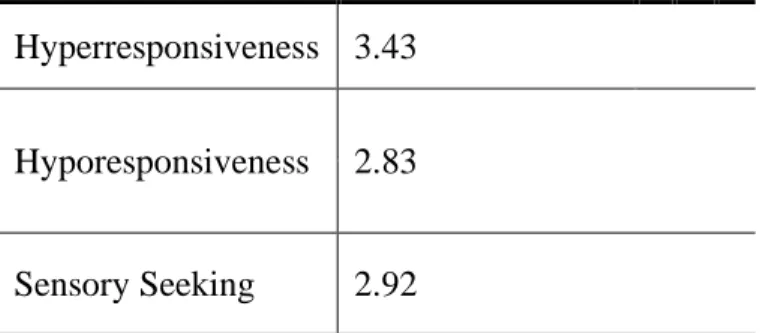
Table 4.1 Mean Construct Scores on the SEQ ... 91
LIST OF FIGURES
Figure 2.1 PRISMA Diagram ... 39
Figure 3.1 Confirmatory Factor Analysis... 67
Figure 4.1 Overall Perspective at Home ... 92
Figure 4.2 Child’s Perspective at Home ... 92
Figure 4.3 Child’s Perspective at Home with Researcher Present ... 93
Figure 4.4 Overall Perspective at the Familiar Playground 1... 93
Figure 4.5 Overall Perspective at the Familiar Playground 2... 94
Figure 4.6 Child’s Perspective of Playing in the Sandbox ... 94
LIST OF ABBREVIATIONS AND SYMBOLS ADI Autism Diagnostic Interview
ADOS Autism Diagnostic Observation Schedule APA American Psychiatric Association
ASD Autism Spectrum Disorder
b y-intercept; b0
CA Chronological age
CBCL Child Behavior Checklist
CDC Centers for Disease Control and Prevention CFA Confirmatory factor analysis
CFI Comparative fit index CI Confidence interval COIs Constructs of interest
DSM-5 Diagnostic and Statistical Manual, Version 5 IQ Intelligence quotient
M Mean
MA Mental age
MeSH Medical Subject Headings MMAT Mixed Methods Appraisal Tool
N Sample size
NVIQ Non-verbal intelligence quotient
P p-value
RBS-R Repetitive Behavior Scale-Revised
RRBs Restricted interests and repetitive behaviors
SD Standard deviation
SE Standard error
SEQ Sensory Experiences Questionnaire TD Typically developing
TDDT-R Tactile Defensiveness and Discrimination Test-Revised TLI Tucker-Lewis index
CHAPTER 1: OVERVIEW AND PREMISE OF THE DISSERTATION 1.1 Theoretical Foundation
The discipline of occupational science is dedicated to studying the form, function and meaning of occupation (Clark et al., 1991; Njelesani, Tang, Jonsson, & Polatajko, 2014; Yerxa et al., 1989). While many different approaches to studying occupation are found in the literature, my dissertation adopts the transactional perspective (Dickie, Cutchin, & Humphry, 2006). Based in the pragmatist philosophy of John Dewey, the transactional perspective rejects the dualistic assumption that the individual and the environment are separate elements of occupation. Instead, both factors are necessary to define and understand each other. Therefore, occupation is best understood through primarily studying the ‘individual and environment as a whole’. Separate investigation of the individual or the environment, while still important, should characterize them as abstractions from their primary state of dynamic transaction with each other.
In addition to studying the construct of occupation, one of the major aims of occupational science is to serve as a foundational discipline that supports the goals of occupational therapy to promote the health and well-being of all individuals (Clark et al., 1991). Although there is prolific research on individuals with ASD, and decades of substantive contributions from occupational therapy (Bagatell & Mason, 2015), there is a noticeable lack of information about ASD that directly emerges from occupational science (examples of notable exceptions include Bagatell, 2012; DeGrace, Hoffman, Hutson, & Kolobe, 2014; Kirby, Baranek, & Fox, 2016; Spitzer, 2003). Furthermore, while a comprehensive study of occupation incorporates
(Clark et al., 1991),there is a paucity of up-to-date literature in occupational science that integrates these different levels of understanding.
1.2 Selective Review of the Literature on Autism Spectrum Disorder
Autism spectrum disorder (ASD) is a complex, neurodevelopmental disorder that affects approximately 1 in every 69 individuals (Centers for Disease Control and Prevention, 2018). The Diagnostic and Statistical Manual Version 5 (DSM-5) identifies two main behavioral domains: (a) persistent deficits in social communication and social interaction across multiple contexts, and (b) restricted, repetitive patterns of behavior, interests, or activities. In addition to these core features, individuals with ASD may also exhibit a range of co-morbidities. Examples of these include elevated levels of anxiety (van Steensel & Heeman, 2017), intellectual disability (LoVullo & Matson, 2009), and compromised health (Hinkson, Dickinson, Water, Sands & Penman, 2013). Collectively, core and co-morbid features can have a tremendous impact on an individual’s ability to complete activities of daily living (Bal, Kim, Cheong, & Lord, 2015), engage in leisure activities (Eversole et al., 2016), and maintain important social relationships (Jones & Meldal, 2001). The combined presence of three of these features: sensory
hyperresponsiveness, RRBs, and anxiety, may indicate a particular difficulty with adjustment to, and full participation in, the flow of everyday life.
Sensory Features in ASD
Behavioral research in ASD describes sensory features by modality (e.g., Kern, 2006; Kern et al., 2007) or in terms of the multi-modal patterns of responding to stimuli described in the DSM-5 (Baranek, David, Poe, Stone, & Watson, 2006); namely, hyperresponsiveness
studied in the literature and is often seen as a positive feature related to sensory expression in ASD (Baranek, Little, Parham, Ausderau, & Sabatos-DeVito, 2014). Rates of sensory features in children with ASD are reported as high as 95% (Baker, Lane, Angley & Young, 2008; Baranek et al., 2006; Leekam, Nieto, Libby, Wing, & Gould, 2007; Tomchek & Dunn, 2007). While there may be some variation in severity as a function of mental age (Baranek et al., 2006; Baranek, Boyd, Poe, David, & Watson, 2007; Watson et al., 2011) or chronological age (Ben-Sasson et al., 2009; Freuler, Baranek, Watson, Boyd, & Bulluck, 2012; Kern et al., 2007), longitudinal
evidence suggests a persistent presence throughout childhood (Baranek et al., 2019; McCormick, Hepburn, Young, & Rogers, 2015). Furthermore, the presence of sensory features early in life may have a significant long-term impact on adaptive behaviors (Williams et al., 2018) and family functioning at home and in the community (Kirby et al., 2019).
Behavioral literature to date has largely focused on sensory features primarily as assigned individual traits, with secondary consideration of the social or physical contexts in which they occur. However, one study by Kirby and colleagues (2017) has looked specifically at the association between different sensory response patterns and contextual features of the home environment. The researchers found that hyperresponsive behaviors were more closely associated with family-initiated stimuli and activities of daily living, whereas intense sensory interests, repetitions, and seeking behaviors were more closely associated with child-initiated stimuli and free play activities. They also noted that many of the sensory responses spanned multiple modalities in naturalistic settings, indicating the importance of considering sensory behaviors within the multisensory contexts of everyday life.
processing both within and across auditory, visual, and tactile modalities (i.e., auditory and visual skills separately, as well as integrated audio-visual processing skills). The studies reviewed reported significant differences in lower brain and cortical structures compared to typically developing individuals, as well as differences in both the detection and processing of stimuli. Due to both the genotypic and phenotypic heterogeneity within ASD, the study by Marco and colleagues (2011) highlights the need to evaluate neurophysiologic findings in tandem with behavioral classifications in order to develop the most effective, tailored interventions.
Additional evidence from neuroscientific literature relates to multisensory integration, or the ability to bind stimuli across a variety of modalities. Difficulty with this process causes sensory signals across modalities to be temporally out of ‘sync’ with each other and therefore not processed as a unified percept, leading to different experiences of the environment (Stevenson et al., 2014). In addition, Gomot and Wicker (2012) suggest an important role of neurological sensory processing in the ability to habituate to stimuli based on previous experiences in order to selectively attend to salient aspects of the environment, and to reduce the burden on processing capacity that may be needed for other skills. Altered sensory functioning can disturb these processes with effects compounding over time, leading to diminished habituation (Gomot & Wicker, 2012), reduced attention to salient physical or social features (Nation & Penny, 2008), and deficiencies in later learning (Haley, Grunau, Oberlander, & Weinberg, 2008).
have together. Schaaf and colleagues (2011) conducted a series of parent interviews and found an important distinction between familiar and unfamiliar contexts, such that sensory-related
behaviors were more manageable, and potentially enjoyable, in environments that were familiar. Another study involving parent interviews highlighted the situated nature of sensory experiences. As the parents recounted various examples, descriptions of their occurrence were meaningful for families based on specific scenarios of a given time and place (Dickie, Baranek, Schultz, Watson, & McComish, 2009).
Association of Sensory Features with RRBs
Sensory features in ASD are closely associated with RRBs. Cross-sectional studies, such as one by Gabriels and colleagues (2008), found significant correlations between the scores on caregiver-completed questionnaires measuring restricted, repetitive, and stereotyped behaviors and sensory features after controlling for age and IQ. Other studies have addressed associations between specific sensory features and RRBs. For example, significant associations were
identified between stereotyped movements and sensory modulation difficulties in ASD (Gal, Dyck, & Passmore, 2010). Boyd and colleagues (2010) noted that hyperresponsiveness was significantly associated with stereotypies and ritualistic behaviors such as an insistence on sameness (I/S), suggesting that there may be a shared neurological mechanism between the two. Many other studies (e.g., Kerns et al., 2014; Lane, Molloy, & Bishop, 2014; Lidstone et al., 2014; Tseng et al., 2011) provide additional evidence supporting significant associations specifically between hyperresponsive behaviors and insistence on sameness.
Association of Sensory Features with Anxiety
are significantly elevated compared to the typically developing population (Kim, Szatmari, Bryson, Streiner, & Wilson, 2000). A study investigating the associations between sensory features and anxiety indicated significantly lower anxiety scores in children and adolescents who displayed an adaptive sensory subtype (i.e., those that did not meet the criteria for clinical
significance of sensory differences) compared to those with moderate to severe sensory
difficulties (Uljarević, Lane, Kelly, & Leekam, 2016). Other studies indicate that high levels of hyperresponsive behaviors in particular are strongly associated with anxiety (Carpenter et al., 2019; Lane, Reynolds, & Dumenci, 2012; Mazurek et al., 2013), although the exact nature of this association is still unknown.
1.3 Associations among Sensory Hyperresponsiveness, Restricted Interests and Repetitive Behaviors, and Anxiety in ASD
An Embodied Perspective
Largely developed by Merleau-Ponty, an embodied perspective contends that people rely on impressions from their unique set of previous interactions with the world to direct current patterns of being and doing (Hass, 2008). A person’s body and the environment are continuously situated in a way that allows the person to be able to predict expectations from their surroundings and then integrate the results into schema that will drive future action (Aldrich & Cutchin, 2013). These experiences accumulate to become the basis for sensory perception, which continues to evolve in coordination with the environment across time (DeJaegher, 2013; Thelen, 2000).
re-mapping of neural networks such that neural development is driven by experience. In other words, our way of ‘being’ is tied to movement within the environment, and cannot be separated from it (Thelen, 2000).
Tenets of embodiment are compatible with a developmental perspective of studying behavior (Watson, Baranek, & DiLavore, 2003), in which sensory functioning plays a critical role in orienting and attending to relevant stimuli in the sensory environment from early infancy onward. Qualities of the environment can therefore have a crucial impact on how an individual comes to understand the world. Interpreting the environment as unpredictable, uncontrollable, or intense, for example, may directly relate to developing a sense of anxiety and the use of certain coping mechanisms such as RRBs.
Theoretical Possibilities
Green and Ben-Sasson (2010) outlined one potential hypothesis for developing anxiety as a direct result of sensory hyperresponsiveness in unpredictable environments over time. The model proposes that hyperresponsiveness indicates intense fear of specific stimuli which can be conditioned over time towards fear of the broader environment, leading to avoidant behaviors and more generalized anxiety. Because individuals with ASD often exhibit intense
hyperresponsive behaviors (Reynolds & Lane, 2008), and have difficulty predicting patterns of stimuli in their environment (Sinha et al., 2014), they may be more susceptible to this
unpredictable and fear-inducing environment due to their ability to increase feelings of control (Black et al., 2017; Wigham, Rodgers, South, McConachie, & Freeston, 2014).
A study on self-reported sensory differences of individuals with ASD also indicated a difference in the amount of anxiety experienced in environments that were familiar with
expected stimuli compared to those that were unfamiliar with unexpected stimuli. Situations that were unexpected and sensory stimuli that were considered overwhelming or intense, such as large crowds or sudden, loud noises, were often fear-inducing. Participants further described how certain repetitive behaviors served to increase their sense of control over unpredictable
environments and create sensory experiences that could be enjoyed (Jones, Quigney, & Huws, 2003).
Focusing on an individual’s situatedness within their sensory environment may be crucial for understanding sensory experiences of individuals who are unable to participate in traditional primary reporting. For example, Bagatell (2012) used retrospective video analysis to examine the behavior of a boy with ASD in his classroom during circle time. Although he appeared
unengaged because he was not making eye contact with the teacher or his peers, analysis using micro-ethnographic techniques suggested that he was orienting himself in a way that actually enabled him to manage his sensory experiences so that he could follow along with the activity and respond to the other children. Given the difficulty of individuals with ASD to process multisensory information simultaneously, particularly in situated, socially-laden real-world environments, first-hand perspectives give important insight into how theoretical and empirical insights unfold in the lives of individuals being studied.
1.4 Premise of the Dissertation
occupational science perspective. Currently described factors in the literature, such as the ability to control and predict stimuli, and familiarity of the environment, were researched in greater depth. Specifically, their impact on three features of ASD: sensory hyperresponsiveness (i.e., exaggerated, aversive, or defensive behaviors toward sensory stimuli), restricted interests and repetitive behaviors, and anxiety, are examined to help determine factors that are barriers to, or supports for, participation in the sensory environment. The overall goal of my dissertation was to generate results that can inform occupational scientists and occupational therapists on how to understand and assist individuals with ASD based on their unique situatedness with the world. To this end, three complementary investigative studies were performed.
Study 1: Identifying existing knowledge on associations among the three COIs in ASD. The first study is an integrated systematic review of research literature that highlights associations among sensory hyperresponsiveness, restricted interests and repetitive behaviors, and anxiety in individuals with ASD. The literature search spanned a variety of disciplines and methodologies, in order to identify multiple layers of information pertinent to these features. Articles were evaluated for quality (Pluye, Gagnon, Griffiths, & Johnson-Lafleur, 2009) and analyzed via integrative methods of synthesis (Sandelowski, Voils, & Barroso, 2006;
Sandelowski, Voils, Leeman, & Crandell, 2012).
Study 2: Evaluating whether control-based subcategories of sensory
hyperresponsiveness in the tactile domain are differentially related to (a) restricted interests and repetitive behaviors and (b) anxiety in children with ASD. Using extant data from the Sensory Experience Project (PI: Grace Baranek; R01‐HD042168), this concurrent, quantitative study investigated the impact of control on associations among sensory
hyperresponsiveness was divided into two separate, control-based subcategories:
hyperresponsiveness to stimuli that were controlled by the child (i.e., internally-controlled), and those that were controlled by an examiner (i.e., externally-controlled). Then, relative associations of each subcategory to restricted interests and repetitive behaviors and anxiety were evaluated. A moderating effect of restricted interests and repetitive behaviors on the association between hyperresponsiveness and anxiety (i.e., a decrease in the strength of this association as a function of increasing control over the sensory environment), was also investigated.
Study 3: Investigating the Experiences of a Child with ASD in Familiar and
Unfamiliar Settings. In the final study, qualitative methods were primarily used to understand the lived experiences of a child with ASD in the home, on a familiar playground, and on an unfamiliar playground. Two types of video observation (an overall perspective and the child’s perspective), the Sensory Experiences Questionnaire (Baranek, 2009), and field notes were included in data collection. Principles of sensory ethnography (Pink, 2015), which foreground the embedded nature of sensory functioning within an individual’s everyday life, guided the approach to analysis. Data were interpreted via an iterative process. Video footage was first transformed into meaningful narratives, and then layered with information from both camera perspectives and field notes from each setting with a specific focus on the sensory elements of his experience.
1.5 Methodological Considerations
imaging, standardized questionnaires, observations, and first-hand accounts of experience. While some methodologists believe that different paradigms supporting the use of these methods are incommensurate with each other, others discuss a pragmatist approach to circumvent this debate (Morgan, 2007).
Pragmatism allows for multiple layers of reality to be present in a given situation, and has been suggested as a useful approach for social science research (Morgan, 2007). The use of multiple methods can enable the study of both the structural, controllable, and predictable elements of a situation, as well as the more fluid and evolving human experiences that exist (Daly, 2007). A mixed methods approach may be particularly useful in research that has an applied focus (Straus, Tetroe, & Graham, 2009), because it includes components that can generalize across individuals and contextualize elements that pertain to a specific population or therapeutic setting. Particularly in occupational science and occupational therapy, which embrace both the sociocultural influences and physiological factors of an individual in theory and
practice, a mixed method approach may be extremely useful in generating knowledge of
REFERENCES
Aldrich, R. M., & Cutchin, M. P. (2013). Dewey’s concepts of embodiment, growth, and
occupation: Extended bases for a transactional perspective. In Transactional perspectives on occupation (pp. 13-23). Springer Netherlands.
Bagatell, N. (2012). Engaged moments: Mediated action and children with autism in the classroom setting. OTJR: Occupation, Participation, and Health, 32(1), 258-265. Bagatell, N. & Mason, A. (2015). Looking backward, thinking forward: Occupational therapy
and autism spectrum disorders. OTJR: Occupation, Participation, and Health, 35(1), 34-41.
Bagby, M., Dickie, V. Baranek, G. (2012). How sensory experiences of children with and without autism affect family occupations. American Journal of Occupational Therapy, 66, 78-86.
Baker, A., Lane, A., Angley, M., & Young, R. (2008). The relationship between sensory processing patterns and behavioral responsiveness in autistic disorder: A pilot study.
Journal of Autism and Developmental Disorders, 38(5), 867-875.
Bal, V. H., Kim, S. H., Cheong, D., & Lord, C. (2015). Daily living skills in individuals with autism spectrum disorder from 2 to 21 years of age. Autism, 19(7), 774-784.
Baranek, G. T. (2009). Sensory experiences questionnaire. Unpublished manuscript.
Baranek, G., Boyd, B., Poe, M., David, F., Watson, L. (2007). Hyperresponsive sensory response patterns in young children with autism, developmental delay, and typical development.
American Journal on Mental Retardation, 112(4), 233-245.
Baranek, G. T., Carlson, M., Sideris, J., Kirby, A. V., Watson, L. R., Williams, K. L., & Bulluck, J. (2019). Longitudinal assessment of stability of sensory features in children with autism spectrum disorder or other developmental disabilities. Autism Research, 12(1), 100-111. Baranek, G., David, F., Poe, M., Stone, W. & Watson, L. (2006). Sensory experiences
questionnaire: Discriminating sensory features in young children with autism, developmental delays, and typical development. Journal of Child Psychology and Psychiatry, 47(6), 591-601.
Black, K. R., Stevenson, R. A., Segers, M., Ncube, B. L., Sun, S. Z., Philipp-Muller, A., ... & Ferber, S. (2017). Linking anxiety and insistence on sameness in autistic children: The role of sensory hypersensitivity. Journal of Autism and Developmental Disorders, 47(8), 2459-2470.
Boyd, B., Baranek, G. Sideris, J., Poe, M., Watson, L., Patten, E., et al. (2010). Sensory features and repetitive behaviors in children with autism and developmental delays. Autism Research, 3(2), 78-87.
Carpenter, K. L., Baranek, G. T., Copeland, W. E., Compton, S., Zucker, N., Dawson, G., & Egger, H. L. (2019). Sensory over-responsivity: An early risk factor for anxiety and behavioral challenges in young children. Journal of Abnormal Child Psychology, 47(6), 1075-1088.
Cascio, C. J., Woynaroski, T., Baranek, G. T., & Wallace, M. T. (2016). Toward an interdisciplinary approach to understanding sensory function in autism spectrum disorder. Autism Research, 9(9), 920-925.
Centers for Disease Control and Prevention (2018). Autism spectrum disorder (ASD). Retrieved from https://www.cdc.gov/ncbddd/autism/index.html.
Clark, F. A., Parham, D., Carlson, M. E., Frank, G., Jackson, J., Pierce, D., ... & Zemke, R. (1991). Occupational science: Academic innovation in the service of occupational therapy's future. American Journal of Occupational Therapy, 45(4), 300-310. Creswell, J. W., & Plano Clark, V. L. (2017). Designing and conducting mixed methods
research. Sage publications.
Daly, K.J. (2007). Methodology: Links among ontological assumptions, theory and forms of inquiry. In, Qualitative methods for family studies and human development (pp. 83-128). Thousand Oaks, CA: Sage.
DeGrace, B., Hoffman, C., Hutson, T., Kolobe, T. (2014). Families’ experiences and occupations following the diagnosis of autism. Journal of Occupational Science, 21(3), 309-321. DeJaegher, H. (2013). Embodiment and sense-making in autism. Frontiers in Integrative
Neuroscience, 7, 1-19
Dickie, V., Baranek, G., Schultz, B., Watson, L., McComish, C. (2009). Parent reports of sensory experiences of preschool children with and without autism: A qualitative study.
American Journal of Occupational Therapy, 63(2), 172-181.
Dickie, V., Cutchin, M. P., & Humphry, R. (2006). Occupation as transactional experience: A critique of individualism in occupational science. Journal of Occupational Science, 13,
Eversole, M., Collins, D. M., Karmarkar, A., Colton, L., Quinn, J. P., Karsbaek, R., ... & Hilton, C. L. (2016). Leisure activity enjoyment of children with autism spectrum
disorders. Journal of Autism and Developmental Disorders, 46(1), 10-20.
Freuler, A., Baranek, G. T., Watson, L. R., Boyd, B. A., & Bulluck, J. C. (2012). Precursors and trajectories of sensory features: Qualitative analysis of infant home videos. American Journal of Occupational Therapy, 66(5), e81-e84.
Gabriels, R. L., Agnew, J. A., Miller, L. J., Gralla, J., Pan, Z., Goldson, E., ... & Hooks, E. (2008). Is there a relationship between restricted, repetitive, stereotyped behaviors and interests and abnormal sensory response in children with autism spectrum
disorders?. Research in Autism Spectrum Disorders, 2(4), 660-670.
Gal, E., Dyck, M. J., & Passmore, A. (2010). Relationships between stereotyped movements and sensory processing disorders in children with and without developmental or sensory disorders. American Journal of Occupational Therapy, 64(3), 453-461.
Gomot, M. & Wicker, B. (2012). A challenging, unpredictable world for people with autism spectrum disorder. International Journal of Psychophysiology, 83, 240-247.
Green, S., & Ben-Sasson, A. (2010). Anxiety disorders and sensory over-responsivity in children with autism spectrum disorders: Is there a causal relationship? Journal of Autism and Developmental Disorders, 40(12), 1495-1504.
Haley, D. W., Grunau, R. E., Oberlander, T. F., & Weinberg, J. (2008). Contingency learning and reactivity in preterm and full‐term infants at 3 months. Infancy, 13(6), 570-595. Hass, L. (2008). Merleau-Ponty's philosophy. Indianapolis: Indiana University Press.
Hinckson, E. A., Dickinson, A., Water, T., Sands, M., & Penman, L. (2013). Physical activity, dietary habits and overall health in overweight and obese children and youth with intellectual disability or autism. Research in Developmental Disabilities, 34(4), 1170-1178.
Jones, R. S., & Meldal, T. O. (2001). Social relationships and Asperger's syndrome: A
qualitative analysis of first-hand accounts. Journal of Learning Disabilities, 5(1), 35-41. Jones, R., Quigney, C., & Huws, J. (2003). First hand accounts of sensory perceptual experiences
in autism: A qualitative analysis. Journal of Intellectual and Developmental Disability, 28, 112-121.
Kern, J. K., Trivedi, M. H., Garver, C. R., Grannemann, B. D., Andrews, A. A., Savla, J. S., ... & Schroeder, J. L. (2006). The pattern of sensory processing abnormalities in
autism. Autism, 10(5), 480-494.
Kerns, C. M., & Kendall, P. C. (2012). The presentation and classification of anxiety in autism spectrum disorder. Clinical Psychology: Science and Practice, 19(4), 323-347.
Kerns, C. M., Kendall, P. C., Berry, L., Souders, M. C., Franklin, M. E., Schultz, R. T., ... & Herrington, J. (2014). Traditional and atypical presentations of anxiety in youth with autism spectrum disorder. Journal of Autism and Developmental Disorders, 44(11), 2851-2861.
Kim, J. A., Szatmari, P., Bryson, S. E., Streiner, D. L., & Wilson, F. J. (2000). The prevalence of anxiety and mood problems among children with autism and asperger
syndrome. Autism, 4(2), 117-132.
Kirby, A. V., Baranek, G. T., & Fox, L. (2016). Longitudinal predictors of outcomes for adults with autism spectrum disorder: Systematic review. OTJR: occupation, participation and health, 36(2), 55-64.
Kirby, A. V., Boyd, B. A., Williams, K. L., Faldowski, R. A., & Baranek, G. T. (2017). Sensory and repetitive behaviors among children with autism spectrum disorder at
home. Autism, 21(2), 142-154.
Kirby, A. V., Williams, K. L., Watson, L. R., Sideris, J., Bulluck, J., & Baranek, G. T. (2019). Sensory features and family functioning in families of children with autism and
developmental disabilities: Longitudinal associations. American Journal of Occupational Therapy, 73(2), 7302205040p1-7302205040p14.
Lane, A. E., Molloy, C. A., & Bishop, S. L. (2014). Classification of children with autism spectrum disorder by sensory subtype: A case for sensory‐based phenotypes. Autism Research, 7(3), 322-333.
Lane, S. J., Reynolds, S., & Dumenci, L. (2012). Sensory overresponsivity and anxiety in
typically developing children and children with autism and attention deficit hyperactivity disorder: cause or coexistence?. American Journal of Occupational Therapy, 66(5), 595-603.
Leekam, S. R., Nieto, C., Libby, S. J., Wing, L., & Gould, J. (2007). Describing the sensory abnormalities of children and adults with autism. Journal of Autism and Developmental Disorders, 37, 894-910.
Lenchucha, R., Kothari, A., & Rouse, M. (2007). The issue is- Knowledge translation: A concept for occupational therapy? American Journal of Occupational Therapy, 61, 593-596. Lidstone, J., Uljarević, M., Sullivan, J., Rodgers, J., McConachie, H., Freeston, M., ... &
LoVullo, S. V., & Matson, J. L. (2009). Comorbid psychopathology in adults with autism spectrum disorders and intellectual disabilities. Research in Developmental Disabilities, 30(6), 1288-1296.
MacDermid, J. C., & Graham, I. D. (2009). Knowledge translation: Putting the “practice” in evidence-based practice. Hand Clinics, 25(1), 125-143.
Marco, E. J., Hinkley, L. B., Hill, S. S., & Nagarajan, S. S. (2011). Sensory processing in autism: A review of neurophysiologic findings. Pediatric Research, 69, 48R-54R.
Mazurek, M. O., Vasa, R. A., Kalb, L. G., Kanne, S. M., Rosenberg, D., Keefer, A., ... &
Lowery, L. A. (2013). Anxiety, sensory over-responsivity, and gastrointestinal problems in children with autism spectrum disorders. Journal of Abnormal Child
Psychology, 41(1), 165-176.
McCormick, C., Hepburn, S., Young, G., Rogers, S. (2015). Sensory symptoms in children with autism spectrum disorder, other developmental disorders, and typical development: A longitudinal study. Autism, 1-8.
Morgan, D. L. (2007). Paradigms lost and pragmatism regained: Methodological implications of combining qualitative and quantitative methods. Journal of Mixed Methods Research, 1(1), 48-76.
Muris, P., Steerneman, P., Merckelbach, H., Holdrinet, I., & Meesters, C. (1998). Comorbid anxiety symptoms in children with pervasive developmental disorders. Journal of Anxiety Disorders, 12(4), 387-393.
Nation, K., & Penny, S. (2008). Sensitivity to eye gaze in autism: is it normal? Is it automatic? Is it social?. Development and Psychopathology, 20(1), 79-97.
Njelesani, J., Tang, A., Jonsson, H., & Polatajko, H. (2014). Articulating an occupational perspective. Journal of Occupational Science, 21(2), 226-235.
Pink, S. (2015). Doing sensory ethnography. London: Sage.
Pluye, P., Gagnon, M. P., Griffiths, F., & Johnson-Lafleur, J. (2009). A scoring system for appraising mixed methods research, and concomitantly appraising qualitative,
quantitative and mixed methods primary studies in mixed studies reviews. International Journal of Nursing Studies, 46(4), 529-546.
Reynolds, S., & Lane, S. J. (2008). Diagnostic validity of sensory over-responsivity: A review of the literature and case reports. Journal of Autism and Developmental Disorders, 38(3), 516-529.
Sandelowski, M., Voils, C. I., Leeman, J., & Crandell, J. L. (2012). Mapping the mixed methods–mixed research synthesis terrain. Journal of Mixed Methods Research, 6(4), 317-331.
Schaaf, R., Toth-Cohen, S., Otten, G., Johnson, S., & Madrid, G. (2011). The everyday routines of families of children with autism: Examining the impact of sensory processing
difficulties on the family. Autism Research, 15(3), 373-389.
Simonoff, E., Pickles, A., Charman, T., Chandler, S., Loucas, T., & Baird, G. (2008). Psychiatric disorders in children with autism spectrum disorders: Prevalence, comorbidity, and associated factors in a population-derived sample. Journal of the American Academy of Child & Adolescent Psychiatry, 47(8), 921-929.
Sinha, P., Kjelgaard, M. M., Gandhi, T. K., Tsourides, K., Cardinaux, A. L., Pantazis, D., ... & Held, R. M. (2014). Autism as a disorder of prediction. Proceedings of the National Academy of Sciences, 111(42), 15220-15225.
Spitzer, S. (2003). With and without words: Exploring occupation in relation to young children with autism. Journal of Occupational Science, 10(2), 67-79.
Stevenson, R. A., Siemann, J. K., Schneider, B. C., Eberly, H. E., Woynaroski, T. G., Camarata, S. M., & Wallace, M. T. (2014). Multisensory temporal integration in autism spectrum disorders. The Journal of Neuroscience, 34(3), 691-697.
Straus, S. E., Tetroe, J., & Graham, I. (2009). Defining knowledge translation. Canadian Medical Association Journal, 181(3-4), 165-168.
Thelen, E. (2000). Grounded in the world: Developmental origins of the embodied mind.
Infancy, 1, 3-28.
Tomchek, S. & Dunn, W. (2007). Sensory processing in children with and without autism: A comparative study using the short sensory profile. American Journal of Occupational Therapy, 61(2), 190-200.
Tseng, M. H., Fu, C. P., Cermak, S. A., Lu, L., & Shieh, J. Y. (2011). Emotional and behavioral problems in preschool children with autism: Relationship with sensory processing dysfunction. Research in Autism Spectrum Disorders, 5(4), 1441-1450.
Uljarević, M., Lane, A., Kelly, A., & Leekam, S. (2016). Sensory subtypes and anxiety in older children and adolescents with autism spectrum disorder. Autism Research, 9(10), 1073-1078.
van Steensel, F. J., & Heeman, E. J. (2017). Anxiety levels in children with autism spectrum disorder: A meta-analysis. Journal of Child and Family Studies, 26(7), 1753-1767. van Steensel, F. J., Bögels, S. M., & Perrin, S. (2011). Anxiety disorders in children and
Watson, L. R., Baranek, G. T., & DiLavore, P. C. (2003). Toddlers with autism: Developmental perspectives. Infants & Young Children, 16(3), 201-214.
Watson, L., Patten, E., Baranek, G., Poe, M., Boyd, B., Freuler, A., et al. (2011). Differential associations between sensory response patterns and language, social, and communication measures in children with autism or other developmental disabilities. Journal of Speech, Language, and Hearing Research, 54(6), 1562-1576.
Wigham, S., Rodgers, J., South, M., McConachie, H., Freeston, M. (2014). The interplay between sensory processing abnormalities, intolerance of uncertainty, anxiety and restricted and repetitive behaviours in autism spectrum disorder. Journal of Autism and Developmental Disorders, 45(4), 943-952.
Williams, K. L., Kirby, A. V., Watson, L. R., Sideris, J., Bulluck, J., & Baranek, G. T. (2018). Sensory features as predictors of adaptive behaviors: A comparative longitudinal study of children with autism spectrum disorder and other developmental disabilities. Research in Developmental Disabilities, 81, 103-112.
CHAPTER 2: AN INTEGRATED SYSTEMATIC REVIEW OF ASSOCIATIONS AMONG SENSORY HYPERRESPONSIVENESS, RESTRICTED AND REPETITIVE
BEHAVIORS, AND ANXIETY IN INDIVIDUALS WITH AUTISM SPECTRUM DISORDER
2.1 Introduction
Autism spectrum disorder (ASD) is a complex, behaviorally heterogeneous
neurodevelopmental disorder that can impact nearly every area of functioning. Individuals with ASD are reported to experience difficulties adapting to and feeling at ease in their environment, as well as navigating between preferred patterns of behavior and societal expectations of proper conduct (Jones & Meldal, 2001; Trembath, Germano, Johanson, & Dissanayake, 2012). An official diagnosis of ASD is characterized by core symptoms including (a) persistent deficits in social communication and social interaction across multiple contexts and (b) restricted, repetitive patterns of behavior, interests, or activities, which may include hypo- or hyper-reactivity [i.e., hyperresponsiveness] to sensory information from the environment (American Psychiatric Association, 2013). Common co-morbid symptoms include elevated levels of anxiety (van Steensel & Heeman, 2017), impaired life skills (Bal, Kim, Cheong, & Lord, 2015), and compromised mental health (Tick et al., 2016). When combined, both core and co-morbid features can be extremely detrimental to individuals’ quality of life and ability to form meaningful connections to those around them.
The coexistence of three features: sensory hyperresponsiveness, restricted, repetitive patterns of behaviors, interests, or activities (denoted hereafter as RRBs), and anxiety may have a particularly deleterious effect. Their presence often corresponds with situations that are
to focus, and precipitating the need to ‘escape’ in order to cope (Halim, Richdale, & Uljarević, 2018). These three features are closely related both empirically and theoretically. Sensory hyperresponsiveness and RRBs share the same diagnostic classification and are both central to hypotheses of arousal regulation (Turner, 1999). Signs of aversion to or escape from certain situations may be attributed to either hyperresponsiveness (Baranek, Boyd, Poe, David, & Watson, 2007) or anxiety (Davis III et al., 2010), while reduced participation in the surrounding environment may be a sign of anxiety (Wood & Gadow, 2010) or RRBs (Patriquin, MacKenzie, & Versnel, 2019). In addition, shared neurological mechanisms may underlie the expression of two or more of these constructs (Boyd et al., 2010).
Various approaches provide different layers of insight into each of these features. Animal modelling allows for more controlled genetic manipulation and direct examination of subsequent phenotypic expression that mimics features of ASD (Crawley, 2012). Neurological studies investigate certain localized brain regions or alterations in neural connectivity (Muhle, Reed, Stratigos, & Veenstra-VanderWeele, 2018). Methods such as questionnaires or direct
observation help characterize these features behaviorally, while self-reported experience via semi-structured interviews or focus groups (DePape & Lindsay, 2016) detail how the features manifest in everyday lived experience.
Sensory Hyperresponsiveness
Neurophysiological techniques are used to calculate the amplitude of brain wave responses to stimuli, which are often heightened in individuals with ASD who exhibit hyperresponsiveness compared to the typically developing population (Takarae., Sablich, White, & Sweeney, 2016). Standardized behavioral assessment through observation (e.g., Sensory Processing Assessment; Baranek, 1999) or questionnaires (e.g., Sensory Profile; Dunn, 1999) describes signs of sensory hyperresponsiveness, such as avoiding certain situations or exhibiting defensive reactions, such as covering ears to certain sounds (Baranek et al. 2007; Watling, Deitz, & White, 2001). Avoidant and defensive behaviors are also corroborated by many self-reports of the hyperresponsive experience (Robertson & Simmons, 2015).
Restricted Interests and Repetitive Behaviors
RRBs are commonly classified as either lower-order repetitive motor behaviors (Gal, Dyck, & Passmore, 2010) or higher-order behaviors such as an insistence on sameness, strict adherence to routines and rituals, and circumscribed interests (Kerns et al., 2014; Lane, Molloy, & Bishop, 2014). These are often captured via observation or questionnaire measures such as the Repetitive Behavior Questionnaire-2 (Leekam et al., 2007) or the Repetitive Behavior Scale-Revised (Bodfish, Symons, & Lewis, 1999; Lam & Aman, 2007). Neurological evidence reveals a multitude of brain regions and altered patterns of connectivity that are implicated in the
Anxiety
Anxiety in individuals with ASD has been characterized in a number of ways. Many studies address anxiety by its own clinical diagnoses (e.g., separation anxiety, social anxiety, specific phobia; Gillott, Furniss, & Walter, 2001). Other studies describe common behavioral traits affiliated with anxiety such as pacing or withdrawal (Kerns & Kendall, 2012). It has also been proposed that individuals with ASD may display more somatic symptoms of anxiety than those in the non-ASD population, experiencing more frequent panic attacks, headaches, or stomachaches, for example (Kerns & Kendall, 2012). Common behavioral measures of anxiety in ASD include the Spence Children’s Anxiety Scale (Spence, 1997; Gillott, Furniss, & Walter, 2001) and the Child Behavior Checklist (Achenbach & Rescorla, 2001; Read et al., 2015). Animal models approximate anxiety through signs of fear-related behavior, including reduced exploration or reduced marble burying activity (Markram, Rinaldi, La Mendola, Sandi, & Markram, 2008). Notably, individuals with ASD highlight anxiety as one of the most difficult aspects of their condition, as it often impairs their ability to remain calm and focused, creates distortions in thinking, and leads to negative perceptions of themselves and their experiences (Trembath et al., 2012).
Study Aim
What factors contribute to the combined expression of sensory hyperresponsiveness, restricted
interests and repetitive behaviors, and anxiety in ASD?
This review is considered ‘integrated’ both in terms of including a wide variety of methodological approaches for review (Broome, 1993) and in terms of pursuing an analytical strategy that prioritized thematic similarity over methodological category (Sandelowski, Voils, & Barroso, 2006). Combining both quantitative- and qualitative-oriented studies in systematic reviews is becoming increasingly popular in applied fields, as it bridges the gap between the strong evidence derived from highly-controlled laboratory studies and its relevancy to individuals in more naturalistic contexts (Harden & Thomas, 2005). Expanding the
methodological scope in systematic reviews also coincides with a burgeoning of possibilities in the types of research questions that can be answered (Harden, 2010; Pearson et al., 2015). 2.2 Method
This study used an integrative systematic review process to gather and analyze sources of literature that concurrently showcased associations among hyperresponsiveness, RRBs, and anxiety. The review aimed to be inclusive of a broad array of methodologies in order to evaluate consistent themes that emerged across disciplines. The procedure for an integrative systematic review maintains many of the features of a traditional systematic review methodology
Literature Search
Articles were searched from six databases that spanned multiple scientific disciplines. Databases included PsycINFO, PubMed, ERIC, CINAHL, SCOPUS, and the Social Science and Humanities Indices of Web of Science. The search terms used are listed in Table 2.1. For
PubMed, MeSH search terms were used (Lu, Kim, & Wilbur, 2009). Inclusion required the presence of at least one of the terms from each of the four categories (diagnostic, sensory, RRBs, and anxiety) in either the title or the abstract to be considered for review. No restrictions were put on the search regarding year published, in order to avoid potentially excluding articles that could provide important historical context. Reference lists from articles that met inclusion for the final analysis were manually searched for any titles that were potentially missed by the database search. As these two methods did not yield a large number of qualitative articles, relevant journals from 2000-present were also hand-searched by the first author.
Articles were uploaded into Covidence software, which allows for an initial screening round based on titles and abstracts to eliminate non-relevant articles followed by a full screening round using the full text. Both rounds were completed independently by two qualified reviewers (myself and a research assistant) with multiple years of research and clinical experience working with individuals with ASD. The full search and screening procedures are detailed in Figure 2.1. A total of 22 articles were ultimately accepted in the final analysis, using the full list of inclusion and exclusion criteria provided below:
Inclusion criteria:
1. Primary condition investigated in the article is ASD or some variant thereof (PDD-NOS, autistic disorder, Asperger's disorder).
b. Animal models will have comparable phenotypic expression for the purpose of informing factors specifically implicated in ASD.
2. All three constructs of interest are featured within the article.
a. Articles using deductive reasoning (i.e., quantitative methods) will include measurement and analysis of all three COIs.
b. Articles using inductive reasoning (i.e., qualitative methods) will include all three COIs in results and discussion.
c. Mixed methods articles will follow the above criteria for each respective method.
3. Articles must be in English or have an available English version.
4. Articles must be peer-reviewed, original research or a dissertation study. Exclusion criteria:
1. Review articles
2. One or more constructs of interest (COIs) are not featured in the article (i.e., only one COI, or a combination of only two out of the three COIs were featured based on the criteria above).
3. COIs are not featured more prominently than other characteristics of ASD (i.e. the focus of the study spans a multitude of areas including those not relevant to this review, such as social interaction, maladaptive behavior, etc.).
trials) to be evaluated according to their appropriate validity and reliability criteria.
Non-randomized intervention studies, cohort studies, case-control studies, and cross-sectional analytic studies are included in the quantitative non-randomized category. Examples of quantitative descriptive studies are incidence or prevalence studies without a comparison group, survey studies, case series, or case reports (Hong et al., 2018). However, the authors note that qualities of some cross-sectional designs may overlap with criteria from both the non-randomized and quantitative descriptive categories.
Approach to Analysis
There are a few established approaches to collating and evaluating articles included in a systematic review that incorporates multiple methods (for an overview, see Pearson et al., 2015). This review uses an integrated design, which synthesizes studies based on similar themes in order to prioritize addressing the overall research question above the methods used
(Sandelowski, Voils, & Barroso, 2006). In accordance with this approach, data was assimilated throughout the entire analytical process (as opposed to being separated and synthesized
according to quantitative or qualitative methods). Qualitizing techniques (i.e., translating results from quantitative data into descriptive form) were used to create a complete set of data in the same narrative format (Onweugbuzie & Teddlie, 2003; Tashakkori & Teddlie, 1998). The results were then reviewed multiple times and categorical codes were created based on patterns that emerged. Codes were then sorted into over-arching themes that best characterized the associations among the three constructs of interest (Harden & Thomas, 2005).
2.3 Results
Quality Appraisal
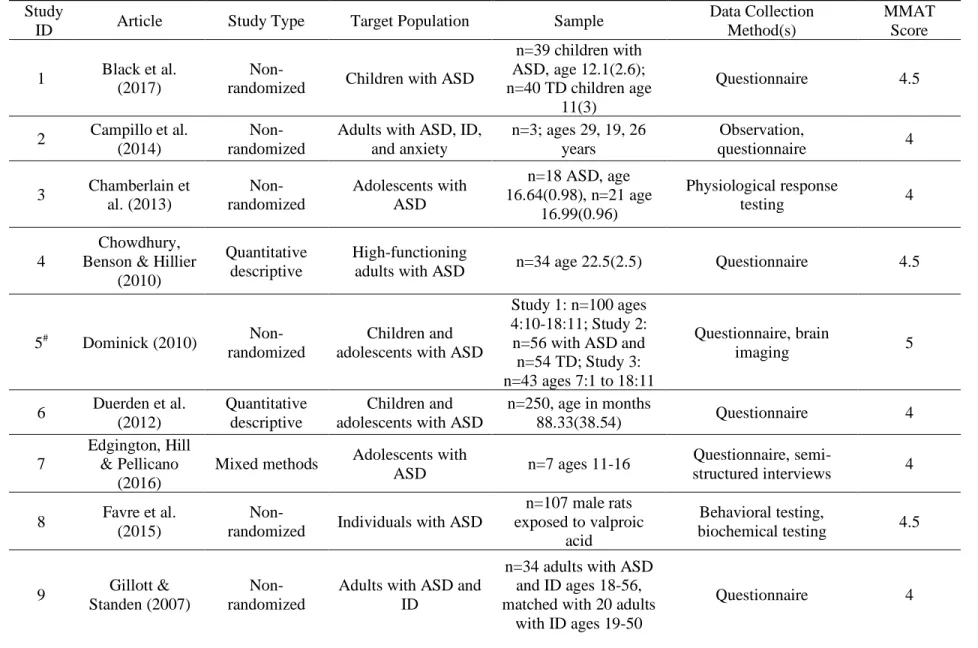
randomized (n=10; two of which were intervention studies), and mixed methods (n=1). None of the studies used a randomized controlled trial design. Scores on the MMAT were averaged across reviewers on a scale of 1 to 5, with 5 being the highest attainable score. Percent agreement was calculated for qualitative studies (93.3%) and quantitative studies (73.3%). All studies met at least four of the five quality criteria for their respective methodology, with seven studies
receiving a score of 5, eight studies receiving a score of 4.5, and seven studies receiving a score of 4. No studies received an average score lower than 4 points. Of the articles that did not receive the highest score, limitations included lack of clarity on the type and validity of the
methodological approach, caregiver-informed ASD diagnosis, over-interpretation of results based on the sample size, and absence of full demographic information.
Structural Relationships among the Constructs of Interest
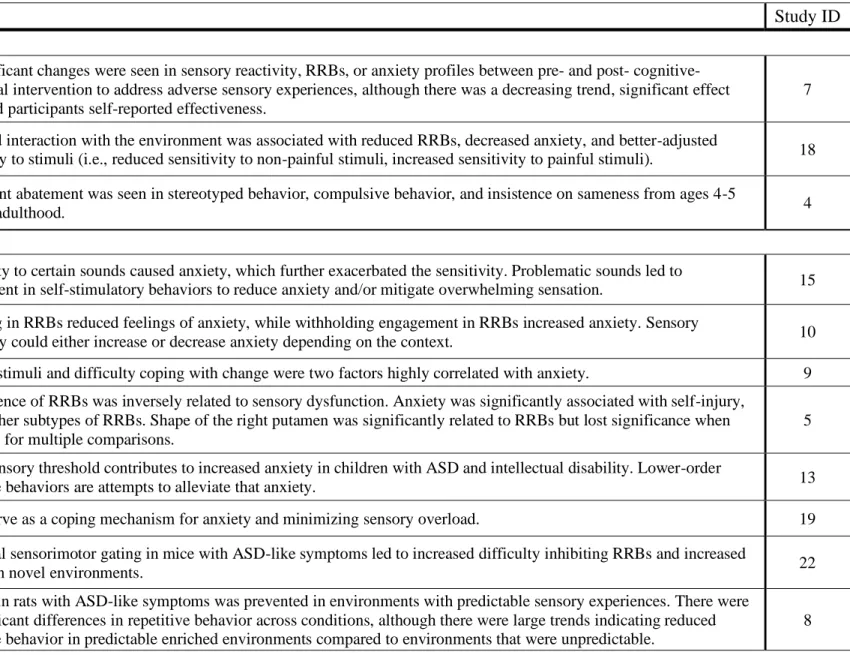
summary of the results of each article according to their structural category is reported in Table 2.3.
Overall Themes
Three overall themes best characterized the factors that influenced the combined
expression of sensory hyperresponsiveness, RRBs, and anxiety across studies. These were: COI function is interwoven with the broader social context, COIs are heavily contingent on the
predictability of environmental factors, and COIs overlap with cognitive and behavioral coping strategies.
COI function is interwoven with the broader social context. Although articles with content explicitly focused on social aspects of ASD were excluded from analysis, the broader social context nevertheless exhibited a strong presence among the studies in this review. The three constructs of interest were not only intra-connected, but their expressions were also a function of the social system of which the individuals with ASD were a part. Dedicating the intense focus and concentration that is needed in social situations reduced the ability to filter out sensory distractions such as background noise, amplifying their degree of intrusion (Ladon, Shepherd, & Lodhi, 2016). The higher demand on information processing via the sensory system required in social encounters often ramped up anxiety that could be reduced through performing repetitive sensory-motor behaviors (Ozsivadjian, Knott, & Magiati, 2012; Shirley, 2018).
modalities, decrease anxiety, and support individuals in their ability to concentrate on social aspects of their environment (Ozsivadjian, Knott, & Magiati, 2012; Shirley, 2018; Smith & Sharp, 2013).
Some individuals also reported performing repetitive motor behaviors in private to avoid experiencing the social stigma attached to them, or not performing them at all out of fear of judgment, increasing anxiety and preventing an important coping mechanism for sensory overstimulation (Ozsivadjian, Knott, & Magiati, 2012). A study investigating specific subtypes of anxiety reported greater socio-communicative anxiety in young adults with ASD compared to those with anxiety but not ASD (Halim, Richdale, & Uljarević, 2018). Conversely, anxiety was reduced when individuals with ASD felt understood by their peers and vice versa. In an
intervention to address adverse sensory experiences, participants responded positively to an increased awareness of how their sensory experiences may differ from those around them. Participants also reported that learning the skills needed to explain this difference to others greatly contributed to their sense of coping efficacy (Edgington, Hill, & Pellicano, 2016). However, it is noteworthy that a study by Black and colleagues (2017) found no evidence for hyperresponsiveness mediating the association between social anxiety and insistence on sameness.
reported a circular effect wherein elevated anxiety combined with increased sensory sensitivity caused certain stimuli to be experienced with even greater intensity, perpetuating discomfort and ramping up anxiety even more in unpredictable environments (Jones, Quigney, & Huws, 2003; Smith & Sharp, 2013). A study by Chamberlain and colleagues (2013) reported a higher level of baseline sensitivity in individuals with ASD and further concluded that, beyond predictability, certain contexts may be experienced as ambiguous because atypical sensory processing disrupts the ability to interpret cause-and-effect between an action on the environment and the sensory feedback received, thus leading to heightened anxiety and increased performance of RRBs. Conversely, animal modelling suggested that prolonged interaction with the environment
resulted in reduced RRBs, decreased anxiety, and a better-adjusted sensory system to painful and non-painful stimuli (Schneider, Turczak, & Przewłocki, 2006).
When anxiety was not present, often in environments that were predictable, sensory experiences and RRBs were engaged in positively, often eliciting fascination and pleasure (Smith & Sharp, 2013). A study by Joosten, Bundy, and Einfeld (2012) investigated behavior in various classroom environments. The researchers concluded that children with ASD exhibited less anxiety and performed repetitive motor behaviors as a result of increased sensory
provided during the context of free play. During transitional periods, the immediate environment became much more chaotic and experiences became less predictable and controllable, at which point RRBs addressed a need to manage anxiety.
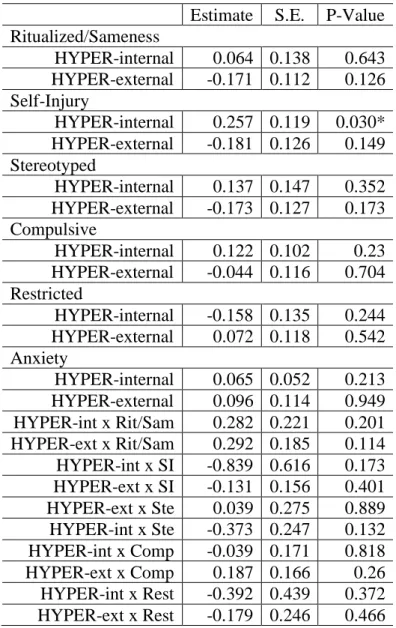
COIs overlap with cognitive and behavioral coping strategies. One of the most pervasive conclusions was the use of RRBs as a coping mechanism to alleviate anxiety as a product of sensory hyperresponsiveness (Gillott & Standen, 2007; Halim, Richdale, & Uljarević, 2018; Joosten & Bundy, 2010; Landon, Shepherd, & Lodhia, 2016; Shirley, 2018). ‘Retreating inward’ and processing only one aspect of sensory stimuli were also described as examples of coping mechanisms to reduce anxiety or make sensory stimuli more enjoyable (Smith & Sharp, 2013). However, a study by Dominick (2010) reported an inconsistency in associations between constructs. Using parent-report questionnaires, there were significant associations between hyperresponsiveness and all categories of RRBs with the exception of self-injury and compulsive behavior. In a separate analysis, anxiety was significantly associated with self-injury and no other category of RRBs.
More specific behavioral strategies referenced Dunn’s model of sensory processing (Dunn, Saiter, & Rinner, 2002), which outlines both passive and active approaches to
Wurzman and colleagues (2015) discussed two possibilities for the use of RRBs as a coping mechanism, either to displace anxiety or as a direct response to sensory overload.
A pilot intervention study implemented by Campillo and colleagues (2014) used the visual sensory modality to make the abstract concept of time more tangible for adults with severe ASD. Investigators used a software tool with bars that decreased in size as time passed until a desired transition. Use of the visual tool corresponded with a decrease in performance of RRBs and concomitant decrease in behavioral signs of anxiety. Similarly, an intervention study by Edgington and colleagues (2016) encouraged participants to ‘draw’ their sensory experiences on paper, which served as an important coping strategy to aid participants in establishing a more concrete understanding of their experiences.
2.4 Discussion
This integrated systematic review aimed to answer the following research question: What factors contribute to the combined expression of sensory hyperresponsiveness, restricted
interests and repetitive behaviors, and anxiety in ASD? Results of the review provide insight into the structural relationships among these three constructs of interest and present certain binding themes that impact their associations.
Structural Relationships
dependent, and mediated. The relative sub-group contained two related articles using the same sample (Joosten, Bundy, & Enfield, 2009; Joosten, 2010). The purpose of the second article was unique in its explicit focus on a certain environmental variable - classroom context. This article investigated how classroom context affected the relationships among the COIs and may be a useful reference for other studies investigating the impact of a specific aspect of the
environment. The threshold-dependent category contained two different qualitative studies (Jones, Quigney, & Huws, 2003; Smith & Sharp, 2013) which both revealed an ongoing dynamic among the COIs ‘in the moment,’ which was not captured in the quantitative literature. Lastly, the mediated sub-group mainly contained studies that used mediational analysis. This allowed for quantitative investigation of the three COIs simultaneously and should be increasingly used moving forward to generate evidence on how these features interrelate with one another.
Implications of the Three Themes
Results revealed a strong social influence in the expression of these constructs
collectively. Certain social conditions either contributed to or assuaged feelings of anxiety for individuals with ASD and influenced the expression of sensory hyperresponsiveness and RRBs. Although deficits in social communication are considered a core feature of ASD and may certainly be detrimental in their own right, results from this study suggested that anxiety surrounding social impairments may, at times, have an even greater impact on individual and family functioning. A sense of being ‘understood’ and feeling ‘allowed’ to engage in the bodily expression of RRBs had the effect of mitigating anxiety and calming sensory overstimulation. Considering these connections may have important therapeutic implications. Supporting
The second theme highlighted the important influence of unpredictability on the expression of all three constructs of interest. This evidence supports the ‘unpredictable world’ hypothesis of ASD (Sinha et al., 2014). This theory states that, in early developmental years, mixed sensory feedback may foster an experience of the world that is very confusing. If the principal concept on which sensory-systems are built - that a particular action on the
environment will elicit a predictable response, is untrustworthy, individuals with ASD are unable to construct a solid foundation of cause and effect between their behavior and the feedback that they are receiving from the environment. This leads to greater susceptibility for
hyperresponsiveness and anxiety, as well as a greater need to engage in RRBs that are more predictable (Gomot & Wicker, 2012).
Considering this theory in light of the greater social functioning system, it may be that lower-order RRBs are the first and natural response to cope with sensory hyperresponsiveness, but that social stigma and fear of judgment lead to reduced engagement in lower-order RRBs. Instead, individuals with ASD turn to more socially acceptable forms of insisting on control in the greater environment. This may also explain why individuals with high-functioning autism who are more socially aware also exhibit greater levels of anxiety (Strang et al., 2012). However, elevated anxiety levels in these individuals may also be a product of increased ability for insight and verbal expression of the anxious experience. A retrospective longitudinal study by
Chowdhury and colleagues (2010) found that the most consistent behaviors over time for high functioning individuals with autism were restricted behaviors and circumscribed interests, whereas stereotyped behavior and repetitive use of objects had the most abatement as children aged. In these individuals, higher-order RRBs may be replacing lower-order RRBs as individuals encounter negative social experiences. Future directions of research should include studying the influence of social awareness of a person with ASD and the social stigma by society on these constructs, as there appears to be a strong social effect driving the expression of RRBs and their subsequent impact on hyperresponsiveness and anxiety.
Variety in the physical environment that is encountered across development may perhaps be one of the most important factors influencing core and co-morbid expression of ASD
symptomatology that warrants future study. There is a significant need to account for