Integrating Diabetes Self-Management into Daily Life: Exploring Process, Habit, and Occupation
Heather Fritz
A dissertation submitted to the faculty of the University of North Carolina at Chapel Hill in partial fulfillment of the requirements for the degree of Doctor of Philosophy in the Department of Allied Health Sciences (Occupational Science).
Chapel Hill 2013
ii © 2013 Heather Fritz
iii ABSTRACT
HEATHER FRITZ: Integrating Diabetes Self-Management into Daily Life: Exploring Process, Habit, and Occupation
(Under the direction of Dr. Brian Boyd)
The incidence of type II diabetes continues to increase worldwide. Individuals diagnosed with diabetes must engage in diabetes self-management (DSM), which
involves developing health promoting behaviors. At issue is that scholars do not yet fully understand the key dynamics that lead to long term engagement in such behaviors. The purpose of this qualitative research study was to explore the process by which low
income women with type II diabetes integrate DSM into daily life, the conditions through which integration occurs, and the role of habit and occupation in the process. The
iv
become a more integrated part of their daily lives. Individuals then continue to modify their habits, change their situations, and develop strategies to further facilitate DSM integration. Once habituated, these components may remain an integrated part of daily life until destabilizing life events necessitate reconfiguration. The integration process is a temporally contiguous process that unfolds through time, and is influenced by
individuals’ past life experiences, habits, and situations. Key findings demonstrate that
v
ACKNOWLEDGEMENTS
I am deeply indebted to the many people who have contributed to the success of this research. I express my deepest gratitude to the ten amazing women who so
vi
TABLE OF CONTENTS
LIST OF TABLE ...x
LIST OF FIGURES ... xi
Chapter I. INTRODUCTION ...1
The Rise of Self-Management ...3
Challenges to Diabetes Self-Management ...4
Occupational Science and DSM ...6
Purpose of the Study ...8
Research Questions ...8
Significance of the Study ...9
Document Overview ...10
Conclusion ...11
II. THEORETICAL FRAMEWORK ...12
Philosophical Foundations ...12
An Overview of the Transactional Perspective ...14
Applying the Transactional Perspective to Diabetes self-management ...17
Transactional Perspective as a Meta Theory for DSM ...19
vii
Summary ...24
III. LITERATURE REVIEW ...26
Situating the Study: Type II Diabetes as a Clinical Problem...26
Overview of Concepts and Recommendations ...28
Limitations of the DSM Literature ...35
Brief Summary of DSM Scholarship ...37
Illness Self-Management Integration ...38
The Contributions of occupational science to DSM and DSM integration ...40
General Summary ...43
IV. METHODS ...46
Study Design ...47
Study Setting, Recruitment, and Informed Consent ...51
Data Collection ...53
Data Collection Procedures ...54
Special and Ethical Considerations ...62
Data Analysis ...65
Grounded Theory ...65
Analysis Procedures ...66
Analysis of SSIs ...66
Analysis of Photographs ...68
TGD Analysis ...70
Integration of Results ...73
viii
The DSM Initial Trajectory ...78
Experiential Histories: three Typographical Groups ...90
Implications of the Typologies ...106
VI. FINDINGS –CONDITIONS THAT INFLUENCE DIABETES SELF MANAGEMENT ...110
Defining and Conceptualizing Diabetes Self-Management ...110
Temporality and Integration ...120
Experience Frame: Habits and Situations ...125
Conclusion ...133
VII. FINDINGS-THE TRANSACTIONAL MODEL OF DIABETES SELF MANAGEMENT ...135
Potentials ...137
Inquiry Loop ...147
Practice ...157
Contingent Integration ...165
Reconfiguration...167
Chapter Summary ...172
VIII. DISCUSSION ...173
Conditions of Integration ...174
Integration: Changing Habits and Situations ...179
Inquiry and Practice ...184
Occupation as Central to Integration ...187
Conclusion and Future Directions ...191
ix
x
LIST OF TABLES Table
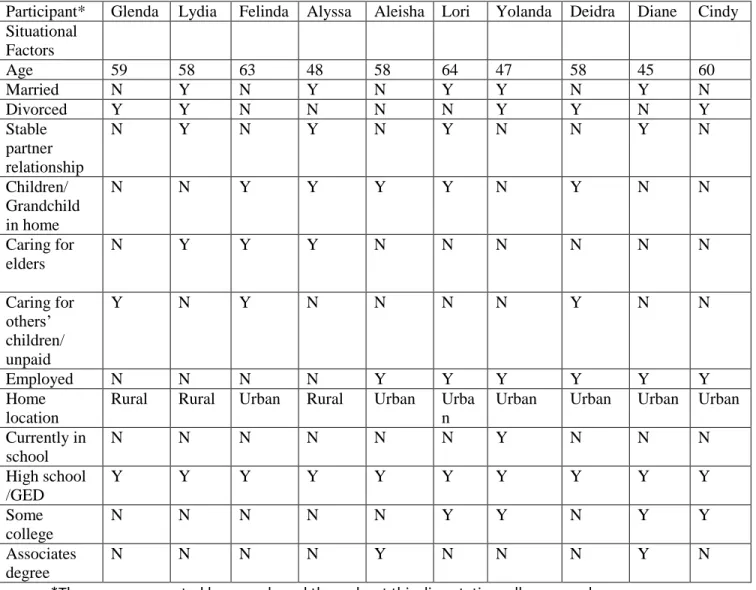
4.1. Participant Demographic Data ...52
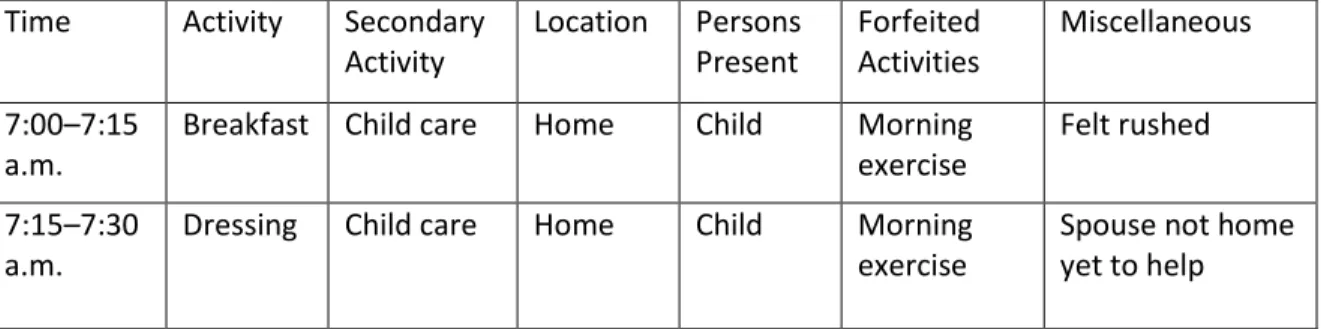
4.2. Sample Time Geographic Diary (TGD) ...60
4.3. TGD Categories and Definitions ...60
4.4. Example: Line by Line Coding ...67
4.5. Example: Focused Coding ...67
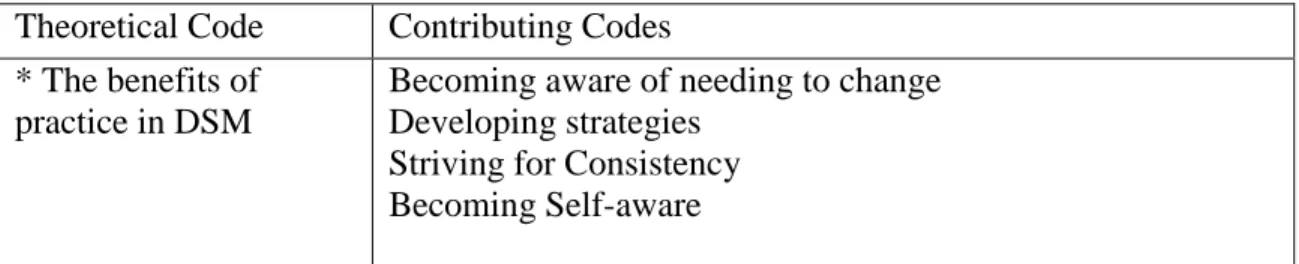
4.6. Example: Theoretical Coding ...68
4.7. Categories of Photographic Content ...70
4.8. Segment of Participant TGD ...71
4.9. Co-Occurring Activities for the Group ...73
4.10. Method-Specific Data Contributions ...75
5.1. Participant Summary: Situational Factors ...80
5.2. Habit Elements and Shared Experiences ...81
6.1. Habit Families……….. ...128
xi
LIST OF FIGURES Figure
4.1 Data Collection Sequence ...53
4.2 Diagram of the Iterative Process ...75
5.1 Participant Photograph: Relationship with Numbers ...88
5.2 Participant Photograph: Mindless Eating...102
5.3 Participant Photograph: Going to the Beach ...105
6.1 Participant Photograph: Exercise at the Park ...117
6.2 Participant Photograph: Old Routine ...118
6.3 Participant Photograph: New Routine ...119
6.4 Participant Photograph: Schedule ...122
6.5 Participant Photograph: Habit ...127
6.6 Participant Photograph: Medical Comorbidity ...129
6.7 Spirituality: A Valued Activity ...132
7.1 The Transactional Model of DSM ...136
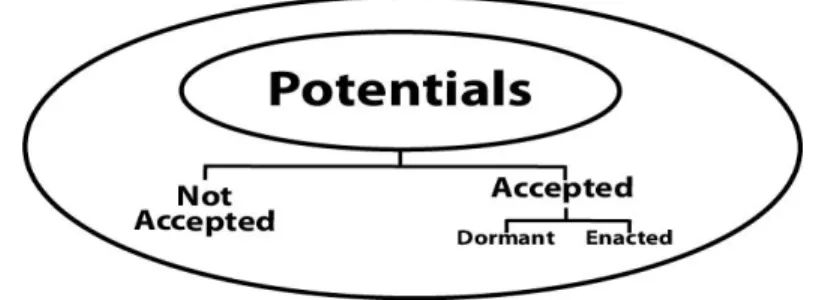
7.2 Potentials……….. ...137
7.3 Participant Photograph: Money is Necessary ...145
7.4 Inquiry Loop………… ...148
7.5 Participant Photograph: The Stay-Bike ...152
7.6 Participant Photograph: Peppers ...155
7.7 Practice………. ...158
7.8 Participant Photograph: Pork chops and Strategies ...162
Chapter One: Introduction
Patricia (or Pat) wasn’t diagnosed with type II diabetes mellitus (T2DM) until her 60s. At that time she was married, the mother of six children, and living in a rural town in the Midwest. In the beginning stages of her diabetes Pat received education about her medications, including what they were for and how she should take them. Pat also was periodically told that she should try to be more active and watch her diet, and she genuinely tried to manage her diabetes. Nevertheless, her habits had solidified and were fiercely resistant to change. In fact, it seemed that all of the habits Pat had developed over the course of her life, including a general disdain for exercise and healthy foods, were in direct conflict with her diabetes management efforts.
Occasionally Pat would make gains in one area of her diabetes management, such as losing a few pounds or eating less sweets, but these changes were often short-lived. To her frustration, Pat’s gains in one area were usually synonymous with neglecting a
different area. Pat was unable to make the multiple changes that were necessary for her to effectively manage her disease, or to sustain those changes for a reasonable length of time. Moreover, neither Pat nor her care providers ever produced a plan for her diabetes self-management (DSM) that would properly address her clinical needs as well as effectively integrate diabetes management into her lifestyle.
As the years went on, Pat’s diabetic condition slowly worsened. Her care
2
medications and by telling her repeatedly that she needed to exercise and eat better. At some point, although no one could seem to pinpoint exactly when, Pat crossed the threshold of what her body could take. Her years of poorly controlled diabetes led to peripheral neuropathy, fatigue, weight gain, and cognitive deficits. It was clear that Pat needed to make drastic changes. Unfortunately, Pat was now in her mid-70s: she was elderly, set in her ways, and, despite her efforts, was unable to make the much-needed changes that could have prolonged her life. Pat’s family struggled to find ways to help
her manage her diabetes. They tried to get her more information, although the resources they found were often confusing or seemed irrelevant to someone in such a progressed state. Pat’s family also tried to get her services such as home health care, and even
purchased adaptive equipment for her.
At times their frustration turned to blame. There was never any question about the love and devotion that Pat’s family felt for her. Still, they fluctuated between
understanding how hard it is to manage diabetes (and how ill-prepared they were to help her), and accusing her of being “lazy” and “unmotivated” to change.
Pat was my grandmother. During the last 15 years of her life, with little success, she struggled to incorporate DSM into her lifestyle. While she lived, my family and I also struggled to understand why her disease was so difficult to manage. That struggle did not stop for us in 2011, when Pat became one more of the more than 200,000 people who die every year in the United States from diabetic complications (CDC, 2011).
Unfortunately, Pat’s case is not unique. Individuals worldwide continue to
develop diabetes at ever-increasing rates. Currently, 25.8 million people just in the
3
could have diabetes by 2050. Although medical and pharmaceutical advances have allowed more individuals to live longer with the disease, these seeming improvements have contributed to a considerable public health dilemma as a significant population cohort faces the lifelong task of DSM.
Diabetes has long been the purview of clinical and biomedical sciences, which have pursued pharmaceutical approaches to controlling it. As a subject of academic inquiry, however, DSM represents a progression in scientific inquiry that extends beyond biomedical and pharmaceutical research to include psychological, educational, and socio-cultural influences on the disease process. DSM is therefore as much a clinical necessity as it is a socio-cultural phenomenon. The rampant progression of diabetes in the U.S., and around the world, has been linked to lifestyle changes associated with modernity (until the latter part of the twentieth century) and now with globalization. Lifestyle and socio-cultural issues such as poverty, poor diet, obesity, lack of exercise, public policy, and perceptions of morality all shape what we call DSM.
The Rise of Self-Management
The term “self-management” is not the exclusive property of any particular
4
In a similar vein, DSM can be thought of as the day-to-day tasks that individuals must perform to adequately manage their diabetes and associated risks. Under the DSM paradigm, patients are responsible for the daily management of their illness. This change in assignment of responsibility is a result of changes in the patient/provider relationship that gained momentum in the last quarter of the twentieth century (Lorig & Holman, 2003). Traditionally, the patient/provider relationship was characterized as largely prescriptive, with a physician (or, later, a primary care provider) directing patient care. Scholars eventually began to critique this relationship, especially with regard to issues of power; terms such as compliance gave way to more patient-oriented terms of adherence and concordance (Horne, 2006). The concept of self-management is commonly used to depict a more collaborative relationship and the responsibility and control possessed by individuals, rather than medical care providers, over their daily disease management.
Challenges to Diabetes Self- Management
5
early morbidity and mortality from the disease, and resource restrictions that make it difficult to engage in DSM (CDC, 2011; Narayan, Boyle, Thompson, Sorensen, & Williamson, 2003).
Age can also further complicate DSM. Traditionally, individuals aged 65 and older have carried the bulk of diabetes diagnosis; however, the demographic composition of the population with T2DM is shifting. Current estimates show individuals aged 40–64 will experience the largest increase in new diabetes diagnoses compared to both pediatric and elderly populations (CDC, 2011). Individuals in this age group must engage in DSM while balancing competing responsibilities typical for their life stage (e.g., working, caring for children or aging parents, and preparing for retirement). DSM, already a challenging endeavor, can be further complicated by social and economic factors.
Scholars have recognized the difficulties associated with DSM and have worked to further understand how to better facilitate it. Interventionists have used these
understandings to develop programs to provide the knowledge, skills, and abilities necessary for engagement in DSM (Newman, Steed, & Mulligan, 2004). DSM
scholarship demonstrates that although individuals may be able to initiate changes, they struggle to sustain them long-term (Norris, Lau, Smith, Schmid, & Engelau, 2002). Further exploration of the DSM literature reveals that cognitive and psychological means of affecting behavior changes are the most commonly used, whereas contextual
6
Ockene, & Pronk, 2004). Such research is especially important for people who must engage in DSM for the rest of their lives.
Occupational Science and DSM
Scholars in the occupational therapy and science field have also sought to understand the DSM process more clearly, in order to assist their clients. Unfortunately, at the time of this study only a small body of occupational science/therapy scholarship was focused on DSM. Nonetheless, in 2011 the American Occupational Therapy
Association (AOTA) produced a fact sheet for practitioners and consumers that described the role of occupational therapists in DSM that included seven recommendations for how occupational therapists can assist clients with DSM:
1. Promote healthy food choices and safe cooking methods.
2. Instruct in safe and appropriate ways to incorporate exercise and physical activity into daily routines.
3. Provide techniques to organize and track medications.
4. Instruct in the use of low-vision and nonvisual devices to draw up and measure insulin.
5. Instruct and provide strategies to successfully use a talking blood glucose monitor or use any blood glucose monitor one-handed.
6. Incorporate protective techniques and compensate for peripheral sensory loss in activities that involve exposure to heat, cold, and sharp objects.
7. Educate in techniques to structure time and simplify activities to cope with depression such as breaking down dietary changes and an exercise program into manageable steps and incorporating them into present daily routines.
7
of Diabetes Educators’ (AADE) list of seven core behaviors that I questioned the unique
contribution of occupational therapy to DSM. After all, with the exception of the fourth and sixth points, nurses, nutritionists, pharmacists, physicians, and physical therapists have been addressing most of these issues for decades and even longer. As I further considered the list, I struggled with identifying the real role of occupational scientists and therapists for individuals with diabetes (aside from addressing sensory and visual deficits and post-amputation care).
Eventually, I began to contemplate the role of occupation in a complex process such as DSM. This dissertation, and the research study that preceded it, are the products of this contemplation. They are the results of the convergence of my own interest, personal history, and professional life.
Of course the fact sheet was written for therapists, not occupational scientists. AOTA’s adoption of the AADE’s guidelines meets therapists’ need for clear-cut,
evidenced-based clinical guidelines for their interventions. Although not all therapists and scientists agree on the nature of this relationship (Atwal, Morley, & Spiliotopoulou, 2011), the originators of occupational science envisioned a functional relationship between therapy and science (Hocking, Wright-St. Clair, 2011; Yerxa et al., 1990). Occupational scientists would, in theory, develop a body of scholarship about occupation, and therapists could use these understandings of occupation to better facilitate their clients’ occupational engagement. Because so few occupational scientists have explored
8
occupational science perspective to the problem of DSM? In turn, that question provided the impetus for this study.
The Purpose of the Study
Issues with DSM are complex. They exist and persist because of the dynamic and inextricable transactions of the people, socio-cultural environments, institutions, and systems that make up everyday existence. DSM, a process undertaken by the individual, has consequences for the individual, the medical community, and society at large.
Facilitating adults’ long-term engagement in DSM activities requires an understanding of how individuals with T2DM integrate DSM into their daily lives. In other words, it requires an understanding of the processes that lead to habit development. The ability of scholars to understand this process is limited by the overuse of
psychological and cognitive theories of health behavior that minimize contextual influences on the DSM integration process. Much theorizing that supports
self-management research applies a reductionist perspective that excludes the dynamism and complexity which are at the heart of DSM. The purpose of this study was to understand both the process by which low-income individuals with T2DM integrate DSM into daily life and the conditions that influence this process.
Research Questions
1) What is the process by which individuals with T2DM integrate DSM into daily life?
The purpose of Question One was to explore the key dynamics of the DSM
9
in the integration process, in order to understand how established habits interface with situational features to facilitate or inhibit DSM, how habits change over time in the context of becoming more experienced with managing T2DM, and what the key situational features are that facilitate these changes.
2) What are the key temporal, spatial, and social conditions that affect DSM in this population?
The purposeof Question Two was to understand how time, space, and social spheres influence the DSM integration process. Specifically, I think it is important to understand the distribution of DSM efforts across these factors, and how they influence the DSM process.
Significance of the Study
This dissertation details a multiple-methods study of how middle-aged, low- income women with T2DM have, successfully and unsuccessfully, integrated aspects of DSM into their daily lives. This exposition illustrates the role of habits and occupation in the DSM process. In fact, as the account unfolds, it becomes apparent that this work is as much a narrative of daily life management as of DSM. It is an account of women with diabetes and the daily situations through which they attempt to engage in DSM, including the challenges, opportunities, and strategies that are inherent in this process. This study was guided by the transactional perspective, which influenced both how I designed and implemented it as well as my analysis and presentation of its findings.
10
engagement as an effective means to growth and development that result in the ability of T2DM patients to integrate DSM into daily life across ever-changing contexts.
Document Overview
In Chapter Two I present the transactional perspective (Dickie, Cutchin, & Humphry, 2006) and explicate its influence on the study through informing my worldview and orientation to the problem. In Chapter Three I provide a review of the literature, with a particular focus on diabetes as a clinical problem addressed through DSM, limitations in the current DSM paradigm, and ways that scholars can advance our understanding of DSM integration. Chapter Four contains an outline of the multiple methods used in the study of 10 low-income women diagnosed with T2DM. Per the University of North Carolina’s Institutional Review Board, I use pseudonyms for participants’ names to protect their confidentiality.
In chapters Five through Seven I present the findings from the study, including the transactional model of DSM that depicts the theorized process of DSM. The
presentation of findings begins in Chapter Five with a discussion of the three experiential histories that emerged from the data that illustrate (a) the similarities and differences in the participants’ experiential histories, and (b) how these influenced, and manifested in,
11
Chapter Eight, I situate the relevance of these findings within existing DSM scholarship and the field of occupational science.
Conclusion
DSM is shared intellectual property that is influenced and investigated by a variety of disciplines that seek to understand and eventually resolve its challenges. For those in the medical and pharmaceutical sciences, progress on the biomedical frontier brings a cure for diabetes ever closer. Scholars with a social sciences orientation seek to understand how people’s actions, and the reasons for their actions, can shape the
development and management of diabetes. For those in fields such as occupational science, that are uniquely positioned between the biomedical establishment and the social sciences, with this dissertation I seek to contribute a unique understanding of the DSM phenomenon and process in the hopes of ameliorating its negative effects on human health. Ideas about treatment and cure evolve alongside stories of meaning and
experience, both of which are required if life is to improve for people who struggle with DSM.
This study represents one step in the development of an occupational science perspective on DSM. As such, its findings provide insights about key dynamics in the integration process as well as suggestions for additional lines of inquiry. This study is significant in that it illustrates the utility of the transactional perspective for
understanding complex health behavior processes. This study also provides insights into why DSM integration is such a difficult, time-consuming process. Perhaps most
Chapter Two: Theoretical Framework
The notion that theory should not only serve science but be evaluated by how it makes a difference in the real world is the main concern of the philosophical tradition called pragmatism (Cutchin & Dickie, 2013b, p. 23).
The Transactional Perspective
The issues surrounding the process of DSM integration are complex and varied. The transactional perspective influences my worldview and how I think about the problem of DSM integration. Therefore, the focus of this chapter is to provide an overview of the transactional perspective. The chapter begins by explaining the
transactional perspective, via a genealogical approach that begins with the philosophical tradition of American pragmatism, specifically, the works of John Dewey (1941, 1957, 1960), and then discusses the application of the transactional perspective in the discipline of occupational science. The chapter concludes with an outline of the core conceptual pillars of the transactional perspective that served as “sensitizing concepts”1
(Bowen, 2006) throughout the design, data collection, and analysis in the study.
Philosophical Foundation
The philosophical tradition known as pragmatism dates back to the 1870s and is associated with the formation in 1872 of the Metaphysical Club in Cambridge,
1
13
Massachusetts. Its genealogy continues with the teachings of notable American
pragmatists Charles Sanders Peirce and William James at Harvard University in the late 1890s and early 1900s. Building on the work of Peirce and James, George Mead
extended pragmatist ideas and served as one of the key originators of symbolic interactionism2 (Hickman, 1998). From 1984 to 1904, Mead and John Dewey would work together at the Chicago School of Pragmatism, which Dewey founded during his 10-year tenure at the University of Chicago; in 1905 he would direct another pragmatism center at Columbia University. Dewey was and remains known as the premier American pragmatist philosopher (Hickman, 1998). His esteemed position within the history of American pragmatism stems from his substantial corpus of work, in which he addressed a variety of philosophical issues including, but not limited to, education, democracy,
experience, and inquiry (Shook, n.d.).
Dewey’s refinement of the tradition of pragmatism is the philosophical foundation
for the study. In its most general sense, pragmatism views theorizing as an innate and necessary part of everyday life. Theory and practice are not separate entities within this philosophy but instead are the means by which individuals make sense of and function in a changing world (Hickman, 1998). The transactional perspective, a theoretical
perspective founded on Dewey’s pragmatist writings, views action as integral to and
assimilated within person-environment relationships (Cutchin & Dickie, 2013b).
2
14 An Overview of the Transactional Perspective
The transactional perspective is a relational theory; at the heart of a transaction lies the functional relationship of person and world (Garrison, 2001). The term
“transaction” denotes that individuals do not simply interact with their environments but
rather transact throughthem. As framed by the transactional perspective, experience is temporally situated and evolving because people exist in a world that is constantly shifting. Because humans exist in an inherently uncertain and changing world, they must constantly engage in dynamic person-environment transactions that are functionally coordinated and re-coordinated, often with the intent of maximizing well-being (Cutchin, 2007). For example, an individual with T2DM may know that he or she needs to reduce carbohydrate intake; however, such people may have to negotiate a range of situational aspects such as the availability of funds to purchase fresh foods, existing knowledge of carbohydrate exchanges, availability of appropriate options at local groceries, and skills to prepare these foods in order to reduce their carbohydrate intake.
The relational focus of the transactional perspective accounts for the existence of individuals within a shared socio-cultural context that shapes them and to which they contribute (Campbell, 1995). As individuals exist within families, communities, and societies, they come to embody aspects of all these contexts. Because of the
co-constitutive nature of their development, in many ways individuals can be thought of as embodied communities (Aldrich & Cutchin, 2013, p. 16). Viewing individuals as
15
understanding of how “situatedness” affects health behavior and health management.
Humans are situated in particular environments that shape their individual and collective habits, for better or for worse, and these situationally influenced habits are enacted in the process of DSM.
The perspective presented by many popular theories of health behavior commonly used in DSM research is rather different. Perhaps the most commonly used approach, social cognitive theory (Bandura, 1997), emphasizes that individuals develop through interacting with their environments. Although Bandura did use the term “transaction”in
his 1997 text, The Exercise of Control, its meaning differs from the one assigned to it within the transactional perspective. A thorough reading reveals that although Bandura used the term, he believed that humans develop a sense of self-efficacy through acting on (i.e., manipulating) the environment. For example, humans act upon an object (e.g., when an infant pushes a ball) and then respond to the consequences of such actions; one
response is the inference that they have the power to manipulate their environment. By contrast, the transactional perspective goes beyond a simple back-and-forth scenario in which humans either act on or react to the environment. Its focus instead is the organism-in-environment relationship; specifically, how humans act through their environments to coordinate and re-coordinate this relationship. Thus, the emphasis is less on human dominance of contexts than on human coordination with environments. This difference in perspective is significant because it impacts how scholars and researchers view the problem of DSM and how they approach solutions to it. Focusing on
16
problematic when scholars ignore or marginalize the contextual influences that drive health management.
The transactional perspective in occupational science.Scholars of
occupational science have utilized the transactional perspective, which allows them to understand the complexity of human occupational engagement while avoiding the restrictions imposed by dualistic and individual-focused theories of action and behavior (Cutchin & Dickie, 2013b). The introduction and uptake of the transactional perspective in occupational science reflects the field’s maturation in terms of how its central feature,
occupation, is theorized and conceptualized.
The founders of occupational science first conceived of occupation in terms of its meaning for individuals as they experience it (Yerxa et al., 1990). Because the analytical focus was placed upon the individual, the personal experience of engaging in occupation was privileged above not only the occupation itself but also the myriad of social and contextual influences that shape occupational engagement. As the discipline advanced, scholars such as Hocking (2000) began to encourage occupational scientists to study occupations in and of themselves rather than continuing to focus solely on individual experiences of them. Humphry’s article, “Model of processes transforming occupations:
17
based upon the work of John Dewey, offered an alternative framing of experience as relational, co-constructed, and influenced by larger socio-cultural, situational contexts. Thus it was also a more holistic framework than the discipline had previously used.
As occupational science has continued to change within the contexts of
globalization and multiculturalism, scholars have become more interested in applying the concept of occupations at the community and population levels to issues caused or aggravated by the forces of neoliberalism, globalization, structural violence, and social inequities (Frank, 2011). Scholars have also begun to question core assumptions surrounding the discipline’s central concepts; these include issues of taxonomy, the
privileging of Western perspectives on occupation, and the discourse surrounding
occupational possibilities (Hammell, 2009; Jonsson, 2008; Kantartzis & Molineuz, 2010; Rudman et al., 2008). These developments within the discipline challenged scholars to (a) reflect on existing conceptions of occupation; (b) create avenues for occupational scientists to extend their inquiries to larger social problems; and (c) incorporate additional populations and areas of study that had previously been overlooked. Diabetes, and how individuals attempt to manage their diabetes, is one such overlooked area. Until recently, it has not been a focus for occupational scientists.
Applying the Transactional Perspective to Diabetes Self-Management
Diabetes self-management (DSM) is most often identified as the “process of facilitating the knowledge, skills, and ability necessary for diabetes self-care” (Funnell et al., 2012). This process requires particular skills and abilities; is embedded in the
18
determining barriers and facilitators and how to empower individuals to overcome them. As previously noted, psychological and educational theories––e.g., social cognitive theory (Bandura, 1988), the health belief model (Janz & Becker, 1984), and the trans-theoretical model (Prochaska & DiClemente, 1983)––have often provided the
frameworks for these studies (Jeffery, 2004; Newman, Steed, & Mulligan, 2004; Painter, Borba, Hynes, Mays, Glanz, 2008). To date, scholarship that utilizes psychological constructs such as self-efficacy has been useful in facilitating individuals’ engagement in certain DSM activities; however, these studies show that results typically wane after approximately six months (Norris, Lau, Smith, Schmid, & Engelgau, 2002). In order to advance DSM scholarship, scholars must develop programs and interventions that produce sustainable results, a goal that may require a deeper understanding of how individuals integrate DSM into daily life.
Understanding the integration process requires moving beyond the individual and incorporating the features of daily life that influence DSM. Although some scholars have begun to call for an expanded focus within DSM research, few have seriously explored the situational context that influences the day-to-day processes of DSM. Because the transactional perspective can be used to understand DSM in a way that is more holistic and congruent with the dynamism of daily experience, it was utilized for the
conceptualization and design of this study. Here, the transactional perspective includes the individual’s experience of DSM integration and also goes beyond the individual to
19
Transactional Perspective as a Meta-theory for DSM
Cutchin and Dickie (2013a) indirectly suggested the fit of the transactional perspective for problems such as DSM. The transactional perspective provides an appropriate meta-theoretical orientation because, first of all, it rejects the traditional dualisms of person/environment or subject/object that have limited the inclusion and understanding of contextual factors on DSM. Pragmatists have argued that other
theoretical traditions, such as subjective/objective or inner/outer, have also created false dualisms as well as the illusion that humans are essentially independent of their
environments. The transactional perspective, by contrast, focuses on the wholeness of everyday experience; it does not depend upon the extraction of individuals from the environment that they develop in and depend upon. In other words, the transactional perspective includes the individual as a necessary, integrated component of an
experiential whole (Dickie, & Cutchin, 2013a). This view of humans as organism(s) in the environment emphasizes that throughout their lives, humans must engage in
coordination with an unstable world (Aldrich & Cutchin, 2013).
The transactional perspective provides a frame through which to understand the DSM integration process in a way that is more holistic and congruent with this
dynamism. In essence, the transactional perspective was chosen as the meta-theory for this study because it is broad enough to handle the complexity of DSM, which exists because of the dynamic, inextricable transactions among persons and the socio-cultural environments, institutions, and systems that influence their everyday existence. Key concepts of the transactional perspective (e.g., habit and situation) were used as
20
Sensitizing concepts supply people with “a general sense of reference and
guidance in approaching empirical instances” (Blumer, 1954 in Bowen, 2006). In other words, sensitizing concepts suggest initial directions for inquiry and analysis without dictating or confining analytical directions. The following key conceptual pillars of the transactional perspective were incorporated as sensitizing concepts within the study: habit, situation,and occupation.Sensitizing concepts are also congruent with the grounded theory approach that was used to guide data collection and analysis for the study.
Key Sensitizing Concepts
Habit. In HumanNature and Conduct, John Dewey (1922/1957) defined habit as “an acquired predisposition to ways or modes of response” (p. 45), meaning that habits
are more than routines, regularly repeated actions, tics, or addictions (Clark, Sanders, Carlson, Blanche, & Jackson, 2007). Habits do not arise from and exist solely inside of an individual; rather, habits are acquired over a lifetime from transacting with the social and material world as a result of associated living (i.e., living as social beings in a shared culture).3 Thus, habits reflect the mental and physical ways that people incorporate their environments. Society, as part of the environment, is both “a source and function of habit” (Aldrich & Cutchin, 2013, p. 16). Through the process of living, individuals develop personal habits of being in the world, acquiring “heritable interpretive structures
such as symbol systems, stories, beliefs, myths, metaphors, virtues, gestures, prejudices, and the like” (Fesmire, 2003, p. 10). In other words, tendencies, virtues, and ideas (e.g.,
valuing hard work, prioritizing family over self, or particular food preferences) that we
3
21
believe to be our own creation are largely products of our enmeshment in a socio-cultural matrix. Although we may believe that we are acting independently, “we act based in a large part on predispositions we may not even be aware of, often evaluating
consequences based on if they seem congruent with our experience of how the world should or should not be” (Fritz, 2012). In short, as Garrison (2002) notes, our culture has
us before we have it. Our beliefs, traditions, and perspectives, which we may believe originate within us, are instead derived from and bound up with the communities we inhabit. Habits are both products of our enmeshment within our socio-cultural matrix and the tools that we have at our disposal to coordinate with it.
Human action, however, is not simply the application of one habit at a time, in stepwise fashion, in response to a situation. Instead, habits function as transactions in relation to the environment and each habit contributes to the total configuration, in turn, the configuration reciprocally affects the functioning of any particular habit
(Kestenbaum, 1977). In the context of DSM, different habit configurations may be at play as individuals engage in physical activity versus when they administer their insulin. More specifically, the context of a fitness center may channel the manifestation of different habits than the context of one’s home.
Situation. If habits are the social tools at our disposal for coordinating person-world transactions, situations are the contexts in which such transactions occur.
Situations comprise the specific materials and qualitative contexts through which specific experiences occur; they are “both familiar to us and pregnant with possibilities and
uncertainty, through which we reflect and act to gain knowledge” (Cutchin, 2004, p. 305).
22
perpetually shifting nature of everyday life creates situations in which people must coordinate with their environment to maintain some degree of stability. Dewey (1938/1960) referred to the challenges that life situations present people on a regular basis as “problematic” or “indeterminate” situations (p. 218). His application of these
terms did not convey negative judgment, but rather a description of reality: some situations are equivocal and need to be brought to determinacy.
Problematic situations are most evident to us when “change occurs and individual
or social habits of thought and behavior prove to be inadequate or ineffective” (Dickie & Cutchin, 2013b, p. 424). Habits and situations are intricately linked in that habits exist and persist because situational qualities support them. For example, within the United States, individuals develop differing habits of language within environments that sustain them and support their use. A disjuncture in the relational whole occurs when a change in the qualities of a situation renders existing habits ineffective. The resultant problematic situation must then be re-coordinated to re-stabilize it with influences “that may or may not have benefit for others or the environment” (Dickie & Cutchin, 2013a). The outcome
of this re-coordination is dependent on how habits and situational features interface. For an individual diagnosed with diabetes, existing habits may prove ineffective in
coordinating this new situation (i.e., being a “person who must manage diabetes”);
23
Occupation. Occupations are defined as all the things we do in the course of daily life that attract our attention and take up our time, energies, and minds (Cutchin & Dickie, 2013b). The transactional perspective emphasizes the importance of occupation as a means of coordinating person-environment transactions and thereby bringing problematic situations to determinacy. Occupations provide the means for such
coordination because they provide opportunities for individuals “to balance intellectual and practical phases of experience” (Aldrich & Cutchin, 2013, p. 20). In other words,
through occupational engagement individuals have experiences. As individuals repeatedly appraise their accruing experiences, they make determinations about the meaning of their engagements and how to better engage next time. In this way, the process of subsequent engagements can lead not only to a person’s growth and
development within his or her environment but also to changes within the environment itself.
The meaning that individuals glean from their occupational engagement is
situated, meaning that it is derived from the outcome of the current occupation while also being associated with past experiences. The evaluation of prior experiences contributes to what Dewey (1941) termed “warranted assertability” (p. 170). Warranted refers to a prior
24
In reference to DSM, it is through engagement with it that facts (e.g., the
recommended number of minutes of physical activity, the optimum blood glucose range, etc.) are placed in daily contexts that give them meaning. For example, being told to participate in 30 minutes of moderate physical activity five times each week can be seen as a “fact.” However, it is the sore muscles, fatigue, exhilaration, frustration, or other
things that individuals experience as they actually engage in 30 minutes of moderate physical activity that give meaning to this “fact.” Over time, this meaning may change
with repeated engagements as individuals grow and develop their ability to participate in the occupation of managing DSM.
Summary
The purpose of this study was to understand the process by which individuals with T2DM integrate DSM into daily life and the conditions under which this integration occurs. The transactional perspective offers an alternative way of understanding DSM integration because the individual engaging in DSM is considered to be part of a larger relational whole. In turn, this relational whole is a functional unit, parts of which flexes and shift from time to time, and must therefore be coordinated and re-coordinated. The holistic and relational orientation of the transactional perspective is more useful than other theories that have been applied to DSM because it emphasizes the fact that
25
Chapter 3: Literature Review
The predominance of type II diabetes mellitus (T2DM) in the United States situates this research study as both timely and relevant. As discussed in Chapter 1, the magnitude of the T2DM problem is compelling researchers to not only search for a cure but also to determine the best practices for individual management. Despite the necessity of practicing diabetes self-management (DSM; i.e., the constellation of behaviors that individuals engage in in order to achieve better diabetes outcomes), individuals struggle to appropriately perform it. Therefore, this review begins by situating the need for DSM scholarship as a result of the growing diabetes epidemic and the difficulties individuals have with engaging in DSM. Next is a discussion of how DSM has been conceptualized and how diabetes education and interventions have been used to improve DSM outcomes. This exposition is followed by a discussion of the limitations of the existing DSM
paradigm, including the inability of existing health education and interventions to produce and maintain positive behavioral changes in the long term. After a discussion of three pathways that scholars could take to advance the DSM scholarship, the chapter ends with a summary and discussion of key points including how the study could advance the DSM scholarship.
Situating the Study: Type II Diabetes as a Clinical Problem
27
broken down into sugar, which is transported to the body’s cells for use as fuel. Insulin is
essential for this transport. Most people with T2DM are initially able to produce sufficient insulin but their bodies are unable to use it effectively, a condition known as insulin resistance. When sugars cannot be transported into cells for use, they remain, undigested, in the bloodstream, where they cannot be efficiently used as fuel. The
resultant sugar build-up then causes a myriad of micro and macro vascular complications. For this reason it is vitally important for individuals with T2DM to maintain control of their blood glucose levels (BGL).
28
For individuals with T2DM, the potential for complications is high. Fortunately, many risk factors associated with the disease can be reduced or eliminated through a combination of medical management and lifestyle changes. Medical management includes taking oral hypoglycemic agents and insulin in order to maintain appropriate blood glucose levels (Cramer, 2004). Lifestyle changes typically focus on changing a person’s habits and behaviors to become more health-promoting. Several studies have
demonstrated the benefits of lifestyle changes. In particular, the 2008 Diabetes
Prevention Program study (DPP) was paramount in establishing that “lifestyle changes”, modest weight loss achieved through exercise, and dietary changes resulted in improved BGL management. The DPP stands out because it was a large, multicenter study. Other studies, such as the Diabetes Control and Complications Trial (1993) and the Stockholm Diabetes Intervention (Reichard, Nilsson, & Rosenqvist, 1993) have also shown that lifestyle changes can have a substantial impact on diabetes management.
Overview of Concepts and Recommendations
Individuals diagnosed with T2DM must engage in DSM to reduce their risk of early morbidity and mortality. The following section provides an overview of how self-management has been conceptualized both across chronic conditions, and explicitly within the DSM scholarship. More specifically, the section includes a brief overview of the development of the seven core behaviors as the foundation of DSM; a foundation that influences the focus of many DSM education and interventions.
Concept and education. Individuals with T2DM engage in a variety of behaviors to reduce their risks of acute and chronic complications. The term “self-management” is
29
control symptoms, use medical information, and reduce the intrusion of the disease into their daily lives (Burrows-Hudson, Curtin, Mapes, & Schatell, 2005). Although the specific tasks and skills needed for self-management vary by condition, there are
commonalities of self-management; these include the need to use medications effectively, understand and take appropriate actions in response to symptoms, and deal with the psychological consequences of the illness (Strauss et al., 1984; Lorig & Holman, 2003; Wagner, Austin, Davis, Hindmarsh, Schaefer, & Bonomi, 2001).
For individuals diagnosed with T2DM, DSM is the dominant medical paradigm for addressing the combination of medical and lifestyle recommendations that they are advised to follow in order to optimally manage their diabetes (Funnell et al., 2011). The most widely accepted and commonly used conceptualization of DSM comes from the American Association of Diabetes Educators (AADE), which has produced the 7 Self-Care Behaviors™ program. These core behaviors, which are considered to be the
foundation of successful DSM, include “healthy eating, being active, monitoring, taking medication, problem solving, healthy coping, and reducing risks” (Mulcahy et al., 2003). The program is based upon the 1995 National Standards for Diabetes Self-Management Education (Peeples, Tomky, Mulcahy, Peyrot, & Siminerio, 2007), which provided empirical evidence about the activities that most strongly impacted metabolic control.
Along with establishing the seven foundational behaviors of DSM, the AADE has put forth recommendations for researchers about corresponding clinical outcomes
30
intermediate outcomes include clinical measures such as A1C,4 lipids, and weight; and long-term outcomes include measures of improved health status such as cost,
productivity, and quality of life.
Engagement in diabetes self-management. Engagement in the seven core behaviors represents an intermediate-level outcome (Mulcahy et al., 2003). The education that individuals receive after being diagnosed with T2DM focuses on facilitating the knowledge, skills, and abilities necessary to achieve this outcome (Funnell et al., 2011).It is challenging to engage in DSM. Scholars note that approximately 50–80% of diagnosed individuals lack the appropriate knowledge, skills, and abilities to manage the disease (Norris, Lau, Smith, Schmid, & Engelgau, 2002). Additionally, rough estimates of adherence to DSM activities have substantiated that the majority of individuals struggle in least one area of their DSM. The American Association of Clinical Endocrinologists survey of more than 157,000 individuals with T2DM found that more than 65% of them failed to maintain safe glucose levels (State of Diabetes Health, n.d.). Leeman (2006) reported that as few as 44% of individuals actually achieve their DSM goals.
Moreover, the literature demonstrates that making necessary changes is even more problematic for certain groups. In particular social and economic factors, such as race, income, education levels, and gender shape an individual’s approach to daily
engagement in DSM. For example, racial or ethnic minority status is associated with increased risk of diabetes diagnosis, while minority status, having less education, lower incomes, and being female are associated with higher rates of suboptimal DSM outcomes
4
31
(CDC, 2011; Narayam, Boyle, Thompson, Sorensen, & Williamson, 2003). The literature suggests that low SES and less education influence suboptimal outcomes in several ways. First, having fewer financial resources restricts individuals’ access to quality primary
care, necessary medications, and at times, healthy foods (Agency for Healthcare Research and Quality, 2004). Meanwhile, having less formal education can affect people’s abilities to use health related information which is essential for DSM (Agency for Healthcare Research and Quality, 2004). Furthermore, low income and less educated minority women often act as surrogate caregivers for grandchildren while also caring for elderly family members. These women, (often referred to as the sandwich generation) may experience further restrictions on time, energy, and resources available to balance both the competing demands of the caretaker role and performing their own health
management (Riley, 2005).
DSM scholarship has contributed to an evidenced-based framework for
assessment, intervention, and outcome measurement of the behaviors most significantly linked to successful metabolic control. However, despite having specified framework individuals continue to struggle with modifying their lifestyles to accommodate changes across multiple behaviors. The literature therefore suggests, that continued research needs to be done to explore how people eventually accommodate a myriad of health promoting behaviors into daily life. It also suggests that the complex circumstances of low income, less formally educated minority women, further complicate DSM efforts; and therefore warrant added examination of how DSM unfolds in more vulnerable populations.
32
engage in DSM. The primary means of addressing clients’ needs are through Diabetes
Self-Management Education (DSME; Funnell et al., 2011). Historically, DSME and chronic illness management programs in general have focused largely on didactic education (Newman, Steed, & Mulligan, 2004). However, the didactic presentation of even the most necessary knowledge is insufficient to effect lasting behavior change (Glasgow & Anderson, 1999; Funnell et al., 1991).
The new era of DSME included interventions that incorporated additional skills and strategies (e.g. behavior change goals, treatment self-efficacy, and barrier
management/resolution strategies) (AADE, 2011). As behavior change was adopted as the primary outcome of DSME, scholars began to import theories and constructs from psychology and the cognitive sciences (Newman, Steed, & Mulligan, 2004). For example, Glanz (2002) found that the health belief model (Janz, & Becker, 1984), the theory of reasoned action (Ajzen & Fishbein, 1980), social cognitive theory (Bandura, 1977), and the transtheoretical model (Prochaska & DiClemente, 1983) were most commonly used to explain health behavior change and to guide behavior change interventions. DSM scholarship has continued this trend as researchers incorporate components such as empowerment, problem solving, and self-efficacy into DSME interventions (Clark & Dodge, 1999; Hill-Briggs & Gemmell, 2007).
Although DSME interventions have become more sophisticated, DSM
33
behavioral interventions in T2DM found that 70% of the randomized control trials RCTs included in the analysis targeted diet, 57% focused on exercise, and 56% focused on either medication or blood glucose self-monitoring5. Some interventions have focused on less-commonly considered psychosocial aspects of DSM including anxiety, depression, and quality of life (Steed, Cooke, & Newman, 2002).
The second concern, and probably the most significant one, is that even after a substantial body of intervention work has been developed, DSME programs and interventions still produce mixed results. A meta-analysis (Gary, Genkinger, Guallar, Peyrot, & Brancati, 2003) of the effects of educational and behavioral interventions on glycemic control and weight reduction found that DSME-focused interventions were effective in producing a moderate, statistically significant decline in glycohemoglobin (GHb). However, the changes in participants’ weight and fasting blood glucose levels
were not significant. Similarly, Ismail, Winkley, and Rabe-Heketh’s investigation (2004) of whether or not psychological interventions were effective in improving DSM
demonstrated that although the interventions were successful in reducing psychological stress, they did not produce significant changes in weight or blood glucose concentration. Furthermore, a meta-analysis (Norris, Lau, Smith, Schmid, & Engelgau, 2002) of the effects of DSM education on glycemic control showed that DSME interventions produced clinically significant changes in GHb in the short term but that these effects deteriorated after six months. Evidently, DSME interventions sometimes facilitate individuals’ engagement in the seven core behaviors, yet this engagement quickly
unravels.
5
34
The third concern is that the majority of DSM scholars focus their interventions on addressing engagement in the seven core behaviors. These behaviors are valuable; nonetheless, a myriad of additional intrapersonal and extra-personal influences and sub-processes also influence DSM, and therefore, metabolic control. For example, the
qualitative meta-synthesis Gomersall, Madill, and Summers (2011) conducted concerning the self-management of T2DM produced four themes that provide insights into additional processes and influences that have significance for how people approach DSM. The four themes generated from the meta-analysis were: self-management in context, gender and self-management, self under attack, and intervention and regulation of the self. Of
particular relevance to this study, the authors noted that self-management is influenced by multiple, complex, and often times competing factors including specific social and
cultural influences on self-management processes.
The authors also noted the influence of gender on self-management. For instance, the authors founds that women felt more individual responsibility for their DSM and tended to subjugate their own needs, in order to manage the needs of their families, more so than men. This in turn contributed to how they approached their DSM. The authors also noted (with the theme: self under attack) that the inherent complexity of DSM regimens and the burden of making the changes necessary to accommodate DSM sometimes threatened participants sense of self and bodily integrity, whereby causing them distress.
35
cognitive or affective means of improving an individual’s self-regulation. The authors did
criticize this viewpoint noting that self-management tended to be seen as located within the individual, stating, “the idea of diabetes self-management as a set of situated, constituent parts—and the awkward questions this raises for dealing with the social, economic, and political determinants of diabetes—is glossed over by such a
conceptualization” (p. 686). These four themes provide insights into additional influences
and sub-processes that contribute to how people engage in DSM, that have been previously under studied and that should therefore, continue to be further explored.
Limitations of the DSM Literature
Diabetes is a significant chronic illness that involves following medical regimens while also making lifestyle changes. Individuals struggle to make the behavioral changes necessary to appropriately manage their diabetes. The work of DSM scholars has
produced educational approaches and intervention supports that can facilitate positive behavior change. However, limitations in the DSM scholarship have affected scholars’ ability to suggest much-needed behavioral changes in all components of DSM.
Although researchers are free to choose the focus of their interventions, their disproportionate focus on diet and exercise is a matter of concern. The meta-syntheses presented above demonstrate that an important component of DSM is learning how to reconcile the psychological and emotional consequences of living with a chronic
36
Perhaps the more significant issues arise from the apparent inability of DSM interventions to produce longer-term behavior change. I argue that this issue is related to the overuse of the seven core behaviors as well as psychological and behavioral theories to guide DSM interventions. I also argue that these two issues are connected. For
example, emphasizing behavioral changes in the core behaviors may have led to the privileging of psychological and cognitive theories to guide interventions. Focusing on an arbitrary number of broad behaviors and relying on individualistic theories of behavior change obscures the additional contexts, processes, and skills that are necessary for DSM.
The qualitative meta-syntheses presented above provide alternative
conceptualizations of DSM that go beyond the seven core behaviors. In other words, there are additional processes that people take part in to enable their engagement in DSM. These themes, domains, and processes are not behavior-specific but instead transcend the DSM process. Scholars should seek ways to facilitate longer-term behavior change across a wide variety of DSM activities. With this goal in mind, it may be more beneficial and useful to understand the underlying processes and skills that are at play across a variety of DSM activities, rather than to focus on pre-specified behaviors.
37
engagement in the context of constantly shifting personal, social, and environmental circumstances (Glasgow, Goldstein, Ockene, & Pronk, 2004).
DSM interventions, as a subset of treatments that are meant to facilitate health behavior change, have followed the general trends of related theories and have focused on psychological and behavioral approaches. Although these theories are useful for understanding how people initiate engagement in behaviors, they may be ill-suited to the understanding of how people sustain such behaviors over the long term. Whereas theories of health behavior change can consider behavior at the individual, group, community, or organizational levels, most of the theories that are used to guide interventions focus on the individual (Noar & Zimmerman, 2005; Crosby, Kegler, & DiClemente, 2002). To some degree, these theories share the belief that people will change their behavior based on some combination of capability perceptions, expectations, and the risks/benefits of their actions (Jeffery, 2004; Newman, Steed, & Mulligan, 2004). Critics, however, question the usefulness of these theories in guiding interventions that address behavior change in real-world environments that continue to become more complex (Crosby & Noar, 2010). This critique stems in part from the realization that psychological and educational theories leave little room for consideration of the circumstances that influence how individuals choose to or are able to engage in DSM: the “substantial
majority of health behavior theories exist at the individual level, thereby neglecting contextual realities that shape behavior” (Crosby & Noar, 2010, p. 259).
Brief Summary of DSM Scholarship
38
multiple behaviors. Nonetheless, DSM has been shown to entail processes and skills that are not reflected in the seven core behaviors. If the goal is to facilitate initiation of one of the core behaviors, then psychological or cognitive theories may be warranted. However, sustaining long-term behavior change has been shown to be a different enterprise––one that requires the use of alternative theoretical approaches. In the following section I offer three suggestions that can increase our understanding of the key forces at work in DSM. One is that scholars could begin to frame DSM in terms of DSM integration, which draws attention to how behaviors are habituated into daily life. The second is that scholars could apply an occupational perspective to DSM integration and, in doing so; utilize the role of occupation in DSM to generate more-powerful interventions. Third, scholars could work to further theorize how contextual forces function in DSM integration, and how their influence changes over time.
Illness Self-Management Integration
39
The majority of CISMI research has focused on the psychological, spiritual, and emotional aspects of integration whereby past roles, identities, and experiences are reconciled as the person takes ownership of his or her condition (Hernandez 1995, 1996; Whittemore, 2002). For example, CISMI has been presented as the process by which one makes psychological adjustments (Whittemore & Dixon, 2008) or comes to terms with a new identity (Asbring, 2001), as well as the process within which body, mind, and spirit achieve harmony within a constantly changing environment (Dungan, 1997).
Recent scholarship has begun to focus less on the inner world of CISMI and more on the actions and circumstances that the person works through while integrating illness self-management into daily life. For example, Audulv, Asplund, and Gustaff-Norbergh, (2012) divided the CISMI process into phases of (a) seeking effective self-management strategies, (b) considering costs and benefits, (c) creating routines and plans of action, and (d) negotiating self-management that fits into one’s lifestyle. Hornsten, Jutterstrom, Audulv, and Lundman (2011) depicted phases of the integration process as (a)
suspecting/being diagnosed with an illness, (b) understanding and explaining an illness, and (c) negotiating illness and taking stands about self-management. The authors noted that the CISMI process changes through time and is influenced by key turning points.
40
focused on the psychological and emotional aspects of integration; more work is required to understand the role of person-context relationships in the CISMI process.
The Contribution of Occupational Science to the Study of DSM and DSM Integration
To date, DSM interventions have largely focused on getting individuals to modify their behavior in order to achieve better diabetes outcomes. Scholars have turned to psychological and cognitive theories to facilitate engagement in these behaviors.
However, human action remains under-examined as it relates to the management within, and integration into, the broader sphere of daily life.
A form of action that has relevance to DSM is occupation, generally defined as the things we do that attract our time energy and attention. People’s occupations reflect aspects of their identity, such as their particular habits, history, geography, life
41
Occupational scientists study occupation in all its forms and functions (Yerxa, et al., 1990) and are concerned in particular with the relationships among occupation, health, and well-being (Scaffa, Van Slyke, & Brownson, 2008). Not only do a person’s occupational needs and choices influence her health (Wilcock, 2006), such choices are made in the face of multiple daily demands. Occupational therapists use their
understanding of occupation to help people achieve engagement in their valued occupations, to assess and determine when difficulties arise, and how to remediate problems through rehabilitation, modification, and adaptation (Scaffa, 2008).
Occupational scientists and occupational therapists have long been concerned with chronic illness, especially with regard to how living with chronic illness affects occupational engagement. Areas of investigation have included the effect of chronic illness upon occupational choices (Nagle, Valiant-Cook, & Polatajko, 2002; Pyatak, 2011) and changes and losses in occupational engagement (Kerr & Ballinger, 2010). Occupational scientists have also explored the meanings that occupations hold for persons with chronic illness (Reynolds, 2004), how chronic illness affects life balance (Matuska & Erickson, 2008), and how individuals make sense of living with a chronic condition (Clair, 2003).
A growing interest in DSM also has become evident within the occupational therapy literature, as shown by the American Occupational Therapy Association’s fact
sheet on the role of occupational therapy in DSM (AOTA, 2011). Occupational therapy scholars have explored issues related to DSM, such as interventions for secondary
42
Futeran, & Isakov, 2010). Additionally, scholars have examined the cultural relevance of interventions to promote DSM in Mexican-American older adults (Haltiwanger, 2012).
Although this growing body of scholarship has increased our knowledge and understanding of how the experience of living with a chronic illness affects occupation, the reversal of this relationship remains under-researched (i.e., how occupational
engagement facilitates or inhibits management of a chronic illness). Most relevant to the purposes of this dissertation, scholars still know relatively little about the role of
occupation in DSM. Perhaps the primary reason for this gap is that scholars in both occupational science and occupational therapy have persisted in conceptualizing DSM as a phenomenon that affects how individuals engage in valued occupations rather than looking at DSM itself as a form of occupational engagement.
Hocking (2009) offered parameters for the study of occupation that included looking at the specific knowledge, skills, abilities, temporal dimensions, normative standards, and socio-cultural meanings of occupational engagement. Diabetes self-management integration (DSMI), certainly, requires specific knowledge, skills, and abilities. Moreover, the performance of DSM activities is routinely compared to
43
reasons, I believe that understanding DSM integration as an occupational endeavor can provide important insights into how people grow and develop their integration efforts.
Framing DSM as a form of occupational engagement, and applying an occupational perspective to the study of DSM, allows for a more comprehensive understanding of DSM. Moreover, such a frame subsumes existing avenues of scholarship that focus on (for example) issues of meaning, value, and occupational choices, while also opening avenues to explore how people use occupation to grow and develop in their DSM efforts. The problem of DSM creates opportunities for
occupational scientists to contribute to DSM scholarship and the larger field of illness self-management.
General Summary
DSM represents a complex process that involves a mix of medical and lifestyle recommendations. People who develop T2DM must engage in DSM in order to reduce their risk of related health complications. Optimum DSM is characterized by maintaining a healthy diet, engaging in moderate physical activity, self-managing of medications and BGL, and self-monitoring to prevent complications (Funnell et al., 2011). Engaging in these DSM activities, which are many and varied, takes place within daily life contexts that are already complex. Accordingly, the changing nature of daily life is often the issue that makes DSM engagement difficult to sustain.