The handle
http://hdl.handle.net/1887/31601
holds various files of this Leiden University
dissertation.
Author: Stringer, Frances
Title: Pharmacogenomics in drug development : implementation and application of
PKPD model based approaches
Pharmacogenomics in Drug Development:
Implementation and Application of PKPD Model Based
Approaches
The publication of this thesis was financially supported by Takeda Development Centre Europe Ltd, London, England
Lay-out and printing by Ridderprint BV, Ridderkerk © 2014. Copyright by F.Stringer
Proefschrift
ter verkrijging van
de graad van Doctor aan de Universiteit Leiden,
op gezag van Rector Magnificus prof.mr. C.J.J.M. Stolker, volgens besluit
van het College voor Promoties
te verdedigen op dinsdag 13 januari 2014
klokke 11.15 uur
The publication of this thesis was financially supported by Takeda Development Centre Europe Ltd, London, England
Lay-out and printing by Ridderprint BV, Ridderkerk © 2014. Copyright by F.Stringer
Pharmacogenomics in Drug Development:
Implementation and Application of PKPD Model Based Approaches
Proefschrift
ter verkrijging van
de graad van Doctor aan de Universiteit Leiden,
op gezag van Rector Magnificus prof.mr. C.J.J.M. Stolker, volgens besluit
van het College voor Promoties
te verdedigen op dinsdag 13 januari 2014
klokke 11.15 uur
Prof. Dr. M. Danhof
Co-Promotor:
Dr. J. de Jongh
Overige leden:
Prof. Dr. R.H.N. van Schaick, Erasmus MC Rotterdam
Prof. Dr. H.J. Guchelaar, LUMC
Prof. Dr. P.H. van der Graaf
Prof. Dr. J. Burggraaf, CHDR
Prof. Dr. B. van de Water
Chapter 1. Pharmacogenomics in Clinical Drug Development ... 7
Chapter 2. PKPD Modeling of Pharmacogenomics in Early Drug Development. Scope and Motivation of the Investigations ... 35
Chapter 3. The Effect of Genetic Polymorphisms inUGT2B15 on the Pharmacokinetic Profile of Sipoglitazar, a Novel Anti-diabetic Agent ... 49
Chapter 4. Evaluation of the Impact of UGT Polymorphism on the Pharmacokinetics and Pharmacodynamics of the Novel PPAR Agonist, Sipoglitazar ... 69
Chapter 5. A Model-Based Approach to Analyze the Influence of UGT2B15 Polymorphism Driven Pharmacokinetic Differences on the Pharmacodynamic Response of the PPAR Agonist Sipoglitazar ... 103
Chapter 6. Evaluation of the Long-term Durability and Glycemic Control of FPG and HbA1c for Pioglitazone in Japanese Patients with Type 2 Diabetes ... 139
Chapter 7. Pharmacogenomics in Drug Development: Conclusions and Perspectives ... 173
Summary in English ... 204
Samenvatting in het Nederlands ... 211
Curriculum Vitae ... 219
Promotiecommissie
Promotor:
Prof. Dr. M. Danhof
Co-Promotor:
Dr. J. de Jongh
Overige leden:
Prof. Dr. R.H.N. van Schaick, Erasmus MC Rotterdam
Prof. Dr. H.J. Guchelaar, LUMC
Prof. Dr. P.H. van der Graaf
Prof. Dr. J. Burggraaf, CHDR
Prof. Dr. B. van de Water
Table of Contents
Chapter 1. Pharmacogenomics in Clinical Drug Development ... 7
Chapter 2. PKPD Modeling of Pharmacogenomics in Early Drug Development. Scope and Motivation of the Investigations ... 35
Chapter 3. The Effect of Genetic Polymorphisms inUGT2B15 on the Pharmacokinetic Profile of Sipoglitazar, a Novel Anti-diabetic Agent ... 49
Chapter 4. Evaluation of the Impact of UGT Polymorphism on the Pharmacokinetics and Pharmacodynamics of the Novel PPAR Agonist, Sipoglitazar ... 69
Chapter 5. A Model-Based Approach to Analyze the Influence of UGT2B15 Polymorphism Driven Pharmacokinetic Differences on the Pharmacodynamic Response of the PPAR Agonist Sipoglitazar ... 103
Chapter 6. Evaluation of the Long-term Durability and Glycemic Control of FPG and HbA1c for Pioglitazone in Japanese Patients with Type 2 Diabetes ... 139
Chapter 7. Pharmacogenomics in Drug Development: Conclusions and Perspectives ... 173
Summary in English ... 204
Samenvatting in het Nederlands ... 211
Curriculum Vitae ... 219
Chapter
1
Introduction
Pharmacogenomics (PGx) is defined as ‘the study of variations of DNA and RNA characteristics as related to drug response’[1]. To date there are several key areas within clinical development to which PGx has contributed with the greatest impact. These primarily focus on the relationship between the pharmacokinetics/pharmacodynamics in genes encoding the drug metabolizing enzymes. However recent advances in technologies and decreasing costs have broadened the scope of PGx across drug development. Regulatory guidance has recently categorized the scope of impact into four main areas: 1) genes relevant to changes in the pharmacokinetics (PK) 2) genes that code for intended or unintended drug targets and other pathways related to the drug’s pharmacologic effect; 3) genes not directly related to a drug’s pharmacology that can predispose to toxicities such as immune reactions; and 4) genes that influence disease susceptibility or progression [2]. The goal for the implementation of pharmacogenomics across drug development is to elucidate the genetic basis for inter individual differences in drug response and ultimately utilize this genetic information to predict the safety, toxicity, and efficacy of drugs in specific individuals or subgroups of patients and as the scientific basis for individualized dosing [3].
PGx exploratory study for target selection and toxicity
The genome wide association study (GWAS) has emerged as a powerful tool for identifying disease-related genes for many common human disorders [4]. These studies also have the potential to identify novel drug targets or pathways directly related to the disease [5]. GWAS evaluates DNA sequence variations from across the human genome to identify potential genetic risk factors for diseases that are common in the population [6]. Through the application of GWAS, Complement Factor H gene was identified as a major risk factor for age-related macular degeneration [7]. Furthermore the finding that CYP-2C8 polymorphism is a predictor in multiple myeloma patients to develop bisphosphonate-related oxteonecrosis of the jaw, would not have emerged without GWAS [8]. This was an interesting finding as CYP-2C8, which is expressed in a range of tissues other than the liver, may have a role in the metabolism of inflammatory mediators [9]. In addition to identifying novel associations, GWAS have also been used to evaluate susceptibility to disease across a range of therapeutic areas [10]. GWAS have identified four susceptibility loci for epithelial ovarian cancer and
recently eleven new susceptibility loci for late-onset Alzheimer's disease were identified in a population of approximately 74,000 subjects [11,12]. In other disease areas 50 novel loci are now known to modify individual risk of type 2 diabetes and cardiovascular disease [13].
The rapid increase in the number of GWAS has created an unprecedented opportunity to elucidate the role of common genetic variants in the cause of cancer and other diseases. Statistical designs and methodologies have become increasingly uniform, resulting in more meaningful meta-analysis [10,14]. However there are challenges as GWAS moves into the next phase. The clinical translation of these results also requires substantial efforts in biochemistry and cell biology to confirm the relevance of and elucidate the mechanisms of these findings [10]. The clinical implications of the results also require more efficient genetic testing and improvement in the prediction models [15].
PGx in Early Clinical Development
Introduction
Pharmacogenomics (PGx) is defined as ‘the study of variations of DNA and RNA characteristics as related to drug response’[1]. To date there are several key areas within clinical development to which PGx has contributed with the greatest impact. These primarily focus on the relationship between the pharmacokinetics/pharmacodynamics in genes encoding the drug metabolizing enzymes. However recent advances in technologies and decreasing costs have broadened the scope of PGx across drug development. Regulatory guidance has recently categorized the scope of impact into four main areas: 1) genes relevant to changes in the pharmacokinetics (PK) 2) genes that code for intended or unintended drug targets and other pathways related to the drug’s pharmacologic effect; 3) genes not directly related to a drug’s pharmacology that can predispose to toxicities such as immune reactions; and 4) genes that influence disease susceptibility or progression [2]. The goal for the implementation of pharmacogenomics across drug development is to elucidate the genetic basis for inter individual differences in drug response and ultimately utilize this genetic information to predict the safety, toxicity, and efficacy of drugs in specific individuals or subgroups of patients and as the scientific basis for individualized dosing [3].
PGx exploratory study for target selection and toxicity
The genome wide association study (GWAS) has emerged as a powerful tool for identifying disease-related genes for many common human disorders [4]. These studies also have the potential to identify novel drug targets or pathways directly related to the disease [5]. GWAS evaluates DNA sequence variations from across the human genome to identify potential genetic risk factors for diseases that are common in the population [6]. Through the application of GWAS, Complement Factor H gene was identified as a major risk factor for age-related macular degeneration [7]. Furthermore the finding that CYP-2C8 polymorphism is a predictor in multiple myeloma patients to develop bisphosphonate-related oxteonecrosis of the jaw, would not have emerged without GWAS [8]. This was an interesting finding as CYP-2C8, which is expressed in a range of tissues other than the liver, may have a role in the metabolism of inflammatory mediators [9]. In addition to identifying novel associations, GWAS have also been used to evaluate susceptibility to disease across a range of therapeutic areas [10]. GWAS have identified four susceptibility loci for epithelial ovarian cancer and
recently eleven new susceptibility loci for late-onset Alzheimer's disease were identified in a population of approximately 74,000 subjects [11,12]. In other disease areas 50 novel loci are now known to modify individual risk of type 2 diabetes and cardiovascular disease [13].
The rapid increase in the number of GWAS has created an unprecedented opportunity to elucidate the role of common genetic variants in the cause of cancer and other diseases. Statistical designs and methodologies have become increasingly uniform, resulting in more meaningful meta-analysis [10,14]. However there are challenges as GWAS moves into the next phase. The clinical translation of these results also requires substantial efforts in biochemistry and cell biology to confirm the relevance of and elucidate the mechanisms of these findings [10]. The clinical implications of the results also require more efficient genetic testing and improvement in the prediction models [15].
PGx in Early Clinical Development
Early phase implementation of PGx is critical to future clinical study design and development planning since it represents the first exposure of the drug to humans [16]. The potential for pharmacogenetic variation can be predicted from in-vitro data prior to the first in human (FIH) studies [17]. For a drug primarily metabolized by CYP, the isoforms responsible for the metabolism can be identified from in-vitro studies such as recombinant CYP isoforms and correlation analysis [18]. The same principles can also be applied for drugs in which glucuronidation by uridine 5'-diphospate-glucuronosyltransferases (UGTs) are central to the biotransformation. In such circumstances in vitro–in vivo (IVIVE) extrapolation can be implemented to evaluate the impact of any potential polymorphism at the earliest stage. Such an approach can characterize and enhance the understanding of the biological processes directly influencing the PK [19]. The development of a physiologically based PK model to describe these processes can be further utilized in the development paradigm to clarify any requirement for dose reductions by genotype including those in special populations such as hepatic impairment or drug-drug interactions [20,21]. The early identification of the relationship between genetic polymorphism and PK/PD response can also help to guide the future direction of development considering how differences in drug exposure between individuals relates to the safety/efficacy margin.
Pharmacogenomics in Clinical Drug Development
PGx has been routinely been used in the identification and quantification of inter-individual variability in drug response resulting from differences in the metabolic transformation of a drug. The regulatory authorities have advocated the routine collection of PGx samples in all clinical studies to enable prospective and efficient retrospective evaluation of relationships between genetic polymorphisms and PK/PD response [2,21]. As a result of the increasing evaluation of the relationships between polymorphisms and drug response, the FDA maintains a list of FDA-approved drugs with pharmacogenomic information in their labeling [22].
Clinical relevance of genetic variants in pharmacokinetic properties
There has been extensive evaluation of polymorphic expressed enzymes such as cytochrome P450 (CYP), since more than 80% of drugs in use today are metabolized through this pathway [23]. In addition to the polymorphic CYP mediated metabolism, genetic polymorphisms have been identified for glucuronidation by UGTs [24]. These account for approximately 10% of the major drug elimination pathways. With an increasing number of transporters being identified in drug uptake and disposition, studies have also evaluated relationships between genetic polymorphisms and transporters such as organic anion-transporting polypeptide (OATP) [25].
CYP P450
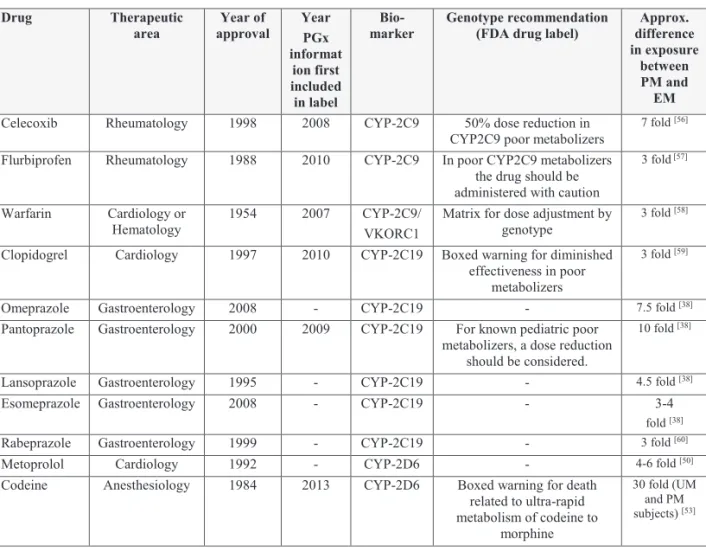
The most widely described polymorphisms in the P450 (CYP) subfamily have been identified for CYP-2C9, CYP-2C19, and CYP-2D6. A summary of some of the successful examples for the application of pharmacogenomics for CYP-2C9, CYP-2C19 and CYP-2D6 are shown in Table 1.
CYP-2C9 constitutes approximately 20% of the human hepatic P450. Approximately 15% of all clinically used drugs are metabolized by CYP-2C9 including tolbutamide, losartan, diclofenac, celecoxib and several drugs with a narrow therapeutic index, warfarin and phenytoin [26]. There have been several important SNPs identified for CYP-2C9. The genotype, CYP-2C9*3, and to a lesser extent CYP-2C9*2, have shown the most clinical relevance [27].
There are currently three drugs listed in the FDA Table of Pharmacogenomic Biomarkers in Drug Labeling which include specific information on 2C9 genotype, Celecoxib, Flurbiprofen
and Warfarin [22]. For the nonsteroidal anti-inflammatory drug celecoxib, there is a specific dose adjustment included in the drug label for poor metabolizers (i.e. CYP2C9*3/*3) [28]. Flurbiprofen is also a nonsteroidal anti-inflammatory that is indicated for rheumatology. Patients who are known poor metabolizers of CYP-2C9 should be administered Flurbiprofen with caution due to increased plasma levels [29]. Warfarin has two different polymorphic subgroups identified; CYP-2C9 which influences the PK and the PD related genomic variant vitamin K 143 epoxide reductase (VKORC1). The drug label describes a specific dose individualization matrix for 6 different CYP-2C9 genotypes (*1/*1, *1/*2, *1/*3, *2/*2, *2/*3 and *3/*3) and 3 VKORC1 genotypes (GG, AG and AA). The dose range varies from 0.5-7mg dependent on both the subjects VKORC1 and 2C9 genotype [30].
CYP-2C19 is involved in the metabolism of many drugs across therapeutic areas and is estimated to be involved in the metabolic clearance of approximately 15% of all prescription drugs [31]. There have been several polymorphisms of the gene identified that are known to be associated with reduced enzyme activity, CYP-2C19*2, CYP-2C19*3 and CYP-2C19*17 [32].
The frequency of these poor metabolizers also varies with race. Approximately 1–8% of Caucasians and 13–23% of the Asian populations being poor metabolizers with reduced CYP-2C19 function [33]. Therefore the clinical impact of any polymorphism for this enzyme should be evaluated in context to race differences.
PGx has been routinely been used in the identification and quantification of inter-individual variability in drug response resulting from differences in the metabolic transformation of a drug. The regulatory authorities have advocated the routine collection of PGx samples in all clinical studies to enable prospective and efficient retrospective evaluation of relationships between genetic polymorphisms and PK/PD response [2,21]. As a result of the increasing evaluation of the relationships between polymorphisms and drug response, the FDA maintains a list of FDA-approved drugs with pharmacogenomic information in their labeling [22].
Clinical relevance of genetic variants in pharmacokinetic properties
There has been extensive evaluation of polymorphic expressed enzymes such as cytochrome P450 (CYP), since more than 80% of drugs in use today are metabolized through this pathway [23]. In addition to the polymorphic CYP mediated metabolism, genetic polymorphisms have been identified for glucuronidation by UGTs [24]. These account for approximately 10% of the major drug elimination pathways. With an increasing number of transporters being identified in drug uptake and disposition, studies have also evaluated relationships between genetic polymorphisms and transporters such as organic anion-transporting polypeptide (OATP) [25].
CYP P450
The most widely described polymorphisms in the P450 (CYP) subfamily have been identified for CYP-2C9, CYP-2C19, and CYP-2D6. A summary of some of the successful examples for the application of pharmacogenomics for CYP-2C9, CYP-2C19 and CYP-2D6 are shown in Table 1.
CYP-2C9 constitutes approximately 20% of the human hepatic P450. Approximately 15% of all clinically used drugs are metabolized by CYP-2C9 including tolbutamide, losartan, diclofenac, celecoxib and several drugs with a narrow therapeutic index, warfarin and phenytoin [26]. There have been several important SNPs identified for CYP-2C9. The genotype, CYP-2C9*3, and to a lesser extent CYP-2C9*2, have shown the most clinical relevance [27].
There are currently three drugs listed in the FDA Table of Pharmacogenomic Biomarkers in Drug Labeling which include specific information on 2C9 genotype, Celecoxib, Flurbiprofen
and Warfarin [22]. For the nonsteroidal anti-inflammatory drug celecoxib, there is a specific dose adjustment included in the drug label for poor metabolizers (i.e. CYP2C9*3/*3) [28]. Flurbiprofen is also a nonsteroidal anti-inflammatory that is indicated for rheumatology. Patients who are known poor metabolizers of CYP-2C9 should be administered Flurbiprofen with caution due to increased plasma levels [29]. Warfarin has two different polymorphic subgroups identified; CYP-2C9 which influences the PK and the PD related genomic variant vitamin K 143 epoxide reductase (VKORC1). The drug label describes a specific dose individualization matrix for 6 different CYP-2C9 genotypes (*1/*1, *1/*2, *1/*3, *2/*2, *2/*3 and *3/*3) and 3 VKORC1 genotypes (GG, AG and AA). The dose range varies from 0.5-7mg dependent on both the subjects VKORC1 and 2C9 genotype [30].
CYP-2C19 is involved in the metabolism of many drugs across therapeutic areas and is estimated to be involved in the metabolic clearance of approximately 15% of all prescription drugs [31]. There have been several polymorphisms of the gene identified that are known to be associated with reduced enzyme activity, CYP-2C19*2, CYP-2C19*3 and CYP-2C19*17 [32].
The frequency of these poor metabolizers also varies with race. Approximately 1–8% of Caucasians and 13–23% of the Asian populations being poor metabolizers with reduced CYP-2C19 function [33]. Therefore the clinical impact of any polymorphism for this enzyme should be evaluated in context to race differences.
The impact of this polymorphism for clopidogrel, a second-generation thienopyridine that inhibits platelet aggregation has been widely described [34]. Clopidogrel is a pro-drug that requires biotransformation to the active metabolite by CYP-2C19 in order to inhibit platelet aggregation. It was therefore hypothesized that subjects with reduced enzyme function would also be at risk of higher ischemic events due to the lower plasma levels of this active metabolite [34]. The clinical relevance of this was confirmed between carriers of a reduced-function CYP-2C19allele and a higher rate of major adverse cardiovascular events in the Trial to Assess Improvement in Therapeutic Outcomes by Optimizing Platelet Inhibition with Prasugrel– Thrombolysis in Myocardial Infarction (TRITON–TIMI) 38. As a result of accumulating evidence the drug label was updated in 2010 to include a “boxed warning” for diminished effectiveness in poor metabolizers of CYP-2C19 [35].
Pharmacogenomics in Clinical Drug Development
CYP-2C19 is the major metabolic pathway involved in the biotransformation of the proton pump inhibitors (PPI) omeprazole, pantoprazole, lansoprazole, esomeprazole, and rabeprazole [36]. However differences have been identified in the proportional role of CYP-2C19 for each PPI [37]. A study evaluating the relationship between genotype and AUC for omeprazole, lansoprazole, pantoprazole and esomeprazole, identified a 3-10 fold higher exposure range in the poor metabolizers of these drugs (CYP-2C19*3) as compared to subjects in the extensive metabolizer group [38]. Furthermore a relationship was identified between plasma AUC and the observed degree of inhibition of acid secretion for omeprazole [39]. As a result of this the exposure of the drug could be directly related to clinical efficacy [40]. In the drug label for omeprazole, esomeprazole and pantoprazole despite the increase in AUC observed in the poor metabolizers there are no specific dose adjustment requirements based on genotype. However several meta-analysis investigating the relationship between genotype and clinical outcome show potential for improved outcomes with the use of genotyped-based dosing in PPIs [39,41,42].
There are many cardiovascular and central nervous system (CNS) drugs for which CYP-2D6 is central to the biotransformation [43]. It is estimated that CYP-2D6 is involved in the metabolism of approximately 25% of all clinically used medications [44]. CYP-2D6 was first reported to display large inter individual variability following analysis of data from the antihypertensive agent debrisoquine in the mid-1970s [45]. There are currently 4 major subpopulations identified for CYP-2D6, ultrarapid metabolizers (UM), extensive metabolizers (EM), intermediate metabolizers (IM) and poor metabolizers (PM) [46]. The frequency for these allele was also found to vary across different ethnicities. PMs are found in 5-10% of Caucasians however they are rarely found in Asian or African-Americans [47,48].
Metoprolol, used in the treatment of heart failure (HF) and hypertension undergoes O-demethylation catalyzed by CYP-2D6 [49]. Clinical studies have shown that PM subjects have 4- to 6-fold higher plasma concentrations after administration of metoprolol than EM [50]. However in HF patients an evaluation of dose–response association of CYP-2D6 genotype with steady-state metoprolol pharmacokinetics, pharmacodynamics, therapeutic efficacy, and clinical outcome confirmed the association of genotype to PK/PD but found no modulation of treatment efficacy by genotype [51]. An individualized dosing approach is
applied for metoprolol and upward titration that is based on clinical response is recommended for all patients, regardless of CYP-2D6 genotype. There are currently no requirements for dose adjustment based on genotype in the FDA drug label [52].
CYP-2C19 is the major metabolic pathway involved in the biotransformation of the proton pump inhibitors (PPI) omeprazole, pantoprazole, lansoprazole, esomeprazole, and rabeprazole [36]. However differences have been identified in the proportional role of CYP-2C19 for each PPI [37]. A study evaluating the relationship between genotype and AUC for omeprazole, lansoprazole, pantoprazole and esomeprazole, identified a 3-10 fold higher exposure range in the poor metabolizers of these drugs (CYP-2C19*3) as compared to subjects in the extensive metabolizer group [38]. Furthermore a relationship was identified between plasma AUC and the observed degree of inhibition of acid secretion for omeprazole [39]. As a result of this the exposure of the drug could be directly related to clinical efficacy [40]. In the drug label for omeprazole, esomeprazole and pantoprazole despite the increase in AUC observed in the poor metabolizers there are no specific dose adjustment requirements based on genotype. However several meta-analysis investigating the relationship between genotype and clinical outcome show potential for improved outcomes with the use of genotyped-based dosing in PPIs [39,41,42].
There are many cardiovascular and central nervous system (CNS) drugs for which CYP-2D6 is central to the biotransformation [43]. It is estimated that CYP-2D6 is involved in the metabolism of approximately 25% of all clinically used medications [44]. CYP-2D6 was first reported to display large inter individual variability following analysis of data from the antihypertensive agent debrisoquine in the mid-1970s [45]. There are currently 4 major subpopulations identified for CYP-2D6, ultrarapid metabolizers (UM), extensive metabolizers (EM), intermediate metabolizers (IM) and poor metabolizers (PM) [46]. The frequency for these allele was also found to vary across different ethnicities. PMs are found in 5-10% of Caucasians however they are rarely found in Asian or African-Americans [47,48].
Metoprolol, used in the treatment of heart failure (HF) and hypertension undergoes O-demethylation catalyzed by CYP-2D6 [49]. Clinical studies have shown that PM subjects have 4- to 6-fold higher plasma concentrations after administration of metoprolol than EM [50]. However in HF patients an evaluation of dose–response association of CYP-2D6 genotype with steady-state metoprolol pharmacokinetics, pharmacodynamics, therapeutic efficacy, and clinical outcome confirmed the association of genotype to PK/PD but found no modulation of treatment efficacy by genotype [51]. An individualized dosing approach is
applied for metoprolol and upward titration that is based on clinical response is recommended for all patients, regardless of CYP-2D6 genotype. There are currently no requirements for dose adjustment based on genotype in the FDA drug label [52].
The opiate Codeine is primarily a pro-drug and its activity is dependent on its conversion to morphine by CYP-2D6. Between PM and UM subjects more than a 30-fold difference in morphine AUCs was found and between EM and UM genotypes a 1.5 fold difference in AUCs was observed [53]. These differences in exposure due to genotype may result in toxic systemic concentrations of morphine even at low codeine doses [54]. The clinical impact of these genotype differences has resulted in a black box warning for CYP-2D6 Ultra-rapid metabolizers for use of the drug for anesthesia in children [55].The Clinical Pharmacogenetics Implementation Consortium (CPIC) guideline for CYP-2D6, provides an outline of a genotyped-based dosing approach for morphine and recommends alternative analgesics to codeine in patients who are CYP-2D6 poor or ultrarapid metabolizers [54].
Pharmacogenomics in Clinical Drug Development
Table 1 Examples of the application of pharmacogenomics for CYP-2C9, CYP-2C19 and CYP-2D6
Drug Therapeutic
area approval Year of Year PGx informat
ion first included in label
Bio-
marker Genotype recommendation (FDA drug label) difference Approx. in exposure
between PM and EM
Celecoxib Rheumatology 1998 2008 CYP-2C9 50% dose reduction in
CYP2C9 poor metabolizers 7 fold [56]
Flurbiprofen Rheumatology 1988 2010 CYP-2C9 In poor CYP2C9 metabolizers the drug should be administered with caution
3 fold [57]
Warfarin Cardiology or
Hematology 1954 2007 CYP-2C9/ VKORC1 Matrix for dose adjustment by genotype 3 fold [58]
Clopidogrel Cardiology 1997 2010 CYP-2C19 Boxed warning for diminished effectiveness in poor
metabolizers
3 fold [59]
Omeprazole Gastroenterology 2008 - CYP-2C19 - 7.5 fold [38] Pantoprazole Gastroenterology 2000 2009 CYP-2C19 For known pediatric poor
metabolizers, a dose reduction should be considered.
10 fold [38]
Lansoprazole Gastroenterology 1995 - CYP-2C19 - 4.5 fold [38] Esomeprazole Gastroenterology 2008 - CYP-2C19 - 3-4
fold [38] Rabeprazole Gastroenterology 1999 - CYP-2C19 - 3 fold [60] Metoprolol Cardiology 1992 - CYP-2D6 - 4-6 fold [50] Codeine Anesthesiology 1984 2013 CYP-2D6 Boxed warning for death
related to ultra-rapid metabolism of codeine to
morphine
30 fold (UM and PM subjects) [53]
Phase II enzymes
Many drugs are subject to phase II biotransformation processes, by which the parent compound or its intermediate metabolites are conjugated and subsequently excreted from the body as water soluble products such as glucuronides [24]. In the United States, glucuronidation is a clearance mechanism that is listed for 1 in 10 of the top 200 prescribed drugs [61]. Pharmacogenetic variation has been identified for UGTs, specifically for the isoforms UGT1A1, UGT1A7, UGT1A9, UGT2B7, and UGT2B15 [24]. However, clinical relevance for polymorphism in UGTs has currently only been identified for a few drugs, primarily catalyzed by UGT1A1 [62]. Examples for the application of PGx for UGT-1A1 are
shown in Table 2. The anti-cancer drug irinotecan, was one of the first drugs to receive pharmacogenomically guided label requirements in 2005 [63,64]. Nilotinib, a tyrosine kinase inhibitor includes information in the label relating to the increased risk of hyperbilirubinemia for subjects genotyped as UGT1A1*28 [65]. UGT1A1 is known to catalyze glucuronidation of hepatic bilirubin in humans [65]. Nilotinib was found to be a potent inhibitor of UGT1A1 in-vitro at clinically relevant concentrations and nilotinib induced-hyperbilirubinemia has been hypothesized to occur as a result of this UGT1A1 inhibition [66].
Table 1 Examples of the application of pharmacogenomics for CYP-2C9, CYP-2C19 and CYP-2D6
Drug Therapeutic
area approval Year of Year PGx informat
ion first included in label
Bio-
marker Genotype recommendation (FDA drug label) difference Approx. in exposure
between PM and EM
Celecoxib Rheumatology 1998 2008 CYP-2C9 50% dose reduction in
CYP2C9 poor metabolizers 7 fold [56]
Flurbiprofen Rheumatology 1988 2010 CYP-2C9 In poor CYP2C9 metabolizers the drug should be administered with caution
3 fold [57]
Warfarin Cardiology or
Hematology 1954 2007 CYP-2C9/ VKORC1 Matrix for dose adjustment by genotype 3 fold [58]
Clopidogrel Cardiology 1997 2010 CYP-2C19 Boxed warning for diminished effectiveness in poor
metabolizers
3 fold [59]
Omeprazole Gastroenterology 2008 - CYP-2C19 - 7.5 fold [38] Pantoprazole Gastroenterology 2000 2009 CYP-2C19 For known pediatric poor
metabolizers, a dose reduction should be considered.
10 fold [38]
Lansoprazole Gastroenterology 1995 - CYP-2C19 - 4.5 fold [38] Esomeprazole Gastroenterology 2008 - CYP-2C19 - 3-4
fold [38] Rabeprazole Gastroenterology 1999 - CYP-2C19 - 3 fold [60] Metoprolol Cardiology 1992 - CYP-2D6 - 4-6 fold [50] Codeine Anesthesiology 1984 2013 CYP-2D6 Boxed warning for death
related to ultra-rapid metabolism of codeine to
morphine
30 fold (UM and PM subjects) [53]
Phase II enzymes
Many drugs are subject to phase II biotransformation processes, by which the parent compound or its intermediate metabolites are conjugated and subsequently excreted from the body as water soluble products such as glucuronides [24]. In the United States, glucuronidation is a clearance mechanism that is listed for 1 in 10 of the top 200 prescribed drugs [61]. Pharmacogenetic variation has been identified for UGTs, specifically for the isoforms UGT1A1, UGT1A7, UGT1A9, UGT2B7, and UGT2B15 [24]. However, clinical relevance for polymorphism in UGTs has currently only been identified for a few drugs, primarily catalyzed by UGT1A1 [62]. Examples for the application of PGx for UGT-1A1 are
shown in Table 2. The anti-cancer drug irinotecan, was one of the first drugs to receive pharmacogenomically guided label requirements in 2005 [63,64]. Nilotinib, a tyrosine kinase inhibitor includes information in the label relating to the increased risk of hyperbilirubinemia for subjects genotyped as UGT1A1*28 [65]. UGT1A1 is known to catalyze glucuronidation of hepatic bilirubin in humans [65]. Nilotinib was found to be a potent inhibitor of UGT1A1 in-vitro at clinically relevant concentrations and nilotinib induced-hyperbilirubinemia has been hypothesized to occur as a result of this UGT1A1 inhibition [66].
In addition to UGTs, polymorphism has also been described for other Phase II enzymes such as N-acetyltransferase-2 (NAT2) [21]. Hydralazine is a direct acting arterial vasodilator that is used in the treatment of resistant hypertension. The drug is metabolized by an acetylation reaction mediated by NAT-2 and its activity has been shown to be dependent on NAT2 polymorphism [67]. The FDA drug label for Isosorbide and Hydralazine includes information on the frequency of fast acetylators (approximately 50% of patients are fast acetylators and have lower exposure) but no specific recommendations on dose adjustment are described [68]. Isoniazid is a drug prescribed for the treatment of tuberculosis. It is metabolized primarily in the liver by N-acetyltransferase [69]. Studies evaluating the influence of genotype on efficacy have shown in general that slow and rapid acetylators respond equally well to treatment, however it has been well established that slow acetylators are more likely to develop polyneuropathy during isoniazid therapy [70]. The FDA drug label for Isoniazid includes references to both the efficacy and the safety in slow acetylators but no dose adjustments or genotype based approaches are recommended [71].
Pharmacogenomics in Clinical Drug Development
Table 2 Examples of the application of pharmacogenomics for Phase II enzymes
Drug Therapeutic
area Year of approval Year PGx information first included in label
Biomarker Genotype recommendation (FDA drug label)
Approx. difference in exposure between PM and EM
Irinotecan Oncology 1996 2005 UGT1A1 Reduction in the starting dose for UGT1A1*28 allele
2-4 fold [64]
Nilotinib Oncology 2007 - UGT1A1 - inhibitor of
UGT1A1 in-vitro [72] Hydralazine Cardiology 2005 - NAT1-2 - 2 fold [68] Isoniazid Infections
diseases 1994 NAT1-2 4-6 fold
[69]
Transporters
In addition to drug metabolizing enzymes, transporters are also major determinants of drug absorption, distribution and elimination with important implications for both safety and toxicity. Based on current knowledge there are genetic polymorphisms identified for 14 transporters important for drug disposition [73]. These include both the influx (e.g. multidrug toxin extrusion proteins (MATEs)) and efflux transporters (e.g. OATP and organic cation transporters (OCTs)) [74]. However the clinical relevance of polymorphism for the different transporters has been found to vary widely between drugs.
The organic anion–transporting polypeptide 1B1 (OATP1B1) transporter facilitates the hepatic uptake of statins. SLCO1B1 is a gene that encodes the protein OATP1B1, expressed on the basolateral membrane of human hepatocytes [75]. Many statins are known to be substrates of OATP1B1 and the effects of polymorphism in SLCO1B1 differ depending on
the specific statin that is used [76, 77]. Studies have been conducted evaluating the
relationship between the variants of the gene SLCO1B1 and the pharmacokinetics of different
statins on the market [78]. The largest influence of this polymorphism was found for
simvastatin with exposure of simvastatin acid 120 and 221% higher in participants with the SLCO1B1 c.521CC genotype than in those with the c.521TC and c.521TT genotypes, respectively [79]. An increase in the plasma exposure of simvastatin acid was also found to contribute to an increased risk of myopathy [80]. Further evaluation of this relationship was
performed using GWAS. The study found that common variants of SLCO1B1 were strongly associated with an increased risk of statin-induced myopathy [81]. The FDA label was updated in 2011, limiting the top dose of 80mg to patients only if they have been taking this dose for 12 or more months without evidence of muscle toxicity [82]. There is currently no
specific recommendation in the label for genotyped-based dosing as shown in Table 3.
However, the Clinical Pharmacogenetics Implementation Consortium Guideline for simvastatin released in 2014, does make recommendations for genotyped-based dosing for
subjects with variants of the SLCO1B1 gene [83].
Table 3 Example of the application of pharmacogenomics for OATP1B1
Drug Therapeutic area Year of approval Year PGx
information first included in label
Biomarker Genotype recommendation (FDA drug label)
Range in exposure between genotypes
Simvastatin Antihyperlipidemic 1991 - OATP1B1 - 2-3 fold [79]
Clinical relevance of genetic variants in drug targets
Table 2 Examples of the application of pharmacogenomics for Phase II enzymes
Drug Therapeutic
area Year of approval Year PGx information first included in label
Biomarker Genotype recommendation (FDA drug label)
Approx. difference in exposure between PM and EM
Irinotecan Oncology 1996 2005 UGT1A1 Reduction in the starting dose for UGT1A1*28 allele
2-4 fold [64]
Nilotinib Oncology 2007 - UGT1A1 - inhibitor of
UGT1A1 in-vitro [72] Hydralazine Cardiology 2005 - NAT1-2 - 2 fold [68] Isoniazid Infections
diseases 1994 NAT1-2 4-6 fold
[69]
Transporters
In addition to drug metabolizing enzymes, transporters are also major determinants of drug absorption, distribution and elimination with important implications for both safety and toxicity. Based on current knowledge there are genetic polymorphisms identified for 14 transporters important for drug disposition [73]. These include both the influx (e.g. multidrug toxin extrusion proteins (MATEs)) and efflux transporters (e.g. OATP and organic cation transporters (OCTs)) [74]. However the clinical relevance of polymorphism for the different transporters has been found to vary widely between drugs.
The organic anion–transporting polypeptide 1B1 (OATP1B1) transporter facilitates the hepatic uptake of statins. SLCO1B1 is a gene that encodes the protein OATP1B1, expressed on the basolateral membrane of human hepatocytes [75]. Many statins are known to be substrates of OATP1B1 and the effects of polymorphism in SLCO1B1 differ depending on
the specific statin that is used [76, 77]. Studies have been conducted evaluating the
relationship between the variants of the gene SLCO1B1 and the pharmacokinetics of different
statins on the market [78]. The largest influence of this polymorphism was found for
simvastatin with exposure of simvastatin acid 120 and 221% higher in participants with the SLCO1B1 c.521CC genotype than in those with the c.521TC and c.521TT genotypes, respectively [79]. An increase in the plasma exposure of simvastatin acid was also found to contribute to an increased risk of myopathy [80]. Further evaluation of this relationship was
performed using GWAS. The study found that common variants of SLCO1B1 were strongly associated with an increased risk of statin-induced myopathy [81]. The FDA label was updated in 2011, limiting the top dose of 80mg to patients only if they have been taking this dose for 12 or more months without evidence of muscle toxicity [82]. There is currently no
specific recommendation in the label for genotyped-based dosing as shown in Table 3.
However, the Clinical Pharmacogenetics Implementation Consortium Guideline for simvastatin released in 2014, does make recommendations for genotyped-based dosing for
subjects with variants of the SLCO1B1 gene [83].
Table 3 Example of the application of pharmacogenomics for OATP1B1
Drug Therapeutic area Year of approval Year PGx
information first included in label
Biomarker Genotype recommendation (FDA drug label)
Range in exposure between genotypes
Simvastatin Antihyperlipidemic 1991 - OATP1B1 - 2-3 fold [79]
Clinical relevance of genetic variants in drug targets
Genetic variation in drug targets can have a profound effect on the efficacy of a drug [84]. There have been over 25 examples identified in which genetic polymorphisms in drug target genes can influence drug response [84]. The clinical application for these genetic differences in biomarkers seems to have had the most profound effect in the area of oncology and a summary of successful examples is provided in Table 4. In oncology, 20 PGx markers have been included into the package inserts of 30 FDA-approved anticancer agents to date [5], albeit that the direct clinical application of these PGx markers varies widely across the approved drugs. Specific PGx biomarkers that are known to be present in tumors could potentially be used by the physician to pre-select and tailor a patient's treatment. Such a target approach has the potential to be more selective for cancer cells than normal cells, which may result in improved prognosis and could potentially decrease the toxic effect of anticancer drugs on normal cells [3].
Pharmacogenomics in Clinical Drug Development
The monoclonal antibodies, cetuximab and panitumumab are designed to inhibit the growth and survival of tumor cells with overexpressed epidermal growth factor receptor (EGFR) and are approved for metastatic colorectal cancer (CRC) [85,86]. Following the approval of these drugs, several research teams identified an association between the resistance for both these drugs and K-ras mutations. Studies found that approximately 40% of these cancer patients contain these mutations [87]. As a result of this, the patients with these mutations are now contraindicated for anti-EGFR therapy and testing for K-ras mutations has been recommended by the FDA before prescribing cetuximab or panitumumab [88].
The leading example of the implementation of PGx in oncology is for the breast cancer drug Herceptin (trastuzumab). The drug is only prescribed for patients, whose tumors overexpress the human epidermal growth factor receptor (HER2) protein, making up approximately 20-30% of breast cancer patients [89]. Early research studies from UCLA had identified relationships between HER2 and the aggressive cancer found in 25% of breast cancer patients. Based on this research Genentech developed Herceptin by humanizing the 4D5 mouse antibody directed at HER2 and subsequently started clinical development of the drug. The Phase III clinical trials were then performed only in subjects who overexpressed HER2 as such the indication for Heceptin in breast cancer was specifically limited for those patients who overexpressed HER2 [90]. The subsequent approval of Herceptin by the FDA was completed simultaneously with Herceptest®, a commercially available test to identify patients who overexpress the HER2 gene [91,92].
Table 4 Examples of the application of pharmacogenomics in oncology
Drug Therapeutic
area Year of approval Year PGx information first included in label
Biomarker Genotype
recommendation (FDA drug label)
Cetuximab Oncology 2004 2012 K-Ras/EGFR Determine K-Ras
mutation and EGFR-expression status
prior to initiating treatment
Panitumumab Oncology 2006 2009 K-Ras/EGFR Determine K-Ras
mutation and EGFR-expression status
prior to initiating treatment
Trastuzumab
(Herceptin) Oncology 1998 1998 HER2 Detection of HER2 protein overexpression is required prior to initiating treatment
PGx for Adverse Drug Reactions
Adverse drug reactions (ADR) that occur during clinical development or post approval are an important factor in drug attrition [9]. This remains a major concern for the pharmaceutical industry, between the years 1990 and 2012 there were 43 drugs withdrawn from the market due to ADR [93]. Identifying the genetic contributions to ADR risk may lead to a better understanding of the underlying mechanisms and identification of patients at risk which could ultimately lead to a decrease in the ADR incidence [94]. Studies have evaluated if genetic factors can be used to determine a subject's susceptibility to an ADR and successful examples are presented in Table 5. This has generally involved the use of a case control approach which compares the frequency of the putative PGx predictor in patients with and without the adverse reaction [2].
The monoclonal antibodies, cetuximab and panitumumab are designed to inhibit the growth and survival of tumor cells with overexpressed epidermal growth factor receptor (EGFR) and are approved for metastatic colorectal cancer (CRC) [85,86]. Following the approval of these drugs, several research teams identified an association between the resistance for both these drugs and K-ras mutations. Studies found that approximately 40% of these cancer patients contain these mutations [87]. As a result of this, the patients with these mutations are now contraindicated for anti-EGFR therapy and testing for K-ras mutations has been recommended by the FDA before prescribing cetuximab or panitumumab [88].
The leading example of the implementation of PGx in oncology is for the breast cancer drug Herceptin (trastuzumab). The drug is only prescribed for patients, whose tumors overexpress the human epidermal growth factor receptor (HER2) protein, making up approximately 20-30% of breast cancer patients [89]. Early research studies from UCLA had identified relationships between HER2 and the aggressive cancer found in 25% of breast cancer patients. Based on this research Genentech developed Herceptin by humanizing the 4D5 mouse antibody directed at HER2 and subsequently started clinical development of the drug. The Phase III clinical trials were then performed only in subjects who overexpressed HER2 as such the indication for Heceptin in breast cancer was specifically limited for those patients who overexpressed HER2 [90]. The subsequent approval of Herceptin by the FDA was completed simultaneously with Herceptest®, a commercially available test to identify patients who overexpress the HER2 gene [91,92].
Table 4 Examples of the application of pharmacogenomics in oncology
Drug Therapeutic
area Year of approval Year PGx information first included in label
Biomarker Genotype
recommendation (FDA drug label)
Cetuximab Oncology 2004 2012 K-Ras/EGFR Determine K-Ras
mutation and EGFR-expression status
prior to initiating treatment
Panitumumab Oncology 2006 2009 K-Ras/EGFR Determine K-Ras
mutation and EGFR-expression status
prior to initiating treatment
Trastuzumab
(Herceptin) Oncology 1998 1998 HER2 Detection of HER2 protein overexpression is required prior to initiating treatment
PGx for Adverse Drug Reactions
Adverse drug reactions (ADR) that occur during clinical development or post approval are an important factor in drug attrition [9]. This remains a major concern for the pharmaceutical industry, between the years 1990 and 2012 there were 43 drugs withdrawn from the market due to ADR [93]. Identifying the genetic contributions to ADR risk may lead to a better understanding of the underlying mechanisms and identification of patients at risk which could ultimately lead to a decrease in the ADR incidence [94]. Studies have evaluated if genetic factors can be used to determine a subject's susceptibility to an ADR and successful examples are presented in Table 5. This has generally involved the use of a case control approach which compares the frequency of the putative PGx predictor in patients with and without the adverse reaction [2].
Drug hypersensitivity reactions (DHRs) are ADR for drugs that occur at a dose tolerated by typical subjects and clinically resemble allergy [95]. The Human leukocyte antigen (HLA) was to found to have a strong association with an increase of drug-induced hypersensitivity [96]. There are two primary examples evaluating the relationship between HLA and ADR, both of which have resulted in the clinical application of genotype-based dosing recommendations. For the drug abacavir, hyper sensitivity was found to be associated with
Pharmacogenomics in Clinical Drug Development
the HLA-B*5701 allele [97]. As a result, screening for the HLA-B*5701 allele should be performed to assist clinicians in identifying patients who are at risk of developing a hypersensitivity reaction to abacavir [98].
Carbamazepine is an anticonvulsant primarily used in the treatment of epilepsy; however the drug may cause life-threatening allergic reactions such as Stevens-Johnson syndrome (SJS) or toxic epidermal necrolysis. Recently the HLA-B*1502 allele was shown to be strongly correlated with carbamazepine-induced SJS and toxic epidermal necrolysis in the Han Chinese and other Asian populations [99]. In 2007, the FDA formally recommended testing for the HLA-B*1502 allele in patients of Asian ancestry, including South Asian Indians, before starting carbamazepine therapy [100].
Drug induced liver injury (DILI) is the most common cause of clinical trial termination of new drugs (approximately 33%) [101]. There have been several drugs withdrawn from the market due to DILI, including Troglitazone, Ximelagatran and Lumiracoxib. Although the pathogenesis of most DILI is unclear, genetic association of individual susceptibility to DILI have been evaluated in several studies [101]. The drug Lumiracoxib, was a selective cyclooxygenase-2 (COX-2) inhibitor, that was withdrawn from the market in 2005 due to concerns over hepatotoxicity [102]. A retrospective GWAS analysis found a strong association between HLA-DQ allelic variants and lumiracoxib-related liver injury. However despite this finding and the potential for pre-selection of subjects based on genotype the drug remains withdrawn from the market and the clinical application of genotyping these subjects was never implemented as an approach to improve patient safety.
Many of the studies evaluating ADR with the use of a PGx approach have used data in patients post approval. At this stage not only has the drug has been exposed to a large number of patients but it also represents the highest risk for the drug company since the maximum investment in any drug has already occurred. The key challenge for PGx is the implementation during the development stage where this would have the greatest potential to improve attrition rates. However there are currently several limitations to this early implementation including the sensitivity and specificity of genetic biomarker tests and the predictive value of these tests as screening tools to predict drug efficacy and prevent ADRs [93].
Table 5 Examples of the application of pharmacogenomics for ADR
Drug Therapeutic
area Year of approval Year PGx information first included in label
Biomarker Genotype recommendation (FDA drug label)
Carbamazepine Neurology 1968 2007 HLA-B Screening is required for the presence of HLA-B*1502 prior to initiating treatment Abacavir Infectious
Diseases 1998 2008 HLA-B Prior to initiating therapy, screening for the HLA-B*5701 allele is recommended
Conclusions
The applications of PGx throughout the drug development paradigm have increased over the last few years, as the technology improves and becomes cheaper to implement. For many drugs however, despite the explanation of the large inter-individual variability in the PK through the use of genotyping, the clinical application and information in the label directly related to dosing remains limited. Critically most of the information that is currently described in the drug label is based on research conducted after the drug has been approved [103]. Of those approved drug labels in 2012 there are only 14 cases in which labels direct clinicians to utilize PGx testing prior to prescribing, clearly falling short of the intended impact of PGx in the clinic [104].
the HLA-B*5701 allele [97]. As a result, screening for the HLA-B*5701 allele should be performed to assist clinicians in identifying patients who are at risk of developing a hypersensitivity reaction to abacavir [98].
Carbamazepine is an anticonvulsant primarily used in the treatment of epilepsy; however the drug may cause life-threatening allergic reactions such as Stevens-Johnson syndrome (SJS) or toxic epidermal necrolysis. Recently the HLA-B*1502 allele was shown to be strongly correlated with carbamazepine-induced SJS and toxic epidermal necrolysis in the Han Chinese and other Asian populations [99]. In 2007, the FDA formally recommended testing for the HLA-B*1502 allele in patients of Asian ancestry, including South Asian Indians, before starting carbamazepine therapy [100].
Drug induced liver injury (DILI) is the most common cause of clinical trial termination of new drugs (approximately 33%) [101]. There have been several drugs withdrawn from the market due to DILI, including Troglitazone, Ximelagatran and Lumiracoxib. Although the pathogenesis of most DILI is unclear, genetic association of individual susceptibility to DILI have been evaluated in several studies [101]. The drug Lumiracoxib, was a selective cyclooxygenase-2 (COX-2) inhibitor, that was withdrawn from the market in 2005 due to concerns over hepatotoxicity [102]. A retrospective GWAS analysis found a strong association between HLA-DQ allelic variants and lumiracoxib-related liver injury. However despite this finding and the potential for pre-selection of subjects based on genotype the drug remains withdrawn from the market and the clinical application of genotyping these subjects was never implemented as an approach to improve patient safety.
Many of the studies evaluating ADR with the use of a PGx approach have used data in patients post approval. At this stage not only has the drug has been exposed to a large number of patients but it also represents the highest risk for the drug company since the maximum investment in any drug has already occurred. The key challenge for PGx is the implementation during the development stage where this would have the greatest potential to improve attrition rates. However there are currently several limitations to this early implementation including the sensitivity and specificity of genetic biomarker tests and the predictive value of these tests as screening tools to predict drug efficacy and prevent ADRs [93].
Table 5 Examples of the application of pharmacogenomics for ADR
Drug Therapeutic
area Year of approval Year PGx information first included in label
Biomarker Genotype recommendation (FDA drug label)
Carbamazepine Neurology 1968 2007 HLA-B Screening is required for the presence of HLA-B*1502 prior to initiating treatment Abacavir Infectious
Diseases 1998 2008 HLA-B Prior to initiating therapy, screening for the HLA-B*5701 allele is recommended
Conclusions
The applications of PGx throughout the drug development paradigm have increased over the last few years, as the technology improves and becomes cheaper to implement. For many drugs however, despite the explanation of the large inter-individual variability in the PK through the use of genotyping, the clinical application and information in the label directly related to dosing remains limited. Critically most of the information that is currently described in the drug label is based on research conducted after the drug has been approved [103]. Of those approved drug labels in 2012 there are only 14 cases in which labels direct clinicians to utilize PGx testing prior to prescribing, clearly falling short of the intended impact of PGx in the clinic [104].
There appears to be a range of factors that have contributed to this, for drugs in which the polymorphism was reported post-approval many of the studies involve low subject numbers or have inferred the clinical relevance based on the magnitude of change in drug exposure. Some clinical studies address the relationship of genotype to phenotype but primarily focus on the changes observed in mean drug exposure. These studies often do not address the remaining variability of exposure within each genotype or the overlap in exposure between the different genotype groups. Overlap in exposure between genotype is an important consideration if genotype based dosing was to be evaluated. For example, a subject could be classified as a particular genotype but could still receive an inappropriate dose because the predictability of the genotype-phenotype relationship was not fully understood.
Pharmacogenomics in Clinical Drug Development
Genotype should be considered as an additional covariate for drug exposure with other factors also included during the analysis stage such as age, gender and race. The advantages of such an integrated approach have been clearly demonstrated for warfarin, where both age and CYP-2C9/VKORC1 genotypes were included as covariates for clinical response [58]. A key consideration in such analysis is not only the relationship between genotype and PK, but also including clinical response. The implementation of a population PK-PD model based approach to evaluate the influence of genotype can provide a more comprehensive link between the observed changes in the pharmacokinetics and its influence on the magnitude of response. Thus enabling a comparison of the differences observed between the magnitude of change in the PK and the magnitude of this change on clinical response. For example does a 3-fold increase in plasma exposure by genotype result in a proportional change to the clinical endpoint. To fully evaluate the impact of genotype on clinical response, a comprehensive analysis should be conducted using this approach.
Dose individualization is routinely applied in a range of disease areas from diabetes to CNS, where the patient's phenotype is not determined directly from the exposure of the drug but indirectly measured using a clinical endpoint, i.e. change in HbA1c. In such case, the clinical utility of genotyped-based dosing should be assessed in comparison to the currently applied titration approaches or included as an additional covariate to dose selection. Genotype information could be used at the start of treatment if time to maximal response was important and if the therapeutic window is narrow. However for more chronic dosing approaches where titration is routinely applied, genotype may not offer additional clinical benefit if the variability in the response is high or if clinical biomarkers can be directly related to changes in dose adjustment. This is particularly the case if the biomarker is well established, is low cost and is easily measured.
For new drugs currently in development there remains the possibility to prospectively plan and analyze the data as it emerges from clinical studies. Early implementation allows discussion with the regulators with a focus on the relevance of genotype and the planning of future study design to appropriately characterize the response by genotype. Early consideration of this approach also provides the possibility to develop diagnostic tools that can be used in a clinical setting. As both the drug regulators and industry routinely adopt
these approaches the possibly to enhance patient care and individual patients outcome should only improve.
References
1. ICH Topic E15 Definitions for genomic biomarkers, pharmacogenomics, pharmacogenetics, genomic data and sample coding categories: Jan 2008
http://www.emea.europa.eu/pdfs/human/ich/43798606en.pdf. Accessed 21 July 2014.
2. Guidance for Industry: Clinical Pharmacogenomics: Premarketing Evaluation in Early Phase Clinical Studies, Jan 2013
http://www.fda.gov/downloads/Drugs/GuidanceComplianceRegulatoryInformation/Guida nces/UCM337169.pdf. Accessed 21 July 2014.
3. Feng X, Brazill B, Pearson D. Therapeutic Application of Pharmacogenomics in Oncology: Selective Biomarkers for Cancer Treatment. US Pharm.
2011;36(11)(Oncology suppl):5-12
4. Seng KC, Seng CK: The success of the genome-wide association approach: a brief story of a long struggle. Eur J Hum Genet 2008, 16:554-564.
5. Weng L, Zhang L, Huang R. Pharmacogenetics and Pharmacogenomics: A Bridge to Individualized Cancer Therapy. Pharmacogenomics. 2013;14(3):15-24
6. Bush WS, Moore JH. Chapter 11: Genome-wide association studies. PLoS Comput Biol. 2012;8(12):e1002822.
7. Haines JL, Hauser MA, Schmidt S, Scott WK, Olson LM, et al. Complement factor H variant increases the risk of age-related macular degeneration. Science. 2005 308: 419– 421.
8. Sarasquete ME, Garcia-Sanz R, Marin L, et al. Bisphosphonate-related osteonecrosis of the jaw is associated with polymorphisms of the cytochrome P450 CYP2C8 in multiple myeloma: a genomewide single nucleotide polymorphism analysis. Blood. 2008; 112:2709–12.
Genotype should be considered as an additional covariate for drug exposure with other factors also included during the analysis stage such as age, gender and race. The advantages of such an integrated approach have been clearly demonstrated for warfarin, where both age and CYP-2C9/VKORC1 genotypes were included as covariates for clinical response [58]. A key consideration in such analysis is not only the relationship between genotype and PK, but also including clinical response. The implementation of a population PK-PD model based approach to evaluate the influence of genotype can provide a more comprehensive link between the observed changes in the pharmacokinetics and its influence on the magnitude of response. Thus enabling a comparison of the differences observed between the magnitude of change in the PK and the magnitude of this change on clinical response. For example does a 3-fold increase in plasma exposure by genotype result in a proportional change to the clinical endpoint. To fully evaluate the impact of genotype on clinical response, a comprehensive analysis should be conducted using this approach.
Dose individualization is routinely applied in a range of disease areas from diabetes to CNS, where the patient's phenotype is not determined directly from the exposure of the drug but indirectly measured using a clinical endpoint, i.e. change in HbA1c. In such case, the clinical utility of genotyped-based dosing should be assessed in comparison to the currently applied titration approaches or included as an additional covariate to dose selection. Genotype information could be used at the start of treatment if time to maximal response was important and if the therapeutic window is narrow. However for more chronic dosing approaches where titration is routinely applied, genotype may not offer additional clinical benefit if the variability in the response is high or if clinical biomarkers can be directly related to changes in dose adjustment. This is particularly the case if the biomarker is well established, is low cost and is easily measured.
For new drugs currently in development there remains the possibility to prospectively plan and analyze the data as it emerges from clinical studies. Early implementation allows discussion with the regulators with a focus on the relevance of genotype and the planning of future study design to appropriately characterize the response by genotype. Early consideration of this approach also provides the possibility to develop diagnostic tools that can be used in a clinical setting. As both the drug regulators and industry routinely adopt
these approaches the possibly to enhance patient care and individual patients outcome should only improve.
References
1. ICH Topic E15 Definitions for genomic biomarkers, pharmacogenomics, pharmacogenetics, genomic data and sample coding categories: Jan 2008
http://www.emea.europa.eu/pdfs/human/ich/43798606en.pdf. Accessed 21 July 2014.
2. Guidance for Industry: Clinical Pharmacogenomics: Premarketing Evaluation in Early Phase Clinical Studies, Jan 2013
http://www.fda.gov/downloads/Drugs/GuidanceComplianceRegulatoryInformation/Guida nces/UCM337169.pdf. Accessed 21 July 2014.
3. Feng X, Brazill B, Pearson D. Therapeutic Application of Pharmacogenomics in Oncology: Selective Biomarkers for Cancer Treatment. US Pharm.
2011;36(11)(Oncology suppl):5-12
4. Seng KC, Seng CK: The success of the genome-wide association approach: a brief story of a long struggle. Eur J Hum Genet 2008, 16:554-564.
5. Weng L, Zhang L, Huang R. Pharmacogenetics and Pharmacogenomics: A Bridge to Individualized Cancer Therapy. Pharmacogenomics. 2013;14(3):15-24
6. Bush WS, Moore JH. Chapter 11: Genome-wide association studies. PLoS Comput Biol. 2012;8(12):e1002822.
7. Haines JL, Hauser MA, Schmidt S, Scott WK, Olson LM, et al. Complement factor H variant increases the risk of age-related macular degeneration. Science. 2005 308: 419– 421.
8. Sarasquete ME, Garcia-Sanz R, Marin L, et al. Bisphosphonate-related osteonecrosis of the jaw is associated with polymorphisms of the cytochrome P450 CYP2C8 in multiple myeloma: a genomewide single nucleotide polymorphism analysis. Blood. 2008; 112:2709–12.
9. Daly AK. Pharmacogenomics of adverse drug reactions. Genome Med. 2013 Jan 29;5(1):5.
Pharmacogenomics in Clinical Drug Development
10. Kingsmore SF, Lindquist IE, Mudge J, Gessler DD, Beavis WD. Genome-wide
association studies: progress and potential for drug discovery and development. Nat Rev Drug Discov. 2008 Mar;7(3):221-30.
11. Lambert JC, Ibrahim-Verbaas CA, Harold D et al. Meta-analysis of 74,046 individuals identifies 11 new susceptibility loci for Alzheimer's disease. Nat Genet. 2013
Dec;45(12):1452-8.
12. Pharoah PD, Tsai YY, Ramus SJ et al. GWAS meta-analysis and replication identifies three new susceptibility loci for ovarian cancer. Nat Genet. 2013 Apr;45(4):362-70, 370e1-2.
13. Mohlke KL, Boehnke M, Abecasis GR. Metabolic and cardiovascular traits: an abundance of recently identified common genetic variants. Hum. Mol. Genet. 2008;17:R101-R107.
14. Liou SY, Stringer F, Hirayama M. The impact of pharmacogenomics research on drug development. Drug Metab Pharmacokinet. 2012;27(1):2-8.
15. Du Y, Xie J, Chang W, Han Y, Cao G. Genome-wide association studies: inherent limitations and future challenges. Front Med. 2012 Dec;6(4):444-50.
16. Burt T, Dhillon S. Pharmacogenomics in early-phase clinical development. Pharmacogenomics. 2013 Jul;14(9):1085-97.
17. Stingl Kirchheiner JC, Brockmöller J. Why, when, and how should pharmacogenetics be applied in clinical studies?: current and future approaches to study designs. Clin
Pharmacol Ther. 2011 Feb;89(2):198-209. doi: 10.1038/clpt.2010.274.
18. Nishihara M, Hiura Y, Kawaguchi N, Takahashi J, Asahi S. UDP-glucuronosyltransferase 2B15 (UGT2B15) is the major enzyme responsible for sipoglitazar glucuronidation in humans: retrospective identification of the UGT isoform by in vitro analysis and the effect of UGT2B15*2 mutation. Drug Metab Pharmacokinet. 2013;28(6):475-84.
19. Siccardi M, Almond L, Schipani A et al. Pharmacokinetic and Pharmacodynamic Analysis of Efavirenz Dose Reduction Using an In Vitro–In Vivo Extrapolation Model. Clin Pharmacol Ther. 2012 Oct;92(4):494-502.
20. Gertz M, Tsamandouras N, Säll C, Houston JB, Galetin A. Reduced
Physiologically-Based Pharmacokinetic Model of Repaglinide: Impact of OATP1B1 and CYP2C8 Genotype and Source of In Vitro Data on the Prediction of Drug-Drug
Interaction Risk. Pharm Res. 2014 Mar 13. [Epub ahead of print]
21. Guideline on the use of pharmacogenetic methodologies in the pharmacokinetic evaluation of medicinal products, April 2010.
http://www.ema.europa.eu/ema/index.jsp?curl=pages/regulation/general/general_content_ 000411.jsp&mid=WC0b01ac058002958e&murl=menus/regulations/regulations.jsp&jsen abled=true. Accessed 21 July 2014.
22. US Food and Drug Administration. Table of Valid Genomic Biomarkers in the Context of Approved Drug Labels.
http://www.fda.gov/Drugs/ScienceResearch/ResearchAreas/Pharmacogenetics/ucm08337 8.htm. Accessed 21 July 2014.
23. Zhou SF, Liu JP, Chowbay B. Polymorphism of human cytochrome P450 enzymes and its clinical impact. Drug Metab Rev. 2009;41(2):89-295.
24. Guillemette C. Pharmacogenomics of human UDP-glucuronosyltransferase enzymes. Pharmacogenomics J. 2003;3(3):136-158.
25. Nakanishi T, Tamai I. Genetic polymorphisms of OATP transporters and their impact on intestinal absorption and hepatic disposition of drugs. Drug Metab Pharmacokinet. 2012;27(1):106-21.
26. Wang B, Wang J, Huang SQ, Su HH, Zhou SF. Genetic polymorphism of the human cytochrome P450 2C9 gene and its clinical significance. Curr Drug Metab. 2009 Sep;10(7):781-834.
27. Gardiner SJ, Begg EJ. Pharmacogenetics, drug-metabolizing enzymes, and clinical practice. Pharmacol Rev.2006;58(3):521-590.