DISEASE MAPPING OF SYPHILIS IN FORSYTH COUNTY, NORTH
CAROLINA WITH ENHANCED GEOPRIVACY AND SPATIAL
RESOLUTION
Lani Clough
A thesis submitted to the faculty of the University of North Carolina at
Chapel Hill in partial fulfillment of the requirements for the degree
of Masters in Science in the Gillings School of Global Public Health
(Environmental Sciences and Engineering).
Chapel Hill
2012
Approved by:
Dr. Marc Serre
Dr. Jacqueline MacDonald
ABSTRACT
LANI CLOUGH: Disease mapping of syphilis in Forsyth County, North Carolina with enhanced geoprivacy and spatial resolution
(Under the direction of Dr. Marc Serre)
This paper refines the spatial resolution of disease maps by making use of geomasked
syphilis cases moved by a random displacement to preserve their anonymity. Syphilis cases are
processed using the Uniform Model Bayesian Maximum Entropy (UMBME) method to correct
for the small number problem. Furthermore, a moving window approach is introduced to create
ubiquitous areas where geomasked cases are aggregated. The introduction of these ubiquitous
areas can control the modifiable areal unit problem and the edge effect present in conventional
methods. Our hypothesis is this approach will better delineate the geographical extent of
clusters, improving outbreak detection and reducing the ambiguous and spatially incorrect
results of past methodologies. This study reveals the appearance of new hotspots, increased
connectivity between hotspots, and places hot spots in their actual locations. This specific
information is extremely relevant for public health intervention as it provides the ability to
target precise locations.
iii
TABLE OF CONTENTS
LIST OF TABLES ...iv
LIST OF FIGURES ...v
Chapter
I. INTRODUCTION ...1
II. METHODS...5
Study Population and Data Preparation ... 5
Incidence Areas... 7
Syphilis Incidence Rates ... 9
Spatial‐temporal Analysis and Incidence Mapping...11
Cross Validation of BME Methods...12
III. RESULTS... 14
IV. CONCLUSIONS... 19
REFERENCES... 20
LIST OF TABLES
Table
1. MSE of UG, AG methods and PCMSE as a function of population percentile
……….
16v
LIST OF FIGURES
Figure
1. Arbitrary and ubiquitous incidence areas in Forsyth County, NC ………...8
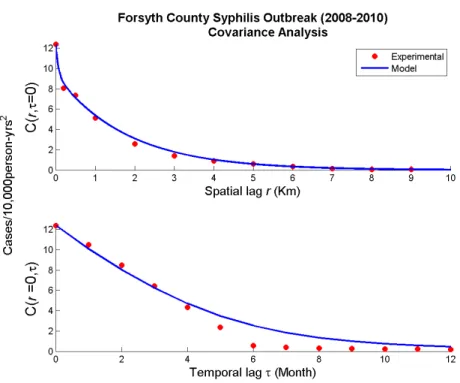
2. Spatial and Temporal Covariance Models………...15
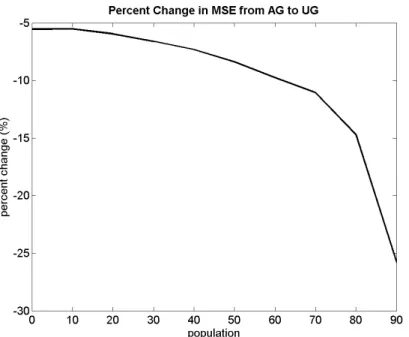
3. The percent change in MSE from AG to UG as a function of the
population percentile………..16
4. BME maps of the AG & UG methods in February‐July, 2009 (the
peak of the outbreak)………..17
5. UG method time series of the Forysth County Outbreak (2009‐2010)………19
1. INTRODUCTION
The southeastern region of the United States has consistently experienced higher rates
of syphilis than other areas in the US (Sena, 2007, Rosenberg 1998). The southeast’s persistent
syphilis prevalence is likely a result of: the racial/ethnic distribution of residents; the
population’s sexual mixing patterns; drug use; the exchange of drugs and money for sex;
poverty; and reduced access and poor usage of health care (Doherty, 2011; NC, 2010;
Rosenberg, 1998; Sena, 2007). In 1999, the Centers for Disease Control (CDC) created the
Syphilis Elimination program (SEP) for the southeast region. In North Carolina extensive
funding was focused on the counties with the highest incidence of syphilis (Mecklenburg, Wake,
Durham, Guilford, Forsyth, and Robeson) and syphilis incidence statewide was greatly reduced.
In 2004, resources provided for SEP began to decline and syphilis rates increased (NC, 2010).
In 2009, North Carolina experienced an 84% (937 cases) increase in infectious syphilis
cases from 2008 (509 cases). This resurgence occurred throughout the state, especially in
counties the interstate highways 85 and 40 pass through. The increase was clearly evident in
Forsyth County which encountered more than a fourfold rise in infectious syphilis cases from
46 in 2008 to 195 in 2009 (NC, 2010). In 2010, the Forsyth syphilis epidemic began to wane
and only 103 cases were reported (NC, 2011). The incidence significantly decreased again in
2011 to 47 cases returning to the county’s endemic levels (NC, 2012). In North Carolina, syphilis
outbreaks in the past 20 years have been concentrated in counties with elevated syphilis
incidence where rates during outbreaks increase to levels seldom found in the United States
(Doherty, 2011).
Beyond the concern for syphilis morbidity, ulcerative sexually transmitted infections
2
HIV positive (NC, 2010; Sena, 2008). In the outbreak in Forsyth County, the syphilis cases
increased significantly within the HIV positive community. There are considerable concerns a
syphilis outbreak will lead to increased HIV morbidity in North Carolina (NC, 2010).
Understanding, targeting and controlling syphilis outbreaks is an evident and genuine
concern for the state of North Carolina (NC, 2010). Spatiotemporal analysis of sexually
transmitted infections has been effective in defining core areas of infection, providing insight
into patterns of transmission and assisting health policy makers in increasing the effectiveness
and reducing the costs of interventions (Choi, 2003; Gesink, 2006; Hampton, 2011; Hanafi‐Bojd,
2012; Law, 2004; Zenilman, 1998).
The Bayesian Maximum Entropy (BME) approach of contemporary geostatistics is a
spatiotemporal analysis structure. BME analyses have long been successfully used in a wide
range of applications for both public health and environmental concerns and the theory is
highly developed (Allhouse, 2009; Choi, 2003; De Nazelle, 2010; Gesink, 2006; Hampton, 2011;
Law, 2006; Orton, 2008; Serre, 2004).
Modern non‐linear geostatistics, such as BME can incorporate both known data (hard)
and data modeled by various distributions, such as uniform (soft). In the field of linear
geostatistics, methods such as kriging are used to predict unknown values (k) given a prior
knowledge base of known observations (h). The unknown random variable is assumed to be
normally distributed, with a mean of mk|h, and a variance Ck|h, where C is the covariance of k
given h. mk|h is the kriging mean and referred to as the best linear unbiased estimator (BLUE) in
geostatistics and the best linear unbiased predictor (BLUP) in statistics. The kriging mean is
linear, unbiased and the best estimator that minimizes the estimation error variance.
In public health analyses, BME techniques that can incorporate soft data have
fundamental benefits over other methods. Disease incidence measures express varying levels of
space and time. This is especially relevant for STD outbreaks which can fluctuate greatly within
geographic areas and temporal periods. The BME techniques provide predictions that minimize
the mean squared error of space/time random fields (S/TRFs) to accurately model rates (Choi,
2003).
Geospatial analysis of incidence rates can be challenging. Universally, incidence rates
are created by aggregating individual‐level data to pre‐existing administrative areas, such as
counties or census block groups (CBGs) and assigning the data to the centroid in an effort to
protect patient privacy. Protecting patient privacy with this method generally destroys
pertinent information needed to address important public health concerns (Kamel, 2006) and
produces spatial uncertainty also known as the Modifiable Areal Unit Problem (MAUP) (Bailey
and Gatrell 1995; Kamel, 2006; Ratcliffe, 1999). The MAUP is composed of two problems‐ 1)
the size of each of the aggregation zones and 2) the shapes of the areal units. The size issue
concerns the large differences in rates that can be obtained when aggregation areas are reduced
or enlarged, such as enlarging census block group rates to county or state rates. Furthermore,
the shape problem refers to the variance of sizes and shapes within a set areal zones. For
example, the areas of California and Alaska are tremendously larger than the areas of Rhode
Island or Maryland, although they are each categorized as the same aggregation unit, a state.
This variation creates considerable differences in rates for each state.
The capacity of an investigator to identify disease clusters or the progression of an
outbreak is increasingly limited when the data is aggregated to large areas, such as counties or
states. Displacing rates to the centroids of these administrative boundaries can produce
misleading results that are exaggerated when a hot spot is located on the boundary of two or
more aggregation areas. An example of this effect is the displacement of a hot spot from its true
location on a boundary to an artificial location at the centroid or the complete loss of a hot spot.
4
The edge effect can be lessened by reducing the aggregation level. However reducing
the scale of the data also introduces uncertainty or noise resulting from unreliable rates, known
as the “small number problem”. The small number problem can obscure spatial patterns and if
not corrected result in an inappropriate interpretation of the health outcome. When
researching rare diseases such as syphilis, computing crude rates from data with high spatial
resolution creates statistical concerns due to the scarcity of the data set. The variation in
populations within the aggregation areas will lead to a field of disease counts dominated by
locations with relatively low populations because their incidence rates will be artificially
elevated (Choi, 2003; Hampton, 2011; Goovaerts, 2005a; Goovaerts, 2005b).
Extensive work has been performed to remove the small number problem while
preserving spatial resolution. Multiple smoothing algorithms have been developed to more
accurately assess true incidence rates (also known as latent rates) and penalize areas with
small populations to create a more even rate field. These methods introduce a variance measure
which is a function of the population providing a measure of uncertainty for each location and
penalizing aggregation areas with small populations (Hampton, 2011; Goovaerts, 2005a;
Goovaerts, 2005b).
Two advanced smoothing methods are Poisson Kriging (PK) and Uniform Model
Bayesian Maximum Entropy (UMBME). Poisson Kriging exhibits a strong smoothing effect and
has been shown to be more accurate in estimating latent disease rates than unsmoothed
methods. UMBME, however has been found to produce more accurate rate estimates than PK in
a study of HIV in North Carolina while reducing over‐smoothing and retaining the ability to
effectively detect hotspots (Hampton, 2011).
Additional increases in spatial resolution can be acquired while maintaining patient
privacy by employing the Donut Method of geomasking. This method randomly relocates each
of patient privacy while maintaining the spatial resolution necessary for cluster and outbreak
detection. It is especially effective in locations with high threats to geoprivacy (Allhouse, 2010;
Hampton, 2010). Unfortunately no studies have been conducted which take advantage of
geomasked data sets. Currently maps created without geomasked data exhibit: 1) islands of
higher and lower incidence at the centroids; 2) the edge effect; 3) masking of hotspots; and 4) a
background rate greater than zero.
Using state health department data, the goal of this paper is the Bayesian Maximum
Entropy space/time analysis of the infectious syphilis incidence among the population tested in
Forsyth County from 1999‐2011. This paper advances the methodology for outbreak analysis
by refining spatial resolution with the use of geomasked data. The small number problem is
also removed by employing Uniform Model Bayesian Maximum Entropy. Additionally, a global
moving window approach is utilized to control the MAUP and the edge effect. Our hypothesis is
this method will better delineate the geographic extent of clusters, reducing some of the
2. METHODS
Study Population and Data Preparation
The study population for this work includes all Forsyth County residents in the time
period of 1999‐2011. A syphilis case is defined as a Forsyth County resident infected with
syphilis, and diagnosed between January 1, 1999 and April 30, 2011. The data for the study was
acquired from the North Carolina Department of Public Health’s Communicable Disease Branch.
North Carolina Health Care providers and laboratories are required to complete communicable
disease report cards for each diagnosed case of syphilis and submit these reports to the
appropriate county health department. These report cards include information on the patient’s
disease, report date, date of disease onset, residence at diagnosis, syphilis disease stage and
limited demographic information. Both the University of North Carolina institutional review
board and the CDC internal review board have approved the use of this data for space‐time
analysis.
Self‐reported case residential addresses were reformated and corrected with Satori
Bulk Mailer software (Satori Software Inc., Seattle, WA) before geocoding to optimize the match
rate of addresses. Patient residences were then geocoded using ESRI’s ArcGIS 9.3.1 (ESRI,
Redlands, California) and matched to three geographic locators used by the State of North
Carolina. The primary locator was created by the North Carolina Department of Transportation
and contains street‐level geographic data. The secondary locator was created by the North
Carolina Emergency Response System and contains point locations for North Carolina
households. The tertiary locator was created using ESRI’s 2006 Street Map shapefile (ESRI,
and military bases. Cases with a post office box address were spatially assigned to that post
office address. Demographic information was removed prior to the geocoding of the data.
Approximately 83% of the records in the time period were successfully geocoded to a
location (497). Cases which were not geocoded (104) are excluded from the analysis. Of the
cases not geocoded, 36 were in 2009 and 16 in 2010. The primary reasons why these addresses
did not geocode are: 1) no address was provided; 2) non‐existent addresses were provided; 3)
the locators are missing street segments; 4) incorrect addresses (misspellings, abbreviated
street names and improper use of rural routes). After geocoding, the data were geomasked
using the Donut Method (Allshouse, 2010; Hampton, 2010).
The focus of this study is incidence rates thus the syphilis diagnosis stage was used to
estimate the date the patient acquired the disease. Five stage codes are included in the dataset
and represent the following: Stage 1 is a primary syphilis infection, Stage 2 is secondary syphilis
infection and the third stage is early latent syphilis. Cases with primary, secondary and early
latent syphilis are generally categorized as ‘early syphilis’ and are the stages when the disease
can be transmitted to sexual partners. The fourth and fifth stages are considered latent syphilis
and not infectious thus are excluded from the analysis (Doherty, 2002; NC, 2010). We
estimated the date of infection using the provided diagnosis date and median latency period for
each syphilis disease stage. Primary syphilis cases were back estimated 45 days, secondary
syphilis was back estimated 90 days, and early latent syphilis was back estimated 183 days
(Schumacher, 2005).
Incidence Areas
The incidence area is the geographic foundation on which a rate is defined. It can be
thought of as a set of cases in a defined area. An incidence area may be a circular or complex
8
incidence area, a rate can be calculated and is assigned to an area’s centroid. Virtually all
incidence rates are calculated using administrative boundaries as their incidence areas. The
centroids of these incidence areas are often arbitrarily located in space with varying distances
between the centroids. This creates an uneven clustering of centroids and is illustrated in the
arbitrary groups (AG) shown in Figure 1. In this case, the AGs are census block groups in
Forsyth County. The boundaries of the census block groups, now referred to as AGs are shown
as thin black lines and their centroids are black triangles. The distribution of AG centroids and
the large variations in the AG sizes and shapes in Figure 1 clearly shows a MAUP and a strong
edge effect. ……….
Figure 1: Arbitrary and ubiquitous incidence areas in Forsyth County, NC
The MAUP and edge effect created when aggregating to arbitrary incidence groups can
be corrected by enriching an AG dataset with incidence area centroids based on a regular grid
(shown as turquoise circles in Figure 1). A moveable sub‐region of overlapping perfect circles
without the variability caused by size and shape creating a framework for the analysis and
removing the MAUP (Bailey, 1995). Furthermore, overlapping the boundaries of the circles
reduces the edge effect.
The size of the circles/incidence areas and density of the grid can be increased or
decreased according to project needs. Cases located within each of these grid‐based incidence
areas, which we will refer to as ubiquitous groups (UG) are identified and utilized to calculate a
rate. A rate is then assigned to each centroid (grid point) of the incidence areas. In this study,
two data sets of syphilis incidence were created and compared, AG and UG.
Syphilis Incidence Rates
To create the AG dataset, the populations and boundaries of census block groups in
2000 packaged in a US Census census block group shapefile (US Census, 2009) were used. The
AG geographic centroids were calculated using this shapefile in ESRI’s ArcGIS 10 (ESRI,
Redlands, CA). AG cases were aggregated spatially by AG boundaries (in this case census block
groups), and temporally with a rolling time period of 6 months to lessen the small number
problem. The crude incidence rate at location si and incidence period of duration T expressed in
years (i.e. T = 0.5yr for a 6 month incidence), centered at time tj is denoted as Rij and calculated
as Rij=yij/(nijT). Where yij is the number of syphilis cases within the incidence area i, nij is the
population at time tj. The population growth was also incorporated into the crude rate
calculation through a linear interpolation of the census block group population for all 12‐64‐
year‐olds in 2000 and 2007 assuming positive growth over the time period. Time periods that
did not contain syphilis records were assumed to have a rate of 0.
The UG dataset consists of the AG data combined with grid‐based ubiquitous incidence
10
€
D=1
n Aa
π
∑
* f , where D is the distance between UG centroids in the grid, Aa is the area
of each AG and f is the factor to increase or reduce the grid. For this study, f = .65 and D =
0.5miles to create a fine grid lattice throughout the study area and comprehensively reduce the
MAUP. Grid points outside of Forsyth County were discarded. Each grid point was used as the
centroid of a UG.
The UG’s associated area of influence is a perfect circle and it’s area is calculated by π
€
ri 2,
where
€
ri is the optimized radius length.
€
ri is calculated from the inverse weighted distance
average of the radius of the five closest AGs where distance is penalized in the following
formula:
€
r
i=
w
j*
r
jj=1 5
∑
, where€
w
j=
d
ij−1*
d
ij−1j=1 5
∑
,
and w is the weight given to each area value
in the mean calculation, d is the distance of the AG centroid to the UG centroid, i is the spatial
location and j is the identifier for each AG centroid. The changing size of the UGs in relation to
their local AGs can also be seen in Figure 1.
Next, the population for each UG, was calculated from as a function of the area of the
AGs lying within the UG:
€
ni=
Aa∩ i
Aa
∑
*PAa, where Aa is the area of the AGs and PAa is thepopulation of Aa at the time period. The population was assumed to be uniformly distributed
within the AG.
The number of cases within each UG was calculated as a function of the probability each
case is within a UG at a selected time period. The following is known about the geomasked
points: 1) each point is geomasked within the AG they are located in and 2) the maximum and
minimum distance a case can be moved from its original location, creating a donut around each
case (this information can only be accessed at the NC Public Health Department by selected
calculated as:
€
R
i≈
w
li l=1N
∑
n
i*
T
. Where€
wli is the probability case is in area , N is the total
number of cases in and
€
w
li=
AR
l∩
UG
iAR
l . Furthermore,€
AR
l=
DR
l∩
AG
lwhere€
DR
l isthe size of the geomask donut before the restriction the area of the donut outside of the AG
must be removed,
€
AG is the area of the AG.
€
AR
l is the area the geomasked point was locatedat geocoding and prior to geomasking.
Finally, to comprehensively remove the small number problem, UMBME rates were
calculated for both the AG and UG data sets. The Uniform Model BME method can be described
as follows. A soft datum for the true incidence rate, Xij, can be described by a uniform
probability distribution and constructed where α > 0.5 and
€
R
ij−
α
n
ij*
T
<
X
ij<=
R
ij+
α
n
ij*
T
.Data that have been smoothed by UMBME should be considered and treated as soft data in the
mapping process (Hampton, 2011).
Spatialtemporal Analysis and Incidence Mapping
This work uses a BME geostatistical analysis to estimate the syphilis incidence in
Forsyth County, NC. BME utilizes random field theory to create incidence estimates where the
mean square error is minimized at nodes on an estimation grid. The BME framework allows for
the incorporation of soft data modeled by a distribution, such as the UMBME data. The analysis
is performed over a space/time random field (S/TRF), which estimates the distribution of
incidence rates over space and time as a function of possible field moments.
The BME analysis can be broken into three main steps. The first step is to examine the
data to obtain a prior probability density function (PDF) of the S/TRF for syphilis incidence.
12
Third, the posterior PDF is used to isolate the incidence to derive space‐time maps of Forsyth
County incidence represented as spatial random fields.
The inputs for the spatial temporal model are: the mean trend for the data, a covariance
model, and the calculation parameters: 1) the UBME rates (soft data); 2) the maximum number
of data points that can contribute to an estimate; 3) the estimate’s spatial search radius 4) and
the coordinate of the estimate point. The output for the BME analysis is the moments of the
BME posterior PDF, specifically the expected value for the estimate point and the variance of
the moment (Akita, 2007; Allhouse, 2009; De Nazelle, 2011; Hampton, 2011; Law, 2004; Serre,
2004). The numerical processing of this data was performed using MATLAB 7.8 (Mathworks,
Natick, MA) and the BMElib package (BMElab, UNC‐CH).
The mean trend is considered to be a deterministic function and the residual S/TRF
models the uncertainties and variability associated with the dataset over space and time (Serre,
2004). Prior to the BME analysis, the mean trend was removed from the dataset, smoothing the
spatiotemporal fluctuations and resulting in a residual field that is homogenous in space and
stationary in time.
Covariance is a measure of association between two variables, whereas a covariance
function describes the variance and characterizes the consistent tendencies and dependencies
of a random field or variable, such as a space/time random field (Serre, 2004). S/TRF
covariance functions provide a quantitative description of the correlation between pairs of
observations as a function of the inter‐pair distances. The overall disease patterns are
illustrated by the nature of the model as the distance from the sill increases. The general spatial
variability is shown in the sill (the covariance at distance 0) and by the slope of the model near
the origin. The larger the sill and the steeper the slope, the greater the spatial variability. The
or loses 95% of the inter‐pair correlation) identifies the area in which neighboring observations
influence the rate at a location (De Nazelle, 2010; Law, 2004).
CrossValidation of BME Methods
A cross‐validation of the AG and UG methods was conducted and compared to identify
the most accurate method to model the syphilis rates. In the cross validation, an observed value
was removed from the dataset and the BME method was used to calculate the rate at that
location. The observation is then returned to the data set and the next value is removed and its
estimate is calculated. This process is repeated for each of the data points. The error for each
data point is then calculated. The cross‐validation errors for each method are then summarized
as a function of the mean square errors (MSE). The MSE quantifies the amount an estimator
varies from a known rate and can assess the performance of an estimator through its variation
and unbiasedness. An MSE of zero demonstrates the estimator perfectly predicts an
observation, and the MSE is always a positive value. The MSE is effective for comparing the
ability of varying estimators to predict known observations, where the estimator with the
smallest MSE is considered the best predictor for the data set. To compare the MSE between the
methods, only the AG data points contained within the UG and AG datasets are evaluated in the
MSE estimate (28,290 points). The MSE formula is:
€
MSE
AG=
1
n
A
ˆ
G
ij−
AG
ij(
)
2∑
MSE
UG=
1
n
U
ˆ
G
AGij⊂
U
G
ˆ
ij(
)
−
AG
ij(
)
2∑
where is the value estimated in the cross validation, i is the spatial location, and j is the
temporal period. AG is the calculated rate, are the cross validation estimated values for UG
14
€
UG
AGij⊂
UG
ij=
AG
ij∩
UG
ij. To compare the MSE between the methods, the percent changein the mean square error (PCMSE) is calculated by:
€
PCMSEUG =100 * MSEUG−MSEAG
MSEAG . A negative PCMSE demonstrates the percent improvement in the estimation accuracy from the first method to the second (De Nazelle, 2011). The latent rate is the most appropriate measure to compare the ability of a method to
predict a rate. The latent incidence rate of disease in a given region i can be defined as:
€
X
i=
ni→∞
lim
r
jn
i whereXi is the latent disease rate, Yi is the number of new cases of disease, andniisthe size of the population at risk in areai. This states as the population approaches infinity, the
observed rate reaches the latent rate. In practice, the latent rate can be estimated by stratifying
the MSE results by the population percentile (Hampton, 2011). A method is effective if the
3. RESULTS
The analysis of the mean trend resulted in the following equation: mZ(s,t) = ms(s) + mt(t)
, where: ms(s) is the spatial component of the mean trend and mt(t) is the temporal component
of the mean trend using an exponential kernal smoothing to obtain geographic and temporal
averages. For this model, ms(s) is 40km with a 1km smoothing range and mt(t) is 15 months
with a 6 month smoothing range.
Next the experimental covariances of the residual space‐time incidence field and a
covariance model of these experimental values were calculated and are shown in Figure 2. For
this data set the covariance model is a non‐separable model with the superposition of three
exponential and gaussian models with varying spatial and temporal scales, as shown in the
following equation: ………
Cx(r,t) = c1 exp(-3r/ar1)(-3t/at1) + c2 exp(-3r/ar2)(3t22/at22) + c3 exp (-3r/ar3)(-3t/at3), where c1=
3cases/10,000person‐yrs2, ar
1= 0.2km, at1= 8months, c2= .5cases/10,000person‐yrs2, ar2= 4km,
at2=24months and c3= 8.9cases/10,000person‐yrs2, ar3= 5.5km, at3 = 11 months. The spatial
covariance model indicates high variability within the observations and an autocorrelation with
a relatively short range‐ 4km (less than 10% of the study area) that sharply drops. Temporally,
there is significantly less variability and the drop in autocorrelation is slow and smooth over
long time periods‐ 2 years, the duration of the Forsyth outbreak.
16
Figure 2: Spatial and Temporal Covariance Models
Next, a cross‐validation analysis was performed on the two methods, AG and UG to
define the method which most accurately models the latent rate. The cross‐validation
demonstrated the UG model performed noticeably better in predicting the latent rate than the
AG model. This is revealed in the PCMSE which decreases as the population percentile increases
as shown in Figure 3.
Figure 3: The percent change in MSE from AG to UG as a function of the population percentile
The corresponding MSE values for the AG and UG methods are shown along with the
population percentile and the PCMSE in Table 1. These results further confirm the UG rates
minimize the MSE and more accurately model the latent syphilis incidence rates.
Table 1: MSE of UG, AG methods and PCMSE as a function of population percentile Population
Percentile
MSE AG UMBME
MSE UG UMBME
Percent change AG to UG
0 4.06E‐07 3.83E‐07 ‐5.5
10 3.67E‐07 3.47E‐07 ‐5.5
20 3.09E‐07 2.90E‐07 ‐5.9
30 2.97E‐07 2.78E‐07 ‐6.6
40 2.83E‐07 2.62E‐07 ‐7.3
50 2.50E‐07 2.29E‐07 ‐8.4
60 2.12E‐07 1.91E‐07 ‐9.8
70 1.88E‐07 1.67E‐07 ‐11.1
80 8.34E‐08 7.11E‐08 ‐14.7
90 5.54E‐08 4.11E‐08 ‐25.8
Furthermore the differences in the methods are illustrated visually in the maps of the
two approaches as shown in Figure 4. Two black boxes are displayed in the figure. The first
box in the center of the map, shows the increased connectivity within the UG method. The
18
locations. In the AG map, the lower black box shows a hot spot placed at the centroid of the UG
and outside of the Winston‐Salem city limits. In contrast the UG method places the hotspot
within the Winston‐Salem city limits and between a park and mall.
Overall, new hot spots appear in the UG map particularly in areas between spatial
aggregations. This demonstrates the AG map is suffering from the edge effect. Additionally, the
spatial resolution is improved with the use of the UG method, showing new hotspots, increased
connectivity between hot spots and placing hot spots in their actual locations. Moreover, the
background rate in the AG map is approximately five cases/10,000person‐years and the UG
method corrects this flaw by resetting the background rate to 0.
Figure 4: BME maps of the AG & UG methods in FebruaryJuly, 2009 (the peak of the outbreak)
The BME map time series of the outbreak for selected time periods is shown in Figure 5.
A movie of the outbreak can be found at: http://www.unc.edu/depts/case/BMElab/. Endemic
levels of syphilis are found in hot spots with an incidence of approximately
Lewisville and Kernersville. In the aggregated time period of June‐November, 2008 the
endemic hot spots begin to increase in size and some exhibit rates at or above
35cases/10,0000person‐years. All the hot spots are located within Winston‐Salem and the
syphilis rates in Lewisville and Kernersville have decreased to 0. In September, 2008‐February,
2009 the hotspots continue to spread throughout Winston‐Salem, increasing in intensity and
connection in the north central and northeastern portions of the city. This is likely the start of
the epidemic. As the outbreak progresses, new hotspots appear in the eastern region of
Winston‐Salem and begin to connect. The peak of the outbreak is February‐July, 2009 (and
shown in Figure 4). As the outbreak wanes, the hotspot in the north‐central region of the city is
reduced, while a hotspot in northeast increases. This hot spot shows increased connection in
April‐September, 2009 specifically in central‐east Winston‐Salem near the 40 and in the
northeast regions. These hotspots continue to grow and connect until May‐October, 2009 and
then wane and disconnect. In November, 2009‐April 2010, the rates begin to return to endemic
levels. In 2010‐2011 the outbreak continues to decrease with increasing disconnection of the
hot spots. By February‐July, 2011 the Winston‐Salem incidence has returned to endemic levels
and the outbreak has subsided. Furthermore, the Kernersville endemic syphilis rate returns to
approximately 10cases/10,000person‐years.
20
Figure 5: UG method time series of the Forysth County Outbreak (20092010)
4. CONCLUSIONS
This study demonstrates BME mapping of sexually transmitted diseases is highly
effective for quantifying and understanding the progression of health outcomes. The BME
approach is one tool in the greater field of spatial statistics which includes Bayesian
methodology and cluster detection. Software such as MLwiN and WinBugs provide ability to
create sophisticated models of complex health data (Lawson, 2003).
The results of this study demonstrate the use of geomasked data and a moving window
approach provide superior locational information effective in defining core areas of infection
and providing insight into outbreak patterns of transmission. This study reveals the
appearance of new hotspots, increased connectivity in hotspots and places hot spots in their
actual locations. One clear example is in the time period of February‐July, 2009 at the peak of
the outbreak. The AG method places the hotspot at its centroid which is located in an
underdeveloped, sparsely populated area outside of the Winston‐Salem city limits. In contrast
the UG method places the hotspot between two conventional meeting places and likely
locations to meet new sexual partners, Hobby Park and Hanes Mall. Furthermore, throughout
the outbreak the incidence hot spots are located within the Winston‐Salem city limits. This
specific information is extremely relevant for public health administrators as it provides the
ability to target precise locations such as malls or parks.
Moreover, many of the hotspots and their increased connectivity are present at the
boundaries of the AGs, demonstrating the AG maps are suffering from the edge effect. In
addition, the increased connectivity in hotspots shown in the UG maps also illustrate areas
where resources should be more broadly focused. As the covariance model shows, hot spots
22
The maps created in this study vary slightly from the results published in the NC
HIV/STD reports. The first difference is the outbreak in our study begins earlier than it does in
the state records. This is likely a result of the back‐estimation of rates performed in this study.
The rates presented in the State Health data have not been back‐dated to estimate the date of
infection. Furthermore, the cases which were not geocoded were not included in the analysis.
Inclusion of the ungeocoded cases will most likely result in higher county‐wide syphilis rates.
This is because the highest spatial resolution that can be obtained with the ungeocoded data is
at the zip code (approximately 90% of the cases) and county levels.
Future work should also be conducted to create and incorporate an algorithm to change
the shape of the UG incidence areas from a circle, to a complex polygon which mirrors the
shapes of the AGs it is closest to.
REFERENCES
1. Akita, Y., G. Carter, M.L. Serre. 2007. Spatiotemporal Non‐Attainment Assessment of Surface Water Tetrachloroethene in New Jersey. Journal of Environmental Quality. 36(2):508‐520 2. Allshouse, W.B., J.D.. Pleil, S.M. Rappaport, M.L. Serre. 2009. Mass Fraction Spatiotemporal Geostatistics and its Application to Map Atmospheric Polycyclic Aromatic Hydrocarbons after 9/11, Stochastic Environmental Research and Risk Assessment3. Allshouse, W.B., M.K. Fitch, K.H. HamptonM, D.C. Gesink, I.A. Doherty, P.A. Leone, M.L. Serre,
W.C. Miller (2010) Geomasking sensitive health data and privacy protection: an evaluation using an E911 database, Geocarto International, Vol. 25(6), pp. 443–452.
doi:10.1080/10106049.2010.496496
4. BMElab, UNC Chapel Hill http://www.unc.edu/depts/case/BMElab/
5. Choi, K.‐M., Serre, M., Christakos, G. 2003. Efficient mapping of California mortality fields at
different spatial scales. Journal of Exposure Analysis and Environmental Epidemiology. 13:120–133.
6. De Nazelle, A., S. Arunachalam, M.L. Serre (2010) Bayesian Maximum Entropy Integration of Ozone Observations and Model Predictions: An Application for Attainment Demonstration in North Carolina, Environmental Science & Technology, Vol. 44, pp. 5707–5713. 7. Doherty, I.A., A.A. Adimora, S.Q. Muth, M.L. Serre, P.A. Leone, W.C. Miller (2011) Comparison of Sexual Mixing Patterns for Syphilis in Endemic and Outbreak Settings, Sexually Transmitted Diseases, Vol. 38(5), pp. 378‐384 8. Doherty, L., Fenton, K.A., Jones, J., Paine, T.C., Higgins, S.P., Williams, D. Palfreeman, A. 2002. Syphilis: old problem, new strategy, BMJ, Vol. 325(7356), pp. 153‐156 doi = {10.1136/bmj.325.7356.153}, 9. ESRI, Redlands CA, http://www.esri.com/ 10. Gatrell, A.C., Bailey, T.C., Diggleand, P.J., Rowlingson, B.S. 1996. Spatial point pattern analysis and its application in geographical epidemiology Trans Inst Br Geogr NS Vol. 21 pp.256–274 11. Gesink Lae D., Bernstein, K., Serre, M., Schumacher, C., Leone, P., Zenilman, J., Miller, W., Rompalo, A. 2006. Modeling a Syphilis Outbreak Through Space and Time Using the Bayesian
Maximum Entropy Approach. Annuals of Epidemiology. 16(11): 797‐804.
24
15. Hampton KH, Serre ML, Gesink DC, Pilcher CD, Miller WC (2011) International Journal of Health Geographics, 10:54. 16. Hanafi‐Bojd, A.A. H. Vatandoost, M.A. Oshaghi, Z. Charrahy, A.A. Haghdoost, G. Zamani, F. Abedi, M.M. Sedaghat, M. Soltani, M. Shahi, A. Raeisi. Spatial analysis and mapping of malaria risk in an endemic area, south of Iran: A GIS based decision making for planning of control. Acta Tropica, 2012. Vol. 122 (1), Issue 1, pp. 132‐13 17. Kamel Boulos, M. N. , Qiang, C. Padget. J.A., Rushton, G. 2006. Using software agents to preserve individual health data confidentiality in micro‐scale geographical analyses, Journal of Biomedical Informatics, Vol 39 (2) pp.160‐170 18. Law, D. Serre, M., Christakos, G., Leone, P., Miller, W. 2004. Spatial analysis and mapping of sexually transmitted diseases to optimise intervention and prevention strategies. Sex Transm Infect. 80(4): 294–299.19. Lawson, A.B., Browne, W. J., Vidal Rodeiro, C.L. 2003. Disease Mapping with WinBUGS and MLwiN. ISBN: 978‐0‐470‐85604‐8.
20. Lee, S.J, K. Yeatts, M.L. Serre (2009) Mapping childhood asthma prevalence across North Carolina using data collected at different spatial observation scales, Spatial and Spatio‐Temporal Epidemiology, Vol. 1, pp 49‐60.
21. Mathworks, Natick, MA http://www.mathworks.com/
22. State of North Carolina (NC). State Special Report Syphilis Morbidity Report 2009. http://epi.publichealth.nc.gov/cd/syphilis/NCSyphilisMorbidity2009.pdf
23. State of North Carolina (NC) 2010 HIV/STD Surveillance Report . 2011http://epi.publichealth.nc.gov/cd/stds/figures/std10rpt.pdf
24. State of North Carolina (NC) 2010 HIV/STD Surveillance Report . 2011. http://epi.publichealth.nc.gov/cd/stds/figures/std_tables_2011.pdf
25. Openshaw, S. Taylor, P. 1981. The modiable areal unit problem, in: N. Wrigley and R.
Bennette (Eds) Quantitative Geography:A British View, ch. 5. London: Routledge. 26. Orton, T., Lark, R. 2008. The Bayesian maximum entropy method for lognormal variables Stochastic Environmental Research and Risk Assessment. 23(3): 319‐328 27. Ratcliffe, J.H., McCulagh, M.J. 1999. Hotbeds of Crime and the search for spatial accuracy. Geographical Systems. 1(1999):1:385‐398. 28. Rosenberg, D., Moseley, K., Kahn, R., Kissinger, P., Rice, J., Kendall, C., Coughlin, S., Farley, T. 1999. Networks of Persons With Syphilis and at Risk for Syphilis in Louisiana: Evidence of Core Transmitters. Sexually Transmitted Diseases. 26(2):108‐114.
29. Satori Software Inc. Seattle, WA http://www.satorisoftware.com/
30. Serre, M., Christakos, G., Lee, S. 2004. Soft Data Space/Time Mapping of Coarse Particulate
31. Schumacher, C. M., Bernstein, K. T., Zenilman, J. M., Rompalo, A. M. Reassessing a Large‐Scale Syphilis Epidemic Using an Estimated Infection Date. 2005. Sexually Transmitted Diseases. Vol. 11. pp 659‐664.
32. Seña, A. C., Muth, S. Q., Heffelfinger, J. D., O'Dowd, J. O., Foust, E., Leone, P. 2007. Factors and
the Sociosexual Network Associated With a Syphilis Outbreak in Rural North Carolina. Sexually Transmitted Diseases. 34(5):280‐287
33. Seña, A.C., Torrone, E.A., Leone, P.A. Foust, E. and Weidman, L.H. Endemic early syphilis
among young newly diagnosed HIV‐positive men in a southeastern US state. AIDS Patient Care and STDs. December 2008, 22(12): 955‐963. doi:10.1089/apc.2008.0077.
34. Thomas, J.C., Tucker, M.J. 1996. The Development and Use of the Concept of a Sexually
Transmitted Disease Core. The Journal of Infectious Diseases 174(Sup 2): S134‐S143.
35. U.S. Census Bureau (U.S. Census) http://www.census.gov/ 2008
36. Zenilman, J. M., Ellish, N., Fresia, A., Glass, G. 1999. The Geography of Sexual Partnerships in
Baltimore: Applications of Core Theory Dynamics Using a Geographic Information System. Sexually Transmitted Diseases. 26(2):75‐81