Jessica Lee Rich
A dissertation submitted to the faculty at the University of North Carolina at Chapel Hill in partial fulfillment of the requirements for the degree of Doctor of Philosophy in the
Department of Communication.
Chapel Hill 2016
ABSTRACT
Jessica Lee Rich: Nature at work: An eco-sensible study of professional identity making in the fracking industry
(Under the direction of Sarah Dempsey)
Organizational communication studies long have suggested that professional identities develop discursively, cohering through multiple narratives of organizational life. This dissertation pulls human-nature relations into everyday work practices, investigating the role of nature as an active participant in identity formation and challenging an ongoing symbolic/material dualism that persists in organization studies. Bridging the areas of organizational identity, socio-materiality, and environmental communication, I develop an eco-sensible approach to identity work. Eco-sensibility, based in Jane Bennett’s theories of vital materialism, reveals how nature provokes, disrupts and substantiates worker identities. The study is situated in the work and labor of shale drilling, also known as fracking, in the United States. Interviews with blue- and white-collar workers, participant observations, analyses of cultural artifacts, and the ethnographic tour, cultivate methodological spaces that envision nature as critical to organization studies of identity.
identity. Interview participants who conceptualize nature as more than a resource reported internal conflicts for working in extraction. Workers whose identities bind closely to industry distantiate from nature through strict, instrumental language. A key contribution includes detailing how fracking activities function as hidden organizations that conceal their practices discursively and materially through mechanisms such as confidentiality agreements and access to drill sites. Worker and public health, community rights, and environmental well-being consequently suffer. Methods used to study work and organizing also affect
ACKNOWLEDGEMENTS
I was very fortunate to be surrounded by a community that supported and heartened me as I worked on this project.
First, I want to thank my advisor, Sarah Dempsey, for countless hours of
conversations, advice, and encouragement to “keep going!” I have learned from Sarah what it means to be a rigorous, engaged scholar and a generous critic.
I am grateful for my committee members and their many contributions to my intellectual well-being. Steve May always listened to me with kindness, helping me to find potential in my ideas. Dennis Mumby generously shared his time and his vast knowledge of all things critical. I want to thank Elizabeth Havice for her guidance and for her course on development and the environment, where many of the ideas for this project took root. Sarah Sharma challenged and encouraged me to follow my political commitments. Finally, I am grateful to Elizabeth Dickinson for caring about this project and reminding me that nature, indeed, matters.
I want to express deep thanks to the participants in this study. They kindly shared their time, stories, and passionate opinions about a contentious topic.
Thanks to Pat Parker, Julia Wood, and Cory Young for exemplifying true feminist mentorship. I am forever grateful.
Thanks to dear, longtime friends, who kept me grounded over the years: Margaret Lyons, for listening and for reminding me to give myself a break every once in awhile. The Ortiz and Allison family provided love, laughter, and a most welcome reprieve in western N.C. The McKenna and Glover family warmly opened their home during many journeys north and south.
I am grateful to the Willis family, Sylvia, Bob, Helen, Alan, Mary, and Eilidh, for their encouragement, care, and generosity over the years, whether I was near or far.
To my niece, Anyanka, and nephew, Marcus. Thank you for your many hugs and laughs when I visit. You give me so much joy.
To my parents, Mary Ann and Rich, and my sisters, Elizabeth and Dina. I am most grateful for your love, for believing in me, and for always being at the end of the
phone/Skype/email/text when I needed you. Thanks especially to my mom and dad for contributing newspaper clippings, stories, and photos, which greatly enriched this project.
TABLE OF CONTENTS
List of Figures ... x
Chapter 1: Introduction ... 1
Study Context: Fracking the United States ... 3
Chapter Overview ... 9
Chapter 2: Building an Eco-Sensible Approach to Professional Identity Work ... 13
The Symbolic and Material Production of Professional Identities ... 14
Bodies, Corporate Materialities, and Ecological Sensibility ... 21
Bodies ... 23
Corporate Materialities ... 26
Eco-Sensible Identity Work ... 30
Eco-Sensible Approaches to the Work of Fracking ... 33
Chapter 3: The Multi-Sited, Cross-Geographical Study of Professional Identities ... 37
Locating the Research Site(s) ... 41
Interviewing in the Context of Environmental Conflict ... 43
Researching Hidden Organizations ... 44
Interviewing in the Midst of Conflict ... 47
Negotiating the Discursive and Material through Fieldwork ... 49
Material Culture and the Significance of the Ethnographic Tour ... 53
Employing Interpretive and Critical Analyses ... 55
Marketing Extraction ... 62
Romanticizing Rust Belt Identities ... 64
Extracting the Past: Smokestack Nostalgia and Rust Belt, U.S.A. ... 66
Securing the Present: As Goes Pennsylvania, so Goes the Nation ... 70
Drilling into the Future: Getting Younger Everyday ... 75
Discussion ... 78
Implications for labor and environment ... 79
Concluding Thoughts ... 81
Chapter 5: Organizing Nature ... 83
Theme 1: Listening to the “Dirt” of Dirty Work ... 83
Drilling Companies as Hidden Organizations ... 84
Negotiating the Dirt of Drilling Industries ... 89
(Re)Producing the Drill Worker Aesthetic ... 92
Knowledge Work as Dirty Work ... 103
Conclusion ... 110
Theme 2: Nature as Organizational Identity ... 112
Making nature sensible ... 118
Resisting Industry Discourses ... 122
Conclusions ... 128
Chapter 6: What Lies Beneath?: Touring Sociomaterialities of the Ohio Valley’s “Gasland” ... 130
Constructing Nature through Work/Place ... 130
Negotiating Place and Identity: A Tour through the Utica Shale Region ... 134
Discussion ... 148
Chapter 7: Conclusion: Nature Matters ... 150
Significant Contributions ... 151
Stigma, Identification, and Disidentification ... 151
Nature as Materiality ... 153
Employing Multiple Methods ... 155
Future Directions and Questions ... 159
Final Thoughts ... 160
Appendix A: Interview Guide ... 162
Appendix B: Work Classifications of Interview Respondents ... 164
Appendix C: Interview Codes ... 165
LIST OF FIGURES
Figure 1. Campbell’s “Flexible Shaft” ... 5
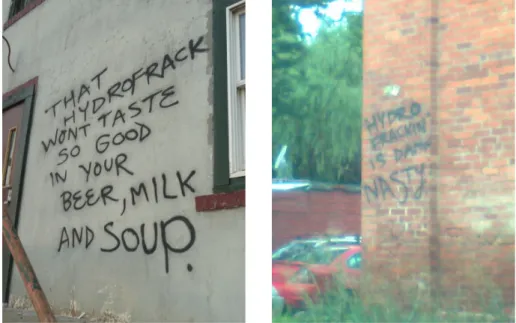
Figure 2. Anti-fracking graffiti in Ithaca, NY ... 6
Figure 3. Access road sign near Dimock, PA ... 45
Figure 4. Roughnecks guide a steel pipe into place ... 93
Figure 5. Floor hands at work on an oil rig in North Dakota ... 94
Figure 6. An aerial photograph of a “man camp” in North Dakota ... 94
Figure 7. Oilfield workers at a man camp in North Dakota ... 95
Figure 8. Men outside a bar in Williston, North Dakota ... 96
Figure 9: Products for sale in a shalefield specialty shop ... 97
Figure 10. Croatan Earth First! event poster, “Folk Against Fracking” ... 121
Figure 11. View of a drill site from atop an access road ... 144
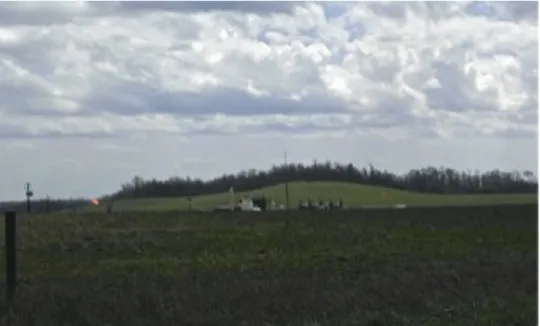
Figure 12. Operational drill site, windsock and flare magnified ... 144
Figure 13. Empty well pad and site of future drilling ... 145
Figure 14. Reclaimed land from mining operations ... 146
CHAPTER 1: INTRODUCTION
As evidence of climate change grows, organizations must learn how to adapt to the Anthropocene, a contemporary moment in which human activity is driving global,
environmental transformations (Waters et al., 2016). The consensus in the climate science community is that large-scale changes are inevitable. The Intergovernmental Panel on Climate Change (IPCC) predicts an increase in extreme weather events, polar ice melt, and rising temperatures, with devastating effects for environments in North America and across the globe (IPCC, 2014). Recent findings in the journal, Science, reaffirm that the Earth is proceeding through its sixth extinction event (Ceballos et al., 2015). Conflicts over resources are expected to rise (Fowler & Shi, 2016). In the midst of these global changes, human understanding of ourselves, our work, and our relationships with the environment are in flux (Latour, 2014). Organization studies will require theoretical and methodological approaches that make sense of the changing relations between human and nature in the Anthropocene. The term, “Anthropocene,” refers to a new geological epoch in which evidence of human activity is inextricable from the earth’s processes (Chakrabarty, 2009; Crutzen, 2002). Scholars from across natural sciences and the humanities remain divided on the accuracy of the term (Castree, 2014). Many suggest that industrialization and fossil fuel production in the 19th Century ushered in a new period of human impact on the environment (Albritton
2015; Waters, Syvitski, Gałuszka, & Hancock, 2015). Others debate that humans have a much longer history of producing changes to the earth, e.g. agriculture and the development of natural resource markets (Albert, 2015; Barnosky, 2014; Moore, 2015). Still others remain unconvinced that the impact of humans is geologically significant to be given its own era (Malm & Hornborg, 2014). The current project aligns with those who suggest that no matter its origins, naming the era is culturally and morally significant (Ellis & Trachtenberg, 2014). Marking the moment as the Anthropocene provokes conversation and brings awareness to the historically gradual devastation, or “slow violence,” of industrial processes on human and nonhuman communities (Nixon, 2011, p. 2). The ontological and epistemological
implications of humankind as a geological force are monumental. Human-induced climate change is predicted to have drastic ramifications for political, social, and economic systems (Biermann, 2014) brought on by “record heat, deep drought, storms the likes of which we’ve never seen before,” (McKibben, 2013, p. 746). The poorest communities of the planet
already are affected (Nixon, 2011). The human subject simultaneously must digest the effects of climate change and the notion that our drive toward endless development, growth, and consumption participated in its production.
The Anthropocene initiates a discussion for organization studies about the contribution of corporate institutions to global environmental degradation. The
transformations ushered in by climate change, such as environmental conflicts over fossil fuels, necessitate organizational responses to working and living on a warming planet (Lê, 2013; Wright, Nyberg, De Cock, & Whiteman, 2013). Organization studies already is building a strong foundation of research that critically examines the discourses of
(Mitra & Buzzanell, 2015; Wright & Nyberg, 2015; Wright, Nyberg, & Grant, 2012). More research is needed, however, to learn how members negotiate the tensions of working for organizations charged with ecological violence.
My dissertation examines the tensions between human-nature at work in fossil fuel industries. Specifically, the project cultivates spaces that bring nature into organization studies of identity. Professional identity is an integral part of organizing, as workers construct narratives that cohere a sense of self (Alvesson, Ashcraft, & Thomas, 2008). The narratives that an individual creates about the self at work have consequences in the decisions they make and the organizational goals they pursue. In the following study, I explore how workers negotiate their professional identities, meanings of nature, and human-nature relations in the environmental conflict over oil and gas drilling in the United States. I examine how nature “acts” alongside the human in constructing narratives of work and identity. The project is grounded in two questions. First, how do individuals whose work is associated with extractive industries negotiate professional identities in the context of environmental
pollution. My dissertation investigates the discourses and materialities that constitute professional identity amid conflicts over natural resource extraction.
Study Context: Fracking the United States
Over the past decade, advanced technologies in extraction industries led to a “shale revolution” across the United States (Brooks, 2011). Discourses surrounding the problems and benefits of oil and gas drilling have circulated the industry since the shale boom began in the mid-2000s. Oil and gas companies promote their operations as a “bridge” between coal and alternative energy (American Petroleum Institute, 2010; Levi, 2015). Scientists studying the impacts of greenhouse gases argue that the methane emissions produced by shale
industries dangerously contribute to climate change (Howarth, 2014; Howarth, Ingraffea, & Engelder, 2011; Howarth, Santoro, et al., 2011; IPCC, 2014). Framed by arguments over the contribution of greenhouse gases, oil and gas drilling has provoked a multitude of
environmental, political, and economic responses.
New, more intensive drilling processes have allowed extraction companies to access previously unattainable reserves of mineral resources embedded in the shale rock deep below the earth’s surface. Industry, government, and press celebrated an economic boom of job growth and opportunities for manufacturing. Once limited to states such as Texas and
Oklahoma, advances in technology allowed companies to access oil and gas in other regions. Drilling brought billions of dollars into states rich with shale oil and gas deposits, such as Pennsylvania, West Virginia, and North Dakota, as the country was entering an economic recession (Chiarella, 2012; Martin, 2012). Landowners became “shaleionaires” as they signed lease agreements promising royalties in the thousands and millions for giving
role in securing the energy independence of the United States. The boom propelled the country into the top three oil and gas producers in the world (Katakey, 2015).
Figure 1. Campbell’s “Flexible Shaft” was used as a prototype for oil drilling equipment where workers collect it. The water, or brine, also flows back as “wastewater,” which is stored in tanks or ejected in disposal wells underground. While companies used horizontal drilling and hydraulic fracturing processes independently for over a century, the combination of the two processes intensified production and enabled companies to access oil and gas that once was out of reach. Not only did this new technology allow access to new underground spaces but also to new regions of where other drilling techniques had been less effective.
The shale revolution produced admirers as well as critics. While praised by industry spokespeople and politicians, concerns arose that contamination of public and private water sources from drilling put public health and environments at risk. Environmental and
2009, I noticed the anti-fracking yard signs that dotted the small town’s gardens. Graffiti appeared throughout the town, as well, revealing some of the negative, local sentiments about the process (Figure 2). Statements reading, “Hydrofrackin’ is damn nasty,” and, “That
hydrofrack won’t taste so good in your beer, milk and soup” made it clear that “hydrofrack” was not only undesirable but something that I did want not ending up in my food and drink.
Figure 2. Anti-fracking graffiti in Ithaca, NY.
As fracking spread across the U.S, the industry became politically contentious. The industry is notoriously criticized for its lack of transparency, beginning with the 2005 Energy Policy Act. The federal act exempted oil and gas drilling from regulations including the Clean Air Act, the Clean Water Act, and the Safe Drinking Water Act ("Energy Policy Act of 2005," 2005; Finewood & Stroup, 2012; Rich, 2016). Unlike older manufacturing and
and trucks carrying enormous tanks of water and natural gas along the highways. The industry slowly and quietly secured its presence.
An unfamiliar industry entering more populated states led to problems and criticism. Stories about industry-induced water contamination, air pollution, and explosions continue to plague states where drilling is active (Begos, 2014; Born & Hamill, 2014; Brasch, 2013; Esswein, Kiefer, Snawder, & Breitenstein, 2012; Steingraber, 2011). Homeowners reported illnesses from well water that otherwise had been clean for years (Fox, Adlesic, & Gandour, 2010; Goldenberg, 2014). Earthquakes caused by wastewater injection wells began to occur in regions with historically low seismic activity, such as Ohio and Oklahoma. In 2011, an earthquake measuring 5.7 on the Richter scale occurred in central Oklahoma near an oilfield injection site (Ellsworth, 2013). Until then, only rare seismic activity occurred, measuring < 2.0. Thousands of industry violations, such as spills and leaks, also began to be reported in Pennsylvania and other states (Fink, 2012; Sapien, 2009; Soraghan, 2010b). In 2009, public water sources in western Pennsylvania were contaminated when drilling wastewater was emptied into a local river, corroding the equipment used to treat public water (Sapien, 2009).
and the growth of manufacturing recur as themes in marketing efforts to bring drilling to communities in the east and west (Rich, 2016).
The fracking process is intensive and requires a combination of heavy equipment, water, chemicals, and explosives. As the industry grew between 2003-2008, the number of workers killed on the job increased by 41 percent, with fatalities ranging from vehicular accidents, explosions, and injury from falling objects (Elk, 2012). The industry is dangerous for those working on and off site. Along with exemptions from environmental regulations, companies are excluded from rules governing the number of hours that oil and gas drivers are
allowed to operate trucks and transport hauls (Urbina, 2012). Specifically, the hours during
which drivers wait at drill sites are not counted toward the total hours on the road. In 2008,
the Centers for Disease Control and Prevention (CDC) reported that the rate of road fatalities
among oil and gas workers was seven times the rate of those in other industries. The CDC, as
well as the National Transportation Safety Board, oppose the exemptions and recommended
that the rules be modified. An ongoing, pressing hazard is the fine particle sand, or silica, that
workers are exposed to in the fracking process. Breathing the particulates contributes to a respiratory condition, silicosis, with similar consequences as workers exposed to asbestos (Esswein et al., 2012). With most workers contracted through companies, health problems are difficult to track and individuals are left with little recourse after they leave the position.
Mineral resource extraction continues to be rife with controversy surrounding its contribution to climate, environmental degradation, and risks to human health. The conflict produces tensions for the industry, those who work for it, and those who regulate it.
Between 2006 and 2016, the industry grew by over 70,000 employees to approximately 200,000 in 2015 (Bureau of Labor Statistics, 2016). Challenging industry is no small task, and numerous jobs also rely on the monitoring of fossil fuel industries. Policy-makers, regulators, emergency responders, and researchers keep careful watch over industry
operations. Environmental groups, too, formed with the intent of protecting and conserving public access to clean air, land, and water. The following project pulls from interviews with workers, observations from meetings and public hearings, cultural artifacts, and fieldwork to examine how professional identity is shaped by the continuing conflict over fracking. Chapter Overview
In the following chapters, I develop a critical understanding of the work and labor of oil and gas industries through multiple qualitative methods and as a multi-scalar study using theories that cross disciplinary boundaries. Organization studies, environmental
communication, and political theory offer especially fruitful lenses for understanding the complex relations among work, identity, and nature. Rather than seeking out a the single root cause of environmental conflict, my project investigates how the social and material actors participating in environmental conflicts co-constitute professional identity. Analyzing organizational discourses (Chapter 4), worker narratives (Chapter 5), and a visit to a community impacted by extraction (Chapter 6), the project examines how discourses and materialities co-constitute professional and personal identities.
In chapter two, I develop a critique of literature addressing the symbolic and material production of professional identity. Here, I argue that privileging discourse in studies of professional identity without attention to the material discounts the historical and
across the globe. I build an “eco-sensible” approach to organization studies that pulls nature to the fore of identity work. The approach emphasizes that humans and nature co-constitute meanings of the self at work. The discourses and materialities that cohere in public debates over fracking in the United States provide the context for analysis.
Chapter three argues for mixed methods research in organization studies that
emphasizes the social and material constitution of professional identities. Methods discussed include interviews, participant observations, analyses of material culture, and the
ethnographic tour. A mixed methods approach is necessary for studying both the discursive and material aspects of environmental conflict. I interviewed thirty participants with varying degrees of association with oil and gas drilling in areas of regulation and policy-making, academia, industry and public relations, labor, and environmental and public health. In a grounded approach, participants reveal how they must negotiate the tensions of their day-to-day activities, their own environmental values, and working for an industry that is the source of local and global environmental crises. Individuals whose positions challenge and regulate oil and gas companies also face tensions. American oil and gas drilling in the past decade changed the geopolitical landscape for energy production. Economics, job growth, and energy independence dominate the industry’s rationale for pursuing new extraction projects throughout the US. Industry representatives accuse their critics of restraining growth and preventing employment opportunities.
dualism to the exclusion of counter narratives and alternative possibilities for human-nature relations. The chapter presents how professional identities of extractive workers, and the communities where they live, become fixed to the toxic and dangerous conditions of heavy industry.
Chapter five centers on an analysis of in-depth interviews with individuals whose work is associated with oil and gas drilling. Worker narratives, supplemented by analyses of cultural artifacts and participant observations, provide insights into the relationship between work, identity, and nature. Here, I argue that extractive industry practices are representative of “hidden organizations” (Scott, 2013). The analysis also reveals how the “dirt” of
extraction organizes identities, with blue-collar and white-collar workers experiencing stigma differentially. In addition, I discuss the potential for tension and resistance as workers
identify and/or disidentify with the corporate discourses that constrain human-nature relations.
Chapter six presents an ethnographic tour of a town afflicted by a history of mining and gas extraction. Visiting the field site facilitated my understanding as a researcher by bringing me in touch with the people, places, and things of my study. Utilizing Orlikowski’s (2007) notion of constitutive entanglement, I discuss the inextricability of the social and material in discussions of work, identity, and nature. The chapter also highlights the significance of local knowledge and tours of industrial landscapes in studies of extractive industries and identity.
CHAPTER 2: BUILDING AN ECO-SENSIBLE APPROACH TO PROFESSIONAL IDENTITY WORK
The pressing issue of climate change requires that humans conceptualize ourselves as entangled in the ecologies of an ever-warming world that carbon-producing industries, such as oil and gas drilling, helped to create. The Anthropocene, a name given to a contemporary era of human-induced climate change, is nature’s response to centuries of fossil fuel-based industrial development. Nature can no longer be ignored as a passive backdrop to human life, and the ability of humans and nature to adapt to such a massive, rapid transformation is not yet known. As Latour (2014) notes, “in modernism, people are not equipped with the mental and emotional repertoire to deal with such a vast scale of events” (p. 1). The Anthropocene calls for approaches that bring nature into organizational communication’s field of vision.
argument, which configures nature as a materiality that constitutes professional identities but remains overlooked in the research. Next, I review critical studies of materiality to suggest that an opening remains for theorizing nature as actively participating in professional identity work. Extending the definition of materialities to be inclusive of nature can resist an
anthropocentrism embedded in organization studies. I develop an “eco-sensible approach” to identity studies that brings nature into organizational communication’s fold. Finally, I discuss how conflicts over oil and gas drilling are especially relevant contexts that reveal the
integrated relations between work, identity, and nature. Emissions from extractive industries are charged as the prime contributor to global warming, making dubious the reputation of oil and gas companies, as well as those who work for them (IPCC, 2014; Howarth, Ingraffea, & Engelder, 2011). I demonstrate how an eco-sensible examination of shale industries exposes the significance of nature in professional identity work.
The Symbolic and Material Production of Professional Identities
Economic, political, and social theorists argue that work in the United States is changing. The ecological is an important element of that change, and critical communication approaches contribute an important perspective from which to investigate how workers understand the evolution of organizing in late-capitalist economies and ecologies. Despite the economic benefits promised, extraction remains an unstable field for employment. Typically filled by working-class, male-identified bodies, drill-site jobs are complicated by divisions between the interests of labor and environment but also the precarious nature of the work involved (Scott, 2010). Once typified in the United States by union membership and long-term employment, traditionally masculine, collectively organized, blue-collar work is a contested, and increasingly rare, space through which to analyze discourses of power, resistance, and difference (Acker, 1990; Burawoy, 1979; Collinson, 1988; Mumby, 1998). Neoliberalism and its associated landscape of deregulation, job insecurity, and
entrepreneurialism, have produced contingency and instability for |white-collar workers, as well (Dempsey & Sanders, 2010; Ross, 2009; Vallas, 2012; Weeks, 2011). Discourses that circulate the natural gas drilling debates uncover how extraction workers make sense of the contemporary economic moment.
their dependency on opportunities that arise from natural resource production. Simply
positioning environmentalism and labor against one another is problematic, if not dangerous, to the well-being of the ecological communities within which we live and work.
Professional identity is a significant site of discursive and material resources, giving meaning to an occupational self. Identity is shaped through a continuous interaction of discourse and materiality, such as worker narratives (Czarniawska, 1997; Mumby, 1987), bodies (Acker, 1990; Ashcraft, 2011; Trethewey, 1999), place and locale (Kuhn, 2006; Larson & Pearson, 2012), and texts (Cooren, 2004). A postmodern conceptualization of the individual and identity stipulates that experience comes not from the subject but rather from a set of meanings made available via political and historical discourses. People are “living on borrowed identities” and “[each] individual exists with produced identities placed in an already meaningful world” (Deetz, 1992, p. 40, p. 59). Workers build narratives from
Over the past several decades, two theoretical frames have shaped identity research in organization studies, social constructionism and postmodernism. Social constructionists privilege the human subject, asserting that professional identity develops from the human in the social interactions between workers and within the organization. Postmodern, and more precisely Foucaultian, theories of organization privilege discourse and power as relational forces that organize identities, systems, and processes as opposed to a property of the human subject (Knights, 2009). The present project finds itself partially situated in social
constructionist and postmodern theories. On one hand, the study extends postmodern theories of the working subject as a product of historical economic and political systems of power that orient the subject to the natural world. On the other hand, the analysis also relies on
interviews with human participants and observations which are notably difficult to generalize into broader claims about organizational realities (Mumby, 2011). Therefore, my study investigates discourses as evidence of how workers make sense of organizational practices and relations to nature, recognizing that further conceptual research is needed to reveal how the claims are representative of wider economic, social, and political processes. Multiple potentialities exist for worker identities but for individuals involved in extractive industries, identities necessarily cohere around narratives that support the continuous growth and development associated with neoliberal economics. Contemporary workers are products of historical processes that serve to naturalize what work means today. The present study examines how work how socio-ecological relations are mediated through the identity of extractive labor.
Reid, 2006; Larson & Pepper, 2003; C. R. Scott, 2007). Workers “craft their identities through interaction” (Alvesson, Ashcraft, & Thomas, 2008, p. 8). Organizational members learn and communicate meanings of the self through interactions with one another as well as with cultural artifacts that find their way to the workplace. Face-to-face conversations, non-verbal gestures, emails, and memos build organizational realities among members,
establishing formal and informal rules and procedures. In identity work, discursive practices “render activity sensible for participants” and inform workers of the social rules that govern action (Kuhn, 2006, p. 1341). Through an engagement with discourses, workers “embellish or repair” identities in the process of constructing a cohesive narrative of the self (Alvesson and Willmott, 2002, p. 627). Discourses, however, are not neutral or complete and, as a relational force, discourses cannot be separated from power (Foucault, 1980; Mumby, 1997a). Power is embedded in discourse and social realities circulate meaning and
knowledge claims (Foucault, 1980; Laclau & Mouffe, 1985). As Foucault (1980) observes, “Power must be analysed as something which circulates” through discourses and is
productive of social relations (p. 98). Power is diffuse, operationalizing discourses and knowledge that become conferred as truths. Communication is concurrently stable and unstable as workers negotiate the fixed and unfixed meanings of organizational life (Mumby, 1997a). Professional identity work, which is a communicative process in that it draws from an already available set discourses, is therefore a site of power and resistance as the worker negotiates meanings about the self (Collinson, 2003).
itself has limits. The material escapes definition, producing what Adorno refers to as a “nonidentity” between the thing and the symbolic representation (Bennett, 2010).The present study rests on definitions of communication as both symbolic and material (Ashcraft, Kuhn, & Cooren, 2009; Cloud, 2001; Kuhn, 2006; Meisenbach, 2008). Identity comes into being through discursive and material resources. Organizational documents, work spaces, and technologies contribute significantly to identity formation. Materialities, and the meanings attribute to them, produce reflection and action on the part of workers (Dale & Burrell, 2008; Kuhn, 2006). Therefore, negotiating identity is a site of meaning negotiation and also a social and material practice. “Although we might have a narrative of identity, it is not only a series of discourses that we hold in our heads; it is a series of practices that we live through” (Dale & Burrell, 2008, p. 110). Identity is informed by the materiality of working bodies, the spaces that workers occupy, and the tools they use.
Literature on the topic of “dirty work” is particularly relevant to discussions of discourse, materiality, and identity in oil and gas industries. Studies of dirty work highlight the implications that the social and material aspects of professional life hold for identity work. Dirty work addresses the physical and social practices of stigmatized jobs. It can involve white- and blue-collar occupations considered socially lowly, without prestige. Ashforth and Kreiner (1999) recognize dirty work as marginalized by management studies but also suggest it is a rich and contested site for analyses of identity. The authors suggest that one factor adding to its complexity is the tainted nature of the work involved. Jobs defined as dirty work may involve physical, social or moral “taint” that workers must
or bodily waste, such as garbage or sewage, as well as those jobs that may be considered high risk, such as the duties required by extractive or construction industries. While physical taint may at first be seem most relevant in the natural gas drilling industry, evidence of social and moral taint can be identified, as well, particularly when considered amid the controversies surrounding the impact of extractive industries on the land and publics. Social taint involves those positions that put the worker in contact with an undesirable Other, for example,
nursing, social work, or corrections. The undesirable Other in oil and gas may be the industry itself, which is scrutinized for its contribution to methane emissions and climate change. Finally, Ashforth and Kreiner (1999) define moral taint as occurring in jobs that function within morally questionable organizations, such as casinos or pawn shops, that might be characterized as deceptive. In the case of natural gas drilling, public relations specialists that market the benefits of drilling may carry moral taint, as might landmen, who have been accused of negotiating suspect leases with private landowners.
Jobs that involve oil and gas industries, as associated with politically and
multiple meanings of nature, which takes the form of the oil, gas, chemical brine, and sand used in production. “It is precisely because the need for edifying meaning and identity is often so raw in stigmatized occupations that we can learn a great deal about the social construction of meaning from the experiences of dirty workers” (Ashforth, 1999, p. 413). Drill site activities, for example, put workers directly in touch with the dirty work of drilling, as they manage, extract, and breathe land, soil, and minerals. However, the industry
celebrates this work, imbuing it with blue-collar pride and arguing that workers contribute to the nation’s energy independence (Matz & Renfrew, 2015). Hughes (1958) explains his early studies of dirty work as an attempt to understand better how work is made “tolerable, or even glorious” both to the worker and to those outside of a profession (48). Workers in the
extraction industry must negotiate the effects of their practices on the environment as well as the responses of the environment to their work.
For individuals whose work involves shale drilling, the natural world gives meaning to their organizational narratives. Meanings about nature, as well as the physical form it takes, must be negotiated constantly, as workers develop regulations, study and locate oil and gas deposits, transport water and chemicals from drill sites, and market the benefits of
drilling companies to public audiences. Nature is more than a site or object to the
professional life of extractive industries. The natural environment actively participates in professional life and produces meaning for occupational identities. The present study aims to bring nature into the scope of organization studies of materiality and identity.
Bodies, Corporate Materialities, and Ecological Sensibility
which are inseparable from the materiality of working bodies. Work takes place in offices, laboratories, on roadways, and on drill sites. Mineral deposits lead companies to regions across the United States, from California to Pennsylvania, North Dakota to Texas. The industry involves a multiplicity of materialities that require movement and working beyond office walls.
The capacity of nature to participate in identity work can be made visible in more eco-centric studies of organizing. In the next section, I review literature of materialities in organization studies to advance two claims. First, in line with emerging literature on materiality in organization studies, I suggest that the “stuff” of organizational life has the capacity to act. Things matter and have the capacity to participate in the social and material production of professional identities. Extractive industry workers negotiate an amalgam of meanings and materialities, including bodies, objects, sites, and nature, that are integral to the process of identity formation. Second, I assert that existing literature reproduces corporate logic by remaining confined to the space and tools of the office. Anthropocentric, or human-centered, research of professional life limits understanding of how nature, too, organizes work and identity. As Kinsella (2007) notes, “human interactions with the natural
The following discussion develops a framework initiated by Ashcraft, Kuhn and Cooren (2009), which organizes extant literature on materiality into the categories of bodies, sites, and objects. These categories challenge Western conceptualizations of agency to suggest that the nonhuman has the capacity to act in organizing processes. Here, the authors revise the definition of communication as, “the ongoing, situated, and embodied process whereby human and non-human agencies interpenetrate ideation and materiality toward realities that are tangible and axial to organizational existence and organizing phenomena” (p. 26). The definition opens an important space for social and material contributions to identity and for participation by both human and nonhuman actors. The framework remains limited in its conceptualization of the nonhuman site and object, what I refer to here as “corporate materialities.” Sites and objects do not quite capture the meanings or the potential for action embedded in the natural world. My contribution highlights how nature acts
differently. This intervention de-centers corporate logic as an organizing concept in favor of a more eco-centric one. I retain bodies as a vital category and combine sites and objects as representative of corporate materialities. I also develop a new category, ecological actors, as a third materiality that distinguishes nature from sites and objects. Together, I argue that materialities—the body, corporate materialities, and ecological actors—are vital to identity negotiation in the work of extractive industries.
Bodies
Working bodies are a critical materiality for organization studies of identity (Ashcraft et al., 2009). Traditionally, organization studies tend to focus on “mental or codified
knowledge abstracted from the body” (Ashcraft et al, 2009, p. 32). However, “The body becomes a key site for the interpenetration of material and ideational worlds, and
is significant to the present study in that they give meaning to the self and to others, particularly through their difference.
Bodies are not neutral but are rather gendered, raced, and classed through existing discourses. In terms of the working body, identity cannot be disconnected from the body. Material features socially code bodies in the workplace, delineating who belongs as well as who does not (Ashcraft et al., 2009). The body holds implications for identity work, as organizational members embrace the differences that their bodies assert or attempt to make their bodies fit an organizational ideal (Trethewey, 1999). This ideal is raced, gendered and classed as well. Organizations are gendered and produced to meet the needs of the masculine body (Acker, 1990). “The closest the disembodied worker doing the abstract job comes to a real worker is the male worker whose life centers on his full-time, life-long job, while his wife or another woman takes care of his personal needs and his children” (Acker, 1990, 149). This “real worker” is also heavily classed. The white working-class masculine body, for example, does not escape being marked as different. In Scott’s (2010) research on coal mining in West Virginia, she discusses an “epistemology of disgust for Appalachian bodies,” which is reproduced in media depictions, from movies such as Deliverance to television shows such as The Beverly Hillbillies. Scott suggests that the mountainous land of the region (“uncivilized, dangerous places”) converge with the people who live and work there through cultural discourses (p. 58). Identity work is a space for engaging questions about how certain bodies become mobilized, segregated, and stigmatized in certain types of work.
Trethewey, 1999). “Work is known…in large part by the gendered and raced bodies with which it becomes aligned” (Ashcraft, 2011, p. 8). For example, Trethewey (1999) explores how women discipline their appearance in order to “fit” conceptualizations of feminine professionalism. Identifying with the professional image of femininity requires that women make choices about make-up, hair styles, and clothes that code their bodies as appropriate for their given employment. Identities are also constrained by the body (Ashcraft et al., 2009). Trethewey’s study, for example, shows how certain bodies that are deemed to be unfit become objects of evaluation by the self and others. Difference, therefore, can identify the body as not belonging. Discourses are “limited by physical capacities…all available options are not available to all people” (Ashcraft et al., 2009, p. 34). In oil and gas industries, for example, a masculine drill worker aesthetic developed around the blue-collar labor of the shale boom. Popular discourses ascribed a limited set of meanings about the worker’s body, depicting him as tough, reckless and capable of violence against land and other people. The aesthetic circulated a dangerous stereotype of blue-collar workers whose bodies already made vulnerable to the toxins of the drill site and economic whims of shale markets.
differently depending on who, or which body, performs it (Scott, 2010; Acker, 1990). The masculine body of the professional office worker tends to escape scrutiny. His identity tends to be more vulnerable to social or moral taint. However, the body of the drill site worker involved in the manual labor of drilling was recalled throughout the data collected for the present study. The working-class body is more susceptible to criticism than those working behind the doors of the office, whose power became conflated with “the industry.” Drill workers blamed for spills, explosions but also more vulnerable to risk. As Scott (2010) states, “Poor whites are matter out of place” in cultural discourses of the United States (p. 33). “[white trash discourse] disciplines an ideal ‘white’ subject…and reaffirms the logic of differential worthiness,” in which blame is reserved for the white working-class unable to pull itself up by its bootstraps (p. 33). Professional identity is inseparable from the materiality of the working body. Human bodies are made visible through difference and jobs are valued (and devalued) depending on the gendered, raced, and classed bodies that fill them. In oil and gas discourses, those workers subjected to criticism are those most likely exposed to the embodied harm of hazardous environments at the drill site, such as respiratory illness from fine sand particulates and chemical exposure. An investigation of extractive industries reiterates the need to consider discourse and materiality in studies of identity work. Corporate Materialities
technology and organizational texts, are one form that the nonhuman takes. Ashcraft et al. point, for example, to Holmer Nadesan’s (1997) study of personality tests act as a conduit of control by arranging employees into “normal” and “abnormal.” The instrument also
participates in the identity work of organizational members, who look to it as a sort of
gatekeeper that decides one’s fit and then internalize its results. As with a contract, the results of a personality test are sedimented in time in space and cannot be changed (Cooren, 2004, p. 375). The example of the personality test shows how instruments, as organizational texts, “make a difference” and can “trigger” behavior (Cooren, 2004, p. 375).
Both objects and sites are salient materialities in workers’ everyday practices, enabling and constraining action. Nonhuman, material agents intersect with discursive resources in the organization of identities to effect change.
The case of fracking, and of the Anthropocene more broadly, exposes the limitations of categories that restrict the nonhuman to objects and sites. By confining which materialities count, the categories marginalize certain workers. Dangerous work environments, from drill sites to factories to beauty salons, expose working-class bodies to the most toxic conditions (Kang, 2010; Scott, 2010; Zoller, 2009). The categories also remain anthropocentric, with a focus on produced objects, built environments and designed spaces. A focus on these corporate materialities reproduce a human-nature dualism in which nature is known only through its commodification, mass production, and consumption. The Anthropocene calls for directions to organizing that de-center the human and respond more sensibly to nature’s active participation in organizational life.
(p. 91). The authors also address the waste that rapid consumption of electronics generates, as well as the hazardous conditions that waste sites bring to poor communities in the global South. Countless human and nonhuman agents are involved in the production of corporate materialities. The end product, taking the form of paper, computer hardware, furniture and so on, obscures processes that exploit human and natural resources in their production.
Looking only at corporate materialities, the end products, conceals what I prefer to call the “ecological actors” captured in each manufactured object. Critical cultural theorists also employ terms such as “extra-human,” “humanature,” “other-than-human,” and
“transhuman nature” rather than “nonhuman” to avoid the negation of nature and to emphasize that that the human, too, is natural (Milstein & Dickinson, 2012; Moore, 2015; Rogers, 1998). Ecological actors invite self-reflection and meanings differently than
corporate materialities. A microcosm of ecological actors participate in professional life but are embedded in objects, sites. The pulp of trees creates the paper of reports. Petroleum-based plastics and metals give way to computer hardware. The iron ore of steel girders support office buildings. Reducing organizational materialities to professional spaces risks reproducing corporate logic that justifies extractive industries as protecting (Western) lifestyles. Studies that exclude the material are also problematic. “Just as modern food delivery, water, waste disposal, and climate control systems serve to (falsely)
nonhuman agents. Organizational communication could go further in recognizing nature as an agent that makes a difference to occupational identities that other forms of materiality do not. At stake is maintenance of a status quo in which organizations perpetuate consumption of energy and goods on a scale that is quickly endangering the planet.
Eco-Sensible Identity Work
Critical studies of professional identity in the Anthropocene urgently require nuanced examinations of how human and extra-human nature respond to, resist, and constrain one another. Studies of communication—defined as symbolic and material interactions (Ashcraft et al., 2009)—that cross organizational settings and geographies uncovers how the collisions and collaborations between human worker and nature are a site of meaning-making. I call for an eco-centric approach that brings nature into organizing and communicating. “Eco-sensible identity work” explores how the materiality of nature challenges, disrupts, and substantiates professional identities. Developing political theorist Jane Bennett’s (2010) notion of
and material but asserts that in nature, there exist different meanings and capacities for action compared with corporate materialities.
Eco-sensible identity work combines two already existing concepts. The first,
Bennett’s ecological sensibility, reminds researchers that the human and nonhuman share the same flow of materialities, e.g. cells, energy, minerals, elements, etc. I see Bennett’s
sensibility as an invitation to contemplate how nature acts in organizational life. I draw the second concept, professional identity work, from organization studies. For the purposes of this definition, identity work refers to a communicative process through which a worker negotiates meanings about her occupational self. Cultivating an ecological sensibility in an analysis of professional identity can expose how nature and human co-constitute
organizational life. Traditionally, identity work is based on the individual’s response to social interaction. It is “the ongoing mental activity that an individual undertakes in constructing an understanding of the self that is coherent, distinct, and positively valued” (Alvesson,
Ashcraft, & Thomas, 2008, p. 15). My goal is not to negate the significance of identity or social action. Humans make meaning and the self remains part of the process. An eco-sensible approach asserts that human and nature co-operate on the same plane of action in giving meaning to identity.
nature sensible in organizational life and challenges an anthropocentrism embedded in studies organizing and communicating. The approach primarily contributes to research in organization studies in three ways. First, it calls attention to how organizational discourses regulate human-nature relations and their implications for professional identity making. Second, the approach demonstrates that nature is a critical materiality with the capacity to co-constitute professional identities. Third, eco-sensibility uproots methodological approaches to organization studies, encouraging research that shifts across organizational settings. An eco-sensible approach takes seriously climate change as necessitating a re-conceptualization of how the working subject is oriented toward the ecological.
The discourses and materialities of shale extraction are ripe for analyzing how workers make sense of nature and its relation to the self. Extraction industries, such as oil, gas, and coal, are under intense pressure to justify their continued contribution to an already warming planet. Local and global conflicts over natural resources such as oil, gas, food, and water, have the potential to rise in the Anthropocene creating tension for organizations and workers (Fowler & Shi, 2016; Scheffran, 2012). The stigma attached to fossil fuels makes contestations over oil and gas drilling especially volatile. Individuals whose work is
Eco-Sensible Approaches to the Work of Fracking
A conflict arose in the past decade over fracking, an industrial process that involves exerting a highly pressurized combination of water and chemicals deep underground to fracture, or “frack,” shale rock and release oil and gas reserves. Technological advances in drilling operations led to a “shale boom” in parts of the United States, positioning the country as one of the top oil and gas producers globally within just a few years (Howarth, Ingraffea, & Engelder, 2011). Contestations over fracking present a valuable case study through which to examine the intersection between work, identity, and nature. The analyses in the present project develop possibilities for an eco-sensible approach to studying work and identity. First, corporate discourses of drilling companies regulate meanings given to human-nature relation, preserving the function of oil and gas as resources that power homes, businesses, and workforces. The dominant discourses associated with fracking limit the possibilities for how the human worker orients to nature. Second, the shale industry is a valuable context for studying how discourses, bodies, corporate materialities, and nature together contribute to identity work. Third, the industry spans across geographical, geological, and organizational boundaries, requiring multiple methods to examine the interplay between industry, workers, and environments. The study builds an important foundation from which to investigate how workers orient their professional identities to nature in contestations over shale drilling and emerging conflicts in the Anthropocene.
opposition between labor and environment. Companies claim their stake by promising to create jobs in struggling communities. Environmental groups argue that companies bring out-of-state workers and endanger human and environmental health. These socially constructed dualisms function in the maintenance of organizational control (Zoller, 2009). An eco-sensible approach seeks counter-narratives that reveal alternative possibilities for work, identity and nature to intersect.
Eco-sensible approaches also emphasize the tensions produced for workers in the context of environmental conflict. Working with the industry produces physically, socially, and morally “dirty” work identities. Environmental conflict embroils workers across organizational settings. The blue-collar work of fracking is dangerous for those working on the drill site, exposing workers’ bodies to the air pollutants, chemicals, and explosives used in drilling. Drill work is stigmatized for the damage done to the earth and workers are blamed for industry-related spills and accidents. White-collar work also becomes
stigmatized. For example, the debate over fracking’s climate impacts took place in academic journals, as scientists argued over the potential contribution of methane emissions produced from flaring gas. Scientists whose research came down on the side of industry were labeled “frackademics” and corporate shills. Contestations over resource extraction are politically charged but overlooked as a substantive site for identity research. An eco-sensible approach asserts that environmental conflicts are a rich site for understanding how professional identities assume stigma.
Eco-sensibility encourages methodological and spatial flexibility on the part of researchers. For example, a study of the discourses and materialities of a broad-reaching industry such as oil and gas is enriched by inclusion of interviews, observations, cultural artifacts, and ethnography. The mobile nature of the industry also invites the researcher to shift among organizational, geographical, and geological settings. Once limited to states such as Texas and Oklahoma, advances in technology allowed companies to access oil and gas in other regions. The industry grew quickly in states such as Pennsylvania, Ohio, West Virginia, North Dakota and North Carolina. The industry’s operations also invited various
structured across organizational settings, economic classes, geographical regions, and geological formations, which contribute a bountiful set of discursive and material contexts for the study of work and identity. White- and blue-collar workers, including regulatory managers, public relations specialists, researchers in geology, hydrology, and engineering, policy-makers, truck drivers, and safety trainers, maintain the operations of oil and gas drilling. An eco-sensible approach to the work of an industry such as shale requires an awareness of the multiple locales, organizations, identities, and artifacts that contribute to its production.
Critical studies of organizing and communicating in the Anthropocene are imperative. Global climate change inevitably requires a reconceptualization of the relations with the environments in which people live and work. The following chapters of this study further investigate the intersections between work, identity, and nature, the current state of human-nature relations in extractive industries, and the consequences of sustaining those relations. Moving between discourses, materialities, and methods can generate invaluable insights into how workers identify with and orient toward nature. Working toward an eco-sensible
CHAPTER 3: THE MULTI-SITED, CROSS-GEOGRAPHICAL STUDY OF PROFESSIONAL IDENTITIES
The conflict over fracking is a productive landscape for exploring occupational identity-making across organizational settings, geographies, and human-nature relations. Studies crossing geographies and geologies expose the spatial and material differences that make a difference in working lives. As the campaign for shale gas reveals, industrial valuing of the geology underfoot transforms struggling farmers into millionaires and mobilizes thousands of unemployed and underemployed workers to North Dakota. Multi-sited research emphasizes the socio-materiality of organizing processes. The present study examined how the conflict over hydrofracking constitutes relations between work, identity, and
environment.
To examine the relations between human/nature, labor/environment, and
However, I did not solely rely on the data for the emergent theory, preferring Tracy’s (2013) definition of an iterative analysis to describe my approach. With iterative analyses, the research process involves continuous reflections of the data collected and existing literature to help inform the developing theory. A study of the intersections between labor and
environment in the public discord over unconventional drilling necessitates an account of the rich experiences, geographies, ecologies, and texts that the conflict produces.
Environmental controversy, as a communicative practice, organizes inequalities among a multiplicity of stakeholders (Depoe, Delicath, & Elsenbeer, 2004). For this project, I was interested in how the conflict over oil and gas drilling distributed power among
stakeholders, including both human and extra-human communities. I locate my project at the nexus of what Lindlof and Taylor (2011) define as interpretive and critical paradigms. An interpretive perspective enabled me to honor the participants’ stories and experiences as felt, as real, during our conversations and in the analysis. Critical insights about work, identity, and the social constructions of extra-human nature also informed my analysis, which identifies the power relations at play in the social, political and economic web among
developed from an aim to examine how power circulates differentially in these regions for individuals whose work pulled them into conflicts over fracking.
Rather than limit my study to the borders of any one location, occupation, or organization, I followed the conflict over fracking across landscapes and into multiple workspaces. I primarily examined the relationships between work, identity, and environment at two field sites, central North Carolina and western Pennsylvania. North Carolina was especially significant during this study because the state government was inviting natural gas drilling into its borders for the first time, a politically, socially, and environmentally
contentious move. Western Pennsylvania offered an important contrast in its example as a region where drilling has been embedded for over a decade. While North Carolina and Pennsylvania acted as the primary physical sites of my research, I also interviewed
individuals working in New York, Colorado, North Dakota, and Illinois. My project reflects the broad reach of the conflict over fracking. As the industry moved eastward, I learned that some workers who otherwise had little to do with fracking were catapulted into the fray. The study also captures the fluid landscape of Post-Fordist labor processes. Contractual, reflexive, and/or working remotely defined the professional experiences of blue- and white-collar workers in the study. Following the conflict across state and professional boundaries allowed me to investigate the flows of industry and capital as these intersect with work, identity, and environment.
In an interpretive project, the researcher admits her own subjective stance and embraces the subjectivity of the participants involved. Narratives develop through
destabilize and “defamiliarize” communicative practices that otherwise appear to be natural (Alvesson & Deetz, 2000). Critical interrogations expose the process of meaning-making. For example, while a popular news article discussing a protest against fracking may refer to “environmentalists” as a homogenous group of anti-drilling opponents, my study found that individuals employed in the oil and gas industry also consider themselves to practice a form of environmentalism. As a critical researcher, I contend that power both constrains and enables discourses, producing subjectivities and realities that potentially limit alternative ways of being in the world.
Combining critical and interpretive perspectives challenged my analysis at various times through the research process. However, these tensions also encouraged continuous reflection about meaning making, both the participants’ and my own as a researcher. As Lindlof and Taylor (2011) state, conflicts provide a valuable basis from which to analyze discourse from a post-structuralist perspective. From this standpoint, “Interviewees are conceived as speaking subjects who utilize [discourses] to perform their identities as well as to make sense of their own positions in the social structure” (Lindlof & Taylor, 2011, p. 180). The discourses, then, become “symptoms” of broader Discourses to which respondents are subject (p. 180). As a researcher, it was my responsibility to listen mindfully and to analyze thoughtfully, remaining aware at all times that I was representing the respondents’
experiences.
explains my grounded approach and the critical interpretations associated with analysis. I wanted the project to attend to the macro- and micro-level processes that operationalize discourses of power and resistance in environmental conflicts. Therefore, I utilized a
grounded approach to my analysis and drew from critical theories to respond to the material generated throughout the study.
Locating the Research Site(s)
Rather than limiting my study to one location or population of workers, I followed the social and ecological systems that hydrofracking built across the United States in the past decade. I compare the results of this method to the astronomical concept of parallax, in which an object’s position, for example a star, changes with the point from which it is viewed. Shale drilling, as an object of inquiry, transformed depending on the position of each participant. My own thoughts and feelings about this extractive process also changed and morphed along the way, revealing the constructed and felt nature of discourse. The research introduced me to scientists, policymakers, homeowners, educators, safety and regulatory experts, PR specialists, drill site monitors and truck drivers, as well as environmental advocates working to ban fracking from their community and state borders. The project physically took me from North Carolina to Pennsylvania to Ohio and virtually into the homes and offices of participants working from New York, Illinois, and Colorado.
west coast of the United States, my study allows for the multiple geographical views that could emerge from a study of the industry. Therefore, while much of my research is located “in” North Carolina and Pennsylvania, the research terrain was somewhat mobile.
North Carolina unexpectedly became a research site for this study. Mining and drilling industries did not have a history in the state and few people I met upon moving there in 2011 were familiar with fracking. That same year, the N.C. state government began to review the possibility of lifting a moratorium on drilling, drafting a report explaining the review findings. The Department of Environment and Natural Resources (DENR) held several public meetings for residents of the state to make comments about the government review. I attended one of the meetings in a packed auditorium at Chapel Hill High School, where a majority of audience members spoke out against the review. Then-Governor Bev Perdue eventually vetoed a lift of the ban in Spring, 2012. However, that summer, the N.C. General Assembly decided, by one vote, to overturn the Governor’s veto (Bauerlein, 2012). The state became an important site for researching the politics, economics, and ecologies of fracking as the issue and industry developed.
approaches to drilling. An inevitability surrounds industry in the MSR, as well as
disillusionment with state and local political leaders whose loyalties, for many, seem to lie with industry. There is an increasing acceptance that fracked wells, like steel factories and mines, are a part of the landscape. In North Carolina, there remains hope in local political power to slow or even prevent drilling. In both regions, organizations are forming to monitor drilling independently of state and federal regulators. Multiple field sites allowed me to compare and contrast the economic and physical landscapes that contribute to workers’ practices in these places.
Interviewing in the Context of Environmental Conflict
Between August, 2014 and April 2015, I interviewed thirty individuals to discover their views on work, labor, and environment in the context of shale gas development. I obtained IRB-approval from UNC for my recruitment (Study#: 13-1340), and in line with human subject protection guidelines, participant and organization names have been changed to protect personal information. Lindlof and Taylor suggest several strategies for ethical interviewing. For example, ensuring that participants understand that their involvement is voluntary and that they do not have to answer any questions that make them uncomfortable. Another strategy is checking in with participants to assure that my understanding is accurate. I have been approved by the IRB to follow up with participants after the initial interview to confirm the details regarding the collection of their narratives.
valuable insights into a certain world of work, in this case, natural gas drilling. The richness of narratives collected, however, depends on the researcher’s ability to remain open to the participants’ experiences and the willingness of the participants to discuss their experiences with the researcher. Some limitations that arose included my own position as a researcher reaching out to communities as an outsider. I expected that some participants may not disclose certain information or may regulate their responses (Lindlof & Taylor, 2011; Tracy, 2013). As a female-identified, cis-gender doctoral student studying labor and environment, my presence inevitably had an impact on the interviews. Senior male scholars offered me sage advice about academia. Industry advocates, assuming I was anti-drilling, were at times guarded or defensive. In contrast, industry opponents also assumed that I was anti-drilling and openly conveyed their opinions. My use of words such as “labor” and “environment” became codes for participants employed in oil and gas, some of whom rejected my invitations for interviews. Most members of community groups working in opposition to drilling were more willing to speak with me, although not all. As Philipsen (1975) found in his study of a working-class Chicago neighborhood, reactions to outsiders can be
informative. Therefore, my own reflections of my position as a researcher studying the topics of labor and environment helped to produce deeper insights into work roles and of the
constitutive processes that produce social relations between researcher and participant. Researching Hidden Organizations
suggest that companies remain committed to transparency, industrial processes are protected by physical and rhetorical barriers. As Scott (2015) states, “being hidden requires
communicative effort” (509). Drilling operations in Pennsylvania, for example, take place far from public view, with long access roads restricted by company signage sometimes the only indication of local operations (Figure 3). Although state regulations prevent drilling in close proximity to roads, schools, and other publicly accessible spaces, participants living in shale
Figure 3. Access road sign near Dimock, PA.