*Corresponding author: Srivastava S ISSN: 0976-3031
Research Article
SPECIALITY POLYMERS: EXPLORING VERSATILITY IN TYPES, APPLICATIONS
AND FUTURE PROSPECTS
Srivastava S
1*., Shujauddin M
1and Sahani N
11
Amity School of Applied Sciences, Amity University Uttar- Pradesh, Lucknow
2Babu Banarasi Das College of Dental Sciences, Uttar-Pradesh, Lucknow
DOI: http://dx.doi.org/10.24327/ijrsr.2017.0809.0836
ARTICLE INFO ABSTRACT
Speciality Polymers are the class of some High Performance Polymers (HPP), including plastics, polymers, fluids, membranes, smart hydrogels and elastomers that are designed to meet the critical requirements that engineers face every day in key industries including, Plastics, Automobiles, Aeronautics, Smart Devices, Healthcare, Pharmacy, Energy Production and Storage. This article is a short but diversified study of Post Grad. Students in the area of speciality polymers, their types and applications in engineering, technology, life sciences and research. It includes diverse applications
of Ionic Polymer Metal Composites (IPMC), Liquid Crystal Polymers (LCPs), Synthetic Polymer
Membranes, Smart Hydrogels, and Dendritic Polymers.
INTRODUCTION
Speciality Polymers are the class of some HPP, including plastics, polymers, fluids, membranes, smart hydrogels and elastomers that are designed to meet the critical demands of engineers in every day work key industries including, Plastics, Automobiles, Aeronautics, Smart Devices, Healthcare, Pharmacy, Energy Production and Storage.
If we talk about their “special” performance; it includes- Exceptional heat resistance and chemical inertness; Strength and toughness; Fatigue and wear resistance; Corrosion, abrasion and weathering protection; Water and stain repellence; Electrical inertness; Fire safety; Biocompatibility; Transparency; colors and many more.
This article is a short but diversified review of our Post Grad. Students in the area of speciality polymers, their types and applications in engineering, technology and research. The types covered are IPMCs, LCPs, synthetic polymer membranes, smart hydrogels and dendritic polymers.
IPMCs
Ionic polymers are, either organic or inorganic, having both covalent and ionic bonds in their molecular structure. This is
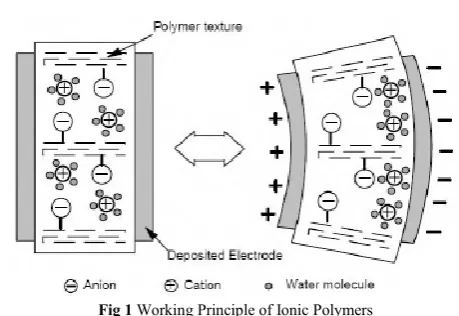
the basic characteristic feature that distinguishes the ionic polymers from their conventional counterparts. Their working principle is that Water molecules pair with cations. In absence of electric potential, the Water/Cation pairs and the Anions are uniformly distributed as seen in the Left Hand Side of the Fig. 1. When potential is applied, the water/cation pairs and the anions redistribute to balance the charge. This causes the negative side of the polymer to swell more than, resulting in bending.
Due to their ionocity- they play a crucial role in electrochemistry which can be observed by these findings. (Shamsuri and Daik, 2014), utilized application of ionic liquid (IL) and their mixture for preparation of advanced polymer blends and composites. ILs and their mixtures used as environmentally friendly solvent, Plasticizer, coupling agent and compatibilizer. (Caponetto et al., 2013), proposed characterization of IPMC as a Novel fractional order element. IPMCs are electroactive materials having ionic polymer thin membranes with platinum metallization on their surfaces. They have electrochemical properties between the ionic/solvent current and the potential field. They can be used as compact fractional-order elements (FOEs).
Recent Scientific
Research
International Journal of Recent Scientific Research
Vol. 8, Issue, 9, pp. 20142-20149, September, 2017
Copyright © Srivastava S., Shujauddin M and Sahani N, 2017, this is an open-access article distributed under the terms of the Creative Commons Attribution License, which permits unrestricted use, distribution and reproduction in any medium, provided the original work is properly cited.
DOI: 10.24327/IJRSR CODEN: IJRSFP (USA)
Article History: Received 10th June, 2017 Received in revised form 14th July, 2017
Accepted 08th August, 2017 Published online 28th September, 2017
Key Words:
and Future Prospects
A one-dimensional matlab-model was introduced (Elbadawy et al., 2015). He synthesized Ion Conducting Nanocomposite membranes based on polyvinyl alcohol (PVA) blended with hyaluronic acid (HA) and hydroxyapatite (HAP) as nanofiller (PVA-HA-HAP) for fuel cell application and effect of modifier agent of PVA on membrane properties using epichlorohydrin (EPI) as chemical cross linker. The PVA-modifier agent type influenced sharply on most membrane properties. The mechanical properties were improved by increasing the amount of EPI and deteriorated controversially with addition of high incorporated amounts of HAP or OPA or H2SO4 for PVA
modification. Electrochemical properties of PVA-HA-HAP composite membranes improved in ionic conductivity with PVA modification and HAP incorporation.
(Zhang et al., 2015), used Ionic Liquid-Doped Gel Polymer electrolyte for Flexible Lithium-Ion polymer batteries. He compared them with Sol-gel polymer electrolytes (GPE), earlier used in lithium-ion polymer batteries. IL exhibited superior ionic properties and lower internal resistance compared to GPE. But excess IL damaged internal structure of the batteries and result in unwanted electrochemical reactions. (Hong et al., 2017), told about application of soft ionic electroactive polymer actuators to fabricate soft robotics. Conventional soft electromechanical actuators, depending upon their design, show linear or circular deformation. Conjugated polymers, Poly (3,4-ethylenedioxythiophene)-poly (styrenesulfonate) (PEDOT:PSS) manipulate ion motion by means of intrinsic angular deformation, which are closer to biomimetic system having potential applications in bio-robotics. It was found that dependence of actuator deformation was on structural design which was verified by analytical and finite element method modeling and ion-material interactions that were considerably dominated by the design of the drop-cast PEDOT: PSS on Nafion.
(Palmre et al., 2014), communicated about Nanothorn electrodes for IPMC artificial muscles. IPMCs have many properties such as soft biomimetic actuators and sensors in various bioengineering and human affinity applications. They are used in artificial muscles and actuators, aquatic propulsors, robotic end-effectors, and active catheters. He used these properties developing, nanostructured electrode surface designed for IPMC by comprising platinum nanothorn assemblies. The highly capacitive properties of nanothorn
assemblies increased significantly the charge transport during the actuation process.
(Feng and Huang, 2016), studied mechanical and electrical behavior of a tuning fork-shaped IPMC actuator with a Continuous Water Supply Mechanism. With an integrated soft strain gauge and water supply mechanism (WSM), the surface strain of the actuator shows sensed properties in situ and providing a continuous water supply maintains the water content inside the IPMC for long-term operation in air. The actuator is fabricated using a micromachining technique and plated with a nickel electrode and compared with an actuator without a WSM. About1.5 mm displacement was found for a 6 mm-long prong with 7-V dc (measured by electrochemical model) actuation applied for 30 s. This faradaic current has crucial activity during operation, particularly after 10 s. The calculated strains have bending and axial strain generation during the open-and-close motion of the actuator prongs. Most of the water loss during device operation was due to evaporation rather than hydrolysis. The constructed WSM effectively maintained the water content inside the IPMC for long term continuous operation.
(Chatterjee, 2015), worked on IPMC based devices for naked-eye sensing of Thiocyanate Ion (SCN-2), which was detected by using ion exchanged IPMC useful for direct determination of thiocyanate at micro-molar level in water samples. But the response time of the sensor in whole concentration ranges was very short (<10 s) and it is independent of the pH range of 2-10.
(Liu et al, 2012), directly observed ion distributions near electrodes in ionic polymer actuators containing ionic liquids (ILs). The recent boom of energy storage and conversion devices introduced by exploiting ILs to enhance the performance also requires an in-depth understanding of this new class of electrolytes in device operation conditions. The present excess ion depth profiles of ILs in ionomer membrane actuators (Aquivion/1-butyl-2, 3-dimethylimidazolium chloride (BMMI-Cl), 27 mm thick), was characterized directly by Time-of-Flight Secondary Ion Mass Spectrometry (ToF-SIMS) at liquid nitrogen temperature. The large difference in the total volume occupied by the excess ions between the two electrodes gives large bending actuation of the actuator.
Those Organic liquid electrolytes which have leakage, flammability and chemical stability issues, solid electrolytes are used to manufacture lithium-ion batteries. Composite polymer electrolyte with well-aligned inorganic Li+-conductive nanowires have ionic conductivity which is one order of magnitude higher than previous polymer electrolytes with randomly aligned nanowires. Accordingly (Liu et al., 2017), the large conductivity enhancement is ascribed to a fast ion-conducting pathway without crossing junctions on the surfaces of the aligned nanowires and long-term structural stability of the polymer electrolyte is improved by using nanowires. (Esmail et al., 2017), proposed a NOVEL humidity sensor based on IPMC. It was fabricated by weak adhesive force between electrodes and the polymer and peeling off phenomenon. Adhesion layers are formed between polymer and Au electrodes. A different fabricated IPMC electrode acted as a capacitor which measured relative humidity conditions and
Fig 1 Working Principle of Ionic Polymers
the relative humidity variations at different deflections and relative humidity conditions.
Dynamic pressure based IPMC sensors were designed (Gurdarzi et al., 2017), on the basis of streaming potential hypothesis and calibrated them in a standard
tube. With the help of sensing mechanism and applied direct assembly process (DAP) to fabricate some pressure sensor samples, equivalent resistance and capacitance of the samples using impedance analyzer were calculated. These dynamic pressure sensors represent an appropriate linearity, sensitivity and reliability and DAP is a consistent fabrication process for making these types sensors.
An ample amount of work was reported by various scientists on applicability of IPMCs very recently.
(Leones et al., 2017), discussed about phenomenon of
uncover novel polymer electrolytes. Solvent casting method is applied to synthesis solid polymer electrolytes (SPEs) which work on the principle of chitosan and fourteen ionic liquids (ILs) having 1-ethyl-3-methylimidazolium cation ([C
Many properties such as thermal, morphological, and electrochemical of the SPEs are affected by influence of the anion . These are explained with help of thermogravimetric analysis (TGA), differential scanning calorimetry (DSC), X diffraction (XRD), scanning electron microscopy (SEM), atomic force microscopy (AFM), complex impedance spectroscopy (ionic conductivity) and cyclic voltammetry. The SPEs shows amorphous morphology, high thermal stability than pure chitosan matrix.
(Obeidat et al., 2017), fabricated solid-state supercapacitors with ionic liquid gel polymer electrolyte and polypyrrole electrodes for electrical energy storage.
formed by mixing of ionic liquid 1-butyl-3methylimidazolium tetrafluoroborate (BMIBF4) with poly (vinylidene
fluoridehexafluoropropylene) P(VdF-HFP). The polypyrrole electrode is formed by ultra-short pulsed current electro polymerization over flexible graphite sheets, and synthesized with the help of LiClO4 and H2SO4 electrolytes. These
electrodes are conditioned though cyclic voltammetry (CV). The electrochemical properties of PPy solid
capacitor is calculated by CV, CD, and EIS with highest area capacitance density about 31.84 mF cm−2 which is equivalent to a specific capacitance of 19.9 F g−1.
A very interesting work on pollutants was proposed (
2017), discussed about Fabrication of polymeric ionic liquid modified magnetic adsorbent for extraction of apolar and pollutants in complicated samples. Simple free radical copolymerization of 1-vinylbenzyl-3-methylimidazolium hexafluorophosphate, divinylbenzene and silica magnetite are used for preparation of PIL
characterized. Parameters such as adsorption, desorption, pH for magnetic solid phase extraction (MSPE) were optimized. Convenient and sensitive analytical methods for parabens and aromatic amines in real samples are introduced by the mixing of PIL-MA-MSPE and HPLC-DAD at the same time. A result abundant active groups in the
PIL-interactions including π-π, hydrophobic, hydrogen dipole-dipole were present in preparation.
the relative humidity variations at different deflections and
Dynamic pressure based IPMC sensors were designed ), on the basis of streaming potential hypothesis and calibrated them in a standard shock pressure tube. With the help of sensing mechanism and applied direct assembly process (DAP) to fabricate some pressure sensor samples, equivalent resistance and capacitance of the samples using impedance analyzer were calculated. These dynamic re sensors represent an appropriate linearity, sensitivity and reliability and DAP is a consistent fabrication process for
An ample amount of work was reported by various scientists on
), discussed about phenomenon of ILs with uncover novel polymer electrolytes. Solvent casting method is applied to synthesis solid polymer electrolytes (SPEs) which work on the principle of chitosan and fourteen ionic liquids methylimidazolium cation ([C2mim]+).
Many properties such as thermal, morphological, and electrochemical of the SPEs are affected by influence of the anion . These are explained with help of thermogravimetric
ing calorimetry (DSC), X-ray diffraction (XRD), scanning electron microscopy (SEM), atomic force microscopy (AFM), complex impedance spectroscopy (ionic conductivity) and cyclic voltammetry. The SPEs shows amorphous morphology, high thermal stability
state supercapacitors with ionic liquid gel polymer electrolyte and polypyrrole . Gel electrolyte is 3methylimidazolium ) with poly (vinylidene HFP). The polypyrrole short pulsed current electro-polymerization over flexible graphite sheets, and synthesized
electrolytes. These electrodes are conditioned though cyclic voltammetry (CV). The electrochemical properties of PPy solid-state super capacitor is calculated by CV, CD, and EIS with highest area which is equivalent
A very interesting work on pollutants was proposed (Liu et al., Fabrication of polymeric ionic liquid-modified magnetic adsorbent for extraction of apolar and polar
Simple free radical methylimidazolium hexafluorophosphate, divinylbenzene and silica-coated magnetite are used for preparation of PIL-MA and were adsorption, desorption, pH for magnetic solid phase extraction (MSPE) were optimized. Convenient and sensitive analytical methods for parabens and aromatic amines in real samples are introduced by the mixing DAD at the same time. As a -MA and multiply π, hydrophobic, hydrogen-bonding and
Liquid-crystal polymers (LCPs) polymers, which are extremely
in the presence of most chemicals at elevated temperatures, including aromatic or halogenated hydrocarbons
bases, ketones, and other aggressive industrial substances. Their hydrolytic stability in boiling water is excellent.
Environments that deteriorate the polymers are high temperature steam, concentrated
caustic materials. They are highly usually present in melted/liquid
main example of lyotropic LCPs is the commercial
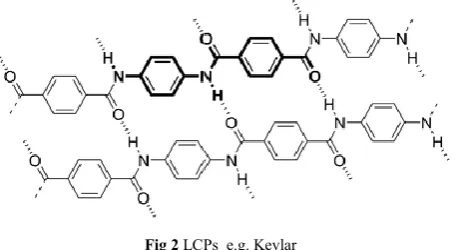
known as Kevlar (Fig. 2). LCPs are capable of forming regions of highly ordered structure while in the liquid phase. However, the degree of order is somewhat less th
crystal. Typically, LCPs have a high mechanical
high temperatures, extreme chemical resistance, inherent flame retardancy, and good weatherability. Liquid
come in a variety of forms from to injection moldable compounds.
Bottom of Form Blending of liquid crystal polymers with conventional polymers has recently attracted attention of researchers and engineers both in terms of
and cost-effectiveness. An extensive literature survey shows, some interesting concepts such as self
and molecular composites to describe immiscible and miscible liquid crystal polymer-containing blends but the major problems encountered in this technology include:
immiscibility of mesogenic and conventional polymers, leading to large-scale phase separation;
morphological (properties) on processing and polymer variables; and Lack of adhesion between phases.
Their use in “conventional composites” though having some adhesion and compression issues have been preferably made over reinforcing materials as fibres, matrix or both.
Its interesting part is the “the combinatio
environmental stability, and ease of processing” that has led to their use in nonlinear optics, optical data storage, and "orienting carriers" for conducting polymers.
of mesogenicity into polymers has created vast po
molecular design, which may ultimately lead to the creation of polymeric liquid materials with highly specific and unique properties.
(An et al., 2016), described about classification, characterization and the properties of LCPs and their applications in different fields which have been initiated by its synthesis and characterization. Most LCP compounds show
Fig 2 LCPs e.g. Kevlar
crystal polymers (LCPs) are a class of aromatic polymers, which are extremely inert. They resist stress cracking in the presence of most chemicals at elevated temperatures, halogenated hydrocarbons, strong acids, and other aggressive industrial substances.
stability in boiling water is excellent.
Environments that deteriorate the polymers are high-temperature steam, concentrated sulfuric acid, and boiling
materials. They are highly resistant to fire and are usually present in melted/liquid or solid form.In solid form the main example of lyotropic LCPs is the commercial aramid LCPs are capable of forming regions of highly ordered structure while in the liquid phase. However, the degree of order is somewhat less than that of a regular solid crystal. Typically, LCPs have a high mechanical strength at high temperatures, extreme chemical resistance, inherent flame retardancy, and good weatherability. Liquid-crystal polymers come in a variety of forms from sinterable high temperature
compounds.
Blending of liquid crystal polymers with conventional polymers has recently attracted attention of researchers and engineers both in terms of improved quality effectiveness. An extensive literature survey shows, some interesting concepts such as self-reinforcing composites and molecular composites to describe immiscible and miscible containing blends but the major problems encountered in this technology include: Inherent immiscibility of mesogenic and conventional polymers, leading scale phase separation; Strong dependence of blend morphological (properties) on processing and polymer adhesion between phases. Strongly inert. Their use in “conventional composites” though having some adhesion and compression issues have been preferably made over reinforcing materials as fibres, matrix or both.
Its interesting part is the “the combination of inherent order, environmental stability, and ease of processing” that has led to their use in nonlinear optics, optical data storage, and "orienting carriers" for conducting polymers. The introduction of mesogenicity into polymers has created vast possibilities for molecular design, which may ultimately lead to the creation of polymeric liquid materials with highly specific and unique
), described about classification, characterization and the properties of LCPs and their applications in different fields which have been initiated by its synthesis and characterization. Most LCP compounds show
and Future Prospects
polymorphism which was detected by various techniques like XRD, DSC and POM. (Sindha et al., 2016), introduced flexible technology and about the flexible fabricating antenna in which LCPs were the best substrate. Flexible antennas are robust and light weight, which withstand mechanical strain upto certain extent such as various HPP. As there is great demand of flexible electronics in various applications, it requires well suited material and LCP is significant material due to its mechanical and electrical properties. The antenna fabricated using LCP can be bent, twisted and rolled up. The antenna fabricated with LCP used for high performance microwave application.
(Chena et al., 2005) synthesized Novel thermotropic liquid crystal polymer (TLCP) which is synthesized by esterification and Polycondensation of Aromatic Compounds like 6-hydroxyl-2-naphthoic acid, 2,6-naphthlenedicarboxylic acid, 4- hydroxybenzoic acid or terephthalic acid. Aliphatic diols like ethyl glycol, 1,4-butadienol was used as flexible spacers to form semi-flexible main chain TLCP. Product were characterized by FTIR and 1HNMR. Naphthalene decreased the melting temperature (Tm) of LCP (181-272 8C) to facilitate extrusion or injection molding, low Tm, etc. The novel LCPs exhibit improvements over Vectra in processability and cost. (Hall et al., 2011) performed various kinds of experiments such as preparation of liquid crystalline prepolymer, distillates accompanying prepolymers, final polymers, and sublimates accompanying final polymers NaOD/D2O depolymerization of prepolymers and polymers back to monomers. Anhydride groups must render LCP’s more susceptible to degradation by nucleophilic reagents. His findings suggested that Fries rearrangement products detected in very small amounts accounted for yellowing in LCP’s. Both anhydrides and Fries rearrangements produce kinks in the polymer chains.
(Padias and Hall, Jr 2011), prepared of LCP known as Vectra by acidolysis of 4-hydroxybenzoic acid with 6-hydroxy-2-napthalic acid. Kinetics of model reaction and of actual polycondensation followed second order kinetics and their rate constant. The mechanisms may include nucleophilic aromatic substitutions, chain polycondensation, esterolysis etc. Complication caused by ketene loss can be averted by the use of methoxycarbonyloxy monomers.
(Kan et al., 2011) prepared new, rigid-rod oligomers with LC-related photoemission properties derived from aromatic structures in biomolecules available from microorganism. He synthesised functional bio-based polymers with LC properties, poly{3-benzylidene amino-4-hydroxybenzoic acid (3,4-BAHBA)-co-trans-4-hydroxycinnamic acid (4HCA: trans-coumaric acid)} (Poly(3,4-BAHBA-co-4HCA) by thermal polycondensation of 4HCA and 3,4-BAHBA. When the 4HCA compositions of Poly(3,4-BAHBA-co-4HCA)s were above 55 mol%, the copolymers showed a nematic liquid crystalline phase due to the mesogenic effects of the continuous 4HCA units. Furthermore, these oriented films emitted polarized light. (Lee and White, 2011), examined the unique opportunities of photomechanical responses realized in azobenzene-functionalized LCP networks (both elastomers and glasses). Their work summarizes and contrasts the photomechanical response of glassy polydomain, monodomain, and twisted
nematic azo-LCN materials to blue-green irradiation. These novel responses that may be of potential use in future employment of these materials in actuation.
(Emoto et al., 2012), found that Photocontrol of molecular alignment is an exceptionally-intelligent and useful strategy. It enables us to control optical coefficients, peripheral molecular alignments, surface relief structure, and actuation of substances by means of photoirradiation. Azobenzene-containing polymers and functionalized LCPs are well-known photocontrollable materials. Photodriven changes in molecular alignment can play an important role in the future.
(Ji et al., 2012), introduced Liquid crystalline elastomers (LCEs) exhibiting a number of remarkable physical effects, including a uniquely high-stroke reversible mechanical actuation triggered by external stimuli. Fundamentally, all such stimuli affect the degree of liquid crystalline order in the polymer chains cross-linked into an elastic network The motivation for the combination of nanoparticles with LCEs is to provide better-controlled actuation stimuli, such as electric and magnetic fields, and broad-spectrum light, by selecting and configuring the appropriate nanoparticles in the LCE matrix. In the same year, (Riou et al., 2012), developed Magnetic hybrid liquid crystalline composites obtained either by thermal decomposition of a cobalt precursor in a solution containing a LCP or by dispersing preformed cobalt nanorods in a LCP matrix. The final materials are all mesomorphous and ferromagnetic. Coupling the inherent advantages of magnetic nanoparticles and liquid crystal groups could result in materials with interesting magnetic properties and orientational behavior, provided mechanical properties, which are mandatory for applications such as actuators.
Synthetic Polymer Membranes
Synthetic polymeric membranes show competitive performance in separation industry and are economical too (Fig. 3) (Srivastava and Pandey, 2017). Several books representing extensive research on structure and characterization of synthetic polymeric membranes are published (Kesting, 1985; Khulbe et al., 2008; Kesting, 1971). These membranes are very helpful in transport of gases (Stannet, 1978). They have also been used in space commercialization programmes to detect convection currents via space shuttle (Sharokhi et al., 1990).
Meanwhile they have been very recently, by self-assembly process. , hybrid membranes with new properties and functionality by insertion of membrane proteins and biopores in synthetic polymeric membranes have been studied. They behave as great biological mimics (Garni et al, 2016).
Luk et al., studied dynamic thisInterfacial interactions between natural RBC membranes and synthetic polymeric nanoparticles thereby concluding that this membrane-particle assembly enhance the particles' colloidal stability and provide valuable information toward future development and characterization of cellular membrane-cloaked nanodevices (Luk et al., 2014).
their clinical applications, as well as their main challenges still which we are facing (Wang et al., 2016)
I n this year itself a robust and recyclable heterogeneous catalyst, the palladium nanoparticles (Pd NPs) were formed by spontaneous reduction of Pd2+ ions with hydrazine covalently attached via glycidyl units to the pore wall of poly(propylene) membrane. These synthetic polymeric membranes were able to mimic the egg shell membrane in catalytic reduction of Uranyl (VI) ions (SankararaoChappa, 2017).
Hydrogels - Smart Polymers
Materials which adjust their properties in response to environmental factors such as temperature, pH and ionic strength are rapidly evolving and known as smart materials. Hydrogels are hydrophilic polymers that can retain many times their own weight in water. They are often polymers of carboxylic acids. The acid groups ionise in water, leaving the polymer with several negative charges along its length. This has two effects. Firstly, the negative charges repel each and the polymer is forced to expand. Secondly, polar water molecules are attracted to the negative charges. This increases the viscosity of the resulting mixture because the polymer chain now takes up more space and resists the flow of solvent molecules around it.
There are a large number of hydrogels and they expand and contract at different pH values, temperatures and ionic concentrations (Fig.4). A review by Laftah
detailed description of definitions, classification, main properties including swelling, and application of polymer hydrogels (Laftah et al., 2011). They were termed as “super absorbent polymer hydrogles”. This property is now a days has been extensively used in baby-diapers. Kope
classified smart polymers in her review on the basis of structural properties, types of stimuli they respond and then described their microfluidic applications including the applications in supramolecular chemistry and molecular imprinting (Kopceck, 2007; Chaterji et al., 2007
with recent advancements in 10 years was published by et al.,(Samal et al., 2014).
So many other research work has been recently reviewed on hydrogels like their use in “Smart valve: Polymer actuato (Marcelo et al., 2016), the fine tuning of poly(N isopropylacrylamide) PNIPAM with temperature response to human body and its versatility as interpenetrating polymer network (IPN), double network nanocomposites etc.(
et al., 2017). Photolithographic patterns using smart hydrogels
Fig 3 Polymeric membrane sieve (Srivastava and Pandey, 2017)
clinical applications, as well as their main challenges still
robust and recyclable heterogeneous catalyst, the palladium nanoparticles (Pd NPs) were formed by ions with hydrazine covalently the pore wall of poly(propylene) membrane. These synthetic polymeric membranes were able to mimic the egg shell membrane in catalytic reduction of Uranyl
Materials which adjust their properties in response to environmental factors such as temperature, pH and ionic strength are rapidly evolving and known as smart materials.
an retain many times their own weight in water. They are often polymers of carboxylic acids. The acid groups ionise in water, leaving the polymer with several negative charges along its length. This has two effects. Firstly, the negative charges repel each other and the polymer is forced to expand. Secondly, polar water molecules are attracted to the negative charges. This increases the viscosity of the resulting mixture because the polymer chain now takes up more space and resists the flow of solvent
There are a large number of hydrogels and they expand and contract at different pH values, temperatures and ionic Laftah et al., presented a finitions, classification, main properties including swelling, and application of polymer ). They were termed as “super-absorbent polymer hydrogles”. This property is now a days has
Kopeček and Chaterji classified smart polymers in her review on the basis of structural properties, types of stimuli they respond and then described their microfluidic applications including the applications in supramolecular chemistry and molecular ., 2007). The same with recent advancements in 10 years was published by Samal
So many other research work has been recently reviewed on hydrogels like their use in “Smart valve: Polymer actuator” ), the fine tuning of poly(N-isopropylacrylamide) PNIPAM with temperature response to human body and its versatility as interpenetrating polymer network (IPN), double network nanocomposites etc.(Abdulhaq phic patterns using smart hydrogels
as actuators were studied (Bassik ultrasonic quantification sensors ( controlled drug release (Jankaew 2017), cell culture (Bian et al sensors (Rivero et al., 2014 (Kiruthika and Kulkarni, 2017 metal composites (Sahiner et al
The criteria of being “so smart” came from their history of being a simple network (Buwalda
et al., 2011), to most versatile in their functioning like electroconductivity (Shi et al
therapeutics (Milcovich et al., 2017
Dendritic Polymers
Dendritic polymers are belonging to a special class of macromolecules. They are called "Dendrimers." Similar to linear polymers, they composed of a large number of monomer units that were chemically linked together. Due to their unique physical and chemical properties, dendrimers have wide ranges of potential applications. These include adhesives and coatings, chemical sensors, medical diagnostics, drug
high-performance polymers, catalysts, building blocks of supermolecules, separation agents and many more.
The name dendrimer is derived from Greek words
meaning "tree" and meros meaning "part." A major difference between linear polymers and dendrimers is t
polymer consists of long chains of molecules, like coils, crisscrossing each other. A dendrimer consists of molecular chains that branched out from a common center, and there is no entanglement between each dendrimer molecules (Fig. 5).
A novel way of synthesis of dendrites was achieved by using flash cationic polymerization (
Polymeric membrane sieve (Srivastava and Pandey, 2017)
Fig 4 Smart Hydrogel
Fig 5 The Dendritic Structure
Bassik et al., 2010), their use as ultrasonic quantification sensors (Troiani et al., 2011), Jankaew et al., 2015; Constantin et al.,
et al., 2016), pressure/ Microwave ., 2014), cost effective conductors Kiruthika and Kulkarni, 2017), as a catalysis medium with
t al., 2012).
The criteria of being “so smart” came from their history of
Buwalda et al., 2014; Samchenko ), to most versatile in their functioning like
et al., 2016), pharmacy and ., 2017).
Dendritic polymers are belonging to a special class of macromolecules. They are called "Dendrimers." Similar to linear polymers, they composed of a large number of monomer that were chemically linked together. Due to their unique physical and chemical properties, dendrimers have wide ranges of potential applications. These include adhesives and coatings, chemical sensors, medical diagnostics, drug-delivery systems, ormance polymers, catalysts, building blocks of supermolecules, separation agents and many more.
The name dendrimer is derived from Greek words Dendron meaning "part." A major difference between linear polymers and dendrimers is that a linear polymer consists of long chains of molecules, like coils, crisscrossing each other. A dendrimer consists of molecular chains that branched out from a common center, and there is no entanglement between each dendrimer molecules (Fig. 5).
A novel way of synthesis of dendrites was achieved by using flash cationic polymerization (Tani et al., 2016), rheology
Smart Hydrogels (Milcovich et al., 2017)
and Future Prospects
(Chen et al., 2016), electrochemical synthesis of polymethylsilane dendrimers (Mavric et al., 2017), honeycomb-shaped polyurethane films from dendritic side-chain polymers having reactive pendent units (Su et al., 2014). These polymers provide a very good alternative to naturally occurring biological assesmblies for targeted drug delivery (Tang et al., 2017). Its use in nanomedicine was proposed by two scientists (Kretzmann et al., 2017; Viswanath and Santhakumar, 2017).
Apart from targeted drug delivery, we can review the versatility of these dendritic polymers in the field of supercapacitors (Darshna et al., 2017), thickening agent (Zhao et al., 2017), spectrochemical applications (Kao et al., 2015), solar cells (Yi et al., 2017), ion-exchange chromatography (Li et al., 2014) and LEDs (Song et al., 2014) etc.
Their use in gene therapy and gene delivery was very recently reviewed (Luo et al., 2014). But their use as electrochemical sensors is still under discovery.
CONCLUSION
Versatility and applications of speciality polymers is very vast and it still requires much exploration. Because of their competitive advantage, they are growing in demand in industrial sector. We were unable to cover Conducting -Polymers in this study due to the amount of work done in its area being large enough to cover in this short study.
References
AbdulHaq, M.,Su,Y., Wang, D(2017): Mechanical properties of PNIPAM based hydrogels, Materials Science and Engineering:C, 70 (1): 842-855.
An.J, Hina.S, Yang.Y, Xue.M, Liu.Y, (2016): characterization of liquid crystals:a literature review, Rev. Adv. Mater. Sci. 44: 398-406.
Bassik N., Beza.T., Kate,A., Laflin, E. and David H.G.,(2010): Photolithographically patterned smart hydrogel based bilayer actuators. Polymer, 51(26): 6093-6098.
Bian,S, He,M., Sui,J, Cai,H. and Zhang, X.(2016):The self-crosslinking smart hyaluronic acid hydrogels as injectable three-dimensional scaffolds for cells culture. Colloids and Surfaces B: Biointerfaces, 140: 392-402.
Buwalda,S.J., Boere,K. , Dijkstra,P., Feijen,J. and Hennink,W.(2014): Hydrogels in a historical perspective: From simple networks to smart materials,190: 254-273.
Caponetto.R, Graziani.S, Pappalardo L.F, Sapuppo F,(2013): Experimental Characterization of Ionic Polymer MetalComposite as a Novel Fractional Order Element., Hindawi Publishing Corporation Advances in Mathematical Physics Volume 2013, Article ID 953695.
Chappa,S.,Mhatre,A.M., Adya,V. C. and Pandey,A.K. (2017):Egg-shell membrane mimicking synthetic polymer membrane supported palladium nanoparticles for catalyzing reduction of uranyl(VI) ions., Applied Catalysis B: Environmental. 203: 53-64.
Chaterji,S 1,.,Kwon,K.II, and Park,P.1,2 (2007):Smart Polymeric Gels: Redefining the Limits of Biomedical Devices. Prog Polym Sci,32 (8-9): 1083-1122. Chatterjee.D, (2015): Using Ionic Polymer Metal Composite
(IPMC) based Devices for Naked-eye Sensing of Thiocyanate Ion (SCN-), Polymer Sciences, 1 (18): 1-3. DOI: 10.21767/2471-9935.100008.
Chen,S., Döhler,D. and Wolfgang,H.(2016):Rheology of hydrogen-bonded dendritic supramolecular polymer networks in the melt state, Polymer, 107,466-473. Chen. B, Tsaya.S, Chen.J, (2005): Synthesis and properties
of liquid crystalline polymers with low Tm and broad mesophase temperature ranges, Polymer, 46(20): 8624-8633.
Constantin,M., Bucatariu,S., Doroftei,F. and undueanu, G.(2017): Smart composite materials based on chitosan microspheres embedded in thermo sensitive hydrogel for controlled delivery of drugs. Carbohydrate Polymers, 157: 493-502.
Darshna,D., Potphode, Sarada,P., Mishra, P. and Manoranjan Patri,M.(2017): Asymmetric supercapacitor devices based on dendritic conducting polymer and activated carbon. Electrochimica Acta, 230: 29-38.
David,T., Jonathan, R.D., and David, H.B., (2011): Ultrasonic quantification using smart hydrogel sensors, Talanta, 83(5): 1371-1375.
Elbadawy A. Kamoun, M. Elsayed Youssef, M. A. Abu-Saied, Alaa Fahmy, Hazem F. Khalil, Farag Abdelhai, (2015): Ion Conducting Nanocomposite Membranes Based on PVA-HA-HAP for Fuel Cell Application: II. Effect of Modifier Agent of PVA on Membrane Properties, Int. J. Electrochem. Sci., 10: 6627 - 6644. Emoto.A, Uchida.A, Fukuda.T, (2012): Optical and Physical
Applications of Photocontrollable Materials: Azobenzene-Containing and Liquid Crystalline Polymers, Polymers, 4: 150-186.
Esmail.E, Ganjian.M, Rastegar H., Kolahdouz.M, Kolahdouz.C, Zhang.G.C,(2017): Humidity sensor based on the ionic polymer metal composite, Sens. Actuators B, 247 : 498-504
Feng.G.H, Huang.W.L, (2016): Investigation on the Mechanical and Electrical Behavior of a Tuning Fork-Shaped Ionic Polymer Metal Composite Actuator with a Continuous Water Supply Mechanism, Sensors, 16: 433; doi:10.3390/s16040433.
Garni,M., Thamboo, S.,Schoenenberger, CA. and Palivan, CG.(2017): Biopores/membrane proteins in synthetic polymer membranes. Biochim Biophys Acta.,1859 (4):619-638.
Gudarzi.M, Smolinski.P, Wang.Q.M,(2017): Bending mode ionic polymer metal composite (IPMC) pressure sensors”, Measurement, 103: 250-257.
Hall.H, Ahad.S, Bates.R, Bertucci.M, Contreras.C , Dospinoiu.A , Lin.G , Singletary.N, Somogyi.A, (2011):Structural Analysis of Aromatic Liquid Crystalline Polyesters” Polymers, 3: 367-387.
Jankaew,R.,Rodkate,N., Lamlertthon,S., Rutnakornpituk,B. a nd Rutnakornpituk,M.(2015). ‘Smart” arboxymethylchitosan hydrogels crosslinked with poly (N-isopropylacrylamide) and poly(acrylic acid) for controlled drug release. Polymer Testing, 42: 26-36. Ji.Y, Marshall.J.E., Terentjev .E. M.,(2011):
Nanoparticle-Liquid Crystalline Elastomer Composites, Polymers,, 4: 316-340.
Kan.K, Kaneko.D, Kaneko.T,(2011):Polarized Emission of Wholly Aromatic Bio-Based Copolyesters of a Liquid Crystalline Nature, Polymers, 3: 861-874.
Kao,S., ShiangY.,Hu,C., Leung,M.and Ho,K.(2015):Applicat ion of triphenylamine dendritic polymer in a complementary electrochromic device with panchromatic absorption, Solar Energy Materials and Solar Cells, 143: 174-182
Kesting, Robert. E. (1971): Synthetic Polymeric Membranes, ISBN 10: 0070342806 / ISBN 13: 9780070342804 Published by McGraw-Hill, New York.
Kesting.R,(1985): Synthetic polymeric membranes: a structural perspective, Wiley, 1985 - Technology & Engineering - 348 pages.
Khulbe.K, Feng.C, Matsuura.T,(2008): Synthetic Polymeric Membranes Characterization by Atomic Force Microscopy.
Kiruthika,S. and Kulkarni,G.U. (2012): Energy efficient hydrogel based smart windows with low cost transparent conducting electrodes,Solar Energy Materials and Solar Cells, 163: 231-236.
Kopeček,J.(2007): Hydrogel biomaterials: A smart future?. Biomaterials, 28(34) :5185-5192.
Kretzmann,J.,Evans,C., Norret , M. and Swaminathan, K.(2017): Supramolecular Assemblies of Dendrimers and Dendritic Polymers in Nanomedicine. Reference module in Chemistry, Molecular Sciences and Chemical Engineering, Comprehensive Supramolecular Chemistry II: pp 237-256.
Laftah,W.A., Hashim,S. and Ibrahim,A.(2011).:Polymer Hydrogels: A Review. Polymer-Plastics Technology and Engineering, 50: 1475-1486.
Lee.K.M., White.T J., (2011): Photomechanical Response of Composite Structures Built from Azobenzene Liquid Crystal Polymer Networks, Polymers, 3: 1447-1457. Leones.R, Sabadini.R. C., Esperança.J. M. S. S., Pawlicka.A,
Silva.M. M, (2017): Playing with ionic liquids to uncover novel polymer electrolytes”, Measurement, 300: 46-52.
Li,Y., Yang,J., Jin,J., Sun,X. and Chen,J.(2014): New reversed-phase/anion-exchange/hydrophilic
interaction mixed-mode stationary phase based on dendritic polymer -modified porous silica. Journal of Chromatography A 1337: 133-139.
Liu.C, Liao.Y, Huang.X, (2017): Fabrication of polymeric ionic liquid-modified magnetic adsorbent for extraction of apolar and polar pollutants in complicated samples”, Talanta, 172: 23-30.
Liu.W1, Lee2 .S.W, Cui.Y, , Lin.D, Shi.F, Wang.S, Austin D., Sendek.A.S, (2017): Enhancing ionic conductivity in composite polymer electrolytes with well-aligned ceramic nanowires, Nature energy, 2: 17035 . doi: 10.1038/nenergy.2017.
Liu.Y , Lu.C, Twigg.S, Ghaffari .M, , Lin.J, , Winograd. N, Zhang.Q.M, (2013): Direct Observation of Ion Distributions near Electrodes in Ionic Polymer Actuators Containing Ionic Liquids, SCIENTIFIC REPORTS | 3: 973 | DOI: 10.1038/srep00973.
Luk,B., Hu,C.J., Fang,R.H.,Dehaini,D., Carpenter,C.,Gao, W.and Zhang,L. (2014), Interfacial interactions between natural RBC membranes and synthetic polymeric nanoparticles, Nanoscale, Issue 5, 2014. Luo,K., He,B., Wu,Y., Shen,Y. and Gu, Z.(2014) :Functional
and biodegradable dendritic macromolecules with controlled architectures as nontoxic and efficient nanoscale gene vectors- Review Article. Biotechnology Advances, 32(4): 818-830.
Manufacturing: Materials and Processing." National Research Council. 1994. Polymer Science and Engineering: The Shifting Research Frontiers. Washington, DC: The National Academies Press. Pg- 91-92 doi: 10.17226/2307.
Mavric,A.,Badasyan,A., Mali,G.
and Valant,M.(2017):Growth mechanism and structure of electrochemically synthesized dendritic polymethylsilane molecules, European Polymer Journal, 90: 162-170.
Milcovich,G.,Lettieri,S., Antunes,F.E, Medronho,B. and Giordani,S.(2017): Recent advances in smart biotechnology: Hydrogels and nanocarriers for tailored bioactive molecules depot-Review article, Advances in Colloid and Interface Science, In press, corrected proof.
Obeidat.M, Gharaibeh.M. A., Obaidatn.M, (2017): Solid-state supercapacitors with ionic liquid gel polymer electrolyte and polypyrrole electrodes for electrical energy storage. J. Energy Storg. 13: 123-128.
Padias.A.B., Hall.H. K. , ,(2011):Mechanism Studies of LCP Synthesis, Polymers, 3: 833-845.
Palmre1.V, Pugal.D, Kim.K.J, Leang.K.K, Asaka.K, Aabloo.A, (2014): Nanothorn electrodes for ionic polymer-metal composite artificial muscles, Scientific Reports | 4: 6176 | DOI: 10.1038/srep06176.
Rebeca,E.,R., Molina,A.M., Rivarola,C.R. and Barbero,C.A., (2014):Pressure and microwave sensors/actuators based
on smart hydrogel/conductive polymer nanocomposite ,Sensors and Actuators B: Chemical, 190: 270-278. Riou.O, Zadoina.L, Lonetti.B, Soulantica.K, Mingotaud.A,
Respaud.M, Chaudret.B, Mauzac.M, (2012): In Situ and Ex Situ Syntheses of Magnetic Liquid Crystalline Materials: A Comparison, Polymers , 4: 448-462. Romero,M.R., Wolfel,A., Cecilia,I.and Igarzabal,A.(2016),
Smart Valve: Polymer actuator to moisture soil control. Sensors and Actuators B: Chemical, 234: 53-62.
Sahiner,N., Butun,S.,Ozay,O.and Dibek,B.(2012): Utilization of Smart Hydrogel-Metal Composites as Catalysis Media, Journal of Colloid and Interface Science, 373(1): 122-128.
and Future Prospects
Samchenko,Y.,Ulberg,Z.and Korotych,O.(2011):Multipurpos e smart hydrogel systems. Advances in Colloid and Interface Science, 168(1-2): 247-262.
Shahrokhi.F, Hazelrigg.G, Bayuzick.R, (1990): Preparation of Synthetic Polymer Membranes in a Microgravity Environment, Space Commercialization: Platforms and Processing, Progress in Astronautics and Aeronautics, pp. 94-102. https://doi.org/10.2514/5. 9781600866005.0094.0102.
Shamsuri, A.A., Daik ,R., (2014): applications of ionic liquids and their mixtures for preparation of advanced polymer blends and composites: a short review., Adv.Mater. Sci. 40: 45-59.
Shi,Z., Gao,X. Ullah, M W., Li,S. and Yang,G.(2016): Electroconductive natural polymer-based hydrogels- Review article. Biomaterials, 111: 40-54.
Sindha.D. S., Shah.B, Raval.F, (2016): Study of Liquid Crystal Polymer Based Flexible Antenna, International Journal of Advanced Research in Computer Engineering & Technology (IJARCET) 5 (3): 501-503.
Song,H.J., Shin,G.C., Choi,K.H., Lee,S. and Moon.,D.K., (2014):White polymer light emitting diode materials introducing dendritic quinoxaline derivative: Synthesis, optical and electroluminescent properties., Synthetic Metals, 190: 1-7.
Srivastava S., and Pandey, J. (2017), Application of Molecularly Imprinted Polymer (MIP) - sieve sensor for removal of mercury in hospital wastes, International Journal of Science and Research, 6(3): 1667-1671.
Stannett.V,(1978): The transport of gases in synthetic polymeric membranes-an historic perspective, Journal of Membrane Science, 3(2): 97-115.
Su,Y., Chen,W., Juang,T., Ting,W.and Jeng,R.(2014): Honeycomb-like polymeric films from dendritic polymers presenting reactive pendent moieties, Polymer, 55(6): 1481-1490.
Tang,X.,Zhou,S., Tao,X., Wang,J. and Liang,Y.(2017): Targeted delivery of docetaxel via Pi-Pi stacking stabilized dendritic polymeric micelles for enhanced therapy of liver cancer. Materials Science and Engineering: C, 75: 1042-1048.
Tani, Y., Takumi,M., Moronaga, S.,Nagakie, A. and Yoshida,J.(2016): Flash cationic polymerization followed by bis-end-functionalization, A new approach to linear-dendritic hybrid polymers, European Polymer Journal, 80: 227-233.
Viswanath,V. and Santhakumar, K.(2017): Perspectives on dendritic architectures and their biological applications: From core to cell, Journal of Photochemistry and Photobiology B: Biology, 173: 61-83.
Wang,J,Wang,L.,Zhou,Z.,Lai,H.,Xu,P.,Liao,L. and Wei,J
(2016).: Biodegradable Polymer Membranes Applied in Guided Bone/Tissue Regeneration: A Review. Polymers, 8(4): 115.
Yi,M., Yi,J., Wang,J., Wang,L., Wang,H.(2017):Perylenedii mide derivatives based on a dendritic oligothiophene core as electron acceptor for use in polymer solar cells, Dyes and Pigments, 139: 498-508.
Zhang.R, Chen.Y, Montazami.R, (2015): Ionic Liquid-Doped Gel Polymer Electrolyte for Flexible Lithium-Ion Polymer Batteries, Materials, 8: 2735-2748. Zhao,X., Guo,J., Peng,H., Pan,R. and Yang, J.
(2017):Synthesis and evaluation of a novel clean hydraulic fracturing fluid based on star-dendritic polymer, Journal of Natural Gas Science and Engineering, 43: 179-189