Polypropylene fibres containing dispersed clays having improved fire
performance. Part I :
Effect of nanoclays on processing parameters and
fibre properties.
A Richard Horrocks,1, Baljinder K Kandola,1, Gillian Smart,1 Sheng Zhang,2 T Richard Hull1
1 Centre for Materials Research and Innovation, University of Bolton, Deane Road, Bolton, BL3
5AB, UK
2College of Material Science and Engineering, Beijing University of Chemical Technology,
Beijing, 100029, China
ABSTRACT
While the present interest in the use of functionalised nanoclays as additives for improving tensile properties and fire performance in polypropylene thermoplastics has led to a considerable literature, little attention has been given to this polymer in fibre form. In this paper we report the conditions necessary for and the characteristics of filaments and tapes comprising dispersions of a functionalised clay in polypropylene-clay prepared by melt compounding polypropylene in a twin screw extruder. A small fraction (1 - 3% w/w) of modified grafted polypropylene has also been included to improve dispersion of the clay. X-ray diffraction of hot- pressed films, coupled with transmission electron microscopic investigation have been used to assess the degree of dispersion of the clay. Clay dispersion at the nano-level was observed by TEM, but intercalation was not evident from X-ray study. Compounded samples were melt- extruded into filaments using a single screw extruder and drawn prior to wind up. The physical properties of the clay-containing polypropylene filaments showed that presence of dispersed clay increased filament modulus and was supportive of having achieved some degree of nanodispersion. Selected filament samples had sufficiently acceptable textile properties to enable their knitting into fabric samples. The burning behaviour of fabric and film samples were observed by limiting oxygen index (LOI)
Corresponding author. Tel. : +44 1204 903517 ; fax : +44 1204 399074
and cone calorimetry at 35kW/m2 external heat flux. While the clay presence did not confer flame retardancy, it did change the burning character and encouraged some char formation.
Key words:polypropylene fibres; nanoclays; compatibiliser; X-ray diffraction; transmission electron microscopy; flammability
1. INTRODUCTION
The low cost of polypropylene coupled with its excellent mechanical properties determines its suitability for the end - uses including, tapes, films, injection-moulded products and, important to this study, fibres. Although polypropylene fibres are rarely used in apparel fabrics, they are commonly used for both domestic, contract and automotive upholstery fabrics. However, when subjected to heat, once the melting temperature is reached, polypropylene drips and when the ignition temperature is reached, rapid burning occurs, with no char produced. High levels of flame retardants, typically >20% w/w, often antimony-bromine based, are needed to make polypropylene materials conform to the necessary standards for use in textiles or composites for the automotive and aero industries.1 However,
such high levels render the processing of compounded polymer into fibres difficult and the resulting fibre properties unsuitable for textile applications.
oxygen groups of clay.2,5,6 Presence of such compatiblisers usually has adverse effects on fibre properties, however.1
Although good dispersion within the polymer is very important for further processing into fibres it has been demonstrated that improved fire performance can be obtained where the clay structure is at best only intercalated forming a microcomposite instead of a true nanocomposite.7 However, clay platelets need to be fully exfoliated to form a true
nanocomposite and it has been shown that increasing shear stress, mixing time and decreasing mixing temperature, when compounding in the twin screw extruder, can improve clay platelet exfoliation.8
Much of the previous work on nanocomposites has been on injection and compression moulded thermoplastics, with very little recorded literature on the production of textile fibres. Some polypropylene fibres containing nanodispersed particles have been developed but they contain silver particles to improve the antimicrobial properties.9 However, the mechanical and fire behaviour of fibres or fabrics is probably quite different from that of a solid nanocomposite plaque. Thus while the addition of up to 5% w/w nanoclays into plaques brings an improvement in mechanical properties,10,11 our recent review shows that improved tensile properties of fibres may be achieved also at 1-5% clay-inclusion levels.12 Deterioration in properties, however, usually occurs at clay levels >5%.10-12
The present study is the first part of a larger project, investigating the possibility of creating fire retardant synthetic fibres based on nanocomposite structures. This part examines the challenges involved in generating polypropylene fibres comprising dispersed nanoclay and compatibilising copolymer.
2. EXPERIMENTAL
2.1. Samples
Polypropylene : Fibre grade polypropylene chips, Moplen HP516R, Basell Polyolefins. Nominal MFI 25g/600s at 230oC
Grafted polypropylene : Polybond 3200 (Pb), Crompton Corporation, maleic anhydride modified homopolymer polypropylene with maleic anhydride level 1% (w/w)
Nanoclay : Cloisite 20A, Southern Clay Products, USA, is a montmorillonite clay modified with dimethyl, dihydrogenated tallow quaternary ammonium chloride. This modified clay was chosen because of its non-polar alkyl substituents.
2.1.2. Compounding
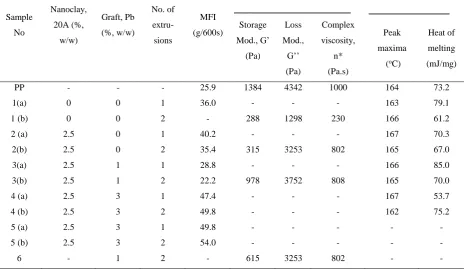
Polypropylene and additives were hand-mixed in a plastic container prior to compounding. A Betol BTS30 twin screw extruder with a temperature profile over six heating zones between 179– 1900C was used for compounding. The samples were passed through the compounder initially once and then twice to assess the effect of additional mixing on the dispersion of the clay within the polymer matrix. Polymer extrudates were pelletised after cooling in a water bath. The different formulations used are given in Table 1. One set of samples, (5(a) and 5(b) in Table 1), was prepared using a master batch comprising 5% clay and 6% graft which was then diluted with polypropylene to give samples containing 2.5% clay and 3% graft. All percentage concentrations are on a weight/weight basis.
2.1.3. Melt extrusion into filaments / tapes
Tapes (40mm width, 0.6±0.2mm thickness) were extruded using a tape die in place of the spinneret, primarily to provide samples more convenient for microscopic investigation while having experienced both compounding and extrusion cycles similar to that for filaments. Tapes were collected as they cooled with no draw ratio applied.
2.1.4. Fabric production
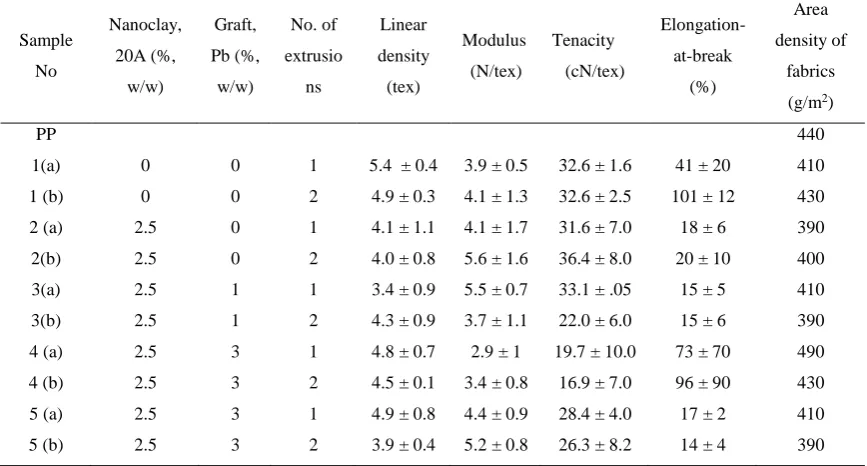
Because of the limited quantities of experimental filaments available, production of small samples of weft-knitted fabric only was possible in order to test each in fabric form. Filament bundles were knitted into fabric strips with a small, hand, circular knitting machine, gauge E7 and area densities are recorded in Table 2.
2.1.5. Film formation by compression moulding
Films (ca. 0.3 mm thickness) were also cast from compounded blends by compression moulding with spacer plates, between aluminium foil-coated steel plates at a set plate temperature of 190 oC.
2.2. Material characterisation
Melt flow index (MFI) values were determined using a Davenport Ltd melt flow indexer, which gives an inverse measure of viscosity. For polypropylene measurements were taken at 230oC as per BS EN ISO 1133:200 to determine the effect of nanoclay on the viscosity of the
polymer.
Differential scanning calorimeteric (DSC) experiments were conducted using a Polymer Laboratories (PL-DSC) instrument, under flowing nitrogen (10 ml/min) and a heating rate of 10oC/min from room temperature to 350oC. About 2.5 mg of sample was taken in each case
A Dynamic Analyser Rheometer RDA II (Rheometrics) with parallel plate geometry and a plate diameter of 25 mm was used to characterise nanoclay dispersion in each compounded sample. Sample thickness was kept at 1 mm and to ensure the full coverage of viscoelastic region, linear rheological measurements were performed at a frequency range of 0.1 to 100%. Elastic moduli (G’), loss moduli (G”) and complex viscosities (η*) were obtained at 240 oC.
The temperature control was accurate to within ± 1 oC. Experiments were conducted under a
nitrogen atmosphere in order to avoid oxidative degradation of the specimen.
X-ray diffraction (XRD) studies were carried out on both compounded polymer and selected filament samples using a Siemens D500 powder diffractometer (Cu-K radiation) with a step size of 2, a step time of 1 sec and a diffracted angle range of 0-250 to characterise the dispersion of clay particles throughout the polymer matrix.
Optical microscopy was carried out using a Nikon Labophot 2 optical microscope with image capture by a JVC TK-C1381 colour video camera.
Transmisssion electron microscopy was carried out using a Tecnai F30G2 FEG TEM running at HT 300kv. Compounded polymers were cast into plaques, which were cut into thin films using an ultramichrotome.
2.3. Physical testing of filaments
Tensile testing was done on individual filaments using the Textechnic Statimat M Test with a gauge length of 100 mm, load cell 10 N and test speed of 300 mm/min. Five different filaments from the same sample were tested and the results averaged.
2.4. Flammability testing of fabrics and cast films
Limiting oxygen index (LOI) values were determined on selected PP nanocomposite film samples with samples thicknesses of about 0.3~1.5 mm by using a standard procedure.13
566014 using an incident heat flux of 35 kW/m2. Sample sizes for cast films and fabrics were 100mm x 100mm. For fabric samples, a set of wires were placed across the surface of the fabric to hold it flat in the sample holder15 and to prevent it curling while burning.
3. RESULTS AND DISCUSSION
3.1. Physical properties
Prior unpublished work gave an insight into the importance of the need for good dispersion of clay and other additives within the polymer matrix if further processing of compounded polymers into filaments is required. To produce a true nanocomposite, the clay platelets must be fully exfoliated within the polymer matrix or the polymer – clay system becomes a microcomposite. The Brabender mixer is ideal to assess morpholgy of small amounts of polymer but if further production into filaments is required then compounding in twin screw extruder is the only way to produce sufficient amounts of polymer. The samples described in Table 1 were compounded in the twin screw extruder with passage through once and then twice to assess the effect of additional mixing on the dispersion of the clay within the polymer matrix and also to observe the effect of varying amounts of the commercially available grafted polypropylene, Polybond 3200, on the levels of mixing and dispersion.
nanocomposite structure and although there is no claim at this stage that fully exfoliated nanocomposites have been produced it does show that the extra mixing improves the dispersion of the nanoclay. The effect of addition of grafted PP is significant as seen from the values containing 3% grafted PP compared to those containing 1% grafted PP.
3.2. Structural characterisation by XRD and optical and transmission electron microscopies
3.2.1. Compounded polymers and tapes
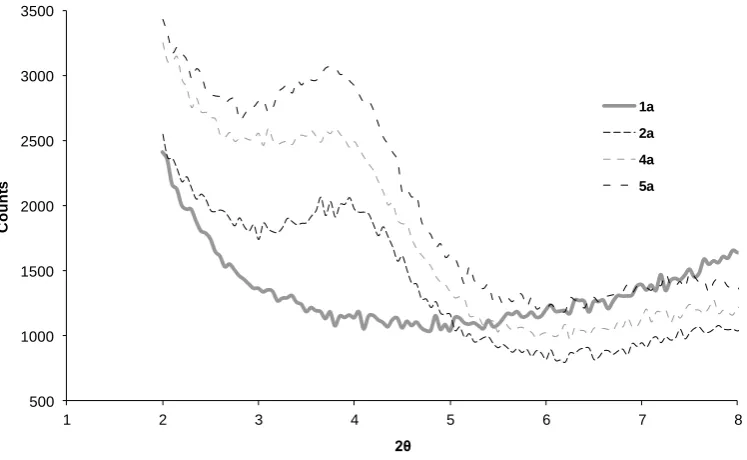
The XRD curves in Figure 2 indicate the presence of clay, shown by diffraction peaks at 24o in single-extruded samples of compounded polymer composites containing 2.5% Cloisite 20A clay. These show no evidence of peak shifts, even for the samples containing the grafted PP, Polybond as would be expected if intercalation was significant. Furthermore, there is no evidence of diminution in peak intensity as would be expected if exfoliation was present. This evidence taken with the complex viscosity curves, shows that there is no evidence of significant nanocomposite structure formation present in any of the samples.
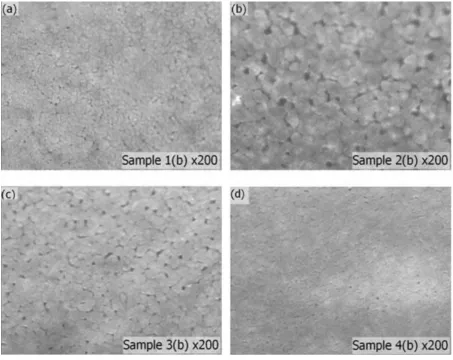
Observation of the optical micrographs of tapes in Figure 3 shows the differences in dispersion of the clay with addition of the grafted polypropylene, Polybond 3200 when compared with the image containing clay and no graft. Figure 3(a) shows the typical spherulitic structure expected in slowly cooled polypropylene polymer. The presence of clay particles is clearly seen in Figure 3(b) for sample 2b plus a more coarse spherulitic structure probably promoted by particle surfaces. The addition of compatibiliser (see Figure 3(c), sample 3b) suggests a reduction in size of both clay particle sizes and spherulite diameters and these effects are compatiliser concentration-dependent as shown in Figure 3(d). This higher dispersing effect at the 3% level of grafted PP, does not seem to be entirely backed up by the rheological data, however.
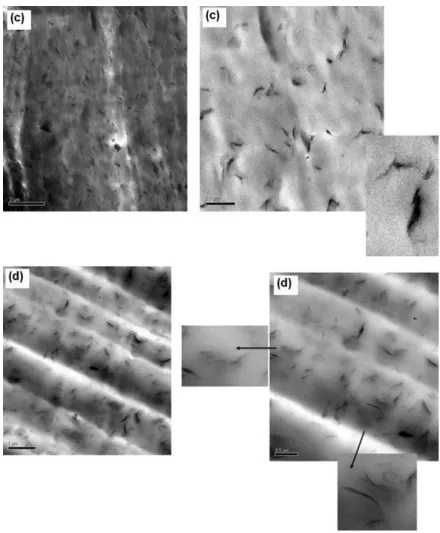
and clay have been previously masterbatched prior to dilution and blending (sample 5b), the dispersion is improved and heterogeneity reduced with respect to sample 4b. Although structures observed here are not obviously intercalated or exfoliated microcomposites, dispersion is at nanolevel, i.e., particle size << 1μm. In samples 3b, 4b and 5b, the clay particle widths appear to be < 0.1μm with lengths up to 0.5μm.
Careful observation of enlarged sections of the more highly resolved TEM micrographs in Figures 4 (c) and 4(d), there is some indication that platelets are indeed starting to delaminate and separate thereby indicating that exfoliation is taking place. Furthermore, the overall absence of microdispersed particles in these same figures is evidence that delamination of micro- into nano-aggregates of clay is occurring.
In principle, nanodispersion means :
(i) distribution of particles such that particle dimensions are << 1μm (ii) intercalation of individual nanodispersed particles
(iii) ultimate exfoliated lamellae.
However in most publications the terms nanodispersion and nanocomposite are taken to mean conditions fulfilling (ii) and (iii) above, it is evident that condition (i) is feasible and is clearly observed here with less distinct evidence of exfoliation.
3.2.2. Filaments
3.3. Extrusion and physical testing of filaments
Generally the compounded polymers extruded into filaments well with a screw speed of 10 rpm and first rollers set at 4 m min-1. Samples 4a, 4b, 5a and 5b suffered some filament
breakage during winding up and drawing. It was necessary to reduce the draw ratio from the default of 6:1 to 5:1 for filaments 4a and 4b. Samples 5a and 5b showed less filament breakage and so draw ratios of 6:1 continued to be used. To observe the effect of the compatibiliser on the processing conditions, some PP was compounded with just compatabiliser (sample 6). Without the clay present, the compounded polymer proved impossible to melt extrude into filaments. Furthermore, as the levels of compatibiliser increase from 1 to 3% in the clay - containing samples, the processiblility of the polymer generally reduced. Thus the optimum level of the compatibilser would appear to be very low at about 1% level and clay needed in the compounded mix to make filament extrusion feasible.
As discussed above, the nominal draw ratio was 6:1, although reduced slightly in some cases to accommodate the effects of different additives/compounding histories. In all cases, therefore, draw ratio values were close to the maximum achievable and so it is entirely in order, from a fibre technological position, to compare the physical properties. The variation in elongations-at-break is a consequence of the different abilities of each filament internal structure to orientate during the application of a tensile stress. The drawing occurs at a much higher elongation rate than tensile testing and so residual levels of orientation may only be realised during the latter more gently/slower and not former more rapid conditions.
From the literature,12 inclusion of nanodispersed clays in fibres tends to increase their moduli more than respective tenacities and so any real increases in moduli in this work could be indicative of nanocomposite formation. Within error, the increasing the number of compounding cycles when no additives are present yields no change in modulus (samples 1a and 2a); however, when 2.5% clay is added, the effect of compounding twice is significant in that the modulus of sample 2b is significantly higher than samples 1a and 2a, which are effectively the same. The addition of compatibiliser at 1% for singly compounded polymer (sample 3a) appears to show an increase in modulus relative to sample 2a, but the effect of a second compounding cycle causes a significant modulus reduction in sample 3b. This suggests that as the compatibiliser has greater time to cross-link during compounding, so the modulus increase promoted by the clay presence is offset by cross-link formation. Higher levels of compatibiliser (3%, samples 4a and 4b) promote higher levels of cross-linking with significant decreases in filament modulus. However, if both compatibiliser and clay are previously masterbatched prior to dilution and blending (samples 5a and 5b), modulus values are comparable with those for compatibiliser-free, twice-compounded sample 2b. These increases suggest higher levels of homogenation and dispersion of the clay present with possible nanocomposite formation.
Tenacity values appear to be far less sensitive than for initial modulus with samples 1a, 1b, 2a and 2b essentially being the same within error. That sample 3b has a much lower tenacity suggests that cross-linking is the cause and this is corroborated by the further reduction observed for sample 4b. However, samples 5a and 5b have higher tenacities than 4a and 4b inferring once again that masterbatching has improved dispersion of all additives within the filaments.
3.4. Thermal and flammability properties of fabrics and films
3.4.1. Differential Scanning Calorimetry of Films
Table 1 lists the fusion minima temperature or the melting temperatures and heat of melting peaks. It can be seen that additions of clay and graft have minimal effects on the melting point of the polypropylene.
TGA results listed in Table 3 show that the temperature at the onset of decomposition is higher in the PP sample than in the samples 2a, 3a and 4a. This is because these samples have gone through two extra thermal cycles, which cause degradation of the polymer. Sample containing clay only (sample 2a) has an onset temperature of 236oC, which is slightly lowered by the addition of the maleated polypropylene graft. However, the rate of decomposition of the sample containing clay (sample 2a) is much slower than PP, as indicated by higher D20, D50 and D80 values (representing temperatures at which 20, 50 and
80% mass loss occurs) for the former. With compatibiliser, these temperatures are higher and increase with increasing compatibilser level (samples 3a and 4a). The compatibilser itself does not add to the thermal stability of the polymer, but since it helps in better dispersion of the clay, the effect will be positive. Char residue left at the end of the experiment (obtained by deducting total mass loss value from 100) indicates residual silica content of the formulation.
.
3.4.2. Flammability of knitted fabrics
Cone calorimetry : Previously reported work has shown that when sample masses are below the 5g level typically observed when fabric samples are being studied, errors in cone results are rarely lower than ± 10%.15 As a consequence in the data shown in Tables 4 and 5 there
However, given our recent analysis of the effect of sample thickness on peak heat release rates, any reductions in PHRR with nanoclays observed in thick samples may not be evident in the thin fabrics used in these experiments.12,18
Since most of the work in literature is on plaques, which are physically and thermally thick, we also have studied the cone calorimetry of cast films, similar in thickness to the fabrics tested above. As seen for the fabric samples, some of these results indicate too much variation and therefore are not reproducible. Mass loss and ultimate residual reading in particular are associated with errors >± 50% and this is most likely due to error again associated with low sample masses used. Observation of the samples as they burned showed considerable bubbling and flowing of the polymer during burning which caused anomalies in the balance recording weight loss. These phenomena should be less in thermally thick samples and were not noticed to the same extent in knitted fabric samples which, because of their construction, held together better while burning. Images were taken of the films after burning and those shown in Figure 6, suggest that the addition of clay does promote char formation.
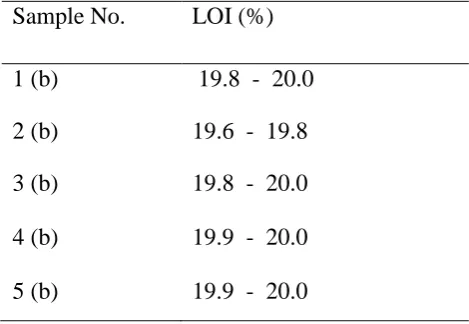
Limiting oxygen index: Because of the instability of knitted fabrics and the limited quantities available from each compounded polymer sample, only extruded tapes were submitted to limiting oxygen testing. Values for tape samples from twice-compounded composites are presented in Table 6. Within error, all samples yield identical values indicating that the presence of clay has no effect on the flammability of polypropylene. These results are compatible with those observed in other polymer-clay combinations,12 which suggest that
presence of dispersed clays alone do not impart flame retardancy although it may reduce burning rates as observed in cone calorimetry.
4. CONCLUSIONS
occurred at the nano-level is not clear since while optical microscopic evidence shows an improvement in dispersion at the microlevel, x-ray diffraction does not provide evidence of intercalation or exfoliation. TEM results show that the general dispersion is at the nanolevel in samples containing both clay and compatibiliser with some evidence of exfoliation. LOI values are not changed following addition of clay, however, the presence of a clay changes the burning behaviour and evidence of char residue formation has been presented during cone calorimetry.
In conclusion, our study shows that while true nanocompomosite structures could not be attained, nanodispersion was achieved and both mico- and nano-dispersed polymers were processable and could be extruded into filaments, which were sufficiently strong to be knitted into fabrics. This work has, therefore, shed light on factors critical in optimising the filament extrusion performance of a polymer like polypropylene which has a high incompatibility with functionalised clays. In the second publication of this series, studies of the compatibility between different organically modified nanoclays and compatiblizers (as grafts) will be reported with an overall aim of producing nanocomposite, fibre-forming structures.
Acknowledgements
The authors wish to thank Dr Shonali Nazaré for conducting rheological experiments; the Engineering and Physical Research Council and DSTL-MoD (Ministry of Defence), UK for the funding to enable this work to occur. We also wish to thank Rhodia Consumers Specialities Ltd and McCleery Yarns Ltd., Northern Ireland (now a part of Camira Ltd., UK) for their collaboration and advice.
References
1. Zhang, S.; Horrocks, A.R. Prog. Polym. Sci, 2003, 28, 1517-1538.
2. Modesti, M.; Lorenzetti, A.; Bon, D.; Besco, S. Polymer, 2005, 46(23), 10237 – 10245.
4. Százdi, L.; Pukánszky Jr. B.;J.; Vansco, G.J.; Pukánszky, B. Polymer, 2006, 47(13), 4638-4648.
5. Nam, P.H.; Maiti, P.; Okamoto, M.; Kotaka, T.; Hasegawa, N.; Usuki, A. Polymer, 2001, 42(23), 9633-9640.
6. Kato, M.; Usuki, A.; Okada, A. J Appl Polym Sci,1998, 66(9), 1781-1785.
7. Qin, H.; Zhang, S.; Zhao, C.; Feng, M.; Yang, M.; Shu, Z.; Yang, S. Polym Degrdn Stab, 2004, 85(2), 807-813.
8. Lertwimolnun, W. ; Vergnes, B. Polymer, 2005, 46(10), 3462-3471. 9. Yeo, S.Y.; Lee, H.J.; Jeong, S.H. J. Mat Sci 2003, 38(10), 2143-2147. 10. Liu, X. ; Wu, Q. Polymer, 2001, 42(25), 10013-10019.
11. Ding, C.; Jia, D.; He, H.; Guo, B.; Hong, H. Polymer Testing 2005, 24(1), 94-100. 12. Horrocks, A.R.; Kandola, B.; Padbury, S. J Text Institute 2003, 94 (3), 46-66.
13. ASTM 2863-77, Standard methods to use for measuring minimum oxygen concentration to support candle-like combustion of plastics (Oxygen Index), American Society for Standards and Testing, 1977; recently reissued as ASTM 2863-00.
14. Fire test-reaction to fire rate of heat release from building products, International Standards Organisation, ISO 5660: Geneva, Switzerland, 1993.
15. Nazaré, S.; Kandola, B.K.; Horrocks, A.R. Fire Mater 2002, 26(4-5), 191-199.
16. Solomon, M.J.; Almusallam, A.S.; Seefeldt, K.F.; Somwangthanaroj, A.; Vardan, P. Macromolecules 2001, 34(6), 1864-1872.
17. Wagener, R. and Reisinger, T.J.G. Polymer 2003, 44(24), 7513 – 7518.
TABLE 1. Sample composition, MFI, DSC and rheology results of polymer chips
Sample No Nanoclay, 20A (%, w/w) Graft, Pb (%, w/w) No. of extru-sions MFI (g/600s)
Rheological properties at 240oC DSC Endothermic peak
Storage Mod., G’ (Pa) Loss Mod., G’’ (Pa) Complex viscosity, n* (Pa.s) Peak maxima
(oC)
Heat of
melting
(mJ/mg)
PP - - - 25.9 1384 4342 1000 164 73.2
1(a) 0 0 1 36.0 - - - 163 79.1
1 (b) 0 0 2 - 288 1298 230 166 61.2
2 (a) 2.5 0 1 40.2 - - - 167 70.3
2(b) 2.5 0 2 35.4 315 3253 802 165 67.0
3(a) 2.5 1 1 28.8 - - - 166 85.0
3(b) 2.5 1 2 22.2 978 3752 808 165 70.0
4 (a) 2.5 3 1 47.4 - - - 167 53.7
4 (b) 2.5 3 2 49.8 - - - 162 75.2
5 (a) 2.5 3 1 49.8 - - - - -
5 (b) 2.5 3 2 54.0 - - - - -
6 - 1 2 - 615 3253 802 - -
TABLE 2. Physical properties of filaments and derived fabrics. Sample No Nanoclay, 20A (%, w/w) Graft, Pb (%, w/w) No. of extrusio ns Linear density (tex) Modulus (N/tex) Tenacity (cN/tex) Elongation-at-break (%) Area density of fabrics
(g/m2)
PP 440
1(a) 0 0 1 5.4 ± 0.4 3.9 ± 0.5 32.6 ± 1.6 41 ± 20 410
1 (b) 0 0 2 4.9 ± 0.3 4.1 ± 1.3 32.6 ± 2.5 101 ± 12 430
2 (a) 2.5 0 1 4.1 ± 1.1 4.1 ± 1.7 31.6 ± 7.0 18 ± 6 390
2(b) 2.5 0 2 4.0 ± 0.8 5.6 ± 1.6 36.4 ± 8.0 20 ± 10 400
3(a) 2.5 1 1 3.4 ± 0.9 5.5 ± 0.7 33.1 ± .05 15 ± 5 410
3(b) 2.5 1 2 4.3 ± 0.9 3.7 ± 1.1 22.0 ± 6.0 15 ± 6 390
4 (a) 2.5 3 1 4.8 ± 0.7 2.9 ± 1 19.7 ± 10.0 73 ± 70 490
4 (b) 2.5 3 2 4.5 ± 0.1 3.4 ± 0.8 16.9 ± 7.0 96 ± 90 430
5 (a) 2.5 3 1 4.9 ± 0.8 4.4 ± 0.9 28.4 ± 4.0 17 ± 2 410
5 (b) 2.5 3 2 3.9 ± 0.4 5.2 ± 0.8 26.3 ± 8.2 14 ± 4 390
TABLE 3. TGA – derived decomposition temperatures and mass losses
Sample D0
(oC)
D20
(oC)
D50
(oC)
D80
(oC)
Total mass loss
(%)
PP 245 298 325 345 99.7
2a 236 311 359 386 97.2
3a 231 316 367 393 97.3
4a 233 326 376 399 97.1
TABLE 4. Cone results of fabrics at 35 kW/m2 incident heat flux Sample No Nanocl ay, 20A (%, w/w) Graft, Pb (%, w/w) No. of extr usio ns Mass (g) TTI (s) PHRR (kW/m2)
THR (MJ/m2)
Mass residue (%)
Smoke (m2/m2)
PP 4.4 ± 0.2 22 ± 4 499 ± 100 15.3 ± 2.0 18.0 ± 2.0 336 ± 70 1 (a) 0 0 1 4.1 ± 0.2 20 ± 4 475 ± 100 16.5 ± 2.0 13.7 ± 1.0 405 ± 25 1 (b) 0 0 2 4.3 ± 0.1 25 ± 1 525 ± 40 16.8 ± 2.1 14.5 ± 5.1 405 ± 20 2 (a) 2.5 0 1 3.9 ± 0.3 18 ± 2 477 ± 90 16.0 ± 1.1 4.8 ± 1.1 349 ± 6 2(b) 2.5 0 2 4.0 ± 0.1 25 ± 2 477 ± 105 17.8 ± 1.0 9.6 ± 4.0 473 ± 30 3(a) 2.5 1 1 4.1 ± 0.1 18 ± 2 492 ± 90 17.8 ± 0.4 7.7 ± 3.1 450 ± 20
3(b)* 2.5 1 2 3.9 18 531 17.3 5.1 400
4 (a) 2.5 3 1 4.9 ± 0.1 24 ± 3 600 ± 16 21.4 ± 0.2 3.1 ± 4.0 460 ± 35 4 (b) 2.5 3 2 4.3 ± 0.2 31 ± 6 420 ± 90 18.1 ± 1.6 5.0 ± 2.5 497 ± 12 5 (a) 2.5 3 1 4.1 ± 0.8 22 ± 6 417 ± 65 19.1 ± 0.5 4.6 ± 2.0 532 ± 30
5 (b)* 2.5 3 2 3.9 34 394 17.4 4.2 369
* Due tolimited sample size, only 1 specimen tested
TABLE 5. Cone results of cast films at 35 kW/m2 incident heat flux
S.No Nanoclay 20A (%, w/w) Graft, Pb (%, w/w) No. of extr usio ns Mass (g) TTI (s) PHRR (kW/m2)
THR (MJ/m2)
Mass residue (%)
Smoke (m2/m2)
TABLE 6. LOI results for extruded tapes
1.00 10.00 100.00 1000.00 10000.00
0.10 1.00 10.00 100.00
C o m p le x v is c o s it y ( P a s ) Frequency (rad/s) PP PP+Pb 1b 2b 3b
Figure 1. Complex viscosity of compounded polymers with and without clay
500 1000 1500 2000 2500 3000 3500
1 2 3 4 5 6 7 8
C o u n ts 2θ 1a 2a 4a 5a
a)
0 5000 10000 15000 20000 25000 30000 350000 5 10 15 20 25 30
C o u n ts 2θ 1b 2b 4a 4b 5a 5b
b)
Figure 5. X-ray diffraction curves for selected filaments 1b 2b 4a 4b 5a 5b 0 500 1000 1500 2000 2500 3000 3500 4000
1 2 3 4 5 6 7 8