VOLUME NO. 3 (2013), ISSUE NO. 09 (SEPTEMBER) ISSN 2231-5756
A Monthly Double-Blind Peer Reviewed (Refereed/Juried) Open Access International e-Journal - Included in the International Serial Directories
Indexed & Listed at:
Ulrich's Periodicals Directory ©, ProQuest, U.S.A., EBSCO Publishing, U.S.A., Cabell’s Directories of Publishing Opportunities, U.S.A., Open J-Gage, India [link of the same is duly available at Inflibnet of University Grants Commission (U.G.C.)],
VOLUME NO. 3 (2013), ISSUE NO. 09 (SEPTEMBER) ISSN 2231-5756
CONTENTS
CONTENTS
CONTENTS
CONTENTS
Sr.No.
TITLE & NAME OF THE AUTHOR (S)
Page No.
1. ADEQUACY OF KNOWLEDGE AND ATTITUDE TOWARDS INFORMATION TECHNOLOGY OF STUDENT LIBRARY USERS AT SELECTED COLLEGES AND UNIVERSITIES IN CALABARZON, PHILIPPINES
DR. MA. LINDIE D. MASALINTO, DR. MA. CONSUELO M. OBILLO, RUFO S CALIXTRO JR., JOSEFA G. CARRILLO & MA. XENIA Z. BITERA
1
2. MOBILITY IN HETEROGENEOUS WIRELESS NETWORK USING HMAC
C. SUGANTHI & DR. C. MANOHARAN
4 3. A STUDY ON CONSUMERS PERCEPTION TOWARDS THE PURCHASE DECISION OF TWO WHEELER MOTORCYCLES IN NELLORE DISTRICT, ANDHRA
PRADESH
D.V.RAMANA & DR. PARA SUBBAIAH
9
4. OPTIMIZING THE DE-DUPLICATION FOLIAGE IMAGE ACCESS IN STORAGE SYSTEMS
CHITTALA RAMA SATYA & B.VIJAYA KUMAR
15 5. A STUDY ON THE IMPACT OF E TAILERS ON UNORGANISED AND ORGANISED RETAILERS WITH REFERENCE TO ELECTRONIC GOODS
KALAVATHY K.S & DR. BINA PANDEY
18 6. A MODERN CLASSIFICATION OF PRICING STRATEGIES OF RETAILERS
SREELATA, N. V. NARASIMHAM & DR. M. K. GUPTA
24 7. LEADERSHIP CONCEPT: AN OPINION SURVEY IN A PRIVATE SECTOR AND GOVERNMENT SECTOR
DR. E. LOKANADHA REDDY & DR. G HARANATH
30 8. MARKETING MIX: A REVIEW ON THE ‘P’S OF MARKETING
M.VASUDEVAN, DR. V. M. SENTHILKUMAR & K.SASIKUMAR
37 9. SECURING A BIOMETRIC TRAIT: A CASE STUDY ON FINGER PRINTS
MADHU CHAUHAN & DR. R. P. SAXENA
40 10. INFORMATION AND COMMUNICATION TECHNOLOGY AND THE PERFORMANCE OF SMALL AND MEDIUM ENTERPRISES IN NASARAWA STATE,
NIGERIA
UMARU DANLADI MOHAMMED & CHINELO GRACE OBELEAGU-NZELIBE
43
11. RELIABILITY TEST PLANS BASED ON LOG-LOGISTIC DISTRIBUTION
R.R.L.KANTAM, B.SRIRAM & A. SUHASINI
49 12. MIGRATION AND SUSTAINABLE DEVELOPMENT
DR. H.R.UMA, MADHU G.R. & MAHAMMAD HABEEB
58 13. THE ANTECEDENTS OF BRAND LOYALTY: AN EMPIRICAL STUDY ON AIRTEL CELLULAR SERVICES
DR. P. SUJATHA
61 14. STATUS OF BI SOLUTIONS AT SELECTED BRANCHES OF BANKS IN RAJASTHAN
DR. AZIMUDDIN KHAN
66 15. A STUDY ON USAGE OF GEOSPATIAL TECHNOLOGIES IN POWER UTILITY
VARUN PRAKASH
71 16. AN IMPROVED INVISIBLE WATERMARKING TECHNIQUE FOR IMAGE AUTHENTICATION
DASU VAMAN RAVI PRASAD
76 17. ORGANIZATIONAL STRUCTURE, RESPONSIBILITY, MOTIVATION LEVEL AND JOB SATISFACTION OF SELF-FINANCING ENGINEERING COLLEGES BY
USING MATHEMATICAL MODELING
RAVI DATT, DR. SUNIL DUTT, DR. SITA RAM & SANTOSH KUMARI
82
18. DESIGN AND IMPLEMENTATION OF A REAL-TIME VEHICLE TRACKING SYSTEM
MAITANMI OLUSOLA STEPHEN, OGUNLERE SAMSON OJO, DR. ADEKUNLE YINKA, GREGORY ONWODI & MALASOWE BRIDGET
86 19. PERFORMANCE EVALUATION OF MANET ROUTING PROTOCOLS WITH SCALABILITY FOR E-MAIL THROUGHPUT TRAFFIC USING OPNET MODELER
MANDEEP SINGH & BALWINDER SINGH
93 20. DETAILED INVESTIGATION OF RESIDENTIAL SATISFACTION IN APARTMENT’S MANAGEMENT SERVICE
P. BALATHANDAYUTHAM & DR. R. SRITHARAN
98 21. A STUDY ON THE PSYCHOLOGICAL IMPACT OF REDUNDANCY ON SURVIVORS
S.SOWJANYA
100 22. A STUDY ON SECURITY THREAT AWARENESS AMONG STUDENTS USING SOCIAL NETWORKING SITES, BY APPLYING DATA MINING TECHNIQUES
A.PAPPU RAJAN
103 23. ELECTRONIC REMITTANCE SYSTEM IN INDIA: CHANGING PARADIGMS OF PAYMENT MECHANISMS IN INDIA
SAMIR
107 24. E-SATISFACTION AND E-LOYALTY OF CONSUMERS SHOPPING ONLINE
R. SATHISH KUMAR
111 25. STUDENTS PERCEPTION TOWARDS e-BANKING: SPECIAL REFERENCE TO KOLLAM DISTRICT IN KERALA
NIJAZ NIZAR
114 26. TECHNOLOGICAL DRIFT TOWARDS SMART DEVICES: AN OVERVIEW
MUKESH H.V & HALASWAMY D. NAIK
118 27. MOTIVATION AS AN EFFECTIVE TOOL FOR ORGANIZATIONAL DEVELOPMENT IN NIGERIA
DR. ABDULSALAM JIBRIL & YUSUF SAJO
121 28. AN UNDERSTANDING OF DUNNING’S OWNERSHIP-LOCATION-INTERNALISATION (OLI) ECLECTIC THEORY OF MULTINATIONAL COMPANIES
JABES GABBIS ODHIAMBO KOTIENO
124 29. AUTHORING TOOL: KEY FOR E-LEARNING SYSTEM DEVELOPMENT
JAVED WASIM
128 30. ANTECEDENTS AND CONSEQUENCES OF WORK-EXHAUSTION (IT SECTOR)
UMAIR NAJAM & FAISAL ABBAS
131
VOLUME NO. 3 (2013), ISSUE NO. 09 (SEPTEMBER) ISSN 2231-5756
INTERNATIONAL JOURNAL OF RESEARCH IN COMMERCE, IT & MANAGEMENT
CHIEF PATRON
CHIEF PATRON
CHIEF PATRON
CHIEF PATRON
PROF. K. K. AGGARWAL
Chairman, Malaviya National Institute of Technology, Jaipur
(An institute of National Importance & fully funded by Ministry of Human Resource Development, Government of India)
Chancellor, K. R. Mangalam University, Gurgaon
Chancellor, Lingaya’s University, Faridabad
Founder Vice-Chancellor (1998-2008), Guru Gobind Singh Indraprastha University, Delhi
Ex. Pro Vice-Chancellor, Guru Jambheshwar University, Hisar
FOUNDER
FOUNDER
FOUNDER
FOUNDER PATRON
PATRON
PATRON
PATRON
LATE SH. RAM BHAJAN AGGARWAL
Former State Minister for Home & Tourism, Government of Haryana
Former Vice-President, Dadri Education Society, Charkhi Dadri
Former President, Chinar Syntex Ltd. (Textile Mills), Bhiwani
CO
CO
CO
CO----ORDINATOR
ORDINATOR
ORDINATOR
ORDINATOR
AMITA
Faculty, Government M. S., Mohali
ADVISORS
ADVISORS
ADVISORS
ADVISORS
DR. PRIYA RANJAN TRIVEDI
Chancellor, The Global Open University, Nagaland
PROF. M. S. SENAM RAJU
Director A. C. D., School of Management Studies, I.G.N.O.U., New Delhi
PROF. M. N. SHARMA
Chairman, M.B.A., Haryana College of Technology & Management, Kaithal
PROF. S. L. MAHANDRU
Principal (Retd.), Maharaja Agrasen College, Jagadhri
EDITOR
EDITOR
EDITOR
EDITOR
PROF. R. K. SHARMA
Professor, Bharti Vidyapeeth University Institute of Management & Research, New Delhi
CO
CO
CO
CO----EDITOR
EDITOR
EDITOR
EDITOR
DR. BHAVET
Faculty, Shree Ram Institute of Business & Management, Urjani
EDITORIAL ADVISORY BOARD
EDITORIAL ADVISORY BOARD
EDITORIAL ADVISORY BOARD
EDITORIAL ADVISORY BOARD
DR. RAJESH MODI
Faculty, Yanbu Industrial College, Kingdom of Saudi Arabia
PROF. SANJIV MITTAL
University School of Management Studies, Guru Gobind Singh I. P. University, Delhi
PROF. ANIL K. SAINI
VOLUME NO. 3 (2013), ISSUE NO. 09 (SEPTEMBER) ISSN 2231-5756
DR. SAMBHAVNA
Faculty, I.I.T.M., Delhi
DR. MOHENDER KUMAR GUPTA
Associate Professor, P. J. L. N. Government College, Faridabad
DR. SHIVAKUMAR DEENE
Asst. Professor, Dept. of Commerce, School of Business Studies, Central University of Karnataka, Gulbarga
ASSOCIATE EDITORS
ASSOCIATE EDITORS
ASSOCIATE EDITORS
ASSOCIATE EDITORS
PROF. NAWAB ALI KHAN
Department of Commerce, Aligarh Muslim University, Aligarh, U.P.
PROF. ABHAY BANSAL
Head, Department of Information Technology, Amity School of Engineering & Technology, Amity
University, Noida
PROF. A. SURYANARAYANA
Department of Business Management, Osmania University, Hyderabad
DR. SAMBHAV GARG
Faculty, Shree Ram Institute of Business & Management, Urjani
PROF. V. SELVAM
SSL, VIT University, Vellore
DR. PARDEEP AHLAWAT
Associate Professor, Institute of Management Studies & Research, Maharshi Dayanand University, Rohtak
DR. S. TABASSUM SULTANA
Associate Professor, Department of Business Management, Matrusri Institute of P.G. Studies, Hyderabad
SURJEET SINGH
Asst. Professor, Department of Computer Science, G. M. N. (P.G.) College, Ambala Cantt.
TECHNICAL ADVISOR
TECHNICAL ADVISOR
TECHNICAL ADVISOR
TECHNICAL ADVISOR
AMITA
Faculty, Government M. S., Mohali
FINANCIAL ADVISORS
FINANCIAL ADVISORS
FINANCIAL ADVISORS
FINANCIAL ADVISORS
DICKIN GOYAL
Advocate & Tax Adviser, Panchkula
NEENA
Investment Consultant, Chambaghat, Solan, Himachal Pradesh
LEGAL ADVISORS
LEGAL ADVISORS
LEGAL ADVISORS
LEGAL ADVISORS
JITENDER S. CHAHAL
Advocate, Punjab & Haryana High Court, Chandigarh U.T.
CHANDER BHUSHAN SHARMA
Advocate & Consultant, District Courts, Yamunanagar at Jagadhri
SUPERINTENDENT
SUPERINTENDENT
SUPERINTENDENT
SUPERINTENDENT
VOLUME NO. 3 (2013), ISSUE NO. 09 (SEPTEMBER) ISSN 2231-5756
INTERNATIONAL JOURNAL OF RESEARCH IN COMMERCE, IT & MANAGEMENT
CALL FOR MANUSCRIPTS
CALL FOR MANUSCRIPTS
CALL FOR MANUSCRIPTS
CALL FOR MANUSCRIPTS
We invite unpublished novel, original, empirical and high quality research work pertaining to recent developments & practices in the areas of Computer Science & Applications; Commerce; Business; Finance; Marketing; Human Resource Management; General Management; Banking; Economics; Tourism Administration & Management; Education; Law; Library & Information Science; Defence & Strategic Studies; Electronic Science; Corporate Governance; Industrial Relations; and emerging paradigms in allied subjects like Accounting; Accounting Information Systems; Accounting Theory & Practice; Auditing; Behavioral Accounting; Behavioral Economics; Corporate Finance; Cost Accounting; Econometrics; Economic Development; Economic History; Financial Institutions & Markets; Financial Services; Fiscal Policy; Government & Non Profit Accounting; Industrial Organization; International Economics & Trade; International Finance; Macro Economics; Micro Economics; Rural Economics; Co-operation; Demography: Development Planning; Development Studies; Applied Economics; Development Economics; Business Economics; Monetary Policy; Public Policy Economics; Real Estate; Regional Economics; Political Science; Continuing Education; Labour Welfare; Philosophy; Psychology; Sociology; Tax Accounting; Advertising & Promotion Management; Management Information Systems (MIS); Business Law; Public Responsibility & Ethics; Communication; Direct Marketing; E-Commerce; Global Business; Health Care Administration; Labour Relations & Human Resource Management; Marketing Research; Marketing Theory & Applications; Non-Profit Organizations; Office Administration/Management; Operations Research/Statistics; Organizational Behavior & Theory; Organizational Development; Production/Operations; International Relations; Human Rights & Duties; Public Administration; Population Studies; Purchasing/Materials Management; Retailing; Sales/Selling; Services; Small Business Entrepreneurship; Strategic Management Policy; Technology/Innovation; Tourism & Hospitality; Transportation Distribution; Algorithms; Artificial Intelligence; Compilers & Translation; Computer Aided Design (CAD); Computer Aided Manufacturing; Computer Graphics; Computer Organization & Architecture; Database Structures & Systems; Discrete Structures; Internet; Management Information Systems; Modeling & Simulation; Neural Systems/Neural Networks; Numerical Analysis/Scientific Computing; Object Oriented Programming; Operating Systems; Programming Languages; Robotics; Symbolic & Formal Logic; Web Design and emerging paradigms in allied subjects.
Anybody can submit the soft copy of unpublished novel; original; empirical and high quality research work/manuscript anytime in M.S. Word format after preparing the same as per our GUIDELINES FOR SUBMISSION; at our email address i.e. [email protected] or online by clicking the link online submission as given on our website (FOR ONLINE SUBMISSION, CLICK HERE).
GUIDELINES FOR SUBMISSION OF MANUSCRIPT
GUIDELINES FOR SUBMISSION OF MANUSCRIPT
GUIDELINES FOR SUBMISSION OF MANUSCRIPT
GUIDELINES FOR SUBMISSION OF MANUSCRIPT
1. COVERING LETTER FOR SUBMISSION:
DATED: _____________
THE EDITOR
IJRCM
Subject: SUBMISSION OF MANUSCRIPT IN THE AREA OF.
(e.g. Finance/Marketing/HRM/General Management/Economics/Psychology/Law/Computer/IT/Engineering/Mathematics/other, please specify)
DEAR SIR/MADAM
Please find my submission of manuscript entitled ‘___________________________________________’ for possible publication in your journals.
I hereby affirm that the contents of this manuscript are original. Furthermore, it has neither been published elsewhere in any language fully or partly, nor is it under review for publication elsewhere.
I affirm that all the author (s) have seen and agreed to the submitted version of the manuscript and their inclusion of name (s) as co-author (s).
Also, if my/our manuscript is accepted, I/We agree to comply with the formalities as given on the website of the journal & you are free to publish our contribution in any of your journals.
NAME OF CORRESPONDING AUTHOR: Designation:
Affiliation with full address, contact numbers & Pin Code: Residential address with Pin Code:
Mobile Number (s): Landline Number (s): E-mail Address: Alternate E-mail Address:
NOTES:
a) The whole manuscript is required to be in ONE MS WORD FILE only (pdf. version is liable to be rejected without any consideration), which will start from the covering letter, inside the manuscript.
b) The sender is required to mentionthe following in the SUBJECT COLUMN of the mail:
New Manuscript for Review in the area of (Finance/Marketing/HRM/General Management/Economics/Psychology/Law/Computer/IT/ Engineering/Mathematics/other, please specify)
c) There is no need to give any text in the body of mail, except the cases where the author wishes to give any specific message w.r.t. to the manuscript. d) The total size of the file containing the manuscript is required to be below 500 KB.
e) Abstract alone will not be considered for review, and the author is required to submit the complete manuscript in the first instance.
f) The journal gives acknowledgement w.r.t. the receipt of every email and in case of non-receipt of acknowledgment from the journal, w.r.t. the submission of manuscript, within two days of submission, the corresponding author is required to demand for the same by sending separate mail to the journal. 2. MANUSCRIPT TITLE: The title of the paper should be in a 12 point Calibri Font. It should be bold typed, centered and fully capitalised.
3. AUTHOR NAME (S) & AFFILIATIONS: The author (s) full name, designation, affiliation (s), address, mobile/landline numbers, and email/alternate email address should be in italic & 11-point Calibri Font. It must be centered underneath the title.
VOLUME NO. 3 (2013), ISSUE NO. 09 (SEPTEMBER) ISSN 2231-5756
5. KEYWORDS: Abstract must be followed by a list of keywords, subject to the maximum of five. These should be arranged in alphabetic order separated by commas and full stops at the end.
6. MANUSCRIPT: Manuscript must be in BRITISH ENGLISH prepared on a standard A4 size PORTRAIT SETTING PAPER. It must be prepared on a single space and single column with 1” margin set for top, bottom, left and right. It should be typed in 8 point Calibri Font with page numbers at the bottom and centre of every page. It should be free from grammatical, spelling and punctuation errors and must be thoroughly edited.
7. HEADINGS: All the headings should be in a 10 point Calibri Font. These must be bold-faced, aligned left and fully capitalised. Leave a blank line before each heading.
8. SUB-HEADINGS: All the sub-headings should be in a 8 point Calibri Font. These must be bold-faced, aligned left and fully capitalised. 9. MAIN TEXT: The main text should follow the following sequence:
INTRODUCTION
REVIEW OF LITERATURE
NEED/IMPORTANCE OF THE STUDY
STATEMENT OF THE PROBLEM
OBJECTIVES
HYPOTHESES
RESEARCH METHODOLOGY
RESULTS & DISCUSSION
FINDINGS
RECOMMENDATIONS/SUGGESTIONS
CONCLUSIONS
SCOPE FOR FURTHER RESEARCH
ACKNOWLEDGMENTS
REFERENCES
APPENDIX/ANNEXURE
It should be in a 8 point Calibri Font, single spaced and justified. The manuscript should preferably not exceed 5000 WORDS.
10. FIGURES &TABLES: These should be simple, crystal clear, centered, separately numbered & self explained, and titles must be above the table/figure. Sources of data should be mentioned below the table/figure. It should be ensured that the tables/figures are referred to from the main text.
11. EQUATIONS:These should be consecutively numbered in parentheses, horizontally centered with equation number placed at the right.
12. REFERENCES: The list of all references should be alphabetically arranged. The author (s) should mention only the actually utilised references in the preparation of manuscript and they are supposed to follow Harvard Style of Referencing. The author (s) are supposed to follow the references as per the following:
•
All works cited in the text (including sources for tables and figures) should be listed alphabetically.•
Use (ed.) for one editor, and (ed.s) for multiple editors.•
When listing two or more works by one author, use --- (20xx), such as after Kohl (1997), use --- (2001), etc, in chronologically ascending order.•
Indicate (opening and closing) page numbers for articles in journals and for chapters in books.•
The title of books and journals should be in italics. Double quotation marks are used for titles of journal articles, book chapters, dissertations, reports, working papers, unpublished material, etc.•
For titles in a language other than English, provide an English translation in parentheses.•
The location of endnotes within the text should be indicated by superscript numbers.PLEASE USE THE FOLLOWING FOR STYLE AND PUNCTUATION IN REFERENCES: BOOKS
•
Bowersox, Donald J., Closs, David J., (1996), "Logistical Management." Tata McGraw, Hill, New Delhi.•
Hunker, H.L. and A.J. Wright (1963), "Factors of Industrial Location in Ohio" Ohio State University, Nigeria.CONTRIBUTIONS TO BOOKS
•
Sharma T., Kwatra, G. (2008) Effectiveness of Social Advertising: A Study of Selected Campaigns, Corporate Social Responsibility, Edited by David Crowther & Nicholas Capaldi, Ashgate Research Companion to Corporate Social Responsibility, Chapter 15, pp 287-303.JOURNAL AND OTHER ARTICLES
•
Schemenner, R.W., Huber, J.C. and Cook, R.L. (1987), "Geographic Differences and the Location of New Manufacturing Facilities," Journal of Urban Economics, Vol. 21, No. 1, pp. 83-104.CONFERENCE PAPERS
•
Garg, Sambhav (2011): "Business Ethics" Paper presented at the Annual International Conference for the All India Management Association, New Delhi, India, 19–22 June.UNPUBLISHED DISSERTATIONS AND THESES
•
Kumar S. (2011): "Customer Value: A Comparative Study of Rural and Urban Customers," Thesis, Kurukshetra University, Kurukshetra.ONLINE RESOURCES
•
Always indicate the date that the source was accessed, as online resources are frequently updated or removed.WEBSITES
VOLUME NO. 3 (2013), ISSUE NO. 09 (SEPTEMBER) ISSN 2231-5756
INTERNATIONAL JOURNAL OF RESEARCH IN COMMERCE, IT & MANAGEMENT
ADEQUACY OF KNOWLEDGE AND ATTITUDE TOWARDS INFORMATION TECHNOLOGY OF STUDENT
LIBRARY USERS AT SELECTED COLLEGES AND UNIVERSITIES IN CALABARZON, PHILIPPINES
DR. MA. LINDIE D. MASALINTO
CHIEF LIBRARIAN & PART TIME PROFESSOR
UNIVERSITY OF PERPETUAL HELP - DJGTMU
STO.NINO
DR. MA. CONSUELO M. OBILLO
DIRECTOR
INSTITUTE OF MEDICAL EDUCATION
UNIVERSITY OF PERPETUAL HELP - DJGTMU
STO.NINO
RUFO S CALIXTRO JR.
DIRECTOR
RESEARCH DEPARTMENT
UNIVERSITY OF PERPETUAL HELP - DJGTMU
STO.NINO
JOSEFA G. CARRILLO
DIRECTOR
EXTERNAL AFFAIRS OFFICE
UNIVERSITY OF PERPETUAL HELP - DJGTMU
STO.NINO
MA. XENIA Z. BITERA
DIRECTOR
RESEARCH DEPARTMENT
UNIVERSITY OF PERPETUAL HELP - DJGTMU
STO.NINO
ABSTRACT
Technology plays a very vital role in almost aspect of life. In fact it has completely changed the way we live. There are many manual tasks that have been automated, thanks to new and innovative technology. Modern day technology has the ability to carry out a wide range of critical and complex processes quite efficiently. Just as technology has created an impact on almost all walks of life, it also has had a major impact in the field of education. In fact the impact of information technology in education has been very positive, thereby leading to huge changes in the entire education industry for the better. The modern world has reacted strongly to the fast pace of the advancement of science and technology which has affected the various dimensions of living and lifestyles. It has likewise affected all types of organizations, the business, government, and most of all the school. In management operation, automation has taken place of clerks and computers have pervaded all types of organization, and have become an inherent feature. Methods of operations, communications have been revised to suit what are current of the times. Not only have lifestyles of people been affected with the use of cell phones as a mode for communication, it has also affected the classroom processes including structure This study sought to answer the following questions: How adequate is the knowledge of personnel on IT? What are the attitudes of student respondents towards the following: Technical knowledge of the computer, Capabilities of the computer, and Importance of the computer; and To what extent are attitudes of the respondents significantly related to: knowledge of computer and demographic variables? Descriptive method and random sampling was used in this study. The researchers utilized a quota samples of five hundred ( 500 ) student library users of selected colleges and universities in ( Cavite, Laguna, Batangas, Rizal and Quezon) CALABARZON during first semester of the school year 2012-2013, and focus only on attitudes of respondents in terms of technical knowledge of computer, capabilities and importance. Descriptive method of research with the questionnaire as the main source of data. Based on the results the importance of information technology to the respondents, showed positive attitudes, followed by the capabilities of the computer, but attitudes were neutral on the technical knowledge of the computer. On relationship between attitudes with adequacy of knowledge of information technology in its technical aspect, capabilities and importance was determined the summary of the values on such relationship with attitudes as the independent variables and adequacy of knowledge as the criterion measures; technical aspect showed negligible but positive and direct relationship, technical knowledge of information technology does not contribute much to attitudes towards information technology; Capabilities of the computer showed almost significant but very negligible relationship which means that knowledge of computer does not contribute much to the attitudes of the students towards information technology and importance of computers showed substantial and it was very significant which means that importance of the computers result in positive attitudes towards them.
KEYWORDS
Information technology; knowledge, attitude - computer; Information Technology, Assessment.
INTRODUCTION
echnology plays a very vital role in almost aspect of life. In fact it has completely changed the way we live. There are many manual tasks that have been automated, thanks to new and innovative technology. Modern day technology has the ability to carry out a wide range of critical and complex processes quite efficiently. Just as technology has created an impact on almost all walks of life, it also has had a major impact in the field of education. In fact the
VOLUME NO. 3 (2013), ISSUE NO. 09 (SEPTEMBER) ISSN 2231-5756 impact of information technology in education has been very positive, thereby leading to huge changes in the entire education industry for the better. With the advent of computers and internet technology, the field of education has undergone a complete transformation. This shows that the relevance of information technology in education is something that cannot be ignored. Consider this fact, the introduction of computers in education has made it very convenient for teachers to provide knowledge to students in an easy to learn manner. The use of internet technology has made education an interactive process.
Technology adaptation theory was utilized in this study it is a theory of cycles. As technology alters the work environment, creating new routines and conditions, new problems develop. Those who produce technology realize these problems and continually modify the technology in order to solve them. It is an ongoing cycle of adjustment to the new reality that technology creates in all areas of life. The modern world has reacted strongly to the fast pace of the advancement of science and technology which has affected the various dimensions of living and lifestyles. It has likewise affected all types of organizations, the business, government, and most of all the school. In management operation, automation has taken place of clerks and computers have pervaded all types of organization, and have become an inherent feature.
Faculty, students and researchers now frequent the library not only to pore over volumes of reference materials in the shelves, but to participate in a variety of interactive concerns. These are provided by, among others, sound and video clips which supplement knowledge generated in the past by traditional mode. The advent of internet technology has given rise to online education. Today, distance learning through online education has added a new dimension to education and learning. There are plenty of schools and colleges offering online courses to students wherein students can submit their assignments and homework through internet. In fact most online schools, colleges, and universities offer students the facility of making online submission of assignments. (Buenrostro, 2009) According to Scheeren (2010). the future for library information systems includes the ongoing move to visual system with single-search capability with these systems patrons will be able to enter a research questions on once screen in the return will be books from the collection, items from fee-based databases, and vetted Web sites. Further, students will have had instructions in query formulation, so they will be able to create efficient searches. Another area for the future library information system is that of digital libraries. Library information systems provide more search options for patrons than traditional card catalogs. Any piece of data in the MARC record can be search by a modern library information system. Library system reduce the cost of providing catalog. While initial costs are high, sustaining costs are lower than such labor-intense duties as typing and filing catalog cards. The study attempts to determine the relationship between adequacy of knowledge of respondents who are library users of selected colleges and universities in CALABARZON and their attitudes if they are significantly different or related to demographic variables.
METHODOLOGY
This study sought to answer the following questions: What are the attitudes of student respondents towards the following: Technical knowledge of the computer, Capabilities of the computer, and Importance of the computer; and To what extent are attitudes of the respondents significantly related to: knowledge of computer and demographic variables? The researchers utilized a quota samples of five hundred ( 500 ) student library users of selected colleges and universities in ( Cavite, Laguna, Batangas, Rizal and Quezon) CALABARZON, Philippines during first semester of the school year 2012-2013, and focus only on attitudes of respondents in terms of technical knowledge of computer, capabilities and importance. Descriptive method of research was utilized in this study with the questionnaire as the main source of data. The questionnaire was validated by members of the faculty of the University of Perpetual Help Laguna, who were requested to go over the questionnaires and recommend suggestions for the improvement .For evaluation and scoring Likert Scale within a continuum of five was used. Percentage, weighted and T-test was used for in-depth interpretation of the data. The primary sources of data were students in selected colleges and universities in CALABARZON area.( UPHSL; UPH-DJGTMU; St. Michael’s College of Laguna; University of San Agustin and La Consolacion College ). Through self-made questionnaires, the researchers acquired the needed information necessary for the study. The secondary sources of data were acquired from books, journals, researches and internet. The researchers acquired permission from the management of selected colleges and universities prior to the conduct of the study where the researchers personally direct the data gathering procedure .The data gathered were tallied, tabulated, and interpreted.
RESULTS
1. ADEQUACY OF KNOWLEDGE OF STUDENT ABOUT INFORMATION TECHNOLOGY
The knowledge of the student respondents were described in terms of their adequacy of information on the technical, capabilities and importance aspect. 1.1 Technical aspect, adequacy of knowledge of respondents were quite varied and fell in two ( 2 ) categories with the most of their responses saying that “they were not sure” and some responses showing adequate knowledge about the technical aspect of IT. 1.2 Capabilities, weighted averages ranged from 3.55 to 3.90 identifying adequacy of knowledge in one category that is “adequate” as to the capabilities. 1.3 Importance, knowledge of the respondents on the importance were reckoned as “ adequate and very adequate” as revealed by weighted average ranging from 4.10 to 4.92.
2. ATTITUDES OF STUDENTS TOWARDS INFORMATION TECHNOLOGY
2.1 Technical aspect, attitudes of students were neutral as indicated by weighted averages ranging from 3.19 to 3.48. An overall weighted mean of 3.32 revealed that as a whole, their attitudes towards the technical aspect of computer were neutral. 2.2 Capabilities, responses of the group revealed receptively and acceptance of the capabilities of the computers. An overall weighted mean of 4.33 revealed that they had positive attitudes towards capabilities of the computers, which is part of information technology. 2.3 Attitudes, student responses were homogeneous and fell in one category, showing very positive attitudes towards the importance of the computer as revealed by weighted means ranging from 4.50 to 4.85 indicated a very positive attitudes.
3. RELATIONSHIP OF ATTITUDES WITH ADEQUACY OF KNOWLEDGE ON INFORMATION TECHNOLOGY
The relationship between attitudes of respondents towards information technology was determined with adequacy of their knowledge of information technology. 3.1 Technicalaspect, the relationship between attitudes and the student knowledge was described by a computed correlation of 0.126 as negligible but positive and direct. A computed T-value of 1.265 reckoned it however as not significant nor important. With this, technical knowledge of Information Technology does not contribute much to the attitudes towards Information Technology.3.2Capabilities of the computers, the relationship between attitudes and their knowledge of capabilities is described by a bigger correlation coefficient of 1.211 which was almost significant beyond the .05 level. However, a computed T-value of 1.945 reckoned is not significant and bringing only 4.452 percent of variations with the relationship which is very negligible. Knowledge of the capabilities does not contribute much to the attitudes towards information technology. 3.3 Importance of computers, the relationship between attitudes and knowledge of the importance of computer was described by a computed correlation coefficient of 0.421 which was substantial. It was very significant beyond the .01 level. Attitudes due to their knowledge of important result in positive attitudes towards them. Overall knowledge of information technology is described by a computed correlation coefficient of 0.326 which is described as low but positive and direct. Amount of variations observable in attitudes due to knowledge of information technology reached 10.63 percent which is quite large and reckons overall adequacy of knowledge of information technology as strong predictors of attitudes.
4. RELATIONSHIP BETWEEN ATTITUDES TOWARDS INFORMATION TECHNOLOGY AND DEMOGRAPHIC VARIABLES
The relationship between attitudes towards information technology and demographic variables are age, gender, course enrolled in, time they spent in the library and what part of the day they spend in the library. 4.1 Age, was significantly related to attitudes towards information technology as described by computed correlation coefficient of 0.732 as low but positive and direct. It is significant beyond the .01 level. Amount of variations observable in attitude due to the contribution of age reached 15.05 percent, which is quite large and reckons age as a strong predictor attitudes.4.2 Gender, relationship between gender and attitudes was described by a computed correlation coefficient of 0.388, which is positive and direct and signifies low relationship. 4.3 Courses enrolled in,
VOLUME NO. 3 (2013), ISSUE NO. 09 (SEPTEMBER) ISSN 2231-5756
INTERNATIONAL JOURNAL OF RESEARCH IN COMMERCE, IT & MANAGEMENT
DISCUSSION
Based on the results the importance of information technology to the respondents, showed positive attitudes, followed by the capabilities of the computer, but attitudes were neutral on the technical knowledge of the computer. On relationship between attitudes with adequacy of knowledge of information technology in its technical aspect, capabilities and importance was determined the summary of the values on such relationship with attitudes as the independent variables and adequacy of knowledge as the criterion measures; technical aspect showed negligible but positive and direct relationship, technical knowledge of information technology does not contribute much to attitudes towards information technology; Capabilities of the computer showed almost significant but very negligible relationship which means that knowledge of computer does not contribute much to the attitudes of the students towards information technology and importance of computers showed substantial and it was very significant which means that importance of the computers result in positive attitudes towards them.
CONCLUSION
In the light of the above findings of the study, the following conclusion can now be made. Respondents were in general young in their middle twenties, mostly females, enrolled in Nursing, Engineering and Education. Students had more knowledge of the importance and capabilities of Information Technology than technical knowledge. Age gender and course enrolled in were strong intervening variables of attitudes towards information technology. Technical aspect was not indispensible in the use of computers, while their attitudes were neutral on technical aspect, they had positive attitudes in general to information technology. Except time, most of the demographic variables were good predictors of knowledge and attitudes.
RECOMMENDATIONS
In the light of the above results, the following recommendations are hereby given. More personal variables should be elicited from student so that information would be known on what differences or similarities exists. There should be more promotional gimmicks from the library staff to encourage students to know more about the technical aspects of the computer. More information should be found in bulletins that are attractive to students, so they would be encourage to read more about computers. A series of lectures may be conducted by the library staff on the technical aspect of Information Technology. Ways and means should be planned to encouraged other groups to develop positive attitudes towards Information Technology. Information should be given to the staff on the strong predictors of both knowledge and attitudes. Information about adequacy of knowledge and attitudes should be given to staff and different colleges for decision making.
REFERENCES
BOOKS1. Adanza, Estelia G. ( 2008 ) Methods of Research for the Health Profession. Quezon City: RexBookstore.
2. Buenrostro, Juan Jr. (2009). The Digital Library and other issues in Library and Information Science.Philippines: [s.n.].
3. Lamb, Annette, and Larry Johnson. (2007). InfoTech: An Info-Skills Workout: Wikis and Collaborative Writing. Lanham: Scarecrow.
4. Lamb, Annette, and Larry Johnson. (2007). InfoTech: Podcasting in the School Library, Part 1: Integrating Podcasts and Vodcasts into Teaching and Learning. Lanham: Scarecrow.
5. McPherson, Keith. (2007). “Literacy Links: School Library Blogging.” In Toward a 21st Century School Media Program. Lanham: Scarecrow.
6. Scheeren, William O. (2010). Technology for School Librarian: theory and practice. USA: Libraries Unlimited. 7. Valenza, Joyce. (2007). “Something Wiki Comes This Way…Are you Ready?”. Lanham:Scarecrow.
8. Yadav, S.K (2007). Online Library Initiatives. New Delhi: Shree Publishers & Distributors. THESIS
9. Alarcon,May Joy et al. “An Automated Library Monitoring System with Barcode and Networking.” Unpublished Undergraduate Thesis, University of Perpetual Help System, Laguna, 2011.
10. Alora, Carolina B. 2001Information Technology Level of Awareness at La Consolacion College. La Consolacion Binan, Lagun 11. Alzona, Ma. Cecilia. “LAN Based UPHSL-Library System.” Unpublished Thesis, University of Perpetual Help System, Laguna, 2010.
12. Balmaceda, Jayson P. “Library Monitoring System-Immaculate Heart of Mary School.” Unpublished Thesis, University of Perpetual Help System, Laguna, 2005.
13. Hernandez, Michelle et al. “Engineering Library System.” Unpublished Undergraduate Thesis, University of Perpetual Help System, Laguna, 2005. INTERNET
VOLUME NO. 3 (2013), ISSUE NO. 09 (SEPTEMBER) ISSN 2231-5756
MOBILITY IN HETEROGENEOUS WIRELESS NETWORK USING HMAC
C. SUGANTHI
ASST. PROFESSOR
DEPARTMENT OF INFORMATION TECHNOLOGY
V.M.K.V.ENGINEERING COLLEGE
SALEM
DR. C. MANOHARAN
PRINCIPAL
ANNAI MATHAMMAL SHEELA ENGINEERING COLLEGE
NAMAKKAL
ABSTRACT
These NG wireless terminals must provide seamless access while roaming between different wireless networks. For a seamless integration, the mobile terminal must be capable of accessing each network when needed. Each network structure performs resource allocation according to various techniques such as Time Division Multiple Allocation (TDMA) slots, Code Division Multiple Allocation (CDMA) codes, and random allocation in order to achieve high network utilization in accessing different networks. Therefore, to address the diverse Quality of Service (QoS) requirements, NG wireless terminals must be able to adapt to the heterogeneous access schemes. To achieve this Hexagon based Medium Access Control (HMAC) Layer is proposed to model heterogeneous access schemes. Based on this, HMAC provides architecture independent decision and guarantees QoS requirements. The six parameters are analyzed to evaluate the performance of the heterogeneous wireless network. The simulation result shows that HMAC provides a seamless access, achieves high network utilization and guarantees QoS requirement.
KEYWORDS
Heterogeneous Wireless Network, Medium Access Control, Resource Allocation, and Seamless Access.
INTRODUCTION
he next generation of wireless systems represents a heterogeneous environment with different access networks technologies that differ in bandwidth or data rate. In this kind of environment, seamless access is the challenging issue that supports the roaming of users from one system to another.
Wireless communication, despite the hype of the popular press, is a field that has been around for over a hundred years, starting around 1897 with Marconi’s successful demonstrations of wireless telegraphy. By 1901, radio reception across the Atlantic Ocean had been established; thus, rapid progress in technology has also been around for quite a while. In the intervening hundred years, many types of wireless systems have flourished, and often later disappeared. For example, television transmission, in its early days, was broadcast by wireless radio transmitters, which are increasingly being replaced by cable transmission. Similarly, the point-to-point microwave circuits that formed the backbone of the telephone network are being replaced by optical fiber. In the first example, wireless technology became outdated when a wired distribution network was installed; in the second, a new wired technology (optical fiber) replaced the older technology. The opposite type of example is occurring today in telephony, where wireless (cellular) technology is partially replacing the use of the wired telephone network (particularly in parts of the world where the wired network is not well developed) [1].
Many types of wireless communication systems exist, but a distinguishing attribute of a wireless network is that communication takes place between computer devices. These devices include personal digital assistants (PDAs), laptops, personal computers (PCs), servers, and printers. As with networks based on wire, or optical fiber, wireless networks convey information between computer devices. The information can take the form of e-mail messages, web pages, database record, streaming video or voice. In most cases, wireless networks transfer data, such as e-mail messages and files, but advancements in the performance of wireless network is enabling support for video and voice communications as well.
TYPES OF WIRELESS NETWORKS
• WLANS: Wireless Local Area NetworksWLANS allow users in a local area, such as a university campus or library, to form a network or gain access to the internet. A temporary network can be formed by a small number of users without the need of an access point; given that they do not need access to network resources.
• WPANS: Wireless Personal Area Networks
The two current technologies for wireless personal area networks are Infra Red (IR) and Bluetooth (IEEE 802.15). These will allow the connectivity of personal devices within an area of about 30 feet. However, IR requires a direct line of site and the range is less.
• WMANS: Wireless Metropolitan Area Networks
This technology allows the connection of multiple networks in a metropolitan area such as different buildings in a city, which can be an alternative or backup to laying copper or fiber cabling.
• WWANS: Wireless Wide Area Networks
These types of networks can be maintained over large areas, such as cities or countries, via multiple satellite systems or antenna sites looked after by an ISP. These types of systems are referred to as 2G (2nd Generation) systems [3].
Today, growing consumer demand for access to communication services anywhere and anytime is accelerating the technological development towards the integration of various wireless access technologies, nowadays called as Fourth Generation (4G) wireless systems. 4G wireless systems will provide significantly higher data rates, offer a variety of services and applications previously not possible due to speed limitations, and allow global roaming among a diverse range of mobile access networks.
REVIEW OF LITERATURE
There exist several studies in the literature to address the integration of existing wireless system. In [12], Ad-hoc CEllular NETwork (ACENET) architecture for 3.5G and 4G mobile system is proposed. In which a heterogeneous MAC protocol is used to integrate IEEE 802.11, Bluetooth and HiperLAN/2 with cellular architectures. The coordination between transmissions of different access protocols is provided using beacons from the base stations. ACENET consists of a cellular network and ad hoc network. Even though ACENET improves the throughput performance, it needs many modifications in the base stations in order to achieve this.
VOLUME NO. 3 (2013), ISSUE NO. 09 (SEPTEMBER) ISSN 2231-5756
INTERNATIONAL JOURNAL OF RESEARCH IN COMMERCE, IT & MANAGEMENT
In [6], a dynamic access probability protocol has been proposed for cellular Internet and satellite-based networks. The network computes an access probability, which depends on the load, and announces it, as a broadcast message, to the user. However, the QoS requirements of the application are not addressed. A unified framework for the channel assignment problem in time, frequency, and code domains is proposed in [9]. The unified (T/F/C) DMA algorithm consists of labelling and colouring phases. Using the graph theory solutions, channel assignment problems in heterogeneous network structures have been addressed. A MAC protocol with Fair Packet Loss Sharing (FPLS) scheduling is proposed for fourth generation wireless multimedia communications in [4]. The MAC protocol exploits both time-division and code division multiplexing. FPLS is a QoS requirement based packet scheduling algorithm. The main aim is to provide QoS guarantees in terms of transmission delay, accuracy, and to maximize system resource utilization. The proposed MAC protocol is shown to provide QoS guarantees in hybrid TD/CDMA systems. However, the proposed protocol necessitates a new wireless network infrastructure with new base stations for fourth generation communications.In [8], an integrated approach for the management of power and performance of mobile devices in heterogeneous wireless environments is developed. It decides what wireless network interface (WNIC) to employ for a given application and how to optimize the WNIC usage. And it enhances the QoS by maximizing the power savings in heterogeneous wireless systems. In [5], an Adaptive Medium Access Control (A-MAC) layer to address the heterogeneities posed by the NG wireless networks is proposed.
A joint session admission control scheme for multimedia traffic is introduced in [13]. In which it maximizes the overall network revenue with good Quality of Service (QoS). They integrate two different networks, a Wireless Local Area Network (WLAN) and a wideband Code Division Multiple Access Network (CDMA). A novel concept of effective bandwidth is used in the CDMA network to derive the unified radio resource usage, taking into account both physical layer linear minimum mean square errors (LMMSE) receivers and characteristics of the packet traffic. However, the integration requires modifications in the existing base stations.
In [2], a new adaptive MAC based on OFDMA technology has been designed. In Wireless Local Area Network (WLAN), the existing Medium Access Control (MAC) scheme lack scalability when the network is crowded. It is due to the use of random multiple access techniques in the MAC layer. It provides a new opportunity for devising more efficient MAC protocols. Data transmission opportunities are assigned through an access point that can schedule traffic streams in both time and frequency domains.
A radio resource allocation is proposed for a heterogeneous wireless access medium in [11]. A novel algorithm is developed for the resource allocation. The coordination among different available wireless access networks base stations is established via the MT multiple radio interfaces in order to provide the required bandwidth to each MT. A priority mechanism is employed, so that each network gives a higher priority on its resources to its own subscribers as compared to other user. Numerical results demonstrate the validity of the proposed algorithm. The application of this framework requires major modifications in the NG wireless network components.
Based on the above works, the existing proposals need a significant modification in the existing infrastructure and base stations or a completely new architecture. The result is the integration problem, in terms of implementation costs, scalability and backward compatibility. The NG wireless networks are also expected to provide diverse range of services. This diversity in the MAC layer guarantees Quality of Service requirements in wireless environments.
PROBLEM IDENTIFICATION
The literature reviews presented above discussed listed several proposals which address the integration of existing wireless systems. However, the integration requires modifications in the existing base stations or a new wireless network infrastructure with new base stations. Although it improves the throughput performance over the existing networks, many modifications in the base stations are required to achieve this. These approaches lead to integration problems in terms of implementation costs, scalability and backward compatibility. Few proposals concentrate only on integrating the existing wireless network but not on the Quality of Service. Some proposals discuss the Quality of Service requirement in heterogeneous wireless network. Therefore, the problem is identified as integration of existing wireless network, high network utilization and guarantees Quality of Service requirements.
METHODOLOGY
The proposed work is a solution to the problems identified above. The solution is a new Hexagon based Adaptive Medium Access Control (HMAC) layer. The proposed HMAC framework has three sub-layers for seamless access, resource utilization and QoS scheduling. This HMAC framework is deployed in the NG wireless terminals of heterogeneous wireless network.
A. Hexagon based Medium Access Control
HMAC has three sub-layers. The Access sub-layer detects the available networks that the NG wireless terminal can access. The Decision sub-layer is responsible for selecting a suitable resource from the available network. The Scheduling sub-layer provides a QoS-based scheduling.
B. Access sub-layer
The NG wireless terminal is equipped with multiple-mode radio capabilities. Recent developments in radio receiver and transmitter development have led the way to mobile hand-held devices that are capable of functioning in multiple access technologies. The NG wireless terminals are capable of receiving signals from multiple network access points and transmitting signals to different access schemes simultaneously.
The HMAC consists of Adaptive Network Interfaces (ANIs) which is responsible for accessing different resource schemes in the underlying heterogeneous wireless networks. The MT communicates with different networks through ANIs. It monitors and records the parameters of various networks based on bandwidth, usage charges and power consumption as in [7]. These parameters are expressed in terms of weight factors to calculate the access function as follows:
∑
==
n j j i j iaccess
w
f
N
1 ,
0
<
<
1
i access
N
(1)∑
==
n j jw
11
(2) In the equation (1) and (2), n represent the numbers of parameters consider for calculating the Niaccess access function of network interface i. wj represent the
weight of jth parameters. fi, j stands for the normalized score of interface i for jth parameter. C. Decision Sub-layer
The Decision sub-layer performs decision to choose a suitable interface to forward a specific traffic. The ANIs associated with each network discovers the possible network from the available networks. The Received Signal Strength of the base station and velocity of the NG wireless terminals are used to select the possible network. The decision algorithm is shown below:
Step 1: If the rssi is less than rssti then for all nj where j not equal to i
Step 2: Check whether rssi is greater than rssti and vi is less than vtj then Step 3: Add the network nj to the possible network
Step 4: Calculate the difference rssdibetween rssiand rssti
After selecting the possible network, a priority value is assigned to each possible network. Based on the decision function the ANIs selects a suitable network interface. The decision function is calculated as follows:
P
N
N
ivaluei acces i
VOLUME NO. 3 (2013), ISSUE NO. 09 (SEPTEMBER) ISSN 2231-5756 In the equation (3), Niaccess is the access function calculated by access sub-layer using (1) and (2). Pivalue is the priority value assigned to each possible network. D. Scheduling Sub-layer
After the decision process calculation using (3), a QoS-based scheduler is used for each ANI in order to guarantee the QoS requirements of each flow. Accordingly the scheduling is performed in the ANIs where multiple flows are directed.
To address the requirements of the scheduler in NG wireless terminals, we propose a Dynamic Time Slot scheduling algorithm based on the idea presented in [10]. The scheduling algorithm is presented as follows.
• Dynamic Time Slot Scheduling Algorithm
The dynamic time slot scheduling is a frame based packet scheduler. Here, the time is slotted into frames of variable length. Each session makes a reservation in terms of maximum traffic when it is allowed to transmit during a frame period. The reservation is made according to a session’s allocated rate. Each session is assigned a weight in terms of number of bits or bytes. The algorithm is defined as follows:
Enqueue
Step 1: Assign arrived packet p to a flow index flowi
Step 2: Check whether the active list alisti is empty then Step 3: Add the flow index flowi in the active list alisti Step 4: Assign zero to the deficit counter dci Step 5: Check for free buffers if not available then Step 6: Free the buffer
Step 7: Enqueue the packet p to the queue qi
The Enqueue algorithm adds arrived packet in the queue. When the packet p arrives, a flow index flowi is assigned to the packet. Then the flow index flowi is added in the active list alisti queue. If the active list alisti is full, then find a free buffer and add the flow index flowi with packet p in the queue.
Dequeue
Step 1: Check whether the active list alisti is not empty then Step 2: Remove the flow index flowi from the active list alisti
Step 3: Add quantum value qtvi to the deficit counter dci
Step 4: Calculate the packet size pktsizei of the packet p in the queue qi Step 5: If the packet size pktsizei is less than or equal to deficit counter dci
Step 6: Delete the flow index flowi from the queue qi
Step 7: Subtract the packet size pktsizei from the deficit counter dci
The Dequeue algorithm removes the flow index flowi from the queue qi. Then the quantum value qtvi is added to the deficit counter dci. The packet size pktsizei
is calculated from the queue qi. Then subtract the packet size pktsizei from the deficit counter dci and delete the head of the active list alisti.
PERFORMANCE EVALUATION
In this section, the experimental work evaluates the performance of the existing and proposed systems. A simulation model is developed using Network Simulator (NS2) for heterogeneous wireless network. Figure 1 shows the heterogeneous wireless network. It has different access schemes namely TDMA, CDMA, and CSMA. There are 100 nodes. The simulation parameters are listed in the below in Table I.
TABLE I: SIMULATION PARAMETERS
Parameters Values
Simulator NS2
Protocol DSDV
No. of Nodes 100 Simulation Time 230seconds Simulation Area 1000x1000m Transmission Range 230m Traffic Model CBR, VBR Transfer per Packet 512 bytes Data Processing Delay 0.5,0.10,0.15ms Energy Model 0.3,0.6
These nodes are distributed randomly in a 1000 x 1000m grid. The simulation time is 230 seconds. Each node is connected to only one network. And one node is equipped with the proposed model HMAC. This node is named as an Adaptive Node which is capable of accessing different networks.
FIG. 1: THE HETEROGENEOUS WIRELESS NETWORK
VOLUME NO. 3 (2013), ISSUE NO. 09 (SEPTEMBER) ISSN 2231-5756
INTERNATIONAL JOURNAL OF RESEARCH IN COMMERCE, IT & MANAGEMENT
RESULTS AND DISCUSSIONS
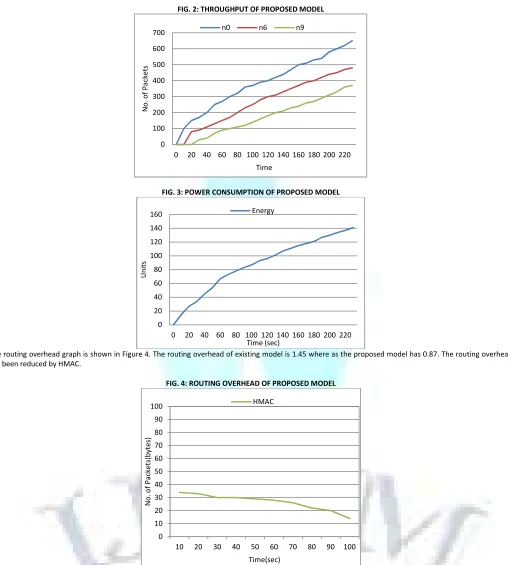
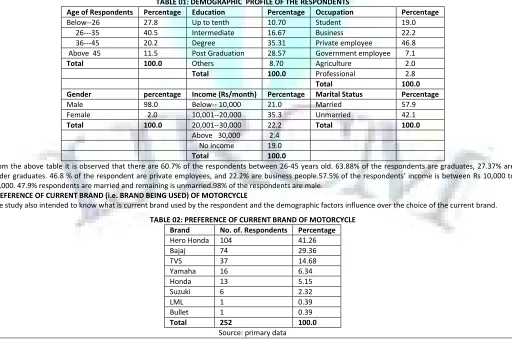
The results are carried out for the throughput, power consumption, data rate, end-end delay, routing overhead, and network density. The proposed system performance is compared with the existing systems. In Figure 2 the throughput for CBR and VBR traffic are presented. The throughput ratio of three nodes is considered. It is shown that, the proposed model achieves high throughput. In Figure 3 the power consumption of the proposed model is shown.
FIG. 2: THROUGHPUT OF PROPOSED MODEL
FIG. 3: POWER CONSUMPTION OF PROPOSED MODEL
The routing overhead graph is shown in Figure 4. The routing overhead of existing model is 1.45 where as the proposed model has 0.87. The routing overhead has been reduced by HMAC.
FIG. 4: ROUTING OVERHEAD OF PROPOSED MODEL
It is observed that the proposed scheme is more effective than the existing model. The packets arrival rate is higher, and the overall system throughput is higher in the proposed model. This is because our model uses QoS scheduling. Based on this, the routing overhead of the proposed model is reduced.
CONCLUSION
The proposed a Hexagon based Adaptive Medium Access Control Layer integrates different wireless networks. The HMAC is incorporated in the next generation wireless terminal. This HMAC has three-layered architecture. It provides seamless access through the access sub-layer. It achieves high network utilization by selecting a suitable resources using decision sub-layer. And also guarantees QoS requirement through scheduling sub-layer. The system performance is analyzed by the simulation software. Thus, HMAC addresses these challenges without any modification in the existing structure.
REFERENCES
1. David Tse, Pramod Viswanath, (2005), “Fundamentals of Wireless Communication”, Cambridge University Press. 0
100 200 300 400 500 600 700
0 20 40 60 80 100 120 140 160 180 200 220
N
o
.
o
f
P
a
ck
e
ts
Time
n0 n6 n9
0 20 40 60 80 100 120 140 160
0 20 40 60 80 100 120 140 160 180 200 220
U
n
it
s
Time (sec) Energy
0 10 20 30 40 50 60 70 80 90 100
10 20 30 40 50 60 70 80 90 100
N
o
.
o
f
P
a
ck
e
ts
(b
yt
e
s)
VOLUME NO. 3 (2013), ISSUE NO. 09 (SEPTEMBER) ISSN 2231-5756 2. Fallah, Y.P., Khan, S., Nasiopoulos, P. and Alnuweiri, H.M. (2008), “Hybrid OFDMA/CSMA Based Medium Access Control for Next-Generation Wireless
LANs”, Proc. ICC, pp. 2762-2768.
3. Computer Networking, Viewed on 2012 http://computernetworkingnotes.com/wireless-networking-on-cisco-router/types-of-wireless-networks.html 4. Huang, V. and Zhuang, W. (2002) “QoS-Oriented access control for 4G multimedia CDMA communications”, IEEE Communication Magazine, Vol. 20, No.3,
pp. 118-125.
5. Mehmet Vuran, C. and Akyildiz Ian, F. (2007), “A-MAC: Adaptive Medium Access Control for Next Generation Wireless Terminals”, IEEE/ACM Transactions on Networking, Vol. 15, No. 3, pp. 1-14.
6. Naor, Z. and Levy, H. (2001), “A centralized dynamic access probability protocol for next generation wireless networks”, Proceedings IEEE INFOCOM, Vol. 2, pp. 767 -775.
7. Pramod Goyal and Saxena, S.K. (2008), “A Dynamic Decision Model for Vertical Handoffs across Heterogeneous Wireless Networks”, World Academy of Science, Engineering and Technology, Vol. 31, pp. 677-682.
8. Qadeer W, Simunic T, Ankcorn J, Krishnan V, and De Micheli G. (2003), “ Heterogeneous wireless network management”, PACS 2003: San Diego, CA, USA, pp. 86 – 100.
9. Ramanathan, S. (1997), “A unified framework and algorithm for (T/F/C) DMA channel assignment in wireless networks”, Proceedings IEEE INFOCOM, Vol. 2, pp. 900-907.
10. Shreedhar, M. and Varghese, G. (1996), “Efficient Fair queuing using Deficit Round Robin”. IEEE/ACM Transactions on Networking, Vol. 4, No. 3, pp. 375-385.
11. Wei Wang Xin Liu, Vicente, J, and Mohapatra, P. (2011), “Integration Gain of Heterogeneous WiFi/WiMAX Networks”, IEEE Transaction on Mobile Computing, Vol. 10, No. 8, pp. 1131-1143.
12. Yeh, C.H. (2002), “ACENET: Architectures and protocols for high throughput, low power, and QoS provisioning in next-generation mobile communications”, Proceedings IEEE PIMRC, Vol. 2, pp. 779 -786.
VOLUME NO. 3 (2013), ISSUE NO. 09 (SEPTEMBER) ISSN 2231-5756
INTERNATIONAL JOURNAL OF RESEARCH IN COMMERCE, IT & MANAGEMENT
A STUDY ON CONSUMERS PERCEPTION TOWARDS THE PURCHASE DECISION OF TWO WHEELER
MOTORCYCLES IN NELLORE DISTRICT, ANDHRA PRADESH
D.V.RAMANA
HEAD
COLLEGE OF COMMERCE, MANAGEMENT & INFORMATION SCIENCES
S. V. UNIVERSITY
TIRUPATHI
DR. PARA SUBBAIAH
PROFESSOR & HEAD
DEPARTMENT OF MANAGEMENT
SSN COLLEGE OF ENGINEERING & TECHNOLOGY
ONGOLE
ABSTRACT
Successful marketing requires that companies must fully relate themselves to their customers and adopt a holistic marketing orientation towards their consumers and should gain a 360 degree view of both their daily lives and the changes that occur during their lifetimes. Gaining a thorough in-depth consumer understanding helps to ensure that the right products are marketed to the right customers in the right way. India is the second largest producer of two wheelers in the world. It stands next only to Japan in terms of number of two-wheelers produced, with the entry of multinational players the competition in the two wheeler segment is increasing. As a result customers are getting a wider choice of brands at different price slots and at high standards of quality. Under this scenario this study explores individual consumer buying dynamics and consumer buying behavior of motorcycle users and allows the marketers to gain insights into why individuals act in certain consumption related ways and with learning what internal and external influences compel them to act as they do. It will be helpful to producers to design and redesign marketing strategies to influence consumption decision of buyer. The present study is undertaken to access the most influencing factors of the motorcycle and its response over the respondents, and to understand their perceptions about different motorcycle brands in the market. Analytical study was carried out by using a questionnaire and the collected data were analyzed by using percentage, factor and ANOVA. The study reveals that Hero Honda is the most preferred brand followed by Bajaj. And it highlights that there is significant influence of demographic factors over the purchase decision of customers.
KEYWORDS
Buying Behavior, Factor analysis, Motivating factors. Purchase decision. Analysis of variance. Chi-square.
INTRODUCTION
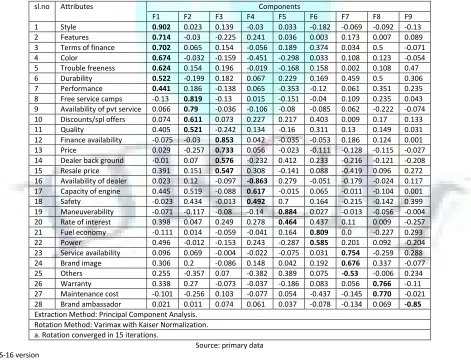
ith the liberalization, privatization and globalization of Indian economy and with the entry of many multinational players the competition in the two wheeler segment is reaching summit. As a result customers are getting a wider choice of brands at different price slots and at high standards of quality. Under this scenario understanding the consumer buying behavior of motorcycle users allows the marketers to gain insights into why individuals act in certain consumption related ways and with learning what internal and external influences compel them to act as they do. So the study of consumer buying behavior of motorcycles users will be helpful to producers to design and redesign marketing strategies to influence consumption decision of buyer. At the same time it will be very useful to customers while making their purchase decision. The study of buying behavior of motor cycle users is felt relevant in today’s changing market environment of two-wheelers. Because the two wheeler sales in the country have sky rocketed in the recent years and the annual sales of motorcycles in India is expected to cross the 16 million mark by 2016 (FICCI, Arun Firodia, chairman (Kinetic Engineering), as there is low penetration of two wheelers in the country at 68 two wheelers per 1000 citizens (2008). And India has 500 millions of middle class population waiting to buy two wheelers, which leaves immense scope for growth of the market.
REVIEW OF LITERATURE
The review of literature available on the consumer buyer behavior of two wheeler automobiles with main emphasis on motor bikes was carried out.
O’Brien1 (1987) examined in his study four factors namely demographic, personality, sources of message, and product class and their effect on information handling. The products chosen for the study were cars and breakfast. It was found that the factors had varying effects on information handling; search initiation had no effect which suggested that substantial number of consumers failed to engage in extensive search prior to purchase. But unlike previous search, his study focused on incentives for information seeking for a given product, how much would a utility maximizing consumer with a given preference gain from search. Hill (1987)2 made a study on the mood of consumer with the objectives of looking at the mood literature and its development thereof.
Ravichandran (1988)3, in his research work, examined information sources used, choice marking and discrimination between urban and semi-urban population
with reference to purchase of durable goods with 550 sample consumers from Chennai city and four other towns. The products chosen were refrigerators, television, ceiling fans and domestic mixers. The findings revealed that urban consumers made use of commercial sources, and semi urban, personal sources. They showed significant differences in the time taken for decision.
Sekar.S4.examined the “consumer values in product consumption patterns”, among the consumers in the city of Chennai (1995), the consumers for the purpose of the study were classified into ‘higher income’, ‘middle income’ and ‘lower income’ groups. the results revealed that the product consumption patterns of lower income group of consumers appeared to be more influenced by their “physical value” while that of the middle income group was more influenced by their epistemic value and that of higher Income consumers were influenced by their “social values”, hence the author concluded that the product consumption patterns of the three income groups differed to their value orientation.
Duncan and Olshavslay (1992)5 In a survey of 164 recent purchases of two wheelers showed that consumer beliefs about the market place and about their
capabilities as consumer accounted for 50 percent of the variance in extent of external search. The types of brand (domestic, foreign, or local) considered by a consumer were found to be significantly related to the belief. The main objective of this research was to study the degree of relationship between market place related beliefs and pre-purchase external information search behavior. The extent of external search for information exhibited by consumers prior to purchase typically had been found to be very limited. In some cases little or no external search occurred.
VOLUME NO. 3 (2013), ISSUE NO. 09 (SEPTEMBER) ISSN 2231-5756
IMPORTANCE OF THE STUDY
India has become world number two in two wheeler manufacturing. Because two-wheeler is really a common man’s vehicle offering an affordable solution for personal mobility and a status symbol. The two wheeler sales in the country have tremendously increased in the recent years and the annual sales of motorcycles in India is expected to cross the 16 million mark (as per FICCI and SIAM) by 2016, leaves immense scope for the growth of the market. The two wheeler population has gone up to over 70 millions (as per estimates of NCAER) still there is a big potential to be tapped. The two wheelers have penetrated 7% of rural households and 24% of urban markets (NCAER), thus it leaves an immense scope for the market to grow in rural areas. With the opening up of rural markets, improved road connectivity and higher disposable incomes one can expect excellent prospects for two wheelers in rural area.
STATEMENT OF THE PROBLEM
Due to the stiff competition in the two wheeler segment customers have a wider choice in terms of number of brands, models and features at different price slots, and all these transformed the expectations of the customers. Now the customers are expecting the manufacturers to provide the products as per their tastes, preferences, habits, and lifestyles. The study of buying behavior of motorcycle users is more appropriate to today’s marketing environment because customers are more conscious and particular about the products and services they want to have. If the firm/marketer fails to understand what their customers want, the products launched by the firm will be rejected in the market. In order to improve the new product success rate and to ensure customer acceptance one has to make an effort to learn everything what one could about their prospective customers regarding their needs, preferences, changing lifestyles, income levels and their purchasing patterns.
OBJECTIVES OF THE STUDY
1. To