Modern Journal of Language Teaching Methods ISSN: 2251-6204
Vol. 6, Issue 7, October 2016
Page 1
Modern Journal of Language Teaching Methods (MJLTM)
ISSN: 2251 - 6204
www.mjltm.com
Editor – in – Chief
Hamed Ghaemi, Assistant Professor in TEFL, Islamic Azad University (IAU)
Editorial Board:
1.
Abednia Arman, PhD in TEFL, Allameh Tabataba’i University, Tehran, Iran
2.
Afraz Shahram, PhD in TEFL, Islamic Azad University, Qeshm Branch, Iran
3.
Amiri Mehrdad, PhD in TEFL, Islamic Azad University, Science and research
Branch, Iran
4.
Azizi Masoud, PhD in Applied Linguistics, University of Tehran, Iran
5.
Basiroo Reza, PhD in TEFL, Islamic Azad University, Bushehr Branch, Iran
6.
Dlayedwa Ntombizodwa, Lecturer, University of the Western Cape, South Africa
7.
Doro Katalin, PhD in Applied Linguistics, Department of English Language
Teacher Education and Applied Linguistics, University of Szeged, Hungary
8.
Dutta Hemanga, Assistant Professor of Linguistics, The English and Foreign
Languages University (EFLU), India
9.
Elahi Shirvan Majid, PhD in TEFL, Ferdowsi University of Mashhad, Iran
10.
Fernández Miguel, PhD, Chicago State University, USA
11.
Ghaemi Hamide, PhD in Speech and Language Pathology, Mashhad University
of Medical Sciences, Iran
12.
Ghafournia Narjes, PhD in TEFL, Islamic Azad University, Neyshabur Branch,
Iran
13.
Grim Frédérique M. A., Associate Professor of French, Colorado State University,
USA
14.
Izadi Dariush, PhD in Applied Linguistics, Macquarie University, Sydney,
Australia
15.
Kargozari Hamid Reza, PhD in TEFL, Payame Noor University of Tehran, Iran
16.
Kaviani Amir, Assistant Professor at Zayed University, UAE
Modern Journal of Language Teaching Methods ISSN: 2251-6204
Vol. 6, Issue 7, October 2016
Page 2
17.
Kirkpatrick Robert, Assistant Professor of Applied Linguistics, Shinawatra
International University, Thailand
18.
Mehrani Mehdi, PhD in TEFL, University of Neyshabur, Neyshabur, Iran
19.
Morady Moghaddam Mostafa, PhD in TEFL, University of Tabriz, Iran
20.
Mouton Nelda, PhD in Education Management, North-West University
(NWU), South Africa
21.
Najafi Sarem Saeid, PhD Candidate in TEFL, Islamic Azad University, Science
and Research Branch, Tehran, Iran
22.
Naicker Suren, Department of Linguistics and Translation, University of South
Africa
23.
Ndhlovu Finex, PhD, Linguistics Programme, University of New England,
Australia
24.
Raddaoui Ali Hechemi, PhD, Associate Professor of Applied Linguistics,
University of Wyoming in Laramie, USA
25.
Rezaei Saeed, PhD in TEFL, Sharif University of Technology, Tehran, Iran
26.
Rolstad Kellie, PhD, Associate Professor of Education, University of Maryland,
USA
27.
Roohbakhshfar Hamid, PhD in TESOL, Islamic Azad University, Neyshabur
Branch, Iran
28.
Sanatifar Mohammad Saleh, PhD in Translation Studies, Tabaran Institute of
Higher Education, Mashhad, Iran.
29.
Shafiee Sajad, Department of English, Shahrekord Branch, Islamic Azad
University, Shahrekord, Iran
30.
Stobart Simon, PhD, Dean of Computing, Teesside University, UK
31.
Suszczynska Malgorzata, Senior Assistant Professor, University of Szeged,
Hungary
32.
Tabeifard Sayed Javad, PhD in ELT, University of Tehran, Kish International
Campus, Iran
33.
Weir George R. S., PhD in Philosophy of Psychology, University of Strathclyde,
Glasgow, UK
34.
Zabihi Reza, PhD in TEFL, University of Neyshabur, Neyshabur, Iran
35.
Zegarac Vladimir, PhD, University of Bedfordshire, UK
Modern Journal of Language Teaching Methods ISSN: 2251-6204
Vol. 6, Issue 7, October 2016
Page 3
Abstracting/Indexing
Index Copernicus 2011
Modern Journal of Language Teaching Methods ISSN: 2251-6204
Vol. 6, Issue 7, October 2016
Page 4
Linguistics Abstract
EBSCO Publication
Lulu Publication
Modern Journal of Language Teaching Methods ISSN: 2251-6204
Vol. 6, Issue 7, October 2016
Page 5
Directory of Open Access Journals
ProQuest
Modern Language Association
Cabell's Directories
Modern Journal of Language Teaching Methods ISSN: 2251-6204
Vol. 6, Issue 7, October 2016
Page 6
COPE
Directory of Research Journal Indexing (DRJI)
Indian Citation Index
Modern Journal of Language Teaching Methods ISSN: 2251-6204
Vol. 6, Issue 7, October 2016
Page 7
International Society of Universal Research in Sciences
Ulrich's
Modern Journal of Language Teaching Methods ISSN: 2251-6204
Vol. 6, Issue 7, October 2016
Page 8
THE IMPACT OF TEACHING AIDS ON IRANIAN
LEARNERS’ READING COMPREHENSION ABILITY
Sedigheh Behzadi MA candidate in TEFL,
Department of English Languages, Islamic Azad University, Rasht branch, Iran. E-mail: [email protected]
Dr. Ghasem Aghajanzadeh Kiasi
Department of English Language, Islamic Azad University, Rasht Branch, Iran E-mail: [email protected]
ABSTRACT
THE PRESENT STUDY SOUGHT TO INVESTIGATE THE EFFECT OF TEACHING AIDS ON IRANIAN EFL LEARNERS’ READING COMPREHENSION. THE MAIN QUESTION OF THIS STUDY ATTEMPTED TO ANSWER WHETHER TEACHING AIDS MIGHT ENHANCE HIGHER KNOWLEDGE AND ABILITY OF READING COMPREHENSION IN THE IRANIAN EFL LEARNERS IN JAVANEHA LANGUAGE INSTITUTE AT HASHTPAR, IRAN. TO ANSWER THIS QUESTION, 30 INTERMEDIATE-LEVEL LANGUAGE LEARNERS WHO WERE THE AGE RANGE BETWEEN14-16YEARS PARTICIPATED IN THE STUDY. THEY WERE RANDOMLY SELECTED FROM AMONG A POPULATION OF 100 VIA A QUICK PLACEMENT TEST (QPT) SCORE. THEN, THEY WERE DIVIDED INTO TWO GROUPS OF 15 AND WERE RANDOMLY ASSIGNED TO AN EXPERIMENTAL AND A CONTROL GROUP. A PRETEST OF READING COMPREHENSION WAS ADMINISTERED TO BOTH GROUPS. THE EXPERIMENTAL GROUP WAS TAUGHT TEACHING AIDS INCLUDING, FLASH CARD; WHITEBOARD, POWER POINTS IN FIVE SESSIONS WHILE THERE WAS NO TREATMENT FOR THE CONTROL GROUP. A POSTTEST OF READING COMPREHENSION WAS, THEN, ADMINISTERED TO BOTH GROUPS AND THE DATA GATHERED WERE ANALYZED VIA CALCULATING AN INDEPENDENT SAMPLES T-TEST AND A ONE-WAY ANCOVA. THE RESULTS ILLUSTRATED THAT THE IRANIAN EFL LEARNERS IN EXPERIMENTAL GROUP RECEIVED HIGHER SCORES IN READING COMPREHENSION AFTER BEING TREATED WITH 5 SESSIONS OF TEACHING AIDS.
KEY WORDS: TEACHING AIDS, READING COMPREHENSION, EFL LEARNER’S, INTERMEDIATE LANGUAGE LEARNERS
1. Introduction
The use of teaching aids in the process of teaching learning depends upon the different types of equipment available in the classroom. The students can learn better when they are motivated properly through different teaching aids. Teaching aids create the environment of interest for the students. Teaching aids help to increase the vocabulary of the students. Chapelle (2008) points out that “second
Modern Journal of Language Teaching Methods ISSN: 2251-6204
Vol. 6, Issue 7, October 2016
Page 9
language teachers today need to be able to choose, use and in some cases, refuse technology for their students” (p. 9).
Barclay (1984) states, that “the role of teaching aids in the classroom is to make learning real, practical, and fun through seeing, hearing, discovering, and doing.” (1984, p. 8). “Materials may contribute in some way, but cannot determine content” (Allwright, 1981, p. 8) that is, the role of teaching materials is limited even if what learners learn is an important way independent of the materials used.
Reading is a complex activity; two approaches known as extensive and extensive reading have been used in developing reading skills. It is believed that these two approaches can be beneficial, in one way or another, for improving students' reading comprehension ability ( Popescu, 2012 ; Attaprechakul, 2013; Alpatkein, 2006; Gorsuch, 2012; Grabe, 2010; Huang , 2013; Bernhardt, 2010; Abraham pula, 2002).Reading is essential to every aspect of learning, and the purpose of reading is to construct meaning from text (comprehension). A major goal of reading comprehension instruction is to help students develop the knowledge, skills, and experiences they need to become independent readers and lifelong learners.
2. Statement of the Problem
The role of teaching aids in the classroom is to make learning real, practical, and fun through seeing, hearing and discovering. To make learning very effective it is not only necessary to utilize the factors and techniques that facilitate learning, the teacher are to create certain conditions in the class-room that may improve learning.These conditions are providing teaching aids, creating rivalry and co-operation, giving the knowledge of progress and success, praising or reprimanding and guiding learning.
Reading is the most important skill that any foreign language learner has to know. It is among the four important dimensions of language learning process identified by Chen and Hsu (2008); that is, listening, reading, speaking and writing skills. Language learners need to read different text from their academic textbooks, stories and newspaper. It can be seen that reading can act as a source of getting information and pleasure and also a means of enhancing one’s knowledge of the target language (Keshavarz & Ashtarian, 2008).At any level of language proficiency, language learners have problems in reading comprehension tests. Hence, language teachers need to pay special attention to this skill and to find a way to help students in the reading process and to improve their reading skill and as a result their knowledge of the target language. One of the ways that can help to improve learners’ reading skill is focusing on teaching vocabulary.
Reading is a complicated skill. As Richards (quoted in Aebersold & Field, 1997) says, Reading in a second language is a dynamic and interactive process in which learners make use of background knowledge. Students cannot learn all the words necessary to promote their reading comprehension during the class time. Moreover, teaching vocabulary to improve reading comprehension requires a labor and time intensive method. Teachers need to find a complement or alternative to classroom teaching of vocabulary. In order to add to the body of existing knowledge in this area, this study attempted to answer to the following questions:
1. Do teaching aids have any significant effect on the Iranian learners’ reading comprehension ability?
3. Review of the literature
Teaching aids are important because they create a visual and interactive experience for the students. As the students become more engaged, they are more likely to understand the topic being taught.Teaching aids assist students in learning. These aids consist of video, audio and hands-on tools to help involve the students and enhance the learning experience. Teachers begin using visual, audio and hands on aids as
Modern Journal of Language Teaching Methods ISSN: 2251-6204
Vol. 6, Issue 7, October 2016
Page 10
early as preschool. Teaching aids can be as basic as a blackboard or whiteboard. Audio and visual equipment, such as DVD players and video projectors, are commonly used as tools for learning with a very effective output. Students tend to get more involved when learning if teaching aids are implemented into the curriculum. Hands-on aids, such as computers, maps and other tools that require some sort of interaction from the students, have the highest levels of effectiveness.
The main factor in the effective use of teaching aids is that a skilled teacher is behind the tools being used. The use of a variety of teaching aids enriches the learner’s experience and helps more learners to benefit from the teaching. (Van Rooyen & van der Merwe, 1996). The teacher task is to help the learners to organize their experience and learning. This can be done effectively through classroom activities whose purpose according to Coppen (1969) and Romizowski (1968) could be (a) to develop skills, (b) to presents facts, (c) to organize knowledge into concepts, (d) to stimulate imagination, and (e) to develop attitudes or change existing ones.
According to Alduais (2012, p. 115), learning occurs in terms of association. It is like connecting two things together. In fact, the more use of aids will give the students full exposure to certain linguistics items. The use of teaching aids in English classes will ease the process of teaching and learning English language. Teaching aids are important to help the teacher to teach and the learners to learn. They bring the outside world inside the classroom to facilitate teaching and using teaching aids in English classes in Saudi Arabia learning. English teacher can use many kinds of teaching aids which help students to learn, like: audio, visual, charts, flash cards, and etc. Certainly, it is an effective way to use the aids while teaching English in the class, especially in Saudi Arabia, where English is taught as a foreign language.
Reading comprehension is the process of making meaning from text. The goal, therefore, is to gain an overall understanding of what is described in the text rather than to obtain meaning from isolated words or sentences. Reading is one of the most important skills for educational and professional success (Alderson, 1984). In highlighting the importance of reading comprehension Rivers (1981, p.147) stated that “reading is the most important activity in any language class, not only as a source of information and a pleasurable activity, but also as a means of consolidating and extending one’ s which are knowledge of the language”.
The most important skill for second language learners in academic context is reading (Lynch& Hudson, 1991, cited in Grabe, 1991). Thus, it can be concluded that perhaps the most fundamental skill to be taught in Iranian academic context, where English is taught as a foreign language, is reading comprehension. Therefore, there is a need for EFL teachers to know about the different approaches they can use while teaching reading comprehension.
According to Oxford and Crookall (1989), strategies are learning techniques, behaviors, problem-solving or study skills which make learning more effective and efficient. In the context of second language reading, a distinction can be made between strategies that make learning more effective, versus strategies that improve comprehension. The former are generally referred to as learning strategies in the second language literature. Comprehension or reading strategies on the other hand, indicate how readers conceive of a task, how they make.
4. Method
Participants
The participants of the current study were 30 Iranian EFL learners of English language in institute. They were at the age range 14-16years, and were selected randomly from among 100 trainees in the Javaneha language institute at Hashtpar (Iran), based on the results of QPT (Quick Placement Test) administered. They were all native speakers of Persian and learners of English as a foreign language. The 30 participants were randomly assigned to the experimental group and the control group.
Modern Journal of Language Teaching Methods ISSN: 2251-6204
Vol. 6, Issue 7, October 2016
Page 11
5. Materials
As to the purpose of the study, two types of tests (QPT, Reading comprehension test) were used. The tests were of standard language tests. They included QPT for matching the participants on their levels of proficiency in each group. The materials for the treatment of the study consisted of teaching aids (e.g., flash card, whiteboard, power points) and, then, the pre-test and posttest of the study. The pre-tests and post-tests were vocabulary and grammar tests used by the researcher based on the institute students’ textbook.
6. Procedures
The data needed for this study were collected from the classes in Javaneha language institute at Hashtpar. The QPT of the study administered for measuring the degree of the participants’ proficiency was a paper-pencil test. The time allowed was 15 minutes as determined in the QPT. The pretest of the study was a reading comprehension test. The time for the reading comprehension pretest was about 30 minutes. The treatment of the study included 5 sessions of teaching aids to experimental group. During the treatment, were taught. They were included: flash card, whiteboard, PowerPoint and computer. The participants in this study were divided into experimental and control groups. A pre-test of reading comprehension was administered to both groups. Then, the experimental group received treatment, which included the use of teaching aids in five sessions. The participants in both groups took pre-test and post–test. Each test (both pre & post) consisted of one passages.
7. Data Analysis
Data obtained from the quasi-experimental study were submitted for statistical analysis by using the statistical package for the social science (SPSS) software, and data obtained from the students were submitted for qualitative analysis. The researcher also used an independent samples t-test and a one-way ANCOVA to determine the differences between the two groups both in their pre and post tests.
8. Result
A descriptive statistical analysis was done on the collected data of QPT (Quick Placement Test) test to the participants. The results are shown in Table (1).
The descriptive analysis of the data was employed to show the number, mean, standard deviation, and standard error of measurement for pre-test and post-test for participants in both groups. Such analysis was done using the SPSS software. In order to identify the English knowledge of the participants, a proficiency test (QPT= Quick Placement Test) was administered to the participants.
Table 1.Descriptive statistics for the proficiency test
N Mean Std.Deviation
30 14 ±1.529
Table 2. Descriptive statistics of the study
Teaching Aids N Mean Std. Deviation Std. Mean Error
Modern Journal of Language Teaching Methods ISSN: 2251-6204
Vol. 6, Issue 7, October 2016
Page 12
As table 2 indicates, the number of participants has been 15 in each group (experimental=15, control =15). The mean and standard deviation of each group are included. The mean of the experimental group is (M=7.2000) and of the control group is (M=5.4000). The standard deviation of experimental group is (St=1.37321) and of the control group is (St=1.05560).This gives an image of the participants’ posttest scores after conducting the treatment of the study (using existing method). The differences between the means are significant. This section emphasizes the inferential analysis of the obtained data of this study. The analysis of the data was done via using the SPSS software.
Table 3.t-test results of the study
As table 3 indicates, the t-value was calculated between the posttests of reading comprehension of the participants in the experimental and the control groups. The observed t value was calculated as to be 4.025 (t obs), and the critical t value was 2.048 (t crit). Thus, the observed t was higher than the critical t and high enough to reject the null hypothesis of the current study. It means teaching aids have improved learners’ reading comprehension level in experimental group.
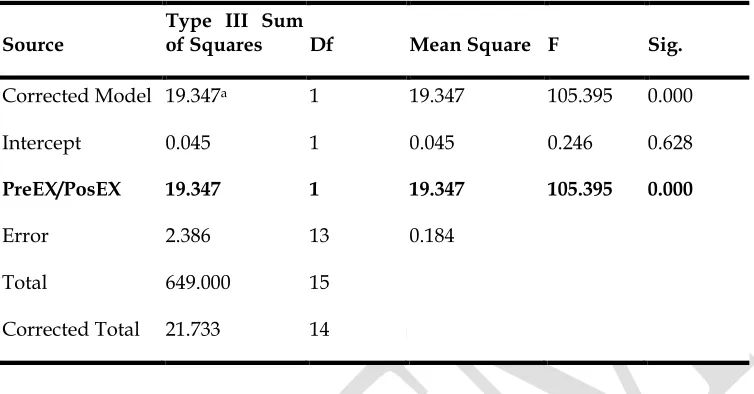
Table 4. One-way ANCOVA results for the Experimental Group of the study
Source Type III Sum of Squares Df Mean Square F Sig.
Corrected Model 19.347a 1 19.347 105.395 0.000
Intercept 0.045 1 0.045 0.246 0.628
PreEX/PosEX 19.347 1 19.347 105.395 0.000
Error 2.386 13 0.184
Total 649.000 15
Reading Comprehension +Teaching Aids 15 7.2000 1.37321 0.35456
-Teaching Aids 15 5.4000 1.05560 0.27255
Reading Comprehension t-test for Equality of Means
t df Sig. (2-tailed)
Equal variances assumed 4.025 28 .000
Equal variances not assumed 4.025 26.263 .000
Modern Journal of Language Teaching Methods ISSN: 2251-6204
Vol. 6, Issue 7, October 2016
Page 13
Table 4. One-way ANCOVA results for the Experimental Group of the study
Source Type III Sum of Squares Df Mean Square F Sig.
Corrected Model 19.347a 1 19.347 105.395 0.000
Intercept 0.045 1 0.045 0.246 0.628
PreEX/PosEX 19.347 1 19.347 105.395 0.000
Error 2.386 13 0.184
Total 649.000 15
Corrected Total 21.733 14
As table 4 shows, the F value in experimental group is 105.395 (F=105.395) that is higher than (1) based on ANCOVA rule. This means that the distance between the pretest and, the posttest scores is significantly different. The level of significance is lower than 0.05. It shows that is not randomly but also in order to variable.
Table 5. One-way ANCOVA results for the Control group of the study
Source Type III Sum of Squares Df Mean Square F Sig.
Corrected Model 7.756a 1 7.756 13.308 0.003
Intercept 1.202 1 1.202 2.063 0.175
PreCon/PosCON 7.756 1 7.756 13.308 0.003
Error 7.577 13 0.583
Total 442.000 15
Corrected Total 15.333 14
As table 5 indicates, the F value in control group is 13.308 (F=13.308). Although it is more than (1) but in compare with the amount of F value in experimental group, it is way less in experimental group which show that pre test and post test scores are very close. So, lack of teaching aids in control group cause the reading level of the participants not to improve. Consequences of such rejection or support, i.e. what would happen if hypothesis of the current study was rejected or supported.
9. Hypothesis Analysis
Modern Journal of Language Teaching Methods ISSN: 2251-6204
Vol. 6, Issue 7, October 2016
Page 14
The hypothesis of the study which targeted the effect of teaching aids on Iranian learners’ reading comprehension ability was rejected. Evidence from various sources of data could help to verify the rejection. The results of the t-test of the study (see table T-test results of the study) could be employed to confirm this analysis, accordingly, the observed t value calculated by the SPSS software was 4.025 (t obs= 4.025) and the degree of freedom was 28 (df= 28) while the critical value of t determined on the basis of considering the 2-tailed significance level of 0.05 (sig= 0.00) was 2.048 (t crit= 2.048). Thus, the observed t was higher than the critical t and high enough to reject the null hypothesis of the current study.
The second evidence to verify the rejection of the hypothesis was the value of the level of significance calculated by the SPSS software to be 0.000 (Significance 2-tailed= 0.000). Since this value was lower than 0.05 (based on the SPSS regulations), the difference between the means of the posttests of the study could not be by the chance, and moreover, the rejection of the hypothesis of the study indicated that teaching aids would enhance the higher reading comprehension ability of the participants in the experimental group of the study. Also, the rejection of the hypothesis of the study could support by showing the experimental group participants’ progress from the pretest to the posttest.
According to table 5, the covariance value between the pretest and the posttest scores in the experimental group was higher than that of the control group. This means that the posttest scores of reading comprehension were distant from the pretest scores in the experimental group and indicated that teaching aids affected the participants’ reading comprehension ability and caused the posttest scores to stand higher.
Discussion
The findings of this study indicated that teaching aids could result in a better performance of language learners in reading comprehension. This finding seems to be compatible with the findings of Danan (1992) who states that language teachers use different visual materials so that they can increase students’ interaction and motivation in the classroom. The use of different types of visual materials can be helpful for teacher, too (Horn, 1998). Visual aids can provide useful and suitable solutions for problems of language teachers. If teachers use visual and verbal aids together, the students’ learning is better (Mayer & Sims, 1994). According to Levin and Mayer (1993), visual elements increase students’ learning because there is more concentration for them.
Moreover, the results of this study is in line with (Ozkan, 2002) Languages are not fixed but constantly changing, so is the media; television, radio and newspaper which are an extraordinarily rich source of language in use. In order to expose foreign language learners to the target language, the use of technology need to be exploited in the classroom as much as possible. For that reason a great tendency towards the use of technology and its integration into the curriculum developed by the foreign language teachers has gained a great importance. The finding of this study is also in line with the result of the study done by Burt (1999) who believes that videos are real and authentic because they are produced for native speakers and they are not simplified, also they are at normal speed and they have genuine accent.
The results of such a research will have both theoretical and practical implications. Certainly, the teaching practitioners will approaches with caution; more particularly, it might prompt a re-examination of the use of certain types of teaching aids, (especially flash cards, whiteboard), as they were somehow used in the present research.
This study was conducted with a small number of participants consisting of 15 in each group. They were all female. Furthermore, five sessions of training may not be enough for learners to use all the teaching aids appropriately all the time. This limitation needs to be taken into consideration with regard to the length of training in any further studies. Time limitations may enhance reading comprehension by promoting mindfulness in students. This study was conducted in the institutes with very limited resources. The researcher would be interesting to look at classroom with different levels of resource to
Modern Journal of Language Teaching Methods ISSN: 2251-6204
Vol. 6, Issue 7, October 2016
Page 15
determine what sort of relationship exists between the number of aids available and the use made of them. Teaching aids for teaching are a lot and the teacher cannot use all of them in the classroom. According to the theoretical concepts and practice procedures in this study, some other related research projects can be recommended:
The first one would be increasing the number of the participants of the research. It seems possible to go beyond the sample-population limitations of the study and to elicit information from a larger population. The future researchers are advised to take the time and replicate the study from this aspect. The second suggestion could be the inclusion of sex as a variable into the study and see the differences. Finally, the researcher did not consider different
Levels of proficiency of language learners in this study. Only intermediate learners participated in this research.
10. Conclusion
Based on the findings of the present study, it can be concluded that the use of teaching aids in teaching and learning has a positive result because treatment can help to improve the students learning. As the researcher can see, the experimental group benefited more from vocabulary learning than the control group. It is concluded that learning by use of teaching aids is more effective than learning without teaching aids. The positive effect of using teaching aids such as, flash cards, whiteboard, etc. became obvious after five sessions. The researcher states that schools and institutes can use teaching aids rather than learning methods in teaching reading. It is suggested to evaluate the planned use of teaching aids in schools by taking into account the aim of transforming educational environments into students learning environments.
REFERENCES
Abraham P. (2002). Skilled reading: Top-down, bottom-up. Retrieved 2015 from:
www.sabes.org/resoures/fieldnotes/ vollo1fn 102.
Aebersold, J. A., & Field, M. L. (1997). From reader to reading teacher. Issues and strategies for second language
classroom. Cambridge: Cambridge university press.
Alderson, C. (1984). Reading in a foreign language: A reading problem or a language problem. In Alderson, C & Urquhart, A. H. (Eds.), Reading in Foreign language (141-200). London: Longman. Alduais, A. (2012). Integration of language learning theories and aids used for Language teaching and
learning: A psycholinguistic perspective. Kingdom of Saudi Arabia: King Saud University, 109-118.
Alpatkein, C. (2006). Cultural familiarity in inferential: A literal comprehension in language 2 reading.
System, 34(4), 494- 508.
Allwright, R. L. (1981). What do we want teaching materials for? ELT Journal, 36/1. 7- 16
Attaprechakul, D. (2013). Inference strategies to improve reading comprehension of challenging texts.
English language teaching, 6(3), 82.
Barclay, E. (1984). Easy to make teaching aids for nutrition teaching-learning. UNESO, 7-133. Bernhardt, E. B. (2010). Understanding advanced second-language reading. New York:Routledge.
Burt, M. (1999).Using video with adult English language learners. CAELA, ESL Resources, Retrieved, 2015, from http://www.cal.org/caela/esl_resources/digests/video.html
Chapelle, C. A., & Jamieson, J. (2008).Tips for teaching with CALL: Practical approaches to computer-assisted
language learning. New York: Pearson Education
Chen, C. M., (2008). Personalized intelligent m-learning system for supporting Effective English learning. Educational technology & society, 11(3), 153–180.
Coppen, H., & Race, P. (1993). Producing teaching materials: A handbook for teachers and trainers (2nd ed), London: Kogan page
Modern Journal of Language Teaching Methods ISSN: 2251-6204
Vol. 6, Issue 7, October 2016
Page 16
Grabe, W. (2010). Fluency in reading thirty-five years later. Reading in a foreign language, 22(1), 71-83. Gorsuch, G. (2012). Fluency instruction in reading in a second or foreign language. Fluency instruction:
Research-based best practices.
Danan, M. (1992). Reversed subtitling and dual coding theory: New directions for foreign language instruction. Language Learning, 42(4), 497-527.
Horn, R. (1998). Visual language: Global communication for the 21st century. Bainbridge Island, WA: Macro VU Press.
Huang, H. C. (2013). E-reading and e-discussion: EFL learners' perceptions of an e-book reading program.
Computer assisted language learning, 26(3), 258-281.
Hudson, T. (1991). A Context comprehension approach and technology to reading English for science.
TESOL Quarterly, 25, 77-104
Keshavarz, M., & Ashtarian, S., (2008).The relationship between Iranian EFL learners’ gender and reading comprehension of three different types of text. IJAL, 11(1), 97-113.
Levin, J. R., & Mayer R. E. (1993). Understanding illustrations in text. In B. K. Britton, A. Woodward, & M. Brinkley, (Eds.), Learning from Textbooks, (pp. 95-113). Erlbaum, Hillsdale, NJ: Erlbaum.
Mayer, R., & Sims, V. (1994). Extensions of a dual-coding theory of multimedia learning. Journal of educational technology, 86, 389-401.
Ozkan, B. (2002) The Use of Video Cases in teacher education .TOJET,1(1).
Oxford, R., & Crookall, D. (1989). Research on language learning strategies: Methods, findings, and instructional issues. Modern Language Journal, (73), 404-419. http://dx.doi.org/10.1111/j.1540-4781.1989.tb05321.x
Popescu, A. V. (2012). Vocabulary and reading comprehension. Annals University Apulensis. Series Philological, 13(2), 531-540.
Rivers, W.M. (1981) Teaching foreign-language skills. Chicago: The University of Chicago Press. Romiszowski, A. (1968). The selection and use of teaching aids .London:kogan pageVan Rooyen
Modern Journal of Language Teaching Methods ISSN: 2251-6204
Vol. 6, Issue 7, October 2016
Page 17
INCORPORATING PRINCIPLES OF CRITICAL PEDAGOGY
IN AN ESP WRITING CLASSROOM: EXPLORING WRITING
QUALITY AND LEARNERS' ATTITUDE
Hamed Barjesteh
Assistant Professor at Islamic Azad University, Ayatollah Amoli Branch Telephone no: (+98)9116263567
Email: [email protected]
Atefeh Nasrollahi
Assistant Professor at Islamic Azad University, Ayatollah Amoli Branch Telephone no: (+98)9125704518
Email: [email protected]
Mohammad Reza Esmaili
Lecturer at Islamic Azad University, Ayatollah Amoli Branch Telephone no: (+98)9111251870
Email: [email protected]
ABSTRACT
THIS STUDY EMBARKED UPON INCORPORATING PRINCIPLES OF CRITICAL PEDAGOGY (CP) IN AN ESP WRITING CLASSROOM. IT AIMED TO EXPLORE ESP LEARNERS' QUALITY OF WRITING WHEN THEY INCORPORATE THE MAIN TENETS OF CP IN THEIR CLASSROOM. MOREOVER, THIS PAPER SOUGHT ESP LEARNERS' PERCEPTION OF A WRITING COURSE WITH A CRITICAL LITERACY (CL) ORIENTATION. TO COMPLY WITH THE OBJECTIVE, THE STUDY ADOPTED ADA'S (1988) MODEL OF CL, AND TANG AND JOHN'S (1999) CATEGORIES OF TEXTUAL ENTITIES TO PROBE HOW A CL APPROACH TO WRITING DEVELOPMENT MAY CONTRIBUTE TO THE BUSINESS STUDENTS' QUALITY OF WRITING. STUDENTS' DIALOGUE JOURNALS (DJ) WERE EXAMINED QUALITATIVELY TO UNVEIL THE POSSIBLE CHANGES IN THEIR MODES OF WRITING. THE RESULTS REVEALED THAT DJ ENDED UP CHANGING IN THE QUALITY OF ESP LEARNERS' WRITING. MORE PRECISELY, STUDENTS COULD GO BEYOND A DESCRIPTIVE AND PERSONAL WRITING. THEY DEVELOPED THE QUALITY OF WRITING TO BE MORE CRITICAL. LARGELY, THE PARTICIPANTS EXPRESSED POSITIVE ATTITUDES IN THE WRITING COURSE WITH THE CL ORIENTATION.
KEYWORDS: ESP WRITING, CRITICAL PEDAGOGY, REFLECTIVE DIALOGUE JOURNAL, CRITICAL LITERACY, BUSINESS STUDENTS
Introduction
Writing pedagogy has been considered as an important skill in the EFL/ESL setting. During the last decade many new trends have been encroached in the the educational context with the hope to make
Modern Journal of Language Teaching Methods ISSN: 2251-6204
Vol. 6, Issue 7, October 2016
Page 18
writing interesting to learners. A number of studies have indicated that language should provide learners with an opportunity to express their thoughts and to understand a variety of different ideas. Within EFL/ESL educational system, there have been abundant researches on writing pedagogy, emphasizing the paradigm shift of product to process oriented approach in writing. This process oriented toward writing has paved the way for a constructive maneuver of teachers who intervene at various stages of producing a piece of writing to orient learners toward more fluent writing. This paradigm shift was in line with the theoretical ties and practicalities that move from traditional method to the post method era. Each method underscored one aspect of language learning due to its theoretical principle. More precisely, language learning transferred from translation, memorization, discovery learning, role-play, task based learning to the post-method era that accentuated the importance of critical thinking, empowerment, developing students' voice, and CL.
CL deeply rooted in CP focuses on the sociopolitical aspect of language teaching. It aims at helping learners go beyond writing and turn to be more transformative intellectual (Kumaradevelue, 2003). Probably, the main goal of education is to develop learners' critical thinking abilities and help them act independently. Canagarajah (1999) insinuates writing as one of the main research zone in CP. He believes that the main tenets in CP are to develop learners' critical awareness and to enable them read and write critically. He maintains that empowered writers are able to voice effectively themselves in writing. In other words, they can write to transform and to be dynamics in their writing.
Developing students' voice has been reiterated in the literature in the process-oriented approach. A number of authors (Crumley, 1998; Ebrahimi Dinani, 2014; Flecha, 2000; Freire, 1997; Ghahremani-Ghajar & Mirhosseini, 2005) argued the advantage of dialogue journal writing (DJW) as a springboard for a process oriented writing classroom in order to develop students' voice. The reason behind the importance of developing the voice of learners is the fact that it gives a sense of daring and power to resist and stand against the social conditions, which might be imposed upon them. Moreover, it leads them to be autonomous and pave the way for reaching the fully humanity. This is what Freire (1970) call problem posing instruction (PPI) as opposed to banking model of education. Barjesteh and Birjandi (2015) argued that Freire placed them together in order to create their effect in education. They maintained that Freire questioned the theoretical framework of banking model by PPI. Freire enumerates conscientization, Praxis, and dialogue as the main thematic elements in PPI. Barjesteh and Birjandi maintain that PPI and CT are like "body and the flesh. Once learners are able to critically analyze the problematic issue of their social life" (p. 1019), they are able to be a "transformative intellectual", a term adopted by Giroux (1988).
A number of authors shed light on the significance of DJW. They claimed that one way within the framework of CP that might help learners develop critical literacy is writing reflective journals. Mirhosseini (2009) called for introduction of DJW into EFL education. He concludes that DJW is an educational practice that provides teacher and learners with a an opportunity to practice writing. He maintains that it creates the possibilities for EFL literacy practice through which learners engage with linguistic and communicative challenge. Marefat (2002) incorporates diaries in an EFL writing classroom. She concludes that diary is too important to ignore. Through diaries, students have a chance to use the language for communicating with their teachers. Likewise, Shin (2006) describes ways in which both native and non-native learners could meet the particular needs of ESL writers through journal writing.
In addition, Abednia, Hovassapian, and Ghanbari (2013) explore the in-service teachers' attitudes regarding the contributes and challenges of DJW. They found that DJW have a great potential to help their subject become aware of their implicit beliefs about ELT and improve their reasoning and self-expression skills. Barjesteh, Alipour, and Vaseghi (2013) believe that incorporating the main tenets of CP and the corresponding teaching strategies into a curriculumcan improve EFL learners' ability to think critically. In doing so, they suggested to incorporate the strategies of critical language pedagogy in an EFL context where EFL learners are needed "to know, comprehend, apply, analyze, synthesis ,and evaluate can lead to both understanding and being able to apply appropriately" (p. 340).
Modern Journal of Language Teaching Methods ISSN: 2251-6204
Vol. 6, Issue 7, October 2016
Page 19
To date, few studies have been incorporated the principles of CP in an ESP classroom in general, and writing in particular. The purpose of this study is to fill the gap by exploring the effect of classroom practice through the theoretical aspect of CP and its practicality with the help of dialogue journals. More precisely, this paper seeks the dynamicity of an ESP writing classroom through the lens of CL that deeply rooted in Freirean ideology.
In order to comply with the objective of the present study, the following research questions were formulated.
1. Does implementing the principles of CP affect the quality of students' writing?
2. What are ESP learners' perception of a writing course with a CL orientation?
1. Methodology 2.1 Participants
Twenty-four graduate male students who were taking general English course at Kale private English institution attended in this study as the participants. Twenty of the students were majoring in food industrial engineering and five were majoring in mechanical engineering. The students had diverse general English background. Based on the data obtained from an oral interview in the first session of the course, eighteen of the students had participated in an English institute for 2 years. They claimed that they were able to communicate English fairly well. The rest had learned English on their own and could convey meaning inaccurately. However, all of the participants had passed writing activities in the textbooks as the prerequisite for the present course. Students' ages ranged from 25 to 40. They were randomly divided in two classes, one held on Saturday at 4- 5:30 and another on Tuesday at 4- 5:30. The same teacher taught both classes.
2.2 Instrumentation
In this study, classroom observation, DJW, and students' writing assignments were used to collect data. An observation checklist, focusing on Freire's values of CP comprised of 10 statements of the principles of a critical classroom was developed. A three-point Likert scale in which the scores ranged from 3 to 1, corresponding to fully applied (3) and not applied (1) was used to display the value of the statements.
Students' DJWs were used as one of the most important instruments. Throughout the semester, the participants were encouraged to freely express their concerns about any issues regarding teaching and learning practice, as well as personal issues via email on a weekly basis.
Since critical thinking skills are highly required in activities centered around the language use, students' writing assignments were used as a central pedagogical tool. Specifically, the data were used to discover how classroom practices worked or did not work, and whether the quality of students' writing moved towards criticality and creativity as the result of implementing the principles of critical pedagogy.
2.3 Procedures
In order to comply with the objectives of this study, adopting a critical pedagogical approach in the writing of students, no specific writing book was selected due to its contradiction of the philosophy of CP. To develop a dialogical interaction among students, they were encouraged to participate in designing and running the course. In doing so, Freirean pedagogy model, identified by Shor (1993), provided directions in determining classroom practices and interactions. This model included 10 values namely, 1) participatory, 2) situated, 3) critical, 4) democratic, 5) dialogic, 6) desocialization, 7) multicultural, 8) research oriented, 9) activist, and 10) affective.
Modern Journal of Language Teaching Methods ISSN: 2251-6204
Vol. 6, Issue 7, October 2016
Page 20
Through the process of synthesizing the values, the researcher came up with two major principles that inform the practices of critical pedagogy in the study. The principles were as follows: (a) Creating equitable and productive power relations, (b) helping students to become critical thinkers. The first principle comprised students' participation in their learning process, students initiating negotiations of the requirements, teacher encouraging students to express their opposing points of view to other students and to the teacher, and teacher helping students to practice and exercise critical thinking. The second principle was carried out by encouraging the students to develop their critical sense in the process of taking their own positions with reference to what they write. It was assumed that by encouraging students to discuss social and personal problems in journal writing and also to construct their identities as critical and independent thinkers and writers, the teacher would effectively pursue the goal of helping students to move towards critical thinking.
Given that none of the students taking the course was likely to experience a critical pedagogical approach before, the first thing to do in the class was to explain what CP and how it would operate. In terms of journal writing, the students were briefed on how to write journals on reflected topics. The topics were negotiated among the students. Those obtained majority vote were selected. Since the teacher attempted to place all participants taste, a variety of topics such as adoption, satellite, embezzlement, government help (Yaraneh in Persian) were selected. In case the students had problems in coming up with ideas, the teacher drew a mind map on the board and everybody was invited to brainstorm and share ideas. Students were required to surf the net and write their opinion about the voted topics through a critical lens. They were asked to relate the tropics to their daily life concerns and problematizing them. They were told that their writings would not be corrected grammatically. They were also allowed to use Persian words when needed. The researchers read and responded to the journal entries every week and put comments on the points students made, answered their questions, and asked questions that guided them to a more critical view.
Adopting writing as a process orientation, the teacher enforced a policy that required a revision process as a vital aspect of learning writing. Throughout the revision process, students were given chances to work with their peers for each writing assignment. Then, they handed in the second draft of each writing assignment for the final revision. The writings were negotiated in class in terms of content and organization. Each session DJW was extracted randomly displayed by a video project to be analyzed by the course members.
To encourage students to construct their identities as critical and independent thinkers and writers, three particular writing assignments were inserted among those routine ones. Since it is believed that the analysis of various aspects of a textual rhetoric would enable students to exercise critical thinking skills, the students were to write two pieces of analysis paper. Reflecting on Auerbach's (1999) claim that learning language needs to be accompanied with critical analysis of social realities of which students are a part. The students were supposed to analyze a social issue through writing that was noted by the course members. As the second and the last assignment, the students were to choose an article on their own and analyze it by focusing on the author's reasoning, assumption and the developmental process of the argument. To encourage students to exercise critical thinking skills, they were provided with guidelines for each writing assignment that could be referred to when carrying out the assignments. In the process of assessing and negotiating the two writings, the emphasis was on the content of the texts, as much as on the organization and language use. After the intervention, students' DJs were collected to probe students improvement as far as the quality of writing is concerned. In so doing, Ada' (1988) model were selected to screen students quality of writing over the period of study.
2. Results and Discussion
Two hindered-nine journal entries were selected throughout the course and subjected to analysis so as to examine recurring themes and to probe the quality of the participants' writing. To answer the first
Modern Journal of Language Teaching Methods ISSN: 2251-6204
Vol. 6, Issue 7, October 2016
Page 21
research question, the analysis of students' journal writing was one way that provided evidence of how DJW contributed to empowerment and to critical thinking and ended up to change in the quality of students' writings. To do this analysis, first, Freire's values of CP was utilized to conduct an analysis on students' extract. Then, in the second stage, students' journals was examined based on the four modes in Ada's (1988) model to detect the changes in the extent of the presence of the four thinking modes, descriptive, personal interpretive, critical, and creative in the three temporal sequences.
Furthermore, the analysis of students' writing assignments was another way to show how classroom practices affected students' writing quality. In doing so, the particular writing assignments namely, analyzing a picture task, and article analysis were examined by locating Tang and John's (1999) categories of textual identities in order to detect the ways in which students positioned themselves on relation to readers of their texts.
In order to answer the first research question, Ada's (1988) four thinking modes in the students' journals were investigated to evident the increased critical thinking over the period of the study.
All students, except one, who never showed any interest in journal writing, either emailed or handed out their journals in a period of 12 weeks throughout the semester. To be able to divide this period into equal temporal sequences, the researcher divided the weeks into 4 sequences of 3 sessions. The proportion of descriptive, personal interpretive, critical, and creative entries was considered as an indicator of the characteristics of students' writing in each of the temporal sequences and also as an illustration of students' writing in each of the temporal sequences and also as an illustration of the changes in the quality of the entries from the beginning to the end of the semester.
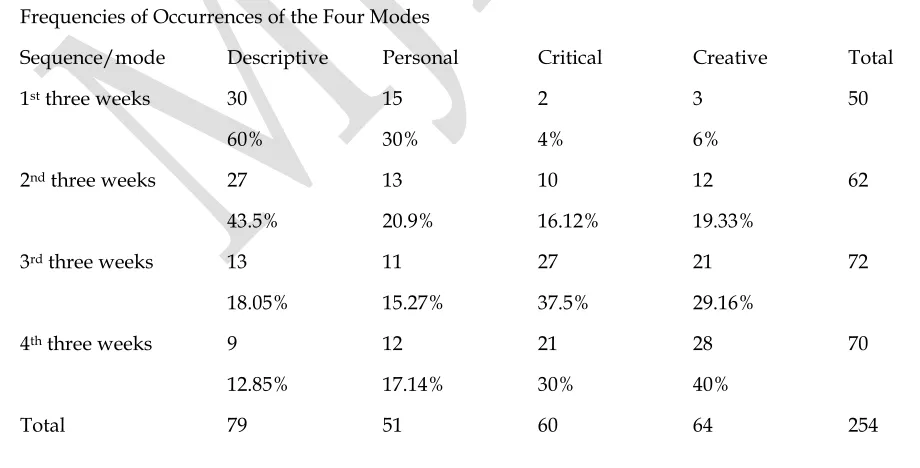
Table 1 shows a clear decrease in the numbers of descriptive, personal interpretive entries an increase in the number of critical and creative ones as the students continued writing. In the first temporal sequence, 45 out of 50 (90%) of the whole entries were rather descriptive or personal interpretive. In the second sequence, this number decreased to 40 out of 62. In other words, only 6404% of the entries were descriptive or personal interpretive. This decrease continued so that in the third and fourth sequence only 33.4% and 30% of the entries were descriptive or personal interpretive respective, and the rest (66.60% and 70%) were critical and creative journals.
Table 1
Frequencies of Occurrences of the Four Modes
Total Creative Critical Personal Descriptive Sequence/mode 50 3 6% 2 4% 15 30% 30 60% 1st three weeks
62 12 19.33% 10 16.12% 13 20.9% 27 43.5% 2nd three weeks
72 21 29.16% 27 37.5% 11 15.27% 13 18.05% 3rd three weeks
70 28 40% 21 30% 12 17.14% 9 12.85% 4th three weeks
254 64 60 51 79 Total
Modern Journal of Language Teaching Methods ISSN: 2251-6204
Vol. 6, Issue 7, October 2016
Page 22
The changes in the proportion of entries with different modes showed a clear transformation in students' view of writing. This transformation could be attributed to the critical awareness. It could be fostered by the democratic space created by the DJW opportunity. Considering the change in writing modes, it is desirable to conclude that DJW as one of the requirements practiced in a critical pedagogical approach does provided learners with a potentially valuable opportunity to move beyond uncritical descriptive writing and towards critical and creative mode of writing. Figure 1 demonstrates the distribution of writing mode in 4 temporal sequence.
(Figure 1. The distribution of writing mode in 4 temporal sequence
In order to seek ESP learners' perception of the writing course with CL orientation, a content analysis was run in journal entries. Despite some discordance, many course members expressed positive attitude in their written overview. At first 3 weeks of the course. However, ninety percent of students, who were not able to communicate their idea due to the lack experience, gradually indicated their interest in expressing their voices in the class discussion. This opposed Freire's (1972) perspective of the culture of silence. What follows are the direct quotes of participants' journals:
At first, it was hard to me but now I think it is so useful for our future.
I think this method was so helpful to me and my classmates, and thanks to my professor who is so energetic
Writing journal helps me to understand more with reviewing and taking a good conclusion. It helps me improve my English, increase my motivation.
DJW enhance creativity and critical thinking among students, I like it, thank you very much
I understand this class is very different from the past. Your class is not based on memorization. At first I thought it was a hard work, but after writing several reflective journal, I found it is easy and interesting for me. I hope to read some books to set information.
What was obvious from the sample of extract is that students were able to criticize and develop creativity in their reflective journal as from the second and the third week. They were able to connect the topics discussed to their real world situation. They were able to write freely about their experiences and beliefs documented the practice of Freire's to values in the class because in the context of educational system being able to break the culture of silence is a substantive advancement. In fact, the analyses of student responses demystify the point that CP provides learners with an opportunity to involve in their learning process. The research findings were in line with Ghahremani and Mirhosseini (2009). They argue
Modern Journal of Language Teaching Methods ISSN: 2251-6204
Vol. 6, Issue 7, October 2016
Page 23
that" writing dialogue journals as a language education activity an EFL pedagogy may empower learners and provide them with opportunities to express their voice"(p. 286). Their study also revealed that DJW "let to gains in critical self reflective EFL writing ability"(p. 286).
Students' journal entries were analyzed in search of clues to the empowering role of DJW. The analyses revealed that students' consistently took the opportunity to speak out. In their journals, students expressed their dissatisfactions. They offered suggestions for change and reasoned their ideas. Students' responses to interview questions strongly supported this empowering role of journal writing.
In addition, it was explored that students moved from the descriptive writing toward critical and creative modes as they continued writing journals. These findings were obtained in search of Ada's (1988) four thinking modes as indicators of students' progress in critical thinking. The analysis revealed that more than 69% of entries were written in critical or creative modes during the 3rd and the 4th sequence of the semester. The results support the findings of Clark (1992) and Marefat (2001).
3. Conclusion
The present study aimed at exploring the dynamicity of ESP writing classroom through the lens of CP. The results of this study indicated the changes in students' perception of themselves as writers. Specifically, the results unveil the course members' development to go beyond descriptive and personal writing as the course proceeded. In fact, it ended up to the students' development to make a more critical and creative classroom. The results supported the conclusion drawn from the findings of the first research question indicated that implementing the principles of CP can help learners develop the quality of their writing to be more critical. Although students' linguistic knowledge was the critical skill that the analysis can be done, their weakness in EGP did not prevent them from writing critically. They were able to voice their idea through writing. The analysis of student DJW made the researchers confident that most of the course members had positive attitude in their writing by expressing their satisfaction with the whole course in terms of dialogical interaction, cooperation, empowerment relation between teacher and student, student centeredness, and expressing students' voice through writing.
The results of the present study have implication for teachers and material development to find the value of critical thinking in their writing classroom and course books. Implementing the principles of CP can be a springboard for hearing authentic student voice through journal writing.
REFERENCES
Ali Abednia, A., Hovassapian, A., Teimournezhad, S., & Ghanbari, N. (2013). Reflective journal writing: Exploring in-service EFL teachers’ perceptions. System 41, 503-514.
Ada, A. F. (1988). The Pajaro Valley experience: Working with Spanish-speaking parents and students to develop children’s reading andwriting skills in the home through the use of children’s literature. InT. Skutnabb-Kangas, & J. Cummins (Eds.), Minority education :From shame to struggle (pp. 224-238). Philadelphia: MultilingualMatters
Auerbach, E. R. (1999). The power of writing, the writing of power: Approaches to adult ESOL writing instruction. Focus on Basics 3, 1–6.
Barjesteh, H., & Birjandi, P. (2015). Toward postulating a transformative L2 materials preparation (TLMP) model in Iranian universities. Indian Journal of Fundamental and Applied Life Sciences, 5
(S2), 1016-1027.
Barjesteh, H., Alipour, B., & Vaseghi, R. (2013). Critical pedagogy: improving Iranian EFL learner’s reading comprehension ability through cp strategies. Indian Journal of Fundamental and Applied Life Sciences, 3(3), 335-341.
Canagarajah, A. S. (1999). Resisting linguistic imperialism in English teaching. Oxford University Press Crumley, H. (1998) Dialogue journals as a tool in the introduction of a more student- centered approach
in the ESL classroom. Paper presented at the TEMPUS / Varna Medical University conference
Modern Journal of Language Teaching Methods ISSN: 2251-6204
Vol. 6, Issue 7, October 2016
Page 24
language for specific purposes in Varna, Bulgaria. On WWW at
http://www.uic.ssu.samara.ru/spelt/hugh/d-journ.htm
Ebrahimi Dinani, Gh. (2014, September7). Dialogue as the basis of my course. Farhikhteghan, p. 7.
Flecha, R. (2000). Sharing words: Theory and practice of dialogic learning. Lanham, M. D: Rowman& Littlefield.
Freire, P. (1970). Pedagogy of the oppressed. New York, NY: Continuum. Freire, P. (1972). Pedagogy of the oppressed. New York: Penguin Books.
Freire, P. (1997). Mentoring the mentor. A critical dialogue with Paulo Freire. New York: Peter Lang.
Freire, P. (2005). Education for critical consciousness. New York: Continuum International Publishing Group.
Ghahremani-Ghajar, S. & Mirhosseini, S.A. 2005. English class or speaking about everything class? Dialogue journal writing as a critical EFL literacy practice in an Iranian high school. Language, culture and curriculum 18 (3), 286-299.
Giroux, H. A. (1988). Teachers as intellectuals: Towards a critical pedagogy of learning. South Hadley, MA: Bergin & Garvey.
Marefat, F. (2002). The impact of diary analysis on teaching/learning writing. RELC Journal, 33(1), 105-110 Mirhosseini, S-A. (2009). For our learn of English: Dialogue journal writing in EFL education. Prospect, An
Australian Journal of TESOL,24(1), 40-48.
Shin, S. J. (2006). Learning to teach writing through tutoring and journal writing. Teachers and Teaching:
Theory and Practice, 12 (3), 325-345.
Tang, R. & S. John (1999). “The ‘I’ in identity: exploring writer identity in student academic writing through the first-person pronoun”. English or Specific Purposes, 18(S), 23-39.
Modern Journal of Language Teaching Methods ISSN: 2251-6204
Vol. 6, Issue 7, October 2016
Page 25
THE EFFECTS OF LEVELS OF SPIRITUAL
INTELLIGENCE ON THE PERFORMANCE OF EFL
LEARNERS READING COMPREHENSION
Mohammad Bakhshi M.A Hamed Barjesteh Ph.D.
Department of English Language and Literature, Islamic Azad University, Ayatollah Amoli Branch, Amol, Iran
[email protected] [email protected]
ABSTRACT
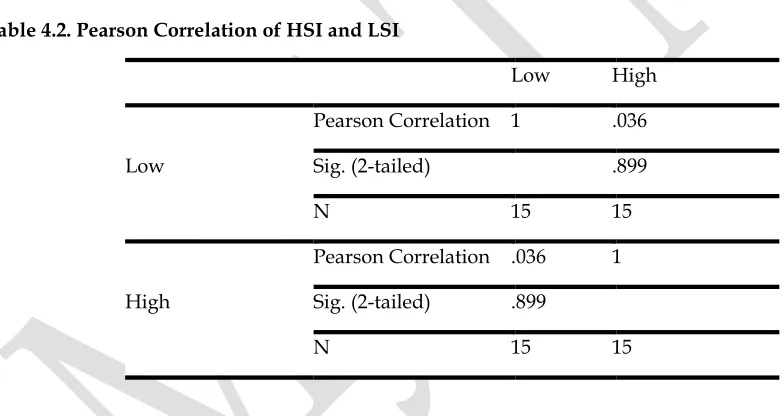
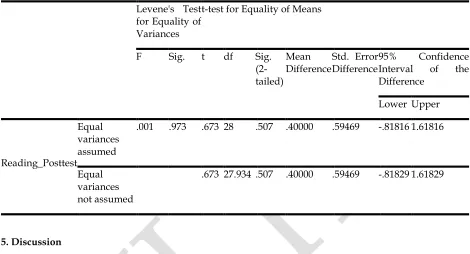
SPIRITUAL INTELLIGENCE (SI) RELATES TO INDIVIDUAL'S CAPACITY TO ARTICULATE AND CHARACTERIZE SPIRITUAL RESOURCES, PRINCIPLES, AND CHARACTERISTICS TO ENHANCE AND PROGRESS ROUTINE PERFORMANCES. THIS CAPACITY HELPS HUMAN BEINGS TO SEEK AND ASK FINAL QUESTIONS ABOUT THE LIFE MEANING AND PROVIDES A CLEAR CONNECTION BETWEEN EVERY HUMAN AND THE WORLD IN WHICH THEY LIVE. ONE OF THE IMPORTANT PROCESSES IN HUMANS' LIFE IS LEARNING A SECOND OR FOREIGN LANGUAGE THAT COMPRISES FOUR BASIC SKILLS. IN THIS REGARD, THIS RESEARCH WAS ACCOMPLISHED TO DISCOVER THE PROBABLE LINK BETWEEN SI AND READING COMPREHENSION (RC) PERFORMANCE AND SPECIFICALLY THE PROBABLE SIGNIFICANT DIFFERENCE OF HIGH AND LOW LEVELS OF SI ON EFL LEARNERS' RC. THE QUANTITATIVE DESIGN (PRE-TEST, TREATMENT, AND POST-TEST) WAS APPLIED FOR THIS STUDY. FIFTEEN LEARNERS WERE CHOSEN AS THE EXPERIMENTAL GROUP (HIGH-SPIRITUAL LEVEL) AND FIFTEEN LEARNERS WERE SELECTED AS THE CONTROL GROUP (LOW-SPIRITUAL LEVEL) OF THE STUDY. THE ANALYSES OF DATA SHOWED THAT (A) THERE WAS NO STATISTICALLY SIGNIFICANT RELATIONSHIP BETWEEN THE PERFORMANCE OF HIGH AND LOW SI GROUPS ON THEIR RC AND (B) THERE WAS NO STATISTICALLY MEANINGFUL DIFFERENCE BETWEEN THE PERFORMANCE OF THE HIGH AND LOW GROUPS ON THEIR RC IN THE POST-TEST.
KEYWORD: INTELLIGENCE, SPIRITUAL INTELLIGENCE, READING, READING COMPREHENSION PERFORMANCE
1. Introduction
Intelligence is a prominent part of psychology, which leads differences among learners and it also plays a prominent role in learning a second or foreign language. Gardner (1983) defined intelligence as the capability to distinguish and retain information as knowledge for applying to itself or other instances of knowledge or information. Intelligence is described as a bio-psychological ability that can be affected by motivational, cultural and experiential factors (Gardner, 1993). Based on Gardner's theory (1983), intelligence includes nine types which they are called as multiple intelligences: spatial, naturalist, interpersonal, intrapersonal, logical-mathematical, musical-rhythmic, bodily-kinesthetic, linguistic and spiritual.
Spiritual intelligence (SI) is a kind of intelligence which aids to determine and solve spiritual and existential problems. Emmons (1999) stated that SI is a means to realize and organize abilities and skills to
Modern Journal of Language Teaching Methods ISSN: 2251-6204
Vol. 6, Issue 7, October 2016
Page 26
use spirituality. Additionally, Emmons (2000) defined SI as using the adaptive information to solve everyday problems and goals attainment easily. As Zohar and Marshal (2000) defined SI as a kind of intelligence that helps us to be able in covering our desire and capability for meaning, mental picture, value and eventually it leads to foster one's self-reflection.
Different empirical studies indicated the importance of SI in language teaching and learning processes. Aghaei and Langroudi (2015) studied the relationship between teachers' SI and their motivation of teaching and their (teachers' SI and their motivation) effects on Iranian EFL learners' achievement. The participants were 120 EFL students and 10 teachers at Fars, Farashband high schools who were involved in the research. The results indicated that there was a significant connection between teachers' SI and their motivation of teaching. Also, there was a significant connection between teacher motivation and student accomplishment. Students' achievement is another component in this research which was linked to learners' performance in school. In this study, it could be concluded that teachers' SI did not effect on students' achievement.
Aghaei, Behjat and Rostampour (2014) conducted a study to investigate the link between Iranian high school female learners’ SI, language ability and self-esteem. The selected samples of this research were 60 female learners from Hazrate Masome High School in Farrashband, Iran who were passing their third grade. They filled out two questionnaires of self-esteem and spiritual intelligence and a test of language ability which was adopted from the U.S Language Proficiency Examination. The data analysis showed that there was a link between language ability and self-esteem. In addition, through performing independent sample t-test it was found that there was a significant relationship between SI and language ability. In conclusion, the findings revealed the existence of link between the three investigated variables. At the same time the finding suggested SI had a positive correlation with self-esteem and language ability.
Azizi and Zamaniyan (2013) studied on the relationship between SI and the strategies of learning vocabulary among EFL students. In this paper, SI was elaborated. In the next part, vocabulary learning strategies was explained. In this article, the subjects were 120 EFL junior and senior undergraduate students whose majors were English language teaching, English translation and English literature. The selected samples of the study were 45 male 75 female. The research instruments in the study comprised two survey questionnaires, namely, SI questionnaire and Schmitt's vocabulary learning strategy questionnaire. The results showed that high SI helped the learners to experience an effective learning of English resulted in the learning to apply beneficial methods for all activities in their daily life. High SI demonstrates that a student can have logical thinking and make the best use of his or her mind and thoughts. SI determines an effective stage of brain for neural changes that integrate the acquired facts and information in brain.
However, it is considered SI as one type of intelligences and it increases the ability to provide solution for difficulties and achieve the capability to experience an enhanced state of awareness (Emmons, 1999), it has not been paid attention as similar as other kinds of intelligences. This type of intelligence may have a significant and positive role in whole aspects of education. In addition, SI is associated with faith and it should be drawn attention in Islamic countries and contexts as Iran.
The current study attempts to study the link between SI and the performance of EFL learners on their reading comprehension (RC) performance and also it tries to find the difference between Levels of EFL learners in the SI on their RC performance. According to this research, it was likely that tutors feel and comprehend the significance of SI in teaching and find ways to enhance RC performance.
2. Literature Review
Modern Journal of Language Teaching Methods ISSN: 2251-6204
Vol. 6, Issue 7, October 2016
Page 27
2.1. Definitions of Intelligence and its Types
One significant aspect of human cognition is intelligence. Stenberg (1997) defined intelligence as a collection of the notions of knowledge and mental processes and the role of context and culture. Gardner (1993) asserted that intelligence is as an "intellectual phenomenon and not emotional or moral and leads to one's attempts in doing or achieving goals" (p. 15). Simonton (2003) declares that intelligence is viewed as a cognitive ability that assists individuals to conform and enhance in a special context and find themselves in this cognitive ability including memory and issues such as solving problems.
Gardner (1983) initially introduced multiple intelligences in seven intelligences: Linguistic, Logical/Mathematical, Spatial, Musical, Interpersonal, Intrapersonal, and Bodily-Kinesthetic. Afterward, Gardner (1999) included Naturalistic intelligence and proposed the probable existence of existential intelligence, however he believed that spiritual intelligence does not exist. He believed that his eight intelligences are as abilities or talents, but it is assumed that quantitative or verbal abilities are referred to as talents. He argued that there is no hierarchy of ability.
Zohar and Marshal (2000) named existential intelligence as spiritual intelligence (SI).
2.2. Spiritual Intelligence
Emmons (1999) defined SI as a series of skills that resort to spiritual resources. He states that SI is as the adaptive application of spiritual evidence to assist routine problem-solving activities and achieving objectives (Emmons, 2000). As stated by Wolman (2001), SI is as the human ability and capability to inquire crucial questions regarding the significance of life, and at the same time to observe the perfect link between every one of us and the world where we live. Zohar and Marshal (2000) defined SI as the intelligence by means of which the issues of meaning and usefulness are addressed and solved, and our activities and lives can be placed in a broader, powerful, important situation, and through intelligence we can judge that one way of action or one route of life is more significant than the other. This description also asserts and suggests a link exists between SI and the more extensive and bigger whole. As stated by King (2009), SI is defined