Journal of Computing and Security
http://www.jcomsec.org
Primitives Based on Jumping LFSRs with Determined Period
Mahdi Sajadieh
a, Arash Mirzaei
b, Mohammad Dakhilalian
baDepartment of Electrical Engineering, Islamic Azad University, Isfahan (Khorasgan) Branch, Iran. bDepartment of Electrical and Computer Engineering, Isfahan University of Technology, Isfahan, Iran.
A R T I C L E I N F O.
Article history:
Received:06 June 2015
Revised:15 February 2016
Accepted:25 April 2016
Published Online:24 August 2016 Keywords:
Stream Ciphers, LFSR, Jump Index, Period
A B S T R A C T
Linear feedback shift registers (LFSRs) are used in many stream ciphers because of their maximal period and good statistical properties. Due to the linearity of the LFSR, its output cannot be directly used as the keystream. Different methods have been proposed to utilize LFSRs in construction of stream ciphers. Jumping is one of these methods which is used in some stream ciphers like Mickey and Pomaranch but the period for this method cannot be generally determined. In this paper, using the jumping LFSRs, some new primitives are proposed. According to the properties of these new primitives, a lower bound for their period can be computed. In some of the proposed primitives, this lower bound can be determined without the knowledge of the jump index. These primitives are applicable when the calculation of the jump index is infeasible. The proposed primitives can be used as building blocks to design the software oriented and the hardware oriented stream ciphers.
c
2015 JComSec. All rights reserved.
1
Introduction
In cryptography, stream ciphers are symmetric key ciphers employed to provide confidentiality for com-munication channels. These types of ciphers produce a stream of pseudo-random bits, which is called keystream. The keystream is often bitwise XORed with the plaintext (the ciphertext) to produce the ciphertext (the plaintext). Since a shared secret key K and a public initialization vector IV is used to initialize the stream cipher, generated keystream is the same at the sender and the receiver side.
Many stream ciphers have focused on bit oriented linear feedback shift registers (LFSRs) because of their hardware implementation speed. In addition, the LFSR output can have maximal period and good
∗ Corresponding author.
Email addresses:[email protected](M. Sajadieh), arash [email protected](A. Mirzaei),
[email protected](M. Dakhilalian)
ISSN: 2322-4460 c2015 JComSec. All rights reserved.
statistical properties [1]. Since bit oriented LFSRs produce only one bit of output per iteration, their software implementation is not efficient for the modern processors. To address this drawback, word oriented LFSRs were introduced and many stream ciphers have recently been proposed based on them [2].
The most important disadvantage of jumping method is that the jumping LFSR period depends on the jump index value and the jump controlling sequence which is often a pseudo-random sequence. Thus, determining the jumping LFSR period is not straightforward. In [4, 5], a method has been sug-gested to design the stream cipher Mickey which can be used to determine the lower bound for the jumping LFSR period regardless of the jump control-ling sequence. This method is just applicable to bit oriented LFSRs and moreover, its resistance against side-channel attacks has not been proved.
In [6], jumping method was extended to a type of word oriented LFSRs calledσ-LFSRs. The idea of jumping method can easily be extended to the other types of word oriented LFSRs. For the jumping word oriented LFSRs, depending on the LFSR length, there exist cases where finding the jump index is plausible [6]. For these cases, determining the period is not possible. Moreover, even when the jump index value is known, no method has been suggested to determine the exact value or even a lower bound for the period of jumping for the word oriented LFSRs.
In this paper, using more than one jumping LFSR, some primitives are proposed for which the lower bound of the period can be determined if the jump index value is known. Furthermore, some primitives with the determined lower bound of period are pro-posed for cases which the jump index cannot be calcu-lated for. All of the proposed primitives in this paper have resistance against side-channel attacks and can be used as building blocks to design word oriented and bit oriented stream ciphers. It should be noted that among the possible attacks, the focus of the paper is on side-channel attacks because irregular clocked LFSRs are potentially vulnerable to these types of at-tacks. Resistance of the new primitives against other types of attacks depends on the properties of stream ciphers use the new primitives as building blocks.
The rest of the paper is organized as follows. In Section 2, some types of LFSRs are described. A brief description of the jumping method and its flaws are represented in Section 2. We propose our new primi-tives and their properties in Section 4.
2
Brief Description of LFSRs
In this section bit oriented LFSRs and some types of word oriented LFSRs are described all of which can be used in the new primitives proposed in Section 4. A word oriented LFSR is a linear shift register based on the linear recurrence Equation (1) [7]
st+n=st+n−1·Cn−1+st+n−2·Cn−2+· · ·+st·C0,
t= 0,1,· · ·
(1) where eachCi is a binaryw×wmatrix.
The state of thenw-bit shift register at time t is denoted bySt= (st,st+1,· · · ,st+n−1) and the
non-zero vector (s0,s1,· · · ,sn−1) is called the initial value.
The initial value is assumed to be nonzero. According to Equation (1), the transition matrix of an LFSR which transformsSttoSt+1is as follows
St+1=St·T=
St·
0w×w 0w×w · · · 0w×w C0
Iw×w 0w×w · · · 0w×w C1
0w×w Iw×w · · · 0w×w C2
..
. . ..
0w×w 0w×w · · · Iw×w Cn−1
(2)
If the characteristic polynomial of the LFSR is prim-itive, its output sequence attains the maximal period. Theorem 1 determines the necessary and sufficient conditions for a word oriented LFSR to have the max-imal period.
Theorem 1. [7]
Let the sequence s∞ = s0,s1,· · · be
gener-ated by an LFSR with linear recurrence st+n =
st+n−1Cn−1+st+n−2Cn−2+· · ·+stC0whereC0is
an invertible binary matrix and Cl = (cijl )w×w for
l= 0,1,· · ·, n−1, and
F(x) = (fij(x))w×w
be the corresponding polynomial matrix off(x)where
fij(x) =δijxn+
n−1
X
l=0
cijl xl∈F2[x], δij ={
1, i=j 0, i6=j (3)
Then LFSR will have the maximal period if and only if the determinant ofF(x)(|F(x)|) is a primitive poly-nomial of degreewnoverF2.
Bit oriented LFSR is a special case of word oriented LFSR withw= 1 that can be efficiently implemented in hardware. Thus, bit oriented LFSR is a shift register based on the linear recurrence Equation (1)
st+n=st+n−1cn−1+st+n−2cn−2+· · ·+stc0,
t= 0,1,· · · (4)
where eachci equals 0 or 1.
T=
0 0 · · · 0 c0
1 0 · · · 0 c1
0 1 · · · 0 c2
.. . . ..
0 0 · · · 1 cn−1
(5)
Based on Theorem 1 a bit oriented LFSR have maximal period if the characteristic polynomial of its transition matrix is a primitive polynomial of degree noverF2.
Different types of word oriented LFSRs are distin-guished from each other based on the form of the coefficients (Ci, i= 0,1,· · ·, n−1). In the remainder
of this section, some types of word oriented LFSRs are described. It should be noted that all types of word oriented LFSRs can be used in the new primitives of Section 4.
2.1 TGFSR
TGFSR (Twisted Generalized Feedback Shift Regis-ter) [8] is a word oriented linear feedback shift register based on the linear recurrence Equation (1)
st+n=st+m+st.A(t= 0,1,· · ·) (6)
whereAis an invertiblew×wbinary matrix,mis a positive number between 1 andn−1 andstdenotes a
word and is regarded as a row vector of lengthwover
F2. According to Equation (1), for TGFSRC0=A,
Cm = Iw×w andCi =0w×w for i = 1,2,· · ·, m−
1, m+ 1,· · ·, n−1.
By choosing suitable values for n, m andA, the output of TGFSR attains the maximal period. It means the minimum value forkwhich satisfiesst+k =
st, fort= 0,1,· · · is 2nw−1. The generated sequence
of a TGFSR is denoted by S(n, m,A) = s0,s1,· · ·. Theorem 2 determines the necessary and sufficient conditions for a TGFSR generator to produce the maximal period sequence.
Theorem 2. [8]
Let φA(t) be the characteristic polynomial of the
matrixA. The period ofS(n, m,A)is2nw−1words
if and only ifφA(tn+tm)is a primitive polynomial of
degreenw.
Ashould be chosen so thatst.Acan be calculated
efficiently in the modern processors. The proposedA
in [8] is a matrix of the form
A=
0 1 0 · · · 0
0 0 1 · · · 0
.. . . ..
0 0 0 · · · 1
a0 a1 a2 · · · aw−1
(7)
For this matrix,φA(t) =tw+P w−1
i=0 aiti ands.A
can be calculated by
s.A={s≫1, sw−1= 0
s≫1⊕a sw−1= 1
(8)
wheresis a binary vector with content (s0, s1,· · ·, sw−1)
andais the binary vector (a0, a1,· · ·, aw−1) and also s≫1 shows one bit circular shift of vectorsto the right.
2.2 σ-LFSR
Another type of word oriented LFSRs isσ-LFSR. σ-LFSRs are linear feedback shift registers based on the linear recurrence Equation (1). Inσ-LFSRs Ci
should be corresponding to one of the following opera-tions (s= (s0,· · ·, sw−1) andv= (v0,· · ·, vw−1) are
binary words of lengthwbits):
• AND with constant v which is denoted by Λv(s) = (s0v0, s1v1,· · ·, sw−1vw−1).
• Left shift by k bits which is denoted byLk(s) =
(sk,· · · , sw,0,0,· · ·,0).
• Right shift by k bits which is denoted byRk(s) =
(0,0,· · ·,0, s0,· · · , sw−k−1).
• Circular right shift by k bits which is denoted by σk(s) = (s
w−k,· · · , sw−1, s0,· · · , sw−k−1).
• LR shift combination operation which is denoted byLRk,l(s) =Lk(s)⊕Rl(s).
2.3 Other Word Oriented LFSRs
Word oriented LFSRs which have been used in Sose-manuk [9] or SNOW [10] stream ciphers have neither the TGFSR nor theσ-LFSR form. For these types of word oriented LFSRs, calculation ofst+i.Ci
corre-sponds to multiplication ofst+i byαi inF2w where
αi is an element ofF2w.Ci =Iw×w andCi=0w×w
correspond toαi= 1 andαi= 0, respectively.
The coefficientsCi6=Iw×w,0w×wshould be chosen
αi can be efficiently implemented in software. For
Sosemanuk and SNOW stream ciphers, the length of each word is 32 bits and the coefficients which are neither032×32norI32×32, have been chosen such that
the multiplication of st+i by Ci can be calculated
using a shift operation ofst+i and then XORing the
result with a word which is loaded from a lookup table.
3
Jumping LFSR
The output bits of an LFSR are linearly dependent and cannot be directly used as a keystream. One of the ways to generate a non-linear sequence from an LFSR output is irregular clocking of the LFSR. It means the number of applied clocks to the LFSR between producing two consecutive outputs is not constant and depends on a controlling sequence. Thus, it is sometimes necessary to apply more than one clock to the LFSR to produce only one output word. This property results in a reduction of the output generation rate of an irregular clocked LFSR compared with a regular one.
An efficient way to let an LFSR move to a state more than one step further without having to traverse consecutive intermediate states has been proposed in [11]. In this case, it is said that the LFSR jumps. This method is explained as follows.
Let T denote the transition matrix of an LFSR (or generally a linear finite state machine). Thus, ap-plying one regular clock to the LFSR corresponds to multiplication of the LFSR state byT. If a positiveJ is found such thatTJ =T+I, then the same result is obtained if the state vector is multiplied either by
TJ or byT+I.J is called the jump index ofT. Multiplication of the LFSR state vector byT+I
corresponds to XORing the LFSR state vector with the resultant state from applying one regular clock to the LFSR. Multiplication of the LFSR state vector byTJ
corresponds to applyingJ regular clocks to the LFSR. SinceTJ =T+I, the results of the corresponding transformations are the same. Thus, when according to the controlling sequence, it is necessary that the LFSR irregularly clocks (jumps), the transformation corresponding toT+Ican be applied to the LFSR. In this case, the LFSR jumps to a stateJ steps further without having to traverse consecutive intermediate states. Figure 1 and Figure 2 show the application of
TandT+Ito an LFSR, respectively.
Figure 3 shows a jumping LFSR which is controlled by a controlling sequence. cs = cs0, cs1,· · · is the
binary controlling sequence. Forcst= 1 (cst= 0) the
feedbacks which are above the registers are connected (disconnected) and the LFSR jumps (regularly clocks).
st
st+1
…. st+n-1
Cn-1
….
C0
C1 ….
Figure 1. An LFSR in the Regular Clocking Case[3]
st
st+1
st+n-1
Cn-1
….
C0
C1 ….
….
Figure 2. An LFSR in the Jumping Case[3]
st
st+1
st+n-1
Cn-1
….
C0
C1 ….
….
cst
cst
cst
Figure 3. A Jumping LFSR Controlled by the Controlling Sequence cs.
Iff(x) is the characteristic polynomial ofTand the jump index ofTisJ, it can be shown thatf(x) should satisfyf(x)|xJ+x+ 1. For a primitivef(x) of degree
n, the jump index always exists andn≤J <2n−1.
To determine the period of a jumping LFSR output, all of the states for the jump controlling sequence should be considered. Among them, the length of the shortest jump controlling sequence which results in the LFSR state repetition, determines the period of the jumping LFSR output. Equivalently, the output period of a jumping LFSR with primitive character-istic polynomial ispwords wherepis the minimum value fora+b(a+b > 0) which satisfiesa+bJ = 0mod2nw−1. In thesea+bconsecutive clocks, the
LFSR clocks regularlyatimes and jumpsbtimes. In [4], by applying a simple algebraic trick, a method has been proposed to find bit oriented LFSRs of degree nwith known jump index which cannot be extended to word oriented LFSRs. In this methodJ is chosen to be 2n2 −jwherej is a small positive number. So, the jumping LFSR period is approximately 2n2. These LFSRs have been used in Mickey stream ciphers family [5].
whereσ-LFSRs were used as the jumping LFSRs. This method can be extended to the other types of word oriented LFSRs stated in Section 2.
If theσ-LFSR has the maximum period 2nw−1, a
jump indexJexists such thatTJ=T+I. In a jumping σ-LFSR, according to the controlling sequence, in the jumping case the transition matrix changes fromTto
T+I.
Finding the jump index is the final problem which has been mentioned in [6]. Letf(x) be the character-istic polynomial of the LFSR transition matrix. Then the jump index can be computed using DLP (discrete logarithm problem) J =logx(x+ 1) in the modulo
2nw−1. At first Pohlig-Hellman method [12] is used
to reduce the DLP inF∗to the DLP in groups of prime
group of orderpwhichpdivides|F∗|= 2nw−1. For
eachp, the jump index modulepis calculated using (x+ 1)|Fp∗ | = (x
|F∗ |
p )(J mod p)mod f(x) (9)
The above equation for all factors of|F∗|should be
solved. Then, using the Chinese Remainder Theorem, J can be calculated. The Pollard’s Rho method [13] can be used to solve the equations of the form (9). The complexity of the calculation is approximately of order√p.
The period of the jumping LFSR output is an im-portant parameter but no method has been proposed in [13] to calculate it. In order to avoid jumping LFSR output with short period, [6] has suggested that jump-ing LFSRs be chosen in such a way that characteristic polynomial ofT(f(x)) andT+I(f(x+ 1)) are prim-itive. The polynomial f(x+ 1) is called the dual of the polynomialf(x).
It should be noted that the primitivity off(x) and f(x+ 1) are necessary but not sufficient conditions to have an output sequence with long period. It means for some values of the jump index, some states exist for the controlling sequence that result in short period for theσ-LFSR. For example, assume a σ-LFSR of lengthnwbits (aσ-LFSR consists ofnwords of length wbits) andf(x) andf(x+ 1) are primitive for this σ-LFSR. Let the jump index for theσ-LFSR be equal to 2nw−1−1. The controlling sequence is shown with cs. Thencsi = 0 andcsi = 1 causeTandT+Ito
be applied to theσ-LFSR state, respectively. For a controlling sequence equals to (110) = 110110110· · ·, state of theσ-LFSR repeats after each 3 consecutive clocks or equivalently the period of theσ-LFSR would be at most 3 words.
Furthermore, if |F∗| has a large factor (e.g. p >
2128), then finding the jump index would be infeasible.
For these cases the jump index is unknown and so obviously the LFSR period cannot be calculated. So
far, no structure based on the word-oriented jumping LFSRs with determined period has been proposed. In Section 4 some primitives with the determined lower bound of the period based on more than one jumping LFSR are proposed. For some of the proposed primitives, knowledge about the jump index value is not necessary and so these primitives are suitable for the cases for which finding the jump index are infeasible.
4
Some New Primitives Based on
Sev-eral Jumping LFSRs
In this section, some new primitives are introduced which can be used as building blocks to design new stream ciphers. The new primitives are based on more than one LFSR. In the new primitives at each clock only one LFSR jumps and the other LFSRs regu-larly clock. So, if constructions of the used LFSRs are similar (e.g. all used LFSRs are TGFSRs with the same size), the number of operations per clock does not change with the value of the controlling sequence. This is why all of the new primitives are resistant against side channel attacks. It should be noted that a jumping LFSR does not have this property. In other words, the number of operations per clock for a jump-ing LFSR changes with the value of the controlljump-ing sequence. Resistance against other attacks is not in-vestigated because it depends on the properties of the stream ciphers using the mentioned primitives. Also for these primitives, the lower bound of the period can be determined.
In Section 4.1, two new primitives called J2L and J3L are presented for which 2 LFSRs and 3 LFSRs are used, respectively. For these primitives, the lower bound of the output period can be determined if the jump index of each LFSR is known. Also in Section 4.2 two new primitives called J2SL and J3SL are proposed which are special cases of J2L and J3L, respectively. For these primitives, to determine the lower bound of output period, finding the exact value of jump index for LFSRs is not required.
4.1 J2L and J3L
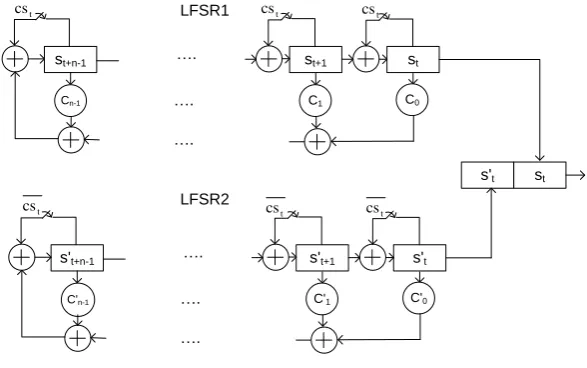
Figure 4 shows the first primitive. Hereinafter, this primitive is called J2L. (cst) denotes the complement
of the bitcst.
Each LFSR produces one word per clock and so in each clock two words are the outputs of J2L. In J2L, when one of the LFSRs regularly clocks (the one with cst = 0) the other LFSR jumps (the one
withcst= 1). Now the lower bound of J2L output
st
st+1
st+n-1
Cn-1
….
C0
C1
…. ….
s't
s't+1
s't+n-1
C'n-1
….
C'0
C'1
…. …. t
cs cst cst t
cs LFSR1 cst cst
LFSR2
st
s't
Figure 4. The New Structure With Two Jumping LFSRs.
f2(x) and also the jump index of LFSR1 and LFSR2
are denoted by J1 andJ2, respectively. Theorem 3
determines the lower bound of J2L output period.
Theorem 3. In J2L, if the state of LFSR1 and LFSR2 are nonzero and f1(x) and f2(x) are primitive and
the greatest common divisor (GCD) ofJ1J2−1and
2nw−1isd, then the lower bound of the output period is2∗ 2nw−1
d words.
Proof. Assume that in one period of J2L output, the controlling sequence hasa1 bits with value 1 anda2
bits with value 0. So, in these a1+a2 consecutive
clocks, LFSR1 regularly clocksa2times and jumpsa1
times. It is obvious that in these clocks, LFSR2 reg-ularly clocksa1times and jumpsa2times. Applying
these a1+a2 clocks results in the repetition of the
LFSR1 state and also LFSR2 state. Thus, according to the primitivity off1(x) for the repetition of LFSR1
state, the following equation is obtained:
a2+a1J1= 0mod2nw−1 (10)
Similarly for LFSR2:
a1+a2J2= 0mod2nw−1 (11)
Equation (12) is resulted by multiplying Equa-tion (10) byJ2 and subtracting Equation (11) from
the result:
a1(J1J2−1) = 0mod2nw−1 (12)
Similarly, by multiplying Equation (11) by J1 and
subtracting Equation (10) from the result we have: a2(J1J2−1) = 0mod2nw−1 (13)
Adding the Equations (12) and (13) results in (a1+a2)(J1J2−1) = 0mod2nw−1 (14)
If the GCD ofJ1J2−1 and 2nw−1 isd, thena1+a2
(a1+a2>0) should be a positive multiple of 2 nw−1
d .
So, the minimum value fora1+a2 is 2 nw−1
d and in
each clock two words are produced. Thus, the lower bound of the output period is 2∗2nw−1
d words.
Example 1. Consider LFSR1 as a TGFSR with n = 5, w = 32, m = 4, a = 0xDF B93BEF and LFSR2 as a TGFSR withn = 5, w = 32, m = 2,
a= 0xEEE6BBF D. The characteristic polynomial of LFSR1 and LFSR2 and also their duals are stated in the Appendix. The factorization of 2nw −1 =
2160−1 is:
2160−1 = 3∗11∗17∗25∗31∗41∗257∗61681∗
65537∗414721∗4278255361∗44479210368001 (15) Jump index values of LFSR1 and LFSR2 are as fol-lowing:
J1=340282367000166625996085689103316680701,
(16) J2=4916518250441675391199044687554427440721
6840706 (17)
For mentioned J2L, the GCD ofJ1J2−1 and 2nw−1 is
3∗5∗17∗257∗65537 = 232−1. So the minimum value for the output period is 2∗ (2(216032−−1)1)'2
129words. Corollary 1. For J2L, if the state of LFSR1 and LFSR2 are nonzero,f1(x)andf2(x)are primitive and
J1J2−1is co-prime to2nw−1, then the lower bound
of the output period will be2∗(2nw−1)words.
Proof. IfJ1J2−1 is relatively prime to 2nw−1 or
st
st+1
st+n-1
Cn-1
….
C0 C1
…. ….
s't
s't+1
s't+n-1
C'n-1
….
C'0 C'1
…. …. LFSR1
LFSR2
st
s't
s't
s't+1
s't+n-1
C'n-1
….
C'0 C'1
…. …. LFSR3
s''t
t
cs1 cs1t cs1t
t
cs2
t
cs2
t
cs2
t
cs3
t
cs3
t
cs3
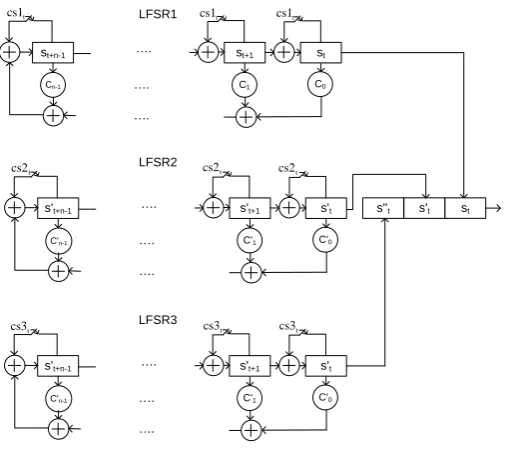
Figure 5. The New Structure With Three Jumping LFSRs.
then according to Theorem 3 the lower bound of J2L output period will be 2∗(2nw−1) words.
Figure 5 shows another new primitive. This primi-tive consists of three jumping LFSRs and hereinafter is called J3L. The transition matrix of LFSR1, LFSR2 and LFSR3 are denoted by T1,T2 andT3, respec-tively. The characteristic polynomial ofT1,T2and
T3aref1(x),f2(x) andf3(x) and the jump indexes of
LFSR1, LFSR2 and LFSR3 are denoted byJ1,J2and
J3, respectively. At each clock only one of the LFSRs
jumps and the others are regularly clocked. It means that the controlling sequence,cst, results in three
de-pendent binary sequences,cs1t,cs2tandcs3twith the
conditioncs1t+cs2t+cs3t= 1. For example, based
on the controlling sequence, if the first LFSR jumps, then the second and the third LFSR regularly clock. Theorem 4 determines the period of J3L output.
Theorem 4. For J3L assume that the states of LFSR1, LFSR2 and LFSR3 are nonzero andf1(x),f2(x)and
f3(x)are primitive. If the GCD ofJ1J2J3−J1−J2−
J3+ 2and2nw−1isd, then the lower bound of the
output period will be3∗ 2nw−1
d words.
Proof. Assume that in a period, LFSR1, LFSR2 and LFSR3 jump a1, a2 and a3 times, equivalently
LFSR1, LFSR2 and LFSR3 regularly clock a2+a3,
a1 +a3 and a1+a2 times, respectively. Applying
these a1+a2+a3 clocks to J3L results in the
rep-etition of the states of LFSR1, LFSR2 and LFSR3.
So, according to the primitivity off1(x), f2(x) and
f3(x) the following three equations are concluded:
a1J1+a2+a3= 0mod2nw−1
a1+a2J2+a3= 0mod2nw−1
a1+a2+a3J3= 0mod2nw−1
(18)
Combining the above equations, the following equation is obtained:
ai[J1J2J3−J1−J2−J3+2] = 0mod2nw−1, i= 1,2,3
(19) So:
(a1+a2+a3)[J1J2J3−J1−J2−J3+2] = 0mod2nw−1
(20) If the GCD ofJ1J2J3−J1−J2−J3+ 2 and 2nw−1
isd, thena1+a2+a3(a1+a2+a3 >0) should be
a positive multiple of2nwd−1. So, the minimum value fora1+a2+a3is2
nw−1
d and in each clock three words
are produced. Thus, the lower bound of J3L output period is 3∗ 2nw−1
d words.
Corollary 2. For J3L, if the state of LFSR1, LFSR2 and LFSR3 are nonzero,f1(x),f2(x)andf3(x)are
primitive andJ1J2J3−J1−J2−J3+ 2is co-prime
to2nw−1, then the lower bound of the output period
will be3∗(2nw−1)words.
4.2 J2SL and J3SL
It should be noted that in J2L and J3L, it is only sufficient to find the value of the jump indices modulo the factors of 2nw −1. In Section 2 the method of finding the jump index modulepi was proposed (pi is
a prime factor of 2nw−1). In the mentioned method, Equation (9) should be solved for all prime factors of 2nw−1. The complexity of solving the equations in
Equation (9) using Pollard’s Rho method is of order
√
pi. Thus if 2nw−1 has a factor with large value
(e.g.pi >2128) then finding the jump index will be
infeasible.
Example 2. Consider a word LFSR with parameters n= 32 andw= 16. For this LFSR, there is a prime number of length 206 bits which is a factor of 2nw−1
and finding its jump index is infeasible.
Now, some primitives are proposed for which it is unnecessary to calculate the jump index of their LFSRs to find the lower bound of their output period. Suppose that for J2L, LFSR1 and LFSR2 are the same and their transition matrix is denoted byT. Hereinafter, it is called J2SL. The characteristic polynomial ofTand the jump index of this LFSR are denoted byf(x) and J, respectively. The following corollary determines the period of J2SL.
Corollary 3. For J2SL, if the state of the LFSRs are nonzero andf(x)is primitive and the GCD ofJ2−1
and2nw−1isd, then the output period will be2∗2nw−1 d
words.
Proof. Theorem 4 withJ1 =J2 results in Corollary
3.
According to Corollary 3, the output period of J2SL will be 2∗2nw−1
d words, if the GCD of (J−1)(J+ 1)
and 2nw−1 isd. Now, for any factorpof 2nw−1 the question is whetherJ−1 orJ+ 1 has this factor or not. To check this, Theorem 5 is presented.
Theorem 5. Suppose that the characteristic polyno-mial of an LFSR,f(x)is primitive and jump index of this LFSR is denoted byJ. Ifpis a factor of2nw−1
andpsatisfies[xi(x+ 1)]2nwp−1 6= 1mod f(x), thenp
will not be a factor ofJ+i(iis an integer number).
Proof. Suppose thatpis a factor of 2nw−1 andJ+i, then
[xi(x+ 1)]2
nw−1
p = [(xixJ)]
2nw−1
p =
[xkp]2
nw−1
p = [x2
nw−1
]k= 1 mod f(x)
(21)
which leads to a contradiction. Thus the theorem was proved.
It is emphasized that the order of calculation of [xi(x+ 1)]2nwp−1mod f(x) isnwwhich is feasible for
usual LFSRs.
Corollary 4. For J2SL, suppose that the character-istic polynomial of the LFSR,f(x), is primitive and jump index of this LFSR is denoted by J. Assume
2nw−1 = pα1
1 p
α2
2 · · ·p
αm
m and I is the set that pk ∈ I ⇔ [x(x+ 1)]2
nw−1
pk = 1 mod f(x) or [x−1(x+
1)]2
nw−1
pk = 1mod f(x). The lower bound of the output
period is2∗ 2nw−1 Y
k∈I
pαkk
words.
Proof. Using Corollary 3 and Theorem 5 (withi =
±1), this corollary is proved.
Example 3. For J2SL, consider that LFSR1 and LFSR2 are the sameσ-LFSRs with parametersn= 32 and w = 16. For theseσ-LFSRsC0 corresponds toLR1,1,C1corresponds to Λ0x06E9andCiis an all
zero matrix for i = 2,3,· · · ,31. The characteristic polynomial of LFSR1 and its dual are stated in the Appendix. 2nw−1 is factored as following:
3∗5∗17∗257∗641∗65537∗274177∗
6700417∗67280421310721∗1238926361552897∗
59649589127497217∗5704689200685129054721∗
9346163971535797776916355819960689658405... 1237541638188580280321
(22) By using Corollary 4 for J2SL, the GCD of J + 1 and 2512−1 is 3. It meansp = 3 is the only factor of 2512−1 which satisfies [x(x+ 1)]2nwp−1 = 1. The
greatest common divisor ofJ −1 and 2nw−1 is 1 or equivalently all of the factors of 2512−1 satisfy [x−1(x+ 1)]2
nw−1
p 6= 1. Thus the output period would
be 2∗ 2512−1
3 words.
In the above example, it should be noted that the period was determined without the knowledge of the LFSR jump index value.
It is noted that if two LFSRs are not the same, the characteristic polynomials of the LFSRs are different and Corollary 4 cannot be used to calculate the lower bound of output period.
When LFSRs used in J3L are the same, the primitive is called J3SL. J3SL has similar results as J2SL. The transition matrix of LFSRs is denoted byTand the characteristic polynomial ofTand the jump index of this LFSR are denoted byf(x) andJ, respectively. The following corollary determines the period of J3SL output.
and2nw−1isdthen the output period will be3∗2nw−1 d
words.
Proof. Corollary 2 with J1 = J2 = J3 results in
Corollary 4.
5
Conclusion
In this paper, using the jumping LFSRs, some prim-itives were proposed for which the lower bound of output period can be calculated. In these primitives more than one LFSR are used, in each clock only one of which jumps and the others are regularly clocked. In J2L only twon−word LFSRs are used. Let jump indices of two LFSRs be J1 andJ2. It was proved
that the lower bound of the period of this primitive is 2∗ 2nw−1
d words wheredis the GCD ofJ1J2−1 and
2nw−1.
In J2SL, we used two similar LFSRs. In this primi-tive, it is not necessary to calculate the jump index in order to compute the period (note that the jump index calculation is not simple for some LFSRs). For this primitive it is sufficient to check thatJ2−1 is co-prime to the co-prime factors of 2nw−1 and the output period is 2∗2nw−1
d wheredis the GCD ofJ
2−1 and
2nw−1. Moreover, we can extend the proposed
prim-itives to the cases with more than two LFSRs. We can use these proposed primitives to replace the LFSRs used in some current stream ciphers or to design new stream ciphers (especially the ones with determined period).
References
[1] Rueppel R.A. Analysis and Design of Stream Ciphers. Springer-Verlag, 1986.
[2] Ecrypt, eSTREAM: ECRYPT Stream Cipher Project, 2004-2008. URLhttp://www.ecrypt.
eu.org/stream/.
[3] C. Jansen, T. Helleseth, and A. Kholosha. New Stream Cipher Designs: The eSTREAM Final-ists, chapter Cascade Jump Controlled Sequence Generator and Pomaranch Stream Cipher, pages 224–243. Springer Berlin Heidelberg, 2008. [4] S. Babbage and M. Dodd. Finding Characteristic
Polynomials with Jump Indices, 2006. URLhttp:
//eprint.iacr.org/2006/010.
[5] S. Babbage and M. Dodd. New Stream Cipher Designs: The eSTREAM Finalists, chapter The MICKEY Stream Ciphers. Springer Berlin Hei-delberg, 2008.
[6] G. Zeng, Y. Yang, W. Han, and S. Fan. Word Oriented Cascade Jumpσ-LFSR. InAAECC ’ 09, volume 5527, pages 127–136. Springer-Verlag, LNCS, 2009.
[7] H. Niederreiter. The multiple-recursive matrix method for pseudorandom number generation.
Finite Fields and Their Applications, 1(1):3–30, 1995.
[8] M. Matsumoto and Y. Kurita. Twisted GFSR Generators. ACM transactions on modeling and simulation (TOMACS), 2(3):179–194, 1992. [9] C. Berbain, O. Billet, Anne Canteaut, N.
Cour-tois, H. Gilbert, L. Goubin, A. Gouget, L. Granboulan, C. Lauradoux, M. Minier, T. Pornin, and H. Sibert. New Stream Cipher Designs: The eSTREAM Finalists, chapter Sose-manuk, a Fast Software-Oriented Stream Cipher, pages 98–118. Springer Berlin Heidelberg, 2008. [10] P. Ekdahl and T. Johansson. A New Version of the Stream Cipher SNOW. InSAC’ 02, LNCS, volume 2595, pages 47–61. Springer-Verlag, 2003. [11] C. Helleseth, T. Helleseth, C. Jansen, and
E. Kholosha. Cascade jump controlled sequence generator. In In: Symmetric Key Encryption Workshop, Workshop Record, ECRYPT Network of Excellence in Cryptology, 2005.
[12] M.E. Pohlig, S.C.and Hellman. An improved al-gorithm for computing logarithms over gf(p) and its cryptographic significance. IEEE Transac-tions on Information Theory, 24:106–110, 1978. [13] J.M. Pollard. Monte carlo methods for index
com-putation (mod p). Mathematics of Computation, 32(143):918–924, 1978.
A
Characteristic Polynomial of
LF-SRs in the Examples
The characteristic polynomial of an LFSR is stated byf(x) =P
i∈Ix
i. For LFSR1 in the Example 1, the
set I is as following: ILF SR1={
0,4,5,12,13,14,15,16,21,25,26,29,31,33,34, 35,42,44,45,46,47,50,53,54,55,56,61,62,63, 64,65,66,67,68,69,70,71,73,75,76,77,78,79, 80,84,92,94,96,97,98,99,101,104,108,111,113, 115,116,120,121,124,125,127,130,131,135,139, 143,144,147,149,151,152,153,154,155,160}
IdualLF SR1={
0,1,3,4,6,8,9,10,11,12,14,21,23,24,30,31,32, 33,34,36,39,40,42,45,49,50,54,55,56,57,58,62, 65,66,70,76,77,78,79,81,82,84,87,88,89,91,92, 95,97,98,100,108,109,113,118,119,120,121,122, 123,124,126,127,129,130,131,134,135,139,140, 141,142,143,145,147,150,151,155,160}
For LFSR2 which was mentioned in the Example 1, the set I is as following:
IdualLF SR2={
0,2,4,5,8,12,13,16,21,22,24,25,28,29,30,32,34, 36,40,44,45,47,48,49,54,55,57,60,62,63,64,67,71, 72,73,76,78,80,81,83,85,87,88,90,96,98,100,102, 103,104,105,106,107,108,111,112,113,115,118,119, 120,121,124,126,129,131,132,133,134,135,137,142, 143,145,146,149,152,155,160}
and for its dual the set I is:
IdualLF SR2={
0,1,4,8,9,10,12,13,14,16,18,19,20,24,31,37,38, 42,46,47,48,52,53,54,55,57,58,59,60,61,62,63,65, 67,70,71,73,77,78,79,82,85,89,94,99,100,101,103, 109,111,112,117,118,119,121,122,126,128,129,130, 132,136,137,138,141,143,144,145,147,148,149,153, 154,155,160}
For the LFSR used in the Example 3, the set I is as following:
ILF SR3={
0,35,66,70,97,99,101,103,130,132,134,161, 163,167,198,225,227,231,256,258,260,291,295, 322,324,326,355,357,384,388,419,448,450,481, 512}
and for its dual the set I is:
IdualLF SR3={
0,1,3,32,33,34,35,66,67,70,98,99,130,131,162, 163,192,197,199,228,229,230,231,263,294,295,321, 323,324,325,326,352,353,354,355,356,357,387,388, 418,419,448,449,450,480,481,512}
Mahdi Sajadiehreceived the B.Sc., M.Sc. and Phd degrees in Communication Engi-neering from Isfahan University of Technol-ogy (IUT), Isfahan, Iran, in 2004, 2007 and 2012, respectively. He joined Islamic Azad University, Isfahan (Khorasgan) Branch in 2011 and at present time is an Assistant Pro-fessor in Electrical Engineering Department. His research interests include cryptography and channel coding.
Arash Mirzaeireceived the B.Sc. and M.Sc. degrees in Control and Communication En-gineering from Isfahan University of Technol-ogy (IUT), Isfahan, Iran, in 2007 and 2009, respectively. His research interests include cryptography and data security.
![Figure 1. An LFSR in the Regular Clocking Case[3]](https://thumb-us.123doks.com/thumbv2/123dok_us/39772.2004479/4.595.338.524.85.147/figure-lfsr-regular-clocking-case.webp)