Doctor of Education (EdD) Theses and Dissertations
4-1-2016
Examination of The Psychometric Properties of an
International School Survey of Parent Experience
Angela D. Patterson
George Fox University, [email protected]
This research is a product of the Doctor of Education (EdD) program at George Fox University.Find out moreabout the program.
This Dissertation is brought to you for free and open access by the Theses and Dissertations at Digital Commons @ George Fox University. It has been accepted for inclusion in Doctor of Education (EdD) by an authorized administrator of Digital Commons @ George Fox University. For more information, please [email protected].
Recommended Citation
Patterson, Angela D., "Examination of The Psychometric Properties of an International School Survey of Parent Experience" (2016). Doctor of Education (EdD).Paper 73.
OF AN INTERNATIONAL SCHOOL SURVEY OF PARENT EXPERIENCE
by
ANGELA D. PATTERSON
FACULTY RESEARCH COMMITTEE:
Chair: Karen Buchanan, Ed.D.
Members: Patrick Allen, Ph.D., Dane Joseph, Ph.D.
Presented to the Doctoral Department
and College of Education, George Fox University
In partial fulfillment of the requirements for the degree of
Doctor of Education
i Abstract
Given the stakes regarding parent involvement, satisfaction, and choice in international schools,
information regarding the measurement of parent perception and experience is highly desirable.
Though International Schools of China (ISC) collected data from parents annually, little was
known about the survey instrument. Therefore, this study examined the psychometric
properties—the underlying latent structure and internal reliability—of the ISC Parent Survey.
Using existing data obtained from the 2014 collection cycle (N=309), an exploratory factor
analysis was conducted on 72 likert-scale items. Results from this study identified 13 (including
11 well-defined and internally consistent) factors that measure various concepts of parent
experience in an international school community. Each of the factors aligned well with previous
literature on parent involvement, satisfaction, and choice, and the results of this study may
indeed be the first of its kind. In addition, ISC leadership now has specific steps to improve the
further development and use of their parent survey. Furthermore, the findings of this study
reveal a need for international schools to reevaluate the way that they engage parents. With so
many additional overlapping spheres of influence in the international school setting, schools
must focus on examining parent experience through each parents’ cultural lens. The identified
constructs, such as school respect for parents, academics, leadership, and communication, that
were discovered in this study may aid international schools in learning how to build better parent
and school partnerships.
Keywords: exploratory factor analysis, international schools, K12 education, parent
choice, parent experience, parent involvement, parent perception, parent satisfaction,
ii
Acknowledgements
I am grateful to Dr. Karen Buchanan, chairperson of my doctoral committee, for her
consistent patience, direction, clarity, and encouragement. I would also like to thank the rest of
my committee, Dr. Patrick Allen and Dr. Dane Joseph, for their constant encouragement and
support. A special thanks is due to Dr. Joseph for his invaluable statistical expertise and his
willingness to share it.
I would like to dedicate this dissertation to my Texas family for being my first and most
influential teachers, and my China family, who championed me in both word and deed to achieve
this goal from start to finish. I am blessed beyond measure and give praise to Him from whom
iii
Table of Contents
List of Tables ... vii
List of Figures ... viii
List of Abbreviations ... ix
Chapter 1 ...1
Introduction ...1
Related Studies...3
Parents and schools. ...3
Measuring parent experience. ...4
Problem Statement ...5
Purpose of the Study ...7
Significance of the Study ...7
Variables ...8
Key Terms ...9
Limitations and Delimitations ...10
Summary ...11
Chapter 2 ...12
Review of the Literature ...12
Introduction ...12
Parent Involvement ...13
Benefits of parent involvement. ...13
Models of parent involvement. ...18
iv
Other considerations regarding parent involvement. ...26
Parent Satisfaction ...27
Value of parent satisfaction. ...27
Measures of parent satisfaction. ...28
Common elements of parent satisfaction. ...29
Parent Choice ...32
Importance of parent choice...32
Studies of parent choice. ...33
Common priorities in parent choice of school. ...36
Conclusion ...37
Chapter 3 ...39
Methods...39
Introduction ...39
Design ...39
Variables ...40
Survey development...41
Data clean...42
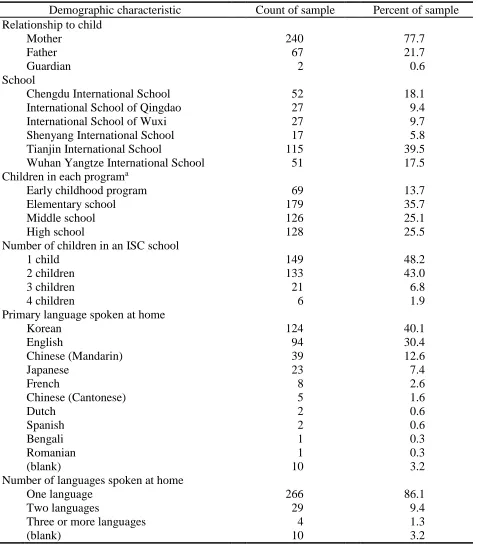
Sample Characteristics and Demographics ...44
Assessing Data Assumptions ...47
Factor Extraction ...49
Factor Rotation...50
Factor Retention ...51
v
Research Ethics ...53
Chapter 4 ...55
Findings...55
Introduction ...55
Summary of the Instrument and Collection ...56
Participants. ...56
Materials. ...59
Collection. ...59
Data Screening ...59
Data Assumptions ...60
Reliability ...65
Factor naming and structure...65
Conclusion ...73
Chapter 5 ...74
Conclusion ...74
Introduction ...74
Discussion of Findings ...75
Underlying structure of the ISC Parent Survey. ...75
Internal reliability of the ISC Parent Survey. ...78
Implications of the Study ...87
Implications for international schools. ...87
Implications for ISC administrators. ...90
vi
Suggestions for Further Study ...92
Conclusion ...94
References ...96
Appendices ...114
Appendix A ...115
Appendix B ...119
Appendix C ...122
Appendix D ...123
Appendix E ...124
vii
List of Tables
Table 1. Types of Items in the ISC Parent Survey ...8
Table 2. Demographic Characteristics of Participating Parents ...46
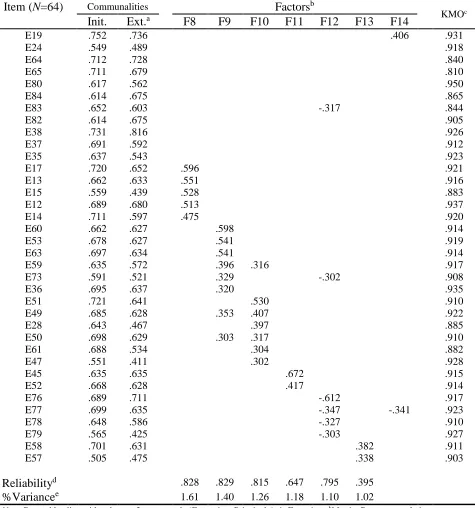
Table 3. Communalities, Factor Loadings, and Sampling Adequacy...57
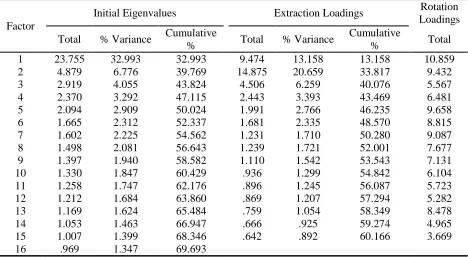
Table 4. Eigenvalues from EFA Extracted using Principal Axis Factoring (72 items) ...61
Table 5. List of Problematic Variables Removed ...63
Table 6. Eigenvalues from EFA Extracted using Principal Axis Factoring (64 items) ...64
Table 7. Final Factor Correlation Matrix ...65
Table 8. Final 13 Factors ...66
Table 9. Reliability Scale for F1 ...67
Table 10. Reliability Scale for F2 ...67
Table 11. Reliability Scale for F3 ...68
Table 12. Reliability Scale for F4 ...68
Table 13. Reliability Scale for F5 ...69
Table 14. Reliability Scale for F6 ...69
Table 15. Reliability Scale for F7 ...70
Table 16. Reliability Scale for F8 ...70
Table 17. Reliability Scale for F9 ...71
Table 18. Reliability Scale for F10 ...71
Table 19. Reliability Scale for F11 ...72
Table 20. Reliability Scale for F12 ...72
viii
List of Figures
Figure 1. Epstein six types of involvement framework with definitions and redefinitions ...19
Figure 2. Hoover-Dempsey and Sandler framework (2005 revision)...20
Figure 3. Overlap in Epstein and Hoover-Dempsey Sandler models ...22
Figure 4. Comparison of common elements in parent satisfaction measurement tools ...30
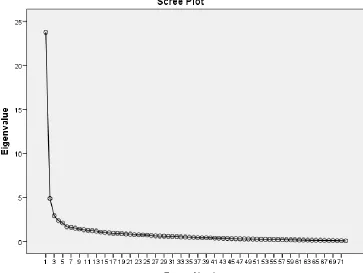
Figure 5. Scree plot of factors for 72 items ...62
ix
List of Abbreviations
Advanced Placement (AP)
English Language Learners (ELL)
Exploratory Factor Analysis (EFA)
Harvard Family Research Project (HFRP)
Internal Review Board (IRB)
International Baccalaureate (IB)
International School of Qingdao (ISQ)
International Schools of China (ISC)
Kaiser-Meyer-Olkin test of sampling adequacy (KMO)
Maximum Likelihood (ML)
Missing at Random (MAR)
Missing Completely at Random (MCAR)
Multiple Imputations (MI)
Organization for Economic Co-operation and Development (OECD)
Parent-Teacher Association (PTA)
Parent-Teacher Organization (PTO)
Principal Axis Factors (PAF)
Program for International Student Assessment (PISA)
Root Mean Squared Residual (RMSR)
Statistical Package for the Social Sciences (SPSS)
Chapter 1
Introduction
“A child educated only at school is an uneducated child.”
– George Santayana
When a child enters the world, every new encounter is a first. From the first taste of
green peas and first wet tongue of a friendly dog to the first screaming ambulance siren and first
salty taste of ocean waves, everything is new. In all this newness, children look to their parents
to help them make sense of each new experience, establishing their parents as their first and most
important teachers. Working as these essential teachers, parents assist their children in
understanding the complexities of daily life, as well as introduce their children to foundational
family, national, and religious traditions.
Before children ever enter school, they spend countless hours learning language, cultural
customs, and family values just by interacting with their parents. While teachers understand
grade-level content and practice good pedagogy, parents act as the gatekeepers to their children’s
world outside the classroom. Wise teachers trust that parents best understand their children’s
past and present and rely on parent insight to better educate their students. While parents are not
always acknowledged for their contributions, successful schools recognize the important role that
parents play in their children’s education.
Before the days of formal schooling, young children gathered at their elders’ knees while
older children often worked alongside their parents, learning the family trade. Historically,
private education was only for the wealthy, so most parents were responsible for any formal
learning that took place in the lives of their children. In the earliest days of American public
their children received each day (Webb, 2006). After World War II, parent involvement in
schools was most often minimized to serving as a classroom volunteer, “room mom,” or in the
school’s Parent-Teacher Organization (PTO) (Epstein & Sheldon, 2006). However, since the
turn of the century and the emergence of school vouchers, charter schools, and school choice,
parent influence in education has regained ground, as parent satisfaction in the choice of their
children’s school is becoming increasingly more important (Kena et al., 2015; Noel, Stark,
Redford, & Zuckerberg, 2013).
International schools have also seen this gradual shift in parent influence. Yamato and
Bray (2006) contended that the first one or two international schools in a given city are a direct
result of the emerging schooling needs of an expatriate community, with subsequent schools
entering the arena primed with marketing strategies to offer competition. This competition
rightly causes original schools not only to seek out and maintain accreditation and maximize on
their niches, but also to amplify their marketing tactics (Bunnell, 2008; MacDonald, 2009a).
Since the reality of school choice is now global (MacKenzie, 2010), in their research of
educational marketing, Li and Hung (2009) found that in Taiwan, "the higher the parents’
perception of marketing efforts, the more favorable the school image” (p. 485). A favorable
school image further influences parents’ positive word-of-mouth, school choice, and retention
(Li & Hung, 2009). Research also indicates that parents choose schools primarily from their
interpersonal networks of family, friends, and co-workers (Goldring & Phillips, 2008; ter Avest,
Bertram-Troost, & Miedema, 2015). Therefore, in today’s competitive school market,
maintaining a pulse on parent perception is vital to the health of the international school.
It is important to note that while current research favors the term families over the term
law requires all international school students to be foreign passport holders, and student
enrollment is contingent on appropriate documentation and approved visas (Ministry of
Education of the People’s Republic of China, 2015). Consequently, in order for students to
receive appropriate documentation from the local government, a minimum of one parent must
have a valid work visa. Secondly, the International Schools of China (ISC) handbook further
establishes the requirement of parent residency in section 4.021, “Presence of Parent(s) in the
City” (Leadership Development International, 2013). Therefore, though family-related research
will be considered, I will use parent in deference to the situation.
Related Studies
The following section will outline the relationships between parents and schools and
highlight the tools created for measuring parent experience with schools.
Parents and schools. Research has identified several factors which motivate schools to
reach out to parents. Since the mid-1990s, numerous studies have indicated that parent
involvement is associated with multiple benefits to students, such as increased student
achievement (Fan & Chen, 2001; Green, Walker, Hoover-Dempsey, & Sandler, 2007; Henderson
& Mapp, 2002) and increased student motivation (Kraft & Dougherty, 2013). However, parent
involvement is good for schools, too. Research further indicates that stronger schools are built
by giving families tools and resources to aid student learning (Ferguson, Ramos, Rudo, & Wood,
2008; Henderson & Mapp, 2002; Kraft & Dougherty, 2013).
Parents and schools are inextricably linked, especially when forced to thrive in a foreign
land. For most international educators and expatriate families, the school provides a source of
needed community (McNulty, 2012; Patterson, 2014; Shah & Lund, 2007). School activities
interconnected in such a tight community, and the staff and students fully benefit when parents
are actively engaged in sharing their culture, heritage, and perspectives with the entire school.
Furthermore, research consistently shows that most parents want to support their
children’s education. In their meta-analysis of parent involvement and student achievement, Fan
and Chen (2001) reported that the strongest relationship existed between parental aspirations and
expectations, and children’s educational achievement (r = .44). Others conclude that these high
aspirations for their children’s success exist regardless of race/ethnicity, culture, or income
(Boethel, 2003; E. Kim, 2002; Ule, Zivoder, & du Bois-Reymond, 2015). On the other hand, it
seems that parent expectations are inversely related to family income in Kim’s (2002) study of
Korean family involvement and Ule, Zivoder, and du Bois-Reymond’s (2015) study of family
involvement in several European nations. At the same time, according to Goldring and Phillips
(2008), parents with higher family income are more likely to set academics as a higher priority.
Parents also have other more cultural reasons for being involved in their child’s education.
Goodall and Ghent (2013) report that for some faith backgrounds in the United Kingdom,
“engaging with their children’s learning is a part of their expected role as a parent” (p. 20). Still
other parents feel the heavy burden of peer pressure in their social and societal circles. Parents in
Europe report that “good parenting” is measured by cooperation between the home and school
(Ule et al., 2015), while Asian mothers feel a responsibility to insure their children’s success to
bring honor to the family (MacKenzie, 2009).
Measuring parent experience. But how does one measure these motivations and
continue the conversations between parents and school? A large body of research has emerged
in the last 40 years measuring parent involvement in schools. The most cited framework belongs
(Epstein, 2005, 2010; Epstein et al., 2009). However, another popular model and set of scales
was developed by Kathleen Hoover-Dempsey and Howard Sandler to more deeply examine
parent involvement (Green et al., 2007; Hoover-Dempsey & Sandler, 1997; Hoover-Dempsey,
Walker, et al., 2005). Additionally, the Harvard Family Research Project has gathered and
collated numerous resources, as well as verified scales for collecting data.
A smaller, but growing, body of research explores parent satisfaction with their child’s
school around the globe. Tuck (1995) and Griffith (1997) began this early work in the era of
school choice in the United States. Further studies in New York City and Chicago continued
research on parent satisfaction while more closely focusing on elements of school climate
(Cooper & Letts, 2002; National Center for Education Statistics, 2003). In more recent years,
Skallerud (2011) and Badri and Mohaidat (2014) looked at parent satisfaction in Norway and the
United Arab Emirates, respectively. Most recently, Schueler, Capotosto, Bahena, McIntyre, and
Gehlbach (2014) developed a seven-question scale to assess parent perceptions of climate in
their child’s school, while Friedman, Bobrowski, and Geraci (2015) examined factors associated
with parent satisfaction across ethnicities. Sadly, research has yet to fully catch up with the
rapidly growing field of school marketing, and few studies have been devoted to examining the
parent perceptions in international schools (MacKenzie, 2010).
Problem Statement
The organization International Schools of China (ISC) has been in existence since 1986,
with the opening of Tianjin International School. All six schools are legally recognized as
international schools in the People’s Republic of China. Only non-Chinese passport holders are
able to apply for admission into international schools, so the student body is comprised of
up the largest portion of the student population. In September of 2015, enrollment included
1,861 students, ranging from age two to grade twelve (minutes from the September 11, 2015
principal meeting).
According to the handbook, International Schools of China believes that “parents are
ultimately responsible for the education of their children” and “cooperation between the school
and the home is necessary to ensure that students reach their fullest potential” (Leadership
Development International, 2013, p. 46). Because students are daily impacted by cultures very
different from their own, parents must be partners in learning, so that every child is able to
succeed in such a unique cross-cultural environment. Furthermore, the ISC schools genuinely
believe in a continuous cycle of school improvement where parents are valued stakeholders, as
demonstrated by their accreditation self-studies (International School of Qingdao (mti), 2011,
2014; Qingdao MTI International School, 2005, 2008). The schools eagerly solicit parents’
opinion on ways that they can improve. Finally, ISC schools want to retain current students and
appeal to incoming students, and in the competitive international school market, parents are the
primary decision makers.
Each of the six ISC schools are accredited through either the Western Association of
Schools and Colleges (WASC) or AdvancED, and throughout the years, they have conducted
internal surveys of parents regarding various aspects of parent perception, parent experience, and
parent involvement. However, in 2013, in a combined effort to become better researchers and
keep better data systems, the superintendent directed the creation of a single system-wide survey
to consolidate the information gathered from parents. Unfortunately, the final survey is quite
lengthy in an attempt to address requirements from all six schools and consists of predominantly
The results of this survey are available to the administrators of each school in raw data
form, but as in similar situations at other schools, the sheer amount of raw data and the limited
time of the individual principals causes much of this data to remain underutilized (Englert, Fries,
Goodwin, Martin-Glenn, & Michael, 2004).
Purpose of the Study
The purpose of this study is to refine an existing instrument that investigates aspects of
parent choice, satisfaction, and involvement in their children’s schooling in an international
school system in China. I have conducted an examination of the psychometric properties in
order to determine the internal reliability and underlying structure of the current instrument.
This study has the potential to improve a tool which will also be able to influence the school
decision-makers in working with parents of international school children. Additionally, this
study may provide the schools with a valid and reliable instrument for future use within the
international school community. The research questions include:
1. Does the ISC Parent Survey demonstrate internal reliability?
2. What is the underlying structure of the ISC Parent Survey instrument?
Significance of the Study
Fantuzzo, Perry, and Childs (2006) found that “school, principal, and teacher practices
are more important than parent characteristics (e.g. poverty level, minority status, education level)
in getting families involved at school” (p. 143). More recently, Whitaker and Hoover-Dempsey
(2013) concluded that “parents’ current experiences with schools were more powerful than their
prior experiences” (p. 90). This finding is especially good news indicating that schools, rather
than other, more uncontrollable factors, actually have the power to cultivate better relationships
to foster a positive parent-school relationship with parents, students will benefit from a healthy
home-school connection.
The findings of this study will directly benefit the International Schools of China. If the
current tool proves itself to be valid and reliable, not only will ISC schools benefit, but also other
international schools hoping to measure parent perception within international schools. If
exploratory factor analysis demonstrates that the tool is unreliable with no consistent structure,
the ISC personnel can take appropriate steps to further develop a more reliable and valid measure.
Furthermore, parent-reported studies of parent experience are limited (Stacer & Perrucci, 2013);
the results of this study will add to the inadequate body of literature.
Variables
There are 96 items on the parent survey. A list of survey items can be found in Appendix
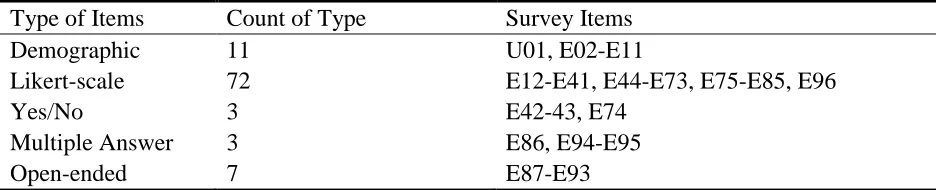
A. Each survey likert-scale item served as a variable for this study. As seen in Table 1, there are
11 demographic items, 72 items based on a likert-scale for disagree/agree, 3 yes/no items, 3
multiple answer items, and 7 open-ended items.
Table 1
Types of Items in the ISC Parent Survey
Type of Items Count of Type Survey Items
Demographic 11 U01, E02-E11
Likert-scale 72 E12-E41, E44-E73, E75-E85, E96
Yes/No 3 E42-43, E74
Multiple Answer 3 E86, E94-E95
Open-ended 7 E87-E93
As with other factor analysis studies, dependent and independent variables are not identified
separately and no specific hypothesis can be made as to the various dimensions found in the ISC
Key Terms
International School – In the context of this study, as in Harrington (2007), international schools
meet the following criteria: they identify themselves as international schools, they are
non-national overseas schools, and they are recognized by a school accrediting agency.
Culture – A set of learned beliefs, values, or routines shared by a distinct ethnic, religious, or
social group (Van Der Westhuizen, Pacheco, & Webber, 2012); in the case of this study,
the term culture most often references national culture, expatriate culture, or
international school culture.
Parent Involvement – The opportunity for parents to take an active role in the education of their
children, whether in the physical school environment or extending learning into the home
through homework support. In the case of this study, parent involvement is the broad,
umbrella-like term used to encompass multiple concepts and applies to:
(a) both parents’ involvement in their children’s education (benefitting the individual)
and parents’ involvement in their children’s schools (benefitting the community);
(b) the term family involvement (Boethel, 2003);
(c) the term parent engagement (Goodall & Montgomery, 2014; Hoover-Dempsey &
Sandler, 1997); and
(d) the term family, school and community partnerships (Epstein, 2010).
Parent Satisfaction – The level of confidence and contentment that parents place in the school
their children attend.
Parent Choice – The opportunity for parents to choose where their children will attend school.
Limitations and Delimitations
The use of existing data sets always comes with inherent limitations, and this study is no
exception. While the ISC Parent Survey 2014 data are quite extensive, it is by no means
exhaustive. Possible demographic or key parent experience factors may be omitted, but only the
collected data was available for analysis. The survey did not utilize any known scales or
pre-coding, and therefore there are a variety of unknown factors/dimensions.
In order to examine these unknown dimensions, I chose exploratory factor analysis (EFA)
as the chosen research methodology, adding limitations regarding the subjectivity of the many
methodological decisions required for a single analysis in EFA. This is the most restrictive
delimitation in the study. Other limitations in the data set include a limited sample size (this
important issue will be further discussed in Chapter 3), including a limited sample size of
English language responses, an imbalance in the representation of the parent body, and
potentially missing data or culturally-skewed response sets in the sample.
Further limitations regarding the survey items include issues of translation and bias
towards the school. The survey was written in English, but translated into Chinese, Korean, and
French; there is little known about the quality of the translation. Because the survey was written
by school representatives, it may contain biased statements benefitting the school over the
parents, such as E43 (I have read our school’s expectations for student conduct). Finally, I hold
a paid position in the office of the ISC superintendent. Though I made every effort to engage
with the data in a non-biased way, my regular involvement with the schools and relationships
Summary
Given the stakes regarding parent involvement, satisfaction, and choice in international
schools, information regarding the measurement of parent perception and experience is highly
desirable. The purpose of this study is to explore the internal reliability and underlying structure
of one such tool. Specifically, using existing data derived from the ISC Parent Survey 2014, this
research uses various EFA strategies to examine the ISC Parent Survey for like-factors in regards
to parent involvement, satisfaction, and choice in an international school setting. The findings of
this study will provide both the ISC and the broader international school community with a
possible tool to measure parent perceptions, in addition to contributing to the literature on parent
Chapter 2
Review of the Literature
Introduction
The present study has been advised by a focused review of the existing literature on
parent involvement, satisfaction, and choice. An in-depth analysis and synthesis of the research
related to these aspects of parent interaction with schools provides the foundation needed to
explore the underlying structure of the instrument. The following review highlights the current
understanding of parent involvement, satisfaction, and choice, as well as presenting how this
study extends existing knowledge in the international school context.
Numerous studies found that parent involvement benefits not only the children and their
parents, but the entire school community (Arias & Morillo-Campbell, 2008; Boethel, 2003;
Henderson & Mapp, 2002; Schaps, 2007; Stacer & Perrucci, 2013). Various models of parent
involvement, engagement, and partnership have been developed over the last 40 years, with none
more cited than Epstein’s framework of parent involvement (Boethel, 2003; Deslandes, 2011;
Goodall & Montgomery, 2014). Elements such as volunteering, learning at home, parent-teacher
contact, and communication from school exist in several models, demonstrating their importance
in parent involvement research (Epstein & Sheldon, 2006; Epstein, n.d., 2005, 2010;
Hoover-Dempsey & Sandler, 1997; Hoover-Hoover-Dempsey, Walker, et al., 2005). Criticism of the traditional
models has encouraged schools to focus more on celebrating cultural differences and building
authentic relationships (Arias & Morillo-Campbell, 2008; Boethel, 2003).
Parent satisfaction research has demonstrated that satisfied parents remain connected to
and promote the school (Badri & Mohaidat, 2014; Goldring & Phillips, 2008; Li & Hung, 2009;
factors of parent satisfaction. These measures primarily examine classroom support for learning,
parent involvement opportunities, and staff effectiveness, along will other important elements of
school climate (Cooper & Letts, 2002; Friedman et al., 2015; Schueler et al., 2014; Skallerud,
2011; Tuck, 1995).
Parent choice of school for their children has grown globally in importance (Li & Hung,
2009; MacKenzie, 2010; Ng, 2012; Velliaris & Willis, 2014). Now that parents have the
opportunity to choose their child’s school, they have high expectations of teachers and schools
(Friedman et al., 2015; Li & Hung, 2009; Skallerud, 2011). Discovering the motivating factors
of parent choice is especially important in the competitive international school market
(MacDonald, 2009a; MacKenzie, 2010).
Parent Involvement
Parent involvement is important to schools for a variety of reasons. Involved parents
build connections to an educational part of their children’s lives. The following section
examines the available literature for the benefits of parent involvement, theoretical models of
parent involvement, and the common elements found in those models, as well as other important
considerations regarding parent involvement studies. While the primary focus on this section is
parent involvement, parent engagement is briefly addressed as a related field of inquiry in
current research around the globe.
Benefits of parent involvement. Research has demonstrated that parent involvement is
beneficial to the entire school community (Arias & Morillo-Campbell, 2008; Boethel, 2003;
Henderson & Mapp, 2002; Schaps, 2007; Stacer & Perrucci, 2013). Regardless of the school
community’s socioeconomic levels and cultural backgrounds, schools with active parents benefit
Benefits to children. Students benefit when their parents are involved and engaged in
education. Fan and Chen (2001) determined that a practically meaningful relationship between
student academic achievement and parent involvement exists, though they also indicate that
some dimensions of involvement are more effective than others. In the 51 studies that
Henderson and Mapp (2002) examined regarding the influence of school-family-community
relationships on academic achievement, their work indicated that parent involvement in schools
is associated with higher rates of attendance, graduation, and the pursuit of higher education.
Students were able to transition more easily to the classroom and teachers “when family
members commonly engage[d] with teachers or other school staff” (Ferguson et al., 2008, p. 1).
According to other specific studies, parent involvement is related to higher test scores for both
the school as a whole (Schaps, 2005) and individual children whose parents are involved (Wilder,
2014). Additionally, parent involvement is related to the completion of homework assignments
(Froiland, Peterson, & Davison, 2012; Hoover-Dempsey, Bassler, & Burow, 1995; Kraft &
Dougherty, 2013). Jeynes (2012) reported in his meta-analysis of family and school partnership
programs that parents checking homework had a small, positive effect (d = 0.27) on students’
overall achievement. In their study of 18 elementary, middle, and high schools spread across the
United States, Sheldon and Epstein (2005) found that when controlling for prior achievement,
children who were assigned math homework which required them to show and discuss math
skills with a family member scored at or above proficiency on standardized math achievement
tests (r = 0.60). Additionally, in studies of English language learning (ELL) parents and parents
in high poverty areas, involved parents are more connected and have better access to information
advocates for their children (Arias & Morillo-Campbell, 2008; Curry & Adams, 2014; Ferguson
et al., 2008).
Children also benefit from parent involvement in their education in other non-academic
ways. When parents are invested in their schooling and school activities, students learn the
importance of education; this is especially important in the case of minority or ELL families that
desire further education for their children (Jeynes, 2012; E. Kim, 2002). A case study of a
middle school in Texas (Wood, Rogers, & Yancey, 2006) reported that when children see their
parents attending parent ESL classes in the evening and school meetings with their teachers,
students gain a new respect for their own learning.
Furthermore, children of involved parents demonstrate better social skills and improved
behavior (Van Voorhis, Maier, Lloyd, & Leung, 2013), in addition to a more positive attitude
towards school (Epstein, n.d.; Goodall & Montgomery, 2014). According to Olsen and Fuller
(2008), relationships between children and their parents have the potential to be strengthened
when children see their parents take interest in their lives and what they are doing at school.
Benefits to parents. Parents benefit from involvement and engagement in education as
they are able to better understand and connect with their children. Involvement in school offers
parents and children opportunities for quality time together (Jeynes, 2014). For example, in her
study of 45 international school parents in the United Kingdom, McLachlan (2008) found that
parents who worked with their students to complete home assignments for guidance class
indicated that the time spent together helped them to build communication between their
adolescents and themselves, specifically in dealing with difficult situations and topics that their
way the school operates and what curricular and extracurricular programs are available (Curry &
Adams, 2014; Harrington, 2007).
Research has demonstrated that parent involvement also helps parents to build confidence
in just being at school; parents become more comfortable when they have a designated place and
a reason to be on campus (Hoover-Dempsey, Walker, et al., 2005). Parent involvement also
builds confidence in their parenting skills and their ability to help their children learn (Whitaker
& Hoover-Dempsey, 2013). Additionally, parent involvement allows parents to be held in
higher regard by the teachers, and subsequently, teachers expect more from involved parents’
children (Vickers & Minke, 1995). For example, as part of a parent involvement program in
Chicago, Hurtig (2004) developed the “Parents Write Their World” project. This opportunity
allowed parents from different cultures and backgrounds to write about their experiences and
publish their work. As a result, parents reported an increase in their personal self-confidence and
self-perception. Hurtig (2004) additionally found that their children developed “a greater interest
in reading and writing, as they witness[ed] their parents do their own writing" (para. 10), and
"the writing project has enhanced teacher-parent relationships and understanding" (para. 15).
Benefits to teachers and the school. Teachers and schools also profit from regular
parent involvement, especially the benefit of better morale among teachers (Feuerstein, 2000;
Holmes, 2011). In their study of Taiwanese elementary school teachers, Li and Hung (2012)
found a “strong positive association between perceived parental involvement and teacher
satisfaction” (p. 511). These Taiwanese teachers’ workplace satisfaction was most strongly
influenced when they felt that parents were involved with their children’s schooling at home,
then influenced by the teacher-parent relationship, and lastly, influenced by parent involvement
student learning beyond the school day; for example, Sheldon and Epstein (2005) determined
that offering parents or students math games or lending-library activities was strongly associated
(r = 0.59) with a higher percentage of students who scored at or above proficiency on
standardized math tests.
Furthermore, teachers who actively engage parents receive higher ratings than their peers
(Ginsberg & Hermann-Ginsberg, 2005). Proactive partnerships mean that parents and teachers
can work together to better understand individual student needs; in fact, Kohl et al. (1994, as
cited in Kohl, Lengua, & McMahon, 2000) found that “the quality of the parent–teacher
relationship was more strongly associated with positive child outcomes than…the amount of
[parent] involvement” (p. 517). Additionally, positive parent involvement programs garner more
support for the school from families, and better school reputation in the community (Shillady,
2014; Skallerud, 2011).
Benefits specific to international schools. While no studies have specifically outlined
the benefits of parent involvement in the international school context, other human resource and
marketing research regarding expatriate living proposes that parent involvement is especially
valuable in the international school. In such “a world of clashing traditions and collective
identities” (Y. Y. Kim, 2008, p. 359), parents in these settings deal with significant transition and
often rely on the school to connect themselves to other parents with similar experiences.
According to several studies, the international school is one of the few environments where
expatriate parents are able to socially connect and build relationships (Harrington, 2007;
McNulty, 2012; Rosenbusch & Cseh, 2012).
Additionally, when parents of various backgrounds are able to share their own funds of
community benefits from their instruction (Cheatham & Santos, 2005). When multiple
languages are present in the school, the international school often turns to bilingual parents for
support. Children, parents, and teachers in these highly cross-cultural settings all benefit when
parents are connected to the school.
Models of parent involvement. There are several models of parent involvement that can
be found in the research; the Epstein (2006; 2009; 2010) and Hoover-Dempsey and Sandler
(1997; Walker, Wilkins, Dallaire, Sandler, & Hoover-Dempsey, 2005) models are the most
referenced. Other models now extend beyond these two traditional models to include even more
collaborative and community approaches.
The Epstein model. Epstein’s framework is one of the most cited in regards to parent
involvement. Through her years of research, she has adjusted her terminology and now calls her
emphasis of study – school, family, and community partnerships; she noted that this new term
better encompasses and conveys the shared responsibility for student learning and development
(Epstein & Sheldon, 2006; Epstein et al., 2009). Evolving from a historical research approach,
Epstein has focused primarily on a school-initiated approach to parent involvement.
Focusing both on research and program development, Epstein (2006; 2010; 2009)
proposed an overlapping spheres of influence theory in the lives of students. As all students
have families, and these students and families live in community with others, she suggested that
student learning is influenced not only by the school, but also by family and community. When
the experiences, philosophies, and practices of the school, family, and community overlap more
closely, students are able to make stronger and deeper connections with their learning. Therefore,
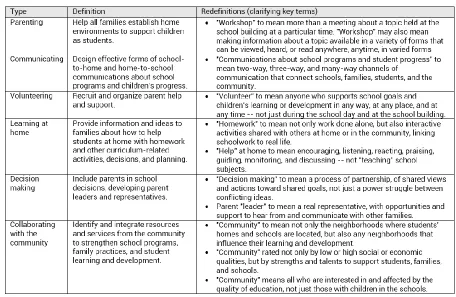
this theory underpins the structure for Epstein’s framework for the six types of involvement
decision making, and (f) collaborating with the community (Epstein, n.d., 2010; Epstein et al.,
2009). Figure 1 expands on the definitions of Epstein’s six types. However, while certainly the
most popular model for parent involvement, Epstein is not the only model found in the research.
Figure 1. Epstein six types of involvement framework with definitions and redefinitions
The Hoover-Dempsey and Sandler model. Grounded in psychological literature, the
Hoover-Dempsey and Sandler (1997) model and later revision (Walker et al., 2005) provided an
alternative to exploring parent involvement. By exploring a first-person account of parent
involvement, this model focuses more on parent motivational beliefs, perceptions, and perceived
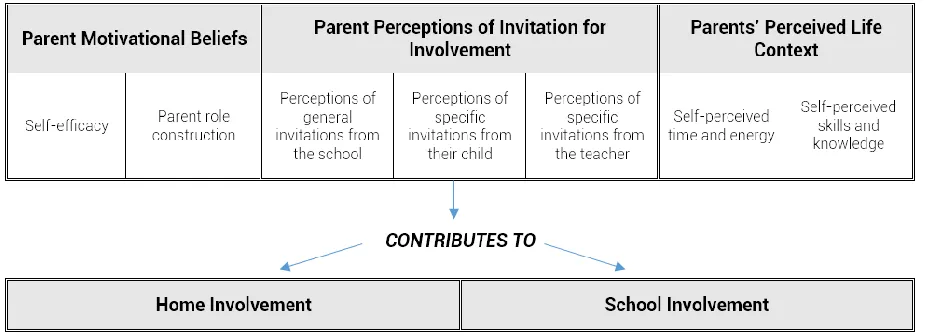
In the Hoover-Dempsey and Sandler revised model (as seen in Figure 2), parent
motivational beliefs are defined as self-efficacy and parent role construction. Parent perceptions
of invitation for involvement is defined as perceptions of general invitations from the school,
invitations from their child, and invitations from the teacher. Finally, parents’ perceived life
context is defined as self-perceived time and energy, as well as self-perceived skills and
knowledge (Walker et al., 2005). All of these factors contribute to parent involvement in both
home involvement and school involvement. Follow-up studies using the Hoover-Dempsey and
Sandler (1997) model included measuring the influence of child age-related differences on parent
involvement practices, as well as developing specific scales to measure self-efficacy and role
construction (Whitaker & Hoover-Dempsey, 2013).
Other American models. Harris and Wilkes (2013), in conjunction with the Harvard
Family Research Project (HFRP), developed a community schools model to outline the planning,
implementation, and ongoing steps for partnerships between schools, families, and communities.
This model requires (a) a shared vision for learning, (b) shared leadership and governance, (c)
complementary partnerships, (d) effective communication, (e) regular and consistent sharing of
information about youth progress, (f) family engagement, and (g) collaborative staffing models.
Global models. The desire for shared responsibility for student learning is not limited to
U.S. research. In the U.K., Goodall and Montgomery (2014) proposed a continuum to move
parents from involvement with the school to more parent-devised and led engagement in their
child’s learning. They concluded that engagement is more than an activity and requires greater
commitment, and therefore should no longer be classified as simple involvement. Goodall and
Montgomery (2014) argued that “to be most effective, parental engagement needs to be rooted in
the home” (p. 402). Research also demonstrated that parents tend to take a wider view of
learning to include sports, religious teachings, and family outings, while schools traditionally
tend to hold a very narrow view of what qualifies as educational, and “underestimate the amount
of engagement parents have with their children's learning” (Goodall & Ghent, 2013, p. 18).
However, studies in Asia contradict this wider view of learning where most parents
believe that learning should focus on academics and career success. Tucker and Fail (2007)
reported that Thai parents expressly believe that school is for study. Asian parents are even
known to extend the school day by “hir[ing] tutors for their children and demand[ing] they
devote long hours to study” (Yu, 2012, p. 714).
Common elements across the models. While there are some common elements that
exist across the models, even the broad terms used to describe parent involvement tend to be
used interchangeably and are often difficult to define. Some researchers used the terms family or
family involvement (Boethel, 2003), while others prefer parent engagement (Goodall &
Montgomery, 2014; Hoover-Dempsey & Sandler, 1997); even Epstein (2010) shifted from using
researchers confirmed that no one truly agrees on what the terms even mean (Curry & Adams,
2014; Fan & Chen, 2001; Jordan, Orozco, & Averett, 2001). Fortunately, as seen in Figure 3,
there is evident overlap in the factors or elements used to measure these key models.
Figure 3. Overlap in Epstein and Hoover-Dempsey & Sandler models
One benefit of the traditional models of parent involvement is that those models have
produced many well-developed measurement tools. The HFRP maintains and makes available
several valid and reliable, public-use subscales to measure parent involvement or engagement,
responsibilities (http://isites.harvard.edu/icb/), as well as compiling a published list of 17 data
collection instruments for evaluating family involvement (Westmoreland, Bouffard, O’Carroll, &
Rosenberg, 2009).
In review of ten parent-based measurements compiled by the HFRP (Westmoreland,
Bouffard, O’Carroll, & Rosenberg, 2009), several elements of parent involvement are found in
multiple measurement tools. The measurement tools included representatives from both
Epstein’s and Hoover-Dempsey and Sandler’s frameworks and consisted of broad battery
surveys, as well as specific scales. To determine the most common elements, I studied the
factors measured by each tool and sorted the similar factors into groups; Appendix B includes a
summary chart of the factors measured in the research. Many of the tools included aspects
specific to a particular study, but these common elements emerged:
volunteering – 6 cases;
learning at home – 5 cases;
parent-teacher contact – 4 cases;
communication from school – 3 cases;
parent efficacy – 2 cases;
parent skills and knowledge – 2 cases;
parental role – 2 cases;
governance – 2 cases; and
parent time and energy – 2 cases.
All other aspects of parent involvement did not overlap. For this review, I limit the discussion to
Volunteering. Volunteering measures are most common throughout the sample,
represented in six of the ten instruments – The Family–School Partnership Lab Scales
(Hoover-Dempsey, Sandler, & Co-investigator, 2005); Parent And School Survey (PASS) (Ringenberg,
Funk, Mullen, Wilford, & Kramer, 2005); School and Family Partnership: Surveys and
Summaries (Epstein & Salinas, 1993); Parent and Family Involvement in Education Survey of
the 2003 National Household Education Surveys Program (National Center for Education
Statistics, 2003); Parent–Teacher Involvement Questionnaire: Parent (PTIQ-P) (Miller-Johnson
& Maumary-Gremaud, 1995); and Parent Involvement at School (PISC) (Patrikakou &
Weissberg, 2000). Volunteering includes volunteering both in the broader school community, in
such ways as serving on the PTO committee or organizing a fundraising event, and in the child’s
classroom, in ways like reading to the class or helping prepare for a science experiment.
Learning from home. Learning at home measures elements such as parent involvement
in homework and other learning activities and is represented in four measurement tools, two of
which are based on Epstein’s framework - Parent and School Survey (PASS) (Ringenberg et al.,
2005); School and Family Partnership: Surveys and Summaries (Epstein & Salinas, 1993);
Parent and Family Involvement in Education Survey of the 2003 National Household Education
Surveys Program (National Center for Education Statistics, 2003); and Parent Involvement at
Home (PIH) (Patrikakou & Weissberg, 2000). Learning at home can be evidenced by parents
and children reading together in the evenings, playing mathematics games together, or keeping a
family journal, as well as working together on regularly assigned homework.
Parent-teacher contact. Parent-teacher contact is visible in four measurement tools –
The Family-School Partnership Lab Scales (Hoover-Dempsey, Sandler, et al., 2005); Parent And
(Patrikakou & Weissberg, 2000); and Parent-Teacher Involvement Questionnaire: Parent
(PTIQ-P) (Miller-Johnson & Maumary-Gremaud, 1995). Parent-teacher contact includes
communication between the home and school regarding a child’s academic issues, and the
climate that the teacher creates for the parents and specific invitations from the teacher to be
involved. This important element also includes the frequency of parent-teacher contact and the
quality of the parent-teacher relationship. New technology developments have expanded ways
that parents and teachers communicate. While some ISC parents and teachers still communicate
through handwritten notes, daily log books, and printed newsletters, most ISC parents and
teachers commonly communicate via text messages, emails, WeChat groups, and social media
such as Instagram, Edmodo postings, and Powerschool (L. Williams, personal communication,
November 20, 2015). Furthermore, like volunteering, parent-teacher contact is present in both
Epstein and Hoover-Dempsey and Sandler frameworks.
Communication from school. Communication from school is closely related to
parent-teacher contact and includes general school invitations for involvement, as well as other types of
information sharing. In the past, weekly newsletters, lunch menus, reenrollment information,
and bake sale item requests went home on printed copies carried by the students. Now, parents
can access school information directly through websites, text messages, and email, as well as
view their child’s current grades from online grade books. Only three instances of
communication from school were represented in this sample – The Family–School Partnership
Lab Scales (Hoover-Dempsey, Sandler, et al., 2005); Parent and Family Involvement in
Education Survey of the 2003 National Household Education Surveys Program (National Center
for Education Statistics, 2003); and Parent Perceived Teacher Outreach (PPTO) (Patrikakou &
Other considerations regarding parent involvement. There exists a great deal of
criticism regarding the traditional models of parent involvement. Some researchers have
complained that the traditional frameworks are too school-based or “school-centered” (Boethel,
2003) and don’t always work at the secondary education level (Jeynes, 2014; Rodriguez &
Elbaum, 2013). Furthermore, the traditional models tend to be too middle-class biased; Boethel
(2003) argued that school success and achievement are used as relative, culturally defined terms,
and Ule et al. (2015) proposed that most teachers and administrators that make up schools
represent middle-class education and expect the same from their students’ parents and families.
Arias and Morillo-Campbell (2008) called for a dual-model approach, blending
traditional and non-traditional models of parent involvement to meet the specific needs of the
school community, especially in schools which serve a community with a large number of
non-English speaking parents (Stacer & Perrucci, 2013; Wentworth, 2006). These non-traditional
models of involvement “focus on family integration into [and understanding of] the school
culture” (Arias & Morillo-Campbell, 2008, p. 19). Schools following this model aim to tap into
the cultural capital or funds of knowledge of the parent community (Cheatham & Santos, 2005),
while at the same time offering parent education opportunities to help them better understand the
language of instruction, the unfamiliar education structure, and the available support services.
Furthermore, these non-traditional frameworks emphasize positive relationship building.
To combat the lack of relational trust that can exist between parents and teachers (Goodall &
Montgomery, 2014), teachers and administrators must engage parents in authentic relationships:
“the attitudes of teachers and administrators can have a significant impact on parental
involvement” (Arias & Morillo-Campbell, 2008, p. 18), and “parents’ interpersonal relationships
education” (Green et al., 2007, p. 541). Other critics have argued that schools cannot only focus
on building parent-school partnerships, but also need to work to foster relationships amongst the
parents to capitalize on parent involvement and networking (Curry & Adams, 2014; Henderson
& Whipple, 2013; Schaps, 2007; Shillady, 2014). Waanders, Mendez, and Downer (2007) found
in their study of two Head Start programs that a strong local network of relationships in their
neighborhoods was the only significant predictor which accounted for parent involvement (r =
0.22). Connecting parents is especially important when juggling multiple cultures and languages
in a foreign land (McNulty, 2012; Rosenbusch & Cseh, 2012).
Parent Satisfaction
Parent satisfaction is important to schools because satisfied parents remain involved and
promote the school. The following section examines the available research regarding the value
of parent satisfaction to school, measures of parent satisfaction, and the common elements found
in these tools.
Value of parent satisfaction. Once students are attending a chosen school, the school
ideally hopes to retain them. However, doing so partially depends upon continued parent
satisfaction with the school. Such parent satisfaction is based on parents’ perception of such
factors as what is happening in the classroom, the effectiveness of the staff, and the overall
school environment. Research has noted impressions of these factors can influence whether and
how parents engage with the school (Hoover-Dempsey, Walker, et al., 2005), and positive
experiences with the school ultimately keep parents returning to the school (Badri & Mohaidat,
2014; Li & Hung, 2009; Skallerud, 2011; Wherry, n.d.). Satisfied parents also promoted the
school to other parents and the broader community (Goldring & Phillips, 2008; ter Avest et al.,
and concerns are solicited from schools, parents feel heard and validated (Ferguson, 2005;
Wherry, n.d.). While few, if any, existing studies currently explore parent satisfaction in
international schools, several studies have addressed parent satisfaction in cross-cultural contexts
(Friedman et al., 2015) and on the global stage (Badri & Mohaidat, 2014; Li & Hung, 2009;
Skallerud, 2011).
Measures of parent satisfaction. Tuck (1995) first recorded parents’ perceptions of
their children’s school and school experiences in order for the District of Columbia public
schools to obtain an index of customer satisfaction from its parents in response to some of the
earliest school choice initiatives. She measured five areas to determine parent satisfaction: (a)
quality of staff, (b) school climate, (c) academic program, (d) social development and
extracurricular activities, and (e) parent involvement with a 35-question survey titled “Bringing
Educational Services to STudents” or BESST (p. 55-57). However, the letter from the
superintendent to the parents titled the survey as “Survey of Parent Satisfaction and
Information.” While terms like perception, experience, and satisfaction are closely tied to one
another in this early study, the terms were never truly defined.
Skallerud (2011) investigated the direction and strength of relationships between school
reputation, parent satisfaction, and parent loyalty using a new measure for school reputation
based on previous studies examining corporate reputation. Recognizing a need to evaluate
reputation from the parent perspective, his four-dimensional scale for the assessment of
parent-based reputation measured (a) parental orientation (or their perception of the school’s willingness
to meet their needs), (b) learning quality, (c) safe environment, and (d) good teachers.
Skallerud’s (2011) survey was completed by 325 parents from three primary schools across
affected all four reputation-dimensions, while parent loyalty was affected only by the school’s
parental orientation and good teachers. Using Skallerud’s scale (2011) in a similar study in Abu
Dhabi, Badri and Mohaidat (2014) confirmed a strong link between parent-based school
reputation and parents’ loyalty intentions.
To provide administrators with important parent-based perception “in the age of school
choice,” Friedman, Bobrowski, and Geraci (2015) collaborated with Harris Interactive Poll
Organization, a market research firm in Rochester, New York, to develop a measure of parent
satisfaction for the purpose of predicting school choice. Working under a conceptual model of
parent-based school satisfaction, Friedman et al. (2015) proposed that parents’ experiences with
the school alongside their unique ethnicity, gender, and education impact their perceptions of a
number of factors associated with parent satisfaction. Their survey measures these twelve
factors (school safety, school budget, teacher effectiveness, administrators, quality of curriculum,
computer technology, facilities, bus transportation, communication with parents, parent
involvement, classroom support for learning, and student achievement), along with an overall
parent satisfaction rating, to predict if parents will offer word-of-mouth referrals of the current
school or search for a new school.
Cooper and Letts (2002) conducted research specifically regarding school climate related
to parent satisfaction in early childhood classrooms in New York City. They examined student
population, school structural characteristics, parent involvement, classroom support in learning,
and achievement as predictors of parent satisfaction.
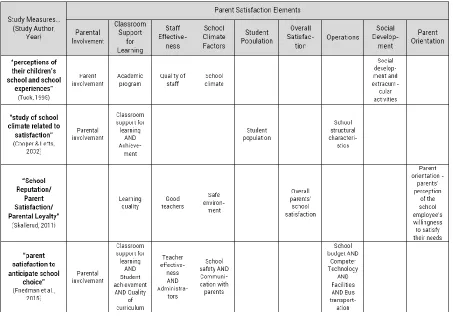
Common elements of parent satisfaction. As seen in Figure 4, identifying these
common elements in parent satisfaction research is problematic, primarily because a number of
factor, while in other studies, similar questions are subdivided into classroom support for
learning, student achievement, and quality of curriculum factors. Nevertheless, there are still
several overlapping factors that emerge:
classroom support for learning;
parent involvement;
staff effectiveness; and
school climate factors.
Classroom support for learning. Classroom support for learning appears to be the most
consistent element across studies of parent satisfaction. This broad title encompasses terms such
as academic program, student achievement, learning quality, and quality of the curriculum.
Ultimately, classroom support for learning includes all the learning that happens during the
school day, especially in regards to student academic growth.
Parent involvement. Parent involvement factors are listed in the previous section of this
literature review; these factors make up an essential element of determining parent satisfaction.
Staff effectiveness. Staff effectiveness factors include such terms as good teachers,
quality of staff, administrators, and teacher effectiveness.
School climate factors. While school climate does consist of terms like school safety and
safe environment as seen in Figure 4, school climate actually encompasses a much broader scope
of study. School climate most often focuses on the perceptions of students and staff, but reports
from the National Council of Educational Statistics (2003) and Chicago Public Schools (Osher,
Kendziora, & Chinen, 2008) indicated that parent-based school climate studies can provide
valuable insights into the school community. These studies of parent-based perceptions are
important because parents’ perceptions may influence the children’s perceptions of school and
parents’ impression of school climate can influence how families engage with the school
(Schueler et al., 2014).
In their review of school climate research, Thapa, Cohen, Guffey, and
Higgins-D’Alessandro (2013) revealed a need for more parent involvement in measuring parent
perception of school climate in the areas of safety, relationships, teaching and learning, and the
institutional environment. Researchers quickly set to work to develop a condensed survey scale
to assess parent perceptions of the climate of their child’s school, noting that “existing tools that
are designed for parents are often lengthy or focus on a particular facet of climate such as safety"
used interviews and focus groups to ask parents how they conceptualized school climate;
surprisingly, parents rarely mentioned safety and physical environment, instead focusing on
teaching, learning, and other social dimensions. As a result, their scale used only seven
questions to measure parent perceptions of (a) the extent of their children’s enjoyment attending
the school, (b) the respect of the staff for the children, (c) the respect of the children for the staff,
(d) the school’s value for diversity of the students’ backgrounds, (e) the administrators insure a
learning environment, (f) student lessons are motivating, and (g) the school’s evaluation system
is fair (Schueler et al., 2014, p. 317).
Parent Choice
Parent choice is important to schools because schools rely on parents to determine the
schooling for their children. The following section will review literature based on parent choice
by means of school choice research, examining the importance of parent choice, highlighting
studies of parent choice, and outlining the most common elements of parent choice.
Importance of parent choice. Parent choice is closely tied to school marketing research.
The goal of school marketing is the promotion of a school to attract and maintain a targeted
student body, but due to their youth, the students are ultimately controlled by their parents’
choices for schooling. Li and Hung (2009) reported that “the higher the parents’ perception of
marketing efforts, the more favorable the school image will be” (p. 485), and a more favorable
school image influences parents’ positive word-of-mouth, school choice, and retention.
Parent choice is linked closely with parent satisfaction; for instance, Ham et al. (2003)
confirmed that “parent satisfaction with the quality of the school’s service [is] an effective
predictor of their school choice decision” (as cited in Friedman et al., 2015, p. 472). In 2010,
finding that “competition, quality, selection, and choice” are most often used in the discussion of
education markets (2010, p. 107). Schools involved in competition and dependent upon parents’
choice and good-favor are best served when they are able to strategize based on data gathered
directly from parents (Li & Hung, 2009).
Studies in international schools indicate similar conclusions. Mackenzie, Hayden, and
Thompson (2003) discovered that while internationalism in an international school was
important, it wasn’t quite as important as a school’s reputation and the impression gained while
visiting the school. So with growing competition and increased international school accessibility,
international schools are turning toward a more business-style outlook on providing education,
including marketing “their product” (Canterford, 2003; MacDonald, 2009b). Ultimately, these
schools want to attract families to their schools through marketing and become the family’s
chosen school, but at the same time, schools want to satisfy the families that have come so that
they have no reason to look for educational alternatives. Unfortunately, for many of these
schools, they only begin to focus on marketing when student numbers are falling and have little
time to “catch-up” (Bunnell, 2005).
In order to maintain a competitive advantage, each international school must identify the
attributes that allow it to outperform its competitors. For example, some schools choose to
expand their extracurricular programming, while other schools adopt recognized curricula like IB
(International Baccalaureate) or AP (Advanced Placement). Well-known British schools, such
as Harrow and Dulwich, have opened campuses throughout Asia, capitalizing on their famous
names as a form of competitive advantage (Machin, 2014).
Studies of parent choice. Much of the available parent choice research focuses on the
faith-based, etc. based on key demographic indicators (Butler, Carr, Toma, & Zimmer, 2013;
Reichard, 2014; Tice, Chapman, Princiotta, & Bielick, 2006). A smaller number of studies
indicate the priorities in parent choice of schooling.
In their qualitative study of African-American parents, Diamond and Gomez (2004)
discovered that access to school information and geographic location were determining factors in
school choice. The Goldring and Phillips (2008) study of public-private school choice in
Nashville is often cited in parent choice literature; they examined relationships between
demographics, parent satisfaction with their child’s previous school, parent social network (or
how they heard about educational options for their children), and the Hoover-Dempsey and
Sandler model of parent involvement. Parents indicated that academics, convenience, school
characteristics, and safety were all important in choosing their child’s school (Goldring &
Phillips, 2008). Other studies indicated that religious factors strongly influence parents’ choice
in the schooling for their children (Bertram-Troost, de Roos, & Miedema, 2007; Reichard, 2014;
Taub & Ronen, 1999).
Outside of the United States, the Independent Schools Council of Australia (2008)
indicated that the most significant factors that parents considered in choosing their child’s school
was good facilities, good teachers, and a supportive and caring environment (p. 10). A study in
Turkey indicated that qualified teachers and small class size rank highly for parents’ choice of
school (Şahan, 2014). In bilingual South Africa, school reputation and the medium of instruction
mitigated choice (Evans & Cleghorn, 2014). Peter Robert’s (2010) study of 23 OECD countries
found that differing curricular options, such as vocational training or college preparation,
factored into parents’ considerations; he also determined that schools who are selective in their