Vijayalakshmi et al. World Journal of Pharmaceutical and Life Sciences
EVALUATION OF POLYHERBAL FORMULATION
Vijayalakshmi P.*, Muthusamy P., Radha R., Vadivu R.
Department of Pharmacognosy, College of Pharmacy, Madras Medical College, Chennai, Tamil Nadu, India.
Article Received on 26/03/2018 Article Revised on 16/04/2018 Article Accepted on 06/05/2018
INTRODUCTION
Herbal Medicine is a major component in all indigenous medicine and common element in Ayurvedic, Siddha, Homeopathy and naturopathic system of medicine. The herbal medicines gain their popularity due to the absence of side effects. Many potent herbs are combined in a poly herbal formulation, its gives an added advantage and higher confidence to the patient.
The concept of standardization and quality control of drug can be found in ancient Ayurvedic texts. In those days, the physician himself identifies, checks the drugs based on habitat, morphology, taste, colour, texture and uses as medicine. But in modern times, these tests and tools are not sufficient to control the quality. Hence, the World Health Assembly (WHA42.43-1989) has emphasized the need to ensure the quality of medicinal plant products by using modern control techniques and applying suitable standards. Assessment of complete and accurate physicochemical value of Ayurvedic herbs not only provides scientific basis of its quality but also helps in globalization of Ayurveda. Under these circumstances, pharmacognosy, pharmacology and phytochemistry are necessary for authentification of crude drug and to prove therapeutic action as well.[1]
In traditional systems of medicine, many plants have been documented to be useful for various systemic disorders. Many of the Traditional/Indigenous systems of medicine are effective but they suffer from lack of complete standardization which is one of the important challenges posted by the traditional system of medicine. The concept of polyherbal formulation is well documented in the ancient literature. Compared to the single herb, the polyherbal formulation has better and extended therapeutic potential, Hence, the present study was planned to formulate and standardize a polyherbal formulation using plants having known anti diabetic potential. As a part of our research work five herbal drugs were selected for the preparation of polyherbal anti diabetic formulation.[2-7]
World Journal of Pharmaceutical and Life Sciences
WJPLS
www.wjpls.org SJIF Impact Factor: 5.088
*Corresponding Author: Vijayalakshmi P.
Department of Pharmacognosy, College of Pharmacy, Madras Medical College, Chennai, Tamil Nadu, India.
[1]
ABSTRACT
The present study aimed to evaluate the polyherbal formulation. Application of modern scientific tools and techniques is important for the quality evaluation and standardization of polyherbal formulation. For evaluation of raw materials various parameters are studied as per the World Health Organization's guidelines, Ayurvedic Pharmacopoeia of India and other standard references. The present study investigates the standardization of raw materials which constitutes of polyherbal formulation Berberis aristata, Terminalia chebula, Emblica officinalis,
Terminalia belerica and Cyperus rotundus. To evaluate the raw materials include organoleptic characters,
Morphological characters, Microscopic character of every plant and raw materials were subjected to physicochemical studies like ash values, extractive values, phytochemical studies and safety profiles which include heavy metal analysis, microbial load analysis of each powder is identified. Standardized raw materials were subjected to ethanolic extraction and followed by preliminary phytochemical screening and chromatographic analysis for polyherbal formulation were carried out.
MATERIALS AND METHODS
Plant Przofile[8-13]
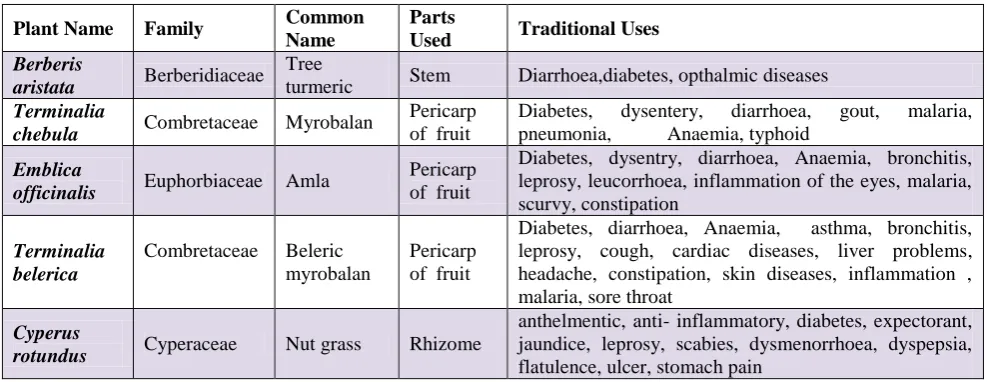
Table 1: Selected plant and its Traditional uses.
Plant Name Family Common
Name
Parts
Used Traditional Uses Berberis
aristata Berberidiaceae
Tree
turmeric Stem Diarrhoea,diabetes, opthalmic diseases Terminalia
chebula Combretaceae Myrobalan
Pericarp of fruit
Diabetes, dysentery, diarrhoea, gout, malaria, pneumonia, Anaemia, typhoid
Emblica
officinalis Euphorbiaceae Amla
Pericarp of fruit
Diabetes, dysentry, diarrhoea, Anaemia, bronchitis, leprosy, leucorrhoea, inflammation of the eyes, malaria, scurvy, constipation
Terminalia belerica
Combretaceae Beleric myrobalan
Pericarp of fruit
Diabetes, diarrhoea, Anaemia, asthma, bronchitis, leprosy, cough, cardiac diseases, liver problems, headache, constipation, skin diseases, inflammation , malaria, sore throat
Cyperus
rotundus Cyperaceae Nut grass Rhizome
anthelmentic, anti- inflammatory, diabetes, expectorant, jaundice, leprosy, scabies, dysmenorrhoea, dyspepsia, flatulence, ulcer, stomach pain
Collection of the Plant and Authentication
The selected plant materials viz Berberis aristata (dried Stem), Terminalia chebula (pericarp of matured fruit),
Emblica officinalis (pericarp of dried matured fruit),
Terminalia belerica (pericarp of dried ripe fruit) and
Cyperus rotundus (dried rhizome) were procured from
the authentic suppliers and further authenticated by Dr. K.N. Sunil Kumar R.O. and HOD Pharmacognosy, Central Siddha Research Institute, Govt. of India, Arumbakkam, Chennai - 106 and a voucher specimen were deposited at the Department for future reference.
Processing of Raw Materials
The procured plant materials were cleaned thoroughly. They were then dried under shade for a week or so. Once they were completely dried, they were ground into coarse powder and stored in air tight containers and preserved for the further processing.
Standardisation of Raw Materials[14-16]
Shade dried powdered plant materials of Berberis aristata (dried Stem), Terminalia chebula (pericarp of matured fruit), Emblica officinalis (pericarp of dried matured fruit),Terminalia belerica (pericarp of dried ripe fruit) and Cyperus rotundus (dried rhizome) used for the standardization of raw materials.
Organoleptic Evaluation
In this study the following organoleptic characters like physical appearance, taste and odour of plant materials were evaluated.
Powder microscopy[17]
A pinch of the powdered sample was mounted on a microscopic slide with a drop of phloroglucinol and conc. HCl. Characters were observed under microscope.
Physico Chemical Evaluation
The Physicochemical parameters such as loss on drying, ash values, extractive values, heavy metal analysis, microbial load analysis of crude drug were performed according to the official method prescribed.
Phytochemical Studies[18,19]
The Phytochemical parameters such as preliminary Phytochemical screening of powder, Fluorescence analysis of raw materials, preparation of extract and Thin Layer Chromatography of the each extract were performed.
Preliminary Phytochemical screening for raw material
All the plant raw materials were subjected to preliminary Phytochemical screening for the detection of Alkaloid, Flavonoids, Tannin, Saponin, Glycoside, Terpenoids, Steroid, Carbohydrates and Phenolic compounds.[18]
Fluorescence analysis
Raw materials used for the polyherbal capsule preparation were tested for any colour changes under UV light. Samples were tested as such and after treating with organic solvents, alkali and acidic solutions and viewed under ordinary light, short UV (254 nm) and long UV (365 nm) and studied for its fluorescence property.[18,19]
Preparation of Extract
About 200g of coarsely powdered parts of the plant was extracted with Ethanol at 60-70°C. Extract of individual plants were concentrated using rotary vacuum evaporator. The percentage yield, colour and consistency of all the extracts were noted.
Formula for Polyherbal formulation
chebula, Emblica officinalis, Terminalia belerica and
Cyperus rotundus in the ratio of 1:3:3:3:2.
Preliminary Phyto-chemical screening
One gram of polyherbal formulation was dissolved in100ml of its own mother solvent to obtain a stock of concentration 1%w/v and tested for the presence of alkaloids, flavanoid, tannin,saponin glycosides, terpenoids, steroid, carbohydrate and phenolic compounds.[18]
Chromatographic analysis[20-22] Thin layer chromatographic study
The ethanolic extracts of Berberis aristata, Terminalia chebula, Emblica officinalis, Terminalia belerica and
Cyperus rotundus were subjected to thin layer
chromatography (TLC) as per conventional method using silica gel 60F254, 5x3 cm (Merck). Different solvent systems ranging from lower to higher polarities were tested for the separation of bioactive components.
In the TLC chamber the solvent system viz Butanol: Acetic acid: Aqueous (40:10: 20) were used. After completion of the elution the plates were dried and subjected to visualized under UV chamber and sprayed using different spray reagents.
Rf values determined by using following formula Rf = Distance travelled by the solute / Distance travelled by the solvent.
High performance thin layer chromatography fingerprint analysis
1mg of Polyherbal extract was dissolved in 1 ml of methanol. A number of solvent systems were tried, for extract. The satisfactory resolution obtained for the Phytochemical constituent was in the solvent butanol-acetic acid-water (4:1:5). 2 µl of standard solution and 2 µl of the test solution (extract) were loaded as 5 mm band length in the 4×10 glass plates. After the application of sample, the chromatogram was developed in Twin trough glass chamber 10x10 cm saturated with previously equilibrated mobile phase for 30 minutes. The chromatographic conditions were previously optimized to active the best resolution and peak shape. The air-dried plates were viewed in ultraviolet radiation to mid-day light. The chromatograms were scanned by densitometer at 420 nm. Quercetin was used as the reference standard. The plates were kept in Photo-documentation chamber and captured the images at White light, UV 254 nm. After scanning the plates the Peak table, Peak display and Peak densitogram were recorded. The retention factor (Rf) was calculated by the WinCats software.
RESULTS AND DISCUSSIONS
The raw materials were authenticated and analysed for their compliance to quality standards as established by WHO guidelines, Pharmacopoeias and standard reference books.
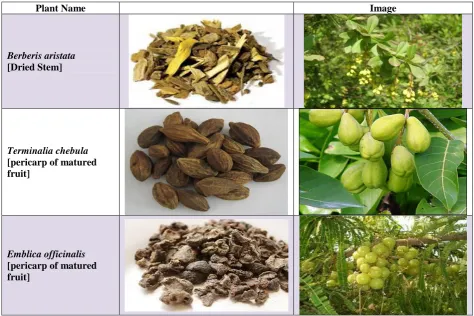
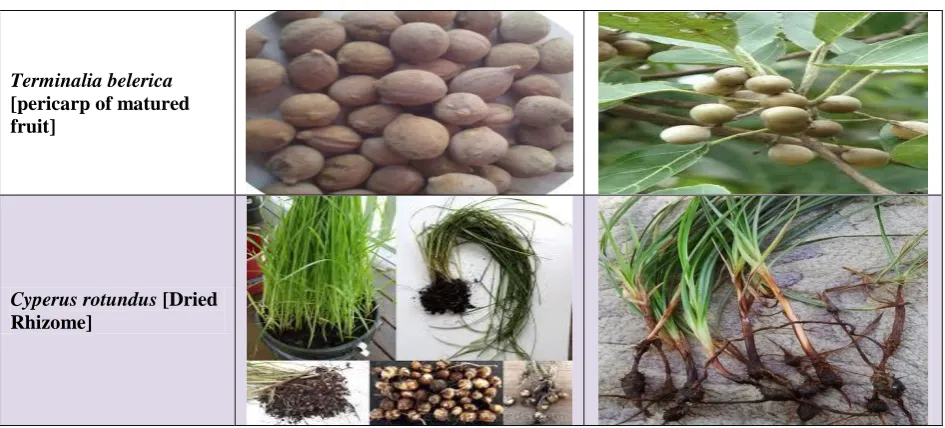
Table 2: Plant Profile.
Plant Name Image
Berberis aristata [Dried Stem]
Terminalia chebula [pericarp of matured fruit]
Terminalia belerica [pericarp of matured fruit]
Cyperus rotundus [Dried Rhizome]
Organoleptic Evaluation
Organoleptic characters for the raw materials such as colour, odour and taste were given in table 3.
Table 3: Organoleptic characters coarse powder of selected plants.
Plant name Nature Colour Odour Taste
Berberis aristata Coarse powder Pale Yellowish brown Odorless Bitter
Terminalia chebula Coarse powder Dull Yellow Odorless Astringent, slightly bitter Emblica officinalis Coarse powder Grey to black Odourless Sore and Astringent Terminalia belerica Coarse powder Dark brown to black None Astringent
Cyperus rotundus Coarse powder Dark black Pleasant Pleasant
Microscopical Evaluation
Powder microscopy was done for the chosen plants and observations were given intable 4.
Table 4: Powder microscopy of selected plants.
Plant name Observation
Berberis aristata (dried stem)
Presence of Non-lignified elements: Fibres, stone cells, Thick walled fibres, Parenchyma with crystals. Lignified elements: Cork cells in oblique view, Pitted vessel fragment, Fibre fragment, Vessel, Tracheid, Sclereid.
Terminalia chebula (pericarp of fruit)
Presence of Non-lignified elements: Epicarp, Thick walled parenchyma, Lignified elements: Different types of sclereids, Fibro-sclereids, Pitted tracheids.
Emblica officinalis (pericarp of fruit)
Presence of Non-lignified elements: Epicarp, Thick walled parenchyma, Fibre, Parenchyma. Lignified elements: Sclereids of different types
Terminalia belerica (pericarp of fruit)
Presence of Non-lignified elements: Trichome, Epicarp, Parenchyma with tannin, Tracheids, Vessels. Lignified elements: Vessels, Sclereids, Fibro-sclereid
Cyperus rotundus (dried rhizome)
Presence of Non-lignified elements: Cork, Aerenchyma from root, Tracheidal fibres, Vessels. Lignified elements: Group of sclereids, Parenchyma.
Physiochemical parameters
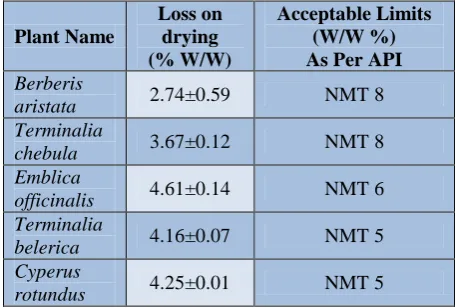
Various physicochemical parameters like loss on drying, ash values and extractive values were calculated for the herbal plants used in polyherbal formulation. Table 4,5and 6 gives the evidence of the report of various physiochemical parameters.
Loss on Drying
Table 5: Loss on drying.
Plant Name
Loss on drying (% W/W)
Acceptable Limits (W/W %) As Per API
Berberis
aristata 2.74±0.59 NMT 8
Terminalia
chebula 3.67±0.12 NMT 8
Emblica
officinalis 4.61±0.14 NMT 6
Terminalia
belerica 4.16±0.07 NMT 5
Cyperus
rotundus 4.25±0.01 NMT 5
The value are expressed as mean ± SD, (n=3); NMT-Not more than, API-Ayurveda Pharmacopoeia of India
Determination of Ash Values
Total ash value, acid insoluble ash and water soluble ash values were determined and the values are within the standard limits as prescribed in the Ayurveda Pharmacopoeia of India.
Table 6: Ash values of selected plants.
Plant Name
Total ash (% w/w) Acid insoluble Ash (% w/w) Water soluble ash (%w/w)
Observed value
Limits (w/w%) as per API
Observed value
Limits (w/w%)as per
API
Observed value
Limits (w/w%) as per API
Berberis
aristata 4.06±0.12 NMT 14 0.34±0.08 NMT 5 0.78±0.01 NMT 3
Terminalia
chebula 2.31±0.02 NMT 5 0.45±0.02 NMT 5 2.31±0.02 NMT 5
Emblica
officinalis 5.36±2.23 NMT 7 1.17±0.16 NMT 2 1.76±0.37 NMT 3
Terminalia
belerica 5.16±0.04 NMT 7 0.68±0.01 NMT 1 2.74±0.59 NMT 6
Cyperus
rotundus 6.18±0.01 NMT 8 2.27±0.04 NMT 4 5.73±0.21 NMT 7
The value are expressed as mean ± SD, (n=3); NMT-Not more than API-Ayurveda Pharmacopoeia of India
Determination of Extractive Values
Water soluble Extractive values, alcohol soluble extractive values and ether soluble extractives values for
the raw materials were determined and the results are tabulated in table 7.
Table 7: Extractive values of the selected plants.
Plant name
Water soluble extractive (%w/w) Alcohol soluble extractive (%w/w)
Ether soluble Extractive value
Observed value
Acceptable Limits (w/w %) as
per API
Observed value
Acceptable Limits (w/w %) as
per API
Observed value
Berberis
aristata 14.29±0.04 NLT 8 9.82±0.17 NLT 6 9.28±0.64
Terminalia
chebula 61.94±0.17 NLT 60 42.66±0.16 NLT 40 8.35±0.42
Emblica
officinalis 51.63±0.20 NLT 50 42.36±0.22 NLT 40 12.68±0.24
Terminalia
belerica 2.61±0.69 NLT 35 14.88±0.28 NLT 8 8.50±0.25
Cyperus
rotundus 12.54±0.15 NLT 11 8.08±20 NLT 5 9.25±0.24
The value are expressed as mean ± SD, (n=3); NLT-Not less than API-Ayurveda Pharmacopoeia of India
Analysis of Heavy Metal
Table 8: Test for heavy metals.
Plant name OBSERVATION (in ppm)
Arsenic (NMT 5) Lead (NMT 10) Cadmium (NMT 0.3) Mercury (NMT 0.5)
Berberis aristata 0.002 0.001 0.024 0.004
Terminalia chebula 0.004 0.003 0.005 0.002
Emblica officinalis 0.002 0.004 0.001 0.001
Terminalia belerica 0.001 0.005 0.04 0.04
Cyperus rotundus 0.005 0.002 0.002 0.004
The estimation of heavy metals in the sample revealed heavy metals are within the prescribed limits. It is safe and does not cause any harm on consumption.
Microbial Load Analysis
Table 9: Microbial load analysis.
Parameters Berberis
aristata
Terminalia chebula
Emblica officinalis
Terminalia belerica
Cyperus rotundus
Total aerobic count (NMT 1000cfu/g) Nil Nil 100 100 Nil
Yeast and mould count (NMT 100cfu/g) Nil Nil Nil Nil Nil
E.coli (To be absent) Absent Absent Absent Absent Absent
Salmonella (To be absent) Absent Absent Absent Absent Absent
Pseudomonas (To be absent) Absent Absent Absent Absent Absent
Staphylocoucus (To be absent) Absent Absent Absent Absent Absent
Shigella (To be absent) Absent Absent Absent Absent Absent
From the results, it is shown that the powdered raw materials complies with the WHO standards for Microbial load analysis and hence it is safer to be taken internally.
Priliminary Phytochemical Screening
The chemical test for various phyto constituents in the raw materials were carried out and the results were recorded and detailed in the table 10.
Table 10: Phytochemical analysis.
Phyto-constituents Berberis aristata
Terminalia chebula
Emblica officinalis
Terminalia belerica
Cyperus rotundus
Phenolic compounds _ + + + +
Flavanoids + + + + +
Tannins _ + + + +
Alkaloids + + + _ +
Steroids + + + _ _
Glycosides + + + + +
Saponins + + _ + +
Proteins + + + + +
Carbohydrates + + + + +
Terpenoids + + _ + _
Active constituents, (+) presence and (-) absence
Fluorescence Analysis of Raw Materials Table 11: Fluorescence analysis.
Sample
Before Treatment
After Treating With 50 % Hcl
After Treating With 50% NaoH
Ordinary Light
Short UV
Long UV
Ordinary
Light Short UV
Long UV
Ordinary
Light Short UV Long UV
Berberis aristata
Light
yellow Black Black Brown Brown Brown Black
Light Green
Dark brown
Terminalia chebula
Light
yellow Brown brown Light brown
Brownish Green
Dark
brown Light brown
Greenish brown
Dark brown
officinalis brown brown
Terminalia belerica
Dark
brown Brown Brown
Yellowish Brown
Light green
Light green
Reddish brown
Dark green
Light green
Cyperus
rotundus Black Black
Light
brown Brown Brown
Dark
brown Light brown Dull brown
Light brown
Preparation of Extracts
The shade dried crude dried drugs of Berberis aristata (dried Stem), Terminalia chebula (pericarp of matured fruit), Emblica officinalis (pericarp of dried matured fruit), Terminalia belerica (pericarp of dried ripe fruit)
and Cyperus rotundus (dried rhizome) were extracted in
soxhlet extractor with ethanol. All the extracts were concentrated using rotary vacuum evaporator. The percentage yield was calculated for every extract in terms of dried weight of plant material. The colour and consistency of the concentrated extracts are given in table 12.
Table 12: Percentage yield of various extracts.
Plant name Method of extraction Physical nature Colour Yield %w/w
Berberis aristata
Continuous hot percolation Semi solid Dark brown
5.29
Terminalia chebula 22.05
Emblica officinalis 16.9
Terminalia belerica 16.16
Cyperus rotundus 8.75
Phytochemical Analysis
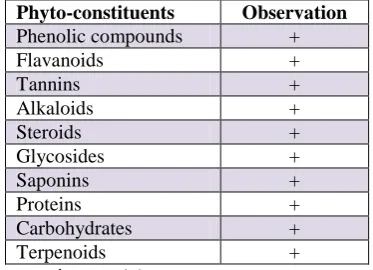
The chemical tests for various Phytoconstituents in the polyherbal formulation were carried out and the results were recorded and detailed in table 13.
Table 13: Phytochemical analysis of Polyherbal formulation.
Phyto-constituents Observation
Phenolic compounds +
Flavanoids +
Tannins +
Alkaloids +
Steroids +
Glycosides +
Saponins +
Proteins +
Carbohydrates +
Terpenoids +
Active constituents, (+) presence
Chromatographic Analysis
Thin layer Chromatographic Analysis
The chromatographic analysis for each individual ethanolic extract and polyherbal formulation was performed and the results were given in the Table 14.
Fig 1: Thin layer chromatography of individual extract and PHF.
CR- Cyperus rotundus, TB- Terminalia belerica, TC- Terminalia chebula,
BA - Berberis aristata, EO - Emblica officinalis, ET - Poly herbal formulation
Table 14: Thin Layer Chromatography Rf values of the extracts.
Extract Solvent
system
Number of spots
Distance travelled by the solute (cm)
Distance travelled by the solvent (cm)
Rf value (cm)
Cyperus rotundus
Butanol: Acetic acid: Aqueous (40: 10: 20)
4 2.8; 2.5; 1.4; 0.5 3 0.93; 0.83; 0.46; 0.16
Terminalia belerica 3 2.5; 1.9; 0.9 3 0.83; 0.63; 0.3
Terminalia chebula 4 2.6; 2.2; 0.9; 0.6 3 0.86; 0.73; 0.3; 0.2
Berberis aristata 6 2.6; 1.8; 1.5; 1.2; 1.0;
0.5 3
0.86; 0.6; 0.5; 0.4; 0.33; 0.16
Emblica officinalis 6 2.6; 2.5; 2.0; 1.5; 1.0;
0.5 3
0.86; 0.83; 0.66; 0.5; 0.33; 0.16 ET (Polyherbal
formulation) 6
2.6; 2.4; 2.2; 1.4; 1.0;
0.5 3
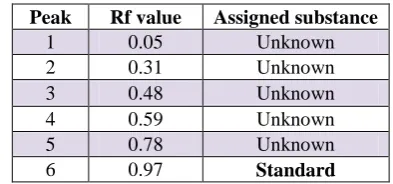
High Performance Thin Layer Chromatography HPTLC was performed for the ethanolic extract of polyherbal formulation. The chromatographic conditions were carried was detailed in materials of this study. There were six peaks observed with different Rf values.
Mobile Phase: Butanol-Acetic Acid-Water (4:1:5).
Fig. 2: ET- polyherbal extract powder, Std – Flavanoid.
Hptlc Finger Printing Of the Polyherbal Extract
Fig. 3: HPTLC of finger print data.
Fig. 4: Chromatographic finger print analysis of formulation and standard.
Table 15: HPTLC finger printing spectral values.
Peak Rf value Assigned substance
1 0.05 Unknown
2 0.31 Unknown
3 0.48 Unknown
4 0.59 Unknown
5 0.78 Unknown
6 0.97 Standard
The HPTLC finger printing of the polyherbal ethanolic extracts showed the above tabulated Rf values with
corresponding peak area.
HPTLC fingerprint is one of the versatile tools for qualitative and quantitative analysis of active constituents of multicomponent sample and also a diagnostic method to find out the adulterants to check purity.
CONCLUSION
From the present investigation, it can be concluded that the raw materials standardised were in accordance with the standards laid down in Ayurvedic Pharmacopoeia of India. Further studies are focussed on Preparation, Standardisation and Evaluation of Capsule for anti diabetic activity.
REFERENCES
1. Sarvesh Kumar Bharati, Abishek Kumar, Bhuwal Ram and Anil Kumar Singh, Pharmacognostical and Phytochemical Evaluation of Daruharidra, World Journal of Pharmaceutical Life Sciences, 2016; 2(4): 419-430.
2. Sharma R.K., Bhakawan dash, Caraka Samhita, Published by Chowkhamba Sanskrit Series Office, Varanasi, India Vol III, 306.
3. Nitinkumar Upwar, Roshan Patel, Naheed Waseem1, Naveen Kumar Mahobia. Hypoglycaemic Effect of Methanolic Extract of Berberis Aristata Dc Stem on normal and Streptozotocin Induced Diabetic Rats. International Journal of Pharmacy and Pharmaceutical Sciences, 2011; 3(1): 222-224. 4. Gandhipuram Periyasamy, Sentilkumar,
Palanisamyarulselvan, Durairaj Sathishkumar and Sorimuthu Pillar Subramanian. Antidiabetic effect of fruits of Terminalia chebula in Streptozotocin induced diabetic rats, Journal of Health Sciences, 2006; 52(3): 283-291.
5. Nishant Pathak, Gyanendra Kumar and Rakesh Chandra Chaurasia, Evaluation of anti-diabetic activity of commercially available extracts of
Phyllanthus emblica in Streptozotocin induced
diabetic rats, Into J Pharm Bio Sci., 2016; 7(4): 139-145.
6. Sabu MC, Kuttan R. Antidiabetic and antioxidant activity of Terminalia belerica. Roxb. Indian J Exp Biol., 2009; 47(4): 270-5.
7. Nishikant A, Raut, Naresh J, Gaikwad, Antidiabetic
activity of hydro-ethanolic extract of Cyperus
rotundus in alloxan induced diabetes in rats,
Fitoterapia, 2006; 77: 585–588.
8. Dinesh jadhav, Medicinal plants of India, Scientific Publishers (India), Jodhpur, 2008; 2: 41-42.
9. Dinesh jadhav, Medicinal plants of India Scientific Publishers (India), Jodhpur, 2008; 1: 103-104, 188-189, 227-229.
10. Anonymous, The Ayurvedic Pharmacopoeia Of India, First edition, Ministry of health and family welfare, Govt. of india. The controller of publiucations, New Delhi, Part I, 2: 33-34.
11. Anonymous. The Ayurvedic Pharmacopoeia Of India, First edition, Ministry of health and family welfare, Govt. of india, The controller of publications, New Delhi, part-I, 3: 47-48.
12. Anonymous. The Ayurvedic Pharmacopoeia Of India, First edition,Ministry of health and family welfare, Govt. of india, The controller of publiucations, New Delhi, part-I, 1: 5-6.
13. Anonymous. The Ayurvedic Pharmacopoeia of India, Ministry of health and family welfare, Govt.
of india, The controller of publiucations, New Delhi, Part I, 4: 129-130.
14. Anonymous. The Ayurvedic Pharmacopoeia of India. Volume 4, New Delhi; Ministry of Health and Family Welfare, Government of India, the Controller of Publications, 2002; 40-42.
15. Anonymous. The Ayurvedic Pharmacopoeia of India. Volume 1, First Edition, New Delhi; Ministry of Health and Family Welfare, Government of India, the Controller of Publications: 2002; 165-167. 16. Anonymous. The Siddha Pharmacopoeia of India.
Volume 1, New Delhi; Ministry of Health and Family Welfare, Government of India, the Controller of Publications, 2001; 108-110.
17. Wallis TE. Analytical Microscopy- Its aims and methods in relation to foods, water, spices and drugs. Third Edition. Boston: Little, Brown and Company, 1965
18. Harborne JB. Phytochemical Methods: A Guide to Modern Techniques of Plant Analysis. 2nd ed. London, Chapman and hall, 1973; 434.
19. Kokate CK, Purohit AP, Gokahle SB. Pharmacognosy. 24thed.Vallabh Prakashan, Pune. 2003; pp.108-109.
20. Gurdeep R, Chatwal, Sham K Anand, Instrumental methods of chemical analysis, Mumbai. Himalaya Publication House, 2005; 2: 272-2.302.
21. Beckett AH, Stenlake JB, Practical Pharmaceutical chemistry 2nd Ed, New Delhi: CBS publishers, 2001; 115-126.