A New Method for Generating Distributions:
An Application to Flow Data
Hüseyin Ü nözkan1,*, Mehmet Yilmaz2
1
Ankara University, Graduate School of Natural and Applied Science, Department of Statistics, Turkey
2
Ankara University, Science Faculty, Department of Statistics, Turkey
Abstract
Nowadays, one of the aim of statistical studies is to provide the future with the models which are easily accessible and simple. Therefore, more suitable distributions are needed to model the data. In this study, a new distribution is generated with exponential marginals Farlie-Gumbel-Morgenstern distribution. Specifications and characteristics of this new distribution are studied. The structure of the proposed distribution is discussed statistically and the parameter estimation for the new distribution is made by known methods. In addition, reliability analysis has performed. Due to the shape and flexibility of the proposed distribution, it is thought to be an alternative to distributions which are used for modeling flow data. Efficiency on the statistical modeling of the new distribution can be detected by using flow data sets in literature. Furthermore, Terme and Sefaatli Creeks' flow-data obtained from Turkish State Water Affairs Directorate are used to model. It is concluded that this new distribution offers a model that can be used effectively in stream flows.Keywords
Falie-Gumbel-Morgenstern Distribution, Copula, Reliability Analysis, Generating Distribution, Exponential Distribution1. Introduction
Global warming has effected nearly every water sources. For estimating behavior of streams, modeling and analyzing flows has vital importance. In the world, the population rate is rising rapidly, which makes pure water resources more important. For some decades, researchers have studied in streams for estimating drought and flood. Till now, they have used some most known distributions for modeling streams statistically. After modeling, they have analyzed behavior of streams easily.
Some stream statistics was described as magnitude, variability and flow extremes. Mean flow is the fundamental statistics of flow record. It is usually expressed as flow in m3/s. In order to measure the variability, it is the most common method to obtain the distribution of monthly average flows [3].
Therefore, we can use the mean of annual flows, mean of the lowest month flows, and rivers' total flows to model their behavior. For low flows, Generalized Extreme Value distribution, Pearson Type III and Generalized Logistic distributions are commonly used. Sometimes these
* Corresponding author:
[email protected] (Hüseyin Ü nözkan) Published online at http://journal.sapub.org/statistics
Copyright©2019The Author(s).PublishedbyScientific&AcademicPublishing This work is licensed under the Creative Commons Attribution International License (CC BY). http://creativecommons.org/licenses/by/4.0/
distributions can be used with more parameters than their original structure. A fourth distribution, the Generalized Pareto, was also offered [11]. In literature, we can find some transmutations for these distributions to better match streams flow data [4].
[11] shows which distributions are needed to analyze flow data, and in particular to analyze minimum values. We can estimate the behavior of the stream with mean flows, such that this can be important for living beings in the district of this stream.
The frequency of floods was analyzed in [7] by hydrological functions through extremes and they used the same statistical distributions in [11]. In this paper, we suggest a new distribution for analyzing every kinds of stream data which are using for describing river behaviors.
Through the paper, this proposed distribution is called as “CFGMWEM”. CFGMWEM presents good results especially in modeling low flows. In our presentation, we have first introduced CFGMWEM. After this we have shown new distribution's properties, and important characteristics. Finally, we have compared CFGMWEM with most known hydrologic statistical functions via data which were used in literature and new data obtained from Turkey rivers.
2. Materials and Methods [New
Distribution (CFGMWEM)]
mostly logical systems have been used. While measuring these values, logical machines obtain observation only if the flow level is higher than the lowest measuring point of them. According to this approach for fertile measurement, the heaviness of stream has to be more than a fixed point.
The aim of this study is to develop a statistical model about the flow data which is observed during this real measurement process. In order to realize this, it is necessary to obtain a successful statistical model and this requires the use of an important theorem.
Theorem (Sklar’s Theorem)
Let 𝐹 be a joint cumulative distribution function and 𝐻 and 𝐺 is marginals, then there is a copula function 𝐶 in ℝ for every 𝑥 and 𝑦 [9].
𝐹 𝑥, 𝑦 = 𝐶 𝐻 𝑥 , 𝐺 𝑦
Farlie-Gumbel-Morgenstren (FGM) copula with marginals 𝑢 and 𝑣 can be written as below [6].
𝐶𝜃 𝑢, 𝑣 = 𝑢𝑣 + 𝜃𝑢𝑣 1 − 𝑢 1 − 𝑣
Hence, Two dimensional Bivariate FGM distribution with marginals 𝐻 𝑥 and 𝐺 𝑦 is as follows.
𝐹 𝑥, 𝑦 = 𝐻 𝑥 𝐺 𝑦 1 + 𝜆𝐻 𝑥 𝐺 𝑦 .
Probability density function of this distribution is as below.
𝑓 𝑥, 𝑦 = ℎ 𝑥 𝑔 𝑦 1 + 𝜆 1 − 2𝐻 𝑥 1 − 2𝐺 𝑦 Under 𝑌 = 𝑦 condition, 𝑋 has a conditional probability density function as follows.
𝑓 𝑥, 𝑦
𝑔 𝑦 = ℎ 𝑥 1 + 𝜆 1 − 2𝐻 𝑥 1 − 2𝐺 𝑦
Under 𝑌 = 𝑦 condition, 𝑋 has a conditional distribution as below.
𝑃𝑟 𝑋 ≤ 𝑥 𝑌 = 𝑦 = ℎ 𝑥 1 + 𝜆 1 − 2𝐻 𝑥 1 − 2𝐺 𝑦 𝑑𝑥
𝑃𝑟 𝑋 ≤ 𝑥 𝑌 = 𝑦 = 𝐻 𝑥 − 𝜆 1 − 2𝐺 𝑦 𝐻 𝑥 𝐻 𝑥 Under 𝑇 = 𝑡 condition probability of 𝑋 ≤ 𝑡 is
𝑃𝑟 𝑋 ≤ 𝑡 𝑌 = 𝑡 = 𝐻 𝑡 − 𝜆 1 − 2𝐺 𝑡 𝐻 𝑡 𝐻 𝑡 provided.
Considering the models related to natural events, exponential distribution has a wide range of usability. Because of simple statistical structure and memoryless property exponential distribution has been used widely.
Suppose that 𝑡 = 𝐺 𝑡 = 1 − 𝑒−𝜃𝑡. Then we have 𝐹 𝑡 = 1 + 𝜆 𝐻 𝑡 − 𝜆𝐻 𝑡 2 3 − 2𝐻 𝑡
We know from the literature that the transmuted distribution with baseline 𝐻(𝑡) is 1 + 𝜆 𝐻 𝑡 − 𝜆𝐻 𝑡 2. Here, 𝐻 𝑡 2 is the failure distribution of the two-component parallel system (with identical and independent) namely, represented as 𝐻2:2. In the light of this idea, 𝐹 𝑡 can be also rewritten as the form of 1 + 𝜆 𝐻 𝑡 − 𝜆𝐻3:2(𝑡) where 𝐻3:2 represents a failure distribution of 3 out of 2 system with independent and identical component. Thus, we have a different form of
transmuted distribution. Hence when baseline distribution is assumed to be exponential we have the following special form of distribution.
𝐹 𝑡 =
1 + 𝜆 1 − 𝑒−𝜃𝑡 − 𝜆 1 − 𝑒−𝜃𝑡 2 3 − 2 1 − 𝑒−𝜃𝑡 (1)
Probability density function of CFGMWEM is as below.
𝑓 𝑡 = 𝑑
𝑑𝑡 1 + 𝜆 1 − 𝑒−𝜃𝑡
−𝜆 1 − 𝑒−𝜃𝑡 2 3 − 2 1 − 𝑒−𝜃𝑡
𝑓 𝑡 = 𝜃𝑒−𝜃𝑡 1 + 𝜆 − 6𝜆𝑒−𝜃𝑡 + 6𝜆𝑒−2𝜃𝑡 ,
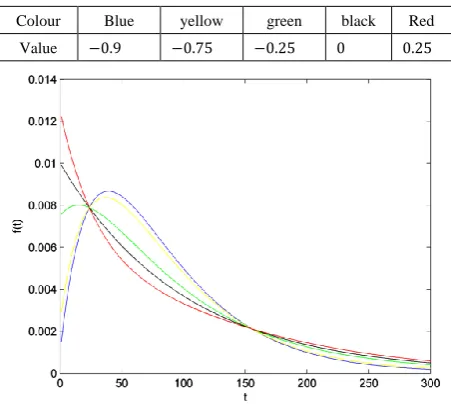
𝜆 ∈ −1,1 , 𝜃 > 0 (2) Some shapes of probability density function are as below. In Fig. 1 and Fig. 2 𝜃 = 0.01,
Table 1. Values of 𝜆 parameter matching by colour in Fig. 1
Colour Blue yellow green black Red
Value 0.9 0.75 0.25 0 −0.25
Figure 1. Plots of probability density function
Table 2. Values of 𝜆 parameter matching by colour in Fig. 2
Colour Blue yellow green black Red
Value −0.9 −0.75 −0.25 0 0.25
Survival function of CFGMWEM is as follows; 𝑆 𝑡 = 1 − 𝐹 𝑡
= 1 − 1 + 𝜆 1 − 𝑒−𝜃𝑡
+𝜆 1 − 𝑒−𝜃𝑡 2 3 − 2 1 − 𝑒−𝜃𝑡
= 1 − 1 + 𝜆 𝐻 𝑡 + 𝜆 𝐻 𝑡 2 3 − 2 𝐻 𝑡
𝑆 𝑡 = 1 + 𝜆 𝐻 𝑡 − 𝜆 3 𝐻 𝑡 2− 2 𝐻 𝑡 3
Hazard rate function of CFGMWEM is as below.
𝑟 𝑡 =𝑓 𝑡 𝑆 𝑡
= 𝜃𝑒−𝜃𝑡 1 + 𝜆 − 6𝜆𝑒−𝜃𝑡+ 6𝜆𝑒−2𝜃𝑡
1 − 1 + 𝜆 1 − 𝑒−𝜃𝑡 + 𝜆 1 − 𝑒−𝜃𝑡 2 3 − 2 1 − 𝑒−𝜃𝑡
=𝜃 1 + 𝜆 − 6𝜆𝑒
−𝜃𝑡+ 6𝜆𝑒−2𝜃𝑡
1 + 𝜆 − 3𝜆𝑒−𝜃𝑡+ 2𝜆𝑒−2𝜃𝑡
If we want to calculate the risk of the starting point;
lim
𝑡→0
𝜃 1 + 𝜆 − 6𝜆𝑒−𝜃𝑡+ 6𝜆𝑒−2𝜃𝑡
1 + 𝜆 − 3𝜆𝑒−𝜃𝑡+ 2𝜆𝑒−2𝜃𝑡 = 𝜃 1 + 𝜆
We reach that in the long term risk, there are two diffrent results according to the parameter 𝜆.
lim𝑡→∞ 𝜃 1+𝜆−6𝜆𝑒
−𝜃𝑡+6𝜆𝑒−2𝜃𝑡
1+𝜆−3𝜆𝑒−𝜃𝑡+2𝜆𝑒−2𝜃𝑡 = 𝜃, 𝜆 ≠ −1
lim
𝑡→∞
6𝜃 1 − 𝑒−𝜃𝑡
3 − 2𝑒−𝜃𝑡 = 2𝜃 , 𝜆 = −1
Some shapes of hazard rate function are as below. In Fig. 3 and Fig. 4 𝜃 = 0.1
Table 3. Values of 𝜆 parameter matching by colour in Fig. 3
Colour Blue yellow green black Red
Value 0.9 0.75 0.25 0 −0.25
Figure 3. Plots of hazard rate function
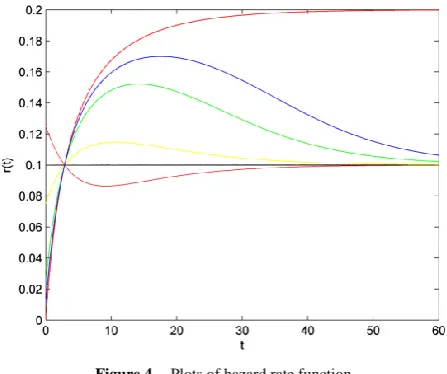
Table 4. Values of 𝜆 parameter matching by colour in Fig. 4
Colour red blue yellow green black Red
Value −1 −0.9 −0.75 −0.25 0 0.25
Figure 4. Plots of hazard rate function
According to Figure 3 and Figure 4, we can easily see that parameter 𝜆 changes both the shape of probability density function and hazard rate function. Here, we believe that CFGMWEM can be used in interesting data groups that may pose two different types of risks.
When parameter λ has a value between −1,0 , hazard rate function becomes bathtub shape. However, there are initial decreasing proportions of deaths, and at the beginning some components rapidly deteriorate. Thereafter a balance is formed and an almost constant hazar rate is observed. In the last part of the curve, components that complete their lifetimes are increasingly out of the system and the life span of the system is completed.
When parameter λ has a value between 0,1 , hazard rate function becomes the opposite of bathtub shape. This curve is symmetric to value of parameter θ which is the hazard rate of exponential distribution. At the beginning, there are high risk, and initially some components are rapidly deteriorating. Thereafter a balance is formed and an almost constant hazar rate is observed. In the last chapter, components that complete their life span are decreasingly out of the system and the life span of the system is completed. This shape is called upside-down bathtub, inverse bathtub or unimodel.
2.1. Characteristics of Distribution
Moment generating function
𝐸 𝑒𝑣𝑋 = 𝑀 𝑋 𝑣
= 𝑒𝑣𝑥𝑓 𝑥 𝑑𝑥
= 𝑒∞ 𝑣𝑥 0
𝜃𝑒−𝜃𝑥 1 + 𝜆 − 6𝜆𝑒−𝜃𝑥+ 6𝜆𝑒−2𝜃𝑥 𝑑𝑥
= 𝜃𝑒∞ −𝑥 𝜃−𝑣 1 + 𝜆 − 6𝜆𝜃𝑒−𝑥 2𝜃−𝑣 0
+ 6𝜆𝜃𝑒−𝑥 3𝜃−𝑣 𝑑𝑥
= 1 + 𝜆 𝜃𝑒∞ −𝑥(𝜃−𝑣)𝑑𝑥 0
− 6𝜆 𝜃𝑒∞ −𝑥 2𝜃−𝑣 𝑑𝑥 0
𝑀𝑋 𝑣 =
𝜃 1 + 𝜆
𝜃 − 𝑣 −
6𝜆𝜃
2𝜃 − 𝑣+
6𝜆𝜃
3𝜃 − 𝑣 , 𝜃 > 𝑣
This is a linear combination of exponential distribution with 1𝜃 , 2𝜃1 and 3𝜃1 mean. Through this, for 𝑌𝑗~𝐸𝑥𝑝𝑜𝑛𝑒𝑛𝑡𝑖𝑎𝑙 𝑗𝜃1 , 𝑗 = 1,2,3 moment generating
function can be written as 𝑀𝑌𝑗 𝑣 =𝑗𝜃 −𝑣𝑗𝜃
𝑀𝑋 𝑣 = 1 + 𝜆 𝑀𝑌1 𝑣 − 3𝜆𝑀𝑌2 𝑣 + 2𝜆𝑀𝑌3 𝑣 ,
𝜃 > 𝑣 (3)
k. th pure moment
Pure moments can be easily achieved with moment generating function.
𝐸 𝑋𝑘 = 𝑑𝑘
𝑑𝑣𝑘𝑀𝑋 𝑣 𝑣=0
= 1 + 𝜆 𝑑𝑘
𝑑𝑣𝑘𝑀𝑌1 𝑣
𝑣=0
− 3𝜆 𝑑𝑘
𝑑𝑣𝑘𝑀𝑌2 𝑣
𝑣=0
+ 2𝜆 𝑑
𝑘
𝑑𝑣𝑘𝑀𝑌3 𝑣
𝑣=0
= 1 + 𝜆 Γ 𝑘 + 1
𝜃𝑘 − 3𝜆
Γ 𝑘 + 1 2𝑘𝜃𝑘 + 2𝜆
Γ 𝑘 + 1 3𝑘𝜃𝑘
𝐸 𝑋𝑘 =k!
𝜃𝑘 1 + 𝜆 − 3𝜆
1 2𝑘+ 2𝜆
1 3𝑘 Expected value 𝐸 𝑋 = 𝑥𝑓 𝑥 𝑑𝑥 = 𝑥 ∞
0 𝜃𝑒
−𝜃𝑥 1 + 𝜆 − 6𝜆𝑒−𝜃𝑥 + 6𝜆𝑒−2𝜃𝑥 𝑑𝑥
= 1 + 𝜆 𝑥
∞
0 𝜃𝑒
−𝜃𝑥𝑑𝑥 − 3𝜆 2𝑥∞
0 𝜃𝑒
−2𝜃𝑥𝑑𝑥
+ 2𝜆 3𝑥
∞
0 𝜃𝑒
−3𝜃𝑥𝑑𝑥
𝐸 𝑋 =𝜆 + 1
𝜃 −
3𝜆
2𝜃+
2𝜆 3𝜃 =
6 + 𝜆 6𝜃 𝐸 𝑋2 = 𝑥2𝑓 𝑥 𝑑𝑥
= 𝑥∞ 2 0
𝜃𝑒−𝜃𝑥 1 + 𝜆 − 6𝜆𝑒−𝜃𝑥 + 6𝜆𝑒−2𝜃𝑥 𝑑𝑥
= 1 + 𝜆 𝑥∞ 2
0 𝜃𝑒
−𝜃𝑥𝑑𝑥 − 3𝜆 2𝑥∞ 2
0 𝜃𝑒
−2𝜃𝑥𝑑𝑥
+ 2𝜆 3𝑥∞ 2 0
𝜃𝑒−3𝜃𝑥𝑑𝑥
𝐸 𝑋2 =2 𝜆 + 1
𝜃2 −
6𝜆 4𝜃2+
4𝜆 9𝜃2=
36 + 17𝜆 18𝜃2
Variance
𝑉𝑎𝑟 𝑋 = 𝐸 𝑋2 − 𝐸 𝑋 2=36 + 17𝜆
18𝜃2 −
6 + 𝜆 6𝜃
2
=36 + 22𝜆 − 𝜆
2
36𝜃2
2.2. Moment Estimator
We find moment estimator with matching sample moments and pure moments of distribution. By this matching we can reach moment estimation under a condition
38 25 ≤
𝑚2
𝑚12≤
106 49 .
𝜃 =102𝑚1− 10404𝑚12− 4752𝑚2 36𝑚2
𝜆 = 𝑚16
102𝑚1− 10404𝑚12− 4752𝑚2
36𝑚2 − 6 ,
38 25
≤ 𝑚2
𝑚12≤
106 49
2.3. Maximum Likelihood Estimation
𝐿 𝜃, 𝜆; 𝒕 = 𝑓 𝑡1, 𝑡2, 𝑡3, … , 𝑡𝑛; 𝜃, 𝜆 = 𝑓 𝑡𝑖; 𝜃, 𝜆 𝑛
𝑖=1
= 𝜃𝑒−𝜃𝑡𝑖 1 + 𝜆 − 6𝜆𝑒−𝜃𝑡𝑖+ 6𝜆𝑒−2𝜃𝑡𝑖
𝑛
𝑖=1
= 𝜃𝑛𝑒−𝜃 𝑛𝑖=1𝑡𝑖 1 + 𝜆 − 6𝜆𝑒−𝜃𝑡𝑖+ 6𝜆𝑒−2𝜃𝑡𝑖 𝑛
𝑖=1
With using Log Likelihood, maximum likelihood estimation of parameters can be obtained with derivation of 𝜆 and 𝜃.
log 𝐿 𝜃, 𝜆; 𝒕 = 𝑛 log 𝜃 − 𝜃 𝑡𝑖 𝑛
𝑖=1
+ log 1 + 𝜆 − 6𝜆𝑒−𝜃𝑡𝑖+ 6𝜆𝑒−2𝜃𝑡𝑖 𝑛
𝑖=1
𝜕
𝜕𝜆log 𝐿 𝜃, 𝜆; 𝒕 =
1 − 6𝑒−𝜃𝑡𝑖+ 6𝑒−2𝜃𝑡𝑖
1 + 𝜆 − 6𝜆𝑒−𝜃𝑡𝑖+ 6𝜆𝑒−2𝜃𝑡𝑖 𝑛
𝑖=1
= 0
𝜕
𝜕𝜃log 𝐿 𝜃, 𝜆; 𝒕
=𝑛
𝜃− 𝑡𝑖
𝑛
𝑖=1
+ 𝑡𝑖6𝜆𝑒
−𝜃𝑡𝑖− 𝑡
𝑖12𝜆𝑒−2𝜃𝑡𝑖
1 + 𝜆 − 6𝜆𝑒−𝜃𝑡𝑖+ 6𝜆𝑒−2𝜃𝑡𝑖 𝑛
𝑖=1
= 0
2.4. L Moments Estimation
In 𝑙 moments estimation we equalize 𝑙 samples to 𝑙 moments. Below we will first give 𝑙 samples and the calculations of these characteristics. After this we will give 𝑙 moments and their calculations. At last we will match them and find the estimations for parameters.
Now we can express 𝑙 samples as follows. 𝑥(.) shows order statistics.
𝑙1=1𝑛 𝑥(𝑗 ) 𝑛
𝑙2=
1 𝑛
𝑗 − 1 𝑛 − 1𝑥(𝑗 ) 𝑛
𝑗 =2
𝐿1= 𝑙1
𝐿2= 2𝑙2− 𝑙1
𝜆1= 𝐸 𝑋
𝜆2=𝐸 𝑋2:2
− 𝐸 𝑋1:2
2
There are two equations with 𝑙 samples and 𝑙 moments matching.
𝐿1= 𝜆1
𝐿2= 𝜆2
By using these two equations and adjusting them to CFGMWEM, the equations and matchings are observed as follows.
𝜆1= 𝐸 𝑋 =
6 + 𝜆 6𝜃
𝐸 𝑋2:2 =20𝜆 + 60𝜃 − 𝜆 2+ 90
60𝜃
𝐸 𝑋1:2 =
60𝜃 + 𝜆2+ 30
60𝜃
𝜆2=𝐸 𝑋2:2
− 𝐸 𝑋1:2
2 =
10𝜆 − 𝜆2+ 30
60𝜃 𝜆2
𝜆1=
𝐿2
𝐿1
2𝑙2− 𝑙1
𝑙1 =
10𝜆 − 𝜆2+ 30
60𝜃 6 + 𝜆
6𝜃
𝜆2+30
10𝜆+60= 2 1 − 𝑙2
𝑙1 , in prospect of 2 1 −
𝑙2
𝑙1 = 𝑐
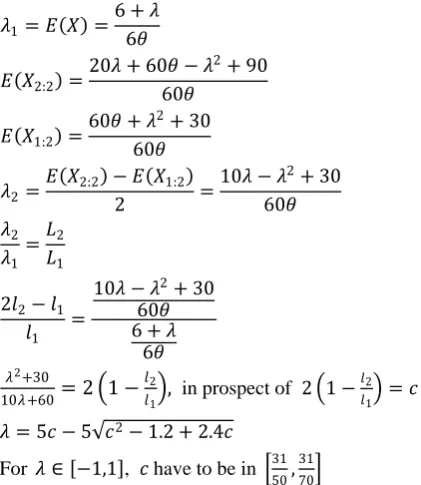
𝜆 = 5𝑐 − 5 𝑐2− 1.2 + 2.4𝑐
For 𝜆 ∈ −1,1 , 𝑐 have to be in 3150,3170
Now parameter estimation methods may be evaluated via examining Table 5. In Table 5 there are estimation results of three methods. Numerical technique is used for the results and repeating number is 100 for every observation. 𝑛 shows the observation number. Rmse is root mean squares of error.
Table 5. Parameter estimation results
𝜆= - 0.9 𝜃 = 0.05 Moment Estimation
n=10 n=50 n=100 n=1000
𝜆 -0.5958 -0.7357 -0.8494 -0.8949
Rmse(𝜆 ) 0.5103 0.3243 0.1412 0.0683
𝜃 0.0571 0.0518 0.0504 0.0500
Rmse(𝜃 ) 0.0167 0.0056 0.0043 0.0014
𝜆= - 0.9 𝜃 = 0.05 Maximum Likelihood Estimation
n=10 n=50 n=100 n=1000
𝜆 -0.8731 -0.8673 -0.8802 -0.9064
Rmse(𝜆 ) 0.2905 0.1942 0.1409 0.0434
𝜃 0.0532 0.0508 0.0503 0.0500
Rmse(𝜃 ) 0.0138 0.0059 0.0035 0.0013
𝜆= - 0.9 𝜃 = 0.05 L Moments Estimation
n=10 n=50 n=100 n=1000
𝜆 -0.4058 -0.7417 -0.8121 -0.9000
Rmse(𝜆 ) 0.7058 0.2611 0.1679 0.0544
𝜃 0.0592 0.0511 0.0511 0.0499
Rmse(𝜃 ) 0.0170 0.0060 0.0044 0.0010
𝜆= 0.2 𝜃 = 5 Moment Estimation
n=10 n=50 n=100 n=1000
𝜆 -0.4545 -0.1828 -0.0550 0.2014
Rmse(𝜆 ) 0.8239 0.5976 0.5049 0.2456
𝜃 4.9762 4.7212 4.9559 4.9872
Rmse(𝜃 ) 1.4727 0.8628 0.7305 0.2411
𝜆= 0.2 𝜃 = 5 Maximum Likelihood Estimation
n=10 n=50 n=100 n=1000
𝜆 0.1918 0.1843 0.1692 0.1892
Rmse(𝜆 ) 0.7293 0.3856 0.2413 0.0750
𝜃 5.4206 4.9986 5.0843 4.9991
Rmse(𝜃 ) 2.0231 0.7746 0.6097 0.1532
𝜆= 0.2 𝜃 = 5 L Moments Estimation
n=10 n=50 n=100 n=1000
𝜆 -0.0994 0.1839 0.1384 0.2084
Rmse(𝜆 ) 0.5938 0.3997 0.3292 0.1293
𝜃 5.3078 5.0657 5.0417 5.0007
Rmse(𝜃 ) 2.1408 0.8289 0.5662 0.1927
According to Table 5, maximum likelihood estimation is better than other two estimation methods. Because of this maximum likelihood estimation will be used in application part.
3. Results and Discussion
Now, using some different flow data, we first compare CFGMWEM with the most common hydrological statistical distributions. Subsequently, we offer CFGMWEM as a new distribution for flow data with different kinds of data groups. While comparing distributions, we will use Kolmogorov-Smirnov test statistics for looking the availability of our distribution to data sets. In Kolmogorov-Smirnov test statistics p value indicates the success rate of distribution in the explanation. [5], [8]
distribution. Akaike Information Criterion (AIC) can be used to compare these distributions. When AIC is used, the distribution with the minimum AIC value is selected as the best distribution. Since the AIC is a penalty value and the minimum value represents the maximum similarity to the non-parametric distribution of the data set, the minimum AIC value is the maximum similarity to the distribution. [1], [10]
In this section, CFGMWEM will be compared with most known flow distributions using some different flow data. While comparing distributions, Kolmogorov-Smirnov test statistics will be used. When using Kolmogorov-Smirnov statistics, the least statistical value is considered to be the best modeling. p value of Kolmogorov-Smirnov statistics informs us about plausibility of the conformity.
Data 1: The first data we used are the flood peak values (in m3/s) of the Wheaton River near Carcross in Yukon Territory, Canada. The data consist of 72 exceedances for the years 1958–1984, rounded to one decimal place. This data was analyzed in [2] and after this the same data was used in [4].
Table 6. Wheaton River Flood Peaks (m3/s) data
1.7 2.2 14.4 1.1 0.4 20.6 3.4
12 9.3 1.4 18.7 8.5 25.5 11.9
1.1 2.5 14.4 1.7 37.6 0.6 21.5
15 11 7.3 22.9 1.7 0.1 5.3
1.7 7 20.1 0.4 14.1 9.9 2.5
3.6 5.6 30.8 13.3 4.2 25.5 2.8
5.3 0.7 13 27.6 64 27.4 27.1
11.6 14.1 22.1 20.2 9.7 27 2.5
2.2 39 0.3 36.4 1.5 1 2.7
1.1 0.6 9 16.8 27.5 1.9 30
10.4 10.7
Table 7. Wheaton River Flood Peaks (m3/s) data test results
Model K-S 𝑝
GEV 0.1398 0.1087
Log Pearson III 0.09948 0.44568
Generalized Pareto 0.1005 0.43177
Weibull 0.09045 0.5666
Log-Normal 0.1394 0.1103
CFGMWEM 0.0827 0.6774
In terms of Table 7 CFGMWEM presents best model and clarifies data more than other distributions.
Data 2: This data group is the values of Terme Creek's total flows in March from 1969 to 2000. The data group was received from Turkish State Water Affairs Directorate. In introduction section we told that there were two kinds of flow values that we looked for. These values are extremes and low flows. Therefore, we use the Terme Creek's total flows in March for extreme values analysis because it takes the highest values in March.
Table 8. Terme Creek’s Total Flows ℎ𝑚3 in March data
72.4 39.4 15.6 19.1 19.1 3.93 28.5
10.8 43.4 77 23.1 22.5 25.5 14.1
19.34 7.24 19 4.55 23.8 20.4 3.95
24.6 17.5 20.4 23.6 11.3 13.4 27.2
10 23.9 2.09
Table 9. Terme Creek’s Total Flows ℎ𝑚3 in March test results
Model K-S 𝑝
GEV 0.1419 0.5148
Log Pearson III 0.1490 0.4530
Generalized Pareto 0.1515 0.4319
Weibull 0.13766 0.5533
Log-Normal 0.17121 0.2892
CFGMWEM 0.1418 0.5158
In reference to Table 9, CFGMWEM presents second best model and clarifies data more than the other four distributions.
Data 3: This data group is the values of Terme Creek's total flows in September from 1969 to 2000. In introduction section we told that there were two kinds of flow values that we looked for. These values are extremes and low flows. Therefore, we use the Terme Creek's total flows in September for low values analysis because it takes the lowest values in September.
Table 10. Terme Creek’s Total Flows ℎ𝑚3 in September data
2.55 2.3 4.21 2.57 0.26 0.44 0.63
1.07 1.04 1.35 2.67 1.98 1.71 0.14
0.494 0.103 0.758 0.077 0.218 0.099 0.011
4.48 1.78 1.68 0.831 0.299 0.3 0.134
0.28 0.37 0.266
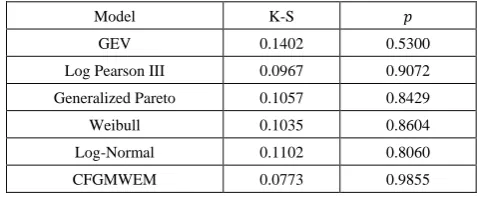
Table 11. Terme Creek’s Total Flows ℎ𝑚3 in September test results
Model K-S 𝑝
GEV 0.1402 0.5300
Log Pearson III 0.0967 0.9072
Generalized Pareto 0.1057 0.8429
Weibull 0.1035 0.8604
Log-Normal 0.1102 0.8060
CFGMWEM 0.0773 0.9855
Given the results of Table 11 of the CFGMWEM, it is clear that CFGMWEM offers good models and can be used to estimate the data related to flows, as well as other distributions known as flow distributions.
Table 12. Sefaatli Creek’s Mean Flows 𝑚3 𝑠 in April data
29 44.9 9.5 12.5 10.8 19.8 18.3
29.6 61.7 46.8 41.8 13.6 17.8 15.1
26.9 14.1 36.3 23 18.4 19.5 41.5
27.2 25.2 22 39.6 4.94 16.2 31.4
6.21 2.99 4.12 2.47 19.99 9.844 5.525
9.23 6.89 21.6 12.2 12.9 17.3 27.6
7.72 8.14 29 36.5 31 4.248 3.52
44.4 15.2 44.5 53.4 23.4 5.19 25.8
Table 13. Sefaatli Creek’s Mean Flows 𝑚3 𝑠 in April test results
Model K-S 𝑝
GEV 0.0545 0.9930
Log Pearson III 0.0548 0.9926
Generalized Pareto 0.0495 0.9980
Weibull (3P) 0.0500 0.9977
Log-Normal (3P) 0.0626 0.9705
CFGMWEM 0.0536 0.9944
Data 5: This data group is the values of Sefaatli Creek's total flows in August from 1953 to 2005. The data group was received from Turkish State Water Affairs Directorate. In introduction section we told that there were two kinds of flow values that we looked for. These values are extremes and low flows. Therefore, we use the Sefaatli Creek's total flows in August for low values analysis because it takes the lowest values in August.
Table 14. Sefaatli Creek’s Mean Flows 𝑚3 𝑠 in August data
0.92 5.9 0.28 0.25 0.21 0.8 0.6
4.37 5.96 2.32 0.12 1.03 0.583 0.01
1.22 1.51 0.353 0.476 1.97 1.59 0.31
1.06 3.66 1.55 2.54 1.79 3.49 4.92
0.15 0.013 0.943 0.139 0.712 4.6 3.03 0.858 0.63 1.29 0.696 0.052 3.21 3.38 0.626 4.23 0.371 2.8 0.864 5.99 2.53
4.92
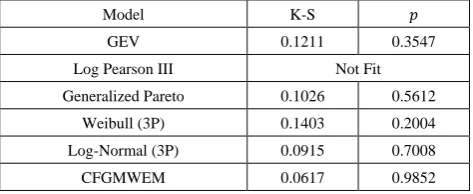
Table 15. Sefaatli Creek’s Mean Flows 𝑚3 𝑠 in August test results
Model K-S 𝑝
GEV 0.1211 0.3547
Log Pearson III Not Fit
Generalized Pareto 0.1026 0.5612
Weibull (3P) 0.1403 0.2004
Log-Normal (3P) 0.0915 0.7008
CFGMWEM 0.0617 0.9852
In terms of Table 13 and Table 15, results point out the same conclusion with results of Terme Creek. Especially at low flows, CFGMWEM offers better modeling than other most common flow distributions.
4. Conclusions
But how CFGMWEM conform with both extremes and low flows in the same time? Because these two kinds of data have completely different meaning. In part two we showed that the value of parameter 𝜆 change the structure of CFGMWEM. So we want to show the values of this parameter in modeling. In Table 16 there are maximum likelihood estimation values for parameters in modeling data1 to data 5.
Table 16. Values of Parameter Estimation in Models
Stream and Situation 𝜃 𝜆
Wheaton River 0.1015 0.9706
Terme March (high flow) 0.0377 -1
Terme September (low flow) 0.9440 0.7043 Sefaatli April (high flow) 0.0385 -1 Sefaatli August (low flow) 0.5748 0.4211
We can easily see that when CFGMWEM gains conformity to extreme data, 𝜆 parameter takes value between −1, 0 and when CFGMWEM gains conformity to low flow data, 𝜆 parameter takes value between 0, 1 . According to test results for Data 1 to Data 5 we suggest that CFGMWEM can be used in every kinds of flows.
We examine that CFGMWEM has best results in Data group 1, Data group 3 and Data group 5. For Data group 2 CFGMWEM has the second best results in modelling. And in modeling Data group 4 the new distribution has the third best results. According to Tables in application part we reach the conclusion that CFGMWEM can be identified as a stream distribution.
Notations
𝐶𝜃 𝑢, 𝑣 Copula function
𝐸 𝑋𝑘 k. th pure moment
𝐹 𝑥, 𝑦 two dimensional distribution function
𝑓 𝑥, 𝑦 two dimensional probability density function
𝐹 𝑡 one dimensional distribution function 𝐿 𝜃; 𝑥1, 𝑥2, … , 𝑥𝑛 maximum likelihood function
𝑙𝑜𝑔 𝐿 𝜃; 𝑥1, 𝑥2, … , 𝑥𝑛 logarithm of maximum likelihood function 𝑀𝑋 𝑣 moment generating function
𝑀𝑟 pure sampling moment
𝑟 𝑡 hazard rate function 𝑆 𝑡 survival function
𝑉𝑎𝑟 𝑋 variance
⋅ parameter estimator
Γ 𝑥 gamma function
𝐿𝑖 L samples
REFERENCES
[1] Akaike, H. A New Look at the Statistical Model Identification. IEEE Transactions on Automatic Control., (1974). 19(6), 716-723.
[2] Choulakian, V. and M.A. Stephens. Goodness-of-fit tests for the generalized Pareto distribution. Technometrics., (2001). 478-484.
[3] Henderson, R. and Diettrich, J. Statistical analysis of river flow data in the Horizons Region: NIWA Client Report: CHC., (2007) 2006-154.
[4] Merovci, F. and Puka L. Transmuted Pareto distribution. ProbStat Forum., (2014). 1-11.
[5] Næ ss S. K. Application of the Kolmogorov-Smirnov test to CMB data: Is the universe really weakly random? Astronomy and Astrophysics (2012). A17, 1-4.
[6] Nelsen, R.B. An Introduction to Copulas. New York: (2006). Springer.
[7] Opere, A.O., Mkhandi, S. and Willems, P. At site flood frequency analysis for the Nile equatorial basins. Physics and Chemistry of the Earth., (2006). 31, 919-927.
[8] Ross, S.M. Introduction to Probability and Statistics for Engineers and Scientists. Third Edition. Elsevier Academic Press: (2004). 504-514.
[9] Sklar, A. Fonctions de repartition an dimensionset leurs marges. Publ. Inst. Statis. Univ. Paris,: (1959). 229-231. [10] Snipes, M. and Taylorn, C.D. Model selection and Akaike
Information Criteria: An example from wine ratings and prices. Wine Economics and Policy, (2014). 3(1), 3-9. [11] Zaidman, M.D., Keller, V. and Young, A.R. Probability