POLICY ANALYSIS: Scientific Integrity in
Federal Policymaking Under Past and Present
Administrations
Emily Berman, Jacob Carter
Center for Science and Democracy, Union of Concerned Scientists Corresponding authors: [email protected], [email protected]
Keywords: scientific integrity; history; President Trump; science; political interference
Executive Summary: Many critical federal government policies in the United States rely on scientific evidence. Due to the widespread use of science in policymaking, stakeholders on all sides of scientific issues attempt to manipulate scientific information and/or scientists to achieve their own goals. Such practices introduce political and ideological bias into the science policy process and threaten to undermine protections for both public health and the environment. In recent years, scientists and science advocates have adapted the term “scientific integrity” to describe the proper process through which science informs policy. As such, a “violation of scientific integrity” has become the descriptor for any subversion of that process. Initially, scientific integrity provided a critical framework through which the scientific community could hold the George W. Bush administration accountable for its actions in the realm of science and science policy. This framework was subsequently used to examine both the scientific integrity violations of the Barack Obama administration as well as to judge the administration’s implementation of scientific integrity policies at federal agencies. Currently, observers of the executive branch are again using this framework to measure the record of Donald Trump’s administration on science policy thus far.
While observers have occasionally assumed that the Trump administration is unprecedented in its violations of scientific integrity, no analysis has been conducted to-date examining how the Trump administration’s actions stem from—or are different from—the science policy actions of prior administrations. As such, in this study, we documented scientific integrity records under presidential administrations dating back to the 1950s. The findings of this study provide context on the evolution of patterns in scientific integrity violations, as well as to the “unprecedentedness” of the Trump administration’s actions.
I. Introduction
Throughout the 2000s, “scientific integrity” transformed from a research term to a policy term and, finally, to a policy itself. Initially, the definition of a violation of “scientific integrity” appears to have been analogous with that of “research misconduct.” Both described improper actions, such as plagiarism and fabrication, that could take place throughout the research process. After the turn of the century, a violation of “scientific integrity” evolved into a term
used by the media, non-profit organizations, and members of Congress to describe actions taken by the George W. Bush administration that constituted political interference within the science and science policy apparatuses of the federal government (Grifo et al. 2008; U.S. House of Representatives 2003).
“restore science to its rightful place,” and his subsequent March 2009 memorandum labeled “Scientific Integrity” instructed his science advisor to create a plan for “ensuring the highest level of integrity in all aspects of the executive branch’s involvement with scientific and technologic
processes” (Obama 2009a; Obama 2009c).By the end
of the Obama administration, 28 agencies adopted specific scientific integrity policies (Carter et al. 2017, 6). While these policies range in scope and effectiveness, they generally address the principles of scientific integrity as formally laid out in Obama’s 2009 memorandum:
The public must be able to trust the science and scientific process informing public policy decisions. Political officials should not suppress or alter scientific or technological findings and conclusions. If scientific and technological information is developed and used by the Federal Government, it should ordinarily be made available to the public. To the extent permitted by law, there should be transparency in the preparation, identification, and use of scientific and technological information in policymaking. The selection of scientists and technology professionals for positions in the executive branch should be based on their scientific and technological knowledge, credentials, experience, and integrity (Obama 2009c).
While the Obama administration did not put a stop to all political interference in the government’s science policy apparatus, both the principles and policies regarding scientific integrity have fared notably worse since his successor, President Donald J. Trump, has taken office. The Trump administration’s widely documented disdain for science, science policy, and the principles of the science-based regulatory process has led multiple organizations, analysts, and members of Congress to criticize the administration’s actions as violations of the principles and/or policies of scientific integrity (Carter et al. 2017; NRDC 2017; Eilperin 2017; Green 2017b). In this time, some observers have compared the Trump administration’s actions to moves made during the Bush administration (Aton 2018). Other observers have traced these actions back to the Reagan era (Frederickson et al. 2018; Sellers et al. 2017; Waldman 2018b). Still others have labeled the Trump
administration’s violations of scientific integrity as entirely “unprecedented” in their breadth and agenda (Hand 2017; Kimmel 2017; Roberts 2017; Green 2017a).
This paper seeks to evaluate and expand upon these initial analyses of the Trump administration’s scientific integrity violations by examining the longer history of political interference in science in the United States. While assessing such a topic generally requires comparative data, few institutions have collected data on scientific integrity violations across administrations over time, and such information is necessarily subject to personal interpretations of politicization of science. As such, taking a piecemeal historical approach—examining key instances of political interference in science within the executive branch and how these instances built into patterns— provides the best examination of how the Trump administration’s antagonistic relationship to federal science relates to that of previous administrations.
Overall, we find that the Trump administration’s violations of scientific integrity are largely a continuation and escalation of patterns built up over the past seven decades as science and the growing federal science apparatus increasingly came into conflict with political, economic, and ideological interests. While many of the Trump administration’s actions have origins in the work of prior administrations, others fit with the “unprecedented” narrative, including the uniquely open disregard for the conclusions of its own scientists. At the conclusion of this paper, we include recommendations for restoring the proper place of science in government, including how to strengthen existing scientific integrity policies.
II. Definitions and Patterns
As the notion of “political interference in science” implies impropriety, it is worth examining how this paper assesses scientific integrity itself as well as violations of scientific integrity. Most recently, in 2018, scientific integrity was formally defined as the “processes through which independent science fully and transparently informs policy decisions, free from inappropriate political, ideological, financial, or other undue influence” (Goldman, Reed, and Carter 2018,
269). While Obama’s 2009 memorandum captured
newer definition allows for broader consideration of issues across more areas of the executive branch.
As the definition of scientific integrity used in this paper is broad, clarifying the exact contours of a violation of scientific integrity can be difficult. In some cases, a violation of scientific integrity has clear legal boundaries; when a political appointee tampers with species science that affects a listing under the Endangered Species Act (ESA), this breaks the law’s mandate that the decision be made based only on the best available science. In other cases, such as times in which administrations have purposely skewed federal science advisory committees—which are intended to provide independent science advice to agencies and are required to be “fairly balanced in terms of the points of view represented”—the actions are legally and ethically gray (GSA n.d.). And in some cases, an action is legally valid but ethically problematic; for example, while it is legal to route a press call away from a scientist who is working on a contentious issue, it is an instance of politics undercutting science.
Outside of laws like the ESA and the Prescription Drug User Fee Act that require decisions to be based only on the best available science, science is rarely the only factor in the policymaking process (Grifo 2011, 345; Goldman et al 2017, 4; Branscomb 2004, 54). Policy decisions are informed in various degrees by scientific factors, social judgments, and political sentiment. Indeed, the tendency among watchdogs to overemphasize the role that science should play in the federal policymaking process has created its own strand of criticism. As argued by former Bush “regulatory czar” Susan Dudley, “In thinking about reforms to improve how science is used in developing regulations, clarifying which aspects of the decision are matters of science and which are matters of policy is essential to avoid both the politicization of science and the scientization of policy” (Dudley 2015, 30). Dudley’s work built on a 2009 Bipartisan Policy Center report, which itself noted that “some disputes over the ‘politicization’ of science actually arise about policy choices that science can inform, but not determine” (BPC 2009, 4). This critique is not new or even partisan; as far back as 1965 a report by the American Association for the Advancement of Sciences noted that “The growing interaction between science and public policy requires considerable attention to the problem of
distinguishing scientific problems from those issues which ought to be decided by social processes” (American Scientist 1965, 194).
Defining a scientific integrity violation is therefore a complicated, somewhat subjective process, as it involves ethical as well as legal considerations. What one analyst may see as clear political interference in science, another may dismiss as a valid action in line with executive powers. Examining this debate and its contours is important not only due to the critical role scientific integrity plays in decisions that affect public health and the environment, but also democracy more broadly. As former presidential advisory committee member Lewis Branscomb once argued, “If we fail in the attempt to preserve the integrity of science in democratic governance, a strong source of unity in the electorate, based on common interest in the actual performance of government, will be eroded” (Branscomb 2004, 59). Figuring where the United States has clearly and not-so-clearly failed to uphold scientific integrity is integral toward upholding and even improving the quality and stability of government.
Overall, this paper builds off previous discussions of categories of political interference as well as historical analysis to determine the following patterns of scientific integrity violations:
Insufficiently filling executive branch positions that manage, conduct, or disseminate science or science-based regulations (appointing unqualified or conflicted people to agencies or science advisory boards; leaving scientist positions empty; hollowing out agencies)
Undermining science-based regulations (weakening, disregarding, revoking, or failing to enforce safeguards; shutting down monitoring and enforcement systems)
Tampering with science or scientific reports (editing, misrepresenting, or deleting scientific reports, data, or websites containing scientific information)
III. Government Growth and Postwar Problems: Dwight Eisenhower (1953-1961), John F. Kennedy (1961-1963), and Lyndon Johnson (1963-1969)
Political interference in science is inextricably tied to the size and strength of the federal science apparatus. In the years after World War II, the government’s role in conducting science, incorporating independent science advice, and regulating based on science grew dramatically. Yet even in this period, which is generally regarded as the high point in the relationship between the federal government and science as well as the high point for bipartisan support of science, modern patterns of scientific integrity violations began to appear.
Post-war growth in federal science came in waves. Directly following World War II, the federal government—buoyed by the success of wartime collaborations between the government and science community—quickly established or expanded several science-based agencies, including the Atomic Energy Commission, the Office of Naval Research, and the National Science Foundation (Burger, Jr. 1980, 7). In 1957, government science changed again following the unexpected success of the Soviet launch of the satellite Sputnik. The Sputnik crisis led to the government’s involvement in broader types of scientific research as well as caused Dwight Eisenhower to create both the position of science advisor and to create the President’s Science Advisory Committee (PSAC), which provided advice to the president on a variety of scientific and technological matters (Wang 2008, 74; Mooney 2005, 27-8). This period was generally a booming time for science; federal support for research grew as much as 14 percent annually between 1953 and 1961 (Jasanoff 1992, 195).
Arguably most important to the history of scientific integrity was the 1962 publication of Rachel Carson’s Silent Spring. By rigorously but poetically detailing the dangers of America’s use of pesticides, Carson’s book sparked a sea change in the way Americans thought about chemicals. Her book spurred much of the modern environmental movement, which itself then spawned massive growth in the government’s science-based regulatory apparatus (Griswold 2012). Johnson’s Great Society, as the historian Rick Perlstein wrote, included “a whole new category for
the liberal agenda, environmentalism: a Highway Beautification Act, a Water Quality Act, a Clean Air Act, bulldozed through as if the opposition from the Big Three Automakers, the advertising industry, and the chemical industry weren’t even there” (Perlstein 2008, 13). While the 1970s churned out much stronger versions of this initial legislation, these earlier laws served as the basis of a regulatory apparatus that relies on science for public health and environmental protections. These science-based regulations—both because of their economic impact upon industries and their portrayal by opponents as symbols of federal government overreach—have faced significant political pushback over time. While it is possible to reduce regulations without committing scientific integrity violations, the way political actors have tried to undercut these Congressionally-mandated regulations has often led to such violations.
opined that “the Secretary seems to be bent on having the bureau treat commercial products submitted for testing in a way that will satisfy business men rather than objective scientists” (Science 1953; New York Times 1953). The pressure worked; following the public pushback, Astin was reinstated.
Under Lyndon Johnson, politics also wormed its way into the new presidential science advising process. While supporting Johnson against the deeply conservative Barry Goldwater in the election of 1964 was the first time many scientists had entered the political arena at all, Johnson somewhat betrayed their trust by politicizing PSAC. Under Eisenhower and his successor, President John F. Kennedy, members of PSAC had been considered on scientific merit only; as historian Zuoyue Wang argued, during those administrations, “the ideal of science as an objective pursuit of truth and scientists as a source of disinterested technical advice on public policy, although increasingly challenged, largely held” (Wang 2008, 198). In 1967, however, Johnson became so enraged by criticism of the Vietnam War from the scientific community that, as Wang described, “the White House, if not Johnson himself, began to impose, for the first time in PSAC’s history, an explicit political test in the selection of its panel members based on their attitudes toward the Vietnam War” (Wang 2008, 262). While the Johnson administration was technically within its right to reduce the independent nature of PSAC, the episode served as a turning point in the broader history of the interaction between science and political interests and foreshowed future issues with agency-level scientific advisory committees.
IV. Regulations to Restrictions: Richard Nixon (1969-1974) and Jimmy Carter (1977-1981)
By the mid-1970s, the expansion of government science began to face significant pushback within the political portion of the executive branch. As the economic and political atmospheres grew increasingly unstable, the presidents of the decade struggled to balance implementation of new public health and environmental safeguards with other demands.
The science-based regulatory state grew significantly in the early years of Richard Nixon’s presidency, especially with regards to environmental regulation.
Nixon may not have much cared about the issues at hand—his second science advisor, Edward David, Jr., once quoted a friend’s sentiment that “Ed David was bartender to a teetotaler”—but he was an astute reader of public sentiment (David, Jr. 1987, 39). Already powerful by the late 1960s, the environmental movement gained even more momentum in Nixon’s first year following the Santa Barbara oil spill and the Cuyahoga river catching fire (again) soon after (Graham 2015, 224). The movement’s power was such that Nixon’s 1970 New Year’s speech mentioned environmental protection so fervently that his line “it is now or never” even got placed on the latest edition of Silent Spring (Perlstein 2008, 461). Consequently, during Nixon’s presidency, a pro-environment Democratic Congress enacted important pieces of legislation such as the National Environmental Policy Act, the Endangered Species Act, and the Clean Air Act of 1970. Meanwhile, Nixon himself gave the 1970 order reorganizing several existing entities into the new Environmental Protection Agency (EPA).
As the Nixon administration turned away from science-based safeguards and toward the economy, his administration made several attempts to insert industry into the science-based regulatory process in ways that went outside the business community’s legal role. By 1970, Nixon—already critical of the regulations pouring out of his administration— created the National Industrial Pollution Control Council (NIPCC), an advisory committee within the Department of Commerce that was made up exclusively of industry executives (Layzer 2012, 29; Rodgers Jr. 1972, 720). Ostensibly an outlet to “provide a direct opportunity for business and industry leaders to actively and visibly support the drive to abate pollution from industrial sources,” (Nixon 1970) NIPCC more often served as a mechanism for industry to repel science-based regulations (Rodgers Jr 1972, 720-1). A contemporary analysis published in a law review reported that in at least two situations where the government backtracked—with air pollution standards for smelters and with the use of phosphorous in detergents—“there is evidence that NIPCC has supplied invaluable inside-track opportunities for those who would redirect government policy” (Rodgers Jr., 720, 743). Nixon was eventually forced to disband the council after Congress declined to appropriate funding in 1974 following “fox in the henhouse” concerns (Layzer 2012, 40). Nixon’s first EPA administrator William Ruckelshaus, however, did note that “NIPCC did get some pledges of compliance from industries and some agreement on clean-up steps they were willing to take” (EPA 1993).
The Nixon administration pioneered the modern iteration of targeting science-based regulations—and even scientists themselves—using the budget process. Through its “Quality of Life Review,” the administration used the new Office of Management and Budget (OMB) to improperly delay or weaken regulations. While this review theoretically served as a legitimate interagency review system, in practice, the Nixon administration used it almost exclusively to target EPA regulations (Burger 1980, 92). As historian J. Brooks Flippen wrote, “However sensible it appeared, the White House intended the Quality of Life Review as further restraint on the environmentalists in its midst” (Flippen 2000, 146). Almost all administrations since Nixon’s have been
accused of improperly using OMB to stall or edit science-based regulations. In another notable budget incident, Nixon tried to target Kennedy’s science advisor (and Nixon “enemies list” member) Jerome Weisner, then serving as president of MIT. Angered by Weisner’s comments criticizing anti-ballistic missiles, a technology Nixon supported, Nixon attempted to retaliate (Layzer 2012, 47). Science reported that “In the last 2 years, highly placed White House staffers and perhaps the President himself, apparently considered cutting off federal research funds to the Massachusetts Institute of Technology as a political reprisal against its president” (Science 1973, 244). One OMB employee later noted that the Science story “didn’t tell it all” and recalled how after being ordered to cut MIT’s federal support by 50 percent—with no explanation—he and other staff merely pretended to “show that funds to MIT were in fact being cut. I was lying through my teeth, but what could I do?” (Loweth 1987, 51).
based on Long’s opposition to anti-ballistic missiles—which would have already been an unprecedented political consideration—further investigation in the ensuing weeks found that “opposition from the Republican side of Congress seems to have been a major factor in persuading the White House that the Long nomination should be dropped” (Science 1969, 406). As Science reported at the time, “the Long affair provoked quick cries of indignation from the scientific community” and “all four previous science advisers, in response to queries from Science, said that they were upset over the implications of the Long incident” (Science 1969, 406). While Nixon was within his legal right to replace Long, it marked another instance of political intrusion into previously apolitical science positions.
This specific trend continued under the Carter administration. By the time Carter took office in 1977, the economy was struggling, with the ongoing energy crisis contributing significantly to the economic issues and related social malaise. Arguably, the oil crisis led to Carter’s two most notable instances of targeting scientists. In 1977, Carter’s team pulled a surprise move by replacing Vincent McKelvey, the director of the United States Geological Survey (USGS). McKelvey’s firing was the first time in the agency’s history that a director had been replaced by an incoming administration, and McKelvey’s supporters at the time charged that Carter’s actions unjustifiably politicized a science-based agency (Lyons 1977). By 1977, tensions over political interference in science were high; after his firing, McKelvey received four different telephone calls from Capitol Hill. The two Democrats wanted to know if his ouster meant that the White House wanted more political control over the USGS; the two Republicans wanted to know if he was fired because he believed there to be more oil and gas in the ground that the Carter administration’s position on the subject
declared (O’Toole 1977). A Washington Post
investigation into McKelvey’s firing found that while there were no clear answers, McKelvey’s lack of ability to read politics—and his lack of friends in the White House and Capitol Hill—played a role (O’Toole 1977). As with the Long incident, Carter was within his right to fire McKelvey, but the incident notably added politics to a previously apolitical position.
The question of oil and gas reserves led to the Carter administration’s other instance of targeting
scientists. Also in 1977, Carter’s team assigned government chemical engineer Christian Knudsen to head a task force within the Market Oriented Program Planning Study that would examine the supply and production costs of natural gas for the next few decades. Knudsen’s optimistic calculations, however, displeased the administration, whose National Energy plan projected a dire forecast. Knudsen’s work was subsequently buried by the administration and Knudsen himself was fired as chairman of the task force. The Washington Post found after conversations with other government employees that the issue “was not the eternally arguable validity of Knudsen’s curves, but the existence of slippery slopes awaiting those in the energy bureaucracy who may somehow be tainted by heresy” (Mintz 1977). After his firing from the task force, Knudsen returned to his previous government position, but the story of his buried economic data would play out for months.
V. Rollback and Recovery: Ronald Reagan (1981-1989)
The final two decades of the century consisted of a quick, sharp increase in scientific integrity violations followed by a long period of reduced conflict. That early increase—which occurred in the first few years of Ronald Reagan’s administration—is notable for the precedents it set in destabilizing the scientific apparatuses of the executive branch. While issues with scientific integrity had, as already noted, occurred for decades, they bloomed under the first three years of the Reagan administration.
seemingly accepted status quo, and in many ways his confrontation with these institutions reflected the changing public mood. As sociologists Riley Dunlap and Aaron McCright noted, “The Reagan administration rode the crest of antigovernment sentiment by implementing a neoliberal program of reducing governmental regulations, especially
environmental ones” (Dunlap and McCright 2015,
305). The zeal with which the administration attempted to rapidly cut government science, science-based regulations, and advance its ideological agenda directly led to many of the relevant conflicts of this era.
One pattern pioneered by the Reagan administration in its efforts to dismantle public health and environmental safeguards was to nominate agency heads openly hostile to the science-based mission of their agencies. The administration made its position clear that “the common thread is of less regulation on business enterprises” by hiring administrators such as lawyer James Watt and former Colorado legislator Anne Gorsuch to run the Department of Interior (DOI) and EPA, respectively (Raines 1981). Prior to their federal government tenures, both Watt and Gorsuch—allies from their time together in Colorado—had repeatedly challenged federal environmental regulations (Lash, Gillman, and Sheridan 1984, 6-9). The administration’s explicit goal was to put that antagonism into action; Gorsuch’s deputy John Hernandez recalled that when interviewed for the EPA by two of Reagan’s deeply anti-regulatory OMB selections, he was asked if he “would be willing to bring EPA to its knees” (Burford and Greenya 1986, 84). Additionally, conflicts of interest abounded among the lower-level political hires. Such employees included Kathleen Bennett, a former paper industry lobbyist tapped to run EPA’s air program, and James McAvoy, an appointee to the Council on Environmental Quality (CEQ) who as chief pollution officer in Ohio had fought for relaxed air quality standards that would have allowed for the burning of soft coal (Raines 1981; Lash, Gillman, and Sheridan 1984, 31). Rita Lavelle, who was hired to run the new Superfund program cleaning up hazardous waste sites, was a former Aerojet public relationships employee who eventually brought down both herself as well as Gorsuch in a broad investigation relating to her failure to immediately recuse herself from a toxic dumping case involving her former employer (Shabecoff 1984). While
newspapers did critique these hires and their actions, Ruckelshaus—who took over the EPA again in 1983 after Gorsuch’s resignation—argued what Gorsuch’s “political appointees had done was terrible […] If anything, the press underplayed its seriousness” (EPA 1993).
Indeed, as one move, these political hires escalated the existing pattern of targeting career scientists and science policy staff whose work conflicted with the administration’s agenda. At the administration’s start, new EPA staffer and former Heritage Foundation employee Louis Cordia created “hit lists” (based on comments almost entirely from industry or conservative groups) of EPA staff and science advisory board members he wanted fired (Lash, Gillman, and Sheridan, 1984, 37). Comments on the list included statements like “clean air extremist” and “reported to be liberal and environmentalist” (Science 1983, 1303). Gorsusch’s team reportedly took action against several of these staffers, including firing the Chicago regional enforcement chief after she refused an unjustified transfer and transferring the director of the Office of Air Policy to keep him from working on acid rain (Lash, Gillman, and Sheridan 1984, 38-9). Ruckelshaus later noted that EPA career staff were aware of the hit lists and that “There were a lot of antics; it was almost juvenile. Very clear signals were sent out to the people of the agency which said, we don’t trust you. We don’t trust you to do what we want done. It generated enormous morale
problems” (EPA 1993). This morale problem—
combined with steep budget cuts—ultimately led to the hollowing out of the agency. By the end of fiscal year 1982, EPA staff had dropped by nearly 20 percent, more than three times the average for non-defense agencies, and 89 percent of EPA regulations were delayed, postponed, or behind schedule (Lash, Gillman, and Sheridan, 45-7, 62, 71). One result was that the agency’s data and analysis lost credibility (Kraft and Vig 1984, 428). Enforcement also dropped precipitously; a comparative analysis found that in Gorsuch’s first year as compared to Carter’s final months plus the transitional period, the number of enforcement cases the EPA referred to the Justice Department dropped from 198 to 31, and the number of cases the EPA filed in court dropped from 175 to 38 (Kurtz 1983c).
science advisory committees and peer review panels. While Cordia’s hit lists arguably impacted EPA advisory boards (more than 50 scientists were dismissed from EPA technical advisory boards in Reagan’s first two years), issues arose for DOI, Department of Agriculture (USDA), and Food and Drug Administration (FDA) boards as well (Ruskahoff 1983). At DOI, Watt dismissed scientists who were not card-carrying Republicans. Oceanographer Donald Boesch recalled how in 1983, he was one of seven scientists not reappointed to a DOI advisory committee on offshore oil and gas after the Republican National Committee (RNC) checked—and was displeased by—their voter registration (Boesch 2017). Watt’s office had sent the list of names to the RNC, with a space next to each name for “yes” and “no,” and the Department subsequently based their picks for advisors based on who the RNC checked off for “yes” (Ruskahoff and Kurtz 1983). Scientists from both sides of the aisle attested that the panel had been
non-partisan under Carter’s administration
(Ruskahoff and Kurtz 1983). Meanwhile, at the FDA, news broke in 1982 that the administration was using political referrals to fill vacancies in the agency’s advisory panel of experts (Reinhold 1982). One anonymous FDA scientist commented at the time that the administration was “‘trying to stack an obviously sensitive committee,” and that the for some of the candidates, their “‘main claim to fame is that they belong to certain groups or are with the Republicans’” (Cohn 1982). At USDA, to fill peer review panels, the Reagan administration attempted to use the practice of loyalty checks that favored scientists who were “philosophically compatible” with the administration (Science 1982). Most of these attempts to skew advice and reviews did not pan out. The USDA loyalty checks were quickly scrapped after bad publicity, and after Watt’s resignation in 1983, his successor reversed the hiring policy for that committee and reinstated some of the former scientists while excluding the RNC-approved choices (New York Times 1982; Boesch 2017).
The case of the chemical formaldehyde at the EPA demonstrates two more trends escalated by the Reagan administration: inappropriately allowing conflicts of interest into the science-based decision-making process and misrepresenting the best available science. In the final year of the Carter administration, following confirmation that formaldehyde caused a statistically significant
members of the White House and even sometimes the president himself pushed or attempted to push scientific misinformation to the public (Oreskes and Conway 2010, 98; Mooney 2005, 42-7).
The Reagan administration also built on the Nixon-pioneered idea of using the budget to delay or weaken regulations outside of the legal ability of that office. The Reagan administration utilized the new OMB-based Office of Information and Regulatory Affairs (OIRA), established in 1980 through the Carter-signed Paperwork Reduction Act, to undercut many science-based regulations. Under Reagan’s Executive Order 12291, agencies were required to submit to OIRA a regulatory impact analyses that quantified the costs and benefits of each rule. In practice, the order let OMB “review agency actions on the basis of gut instincts and industry complaints” (Lash, Gillman, and Sheridan 1984, 24). A 1985 Congressional investigation reported “instances of arbitrary delays in the OMB review process,” “the modification or complete displacement of technical, scientific, and policy judgments of agency officials as a result of OMB pressure,” and “secret meetings between OMB officials and affected industry representatives” (Shanley 1992, 66). John Daniel, Gorsuch’s former chief of staff, had testified before Congress in 1983 that after industry input, OMB used “tremendous pressure” and “veiled threats” to prevent the EPA from issuing particular rules (Kurtz 1983b). Daniel charged that OMB, as Layzer summarized, “tried to dictate regulations to the agency, threatened reprisals, and urged that cost factors be built into health rules even when the law prohibited doing so” (Layzer 2012, 100). While legally and ethically questionable uses of the budget had been growing for administrations, the Reagan administration ensured that OMB became a truly potent force for blocking science-based regulations that conflicted with the administration’s ideology.
VI. The Rise of “Scientific Integrity”: George W.
Bush (2001-2009) and Barack Obama (2009-2017)
While science was not entirely restored to federal policymaking under the administrations of George H.W. Bush (1989-1993) and William Clinton (1993-2001), there was notably less contention over science in the executive branch in that period as compared to the 1980s. Between 2001 and 2016, political
interference in science and the science policy process of the federal government again became significant news. While political interference on environmental issues were increasingly tracked across agencies since the Reagan administration, the George W. Bush era marked a change as Congress, journalists, and non-profits followed and connected issues across science more broadly.
Until the current Trump administration, the Bush administration was widely regarded as the most antagonistic toward science and science policy in modern history (Branscomb 2004, 54; Grifo et al. 2008 5, 26; Mooney 2005, 5). By the end of Bush’s second term, a collection of case studies put together by the non-profit Union of Concerned Scientists (UCS) documented nearly 100 instances between 2001 and 2009 of what it considered political attacks on the federal science apparatus (UCS n.d. a). Only three years into Bush’s first term, the widespread nature of these attacks prompted a group of senior scientists who had advised every Republican and Democratic administration dating to Eisenhower to pen a letter entitled “Scientist Statement on Restoring Scientific Integrity to Federal Policymaking.” The statement accumulated signatures by nearly 15,000 scientists, including 20 Nobel laureates, over the next four years. The letter read:
When scientific knowledge has been found to be in conflict with its political goals, the administration has often manipulated the process through which science enters in its decisions. This has been done by placing people who are professional unqualified or who have clear conflicts of interest in official posts and on scientific advisory committees; by disbanding existing advisory committees; by censoring and suppressing reports by the government’s own scientists; and by simply not seeking independent scientific advice. Other administrations have, on occasion, engaged in such practices, but not so systematically nor on so wide a front (UCS 2004).
an advisory committee at the Centers for Disease Control (CDC), the secretary of the Department of Health and Human Services took the unprecedented step of rejecting CDC scientist-selected experts for a lead advisory committee and instead replaced them with appointments more likely to oppose tightening the federal lead poisoning standard. A congressional review found that at least two of the new appointments had financial ties to the lead industry, and one—who held what other researchers considered “fringe” views on lead poisoning—had previously testified on behalf of Sherwin-Williams paint company in a lead poisoning case (UCS n.d. d). In another case, in 2002, the State Department successfully opposed the re-appointment of Dr. Robert Watson, a top climatologist, to chair the Intergovernmental Panel on Climate Change. ExxonMobil had apparently lobbied against Dr. Watson’s reappointment soon after Bush took office, with a February 6, 2001 memo from Exxon to a CEQ employee reading, “Can Watson be replaced now at the request of the U.S.?” (U.S. House of Representatives 2003, 17-8). The Bush administration also rejected or dismissed scientists for political reasons from advisory boards at the National Institute of Health, National Institute on Drug Abuse, and the President’s Council on Bioethics (Grifo et al. 2008, 33).
The Bush administration also escalated the targeting of career staff at science agencies, most notably in the case involving James Hansen, NASA’s top climate scientist. As the New York Times reported in its initial Hansen story in 2006, the agency’s public affairs officials were ordered to review Hansen’s upcoming papers, lectures, and posters, and had told him that there would be “dire consequences” if he continued to speak out about global warming (Revkin 2006). While much of the blame for NASA’s suppression of scientists initially fell on a low-level political hire, a later investigation revealed that the orders for silencing Hansen and other scientists came from much higher, including from Dean Acosta, Bush’s hire for the second-in-command role in NASA’s public affairs office (Bowen 2008, 43). The issue partly was, as investigation concluded, “the political appointees in public affairs seemed to believe that they had some sort of executive authority” (Bowen 2008, 43). As with the skewing of advisory committees, targeting scientists was not limited to one agency; similar
stories appeared across the executive branch (UCS n.d. b).
Particularly notable within the Bush administration’s violations of scientific integrity was the editing of scientific documents. In one case, Julie MacDonald, the deputy assistant for Fish and Wildlife at the Department of Interior, resigned after documents released in 2006 revealed that she had edited scientific reports to limit protections for potentially endangered species. As the Washington Post
described, “The documents show that MacDonald has
repeatedly refused to go along with staff reports concluding that species such as the white-tailed prairie dog and the Gunnison sage grouse are at risk of extinction,” and that “staff complaints that their scientific findings were overruled or disparaged at the behest of landowners or industry have led the agency’s inspector general” to become involved (Eilperin 2006). The inspector general reports themselves revealed both the breadth of MacDonald’s interference as well as issues of conflicts of interest; one of the reports noted that in the case of the Sacramento splittail fish, McDonald owned a farm near the fish’s habitat but that “Despite this potential conflict, MacDonald significantly participated in the editing process for the splittail” (DOI OIG 2008). Additionally, Phil Cooney, a former oil industry lobbyist tapped to head CEQ, was found to have significantly downplayed a discussion of global warming risks from an EPA draft report on the
environment (Revkin 2005). Cooney’s actions
prompted second-ever administrator of the EPA Russell Train to pen a letter to the New York Times in which he wrote that “I can categorically state that there was never such White House intrusion into the business of the E.P.A. during my tenure” (Train 2003). Overall, a 2006 survey of federal climate scientists at five agencies found that 73 percent of respondents reported having perceived inappropriate interference with climate science research in the past five years, while 43 percent of respondents had personally perceived or experienced changes or edits to documents during review that changed the meaning of the scientific findings (UCS 2006).
(NCI) fact sheet stating that there is no association between abortion and breast cancer was “scientifically inaccurate and misleading” (New York Times 2003). As a result, in mid-2002, NCI replaced the sheet with a statement that said some studies found an increased cancer risk while others did not. The New York Times opined that “That statement, while technically accurate, is such an egregious distortion of the evidence that one can only hope it is an interim statement, as some staff members suggest,
not a final surrender” (New York Times 2003). After
members of Congress protested, NCI held a conference of experts to discuss the scientific data, and in March 2003 the NCI website was updated to reflect the conclusion that abortion is not associated with breast cancer (U.S. House of Representatives 2003, 11). Similar editing occurred with both CDC and State Department fact sheets and pages on condom use, which removed information of condom effectiveness (Clymer 2002; U.S. House of Representatives 2003, 12).
The Bush administration also engaged in what UCS labeled “changing the rules” (Grifo et al. 2008, 34). Part of this category involved another evolution of OMB interference. While OIRA had typically been the haunt of economists and policy analysts, in 2003 it hired a small cadre of scientists in an attempt to create in-house expertise. OMB used its science to force changes or withdrawals of many EPA rules and procedures, including decisions on formaldehyde, particulate matter air pollution, ozone air pollution, and the climate endangerment finding (UCS n.d. e). Under Bush, OMB also proposed a peer review policy that several members of Congress decried as “a wolf in sheep’s clothing” (Waxman et al. 2003). As UCS described, the original peer review proposal—the final version was somewhat revised—would have “created an imbalance towards the selection of industry-funded peer reviewers” as well as been costlier and more time-consuming than existing peer review systems (UCS n.d. e). OMB used the Data Quality Act—a two-liner rider in an appropriations bill that has primarily been used by industry to derail science-based regulation—to justify the peer review guidelines (Mooney 2005, 103-4). In another incident, OMB withdrew a proposal for measuring risks to human health—co-written by then-OMB employee and current EPA Deputy Assistant Administrator Nancy Beck—after the National Academy of Scientists called it “fundamentally
flawed” (Lipton 2017b). Inside and outside of OMB, however, political interference was again not limited to lower level political appointees. In several cases, Vice President Dick Cheney was found to be have personally intervened in science-based environmental decisions to benefit businesses (Becker and Gellman 2007).
The 2008 election appeared to usher in a new era for scientific integrity. The Obama administration quickly made scientific integrity explicitly central to its mission; in addition to promising in his inaugural speech to “restore science to its rightful place,” in an April 2009 speech before the National Academies of Science, Obama noted that “we have watched as scientific integrity has been undermined and scientific research politicized in an effort to advance predetermined ideological agendas” (Obama 2009a; Obama 2009b). While these speeches emphasized Obama’s commitment to upholding scientific integrity in the federal government and his administration’s records on science policy show that scientific evidence was often considered in the formation of science-based policies, the administration did not always adhere to its own established values.
Obama administration, 28 agencies had created integrity policies.
These scientific integrity policies vary in strength and scope. Some agencies created internal infrastructure to protect science and agency scientists, and many also devoted resources to their new scientific integrity policies and appointed scientific integrity officers to oversee implementation of the policies. For example, the EPA’s scientific integrity policy established a Scientific Integrity Official whose role is to “champion scientific integrity throughout the Agency” (EPA 2012, 1). Furthermore, the policy states that this lead official “chairs a standing committee of Deputy Scientific Integrity Officials representing each EPA Program Office and Region” (EPA 2012, 1-2). Issues of scientific integrity were also woven into other policies at agencies. For example, the communications policy at the Department of Commerce (DOC) “allows scientists to engage in oral fundamental research communications (based on their official work) with the media and the public without notification or prior approval to their supervisor or to the Office of Public Affairs” (DOC 2008, 2). However, the Department of Defense (DOD) scientific and engineering integrity policy requires agency pre-approval for federal scientists to speak to the media (DOD 2012, 2). Some policies also give scientists a right of last review on documents (e.g., press releases) dealing with their work; some promote the professional development of scientists; others detail a process by which the agency keeps track of scientific integrity violations filed.
Despite these policies, the Obama administration occasionally fell short of its own published standards. In the case of emergency contraception, the administration consistently undercut the FDA’s attempts to move forward on a drug science had shown was safe. Critically, the FDA is legally bound to only consider evidence when making drug approval decisions (Junod 2013). The Plan B controversy began under the Bush administration, which rejected the advice of FDA’s science advisory board and the agency’s own staff scientists when turning down the application by the manufacturer of Plan B to become an over-the-counter (as opposed to prescription-only) product (Goldman et al. 2017, 15). After years of wrangling over age limits for the medication’s over-the-counter accessibility, in 2011, Plan B’s manufacturer submitted an application to remove the
age limit altogether for over-the-counter access (Melnick 2011). While Obama’s FDA commissioner and science advisors supported the application, the Secretary of Health and Human Services overruled the FDA, stating concerns about potential health effects of the drug on 10- and 11-year-old girls (Harris 2011). Obama publicly supported this rejection despite scientific evidence showing that the drug did not have negative health effects on young women (Belluck 2013). In April 2013, a judge ordered the FDA to make emergency contraception available to women of all ages, arguing that the Secretary’s action was “politically motivated, scientifically unjustified, and contrary to agency precedent” (Belluck 2013). The Obama administration initially appealed the decision, but dropped the appeal in June 2013 (Dennis and Kliff 2013).
The Obama administration also had some missteps regarding a report on the effects of hydraulic fracturing on water quality. The EPA released a draft report in June 2015 suggesting the agency had found hydraulic fracturing could present risks for drinking water contamination and lamenting a lack of access to data to determine the safety of the process. Yet the executive summary and associated press materials distorted the report’s findings, claiming that the agency did not find “wide-spread, systemic impacts” (Lott 2015). The EPA’s Science Advisory Board (SAB), its primary federal science advisory board, determined the EPA did not provide quantitative evidence to support its claim that hydraulic fracturing did not have wide-spread, systemic impacts on drinking water (Scheck and Tong 2016). Following this report, the EPA deleted the language from the executive summary.
public companies’ carbon footprints and efforts to reduce them with the release of the Securities and Exchange Commission guidance on climate change disclosure (SEC 2010).
VII. The Current Administration: Donald Trump (2017–present)
The Trump administration has been widely and sharply criticized for its subversion of the mandated role of science (and scientists) in the federal policymaking process. As this paper has shown, many of these patterns of scientific integrity violations undertaken by the Trump administration have existed for decades. Yet the Trump administration is notable both for the scale of its scientific integrity violations as well as the unique spin it has added to existing patterns. In some cases, the Trump administration has indeed pioneered new types of attacks on science. In the most notable echo of the Reagan administration, the Trump administration has hired a plethora of administrators and appointees that are antagonistic to the science-based mission of their agencies and with problematic ties to the industries they now oversee. Secretary of Energy Rick Perry previously led the boards of Energy Transfer Partners LP and Sunoco Logistics Partner LP, which together developed the Dakota Access Pipeline Project, now overseen by Perry (Braun 2016). Perry is additionally on record calling for the abolition of the federal agency that he now leads—though he reversed his stance after learning of its “vital functions”—and dismisses the science on climate change (Plumer 2016, Davenport 2017). Arguably most newsworthy, however, was former EPA administrator Scott Pruitt. A 2017 New York Times investigation found that in his previous job as Attorney General of Oklahoma, Pruitt “closely coordinated with major oil and gas producers, electric utilities and political groups with ties to the libertarian billionaire brother Charles G. and David H. Koch to roll back environmental regulations” (Davenport and Lipton 2017). A 2014 investigation by the paper had already found an instance in which Pruitt submitted a letter to the EPA on behalf of Oklahoma but failed to mention that the letter was drafted by Devon Energy, a major Oklahoma oil and gas company (Lipton 2014). As Attorney General, Pruitt sued the EPA 13 times and stated he does not think carbon dioxide is a major contributor to global warming (Mosbergen 2017). In July 2018, Pruitt
resigned and his deputy, former coal lobbyist Andrew Wheeler, took his place (Zhou 2018).
As had happened under the Reagan administration, both these appointees and similarly conflicted lower-level political hires have worked to undermine science-based processes and policies at their agencies. Nancy Beck, who joined the EPA after a five-year stint at the industry chemical group the American Chemistry Council, has been involved in several decisions at EPA that ultimately benefit her former employer (Lipton 2017b). Dr. Beck’s revision of a rule dealing in part with perfluorooctanoic acid, commonly known as PFOA, worried the top official in the agency’s Office of Water, who wrote that Dr. Beck’s rewrites may result in an “underestimation of the potential risks to human health and the environment” caused by PFOA and related chemicals (Lipton 2017b). Beck, along with several other EPA employees who came either with backgrounds in industry or from Congressional offices long antagonistic to EPA’s mission, also worked on a rule proposed in April 2018 that would significantly hinder the agency’s ability to create public health safeguards by requiring all scientific information (data, models, methods) informing regulation at the agency to be publicly disclosed (Waldman 2018a). While ostensibly reasonable, this proposal is in fact a new version of long-failed “secret science” legislation inspired by tobacco industry tactics. As The Intercept noted about the 2017 version of the legislation, the “small group of lawyers and PR strategists orchestrating the secret science effort are closely tied to those attacking the EPA from within. All have connections to either big tobacco, oil, or both” (Lerner 2017). As information such as medical history cannot be made public, under the proposed rule (and previously under the failed legislation) the EPA would be prevented from using public important
health studies. For example, Harvard’s landmark Six
The Trump administration is also undermining science advisory boards in similar fashion to the Reagan and Bush administrations. A January 2018 UCS report analyzed the record of scientific federal advisory committees under the Trump administration; the analysis included meeting and membership data from 73 advisory committees designated as “scientific and technical” across 24 departments, agencies, and subagencies within the DOI, EPA, FDA, CDC, DOC, and the Department of Energy (DOE), as well as interviews from 33 current and former committee members. This report provided evidence that science advisory boards at the EPA, DOE, and DOI met less often during 2017 than at any time since 1997 (the year the government started collecting such data) (Reed et al. 2018, 2). Additionally, fewer experts are serving on these committees than at any time since 1997, and the analysis found that the low numbers were not a product of 2017 being an administration’s transition year (Reed et al. 2, 4). At the EPA in particular, further changes ensured that boards would be tilted toward industry. In October 2017, Pruitt announced that scientists currently receiving grants could not serve on any agency advisory committee. As the 2018 UCS report noted, the policy, “issued with little justification and without precedent, creates a double standard: it forces out scientists who receive EPA funding, while tribal and state entities receiving EPA funding and industry scientists face no such restriction” (Reed et al. 4-5). This policy has significantly changed the makeup of the EPA’s main advisory committee, the SAB; between 2017 and 2018, the representation of academic advisors decreased 40 percent, while industry representation tripled (Reed et al. 6).
The Trump administration also has dictated what scientists can say in their work. In March 2017, a supervisor within the DOE’s International Climate Office asked staff to not use the terms “climate change,” “emissions reduction,” or “Paris Agreement” in any form of communication (Wolff 2017). In December 2017, staff at the CDC were told to not use seven words—diversity, entitlement, evidence-based, fetus, science-evidence-based, transgender, and vulnerable—in connection with a budget document they were submitting to the administration (Cohen 2017). Such word bans often lead to issues of self-censorship in which government scientists use different terminology that is not seen as politically
contentious in their work products in an attempt to push their science forward (Bar-Tal 2017). Self-censorship can be problematic as these alterations in language may distort scientific meaning and misinform public understanding of science and create additional burdens on government scientists that make their jobs difficult and stressful. These working conditions may decrease productivity, making it less likely that up-to-date scientific information is produced to inform science policy.
The Trump administration also has placed barriers on the professional development of government scientists. Most notably, many scientists have been barred from attending professional meetings that they would generally otherwise attend. In February 2017, the Trump administration pulled EPA staff from the Alaska Forum on the Environment, an annual conference on climate change and other environmental issues affecting the state (Waldholz 2017). The administration claimed that too much money had been spent in prior years on staff travel; however, some staff pulled from the forum could have walked to the meeting center from their homes or workplaces (Waldholz and Chappell 2017). In June 2017, the Trump administration barred technical experts from the United States from delivering scheduled talks at the International Conference on Fast Reactors and Related Fuel Cycles, a forum to discuss national and international nuclear energy programs (Negin 2017). In October 2017, three scientists slated to present on the effects of climate change on the Narragansett Bay ecosystem at a scientific conference were instructed by EPA officials not to speak. A group of New England members of Congress issued a letter to Pruitt demanding an explanation (Whitehouse 2017). Scientific integrity officials at the agency found that this act was in violation of the agency’s scientific integrity policy, and in response to the congressional letter, Pruitt promised to not let such actions re-occur (Friedman 2017).
While the Trump administration’s actions on scientific integrity are often extensions of patterns pioneered by previous administration even as the administration increases the scope and scale of these
patterns, this administration’s actions are
Instead, reports show the Trump administration instead disregards the scientific information outright, even when produced by its own employees (Carter et al. 2017). In March 2017, Pruitt announced that the EPA would decline to ban the insecticide chlorpyrifos despite years of scientific study and deliberation indicating that it poses a clear risk to the health of children, farmworkers, and users of rural drinking water (Lipton 2017b). This decision conflicted with a finding from experts in the EPA’s Office of Chemical Safety and Pollution Prevention that chlorpyrifos has harmful effects on children’s brain development. The agency had recommended that any and all uses of chlorpyrifos be discontinued based on their scientific assessment (EPA 2017). Similarly, the Department of the Treasury ignored multiple economic studies that showed that Congress’s proposed $1.5 trillion tax reform would not grow the economy enough to meet the costs of the plan. While Treasury Secretary Steve Mnuchin promised that the Department had more than 100 people “working around the clock” on the issue, relevant staff in the department claimed they had been shut out of the process (Rappeport 2017). Other examples in which the Trump administration quashed scientific information included its halting of multiple cooperative studies with the National Academies of Science, Engineering, and Medicine (UCS n.d. c).
The Trump administration’s scientific integrity violations are also set apart from other administrations in that the administration seems more willing to openly violate scientific integrity. For example, a superintendent for the Joshua Tree National Park was flown from California to Washington D.C. to be reprimanded for publicly commenting on the social media platform Twitter about how the impending effects of climate change would affect the park (Cama 2017). The administration made no effort to hide this reprimanding. Additionally, many alterations and deletions of scientific information have been made to public-facing agency web pages. The Environmental Data and Governance Initiative, an organization comprised of academics and non-profit employees that promotes open and accessible government data and information along with evidence-based policy making, documented in a report the exact changes the Trump administration made to government web content (Rinberg et al. 2018). A major finding of this report is that language about climate change has been
systematically changed across multiple agency and program websites. In many cases, explicit mentions of “climate change” and “greenhouse gases” have been replaced by “sustainability” and “emissions.” This open content deletion received significant media coverage (Barron 2018; Davenport 2018; Geiling 2018; Wallace 2018). Christine Todd Whitman, George W. Bush’s first EPA administration, said that the extent of changes to EPA’s website was “to such an extreme degree that [it] undermines the credibility of the site” (Barron 2018).
Critically, the Trump administration also openly disregards the cost-benefit analysis model set by previous administrations. While even the Reagan administration acknowledged the potential economic advantages of regulations, the Trump administration refuses to make such an admission. In January 2017, Trump issued Executive Order 13771, on “Reducing Regulations and Controlling Regulatory Costs” (Trump 2017). As pointed out by Clinton OIRA administrator Sally Katzen, this executive order mentions “costs” 17 times while not mentioning “benefits” a single time (Clark 2018). Reagan’s Executive Order 12291, in contrast, mentioned “cost” eight times and “benefit” eight times, including in the direction that for non-major rules agencies submit a “description of the potential benefits of the rule, including any beneficial effects that cannot be quantified in monetary terms, and the identification of those likely to receive the benefits” (Reagan 1981).Clinton’s Executive Order 12866, which updated Executive Order 12291, mentioned both “cost” and “benefit” three times apiece (Clinton 1993) Rather than extend updates to cost-benefit analysis along the lines of previous administrations, the Trump administration takes an unprecedented approach in its presentation of the economics of regulations, including those based on science.
VIII. Conclusion and Recommendations
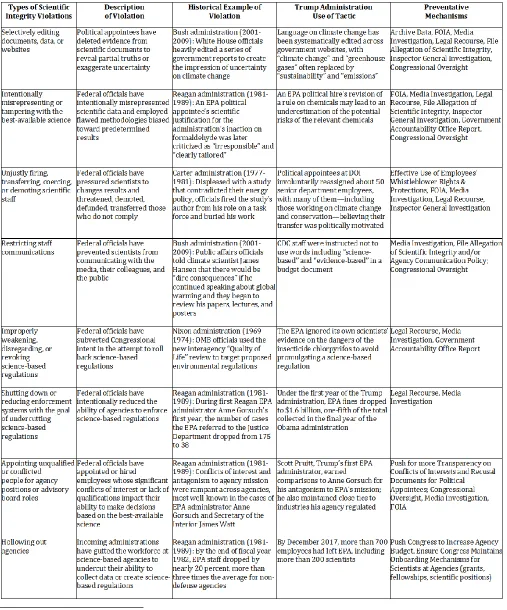
Table 1: Scientific Integrity Violations Past and Present1
1
Table adapted from source material in this paper as well
as the additional sources: Doyle 2018; Friedman, Affo, and
committees; targeting individual scientists; appointing administrators with significant conflicts of interest; misrepresenting the best-available science; improperly editing scientific documents; reducing scientist communications; hollowing out agencies; and undercutting science-based policies using the budget process. While this paper is not meant to describe all scientific integrity violations in the United States since World War II, it is meant to contain enough detail to show that in many cases, the
Trump administration’s actions reflect a new
evolution and escalation of patterns we have already seen. In some cases, the administration’s actions can be considered unprecedented.
Scientific integrity violations have increased dramatically over time both because of changes in the federal government as well as changes to the political atmosphere in the United States. At a basic level, the growth of the science-based regulatory system means that there are simply more opportunities for political interests to improperly involve themselves in science and science-based regulations. Additionally, as federal science has increasingly tackled the public health and environmental problems stemming from industrial output—from the health effects of chemicals like dioxin to the climate change wrought by fossil fuel use—industrial interests have increasingly used their political might to undercut science-based regulations. The split in American political parties in recent years—with Republicans becoming increasingly antiregulatory and increasingly skeptical of credible science on issues like climate change—has additionally led to a preponderance of scientific integrity violations when the Republican party obtains office. While it is possible to reduce science-based regulations without violating scientific integrity, the speed at which recent Republican presidents have worked to roll back regulations has led to a preponderance of clear instances of improperly undercutting the federal regulatory process.
The breadth of scientific integrity violations is also affected by the political balance of the federal government. Critically, the Reagan administration was hamstrung by a Democratic House of Representatives that wielded oversight power. A recent paper comparing the EPA under Reagan, Bush, and Trump found through interviews with former Reagan-era EPA staff that these employees “pointed
to the key role of a Congress partly controlled by Democrats in investigating, halting, and ultimately toppling the Gorsuch regime” (Fredrickson 2018). Nixon too faced Congressional pushback, as demonstrated by Congress’s refusal to fund NIPCC after members of Congress grew concerned about industry interference in science-based policymaking. Nixon also faced pushback from the courts; after Congress passed the Clean Water Act of 1972 over Nixon’s veto, he impounded half the funds appropriated by Congress for the law. The Supreme
Court subsequently found that “the president cannot
frustrate the will of Congress by killing a program through impoundment” (Snider 2012).
These factors are all inextricably linked to the political environment of each era and the increasing polarization on scientific issues that has occurred over the last 40 years. Public outrage helped turn back some of the egregious scientific violations that occurred under previous generations. Yet, as the recent historical analysis on the EPA noted, “when Republicans have become so likely to mistrust science, when their rates of belief in anthropogenic climate change lie 35% below Democrats’, when entire news outlets strive so devoutly to mirror the ideology of their audience, common touchstones that could stir broader outrage are missing” (Fredrickson 2018). Indeed, today’s political environment makes restoring scientific integrity to federal policymaking a formidable challenge. Still, unlike under previous administrations, federal employees now operate with scientific integrity policies (and scientific integrity officers) in place, as well as with stronger whistleblower protections.
The actions of the current administration, however, make it clear that more reforms and oversight are needed. The following recommendations—primarily drawn from a July 2017 report by UCS—both fill the historical procedural loopholes highlighted by this paper as well as address modern iterations of scientific integrity violations. (Carter et al. 2017, 32-5).